
Old Historic Carnation, LP: A HAC Success Story

HAC’s patience and flexibility help convert a vacant Carnation milk plant into homes for seniors in Tupelo, MS
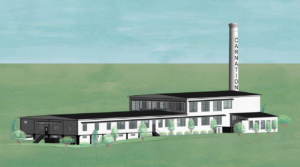
Rendering of carnation plant developmentThe Carnation Milk plant in Tupelo, Mississippi, has sat vacant since 1972. In about a year, that will change when 33 low-income senior households move into new affordable homes in this old factory. This May, Old Historic Carnation, LP broke ground on Carnation Village, a $16.8 million adaptive reuse project to convert the abandoned factory into 33 units of affordable senior housing. These units are sorely needed in Tupelo, a high-poverty community which needs over 1,500 additional senior affordable housing units. With a $325,000 loan from The Housing Assistance Council (HAC)—and two sixth-month extensions to that loan—the developer successfully navigated a predevelopment process mired in construction cost increases and unexpected funding gaps. Here’s how:
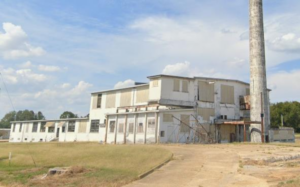
Photo of vacant Carnation plantThe original project scope called for 50 units: 25 from an adaptive re-use of the plant itself and another 25 in a second building to be constructed next door. When our loan closed in July 2021, the project budget totaled about $12.7 million, to be funded by Low Income Housing Tax Credits, Historic Tax Credits, and a $1.6 million investment. Our financing covered the predevelopment costs of the work required to get to construction financing closing including environmental testing, historic preservation approvals, tax credit application and reservation fees, a market study, and an appraisal.

In the fall of 2021, increases in construction costs left Old Historic Carnation with a $3.8 million funding gap. By the time they applied for and received more tax credits from the Mississippi Housing Corporation (MHC), added a $1 million mortgage, received approval from the National Park Service, and updated the construction bids, costs had increased by a further $4.5 million. In the space of less than a year, the construction cost for the project nearly doubled.

Because HAC can be a patient lender, we extended our loan by six months to give the developer time to solve the problem. Old Historic Carnation applied for and received another tax credit increase from the state, reduced costs with value engineering measures, and increased the deferred developer fee by almost $2 million.

Construction costs increased again in the summer of 2022, causing the investor to back out of the project. The developer went back to the drawing board once again and reduced the project’s scope to 33 units, all affordable to households making less than 80% of the area median income (AMI). Plus, 26 would also be affordable to households under 60% AMI. With an additional loan extension from HAC, Old Historic Carnation secured approval of the new scope by MHC, obtained the necessary building permits, and have now begun demolition.

HAC Loan Office Alison Duncan (center) breaks ground for Carnation Village.

HAC Loan Office Alison Duncan (center) breaks ground for Carnation Village. Photo by Adam Robison, the Daily Journal.

On March 21st, Old Historic Carnation, LP closed on construction financing and repaid our predevelopment loan in full. And on May 31st, the project broke ground. Old Historic Carnation’s persistence and creativity made this project a success. But it was HAC’s flexibility that supported them as they went through the process of raising additional funds three times to make the project work. The Carnation Village project showcases how the ingenuity of a local housing developer, solid working relationships with private, state and federal funders, and flexible and patient HAC financing all add up to bring difficult and important projects to fruition. Fifty-one years ago, Carnation Milk closed its factory in Tupelo, Mississippi. Soon, thirty-three low-income, senior households will be able to call it home.

HAC is proud to be a critical part of this project and we look forward to watching it develop.

HAC receives $6,325,000 from HUD to invest in rural communities and rural housing

Contact: Dan Stern, dan@ruralhome.org
(202) 516-6882

Washington, DC, May 15, 2023 – The Housing Assistance Council (HAC) has been awarded a total of $6,325,000 funding from the U.S. Department of Housing and Urban Development (HUD) to invest in the capacity of rural communities and help rural families achieve homeownership. HAC was awarded $4,000,000 from the Self-Help Homeownership Opportunity Program (SHOP) and $2,325,000 in Rural Capacity Building (RCB) funding. The funds represent a portion of HUD’s $22 million investment into rural communities through the SHOP and RCB programs.

The funding was announced in conjunction with an event in Russellville, AR at which HUD Deputy Secretary Adrianne Todman toured several homes that are being built using funds from HAC’s SHOP program with local partner Universal Housing Development Corporation.

HUD’s official press release announcing the award included the following statement from Secretary Marcia L. Fudge “Today, we are investing in homeownership and expanding access to affordable housing to rural communities. The SHOP program provides a unique pathway for first-time homeowners and underserved groups to buy a home. At HUD, we care about rural America and these capacity building grants are further evidence of our commitment.”

SHOP funding will allow rural homebuyers to invest their sweat equity and hard work towards the construction of their own homes in rural communities. HAC will use its RCB funding to assist a group of eligible rural organizations to undertake affordable housing and community development activities in disadvantaged and other target communities around the country.

“HAC’s decades long partnership with HUD has provided affordable homes for people and increased capacity for organizations in rural communities across the United States,” said David Lipsetz, President & CEO of the Housing Assistance Council. “These awards will improve the lives of countless rural people and highlight HUD’s commitment to rural America!”

About the SHOP Program

The Self-Help Homeownership Opportunity Program (SHOP) awards grant funds to eligible national and regional nonprofit organizations and consortia. Funds must be used for eligible expenses to develop decent, safe, and sanitary non-luxury housing for low-income persons and families who otherwise would not become homeowners. Examples are for purchasing home sites and developing or improving the infrastructure needed to set the stage for sweat equity and volunteer-based homeownership programs for low-income persons and families. Homebuyers must be willing to contribute significant amounts of their own sweat equity toward the construction or rehabilitation of their homes.

About the RCB Program

The Rural Capacity Building (RCB) program enhances the capacity and ability of rural housing development organizations, Community Development Corporations (CDCs), Community Housing Development Organizations (CHDOs), local governments, and Indian tribes to carry out affordable housing and community development activities in rural areas for the benefit of low- and moderate-income families and persons. The Rural Capacity Building program achieves this by funding national organizations with expertise in rural housing and rural community development who work directly to build the capacity of eligible beneficiaries.

About the Housing Assistance Council

The Housing Assistance Council (HAC) is a national nonprofit that supports affordable housing efforts throughout rural America. Since 1971, HAC has provided below-market financing for affordable housing and community development, technical assistance and training, research and information, and policy formulation to enable solutions for rural communities.

###

Request for Applications – OneRural Capacity Building Program

The Housing Assistance Council is soliciting nonprofit organizations, units of local government, and tribal entities interested in participating in its OneRural Capacity Building Program scheduled to begin in early 2024.

Participants selected to participate in HAC’s OneRural Capacity Building Program will receive individualized technical assistance, access to training and informational resources, and reimbursable scholarships to participate in HAC sponsored training.

Eligible entities must:

  • Have their office located in a rural community whose:
    • Population is less than 10,000 per the 2010 Census, and
    • Area Median Income (AMI) is at or below 70% of (AMI).
  • Have at least one (1) staff person.
  • Demonstrate their interest in increasing organizational capacity in the Initial Application.
  • Be a recognized nonprofit organization, public body, or tribal entity that has one (1) of the following:
    • Nonprofit designation from either the IRS or a tribal government, or
    • Evidence of being a public body, or
    • Federally recognized Tribal status.
  • Be in good standing with their State’s Secretary of State (for nonprofit organizations).

Preference will be given to Federally designated disaster communities and entities that serve communities determined to be:

  • Socially vulnerable,
  • Economically at-risk, or
  • Distressed energy (fossil fuel dependent) communities.

Interested entities must:

  • Step 1 – Complete the Initial Application by Friday, May 26, 2023. Applications will be reviewed on a rolling basis, so please do not delay completing the Initial Application.
  • Step 2 – Organizations with a demonstrated need for technical assistance and that meet the eligibility requirements outlined above will be contacted to submit proof of eligibility, required documentation, and additional organizational information by June 7, 2023.

These deadlines are firm and cannot be extended.

Please note that selection in this round of the OneRural Capacity Building Program is based on eligibility and demonstrated need. Participation cannot be guaranteed.


Request for Applications Citizens’ Institute on Rural Design (CIRD) – 2023

The National Endowment for the Arts (NEA) and the Housing Assistance Council (HAC), with To Be Done Studio, are excited to announce the Request for Applications to the Citizens’ Institute on Rural Design (CIRD). Rural communities are invited to submit applications to receive design support and technical assistance to host an on-site Local Design Workshop or participate in the Design Learning Cohort.

About CIRD

The Citizens’ Institute on Rural Design (CIRD) is a leadership initiative of the National Endowment for the Arts in partnership with the Housing Assistance Council. Focusing on communities with populations of 50,000 or less, CIRD’s goal is to enhance the quality of life and economic vitality of rural America through planning, design, and creative placemaking.

The CIRD program goals include:

  • Building design capacity in rural communities to plan comprehensive revitalization strategies;
  • Introducing creative placemaking, arts, culture, and design strategies as drivers of economic development in rural America;
  • Facilitating a network of rural communities for design idea exchanges and peer learning; and
  • Preparing communities to be ready and competitive for arts- and design-related state and federal funding opportunities.

Since 1991, CIRD has provided design assistance to more than 100 rural communities in all regions of the United States, empowering residents to leverage local and regional assets in order to guide the civic development and future design of their own communities.

More information about CIRD is available at https://www.rural-design.org/.

Important Dates

March 2, 2023: CIRD Request for Applications Opens
March 22, 2023: CIRD RFA Information Webinar
April 11, 2023: CIRD RFA Virtual Office Hours
May 1, 2023 CIRD Application Closes at 11:59 pm EST
June 21, 2023: CIRD Program Launch/Kickoff Meeting

Learn More

If you have any questions about the Request for Applications (RFA), CIRD programs, or other questions related to this application process, please contact us at cird@ruralhome.org.

SHOP Application Reference Material

Application Materials

The following links are provided to assist you in completing a 2025 Self-Help Homeownership Opportunity Program (SHOP) application. These links provide additional information on program and eligibility requirements.

  1. FY 2024 SHOP NOFO
  2. Eligibility Requirements for Applications of HUD’s Grant Programs
  3. General Administrative Requirements and Terms for HUD’s Financial Assistance Awards
  4. Federal Register Notice

HAC Seeks Proposals for its Affordable Housing for Rural Veterans (AHRV) Initiative

HAC’s Affordable Housing for Rural Veterans initiative supports local nonprofit housing development organizations that meet or help meet the affordable housing needs of veterans in rural places. Grants typically range up to $30,000 per organization and must support bricks-and-mortar projects that assist low-income, elderly and/or disabled veterans with home repair and rehab needs, support homeless veterans, help veterans become homeowners, and/or secure affordable rental housing.

HAC will be hosting a open forum to discuss this RFP. HAC recommends attending this session prior to submitting a formal application.

This initiative is funded through the generous support of The Home Depot Foundation.

Applications are due by 4:00PM (EST) on or before Monday, January 23, 2023.

Download the Application Package: Application (WORD) | Application Guidelines

For more information, contact HAC staff, ahrv@ruralhome.org. No phone calls please.

Download Application (WORD) Application Guidelines Webinar Registration

Building on Two Decades of Partnership: HAC & the New Mexico Mortgage Finance Authority

In the summer of 2022, the New Mexico Mortgage Finance Authority (MFA) faced a difficult challenge. Several state legislators and farmworker groups asked the organization to help meet the housing needs of migrant and seasonal farmworkers. Since farms employ farmworkers with the shifting seasons, many farmworkers only stay in a community for a few months before needing to move elsewhere in search of work. Affordable housing development is complex in the best of cases. Underwriting a project that would have a near complete turnover of residents every four or five months seemed almost impossible.

So, MFA called the Housing Assistance Council (HAC). This wasn’t the first or second time that HAC helped MFA address challenges in its programs. In fact, HAC and MFA have a working relationship well over two decades old. Because of this extensive engagement, MFA Executive Director and CEO Izzy Hernandez knew he could rely on HAC Housing Consultant Eugene (Gene) Gonzalez to help find a solution to this challenge.

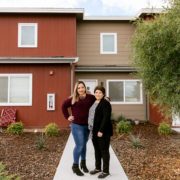
Gene connected MFA with groups across the southwest working on similar projects housing migrant farmworkers. With HAC’s help and advice from peers, MFA was able to identify a developer and line up alternate financing options for a project that meets this critical housing need. The development is in its initial phase, but for Hernandez, this is just the latest example of HAC’s reliable, ongoing partnership.

HAC began working with MFA in the early 2000s. A few years earlier, MFA was selected to administer all of New Mexico’s housing programs. Many of the on-the-ground housing organizations who needed MFA funding the most were struggling to obtain designation as community housing development organizations (CHDOs). CHDO designation is a prerequisite to accessing the federal and state programs MFA administered. So, HAC helped eight organizations identify their capacity needs, provided technical assistance to meet those needs, and guided them through the process to obtain CHDO designation.  As a result, each of the eight organizations was able to access MFA funds, which allowed MFA to turn those program dollars into homes in communities that desperately needed them.

While the specifics of HAC and MFA’s collaboration has evolved over time to meet the unique needs of each project, the core challenge HAC helps MFA address remains the same. Like all state housing authorities, MFA relies on the success of its client housing organizations. If they do not succeed, MFA cannot make the most of federal and state programs and cannot meet, as Hernandez puts it, “the extraordinary need for affordable housing.” HAC has long helped and continues to help build the capacity of MFA clients. This not only helps to build more affordable homes in rural New Mexico; according to Hernandez, HAC’s work helps MFA “reach communities we couldn’t reach before.”

When HAC began working with Tierra Del Sol Housing Corporation, one of MFA’s clients, the organization was rehabbing nearly 100 homes per year and building only about nine units per year. HAC provided training and technical assistance to help Tierra Del Sol with land acquisition, green building, energy efficiency, and more. With HAC’s help, the nonprofit expanded its self-help program, began building entire neighborhoods of farmworker housing, and grew to become the largest housing rehabber in the state of New Mexico. In addition, TDS accomplished all this development while focusing work in colonias, communities near the U.S.-Mexico border characterized by high poverty rates and substandard living conditions. Looking back on this incredible success, Hernandez is quick to say that “HAC has played a big role in that.”

Nowadays, MFA frequently refers struggling clients to HAC. Once referred, HAC often includes these organizations in our capacity building and technical assistance cohorts, where they receive one-on-one technical guidance and capacity building assistance. According to Hernandez, whenever HAC receives a new round of funding for technical assistance, he receives a call from Gene asking which groups in New Mexico need help. “We have some groups that were on the bubble of surviving or not,” says Hernandez, “but we have never had one group go out of business. HAC kept them in the game.”

The three hundred plus housing organizations in New Mexico all play an important role in meeting the state’s housing needs. In 2021, they collectively assisted more than 25,000 families in finding quality affordable housing. HAC capacity building assistance helps to ensure that these groups can build homes, effectively implement housing assistance programs, and remain in compliance.

Click here to learn more about HAC’s training and technical assistance. 

Request for Applications for the Creative Placemaking for Rural (CPR) Initiative

The Housing Assistance Council (HAC), under Cooperative Agreement with USDA Rural Development as part of its Rural Placemaking Innovation Challenge Initiative (RPIC), is excited to announce the Request for Applications (RFA) to the HAC 2022 Creative Placemaking for Rural (CPR) Initiative. Rural communities are invited to submit applications to receive support and technical assistance to host a virtual and on-site local Placemaking Workshop (if local public health guidelines allow) or participate in the Placemaking Learning Cohort. Specifically, the CPR Initiative will focus on improving rural prosperity and building the capacity of rural organizations to create and implement innovative placemaking strategies into their larger community development planning goals and activities.

Application Deadline - August 19, 2022

Application Guidelines and Instructions (PDF)

WHAT IS RURAL PLACEMAKING?

Under USDA, Rural Development, Placemaking is defined as a collaborative process among public, private, philanthropic and community partners to strategically improve the social, cultural, and economic structure of a community. This work is based on a sense of place with qualitative and quantitative outcomes.

Objective: Improve rural prosperity and build the capacity of rural organizations and communities to create and implement innovative placemaking strategies into their larger community development planning goals and activities.

APPLICATION INSTRUCTIONS:

We recommend that applicants prepare their answers prior to starting the application process, as you do not have the ability to save your progress while submitting. Your responses can be copied and pasted into the application form. Please contact CRP@ruralhome.org if you have any questions about the application submission process

Apply Now

How HAC’s Training and Technical Assistance Supports Homebuyer Education

Homeownership isn’t just part of the American Dream—it is a pathway to decent, affordable housing and one of the best opportunities families have to build wealth. For over fifty years, the Housing Assistance Council (HAC) has empowered rural nonprofits to better meet the housing needs of their communities. From self-help housing to sustainable design, HAC’s training and technical assistance supports a variety of homeownership programs. Because June is National Homeownership Month, join us as we explore one way HAC supports rural homeownership: helping our nonprofit partners provide homebuyer education.  

For many families, navigating the homebuying process can be a challenge. Homebuyer education prepares buyers by helping them understand the homebuying process, building their financial skills like budgeting, and teaching how to maintain their new home. In addition, many first-time homebuyer programs (including most government-funded homeownership initiatives) require that prospective buyers complete homebuyer education to qualify for assistance.  

HAC’s one-on-one technical assistance supports organizations at every stage of providing homebuyer education. “Many of the groups I work with want to offer homebuyer education because nobody else in their community is doing it,” says HAC Housing Specialist Kelly Cooney. We assist organizations with deciding which homebuyer education courses to offer, navigating of the process of becoming a U.S. Department of Housing and Urban Development (HUD)-approved housing counseling agency, and even refining existing courses to better meet the needs of their clients. HAC’s Technical Assistance program also promotes peer-learning and resource-sharing by connecting our partner organizations with other like-missioned groups in their area and around the country.  

Unfortunately, many rural families travel long distances to reach the nearest class.  During the fall of 2020, HAC provided training to 14 local housing organizations, helping them convert their in-person homebuyer education courses to a virtual format. Over the course of three sessions, attendees learned best practices for online teaching, success stories from peers, and how to keep their clients engaged.  

As Elizabeth Mooney, a Housing Counselor at Community Action Commission of Fayette County, explains, “HAC has been so helpful in the transition of our homebuyer education classes during COVID. They scheduled calls to check in on the transition, offered solutions that other agencies were using, and connected me with even more resources. They even offered me a scholarship for some of the virtual trainings I attended.”  

You can request technical assistance and explore HAC’s calendar of training events. 

GET THE HAC NEWS!

Sign-up for HAC information products

SIGN UP HERE

Housing Assistance Council   |  1828 L Street. N.W., Suite 505, Washington, D.C. 20036
(202) 842-8600  |  (202) 347-3441  |  hac@ruralhome.org |

Board Portal

HAC is an equal opportunity provider, employer, and lender. | Civil Rights | Privacy