Self-Help Housing and “SHOP” in the Rio Grande Valley

rvsummer15-coverThis story appears in the 2015 Summer Edition of Rural Voices

by Nancy Hanson

HUD’s Self -Help Homeownership Opportunity Program helps make self-help building sites affordable

At the Lower Valley Housing Corporation (LVHC), we believe that the Mutual Self-Help Homeownership program administered by the United States Department of Agriculture (USDA)’s Rural Development (RD) agency is the finest method of delivery of affordable housing. USDA RD funds are only available in rural communities. When LVHC started its program, traditional lenders would not lend in rural areas. One reason was those lenders believed that the cost of production would exceed the value of the collateral.

Over time, LVHC successfully convinced lenders that mutual self-help homes in rural El Paso County would appraise for enough to secure the loans and the homes would hold their value. The Texas Department of Housing & Community Affairs (TDHCA), WestStar Bank, Bank of America, Wells Fargo, and JPMorgan Chase have since financed LVHC-produced houses.

These lenders provided affordable long-term mortgages such as low-interest USDA Section 502 loans or zero-interest-rate Housing Trust Fund “Bootstrap” loans from the Texas Department of Housing.

Over time, LVHC successfully convinced lenders that mutual self-help homes in rural El Paso County would appraise for enough to secure the loans and the homes would hold their value.

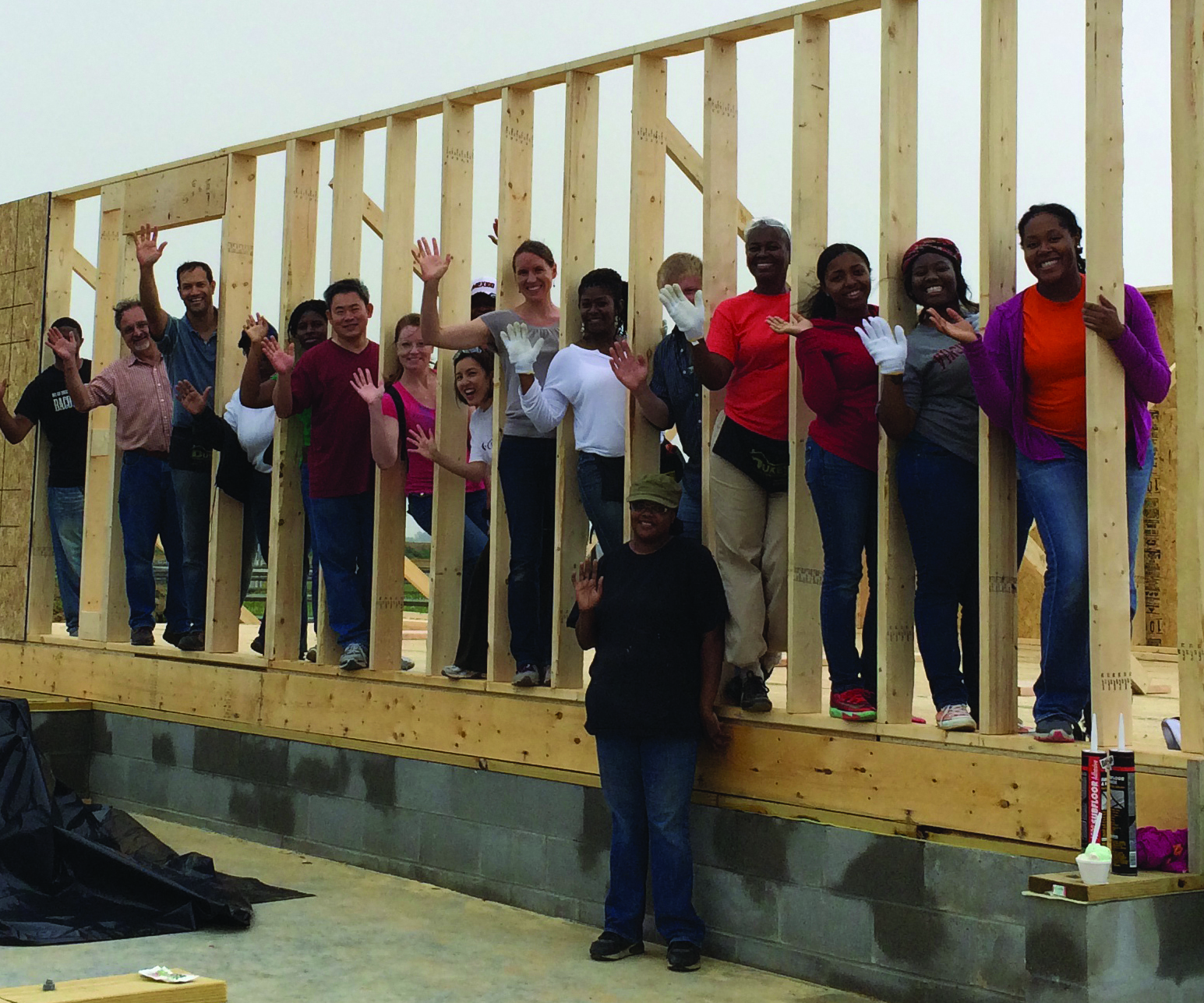
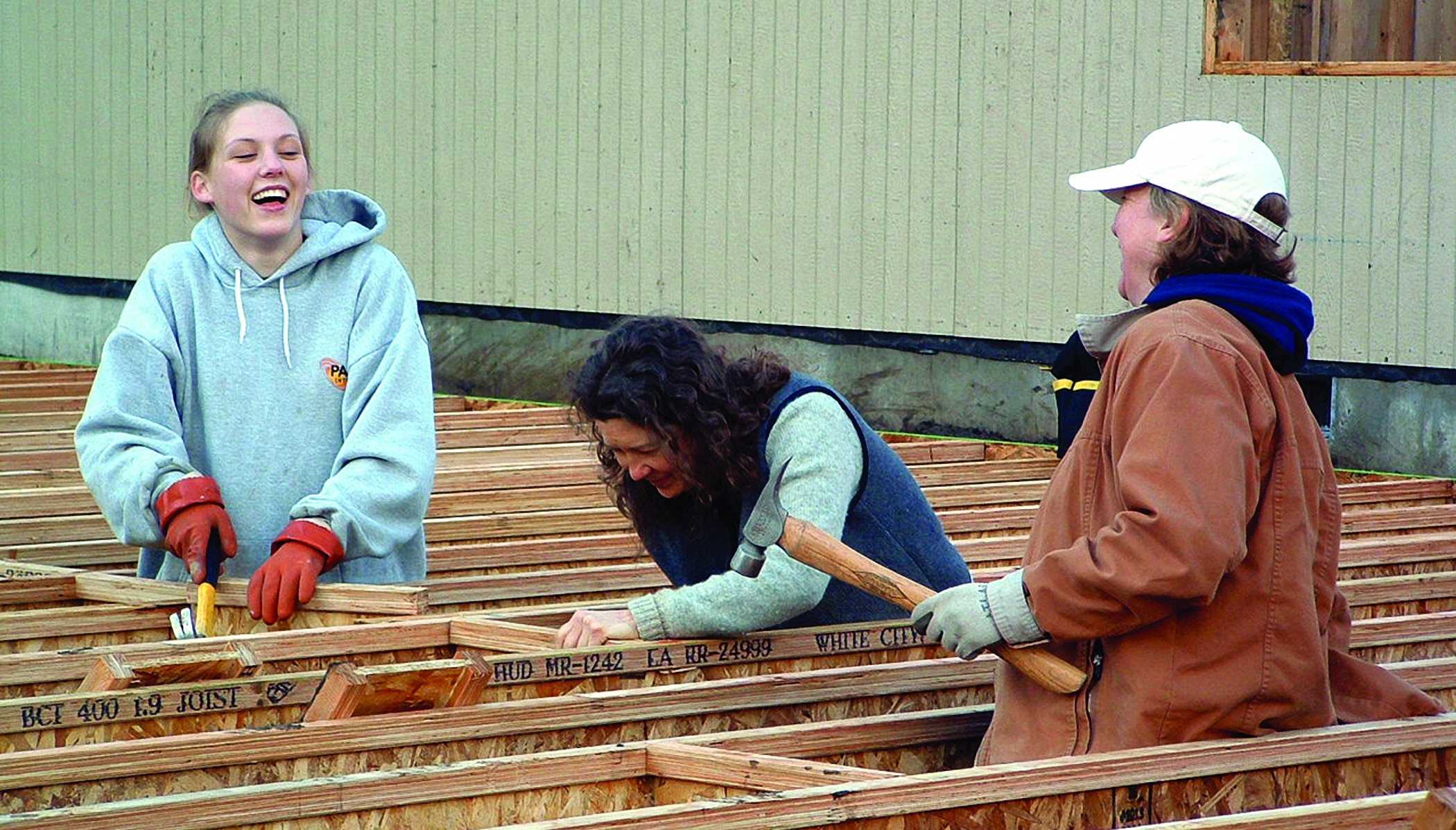
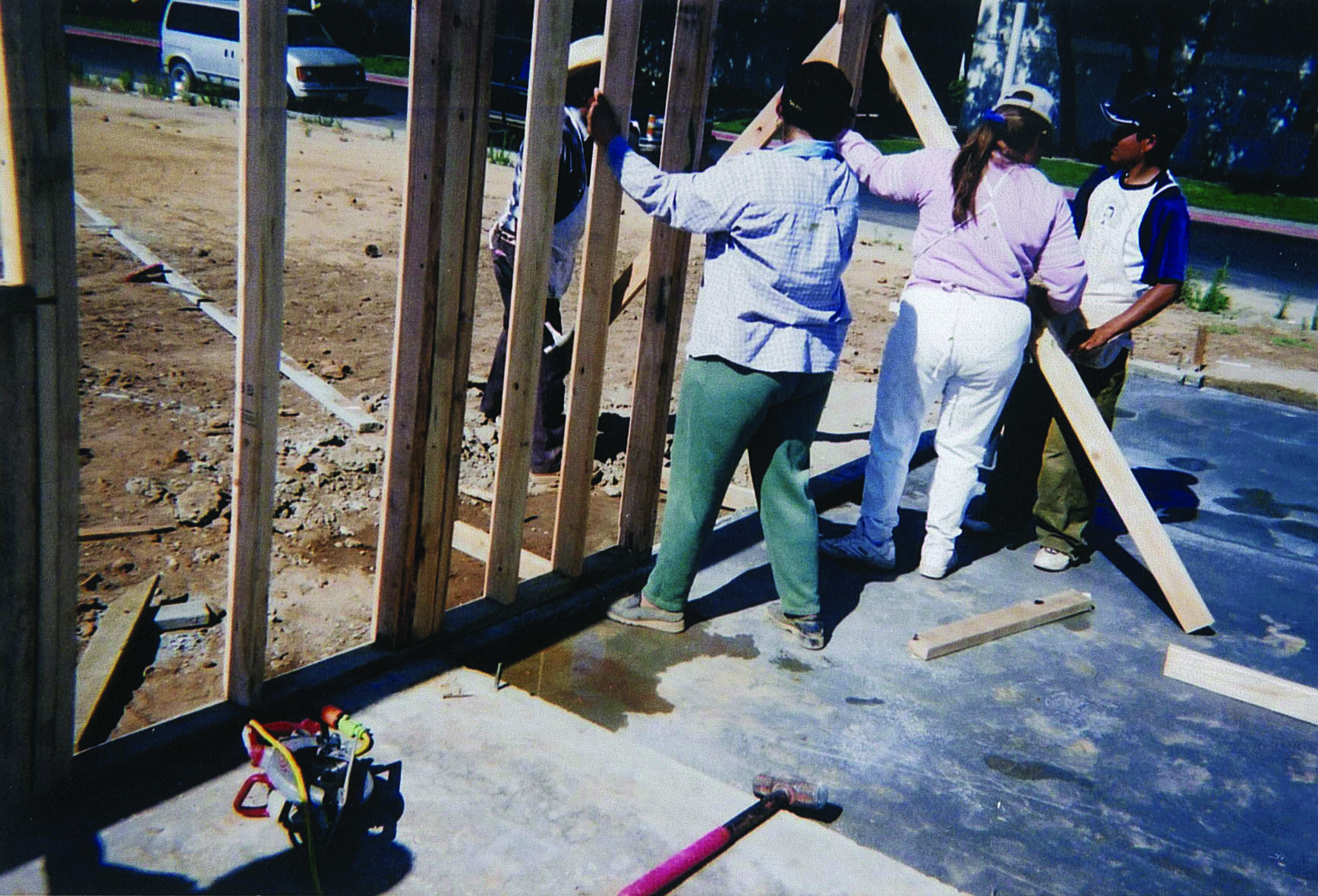
LVHC specializes in Mutual Self-Help Housing. Working with groups of 6 to 12 applicants, LVHC teaches families how to work together to build their homes. The families’ sweat equity contribution, about two-thirds of the labor, drives down the cost of each house. This helps make the monthly payments affordable to very low-income families.

hacorp-finished-house

Most of the people living in our County commute to work in the city of El Paso. Some workers are employed by the local school districts and others are engaged in farm work. Many of our residents live in the “county” outside of any designated town. In these instances, developments hooked into existing water and sewer systems. LVHC developed over 550 homes like this in Cielo Azul, Notre Dame, Green Desert and Horizon Hills. El Paso County has about 340 “Colonias” that have not been remediated as of today. These areas are heavily populated but they lack decent facilities. Little by little, however, USDA and Texas Water Development Board are bringing in water and sewer to the colonias.

One of the resources that helps LVHC make homes more affordable is the Self-Help Homeownership Opportunity Program (SHOP). SHOP funding, provided by the U.S. Department of Housing and Urban Development (HUD), is administered through several intermediaries including the Housing Assistance Council (HAC). SHOP provides up to $15,000 per unit to acquire land, make infrastructure improvements, or pay certain planning or development costs for self-help homeownership. The program requires these homes to meet stringent energy efficiency and water conservation standards. Homeowners must be low-income individuals and families and must contribute at least 100 hours of sweat equity. All of these features work together to make the home affordable to families with very low-incomes.

Since 2004, HAC awarded LVHC four rounds of SHOP financing to acquire and develop more than 200 residential lots in rural El Paso County. LVHC may retain up to 90 percent of the funding, which can then be used for similar affordable housing objectives. LVHC has used the “recoverable” portion of the HAC loans to repay the bank loan to buy the land and develop the lots. These savings are passed on to the homeowner, reducing the cost of the lot by at least 35 percent.

From March 2012 through December 2013, LVHC assisted 60 Self-Help owner-builders using SHOP funding. The homebuyers’ incomes ranged from $13,900 to $21,432. Over half of the families were headed by single women and the average age was 30.

LVHC is dedicated to helping lower-income residents of El Paso County to live in safe, decent homes in good neighborhoods that they can afford to pay for and that they are so proud to call home. The SHOP program helps us work with very low-income owner-builders and improve the quality of life in the Rio Grande Valley.

Nancy Hanson is the Executive Director of Lower Valley Housing Corporation in Fabens, Texas. LVHC, specializing in the production of mutual self-help housing, is dedicated to helping lower income residents of El Paso County to live in safe, decent homes in good neighborhoods.

An Emerging Self-Help Leader

rvsummer15-coverThis story appears in the 2015 Summer Edition of Rural Voices

Discusses personal growth and sustaining the momentum through Self-Help Housing

Affordable housing, specifically self-help housing, is very dear to my heart. This program, or one like it, could have made a difference for my family when I was a young girl. My father’s family is from the Native Village of Port Heiden, a traditional Alutiiq community on the Aleutian Peninsula. When I was born, my first home was a 500 square foot cabin on my paternal grandparents’ homestead in Ninilchik, not far from where I live and work today. While pregnant with my brother, my mom cared for me on her own while my father was away many weeks at a time commercial fishing. We lived a subsistence life, eating fish and game and foraging off the land;
we made do with very little and had no access to transportation. Mom hauled all of the water we used to cook and clean and collected the coal used to heat the cabin from the beach. The cabin had no indoor plumbing or electricity.

My parents divorced when I was young. My mom struggled during this time, sacrificing her most basic needs to keep my brother and me fed and clothed with a roof over our heads. She worked several minimum wage jobs just to make ends meet, but she never complained and we never felt poor. As I grew up, I witnessed my mom’s determination while she worked her way up and out of poverty as a single mother. I learned a great deal from her about perseverance and making do with what you have.

Photo higher resolution

After graduating high school, my first job was a receptionist at a local bank. After two years, I was promoted to a mortgage loan closer. I was with the bank for 15 years. After a difficult divorce, I found myself alone, with no home, no source of income, and two young sons to support. I took a minimum-wage position that brought in just enough to pay the rent and provide basic necessities for my children. I knew there should be better opportunities for someone with my banking and lending background, but jobs in the field were scarce in my rural community, compounded by the 2008 mortgage lending crisis. I was awarded a scholarship through my Alaska Native corporation of Cook Inlet Region, Inc. and put myself through college while working full time and supporting my children. I received my Associates degree in General Business in 2009 and graduated at the top of my class – the first college graduate on either side of my family.

In October of 2009, I applied for a homeownership program coordinator position at Rural Alaska Community Action Corporation (RurAL CAP) in their Self-Help Housing Program. It was exactly the type of position I was looking for. I could apply my mortgage lending experience and education to help make a difference in my community. It was my first job interview in over a decade. Mustering my confidence, I presented my credentials and experience and discussed my passion for helping people in my community. Because of my mortgage lending background, communication skills, compassion and desire to help others, and business education, RurAL CAP felt that I was the best fit for the position and decided to give me a chance.

I feel the self-help housing model is the perfect example of how a family with limited income can achieve homeownership. What I find so compelling about the program is that families are not simply given their home like it’s some kind of an entitlement, which is sometimes the case in rural Alaska. They have to work hard for it. Because of that, the sense of accomplishment they have when they move in is undeniable. They know how to maintain their home. They can afford their home. They have learned new life skills and, most importantly, they have pride in what they have accomplished. This transcends into every other facet of their lives. Self-help housing is not easy, but that is what sets it apart from all other programs.

Self-help is also very rewarding on a personal level. I am making a real difference in my families’ lives. I see defeated people every day as they begin the application process. I see people who have been beaten down and had everything taken from them. It is such a fulfilling experience for me to tell them ‘yes’, when so many times they have heard ‘no’. That simple word, ‘yes’, changes them and that sense of accomplishment is empowering. Their confidence grows when they start to take the steps that make a real change in their lives. I see them looking people in the eye and holding their heads high. I see them taking the chance and applying for that higher paying job. I see how successful their children are becoming in school. I see the tight knit community the families become. It is rewarding knowing that I help my families and my community with the job I do here every day. It is incredibly hard work – for the families as well as for our staff – and the work is incredibly rewarding.

This year RurAL CAP is building its 50th self-help home in the central Kenai Peninsula area. I believe that for self-help to continue to make the impact it does here, marketing and education are key. Many people don’t know this opportunity exists. We must market this program to the families who will benefit so they know it’s available. We need to educate our elected officials. They need to know the benefits of self-help housing, not just to the individual families, but also the community as a whole. This is vital so we can continue receiving the funding for the program.

They know how to maintain their home. They can afford their home. They have learned new life skills and, most importantly, they have pride in what they have accomplished.

Another challenge is recruiting qualified individuals and families. Many applicants have credit and budgeting challenges. Very low- and low-income individuals often do not have the resources needed to overcome these obstacles. They also have no idea where to start and need guidance throughout the process. Unfortunately, the Kenai Peninsula does not have a local credit counseling agency. The nearest one is located 150 miles away in Anchorage. A local credit counseling agency is needed. To assist in recruiting self-help families into the future, it is critical that our young people are taught the skills they need to take care of themselves financially. Our children are largely unprepared for the financial responsibilities of being an adult when they get out on their own. I would like to see personal finance become a core class taught in all of the local high schools covering budgeting, fiscal responsibility, credit, loans, investments, and savings. Well-educated children become well-educated adults and are better able to support themselves and their families. If these personal finance classes were offered a year or two before the families are ready to become homeowners and a local credit counseling agency were available to them, my recruitment numbers would increase dramatically.

For self-help housing to continue for another 50 years, funding must be available to support it. At this time, self-help is dependent upon government funding both to operate it (USDA’s Section 523 Technical Assistance (TA) Grant) and to fund the construction of the individual homes for each homeowner (USDA Rural Development Section 502 Direct loan). Reliance on federal funding is a challenge for several reasons. First, we never know from year-to-year if the funding will be available or how deep the cuts will be in any given year. It’s going to take continued presence on Capitol Hill and communication with our elected officials. Policymakers must be informed about the need for ongoing federal support for this program. This program does and will continue to stimulate housing production in underserved, rural communities where private developers can’t meet the entire demand for affordable homes. They need to see success stories firsthand to understand that this program works and is helping to provide the ongoing need for decent, affordable homeownership in rural America. Second, we must seek alternative ways to model the program to form partnerships with other lenders for the individual construction and permanent loans our families need. There may be a time in the future when the federal funding is severely reduced or is not available. We must address this distinct possibility by having alternate funding sources available when that time comes. To do this, we need to start forming partnerships with housing authorities, technical assistance providers, and local lenders.

The Self-Help Housing program provides a time-tested way for low-income families to achieve the goal of homeownership. It extends tangible resources that these families can use to be successful. It teaches valuable life skills that flow into all other areas of their lives. It gives hope, pride, determination, strength, and accountability. It is my sincere hope that we can continue providing this program in rural America for many years to come.

Mi’shell French is the Homeownership Program Supervisor at the Rural Alaska Community Action Program, Inc (RurAL CAP), a private, statewide, nonprofit organization working to improve the quality of life for low-income Alaskans.

So Much Progress, So Much Left To Do!

rvsummer15-coverThis story appears in the 2015 Summer Edition of Rural Voices

by Peter Carey

A simple concept still holds promise in a complicated housing world

More than five decades have passed since the first USDA-financed mutual self-help homes were built in Goshen, California. Much has changed in that time. Computers, cell phones, the internet are the main channels of communication. We’ve been through wars on other continents. We’ve landed on the moon and we’ve eliminated diseases like polio. What we take for granted today would have been science fiction when Lilia Jimenez turned the first spade of dirt for her self-help home in Goshen in 1963.

And yet, many things remain the same, especially for those in the lower rungs of our economy. An unacceptable number of people still live in poverty, and the housing conditions in rural America still pose an obstacle to those who desire the opportunity for a decent home.

Through those five decades one constant has been the fact that responsible homeownership remains the single best way for lower-income people to build the assets needed to move beyond poverty.

img 3262Lilia Jimenez (center) and her family built one of the first self-help homes in the early 1960s. Lilia still occupies the home she helped construct more than 50 years ago in Goshen, CA.

For the early pioneers of mutual self-help housing, the concept of homeownership was a simple one. It wasn’t seen as an investment, or a path to upward mobility, though in hindsight, it was both. For those who lived in generally substandard rental housing, the opportunity to own a home was the first step towards stability. It was the opportunity to provide a safe and secure home for their children. And although the cost of land and building materials was not within the control of potential homeowners, they could reduce the cost of building a home by contributing most of the labor needed to build. And hard work was the one commodity they could provide. We say that “opportunity knocks.” But sometimes it goes unrecognized because it comes disguised as hard work. Self-help homebuilders open that door, and by joining together with neighbors, they seize opportunity, one nail at a time.

In the early days of mutual self-help housing, there was a great deal of skepticism not just of the program, but of the very idea that farmworkers and other low-income people could be good homeowners. Five decades later we know that the answer is a resounding, “Yes!” And there are builders from those early days who have seen generations of children who have benefited from their families’ investment. There are stories across rural America of self-help children who have gone on to become contractors, teachers, elected officials, and business owners, and who take an active role in their communities.

Today we know even more about the negative individual and societal impacts of poor housing conditions and the value of investing in decent housing. Studies have shown that housing quality can affect the ability to learn and socialize in school. There is growing evidence that growing up in a decent home reduces healthcare costs, not just during childhood, but into adulthood. Despite the experience of the recent recession, we know that the single best vehicle for growing assets is homeownership.

Today about 100 nonprofit organizations provide the opportunity for lower-income families to join with their neighbors to invest their sweat and labor to build homes for themselves, their children, and their future. The common denominator that makes this effort possible is USDA Rural Housing Service, which provides both technical assistance funding to the nonprofit sponsor and affordable mortgage financing to the homeowner. Combined with “sweat equity” it is a homeownership model that really works for rural families who can’t afford market rate homes, for neighbors who share in building their dreams, and for the communities they call home.

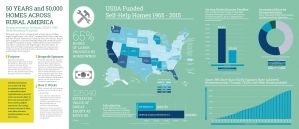
Fifty thousand homes, affordable, safe, built by the hands that own them. Each home is a legacy for the next generation. For the tens of thousands of children who grow up in a self-help home, each home is a lesson in opportunity, a demonstration of potential, proof that by joining together and working hard, lives truly can be changed. It is a concept that speaks to something that is an inherent part of the American heritage. From the barn-raisings of early days, communities have come together to do the things that could not be achieved alone. It is hard to walk away unmoved from a visit with families who are sharing in the long days and hard work of building homes together. It symbolizes the best of our society and speaks to a universal desire for community. This is the spirit of mutual self-help housing.

Peter Carey served as President and CEO of Self-Help Enterprises (SHE) in Visalia, California from 1990 until his retirement in June 2014. In addition to many other roles over the years, he also served as the Acting Chief Operating Officer of NeighborWorks America from July 2014 through February 2015. He continues to be engaged in housing and community development issues and is currently a member of Housing Assistance Council Board of Directors.

HAC News: July 8, 2015

HAC News Formats. pdf

July 8, 2015
Vol. 44, No. 14

• USDA FY16 funding bill approved by House committee • Congress moving to reduce funding for ACS and Census preparation • Family Self-Sufficiency grants offered • HUD publishes final Affirmatively Furthering Fair Housing rule • Wages and jobs similar for H2-A and undocumented workers, housing not, research finds • Foundation grants to rural places vary widely • Rental housing market discriminates against people who are deaf or use wheelchairs • AARP offers online Livability Index • Vouchers provide best results for urban homeless families in emergency shelter • HAC reports on USDA rural housing activity in FY14

HAC News Formats. pdf

July 8, 2015
Vol. 44, No. 14

USDA FY16 FUNDING BILL APPROVED BY HOUSE COMMITTEE. The House Appropriations Committee passed the still unnumbered bill on July 8, making no changes in its housing provisions (see HAC News, 6/25/15). The Senate committee has not yet begun work on a USDA appropriations bill.

CONGRESS MOVING TO REDUCE FUNDING FOR ACS AND CENSUS PREPARATION. Different versions of H.R. 2578, the FY16 Commerce, Justice, and Science Appropriations bill, passed the Senate Appropriations Committee on June 11 and the full House on June 3. The Census Project reports that, by cutting funds for the accounts that cover the American Community Survey and preparation for the 2020 Decennial Census, both bills would reduce data availability. HAC commented on the subject for the Daily Yonder and to the Census Bureau.

FAMILY SELF-SUFFICIENCY GRANTS OFFERED. Public housing agencies and tribes or their housing entities can apply for grants by July 27. FSS coordinators may work with either voucher recipients or public housing residents. Contact HUD staff, fss@hud.gov.

HUD PUBLISHES FINAL AFFIRMATIVELY FURTHERING FAIR HOUSING RULE. The rule, released July 8, is intended to help communities receiving HUD funds to meet their fair housing obligations. HUD will provide data, maps and technical assistance. Ask AFFH questions online at https://www.hudexchange.info/get-assistance/my-question/. Contact George D. Williams, Sr., HUD, 866-234-2689 (toll free).

WAGES AND JOBS SIMILAR FOR H2-A AND UNDOCUMENTED WORKERS, HOUSING NOT, RESEARCH FINDS. Authorized Status, Limited Returns: The Labor Market Outcomes of Temporary Mexican Workers, published by the Economic Policy Institute, compares temporary workers with H2-A agricultural visas and H2-B non-agricultural visas to unauthorized workers and legal permanent residents. The temporary workers have jobs with the lowest occupational standing and earn about as much as unauthorized workers. H-2A workers’ total compensation levels are higher than those of undocumented agricultural workers, however, because their employers must provide housing at no cost. A USDA Economic Research Service analysis estimates legalization would raise unauthorized farmworkers’ incomes by about 4%. A panel discussion by these researchers and others exploring immigration status and wages is online.

FOUNDATION GRANTS TO RURAL PLACES VARY WIDELY. In Foundation Grants to Rural Areas from 2005 to 2010: Trends and Patterns, USDA’s Economic Research Service estimates that 6% to 7% of total U.S. foundation grants benefited nonmetro areas in 2010, when those places had 19% of the U.S. population. The total value of 2010 rural grants for all purposes is estimated to be about the same as USDA RD grants that year, though significantly smaller than RD’s total rural support including loans and loan guarantees. Foundation grant value per rural person averaged about $88, but 18% of nonmetro counties had no grant recipients and some received over $10,000 per person.

RENTAL HOUSING MARKET DISCRIMINATES AGAINST PEOPLE WHO ARE DEAF OR USE WHEELCHAIRS. Discrimination in the Rental Housing Market Against People Who Are Deaf and People Who Use Wheelchairs: National Study Findings, prepared by the Urban Institute for HUD, reports on the first national paired-testing study involving such tenants. Researchers found “systematic evidence of unfavorable treatment.”

AARP OFFERS ONLINE LIVABILITY INDEX. Users can find overall ratings and ratings for seven categories (housing, neighborhood, transportation, environment, health, engagement, and opportunity) by entering addresses, states, counties, or zip codes at livabilityindex.aarp.org/. The index can also be customized to emphasize specific factors.

VOUCHERS PROVIDE BEST RESULTS FOR URBAN HOMELESS FAMILIES IN EMERGENCY SHELTER. HUD’s Family Options Study, conducted in several large cities,found that after 18 months families who were offered a housing voucher experienced significantly better outcomes than those families randomly assigned to any of three other options. Rapid rehousing was the least costly and transitional housing was the most expensive. Vouchers were deemed cost-effective because voucher costs were almost entirely offset by reductions in costs of other services such as emergency shelter.

HAC REPORTS ON USDA RURAL HOUSING ACTIVITY IN FY14. In FY14, which included a three-week government shutdown in October 2013, USDA made the lowest number of Section 502 direct loans since 1961. About $91.9 million in Section 502 direct funds designated for very low-income households were unused. Most Section 515 rental housing funds went for rehabilitation of existing units. About 19,700 Section 521 Rental Assistance contracts did not need to be renewed because they are still operating on funds obligated in past years. USDA Rural Development Housing Obligations: Fiscal Year 2014 Year-End Report includes tables and maps showing obligation data by program and by state, and data by fiscal year for each program since its inception. Contact Mike Feinberg, HAC, 202-842-8600.

USDA Rural Housing Program Funding Activity Year End Report FY 2014

USDA Rural Development Housing Funding Activity FY 2014Fiscal Year (FY) 2014 USDA Rural Housing Program Funding Activity Year End Report

The Housing Assistance Council tabulated data using the USDA Finance Office obligation reports (USDA/Rural Development report code 205c, d and f) and data from the USDA Single Family Housing and Multifamily Housing Divisions in the National Office. The comprehensive report includes tables and maps showing obligation data by program and by State. The report also includes data by fiscal year for each of the programs since program inception.

This document is available by its individual chapters or as one large compiled document. The compilation document is formatted to print as double-sided pages for printers that are able to print on both sides of the paper. Each chapter starts with a divider page which is intentionally blank to maintain consistency throughout the document.

2015, 164 pages

Download the Full Report
Executive summary

CONTENTS

Introduction/Table of Contents

  1. Summary of USDA Rural Housing Obligations
  2. Single Family Housing Program Obligations
  3. Multifamily Housing Program Obligations
  4. Other Program Obligations
  5. State Obligation Tables
  6. Historical Activity for Selected Programs
  7. Direct Loan Share of Total Obligations for Selected Programs
  8. Homeowner and Tenant Average Income By State
  9. Appropriation and Obligation Tables
  10. About the Data

HAC News: June 25, 2015

HAC News Formats. pdf

June 25, 2015
Vol. 44, No. 13

• House subcommittee keeps most USDA spending at FY15 levels • Senate committee advances HUD bill with large cut in HOME • Supreme Court approves use of disparate impact for fair housing claims • Indian Country needs capital, witnesses tell Senate panel • Funds for housing and health research offered • Reminder: USDA has email lists for single-family housing loan programs • RD alters multifamily reserve account countersignature requirements • HUD Rental Assistance Demonstration changed • Federal homelessness plan revised • Homeownership down, renters’ cost burden rates increasing, Harvard reports • Partnership opportunities expand for housing and health providers

HAC News Formats. pdf

June 25, 2015
Vol. 44, No. 13

HOUSE SUBCOMMITTEE KEEPS MOST USDA SPENDING AT FY15 LEVELS. Approved by the House Agriculture Appropriations Subcommittee on June 18, the FY16 agriculture appropriations bill holds funding for Section 523 self-help at $27.5 million and increases Rental Assistance funds slightly to $1.167 billion, the amount the Administration said will be needed to keep up with inflation. It does not include minimum rent for tenants and does not provide vouchers for tenants in maturing mortgage properties. Details are on HAC’s website. The full House Appropriations Committee postponed a June 25 markup, and the Senate has not yet released an agriculture funding bill. [tdborder][/tdborder]

USDA Rural Dev. Prog.
(dollars in millions)

FY13
Approp.a

FY14
Approp.

FY15
Approp.

FY16 Budget Proposal

FY16 House Subcmte. Bill

502 Single Fam. Direct
Self-Help setaside

$900
5

$900
5

$900
5

$900
0

$900
5

502 Single Family Guar.

24,000

24,000

24,000

24,000

24,000

504 VLI Repair Loans

28

26.3

26.3

26.3

26.3

504 VLI Repair Grants

29.5

28.7

28.7

26

28.7

515 Rental Hsg. Direct Lns.

31.3

28.4

28.4

42.3

28.4

514 Farm Labor Hsg. Lns.

20.8

23.9

23.6

23.9

23.9

516 Farm Labor Hsg. Grts.

7.1

8.3

8.3

8.3

8.3

521 Rental Assistance

907.1

1,110

1,089

1,172

1,167

523 Self-Help TA

30

25

27.5

10

27.5

533 Hsg. Prsrv. Grants

3.6

3.5

3.5

0

3.5

538 Rental Hsg. Guar.

150

150

150

200

150

Rental Prsrv. Demo. (MPR)

17.8

20

17

19

17

542 Rural Hsg. Vouchers

10

12.6

7

15

7

Rural Cmnty. Dev’t Init.

6.1

6

4

4

4

a. Figures shown do not include 5% sequester or 2.5% across the board cut.

SENATE COMMITTEE ADVANCES HUD BILL WITH LARGE CUT IN HOME. On June 25 the Senate Appropriations Committee approved a HUD funding bill for FY16 (not yet available online). The measure cuts the HOME program by 93%, from $900 million in FY15 to $66 million. An amendment to restore HOME funding was offered by Sen. Christopher Coons (D-DE) but was defeated. The bill does not make changes to the National Housing Trust Fund.

HUD Program
(dollars in millions)

FY13
Approp.a

FY14
Approp.

FY15
Approp.

FY16
Budget
Proposal

FY16
House Bill
(H.R. 2577)

FY16 Sen. Approps. Cmte. Bill

Cmty. Devel. Fund
CDBG

3,308
2,948

3,100
3,030

3,066
3,000

2,880
2,800

3,060
3,000

2,900
2,900

HOME
SHOP setaside

1,000
b

1,000
b

900
b

1,060
10

767
b

66
b

Self-Help Homeownshp. (SHOP)

13.5

10

10

b

10

10

Tenant-Based Rental Assistance
VASH setaside

18,939.4
75

19,177.2
75

19,304
75

21,123
c

19,919

19,934
75

Project-Based Rental Asstnce.

9,339.7

9,516.6

9,330

10,360

10,254

10,426

Public Hsg. Capital Fund

1,886

1,875

1,875

1,970

1,681

1,743

Public Hsg. Operating Fund

4,262

4,400

4,440

4,600

4,440

4,500

Choice Neighbrhd. Initiative

120

90

80

250

20

65

Native Amer. Hsg. Block Grant

650

650

650

660

650

650

Homeless Assistance Grantsd

2,033

2,105

2,135

2,480

2,185

2,235

Hsg. Opps. for Persons w/ AIDS

334

330

330

332

332

330

202 Hsg. for Elderly

377

385.3

436

455

416.5

420

811 Hsg. for Disabled

165

126

135

177

152

137

Fair Housing

70.8

66

65.3

71

65.3

69.5

Healthy Homes & Lead Haz. Cntl.

120

110

110

120

75

110

Housing Counseling

45

45

47

60

47

47

Local Housing Policy Grants

300

a. Figures shown do not include 5% sequester. b. In FY13, FY14, and FY15 SHOP was funded under the Self-Help & Assisted Homeownership Opportunity Program account. Recent Obama budgets have proposed making the program a setaside in HOME. Congress has rejected that proposal. c. VASH vouchers for homeless veterans would be part of a new $177.5 million account of incremental rental vouchers for families, veterans, and tribal families experiencing homelessness and for victims of domestic violence. d. Includes the Rural Housing Stability Program, which is not yet operational.

SUPREME COURT APPROVES USE OF DISPARATE IMPACT FOR FAIR HOUSING CLAIMS. On June 25 the court ruled in Texas Department of Housing and Community Affairs v. Inclusive Communities Project, Inc. that a Fair Housing Act claim may be based on a disproportionately adverse impact on minorities even where there is no discriminatory intent.

INDIAN COUNTRY NEEDS CAPITAL, WITNESSES TELL SENATE PANEL. “Accessing Capital in Indian Country,” an oversight hearing by the Senate Indian Affairs Committee, focused on business financing, but touched on housing as well. Witnesses spoke favorably of HUD’s Section 184 program, CRA, and the Native American CDFI program. One recommended allocating Low Income Housing Tax Credits directly to tribes.

FUNDS FOR HOUSING AND HEALTH RESEARCH OFFERED. Nonprofits, for-profits, tribes, PHAs, state and local govern-ments, and others can submit preapplications by July 16 for Healthy Homes Technical Studies grants. Contact Dr. Peter Ashley, HUD, 202-402-7595.

REMINDER: USDA HAS EMAIL LISTS FOR SINGLE-FAMILY HOUSING LOAN PROGRAMS. Sign up for a list that distributes information about Section 502 direct, 504, and 523, or for others covering the Section 502 guarantee program, at https://www.rdlist.sc.egov.usda.gov/listserv/mainservlet.

RD ALTERS MULTIFAMILY RESERVE ACCOUNT COUNTERSIGNATURE REQUIREMENTS. A final rule provides that when a property has both a Section 515 or 514 loan and also a Section 538 loan, USDA’s countersignature will not be required to draw funds from the reserve account. (See HAC News, 8/20/14.) The rule also requires guarantee fees to be paid from operating accounts, not reserve accounts. Contact Tammy S. Daniels, RD, 202-720-0021.

HUD RENTAL ASSISTANCE DEMONSTRATION CHANGED. A notice in the June 26 Federal Register will expand and amend RAD, which allows some public housing to convert to long-term, project-based Section 8 rental assistance. Comments will be due in 30 days. Contact rad@hud.gov.

FEDERAL HOMELESSNESS PLAN REVISED. The U.S. Interagency Council on Homelessness updated its “Opening Doors” strategy and added an operational definition of ending homelessness: “An end to homelessness does not mean that no one will ever experience a housing crisis again. . . . [It] means that every community will have a systematic response in place that ensures homelessness is prevented whenever possible or is otherwise a rare, brief, and non-recurring experience.” USICH also says chronic homelessness can be ended in 2017 (rather than the original 2015 goal) if Congress funds new permanent supportive housing.

HOMEOWNERSHIP DOWN, RENTERS’ COST BURDEN RATES INCREASING, HARVARD REPORTS. In its annual State of the Nation’s Housing study, the Joint Center on Housing Studies says that in 2013, almost half of all renters had housing cost burdens, including more than a quarter who were paying more than 50% of income for housing). The report notes that cuts in federal funds and increases in subsidy costs add to the problem, and that expiring affordability requirements will be a serious issue over the next decade.

PARTNERSHIP OPPORTUNITIES EXPAND FOR HOUSING AND HEALTH PROVIDERS. Affordable Housing’s Place in Medicaid Reform: Opportunities Created by the Affordable Care Act and Medicaid Reform examines how changes in health care law create the potential for affordable housing providers to collaborate with health care providers and others. The report, published by the National Housing Conference, includes examples of programs already underway.

USDA Rural Development Obligations FY 15 – May

Download complete report (Through May FY 2015)

thumb usda-obs-cover

The Housing Assistance Council (HAC) presents this month’s report on Fiscal Year (FY) 2015 USDA Rural Housing program obligations.

As of the end of May, USDA obligated 90,957 loans, loan guarantees, and grants totaling about $12.1 billion. This is $268 million or 312 more obligations than the same time last year. Nearly 96 percent of the dollars obligated represent Section 502 Guaranteed loans.

USDA also obligated 224,555 units of tenant assistance representing nearly $997 million through the combined total of the Section 521 Rental Assistance and the Section 542 Rural Housing Voucher programs. This represents about $45.7 million or 7,110 more units than this time last year.

Nearly all of the Rural Housing program obligations are ahead of where they were at the end of May last year.

Single Family Housing Program Highlights

The Section 502 Guaranteed loan program, the largest of the Single Family Housing programs, obligated $11.6 billion (83,694) in loan guarantees. Obligations increased by nearly $1.5 billion (10,595 loans) over last month.

For the Section 502 Direct program, there have been about $384 million (3,129 loans). Obligations increased over last month by about $61.3 million (483 loans). Very low-income loan obligations as a percentage of the total dollars obligated for the program decreased to 32.7 percent of the total dollars obligated. When viewed as a percentage of the number of loans obligated, very low-income loans comprise 36.5 percent of the total number of loans obligated. There has been a slow but steady decline in the rate of VLI obligations over the course of the FY.

The Section 504 Repair and Rehabilitation programs obligated 1,250 loans representing $7.3 million and 2,735 grants representing $16.7 million.

Multi-Family Housing Programs

The Section 538 loan guarantee program remained at 28 obligations totaling $40.7 million.

Section 521 Rental Assistance obligations total 221,508 units representing $985.9 million. Section 542 vouchers totaled 3,047 units representing $10.7 million.*

* Note that last month’s report contained a typo. There were $9.5 million in Section 542 voucher obligations.

Download the combined document.

Individual Program Files

Summary Files

Summary of Rural Development Obligations
Summary Data of Rural Development Obligations Compared to Previous Year
Summary Data of Rural Development Obligations Compared to Previous Month
Summary Chart of Rural Development Obligations
USDA Rural Development Eligible Areas

Single Family Housing Program Obligations

Section 502 Direct Homeownership Total Obligations
Section 502 Direct Homeownership Low and Very Low Obligations
Section 502 Guaranteed Homeownership Obligations
Section 504 Total Home Rehab Obligations
Section 523 Self-Help Technical Assistance Grant Obligations

Multi-Family Housing Program Obligations

Section 514/516 Farm Labor Housing Obligations
Section 515 Rental Housing Obligations
Section 521 Rental Assistance Obligations
Section 533 Housing Preservation Obligations
Section 538 Guaranteed Rental Obligations
Multifamily Housing Tenant Voucher Obligations
Multifamily Housing Revitalization Demonstration Program

Unallocated Program Obligations

Section 306 Water/Wastewater Grant Obligations
Section 509 Compensation for Construction Defects
Multifamily and Single-family Housing Credit Sales

* The Rural Housing Service (RHS) monthly obligation reports are produced by the Housing Assistance Council (HAC) 1025 Vermont Ave., NW, Suite 606, Washington, DC 20005. The monthly figures derive from HAC tabulations of USDA –RHS 205c, d, and f report data. For questions or comments about the obligation reports, please contact Michael Feinberg at 202-842-8600 or michael@ruralhome.org.

HAC News: June 10, 2015

HAC News Formats. pdf

June 10, 2015
Vol. 44, No. 12

• House passes THUD spending bill • Lead hazard funding offered • RD seeks 502 packaging intermediary applications, delays rule’s effective date • New comments invited on Emergency Solutions Grants • HUD considers small area FMRs • Meetings set on Section 538 guarantees • People with disabilities receiving SSI cannot afford housing • Materials available on Affirmatively Furthering Fair Housing rule • CFPB consumer advisory warns about reverse mortgage advertising • Americans believe housing crisis ongoing, many still aspire to homeownership • HAC to present Practitioner’s Guide to Meeting Energy Star 3.0 Part B • HAC offers Section 502 Packaging Training for Nonprofit Housing Developers

HAC News Formats. pdf

June 10, 2015
Vol. 44, No. 12

HOUSE PASSES THUD SPENDING BILL. On June 9, the House passed the FY16 Transportation-HUD spending bill(H.R. 2577) with only one change in HUD funding levels (see HAC News, 4/29/15): $2.5 million was added for Section 202 elderly housing, offset by reduced funding for HUD’s Policy Development and Research office. The bill directs National Housing Trust Fund funding to the HOME program. Amendments adopted by the House prohibit funding the private enforcement initiative under HUD’s Fair Housing Initiative Program, and enforcing HUD’s affirmatively furthering fair housing rule (see HAC News, 7/17/13) and disparate impact rule (see HAC News, 2/20/13). Last week, the House passed an amendment to the Commerce, Justice, Science spending bill barring the Department of Justice from enforcing the disparate impact rule. A Supreme Court decision on a disparate impact case is expected later this month. The Senate has not begun action on its THUD bill.

LEAD HAZARD FUNDING OFFERED. Governments of states, counties, cities, townships, and tribes can apply by June 23 for HUD’s FY15 Lead Hazard Reduction Demonstration Grant Program and the Lead-Based Paint Hazard Control Grant Program. Contact Eric Hornbuckle, HUD, 202-402-7599.

RD SEEKS 502 PACKAGING INTERMEDIARY APPLICATIONS, DELAYS RULE’S EFFECTIVE DATE. July 9 is the deadline for experienced nonprofits and state HFAs to apply to be intermediaries for the Section 502 direct packaging process. Pilot program intermediaries must reapply. (The April application invitation reported in the HAC News, 4/15/15, was for the pilot program.) A separate notice defers effectiveness of the final packaging rule to October 1, 2015 rather than July 28. Contact Brooke Baumann, RD, 202-690-4250.

NEW COMMENTS INVITED ON EMERGENCY SOLUTIONS GRANTS. HUD requests comments by August 3 on the ESG interim rule published December 5, 2011 (see HAC News, 12/14/11). Contact Norm Suchar, HUD, 202-708-4300.

HUD CONSIDERS SMALL AREA FMRS. HUD requests comments by July 2 on the use of small area FMRs for the Housing Choice Voucher program in some metro areas. Small areas FMRs vary by ZIP code and support a greater range of payment standards than can be achieved under existing regulations. Contact Marie L. Lihn, HUD, 202-402-5866.

MEETINGS SET ON SECTION 538 GUARANTEES. USDA will discuss the rental guarantee program with stakeholders. To register for email notices when calls or web meetings are scheduled, contact Monica Cole, 202-720-1251.

PEOPLE WITH DISABILITIES RECEIVING SSI CANNOT AFFORD HOUSING. Priced Out in 2014, released by the Technical Assistance Collaborative and the Consortium for Citizens with Disabilities Housing Task Force, reports that the national average rent for a one-bedroom apartment at Fair Market Rent is greater than the entire Supplemental Security Income payment of a person with a disability. Data are provided for states, metro areas, and the total nonmetro part of each state.

MATERIALS AVAILABLE ON AFFIRMATIVELY FURTHERING FAIR HOUSING RULE. Anticipating a final AFFH regulation soon, the National Fair Housing Alliance has compiled links to information about the proposed rule. NFHA and The Opportunity Agenda also offer suggestions for talking about AFFH and fair housing with a range of audiences.

CFPB CONSUMER ADVISORY WARNS ABOUT REVERSE MORTGAGE ADVERTISING. Ads targeting senior homeowners can be misleading, the Consumer Financial Protection Bureau says. The agency’s website provides facts and a guide.

AMERICANS BELIEVE HOUSING CRISIS ONGOING, MANY STILL ASPIRE TO HOMEOWNERSHIP. The 2015 How Housing Matters survey for the John D. and Catherine T. MacArthur Foundation also found 80% believe housing affordability is a problem, a majority (55%) believe the federal government is more involved in housing-related issues today than in the past two decades, and most (53%) say that addressing housing affordability is not its responsibility (39% say it is.)

HAC TO PRESENT PRACTITIONER’S GUIDE TO MEETING ENERGY STAR 3.0 PART B. The HVAC Raters Checklist and Water Management System Builder Checklist will be covered in this free webinar on June 24 at 2:00 eastern time. Follow the discussion online at #ruralgreen.

HAC OFFERS SECTION 502 PACKAGING TRAINING FOR NONPROFIT HOUSING DEVELOPERS. This advanced course will be held July 7-9 in Denver. Learn how to assist potential borrowers and work in partnership with RD staff, as well as other nonprofit organizations and regional intermediaries to deliver successful Section 502 direct loan packages. Following the course, participants are encouraged to take the online certification exam. The registration fee is $400. Follow the discussion online at #rural502.

CONTACT Shonterria Charleston, HAC, 404-892-4824.

USDA Rural Development Obligations FY 15 – April

Download complete report (Through April FY 2015)

thumb usda-obs-cover

The Housing Assistance Council (HAC) presents this month’s report on Fiscal Year 2015 USDA Rural Housing program obligations.

As of the end of April, USDA obligated 79,277 loans, loan guarantees, and grants totaling about $10.5 billion. This is $531 million or 2,501 more obligations than the same time last year. Over 96 percent of the dollars obligated represent Section 502
Guaranteed loans.

USDA also obligated 223,844 units of tenant assistance representing $994 million through the combined total of the Section 521 Rental Assistance and the Section 542
Rural Housing Voucher programs. This represents about $63.3 million or 10,689 more units than this time last year.

Nearly all of the Rural Housing program obligations are ahead of where they were at the end of April last year.

Single Family Housing Program Highlights

The Section 502 Guaranteed loan program, the largest of the Single Family Housing programs, obligated $10.1 billion (73,099) in loan guarantees. Obligations increased by
$1.5 billion (10,690 loans) over last month.

For the Section 502 Direct program, there have been about $323 million (2,646 loans). Obligations increased over last month to about $73.6 million (582 loans). Very low- income loan obligations as a percentage of the total dollars obligated for the program decreased to 32.9 percent of the total dollars obligated. When viewed as a percentage of the number of loans obligated, very low-income loans comprise 36.8 percent of the total number of loans obligated.

The Section 504 Repair and Rehabilitation programs obligated 1,065 loans representing
$6.1 million and 2,356 grants representing $14.4 million.

Multi-Family Housing Programs

The Section 538 loan guarantee program increased to 28 obligations totaling $40.7 million.*

Section 521 Rental Assistance obligations total 221,146 units representing $984.3 million. Section 542 vouchers totaled 2,698 units representing $19.5 million.

Individual Program Files

Summary Files

Summary of Rural Development Obligations
Summary Data of Rural Development Obligations Compared to Previous Year
Summary Data of Rural Development Obligations Compared to Previous Month
Summary Chart of Rural Development Obligations
USDA Rural Development Eligible Areas

Single Family Housing Program Obligations

Section 502 Direct Homeownership Total Obligations
Section 502 Direct Homeownership Low and Very Low Obligations
Section 502 Guaranteed Homeownership Obligations
Section 504 Total Home Rehab Obligations
Section 523 Self-Help Technical Assistance Grant Obligations

Multi-Family Housing Program Obligations

Section 514/516 Farm Labor Housing Obligations
Section 515 Rental Housing Obligations
Section 521 Rental Assistance Obligations
Section 533 Housing Preservation Obligations
Section 538 Guaranteed Rental Obligations
Multifamily Housing Tenant Voucher Obligations
Multifamily Housing Revitalization Demonstration Program

Unallocated Program Obligations

Section 306 Water/Wastewater Grant Obligations
Section 509 Compensation for Construction Defects
Multifamily and Single-family Housing Credit Sales

* The Rural Housing Service (RHS) monthly obligation reports are produced by the Housing Assistance Council (HAC) 1025 Vermont Ave., NW, Suite 606, Washington, DC 20005. The monthly figures derive from HAC tabulations of USDA –RHS 205c, d, and f report data. For questions or comments about the obligation reports, please contact Michael Feinberg at 202-842-8600 or michael@ruralhome.org.

Low-Income Workers Continue to Face Housing Affordability Challenges

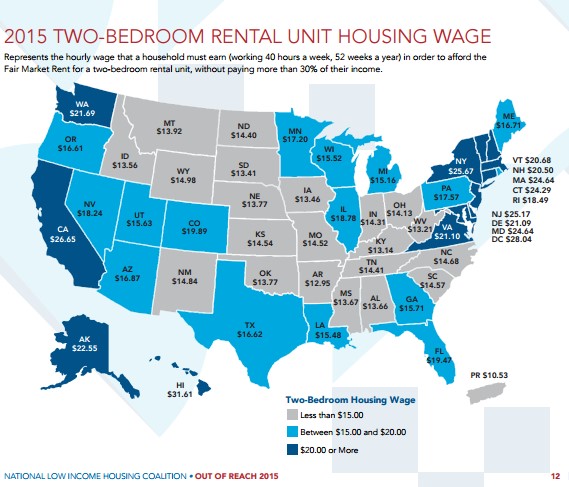
The National Low Income Housing Coalition (NLIHC) recently released its annual Out of Reach report. The report is known for defining the Housing RN-Out of Reach 2015-Cover Page 1Wage; the wage one must earn in order to afford a rental unit at Fair Market Rent (FMR) 1.

According to the most recent Out of Reach report, the 2015 Housing Wage is $19.35 for a two-bedroom unit, and $13.50 for a one-bedroom unit at FMR 2. This means that in order to afford a two-bedroom rental unit, a worker would have to make over 2.5 times the federal minium wage. In fact, in 13 states and Washington, DC the Housing Wage is more than $20 an hour. There is no state in the U.S. where a minimum wage earner can afford a one-bedroom apartment at Fair Market Rent, even if they work full time. NLIHC suggests that the nation needs to add 7.1 million units affordable to Extremely Low Income households in order to meet the demand.

How are Rural Renters Faring?

The Out of Reach report also highlights some of the special challenges faced by residents in rural communities. According to the report, hourly wages in rural areas are insufficient to meet the cost of living, despite lower housing costs compared to nonrural areas. For example, the estimated renter wage in West Virgina is $10.26 and $11.38 in Kentucky, and in both states about 70% of Extremely Low Income renters pay more than half of their incomes toward rent. Paying so much for rent means that there is less money left over for other necessities like food and healthcare.

Two-Bedroom Housing Wage Map 3

RN-Out of Reach 2015-Map

1 Affordable rent is defined as not costing more than 30% of a person’s income. FMR determined by HUD

2 Estimates of Fair Market Rent are produced annually by HUD, and measure the 40th percentile of gross rents for typical, non-substandard rental units occupied by recent movers in a local housing market.

3 National Low Income Housing Coalition. (2015). Out of Reach 2015. Washington, DC. https://nlihc.org/sites/default/files/oor/OOR_2015_FULL.pdf

FOR MORE INFORMATION

Download the Out of Reach report published by National Low Income Housing Coalition

Additional HAC Resources on Housing
HAC’s Decennial Report: Taking Stock: Rural People, Poverty, and Housing in 21st Century.
Access data on housing affordability for your community at HAC’s

GET THE HAC NEWS!

Sign-up for HAC information products

SIGN UP HERE

Housing Assistance Council   |  1828 L Street. N.W., Suite 505, Washington, D.C. 20036
(202) 842-8600 (202) 347-3441 hac@ruralhome.org |

Board Portal

HAC is an equal opportunity provider, employer, and lender. | Civil Rights | Privacy