HAC News: May 27, 2015

HAC News Formats. pdf

May 27, 2015
Vol. 44, No. 11

• June is National Homeownership Month • House subcommittee considers USDA’s housing role • Section 533 Housing Preservation Grants offered • Pilot tests new area loan limit method for Section 502 direct • Rural rental properties urged to host meal programs • RD to reserve 10% of non-housing funds to aid development plans • Rents remain out of reach nationwide • More rural veterans are women • White House reports housing helps lift rural children out of poverty • Young people returning to rural areas most often cite family reasons • Rural Voices features lessons learned from housing mistakes • HAC disaster guide supplement for Oklahoma and Texas flooding available

HAC News Formats. pdf

May 27, 2015
Vol. 44, No. 11

JUNE IS NATIONAL HOMEOWNERSHIP MONTH. Watch HUD’s and USDA RD’s websites for announcements.

HOUSE SUBCOMMITTEE CONSIDERS USDA’S HOUSING ROLE. On May 19 the Housing and Insurance Subcommittee of the House Financial Services Subcommittee held a hearing entitled “The Future of Housing in America: Oversight of the Rural Housing Service.” RHS Administrator Tony Hernandez and Mathew Scirè of GAO testified. Questions from members of Congress focused on cost-effectiveness and the possibility of consolidating USDA and HUD housing programs.

SECTION 533 HOUSING PRESERVATION GRANTS OFFERED. Public agencies, nonprofits, tribes, consortia, rental property owners, and cooperative housing complexes can apply by July 6 for grants to repair or rehab owner-occupied or rental units. Contact Bonnie Edwards-Jackson, RD, 202-690–0759.

PILOT TESTS NEW AREA LOAN LIMIT METHOD FOR SECTION 502 DIRECT. RD state offices in CA, CO, DE, FL, HI, IA, MD, MN, MS, MO, MN, NV, NC, ND, OK, OR, SD, UT, WA, WV, WI, and WY may set area loan limits at 80% of FHA’s 203(b) loan limits. Updated limits (at the link, click the “Forms & Resources” tab) will be effective June 15, 2015. Contact an RD State Office.

RURAL RENTAL PROPERTIES URGED TO HOST MEAL PROGRAMS. An Unnumbered Letter dated May 5, 2015 asks local RD staff to encourage property owners and managers to reach out to local organizations that could operate Food and Nutrition Service offerings such as the Summer Food Service Program. Contact an RD office or an FNS regional office.

TENANT SERVICES CANNOT BE CHARGED TO MULTIFAMILY PROPERTIES’ OPERATING BUDGETS, RD SAYS. An Unnumbered Letter dated April 28, 2015 applies to Section 515 and 514 properties. Contact a USDA RD State Office.

RD TO RESERVE 10% OF NON-HOUSING FUNDS TO AID DEVELOPMENT PLANS. Comment by August 18 on an interim regulation for a program required by the 2014 Farm Bill. A portion of funds from specific community facilities, water and waste disposal, and business and cooperative development programs will be reserved each year for projects that help implement regional economic and community development plans. Contact Aaron Morris, RD, 202-720-1500. For FY15, eligible entities can receive priority points only for year-end pooled funds, according to a notice to be published in the Federal Register on June 1. Contact a USDA RD State Office.

RENTS REMAIN OUT OF REACH NATIONWIDE. The National Low Income Housing Coalition’s annual Out of Reach study found that nationally the housing wage – the hourly wage a person working 40 hours a week would need to afford a modest, two-bedroom rental unit – is $19.35. For a two-bedroom apartment in a nonmetro area the average housing wage is $13.48, almost $3 above the nonmetro renter wage. An interactive website includes data for states and counties.

MORE RURAL VETERANS ARE WOMEN. The percentage of rural veterans who are women has more than doubled since the First Gulf War, and they tend to be younger than the men, according to USDA’s Economic Research Service. In 2013, 55% of rural female veterans were under the age of 55 compared to 26% of rural male veterans. Racial and ethnic diversity among veterans is increasing as well. The Daily Yonder has republished a map showing the percentage of every U.S. county’s population who are veterans.

WHITE HOUSE REPORTS HOUSING HELPS LIFT RURAL CHILDREN OUT OF POVERTY. Opportunity for All: Fighting Rural Child Poverty states that programs like refundable tax credits, Social Security, SNAP, and housing assistance lifted about 9.0 million nonmetro residents out of poverty in 2013, including about 1.6 million children. In addition, aid programs provide long-term benefits by improving children’s education, health, and earnings outcomes later in life.

YOUNG PEOPLE RETURNING TO RURAL AREAS MOST OFTEN CITE FAMILY REASONS. Factors Affecting Former Residents’ Returning to Rural Communities, by USDA’s Economic Research Service, reports that some returnees said they made financial and career sacrifices to return home and other interviewees said those concerns kept them from returning. Housing costs were seldom mentioned.

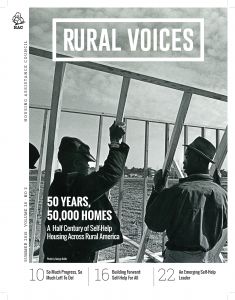
RURAL VOICES FEATURES LESSONS LEARNED FROM HOUSING MISTAKES. A new issue of HAC’s quarterly magazine includes stories from rural housing professionals who share notable mistakes they or their organizations made. Sign up online for email notices when new issues are published.

HAC DISASTER GUIDE SUPPLEMENT FOR OKLAHOMA AND TEXAS FLOODING AVAILABLE.Picking Up the Pieces, HAC’s guide to housing recovery after natural disasters, and a special supplement for the recent floods, are available online. To order free print copies for people and organizations in disaster areas, contact Dan Stern, HAC, 202-842-8600.

HAC News: May 13, 2015

HAC News Formats. pdf

May 13, 2015
Vol. 44, No. 10

• House committee approves THUD spending bill • Senate passes budget agreement • HUD offers lead-paint grants • New version of USDA’s multifamily Preliminary Assessment Tool available • HUD and USDA determine new energy efficiency standards will apply • Guidance released to extend CDBG disaster grants from Hurricane Sandy • Dates set for Section 538 calls • FHFA announces extension of HARP • Worst Case Housing Needs 2015 Report to Congress released • Limits on GSE lending for multifamily mortgages eased • Federal rental assistance and Housing Choice voucher fact sheets released • Webinar recording on Native American housing available • HAC conference on “Serving Veterans in Rural America” set for May 20

HAC News Formats. pdf

May 13, 2015
Vol. 44, No. 10

HOUSE COMMITTEE APPROVES THUD SPENDING BILL. On May 13, the House Appropriations Committee passed the Transportation-HUD subcommittee’s FY16 appropriations bill without changes to HUD spending levels (see HAC News, 4/29/15). The committee rejected an amendment to provide $1.06 million for HOME without diverting money from the National Housing Trust Fund, offered by Rep. Barbara Lee (D-CA).

SENATE PASSES BUDGET AGREEMENT. On May 5, the Senate voted 51 to 48 to approve the House budget, which adds military spending while keeping cuts affecting social programs in place (see HAC News, 4/3/15). The budget is not binding and does not require presidential signature, but it does impose overall caps on federal spending.

HUD OFFERS LEAD-PAINT GRANTS. Local, county, state, and tribal governments can apply for the Lead Hazard Reduction Demonstration and Lead-Based Paint Hazard Control grant programs by June 23. Contact Eric Hornbuckle, HUD, 202-402-7599.

NEW VERSION OF USDA’S MULTIFAMILY PRELIMINARY ASSESSMENT TOOL AVAILABLE. Version 4.0 of the tool for Section 515 or 514 borrowers (see HAC News, 12/22/14) should be used when applying to transfer ownership or for the Multi-Family Housing Revitalization Demonstration Program (at the links, click the “Forms & Resources” tabs). Borrowers that used older PAT guidelines and submitted transactions after December 16, 2014 must use the new version. Contact an RD State Office.

HUD AND USDA DETERMINE NEW ENERGY EFFICIENCY STANDARDS WILL APPLY. New standards will be required for newly constructed homes with USDA Section 502 direct and guaranteed loans and for FHA-insured multifamily and single-family properties. For the HOME program, the standards will apply after publication of guidance by HUD. For more information contact Meghan Walsh, USDA, 202-205-9590.

GUIDANCE RELEASED TO EXTEND CDBG DISASTER GRANTS FROM HURRICANE SANDY. Expenditure extensions can be made for 24 months. For more information, contact Stanley Gimont, HUD, 202-708-3587.

DATES SET FOR SECTION 538 CALLS. To receive emails announcing dates for calls or web meetings in 2015 and 2016, contact Monica Cole at 202-720-1251. Topics will include program activities, perspectives on the current state of debt financing and its impact on the Section 538 program, enhancing the use of program financing with the transfer or preservation of Section 515 units, and the impact of LIHTC program changes on Section 538 program financing.

FHFA ANNOUNCES EXTENSION OF HARP. The Home Affordable Refinance Program will continue through the end of 2016. Launched in 2009 to provide relief to borrowers through lowering monthly payments, HARP was originally set to expire December 31, 2013.

WORST CASE HOUSING NEEDS 2015 REPORT TO CONGRESS RELEASED. HUD reports that although very low-income renters with worst case needs (those who do not receive government housing aid and paid more than half their income for rent, lived in severely inadequate conditions, or both) decreased slightly from 2011 to 2013, need remains high. Nonmetro areas experience less worst case need overall, but face other challenges including high utility costs.

LIMITS ON GSE LENDING FOR MULTIFAMILY MORTGAGES EASED. Fannie Mae and Freddie Mac can increase their financing of multifamily mortgages this year in order to avoid tighter multifamily credit and borrowing costs. Caps will remain at $30 billion each; however, multifamily loans that meet certain qualifications can be excluded. Qualifications are based on the percentage of units priced under a certain area median income, whether the property is in a high cost market, if the units target seniors, and if the property is mixed-income targeted affordable housing.

FEDERAL RENTAL ASSISTANCE AND HOUSING CHOICE VOUCHER FACT SHEETS RELEASED. The Center on Budget and Policy Priorities fact sheets provide state level data on the impacts of HUD rental assistance, the Housing Choice Voucher Program, Housing Choice Voucher utilization data, and sequestration cuts in Housing Choice Vouchers.

WEBINAR RECORDING ON NATIVE AMERICAN HOUSING AVAILABLE. On March 24, HUD hosted a panel discussion and webcast entitled “Native American Housing: Obstacles and Opportunities.” Speakers provided data and described best practices.

HAC CONFERENCE ON “SERVING VETERANS IN RURAL AMERICA” SET FOR MAY 20. Cosponsored by HAC and The Home Depot Foundation, this event in Washington, DC will provide information on housing, health, and employment needs and programs for rural veterans, with a special focus on successful local projects. There is no charge, but registration is requested. To register or for more information, email janice@ruralhome.org.

USDA Rural Development Obligations FY 15 – March

Download complete report (Through March FY 2015)

thumb usda-obs-cover

The Housing Assistance Council (HAC) presents this month’s report on Fiscal Year 2015 USDA Rural Housing program obligations.

As of the end of March, USDA obligated 67,388 loans, loan guarantees, and grants totaling about $8.9 billion. This is $1.5 billion or 11,650 more obligations than the same time last year. Over 88 percent of the obligations represent Section 502 Guaranteed loans.

USDA also obligated 173,073 units of tenant assistance representing $767 million through the combined total of the Section 521 Rental Assistance and the Section 542 Rural Housing Voucher programs. This represents about $16.8 million or 6,493 fewer units than this time last year.

Single Family Housing Program Highlights

The Section 502 Guaranteed loan program, the largest of the Single Family Housing programs, obligated $8.6 billion (62,409) in loan guarantees. Obligations increased by $1.4 billion (10,255 loans) over last month. This is a significant increase over the average monthly obligations of about $1.1 billion (8,000 loans) for the last several months.

For the Section 502 Direct program, there have been about $177 million (1,496 loans). Obligations increased over the last several months to about $72 million (568 loans) for the month. Very low-income loan obligations as a percentage of the total dollars obligated for the program decreased slightly to 33.6 percent of the total dollars obligated. When viewed as a percentage of the number of loans obligated, very low-income loans comprise 37.5 percent of the total number of loans obligated. One reason for this is that the average loan amount for a low-income borrower has been higher than the average loan for a very low-income borrower. In an effort to stimulate loan obligations for the program, USDA provided its field offices a temporary authorization to obligate loans subject to appraisals and also relaxed certain criteria related to refinancing non-agency existing debt.

The Section 504 Repair and Rehabilitation programs obligated 876 loans representing $5.0 million and 1,965 grants representing $12 million. Section 504 activity was a little higher than it was last month for grants but a little lower for loans.

Multi-Family Housing Programs

The Section 538 loan guarantee program increased to 26 obligations totaling $36.9 million.*

Section 521 Rental Assistance obligations total 170,652 units representing $758.8 million* There was a slight decrease in obligations from last month likely from de-obligations of funds by several states and small or no obligations in others. Section 542 vouchers totaled 2,421 units representing $8.5 million, which is $2.1 million or 572 more obligations than this time last year.

*Note that corrections have been made to last month’s reports due to typographic errors regarding Section 538 loans and Rental Assistance obligations.

Download the combined document.

Individual Program Files

Summary Files

Summary of Rural Development Obligations
Summary Data of Rural Development Obligations Compared to Previous Year
Summary Data of Rural Development Obligations Compared to Previous Month
Summary Chart of Rural Development Obligations
USDA Rural Development Eligible Areas

Single Family Housing Program Obligations

Section 502 Direct Homeownership Total Obligations
Section 502 Direct Homeownership Low and Very Low Obligations
Section 502 Guaranteed Homeownership Obligations
Section 504 Total Home Rehab Obligations
Section 523 Self-Help Technical Assistance Grant Obligations

Multi-Family Housing Program Obligations

Section 514/516 Farm Labor Housing Obligations
Section 515 Rental Housing Obligations
Section 521 Rental Assistance Obligations
Section 533 Housing Preservation Obligations
Section 538 Guaranteed Rental Obligations
Multifamily Housing Tenant Voucher Obligations
Multifamily Housing Revitalization Demonstration Program

Unallocated Program Obligations

Section 306 Water/Wastewater Grant Obligations
Section 509 Compensation for Construction Defects
Multifamily and Single-family Housing Credit Sales

* The Rural Housing Service (RHS) monthly obligation reports are produced by the Housing Assistance Council (HAC) 1025 Vermont Ave., NW, Suite 606, Washington, DC 20005. The monthly figures derive from HAC tabulations of USDA –RHS 205c, d, and f report data. For questions or comments about the obligation reports, please contact Michael Feinberg at 202-842-8600 or michael@ruralhome.org.

Newly Appointed Under Secretary of Rural Development Lisa Mensah

Rural Voices - Spring 2015This story appears in the 2015 Spring Edition of Rural Voices

Shares thoughts on the centrality of housing in the USDA Rural Development portfolio

by Lisa Mensah

Since becoming the Under Secretary approximate ly four months ago, I have been focused on lifting up the amazing track record of accomplishments that make up the USDA rural development portfolio. With total outstanding loans and guarantees valued at over $200 billion, the USDA rural development portfolio represents one of the country’s most impressive development banking enterprises. Rural America is better because of the years of investment made through USDA Rural Development programs in housing, utilities, and businesses. Our portfolio of investments is rich in the tradition of investments in rural electric sys tems and water systems along with new invest ments in renewable energy systems, broadband, and value-added agriculture production. In the area of rural housing, however, is where we do our largest work.

In the past five years, USDA Rural Development has helped more than 900,000 rural families buy or refinance a home. In one year–fiscal year 2014 –we helped over 146,000 Americans become homeowners. Rural Development’s Rural Housing Service is the only federal agency that provides one hundred percent financing to qualified families and requires no down payment. Our direct loans can be combined with payment assistance for the purpose of helping low-and very low-income families in rural areas achieve homeownership. Our single-family housing loan guarantee program made available $24 billion in guaranteed loans to allow low- and moderate-income families to purchase homes in rural areas. This guarantee program provides vital support to private markets and comes at a time when our nation still struggles to regenerate the important homeownership market in rural America.

In addition to promoting affordable home ownership, we are committed to preserving rental housing in rural America. Our housing program provides financing for rental housing projects, as well as rental assistance payments for many low-income tenants residing in those projects. Our current portfolio provides housing to over 713,000 low income individuals who live in one of over 14,000 projects supported by our financing. Our ability to support rental hous ing in rural America is part of our conviction that rural America needs to have a full range of housing options in order for workers, farm laborers, families, retirees, and the disabled to all make their contributions to a successful rural community.

I am particularly proud of the work USDA accomplishes in its housing programs. Our staff is committed to building on the legacy that the USDA has established in both its single-family and multifamily programs. I am also proud that our staff understands the current challenges in these programs. I am pleased by the plans now underway to make USDA programs focused on the customer through improved business processes. I am also pleased that we are focused on working with our stakeholders to find the best solutions for preserving multifamily housing in rural America. I am convinced that the best solutions are developed in partnership and thus I am so pleased to consider the Housing Assistance Council a strong partner to our work. Our work cannot grow without advocates who edu cate our leaders and the public about the needs of rural America for safe afford able housing.

I started my career in commercial banking and moved to the Ford foundation where I spent 13 years making grants and loans predominately in rural America in places of high poverty. What I saw in my years at the Ford Foundation, both in the U.S. and in many other countries, was the long hard work of lasting development. While larger economic forces undoubtedly affect the pace of economic change, investing in people and institutions who can create conditions for a business to flourish or for new housing is the path to renewal and hope.

I recently toured a multifamily property in Florida financed by USDA Rural De velopment for farm workers and their families. Often the Under Secretary participates in the groundbreaking or ribbon-cutting for a project. However, in this case, I was able to see a property we had financed 15 years ago. What was striking is how beautiful the property still was after 15 years. The units were in wonderful condition, the laundry room sparkling clean, the community room inviting and the preschool was the kind of warm and nurturing environment
we all want for our children. It was a testament to the hard work and care for maintenance of the residents and property managers and the commitment of those who have worked so hard to bring the project to fruition. It was also a reminder of the lasting rewards that investing in housing can bring. Already a whole generation had benefited from this project and another generation is set to continue to thrive in a safe, affordable and comfortable setting.

What stands out for me as I think about the breadth of programs operated at USDA by the Rural Development team is that we are fortunate to have tools that have been proven to be successful in helping rural communities grow. The loans and grants we make each year con tribute directly to changing communities and inspire private markets to help us go much further in building rural America. I look forward to being a champion for the work of rural development and to calling on the wisdom of the many partners who make our work possible.

RD Headshot MensahLisa Afua Serwah Mensah was nominated by President Obama for the position of Under Secretary of USDA Rural Development and she was confirmed by the U.S. Senate in November of 2014. An expert in using financial tools to improve the economic security of the working poor, Ms. Mensah has experience in the private financial sector and has worked extensively on small and micro business development, housing, and financial and savings policy. Prior to joining USDA, she was the founding Executive Director of the Initiative on Financial Security at the Aspen Institute. Ms. Mensah began her career in commercial banking at Citibank before join- ing the Ford Foundation where she was respon- sible for the country’s largest philanthropic grant and loan portfolio of investments in rural America. Ms. Mensah holds an M.A. from the Paul H. Nitze School of Advanced International Studies of The Johns Hopkins University and a B.A. from Harvard University.

A Promising Concept…With a Harsh Realization

A Promising Concept…With a Harsh Realization

Rural Voices - Spring 2015This story appears in the 2015 Spring Edition of Rural Voices

by Laura Buxbaum

After self-examination, a housing nonprofit in Maine asks, “How did we get here? What might we have done differently? And would we ever, under any circumstances, do it again?”

When I joined CEI as its Director of Housing Resource and Policy Development in 2008, the organization had just begun to develop a new five-year strategic plan. The planning process included a critical look at CEI’s housing development program, which was at a crossroads. CEI was reevaluating its historic housing activity and its current place in the market. One reason for this self-examination was that, as the country was waking up to the full brunt of the housing crisis, CEI, too, awoke to a harsh realization: its housing portfolio was in danger of sinking under the weight of non-performing assets.

The heaviest burden was represented by the 16 remaining homes in our 12-year-old lease-to-purchase program. From the perspective of 2008, this program looked like the culmination of a long series of bad decisions. The properties were scattered from Parsonsfield on the New Hampshire border to Bremen, on the midcoast, to St. Albans, 125 miles north of the southernmost property. CEI’s Construction Analyst noted that “it could take two days to drive to all the sites – if you did nothing but drive.” Seven of the homes were vacant. The occupied homes were inhabited by tenants who had lived there long past the two-year lease/purchase limit. At least three tenants were more than $15,000 in arrears. And due to a combination of plummeting home values, deferred maintenance and, in some cases, tenant damage, all were worth considerably less than CEI had originally paid for them. In 2008, this picture looked like a failed program.

At the time, we didn’t do a lot of soul-searching about how we got there – we just knew it was time to get out. Over the next three or four years, staff worked aggressively to minimize losses and dispose of the properties. Some were sold to the existing residents;
some tenants were evicted; all but one property was sold and we heaved a sigh of relief.

Corey Benedict on Spring Break 2012 - WCN 24-7Corey Benedict on Spring Break 2012 – WCN 24-7 – Creative Commons

But now, with time to reflect, we ask the ques- tions: How did we get there? What might CEI have done differently? What are the specific challenges in a rural state? Was the program really a complete disaster? And would we ever, under any circumstances, offer a lease-purchase program again?

Some background: CEI is a Maine-based Community Development Corporation (CDC) and Community Development Financial Institution (CDFI) founded in 1977 with a mission to help create economically and environmentally healthy communities in which all people, especially those with low incomes, can reach their full potential. From the early years, CEI’s focus was on economic development and business assistance – lending, investment and technical assistance for entrepreneurs and existing businesses, from microenterprises to medium-sized enterprises providing jobs and community economic benefits. While the majority of CDCs began with a focus on housing, for CEI housing came later. As we worked with businesses and low-income communities, we saw the need for affordable rental housing and homeownership, and in 1989 CEI hired a Housing Director and began some small-scale development.

CEI began the lease/purchase program in the mid-1990s, for a number of very good reasons:

  • As a relative newcomer to housing, single-family development seemed suited to CEI’s rural footprint.
  • CEI’s focus at the time was more service-oriented than it is now, and homeownership was seen as a sweet spot of asset building.
  • The single family market values were relatively low, creating an opportunity.
  • Major foundation support provided both operating and capital dollars, making it possible to launch a fully staffed program with capacity to purchase homes.
  • CEI’s strong YouthBuild program also provided support. A home bought at auction and rehabbed by YouthBuild seemed like a no-fail formula – even if the tenant wasn’t able to purchase, CEI was pretty likely to recoup its costs.

The program was targeted to low-income residents. Homebuyer education, counseling, and ongoing case management were built into the program. In the beginning years, with full funding and staffing and a favorable real estate market, the program worked well. Of the 13 properties purchased in 1996 and ’97, 11 were sold to the original tenants – seven within the two-year lease/purchase period. By 2002, the program had served 41 participants. CEI received more grants and low-cost loan capital, enabling the program to ultimately acquire 67 homes.

But by 2001, issues were beginning to emerge. There had been some changes in the program, including staff. From the original model of purchasing foreclosed homes at auction and then finding program participants, the program had moved to a model of finding participants and having them find homes to purchase. While this may have served to increase client satisfaction, it resulted in properties that were widely scat- tered geographically and had a higher purchase price (prices also rose as time went on). In addi- tion, many of the properties required extensive rehab and repairs.

At the time, we didn’t do a lot of soul- searching about how we got there – we just knew it was time to get out.

As first-time homebuyers, most participants did not have expertise in purchasing or evaluating a home, and many seriously underestimated the time, expense, and skill needed to undertake needed repairs. While the initial properties were rehabbed by YouthBuild, later participants were expected to conduct their own repairs. If exten- sive rehab was needed that the lease-purchase client did not have the money or skills to ac- complish, CEI would provide the improvements and add the cost to the ultimate purchase price.

It’s also worth noting that the program was growing in the context of a hot real estate market. The assumption – one shared by the whole country – was that values would continue to climb. This was a dangerous assumption in hindsight.

A 2002 internal evaluation noted that “the lease-to-own period is financially trying for participants. Many of [them] come from a po- sition of having no savings, and then CEI asks them not only to begin putting money away, but also to continue paying comparable rent, invest in house repairs, and pay off preexisting debt.”

The evaluation also noted the slow turnover rate – at that point, only nine of 41 participants had successfully purchased their homes. Many participants had suffered life events such as illness, divorce or job loss. For others, the pro- cess of credit repair and building their savings simply took longer than expected. This left CEI in the position of serving as a scattered-site landlord of properties that often required more maintenance than their residents could provide. At the same time as CEI was trying to provide housing and financial counseling. It seems in retrospect that boundaries and roles may not always have been clear – CEI was, and is, a very mission-driven organization, and its staff wanted each participant to achieve success. It took a truly drastic situation for CEI to evict a participant.

The 2002 evaluation made some recommendations to help the program work more effec- tively. In the next four years CEI sold 28 more homes, 20 of them to the original lease-purchase tenants. CEI also continued to admit participants and purchase homes, though at a slower pace. In the meantime, foundation grants were becoming more competitive and less rich, and program staff was reduced from two full-time staff plus a housing counselor to one staff person with multiple roles and a housing counselor. In the end, we can say that the program did have some successes:

  • Thirty-four lease-purchase renters became owners.
  • Program participants surveyed in the 2002 study overwhelmingly reported positive life changes as a result of participation.
  • All but one of the properties was ultimately sold. (The one that wasn’t sold is still rented by the original lease-purchase participant.)
  • And, net return to CEI on those sales was positive – about $135,000. However, that figure does not include staff time and other program costs.
Lessons Learned

Based on the experience of CEI’s lease-purchase program, we’ve developed a list of Do’s and Don’ts for anyone considering a similar effort:

DON’TS

DO’S

CEI allowed participants to choose their homes from the market, and these were frequently the cheapest available, with extensive rehab and maintenance needs. This compromised the value of the collateral and the ability to recover CEI’s investment, and place a financial burden on both the tenant and CEI to accomplish needed repairs.

Develop or purchase quality homes that will retain their value, not strain the budgets of participants, and protect your investment.

Homes were widely scattered geographically, making it difficult to keep up with property management and resident assistance.

Define a geographically limited, manageable area.

Homebuyer education and counseling, while helpful, may not be enough for some low-income participants to achieve and sustain homeownership. For participants who are already on the edge financially, any crisis can derail homeownership.

Consider a higher income target and tighter parameters for participant selection. Provide ongoing, hands-on support, especially for participants who encounter unanticipated maintenance costs or face major challenges such as divorce, job loss or health problems.

Don’t bury your head in the sand if things aren’t working out.

Deal with delinquency promptly. Transition participants out of the program if they don’t work to improve their credit, save for a downpayment, budget for maintenance, and become “bankable.” Be willing to evict participants who fail to pay rent and don’t work to address the problems.

Don’t assume that participants have the knowledge, skills or capacity to adapt to difficult situations and added costs such as a crowded or substandard home, a long commute that adds expense, or a long do-it-yourself repair list.

Guide participants toward a sustainable situation that will allow for a comfortable life that isn’t burdened by unnecessary challenges.

Don’t assume that the market will continue to rise or hold steady.

If a property is vacant or losing money and the lease-purchase option has failed, sell promptly – even if it means a loss.

It is timely to reflect on these lessons. The economy and real estate market are in a similar place as at the beginning of the lease-pur- chase program. Home values are low in the wake of the economic and foreclosure crisis, but they are rising. Credit for low- and mod- erate-income buyers is extremely tight, and many would-be purchas- ers may have suffered financial and credit damage in the past several years due to job loss, foreclosure, or bankruptcy. Sometimes we view this economic landscape and consider whether the time is right for a new lease-purchase program. We don’t know if we’ll ever try again – but we do know that a new program would be designed with much tighter parameters, with adequate, long-term funding for both program and capital costs, and with full understanding of the lessons learned the first time around.

Laura Buxbaum is Director of Housing Resource and Policy Development for CEI. Laura has worked in community development and nonprofit administration since 1992. She has worked as a community organizer and planner, a program director, deputy director and executive director. She is a member of the Board of Directors of the Maine Affordable Housing Coalition and of the National Rural Housing Coalition

The Gray Panthers of El Dorado, Amador, and Placer Counties: How the Good Guys Finally Won

The Gray Panthers of El Dorado, Amador, and Placer Counties: How the Good Guys Finally Won

Rural Voices - Spring 2015This story appears in the 2015 Spring Edition of Rural Voices

A local citizen-board and a group of rural “housers” kept a project afloat after near-collapse in its early years resulting in a development that now serves the community with 40 units of senior housing

by John Frisk

This is the story of a rural elderly rental housing development in Diamond Springs, CA, the area where the California Gold Rush of 1849 took place. The author originally set out to record only the difficult birth of this project. As the facts revealed themselves, however, the bigger story begged to be told.

The Beginning: RULE 1

If something sounds too good to be true, it may well not be true.

In 1983 the telephone rang in the Loan Fund Division of Housing Assistance Council (HAC). The caller was the late Salvatore Solinas, a beloved and respected program manager at the California Department of Housing and Community Development (DHCD). DHCD staff explained that the “Gray Panthers,” represented by a real estate professional, had applied to DHCD for predevelopment loan funds. Previous proposals by the real estate professional had not proved feasible. DHCD cited a number of concerns but thought the proposal to be possibly feasible.

Within a year, board members and the consultant were threatening and suing each other.

DHCD’s Loan Fund was nearly empty and the agency was unable to fully fund the loan request. Would HAC be interested in a joint venture? Answer: HAC probably would be interested, subject to full staff and Loan Committee review, and approval of the project by both DHCD and HAC.

The Plot Thickens: RULE 2

With a backdrop containing several promising elements, what could possibly go wrong? The answer, as it turned out, was just about everything.

blue-bldg-cropped

The Project Site – The site consisted of two parts. Parcel A was to be the site for a 24-unit Farmers Home Administration (FmHA)- financed elderly project. Parcel B later became the site of 16 additional units. Problems abounded including unbudgeted development costs, a private access to the site (not a municipal street), allocation of water rights from the local water district, and unfunded school fees required for real estate developments. Ultimately, the site’s owner personally bonded the private access and later defaulted on his bond, requiring HAC and DHCD to fund the bonding. The owner eventually left the area in a welter of legal troubles. Project site control, originally seen as an asset, quickly manifested thorny problems. Nevertheless, site purchase and development, with a loan from HAC in May 1984, followed by the DHCD loan, went forward, paving the way for the FmHA project.

The Gray Panthers, Who or What Was It?

Calling herself the project consultant, the aforementioned real estate agent acted as if she was the “Gray Panthers of El Dorado.” Evidence of this belief began to mount. The national Gray Panthers, a vocal advocate organization for elderly rights, objected to the consultant’s use of the Gray Panthers name and denied any connection with the project. The consultant refused to cease using the name.

The consultant demanded to be paid for her organizing and packaging work on the project, a proposition that HAC and DHCD had no authority or funds to provide. She repeatedly asserted that HAC was a federal agency, part of the federal Department of Housing (HUD). She wrote letters to her member of Congress demanding that HAC pay for her services.

The Panthers’ original board of five local citizens quickly became restive and refused to back demands of the consultant that they found unwise. Within a year, board members and the consultant were threatening and suing each other. The consultant then recruited new board members more compliant with her plans for the project. After the project acquired financing from US Department of Agriculture, Farmers Home Administration (FmHA) in 1985, she attempted to sell the project to a developer, apparently to raise funds to pay for her services. FmHA made clear that they would not permit a change of developer under those terms.

The Lawsuits Begin

In February 1987, the FmHA project was completed. In October, the consultant filed a mechanic’s lien against the property setting the stage for a subsequent legal battle. The consultant sued HAC and DHCD and the Gray Panthers.

Unable to acquire or retain legal representation, she filed suit pro se, that is, acting as her own legal counsel. To the surprise of the lenders, the local court, in deference to a party asserting terrible mistreatment, allowed the case to proceed. First the court required the parties to submit to arbitration, an expensive and time consuming process that came to nothing. When the arbitrator found for the lenders, the consultant insisted on a regular judicial proceeding. DHCD was represented by the Attorney General’s office, a local public service advocate represented the Gray Panthers, and HAC retained local counsel. In October 1987, after a four-day jury trial in the El Dorado Superior Court, the court informed the consultant that, failing an agreement to drop all her charges and claims, the court would direct such a verdict. Her agreement to the dismissal of all claims did not prevent her from a later unsuccessful appeal.

The Gray Panthers Become Diamond Sunrise What is it today? RULE 3

With a modicum of luck and a boost from Divine Providence, even a seriously troubled project can be turned around. (Dedicated rural housing professionals and community people are also helpful.)

bb-foliageThe 24-unit FmHA project (later named Diamond Sunrise I) was completed and occupied in 1987, but the years of struggle took its toll. Interested local citizens, FmHA, and DHCD became increasingly concerned with governance and management. In 1990, DHCD asked the Rural California Housing Corporation (RCHC) to make a servicing visit that showed the Gray Panthers to be a “shell corporation” without an effective board. RCHC, with guidance from FmHA, project residents, and community leaders, negotiated a reconstituted board-based nonprofit, Diamond Sunrise Corporation, to assume control and ownership of the project. RCHC staff joined the board of directors, and assisted the board in overseeing the management of the 24-unit development.

RCHC pursued the build out of Parcel B. Six applications were made in 10 years and in 2003, 16 more units of HUD 202 elderly and disabled housing, Diamond Sunrise II, were built and occupied. In 2000, RCHC affiliated with a larger group, Mercy Housing. The two projects have separate, but interlocking boards, and a common management, presently by a management component of Mercy Housing. The specifics of these results could serve as a textbook for small town housing development, but those responsible modestly pass
them off as “all in a day’s work.”

Yet another problem confronted Diamond Sunrise I in maintaining the viability of the original 24 units of USDA FmHA 515 senior housing. The project was unusual in that the rents were subsidized with state funds. When this funding terminated, Diamond Sunrise, with assistance from RCHC/Mercy, was awarded FmHA rental assistance for 23 of the original 24 units. The present 40-unit housing development, whose beginning and early years were so sadly devoid of promise, now looks to the future with a vigorous and viable board, highly competent management, and sound financing and subsidy adequate for the immediate future.

What Can We Learn From This 30-Year Venture?

It Ain’t Easy But It Can Be Done RULE 4

First, a sound sponsor organization is fundamental to a good housing program. In this case, it took years to get to the present positive state of events.

Second, the people who worked with this troubled project over the years came from different points of the compass, but they had a common goal, namely the provision of good quality housing for the older people of this area. They have done this housing work for farmworkers, for the homeless, for families building self-help, for community facilities, and rehabilitation and in countless other forums. They brought their varied skill sets to the affordable housing business with great commitment, in this case, to the community’s elders. They specialize in housing finance, the development process, the law, the art of making government programs work, and a range of private citizen experience, all devoted to housing for their community’s elders. They tend to be modest and self-effacing. This worthwhile
project is a tribute to people who made decent housing happen for poor elderly people in one small community.

John Frisk is the retired Director of the Housing Assistance Council’s Loan Fund.


Credits and Acknowledgements –John Frisk and DHCD Project Manager Georgann Eberhardt were involved, almost daily, for three years of the problematic project startup. Numerous California DHCD staff and HAC staff worked tirelessly and with good humor. The “happy landing” has many parents. A key actor was Stanley Keasling, now CEO of Rural Community Assistance Corporation (RCAC). Mr. Keasling and his staff, during the resurrection of the project, was CEO of Rural California Housing Corporation (RCHC), which, with its affiliate, Mercy Housing California, was deeply involved in the recovery of a healthy Diamond Sunsrise I and II. Special thanks go to Greg Sparks and George Applebaum, now board members of Diamond Sunrise for help with the project history. Mr. Appelbaum was also the attorney for the Gray Panthers in the cited lawsuit. Many others, board members, local and state officials, and FmHA staff, made significant contributions to the survival and success of this housing endeavor.

Trust AND Verify

Rural Voices - Spring 2015This story appears in the 2015 Spring Edition of Rural Voices

A seemingly small oversight can become a big problem quickly

by Wilbur Cave

We recently found ourselves in a very awkward position because we failed to verify the household income of a family wanting to continue to rent a property that we purchased using HOME funding. Normally, household income is one of the very first things done to determine eligibility for U.S. Department of Housing and Urban Development (HUD) HOME-funded projects. For some unexplained reason, the income was not verified, but a commitment was made to the family to continue renting the property after it was acquired and rehabbed. The family has been renting the property for 14 years prior to our purchase and rehab.

So how did this situation evolve? The family came to Allendale County ALIVE, Inc. seeking housing counseling because the landlord indicated that the property was going to be put up for sale. Having lived in the house for more than a decade, the family did not want to move because they had become attached to the house and the neighborhood. When the family approached us about housing counseling, we were looking for a property to acquire and rehab. The family knew that they needed some time before they could purchase the property and was concerned that the house might be sold while they were preparing for purchase. We were seeking a property to purchase if it could be acquired and rehabbed within our $35,000 limit. The family encouraged us to contact the owner to see if something could be worked out. We contacted the owner and he agreed to sell the house at a price that would work within our HOME limit. In the excitement of trying to ensure that the family could continue to live in the property that they had lived in many years, we forgot to verify their income.

The failure to verify income became evident when the rehab was completed and we had to qualify the family and, of course, they were over the household income limit. Although legally, we could require them to move, we felt an obligation to work with them to find a compatible rental property since it was our fault that we didn’t conduct the proper verification prior to committing to continuing to rent the house to them.

For those who wonder how it is that we were able to acquire and rehab a property for $35,000, the answer lies in the fact that Allendale County, SC has the 10th highest rate of poverty among all counties in the United States. Along with the many negative factors that are often present with a high rate of poverty, low property value is also common. Even with low property values in our community, the supply of homes that can be acquired and rehabbed at the HOME limits are few and far between. Nevertheless, we have been fortunate to find properties.

How did we resolve our problem? We decided that we had to find a compatible property for the family to rent. But this was going to be difficult because there was nothing available at that moment. However, a short time later, we identified four properties that the owner would be willing to work with ALIVE to acquire. One of the four properties was just the right size to accommodate the family, and the house was located in a nice neighborhood. The house needed a minimum amount of work to be move-in ready andthat is rural and has a high rate of poverty.

Had it not been for the availability of the property at the right time and the willingness of the owner to work with ALIVE, we would be in a difficult situation, and would have likely had to return the $35,000 back to the Participating Jurisdiction. Little things can trip you up and cause significant problems that can be very difficult to solve. We are thankful that we prevented an ugly circumstance, not to mention the possible damage that could have been done to our organization’s reputation that has taken 16 years to cultivate and develop.

Wilbur Cave is the Executive Director of Allendale County Alive in Allendale, SC.

Underestimating Bureaucracy in Bureaus

Rural Voices - Spring 2015This story appears in the 2015 Spring Edition of Rural Voices

Cutting through red tape on tribal lands comes with unique pitfalls

by Marvin Ginn

As a community development officer with a regional bank, I worked to begin mortgage lending on Tribal Trust Lands. I thought the process would be very similar to ‘fee simple’ lending and started getting clients approved for the mortgage. Well, this went downhill really quickly. I determined that we would need mortgage codes in place for this process.

When you are dealing with Tribal Sovereignty, there are many issues that can come up. A mortgage code must be in place and accepted by the different branches of the federal government in order for mortgage lenders to have any type of recourse. These codes lay out the policies and procedures for leases, eviction, lean priority and foreclosure.

What I had not considered is that many of our tribal leaders did not understand that this process would never endanger lands belonging to the tribe. Two different tribes made this process difficult for me. One of the tribes required 100 percent approval from the tribal council before the code could be passed. This approval process involved presentations over several years to the council before we could secure the necessary votes. The challenge was the elders’ mistrust of the system and fears they might lose their land to these mortgage lenders. I spent many long days at the tribe getting this done.

I thought the process would be very similar to ‘fee simple’ lending and started getting clients approved for the mortgage. Well, this went downhill really quickly.

The other tribe provided a similar challenge, but I was working directly with a tribal member who had already been approved for a loan, rather than a full council. It still took us three years to get the codes in place before we started building. To this day, there are still a few tribes that do not have mortgage codes in place.

This issue was further complicated by separate documentation for the home sites. We were mainly dealing with HUD, and we had a lease that covered their requirements. Little did I know, the HUD lease documentation was not sufficient for USDA or VA administered loans.

We then had to write leases that included the concerns of each department of the government. Yet another complication were National Environmental Policy Act (NEPA) requirements. Again, we encountered the challenge of different reporting formats for each department of the government. Today, things have changed and the process is more streamlined. But improvements are still needed.

We worked with HUD, USDA, VA and the Bureau of Indian Affairs (BIA) to adopt the same format on the NEPA documents. Most of our leases are accepted by each department, but we still have challenges with wording in some of the leases. I can now close a loan within six to nine months which is far better than my first one which took me three years. I know this still sounds like an incredibly long time, but we are making progress and the effect of having affordable housing in Indian country is positive.

Marvin Ginn is Executive Director of Native Community Finance (NCF). NCF provides financial education, community oriented affordable loans, VITA/TCE tax site, IDA program, and mortgage assistance services. NCF is one of three certified Native Community Development FinancialInstitutions in New Mexico.

Always Improving, One Misstep at a Time

Rural Voices - Spring 2015This story appears in the 2015 Spring Edition of Rural Voices

“I have not failed. I have just found ten thousand ways that won’t work.” Thomas Edison was no stranger to failures, but he took a healthy approach to mistakes.

By Nick Mitchell-Bennett and Kathy Tyler

Strange as it may sound, we like making mistakes. Often we learn more from mistakes than doing it right the first time. Since we must be risk-takers we have ample opportunity to fail. We must take risks to help those we serve gain access to affordable housing, affordable financing, education, or any of the hundreds of things we do in our work. Like Thomas Edison, we’ve learned not to be afraid of mistakes but to enjoy the teaching moments they offer. The trick is learning the best alternative for the next try (since some of us cannot afford Edison’s 10,000 ways that won’t work)!

We made plenty of mistakes together when we formed the Texas 502 Packaging Collaborative . We watched other groups in other states create these partnerships and we wanted to replicate the partnership in Texas to increase the number of USDA Section 502 Homeownership loans and increase revenue for participating organizations.

Our two organizations, Community Development Corporation of Brownsville (CDCB) and Motivation, Education and Training, Inc. (MET), have strong track records. Collectively we build and finance hundreds of homes each year, develop multi-family projects, and improve migrant farmworker housing. We educate youth and farmworkers, and launch them into new professions. We run a real estate company and Head Start programs collectively.

So when we set out to form the 502 Collaborative, we assumed it would be an easy, natural next step. We assumed wrong.

Too many moving parts influenced by a range of decision makers not in our control meant projects more at-risk for what might go wrong.

Although partnerships can be fraught with difficulties, we have had some success and the Texas 502 Collaboration survives today. But we continue to struggle getting the scale we want and need.

After stumbling through this for a few years, we can name mistakes and summarize lessons learned in three points:

  • Get the right partners.
  • Build relationships with those partners.
  • Do what you do best with the time you have.
Get the Right Partners

Our first mistake was selecting too few of the right organizations. We did not do enough homework to vet the organizations we selected. We thought we had the right groups, but we were wrong. We needed high-production groups, no matter their size. We needed organizations that understood how to find clients, had staff with the skill set to package loans, and that could manage risk. We needed organizations with understanding and willingness to add loan packaging as a core business. Too many were attracted to the possibility of generating income without understanding the staffing and work required to deliver the 502 package.

We convinced state leaders about the efficacy of the collaboration. We even successfully advocated for $500,000 from the Texas Department of Housing and Community Affairs to reduce the 502 mortgages. But again, our homework was incomplete. We were not able to absorb the funding within its limited timeframe. Even worse, the USDA Section 502 funding that year came inconsistently through Congressional Continuing Resolution stops and starts, hurting our planned timeframe. Too many moving parts influenced by a range of decision makers not in our control meant projects more at-risk for what might go wrong. In our case, the dollars lined up, but the timing and partnerships did not.

Build the Relationships With Those Partners

After recruiting, training, and forming the Collaborative, we failed at fully communicating to the partners the next steps we needed to take for this collaboration to succeed. We tried to move too quickly! We held a successful 502 training, and then we went back to our daily work. The groups in the Collaborative needed more training. It was our responsibility to really help these organizations commit the time and money needed to package USDA loans. Nick went back to CDCB, making sure its staff were fruitful packagers. Kathy, having led the recruitment, returned her attention back to farmworker housing at MET. We handed over the collaboration to others’ leadership for implementation far too early. Initially we did not even notice that there were no successful packagers other than CDCB. We would have noticed if we had taken the time to listen to the groups and hear what more was needed for them to be comfortable with the packaging work.

Do What You Do Best With the Time You Have

In the nonprofit world, over-reaching is a common mistake. We tend to take on too much too often. Too often we think our organizations can do it all. This 502 Collaborative project meant recruiting groups, organizing trainings, raising funds, working with USDA and the state housing agency. In short, we underestimated the time we needed to invest. We should have brought others to the team earlier with time and dedication to see this through to the end. We had each set aside enough time to get the project started, but not enough time to get it to move smoothly and see it through.

Texas Community Capital still successfully runs the program. The two of us – the dreamers and instigators creating the Texas 502 Collaborative – failed to invest the time and attention to strengthen the Collaborative during its early stages. There were plenty of obstacles to come – uneven federal funding over the years, retirements and staff changes at every level and within every organization, and changing USDA regulations. A stronger framework would have helped.

Mistakes happen; we fail; but we need to learn and embrace these failures – then move on. A sign of physical fitness is how quickly one’s heart rate returns to its resting rate after stress. A sign of organizational fitness might be how quickly we learn from our mistakes and apply it to our next shot at success.

Kathy Tyler has worked in the affordable housing development and finance field for more than 35 years, in neighborhood, urban, rural, and farmworker settings. Currently and for this last decade she directs farmworker housing programs for Motivation Education & Training Inc. She still makes many mistakes. Nick Mitchell-Bennett has spent the past 25 years building and financing affordable housing trying to make as few mistakes as possible.

Farmworker Housing Travails from Pennsylvania

Rural Voices - Spring 2015This story appears in the 2015 Spring Edition of Rural Voices

PathStone stayed the course through a ten-year predevelopment process and emerged a stronger real estate developer.

by John Wiltse

Adams County, Pennsylvania, is famous for the Gettysburg battlefields but less well-known outside the immediate vicinity as a major fruit-growing region with a large migrant and seasonal farmworker population. Since 1978, PathStone Corporation, based in Rochester, NY, has been providing critical housing and human services to Adams County farmworkers.

PathStone provided technical assistance to the Adams County Housing Authority for the development of the 12-unit McIntosh Court Apartments, the first off-farm labor housing community in Pennsylvania, which was completed in 1989. We also administered an on-farm housing rehab program in Adams and Berks Counties and developed several other multifamily projects which served both farmworkers and other low income families in the area.Jonathan Court Groundbreaking

In 1995, buoyed by the successful completion of the first USDA Section 514/516 farm labor housing projects in New Jersey, New York, Ohio and Pennsylvania, PathStone began pre-development work for Jonathan Court. The development is the first-ever Federally funded off-farm migrant housing complex in PathStone’s service area, located down the road from McIntosh Court among the peach and apple orchards of south central Pennsylvania.

This organization was managed by volunteers with no paid staff and no housing development experience whatsoever.

At the time, PathStone was under contract with USDA Rural Development (RD) to provide technical assistance to other non-profits to assist them in developing farm labor housing projects. We secured a commitment from a local faith-based organization, Fruitbelt Ministries, to serve as sponsor/owner of the project, and we helped them modify their organizational structure to conform to the “broad-based membership organization” structure required by RD at the time. This organization was managed by volunteers with no paid staff and no housing development experience whatsoever.

First Lesson Learned: Don’t Try This At Home!

PathStone learned through this and a farmworker housing project located in New Jersey that the development and ownership of a multi-family housing complex is best left to organizations with paid staff trained (or at least in training) to undertake these responsibilities and with affordable housing as a central part of their organizational history and mission.

In the case of the Jonathan Court project, PathStone wound up taking over development of the project due to changes in priorities for Fruitbelt Ministries. In a similar situation in New Jersey, PathStone staff became the de facto staff for the volunteer-run nonprofit membership organization we established to own the first and only 514/516 project in that state.

Our lessons learned here are that change can come very slowly.

The project site for Jonathan Court was an assemblage of three lots, plus two additional parcels with existing family apartments. The existing apartments were going to be part of the project initially, but were later excluded from the deal. There was public water and sewer available and a building boom was going on in the area, so the landowner had no interest in signing our proposed option agreement. After several months of fruitless negotiations, Fruitbelt Ministries borrowed $136,000 from a national nonprofit organization through their revolving loan fund and bought the land. The lender insisted that PathStone guarantee the loan, so it’s not hard to see how we wound up in the driver’s seat on this deal!

pathstome-smiles

For the next eight years or so, this project proceeded down a long and winding development path. PathStone had four different Pennsylvania housing directors over this period and inconsistent project management direction from the Rochester headquarters. The Pennsylvania State Executive Director provided skilled leadership for all PathStone human service programs in the state in addition to housing development, but did not have specific real estate development training or expertise.

Second Lesson Learned:

Make sure housing development staff are directed and supported by experienced housing developers and provide consistent supervision and training, especially through key staff transitions.

Immediately after purchasing the site, we started to receive monthly bills for reservation of sewer capacity from the Possum Valley Sewage Authority. The lack of as-of-right sewer access was overlooked in the due diligence process and wound up adding about $120,000 to the project cost. Another expensive lesson learned!

Getting through the local approvals process proved to be more involved than anticipated, stretching out over two years. Each time we thought we were close to securing the necessary approvals, the local planning board would come forward with a new requirement, report or study that needed to be completed, each of which required the expenditure of additional time and money. We erred in not getting the full scope of the planning board review requirements up front, in writing (though some of these requirements did, in fact, change during the pre-development process).

Working with RD was also challenging, to say the least. RD interpretations of the design guidelines and requirements changed several times during the protracted pre-development stage, necessitating at least three sets of architectural drawings and many months
of additional architectural and engineering work.

In October 1998, the USDA multi-family housing statute was amended to allow owners of off-farm migrant housing projects financed under its Labor Housing Program (Section 514/516) to use RD Rental Assistance funds to provide an annual operating assistance grant to the project (instead of providing individual rental assistance to each household). PathStone decided to take advantage of this new opportunity and the operating budget was revised to show the projected operating assistance in lieu of traditional RA.

In June 2003, five years after the operating assistance change was made to the statute, the National Office of RD finally released a Proposed Rule for the implementation of this change. Although the operating assistance mechanism was put into place by several RD-financed migrant projects in other states, RD in Pennsylvania was unable to process our requests for this subsidy funding.

pathstone-farmworkers

As of this writing, PathStone has amassed operating deficits of over $300,000 from Jonathan Court over the past 10 years and RD has yet to release any operating assistance. Thankfully, RD staff have recently joined in negotiations with PathStone and we hope
to have a resolution to the past due operating assistance by the time this is printed. Our lessons learned here are that change can come very slowly. at RD and that each RD State Office operates with a high degree of autonomy. PathStone had been aware of both of these facts, but Jonathan Court put a very painful price tag on these lessons!

The Good News:

The 14 apartments in the Jonathan Court project have continued to provide decent, safe housing for hundreds of farmworkers and their families over the past 10 years. The housing is operated in close coordination with the PathStone farmworker services office just down the road and our residents are often enrolled in job training programs and are receiving other supportive services. Their children are often served by the Migrant Head Start Center also operated by PathStone.

Which Brings Us to One Final Lesson Learned:

Include supportive services staff on the development team from the beginning.

Our farmworker service staff just down the road from the site could have been much more involved in the project throughout the process if they had been fully engaged by the real estate development staff.

We have been able to carry the operating deficit as a receivable on our books all these years with advances from our unrelated property management reserves. We have made many changes to the way we manage the development of multi-family housing as a result of the mistakes made on Jonathan Court but, as any experienced developer will tell you, every deal presents a fresh set of challenges and opportunities to learn from new mistakes. Our real estate developers in each state now report to the Senior VP for Housing in Rochester and are supported by a strong internal team. The PathStone Asset Management Committee (composed of the President & CEO, CFO, Senior VP for Housing and Senior VP for Property Management) also provides a level of oversight of our development projects that wasn’t in place for Jonathan Court.

John Wiltse is the Senior Operations Director at PathStone Corporation in Rochester, New York. John cut his teeth on rural community development work at the Cranks Creek Survival Center in Harlan County, KY, as a college intern and has worked in the field for 24 years with PathStone.

GET THE HAC NEWS!

Sign-up for HAC information products

SIGN UP HERE

Housing Assistance Council   |  1828 L Street. N.W., Suite 505, Washington, D.C. 20036
(202) 842-8600 (202) 347-3441 hac@ruralhome.org |

Board Portal

HAC is an equal opportunity provider, employer, and lender. | Civil Rights | Privacy