HAC News: February 18, 2015

HAC News Formats. pdf

February 18, 2015
Vol. 44, No. 4

• February is National African American History Month • USDA offers Household Water Well System grants • HUD-VASH vouchers will expand to Native American communities • Regulators request input on CRA and other banking rules • HUD announces Annual Adjustment Factors • USDA RD revamps website • Worst case housing needs drop • Changes in housing and other policies could reduce child poverty by 60% nationwide • HUD reports on ways housing matters to children • Affordable housing can improve educational outcomes • Sequestration and its impacts described • Economic recovery is bypassing millions of Americans, CFED reports • Regulatory costs may drive small bank mergers

HAC News Formats. pdf

February 18, 2015
Vol. 44, No. 4

FEBRUARY IS NATIONAL AFRICAN AMERICAN HISTORY MONTH. President Obama’s proclamation is online.

USDA OFFERS HOUSEHOLD WATER WELL SYSTEM GRANTS. Nonprofits can apply by April 13 for grants to establish lending programs enabling homeowners to borrow up to $11,000 to construct or repair household water wells for existing homes. Contact Joyce M. Taylor, RUS, 202-720-9589.

HUD-VASH VOUCHERS WILL EXPAND TO NATIVE AMERICAN COMMUNITIES. HUD has announced it will dedicate $4 million to make vouchers for about 650 homeless veterans available in Native communities for the first time. Comments on program design are due February 25 to tribalhudvashcomments@hud.gov. Contact HUD’s Office of Native American Programs.

REGULATORS REQUEST INPUT ON CRA AND OTHER BANKING RULES. Comments are due May 14. The Federal Reserve, FDIC, and Comptroller of the Currency pose questions about ways to reduce regulatory burden, particularly on community banks and small lenders.

HUD ANNOUNCES ANNUAL ADJUSTMENT FACTORS. The FY15 AAFs will be used to adjust Section 8 rents on contract anniversaries. Contact Becky Primeaux, HUD, 202-708-1380.

USDA RD REVAMPS WEBSITE. The new site, https://www.rd.usda.gov, moves regulations, handbooks, and other guidance documents to https://www.rd.usda.gov/publications/regulations-guidelines.

WORST CASE HOUSING NEEDS DROP. From 2011 to 2013 the number of worst case needs – very low-income renter households who do not receive government housing assistance and who pay more than one-half of their income for rent, live in severely inadequate conditions, or both – fell from 8.5 million to 7.7 million. Increases in renter incomes and limited increases in rents are probably responsible, according to the executive summary of HUD’s annual worst case needs report. In 2013 there were still 1.6 very low-income households with worst case needs for every very low-income household that received rental assistance, HUD says. The full report will be released this spring.

CHANGES IN HOUSING AND OTHER POLICIES COULD REDUCE CHILD POVERTY BY 60% NATIONWIDE. Child poverty in nonmetro places could be cut by 68.2%, according to Reducing Child Poverty in the U.S., prepared by the Urban Institute for the Children’s Defense Fund. The report examines the poverty reduction impact of nine policies, ranging from expanding the Earned Income Tax Credit to increasing SNAP benefits. Expanding the availability of housing vouchers would reduce child poverty by 21.3% in metro areas and 16.4% in nonmetro places. The report, a summary of recommendations, and a blog post are available online.

HUD REPORTS ON WAYS HOUSING MATTERS TO CHILDREN. An issue of HUD’s Evidence Matters newsletter focuses on how housing matters for children’s physical and emotional health, achievement in school, and economic opportunity. A HAC Rural Research Note summarizes some of the research’s implications for rural children.

AFFORDABLE HOUSING CAN IMPROVE EDUCATIONAL OUTCOMES. An updated literature review by the National Housing Conference’s Center for Housing Policy presents key findings from research showing that stable, affordable housing may foster educational success by supporting family financial stability, reducing mobility, providing safe, nurturing living environments, and providing a platform for community development.

SEQUESTRATION AND ITS IMPACTS DESCRIBED. The government spending reductions required by the 2011 Budget Control Act are now achieved through spending caps, not across-the-board cuts as in FY13. A new paper by the Center on Budget and Policy Priorities describes the mechanisms established in the law, how policymakers subsequently modified them, and the resulting effects on non-defense appropriations. It notes that under the BCA “in inflation-adjusted terms, the 2016 cap would be 17 percent below the 2010 level.”

ECONOMIC RECOVERY IS BYPASSING MILLIONS OF AMERICANS, CFED REPORTS. Excluded from the Financial Mainstream presents the main findings from CFED’s 2015 Assets and Opportunity Scorecard, which evaluates 135 different policy and outcome measures in five categories including housing. Infographics and interactive maps are also available online.

REGULATORY COSTS MAY DRIVE SMALL BANK MERGERS. The State and Fate of Community Banking, a Harvard Kennedy School working paper, reports that community banks play a major role in rural areas and in agriculture, small business, and residential mortgage lending. Since 2010 the total share of bank assets held by community banks, especially small ones, has fallen significantly, and the report concludes the increased costs of regulation under the Dodd-Frank Act are a likely cause.

HAC News: February 4, 2015

HAC News Formats. pdf

February 4, 2015
Vol. 44, No. 3

• FY16 funding process begins • Rural housing budget requests more rental funding, less for self-help, and minimum rent for tenants • HUD proposed budget for 2016 boosts funding • HUD issues Housing Trust Fund interim rule • Property owners must notify tenants before final payment on Section 515 or 514 loans • Guidance issued to help RD staff set voucher amounts • RD announces FY15 funding policy for Sec. 523 self-help grants • CFPB hopes to facilitate small creditor and rural lending • Supportive Services for Veteran Families grantees can apply for renewals • FHFA proposes minimum financial thresholds for non-banks

[tdborder][/tdborder]HAC News Formats. pdf

February 4, 2015
Vol. 44, No. 3

FY16 FUNDING PROCESS BEGINS. On February 2 the Obama Administration released its budget request for FY16, which begins October 1, 2015. The total for discretionary programs exceeds the Budget Control Act’s caps. The next step will be congressional hearings. More details about the budget’s housing portions are on HAC’s website. HAC will present a rural housing budget webinar on February 6, which will be archived online for later listening.

RURAL HOUSING BUDGET REQUESTS MORE RENTAL FUNDING, LESS FOR SELF-HELP, AND MINIMUM RENT FOR TENANTS. The budget would keep many of USDA’s rural housing programs at or near their FY15 levels, and would increase funds for some. Only $10 million is requested for Section 523 self-help; RD officials told HAC they expect to have enough carryover funds available to renew expiring contracts. Like last year’s budget, this one proposes some changes in the Rental Assistance program, including a $50 minimum rent. Some Section 515 funds would be available for new construction. Section 542 voucher funding would be more than doubled, and vouchers would be available for tenants of Section 515 properties leaving the program for any reason, not just foreclosure.

USDA Rural Dev. Prog.
(dollars in millions)

FY13
Approp.a

FY14
Approp.

FY15 Admin. Bdgt.

FY15
Approp.

FY16 Admin. Bdgt.

502 Single Fam. Direct
Self-Help setaside

$900
5

$900
5

$360
0

$900
5

$900
0

502 Single Family Guar.

24,000

24,000

24,000

24,000

24,000

504 VLI Repair Loans

28

26.3

26.3

26.3

26.3

504 VLI Repair Grants

29.5

28.7

25

28.7

26

515 Rental Hsg. Direct Lns.

31.3

28.4

28.4

28.4

42.3

514 Farm Labor Hsg. Lns.

20.8

23.9

23.9

23.6

23.9

516 Farm Labor Hsg. Grts.

7.1

8.3

8.3

8.3

8.3

521 Rental Assistanceb

907.1

1,110

1,089

1,089

1,172

523 Self-Help TA

30

25

10

27.5

10

533 Hsg. Prsrv. Grants

3.6

3.5

0

3.5

0

538 Rental Hsg. Guar.

150

150

150

150

200

Rental Prsrv. Demo. (MPR)

17.8

20

20

17

19

542 Rural Hsg. Vouchers

10

12.6

8

7

15

Rural Cmnty. Dev’t Init.

6.1

6

0

4

4

a. Figures shown do not include 5% sequester or 2.5% across the board cut. b. The final FY13 appropriation for RA included a $3 million 514/516 setaside; the final appropriations for FY14 and FY15 have no setasides.

HUD PROPOSED BUDGET FOR 2016 BOOSTS FUNDING. The budget proposes increases above 2015 appropriated levels in almost all HUD programs. CDBG would be cut, but it and many others are proposed at the same levels as in the President’s FY15 budget. The maximum CDBG setaside for Southwest border colonias would increase to 15% from the current 10%. No funds are requested for the Rural Innovation Fund or the Rural Housing and Economic Development program. For the third year in a row, the budget proposes to make SHOP a $10 million setaside within HOME. Also proposed is a new $300 million “Local Housing Policy Grants” program for localities “to support new policies, programs, or regulatory initiatives, such as design options, process changes, and land use regulations.”

HUD Program
(dollars in millions)

FY13
Approp.a

FY14
Approp.

FY15
Admin. Bdgt.

FY15
Approp.

FY16
Admin. Bdgt.

Cmty. Devel. Fund
CDBG

3,308
2,948

3,100
3,030

2,870
2,800

3,066
3,000

2,880
2,800

HOME
SHOP setaside

1,000
b

1,000
b

950
10

900
b

1,060
10

Self-Help Homeownshp. (SHOP)

13.5

10

b

10

b

Tenant-Based Rental Assistance
VASH setaside

18,939.4
75

19,177.2
75

20,100
75

19,304
75

21,123
c

Project-Based Rental Asstnce.

9,339.7

9,516.6

9,346

9,330

10,360

Public Hsg. Capital Fund

1,886

1,875

1,925

1,875

1,970

Public Hsg. Operating Fund

4,262

4,400

4,600

4,440

4,600

Choice Neighbrhd. Initiative

120

90

120

80

250

Native Amer. Hsg. Block Grant

650

650

650

650

660

Homeless Assistance Grantsd

2,033

2,105

2,406.4

2,135

2,480

Hsg. Opps. for Persons w/ AIDS

334

330

332

330

332

202 Hsg. for Elderly

377

385.3

440

436

455

811 Hsg. for Disabled

165

126

160

135

177

Fair Housing

70.8

66

71

65.3

71

Healthy Homes & Lead Haz. Cntl.

120

110

120

110

120

Housing Counseling

45

45

60

47

60

Local Housing Policy Grants

300

a. Figures shown do not include 5% sequester. b. In FY13, FY14, and FY15 SHOP was funded under the Self-Help & Assisted Homeownership Opportunity Program account. Recent Obama budgets have proposed making the program a setaside in HOME. Congress has rejected that proposal. c. VASH vouchers for homeless veterans would be part of a new $177.5 million account of incremental rental vouchers for families, veterans, and tribal families experiencing homelessness and for victims of domestic violence. d. Includes the Rural Housing Stability Program, which is not yet operational.

HUD ISSUES HOUSING TRUST FUND INTERIM RULE. HUD will request public comments on the interim rule after funding is available and states gain experience administering the HTF. Contact Marcia Sigal, HUD, 202-708-2684. HUD has also launched an HTF resource page and an email list. HTF funding is expected to be available from Fannie Mae and Freddie Mac (see HAC News, 12/22/14), although H.R. 574, introduced in Congress, would block those monies.

PROPERTY OWNERS MUST NOTIFY TENANTS BEFORE FINAL PAYMENT ON SECTION 515 OR 514 LOANS. An Unnumbered Letter dated Jan. 16, 2015 provides a form letter for property owners, requiring them to notify tenants 12 months before a USDA loan will be paid off in the regular course of business. (It does not apply when a loan is prepaid.) The form letter lists provisions to be included in the letter to tenants. HAC recommended this action in a letter to USDA last August (see HAC News, 8/20/14). Contact Laura L. Horn, 386-328-5051, ext. 100.

GUIDANCE ISSUED TO HELP RD STAFF SET VOUCHER AMOUNTS. Section 542 vouchers – for tenants in properties with prepaid or foreclosed Section 515 mortgages – are based on rents for modest apartments in the same market area. An Unnumbered Letter dated Jan. 16, 2015 explains how to calculate these comparable market rents. Contact Thomas Ale, USDA, 202-720-1620.

RD ANNOUNCES FY15 FUNDING POLICY FOR SEC. 523 SELF-HELP GRANTS. A message sent to USDA RD’s single-family email list explains that grantees funded in FY14 at 90% of their request can request the remaining 10%. Existing grantees performing satisfactorily may renew at the same amount as their current grants. One new grantee will be selected in each region and new grantees can also replace grantees that have left the program. Contact an RD office.

CFPB HOPES TO FACILITATE SMALL CREDITOR AND RURAL LENDING. Comments are due March 30 on a proposed rule that would expand the definitions of small creditors and rural places in the Consumer Financial Protection Bureau’s mortgage regulations. It would also make some time frames more flexible for small creditors and those serving rural or underserved places. Contact Amanda Quester, CFPB, 202-435-7700.

SUPPORTIVE SERVICES FOR VETERAN FAMILIES GRANTEES CAN APPLY FOR RENEWALS. Nonprofits and consumer cooperatives with existing SSVF programs can apply by March 17 for grants to prevent veteran homelessness. Contact the VA’s SSVF staff, 877-737-0111, SSVF@va.gov.

FHFA PROPOSES MINIMUM FINANCIAL THRESHOLDS FOR NON-BANKS. These new eligibility requirements include net worth, capital, and liquidity criteria for mortgage seller/servicers to do business with Fannie Mae and Freddie Mac. FHFA is accepting comments before finalizing the criteria in the second quarter of 2015, but has no specific deadline.

HAC News: January 21, 2015

HAC News Formats. pdf

January 21, 2015
Vol. 44, No. 2

• State of the Union message addresses broad themes, touches on housing • President’s FY16 budget expected February 2 • Rural housing program eligibility changes effective February 2 • Congressional committee leadership takes shape • Fair housing comments reopened on one issue for small entities • EPA suggests altering lead paint training rule • HUD proposes changes for project-based Section 8 and for Section 202 • New USDA notice issued on domestic violence • USDA RD reminds staff of prepayment requirements • RD gives lead paint guidance • Map shows FHA premium cuts by county • LIHTC tenants described in HUD publication •

January 21, 2015
Vol. 44, No. 2

STATE OF THE UNION MESSAGE ADDRESSES BROAD THEMES, TOUCHES ON HOUSING. President Obama’s January 20 speech began with the story of a Minnesota family who recently were able to buy their first home. A later mention of “lower mortgage premiums” apparently referred to the President’s recent action to lower HUD FHA mortgage costs (see HAC News, 1/7/15).

PRESIDENT’S FY16 BUDGET EXPECTED FEBRUARY 2. For the first time in several years, the Administration’s budget request will be released on time. The Budget Control Act’s spending caps will apply to final appropriations for FY16. Check ruralhome.org on February 2 for details.

CONGRESSIONAL COMMITTEE LEADERSHIP TAKES SHAPE. Chairs and ranking minority members of the housing-relevant committees in the new 114th Congress are mostly in place. In the Senate, Richard Shelby (R-AL) and Sherrod Brown (D-OH) have been named chairman and ranking minority member on the Banking Committee. For the Appropriations Committee those spots are held by Thad Cochran (R-MS) and Barbara Mikulski (D-MD). New Senate Appropriations subcommittee chairmen and ranking members are Jerry Moran (R-KS) and Jeff Merkley (D-OR) on Agriculture and Susan Collins (R-ME) and Jack Reed (D-RI) on Transportation-HUD. In the House, Jeb Hensarling (R-TX) and Maxine Waters (D-CA) continue as the chairman and ranking member of the Financial Services Committee. For that panel’s Housing and Insurance Subcommittee, Reps. Blaine Luetkemeyer (R-MO) and Emanuel Cleaver (D-MO) are the new leaders. Harold Rogers (R-KY) and Nita Lowey (D-NY) continue as chairman and ranking member of the House Appropriations Committee. Rep. Robert Aderholt (R-AL) will continue as chairman of the House Appropriations Subcommittee on Agriculture and Rural Development, and Rep. Mario Diaz-Balart (R-FL) will be the new chairman of the Subcommittee on Transportation-HUD. Ranking minority members are Rep. Sam Farr (D-CA) continuing on the Agriculture Subcommittee and Rep. David Price (D-NC) as the new ranking on T-HUD.

FAIR HOUSING COMMENTS REOPENED ON ONE ISSUE FOR SMALL ENTITIES. In response to comments received on its July 2013 proposed rule on Affirmatively Furthering Fair Housing, HUD is considering giving states, insular areas, small PHAs, and small entitlement jurisdictions more time than others to prepare their first Assessments of Fair Housing. Comments on this specific topic are due February 17. Contact Camille Acevedo, HUD, 202-708-1793.

EPA SUGGESTS ALTERING LEAD PAINT TRAINING RULE. Intended to reduce burdens on industry and the EPA, a proposed rule would eliminate the requirement that refresher training for renovators have a hands-on component, remove jurisdiction-specific certification and accreditation requirements, and clarify requirements for training providers. Comments are due February 13. Contact Marc Edmonds, EPA, 202-566-0758.

HUD PROPOSES CHANGES FOR PROJECT-BASED SECTION 8 AND FOR SECTION 202. Comments are due March 16. One proposed rule would amend HUD’s regulations for Management and Occupancy Reviews (MORs) at project-based Section 8 properties, and reduce payments HUD makes to owners for vacant project-based Section 8 or Section 202 units. Another would reduce the frequency of MORs. Contact Lauryn Alleva, HUD, 202-708-3730.

NEW USDA NOTICE ISSUED ON DOMESTIC VIOLENCE. Administrative Notice 4778 (Jan. 5, 2015) clarifies and updates AN 4747 (Feb. 10, 2014) (see HAC News, 8/20/14), applying the Violence Against Women Act to USDA’s multifamily programs. Contact Barbara Chism, RD, 202-690-1436.

USDA RD REMINDS STAFF OF PREPAYMENT REQUIREMENTS. An Unnumbered Letter dated Dec. 17, 2014 tells field staff that owners of multifamily properties cannot avoid the prepayment process by intentionally defaulting on loan payments. Contact an RD state office.

RD GIVES LEAD PAINT GUIDANCE. Administrative Notice 4780 (Nov. 12, 2014) provides guidance on RD compliance with HUD’s rule on preventing lead-based paint poisoning. Contact an RD state office.

MAP SHOWS FHA PREMIUM CUTS BY COUNTY. HUD reported that recently announced premium cuts (see HAC News, 1/7/15) will save FHA borrowers an average of $900 annually. To break down that average, realty information company Realtytrac mapped data showing the savings for median priced homes in many metro counties, ranging from $118 to over $7,900. HousingWire lists the counties with the lowest and highest savings.

LIHTC TENANTS DESCRIBED IN HUD PUBLICATION. HUD compiled data from state housing agencies on Low Income Housing Tax Credit tenants’ race and ethnicity, disability status, family composition and age, household income, monthly rental payments and use of rental assistance. Understanding Whom the LIHTC Program Serves presents the information nationally and for each state.

USDA Rural Development Obligations FY 15 – December

Download complete report (Through December FY 2015)

thumb usda-obs-cover

The Housing Assistance Council (HAC) presents this month’s report on Fiscal Year 2015 USDA Rural Housing program obligations.

In December, USDA operated under a Continuing Resolution (CR) which provided funding through December 11, 2014 based on last year’s funding levels. A final appropriations bill was passed and signed into law on December 16, 2014. Most rural housing programs received funding levels similar to FY 2014. Section 523 TA grants increased by about $2.5 million. The MPR demonstration program decreased about $3 million. Section 542 Vouchers decreased by about $5.6 million.

As of the end of December, USDA obligated 36,912 loans, loan guarantees, and grants totaling about $4.9 billion. This is 6,052 more obligations than the same time last year.

Single Family Housing Program Highlights

The Section 502 Guaranteed loan program, the largest of the Single Family Housing programs, obligated $4.8 billion (35,186) in loan guarantees. Obligations slowed down somewhat, at least for the month of December.

For the Section 502 Direct program, there have been about $79.8 million (681 loans) nearly doubling the total from the first two months of the fiscal year but still less than nine percent of the total appropriated amount. Compared to this time last year, obligations of Section 502 Direct loans are about $14 million (139 loans) higher. Very low-income (VLI) loan obligations as a percentage of the total dollars obligated for the program decreased slightly to 36.3 percent.

The Section 504 Repair and Rehabilitation programs obligated 343 loans representing $1.8 million and 683 grants representing $4.1 million. Loan obligations are similar to last year’s level but grants are nearly $600 thousand behind.

Multi-Family Housing Programs

The Section 538 loan guarantee program shows 13 obligations totaling $13 million, two more loans but $4.9 million fewer dollars obligated than this time last year.

Section 521 Rental Assistance obligations total 88,289 units representing $393 million, about $100 million fewer dollars than last year at the same time.

Section 542 vouchers totaled 793 obligations representing $2.6 million, 117 fewer obligations than this time last year.

Download the combined document.

Individual Program Files

Summary Files

Summary of Rural Development Obligations
Summary Data of Rural Development Obligations Compared to Previous Year
Summary Data of Rural Development Obligations Compared to Previous Month
Summary Chart of Rural Development Obligations
USDA Rural Development Eligible Areas

Single Family Housing Program Obligations

Section 502 Direct Homeownership Total Obligations
Section 502 Direct Homeownership Low and Very Low Obligations
Section 502 Guaranteed Homeownership Obligations
Section 504 Total Home Rehab Obligations
Section 523 Self-Help Technical Assistance Grant Obligations

Multi-Family Housing Program Obligations

Section 514/516 Farm Labor Housing Obligations
Section 515 Rental Housing Obligations
Section 521 Rental Assistance Obligations
Section 533 Housing Preservation Obligations
Section 538 Guaranteed Rental Obligations
Multifamily Housing Tenant Voucher Obligations
Multifamily Housing Revitalization Demonstration Program

Unallocated Program Obligations

Section 306 Water/Wastewater Grant Obligations
Section 509 Compensation for Construction Defects
Multifamily and Single-family Housing Credit Sales

* The Rural Housing Service (RHS) monthly obligation reports are produced by the Housing Assistance Council (HAC) 1025 Vermont Ave., NW, Suite 606, Washington, DC 20005. The monthly figures derive from HAC tabulations of USDA –RHS 205c, d, and f report data. For questions or comments about the obligation reports, please contact Michael Feinberg at 202-842-8600 or michael@ruralhome.org.

HAC News: January 7, 2015

HAC News Formats. pdf

January 7, 2015
Vol. 44, No. 1

• New Congress convenes • Obama announces lower FHA mortgage insurance rate • Rural housing program eligibility changes effective February 2 • HUD proposes regulatory changes for vouchers, public housing, and other programs • Changes to BIA’s Housing Improvement Program proposed • Final credit risk retention rule defines QRM as QM • Family Self-Sufficiency Programs merged • Housing tax credit properties can achieve deep affordability without vouchers, report says • Paper explores connections between rural community and rural poverty • HAC webinar on seniors set for January 13

January 7, 2015
Vol. 44, No. 1

NEW CONGRESS CONVENES. In the new 114th Congress starting this week, some of the committee leadership posts are clear. Rep. Harold Rogers (R-KY) continues as chairman of the House Appropriations Committee, and Sen. Thad Cochran (R-MS) will lead the Senate appropriations panel. Rep. Jeb Hensarling (R-TX) continues as head of the House Financial Services Committee, and Sen. Richard Shelby (R-AL) will be the new chairman of the Senate Banking Committee. On the Democratic side, Reps. Nita Lowey of NY and Maxine Waters of CA will continue as the ranking minority members on House Appropriations and Financial Services. In the Senate, Barbara Mikulski (D-MD) will be the top Democrat on Appropriations. Other Democratic spots and most subcommittee leaders have not yet been announced. As reported in the HAC News, 12/10/14, Rep. Robert Aderholt (R-AL) will continue as chairman of the House Appropriations Subcommittee on Agriculture and Rural Development, and Rep. Mario Diaz-Balart (R-FL) will be the new chairman of the Subcommittee on Transportation-HUD.

OBAMA ANNOUNCES LOWER FHA MORTGAGE INSURANCE RATE. The rate will drop by 0.5 percentage point from 1.35% to 0.85%. The President’s statement says the change will save an average of $900 annually for new borrowers and also reiterates support for housing finance reform.

RURAL HOUSING PROGRAM ELIGIBILITY CHANGES EFFECTIVE FEBRUARY 2. USDA RD will implement a 2014 Farm Bill’s provision making places ineligible that were formerly considered rural, but have populations over 35,000 as of the 2010 Census. See RD’s “future eligible areas” maps. Applications from these places will be processed if completed before February 2. Contact an RD office or Mike Feinberg, HAC, 202-842-8600.

HUD PROPOSES REGULATORY CHANGES FOR VOUCHERS, PUBLIC HOUSING, AND OTHER PROGRAMS. Updates would put recent statutory changes into effect and would align program requirements for Housing Choice Vouchers (tenant- and project-based) and public housing. Section 202, Section 811, and other multifamily housing programs are also affected, as well as HOME, the Continuum of Care program, and HOPWA. Comments are due March 9, 2015. Contacts for each program are listed in the notice.

CHANGES TO BIA’S HOUSING IMPROVEMENT PROGRAM PROPOSED. HIP provides grants to tribal members for repair, renovation, or replacement of existing housing. Comments are due March 6 on changes that are intended to align the program with other federal requirements, allow leveraging of housing funds, and expedite processing of waiting lists. BIA will host consultation sessions with tribes in February; for details, visit https://www.bia.gov/WhoWeAre/AS-IA/ORM/HIP/index.htm. Contact Mr. Les Jensen, BIA, 907-586-7397.

FINAL CREDIT RISK RETENTION RULE DEFINES QRM AS QM. “Qualified residential mortgages” are exempt from the Dodd-Frank Act’s requirement for lenders to retain part of the credit risk of assets that collateralize asset-backed securities. Federal regulators have adopted a definition proposed in 2013 (see HAC News, 9/25/13): a QRM is the same as a Consumer Financial Protection Bureau “qualified mortgage” and need not have a 20% downpayment. Also exempt are mortgages made by state HFAs, CDFIs, CHDOs (for HOME-funded projects), small-volume nonprofits, and others. Contact Ronald P. Sugarman, FHFA, 202-649-3208.

FAMILY SELF-SUFFICIENCY PROGRAMS MERGED. Implementing a provision in its FY14 appropriations act, HUD has unified the programs, formerly separate for participants with Housing Choice Vouchers and those in public housing. Contact Anice Chenault, HUD, 202-402-2341.

HOUSING TAX CREDIT PROPERTIES CAN ACHIEVE DEEP AFFORDABILITY WITHOUT VOUCHERS, REPORT SAYS. A new National Low Income Housing Coalition publication, Aligning Federal Low Income Housing Programs with Housing Need, says Low Income Housing Tax Credit properties rarely serve extremely low-income households (at or below 30% of area median income) without vouchers, but presents five case studies of innovative strategies that do not use vouchers.

PAPER EXPLORES CONNECTIONS BETWEEN RURAL COMMUNITY AND RURAL POVERTY. “Understanding Connections between Rural Communities and Family Well-Being: A Study of Hampton, Iowa,” published by the Carsey School of Public Policy at the University of New Hampshire, examines the role of “place” in shaping the futures of rural residents, particularly low-income residents.

HAC WEBINAR ON SENIORS SET FOR JANUARY 13. Register now forRural Seniors and Their Homes: Planning for a Rapidly Aging Rural America” to learn more about the demographic, economic, and housing trends of seniors and near-seniors in rural America as well as their housing options.

USDA Rural Development Obligations FY 15 – November

Download complete report (Through November FY 2015)

thumb usda-obs-cover

The Housing Assistance Council (HAC) presents this month’s report on Fiscal Year 2015 USDA Rural Housing program obligations.

In November, USDA operated under a Continuing Resolution (CR) which provided funding through December 11, 2014 based on last year’s levels in the Consolidated Appropriations Act, 2014. A final appropriations bill was passed and signed into law on December 16, 2014. Most rural housing programs received funding levels similar to FY 2014. Section 523 TA grants increased by about $2.5 million. The MPR demonstration program decreased about $3 million. Section 542 Vouchers decreased by about $1 million.

As of the end of November, USDA obligated 29,060 loans, loan guarantees, and grants totaling about $3.85 billion. This is about 10,000 more obligations than the same time last year. Most of the increase in obligations occurred in the Section 502 guaranteed loan program.

Single Family Housing Program Highlights

The Section 502 Guaranteed loan program, the largest of the Single Family Housing programs, obligated $3.8 billion (27,989) in loan guarantees. Obligations have been averaging about $1.9 billion per month over the last six months.

For the Section 502 Direct program, there have been about $40.3 million (347 loans) in loan obligations so far in FY 2015; this is about $14 million (139 loans) more than last year. Very low-income (VLI) loan obligations as a percentage of the total dollars obligated for the program has increased to almost 37 percent.

The Section 504 Repair and Rehabilitation programs obligated 226 loans representing $1.2 million and 490 grants representing $2.9 million. These are similar to the obligation levels for the programs at the same time last year.

Multi-Family Housing Programs

The Section 538 loan guarantee program shows 8 obligations totaling $6.7 million, an increase over the October level of 3 loans, $3.3 m. October obligations for this program were missing in our report from last month.

Rental Assistance obligations were somewhat higher than last year at the same time with almost 60 thousand obligations representing $268 million. This compares to about 60 thousand units at $244 million last year.

Section 542 vouchers totaled 780 obligations representing $2,584,800, about 30 percent higher than this time last year.

Download the combined document.

Individual Program Files

Summary Files

Summary of Rural Development Obligations
Summary Data of Rural Development Obligations Compared to Previous Year
Summary Data of Rural Development Obligations Compared to Previous Month
USDA Rural Development Eligible Areas

Single Family Housing Program Obligations

Section 502 Direct Homeownership Total Obligations
Section 502 Direct Homeownership Low and Very Low Obligations
Section 502 Guaranteed Homeownership Obligations
Section 504 Total Home Rehab Obligations
Section 523 Self-Help Technical Assistance Grant Obligations

Multi-Family Housing Program Obligations

Section 514/516 Farm Labor Housing Obligations
Section 515 Rental Housing Obligations
Section 521 Rental Assistance Obligations
Section 533 Housing Preservation Obligations
Section 538 Guaranteed Rental Obligations
Multifamily Housing Tenant Voucher Obligations
Multifamily Housing Revitalization Demonstration Program

Unallocated Program Obligations

Section 306 Water/Wastewater Grant Obligations
Section 509 Compensation for Construction Defects
Multifamily and Single-family Housing Credit Sales

* The Rural Housing Service (RHS) monthly obligation reports are produced by the Housing Assistance Council (HAC) 1025 Vermont Ave., NW, Suite 606, Washington, DC 20005. The monthly figures derive from HAC tabulations of USDA –RHS 205c, d, and f report data. For questions or comments about the obligation reports, please contact Michael Feinberg at 202-842-8600 or michael@ruralhome.org.

HAC News: December 22, 2014

HAC News Formats. pdf

December 22, 2014
Vol. 43, No. 25

• FY15 spending bill signed into law • Tax extenders bill includes LIHTC and NMTC • FHFA activates obligation to National Housing Trust Fund • FHFA interim rule prohibits pass-through of NHTF and CMF costs • Preliminary assessment tool released for USDA multifamily transfers • Regulations issued to replace several OMB circulars • RUS offers rural broadband grants • USDA prohibits age discrimination • Regulations change rural definition for single-family housing programs • Half of Native American mortgage applicants were denied in 2013 • New report suggests housing policy consider changes over time • Rural nonprofits have broad impact, report says • HAC summarizes data on homelessness • Conference photos and other materials now online

December 22, 2014
Vol. 43, No. 25

FY15 SPENDING BILL SIGNED INTO LAW. The “cromnibus” final spending bill for FY15 funds the Department of Homeland Security through February 27 and the rest of the government, including USDA and HUD, have full-year appropriations through September 30. For housing programs’ spending levels, see HAC News, 12/10/14.

TAX EXTENDERS BILL INCLUDES LIHTC AND NMTC. H.R. 5771, passed by the House and Senate, provides a minimum 9% Low Income Housing Tax Credit rate and authorizes the New Markets Tax Credit for calendar year 2014. Since 2014 LIHTC allocations have already been distributed, the bill has little impact on that program.

FHFA ACTIVATES OBLIGATION TO NATIONAL HOUSING TRUST FUND. On December 11, Federal Housing Finance Agency director Mel Watt instructed Fannie Mae and Freddie Mac to begin setting aside funds for the National Housing Trust Fund and Capital Magnet Fund. The NHTF will fund housing, mostly rental and mostly for extremely low-income households. The CMF provides funds to CDFIs and nonprofits to finance affordable housing and related economic development and community service facilities. HUD, which will operate the NHTF program, published proposed regulations in October 2010; Secretary Julián Castro announced final rules will be issued soon. The National Low Income Housing Coalition estimates the first NHTF funds will be allocated to states in early 2016.

FHFA INTERIM RULE PROHIBITS PASS-THROUGH OF NHTF AND CMF COSTS. A Federal Housing Finance Agency interim final rule provides that the cost of Fannie Mae’s and Freddie Mac’s NHTF and CMF allocations may not be transferred to mortgage originators. Comments are due January 15. Contact Alfred M. Pollard, FHFA, 202-649-3050.

PRELIMINARY ASSESSMENT TOOL RELEASED FOR USDA MULTIFAMILY TRANSFERS. Applicants are asked to use this tool before requesting ownership transfers and MPR-related transfers, to gauge if the proposed transactions will conform to USDA RD’s underwriting standards. Accompanying policy clarifications are being drafted for RD’s hand-book HB-3-3560. A separate tool will be provided for stay-in owner transactions. RD will conduct a webinar in January; HAC will report details when they are available. Request the tool from, or send comments to, Beverly Casey or an RD state office.

REGULATIONS ISSUED TO REPLACE SEVERAL OMB CIRCULARS. All federal award-making agencies, including USDA RHS, HUD, and VA, jointly issued an interim final rule that will apply to future federal awards. The rule implements the Office of Management and Budget’s Uniform Administrative Requirements, Cost Principles, and Audit Requirements for Federal Awards, superceding several circulars including A-110, A-122, and A-133. Comments are due February 17. Contact Victoria Collin or Gil Tran, OMB, 202-395-3993. More resources are at https://cfo.gov/COFAR./.

RUS OFFERS RURAL BROADBAND GRANTS. Nonprofits, for-profits, coops, limited liability companies, tribes, states, and local governments can apply by February 17 for Community Connect grants to provide broadband service to currently unserved areas. Contact Shawn Arner, RUS, 202-720-0800.

USDA PROHIBITS AGE DISCRIMINATION. Recipients of USDA funds may not discriminate based on age, except when age distinctions are necessary to achieve a program’s purpose. Comments are due January 9. Contact Anna G. Stroman, 202-205-5953.

REGULATIONS CHANGE RURAL DEFINITION FOR SINGLE-FAMILY HOUSING PROGRAMS. The amendments implement revisions adopted in the 2014 Farm Bill (see HAC News, 2/5/14). Contact Shantelle Gordon, RHS, 202-205-9567.

HALF OF NATIVE AMERICAN MORTGAGE APPLICANTS WERE DENIED IN 2013. An Indian Country Today article reports that Home Mortgage Disclosure Act data show 51% of Indians and Native Alaskans applying for mortgages received them, while the rate for Native Hawaiians was 57%.

NEW REPORT SUGGESTS HOUSING POLICY CONSIDER CHANGES OVER TIME. Housing More People More Effectively through a Dynamic Housing Policy, published by the Bipartisan Policy Center, recommends moving from a static, transaction-focused housing policy to one that focuses on a broader time horizon and considers how things change over time at the property, household, and neighborhood levels.

RURAL NONPROFITS HAVE BROAD IMPACT, REPORT SAYS. The National Rural Housing Coalition’s Impact Report: The Economic and Human Impact of Nonprofit Organizations on Rural America estimates that in 2013 alone, nonprofit organizations generated $380 million in economic activity and created over 40,000 jobs in rural communities.

HAC SUMMARIZES DATA ON HOMELESSNESS. “Homelessness Declines but is Still Difficult to Assess in Rural Areas” is based on data released by HUD (see HAC News, 11/12/14).

CONFERENCE PHOTOS AND OTHER MATERIALS NOW ONLINE. Visit https://Ruralhome.org/calendar/nrhconf/1061-materials-from-the-2014-hac-conference for links to workshop materials via the conference app, photos, and videos.

HAC News: December 10, 2014

HAC News Formats. pdf

December 10, 2014
Vol. 43, No. 24

• Congress nears final action on 2015 spending • House passes NAHASDA reauthorization • New appropriations panel chairs announced • Mensah sworn in at USDA • USDA issues limited English proficiency guidance • VA adopts final HISA program regulation • HUD extends deadline for 202/811 comments • Email list for USDA direct single-family housing loan programs launched • HAC honors rural housing leaders • HAC Rural Housing Conference materials available • Rural Voices covers poverty in rural America • New HAC report examines senior housing

December 10, 2014
Vol. 43, No. 24

CONGRESS NEARS FINAL ACTION ON 2015 SPENDING. A wrap-up spending bill for FY 2015 was unveiled by House appropriators on December 9. The bill (H.R. 83) has been labeled a “cromnibus” because it provides a continuing resolution (CR) for the Department of Homeland Security through February 27 and an omnibus for the rest of the government, including USDA and HUD, through September 30. Republicans opposed to the President’s recent actions on immigration will look further at that issue in DHS appropriations when the new Congress convenes in January. The House is expected to pass the bill this week but the current government-wide CR expires December 11, so another two- or three-day CR may be needed for final Senate consideration. Check HAC’s web site for updates.

USDA. Rejecting most of the Administration’s FY 2015 budget proposals, H.R. 83 retains funding for Section 502 direct loans and the Rural Community Development Initiative and increases Section 523 self-help. It does not adopt the Administration’s request for minimum rents but does prohibit renewal of RA contracts that use up their funding before their full 12-month terms, and directs USDA to report on RA implementation by June 1, 2015. The bill also continues the pilot packaging program for Section 502 direct loans. The table below has details. [tdborder][/tdborder]

USDA Rural Dev. Prog.
(dollars in millions)

FY13
Approp.a

FY14
Approp.

FY15
Admn. Bdgt.

FY15 Hse. Bill H.R. 4800

FY15 Sen. Bill S. 2389

FY15 Final
H.R. 83

502 Single Fam. Direct
Self-Help setaside

$900
5

$900
5

$360
0

$1,042
5

$900
5

$900
5

502 Single Family Guar.

24,000

24,000

24,000

24,000

24,000

24,000

504 VLI Repair Loans

28

26.3

26.3

26.4

26.3

26.3

504 VLI Repair Grants

29.5

28.7

25

27

28.7

28.7

515 Rental Hsg. Direct Lns.

31.3

28.4

28.4

28.3

28.4

28.4

514 Farm Labor Hsg. Lns.

20.8

23.9

23.9

23.6

23.8

23.6

516 Farm Labor Hsg. Grts.

7.1

8.3

8.3

8.3

8.3

8.3

521 Rental Assistanceb

907.1

1,110

1,089

1,089

1,094

1,089

523 Self-Help TA

30

25

10

30

25

27.5

533 Hsg. Prsrv. Grants

3.6

3.5

0

0

3.5

3.5

538 Rental Hsg. Guar.

150

150

150

150

150

150

Rental Prsrv. Demo. (MPR)

17.8

20

20

20

20

17

542 Rural Hsg. Vouchers

10

12.6

8

8

8

7

Rural Cmnty. Dev’t Init.

6.1

6

0

5

6

4

a. Figures shown do not include 5% sequester or 2.5% across the board cut.
b. The final FY13 appropriation for RA included a $3 million 514/516 setaside; the final appropriations for FY14 and FY15 have no setasides.

HUD. The bill reduces funding for some HUD programs and provides level funding for others. Only Section 202 receives an increase. CDBG, HOME, rental assistance, and public housing have mostly small reductions below FY14 appropriated levels. SHOP, VASH vouchers for homeless veterans, Native American housing, AIDS housing, and lead hazard control all received the same levels as in 2014. The table below has details.

HUD Program
(dollars in millions)

FY13
Approp.a

FY14
Approp.

FY15
Admn. Bdgt.

FY15 Hse. Bill
H.R. 4745

FY15 Sen. Bill
S. 2438

FY15 Final
H.R. 83

Cmty. Devel. Fund
CDBG

3,308
2,948

3,100
3,030

2,870
2,800

3,060
3,000

3,090
3,020

3.066
3,000

HOME
SHOP setaside

1,000
b

1,000
b

950
10

700
10

950
b

900
b

Self-Help Homeownshp. (SHOP)

13.5

10

b

b

10

10

Tenant-Based Rental Asstnce.
VASH setaside

18,939.4
75

19,177.2
75

20,100
75

19,356
75

19,562
75

19,304
75

Project-Based Rental Asstnce.

9,339.7

9,516.6

9,346

9,346

9,346

9,330

Public Hsg. Capital Fund

1,886

1,875

1,925

1,775

1,900

1,875

Public Hsg. Operating Fund

4,262

4,400

4,600

4,400

4,475

4,440

Choice Neighbrhd. Initiative

120

90

120

0

90

80

Native Amer. Hsg. Block Grant

650

650

650

650

650

650

Homeless Assistance Grantsc

2,033

2,105

2,406.4

2,105

2,145

2,135

Hsg. Opps. for Persons w/ AIDS

334

330

332

303

330

330

202 Hsg. for Elderly

377

385.3

440

420

420

436

811 Hsg. for Disabled

165

126

160

135

135

135

Fair Housing

70.8

66

71

56

66

65.3

Healthy Homes & Lead Haz. Cntl.

120

110

120

70

110

110

Housing Counseling

45

45

60

45

49

47

a. Figures shown do not include 5% sequester.
b. In FY13 and FY14 SHOP was funded under the Self-Help & Assisted Homeownership Opportunity Program account. For FY15 the Administration’s budget proposed making the program a setaside in HOME. The final FY15 bill specifically rejects that proposal.
c. Includes the Rural Housing Stability Program, which is not yet operational.

HOUSE PASSES NAHASDA REAUTHORIZATION. H.R. 4329 would authorize housing programs for Native Americans and Native Hawaiians through FY18, but would limit funding each year to not more than the current $650 million level. The Senate bill (see HAC News, 8/6/14) does not cap funding.

NEW APPROPRIATIONS PANEL CHAIRS ANNOUNCED. For the new Congress convening in January, Rep. Harold Rogers (R-KY) continues in another term as chairman of the House Appropriations Committee. Rep. Robert Aderholt (R-AL) continues as chairman of the Subcommittee on Agriculture and Rural Development. Rep. Mario Diaz-Balart (R-FL) will be the new chairman of the Subcommittee on Transportation-HUD.

MENSAH SWORN IN AT USDA. On December 5, Lisa Mensah was sworn in by USDA Secretary Tom Vilsack as the new Under Secretary of Agriculture for Rural Development.

USDA ISSUES LIMITED ENGLISH PROFICIENCY GUIDANCE. The guidance is intended to help recipients of USDA funding ensure they do not discriminate against LEP persons. Contact Anna G. Stroman, USDA, 202-205-5953.

VA ADOPTS FINAL HISA PROGRAM REGULATION. The Home Improvements and Structural Alterations program serves disabled veterans. (See HAC News, 12/4/13.) Contact Shayla Mitchell, VA, 202-461-0366.

HUD EXTENDS DEADLINE FOR 202/811 COMMENTS. A notice in the December 11 Federal Register will move the deadline for comments on suggested regulatory changes (see HAC News, 10/17/14) to January 15. A HUD webinar about the proposal is posted online. Contact Alicia Anderson, HUD, 202-708-3000.

EMAIL LIST FOR USDA DIRECT SINGLE-FAMILY HOUSING LOAN PROGRAMS LAUNCHED. USDA will use the list to distribute information about Section 502 direct, 504, and 523. Sign up for this or for lists covering the Section 502 guarantee program at https://www.rdlist.sc.egov.usda.gov/listserv/mainservlet.

HAC HONORS RURAL HOUSING LEADERS. At the HAC Rural Housing Conference, Sen. Patrick Leahy (D-VT) and Rep. Harold Rogers (R-KY) received the Henry B. González Award for elected officials. The Clay Cochran/Art Collings Award for national service went to former Sen. Kit Bond. Recipients of the Skip Jason Award for community achievement were Brad Bishop, Self-Help Homes, UT; Martha Mendez, Coachella Valley Housing Coalition, CA; Retha Patton, Eastern Eight Community Development Corporation, TN; and Andres Saavedra, Rural LISC, DC.

HAC RURAL HOUSING CONFERENCE MATERIALS AVAILABLE. The conference app will remain active for at least six months, offering materials from each workshop, lists of attendees and speakers, and more. Videos of the plenary sessions, as well as photos taken throughout the event, will be posted soon. Check HAC’s website for updates.

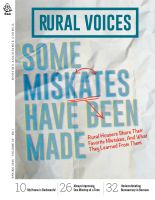
RURAL VOICES COVERS POVERTY IN RURAL AMERICA. A special edition of HAC’s quarterly magazine asks what has changed since the War on Poverty was declared 50 years ago, what has not, and what can be done. Sign up online for email notices when new issues are published.

NEW HAC REPORT EXAMINES SENIOR HOUSING. Housing an Aging Rural America: Rural Seniors and Their Homes looks at the demographic characteristics of rural elders and considers ways to provide quality, affordable housing for them.

From a Spare Bedroom to a Home of Her Own

By Stacey Howard, Dream$aver IDA Program Director, NeighborWorks Umpqua

A Single Mother’s Struggle Out of Poverty to Provide a Better Life for Her Son

rv-se-2014-coverThis story appears in the 2014 Special Edition of Rural VoicesDouglas County, Oregon is arguably one of the most beautiful places anyone could hope to live. The icy cold waters of the North Umpqua rush headlong down from their headwaters at Lake Maidu in the Cascade Mountains. The North Umpqua crashes headlong into Little River at Glide forming the only head-to-head colliding rivers in North America. Tall evergreen forests give way to grass-covered, rocky hills of madrone and scrub oak. Outside Roseburg, the North and South Umpqua meet and join to make their way to the coast. Douglas County stretches from Central Oregon to the Oregon Coast and just a bit bigger than the state of Connecticut. For all the beauty surrounding the residents in Douglas County, life here can mean facing some ugly realities. Jobs are scarce. The median income is among the lowest in the state, and unemployment persists at higher levels than most of the state – and much higher than the national average. Resources, too, are limited by the rural nature of the county, and county budgets have been severely curtailed by the loss of timber revenues.

wfarmer

Chriset came to Roseburg (population about 21,000), the largest town in Douglas County, in 2011 with her 13 year old son, Gabe. Chriset was following her mother and sister who had moved to the area several years earlier. Driving into town in her dilapidated Toyota Camry, Chriset managed to find a temporary home for the two of them in the spare bedroom of a friend in tiny Sutherlin, 11 miles north of Roseburg.

Chriset came into town with no money, but a lead on a job at a Roseburg non-profit. She landed the job, and with her new salary – the most money Chriset had ever made – Chriset managed to rent a tiny one-bedroom attic apartment for her and Gabe. The apartment was freezing in winter and the baseboard heat was so expensive they rarely used it. Even with her new job, Chriset found the apartment difficult to afford. To conserve energy, Chriset would turn off her power at the main box every day before she left for work. With her new job, Chriset lost the food stamps that had been part of her food security. Chriset had no internet (and has never had cable TV), and made all of her meals at home from basic ingredients. Still, when Chriset’s car died after 3 months in Roseburg, she felt she could not afford a new one, and the old one didn’t seem worth repairing. Chriset says, “I can’t imagine how people can afford a car. I don’t have $200 extra in my budget each month!”

Chriset started bicycling to work, and Gabe (like most kids his age) was able to get around by bussing to school and walking or biking everywhere else. Chriset remembers their living situation was “sub-par”. After a few months at her new job, Chriset learned of a landlord who was willing to rent at a reduced rate to an employee at the non-profit where she works. Chriset applied for the rental, and she and Gabe moved into a spacious 3 bedroom historic house only a half a block from her job. To afford the new home, Chriset had to have a roommate, but she also had a garden, and Gabe had his own room. The new house, though roomier, was also old, drafty, and difficult to heat. Chriset wanted to quit moving around – she had moved so many times and twice had lost her rentals when the landlords went into foreclosure. Chriset wanted a home of her own.

In 2012, Chriset applied for an Individual Development Account (IDA) through another non-profit. The Oregon IDA Initiative provides a matched savings program for low-income individuals to help them purchase assets with the hope that they will become more financially stable and eventually move out of poverty. One of the eligible uses of the funds is the purchase of a first home. Chriset had to save $1000 of her own to receive $4000 in matching grant funds ($3000 from state funds and an additional $1000 from the federal Assets for Independence program). Chriset had savings accounts before but had never been able to build a balance. Through the IDA program, Chriset was saving money for the first time.

In addition to saving money, financial education helped Chriset improve her credit score and start tracking her expenses and budgeting using online resources. She also took home buying classes. Yet, Chriset was having a very difficult time finding anything suitable to purchase in her price range. She needed something close enough to her job and Gabe’s school that they could make do without a car. Chriset also needed a large yard with enough sun to continue growing her vegetables and fruits – and she wanted to be able to plant fruit trees. Chriset’s younger brother, a computer programmer in Seattle, offered to loan her additional money to make a deal work, and Chriset doggedly kept up her search. Finally, she found a property that was “distressed” – the current owner, an investor, needed to get rid of the property quickly because of cash flow problems. It met much of Chriset’s criteria; large lot, room for trees, two bedrooms, a big kitchen. A huge bonus for Chriset was a smaller cottage that she could rent out to help pay her mortgage. And, the price was right, at about $95,000. The house needed too much work to finance, but Chriset was able to convince the owner to carry a contract because of her ability to make a down payment.

whouse

In the late summer of 2013, Chriset and Gabe moved into their new home. Chriset immediately started a new IDA for some of the home repairs she would need. She shopped the local recycled building materials store for supplies, borrowed tools, and traded labor with friends. Chriset learned to replace windows, caulk, paint, and landscape. A whiz at bargaining, Chriset talked a local tree service into dumping wood chips in her yard for mulch. She planted fruit trees and her garden (with a few flowers for looks). She became a landlord and manages to pay half her monthly mortgage through the rental income. She has insulated, upgraded the electrical, and refinished her wood floors. While her home continues to be a “project house” – and she still is cold in the winter, at least until she saves enough for a new heating system – Chriset loves her home. “I get to paint my walls, and I don’t have to worry about having to move. I will have the mortgage paid off in 6 more years, and then I will start paying off my brother, but every month I know the money I am paying is going to benefit me in the future.”

Gabe walks 3 blocks to the local high school. Now entering his sophomore year, Gabe is earning A’s and B’s for the first time in his life. Says Chriset, “I don’t know for sure what is different now for Gabe…he’s a teenager, so you never know. But I am so thrilled with how he is doing.” Chriset and Gabe still eat at home, and their only modes of transportation are bicycles and their own two feet. Chriset says even if she had the money to buy a car, she probably wouldn’t until her student loans and loans for the house were paid off. Gabe gets insurance through the Oregon Health Plan, so Chriset doesn’t have to worry about his medical care, but just in case, she makes sure both of them stay healthy. Life hasn’t been easy for Chriset, but she says, “I like my life. Things have been rough, but they are getting better. Sometimes, if one more thing wasn’t totally OK…one little thing can devastate a family. Right now, I am happy.” Chriset’s face glows, probably from her healthy lifestyle of eating fresh, simple foods and bicycling many miles every week. But probably, it also glows because Chriset knows she has a home, one no one can take away.

Stacey Howard has lived and worked in rural Oregon for most of her life. She is currently the Director of the Dream$avers IDA Program at NeighborWorks Umpqua in Roseburg, Oregon.

Innovative Approaches to Improving Poverty Locally

rv-se-2014-coverThis story appears in the 2014 Special Edition of Rural VoicesThe problem of poverty is often viewed from a national or regional perspective. But success in moving people out of poverty can emanate from community-specific innovation and solutions.

MET, Inc. (Texas) | Pathstone (Puerto Rico) | NeighborWorks Umpqua (Oregon)

Job Skills through Housing Development

Based in Texas, Motivation, Education, Training, Inc. (MET Inc.) provides academic and vocational training to migrant and seasonal farmworkers. Although predominantly focused on serving farmworkers, MET Inc. also includes initiatives that target low-income and disadvantaged populations throughout the agency’s service area.

The colonias on the U.S.-Mexico border are one of the most impoverished regions in the United States. Located on the U.S.-Mexico border on the Rio Grande in Maverick County, Texas, the Rositas colonias are comprised of a cluster of numerous individual colonias all faced with the same substandard housing conditions and concerns. The housing stock in the Rositas colonias includes conventional stick-built structures, manufactured homes (that are often not hooked up to any infrastructure), adobe structures, and make-shift dwellings such as lean-tos.

MET Inc.’s housing staff worked to combine housing development and training for farmworkers. Faced with high unemployment rates, over one-third of the population in Maverick County has incomes below the poverty line. Through their housing program and their educational and vocational training programs, MET Inc. created an initiative that would rehabilitate homes in the Rositas colonias while providing construction training to the farmworkers living therein. MET Inc. secured an instructor through a partnership with Southwest Texas Community College, which had previously conducted a construction training program, and trainees were able to use the facilities at the college. MET Inc. initially received two rounds of Rural Housing and Economic Development (RHED) grants for the program. When RHED was discontinued, MET Inc. secured funding through HUD’s Rural Innovation Fund (RIF). Like RHED, RIF provides funding for capacity building for innovative rural housing and economic development activities.

Through leveraging funds, MET Inc. covers costs of tuition, buys tools for students, and pays a stipend to students while they are in the training program. Additional funding also came from the National Farmworker Job Program (NFJP), which provides job training and placement services to eligible farmworkers or dependents of an eligible farmworker who are in the country legally. The training program lasts for about 12 weeks and includes classroom and hands-on instruction. The initiative has seen success in meeting the basic housing needs of individuals in the Rositas colonias. Many families have hot water for the first time, children are able to have their own bedrooms as opposed to doubling up with parents or sleeping in communal spaces, and repaired homes are safer, more sanitary, and more secure than they were before.

The educational and vocational component has been extremely beneficial to those who underwent training. There is a need for people with construction skills in the region, and the program is helping provide this skill set to more workers securing higher-paying jobs and further increasing their quality of life. Through a combination of affordable housing provision, job training, and individual resilience, MET Inc. has created long-term and quality job options to the residents of the Rositas colonias.

Combating Poverty in Puerto Rico with Job Training & Economic Development

PathStone is a regional nonprofit housing provider that focuses on four major service areas: housing development, homeownership assistance programs, training and employment services, and economic development. PathStone has undertaken two innovative approaches to combating poverty in Puerto Rico in recent years – the Rural Innovation Fund economic development and agro-tourism initiative and the Pathways out of Poverty job training program.

Interested in integrating these various service areas to spur economic growth and development in a focused region in western Puerto Rico, PathStone requested and was awarded $2 million from HUD’s Rural Innovation Fund program.

The Rural Innovation Fund (RIF) is a comprehensive rural community economic development project in the Castañer Region of the western portion of the Island. In an effort to address the overall needs of this unique rural area, the approach combines the following elements into a single coordinated project to boost the local economy:

  • Training and employment services for workers;
  • Training and resources for farmers & growers;
  • Financial and technical assistance for micro enterprise and small business;
  • Collaboration with local organizations around the agro-tourism industry; and
  • Homeownership counseling and creation of affordable housing.

The target area is the center for coffee growing in Puerto Rico and there is a growing interest on the island in “agro-tourism” as well as organic farming. There is a local desire to attract tourists from on and off the Island into the mountain region to discover the process of coffee production while enjoying the natural beauty of the area.

The focus for economic development is the Route 123 corridor, a route traditionally used to bring goods from the rural mountainous areas to market in Ponce. The RIF program boosts the agricultural sector, especially coffee, and hospitality and tourism industries and increases the number of job opportunities for low income workers, as well as supporting small businesses and micro enterprises linked to agro-tourism.

PathStone leads the initiative in partnership with the School of Architecture of the Pontifical Catholic University of Puerto Rico, the Tourism Company of Puerto Rico, Massachusetts Institute of Technology (MIT), the Center for the New Economy (CNE), the Conservation Trust of Puerto Rico, and the Small Business Administration (SBA).

One of the entrepreneurs assisted is Miriam Sierra, owner of the Restaurant Alborada, located in Castañer. Sierra received technical assistance and funding from PathStone to expand a local cafeteria into a full bakery that now sells a wide range of pastries and baked goods.

To promote the launch of the new corridor, PathStone, in collaboration with the School of Architecture, developed the bilingual tourist magazine “Route 123: More than a Route, It’s a Culture.” The publication details the various attractions, resources, and businesses along with corridor between Ponce and Utuado. It also describes in both words and beautiful photos the history, culture, food, and geography of this unique area.

To date, the PathStone RIF program has provided technical assistance to 139 entrepreneurs and small businesses and has created or retained 110 jobs. The PathStone Enterprise Center (our CDFI affiliate) has also originated 5 small business loans.

In addition to the RIF program, PathStone also received a Pathways Out of Poverty grant from the US Dept. of Labor to provide green jobs training to residents in high poverty areas who are unemployed, have been incarcerated, or lack a high school diploma. This “Green for Gold” program targeted three areas; Rochester, NY, Scranton, PA, and portions of Puerto Rico.

The rural areas of Puerto Rico targeted by this program have poverty rates of over 50 percent and unemployment in the 18-21 percent range. Through Pathways out of Poverty, 1,158 individuals completed training courses and 554 participants secured in full time, unsubsidized employment. 356 of these individuals obtained jobs directly related to the training they completed. PathStone also assisted close to 300 individuals in attaining their high school equivalency, further positioning them for future career growth.

Both the Rural Innovation Fund and Green for Gold have proven to be effective models for combating pervasive poverty and helping families work toward a more secure future.

IDAs Help Low-Income Families Save for Increased Opportunities in Rural Oregon

In rural Oregon, where jobs are scarce, options for employment may seem limited. Funds to start a business of your own may be practically impossible to find. However, thanks to an innovative tax credit program called the Oregon Individual Development Account Initiative (ORIDA), currently funded at 10 million dollars per year, Oregon residents earning as much as 80 percent of statewide median income can qualify for up to $9,000 to help start a business, get post-secondary training or education or “assistive technology for employment” to help them get back on their feet. NeighborWorks Umpqua Dream$avers IDA program currently serves over 1,000 participants and is working to build businesses, homes, and affordable housing as well as help government and other agencies to provide needed infrastructure, conserve resources, and develop a stable local economy.

The Dream$avers program allows participants to save up to $3,000 over a period of up to 3 years. The savings are then matched, typically at 3:1. Eligible uses, in addition to those mentioned above, include the purchase of a home for first-time homebuyers, and home repairs, maintenance, or modifications to increase accessibility for disabled homeowners.

Participation in Dream$avers requires participants to actively partner and work toward their financial goals. All participants complete 16 hours of financial and asset-specific education. Statewide, approximately 4,000 savers work individually with an IDA Specialist to reach their goals. Savers must deposit into their IDA monthly, in amounts that will allow them to reach their goal savings.

IDA savers, even those who don’t complete the program, report higher levels of economic satisfaction with their lives, increased use of budgets, and increased use of savings accounts.Participants appreciate the financial boost that comes from being able to accelerate the impact of their savings through the program match. IDAs reduce student loan debt load after college, capitalize microenterprise, increase home equity at the time of purchase, preserve the asset of home ownership by allowing for repairs that preserve the home, and help people get better jobs with assistive technology. IDA funds are paid directly to the vender for the asset being purchased, so there is no tax owed on the benefit by the participant.

Oregon advocates for the ORIDA program are always working to innovatively improve the IDA program, and the demand for accounts currently outstrips our capacity to serve new participants. As we advocate in 2015 for the renewal of the tax credit that supports this innovative program, the future will continue to present challenges and opportunities. For now, this program is a resounding success for Oregonians.

HAC would like to thank M.E.T. Inc., PathStone, and NeighWorks Umpqua for their contriutions to this edition of Rural Voices and their tireless work improving the lives of low-income families within their communities through traditional and innovative methods.

GET THE HAC NEWS!

Sign-up for HAC information products

SIGN UP HERE

Housing Assistance Council   |  1828 L Street. N.W., Suite 505, Washington, D.C. 20036
(202) 842-8600 (202) 347-3441 hac@ruralhome.org |

Board Portal

HAC is an equal opportunity provider, employer, and lender. | Civil Rights | Privacy