HAC’s 2023 Annual Report

HAC would like to present its Annual Report for the year 2023.

Download the 2023 Annual Report

A Message from HAC President & CEO and Board Chair

The communities we serve are the heart of what we do.

In May 2023, staff and board members from the Housing Assistance Council (HAC) travelled to Ruskin, Florida, to forge a plan to expand our impact and improve our work over the next three years. In our three-day retreat, we toured homes under construction at Bayou Pass Village, a community of about 500 homes, all built by their homeowners with investments from HAC and the support of our local partner.

HACsters got to see firsthand the communities that our work helps build. Against this backdrop, we began to develop a strategic plan that is rooted in these communities. From improving our strategic partnerships with organizations working in historically disinvested regions to expanding our role as the “Voice of Rural America” and our commitment to rural prosperity, this plan puts HAC on a trajectory to make an even more profound and lasting impact.

By all measures, 2023 was an incredibly successful year for HAC. We built the capacity of 144 rural housing organizations across 49 states, Puerto Rico, and the U.S. Virgin Islands. We published the fifth edition of Taking Stock, our flagship analysis of the state of Rural America and its housing. We invested more than $25 million to finance the construction, preservation, or rehab of 780 affordable homes. And our policy advocacy helped drive new federal resources to rural communities across the country.

HAC is hard at work helping rural communities overcome their greatest housing challenges. Thank you for supporting our impact. We can’t wait to show you what we accomplish next.

HAC is Hiring Housing Specialists (Community Builder)

The Community Builder plays a crucial role in advancing HAC’s mission, engaging in a range of responsibilities and special projects that focus on place, people, and community-based strategies. With a primary emphasis on developing and sustaining the capacity to improve housing and communities in rural areas, the Community Builder provides direct technical assistance, coaching, and training to nonprofit organizations, local and regional government agencies, and others. This role is key in facilitating affordable housing and community and economic development opportunities through state and federal programs.

HAC is seeking to hire six (6) Community Builders, each bringing expertise in one or more of the following areas: Financial Management and Accountability, Real Estate Finance, Construction Management, Housing on Native American Lands, Community and Public Facilities, Homeless Prevention and Assistance, and Homeowner Rehabilitation.

This position is open to candidates located anywhere in the contiguous United States, within a two-hour drive of a major airport, enabling efficient travel as needed.

Read the position description and application instructions.

Reflections from long-time board members

For over fifty years, the Housing Assistance Council has empowered rural communities with the resources they need to overcome their greatest housing challenges. That entire time, HAC’s Board of Directors has guided our approach and kept us true to our mission. Our board members have always represented the communities we work with across the country. The expertise they bring has proven invaluable time and time again.

At the National Rural Housing Conference in October 2023, we honored two long-time board members by presenting them with Rural Housing Service Awards as thanks for their combined 66 years of service to HAC. As they transitioned off the board, we asked Maria Luisa Mercado and Gideon Anders to reflect on the past, present, and future of HAC.

Maria Luisa Mercado, Lone Star Legal Aid

Galveston, Texas

Thirty-six years ago, when she was working as an assistant attorney general for consumer protection in Lubbock, Maria Luisa got a call from a colleague who said she’d be an ideal board member at HAC. For Maria Luisa, who grew up as a farmworker, “serving on a housing board, especially one with a rural focus, was really exciting.”

Housing is the core of what HAC does, but she explains that the real goal has always been to serve people and communities. After all, she says “if you can stabilize someone’s housing, you can change their life.” Staying true to this mission has been the core of HAC’s success, she argues. Over the last three decades, Maria Luisa has visited many of the communities with which HAC works, and the impact of our work is always clear. “You can concretely see the results: changing the life of someone,” she notes.

Looking to the future, Maria Luisa believes the defining challenge of the next few decades will be developing novel ways of encouraging the development of new affordable housing groups. As we expand the communities that we serve and develop new partners, building their capacity to make the most of the resources available to them will be crucial. She imagines a future in which HAC has expanded from a focus on housing to include community development and building the capacity of local communities and governments to access state and federal resources.

HAC has always been at the forefront of efforts to support rural communities’ housing and to bring attention to overlooked rural places. “It matters because rural America,” says Maria Luisa “if no one pays attention, is isolated from services.” And those services, like housing investment, are what any community needs to thrive. After more than five decades of serving rural America, Maria Luisa is proud to say that “HAC is still standing.”

Gideon Anders, Retired (formerly National Housing Law Project)

Oakland, California

Gideon Anders was hired by HAC in 1972—fewer than 8 months after we were founded. As Gideon explains, the HAC of 1972 was still figuring out how to operate: “we did a lot of things by the seat of our pants.” Quickly, though, we established the processes that HAC continues to build on to this day. “Our work is much more effective and reaches out to more organizations” than it once did, Gideon notes.

For the entirety of his time with HAC—both as a staff member and in his 30 years as a board member—something that hasn’t changed is that “there’s no one else providing the assistance that HAC is.” For example, we were one of the first organizations to offer predevelopment lending in rural communities, and our research—especially our flagship publication Taking Stock—fills a void in data and analysis about rural housing.

HAC is still providing resources to rural communities that few others do. To Gideon, HAC’s focus on the preservation of multifamily rental homes in the USDA’s Section 515 program is a key example of the “critical services which no one else is providing on the scale HAC is.” In 2022, for example, HAC closed a $7.8 million loan to Northwest Coastal Housing so they could purchase and preserve Golden Eagle II, a 33-unit USDA Section 515 property. Without our financing, the original property owner would have prepaid his USDA mortgage, making his tenants ineligible for the rental assistance they’d received for decades. But, thanks to this loan, Golden Eagle is staying in the program and the tenants will retain their affordability protections for decades.

Looking to the future, Gideon imagines a HAC that is bringing together organizations of all kinds to collectively make the argument that housing is central to individual and national prosperity. Our homes touch every other part of our lives, which is why Gideon wants to see these coalitions include community service providers of all stripes, including those focused on health. After all, when it comes to the impact on someone’s health, Gideon believes “quality housing comes next to healthcare.”

A lot has changed at HAC over the last 50 years. However, Gideon notes that, “fundamentally, the services HAC was providing in 1971 are still what we’re doing today. But the scope has grown tremendously.”
 

HAC Loan Fund Impact Report for FY 2023

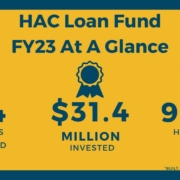
HAC is proud to present our 2023 Loan Fund Impact Report. In fiscal year 2023 (October 2022-September 2023), our Loan Fund provided $31.4 million in financing through 34 loans—including 13 (37%) made to minority-led borrowers—to build, rehabilitate, or preserve 900 affordable homes.

HAC Welcomes Leonel Parra as Chief Financial Officer

Leonel Parra, CFO

Leonel Parra, CFO

The Housing Assistance Council (HAC) is excited to welcome Leonel Parra as our new Chief Financial Officer (CFO). With extensive expertise in the non-profit, financial, and professional services, technology, and manufacturing sectors, Leonel brings a wealth of knowledge that will help HAC sustain our unprecedented growth and deepen our impact.

Leonel joins HAC from his most recent role as CFO at United Way Worldwide. Before that, Leonel was at mortgage giant Freddie Mac as a Head of Business Management and Chief of Staff charged with integrating Risk and Finance operations. Much of Leonel’s early career was with General Electric where he held various CFO and financial leadership positions across five business units, three industry sectors, and four countries. Notably, he was CFO for GE Capital Commercial Lending with their $5.5B loan portfolio.

“HAC has been building momentum and expanding our work. As we forge ahead, the demand for HAC to be a more sophisticated organization increases. We aim to meet the needs of small-town housing organizations across the country that rely on HAC for support and guidance.,” said HAC CEO David Lipsetz. “We are incredibly excited to have Leonel join the HAC team and help us build the systems to sustain and supercharge that progress.”

Leonel is a licensed CPA, with a degree in Accounting from Universidad Autonoma de Chihuahua, Mexico. He volunteers for organizations that promote financial literacy and has a passion to leverage his extensive experience to help communities in need. Leonel lives in North Potomac, MD, with his wife and three children.

HAC’s 2022 Annual Report

HAC would like to present its Annual Report for the year 2022.

2022 Annual Report

A Message from HAC President & CEO and Board Chair

The Housing Assistance Council (HAC) is soaring to new heights. For our 50th anniversary last year, we turned our attention to building a launch pad for rural prosperity over the next 50 years. We are proud to report that in 2022 HAC blasted off from that launch pad, broadening the ways we help rural communities build a better future.

In 2022, HAC lending and technical assistance built the capacity of 166 rural housing organizations across 43 states. We published 24 editions of HAC News and 13 new research products, including 3 guides to resources needed to recover from a natural disasters. We invested more than we ever have before: $22.2 million to finance the construction, preservation, or rehab of 787 affordable homes. Plus, more than 37% of our loans were made in counties that have had a poverty rate of at least 20% for the last three decades. At the same time, we increased our staff by 21%, expanding the footprint of our work.

Last year, HAC enhanced our position as the Nation’s source for independent, non-partisan policy solutions for rural housing and community development. With the help of our first-ever Director of Policy, HAC led the effort to secure historic federal investment in manufactured housing communities. We met with House and Senate leadership, testified before Committees, worked with the White House and continued to be the go-to source for research and analysis on rural housing markets and living conditions in small towns.

2022 was also a big year for HAC’s “housing-adjacent” work on community facilities and placemaking. We’ve always known that community is more than a collection of houses. By finding new ways to engage small towns as they develop community facilities—such as parks, libraries, and childcare centers—HAC has helped them cultivate a feeling of belonging while providing tangible benefits for every resident. Also in 2022, we more than doubled our work in placemaking, which uses design and the arts to bring communities together, as a catalyst toward sustained community betterment and economic growth.

Additionally, we spent 2022 deepening our impact on affordable housing development. Combining both financing and technical assistance, HAC opened new avenues of work supporting rural rental preservation, ensuring that more existing affordable homes remain high-quality and rent assisted for years to come. Plus, we redoubled our efforts to better understand our impact and identify areas of growth through data and metrics.

HAC has been hard at work increasing the depth and breadth of our impact across rural America. As we reach greater heights and do more, we thank you for boosting our work. We’re excited to show you what this momentum will help all of us achieve.

Download 2022 Annual Report View on the Web

Old Historic Carnation, LP: A HAC Success Story

HAC’s patience and flexibility help convert a vacant Carnation milk plant into homes for seniors in Tupelo, MS

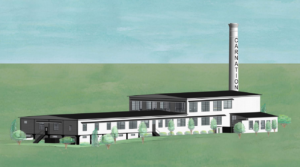
Rendering of carnation plant developmentThe Carnation Milk plant in Tupelo, Mississippi, has sat vacant since 1972. In about a year, that will change when 33 low-income senior households move into new affordable homes in this old factory. This May, Old Historic Carnation, LP broke ground on Carnation Village, a $16.8 million adaptive reuse project to convert the abandoned factory into 33 units of affordable senior housing. These units are sorely needed in Tupelo, a high-poverty community which needs over 1,500 additional senior affordable housing units. With a $325,000 loan from The Housing Assistance Council (HAC)—and two sixth-month extensions to that loan—the developer successfully navigated a predevelopment process mired in construction cost increases and unexpected funding gaps. Here’s how:
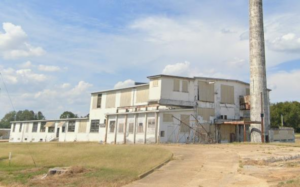
Photo of vacant Carnation plantThe original project scope called for 50 units: 25 from an adaptive re-use of the plant itself and another 25 in a second building to be constructed next door. When our loan closed in July 2021, the project budget totaled about $12.7 million, to be funded by Low Income Housing Tax Credits, Historic Tax Credits, and a $1.6 million investment. Our financing covered the predevelopment costs of the work required to get to construction financing closing including environmental testing, historic preservation approvals, tax credit application and reservation fees, a market study, and an appraisal.

In the fall of 2021, increases in construction costs left Old Historic Carnation with a $3.8 million funding gap. By the time they applied for and received more tax credits from the Mississippi Housing Corporation (MHC), added a $1 million mortgage, received approval from the National Park Service, and updated the construction bids, costs had increased by a further $4.5 million. In the space of less than a year, the construction cost for the project nearly doubled.

Because HAC can be a patient lender, we extended our loan by six months to give the developer time to solve the problem. Old Historic Carnation applied for and received another tax credit increase from the state, reduced costs with value engineering measures, and increased the deferred developer fee by almost $2 million.

Construction costs increased again in the summer of 2022, causing the investor to back out of the project. The developer went back to the drawing board once again and reduced the project’s scope to 33 units, all affordable to households making less than 80% of the area median income (AMI). Plus, 26 would also be affordable to households under 60% AMI. With an additional loan extension from HAC, Old Historic Carnation secured approval of the new scope by MHC, obtained the necessary building permits, and have now begun demolition.

HAC Loan Office Alison Duncan (center) breaks ground for Carnation Village.

HAC Loan Office Alison Duncan (center) breaks ground for Carnation Village. Photo by Adam Robison, the Daily Journal.

On March 21st, Old Historic Carnation, LP closed on construction financing and repaid our predevelopment loan in full. And on May 31st, the project broke ground. Old Historic Carnation’s persistence and creativity made this project a success. But it was HAC’s flexibility that supported them as they went through the process of raising additional funds three times to make the project work. The Carnation Village project showcases how the ingenuity of a local housing developer, solid working relationships with private, state and federal funders, and flexible and patient HAC financing all add up to bring difficult and important projects to fruition. Fifty-one years ago, Carnation Milk closed its factory in Tupelo, Mississippi. Soon, thirty-three low-income, senior households will be able to call it home.

HAC is proud to be a critical part of this project and we look forward to watching it develop.

Terms and Conditions

Terms and Conditions

Effective Date: April 22, 2025

The Housing Assistance Council (HAC) is committed to transparency, privacy, and respectful communication. These Marketing Terms and Conditions outline how we collect, use, and manage contact information for email and SMS communications.

1. How We Collect Contact Information

HAC collects your contact information (such as name, email address, and organization) when you:

  • Sign up for updates at our subscription portal
  • Register for a HAC event or webinar
  • Submit a contact form or service request
  • Engage in communication with HAC staff

All contact information is collected voluntarily, and you may opt in or out of communications at any time.

2. Email Communications

HAC uses Microsoft Dynamics CRM to manage and send email communications. These may include:

  • Newsletters and research alerts
  • Program announcements and opportunities
  • Event invitations and reminders
  • Updates from our lending, training, or policy teams
  • Other communications as needed

You may change your subscription preferences or unsubscribe from any email you receive by clicking the link provided in the footer of the message.

We do not send unsolicited emails, and we do not share or sell your contact information with third parties.

3. SMS (Text Message) Communications

HAC uses SMS communications only for 1-to-1 service coordination—not for marketing or promotional purposes. Customers may verbally opt-in to messages during a call or in-person. 

Purpose of SMS Communications

You may receive texts from HAC staff related to:

  • Technical assistance or lending support
  • Training or meeting scheduling
  • General business-related communication

All messages are personalized and directly tied to your ongoing engagement with HAC.

Message Frequency

You will only receive texts when needed, and only in relation to active services or conversations. Message and data rates may apply. 

Opt-Out and Help

You may opt out at any time by replying STOP to any message.

To receive additional information, reply HELP.

Standard messaging and data rates may apply. HAC is not responsible for carrier charges.

4. Data Use and Privacy

HAC uses Google Analytics to monitor web traffic and improve user experience. This may involve the collection of anonymized data such as IP addresses, device types, and browsing behavior. This information is never used to identify individuals or send marketing messages.

We do not share your contact information with partners, affiliates, or third-party marketers. For more information, please review our full Privacy Policy.

5. Changes to These Terms

HAC may update these terms from time to time. Changes will be reflected on this page with a revised effective date. Continued use of our services after changes constitutes your acceptance of the revised terms.

6. Contact Us

For questions about these terms or your communication preferences, please contact us at:

Email: hac@ruralhome.org
Website: www.ruralhome.org


Rural Recap – Promoting Prosperity

Rural communities need—and deserve—a coherent, national policy strategy that promotes prosperity. For such a strategy to move the needle, it must end the housing affordability crisis and build the capacity of rural communities to make the most of every opportunity.

Our homes are part of the foundation of thriving families and communities—they are pathways to realizing America’s full potential. With decent, healthy, and affordable homes, kids can succeed at school, seniors can age in place, and families can build wealth. Economics, health, education, and many more components of prosperous communities are all intimately tied to our homes.

The capital needed for a housing market to function is a lot like water: it flows down the path of least resistance, and it pools. For over 50 years—whether intentionally or not—public policy has channeled capital’s flow into sprawling metropolitan regions and allowed it to pool in suburbs and downtown commercial centers. This has deepened inequality and stifled opportunity in the communities that have been left out.

Building rural prosperity will happen one nail and one funding application at a time. Turning those into a national renaissance for rural America will take strategy. If we want investment to flow to a broader set of places and especially to the people and places which need it most, then we need public policy specifically designed to drive resources in their direction. To make the most of that capital, we must also build the capacity of those communities.

HAC builds the capacity of small towns and rural places to create thriving, prosperous communities. If you share our mission, please advocate on behalf of public funds for capacity building programs. We also hope you will consider making a gift to HAC to help us do more in rural America.

Get the Rural Recap in Your Inbox Donate to HAC

GET THE HAC NEWS!

Sign-up for HAC information products

SIGN UP HERE

Housing Assistance Council   |  1828 L Street. N.W., Suite 505, Washington, D.C. 20036
(202) 842-8600 (202) 347-3441 hac@ruralhome.org |

Board Portal

HAC is an equal opportunity provider, employer, and lender. | Civil Rights | Privacy