
Self-Help Enterprises and HAC: A Decades-Long Partnership Shaping Rural Housing
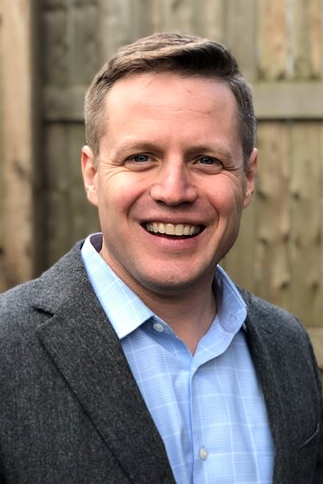
Serving California’s San Joaquin Valley, Self-Help Enterprises (SHE) is a testament to what’s possible in rural housing development. As one of the nation’s largest and most successful rural housing organizations, SHE has built over 6,600 homes through its mutual self-help housing program. It also manages more than 3,000 affordable rental units. The numbers, however, tell only part of the story, says SHE’s CEO Tom Collishaw.
“Beyond just the house itself, self-help housing has always been about something deeper—something real. It’s not just about building a home; it’s about empowering people, giving them the tools to address their own challenges. The impact goes far beyond just constructing a house. The work becomes a source of pride, the finished product—a turning point for families, something their friends, family, and community can be proud of, and their kids can aspire to.”

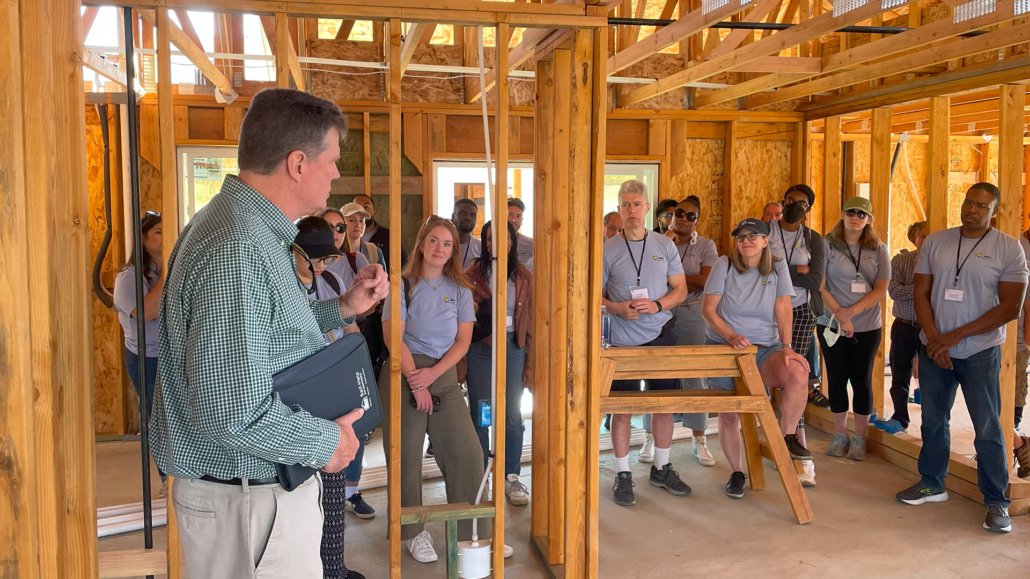
Self-Help Enterprises CEO Tom Collishaw speaks to HAC staff during a site visit to a self-help housing project
For more than 50 years, the Housing Assistance Council (HAC) has played a crucial role in supporting SHE’s work. In fact, when HAC began lending in 1972, SHE received our very first loan: $127,650 for site acquisition and development of a mutual self-help housing development. It’s a relationship that Collishaw describes as “deep” and multifaceted, built on years of financial support, policy advocacy, and a shared mission.
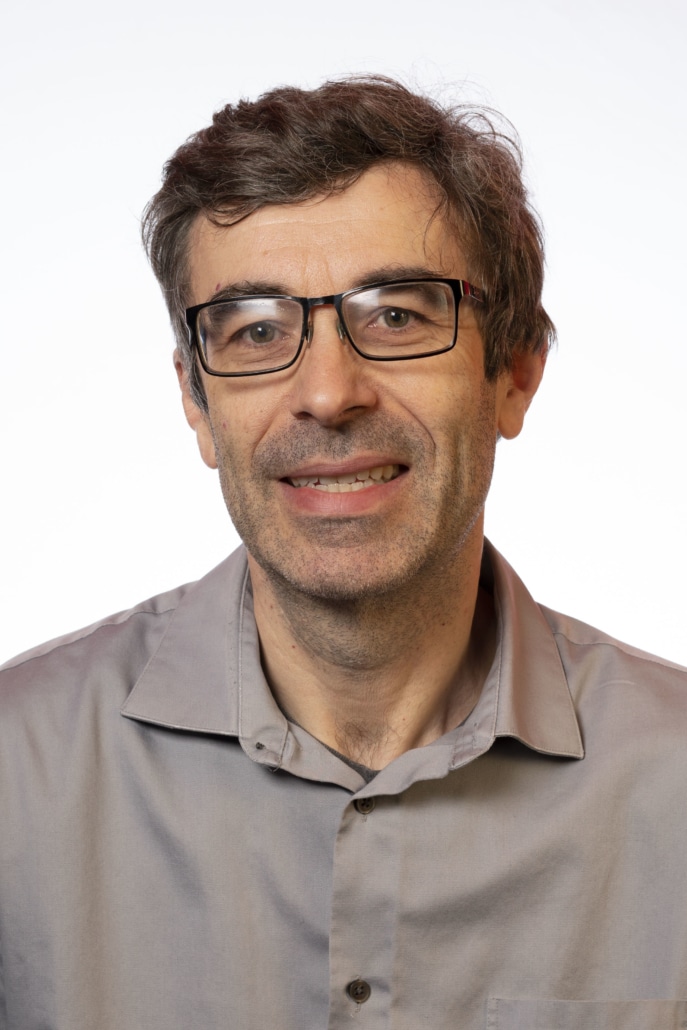
At the heart of the HAC-SHE relationship is the Self-Help Homeownership Opportunity Program (SHOP), a federal initiative in which HAC serves as an intermediary, providing rural organizations with access to capital for land acquisition and infrastructure development. “It’s an honor to be associated with SHE’s success,” notes HAC’s CEO David Lipsetz. “SHE has helped thousands of families build their own homes. SHE has helped California’s central valley prosper. And, SHE has helped HAC and groups across the country see how effective the SHOP program can be.”

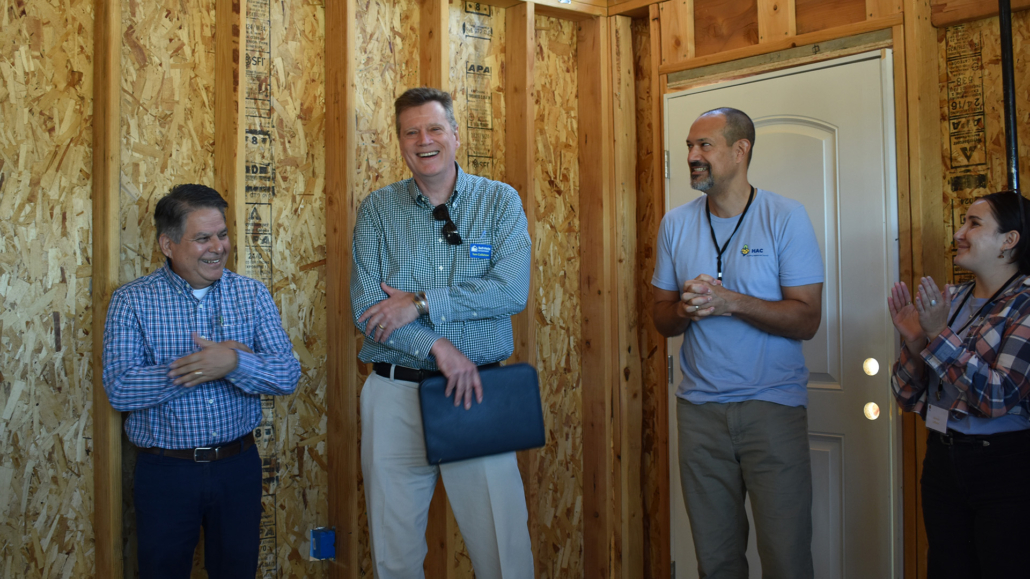
Tom Collishaw, HAC CEO David Lipsetz, and staff from both agencies share a moment of camaraderie inside a SHE housing project
The strength of this partnership is something both organizations value deeply. “Since the inception of the SHOP program, HAC has taken a leadership role—a role that, frankly, they were the only ones really in a position to take,” Collishaw notes. “We’ve appreciated that partnership, the mutual trust we have, and the ability to be flexible where possible.”
The SHOP program’s structure allows HAC to forgive 90% of its loan to SHE when they meet their unit goals, provided SHE reinvests the funds in affordable housing activities. Having access to this flexible capital has been “a critical component” in scaling SHE’s real estate efforts, enabling the organization to acquire land, develop infrastructure, and plan subdivisions without depending solely on traditional pre-development loans, which continue to grow more expensive by the day. This strategy also served as a springboard for SHE to secure approximately $18 million from foundation-type funders, including Heron, Calvert, and The California Endowment.
However, for Collishaw, financial support represents just one aspect of HAC’s role. “I’ve always seen HAC as a thought leader. HAC has been a partner in making sure that the needs of rural America are on the national agenda, particularly at the federal level.”
He also points to HAC’s biennial conference as a vital event for the rural housing community. “There were so many casualties during COVID, but I always thought missing a HAC conference was a particularly difficult one,” he reflects. “There are so many organizations smaller than us that rely on those opportunities to meet with peers.” Even with SHE’s extensive experience, Collishaw values these gatherings as important learning opportunities. “We’ve seen a lot, but that doesn’t mean we know everything. There’s always something to learn from people who have only been doing this for two years. They look at things in an entirely different way, and I’ll come back from conferences saying, ‘What they’re doing in Kentucky is fascinating! Maybe we should think about that.’ Those connections are so valuable.”
This spirit of mutual learning and collaboration is evident in the organizations’ shared history, with leadership frequently moving between the two. Bob Marshall, who served as SHE’s executive director from 1966 to 1990, was on HAC’s board for many years. Later, Peter Carey, who led SHE for 24 years after Marshall, continued this tradition by serving on HAC’s board from 2003 to 2024. “Peter Carey is about the most decent person you could imagine,” Lipsetz recalls. “He is a natural leader, deeply committed to helping others and always thinking two steps ahead. He and SHE have a lot in common.”
The relationship hasn’t been without its debates. For instance, HAC has published leading research on “colonias,” the unincorporated settlements along the US-Mexico border that are characterized by high poverty rates and substandard living conditions. Collishaw recalls discussions about expanding the definition beyond border regions. “We feel like we have colonias right here in Tulare County,” he notes. However, he sees such differences as trivial compared to their shared mission: “At the end of the day, those disagreements are minor because we’re ultimately interested in the same things—the sustainability of rural America and the towns and people that we care about.”
As both organizations navigate new challenges in rural housing, Collishaw and Lipsetz see opportunities to further strengthen their partnership. They highlight emerging initiatives, such as collaborating on Greenhouse Gas Reduction Fund projects, and envision HAC playing a crucial role in supporting a wider network of housing organizations. “We need to be more effective as a single voice,” Collishaw argues, emphasizing the importance of bringing different groups together. “HAC has a role to play—not just on policy but also with the data and research that supports it. We can build a stronger voice, and it has to be unified across a broader coalition.”
For SHE, maintaining its commitment to both rental housing and homeownership remains central to its mission. “You can do both,” Collishaw insists. “We don’t see housing as a ladder where homeownership is the top and rental housing is just a step below. It’s more of a plateau, where different types of housing serve different needs at different times in people’s lives.” When some questioned the organization’s expansion into rental housing, Collishaw recalls a pivotal board discussion where a member offered a perspective that would shape SHE’s future: what makes SHE unique isn’t just that people are doing the construction. “What’s really unique is that we’re creating neighborhoods—places where people depend on and count on each other, where they build a community together.”
This philosophy mirrors the HAC-SHE relationship itself—a partnership built on mutual support and shared values. ‘We’re in a moment right now—a national realization about housing,’ Collishaw observes. With housing emerging as a top priority in mainstream discussions, the HAC-SHE partnership stands ready to advocate for solutions that work for rural communities, ensuring that rural voices are heard.
Your Support Fuels Rural Ingenuity
See how HAC partners with local organizations like WMCDC to overcome challenges and deliver affordable housing.
Helping rural communities is what we live for at the Housing Assistance Council (HAC.) Our team loves to make loans to local organizations building affordable housing. We get excited about posting data and publishing research on rural conditions. We are relentless advocates for public- and private-sector programs that bring good-quality homes to rural families. We are inspired by the thousands of local housing providers that come to trainings and call for one-on-one technical assistance. 
One of our favorite examples of the last year comes from a local partner in New Waverly, Texas (pop. 914,) Launched nearly 25 years ago, Walker Montgomery Community Development Corporation (WMCDC) builds affordable housing in several Gulf Coast counties. Like most rural groups we know, they rely on local ingenuity to get things done. For instance, WMCDC helped address a construction workforce shortage in Southeast Texas by recruiting 40 participants a year into the Gulf Coast Trades Center’s YouthBuild program. These youth learn valuable professional skills while completing an average of 2 new homes per year.
Yet, it’s hard work building affordable housing through a YouthBuild program. There will be times when you need a partner to keep you going. So, when WMCDC hit more challenges with their labor supply and getting families ready to own a home, they asked HAC for help. The first thing we did is listen to WMCDC leaders discuss the challenges. Then together we explored options and planned how they could maintain production. With contacts around Walker and Montgomery counties, the CDC engaged a general contractor to fill in for the YouthBuild crews and HAC provided training in homebuyer recruitment to keep the pipeline of families ready and strong.
Through projects big and small, HAC brings to local partners the capacity they need to keep going. With your support, we can continue to help WMCDC and hundreds of other rural housing groups. Please join in this work that we love by making HAC a part of your year-end giving. Together, we will help rural communities build good homes and prosper.
We wish you—and everyone in #rural America—a safe, healthy, and affordable place to call home. Happy Holidays from HAC!
HAC is Hiring an Accountant
The accountant is responsible for applying technical and leadership skills to guide accounting practices and recording of transactions. The successful candidate will have experience in a complex organization and demonstrate a balanced communication style and strong critical thinking skills. The position will report to and work closely with the Financial Controller. The accountant must thrive in a deadline-oriented and evolving workplace. In addition, this role partners with other HAC Team members in tactical implementation of HAC’s mission and commitments to meeting the organization’s strategic plan.
HAC is Hiring a Program Manager, Center for Rural Multifamily Housing Preservation (CRMHP)
The Program Manager of the Center for Rural Multifamily Housing Preservation (CRMHP) will be the entrepreneurial leader of the CRMHP, providing leadership, subject matter expertise and day-to-day oversight of the Center’s work.
Goals:
- Reinforce and expand HAC’s role as a leading thought partner and expert on preservation of rural housing.
- Build out HAC’s 515 technical assistance work.
- Increase 515 preservation by nonprofit developers and housing authorities through improved resources and policies.
- Preserve as many Sections 515 and other rural multifamily properties as possible.
The RRHPC Manager will collaborate across HAC’s divisions to accomplish these goals
HAC’s 2023 Annual Report
HAC would like to present its Annual Report for the year 2023.
Download the 2023 Annual Report
A Message from HAC President & CEO and Board Chair
The communities we serve are the heart of what we do.
In May 2023, staff and board members from the Housing Assistance Council (HAC) travelled to Ruskin, Florida, to forge a plan to expand our impact and improve our work over the next three years. In our three-day retreat, we toured homes under construction at Bayou Pass Village, a community of about 500 homes, all built by their homeowners with investments from HAC and the support of our local partner.
HACsters got to see firsthand the communities that our work helps build. Against this backdrop, we began to develop a strategic plan that is rooted in these communities. From improving our strategic partnerships with organizations working in historically disinvested regions to expanding our role as the “Voice of Rural America” and our commitment to rural prosperity, this plan puts HAC on a trajectory to make an even more profound and lasting impact.
By all measures, 2023 was an incredibly successful year for HAC. We built the capacity of 144 rural housing organizations across 49 states, Puerto Rico, and the U.S. Virgin Islands. We published the fifth edition of Taking Stock, our flagship analysis of the state of Rural America and its housing. We invested more than $25 million to finance the construction, preservation, or rehab of 780 affordable homes. And our policy advocacy helped drive new federal resources to rural communities across the country.
HAC is hard at work helping rural communities overcome their greatest housing challenges. Thank you for supporting our impact. We can’t wait to show you what we accomplish next.
HAC is Hiring Housing Specialists (Community Builder)
The Community Builder plays a crucial role in advancing HAC’s mission, engaging in a range of responsibilities and special projects that focus on place, people, and community-based strategies. With a primary emphasis on developing and sustaining the capacity to improve housing and communities in rural areas, the Community Builder provides direct technical assistance, coaching, and training to nonprofit organizations, local and regional government agencies, and others. This role is key in facilitating affordable housing and community and economic development opportunities through state and federal programs.
HAC is seeking to hire six (6) Community Builders, each bringing expertise in one or more of the following areas: Financial Management and Accountability, Real Estate Finance, Construction Management, Housing on Native American Lands, Community and Public Facilities, Homeless Prevention and Assistance, and Homeowner Rehabilitation.
This position is open to candidates located anywhere in the contiguous United States, within a two-hour drive of a major airport, enabling efficient travel as needed.
Reflections from long-time board members
For over fifty years, the Housing Assistance Council has empowered rural communities with the resources they need to overcome their greatest housing challenges. That entire time, HAC’s Board of Directors has guided our approach and kept us true to our mission. Our board members have always represented the communities we work with across the country. The expertise they bring has proven invaluable time and time again.
At the National Rural Housing Conference in October 2023, we honored two long-time board members by presenting them with Rural Housing Service Awards as thanks for their combined 66 years of service to HAC. As they transitioned off the board, we asked Maria Luisa Mercado and Gideon Anders to reflect on the past, present, and future of HAC.
Maria Luisa Mercado, Lone Star Legal Aid
Galveston, Texas
Thirty-six years ago, when she was working as an assistant attorney general for consumer protection in Lubbock, Maria Luisa got a call from a colleague who said she’d be an ideal board member at HAC. For Maria Luisa, who grew up as a farmworker, “serving on a housing board, especially one with a rural focus, was really exciting.”
Housing is the core of what HAC does, but she explains that the real goal has always been to serve people and communities. After all, she says “if you can stabilize someone’s housing, you can change their life.” Staying true to this mission has been the core of HAC’s success, she argues. Over the last three decades, Maria Luisa has visited many of the communities with which HAC works, and the impact of our work is always clear. “You can concretely see the results: changing the life of someone,” she notes.
Looking to the future, Maria Luisa believes the defining challenge of the next few decades will be developing novel ways of encouraging the development of new affordable housing groups. As we expand the communities that we serve and develop new partners, building their capacity to make the most of the resources available to them will be crucial. She imagines a future in which HAC has expanded from a focus on housing to include community development and building the capacity of local communities and governments to access state and federal resources.
HAC has always been at the forefront of efforts to support rural communities’ housing and to bring attention to overlooked rural places. “It matters because rural America,” says Maria Luisa “if no one pays attention, is isolated from services.” And those services, like housing investment, are what any community needs to thrive. After more than five decades of serving rural America, Maria Luisa is proud to say that “HAC is still standing.”
Gideon Anders, Retired (formerly National Housing Law Project)
Oakland, California

Gideon Anders was hired by HAC in 1972—fewer than 8 months after we were founded. As Gideon explains, the HAC of 1972 was still figuring out how to operate: “we did a lot of things by the seat of our pants.” Quickly, though, we established the processes that HAC continues to build on to this day. “Our work is much more effective and reaches out to more organizations” than it once did, Gideon notes.
For the entirety of his time with HAC—both as a staff member and in his 30 years as a board member—something that hasn’t changed is that “there’s no one else providing the assistance that HAC is.” For example, we were one of the first organizations to offer predevelopment lending in rural communities, and our research—especially our flagship publication Taking Stock—fills a void in data and analysis about rural housing.
HAC is still providing resources to rural communities that few others do. To Gideon, HAC’s focus on the preservation of multifamily rental homes in the USDA’s Section 515 program is a key example of the “critical services which no one else is providing on the scale HAC is.” In 2022, for example, HAC closed a $7.8 million loan to Northwest Coastal Housing so they could purchase and preserve Golden Eagle II, a 33-unit USDA Section 515 property. Without our financing, the original property owner would have prepaid his USDA mortgage, making his tenants ineligible for the rental assistance they’d received for decades. But, thanks to this loan, Golden Eagle is staying in the program and the tenants will retain their affordability protections for decades.
Looking to the future, Gideon imagines a HAC that is bringing together organizations of all kinds to collectively make the argument that housing is central to individual and national prosperity. Our homes touch every other part of our lives, which is why Gideon wants to see these coalitions include community service providers of all stripes, including those focused on health. After all, when it comes to the impact on someone’s health, Gideon believes “quality housing comes next to healthcare.”
A lot has changed at HAC over the last 50 years. However, Gideon notes that, “fundamentally, the services HAC was providing in 1971 are still what we’re doing today. But the scope has grown tremendously.”
HAC Loan Fund Impact Report for FY 2023
HAC is proud to present our 2023 Loan Fund Impact Report. In fiscal year 2023 (October 2022-September 2023), our Loan Fund provided $31.4 million in financing through 34 loans—including 13 (37%) made to minority-led borrowers—to build, rehabilitate, or preserve 900 affordable homes.