Remembering Richard Tucker

Richard Tucker dedicated his life to serving the less fortunate. An alumnus of LaSalle College in Philadelphia and Lincoln University in Oxford, Pennsylvania, he served as Executive Vice President of the Philadelphia Housing Development Corporation followed by a position as Executive Director of the Philadelphia Housing Authority. In 1972, Mr Tucker took a position as Deputy Director of the Housing Assistance Council, a new national organization committed to affordable housing for America’s rural poor. Beginning in 1978, Richard worked for the Federal Home Loan Bank System in Washington, D.C., where he was associated with the housing and community development and consumer programs. From October 1989 until his retirement in June 1999, Mr. Tucker served in various positions at the Federal Housing Finance Agency. From November 1989 through January 1991, he was acting director of the agency’s Housing Finance Directorate. During this period he was responsible for the development of the regulations and the implementation of the Federal Home Loan Bank System’s Affordable Housing Program. In retirement, he was the President of the Benjamin Banneker Development Corporation which developed sales housing, proceeds from which he established a scholarship program to benefit college-bound high school seniors in the District of Columbia.

Richard was an outstanding and dedicated member of the HAC Board of Directors for 31 years, including a number of years as Treasurer. Although his accomplishments are too numerous to mention here, he inspired many in the affordable housing field and will be missed dearly.

Richard Tucker 3

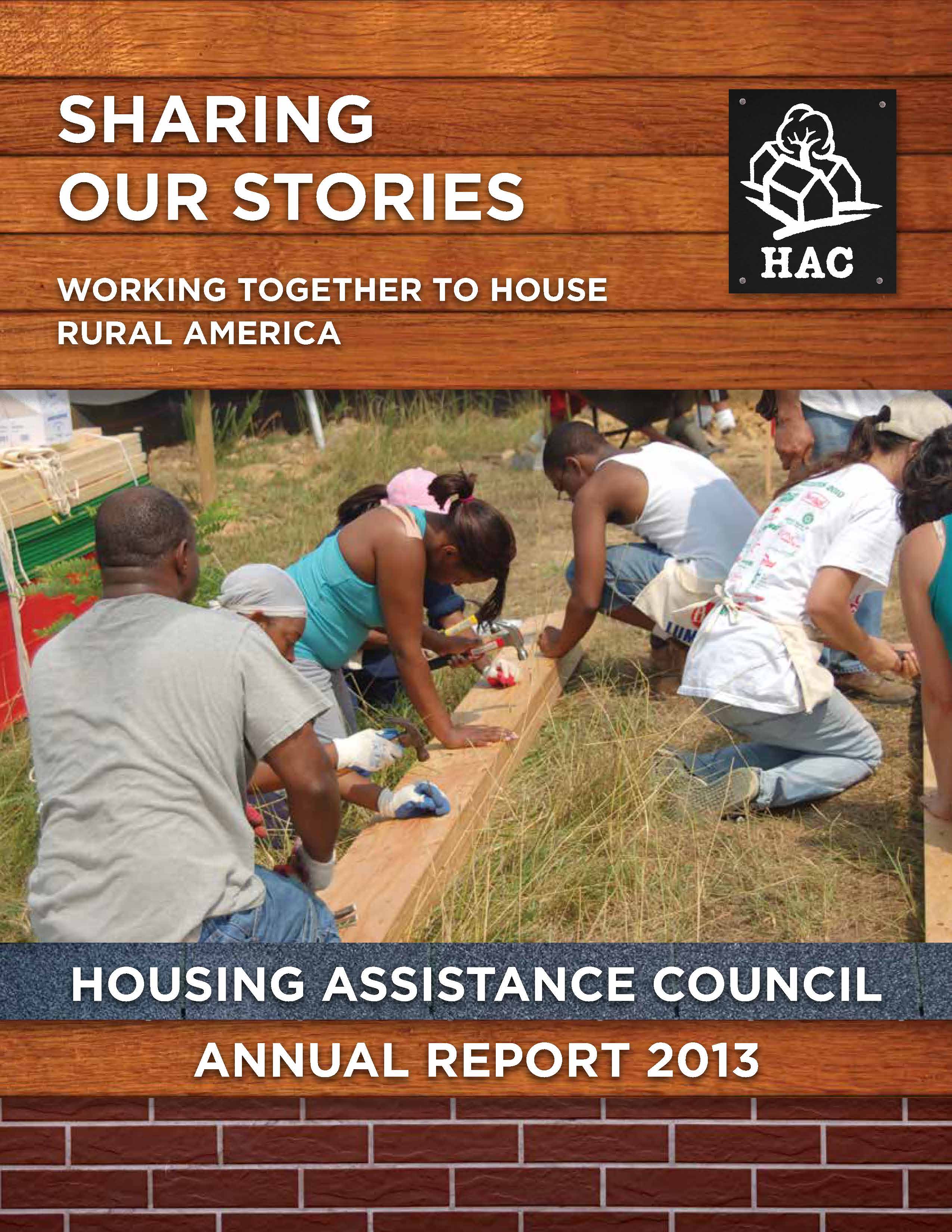
Annual Report 2013

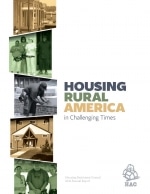
2013 Annual ReportThe achievements of our partners across rural America are a constant source of inspiration. Even during these trying times when organizations are faced with funding cuts, a struggling economy, and a rural housing market still undergoing recovery, dedicated organizations and individuals work daily to improve the lives of low-income rural residents. HAC looks back at 2013 knowing tangible change can still be accomplished through hard work. HAC’s success is linked to the success of our partners.

HAC’s strong relationships with rural housing providers across the country provide a unique insight into in rural communities’ needs and the challenges they face in meeting those needs. These relationships allow strategies to be adapted in order to work across a diverse landscape. Input from partners helps create appropriate policy and programmatic responses and allows HAC to remain a strong advocate for low income rural families. Loan fund programs, trainings, direct one-on-one technical assistance, research and information products, and analyses of federal housing policies ensure that HAC provides the tools necessary for organizations to continue providing safe, secure, affordable housing across rural America. HAC’s resources build and maintain relationships, and these relationships are critical.

HAC’s 2013 annual report highlights these relationships. Beginning with loan and grant making, HAC’s role as a Community Development Financial Institution (CDFI) allows us to help our local partners build and develop needed affordable housing projects. HAC’s training and technical assistance helps rural housing providers operate effectively and efficiently. And finally, HAC’s research and information provides partners with resources to gain access to data, understand federal policies, and stay up to date on news that impacts rural communities. Each service has its role and value for organizations in the field. HAC looks back on 2013 and recognizes not only the challenges, but also the hard-won successes of our partners. We remain committed to the advancement of local efforts and organizations and the ultimate goal of strengthening rural communities across the United States.

A Commitment to Capacity

A Commitment to Capacity
Print Copy: $5.00
This report examines HAC’s loan fund on the occassion of its fortieth year of funding rural affordable housing.
June, 2012

Annual Report 2012

2012 Annual Report

ar2012_coverAfter nearly five years of economic crisis, foreclosure, and declining home values, indicators are finally pointing to the beginnings of a housing recovery. Yet this recovery is not occurring in all places at the same speed. An untold number of rural Americans are still struggling after what was the worst economic recession since the 1930s. Even before the crisis, many rural households and communities struggled with housing problems. While much of the country sees a housing rebound, problems of distress remain in rural America longer than elsewhere because of a lack of economic vitality and diversification. To make things more challenging, federal support for affordable housing is under increasing financial pressure and has been diminishing when it is needed the most.

It is clear that HAC’s role as an intermediary organization and lender is more crucial than ever. Despite decreases in federal funding, a still-struggling economy, and a rural housing market undergoing recovery, HAC continues to further its mission of providing safe, secure, and affordable housing across rural America in some of the most distressed regions of the country. Like all nonprofit organizations, we have made adjustments as we face an uncertain political future and harsh economic realities. But we remain committed to working with partner organizations across the nation and to continue providing housing through our loans and grants, training and technical assistance, and research and information.

HAC has learned the importance of continual dialogue with rural housing practitioners who provide us with firsthand accounts of the need that exists in communities across rural America. With their input, we have been able to help create effective policy and programmatic responses to some of the most challenging issues facing rural affordable housing providers.

Through this landscape, HAC strives to create tangible change for the poorest individuals and families in the most rural parts of America. This annual report demonstrates the ways in which HAC continues to help strengthen rural communities during these challenging times. There is still much more to do, and we are proud to work with you to improve housing and lives in your community.

Annual Report 2011

2011 Annual Report

ar_2011_fc

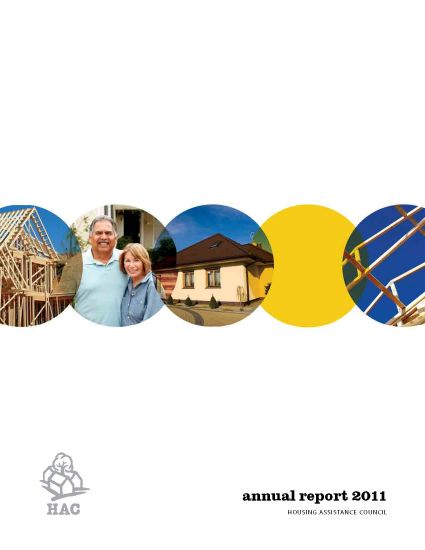
HAC was founded in 1971 to improve housing conditions for the poorest of the poor in the most rural of places. At its founding, HAC’s board and staff knew that building the capacity of local communities would be central to meeting this charge, as local groups would not be able to meet the dire housing needs that existed without first building their own skills. HAC was created to provide these communities with the financial, informational, and technical resources that would ultimately enable them to create affordable, sustainable housing options for rural low-income residents.

In 2011, HAC celebrated its 40th anniversary and throughout the year has had the opportunity to reflect on its ongoing commitment to building capacity in rural communities. In the context of today’s economic and housing problems, the needs of low-income communities have become even more pronounced.

HAC has been steadfast in its support of rural communities and has focused its resources on strengthening the communities that are often suffering the brunt of these economic challenges. This year’s annual report highlights the impact of HAC’s work, specifically illustrating how HAC’s programs have built capacity in rural America.

Looking back over the past year, as well as the past 40 years, HAC is reminded that its success is a reflection of strong relationships with its external partners. HAC maintains these relationships not only through programming, but also through ongoing dialogue with the network of organizations that are working across the nation to create affordable housing. In 2011, HAC completed its stakeholder survey, hearing from more than 270 partners in communities across the nation. These survey respondents shared their insights on how they use HAC’s programs, how their communities have been impacted, and how HAC can improve its delivery of services. We appreciate the time and effort that participants took in providing input, and we look forward to implementing some of what we learned through the process.

In 2011, HAC is proud to have:

  • committed $11.6 million in loans and grants to 94 organizations across rural America to support the construction or preservation of affordable homes and to build local capacity;
  • started a new Rural Senior Housing Initative, which will provide lending, technical assistance, training, grants, and research to support affordable housing solutions for the elderly;
  • received two very strong ratings from the U.S. Government Accountability Office (GAO) and the Opportunity Finance Network (OFN) CARS™, reflecting high assessments of HAC’s work and internal operations;
  • hosted more than 1,500 participants at 18 training events across the nation.
  • published its first coedited issue of Rural Voices with the Rural Community Assistance Partnership (RCAP), highlighting the interconnections between infrastructure and affordable housing development;

HAC looks back on 2011 with pride, knowing that through partnership we have made significant strides in our effort to build capacity, support affordable housing development, and strengthen rural communities. Ever mindful of the challenges ahead, we remain hopeful that 2012 will bring even greater successes.

Annual Report 2010

2010 Annual Report

ar_2010_fc

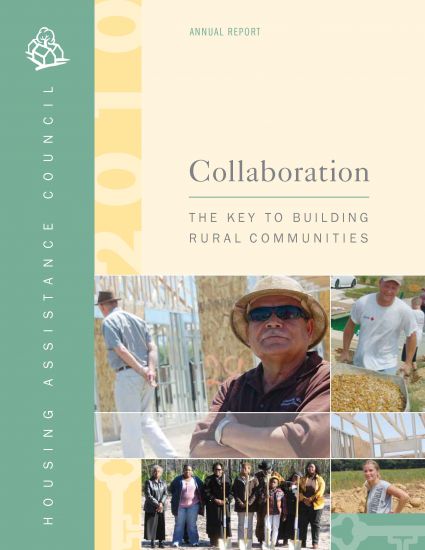
The housing and financial markets were hard hit in 2010 and this has had a profound impact on the affordable housing sector. With government budgets in the red across the nation, common funding sources are being cut and organizations are scrambling to find new sources of revenue to assist the large number of families and individuals in need of affordable housing. This past year has reminded the Housing Assistance Council (HAC) and many of its partners of the significance of collaboration and partnership. In this environment, it is vital that organizations join together to share resources and learn from one another in order to survive.

The 2010 National Rural Housing Conference (NRHC) epitomized the strength of collaboration in these difficult times. For the first time, the NRHC was held jointly with the Rural Community Assistance Partnership’s annual meeting and training conference, allowing the more than 900 people registered to participate in workshops and exchange ideas. In working together to learn important skills and gain insights on current programs and policies, rural housing stakeholders also expressed new appreciation for the partnerships that have kept them afloat during these lean years.

Partnership has always been central to HAC’s success. As an intermediary organization, HAC is built on the many relationships it has developed on the national, state, and—most significantly—local level. This year’s annual report, Collaboration: The Key to Building Rural Communities, highlights the many ways that HAC has partnered during the year to help rural communities meet their housing goals.

Some important examples include the following:

  • Working with national and regional organizations to develop and deliver training on packaging U.S. Department of Agriculture (USDA) Section 502 loans
  • Committing more than $14.2 million in lending to support the development and preservation of 1,200 housing units
  • Approving more than $1.39 million in capacity-building grants to support the administrative and programmatic development of local organizations
  • Completing a comprehensive analysis of Section 502 loan originations for very low-income homebuyers

As HAC looks forward to its 40th anniversary in 2011, we appreciate our continued partnerships with the many organizations that are working to improve rural housing conditions. As we work with these organizations, we gain valuable insights into the needs of these communities and learn the best ways to support these efforts. Everyday, we are reminded that together, we can build rural communities.

Annual Report 2009

2009 Annual Report

ar_2009_fc

The Housing Assistance Council completed another successful year in 2009. Amidst continued economic pressures, HAC has worked to assist the organizations whose constituencies are feeling these financial hardships most acutely. Housing markets across the country are still grappling with high foreclosure rates and many communities are also experiencing double-digit unemployment.

In this economic environment, HAC’s role is especially vital. As an intermediary organization, HAC understands that our strong local partnerships are the foundation of our success. Through these connections, HAC assists local organizations in crafting tailored solutions that meet the needs of their constituencies. By having ongoing dialogue with local communities, expressing and advancing rural interests, and helping to create policy and programmatic responses, HAC has been able to institutionalize needed change.

When rural stakeholders require guidance or resources to create affordable housing solutions, HAC engages in a way that respects local processes, needs, and context. HAC realizes that it is ultimately the community itself that is the best assessor of its needs, and we strive to provide the necessary tools that can bring local endeavors to fruition. This year’s annual report, Promoting Local Solutions, underscores this guiding belief and highlights HAC’s various roles from a local perspective.

Some of HAC’s accomplishments over the year include:

  • Committing more than id=”mce_marker”5 million in loans and grants to build nonprofit capacity and support the development of 1,310 units of affordable housing.
  • Providing information and resources to more than 9,000 individuals and organizations across the U.S. More than 100 partner organizations received intensive one-on-one technical assistance, and more than 500 individuals participated in training workshops.
  • Sharing research and information through the HAC website, www.ruralhome.org, which received more than 12 million web visits over the year.

In this annual report, we highlight examples of how local organizations have used HAC’s resources to create affordable housing opportunities and bring about change in rural communities.

We look back on 2009 with pride, as HAC and our partners have been able to make visible strides in rural areas across the nation. HAC remains committed to strengthening rural communities and ensuring that our local partners thrive. Mindful of the work yet to be completed, we head into 2010 with optimism and determination.

Contact HAC

HAC OFFICES

If you have a general question or are not sure which office to contact, please contact only the National Office at hac@ruralhome.org or 202-842-8600 and HAC staff will determine who is best able to respond to you.

If you are sure you know which staff person you want to reach, staff e-mail addresses are available here.

National Office
1025 Vermont Ave., N.W.
Suite 606
Washington, D.C. 20005
Tel.: 202-842-8600
Fax: 202-347-3441
E-mail:hac@ruralhome.org

Western Office

VACANT
E-mail:western@ruralhome.org

Southeast Office
55 Marietta St NW
Suite 1350
Atlanta, GA 30303-2869
Tel.: 404-892-4824
Fax: 404-892-1204
E-mail:southeast@ruralhome.org

Midwest Office
5559 NW Barry Road
Mailbox #356
Kansas City, MO 64154
Tel.:816-880-0400
E-mail:midwest@ruralhome.org

Southwest Office
PO Box 315
San Miguel, NM 88058
Tel.:505-883-1003
E-mail:southwest@ruralhome.org

Staff

HAC has a highly knowledgeable and experienced staff, well versed in housing, economic, and community development. HAC staff have extensive experience in including all aspects of federal housing programs, housing rehabilitation, program administration, economic development, cross-cutting regulations, project financing, financial management, infrastructure, construction, and organizational management.

Housing Assistance Council Staff

Addresses, phone and fax numbers, and e-mail addresses for HAC offices are available here.

Executive Office

David Lipsetz, CEO, david@ruralhome.org
Samantha Booth, Government Relations Manager, samantha@ruralhome.org
Jennifer McAllister, Development Manager, jennifer@ruralhome.org
Stephen Sugg, Special Projects Manager, stephen@ruralhome.org

Loan Fund

Eileen Neely, Director of Loan Fund, eileen@ruralhome.org
Kristin Blum, Senior Loan Officer, kristin@ruralhome.org
Jennifer Lam
, Portfolio Manager, jenniferl@ruralhome.org
Louis Marshall, Loan Processor, louis@ruralhome.org
Carlos Muralles, SHOP Program Manager, carlos@ruralhome.org

Research and Information

Lance George, Director of Research and Information, lance@ruralhome.org
Christina Davila, Research Associate,
christinad@ruralhome.org
Michael Feinberg,
Senior Policy Analyst,
michael@ruralhome.org
Isabella Green,
Stevenson Fellow,
isabella@ruralhome.org
Evelyn Immonen,
Research & Policy Associate, evelyn@ruralhome.org
Katie Starr, Emerson Hunger Fellow, katie@ruralhome.org
Dan Stern,
Communications and Outreach Manager, dan@rural home.org
Leslie Strauss, Senior Policy Analyst, leslie@ruralhome.org
Keith Wiley, Senior Research Associate, keith@ruralhome.org

Rural Housing Services, Inc.

Jorge Diaz, Portfolio Manager, jorge@ruralhome.org

Training and Technical Assistance

Southeast Office

Shonterria Charleston, Director of Training and Technical Assistance, shonterria@ruralhome.org
Christina Adeshakin, Housing Specialist, christina@ruralhome.org
Kelly Cooney, Housing Specialist, kelly@ruralhome.org

Southwest Office

Anselmo Telles, Senior Housing Specialist, anselmo@ruralhome.org

Midwest Office

Stephanie Nichols, CHDO Project Manager/Housing Specialist, stephanie@ruralhome.org
Vickey Stratton, Housing Specialist, vickey@ruralhome.org

Finance and Administration Division

Karin Klusmann, Director of Finance, karin@ruralhome.org
Alem Berhane, Managerial Accountant, alem@ruralhome.org
LaVerne Lawrence, Staff Accountant, laverne@ruralhome.org

If you have a general question or are not sure which office to contact, please contact only the National Office at hac@ruralhome.org and HAC staff will determine who is best able to respond to you. Sending e-mails to more than one address will slow down HAC’s response because staffers will have to take time asking each other who is going to respond.

Annual Report 2008

2008 Annual Report

ar2008_thb

Communities across the nation have been devastated by the current economic crisis. Rising mortgage foreclosure rates, mounting personal debts, and skyrocketing unemployment have increased the need for stable, affordable housing. However, these same economic trends have made it even more difficult for local nonprofits to create needed housing opportunities for low-income residents. In the current economic environment, the Housing Assistance Council’s work as an intermediary organization is even more important.

By definition, intermediary organizations serve as a bridge between two entities. HAC uses knowledge, financial and technical resources, and access to connect rural communities to the larger housing sector. And, despite the challenges, there were many successes this year. This annual report highlights the links HAC was able to forge over 2008. It is also a testament to the phenomenal partners HAC works with across the nation and their dedication to improving rural communities.

Some of HAC’s accomplishments over the year include:

  • Providing more than $20.85 million in loans and grants to help produce more than 1,800 units of affordable housing.
  • Hosting more than 15 national, regional, and audio-web training events with more than 1,000 participants.
  • Providing key information through the HAC website, www.ruralhome.org, which received more than 10 million web visits over the year.
  • Developing a national Rural Housing Platform that shares program and policy recommendations that can benefi t those working to create affordable housing opportunities.

HAC’s ongoing partnership with local communities is the foundation on which it is able to fulfill its mission. By listening to local communities and communicating the issues we hear, HAC is able to contribute to the national dialogue in a way that reflects the needs and interests of rural communities. In March 2008, HAC completed a survey of stakeholders and learned about the issues impacting rural communities and how HAC’s products and services can better serve those needs. Feedback from the most recent survey is provided throughout the annual report.

It is with great pride that HAC continues to stand with rural communities and build the bridges that result in stronger local organizations, increased housing opportunities, and better communities. HAC is proud of the work we have done together in 2008 and excited about making new connections throughout 2009.

GET THE HAC NEWS!

Sign-up for HAC information products

SIGN UP HERE

Housing Assistance Council   |  1828 L Street. N.W., Suite 505, Washington, D.C. 20036
(202) 842-8600 (202) 347-3441 hac@ruralhome.org |

Board Portal

HAC is an equal opportunity provider, employer, and lender. | Civil Rights | Privacy