White Mountain Apache Housing Authority Serves its Veterans

The White Mountain Apache Housing Authority (WMAHA) helps the members of the White Mountain Apache Tribe to overcome their individual housing needs. Of these, almost 500 are U.S. military veterans. Working in the Fort Apache Indian Reservation located in eastern central Arizona, WMAHA serves the 16,000 enrolled members of the White Mountain Apache Tribe and strives to ensure that every tribal member has safe housing they can afford. The Housing Assistance Council (HAC) is proud to be a partner of WMAHA and their amazing work. In 2018, we awarded a $30,000 grant through The Home Depot Foundation‘s Veteran Housing Grants Program to WMAHA to help support their veterans. In celebration of Veterans Day and Native American Heritage Month, we’d like to highlight just a few of the many ways the White Mountain Apache Housing Authority serves the veterans of the White Mountain Apache Tribe.
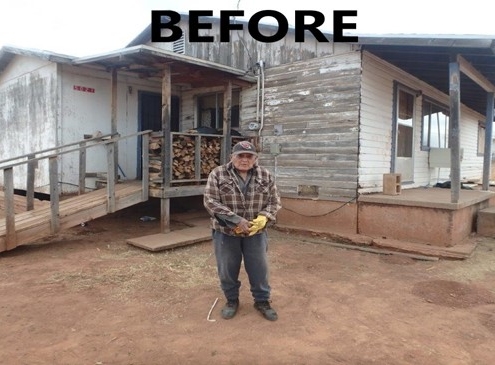
Before rehab of a veteran’s home completed by WMAHA in 2018 

Before rehab of a veteran’s home completed by WMAHA in 2018

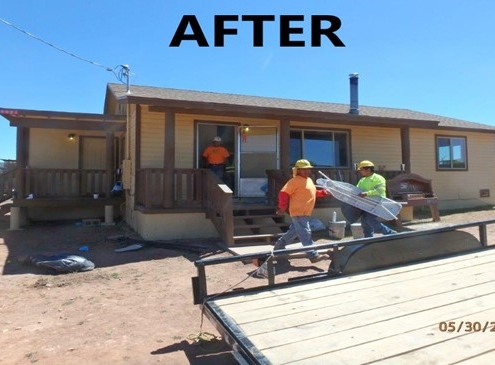
After rehab of a veteran’s home completed by WMAHA in 2018 

After rehab of a veteran’s home completed by WMAHA in 2018

Before and after of a rehab of a veteran’s home completed by WMAHA in 2018 


As many veterans know, service doesn’t end when you’re discharged. It’s a value that is carried for a lifetime. For WMAHA, service is key to the mission. The Veteran Home Rehabilitation Program serves those who have served our country. Many of the low-income Apache veterans the Housing Authority assists are in desperate need of multiple, expensive repairs to make sure their homes are safe, accessible, and livable. But without the ability to make these repairs themselves, many veterans need help.

Over the last eight years, the White Mountain Apache Housing Authority has rehabilitated (or in one case built!) 19 homes for their veterans, each of which required multiple major repairs for health, safety, and accessibility. All of this was performed at no cost to the veteran or their family. Last year WMAHA was able to set a record with 5 rehabilitations.

Making sure their veterans have safe and healthy homes is a point of pride for WMAHA and for the entire White Mountain Apache community. After all, WMAHA doesn’t work alone: each rehabilitation is made possible by scores of volunteers. As the team from WMAHA explains, “the number of volunteers who come and help with demolition and construction cleanup during the projects” is a testament to the rehabilitation program’s “impact on the community.” From the Housing Authority to everyday members, including community partners, the White Mountain Apache Tribe takes care of its veterans. By taking care of those who took care of us, WMAHA is serving both its community and the broader community of veterans nationwide.

The COVID pandemic has hit many Native communities particularly hard, and tragically, the White Mountain Apache are no exception. During the pandemic, unemployment, which usually runs 80% according to WMAHA, has far surpassed that amount, and food insecurity is “at a critical level.” Many of the low-income veterans WMAHA assists don’t have a way to pick up food from the local food bank, so the Housing Authority is starting to deliver the food boxes itself. Not content to just help house their veterans, WMAHA is committed to improving their quality of life.

Caring for veterans extends outside the home, too. For WMAHA, ensuring their veterans have access to the Veterans Affairs benefits they deserve is a critical mission. With 1.67 million acres, the Fort Apache Indian Reservation is large and rural. This creates challenges for many of the Tribe’s low-income veterans. Many of the nearest VA hospitals are hundreds of miles away, which makes even getting to routine appointments incredibly difficult. This distance makes it so challenging to receive disability ratings, see specialists, and make necessary appointments that, according to Barb Connerley, a consultant who works with WMAHA, “many of the veterans…do not know what VA benefits are available to them.”
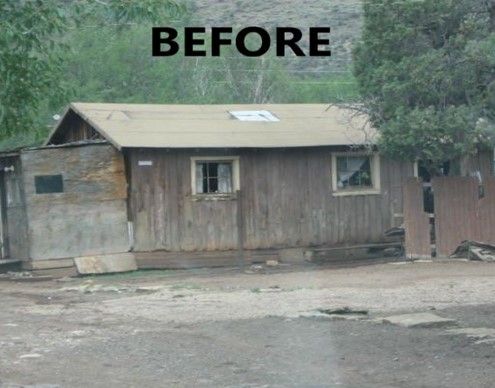
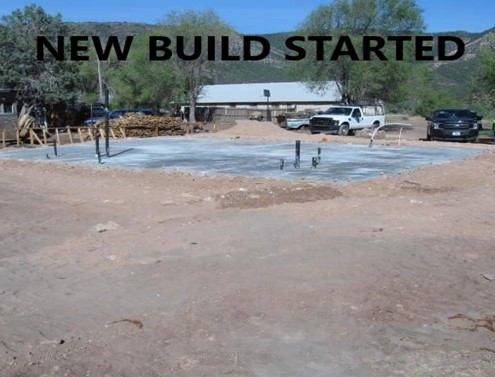
This veteran’s home was in such disrepair the team from WMAHA decided to tear it down and start from scratch.

This veteran’s home was in such disrepair the team from WMAHA decided to tear it down and start from scratch.

This veteran’s home was in such disrepair the team from WMAHA decided to tear it down and start from scratch.

This veteran’s home was in such disrepair the team from WMAHA decided to tear it down and start from scratch.

This veteran’s home was in such disrepair the team from WMAHA decided to tear it down and start from scratch.

The White Mountain Apache Housing Authority has created a solution to help connect their veterans to the VA medical care they earned through their service. Since 2017, the White Mountain Apache Tribe Department of Transportation has operated Fort Apache Connection Transit (FACT), a 2-route bus system serving 12 stops across the Reservation. While this system doesn’t provide access to the nearest VA hospitals, the Housing Authority recently began repurposing one of their buses to transport veterans to their VA appointments. Multiple times a month, WMAHA will be providing veterans with a bus ride to their appointments and back home. They even take the time to help the veterans complete their paperwork to file for VA benefits.

For the trip, WMAHA provides their veterans with water, snacks, masks, and COVID safety information. They hope that this program can also serve as a teaching event, helping their veterans learn more about COVID safety as well as how to access their VA benefits. The program’s strength is its ingenuity—bringing together transit, healthcare, and informational services—in solving a critical problem for the Tribe’s veterans. Thanks to the White Mountain Apache Housing Authority, veterans living on reservation now have access to the critical VA healthcare they’ve earned through their service.

Many veterans return from their service to find it difficult to access the resources of their communities, including housing. Tragically, Native communities are overrepresented among persistent poverty counties, making these resources even harder to access. The Housing Assistance Council is committed to helping build community resources for housing where they’re needed most. Partners like WMAHA help us give back to our veterans and uplift Native communities. As Barb Connerley puts it, the Tribe’s veterans “have a proud tradition of military service and sacrifice.” The work of the White Mountain Apache Housing Authority pays respect to that service and sacrifice through service, care, and ingenuity of its own.
Building homes together in America’s “most rural state”

As part of National Homeownership Month, we’ll be highlighting stories from across our network participating in the U.S. Department of Housing and Urban Development’s (HUD) Self-Help Homeownership Opportunity Program (SHOP). HAC provides loan funds to self-help housing providers to help low- and moderate-income families achieve their dreams of homeownership. The homebuyer family must contribute a significant amount of sweat-equity towards the construction of the dwelling. Loan funds are awarded through a competitive application process. If the organization meets certain requirements, up to 90% of the SHOP loan may be forgiven. The forgivable portion may become a grant for the group to establish its own revolving loan fund for future site acquisition and development of self-help housing or to provide direct subsidies to participating homebuyer families.

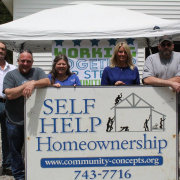
Community Concepts staff and supporters celebrate the completion of news self-help units in 2019

Community Concepts staff and supporters celebrate the completion of news self-help units in 2019

Following the 2010 Census, Maine was dubbed “the most rural state” with 61.3% of its residents living in rural communities. Homeownership is common among Mainers, with 71.5% of all units being owner-occupied. Though poverty rates in Maine are lower than the national average (13.5% vs. 15.1%), the state has higher rates of residents receiving income through Social Security, Supplemental Social Security, and Public Assistance making it challenging for many to qualify for a mortgage.

Community Concepts, Inc., based in Lewiston, Maine, got its start in 1965 as part of federal legislation that created a network of Community Action Agencies. Community Concept’s programming focuses on the “whole family”, addressing the needs of parents and their children with programs like Head Start, fuel assistance, weatherization programs, and self-help homeownership. In 1991, HAC provided a planning grant to Community Concepts to help initiate the self-help homeownership program at the organization. “Since that first grant, we’ve completed 350 self-help home ownership opportunity, including new construction and a purchase/repair program we added 10 years ago,” shared Sandy Albert, Director of Housing Improvement Services.

The organization sees a lot of overlap in the clients it serves and that is intentional. “We have family development coaches that are working with families,” says Albert. If a family of renters comes to the agency looking for help with fuel assistance the coach will also ask if they’re interested in becoming a homeowner. The coach will then refer the family to other programs in the organization that can help them pursue homeownership or, if necessary, help build their credit.

One of those families, the Hoyts, achieved their dream in May 2012. Working together with five other families, the Hoyts learned valuable construction skills as they worked on their home. Through their sweat-equity, each family saved as much as $20,000 on the cost of their home. In a letter shared by Community Concepts, Eric Hoyt wrote “This is not a house that you’re building it’s a home, and it’s a heartfelt build. With a lot of meaning that goes into it. There is a lot of hours and tears and fears but through them all when you walk through the door and you say look at what we have. When you look at what you and your team has accomplished it makes it that much more a home.”

Albert credits the program’s success and impact to Community Concept’s partnership with HAC. “Without the funding through SHOP, many of our buyers would not qualify even with the sweat-equity,” said Albert “those families wouldn’t be where they are today.”

Annual Report – 2019

As Americans now face an unprecedented series of changes in their daily lives due to Covid19, the importance of stable and affordable housing cannot be overstated. Our homes have become our offices, our schools, our social clubs, our places of worship, and our safe havens. But economic uncertainty combined with ongoing housing affordability concerns make it harder and harder for the most vulnerable Americans to access that safe haven. Covid19 has only served to exacerbate this inequality, especially for those rural regions that were already struggling to maintain hospitals, employers, bank branches and their aging housing stock.

As Covid19 spreads across rural places, HAC is pouring all our time and resources into the hardest hit rural communities. This year’s Annual Report is concise and conveys only primary corporate information.

Before the pandemic, public concern over housing affordability and rural poverty was rising. The pandemic has spiked those concerns as it lays bare the inequity that exists between different places in our country. HAC’s work is essential to an effective response and recovery. We continue to deliver local communities the resources and capabilities they need to address both the short term and long term solutions for rural America. We hope you’ll continue to join us in this fight.

Read the report

Privacy Policy

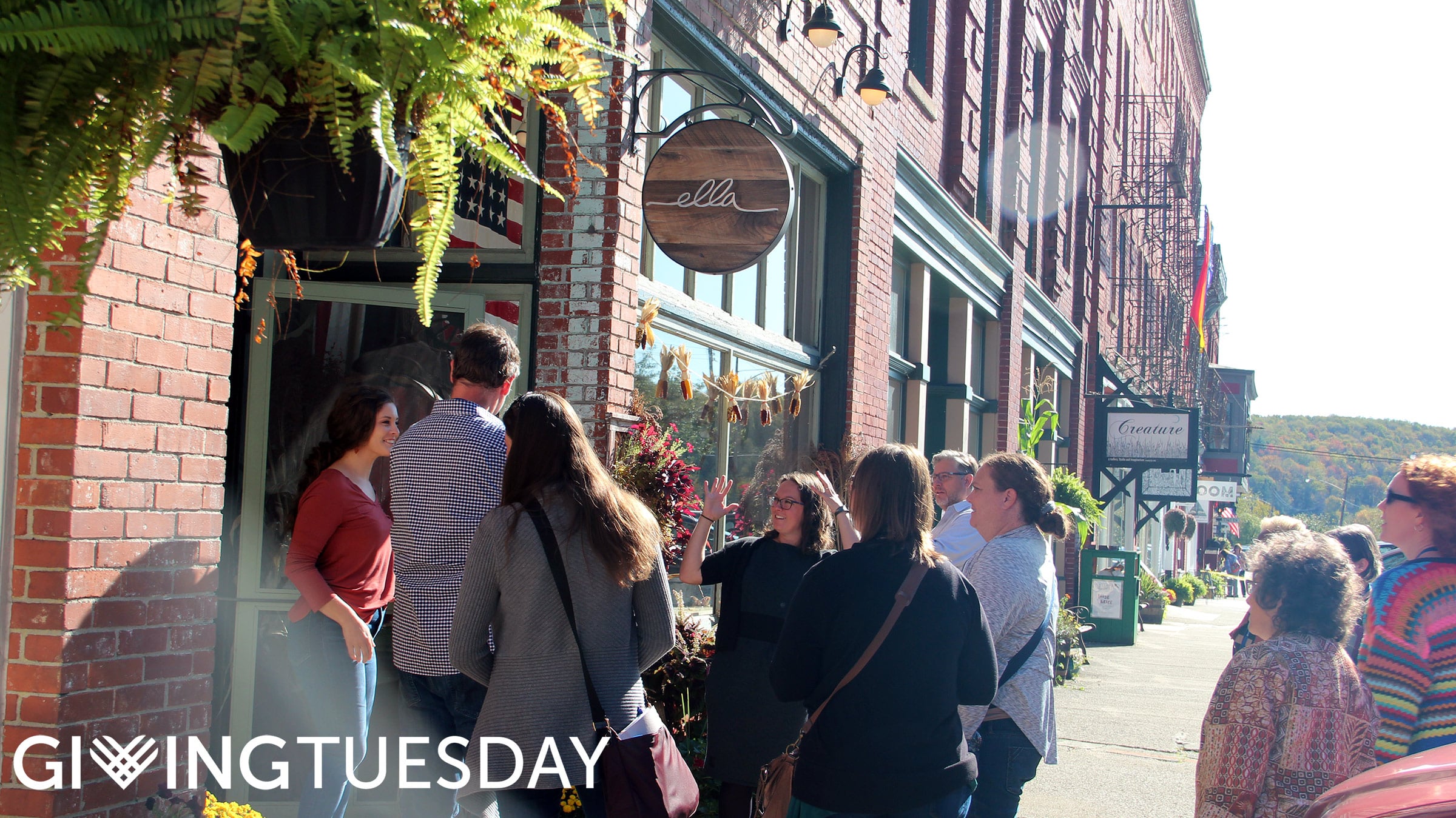
Help Rural America Thrive on Giving Tuesday

Good things are happening in rural America. Be a part of it.

Too often, the prevailing narrative about rural America is that it is failing compared to its urban and suburban counterparts. While rural America is certainly facing its share of struggles, there are so many bright spots and amazing things taking place in small towns and communities across the country. We know because we see it every day.

In October, HAC kicked off the Citizens Institute on Rural DesignTM (CIRD) with the CIRD Learning Cohort Summit in the towns of Thomas, Davis, and Elkins in rural West Virginia. The Citizen’s Institute on Rural Design™ is a National Endowment for the Arts leadership initiative in partnership with the Housing Assistance Council, along with buildingcommunityWORKSHOP. Participants representing 23 rural communities from across the country convened to learn the fundamentals of rural design and how it can help solve some of their community’s most challenging problems.

Giving Tuesday 2019

Over the next year, these 23 communities will receive access to the resources they need to convert their own good ideas into reality. Here a few examples of the challenges these communities will be tackling:

  • One of the pressing issues still facing the residents of Iola, Kansas is the lack of quality, affordable housing. Thrive Allen County and the City of Iola will use the design challenge to develop an affordable housing master plan for a neighborhood on the north side of town.
  • The town of Entiat, Washington is exploring how it can reinvent itself as a destination for recreation, agritourism, small business development, and residential development.
  • The Mt. Zion Baptist Church Preservation Society in Athens, Ohio plans to rehabilitate the Mt. Zion Baptist Church into a multi-use space devoted to the contributions of African Americans in Southeast Ohio – honoring its founding in 1905 by a community of free-born and formerly enslaved people of color.

2020 holds many possibilities for HAC and the communities we partner with, like Iola, Entiat, and Athens. This #GivingTuesday, your donation to HAC will have more impact as every dollar raised will meet HAC’s match for the CIRD program. And every donation made to HAC on Facebook on #GivingTuesday will be matched by Facebook. You can be a part of changing the story in rural America.

Donate Button

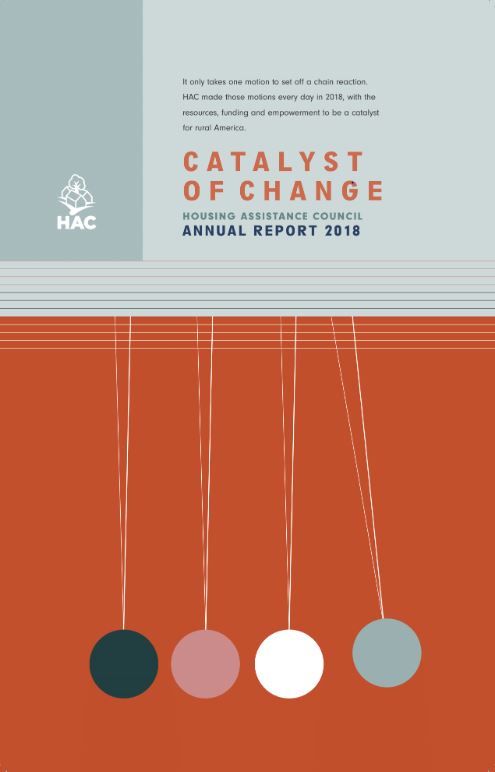
Catalyst of Change – The 2018 HAC Annual Report

catalyst of change

HAC is pleased to present the 2018 Annual Report, which looks back at our accomplishments and those of our partner organizations over the last year.

For 49 years, the Housing Assistance Council (HAC) has worked to build communities across rural America. As we approach a half-century of improving housing conditions for people in rural areas, we wanted to take a moment to reflect on our work.

As we thought about the many ways HAC has created change, empowered local organizations, fostered collaborations between sectors, built a community of learning and advocated for those whose voices are often silenced, one word kept rising to our minds. Catalyst.

A catalyst is an agent of change. It helps to enable collaboration among existing elements that may struggle to combine. HAC has been serving as a catalyst for improving rural communities throughout our history.

2018 was no different. We continued to help local organizations in rural areas increase their capacity and assist in financing their projects. We expanded our collaborations with national organizations, foundations and private funders, and began new initiatives around rural prosperity and Duty to Serve. Our research shed light on a looming crisis for affordable rental housing and continued to inform advocates and policymakers about the realities of rural poverty and housing conditions. We ended the year on a high note with our biennial conference. The rural housing community shared ideas, discovered new approaches, and returned back to their communities rejuvenated and recommitted to the effort.

As we expand our reach, we acknowledge that the work we do would not be possible without the generous support of our public and private supporters. Their commitment to rural people and communities helps create a fertile environment for HAC’s actions.

The work is not done. The challenges for rural communities are, in some ways, becoming more severe. But we know the solution. HAC will continue to serve as a catalyst for rural organizations, offering them the tools they need to generate local solutions. While the job is never finished, we are always inspired by the energy, passion, and ingenuity of rural people and places.

Read this publication online at Issuu.com.

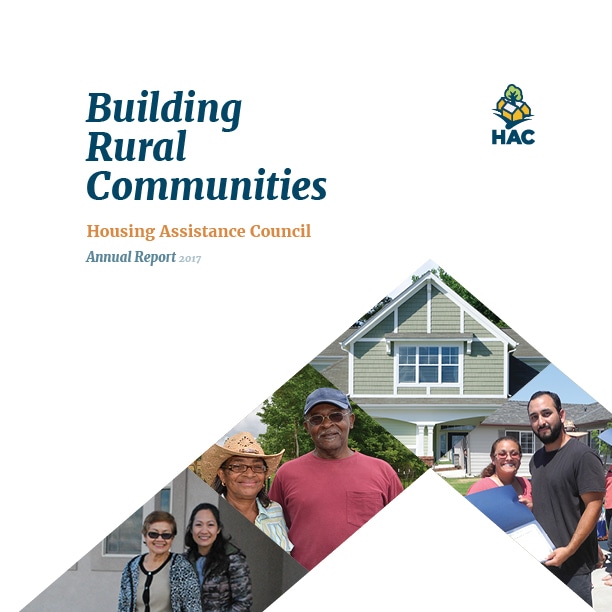
HAC: Building Rural Communities: Annual Report 2017

HAC's 2017 Annual ReportHAC is pleased to present the 2017 Annual Report, which looks back at our accomplishments and those of our partner organizations over the last year.

Rural America got a lot of attention in 2017. The results of the 2016 presidential election encouraged journalists, policymakers, and others to consider the differences between rural and urban parts of the U.S. The Housing Assistance Council has known these facts for decades, of course, and has worked with partners around the country towards improving life for the lowest income rural Americans.

Economic recovery from the Great Recession is lagging in rural areas, with a lower rate of job creation than in metropolitan places. Most of the new rural jobs are in the service sector, with far lower salaries than past mining and manufacturing positions. Forty percent of renters in places with populations under 10,000 pay more than 30 percent of their income for housing. While rural residents are more likely to be homeowners than city dwellers are, the homeownership rate for rural African Americans and Hispanics is 20 percentage points lower than that of white non-Hispanic rural households. Persistent poverty counties – those where poverty rates have exceeded 20 percent since 1990 – are predominately rural.

At the same time, HAC knows rural America’s advantages. The barnraising spirit is still strong: residents care deeply about their communities and they really do pitch in to help their neighbors. Rural places’ products and their natural resources benefit the entire country. Costs of doing business are often lower in small towns than in big cities.

HAC spent 2017, as it has spent more than 45 years, helping rural communities use these positive traits and resources to improve their residents’ lives. This has always been the hallmark of HAC’s work: HAC helps local organizations so that they can, in turn, help their communities – not only immediately, but for years to come. HAC builds rural resources, capacity, and knowledge by providing financing, training and technical assistance, and research and information. In 2017 HAC continued its special efforts to help provide housing for rural veterans and launched a new initiative on creative placemaking.

Whether the new attention to rural areas yields useful results or not, HAC and our partners on the ground will continue our efforts. Rural Americans will deserve decent, safe, affordable housing, as they always have.

Read this publication online at Issuu.com.

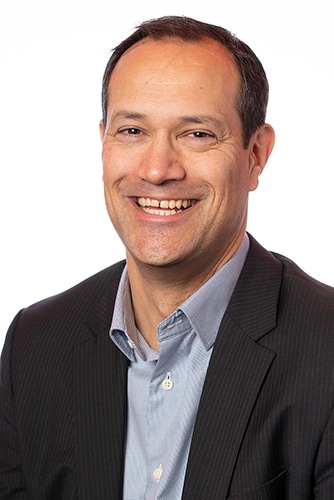
David Lipsetz, President & CEO

David Lipsetz - HAC CEO - Headshot

David Lipsetz is the President and CEO at the Housing Assistance Council (HAC) and a leading expert in affordable housing and sustainable community development. David came to HAC after holding several White House-appointed positions, most recently serving as the Associate Administrator for Rural Housing and Community Facilities at the U.S. Department of Agriculture (USDA.) His office oversaw policy development and program administration of more than $100 billion in direct lending, mortgage guarantees, grants and technical assistance for community and economic development in rural America.

Prior to USDA, David was at the U.S. Department of Housing and Urban Development (HUD,) where he served as a Deputy Assistant Secretary and Senior Advisor for Public and Indian Housing, and as an Acting Chief of Staff to the Deputy Secretary. Prior to HUD, David managed policy, large-scale initiatives and organizational development for housing agencies in New York City and Oakland, CA. He also worked for the San Francisco Bay Area’s regional planning authority; and Dresden, Germany’s Institute for Ecological and Regional Development. His career began as a Legislative Assistant for domestic policy issues in the Office of U.S. Congressman John Dingell.

David was born and raised in Ohio. He earned a Bachelor’s degree in Political Science from Michigan State University, and Master’s degrees in Sociology and City and Regional Planning from the Ohio State University. He currently resides in Washington, DC with his wife and kids.

Supporters

HAC would like to recognize and thank our generous supporters.

Supporters

The Atlantic Philanthropies
Bank of America
BBVA Compass Bank
Capital One Bank
Council of Federal Home Loan Banks
Episcopal Diocese of Iowa
The Episcopal Church
F.B. Heron Foundation
Federal Home Loan Bank of Des Moines
Ford Foundation
The Hearst Foundation
The Home Depot Foundation
Home Missioners of America
Lenin Juarez
John D. and Catherine T. MacArthur Foundation
JP Morgan Chase
Morgan Stanley
Navajo Housing Authority
NeighborWorks™ America
Seton Enablement Fund
Sisters of Charity, Blessed Virgin Mary
Sisters of St. Francis of Philadelphia
Sisters of the Holy Cross
Sisters of the Presentation of the Blessed Virgin Mary
Society of Mary
U.S. Department of Agriculture— Rural Development – Business and Cooperative Programs
U.S. Department of Agriculture
U.S. Department of Housing and Urban Development
U.S. Department of the Treasury— Community Development Financial Institutions Fund
Wells Fargo Housing Foundation

Partners

Gideon Anders
Joseph and Tamara Belden
Brattleboro Area Affordable Housing Corporation
Congregation of the Humility of Mary
Council for Affordable and Rural Housing
Habitat for Humanity
Norman Hurwitz
Moises and Teresa Loza
Maria Luisa Mercado
National Trust for Historic Preservation
Next Step
PathStone Corporation
William and Gloria Powers
Reno & Cavanaugh, PLLC
Rural Community Assistance Corporation
Rural Community Assistance Partnership
Byron and Lee Stookey
Leslie R. Strauss
Harold and Marilyn Wilson

GET THE HAC NEWS!

Sign-up for HAC information products

SIGN UP HERE

Housing Assistance Council   |  1828 L Street. N.W., Suite 505, Washington, D.C. 20036
(202) 842-8600 (202) 347-3441 hac@ruralhome.org |

Board Portal

HAC is an equal opportunity provider, employer, and lender. | Civil Rights | Privacy