
Takeaways from the 2025 Summit on Rural Homelessness

On November 4th the Housing Assistance Council (HAC) hosted the second Summit on Rural Homelessness in Washington, D.C. at the National Rural Housing Conference. As national levels of Americans experiencing homelessness reaches an all-time high, rural homelessness often goes overlooked or go unseen. In 2023, the Housing Assistance Council worked with partners at the National Alliance to End Homelessness and many other key stakeholders[1] to host the first Summit on Rural Homelessness to create a full day of programming addressing challenges and opportunities with a uniquely rural lens. The 2025 Summit on Rural Homelessness included speakers who are field leaders that are actively transforming how communities, regions, states, and our nation address rural homelessness. The Summitt offered a series of presentations, panels, and discussions uniquely focused on Rural Homelessness. Attendees learned about practical on-the-ground approaches to addressing rural homelessness across the nation, explored innovations in data and technology, dove into approaches to support Special Needs Populations, and consider the impact of our shared narrative around rural homelessness.

Key Takeaway One: An increase in federal resources via the CARES Act and ARPA allowed Local, regional, and state Continuums of Care to drive innovation and impact between 2020-2025.

Unprecedented investment by the CARES Act and America Rescue Plan Act opened doors for Rural Continuums of Care to make meaningful progress in building effective programmatic infrastructure to address rural homelessness.

Key Takeaway Two: Use of data, technology, and artificial intelligence is increasingly shaping how resources are deployed to address rural homelessness.

Attendees learned about opportunities to utilize data to inform programming and policy, through the Housing Assistance Council’s Rural Data Portal. Looking locally, Dr. Huan-Ta Hsu from the University of North Carolina, Chapel Hill, shared reflections from his work in   Missouri to apply machine learning to lower barriers for access to services.

Key Takeaway Three: Rural Homelessness, and the diversity of needs among individuals who experience homelessness in a rural context, require an adaptive set of policies and approaches to meet a wide spectrum of needs.

Key Takeaway Four: In a time where federal funding, policy, and leadership on rural homelessness is increasingly uncertain, local and state leadership will shape policy and programmatic impacts on the ground in rural America.

Unfortunately, developments since the Summit have threatened the progress shared by panelists and participants.  Even as the CARES and American Rescue Plan Act funds for addressing rural homelessness have largely come to an end, on November 13, 2025, the U.S. Department of Housing and Urban Development (HUD) substantially revised the fiscal (FY) 2025 Notice of Funding Opportunity (NOFO) for the Continuum of Care (CoC) Program Competition – the largest federal program providing housing and services to people experiencing homelessness.

This NOFO dramatically altered HUD’s funding commitments, including placing a 30 percent cap on permanent housing investments for people experiencing homelessness (nationwide 88 percent of CoC funding currently flows to permanent housing).   Estimates suggest 170,000 people people  across the country may lose their supportive housing as a result.  Continuums of Care that encompass rural communities are at heightened risk, because they lack either the number or scale of alternative funding sources from the public, private or philanthropic sector.  HAC is working with a number of the Summit co-sponsors, including the Corporation for Supportive Housing and the National Alliance to End Homelessness  to advocate with HUD and Congress to reverse these sudden, harmful changes to the NOFA.  On December 8, HUD withdrew the NOFO and indicated it intends “to make appropriate revisions.”


[1] Summit co-sponsors included: the Corporation for Supportive Housing, Enterprise Community Partners, Local Initiatives Support Corporation (LISC), the National Coalition for Homeless Veterans, the National American Indian Housing Council, the National Council of State Housing Agencies, the National Association of Housing and Redevelopment Officials, and Neighborworks.
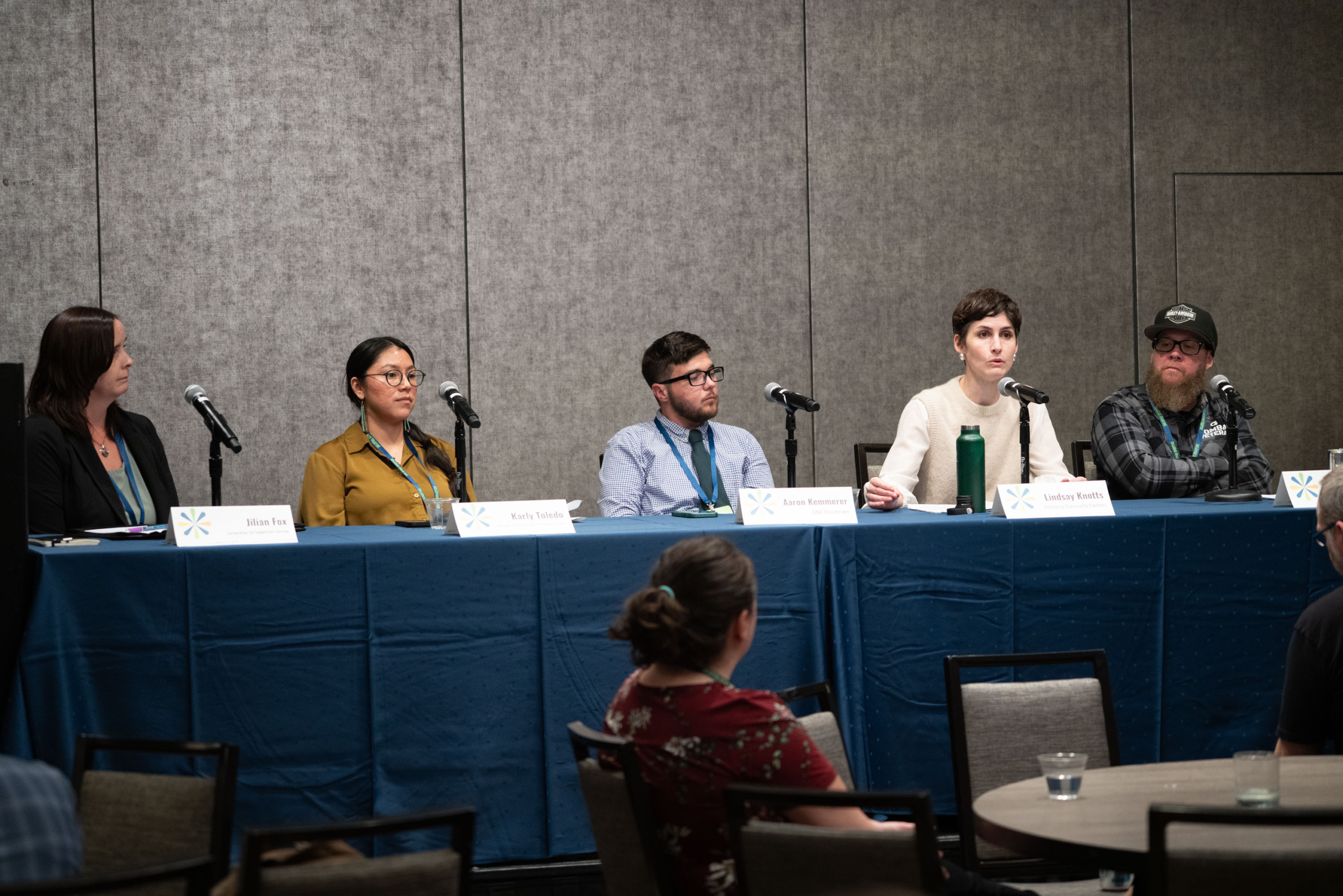
First day of HAC 2025 rural housing conference, Washington, DC, 11/4/25. Photo: Jay Mallin


Experts of HAC: Alison Duncan on Lending and Development in Rural America

In this edition, Alison Duncan discusses what makes rural lending different from urban markets, how HAC supports emerging developers, and why patient, mission-driven capital is key to building affordable homes in small towns.

What’s different about lending in urban vs. rural areas?
Alison Duncan

Alison Duncan serves as a Loan Officer at the Housing Assistance Council, where she combines her background in affordable housing development and impact investing to strengthen rural lending.

There are several key differences. First, it is more difficult to determine the value of a property. Sometimes there are no comparable properties, as nothing has sold in the past few years. Or if there are sales, they are of old properties, not new construction. HAC uses an analysis of cash flow to determine value and to size loans appropriately for different projects.

Second, rural areas often have less capacity. Either there are no developers, or no general contractors, or the city or county does not have experience with federal funds. With few developers but a need for housing, HAC is often asked to support new developers in building affordable housing in rural areas. First-time developers are not always familiar with every aspect of development and may not be able to complete their plan. Construction costs are often higher, as contractors must travel longer distances to work, sometimes staying on site during the work week. The environmental review required to receive federal funding has proven to be the most difficult, as a local office must provide preliminary approval, and many rural local officials have never done that before.

With lower rents for apartments and lower sale prices for homes, projects often need a subsidy to remain affordable. Many rural developers must work with state and federal programs to cover development costs. These government programs can take a long time to fund and require a lender with patience. HAC provides longer commitments (locks in its interest rate for a longer period of time) for projects with committed state or federal funds.

Why is affordable housing important at this time?

There are well-known trends increasing housing costs nationwide. With more remote work options, people are moving from cities to rural areas, which have historically had lower-cost housing. This migration is driving up costs in rural areas, making it hard for long-standing residents to afford housing. HAC works to keep some housing affordable in rural areas across the country. Other reasons that affordable housing is important include:

  • Housing costs have skyrocketed over the last few years — the pandemic escalated construction costs, and extreme weather events are increasing insurance costs. Housing costs were already on an upward trend over the past few decades – they now represent a higher percentage of a worker’s salary than they were for prior generations.
  • Affordable housing supports job growth and economic development – it allows areas to attract and retain a workforce.
  • Many Americans’ budgets are already stretched, and inflation is making it harder to afford the basics. Affordable housing becomes even more critical in these conditions.
  • Affordable housing is aging and has a lot of deferred maintenance. It’s hard to make improvements with limited income from the property. Even worse, once repaired, some affordable housing projects are transitioning to market rate. Programs to support preservation of affordable housing are necessary.
Why did you come to HAC?

I had wanted to work in affordable housing finance for years. While studying finance in my MBA program, I learned about the complexity of the Low-Income Housing Tax Credit, and the fact that the industry needed smart, capable people who also care about its mission. Without much prior experience, my first role was in the development department of a housing authority. While there, I assisted with the redevelopment of two projects and learned about the design process, community engagement, and financing. After a few years, I was ready to apply what I learned to finance, which led me to HAC. I was grateful to find a low-income housing lender with such a focused yet far-reaching mission.

What is a project that you are proud of?

One of my favorite borrowers is Alexandria Development, LLC. It’s run by a woman who is developing affordable housing in her hometown. The owner of the business is retired and has an extensive background in banking and community development. She has built four duplexes (8 units) in three phases and refinanced a triplex with HAC funds. These 11 units are some of the only new, quality affordable rental housing in the town. The housing is in a high-poverty census tract, an area of economic distress, and in a persistent poverty county. The area desperately needs housing (32% of housing units were determined to be poor quality, overcrowded, or unaffordable in 2017), and housing development isn’t economically attractive in the area. Only someone who cares about the town and its people would put in the effort to improve the housing stock. I’m proud to help improve the available housing in her hometown of Warrenton, Georgia.

What does HAC do that other lenders wouldn’t?

HAC makes loans to emerging developers with a shorter track record. This is more common in rural areas because there are few developers to begin with. We appreciate the effort required to develop affordable housing and work with developers over time to ensure that they have a sufficient support team to complete and manage a project.

Experts of HAC: Natasha Moodie on Heirs’ Property and Generational Wealth in Rural America

In this edition, Natasha Moodie explains what heirs’ property is, why tangled titles limit families’ access to equity, and which strategies can protect legacy homes and build generational wealth.

What is heirs’ property and why is it important?
Natasha Moodie

Natasha Moodie is a Research Associate at the Housing Assistance Council. She draws on extensive experience in rural community development and program design, along with research expertise, to advance HAC’s work on housing access and heirs’ property.

Heirs’ property is commonly created when a property owner passes away without a will or another form of estate planning. When this occurs, the state’s laws determine who inherits the property. Depending on the deceased person’s family circumstances, including considerations of whether they have a surviving spouse or children, one person or multiple people may inherit the property. When multiple people inherit the property, it is inherited as an undivided interest, meaning no one person has full claim to the property. Heirs’ properties can also be created when the deceased person had a will, but the property did not complete the required transfer of ownership, which in many states is probate. When this occurs, the name of the deceased owner is often still listed in property records, tax records, and mortgage information until ownership is officially transferred to their surviving family members. 

It is important to understand and be aware of heirs’ property and tangled titles in the housing and community development fields.

When the property records are not updated to the living heirs, the persons who inherited the property often cannot access full tax exemptions, make repairs on the property, use the property as collateral for loans, or otherwise access the equity in the property. While the records are in the name of the decedent, if there is a mortgage on the property, permission to access loan information or make payments is retained exclusively to the person on record, the deceased. Faced with these barriers, heirs’ property owners do not have the full agency over their property afforded to other property owners.  

Communally owned property has been, and will continue to be, a method of property ownership across the country. Some families intentionally own and transfer their property as heirs’ property due to generational practices, cultural traditions, kinship ties to their family land, and a defense against homelessness for current and future generations. Heirs’ property work includes implementing protections and pathways for safe, secure, and affordable generational housing on properties held as heirs’ property, and designing pathways to provide access to the resources needed to consolidate and update property ownership for those who choose. 

There is a minimum of $32 billion in residential property and $41 billion across all parcels in the country that is inaccessible to homeowners due to unclear title. Local research has demonstrated that there is a relationship between tangled titles, vacancy, blight, and tax foreclosure. The national heirs’ property field collectively works to preserve legacy, generational wealth, community, and culture, for today’s homeowners, future homeowners, and their descendants for generations to come.  

What is HAC’s focus on heirs’ property?

HAC aims to be a part of a nationwide cross-sector movement to increase access to the capital and resources needed to support the full agency for homeowners to address their housing needs and achieve their housing goals in alignment with their aspirations for their families and property.

The Housing Assistance Council is a national nonprofit that supports affordable housing and community development across rural America. Research conducted by HAC, in collaboration with Fannie Mae, estimates that residential heirs’ properties are disproportionately located in rural communities. Thus, our work to support affordable housing and community development must include an intentional focus on supporting heirs’ property owners.  

Our multi-dimensional efforts focus on residential property, with a particular focus on and partnership with rural communities, persistent poverty counties, Tribal lands, the US Virgin Islands, Puerto Rico, Guam and the Northern Mariana Islands.  

What are some of the efforts involved in the heirs’ property field?

Research: There are over 40 years of quantitative and qualitative research on the prevalence and impact of heirs’ property, and pathways for support and resolution for heirs’ property owners. Research across many sectors, as well as national journalistic media continue, to increase national awareness, inform solution development, and increase protections and access to resources and capital for heirs’ property owners.  

Policy: State policy efforts to increase protections for heirs’ property owners include the Uniform Partition of Heirs’ Property Act (UPHPA), statutes providing non-judicial pathways to transfer property upon the death of an owner including Enhanced Life Estates and Transfer on Death (TODs) deeds, and the inclusion of heirs’ property owners in mortgage relief, foreclosure protections, and tax delinquency protections and programs.  

Financing: There are continued efforts to address barriers to accessing capital. Heirs’ property owners need sustainable pathways. This ongoing work aims to address the challenges heirs’ property owners face in accessing the capital needed to preserve and utilize their properties.  

Access to affordable, timely, and culturally relevant legal services: There are many dedicated attorneys, working in legal aid, private practice, and university organizations, committed to protecting heirs’ property and educated in the nuances of determining the best path forward. Many of these attorneys are a part of the Heirs’ Property Practitioner Network, a nationwide affiliation of attorneys working to support heirs’ property owners.  

Localized cross-sector efforts to prevent heirs’ property and resolve the challenges faced by heirs’ property owners: Community-based organizations across the country have continued to support their neighbors and residents through holistic, cross-sector approaches to supporting heirs’ property owners.  

Want to learn more?  

Join us at the Rural Homes, Secure Land Forum, an Heirs’ Property Pre-Conference Event on November 4th at the 2025 National Rural Housing Conference 

If you have already registered for the National Rural Housing Conference, please modify your registration to reserve your seat at the forum. If you have not registered for the conference, please register for the conference and select the heirs’ property pre-conference event as a part of your registration.  

We hope to see you there!  

Experts of HAC: Dr. Stephen Sugg on Rural Placemaking and the Power of Community-Led Design

In this edition, Dr. Stephen Sugg shares insights from HAC’s rural placemaking work—how arts, culture, and design can drive economic development, strengthen community identity, and support rural housing efforts.

Why should someone care about HAC’s rural placemaking—and what is it anyway?

In short: HAC and its partners have intentionally linked rural placemaking and design with the broader rural development conversation. And lessons abound.

Dr. Stephen Sugg is the Special Projects Manager at the Housing Assistance Council. He draws on extensive experience in rural placemaking, partnerships, and the use of arts and culture to build community identity and resilience.

About a decade ago, HAC got a knowledge-building grant from the National Endowment for the Arts (NEA). That led to our selection as NEA’s partner for the Citizens’ Institute on Rural Design (CIRD), which aimed to improve quality of life and economic vitality in rural America through planning, design, and creative placemaking. Along the way, we also took on an NEA Visual Arts (photography) award and a USDA-backed creative placemaking award for communities in the South and Appalachia.

Rural placemaking is a community-led process—often with arts and culture as drivers of connectivity. Rural design links closely, but brings in planners, architects, and others to improve rural places with citizens.

And some of the best storytelling comes from local journalists and photographers. Like Chris Bouchard capturing CIRD’s impact in Maine, or Rory Doyle documenting CIRD’s work in Grenada, Mississippi. Or even Scott Schmidt’s “Rural Design Podcast,” where we talked about how all this links back to HAC’s core work in rural housing and community development.

HAC does housing. Why this placemaking work?

Because it’s not a stretch—it’s a return to our roots. HAC’s CEO David Lipsetz noted that HAC’s founders in 1971 called for planning and citizen participation on a national scale. Rural housing intertwines with community development, and placemaking is part of that.

At the 2023 HAC Rural Housing Conference, we had rural design and placemaking right in the mix with housing practitioners. And it worked. When rural placemaking folks share ideas with rural affordable housing leaders, good things happen.

Whats something unexpected youve learned along the way?

I’ll scream from the rooftop: this work is economic development. And often it’s faster, cheaper, and more catalytic than conventional approaches.

Placemaking taps local assets—especially in distressed communities—for community good. It’s nimble, bottom-up, and overhead is minimal. I think rural economic development best practices will lean heavily on placemaking within the next decade.

Also, creative people matter. Artists (broadly defined) add so much to these processes. Their civic engagement, perspective, and raw energy are irreplaceable.

What kind of people and places has this work brought you to?

Honestly, some of the most impactful partners are the unexpected ones: a swamp defender, a historic Black church restoration team, libraries, ad hoc groups—these are now part of HAC’s network.

The Seminole Arts Council in Oklahoma is a great example. Volunteer-led, the Council partnered with HAC on both CIRD and RPIC programming toward creating a community hub for art and more. Council members credit HAC’s coaching for helping them to secure funding and to overcome long-standing obstacles. And Luke Dyer, a former police officer turned town manager in Van Buren, Maine, credits CIRD and HAC for his community’s recent accolades and funding. When HAC linked leaders like Luke and the Seminole Arts Council with ideas, best practices, supportive peers, and funding sources, it catalyzed their efforts.

Also: we worked with MAGA mayors and left-leaning activists living in rural hamlets amongst many Trump signs. And in tribal nations with histories far longer than our republic. Authentic placemaking brings communities together.

What makes HACs rural placemaking work actually succeed?

Partnerships. CIRD had outstanding design partners—like Omar Hakeem, AIA, and his team at TBD Studio—who led CIRD’s design workshops alongside local and regional professionals. We’ve also worked with folks like Greenwood, Mississippi–based Delta Design Build and Auburn University’s Rural Studio. These designers, deeply committed to rural work, all say the same thing: being part of a broader network matters. And as a national convener, HAC helps build that network.

One of our secret ingredients is certainly graduate students. Year after year, theyve been essential. Weve given them high-profile assignments, and they always delivered.

Our partnership with the Harvard Graduate School of Design has brought us three rural-focused students, including Sam Potter, who’s leading a Rural Affinity Group there. The Stevenson Center at Illinois State University has been another cornerstone. Their fellows often come from AmeriCorps or Peace Corps backgrounds and fit right in with HAC’s community-centered approach. We’ve hired several after their placements. Sierra Mack-Erb, our most recent fellow, produced an award-winning evaluation of NEA’s investment in CIRD through a community-centered lens.

And working with Scott Schmidt has linked us to design-focused graduate students from Georgetown, Drexel, and Clemson. These students have helped HAC partners from Alaska to Maine bring energy, creativity, and real design skills to rural communities.

Experts of HAC: Dr. Keith Wiley on How to Work With Data

In this edition, Dr. Keith Wiley shares practical guidance on how to work with data—why it matters, how to tell if it’s trustworthy, and how it can inform effective decision-making.

Keith Wiley

Dr. Keith Wiley is a Senior Research Associate at HAC with extensive experience analyzing housing, development, and lending data in rural communities.

Why is it important to collect data to support things that I already know about my community?

It’s true that people often understand their community’s needs better than outsiders. But the power of data lies in its ability to reinforce and validate those insights. Anecdotal claims, even when accurate, are easy to dismiss. Data lends credibility and weight to your argument.

For example, I might write in a grant proposal that my service area has both an aging population and an aging housing stock—factors that clearly justify funding for a home repair project to support aging in place efforts. However, without numbers, this claim lacks depth. If instead I write that there has been a 25% increase (over the last decade) in the share of service area residents aged 70 or older (500 people), in my community where over 70% of occupied dwellings were built before 1980 (compared to 50% nationally), I’ve added measurable support to the argument that housing rehabilitation is needed.

This same principle applies to research. It may be generally well known that a problem exists, but adding data helps reinforce that understanding, provides information about the scope of the issue, and puts it in context.

How can I know if the data I use is trustworthy?

There’s a lot of data online, and much of it appears conflicting or inconsistent. I completely agree that this makes the work of data users more difficult, but I think if one follows the general rule of relying only on well-respected sources, this problem can be alleviated.

Federal, state, and local governments provide the most trustworthy data. When their data sources align, I always prioritize them over private data. For example, the U.S. Census Bureau is a highly trustworthy resource that applies rigorous standards for its data collection and estimation. Its products—like the decennial census population counts and the American Community Survey (ACS)—are extremely reliable. The same can be said for other federal agencies such as the Department of Housing and Urban Development (HUD), the Consumer Financial Protection Bureau (CFPB), and the Federal Reserve Board. State data centers, agencies, and local governments also provide trustworthy information, such as property tax assessment data.

I am not saying this information is always 100% accurate, but official sources do make every effort to ensure accuracy.

Private data sources can also be acceptable—often they are based on information from government agencies. But, as with all data, it is essential to cite the source and provide any important context about its origin and how you are using it. Transparency is key: if there is an issue, it can be discovered and corrected.

Can secondary data—such as ACS housing estimates—help me with my own data collection?

Yes. While external data is often used to describe community needs or inform planning, it can also guide what you collect for your own projects.

For example, in a housing rehabilitation program, you might collect data on structure age, housing type, household type, and ownership status—using ACS categories as a model. This not only aligns with your project’s purpose but also allows you to compare your data to ACS estimates to measure progress.

There’s no need to reinvent the wheel when deciding what information to collect. It can always be modified if necessary, but the key point is to use reliable data sources to help guide those efforts.

What is one thing that you think people misunderstand about data and its importance?

People often assume data provides one clear answer—just one number that tells you everything. But that’s rarely the case. What makes data valuable is its nuance. Each data point is a piece of a larger puzzle, and the more pieces you have, the better your understanding.

Take a county with limited home lending activity. Many might assume the issue is simply a lack of down payment funds. But an analysis of Home Mortgage Disclosure Act (HMDA) data might show that poor credit history is the most common reason for mortgage denials. That doesn’t mean down payment assistance isn’t needed—it just means other issues, like credit access, also need attention.

In most cases—especially in the social sciences—nuance matters. This isn’t a lab experiment with beakers and controlled conditions.

I find data work to be tedious, not very interesting, and something I put off doing until the last minute. Is there another way to think about it that might motivate me?

I get that working with data can be a challenge—and one that many people prefer to avoid.

I recommend thinking of it more like detective work, with each piece of data representing a clue that will ultimately improve our understanding. It’s more like Indiana Jones searching for the Holy Grail than it is a mundane work task.

It really can be fun—if you shift how you view the work. It’s all about mindset.

HAC’s 2024 Annual Report

HAC would like to present its Annual Report for the year 2024.

Housing Assistance Council 2024 Annual Report

Download the 2024 Annual Report

A Message from HAC President & CEO and Board Chair

At the Housing Assistance Council (HAC), we believe that progress happens through partnership.

In 2024, we put that belief into action—working hand in hand with local leaders, government agencies, community based nonprofits, and funders to deliver housing solutions in rural America. This report’s theme, Solutions Through Partnership, reflects not only how we work—it defines who we are.

We’re in this together.

From the beginning, HAC has served as a bridge: connecting rural communities to the tools, resources, and relationships they need to build housing, create opportunity, and strengthen their futures. And in a year marked by shifting policies and economic uncertainty, that role has never been more critical—or more rewarding.

We are proud to report that in 2024, HAC supported the financing of over 1,400 homes, raised more than $12 million in new loan and grant capital, and reached nearly 22,000 individuals through training and educational resources. Each of these numbers reflects a story of connection: a loan officer walking alongside a first-time developer; a policy expert amplifying rural voices in a congressional office; a research associate mapping housing needs; a trainer helping a local team unlock new funding. Across every department at HAC—from lending to training, from policy to research—we saw firsthand how real collaboration turns obstacles into opportunities.

This year also reminded us that the stakes are high. The housing crisis in rural America is real, and deepening. More than five million rural households pay more than they can afford for housing. Many others live in homes that are unsafe or deteriorating. The private market is not producing enough housing at a price locals can afford—and public programs designed to fill in the market gaps face underfunding, understaffing, and political uncertainty.

Even so, we remain hopeful. Because every day, we watch local partners overcome the odds. We see local leaders who are tenacious. We meet partners who are ready to lend a hand. And we work with people—across the public and private sectors—who believe, as we do, that everyone deserves a safe, healthy, and affordable place to call home. A fair and functional system that allows rural communities to thrive is fundamental to the Nation’s success.

As we look ahead to 2025 and beyond, we are energized by the partnerships we’ve built—and the ones yet to come. Together, we will continue to push forward, expand opportunity, and drive solutions where they’re needed most.

Thank you for your trust, your collaboration, and your shared belief in rural America’s future.

Civil Rights

Self-Help Enterprises and HAC: A Decades-Long Partnership Shaping Rural Housing

Serving California’s San Joaquin Valley, Self-Help Enterprises (SHE) is a testament to what’s possible in rural housing development. As one of the nation’s largest and most successful rural housing organizations, SHE has built over 6,600 homes through its mutual self-help housing program. It also manages more than 3,000 affordable rental units. The numbers, however, tell only part of the story, says SHE’s CEO Tom Collishaw.

“Beyond just the house itself, self-help housing has always been about something deeper—something real. It’s not just about building a home; it’s about empowering people, giving them the tools to address their own challenges. The impact goes far beyond just constructing a house. The work becomes a source of pride, the finished product—a turning point for families, something their friends, family, and community can be proud of, and their kids can aspire to.”

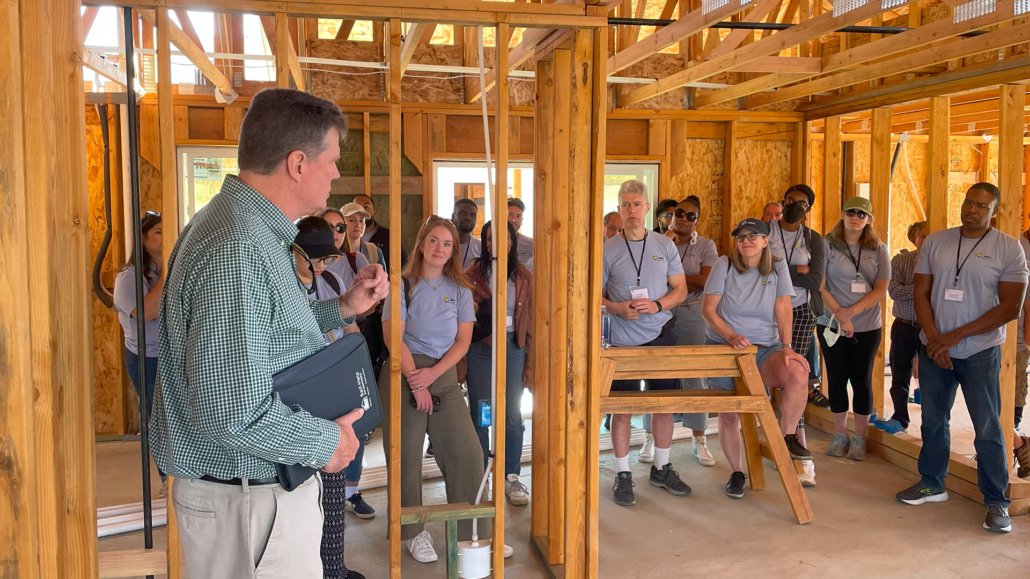
A man in a green checkered shirt, identified as Self-Help Enterprises CEO Tom Collishaw, speaks to a group of Housing Assistance Council (HAC) staff inside a partially constructed home. The group, wearing gray shirts, listens attentively as wooden beams and unfinished walls surround them.

Self-Help Enterprises CEO Tom Collishaw speaks to HAC staff during a site visit to a self-help housing project

For more than 50 years, the Housing Assistance Council (HAC) has played a crucial role in supporting SHE’s work. In fact, when HAC began lending in 1972, SHE received our very first loan: $127,650 for site acquisition and development of a mutual self-help housing development. It’s a relationship that Collishaw describes as “deep” and multifaceted, built on years of financial support, policy advocacy, and a shared mission.

At the heart of the HAC-SHE relationship is the Self-Help Homeownership Opportunity Program (SHOP), a federal initiative in which HAC serves as an intermediary, providing rural organizations with access to capital for land acquisition and infrastructure development. “It’s an honor to be associated with SHE’s success,” notes HAC’s CEO David Lipsetz. “SHE has helped thousands of families build their own homes. SHE has helped California’s central valley prosper. And, SHE has helped HAC and groups across the country see how effective the SHOP program can be.”

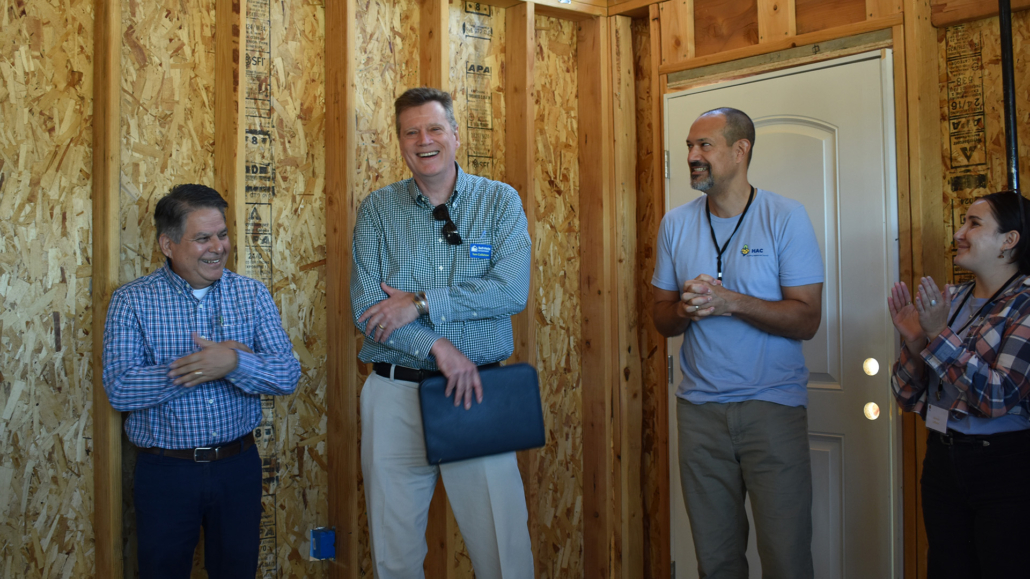
Tom Collishaw, wearing a green checkered shirt, stands inside an unfinished home alongside HAC CEO David Lipsetz and others. They are smiling and laughing as they discuss housing development. The background features exposed wooden framing and a closed white door.

Tom Collishaw, HAC CEO David Lipsetz, and staff from both agencies share a moment of camaraderie inside a SHE housing project

The strength of this partnership is something both organizations value deeply. “Since the inception of the SHOP program, HAC has taken a leadership role—a role that, frankly, they were the only ones really in a position to take,” Collishaw notes. “We’ve appreciated that partnership, the mutual trust we have, and the ability to be flexible where possible.”

The SHOP program’s structure allows HAC to forgive 90% of its loan to SHE when they meet their unit goals, provided SHE reinvests the funds in affordable housing activities. Having access to this flexible capital has been “a critical component” in scaling SHE’s real estate efforts, enabling the organization to acquire land, develop infrastructure, and plan subdivisions without depending solely on traditional pre-development loans, which continue to grow more expensive by the day. This strategy also served as a springboard for SHE to secure approximately $18 million from foundation-type funders, including Heron, Calvert, and The California Endowment.

However, for Collishaw, financial support represents just one aspect of HAC’s role. “I’ve always seen HAC as a thought leader. HAC has been a partner in making sure that the needs of rural America are on the national agenda, particularly at the federal level.”

He also points to HAC’s biennial conference as a vital event for the rural housing community. “There were so many casualties during COVID, but I always thought missing a HAC conference was a particularly difficult one,” he reflects. “There are so many organizations smaller than us that rely on those opportunities to meet with peers.” Even with SHE’s extensive experience, Collishaw values these gatherings as important learning opportunities. “We’ve seen a lot, but that doesn’t mean we know everything. There’s always something to learn from people who have only been doing this for two years. They look at things in an entirely different way, and I’ll come back from conferences saying, ‘What they’re doing in Kentucky is fascinating! Maybe we should think about that.’ Those connections are so valuable.”

This spirit of mutual learning and collaboration is evident in the organizations’ shared history, with leadership frequently moving between the two. Bob Marshall, who served as SHE’s executive director from 1966 to 1990, was on HAC’s board for many years. Later, Peter Carey, who led SHE for 24 years after Marshall, continued this tradition by serving on HAC’s board from 2003 to 2024. “Peter Carey is about the most decent person you could imagine,” Lipsetz recalls. “He is a natural leader, deeply committed to helping others and always thinking two steps ahead. He and SHE have a lot in common.”

The relationship hasn’t been without its debates. For instance, HAC has published leading research on “colonias,” the unincorporated settlements along the US-Mexico border that are characterized by high poverty rates and substandard living conditions. Collishaw recalls discussions about expanding the definition beyond border regions. “We feel like we have colonias right here in Tulare County,” he notes. However, he sees such differences as trivial compared to their shared mission: “At the end of the day, those disagreements are minor because we’re ultimately interested in the same things—the sustainability of rural America and the towns and people that we care about.”

As both organizations navigate new challenges in rural housing, Collishaw and Lipsetz see opportunities to further strengthen their partnership. They highlight emerging initiatives, such as collaborating on Greenhouse Gas Reduction Fund projects, and envision HAC playing a crucial role in supporting a wider network of housing organizations. “We need to be more effective as a single voice,” Collishaw argues, emphasizing the importance of bringing different groups together. “HAC has a role to play—not just on policy but also with the data and research that supports it. We can build a stronger voice, and it has to be unified across a broader coalition.”

For SHE, maintaining its commitment to both rental housing and homeownership remains central to its mission. “You can do both,” Collishaw insists. “We don’t see housing as a ladder where homeownership is the top and rental housing is just a step below. It’s more of a plateau, where different types of housing serve different needs at different times in people’s lives.” When some questioned the organization’s expansion into rental housing, Collishaw recalls a pivotal board discussion where a member offered a perspective that would shape SHE’s future: what makes SHE unique isn’t just that people are doing the construction. “What’s really unique is that we’re creating neighborhoods—places where people depend on and count on each other, where they build a community together.”

This philosophy mirrors the HAC-SHE relationship itself—a partnership built on mutual support and shared values. ‘We’re in a moment right now—a national realization about housing,’ Collishaw observes. With housing emerging as a top priority in mainstream discussions, the HAC-SHE partnership stands ready to advocate for solutions that work for rural communities, ensuring that rural voices are heard.

GET THE HAC NEWS!

Sign-up for HAC information products

SIGN UP HERE

Housing Assistance Council   |  1828 L Street. N.W., Suite 505, Washington, D.C. 20036
(202) 842-8600 (202) 347-3441 hac@ruralhome.org |

Board Portal

HAC is an equal opportunity provider, employer, and lender. | Civil Rights | Privacy