HAC Comments on HUD’s CDBG-DR Disaster Recovery Program

Responding to two requests for information from HUD, on February 21 HAC submitted comments on some of the specifically rural concerns involved in using the Community Development Block Grant Disaster Recovery (CDBG-DR) program.

The program does not receive regular annual funding in HUD’s appropriations bills. Instead, Congress provides funds to help with recovery from specific disasters after they occur. As a result, HUD has not been able to write regulations for the program. The department is now developing a “Universal Notice” that would standardize the CDBG-DR allocation and implementation process. HUD asked for input on the program’s rules and waivers and on its allocation formula. HAC combined its responses and submitted one letter.

Key Takeaways

  • To make CDBG-DR most effective in rural and Tribal areas, HUD must build local capacity itself, or require state grantees to do so.
  • To achieve geographic parity in the distribution of CDBG-DR resources, HUD must account for the difficulties of appraising rural properties, as well as for a variety of nontraditional housing and nontraditional forms of ownership that are common in rural places.
  • HUD, FEMA, the U.S. Department of Agriculture, and other agencies involved in the disaster recovery process should develop a single set of standardized forms and templates for applicants to use.

To learn more about HAC’s full recommendations, read our full comment letter. Other comments are posted here and here.

HAC Comments on CDBG-DR

East Kentucky Flood

East Kentucky Flood

A documentary film by the Center for Rural Strategies, “East Kentucky Flood” tells the stories of those who endured the flood — including the life-saving actions of a firefighter in Whitesburg and the rebuilding of an independent grocery store in Isom — revealing not just what happened in July 2022, but what lies ahead for communities across East Kentucky.

HAC News: February 16, 2023

TOP STORIES

Pandemic emergency declarations ending May 11

President Biden plans to end the coronavirus pandemic national emergency and public health emergency on May 11. Agencies are now preparing to wind down pandemic-related assistance programs, regulatory waivers, and other measures that were based on the existence of the emergency declarations. (Others may be scheduled to end on specific dates.) FEMA announced its Public Assistance funding related to the pandemic will end May 11. HAC will report other notifications as they are made.

Torres Small nominated as USDA Deputy Secretary

On February 15 President Biden announced he is nominating Xochitl Torres Small, who has been serving as USDA Under Secretary for Rural Development, to become Deputy Secretary. Secretary Tom Vilsack released a statement describing her as “a dedicated advocate for rural communities.” Torres Small’s nomination will have to be confirmed by the Senate.

HAC testifies before Senate Banking Committee

HAC was invited to testify at the first hearing held in the new 118th Congress before the Senate Banking, Housing, and Urban Affairs Committee. Titled The State of Housing 2023, the session featured Lance George, HAC’s Director of Research and Information, as one of three witnesses. His testimony covered key factors contributing to the state of rural housing including the pandemic, housing costs, manufactured housing, and race and ethnicity. His policy recommendations addressed homeownership, rental housing, and capacity building.

HAC launches USDA-backed placemaking program

HAC has selected ten communities to participate in our Rural Placemaking Innovation Challenge (RPIC) cohort. RPIC is a USDA program that funds planning support, technical assistance, and training to encourage placemaking activities in rural communities. HAC’s cohort communities will receive 15 months of capacity building support, connection to a peer cohort, and seed grant funding.

RuralSTAT

In fiscal year 2022, the average loan amount for a USDA guaranteed home mortgage was $185,241 – up 31% from 2019. Source: HAC tabulations of USDA Data (increase represented in nominal dollars).

Buildings Upgrade Prize offered by Department of Energy

The Buildings Upgrade Prize (Buildings UP) will award cash and technical assistance for ideas to accelerate widespread, equitable energy efficiency and building electrification upgrades. In Phase 1, teams will submit innovative concepts to increase building energy upgrades. Winning teams will receive $200,000 or $400,000 in cash as well as expert technical assistance and coaching to help bring their ideas to life. The Phase 1 application period is open from February 18 to July 18. New and under-resourced teams can also apply, until funds are expended, for Application Support Prizes of $5,000 and 10 hours of technical assistance to help complete their Phase 1 applications. For more information, email buildingsup@nrel.gov.

REGULATIONS AND FEDERAL AGENCIES

New requests for comments issued

  • Affirmatively Furthering Fair Housing: HUD’s proposed AFFH rule has been officially published, with a comment deadline of April 10. For more information, contact Tiffany Johnson, HUD, 202-402-2881.
  • Build America, Buy America: OMB proposes to revise its guidance for federal agencies on grants and agreements to include Build America, Buy America Act requirements. Comments are due March 13. For more information, contact Dede Rutberg, OMB, 202-881-7359.
  • Radon in HUD environmental reviews: HUD has drafted a Departmental Policy for Addressing Radon in the Environmental Review Process. Comments are due April 14. For more information, contact Kristin Fontenot, HUD, 202-402-7671.
  • Broadening public engagement in the regulatory process: OMB suggests tactics for increasing public participation in developing federal regulations. Comments are due March 10 and a virtual listening session will be offered on March 7.
  • FHA 203(k) rehab mortgages: The Federal Housing Administration requests input by April 17 on barriers to the use of the FHA 203(k) Rehabilitation Mortgage Insurance Program by lenders and consumers. For more information, contact Elissa Saunders, HUD, 202-402-2378.
  • Rural broadband technical assistance and planning: The Rural Utilities Service will host two online listening sessions to collect feedback on how best to use new funding for TA and planning to provide broadband in the most rural communities. A session for rural communities interested in receiving TA will be held February 23 and one for TA providers will be February 28. For more information, use the online broadband program contact form.

Resources offered to help protect domestic violence survivors in HUD properties

HUD launched a new website as a clearinghouse for its resources on the Violence Against Women Act (VAWA) and changes made when the law was reauthorized in 2022. Also, a new notice explains that HUD will implement and enforce VAWA in the same way it enforces the Fair Housing Act. Finally, HUD’s Community Compass funding notice includes VAWA among priorities for provision of technical assistance.

HAC welcomes rural homelessness funding awards

HUD has announced its selection of Continuums of Care in 27 states that will receive a total of over $54 million to address rural homelessness. Another $260 million will be used to assist people experiencing unsheltered homelessness around the country. HUD plans to make additional awards in the coming weeks and to allocate new incremental Stability Vouchers as well. HAC issued a statement hailing the attention to rural needs.

USDA RD updates guidelines on COVID-related loan refinances

Guidance for using Section 502 and 504 direct loan funds provided by the American Rescue Plan Act has been revised. The monies can be used through September 30 to refinance outstanding loans to existing direct loan borrowers who received payment moratoriums under pandemic guidelines.

Supportive services use at Section 202 properties explained

HUD has issued updated guidance for Section 202 elderly housing properties explaining the purpose and allowable uses of supportive services funds and how to include them in a property’s annual operating budget. Owners are required to have Supportive Services Plans and to update them every three years. HUD’s announcement also reminds staff at Section 202 properties they can order COVID tests free online.

PUBLICATIONS AND MEDIA

Drop in rural mortgage guarantees reported in HAC research note

Home Mortgage Demand Declined in Rural America Too: Signs and Trends from a USDA Housing Finance Product reports that USDA’s Section 502 loan guarantees plummeted by more than 40% from FY21 to FY22 level, from 120,000 to 72,000. Increases in interest rates and home prices likely contributed to this decline.

Continuum of Care information for Tribes published

HUD has published the first set of resources from the Continuum of Care Program Series for Tribal Communities and Organizations New to the CoC Program. Tribes and Tribal housing entities became eligible for CoC funding in HUD’s FY21 appropriations act, and the series is intended to inform them about the program, its purpose, eligible activities, and funding opportunities. For more information, contact a HUD Native American Programs area office or submit a question through the online Ask-a-Question portal (select “CoC Program” at step 2).

Case studies cover “what’s working in rural”

Brief rural-focused case studies from the Aspen Institute’s Community Strategies Group cover developing leaders in historically excluded communities, competing for federal funds despite limited resources, and empowering leaders from all backgrounds. Other topics will be added.

Major media report on homeless counts in rural places

Recently published stories describe the point-in-time count conducted nationwide in late January. In the Washington Post, Rural America has Homeless People Too. But They’re Hard to Find describes the difficulty in finding people in rural Cumberland County, PA, where volunteers must cross miles of territory. The New York Times piece, 582,462 and Counting, describes the count in four places, including rural Mississippi. It points out that people experiencing homelessness in rural areas are often locals who are now “homeless in their hometown.”

Remote workers are relocating back to metro areas, but high rural housing costs persist

Remote work during the pandemic led to a migration of residents out of metropolitan areas, which contributed to increases in average rural home prices. The push for employees to return to office has led to workers returning to cities. High housing costs and supply shortages persist in rural communities, however, described by NBC News in The Remote Workers Have Left, But the Housing Havoc They Created Remains.

Prosperity Now Scorecard updated

Prosperity Now has released the 2023 version of its Scorecard, an interactive site providing data on household financial health, housing, and more. Data is available for states, counties, cities, congressional districts, tribal areas, and metro areas. This year the Scorecard increased its focus on racial economic inequality and reviews states’ implementation of policies to expand economic opportunity.

HAC

National Rural Housing Conference set for October

Mark your calendars and save the date! HAC’s National Rural Housing Conference will be held October 24-27 in Washington, DC and online.

Need capital for your affordable housing project?

HAC’s loan fund provides low interest rate loans to support single- and multifamily affordable housing projects for low-income rural residents throughout the U.S. and territories. Capital is available for all types of affordable and mixed-income housing projects, including preservation, new development, farmworker, senior and veteran housing. HAC loan funds can be used for pre-development, site acquisition, site development, construction/rehabilitation and permanent financing. Contact HAC’s loan fund staff at hacloanfund@ruralhome.org, 202-842-8600.

Please note: HAC is not able to offer loans to individuals or families. Borrowers must be nonprofit or for-profit organizations or government entities (including tribes).

Want to reprint a HAC News item?

Please credit the HAC News and provide a link to HAC’s website. Thank you!


HAC’s Research Director Testifies to Senate Banking Committee on the State of Housing 2023

HAC was deeply honored by an invitation to testify at the first hearing held in the new 118th Congress by the Senate Banking, Housing, and Urban Affairs Committee. Titled The State of Housing 2023, the session featured Lance George, HAC’s Director of Research and Information, as one of  three witnesses.

A wide range of topics was covered by the witnesses’ testimony and the Senators’ questions. Among the key areas of concern were the gap between housing supply and need, the high cost of both homeownership and rental housing, and what congressional actions could address these challenges. Committee Chair Sherrod Brown (D-Ohio) asked specifically about the loss of rentals financed by USDA’s Section 515 program, a serious concern addressed by HAC research in 2016 and 2022.

Key Takeaways

Lance’s statement made five key points about the state of rural housing in 2023:

  • The pandemic left its mark on rural America and housing markets remain uncertain.
  • Rural mortgage markets are being impacted by interest rates and prices too.
  • Affordability is the greatest housing challenge in rural America, by far.
  • Manufactured housing is an often overlooked but important source of housing – especially in rural America.
  • Race matters across the rural spectrum – especially in housing.

Key policy recommendations, based on HAC’s full set of policy priorities for 2023, included:

  • Increase rural communities’ access to credit and capital and strengthen USDA and HUD homeownership supports.
  • Improve opportunities and financing for preserving aging rental properties and protecting tenants.
  • Authorize the powerful Rural Community Development Initiative and a significant cross-sectoral, flexible capacity building rural investment initiative.

Lance George

Lance George

HAC’s Director of Research & Information

Watch the Hearing


HAC News: February 2, 2023

TOP STORIES

Buy America requirements take effect February 4 for USDA multifamily housing, site development, and community facilities programs

On January 23, USDA Rural Development issued a stakeholder announcement saying that after February 3 “all non-Federal organizations receiving RD financial assistance for infrastructure projects will be required to exclusively use iron, steel, manufactured products and construction materials manufactured in the United States” under the Build America, Buy America Act. In September an RD document stated that the Rural Housing Service programs covered by the law are “Rural Housing Site Loans and Self-Help Housing Land Development Loans, Rural Rental Housing Loans, Section 538 Rural Rental Housing Guaranteed Loans, The RD Multi-Family Housing Revitalization Demonstration Program (MPR), and Community Facilities Loans and Grants (Includes Guarantees, Emergency Rural Health Care Grants and Tribal College Initiatives Grants).” For more information, email USDA staff, SM.RD.babaa.inquiry@usda.gov.

Budget request to be released March 9

Development of federal funding levels for fiscal year 2024 – which starts October 1, 2023 – will begin on March 9 when the Biden-Harris administration publishes its budget request. HAC will post information on our website that day.

White House announces renter protections

The Biden-⁠Harris administration on January 25 announced several actions to protect renters, to be undertaken by the Federal Trade Commission, Consumer Financial Protection Bureau, Federal Housing Finance Agency, Department of Justice, and HUD. The administration also issued a Blueprint for a Renters Bill of Rights and launched a Resident-Centered Housing Challenge. The challenge calls on providers and other stakeholders to sign up to improve renters’ quality of life. For more information on the challenge, email White House staff, RCHousingChallenge@who.eop.gov.

February is National Black History Month


RuralSTAT

From June 2020 to June 2022, expenses for rural households rose by 18.5%, while earnings grew by only 6.1%. Urban residents’ expenses rose by 14.5% and their earnings increased by 8.6%. Source: Iowa State University Extension and Outreach.

OPPORTUNITIES

Rental preservation grants available

Preservation of affordable rental housing is the theme for TD Bank’s 17th annual Housing for Everyone competition. Nonprofit organizations in specific geographic areas are eligible for grants of $150,000-$250,000 to rehabilitate property, provide rental assistance funds, or increase organizational capacity. The deadline is February 14. For more information, register for a February 7 webinar or email US-CharitableGiving@TD.com.

Competition opens for veterans case management funds

VA’s Homeless Providers Grant and Per Diem Program Case Management Grant program offers two-year funding to nonprofits and state, local, or Tribal governments to provide case management services to support veterans in acquiring and maintaining permanent housing. Applications are due May 4; information should be available online on February 3. For more information, contact Chelsea Watson, VA, 727-273-5619.

Eligibility expanded for hazard mitigation revolving loan funds

FEMA’s new Safeguarding Tomorrow Revolving Loan Fund grant program has been expanded, allowing American Samoa, Guam, Northern Mariana Islands, and U.S. Virgin Islands – as well as states, D.C., and Puerto Rico – to apply for grants to capitalize revolving loan funds for resilience-related activities. Twenty Tribal Nations are now eligible to receive funds directly from FEMA, and all federally recognized Tribes are eligible to get this funding through a state. The application process opened on February 1. For more information, contact FEMA staff, askcsid@fema.dhs.gov.

Grants offered for rural arts

The Rural Arts Initiative of the Laura Jane Musser Fund offers grants of up to $12,000 to assist small nonprofit arts organizations in rural communities to develop, implement, or sustain exceptional artistic opportunities for adults and children in the areas of literary, visual, music, and performing arts. Applicants must be located in communities with under 20,000 population in Colorado, Hawaii, Wyoming, or specified parts of Minnesota, New York, or Texas. Applications must be submitted online between February 8 and March 8. For more information, contact the Musser Fund, 612-825-2024.

REGULATIONS AND FEDERAL AGENCIES

Agencies request comments on several programs

  • Section 502 guaranteed loans: Comments are due March 28 on changes to the use of special servicing options for non-performing loans. For more information, contact Ticia Weare, USDA, 314-679-6919.
  • Section 538 priorities: Comments are due April 3 on a proposal to remove from regulations the list of project types that receive priority for Section 538 rental housing loans, allowing USDA to establish new priorities without going through the regulatory process. For more information, contact Tammy Daniels, USDA, 202-720-0021.
  • Section 306C water and waste program for colonias and Tribes: Comments are due April 3 on revisions to the Section 306C Water and Waste Disposal Grants program, renamed the Water and Waste Facility Loans and Grants to Alleviate Health Risks program. For more information, contact Charles Stephens, USDA, 202-619-8500.
  • ReConnect program: Comments are due March 31 on changes to the Rural Utilities Service’s Rural eConnectivity (ReConnect) broadband program. For more information, contact Laurel Leverrier, USDA, 202-720-9556.
  • Tribal housing counselors: Comments are due March 27 on a proposed housing counselor certification option for employees of Tribes, Tribally Designated Housing Entities, and other Tribal entities. For more information, contact David Valdez, HUD, 713-718-3178.
  • Section 8: Comments are due April 3 on a HUD proposal to develop a single Section 8 project-based rental assistance program regulation consisting of a standardized set of Section 8 program requirements and to create a single renewal contract form. For more information, contact Jennifer Lavorel, HUD, 202-402-2515.
  • Data on race/ethnicity: Comments are due April 12 on the first revisions since 1997 to the Office of Management and Budget’s policy directive that provides standards for all federal agencies on maintaining, collecting, and presenting federal data on race and ethnicity. For more information, contact Bob Sivinski, OMB.
  • Government Auditing Standards: Comments are due April 28 to the Government Accountability Office on proposed revisions to the Government Auditing Standards (GAGAS), also known as the Yellow Book. For more information, contact Cecil Davis, GAO, 202-512-9362.

Final rule will affect rental housing under many HUD programs

HUD has posted a preview version of a final rule implementing provisions of the Housing Opportunity Through Modernization Act of 2016 that make changes impacting HUD-assisted rental housing, particularly income calculations and reviews. Some provisions will take effect 30 days after publication in the Federal Register and others on January 1, 2024. Contacts for further information vary by program and are listed in the rule.

Staffing changes coming at USDA

USDA Deputy Secretary Jewel Bronaugh has announced she will leave the department. Nancie-Ann Bodell, the Rural Housing Service’s Deputy Administrator for Multifamily Housing, will leave her position February 28. Cathy Glover, Deputy Administrator for Single-Family Housing, is retiring this year. Chad Parker, Deputy Administrator for Community Facilities, retired at the end of December; Joseph Ben-Israel, the Assistant Deputy Administrator, is Acting Deputy Administrator.

Duty to Serve plan modifications posted

Final modifications to Fannie Mae’s and Freddie Mac’s Duty to Serve plans have been released by the Federal Housing Finance Agency. Freddie Mac had proposed to delete the objective of purchasing loans to preserve Section 515 properties, but its final document keeps that item intact. For more information, email DutyToServeStakeholders@fhfa.gov.

EVENTS

HAC schedules second webinar on affordable housing and substance use recovery

Providing support for successful recovery and addressing the substance use disorder epidemic requires a collaborative cross-sector approach. Join HAC on February 15 as we host “Affordable Housing and Recovery Cross-Sector Collaborative Conversation” with professionals from criminal justice, behavioral and mental health, and housing discussing ways to support recovery in rural communities. Registration information will be posted on HAC’s site when available. An earlier webinar and a resource guide are also available from HAC.

Webinar will address federal funding

A February 10 webinar on FY23 Federal Funding & Outlook for FY24 will feature speakers from HAC and other members of the Campaign for Housing and Community Development Funding, covering HUD’s and USDA’s affordable housing, community development, and homelessness programs.

Rural recreation communities’ housing to be featured

A webinar titled Housing Solutions in Rural Recreation Communities will be offered February 15 by USDA RD, HUD, and EPA. The session will highlight federal resources and private sector strategies that help communities leverage their outdoor recreation and tourism venues to address housing solutions and improve economic resilience.

HAC

HAC seeks Portfolio Manager Associate (new!) and Portfolio Manager, Closing and Disbursements

  • The Portfolio Management Associate is an entry-level position and will assist in a range of lending activities including closing, disbursement, monitoring, and servicing single- and multifamily housing development loans. This position is eligible for telecommuting.
  • The Portfolio Manager, Closing and Disbursements is responsible for all aspects of loan closing and loan disbursements for an assigned portfolio of loans made to entities engaged in affordable housing activities in rural communities throughout the United States. This position is eligible for telecommuting.

Need capital for your affordable housing project?

HAC’s loan fund provides low interest rate loans to support single- and multifamily affordable housing projects for low-income rural residents throughout the U.S. and territories. Capital is available for all types of affordable and mixed-income housing projects, including preservation, new development, farmworker, senior and veteran housing. HAC loan funds can be used for pre-development, site acquisition, site development, construction/rehabilitation and permanent financing. Contact HAC’s loan fund staff at hacloanfund@ruralhome.org, 202-842-8600.

Please note: HAC is not able to offer loans to individuals or families. Borrowers must be nonprofit or for-profit organizations or government entities (including tribes).

Want to reprint a HAC News item?

Please credit the HAC News and provide a link to HAC’s website. Thank you!

 

Eligibility expanded for hazard mitigation revolving loan funds

FEMA’s new Safeguarding Tomorrow Revolving Loan Fund grant program has been expanded, allowing American Samoa, Guam, Northern Mariana Islands, and U.S. Virgin Islands – as well as states, D.C., and Puerto Rico – to apply for grants to capitalize revolving loan funds for resilience-related activities. Twenty Tribal Nations are now eligible to receive funds directly from FEMA, and all federally recognized Tribes are eligible to get this funding through a state. The application process opened on February 1. For more information, contact FEMA staff, askcsid@fema.dhs.gov.

HAC News: January 19, 2023

TOP STORIES

HUD announces new Affirmatively Furthering Fair Housing proposal

HUD released the text of a new AFFH proposed rule on January 19. The proposal requires jurisdictions to develop equity plans every five years, incorporate those into Consolidated Plans and annual plans, and provide annual progress evaluations. It is based on a 2015 AFFH rule (which was only briefly in effect before it was rescinded in 2018 and replaced in 2020), with changes that are intended to simplify the required fair housing analysis, emphasize goal-setting, increase transparency for public review and comment, foster local commitment to addressing fair housing issues, enhance HUD technical assistance to local communities, and provide mechanisms for regular program evaluation and greater accountability, among other changes. Public comments will be due 60 days after the document is published in the Federal Register later this month. For more information, contact Tiffany Johnson, HUD, 202-402-2881.

Agencies propose changing regulations for faith-based organizations

Nine federal agencies, including USDA, HUD, and VA, propose to change their regulations related to faith-based organizations that receive government funding to provide social services. A 2016 rule required service providers to inform potential beneficiaries they could not be required to participate in faith-related activities. It also obligated them to offer information about alternative, non-faith-based providers. In 2020 these notice requirements were removed. The agencies now hope to reinstate a modified rule encouraging service providers to tell potential beneficiaries about alternative providers. They suggest additional changes also. Comments are due March 14. Agency contacts for more information are listed in the proposal.

New HAC guide covers substance use recovery and affordable rural housing

Rural Resource Guide: Affordable Housing and Recovery in Rural Communities, Federally Assisted Housing Opportunities for Residents with Substance Use Disorders and Opioid Use Disorders assists housing practitioners seeking to provide homes to those affected by substance use disorders. The publication was released at a webinar on January 18; the recording is available online.

Rural voters say housing costs are a serious problem

Rural and small town voters expressed strong concerns about inflation and the costs of essentials like housing and food in a bipartisan poll conducted in November for Save the Children and Save the Children Action Network. Housing costs are an extremely or very serious problem, 63% of respondents said – more than identified that level of worry about any other issue, including a lack of good-paying jobs, drug and alcohol use, and child care availability. Focusing on solutions to shortages of food and child care, the study found strong bipartisan support for federal policy remedies, including policies that increase government funding.

RuralSTAT

The number of home mortgage loans guaranteed by USDA declined by 44% between fiscal years 2021 and 2022. Source: HAC tabulations of USDA data.

OPPORTUNITIES

HUD opens two lead hazard control competitions

  • The Lead Hazard Reduction Program funds efforts to identify and control lead-based paint hazards in privately owned rental or owner-occupied housing. Applicants can also request Healthy Homes Supplemental funding to identify and address other housing hazards that affect occupant health. Local governments, some state governments, and some Tribes are eligible, and consortium applicants may include nonprofits. Funding will be set aside for applicants that have never received an award under the LHR program or whose grant period of performance ended two or more years ago. Apply by March 14. For more information, contact Yolanda Brown, HUD, 202-903-9576.
  • The Housing-Related Hazards & Lead-Based Paint Capital Fund Program is available only for public housing authorities. The deadline is April 13. For more information, contact HUD staff, PIHOCI@hud.gov.

Grants offered for housing innovations

From January 31 through March 3, Enterprise Community Partners and the Wells Fargo Foundation will open the second Housing Affordability Breakthrough Challenge, a $20 million competition to identify and support scalable housing innovations. The challenge offers grants of up to $3 million and technical assistance in three categories – financing, construction, and access and resident support. Eligible applicants include nonprofits, Tribal organizations and mission-driven for-profits in 37 states and D.C. A webinar for potential applicants is scheduled for February 2.

REGULATIONS AND FEDERAL AGENCIES

Construction cost relief for single-family homes extended

In 2021, because of cost increases and construction delays, USDA announced some temporary authorizations for new construction financed under its Section 502 and 504 direct loan programs. Those provisions expired December 31 and have now been renewed for another year. The changes increase the permissible construction contingency in these loans and ease some of the requirements for borrowers to obtain subsequent loans at the end of construction to cover cost overruns. For more information, contact a USDA RD State Office.

USDA considers use of multifamily reserve account cash for soft debt

USDA proposes to expand the uses of “surplus cash” in property reserve accounts at projects with Section 515 rental or 514 farmworker housing loans. To increase flexibility in project refinancing for additional capital improvements, borrowers would be allowed to use surplus cash to fund approved soft debt such as “cash flow notes.” Comments are due March 10. For more information, contact Jennifer Larson, USDA, 202-720-1615.

USDA and National Urban League announce partnership

The USDA and National Urban League will work together in areas including homeownership, access to broadband, help for veterans, and youth development. USDA’s press announcement says the civil rights organization will help enhance USDA’s ability to fulfill its missions efficiently and fairly.

EVENTS

Disaster webinars scheduled

PUBLICATIONS AND MEDIA

Culturally sensitive design approaches can improve Tribal housing

Participatory Models of Housing: Promising Design Practices for Affordable Housing on Tribal Lands, co-published by the Joint Center for Housing Studies and NeighborWorks America, explores promising, nascent efforts to develop housing that is affordable, higher-quality, and culturally sensitive.

Data can help address racial inequities in housing, report says

Leveraging Data to Improve Racial Equity in Fair Housing asserts that data can shed light on some of the historic drivers of housing inequity and help inform tailored solutions to their ongoing impact. Published by the IBM Center for the Business of Government and the Center for Open Data Enterprise, the report explores ways to apply data to address different types of housing discrimination.

Vermont governor recognizes small towns need capacity building to access funds

Gov. Phil Scott has proposed a $3 million Rural Infrastructure Assistance Program to help underserved rural communities in Vermont access federal American Rescue Plan Act funds. Housing development is among the types of projects that would be covered. The proposal must be funded by the state legislature.

National survey on drug use and health results available

The Substance Abuse and Mental Health Services Administration released its report on the 2021 National Survey on Drug Use and Health, including estimates by geographic region. In 2021, 46.3 million people in the U.S. were diagnosed with substance use disorders, including 6,742,000 in rural areas. The vast majority (94%) of people 12 years or older diagnosed with substance use disorder did not receive treatment.

Videos demonstrate fair housing analysis tool

HUD’s Affirmatively Furthering Fair Housing Data and Mapping Tool (AFFH-T) Video Series is intended to show how the online AFFH-T and other local data sources can be used to analyze local conditions as part of a fair housing planning process.

HAC

HAC seeks Portfolio Manager, Closing and Disbursements

  • The Portfolio Manager, Closing and Disbursements is responsible for all aspects of loan closing and loan disbursements for an assigned portfolio of loans made to entities engaged in affordable housing activities in rural communities throughout the United States. This position is eligible for telecommuting.

National Rural Housing Conference set for October 2023

Mark your calendars and save the date! HAC’s National Rural Housing Conference will be held October 24-27, 2023 in Washington, DC and online.

Need capital for your affordable housing project?

HAC’s loan fund provides low interest rate loans to support single- and multifamily affordable housing projects for low-income rural residents throughout the U.S. and territories. Capital is available for all types of affordable and mixed-income housing projects, including preservation, new development, farmworker, senior and veteran housing. HAC loan funds can be used for pre-development, site acquisition, site development, construction/rehabilitation and permanent financing. Contact HAC’s loan fund staff at hacloanfund@ruralhome.org, 202-842-8600.

Please note: HAC is not able to offer loans to individuals or families. Borrowers must be nonprofit or for-profit organizations or government entities (including tribes).

Want to reprint a HAC News item?

Please credit the HAC News and provide a link to HAC’s website. Thank you!

 

HAC News: January 5, 2023

TOP STORIES

FY 2023 funding set, new Congress begins work

The omnibus appropriations bill for fiscal year 2023 became law in late December. It holds most USDA and HUD housing programs near their FY22 funding levels, with increased support for rural rental preservation and rural capacity building. It provides $225 million for a new manufactured housing program at HUD, hailed as a “game-changing investment” in HAC’s statement on the bill, which also calls on the new 118th Congress to be bolder in both appropriations and the 2023 Farm Bill.

Census Bureau revises urban and rural definitions

A list of places recently released by the Census Bureau shows the impact of a significant change in Census’s definition of urban and rural. Before March 2022, the bureau defined urban places as those with more than 2,500 residents. Now Census has raised the threshold to 5,000 residents and added a housing unit criterion so that places with over 2,000 homes are urban. Census considers any place that is not urban to be rural. The revision means rural communities now include 1,140 places previously classified as urban and 36 previously rural areas are now deemed urban. The change shifted Census’s national urban-rural proportions slightly, with the newly defined rural areas containing 20.0% of the U.S. population rather than the previous 19.3%. For more information, contact Vincent Osier, Census Bureau, 301-763-1128

Webinar will launch resource guide for housing and recovery

Substance Use Disorder and opioid misuse have proliferated across the U.S. in the past decade – and rural America has been particularly impacted. Effectively addressing the opioid epidemic and supporting recovery includes a holistic community approach with an essential shared foundation: safe, stable, affordable housing. On January 18 HAC will launch a new Rural Resource Guide: Affordable Housing and Recovery in Rural Communities, Federally Assisted Housing Opportunities for Residents with Substance Use Disorders and Opioid Use Disorders. Join us online for a discussion about the intersection of affordable housing and recovery and gain first access to the new rural resource guide.

HAC updates policy priorities for 2023

HAC’s revised policy priorities support increased capacity building for rural disaster resiliency and the equitable distribution of federal relief funding to rural and persistently poor communities. Other themes include the need for technical assistance and building the capacity of local affordable housing and community development organizations; expanding access to credit and finance; preserving rural rental housing and supporting homeownership; preserving, increasing, and tailoring resources for federal affordable housing programs serving rural populations; and deliberately considering high-needs rural regions in federal policymaking.

January is National Poverty in America Month

Resources are posted by the Alliance for Strong Families and Communities and relevant data is available from the Census Bureau.

RuralSTAT

Approximately 78% of persistent poverty counties in 2020 have been in this status consistently since 1980. Source: HAC tabulations of the 2016-2020 American Community Survey and Decennial Census Data.

OPPORTUNITIES

Assistance available for transferring Section 515 properties

HAC and other organizations offer technical assistance to nonprofits on transfers of Section 515 properties. Current owners of Section 515 properties who are interested in transferring ownership to a nonprofit organization, or nonprofits who are interested in acquiring one, can reach out to Kristin Blum at HAC or find another TA provider on the Contact tab at this link. TA is also available for transfers of Section 514/516 farmworker properties in some states; click the Contact tab at this link.

Deadline extended for strategic planning proposals

The deadline is now January 18 for strategic consultants who are passionate about working with CDFIs, nonprofits, and/or rural communities to submit proposals for HAC’s strategic planning process! HAC seeks a consultant to support the organization and our stakeholders in the creation of a three-to-five-year strategic plan. For more details, review the RFP on HAC’s website. Contact strategic@ruralhome.org with questions.

Free COVID test kits available for Section 202 providers

Free at-home COVID-19 test kits are available for owners of Section 202 elderly properties through a HUD partnership with the Department of Health and Human Services. Owners of Section 202 properties can register online and request weekly shipments of test kits to be delivered to their property for distribution. Questions related to the registration process can be emailed to CARS_HelpDesk@cdc.gov, or call 1-833-748-1979.

REGULATIONS AND FEDERAL AGENCIES

HUD seeks input on implementing 2022 Violence Against Women Act Reauthorization Act

A notice explains HUD’s plans to implement the key changes made by the VAWA Reauthorization Act of 2022. Comments are due March 6. For more information, contact Karlo Ng, HUD, 202-402-7642.

Changes proposed to Native Hawaiian rental housing assistance

Comments are due March 6 on a proposed regulation from HUD covering rental housing assistance for the Native Hawaiian Housing Block Grant program. The revisions are intended to clarify and improve consistency with NAHASDA’s statutory requirements and HUD’s Indian Housing Block Grant program regulations. For more information, contact Claudine Allen, HUD, 808-457-4674.

PUBLICATIONS AND MEDIA

Homelessness response resources available

The Framework for an Equitable Homelessness Response released two new resources to transform current approaches to sheltering people experiencing homelessness. Reimagining Interim Housing: Stages and Action Areas for Transforming Approaches to Sheltering People Experiencing Homelessness and Tools for Strengthening Current Interim Housing Programs and Services help support and guide communities in implementing high-quality, low-barrier, housing placement-focused interim housing options for people experiencing homelessness.

Updated guide addresses housing for those with criminal records

An Affordable Home on Reentry, recently updated by the National Housing Law Project, is intended to assist advocates working with people who have criminal records and are seeking access to federally assisted housing.

EPA offers resources on Tribal indoor air quality

The Tribal Indoor Air Quality Training and Resource Directory compiles information and resources to help Tribes create or expand programs. More publications can be accessed on the agency’s website. Subscribe here to EPA’s new indoor air quality Tribal newsletter.

Public-private partnerships could harness modular housing technology

Using Economies of Scale to Produce Starter Homes, a report from the Bipartisan Policy Center and Abt Associates, suggests increasing the stock of unsubsidized affordable starter homes in rural communities and small towns and cities by using off-site construction techniques.

HAC

HAC seeks Portfolio Manager, Closing and Disbursements (new!) and Portfolio Manager, Self-Help Housing

  • The Portfolio Manager, Closing and Disbursements is responsible for all aspects of loan closing and loan disbursements for an assigned portfolio of loans made to entities engaged in affordable housing activities in rural communities throughout the United States. This position is eligible for telecommuting.
  • The Portfolio Manager, Self-Help Housing is responsible for the overall asset management, monitoring and reporting for an assigned portfolio of primarily self-help housing loans made to entities engaged in affordable housing activities in rural communities throughout the United States. This position is eligible for telecommuting.

National Rural Housing Conference set for October 2023

Mark your calendars and save the date! HAC’s National Rural Housing Conference will be held October 24-27, 2023 in Washington, DC and online.

Need capital for your affordable housing project?

HAC’s loan fund provides low interest rate loans to support single- and multifamily affordable housing projects for low-income rural residents throughout the U.S. and territories. Capital is available for all types of affordable and mixed-income housing projects, including preservation, new development, farmworker, senior and veteran housing. HAC loan funds can be used for pre-development, site acquisition, site development, construction/rehabilitation and permanent financing. Contact HAC’s loan fund staff at hacloanfund@ruralhome.org, 202-842-8600.

Please note: HAC is not able to offer loans to individuals or families. Borrowers must be nonprofit or for-profit organizations or government entities (including tribes).

Want to reprint a HAC News item?

Please credit the HAC News and provide a link to HAC’s website. Thank you!
 

Housing Assistance Council Statement on FY 2023 Omnibus Bill

This bipartisan agreement maintains funding for USDA’s rural rental housing portfolio and makes a game-changing investment in manufactured housing.

The Housing Assistance Council appreciates Congress continuing to invest in rural communities through the latest omnibus spending bill and hopes that the next Congress will take further steps in 2023 to address the housing crisis in rural America.

The appropriations agreement reached this week makes significant contributions to affordable rural rental housing through the U.S. Department of Agriculture’s housing programs. It also provides $225 million in funding for a new manufactured housing financing and improvement program to be administered by the U.S. Department of Housing and Urban Development.

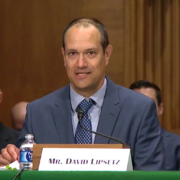
“This bipartisan agreement maintains funding for USDA’s rural rental housing portfolio and makes a game-changing investment in manufactured housing,” said HAC CEO David Lipsetz. “Rural communities will use this funding to preserve existing affordable housing, build more, and lay the foundation for a better future.”

More than half of all manufactured homes are in rural places. In May, HAC’s Director of Research and Information Lance George testified to Congress that manufactured housing “should continue to be a high-quality, affordable housing option” for rural America.  By creating the first dedicated funding stream targeted to this essential affordable housing stock, this omnibus spending bill takes a critical first step toward achieving just that.

HAC also appreciates the omnibus’s continued support of capacity building programs through USDA and HUD. Congress has long recognized that housing programs only work when there are local partners helping to build, manage, and maintain affordable homes. With a modest investment in the capacity of small towns’ local housing organizations, rural communities can navigate the complexities of federal programs and modern housing finance. As the only national intermediary dedicated solely to rural housing, HAC is gratified to see HUD’s Rural Capacity Building program receive its first increase in program history, from its founding in 2012 at $5 million to $6 million in FY 2023. This will enable HAC and other RCB grantees to provide training and technical assistance to community-based organizations across rural America.

Yet the omnibus leaves too many rural Americans’ housing problems unaddressed. Most of the housing programs at both USDA and HUD enter 2023 with about the same resources they had in 2022, even as mortgage and rent costs are increasing across the country, USDA-financed rental developments are losing their affordability, and homelessness is increasing in rural areas. HAC calls on the 118th Congress to be bolder – to increase support for proven solutions and to innovate. Both the annual appropriations process and the 2023 Farm Bill offer opportunities for action. HAC’s detailed suggestions can be found here and here.

Everyone deserves a safe, healthy, and affordable place to call home. Through the upcoming Farm Bill and the next appropriations cycle, the 118th Congress will have the opportunity to make even more transformative investments that could make that vision a reality.

HAC News: December 22, 2022

TOP STORIES

Final FY23 funding bill supports rural rental preservation, adds new manufactured housing program

The omnibus appropriations bill to fund the federal government in fiscal year 2023, released on December 20, holds most USDA and HUD housing programs near their FY22 dollar levels. The bill is expected to pass both houses of Congress and be signed by President Biden before the current continuing resolution expires on December 23.

The bill’s funding levels support rental preservation efforts, although the measure does not decouple (separate) Section 521 Rental Assistance from USDA Section 514 and 515 mortgages, as the administration’s budget requested. It substantially increases USDA’s Section 538 rental housing loan guarantees, which are used for preservation as well as new construction, from $230 million in FY22 to $400 million in FY23. Section 515 direct rental housing loans receive a smaller increase, from $50 million this year to $70 million next year, but the Section 514 farm labor housing loan program drops from $28 million to $20 million, while Section 516 grants hold steady at $10 million. USDA’s Community Facilities grant program drops from $40 million to $25.3 million. zero, presumably because over An additional $325 million in CF grants will be distributed as Congressionally Directed Funding (earmarks). Another portion of the omnibus adds $50 million in CF grants to repair essential facilities in places where federally declared disasters occurred in 2022. More details on the USDA programs are posted on HAC’s website. [Corrections in red made on March 30, 2023.]

In the HUD portion of the omnibus, HOME, CDBG, tenant vouchers, and most other HUD programs remain close to FY22 levels. The bill increases the SHOP and Rural Capacity Building programs by a modest $1 million each and raises the Tribal VASH veterans voucher program from $5 million to $7.5 million, but cuts HUD’s veterans housing rehab program from $4 million in FY22 to $1 million in FY23. The new $225 million manufactured housing program can be used outside manufactured home communities or in communities with long-term affordability provisions, for a variety of repair, preservation, and infrastructure activities, as well as replacement of pre-1976 homes. More details on this and other HUD programs are posted on HAC’s website.

The omnibus does not include tax legislation that would have adjusted the Low Income Housing Tax Credit program and extended the Child Tax Credit.

Rural homelessness increased from 2020 to 2022

Homelessness rose nationwide by 0.4% from 2020 to 2022, HUD reports, but the increase was 5.7% in largely rural Continuums of Care, the largest growth rate among geographies. While the national rate of change included a 1.6% drop in sheltered homelessness and a 3.5% increase in people experiencing homelessness without shelter, the proportions were reversed for largely rural CoCs. There, sheltered homelessness increased by 10.4% and unsheltered dropped by 0.3%. Nationally, rates of homelessness also increased for individuals and for people who had chronic patterns of homelessness. Homelessness decreased for veterans, families with children, and unaccompanied youth. Black and Indigenous people continue to be overrepresented among those experiencing homelessness. These are among the findings published in Part 1 of HUD’s most recent annual assessment of homelessness, which provides estimates for a single night in January 2022. HUD attributes the low increase in the rate of overall homelessness to the “robust federal response” to the housing crisis that resulted from the coronavirus pandemic.

Capacity building and capital access are focus of HAC comments on community investment

On December 19 HAC responded to a request for comments from a new Interagency Community Investment Committee representing several agencies including USDA and HUD. ICIC sought public input on ways the agencies can promote economic conditions and systems that reduce racial disparities and produce stronger economic outcomes for all communities. HAC’s response encourages them to support capacity building for local organizations, provide equitable access to capital for rural America, address rural needs – particularly in persistent poverty areas – directly, accelerate interagency coordination and sharing of best practices, and improve data and information accuracy and availability.

Happy holidays from HAC!

“Home” takes on special meaning during the holiday season: a place to gather with friends and family, or just to recharge. HAC wishes everyone in rural America a safe, healthy, and affordable place to call home.

HAC’s offices will be closed from December 26 through January 2.

RuralSTAT

In 2022, families with children experiencing homelessness comprised larger shares of the homeless populations in largely rural (30%) and largely suburban (32%) Continuums of Care than in major cities (26%) or other largely urban CoCs (21%). Source: HUD’s 2022 Annual Homeless Assessment Report to Congress.

OPPORTUNITIES

HAC’s Affordable Housing for Rural Veterans initiative opens

HAC’s Affordable Housing for Rural Veterans initiative supports local nonprofit housing development organizations that meet or help meet the affordable housing needs of veterans in rural places. Grants typically range up to $30,000 per organization and must support bricks-and-mortar projects that assist low-income, elderly, and/or disabled veterans with home repair and rehab needs, support homeless veterans, help veterans become homeowners, and/or secure affordable rental housing. AHRV is funded through the generous support of The Home Depot Foundation. Applications are due January 23. Register here for a January 11 webinar about this initiative. For more information and the application package, please visit HAC’s website.

HAC seeks consulting partner to assist with strategic plan

Are you a strategic consultant passionate about working with CDFIs, nonprofits, and/or rural communities? HAC invites you to submit a proposal for our strategic planning process! HAC seeks a consultant to support the organization and our stakeholders in the creation of a three-to-five-year strategic plan. Applications are due January 11. For more details, review the RFP on HAC’s website. Contact strategic@ruralhome.org with questions.

Grants offered for hazard mitigation revolving loan funds

FEMA’s new Safeguarding Tomorrow Revolving Loan Fund Program will make grants to states and Tribal governments to capitalize revolving loan funds that will help local governments reduce risks from disasters and natural hazards, and other related environmental harm. Applications are due April 28. For more information, contact FEMA staff, askcsid@fema.dhs.gov.

Family Unification Program funding preview published

HUD has published a preview of the FY22 Family Unification Program notice of funding opportunity. It expects the final NOFO will be issued on grants.gov in March and is making the preview available to give interested applicants more time to review it, submit questions, and prepare applications.  For more information, contact Ryan E. Jones, HUD, 202-402-2677.

CAPITOL HILL

Disaster resilience zones to be designated

The Community Disaster Resilience Zones Act of 2022, signed into law by President Biden on December 20, requires FEMA to assess the risk of natural hazards across the United States based on community exposure and resiliency. The census tracts receiving the highest hazard risk ratings in each state will be designated as community disaster resilience zones. States, Tribal governments, and local governments will be eligible for FEMA assistance for resilience or mitigation projects benefiting those zones. Residents displaced by such projects will receive comparable replacement housing.

REGULATIONS AND FEDERAL AGENCIES

New national plan aims to decrease homelessness 25% by 2025

All In: The Federal Strategic Plan to Prevent and End Homelessness, released by the U.S. Interagency Council on Homelessness, focuses on developing solutions in the form of housing and supports, homelessness response, and prevention based on equity, data, and collaboration. The plan acknowledges that tailored guidance will be needed to meet its goals in rural, remote, and Tribal areas.

HUD seeks feedback on CDBG Disaster Recovery

HUD requests public comment on ways to improve the CDBG-DR program. Because the program does not receive regular appropriations and Congress authorizes funding only after a specific disaster, HUD has not had standardized requirements that can be used to deploy funds quickly. One comment request addresses the methodology HUD uses to allocate funds. The other asks how HUD can modify, expand, streamline, or remove CDBG-DR rules and requirements. Comments are due February 21. For more information, contact Jessie Handforth Kome, HUD, 202-708-3587 (phone), 202-708-0033 (fax).

CFPB revises threshold for lenders to report mortgage activity

The Consumer Financial Protection Bureau is reinstating a requirement that lenders who make at least 25 closed-end mortgage loans for two consecutive years must report data under the Home Mortgage Disclosure Act. A 2020 CFPB rule that raised the threshold to 100 loans was vacated by a court order in a lawsuit filed by consumer organizations. CFPB will not take enforcement actions against lenders with between 25 and 100 closed-end mortgage loans for data collected in 2022, 2021, or 2020. For more information, contact Jaclyn Maier or Alexandra Reimelt, CFPB, 202-435-7700, or submit a question online.

HUD finalizes three Buy America waivers

HUD has issued final versions of three waivers it proposed in November related to the Buy America preference enacted in 2021, which requires recipients of funding from HUD and other federal agencies to use iron, steel, manufactured products, and construction materials from the U.S. The waiver notices indicate more guidance is forthcoming. For more information, contact Joseph Carlile, HUD, 202-402-7082.

Previous HUD waivers cover all funding obligated by HUD on or before November 14, 2022 and HUD funding to Tribes and Tribal entities before May 14, 2023.

The de minimis and small grants waiver, effective on November 23, 2022, applies to “infrastructure projects” whose total cost falls under the Simplified Acquisition Threshold for federal procurement, currently $250,000. It also applies to de minimis portions of infrastructure projects. The notice does not explain what is considered to be infrastructure.

The exigent circumstances waiver applies when there are exigent circumstances, particularly related to maintenance, rehabilitation and repair activities at affordable housing and community development projects. It also took effect on November 23.

The phased implementation waiver enables HUD to implement the Buy America preference first in the CDBG formula grant program, by waiving it for all other HUD funding obligated through February 21, 2023.

Multifamily housing goals set for Fannie Mae and Freddie Mac

The Federal Housing Finance Agency used a new methodology to establish benchmarks for Fannie Mae’s and Freddie Mac’s purchases of mortgages for affordable multifamily housing for 2023 and 2024.

Public charge resources offered as new rule takes effect

U.S. Citizenship and Immigration Services has issued policy guidance and a new form related to the public charge rule for noncitizens, adding to its other resources. A revised regulation was issued in September and takes effect on December 23, focusing on receipt of cash assistance or long-term institutionalization and excluding housing aid from the determination whether a noncitizen is likely to become a public charge. Resources for communities (in several languages) and for advocates are also available from the Protecting Immigrant Families coalition.

PUBLICATIONS AND MEDIA

Opioid settlement distribution formulas result in less financial support for rural communities

The opioid epidemic severely affected rural communities. However, the allocation plans from multiple states for the $26 billion national settlement rely partly on county population totals. As a result, some rural communities in significant need of recovery housing, treatment facilities, and professionals are not receiving the funding they need to address the opioid epidemic.

Pennsylvania housing lower quality in rural places than in urban

Using a definition of rural municipalities developed by the Center for Rural Pennsylvania and a housing quality index, researchers found that, on average, the quality of rural housing in the state was lower than that of urban housing. Rural residences were more likely to burn coal or coke as heating fuel, less likely to have phone or high-speed internet, and more likely to have incomplete plumbing and kitchens. Their report, Assessment and Analysis of Housing Quality and Policies in Rural Pennsylvania, shows that characteristics such as income, education, marital status, and race all correlated with housing quality. The research also included an examination of municipal property maintenance codes; those findings are summarized in a Philadelphia Inquirer article titled Almost 90% of Rural Pennsylvania Municipalities Lack Property Upkeep Rules.

Article summarizes status of broadband in affordable rural housing

Many factors contribute to difficulties in increasing rural broadband access, according to an overview offered in a post from the Pew Trusts’ Broadband Access Initiative. Broadband Access Still a Challenge in Rural Affordable Housing concludes that more subsidies and government funding are needed to encourage providers to serve communities.

HAC

HAC seeks Portfolio Manager, Self-Help Housing and Housing Specialist – Native American Communities

  • The Portfolio Manager, Self-Help Housing is responsible for the overall asset management, monitoring and reporting for an assigned portfolio of primarily self-help housing loans made to entities engaged in affordable housing activities in rural communities throughout the United States. This position is eligible for telecommuting.
  • The Housing Specialist – Native American Communities is responsible for providing direct technical assistance, coaching, and training to tribal communities, tribal housing departments, tribal housing authorities, and nonprofit organizations serving tribal communities. Travel is required. This position is eligible for telecommuting.

National Rural Housing Conference set for October 2023

Mark your calendars and save the date! HAC’s National Rural Housing Conference will be held October 24-27, 2023 in Washington, DC and online.

Need capital for your affordable housing project?

HAC’s loan fund provides low interest rate loans to support single- and multifamily affordable housing projects for low-income rural residents throughout the U.S. and territories. Capital is available for all types of affordable and mixed-income housing projects, including preservation, new development, farmworker, senior and veteran housing. HAC loan funds can be used for pre-development, site acquisition, site development, construction/rehabilitation and permanent financing. Contact HAC’s loan fund staff at hacloanfund@ruralhome.org, 202-842-8600.

Please note: HAC is not able to offer loans to individuals or families. Borrowers must be nonprofit or for-profit organizations or government entities (including tribes).

Want to reprint a HAC News item?

Please credit the HAC News and provide a link to HAC’s website. Thank you!
GET THE HAC NEWS!

Sign-up for HAC information products

SIGN UP HERE

Housing Assistance Council   |  1828 L Street. N.W., Suite 505, Washington, D.C. 20036
(202) 842-8600 (202) 347-3441 hac@ruralhome.org |

Board Portal

HAC is an equal opportunity provider, employer, and lender. | Civil Rights | Privacy