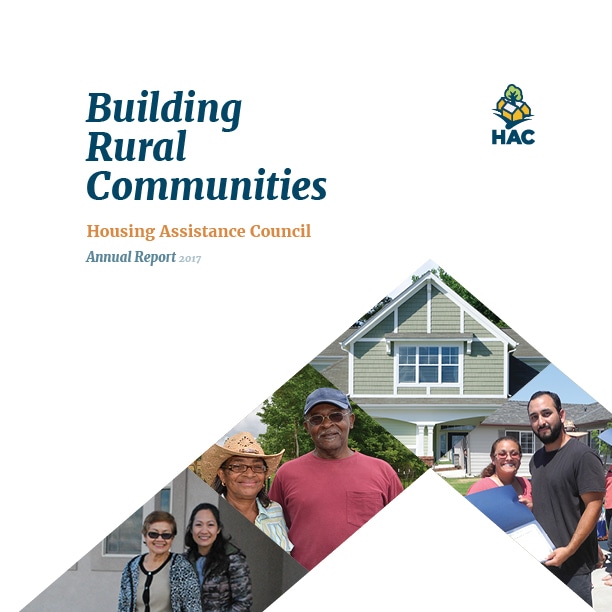
HAC: Building Rural Communities: Annual Report 2017

HAC's 2017 Annual ReportHAC is pleased to present the 2017 Annual Report, which looks back at our accomplishments and those of our partner organizations over the last year.

Rural America got a lot of attention in 2017. The results of the 2016 presidential election encouraged journalists, policymakers, and others to consider the differences between rural and urban parts of the U.S. The Housing Assistance Council has known these facts for decades, of course, and has worked with partners around the country towards improving life for the lowest income rural Americans.

Economic recovery from the Great Recession is lagging in rural areas, with a lower rate of job creation than in metropolitan places. Most of the new rural jobs are in the service sector, with far lower salaries than past mining and manufacturing positions. Forty percent of renters in places with populations under 10,000 pay more than 30 percent of their income for housing. While rural residents are more likely to be homeowners than city dwellers are, the homeownership rate for rural African Americans and Hispanics is 20 percentage points lower than that of white non-Hispanic rural households. Persistent poverty counties – those where poverty rates have exceeded 20 percent since 1990 – are predominately rural.

At the same time, HAC knows rural America’s advantages. The barnraising spirit is still strong: residents care deeply about their communities and they really do pitch in to help their neighbors. Rural places’ products and their natural resources benefit the entire country. Costs of doing business are often lower in small towns than in big cities.

HAC spent 2017, as it has spent more than 45 years, helping rural communities use these positive traits and resources to improve their residents’ lives. This has always been the hallmark of HAC’s work: HAC helps local organizations so that they can, in turn, help their communities – not only immediately, but for years to come. HAC builds rural resources, capacity, and knowledge by providing financing, training and technical assistance, and research and information. In 2017 HAC continued its special efforts to help provide housing for rural veterans and launched a new initiative on creative placemaking.

Whether the new attention to rural areas yields useful results or not, HAC and our partners on the ground will continue our efforts. Rural Americans will deserve decent, safe, affordable housing, as they always have.

Read this publication online at Issuu.com.
David Lipsetz, President & CEO

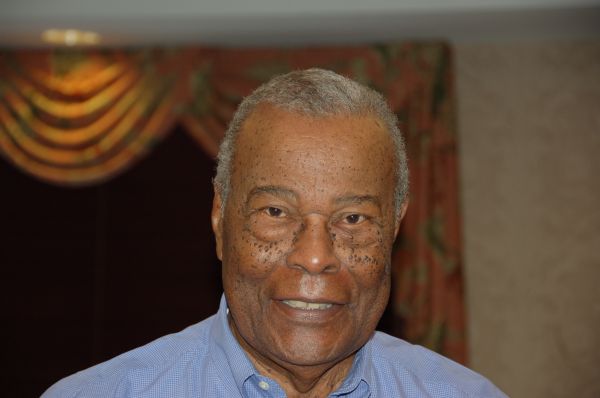
David Lipsetz - HAC CEO - Headshot

David Lipsetz is the President and CEO at the Housing Assistance Council (HAC) and a leading expert in affordable housing and sustainable community development. David came to HAC after holding several White House-appointed positions, most recently serving as the Associate Administrator for Rural Housing and Community Facilities at the U.S. Department of Agriculture (USDA.) His office oversaw policy development and program administration of more than $100 billion in direct lending, mortgage guarantees, grants and technical assistance for community and economic development in rural America.

Prior to USDA, David was at the U.S. Department of Housing and Urban Development (HUD,) where he served as a Deputy Assistant Secretary and Senior Advisor for Public and Indian Housing, and as an Acting Chief of Staff to the Deputy Secretary. Prior to HUD, David managed policy, large-scale initiatives and organizational development for housing agencies in New York City and Oakland, CA. He also worked for the San Francisco Bay Area’s regional planning authority; and Dresden, Germany’s Institute for Ecological and Regional Development. His career began as a Legislative Assistant for domestic policy issues in the Office of U.S. Congressman John Dingell.

David was born and raised in Ohio. He earned a Bachelor’s degree in Political Science from Michigan State University, and Master’s degrees in Sociology and City and Regional Planning from the Ohio State University. He currently resides in Washington, DC with his wife and kids.

Supporters

HAC would like to recognize and thank our generous supporters.

Supporters

The Atlantic Philanthropies
Bank of America
BBVA Compass Bank
Capital One Bank
Council of Federal Home Loan Banks
Episcopal Diocese of Iowa
The Episcopal Church
F.B. Heron Foundation
Federal Home Loan Bank of Des Moines
Ford Foundation
The Hearst Foundation
The Home Depot Foundation
Home Missioners of America
Lenin Juarez
John D. and Catherine T. MacArthur Foundation
JP Morgan Chase
Morgan Stanley
Navajo Housing Authority
NeighborWorks™ America
Seton Enablement Fund
Sisters of Charity, Blessed Virgin Mary
Sisters of St. Francis of Philadelphia
Sisters of the Holy Cross
Sisters of the Presentation of the Blessed Virgin Mary
Society of Mary
U.S. Department of Agriculture— Rural Development – Business and Cooperative Programs
U.S. Department of Agriculture
U.S. Department of Housing and Urban Development
U.S. Department of the Treasury— Community Development Financial Institutions Fund
Wells Fargo Housing Foundation

Partners

Gideon Anders
Joseph and Tamara Belden
Brattleboro Area Affordable Housing Corporation
Congregation of the Humility of Mary
Council for Affordable and Rural Housing
Habitat for Humanity
Norman Hurwitz
Moises and Teresa Loza
Maria Luisa Mercado
National Trust for Historic Preservation
Next Step
PathStone Corporation
William and Gloria Powers
Reno & Cavanaugh, PLLC
Rural Community Assistance Corporation
Rural Community Assistance Partnership
Byron and Lee Stookey
Leslie R. Strauss
Harold and Marilyn Wilson

45 Years. 45 Stories

We Believe in Rural America

45YearsCoverFor most of our county’s history, the United States was largely a rural nation. That changed sometime in the 1930s when more people began living in and around cities than in the countryside. In the past few decades, the pace of urbanization has accelerated even faster. This fundamental shift is not only in our nation’s demography, but also in our identity and character. What does it mean to live, work, and prosper in 21st century rural America? Rural areas have their share of challenges, some unique, while others are similar to those in the cities and suburbs. But rural citizens also have a strong sense of pride, work ethic, and perseverance.

At the Housing Assistance Council (HAC), we know rural America. For 45 years, HAC has worked to improve the lives and homes of rural Americans all across this land – especially in often forgotten places and among often forgotten populations including Appalachia, the rural South and Mississippi Delta, the Border Colonias, Native American Lands, and migrant and seasonal farmworkers. The following 45 stories represent not only our past accomplishments and efforts over as many years, but also, and possibly more importantly, they offer a glimpse into our activities and aspirations for rural communities today and for the coming 45 years.

We know rural America. More importantly, we believe in rural America.

Read a web friendly version on Issuu.com

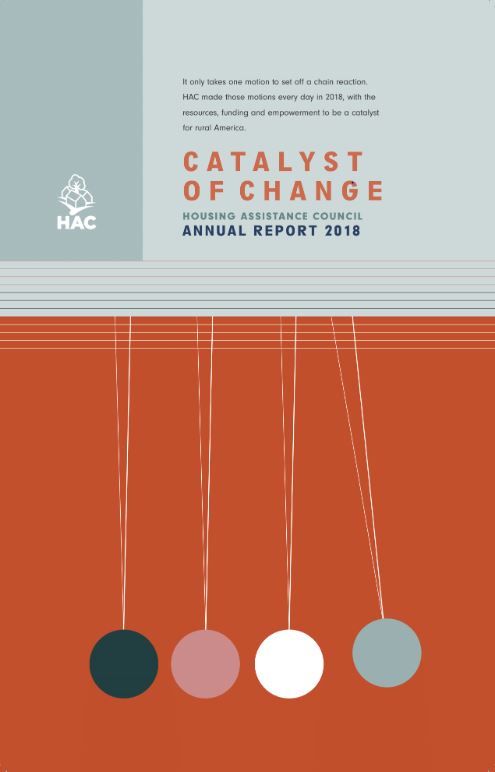
Annual Report 2015

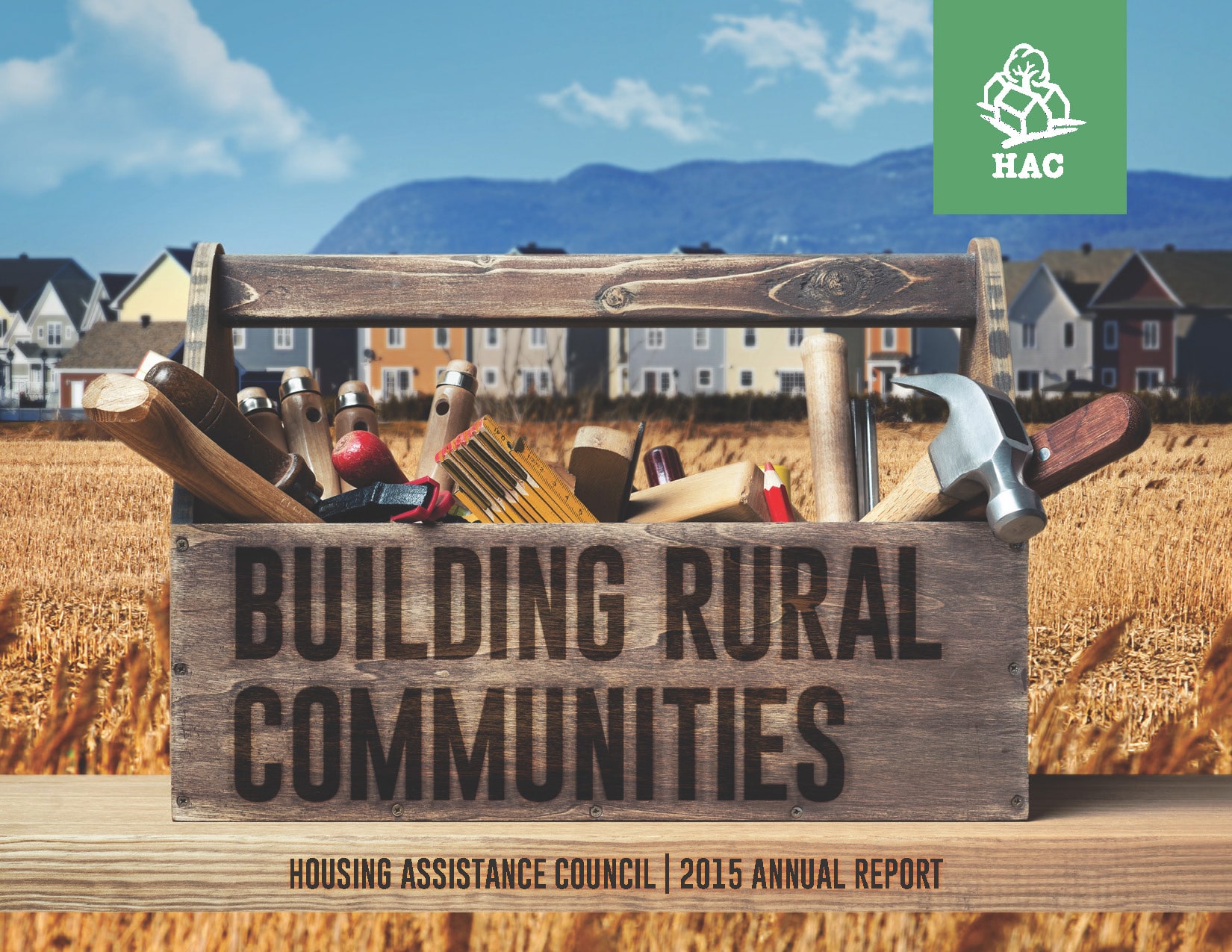
HAC's 2015 Annual Report CoverThe Housing Assistance Council is pleased to present Building Rural Communities, HAC’s 2015 Annual Report.

Read a web-friendly version of this publication on issuu.com.

In 2015 the Housing Assistance Council (HAC) mixed innovation, tried and true techniques, and special attention to special needs to further its mission of improving housing conditions for low-income rural Americans.

Ongoing issues surrounding the preservation of existing decent, affordable rental housing in rural America were one important focus of HAC’s work this year, as a large proportion of U.S. Department of Agriculture rental housing mortgages near the end of their terms. Veterans’ housing needs were another. HAC also continued its strong support of self-help homeownership for families who could not afford to purchase their own homes without the value added by their “sweat equity.” HAC’s loan funds make below-market financing available for those developing or rehabilitating affordable rural housing for both owners and renters.

This year HAC continued to increase its use of technology, delivering webinars and publications online and launching a new Veterans Data Central site to complement its popular Rural Data Portal. Person-to-person interactions remained important as well, with individualized conversations and live training sessions, including peer-to-peer events, providing technical assistance to local rural organizations and governments nationwide.

The importance of HAC’s role as an intermediary remains clear. As always, in 2015 local organizations throughout rural America made good use of HAC’s loans, grants, trainings, technical assistance, and information resources. HAC is proud to continue empowering these groups to provide decent, affordable homes for the lowest income residents of their own communities.

20 Years of Rural Voices

What a Difference 20 Years Makes

This edition, “20 Years of Rural Voices,” highlights and revisits a selection of articles published over the past two decades.

View from Washington

Let’s Recommit to Rural America
by Congressman Bennie Thompson

Rep. Bennie Thompson challenges his colleagues in Congress to re-engage in the fight to keep successful federal rural housing programs alive.s

FEATURES

Self-Help Housing on the Pine Ridge Indian Reservation: Alive and Well
by Leslie Newman

There is more than one way to design a self-help housing program, and collaboration between community organizations helps.

Still Ticking After All These Years: Low-Income Housing Tax Credits in Washington State
by Kim Herman

Tax credits have remained important in rural Washington, financing the production of thousands of homes.

Rural Midwest Housing Remains Complex
by Ann Ziebarth and Jeff Crump

Whether growing, stable, or declining, rural communities in the Midwest face challenges in providing housing for low-income residents.

The Housing Trust Fund Movement Spans the Country
by Mary Brooks

State and local housing trust funds continue to offer flexible funding for affordable housing across the country, and a national fund has been created as well.

Where You Live Matters: Fair Housing is Still the Law and Even Stronger
by Shanna Smith

The Fair Housing Act has been law since 1968, and new developments in 2015 have strengthened it.

Reflections on Cushing Dolbeare and Eleven Years of Housing Change
by Sheila Crowley

Cushing Dolbeare founded the National Low Income Housing Coalition; her legacy guides the organization years after her death.

20 Years Do Make a Difference
by Joe Belden

Many things have changed since 1995, says a veteran rural houser, but rural housing needs and solutions have never been partisan issues, and should not be now.


Rural Voices would like to hear what you have to say about one, or all, of these issues. Please feel free to comment on this story by sending a tweet to #RuralVoicesMag discuss on the Rural Affordable Housing Group on LinkedIn, or on our Facebook page.

Annual Report 2014

ar2014-coverThe mantra ‘retool, rebuild, renew’ resonated throughout the year as HAC continued its work improving housing conditions for the rural poor. Even as the economy begins to improve, many rural communities and Americans continue to struggle with the aftermath of the national housing crisis and recession. Similarly, some rural housing providers have scaled back their efforts in response to critical funding cuts and uncertain markets. Adversity and change have never discouraged HAC or the partners we have developed such strong relationships with across the nation. HAC continues pressing forward to retool our collective talents, rebuild the innovative spirit that got us where we are, and renew our passion for the mission that guides us.

For the entirety of its existence, HAC has worked to recognize housing inadequacies and help facilitate remedies through affordable lending products, technical assistance, and accessible information. As traditional problems linger, new and more complicated constraints of housing distress have emerged. The past decade has taught us the importance of housing to our nation’s economy, communities, and families. As the nation’s fiscal outlook grows more complicated and public sector investment decreases, HAC becomes increasingly integral to the success of building capacity and providing affordable, quality homes in rural America.

All of our efforts serve one goal: to improve housing conditions for the poorest of the poor in the most rural of places. HAC remains dedicated to this mission and to the partners that work tirelessly in pursuit of the day when every family in rural America will have a safe, affordable place to call home.

Remembering Richard Tucker

Richard Tucker dedicated his life to serving the less fortunate. An alumnus of LaSalle College in Philadelphia and Lincoln University in Oxford, Pennsylvania, he served as Executive Vice President of the Philadelphia Housing Development Corporation followed by a position as Executive Director of the Philadelphia Housing Authority. In 1972, Mr Tucker took a position as Deputy Director of the Housing Assistance Council, a new national organization committed to affordable housing for America’s rural poor. Beginning in 1978, Richard worked for the Federal Home Loan Bank System in Washington, D.C., where he was associated with the housing and community development and consumer programs. From October 1989 until his retirement in June 1999, Mr. Tucker served in various positions at the Federal Housing Finance Agency. From November 1989 through January 1991, he was acting director of the agency’s Housing Finance Directorate. During this period he was responsible for the development of the regulations and the implementation of the Federal Home Loan Bank System’s Affordable Housing Program. In retirement, he was the President of the Benjamin Banneker Development Corporation which developed sales housing, proceeds from which he established a scholarship program to benefit college-bound high school seniors in the District of Columbia.

Richard was an outstanding and dedicated member of the HAC Board of Directors for 31 years, including a number of years as Treasurer. Although his accomplishments are too numerous to mention here, he inspired many in the affordable housing field and will be missed dearly.

Richard Tucker 3

Annual Report 2013

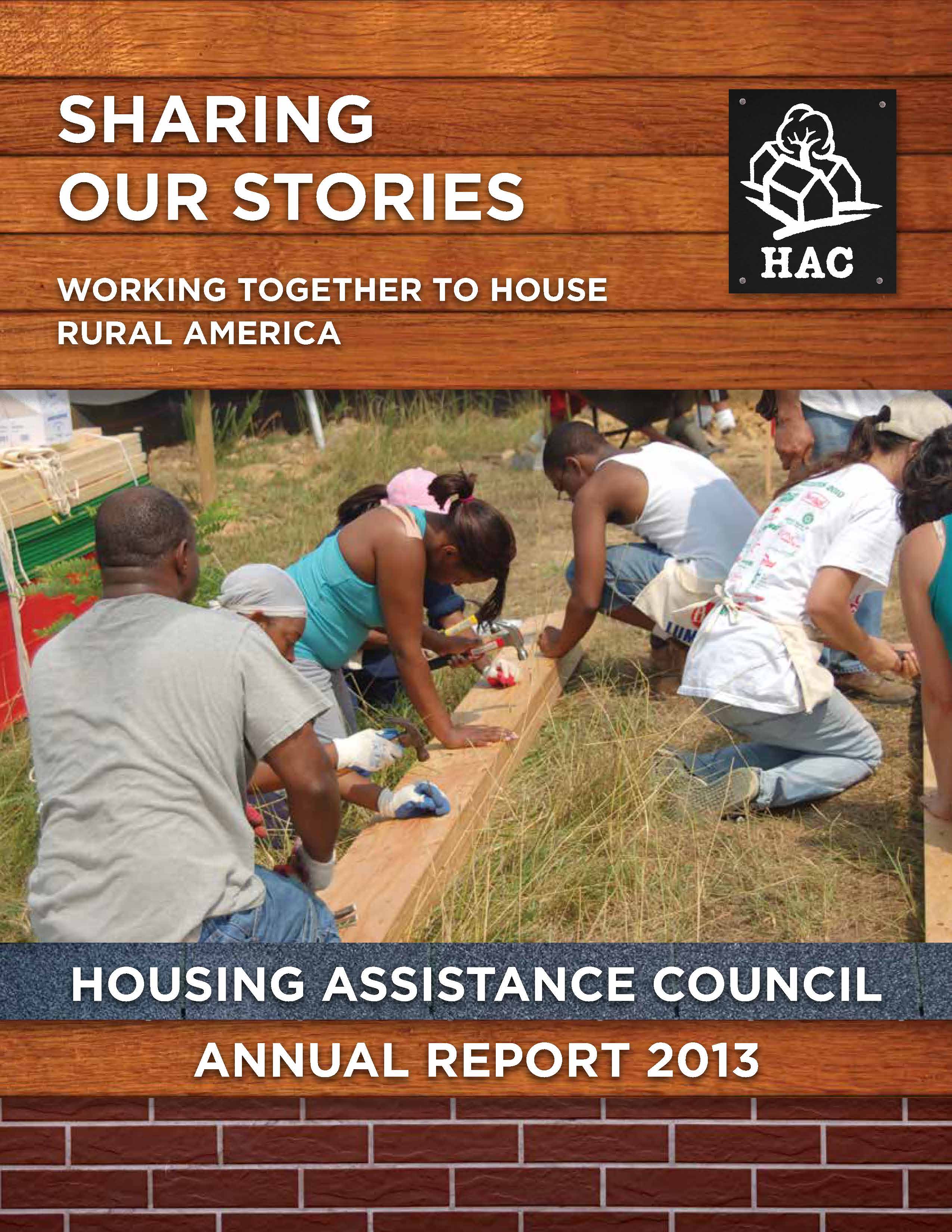
2013 Annual ReportThe achievements of our partners across rural America are a constant source of inspiration. Even during these trying times when organizations are faced with funding cuts, a struggling economy, and a rural housing market still undergoing recovery, dedicated organizations and individuals work daily to improve the lives of low-income rural residents. HAC looks back at 2013 knowing tangible change can still be accomplished through hard work. HAC’s success is linked to the success of our partners.

HAC’s strong relationships with rural housing providers across the country provide a unique insight into in rural communities’ needs and the challenges they face in meeting those needs. These relationships allow strategies to be adapted in order to work across a diverse landscape. Input from partners helps create appropriate policy and programmatic responses and allows HAC to remain a strong advocate for low income rural families. Loan fund programs, trainings, direct one-on-one technical assistance, research and information products, and analyses of federal housing policies ensure that HAC provides the tools necessary for organizations to continue providing safe, secure, affordable housing across rural America. HAC’s resources build and maintain relationships, and these relationships are critical.

HAC’s 2013 annual report highlights these relationships. Beginning with loan and grant making, HAC’s role as a Community Development Financial Institution (CDFI) allows us to help our local partners build and develop needed affordable housing projects. HAC’s training and technical assistance helps rural housing providers operate effectively and efficiently. And finally, HAC’s research and information provides partners with resources to gain access to data, understand federal policies, and stay up to date on news that impacts rural communities. Each service has its role and value for organizations in the field. HAC looks back on 2013 and recognizes not only the challenges, but also the hard-won successes of our partners. We remain committed to the advancement of local efforts and organizations and the ultimate goal of strengthening rural communities across the United States.

A Commitment to Capacity

A Commitment to Capacity
Print Copy: $5.00
This report examines HAC’s loan fund on the occassion of its fortieth year of funding rural affordable housing.
June, 2012

GET THE HAC NEWS!

Sign-up for HAC information products

SIGN UP HERE

Housing Assistance Council   |  1828 L Street. N.W., Suite 505, Washington, D.C. 20036
(202) 842-8600 (202) 347-3441 hac@ruralhome.org |

Board Portal

HAC is an equal opportunity provider, employer, and lender. | Civil Rights | Privacy