July 2023 Vermont Flash Flood Disaster Guide

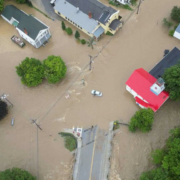
Flash floods in Vermont triggered by torrential rainfall hit the state causing President Joe Biden to declare a state of emergency on Tuesday, July 11, 2023. The Federal Emergency Management Agency (FEMA) has begun its efforts to coordinate disaster relief efforts in Vermont as communities across the state are experiencing historic flooding. Vermont Governor Phil Scott stated that the flooding is wreaking havoc as more rain is expected later this week. HAC offers the following resources with information for organizations and communities dealing with loss and damage resulting from the flash floods in the Northeast: Rural Resilience in the Face of Disaster site and Disaster Response for Rural Communities Guide.

If you are in need of emergency, transient housing, you can text SHELTER and your Zip Code to 43362 (4FEMA) to find where the shelter closest to you is located. Additional resources are available as flooding continues:

Apply for FEMA Assistance by registering online at www.DisasterAssistance.gov. FEMA Disaster Assistance Helpline answers questions about the help offered by FEMA, how to apply for assistance, or the information in your account.

Toll-free helpline: 1-800-621-FEMA (3362)
For hearing impaired callers only:
1-800-462-7585 (TTY)
1-800-621-3362 (Video Relay Service)
Operators are multilingual and calls are answered seven days a week from 7 a.m. to 11 p.m. ET.

For more information on federal aid programs visit FEMA’s website. Aid may include rental payments, home repair, unemployment payments, loans, and other assistance.

American Red Cross Disaster Service: For referrals and updates on Red Cross shelter services in your area, locate a local Red Cross office through: https://www.redcross.org/find-help or by calling 1-800-RED CROSS (1-800-733-2767). The Red Cross helps disaster victims by providing safe shelter, hot meals, essential relief supplies, emotional support and health services like first aid. Trained Red Cross workers often meet one-on-one with families to develop individual plans and identify available resources to help aid recovery.

DEPARTMENT OF HOUSING AND URBAN DEVELOPMENT FIELD OFFICES

Vermont
Burlington Field Office
95 Saint Paul Street,
Suite 440
Burlington, VT 05401-4486

Phone: (802) 951-6290

State Director: Sean Thomas

https://www.hud.gov/states/vermont

USDA RURAL DEVELOPMENT FIELD OFFICE

Vermont Rural Development State Office

87 State St., Ste. 324, PO Box 249, Montpelier, VT  05601
Phone: (802) 828-6080

Director: Sarah Waring
https://www.rd.usda.gov/vt

EMERGENCY MANAGEMENT AGENCIES

Headquarters

Eric Forand
Interim Director
45 State Drive
Waterbury, VT 05671-1300
Phone: (800) 347-0488

https://vem.vermont.gov/

Taiga Christie
Regional Coordinator – South
Phone: (800) 347-0488
Email: Taiga.Christie@vermont.gov

Harry Schoppman
Regional Coordinator – Northwest
Phone: (800) 347-0488
Email: harry.schoppmann@vermont.gov

HAC News: July 6, 2023

Vol. 52, No. 14

TOP STORIES

Fannie Mae proposes steep reduction in rural LIHTC investments this year

Explaining that it is has stopped participating in multi-investor LIHTC investment funds because of a legal concern, Fannie Mae has asked the Federal Housing Finance Agency for approval to reduce its FY23 Duty to Serve target for LIHTC equity investments in rural areas to 20-40 transactions rather than 70. FHFA seeks comments on the request by July 21. For more information, contact FHFA staff, DutyToServeStakeholders@fhfa.gov. A group of senators has asked the Treasury Department to resolve the underlying legal issue.

Interagency Community Investment Committee releases 2023 action plan

The ICIC – comprised of USDA, HUD, the Departments of Commerce, Transportation, and Treasury, and SBA – says in its just-released plan that this year it is focused on improving federal community investment programs that support community financial institutions; providing technical assistance and capacity-building for community development organizations, small businesses, and consumers; and attracting additional private sector investment or leverage. The plan responds to comments submitted in December by stakeholders including HAC, and includes a section on connecting rural communities to capital. It was released at the same time as a White House memo titled Guidance for Federal Departments and Agencies on Advancing Equitable Community and Economic Development in American Cities and Urban Communities which, the White House says, “is complementary to the Administration’s efforts to equitably lift up rural and Tribal communities across the nation.”

HAC seeks applicants for workshops on accessible and universal design

HAC’s Accessible and Universal Design workshop series will guide 30 housing professionals on integrating accessible and universal design principles into housing design and construction activities to address the accessibility, mobility, and design needs of every client. Participants will be eligible to receive reimbursement for travel and training expenses (up to $1,500 per training) to attend the two required in-person training events. Apply by July 14. For more information, email apply@ruralhome.org.

July is Disability Pride Month

Disability Pride Month commemorates the signing of the Americans with Disabilities Act into law on July 26, 1990. Shelterforce’s newest Under the Lens series, Not Just Ramps – Disability and Housing Justice, discusses the connection between disability and affordable housing. The [Un]Affordability of Accessibility: The Challenge of Retrofitting American Homes, an article in that series, reports that older adults and those with disabilities are an ever-increasing portion of our population. While there are laws in place, like the American with Disabilities Act, there is a lack of oversight and enforcement, resulting in few affordable and accessible housing options. To respond to the need, several nonprofits are working to reduce costs and retrofit homes so people can live comfortably in their homes.

RuralSTAT

In 2021, just over 80% of the U.S. population lived in urban places, with a disability rate of 12.6%. Among the slightly less than 20% of U.S. residents in rural places, 14.7% had a disability. Source: U.S. Census Bureau, American Community Survey.

OPPORTUNITIES

Continuum of Care funding available with new rural options

Applications are due September 28 for Continuum of Care funds to address homelessness and renewal or replacement of Youth Homeless Demonstration Program Grants. Based on a recent amendment to the McKinney-Vento Homeless Assistance Act, projects in rural areas can use funds for short-term emergency lodging, housing repairs, and staff training, professional development, skill development, and staff retention. Other revised provisions include newly eligible costs related to the Violence Against Women Act. For more information, email CoCNOFO@hud.gov.

HUD offers $75 million for Tribal community development

The Indian Community Development Block Grant program helps support development of housing, community facilities, and economic development in Tribal communities. Apply by September 5. For more information, contact HUD, ONAP-ICDBG@hud.gov.

EPA opens Solar for All competition

Solar for All will award up to 60 grants to help expand the number of low-income and disadvantaged communities primed for residential solar investment. This is one of the three Greenhouse Gas Reduction Fund competitions; application periods for the others have not yet been announced. Interested applicants must submit notices of intent to apply, due July 31 for states, DC, and Puerto Rico; August 14 for territories, municipalities, and nonprofits; and August 28 for Tribal governments and intertribal consortia. An informational webinar is scheduled for July 12 and will be recorded and posted online. For more information, email GGRF@epa.gov.

Nominees sought for USDA Tribal Advisory Committee

USDA is establishing this committee to advise on matters related to Tribal and Indian affairs. Nominations for membership on the committee are due August 14. For more information, contact Josiah Griffin, USDA, 202-205-2249.

REGULATIONS AND FEDERAL AGENCIES

USDA to hold virtual feedback sessions on decoupling as a rental preservation tool

USDA’s Rural Housing Service will host two online listening sessions to obtain stakeholder information on potential decoupling of Section 521 Rental Assistance from Section 515 rental housing loans so that some tenants can continue to receive RA after their properties’ mortgages end. Register to attend or speak on July 19 or July 25. USDA is also accepting written comments until July 31. For more information, contact Stephanie Vergin, USDA, 651-602-7820, decoupling@usda.gov.

CDFI Fund requests input on Capital Magnet Fund

The CDFI Fund asks for comments on ways to improve recipients’ understanding of its Capital Magnet Fund program requirements, ensure the program addresses activities and current business practices in the affordable housing industry, reduce the burden of administering CMF awards, better align the program with other significant federal funding sources, and determine how the program can better promote and incorporate policy priorities such as economic development in conjunction with affordable housing and affordable homeownership. Comments are due September 5. For more information, email cmf@cdfi.treas.gov and include “CMF RFI” in the email subject line.

List of distressed or underserved geographies outside metro areas released

The federal bank regulatory agencies have published their annual list of distressed or underserved middle-income geographies outside metropolitan areas. Bank financing for community development in these census tracts is eligible for Community Reinvestment Act consideration.

HUD publishes final notices implementing new inspection standards

HUD’s final rule for the National Standards for the Physical Inspection of Real Estate (NSPIRE) is accompanied by three subordinate notices. Information about inspection standards was released in June. Now an explanation of the scoring methodology and a notice covering administrative procedures have been published also. For more information, email NSPIREregulations@hud.gov.

Multifamily housing programs explain policy on electronic signatures

USDA’s multifamily staff encourages use of electronic and digital signatures and will accept them so long as they comply with applicable laws, regulations, and policies, according to recently issued guidance. Unacceptable types of electronic signatures are also listed. USDA regulations, which supersede this guidance, require some notices to tenants be provided in specific ways. For more information, contact the appropriate staff listed here.

Homeownership value limits set for HOME and Housing Trust Fund

HUD has established new limits, effective July 1, for the initial purchase prices or after-rehabilitation values of homeownership units assisted through the HOME program and Housing Trust Fund.

PUBLICATIONS AND MEDIA

Inequities in child well-being persist, Kids Count reports

The 2023 version of the Annie E. Casey Foundation’s annual KIDS COUNT data analysis shows that disparities continue among states and racial/ethnic populations. This year the report focuses on the national shortage of available and affordable childcare.

HAC

National Endowment for the Arts funds 25 rural communities through Citizens’ Institute on Rural Design

NEA, in partnership with HAC and To Be Done Studio, has announced the 25 towns and Tribal communities taking part in this year’s Citizens’ Institute on Rural Design™. Working with communities with populations of 50,000 or less, this national initiative has two primary components: local design workshops and a design learning cohort. This year CIRD will support eight workshops across the country, twice the number of workshops funded in previous years. The members of the peer learning cohort come from 17 communities as geographically diverse as Dalhart, Texas, and Ellsworth, Maine. Sign up for the CIRD newsletter to keep up to date on the cohort and other news.

HAC’s network supports rural housing improvements in letter to Congress

More than 100 organizations working in rural areas across the country signed a letter supporting bipartisan, cross-committee collaboration to consider improvements to USDA’s rural housing programs as part of the larger Farm Bill. Historically, the housing programs have not been included in the Farm Bill, but in recent months there has been increased momentum to include some bipartisan modernizations. HAC thanks all the organizations who signed the letter.

National Rural Housing Conference set for October

Mark your calendars and save the date! HAC’s National Rural Housing Conference will be held October 24-27 in Washington, DC and online.

Need capital for your affordable housing project?

HAC’s loan fund provides low interest rate loans to support single- and multifamily affordable housing projects for low-income rural residents throughout the U.S. and territories. Capital is available for all types of affordable and mixed-income housing projects, including preservation, new development, farmworker, senior and veteran housing. HAC loan funds can be used for pre-development, site acquisition, site development, construction/rehabilitation and permanent financing. Contact HAC’s loan fund staff at hacloanfund@ruralhome.org, 202-842-8600.

Please note: HAC is not able to offer loans to individuals or families. Borrowers must be nonprofit or for-profit organizations or government entities (including tribes).

Want to reprint a HAC News item?

Please credit the HAC News and provide a link to HAC’s website. Thank you!

HAC News: June 23, 2023

TOP STORIES

USDA funding bills approved by House and Senate committees

On June 14, the full House Appropriations Committee passed a FY24 funding bill for USDA. The committee did not change any of the dollar amounts for rural housing or community facilities programs that were adopted by the Agriculture Appropriations Subcommittee, but its report does show details that were not previously available. For example, Section 514/516 farmworker housing loans and grants, Section 504 repair grants, and Section 533 Housing Preservation Grants would all be reduced. Funding for the community facilities grants competition would fall from $25.3 million in FY23 to just under $3.6 million in FY24. Like the subcommittee, the full committee states that $1.607 billion will fully fund Section 521 Rental Assistance, without explaining why the amount is lower than the administration’s budget request. More information is posted on HAC’s website.

The Senate Appropriations Committee passed its version of the USDA bill on June 22. It would cut Section 502 direct loans from $1.25 billion this year to $850 million and would raise the program’s minimum interest rate to 2% instead of the current 1%. It would provide $1.6 billion for Rental Assistance and would decouple RA from Section 515 mortgages. HAC is reviewing the bill and will post more information online on June 23.

The House’s overall FY24 spending limits for non-defense discretionary programs, adopted by the House Appropriations Committee on June 15, are lower than the amounts provided in the Fiscal Responsibility Act, the debt limit compromise. Roll Call calculates that these limits (called 302(b) allocations), would decrease total funding for USDA by 30% below FY23 levels and for Transportation/HUD by 25%. The House versions of the FY24 appropriations bills may propose larger or smaller cuts in specific programs.

The House and the Senate committees have not yet released proposals for FY24 HUD funding and have not announced when they will begin to consider HUD bills.

Housing markets cool but costs remain high, says State of the Nation’s Housing report

The sharp interest rate hikes over the past year continue to impact housing markets and affordability for both homeowners and renters across the U.S., according to the State of the Nation’s Housing 2023 report from Harvard’s Joint Center for Housing Studies. First-time homebuying dropped sharply as housing costs remain well above pre-pandemic levels. Black and Hispanic homeownership rates were 28.6 and 25.8 percentage points below white homeownership rates in 2022. The number of cost-burdened renters hit a record high of 21.6 million households – about half of all renters – with 11.6 million of them spending over half of their income on housing. People continued to move into lower-cost, lower-density areas in 2022. The aging housing stock and climate change require attention as well, the authors write.

Apply for conference poster sessions by July 1

The deadline is July 1 for researchers and policymakers at all levels to apply to share their research and innovative ideas through a series of poster sessions at the 2023 National Rural Housing Conference, October 24-27 in Washington, DC. The research must be related to rural America and can be on housing or another field such as public health, community development, race and ethnicity, or creative placemaking. Posters will be reviewed and judged by a distinguished panel of rural experts. For more information, contact Manda LaPorte and Natasha Moodie, HAC.

Correction to June 8 HAC News

The last issue of the HAC News stated incorrectly that the debt ceiling compromise rescinded $2 million appropriated for preservation technical assistance for FY21. The Fiscal Responsibility Act did not rescind rental preservation TA funds. HAC apologizes for any confusion.

RuralSTAT

Homes in rural Appalachian counties are less likely to be single-unit buildings than homes in the rest of the rural U.S. (70.4% compared to 75.2%), and more likely to be mobile homes (19.5% compared to 11.4%). Vacancy rates are about the same (22.2% and 22.6%). Source: Appalachian Regional Commission tabulations of 2017-2021 American Community Survey. (Rural counties are defined as those outside of and not adjacent to a metro area.)

OPPORTUNITIES

Main Street Grants available for small cities

HUD’s HOPE VI Main Street Program provides grants to communities with populations under 50,000 to assist in the renovation of historic, traditional central business districts or “Main Street” areas by replacing unused, obsolete, commercial space in buildings with affordable housing units. The only eligible applicants are local governments whose jurisdiction includes the Main Street area. Nonprofit or for-profit entities and others can be subcontractors. The deadline is October 12. For more information, contact Susan Wilson, HUD, 202-402-4500.

CAPITOL HILL

House committee votes to cancel aid for disadvantaged farmers

At its June 14 markup of its FY24 USDA funding bill, the House Appropriations Committee adopted an amendment eliminating an Inflation Reduction Act program created to make payments to anyone who could show they experienced past discrimination in USDA farm lending programs. The program also includes funds to address land access (including heirs’ property) and funds outreach, education, and other aid. That IRA program replaced one created in the 2021 American Rescue Plan Act to aid socially disadvantaged farmers and ranchers because lawsuits had determined that USDA loan programs had discriminated against them. White farmers and ranchers sued, charging that the ARPA program itself was discriminatory.

Native American housing covered in Senate hearing

Witnesses and Senators discussed Indian Country’s housing needs and opportunities at a June 13 hearing on the State of Native American Housing convened by the Senate Banking Committee’s Housing Subcommittee.

REGULATIONS AND FEDERAL AGENCIES

HUD releases new inspection standards

The inspection standards notice for the National Standards for the Physical Inspection of Real Estate (NSPIRE) is the first of three subordinate publications that accompany the final NSPIRE rule published in May. NSPIRE provides for consistent property condition evaluations across multiple HUD programs. Notices on scoring and administrative matters are expected later this summer. HUD is developing training that will be posted on the NSPIRE website. For more information, email NSPIRE@hud.gov.

USDA systematizes appraisal assignment guidance for multifamily programs

Applicants to the Section 515 rental housing, Section 514/516 farmworker housing, and MPR preservation programs now do not need to request specific appraisal assignment guidance for each individual transaction. Instead, an owner can download (scroll down to “Quick Links”) the applicable appraisal assignment guidance, based on their specific situation, and provide the guidance to their appraiser prior to obtaining an appraisal. For more information, contact Jonathan Bell, USDA, jonathan.bell@usda.gov.

Comment deadline set for appraisal technology rule

Comments are due August 21 on a proposed rule by five federal regulatory agencies to  establish standards for computer models that may incorporate discrimination in property appraisals.

Fair Market Rent calculation changes under consideration

Comments are due July 24 on a HUD proposal to redefine “recent movers” and to use private rent data in calculating FY24 FMRs. For more information, contact Adam Bibler, HUD, 202-402-6057.

USDA RD creates Tribal relations webpage

RD’s Tribal Relations Page offers information about funding opportunities, events, and publications. For more information, email aian@usda.gov.

HUD will establish working group on LGBTQI+ issues

A June 15 presidential Executive Order instructs several federal agencies to take specific actions to advance equality for lesbian, gay, bisexual, transgender, queer, and intersex people. HUD is tasked with creating a new Working Group on LGBTQI+ Homelessness and Housing Equity, which “shall lead an initiative that aims to prevent and address homelessness and housing instability among LGBTQI+ individuals, including youth, and households.”

Resources posted on homelessness and climate change disasters

Noting that people experiencing homelessness can face greater risks from natural disasters and have less ability to prepare for and recover from them, the U.S. Interagency Council on Homelessness has posted Homelessness and Climate Change: A Roundup of Resources for Communities Before, During, and After Disasters.

EVENTS

Rural energy funding webinar set for June 27

Rural Clean Energy Funding Opportunities Across Federal Agencies will be offered on June 27 by USDA, EPA, the Department of Energy, and other federal agencies. The webinar will introduce over a dozen clean energy funding opportunities for rural stakeholders.

Equitable Greenhouse Gas Reduction webinar series began June 22

In a set of webinars offered on Thursdays from June 22 through August 3, the Center for Impact Finance at the Carsey School of Public Policy and the Natural Resources Defense Council will make the case for how the EPA’s Greenhouse Gas Reduction Fund can deliver equitable greenhouse gas reduction in low-income and disadvantaged communities through traditional lending lines of business in key market sectors. Recordings will be available online.

PUBLICATIONS AND MEDIA

Housing costs still out of reach nationwide

Out of Reach 2023: The High Cost of Housing, the new edition of the National Low Income Housing Coalition’s yearly report, documents the gap between renters’ wages and the cost of rental housing for every state, metropolitan area, and county, as well as the portion of each state that is outside metropolitan areas. There is no state, metro area, or county where a full-time minimum-wage worker can afford a modest two-bedroom rental home within 30% of their income. The gap between wages and housing costs is largest for people of color, particularly women of color.

Chartbook shows changes and challenges in Appalachia

The Appalachian Region: A Data Overview from the 2017-2021 American Community Survey, published by the Appalachian Regional Commission, provides data and maps on a variety of topics including population, age, race/ethnicity, housing, education, internet access, employment, and more. Figures are listed for each of the region’s 13 states, for subregions, for county types, and for the Appalachian and non-Appalachian parts of each state (West Virginia is the only state entirely within the region).

Modular construction and local financing make homes affordable and expandable

Housing Innovation in Rural America, the last in a Nonprofit Quarterly set of articles titled Eradicating Rural Poverty: The Power of Cooperation Series, highlights the housing affordability challenges faced in rural America. Modular housing with community-based financing is an innovative approach to addressing these issues, as demonstrated with MiCASiTA. This model was pioneered by come dream. come build (cdcb) in the Rio Grande Valley, Tex. and is now being expanded to Pine Bluff, Ark. The modules are constructed off-site but locally, allowing for low-cost home construction that is affordable to lower-income families, who can add sections as they can afford them.

Connecticut begins baby bonds program

A National Community Reinvestment Coalition post discusses the potential implications of Connecticut’s new baby bond program in addressing wealth inequities. Starting on July 1, every baby born into a Medicaid eligible household in the state – disproportionately Black and Latino – will receive a $3,200 deposit into a trust. Those who are still Connecticut residents can redeem the funds between ages 18 and 30 for specific uses including purchasing a home.

HAC

National Rural Housing Conference set for October

Mark your calendars and save the date! HAC’s National Rural Housing Conference will be held October 24-27 in Washington, DC and online.

Need capital for your affordable housing project?

2HAC’s loan fund provides low interest rate loans to support single- and multifamily affordable housing projects for low-income rural residents throughout the U.S. and territories. Capital is available for all types of affordable and mixed-income housing projects, including preservation, new development, farmworker, senior and veteran housing. HAC loan funds can be used for pre-development, site acquisition, site development, construction/rehabilitation and permanent financing. Contact HAC’s loan fund staff at hacloanfund@ruralhome.org, 202-842-8600.

Please note: HAC is not able to offer loans to individuals or families. Borrowers must be nonprofit or for-profit organizations or government entities (including tribes).

Want to reprint a HAC News item?

Please credit the HAC News and provide a link to HAC’s website. Thank you!
HAC News: June 8, 2023

TOP STORIES

Debt ceiling compromise limits spending, rescinds some HUD and USDA housing funds

The Fiscal Responsibility Act – the recently enacted compromise that suspends the debt ceiling until January 1, 2025 – makes fewer cuts than the Limit, Save, Grow Act passed by the House in April, but it almost certainly will limit federal spending on housing aid for the next two fiscal years. In addition to the well-publicized work requirements for SNAP and TANF recipients, reallocation of IRS funding, and revised environmental reviews, the measure includes a variety of other provisions, several of which impact rural housing.

It rescinds USDA rural housing funds in two accounts: any unspent funds from the $39 million for Section 502 direct loans and 504 loans that was provided in the American Rescue Plan Act.  and $2 million appropriated for preservation technical assistance for FY21. That $2 million was included in a currently open notice of funding availability from USDA offering $6.9 million from several appropriations years. Correction: The deleted language was included erroneously in the HAC News as distributed on June 8. The Fiscal Responsibility Act did not rescind rental preservation technical assistance funds. HAC apologizes for any confusion.

Further information is available on HAC’s website about HUD funding rescissions, caps on future spending, and provisions intended to give Congress incentives to enact regular appropriations bills for FY24 and FY25.

Rural veterans and local nonprofits receive critical housing support in partnership with The Home Depot Foundation

Veterans and their families in 14 rural communities will have better lives, thanks to The Home Depot Foundation and HAC. The Foundation is awarding grants totaling $366,907 to 14 local nonprofit housing agencies around the country to preserve housing for veterans in rural America. The grants are part of The Home Depot Foundation’s mission to provide affordable and accessible housing solutions to U.S. veterans and invest $500 million in veteran causes by 2025. As part of its Affordable Housing for Rural Veterans Initiative, HAC works with The Home Depot Foundation to administer grants that bolster and support the work of rural nonprofit housing agencies to deliver critical housing support to veterans.

HAC extends poster session deadline

Researchers and policymakers at all levels can apply by July 1 to share their research and innovative ideas through a series of poster sessions at the 2023 National Rural Housing Conference, October 24-27 in Washington, DC. The research must be related to rural America and can be on housing or another field such as public health, community development, race and ethnicity, or creative placemaking. Posters will be reviewed and judged by a distinguished panel of rural experts. For more information, contact Manda LaPorte and Natasha Moodie, HAC.

June is National Homeownership Month, National Healthy Homes Month, and Pride Month

RuralSTAT

According to the 2021 American Community Survey, there are 33.3 million homeowners in rural America. The rural homeownership rate is 72.5% compared to 64.6% for all households nationally. Source: HAC Tabulations of the U.S. Census Bureau’s 2021 American Community Survey. For more information on rural homeownership visit Rural Research Brief: Homeownership in Rural America.

OPPORTUNITIES

EPA to help Greenhouse Gas Reduction Fund applicants find partners

Potential applicants, coalition members, and partners wanting to find others interested in the three GGRF funds can fill out brief forms by June 19. EPA will compile a list and share it among those who provide their information. Consultants and other for-profit vendors will not be included. The agency expects to publish notices of funding opportunities this summer. For more information, email ggrf@epa.gov.

PHAs can request funding for Housing Mobility or Jobs Plus

PHAs that administer Housing Choice Vouchers can apply for Housing Mobility-Related Services funds to increase access to opportunity neighborhoods for families with children. The deadline is August 30. For more information, contact Alison Bell, housingmobility@hud.gov.

Jobs Plus program funds help PHAs assist public housing residents to find and continue jobs. The deadline is August 21. For more information, contact the program office, jobsplus@hud.gov.

Fannie Mae offers first look at REO properties to community organizations

Community First by Fannie Mae™ manages the sale of REO properties to public entities, nonprofits, public funds users, and community-minded investors across the country. Approved partners receive access to Fannie Mae REO properties before the homes are traditionally listed for sale. The properties are made available with price concessions to facilitate affordable and sustainable housing. All interested organizations are required to register for approval to participate in the program. For more information or a demonstration of the platform, contact Fannie Mae’s Community First Sales Team, support_communityfirst@fanniemae.com.

REGULATIONS AND FEDERAL AGENCIES

Axne and Hsu join USDA

Cindy Axne, formerly a member of the House of Representatives from Iowa, has been appointed Senior Advisor for Rural Engagement, Delivery and Prosperity at USDA. Yvonne Hsu has been appointed Chief of Staff for the Rural Housing Service. She previously worked at the National Asian-Pacific American Women’s Forum, the National Council of State Housing Agencies, and HUD, and on Capitol Hill.

Temporary Buy America waivers for Tribes proposed by USDA, finalized by HUD

USDA is proposing a one-year department-wide waiver for Tribes of the Buy America domestic content procurement preference in order to conduct more Tribal consultation. An earlier Tribal consultation waiver for USDA RD has now expired. Comments on the new request are due June 16. For more information or to submit comments, email ffac@usda.gov with the subject “Tribal Consultation Waiver in the Public Interest for Indian Tribes.”

HUD’s request for a similar one-year waiver for Tribes has been approved. For more information, contact Faith Rogers, HUD, 202-402-7082.

USDA sets schedule for feedback on decoupling as a rental preservation tool

USDA RD seeks stakeholder input as it compiles a required report to Congress on how it could implement decoupling of Section 521 Rental Assistance from Section 515 mortgages so that some tenants can continue to receive RA after their properties’ mortgages end. Send comments to decoupling@usda.gov by July 31; attend an in-person session on June 15 at a National Council of State Housing Agencies conference or on June 27 at a Council for Affordable and Rural Housing conference; or join a virtual session on July 19 or July 25.

Comments sought on tenant protections

The Federal Housing Finance Agency requests input on tenant protections at multifamily properties with mortgages backed by Fannie Mae and Freddie Mac. FHFA asks for information that highlights tenants’ experiences and stakeholders’ perspectives, as well as ideas for improved data collection. Comments are due July 31. Several tenant-supporting organizations have also set up a joint website to help tenants to comment.

Agencies propose rule on appraisal technology

A rule proposed by the Federal Reserve Board, CFPB, FDIC, FHFA, National Credit Union Administration, and Office of the Comptroller of the Currency would establish standards for computer models used in property appraisals. These “automated valuation models” help appraise real estate that will be used as collateral for mortgage loans. A CFPB blog post explains that automated valuations rely on mathematical formulas and large amounts of data to estimate a property’s value but can embed bias and discrimination, depending on the information they are given and how they are programmed. Comments on the proposal will be due 60 days after it is published in the Federal Register. For more information, contact Julie Giesbrecht, FHFA, 202-557-9866.

Freddie Mac launches mortgage product for Native American homebuyers

HeritageOne mortgages will provide conventional financing without income limitations for enrolled members of federally recognized Tribes. They will be available beginning in October for single-family homes on the lands of Tribes that are on HUD’s Section 184 Participating Tribes List or have memoranda of understanding with Freddie Mac. Lenders interested in originating these mortgages should contact their Freddie Mac account executive or the Customer Support Contact Center (800-FREDDIE). HeritageOne was developed under Freddie Mac’s Duty to Serve plan.

FHFA plans online listening sessions on Duty to Serve

The Federal Housing Finance Agency will hold virtual Duty to Serve Markets Public Listening Sessions on July 17 (rural housing), July 18 (manufactured housing), and July 19 (affordable housing preservation). Register to attend or to speak. FHFA will provide more information soon about how to submit written comments. For more information, email DutytoServeStakeholders@fhfa.gov.

FHA considers new approach to help struggling homeowners

The Federal Housing Administration requests comments on a new Payment Supplement Partial Claim to help struggling homeowners with FHA loans to reduce their mortgage payments temporarily. Mortgage servicers would use the FHA Partial Claim, which is an interest-free loan secured by a subordinate mortgage, both to bring a borrower’s mortgage current and to provide temporary reductions to their monthly mortgage payments for up to five years. The homeowner would repay FHA when they sell their home or refinance. Comments are due June 30.

HUD announces third round of unsheltered and rural homelessness funding

HUD has awarded $45 million for 3,379 Stability Vouchers to 135 PHAs and partnering Continuum of Care communities across the country to address homelessness among people in unsheltered settings and in rural communities. The effort to address homelessness in these places began in June 2022 with a notice of funding opportunity, and earlier funding rounds were announced in February and April 2023.

EVENTS

HAC continues webinar series on construction

Overcoming Cost Barriers: Innovative Approaches to Construction with Smart Building Techniques, Volunteers, and Sweat Equity is a series of five webinars. Two will be held later this month:

Three sessions have already been held, and the materials and recordings are posted online:

PUBLICATIONS AND MEDIA

Local nonprofit partners develop energy efficient affordable housing on the Pine Ridge reservation

The Western Organization of Resource Councils reports how Red Cloud Renewable and InOurHands are working together to build naturally insulated cellular concrete tiny homes that can be heated with a small solar panel. In the next phase, Lakota businesses will build the homes and the Lakota Federal Credit Union will underwrite the mortgages.

Housing supply limits growth for small Illinois towns, article says

Rural Illinois Towns Defend their Quiet Communities, originally published in the Chicago Tribune, reports that the lack of growth in rural Illinois towns may indicate limited housing supply rather than economic decline – businesses and school enrollment may be stable. The town of Dieterich used tax increment financing to prepare 130 new lots where developers have built new homes, and also created a local community development corporation. Both efforts have contributed to substantial population growth and a stronger local economy.

New resources available for smaller distressed communities

HUD recently updated its Distressed Cities and Persistent Poverty Technical Assistance Program library with new resources including upcoming funding opportunities, webinars, and toolkits. For more information, contact distressedcities@hud.gov.

HAC

National Rural Housing Conference set for October

Mark your calendars and save the date! HAC’s National Rural Housing Conference will be held October 24-27 in Washington, DC and online.

Need capital for your affordable housing project?

HAC’s loan fund provides low interest rate loans to support single- and multifamily affordable housing projects for low-income rural residents throughout the U.S. and territories. Capital is available for all types of affordable and mixed-income housing projects, including preservation, new development, farmworker, senior and veteran housing. HAC loan funds can be used for pre-development, site acquisition, site development, construction/rehabilitation and permanent financing. Contact HAC’s loan fund staff at hacloanfund@ruralhome.org, 202-842-8600.

Please note: HAC is not able to offer loans to individuals or families. Borrowers must be nonprofit or for-profit organizations or government entities (including tribes).

Want to reprint a HAC News item?

Please credit the HAC News and provide a link to HAC’s website. Thank you!

HAC News: May 25, 2023

TOP STORIES

Researchers predict consequences of debt limit stand-off

While congressional leaders and President Biden work to agree on provisions for raising the U.S. debt limit before the country’s borrowing reaches it in early June, economists and others are attempting to predict possible consequences of various scenarios.

  • If the House-passed Limit, Save, Grow Act becomes law, the Center on Budget and Policy Priorities estimates, it would require a 33% cut in “the two-fifths of the discretionary budget outside of defense and veterans’ medical care.” As a result, over 2 million people would lose rental assistance and 119,000 people experiencing homelessness would not receive aid. Because the spending reductions would increase over time, the cut would grow to 59% in 2033. CBPP provides an interactive graphic showing how protecting some programs changes the level of cuts to others.
  • If there is no agreement before the debt limit is reached, a short-term default of less than a week would lead to a “mild” recession in the second half of 2023, according to Moody’s Analytics. Real GDP would decline by 0.7 percentage point, employment would fall by 1.5 million jobs, and the unemployment rate would rise from 3.4% to a peak of almost 5%. There would be little long-term fallout on the economy, although global investors would demand higher interest on Treasury debt to compensate for the risk of future debt limit breaches, creating a significant cost to taxpayers in the long run.
  • If the debt limit breach lasts for a month or longer, Moody’s predicts a “cataclysmic” blow to the economy. The federal government would have to slash its spending, leading to an economic downturn comparable to that in 2007-2008. More than 7.8 million jobs would be lost, and unemployment would rise to 8%. The effects would still be felt a decade in the future. In both the short and long term, healthcare providers would likely become more hesitant to see Medicare and Medicaid patients. Confidence in other government supports would weaken spending and confidence, especially in areas with more lower-income or elderly households.

House subcommittee approves FY24 USDA spending bill

The House has begun working on appropriations bills for fiscal year 2024, which begins on October 1, 2023. The Agriculture Appropriations Subcommittee passed a bill on May 18 that would fund many rural housing programs at levels lower than those requested in the administration’s budget, and in some cases lower than the amounts appropriated for FY23 or FY22. HAC has posted details on its website. The bill will move next to the full House Appropriations Committee, which has postponed a markup originally set for May 24.

RuralSTAT

According to the 2020 Census, there are approximately 697,000 rural Asians and Pacific Islanders in the United States. Source: Housing Assistance Council Tabulations of the U.S. Census Bureau’s 2020 Census of Population and Housing. For more information on race and ethnicity in rural America visit HAC’s website.

OPPORTUNITIES

USDA offers Native CDFIs funds to relend

Certified Native CDFIs can apply to USDA for loans from the Native Community Development Financial Institution Relending Demonstration Program. Awardees will relend money to low- and very low-income households to acquire, build, rehabilitate, improve, or relocate dwellings on Tribal land in rural areas. The deadline is July 17. For more information, contact Brian Hudson, USDA, 608-697-7725.

Powering Affordable Clean Energy Program to finance renewable energy

The Rural Utilities Service is launching the Powering Affordable Clean Energy (PACE) Program, appropriated $1 billion in the Inflation Reduction Act to serve places with populations of 20,000 or less, or service areas of current RUS Borrowers or former RUS and Rural Electrification Act borrowers. The program will provide loans for projects that generate and/or store electricity from renewable energy resource systems. Nonprofits, for-profits, state and local governments, Tribes, institutions of higher education, community-based organizations, distribution electric cooperatives, and generation and transmission electric cooperatives are eligible and may submit letters of interest between June 30 and September 29. Loans are potentially partially forgivable, with the forgivable portion varying depending on the geography served. For more information, contact Christopher A. McLean, USDA, 202-690-4492.

REGULATIONS AND FEDERAL AGENCIES

USDA proposes to waive Buy America requirements for some community facilities and water and environmental projects

USDA has requested a one-year exemption from Build America, Buy America procurement requirements for infrastructure projects funded by USDA’s water and environmental or community facilities programs that were planned prior to May 14, 2022. The waiver would apply to projects that were awarded funds before that date, submitted an application to USDA, or held “substantial public engagement” such as having public meetings or publishing a notice related to project selection. Comments on the waiver request are due June 2. For more information or to submit comments, email ffac@usda.gov with the subject “RD Waivers: Public Interest Waiver for Projects Planned Prior to BABAA Implementation.”

FEMA seeks comments on risk assessment data

FEMA requests public input as it implements new statutory requirements that include designating “community disaster resilience zones” for targeting disaster mitigation efforts. Its questions address methodology and data, the designation process, and the types of assistance to be provided to resilience zones. Comments are due July 25. For more information, contact Pamela Williams, FEMA, 202-212-8007.

HUD releases income limits

Income limits that determine eligibility for programs including public housing, Section 8 project-based, Section 8 Housing Choice Voucher, Section 202, and Section 811 have been posted online and took effect May 15. Income limits for Community Planning and Development programs including CDBG and HOME are available here and will be effective June 15.

Tribal input invited on environmental review

A Tribal/Interagency Environmental Streamlining Toolkit developed by the HUD-led Tribal Housing and Related Infrastructure Interagency Task Force is available for Tribal consultation. The toolkit is intended to provide Tribes with information and tools to create one environmental review when multiple agencies are involved in a Tribal housing project. The website can also serve as a hub providing environmental requirements for Tribal housing and related infrastructure from eight different federal agencies, and it offers guidance and best practices for coordination, including coordinating endangered species and historic preservation reviews. The task force requests feedback by June 9.

ReConnect regulatory changes confirmed

USDA has adopted the changes it proposed in January for the Rural eConnectivity Program, effective May 1. For more information, contact Laurel Leverrier, USDA, 202-720-3416.

HUD and USDA move towards revising energy standards

Taking the first step in adopting revisions to their energy standards, HUD and USDA announced a preliminary determination that the changes do not negatively affect the availability or affordability of new construction of single- and multifamily housing covered by the relevant law. They relied on studies showing the incremental costs of the additional efficiency measures pay for themselves with energy cost savings on a life-cycle basis. Comments are due July 17. For more information, contact Michael Freedberg, HUD, 202-402-4366 or Meghan Walsh, USDA, 202-573-3692.

Feedback sought on Fannie Mae and Freddie Mac’s single-family pricing

After canceling fees it had previously announced, the Federal Housing Finance Agency is requesting input on the goals and policy priorities it should pursue in overseeing Fannie Mae and Freddie Mac’s single-family pricing framework, as well as the process for setting their single-family upfront guarantee fees. Comments are due August 14.

HAC comments on Greenhouse Gas Reduction Fund framework

Responding to an implementation framework released by the Environmental Protection Agency for the new $27 billion Greenhouse Gas Reduction Fund, HAC asked EPA to address the unique needs of rural and persistent poverty communities; ensure that nonprofit CDFIs and their nonprofit housing development partners are explicitly eligible for GGRF resources; increase clarity and reduce administrative burden on recipients; and exempt housing from Build America, Buy America requirements. EPA expects to announce funding availability as early as June.

PUBLICATIONS AND MEDIA

Digital technology can help elders age in place but has limitations

Centering the Home in Conversation about Digital Technology to Support Older Adults Aging in Place, published by Harvard’s Joint Center for Housing Studies, explores how digital technology can enable older adults to age in place by supporting activities of daily living as well as monitoring health and communicating information to healthcare providers. Barriers like housing problems and the digital divide, however, may limit effectiveness for rural elderly households.

Study examines U.S. trends for people experiencing homelessness

The State of Homelessness: 2023 Edition, published by the National Alliance to End Homelessness, uses HUD and Census Bureau data to provide information about homelessness in the U.S. on a given night in 2022 and to illustrate emerging trends by race/ethnicity, age, sheltered or unsheltered status, and other characteristics. Data is presented at the national, state, and Continuum of Care levels through an interactive dashboard.

Energy efficiency programs can become more equitable, research finds

Some customers and communities are underserved by energy efficiency efforts, according to Toward More Equitable Energy Efficiency Programs for Underserved Households, a new report from the American Council for an Energy-Efficient Economy. Utilities and other program administrators can use a variety of approaches to better serve low- and moderate-income consumers, renters, Black, Latino/a, rural, tribal, and non-English speakers, the study explains, with examples from both rural and urban areas. ACEEE also provides a variety of other energy equity resources, including Advancing Equity through Energy Efficiency Resource Standards, a report recommending state policies that could target energy savings for underserved households; an Energy Equity for Renters Toolkit; and a factsheet that summarizes the toolkit.

Rental incentive program makes workforce housing possible

Vermont Digger reports that the town of Woodstock will provide financial incentives to landlords in nearby towns to build or renovate units to house renters working at least 25 hours per week in Woodstock. Funding ranges from $2,500 for a qualified tenant with a one-year lease to $10,000 for four or more tenants with two-year leases.

HAC

National Rural Housing Conference set for October

Mark your calendars and save the date! HAC’s National Rural Housing Conference will be held October 24-27 in Washington, DC and online.

HAC invites poster session proposals for national conference

Researchers and policymakers at all levels can apply by June 2 to share their research and innovative ideas through a series of poster sessions at the 2023 National Rural Housing Conference, October 24-27 in Washington, DC. The research must be related to rural America and can be on housing or another field such as public health, community development, race and ethnicity, or creative placemaking. Posters will be reviewed and judged by a distinguished panel of rural experts. For more information, contact Manda LaPorte and Natasha Moodie, HAC.

Need capital for your affordable housing project?

HAC’s loan fund provides low interest rate loans to support single- and multifamily affordable housing projects for low-income rural residents throughout the U.S. and territories. Capital is available for all types of affordable and mixed-income housing projects, including preservation, new development, farmworker, senior and veteran housing. HAC loan funds can be used for pre-development, site acquisition, site development, construction/rehabilitation and permanent financing. Contact HAC’s loan fund staff at hacloanfund@ruralhome.org, 202-842-8600.

Please note: HAC is not able to offer loans to individuals or families. Borrowers must be nonprofit or for-profit organizations or government entities (including tribes).

Want to reprint a HAC News item?

Please credit the HAC News and provide a link to HAC’s website. Thank you!


HAC News: May 11, 2023

TOP STORIES

HAC’s CEO testifies to Senate Banking Subcommittee on rural housing reforms, two bills are introduced

  • On May 2 HAC’s President & CEO, David Lipsetz, spoke before the Housing, Transportation, and Community Development Subcommittee of the Senate Committee on Banking, Housing, and Urban Affairs on bipartisan reforms to USDA’s rural housing programs.
  • The hearing covered the Rural Housing Service Reform Act of 2023, S. 1389, introduced by Subcommittee Chair Tina Smith (D-Minn.) and Senator Mike Rounds (R-S.D.). The bill includes a slate of provisions, many of which were recommended by HAC, to improve the multifamily, single-family, and capacity building programs at USDA.
  • The Strategy and Investment in Rural Housing Preservation Act was re-introduced by Senators Jeanne Shaheen (D-N.H.) and Tina Smith (D-Minn.), who have introduced it in past Congresses as well, and Sen. Angus King (I-Maine). Its provisions would enhance USDA’s ability to preserve Section 515 rental properties.

May is Asian American, Native Hawaiian, and Pacific Islander Heritage Month

Resources available online include President Biden’s proclamation and a compilation of federal events.

RuralSTAT

Researchers estimate that, while the 2020 census overcounted both Asian Americans and Native Hawaiians and Pacific Islanders (NHPIs) at the national level, it undercounted Asian Americans in 68% of counties and undercounted NHPIs in 55% of counties, with the estimated undercounts tending to cluster in more rural areas in the Midwest, South, and Mountain West. Source: The Quality of the Decennial Census for Asian American and Native Hawaiian and Pacific Islander Communities: An Expanded Approach by Advancing Justice | AAJC and Demographic Analytics Advisors.

OPPORTUNITIES

New Green and Resilient Retrofit Program launches

HUD-assisted rental properties are eligible for funding through three “cohorts” under the new Green and Resilient Retrofit Program, designed to meet the needs of applicants with varying levels of green retrofit expertise. HUD has also provided implementation guidance in Housing Notice H 2023-05. Elements awards target properties that are already advanced in a rehabilitation transaction and need gap financing to fund specific utility-efficient or resilient elements. Leading Edge awards target properties that are in the early stages of recapitalization planning and will achieve a high-level third-party green certification. Comprehensive awards target properties with high needs where HUD-procured contractors will support owners by commissioning third-party reports and assessments to develop a scope of work. HUD has posted information online and will hold a webinar on May 23. For more information, contact grrp@hud.gov.

HUD offers lead hazard funding

  • The Lead Hazard Reduction Capacity Building Grant Program will fund states, Tribes, and units of local government to develop the infrastructure necessary to undertake comprehensive programs to identify and control lead-based paint hazards in privately owned rental or owner-occupied housing. Apply by June 27. For more information, contact Victoria Jackson, HUD, 202-402-3167.
  • The Lead Risk Assessment Demonstration offers competitive grants to PHAs administering Housing Choice Voucher Programs to evaluate for lead-based paint hazards in HCV units constructed before 1978 and occupied or to be occupied by children under six. Applications are due June 20. For more information, contact Bruce Haber, HUD, 202-402-7699.

Veterans housing rehab pilot funds announced

The Veterans Housing Rehabilitation and Modification Pilot Program will provide competitive grants of up to $1 million each to nonprofits with nationwide or statewide programs that primarily serve veterans and/or low-income individuals. The funds may be used to modify or rehabilitate eligible veterans’ primary residences or to provide grantees’ affiliates with technical, administrative, and training support in connection with those services. Applications are due August 31. HUD’s Rural Gateway will hold a webinar on May 16 offering a program overview. For more information, contact Jovette G. Bryant, HUD, 877-787-2526.

Grant Application Bootcamp registration opens

Local governments with 150,000 or fewer residents can register by May 31 for bootcamps intended to help them submit competitive applications for federal infrastructure opportunities. The National League of Cities will offer five separate bootcamps covering new programs addressing broadband, railroad crossings, drinking water, neighborhood access and equity, and bridges. There is no cost to participate. For more information, contact LocalInfrastructureHub@nlc.org.

Funds available for asphalt art

Cities of all sizes in Canada, Mexico, and the United States are invited to apply for $25,000 grants and technical assistance from Bloomberg Philanthropies’ Asphalt Art Initiative, which funds visual art on roadways, pedestrian spaces, and public infrastructure in cities. The deadline is June 12. For more information, contact arts@bloomberg.org.

NeighborWorks network invites applications

NeighborWorks America is seeking up to five nonprofit community-based organizations that focus on community revitalization, homeownership, and the production of affordable housing to join the NeighborWorks network. The initial application is open through June 9 and is in two parts. NWA strongly encourages applicants to submit part 1 no later than May 15 to ensure there is enough time to complete and submit part 2 by June 9. For more information, email affiliations@nw.org.

CAPITOL HILL

Tribal representatives support HUD programs

An April 28 oversight hearing of the House Appropriations Committee’s Subcommittee on Transportation, Housing and Urban Development, and Related Agencies, titled Tribal Perspectives on Housing and Transportation, included testimony from several witnesses about the dire need for housing in Indian Country. They emphasized the importance of increasing funding for HUD’s Indian housing programs to meet that need.

Torres Small confirmation hearing held

The Senate Agriculture Committee held a hearing May 10 to consider the nomination of Xochitl Torres Small, who has been serving as USDA Under Secretary for Rural Development, to be Deputy Secretary of Agriculture. The committee has not yet voted on recommending her nomination to the full Senate, which will make the final decision.

REGULATIONS AND FEDERAL AGENCIES

HUD issues final rule on new NSPIRE inspection program

HUD’s National Standards for the Physical Inspection of Real Estate (NSPIRE) are intended to strengthen HUD’s physical condition standards and improve HUD oversight. The program’s final rule also incorporates provisions to reduce administrative burden on small rural PHAs. The rule is effective on July 1 for public housing and on October 1 for the Multifamily Housing (including Section 202 and 811), Housing Choice Voucher, Project Based Voucher, Section 8 Moderate Rehabilitation, HOME, Housing Trust Fund, Housing Opportunities for Persons with AIDS, Emergency Solutions Grant, and Continuum of Care programs. HUD will issue “Subordinate Notices” covering NSPIRE standards, scoring, and administration, as well as notices for some specific programs and to implement the small rural assessment requirements. For more information, contact Tara J. Radosevich, HUD, 202-708-1112.

Deadline extended for floodplain comments

Comments regarding HUD’s proposed rule on floodplain-related building standards are now due June 6 rather than May 23.

Revisions final for Section 306C water and waste program for colonias and Tribes

The Rural Utilities Service has finalized, without change, the proposed rule published in February.

FHFA cancels upfront fees based on debt-to-income ratio

In January the Federal Housing Finance Agency announced changes to its upfront fee structure for single-family guaranteed loans purchased by Fannie Mae and Freddie Mac, including the addition of a new upfront fee for borrowers with a debt-to-income ratio above 40%, effective May 1. In March, FHFA delayed implementation of those fees until August 1. Now it has announced that it is rescinding the DTI ratio fees and will “shortly” issue a request for more information from stakeholders.

EVENTS

HAC offers USDA 502 packaging training in Albuquerque

The three-day USDA Section 502 Direct Certified Loan Application Packaging Training, designed for those experienced in using Section 502, will provide participants with a strong understanding of Section 502 direct underwriting and packaging standards, which will ensure that submitted loan dockets are complete and accessible for processing. The course will be held in Albuquerque, NM on June 13-15. Registration is $750. For more information, contact HAC staff, registration@ruralhome.org, 202-516-6271.

Rural Assembly Everywhere set for June 28

The Center for Rural Strategies will host its annual virtual convening, Rural Assembly Everywhere, on June 28. The event features stories, keynotes, and performances that are designed to celebrate and protect the dignity of rural people and neighbors. Register online here.

PUBLICATIONS AND MEDIA

Interim agreement reached in Alabama environmental justice case

On May 4 the Departments of Justice and Health and Human Services announced an “interim resolution agreement” in their environmental justice investigation into the Alabama Department of Public Health and the Lowndes County Health Department. They determined that the state and county agencies engaged in a consistent pattern of inaction and/or neglect concerning the health risks associated with raw sewage affecting the county’s primarily Black, low-income residents; failed to take meaningful actions to remedy sewage issues; and threatened residents with criminal penalties and even potential property loss for sanitation conditions they could not alleviate. The state now must undertake remediation efforts. Media coverage about the settlement, including from Alabama TV station WSFA, the Associated Press, and the Washington Post, provides additional details.

Housing and environmental justice must be addressed together, issue paper says

Housing Policy is Environmental Policy: The Complementary Aims of Fair Housing and Environmental Justice, an issue brief from the Opportunity Starts at Home campaign, examines the links between race, income, exposure to pollution and toxic waste, climate change, and the locations and conditions of housing. It considers federal efforts to address the issues and makes recommendations to improve both housing and environmental justice.

Guide offers ways to connect homelessness and mental health treatment

For Mental Health Awareness Month in May, SAMHSA is highlighting its Expanding Access to and Use of Behavioral Health Services for People at Risk for or Experiencing Homelessness guide, which highlights strategies for housers and behavioral health providers to conduct outreach to individuals experiencing homelessness. Case studies include both rural and urban places.

HAC

HAC is hiring an Asset Manager Associate and three interns

  • The Asset Manager Associate will assist in a range of lending activities, including loan department reports, loan payments, underwriting, credit analysis and various aspects of monitoring, and servicing single- and multifamily housing development loans. This is an entry-level position and is eligible for telecommuting.
  • The Portfolio Management Intern, Loan Asset Management Intern, and Resource Development Intern are part of HAC’s lending team. The interns will have the opportunity to participate in the Fannie Mae Future Housing Leaders program throughout the summer. The positions will be approximately 37.5 hours per week, with stipends of $15-18 per hour commensurate with experience/responsibilities, and will run from the end of May through August 2023. These positions are eligible for telecommuting.

HAC invites poster session proposals for national conference

Researchers and policymakers at all levels can apply by June 2 to share their research and innovative ideas through a series of poster sessions at the 2023 National Rural Housing Conference, October 24-27 in Washington, DC. The research must be related to rural America and can be on housing or another field such as public health, community development, race and ethnicity, or creative placemaking. Posters will be reviewed and judged by a distinguished panel of rural experts. For more information, contact Manda LaPorte and Natasha Moodie, HAC.

National Rural Housing Conference set for October

Mark your calendars and save the date! HAC’s National Rural Housing Conference will be held October 24-27 in Washington, DC and online.

Need capital for your affordable housing project?

HAC’s loan fund provides low interest rate loans to support single- and multifamily affordable housing projects for low-income rural residents throughout the U.S. and territories. Capital is available for all types of affordable and mixed-income housing projects, including preservation, new development, farmworker, senior and veteran housing. HAC loan funds can be used for pre-development, site acquisition, site development, construction/rehabilitation and permanent financing. Contact HAC’s loan fund staff at hacloanfund@ruralhome.org, 202-842-8600.

Please note: HAC is not able to offer loans to individuals or families. Borrowers must be nonprofit or for-profit organizations or government entities (including tribes).

Want to reprint a HAC News item?

Please credit the HAC News and provide a link to HAC’s website. Thank you!
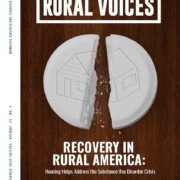
 

HAC News: April 27, 2023

TOP STORIES

House narrowly passes debt ceiling bill

By a 217-215 vote on April 26, the House passed the Limit, Save, Grow Act (H.R. 2811), which would raise the debt ceiling, cut federal spending, and rescind or repeal previously authorized spending. The bill is unlikely to pass the Senate, however, and the White House has said President Biden would veto it. USDA issued a press release quantifying possible impacts of the bill’s proposed cuts, including loss of rental assistance for up to 63,000 households and reduced support from the Rural Partners Network.

Senate committee considers rural housing

HAC CEO David Lipsetz is scheduled to testify on May 2 at a Rural Housing Legislation hearing before the Senate Banking Committee’s Housing, Transportation, and Community Development Subcommittee. The event will focus on a bill intended to improve several USDA rural housing programs, expected to be introduced by Senators Tina Smith (D-Minn.) and Mike Rounds (R-S.D.). Testimony at Building Consensus to Address Housing Challenges, a hearing before the full Senate Banking Committee on April 26, also recognized the distinct housing issues facing rural America.

HAC invites poster session proposals for national conference

Researchers and policymakers at all levels can apply by June 2 to share their research and innovative ideas through a series of poster sessions at the 2023 National Rural Housing Conference, October 24-27 in Washington, DC. The research must be related to rural America and can be on housing or another field such as public health, community development, race and ethnicity, or creative placemaking. Posters will be reviewed and judged by a distinguished panel of rural experts. For more information, contact Manda LaPorte and Natasha Moodie, HAC.

RuralSTAT

Nationally, shipments of new manufactured homes have eclipsed 100,000 for the past two years. In 2022 113,000 new manufactured homes were shipped. Source: Housing Assistance Council tabulations of HUD and the U.S. Census Bureau’s Manufactured Home Survey.

OPPORTUNITIES

Youth homelessness funding offered with rural priority

State, local, and Tribal governments, TDHEs, and nonprofits may apply by June 27 for the Youth Homelessness Demonstration Program, which supports communities in developing and implementing coordinated community approaches to preventing and ending homelessness among youth aged 24 and under. HUD will support projects in up to 25 communities, with a priority for up to eight with substantial rural populations. For more information, contact Caroline Crouse, HUD, 612-843-6451.

USDA opens Housing Preservation Grants competition

The Section 533 Housing Preservation Grants program funds state and local governments, Tribes, and nonprofits for repair or rehabilitation of housing owned or rented by low- and very low-income rural residents. Part of this year’s funding is set aside for repairs to units damaged in presidentially declared disasters in calendar year 2022. Applications are due June 5. For more information, contact a USDA RD State Office.

REGULATIONS AND FEDERAL AGENCIES

HUD requests input on disability-based discrimination

HUD is considering changes to its regulations for Section 504 of the Rehabilitation Act of 1973, which prohibits discrimination on the basis of disability in programs and activities receiving federal financial assistance. HUD wants to update its federal accessibility standard and clarify recipients’ obligations, including accounting for advances in accessible design, information and communication technology, and assistive technologies. Comments are due July 24. For more information, contact Amy Gioletti, HUD, 405-609-8561.

Fair housing, fair lending, and equitable finance rule proposed by FHFA

A proposed Federal Housing Finance Agency regulation would cover Equitable Housing Finance Plans for Fannie Mae and Freddie Mac as well as fair housing and fair lending for those entities and the Federal Home Loan Banks. Comments are due June 26. For more information, contact James Wylie, FHFA, 202-649-3209.

EPA releases framework for Greenhouse Gas Reduction Fund

EPA’s implementation framework divides the new $27 billion GGRF, created by the Inflation Reduction Act, into three competitions. The $14 billion National Clean Investment Fund will fund two or three national nonprofits to partner with private capital providers to deliver financing at scale to businesses, communities, community lenders, and others. The $6 billion Clean Communities Investment Accelerator competition will fund two to seven hub nonprofits to build the capacity of lenders such as CDFIs and housing finance agencies to finance clean technology projects. The $7 billion Solar for All competition will make grants to states, Tribal governments, municipalities, and nonprofits to prepare low-income and disadvantaged communities for residential and community solar. The agency will hold public listening sessions on this framework during the week of May 1. Comments can also be emailed to ggrf@epa.gov by May 12. EPA expects to issue Notices of Funding Opportunity as early as June.

USDA updates lender submission process for Section 538 guarantees

Changes for lenders submitting requests for rental housing guarantees under the Section 538 program will take effect on April 28, when USDA’s notice is published in the Federal Register. They include revisions to the priority criteria and the fee structure. For more information, contact Jonathan Bell, USDA, MFHprocessing1@usda.gov, 254-742-9764.

New comment deadline set for extending HUD’s Buy America waiver for Tribes

Comments are now due May 8 on HUD’s proposal to extend its waiver of Buy America requirements for Tribes and Tribal entities. For more information, contact Faith Rogers, HUD, 202-402-7082.

HUD announces rural-targeted funding awards

Following an earlier round of awards announced in February, the second set of communities receiving resources to address unsheltered and rural homelessness will get $171.2 million in grants for 115 new projects in 29 Continuums of Care, and approximately 3,300 Stability Vouchers will go to 139 PHAs that partnered with CoCs. Separately, HUD’s Older Adults Home Modification Program will provide $14.5 million to modify over 1,900 housing units, 1,100 of which are in “substantially rural” places, so that low-income elderly residents can remain in their homes.

HAC comments on Affirmatively Furthering Fair Housing

HAC submitted comments this month on a proposed HUD regulation that is intended to ensure that HUD and entities receiving funding from HUD will “Affirmatively Further Fair Housing.” In addition to supporting many aspects of HUD’s proposal and supporting suggestions made by other organizations, HAC wrote its own comment letter to address some specifically rural issues. HAC suggested that community engagement must be offered in many different ways, analyses must be conducted in smaller geographic areas, and data on USDA-supported housing must be specifically included.

EVENTS

Online placemaking conference set for May 23

USDA and the University of Kentucky will host an online conference May 23 on expanding access to placemaking resources for people in rural America. Rural leaders and placemaking experts will discuss ways to help advance placemaking strategies to create successful, thriving communities, as well as the importance of preserving and sustaining rural culture. Register here.

PUBLICATIONS AND MEDIA

Farm Bill may be opportunity to address rural rental preservation

Advocates Eye Farm Bill to Avert Drop in Affordable Rural Housing, a CQ Roll Call article, covers the anticipated loss of Section 515 rental units. HAC’s Director of Public Policy, Jonathan Harwitz, is quoted explaining legislative changes that could assist with preservation and could be adopted in the Farm Bill.

Report covers links between reentry and housing

The Council of State Governments Justice Center published Building Connections to Housing During Reentry, a report on a national survey of state Departments of Corrections highlighting connections between reentry after incarceration and housing.

HBO reports on farmworkers

A recent 25-minute segment on Last Week Tonight with John Oliver covers the working and living conditions of farmworkers in the U.S.

Rural placemaking article features CIRD

A Daily Yonder piece, Rural Renewal: Placemaking in Small Towns Through Good Design, describes the role of design and creative placemaking in building rural communities. It features the Citizens’ Institute on Rural Design (CIRD), a leadership initiative of the National Endowment for the Arts in partnership with HAC, and quotes Shonterria Charleston, HAC’s Director of Training and Technical Assistance.

Feedback sought on substance use recovery mapping tool

The Fletcher Group, Inc., NORC at the University of Chicago, and East Tennessee State University seek participants for virtual focus groups to provide feedback on the Recovery Ecosystem Index Mapping Tool. The system maps county-level factors that are in place to support individuals in recovery from substance use disorder.

Diversifying child population described

The Changing Child Population of the United States: First Data from the 2020 Census, published by the Annie E. Casey Foundation, reports that the U.S. child population is decreasing in size, increasing in diversity, and changing substantially. The nation’s child population fell from 74.2 million in 2010 to 73.1 million in 2020. Children of color, who represented just 26% of all kids in 1980, were a majority – 53% – in 2020. Data is presented at the state and city levels.

HAC

HAC is hiring a Chief Financial Officer

The Chief Financial Officer is a newly created position responsible for overseeing the accounting, finance, capital markets, and administrative functions of HAC, while also providing overall leadership and strategy to the organization. This executive must have a background in accounting or finance, managing staff, and serving as a senior leader at a sophisticated and multidimensional organization, such as another CDFI, community lending institution, or housing-related nonprofit. The CFO is expected to work in HAC’s downtown Washington, DC office with a portion of their week eligible for remote work.

National Rural Housing Conference set for October

Mark your calendars and save the date! HAC’s National Rural Housing Conference will be held October 24-27 in Washington, DC and online.

Need capital for your affordable housing project?

HAC’s loan fund provides low interest rate loans to support single- and multifamily affordable housing projects for low-income rural residents throughout the U.S. and territories. Capital is available for all types of affordable and mixed-income housing projects, including preservation, new development, farmworker, senior and veteran housing. HAC loan funds can be used for pre-development, site acquisition, site development, construction/rehabilitation and permanent financing. Contact HAC’s loan fund staff at hacloanfund@ruralhome.org, 202-842-8600.

Please note: HAC is not able to offer loans to individuals or families. Borrowers must be nonprofit or for-profit organizations or government entities (including tribes).

Want to reprint a HAC News item?

Please credit the HAC News and provide a link to HAC’s website. Thank you!
HAC News: April 13, 2023

TOP STORIES

Deadline approaching for rural community design support

Rural communities are invited to apply to the Citizens’ Institute on Rural Design (CIRD) by April 21 for design support and technical assistance to host an on-site Local Design Workshop or participate in the Design Learning Cohort. Reach out to CIRD staff at HAC via cird@ruralhome.org with questions or for assistance with the application – even last minute. HAC carries out CIRD in partnership with the National Endowment for the Arts. Additional background is available here.

Help HAC plan its future

HAC is currently developing its strategic plan for the next three to five years and seeks involvement from the HAC community! Please help by filling out HAC’s Strategy Survey before April 21. The survey should take no more than five to seven minutes, and asks about our strengths, challenges, and commitment to rural communities. For more information, contact strategicplanning@ruralhome.org.

Colonias definition based on HAC’s research will be used for Duty to Serve

The Federal Housing Finance Administration announced on April 12 it is adopting a new way to determine what geographic areas are considered colonias for purposes of Fannie Mae’s and Freddie Mac’s Duty to Serve activities, based on HAC research. FHFA made no changes from its original proposal, which HAC largely supported.

April is Fair Housing Month

HUD offers events and resources to celebrate the month and the 55th anniversary of the Fair Housing Act.

RuralSTAT

The U.S. Department of Labor certified around 370,000 temporary jobs for H-2A temporary farmworker visas in FY22, more than seven times the number certified in 2005 and double the number in 2016. Source: USDA Economic Research Service.

OPPORTUNITIES

Recovery community services applications due May 30

The Recovery Community Services Program will make grants of up to $300,000 to state, territorial, local, or Tribal governments, Tribal organizations or health programs, or other public or private nonprofit entities. The provision of recovery housing is an allowable activity. For more information, contact Timothy Jean, Substance Abuse and Mental Health Services Administration, 240-276-1034.

Choice Neighborhood Planning Grants available

PHAs, local governments, Tribal entities, and nonprofits with distressed HUD-assisted housing are eligible for Choice Neighborhoods Planning Grants to assist communities with severely distressed public or HUD-assisted housing in developing a comprehensive neighborhood transformation plan and beginning to build the momentum for implementation. Apply by June 6. For more information, contact HUD, ChoiceNeighborhoods@hud.gov.

EPA offers grants to prepare for wildfire smoke

The Environmental Protection Agency’s new Wildfire Smoke Preparedness in Community Buildings Program will make grants to states, Tribes, nonprofits, and some educational entities for the assessment, prevention, control, and/or abatement of wildfire smoke hazards in community buildings and related activities, particularly those that serve disadvantaged communities or vulnerable populations. The deadline is May 9. For more information, contact EPA, IEDGrantsAdminTeam@epa.gov.

REGULATIONS AND FEDERAL AGENCIES

Extension of HUD’s Buy America waiver for Tribes proposed

HUD waived application of Buy America requirements for Tribes and Tribal entities through May 14, 2023, and now hopes to extend that waiver for another year to obtain more specific Tribal feedback and information. Comments are due April 24. For more information, contact Faith Rogers, HUD, 202-402-7082.

HUD gives more time for fair housing feedback

The deadline for comments on HUD’s proposed Affirmatively Furthering Fair Housing rule has been extended to April 24. For more information, contact Tiffany Johnson, HUD, 202-402-2881.

OMB extends comment period on race and ethnicity

Comments are now due April 27, rather than April 12, on proposals for updating OMB’s race and ethnicity statistical standards. For more information, contact Bob Sivinski, 202-395-1205.

Section 502 guarantee program sets forbearance deadline

Although the national emergency declaration for the coronavirus pandemic is scheduled to end on May 11, servicers of USDA guaranteed homeownership loans have until May 31 to approve borrower requests for initial COVID-19 forbearances. For more information, contact USDA, sfhglpServicing@usda.gov, 202-720-1452.

Equitable Housing Finance Plans for Fannie Mae and Freddie Mac revised

The Government-Sponsored Enterprises have prepared annual updates to their Equitable Housing Finance Plans, as well as performance reports on their 2022 progress.

CFPB requests input on “abusive” practices

The 2010 statute that created the CFPB banned “abusive” conduct towards consumers by providers of goods and services, including housing financing, in addition to the “unfair” and “deceptive” practices previously prohibited. CFPB is now accepting comments through July 3 on a policy statement that summarizes how abusive activities have been defined and identified. For more information, contact Bradley Lipton, CFPB, 202-435-7700.

Habibi leaves USDA Rural Housing Service

Jamal Habibi, who has served as Chief of Staff for USDA’s Rural Housing Service since February 2021, has been promoted to Chief of Staff for Trade and Foreign Affairs at USDA.

FEMA’s National Risk Index updated

New data and information have been used to update the National Risk Index, which offers an interactive map and related material for 18 natural hazards. Scores for counties and census tracts indicate their risks from natural hazards, expected annual loss, social vulnerability, and community resilience.

EVENTS

Few spaces remain for workforce housing training

HAC will offer The Future of Rural Workforce Housing: Exploring New Models and Approaches on May 1-3 in Gatlinburg, TN. Participants will explore new and innovative models for creating affordable housing for the rural workforce, with a focus on community-driven solutions. Space is limited to staff of nonprofit, Tribal, and local governmental agencies in rural communities working on affordable housing activities, and the event is nearly full. Register soon! For more information, contact HAC staff, registration@ruralhome.org.

HAC offers webinars on construction

Overcoming Cost Barriers: Innovative Approaches to Construction with Smart Building Techniques, Volunteers, and Sweat Equity is a series of five webinars:

PUBLICATIONS AND MEDIA

Legislative efforts to preserve rural rental housing described

Advocates Eye Farm Bill to Avert Drop in Affordable Rural Housing, an article published by Roll Call, describes efforts in Congress to decouple Section 515 mortgages and Section 521 Rental Assistance. Bills to institute decoupling have been introduced in the last few Congresses but have not yet been adopted. HAC’s Public Policy Director Jonathan Harwitz is one of the experts quoted in the article.

Online disaster guide supports survivors of Midwestern and Southern tornadoes

To assist our rural partners and communities affected by the recent tornadoes in the Midwestern and Southern U.S., HAC offers an online resource guide with information for individuals and families in the disaster area. Other disaster resources from HAC include Rural Resilience in the Face of Disaster and a Disaster Response for Rural Communities Guide.

Reports seek to reveal inequality and its history

Columbia Journalism School commissioned research teams to develop overviews of social science research on inequality in housing, economics, education, criminal justice, and healthcare. Housing Inequality in 20th-century America: A Report is one of five resulting Uncovering Inequality papers.

HAC

HAC is hiring a Chief Financial Officer

The Chief Financial Officer is a newly created position responsible for overseeing the accounting, finance, capital markets, and administrative functions of HAC, while also providing overall leadership and strategy to the organization. This executive must have a background in accounting or finance, managing staff, and serving as a senior leader at a sophisticated and multidimensional organization, such as another CDFI, community lending institution, or housing-related nonprofit. The CFO is expected to work in HAC’s downtown Washington, DC office with a portion of their week eligible for remote work.

National Rural Housing Conference set for October

Mark your calendars and save the date! HAC’s National Rural Housing Conference will be held October 24-27 in Washington, DC and online.

Need capital for your affordable housing project?

HAC’s loan fund provides low interest rate loans to support single- and multifamily affordable housing projects for low-income rural residents throughout the U.S. and territories. Capital is available for all types of affordable and mixed-income housing projects, including preservation, new development, farmworker, senior and veteran housing. HAC loan funds can be used for pre-development, site acquisition, site development, construction/rehabilitation and permanent financing. Contact HAC’s loan fund staff at hacloanfund@ruralhome.org, 202-842-8600.

Please note: HAC is not able to offer loans to individuals or families. Borrowers must be nonprofit or for-profit organizations or government entities (including tribes).

Want to reprint a HAC News item?

Please credit the HAC News and provide a link to HAC’s website. Thank you!
USDA makes home repair grants available for disaster impact in rural Kentucky

U.S. Department of Agriculture Rural Development announced the availability of grants to help people repair their homes that were damaged by historic flooding and other destructive weather in 2022.

The homes must be located in Presidentially declared disaster areas. People living in 26 Kentucky counties are eligible for the funding.

The grants are being made available through supplemental disaster funding under the Rural Disaster Home Repair Grant Program. Through this program, people may apply to receive grants of up to $40,675 directly from USDA to repair their homes.

For more information on how to apply, contact Rural Development Kentucky’s Single-Family Housing team at 859-224-7322 or visit https://www.rd.usda.gov/contact-page/kentucky-contacts.

Notice of Funding Opportunity: Wildfire Smoke Preparedness in Community Buildings Grant Program

EPA is seeking applications from eligible entities for a new federal grant program to support enhancing wildfire smoke preparedness in community buildings. The Wildfire Smoke Preparedness in Community Buildings grant program will provide grants and cooperative agreements to states, federally recognized tribes, public preschools, local educational agencies, and non-profit organizations for the assessment, prevention, control or abatement of wildfire smoke hazards in community buildings and related activities.

The deadline to apply is May 9, 2023.

EPA will host an information session for potential applicants. During the webinar, EPA will provide an overview of the funding opportunity and the application process.

When: April 10, 3 – 4 p.m. ET

Learn more about the Wildfire Smoke Preparedness in Community Buildings grant program.

GET THE HAC NEWS!

Sign-up for HAC information products

SIGN UP HERE

Housing Assistance Council   |  1828 L Street. N.W., Suite 505, Washington, D.C. 20036
(202) 842-8600 (202) 347-3441 hac@ruralhome.org |

Board Portal

HAC is an equal opportunity provider, employer, and lender. | Civil Rights | Privacy