HAC News: March 18, 2016

HAC News Formats. pdf

March 18, 2016
Vol. 45, No. 5

• Members of Congress question self-help cuts and Rental Assistance calculations. • National Housing Trust Fund gets $186 million • HUD offers funds for lead hazard reduction and control • Household Water Well System grants available • HUD seeks comments on fair housing assessment tool • IRS sets sub-metering rule for utility allowances in LIHTC properties • HUD issues streamlining regulation • Comment deadlines extended for Capital Magnet Fund and over-income HUD tenants • Hispanic homeownership increased while national homeownership fell • Housing Landscape 2016 and online data show affordability for working households • Rural Voices magazine covers rural homelessness

HAC News Formats. pdf

March 18, 2016
Vol. 45, No. 5

Members of Congress question self-help cuts and Rental Assistance calculations. USDA Under Secretary for Rural Development Lisa Mensah and agency administrators, including Rural Housing Service head Tony Hernandez, testified March 15 before the House Agriculture Appropriations Subcommittee. Subcommittee members criticized the Administration budget’s request to cut Section 523 self-help funding from $27.5 million in FY16 to $18.5 million in FY17. Mensah explained USDA “loves” self-help but had to make difficult choices in order to keep the request within the spending cap set by Congress. Given the FY15 shortfall in Section 521 Rental Assistance funds, members asked how the FY17 request for $1.4 billion was calculated. Mensah assured them USDA’s new way of calculating RA needs would be more accurate than past estimates. Asked how USDA was preparing for maturing mortgages in the Section 515 and 514 programs, Mensah said they were using “all tools at our disposal.” She and Hernandez both said new rental construction will be needed to replace some rental properties.

National Housing Trust Fund gets $186 million. The money comes from Fannie Mae and Freddie Mac, whose NHTF contributions were suspended until this year. HUD will allocate funds to a lead agency in each state; this year most states will get $3 million. HUD will issue guidelines this month for states to develop state allocation plans for use of the funds. The National Low Income Housing Coalition’s website has NHTF information, including a slideshow on state allocation plans.

HUD offers funds for lead hazard reduction and control. States, tribes, and local governments are eligible for Lead-Based Paint Hazard Control grants and Lead Hazard Reduction Demonstration grants to identify and control lead-based paint hazards in privately owned rental or owner-occupied housing. Deadline for both programs is April 28. Contact Mark F. Sorbo, HUD, 202-402-5144.

Household Water Well System grants available. The program makes grants to nonprofits, which then make loans of up to $11,000 to homeowners to construct or repair household water wells for existing homes. Obtain application materials online or at 202-720-9583 and apply by May 9. Contact Derek Jones, RUS, 202-720-9640.

HUD seeks comments on fair housing assessment tool. Comments are due May 10 on the tool for states and insular areas implementing the new Affirmatively Furthering Fair Housing final rule (see HAC News, 7/8/15). Separate tools will be provided for local governments and for PHAs. Contact Dustin Parks, HUD, 202-708-1112.

IRS sets sub-metering rule for utility allowances in LIHTC properties. Buildings with funding from USDA or HUD will continue to be governed by those agencies’ utility allowance rules. Comments are due May 2. Contact James Rider, IRS, 202-317-4137.

HUD issues streamlining regulation. The rule implements statutory changes made in HUD’s 2014 and 2015 appropriations acts, streamlines some regulatory requirements of rental assistance programs, and aligns some requirements across programs, including HOPWA and HOME. Contact a HUD program office.

Comment deadlines extended for Capital Magnet Fund and over-income HUD tenants. The CDFI Fund published an interim rule in February (see HAC News, 2/17/16) with comments due on April 8. The deadline is now May 8. Contact Marcia Sigal, CDFI Fund. Comments on HUD’s proposal regarding over-income public housing residents (see HAC News, 2/3/16) are now due on April 11. Contact Todd Thomas, HUD, 678-732–2056.

Hispanic homeownership increased while national homeownership fell. The State of Hispanic Homeownership Report, published by the Hispanic Wealth Project and the National Association of Hispanic Real Estate Professionals, says that from the fourth quarter of 2014 to the fourth quarter of 2015 the Hispanic homeownership rate increased from 44.5 percent to 46.7 percent. The Report also identifies major barriers to Latino homeownership such as access to affordable mortgage credit, the number of culturally competent professionals in the industry, and a shortage of housing inventory in many major markets.

Housing Landscape 2016 and online data show affordability for working households. The National Housing Conference’s annual analysis reports that demand for rental homes is increasing and rents are rising for working households, defined as those whose members work a total of at least 20 hours a week on average and whose household income does not exceed 120% of the area median. Data for states and metro areas is online.

Rural Voices magazine covers rural homelessness. The March 2016 issue of HAC’s magazine highlights rural communities’ efforts to address the unique challenges presented by homelessness in rural places. Sign up online to receive email notices when new issues are published.

Making CRA Work in Rural America: Partnerships and Opportunities for Rural Community Reinvestment

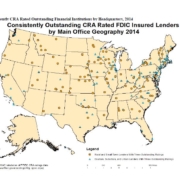
Little is known about rural community development activity for which lenders earn CRA credit. While anecdotal evidence suggest such projects are uncommon, most rural CRA discussions focus on the need to increase rural activities. HAC’s Making CRA Work in Rural America: Partnerships and Opportunities for Rural Community Investment report serves to increase our knowledge of how CRA can work in rural areas by focusing on four successful rural community development projects.

The case studies in this report explore a preschool expansion in Maine, construction of rental housing for farmworkers in Colorado, construction of low- and moderate income housing in Minnesota, and the donation of a bank branch to a local credit union in Mississippi.

“The CRA will make a good project better, but not a bad project good”
– Greg Hohlen, Bremer Bank

The participants in the case studies identified the following key elements to the success of their projects and making the CRA work for rural areas:

  • Strong relationships between the lenders and the involved organizations,
  • Lender expertise in community lending, and
  • Understanding of alternative funding streams by all involved parties.

While the CRA-related activity was an important part of each case, the underlying fundamentals of the project were sound making these efforts a win-win for the bank and the community.

This report is part of HAC’s Three-Part “CRA in Rural America” series.

Rural Homelessness

Download a pdf version of Rural Voices
rvmarch2016-cover

This edition of Rural Voices makes clear the complexity of rural homelessness. Defining, much less quantifying, rural homelessness is a formidable task. While the challenges are sobering, HAC is inspired by those addressing rural homelessness across sectors ranging from education to domestic violence to veterans’ services. National experts and local providers come together to share their perspectives on this issue.

View from Washington

On the Brink of Change
by Congressman Blaine Luetkemeyer

Innovative housing solutions are possible if everyone can work together.

FEATURES

An Overview of Rural Homelessness
by Nan Roman and Steve Berg

Homelessness has some different causes, features, and resources in rural places than in cities, and recognizing the distinctions can help in crafting solutions.

From Storage Shed to Stable Home
by Ashley Gooch

What does rural homelessness look like? A Tennessee man shares his story of hardship and perseverance.

Farmworker Homelessness in Imperial County, California
by Ilene J. Jacobs and Patrick Saldaña

Factors related to the seasonal nature of their work, their low wages, and discrimination may lead to homelessness among farmworkers.

Moving into Housing…First
by Patricia Mullahy Fugere

The Housing First approach provides housing without preconditions or requirements relating to behavior or treatment. With a stable home base, residents then address the challenges that caused, or kept them in, homelessness.

Expanding Healthcare Services for Supportive Housing Residents in Rural Areas
by Eva Wingren and Brian Byrd

The Affordable Care Act can help fund services that assist people in remaining stably housed.

What the Schools Know: Children and Youth Experiencing Homelessness
by Patricia A. Popp

A national system of state and local homeless education coordinators works to ensure the growing numbers of homeless students have access to the resources they need.

RESOURCES

The Complicated (& largely unknown) Picture of Rural Homelessness (Infographic) The Complicated Picture of Rural Homelessness


Rural Voices would like to hear what you have to say about one, or all, of these issues. Please feel free to comment on this story by sending a tweet to #RuralVoicesMag discuss on the Rural Affordable Housing Group on LinkedIn, or on our Facebook page.

HAC News: March 4, 2016

HAC News Formats. pdf

March 4, 2016
Vol. 45, No. 4

• Court approves $940 million settlement with tribes • CFPB sets process to apply for rural area designation • IRS rule addresses LIHTC compliance monitoring • USDA RD consolidates environmental regulations • Materials available soon for new Section 502 guarantee rule • Section 502 final packaging rule to take effect in May • Comments requested on historic preservation and community revitalization • House committee passes measures to roll back parts of Dodd-Frank • Vast majority of human needs programs cut since FY2010 • Reminder: “duty to serve” comments due March 17 • HAC’s second CRA webinar set for March 16

HAC News Formats. pdf

March 4, 2016
Vol. 45, No. 4

Court approves $940 million settlement with tribes. A decades-long dispute between the federal government and tribes nationwide has been settled, with about 700 Native American tribes and tribal agencies expecting payments ranging from $8,000 to $58 million. Ramah Navajo Chapter v. Jewell involved tribes’ claims that the government contracted with them to run Bureau of Indian Affairs programs but did not fully pay the agreed-upon amounts. In 2012, the issue reached the Supreme Court, which ultimately agreed with the tribes that the government was liable for the payments, regardless of whether Congress had appropriated adequate funds.

CFPB sets process to apply for rural area designation. The Consumer Financial Protection Bureau identifies rural places that are eligible for exemptions and other special provisions in some mortgage lending regulations. A new final rule explains how to request an area be designated rural if CFPB did not include it. The Bureau will publish another notice before March 31 defining the kind of area for which rural applications may be submitted. On March 31 it will begin accepting applications. Contact Carl Owens, CFPB, 202-435-7700.

IRS rule addresses LIHTC compliance monitoring.Comments are due May 25 on revisions relating to state and local housing credit agencies’ duties to conduct physical inspections and review low-income certifications and other documentation. Contact Jian H. Grant, IRS, 202-317-4137. Revenue Procedure 2016-15 explains how the requirements will be implemented.

USDA RD consolidates environmental regulations. Effective April 1, the new rule will update and replace separate regulations for the Rural Business-Cooperative Service/Rural Housing Service and for the Rural Utilities Service. The majority of the changes relate to categorical exclusions. Contact Kellie M. Kubena, RUS, 202-720-1649.

Materials available soon for new Section 502 guarantee rule. USDA will post a new guarantee program handbook on March 9, the date new regulations go into effect (see HAC News, 2/17/16). Handbook changes are marked in the version posted here. A recorded webinar is also online. Contact Lilian Lipton, RD, 202-720-1452.

Section 502 final packaging rule to take effect in May. The effective date of the rule published April 29, 2015, previously deferred to October 1, 2016, has been moved up to May 19. All the pilot intermediaries have been accepted as intermediaries under the program. Each may choose to cover new states as well as the states it already covers. Around the effective date, USDA will issue program guidance for the certified loan application packaging process, including how others can apply to be intermediaries. Contact Tammy Repine, RHS, 360-753-7677.

Comments requested on historic preservation and community revitalization. A working group asks for input by April 4 on a draft policy statement to be adopted by the federal Advisory Council on Historic Preservation. The statement, intended to ensure that historic preservation is considered as a tool to stabilize and enhance communities with significant population and job loss, specifically acknowledges its role in rural communities and for tribes. Contact Charlene Dwin Vaughn, ACHP, 202-517-0207.

House committee passes measures to roll back parts of Dodd-Frank. Among several bills approved on March 2 was H.R. 2896, the “Taking Account of Institutions with Low Operation Risk Act of 2015.” The TAILOR Act, intended to reduce regulatory burdens on community banks and credit unions, would require regulatory agencies to “tailor . . . regulatory action . . . in a manner that limits the regulatory compliance impact, cost, liability risk, and other burdens as is appropriate for the risk profile and business model involved.” It would apply not only to future regula-tions, but also to those adopted during the past five years.

Vast majority of human needs programs cut since FY2010. ACoalition on Human Needs analysis found 139 of 164 human needs programs suffered cuts between FY10 and FY16; only 25 grew. Nearly half were cut by 15% or more, and almost one-third by 25% or more. The findings cover programs for job training, community services, health, substance abuse, education, and more, including most large HUD programs (though not HOME and not USDA rural housing).

New Distressed Communities Index examines economic recovery. A report and interactive maps by the Economic Innovation Group, a relatively new nonpartisan research and advocacy organization, show economic distress, measured by seven variables such as poverty, unemployment, and housing vacancy. Data are presented by zip code, county, state, and congressional district. Economic distress is highest in the South, Southwest, and Rust Belt. EIG says the data covers 99% of the U.S. population; it includes some rural areas but not all.

Reminder: “duty to serve” comments due March 17. A proposed rule would implement the requirement for Fannie Mae and Freddie Mac to serve the rural, manufactured housing, and affordable housing preservation markets (see HAC News, 12/16/15). Materials from HAC’s webinar on what the rule means for rural America are posted online. HAC will post its comments online before the deadline. Contact Lance George, HAC, 202-842-8600.

HAC’s second CRA webinar set for March 16. “CRA in Rural America Part II: Successful Uses,” second in a three-part series, will explore two successful rural development projects that earned CRA credit for the lenders in-volved. To register click here. Contact Shonterria Charleston, HAC, 404-892-4824. Materials from the first CRA webinar are posted here.

HAC News: February 17, 2016

HAC News Formats. pdf

February 17, 2016
Vol. 45, No. 3

• Administration’s budget offers small changes for USDA, focus on family homelessness for HUD • Funds available for CDFIs and Native CDFIs • HUD has HOPE VI Main Street grants • CDFI Fund proposes Capital Magnet Fund rule changes • Final rule issued for Section 502 guarantee program • RD offers guidelines for refinancing Section 502 direct or guaranteed loans • Annual tenant data shows continued loss of USDA rentals • Diane Yentel selected for NLIHC position • “Community Reinvestment Act” HAC webinar upcoming

HAC News Formats. pdf

February 17, 2016
Vol. 45, No. 3 [tdborder][/tdborder]

Administration’s budget offers small changes for USDA, focus on family homelessness for HUD. The Obama Administration’s final budget request, released February 9, would keep funding at current levels for USDA homeownership programs, except for Section 523 self-help technical assistance. Funds for Section 521 Rental Assistance and Section 542 vouchers would be increased to aid tenants in properties whose Section 515 mortgages are due to mature. More details are posted on HAC’s website.

USDA Rural Dev. Prog.
(dollars in millions)

FY14
Approp.

FY15
Approp.

FY16 Budget Proposal

FY16
Approp.

FY17 Budget Proposal

502 Single Fam. Direct
Self-Help setaside

$900
5

$900
5

$900
0

$900
5

$900
0

502 Single Family Guar.

24,000

24,000

24,000

24,000

24,000

504 VLI Repair Loans

26.3

26.3

26.3

26.3

26.3

504 VLI Repair Grants

28.7

28.7

26

28.7

28.7

515 Rental Hsg. Direct Lns.

28.4

28.4

42.3

28.4

33.1

514 Farm Labor Hsg. Lns.

23.9

23.6

23.9

23.9

23.9

516 Farm Labor Hsg. Grts.

8.3

8.3

8.3

8.3

8.3

521 Rental Assistance

1,110

1,089

1,172

1,390

1,405

523 Self-Help TA

25

27.5

10

27.5

18.5

533 Hsg. Prsrv. Grants

3.5

3.5

0

3.5

0

538 Rental Hsg. Guar.

150

150

200

150

230

Rental Prsrv. Demo. (MPR)

20

17

19

22

19.4

542 Rural Hsg. Vouchers

12.6

7

15

15

18

Rural Cmnty. Dev’t Init.

6

4

4

4

4

HUD’s budget would increase several programs’ funding and offers some new initiatives, including added monies to address family homelessness. It would reduce funding for CDBG while raising the setaside for colonias on the U.S.-Mexico border from 10% to 15%. It would keep HOME at its FY16 funding level but eliminate the setaside for CHDOs, a statutory change that would need to be adopted by Congress. Like past budgets from this Administration, this one would turn SHOP into a $10 million setaside within HOME. Additional information is on HAC’s site.

HUD Program
(dollars in millions)

FY14
Approp.

FY15
Approp.

FY16 Budget
Proposal

FY16
Approp.

FY17 Budget Proposal

Cmty. Devel. Fund
CDBG

3,100
3,030

3,066
3,000

2,880
2,800

3,060
3,000

2,880
2,800

HOME

1,000

900

1,060

950

950

Self-Help Homeownshp. (SHOP)

10

10

10a

10

10a

Tenant-Based Rental Assistance
VASH setaside

19,177.2
75

19,304
75

21,123
b

19,628
60

20,854
7d

Project-Based Rental Asstnce.

9,516.6

9,330

10,360

10,622

10,816

Public Hsg. Capital Fund

1,875

1,875

1,970

1,900

1,865

Public Hsg. Operating Fund

4,400

4,440

4,600

4,500

4,569

Choice Neighbrhd. Initiative

90

80

250

125

200

Native Amer. Hsg. Block Grant

650

650

660

650

700

Homeless Assistance Grantsc

2,105

2,135

2,480

2,250

2,664

Hsg. Opps. for Persons w/ AIDS

330

330

332

335

335

202 Hsg. for Elderly

385.3

436

455

432.7

505

811 Hsg. for Disabled

126

135

177

150.6

154

Fair Housing

66

65.3

71

65.3

70

Healthy Homes & Lead Haz. Cntl.

110

110

120

110

110

Housing Counseling

45

47

60

47

47

Local Housing Policy Grants

300

300e

a. The FY17 Administration budget, like past budget requests, proposes to make SHOP a setaside in HOME. Congress has consistently rejected that proposal. b. The FY16 budget would have made VASH vouchers for homeless veterans part of a new $177.5 million account covering others as well. c. Includes the Rural Housing Stability Program, which is not yet operational. d. The FY17 budget proposes $7 million for a tribal VASH setaside. e. Proposed as mandatory spending.

Action on FY17 funding now moves to Congress, where Budget Committee Chairs Rep. Tom Price (R-GA) and Sen. Mike Enzi (R-WY) declined to invite OMB Director Shaun Donovan to speak about the budget. When the House Agriculture Appropriations Subcommittee heard budget testimony from USDA Secretary Tom Vilsack on February 11, both Committee Chair Hal Rogers (R-KY) and Subcommittee Chair Robert Aderholt (R-AL) mentioned rural housing favorably. The House and Senate appropriations subcommittees have not yet scheduled hearings on USDA RD’s or HUD’s budgets.

Funds available for CDFIs and Native CDFIs. The CDFI Program offers Financial Assistance and Technical Assistance awards to certified Community Development Financial Institutions and TA awards to emerging CDFIs. The Native American CDFI Assistance Program will make FA or TA awards to certified or emerging Native American CDFIs. Deadline is April 18 for both programs. Contact CDFI Fund staff, 202-653-0421.

HUD has HOPE VI Main Street grants. Local governments of communities with populations under 50,000 can apply by April 12 for FY16 or FY17 HOPE VI Main Street Program grants to replace unused commercial space with affordable housing. Contact Lawrence Gnessin, HUD.

CDFI Fund proposes Capital Magnet Fund rule changes. An interim rule makes updates, including revisions to some definitions and project level requirements to align better with Low Income Housing Tax Credits and HOME. Comments are due April 8. Contact Marcia Sigal, CDFI Fund. The deadline for CMF grant applications remains March 30 (see HAC News, 2/3/16).

Final rule issued for Section 502 guarantee program. USDA’s changes in the interim final rule that was issued December 9, 2013, are intended to improve program management and reduce its risk of loss. Contact Lilian Lipton, RD, 202-720-1452.

RD offers guidelines for refinancing Section 502 direct or guaranteed loans. In some states, borrowers with direct or guaranteed loans are eligible for the Rural Refinance Pilot, which provides a streamlined process for refinancing into new Section 502 guaranteed loans. An Unnumbered Letter dated January 21, 2016 says a new final rule will be published soon, making the pilot permanent and available in all states. Contact a USDA RD office.

Annual tenant data shows continued loss of USDA rentals. The 2015 Multi-Family Housing Annual Fair Housing Occupancy Report reflects a loss during FY15 of 186 Section 515 properties and 19 Section 514/516 proper-ties (a total decrease of 2,646 units), compared to an FY14 loss of 145 Section 515 and 45 Section 514/516 properties (1,645 units). The proportion of very-low income households declined very slightly, from 92.77% in 2014 to 92.25%. The proportion of elderly and disabled households in Section 515 properties increased slightly, from 61.65% in 2014 to 62.09% in 2015.

Diane Yentel selected for NLIHC position. Yentel, who has served most recently as Vice President of Public Policy and Government Affairs at Enterprise Community Partners, will become President and CEO of the National Low Income Housing Coalition in April when Sheila Crowley retires.

“Community Reinvestment Act” HAC webinar upcoming. This webinar, the first in a series of three, will provide an overview of the CRA and how it touches rural communities. To register click here. Contact Shonterria Charleston, HAC, 404-892-4824.

HAC News: February 3, 2016

HAC News Formats. pdf

February 3, 2016
Vol. 45, No. 2

• February is National African American History Month • House approves bill with new fee for Section 502 guaranteed loans • Farmworker housing loans and grants available • Deadline extended for Section 533 HPG • HUD offers elderly supportive services demo • Capital Magnet Fund competition opens • FEMA considers disaster deductible from state and tribal governments • Community Facilities Technical Assistance and Training Grants program implemented • HUD requests input on over-income tenants • Nearly half of American households live paycheck to paycheck, report says • Investing in housing can save on health care • Save the date for the HAC’s third annual symposium on veterans • “Duty to Serve and What it Means for Rural America” HAC webinar planned

HAC News Formats. pdf

February 3, 2016
Vol. 45, No. 2

February is National African American History Month.

House approves bill with new fee for Section 502 guaranteed loans. On February 2 the House of Repre-sentatives unanimously passed H.R. 3700, the Housing Opportunity through Modernization Act of 2015 (see HAC News, 12/16/15). The bill as passed included an amendment, offered by Rep. Rubén Hinojosa (D-TX), that adds a fee of up to $50 to each Section 502 guarantee, to be used to enhance RD’s single-family IT and automated underwriting. The bill has not yet been considered in the Senate.

Farmworker housing loans and grants available. Preapplications are due April 12 for off-farm Section 514/ 516 funds for the construction of new off-farm FLH units and related facilities or the purchase and substantial rehabili-tation of existing non-FLH properties. Extra points will be given to projects based in or serving census tracts with poverty rates greater than or equal to 20% over the last 30 years. Request application packages from USDA RD state offices. Contact Mirna Reyes-Bible, RD, 202-720-1753.

Deadline extended for Section 533 HPG. Applications are now due March 15 rather than February 12 (see HAC News, 1/13/16). Contact a USDA RD State Office or Jeaneane Shelton, USDA, 202-720-5443.

HUD offers elderly supportive services demo. Owners of existing elderly-only HUD-assisted multifamily housing with at least 50 units, including Section 515 properties with Section 8, can apply for the Supportive Services Demonstration for Elderly Households by April 18. Contact HUD staff, mfsc@hud.gov.

Capital Magnet Fund competition opens. CDFIs and housing nonprofits are eligible for grants to provide loan loss reserves, capitalize loan funds, make risk-sharing loans, or provide loan guarantees for affordable housing or economic development. Deadline is March 30. Contact CDFI Fund staff, 202-653-0421.

FEMA considers disaster deductible from state and tribal governments. Comments are due March 21 on a proposal to require financial or other commitment from a state, tribal, or territorial government before FEMA will provide disaster assistance. For example, FEMA’s notice says recipients could potentially receive credit toward their deductible requirement through adopting enhanced building codes, or establishing and maintaining a disaster relief fund or self-insurance plan. Contact Jotham Allen, FEMA, 202-646-1957.

Community Facilities Technical Assistance and Training Grants program implemented. Send comments to USDA by March 14 on the final rule for a new program created by the 2014 Farm Bill. State and local governments, tribes, and nonprofits are eligible for grants to prepare reports and surveys necessary to request financial assistance to develop community facilities, or to provide an array of technical assistance services to others. Contact Nathan Chitwood, RD, 573-876-0965.

HUD requests input on over-income tenants. HUD is considering requiring PHAs to evict over-income public housing residents in some circumstances, following an inspector general’s report saying more than 25,000 families are over income (see HAC News, 8/5/15). Comments will be due 30 days after the request is published in the Federal Register on February 3. Contact Todd Thomas, HUD, 678-732-2056.

Nearly half of American households live paycheck to paycheck, report says. CFED’s annual Assets & Opportunity Scorecard also reports more than half of the nation’s credit users lack the credit scores needed (720+) to borrow money at prime rates. The 2016 Scorecard disaggregates the data for 18 of its 61 outcome measures by race, revealing that, for example, while unemployment rates have dropped nationally, workers of color are still nearly twice as likely to be unemployed as white workers. The report’s interactive website shows data for states and counties.

Investing in housing can save on health care. A research review by the National Housing Conference summarizes and evaluates recent research on the effectiveness of housing interventions to result in health care cost savings. A number of studies that have demonstrated that providing permanent supportive housing to homeless individuals can result in significant savings on public health care expenditures, usually more than enough to offset the cost of providing housing and services.

Save the date for the HAC’s third annual symposium on veterans. This year’s theme is the housing, health, services, and other needs faced by the rapidly expanding population of older veterans. To be held on May 18 in Washington DC, the symposium will showcase model programs that are providing vital assistance to these veterans. Contact Janice Clark, 202-842-8600, or Shonterria Charleston, HAC, 404-892-4824.

“Duty to Serve and What it Means for Rural America” HAC webinar planned. The session, to be held February 18 at 2:00 pm EST, will cover the proposed rule implementing Fannie Mae and Freddie Mac’s “Duty to Serve” (see HAC News, 12/16/15), focusing on the rural housing component of the rule, and is intended to help inform comments. To register click here or contact Lance George, HAC.

HAC News: January 13, 2016

HAC News Formats. pdf

January 13, 2016
Vol. 45, No. 1

• Next federal funding cycle begins in February • USDA offers Section 533 Housing Preservation Grants • Funding notice revised for HOPWA Project Demonstration and Violence Against Women Act Grants • Transitional housing funds for domestic violence victims offered by Department of Justice • CDFI Bond Guarantee Program opens FY16 funding round • VA will fund housing assistive technology development • HUD releases fair housing Assessment Tool • Promise Zones competition opens • USDA extends temporary authorizations to help spend Section 502 direct funds in FY16 • USDA RD offers guidance on Section 504 and Section 538 • Most veterans in demonstration program avoided homelessness, report says • HAC offers trainings on 502 packaging and financial management

HAC News Formats. pdf

January 13, 2016
Vol. 45, No. 1

Next federal funding cycle begins in February. The Administration’s budget request for fiscal year 2017 will be released February 9. The budget deal reached in October (see HAC News, 10/28/15) requires federal discretionary spending, including housing, to remain essentially the same as in FY16.

USDA offers Section 533 Housing Preservation Grants. Public agencies, nonprofits, tribes, and consortia are eligible to apply by February 12 for these funds, which are then used to fund repairs and rehab for low- and very low-income homeowners or owners of rental property or coops who agree to make their units available to low- and very low-income persons. Contact a USDA RD State Office or Jeaneane Shelton, USDA, 202-720-5443.

Funding notice revised for HOPWA Project Demonstration and Violence Against Women Act Grants. States, local governments, and nonprofits can apply by March 8 to receive both a Housing Opportunities for Persons Living With AIDS grant for housing, and a Transitional Housing Assistance Program grant for supportive services. HUD encourages potential applicants to register for the HOPWA mailing list to receive details about a January 22 webcast. Contact Amy Palilonis, HUD, 202-402-5916.

Transitional housing funds for domestic violence victims offered by Department of Justice. Nonprofits, local and state governments, PHAs, and tribal entities are eligible for grants to provide transitional housing, short-term housing assistance, and related support services for survivors. Apply by February 24. Contact DOJ staff, 202-307-6026.

CDFI Bond Guarantee Program opens FY16 funding round. CDFIs can apply by March 4 to become Qualified Issuers of bonds, or can apply by March 18 for credit through the Bond Guarantee Program, which finances community and economic development, including housing. Contact CDFI Fund staff, 202-653-0421, option 5.

VA will fund housing assistive technology development. To encourage development of new technologies such as voice commands, VA offers grants of up to $200,000. Individuals, for-profits, nonprofits, and others can apply by February 29. Contact Robert Mims, VA, 202-632-8816.

HUD releases fair housing Assessment Tool. This tool, along with other resources, is for local jurisdictions that are required to conduct and submit Assessments of Fair Housing. HUD will issue separate Assessment Tools for use by states – which administer programs including HOME and CDBG for many rural areas – as well as for insular areas and for PHAs collaborating with other PHAs. Contact George D. Williams, Sr., HUD, 1-866-234-2689 (toll-free).

Promise Zones competition opens. HUD intends to designate five urban Promise Zones and USDA intends to designate one rural and one tribal community. Eligible lead applicants for rural and tribal PZ designations are local governments; federally recognized tribes; and nonprofits, housing authorities, tribally designated housing entities, local education agencies, or community colleges partnering with local or tribal government. The deadline is February 23. Contact Bryan Herdliska, HUD, 202-402-6758.

USDA extends temporary authorizations to help spend Section 502 direct funds in FY16. An Unnumbered Letter dated January 4, 2016 permits obligations subject to appraisals, removes some restrictions on use of 502 direct loans to refinance non-USDA loans, and allows new rates and terms assumptions to be processed as initial loans. The provisions are effective until September 30, 2016. Contact a USDA RD office.

USDA RD offers guidance on Section 504 and Section 538. Separate Administrative Notices address management control review findings for Section 504 repair loans (AN 4793) and Section 538 multifamily loan guarantees (AN 4792). Contact William Downs, USDA, 202-720-1499.

Most veterans in demonstration program avoided homelessness, report says. The Veterans Homelessness Prevention Demonstration was conducted by the Departments of Labor, HUD, and VA at five urban sites. At program entry, 74% of the participating veteran households were at risk of homelessness, and about 26% were homeless. They received financial assistance and case management for periods from 39 to 146 days; 10.5% reported experiencing homelessness during the six months after exiting the program. Employment levels and incomes increased. It is not clear how much of the improvement would have occurred even without this program.

HAC offers trainings on 502 packaging and financial management. Section 502 Packaging Training for Non-profit Developers, for those with affordable mortgage experience, will be March 8-10. Advanced Financial Management Training for Rural Nonprofits will be March 8-9. Both are in North Charleston, SC. They are concurrent; register for only one. Advance registration is required. Contact Shonterria Charleston, HAC, 404-892-4824.

HAC News: December 16, 2015

HAC News Formats. pdf

December 16, 2015
Vol. 44, No. 25

• FY16 funding bill increases Rental Assistance and HOME • Tax extenders bill would make 9% LIHTC and EITC permanent • Highway law includes HUD housing provisions • House committee approves housing bill • FHFA proposes new duty to serve rule for Fannie and Freddie • HUD final rule defines chronic homelessness • FY16 Fair Market Rents set • Comments on manufactured home code requested • Rental housing study finds growing demand • KEEP YOUR HAC NEWS COMING – BY EMAIL!

HAC News Formats. pdf

December 16, 2015
Vol. 44, No. 25

FY16 funding bill increases Rental Assistance and HOME. The omnibus appropriations bill, which is expected to become law, raises some of USDA’s rental housing programs above the levels previously considered by House and Senate committees. Increases were possible because the 2015 Bipartisan Budget Act raised the spending cap for FY16 (see HAC News, 10/28/15); caps will be lower for FY17. Section 521 Rental Assistance, which did not have enough funding in FY15 (see HAC News 11/11/15), gets almost $1.39 billion, $75 million of which is set aside for renewing RA contracts that use up their funds before the end of their 12-month contract periods. USDA is required to provide quarterly reports on Rental Assistance use. Section 542 vouchers – for tenants in properties whose Section 515 loans have been prepaid – are allocated $15 million. The MPR rental preservation program receives $22 million. [tdborder][/tdborder]

USDA Rural Dev. Prog.
(dollars in millions)

FY14
Approp.

FY15
Approp.

FY16 Budget Proposal

FY16 House Cmte. Bill
(H.R. 3049)

FY16 Senate Cmte. Bill
(S. 1800)

FY16
Omnibus
Approps. Bill

502 Single Fam. Direct
Self-Help setaside

$900
5

$900
5

$900
0

$900
5

$900
5

$900
5

502 Single Family Guar.

24,000

24,000

24,000

24,000

24,000

24,000

504 VLI Repair Loans

26.3

26.3

26.3

26.3

26.3

26.3

504 VLI Repair Grants

28.7

28.7

26

28.7

28.7

28.7

515 Rental Hsg. Direct Lns.

28.4

28.4

42.3

28.4

28.4

28.4

514 Farm Labor Hsg. Lns.

23.9

23.6

23.9

23.9

23.6

23.9

516 Farm Labor Hsg. Grts.

8.3

8.3

8.3

8.3

8.3

8.3

521 Rental Assistance

1,110

1,089

1,172

1,167

1,167

1,390

523 Self-Help TA

25

27.5

10

27.5

27.5

27.5

533 Hsg. Prsrv. Grants

3.5

3.5

0

3.5

3.5

3.5

538 Rental Hsg. Guar.

150

150

200

150

200

150

Rental Prsrv. Demo. (MPR)

20

17

19

17

17

22

542 Rural Hsg. Vouchers

12.6

7

15

7

7

15

Rural Cmnty. Dev’t Init.

6

4

4

4

4

4

Despite previously proposed cuts in the House and Senate funding bills, the omnibus raises HOME program funding above its FY15 level to $950 million. CDBG remains at $3 billion, and SHOP continues at $10 million.

HUD Program
(dollars in millions)

FY14
Approp.

FY15
Approp.

FY16
Budget
Proposal

FY16
House Bill
H.R. 2577

FY16 Sen. Apps. Cmte. Bill (H.R. 2577)

FY16
Omnibus
Approps. Bill

Cmty. Devel. Fund
CDBG

3,100
3,030

3,066
3,000

2,880
2,800

3,060
3,000

2,900
2,900

3,060
3,000

HOME

1,000

900

1,060

767

66

950

Self-Help Homeownshp. (SHOP)

10

10

10a

10

10

10

Tenant-Based Rental Assistance
VASH setaside

19,177.2
75

19,304
75

21,123
b

19,919

19,934
75

19,628
60

Project-Based Rental Asstnce.

9,516.6

9,330

10,360

10,254

10,426

10,622

Public Hsg. Capital Fund

1,875

1,875

1,970

1,681

1,743

1,900

Public Hsg. Operating Fund

4,400

4,440

4,600

4,440

4,500

4,500

Choice Neighbrhd. Initiative

90

80

250

20

65

125

Native Amer. Hsg. Block Grant

650

650

660

650

650

650

Homeless Assistance Grantsc

2,105

2,135

2,480

2,185

2,235

2,250

Hsg. Opps. for Persons w/ AIDS

330

330

332

332

330

335

202 Hsg. for Elderly

385.3

436

455

416.5

420

432.7

811 Hsg. for Disabled

126

135

177

152

137

150.6

Fair Housing

66

65.3

71

65.3

69.5

65.3

Healthy Homes & Lead Haz. Cntl.

110

110

120

75

110

110

Housing Counseling

45

47

60

47

47

47

Local Housing Policy Grants

300

a. The FY16 Administration budget, like past budget requests, would have made SHOP a setaside in HOME. Congress has consistently rejected that proposal. b. The budget would have made VASH vouchers for homeless veterans part of a new $177.5 million account covering others as well. c. Includes the Rural Housing Stability Program, which is not yet operational.

Tax extenders bill would make 9% LIHTC and EITC permanent. Congressional leaders negotiated a tax bill that would make the 9% minimum Low Income Housing Tax Credit floor permanent and retroactive to January 1, 2015. It would extend the New Markets Tax Credit for five years at $3.5 million per year. It also makes permanent the Earned Income Tax Credit and the Child Tax Credit. The House may vote on December 17, and the Senate after that.

Highway law includes HUD housing provisions. The Fixing America’s Surface Transportation Act (H.R. 22), signed into law on December 4, included four housing measures that passed the House earlier in 2015. One lets public and assisted housing administrators verify income once every three years instead of annually for tenants with fixed incomes. One allows private nonprofits to administer permanent housing rental assistance provided through the Continuum of Care Program. Another permits owners (including nonprofits) of HUD multifamily housing to use property income. The fourth authorizes a HUD demonstration program for energy- and water-saving agreements.

House committee approves housing bill. On December 10, the House Committee on Financial Services approved H.R. 3700, the Housing Opportunity through Modernization Act of 2015. The bill makes some changes in HUD rental programs, including altering tenants’ income calculations.

FHFA proposes new duty to serve rule for Fannie and Freddie. The Federal Housing Finance Agency regulation will implement a statutory requirement for Fannie Mae and Freddie Mac to serve the rural, manufactured housing, and affordable housing preservation markets. An FHFA webinar on December 22 will explain the rule and address questions submitted in advance. Comments will be due 90 days after publication in the Federal Register. Contact Jim Gray, FHFA, 202-649-3124. HAC will hold a webinar focusing on the rural component of the rule, probably in January, and will post its comments at ruralhome.org before the deadline. Contact Lance George, HAC, 202-842-8600.

HUD final rule defines chronic homelessness. The definition will be used in HUD’s Continuum of Care Program and in jurisdictions’ ConPlans. Contact Norm Suchar, HUD, 202-708-4300.

FY16 Fair Market Rents set. HUD’s final FMRs took effect Dec. 11. Contact a local HUD program office.

Comments on manufactured home code requested. HUD invites the public to propose changes to update and revise its Manufactured Home Construction and Safety Standards. Comments are due March 31 and will be submitted to the Manufactured Housing Consensus Committee for review and consideration. Contact Pamela Beck Danner, HUD, 202-708-6423.

Rental housing study finds growing demand. America’s Rental Housing:Expanding Options for Diverse and Growing Demand, by Harvard’s Joint Center for Housing Studies, documents increases in households renting their homes, resulting in increased cost burden rates at all income levels from 2001 to 2014. The lowest-income households far outnumber the rental units affordable to them.

KEEP YOUR HAC NEWS COMING – BY EMAIL! Beginning in 2016, the print version of the HAC News will no longer be available. The News will still be published every two weeks, will still provide the same concise updates on issues important to rural housers, and will still be free. Back issues will continue to be available online at http://ruralhome.org. Sign up now to receive the News by email: https://oi.vresp.com/?fid=d6efb14510.

USDA Rural Development Obligations FY 16 – October

Download complete report (Through October FY 2016)

thumb usda-obs-cover

The Housing Assistance Council (HAC) presents this month’s report on Fiscal Year 2016 USDA Rural Housing program obligations.

USDA is operating under a Continuing Resolution (CR) which provides funding through December 11, 2015 based on last year’s appropriation levels. Congress will need to pass a final appropriations bill or another CR to keep the government operating after December 11.

As of the end of October, USDA obligated 9,350 loans, loan guarantees, and grants totaling about $1.27 billion. This is somewhat less than obligation levels from the same time last year when there were 13,763 loans, loan guarantees, and grants obligated totaling about $1.85 billion.

Single Family Housing Program Highlights

The Section 502 Guaranteed loan program, the largest of the Single Family Housing programs, obligated $1.2 billion (9,084) in loan guarantees. Obligations for October FY 2015 were about $1.85 billion (13,339 loan guarantees).

For the Section 502 Direct program, there have been over $28.7 million (214 loans) in loan obligations so far in FY 2016; this about three times as many loans as this time last year. Very low-income (VLI) loan obligations as a percentage of the total Section 502 Direct loan dollars was 28.39 percent.

The Section 504 Repair and Rehabilitation programs obligated 50 loans representing $319,932. Loan volume was about half of what it was last October. No grants were obligated in October. This is likely because funds for grants had yet been apportioned to the agency.

Other than a couple of credit sales of USDA inventory homes, there were no other obligations for Single Family Housing programs in October.

Multi-Family Housing Programs

There were five (5) loan obligations in the Multi-Family Housing Preservation Demonstration program totaling $10.27 million. This program is not included in the summary table as there is limited information available.

The only other MFH obligations in October were in the Section 521 Rental Assistance program. Rental assistance obligations were higher than they were last October. There were about 78 thousand RA units funded at over about $383 million. This compares to about 46 thousand units at $207 million last year.

Download the combined document.

Individual Program Files

Summary Files

Summary of Rural Development Obligations
USDA Rural Development Eligible Areas

Single Family Housing Program Obligations

Section 502 Direct Homeownership Total Obligations
Section 502 Direct Homeownership Low and Very Low Obligations
Section 502 Guaranteed Homeownership Obligations
Section 504 Total Home Rehab Obligations
Section 523 Self-Help Technical Assistance Grant Obligations
Section 524 Site Loans Obligations

Multi-Family Housing Program Obligations

Section 514/516 Farm Labor Housing Obligations
Section 515 Rental Housing Obligations
Section 521 Rental Assistance Obligations
Section 533 Housing Preservation Obligations
Section 538 Guaranteed Rental Obligations
Multifamily Housing Tenant Voucher Obligations
Multifamily Housing Revitalization Demonstration Program

Unallocated Program Obligations

Section 306 Water/Wastewater Grant Obligations
Section 509 Compensation for Construction Defects
Multifamily and Single-family Housing Credit Sales

* The Rural Housing Service (RHS) monthly obligation reports are produced by the Housing Assistance Council (HAC) 1025 Vermont Ave., NW, Suite 606, Washington, DC 20005. The monthly figures derive from HAC tabulations of USDA –RHS 205c, d, and f report data. For questions or comments about the obligation reports, please contact Michael Feinberg at 202-842-8600 or michael@ruralhome.org.

HAC News: November 30, 2015

HAC News Formats. pdf

November 30, 2015
Vol. 44, No. 24

• HAC NEWS GOING FULLY DIGITAL • Congress working on FY16 funding measures • Tax extender negotiations include LIHTC and EITC • HUD’s Choice Neighborhoods NOFA introduces Planning and Action Grants • HUD offers equal access rule for transgender persons • New HAC resources offer data on veterans nationwide • Housing communications information available • RDLN auction online through December 13 • USDA updates Rural America at a Glance • DDAs and QCTs set for 2016

HAC News Formats. pdf

November 30, 2015
Vol. 44, No. 24

HAC NEWS GOING FULLY DIGITAL. Beginning in 2016, the print version of the HAC News will no longer be available. The News will still be published every two weeks, will still provide the same concise updates on issues important to rural housers, and will still be free. Back issues will continue to be available online at http://ruralhome.org.

Congress working on FY16 funding measures. Before the current continuing resolution expires on December 11 (see HAC News, 9/30/15), Congress is likely to pass an omnibus appropriation bill that includes most or all of the 12 federal spending bills for FY16. Passage may be stalled by attempts to add policy riders relating to refugees, health care, and other topics. If more negotiation time is needed, another CR may be used to extend spending to December 18 rather than shutting down the government. At press time, no details are available on the omnibus’s provisions related to USDA rural housing. In a Transportation-HUD bill brought to the Senate floor November 18, additional funds made available by the budget agreement (see HAC News, 10/28/15) were used to raise HOME funding to $900 million and CDBG to $3 billion, rather than the earlier $66 million and $2.9 billion (see HAC News, 6/25/15), though other HUD programs did not receive increases. The Senate did not vote on that bill because of disagreements on policy riders, but the higher numbers are likely to appear in a final bill.

Tax extender negotiations include LIHTC and EITC. This month Congress is expected to renew some tax-related programs that expired last December, including the Low Income Housing Tax Credit, New Markets Tax Credit, Earned Income Tax Credit, and others. This retroactive renewal is needed to make these provisions effective for 2015.

HUD’s Choice Neighborhoods NOFA introduces Planning and Action Grants. The deadline is February 16, 2016 for PHAs, local governments, tribal entities, and nonprofits to request FY15 and FY16 Choice Neighborhoods Planning Grants or Planning and Action Grants. The program is intended to help communities with severely distressed public or HUD-assisted housing in developing successful neighborhood transformation plans and building the support necessary for plans to be successfully implemented. Contact HUD staff, ChoiceNeighborhoods@hud.gov.

HUD offers equal access rule for transgender persons. A proposed regulation would require entities receiving funds from many HUD programs (but not public or Indian housing) and owners and managers of facilities and services to assist transgender persons in accordance with their gender identities. Providers could ask about sexual orientation or gender identity, but could not discriminate on those bases. Comments are due January 19, 2016. Contact Norm Suchar, HUD, 202-708-4300.

New HAC resources offer data on veterans nationwide. Information about veterans’ economic and housing characteristics for every state and county is available at www.veteransdata.info. The site, developed by the Housing Assistance Council with support from JPMorgan Chase & Co., provides approximately 420 veteran-specific data indicators and over 650,000 data points. Also available on the site are fact sheets for each state, the District of Columbia, and the U.S. providing details on the veterans’ population including proportion, prevalence by county, median income, poverty levels, unemployment rate, disability, median home value, housing problems, homelessness, and other factors.

Housing communications information available. A recent brief from the National Housing Conference offers “seven effective strategies for countering community opposition” to affordable housing development. NHC has also published a Veteran’s Housing Communications Toolkit offering ways of communicating about veterans’ housing needs and solutions with three audiences: community members, policy makers, and veterans themselves.

RDLN auction online through December 13. Proceeds from the Rural Development Leadership Network’s annual fundraising auction support the organization’s work for social justice, community development, and leadership development in low-income rural communities in the U.S. Items include jewelry, books, vacations, and more.

USDA updates Rural America at a Glance. The 2015 version of this data summary reports that the pace of rural employment growth increased in 2014, although rural employment remains below pre-recession levels. Rural areas continue to experience population loss, higher poverty rates, and lower educational attainment than urban areas.

DDAs and QCTs set for 2016. The newly designated Difficult Development Areas and Qualified Census Tracts for the Low-Income Housing Tax Credit program are effective July 1, 2016, rather than January 1 as in the past. For the first time the metro area DDA designations use Small Area Fair Market Rents, rather than metro-area FMRs. Contact Michael K. Hollar, HUD, 202-402-5878.

GET THE HAC NEWS!

Sign-up for HAC information products

SIGN UP HERE

Housing Assistance Council   |  1828 L Street. N.W., Suite 505, Washington, D.C. 20036
(202) 842-8600 (202) 347-3441 hac@ruralhome.org |

Board Portal

HAC is an equal opportunity provider, employer, and lender. | Civil Rights | Privacy