Tag Archive for: rural veterans

HAC News: May 27, 2015

HAC News Formats. pdf

May 27, 2015
Vol. 44, No. 11

• June is National Homeownership Month • House subcommittee considers USDA’s housing role • Section 533 Housing Preservation Grants offered • Pilot tests new area loan limit method for Section 502 direct • Rural rental properties urged to host meal programs • RD to reserve 10% of non-housing funds to aid development plans • Rents remain out of reach nationwide • More rural veterans are women • White House reports housing helps lift rural children out of poverty • Young people returning to rural areas most often cite family reasons • Rural Voices features lessons learned from housing mistakes • HAC disaster guide supplement for Oklahoma and Texas flooding available

HAC News Formats. pdf

May 27, 2015
Vol. 44, No. 11

JUNE IS NATIONAL HOMEOWNERSHIP MONTH. Watch HUD’s and USDA RD’s websites for announcements.

HOUSE SUBCOMMITTEE CONSIDERS USDA’S HOUSING ROLE. On May 19 the Housing and Insurance Subcommittee of the House Financial Services Subcommittee held a hearing entitled “The Future of Housing in America: Oversight of the Rural Housing Service.” RHS Administrator Tony Hernandez and Mathew Scirè of GAO testified. Questions from members of Congress focused on cost-effectiveness and the possibility of consolidating USDA and HUD housing programs.

SECTION 533 HOUSING PRESERVATION GRANTS OFFERED. Public agencies, nonprofits, tribes, consortia, rental property owners, and cooperative housing complexes can apply by July 6 for grants to repair or rehab owner-occupied or rental units. Contact Bonnie Edwards-Jackson, RD, 202-690–0759.

PILOT TESTS NEW AREA LOAN LIMIT METHOD FOR SECTION 502 DIRECT. RD state offices in CA, CO, DE, FL, HI, IA, MD, MN, MS, MO, MN, NV, NC, ND, OK, OR, SD, UT, WA, WV, WI, and WY may set area loan limits at 80% of FHA’s 203(b) loan limits. Updated limits (at the link, click the “Forms & Resources” tab) will be effective June 15, 2015. Contact an RD State Office.

RURAL RENTAL PROPERTIES URGED TO HOST MEAL PROGRAMS. An Unnumbered Letter dated May 5, 2015 asks local RD staff to encourage property owners and managers to reach out to local organizations that could operate Food and Nutrition Service offerings such as the Summer Food Service Program. Contact an RD office or an FNS regional office.

TENANT SERVICES CANNOT BE CHARGED TO MULTIFAMILY PROPERTIES’ OPERATING BUDGETS, RD SAYS. An Unnumbered Letter dated April 28, 2015 applies to Section 515 and 514 properties. Contact a USDA RD State Office.

RD TO RESERVE 10% OF NON-HOUSING FUNDS TO AID DEVELOPMENT PLANS. Comment by August 18 on an interim regulation for a program required by the 2014 Farm Bill. A portion of funds from specific community facilities, water and waste disposal, and business and cooperative development programs will be reserved each year for projects that help implement regional economic and community development plans. Contact Aaron Morris, RD, 202-720-1500. For FY15, eligible entities can receive priority points only for year-end pooled funds, according to a notice to be published in the Federal Register on June 1. Contact a USDA RD State Office.

RENTS REMAIN OUT OF REACH NATIONWIDE. The National Low Income Housing Coalition’s annual Out of Reach study found that nationally the housing wage – the hourly wage a person working 40 hours a week would need to afford a modest, two-bedroom rental unit – is $19.35. For a two-bedroom apartment in a nonmetro area the average housing wage is $13.48, almost $3 above the nonmetro renter wage. An interactive website includes data for states and counties.

MORE RURAL VETERANS ARE WOMEN. The percentage of rural veterans who are women has more than doubled since the First Gulf War, and they tend to be younger than the men, according to USDA’s Economic Research Service. In 2013, 55% of rural female veterans were under the age of 55 compared to 26% of rural male veterans. Racial and ethnic diversity among veterans is increasing as well. The Daily Yonder has republished a map showing the percentage of every U.S. county’s population who are veterans.

WHITE HOUSE REPORTS HOUSING HELPS LIFT RURAL CHILDREN OUT OF POVERTY. Opportunity for All: Fighting Rural Child Poverty states that programs like refundable tax credits, Social Security, SNAP, and housing assistance lifted about 9.0 million nonmetro residents out of poverty in 2013, including about 1.6 million children. In addition, aid programs provide long-term benefits by improving children’s education, health, and earnings outcomes later in life.

YOUNG PEOPLE RETURNING TO RURAL AREAS MOST OFTEN CITE FAMILY REASONS. Factors Affecting Former Residents’ Returning to Rural Communities, by USDA’s Economic Research Service, reports that some returnees said they made financial and career sacrifices to return home and other interviewees said those concerns kept them from returning. Housing costs were seldom mentioned.

RURAL VOICES FEATURES LESSONS LEARNED FROM HOUSING MISTAKES. A new issue of HAC’s quarterly magazine includes stories from rural housing professionals who share notable mistakes they or their organizations made. Sign up online for email notices when new issues are published.

HAC DISASTER GUIDE SUPPLEMENT FOR OKLAHOMA AND TEXAS FLOODING AVAILABLE.Picking Up the Pieces, HAC’s guide to housing recovery after natural disasters, and a special supplement for the recent floods, are available online. To order free print copies for people and organizations in disaster areas, contact Dan Stern, HAC, 202-842-8600.
HAC News: May 13, 2015

HAC News Formats. pdf

May 13, 2015
Vol. 44, No. 10

• House committee approves THUD spending bill • Senate passes budget agreement • HUD offers lead-paint grants • New version of USDA’s multifamily Preliminary Assessment Tool available • HUD and USDA determine new energy efficiency standards will apply • Guidance released to extend CDBG disaster grants from Hurricane Sandy • Dates set for Section 538 calls • FHFA announces extension of HARP • Worst Case Housing Needs 2015 Report to Congress released • Limits on GSE lending for multifamily mortgages eased • Federal rental assistance and Housing Choice voucher fact sheets released • Webinar recording on Native American housing available • HAC conference on “Serving Veterans in Rural America” set for May 20

HAC News Formats. pdf

May 13, 2015
Vol. 44, No. 10

HOUSE COMMITTEE APPROVES THUD SPENDING BILL. On May 13, the House Appropriations Committee passed the Transportation-HUD subcommittee’s FY16 appropriations bill without changes to HUD spending levels (see HAC News, 4/29/15). The committee rejected an amendment to provide $1.06 million for HOME without diverting money from the National Housing Trust Fund, offered by Rep. Barbara Lee (D-CA).

SENATE PASSES BUDGET AGREEMENT. On May 5, the Senate voted 51 to 48 to approve the House budget, which adds military spending while keeping cuts affecting social programs in place (see HAC News, 4/3/15). The budget is not binding and does not require presidential signature, but it does impose overall caps on federal spending.

HUD OFFERS LEAD-PAINT GRANTS. Local, county, state, and tribal governments can apply for the Lead Hazard Reduction Demonstration and Lead-Based Paint Hazard Control grant programs by June 23. Contact Eric Hornbuckle, HUD, 202-402-7599.

NEW VERSION OF USDA’S MULTIFAMILY PRELIMINARY ASSESSMENT TOOL AVAILABLE. Version 4.0 of the tool for Section 515 or 514 borrowers (see HAC News, 12/22/14) should be used when applying to transfer ownership or for the Multi-Family Housing Revitalization Demonstration Program (at the links, click the “Forms & Resources” tabs). Borrowers that used older PAT guidelines and submitted transactions after December 16, 2014 must use the new version. Contact an RD State Office.

HUD AND USDA DETERMINE NEW ENERGY EFFICIENCY STANDARDS WILL APPLY. New standards will be required for newly constructed homes with USDA Section 502 direct and guaranteed loans and for FHA-insured multifamily and single-family properties. For the HOME program, the standards will apply after publication of guidance by HUD. For more information contact Meghan Walsh, USDA, 202-205-9590.

GUIDANCE RELEASED TO EXTEND CDBG DISASTER GRANTS FROM HURRICANE SANDY. Expenditure extensions can be made for 24 months. For more information, contact Stanley Gimont, HUD, 202-708-3587.

DATES SET FOR SECTION 538 CALLS. To receive emails announcing dates for calls or web meetings in 2015 and 2016, contact Monica Cole at 202-720-1251. Topics will include program activities, perspectives on the current state of debt financing and its impact on the Section 538 program, enhancing the use of program financing with the transfer or preservation of Section 515 units, and the impact of LIHTC program changes on Section 538 program financing.

FHFA ANNOUNCES EXTENSION OF HARP. The Home Affordable Refinance Program will continue through the end of 2016. Launched in 2009 to provide relief to borrowers through lowering monthly payments, HARP was originally set to expire December 31, 2013.

WORST CASE HOUSING NEEDS 2015 REPORT TO CONGRESS RELEASED. HUD reports that although very low-income renters with worst case needs (those who do not receive government housing aid and paid more than half their income for rent, lived in severely inadequate conditions, or both) decreased slightly from 2011 to 2013, need remains high. Nonmetro areas experience less worst case need overall, but face other challenges including high utility costs.

LIMITS ON GSE LENDING FOR MULTIFAMILY MORTGAGES EASED. Fannie Mae and Freddie Mac can increase their financing of multifamily mortgages this year in order to avoid tighter multifamily credit and borrowing costs. Caps will remain at $30 billion each; however, multifamily loans that meet certain qualifications can be excluded. Qualifications are based on the percentage of units priced under a certain area median income, whether the property is in a high cost market, if the units target seniors, and if the property is mixed-income targeted affordable housing.

FEDERAL RENTAL ASSISTANCE AND HOUSING CHOICE VOUCHER FACT SHEETS RELEASED. The Center on Budget and Policy Priorities fact sheets provide state level data on the impacts of HUD rental assistance, the Housing Choice Voucher Program, Housing Choice Voucher utilization data, and sequestration cuts in Housing Choice Vouchers.

WEBINAR RECORDING ON NATIVE AMERICAN HOUSING AVAILABLE. On March 24, HUD hosted a panel discussion and webcast entitled “Native American Housing: Obstacles and Opportunities.” Speakers provided data and described best practices.

HAC CONFERENCE ON “SERVING VETERANS IN RURAL AMERICA” SET FOR MAY 20. Cosponsored by HAC and The Home Depot Foundation, this event in Washington, DC will provide information on housing, health, and employment needs and programs for rural veterans, with a special focus on successful local projects. There is no charge, but registration is requested. To register or for more information, email janice@ruralhome.org.

Access to Health and Homeless Services for Rural Veterans

Materials Posted

Power Point Presentation | Webinar Recording | Webinar Q&A Transcript

A disproportionate number of veterans come from and return to small towns and rural America. Join this webinar to learn more about ways to serve this sometimes forgotten group. Participants in the webinar will hear from two key agencies of the US Dept. of Veterans’ Affairs — the Office of Rural Health and the Center on Homelessness. Leaders of these agencies will discuss opportunities for rural nonprofits to work with the VA to provide housing and services to veterans. Rural homeless veterans face a lack of opportunities for safe shelter compared to urban or suburban veterans. Participants will also learn more about the challenges of serving rural veterans and the impact of successful VA programs on such service.

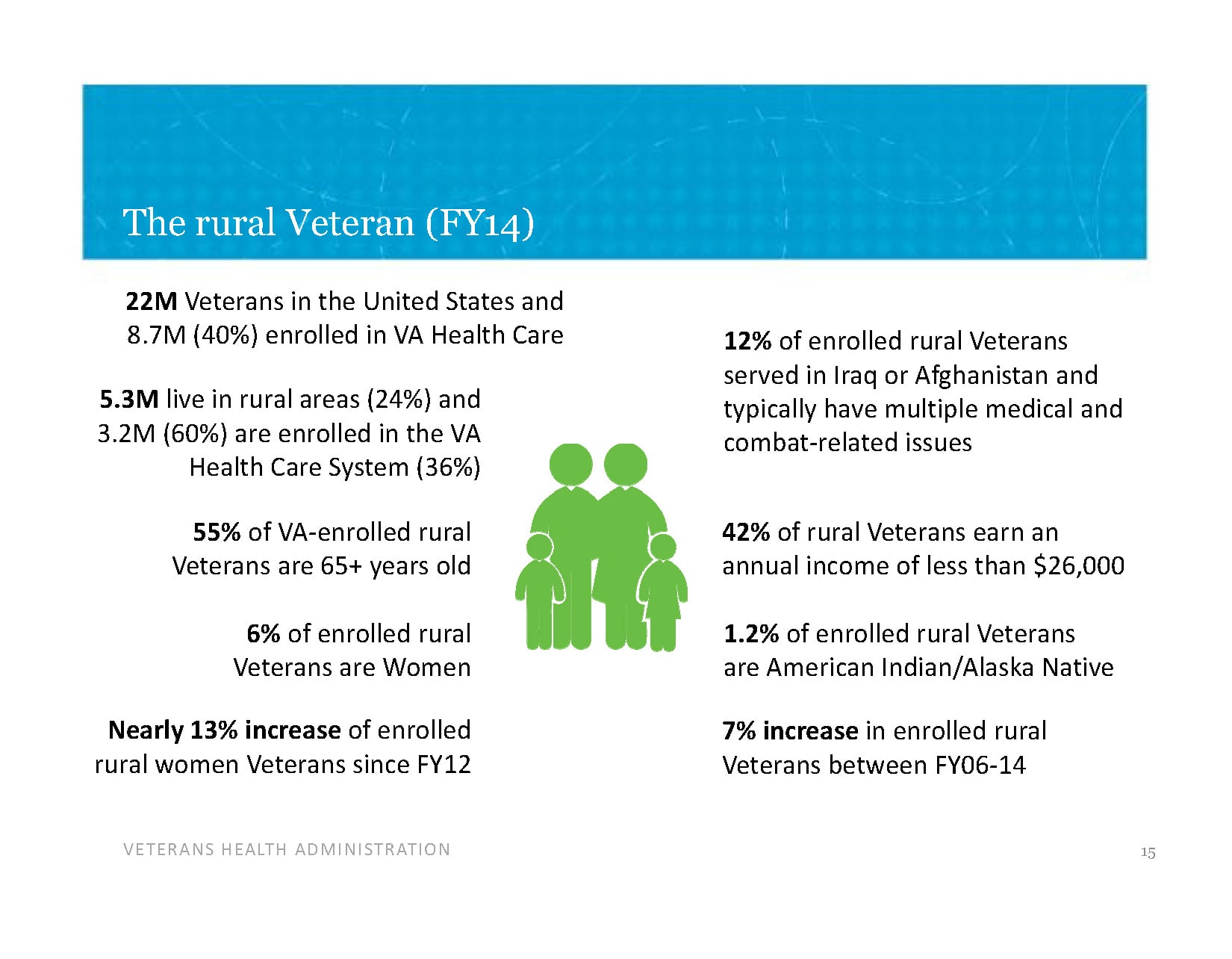
rural-veteran-fy14 Page 16

"I've lived here my whole life"

Leslie Robbins, Jr.

Rural Voices - Fall 2014This story appears in the Fall 2014 issue of Rural VoicesFor over 70 years, Leslie Robbins, Jr. proudly handled his home and affairs without outside assistance. As a veteran of the United States Army, he was prepared to serve his country in the Korean War, but was injured in a training exercise just weeks before deployment. An unexpected landmine detonation left him hospitalized for four months. Those injuries still bother him to this day.

“Up here in Maine, you go to work right out of diapers and you work all your life.”

After being released from the hospital, he made his way back to his native Western Maine and started working as a truck driver while growing his family. Leslie was no stranger to hard work. “Up here in Maine,” he said, “you go to work right out of diapers and you work all your life.” The job kept him away from his wife and children, as he traveled to 48 states and Canada, but it was good work for someone who “didn’t have much education.”

Unfortunately, when Leslie reached out to the local Veterans Affairs office (VA) for assistance with his home, he was told that his records had been destroyed in a fire and he could not qualify for any programs. Despite this setback, Leslie managed to build his own home for his family and watch his three children grow up and move out on their own. That home served him well throughout his life, but as he aged and moved into retirement, his home aged too and began to need repairs.

Leslie Robbins, Jr.Leslie Robbins, Jr. outside his home in Western Maine

With only Social Security Income to depend on, Leslie was unable to afford the necessary repairs on his home. That is until he came in contact with Western Maine Community Action (WMCA). WMCA helped Leslie secure the necessary financing through a combination of funding from the Housing Assistance Council and the U.S. Department of Energy Weatherization Assistance Program.

With repairs and renovations from WMCA, Leslie now has a new front-entry staircase, new electrical system, a repaired chimney, and his home has been weatherized to better deal with the cold winters in Maine. He says he is saving money on his energy bills and they helped “keep my buns warm in the winter.” Because of WMCA, Leslie is able to age in place, in the same place he has called home for his entire life.

Western Maine Community Action (WMCA): is a social service agency that has been providing services for over 45 years to people living in the western mountain region of Maine. The organization is dedicated to the principle that poverty should not be a permanent condition of people’s lives.

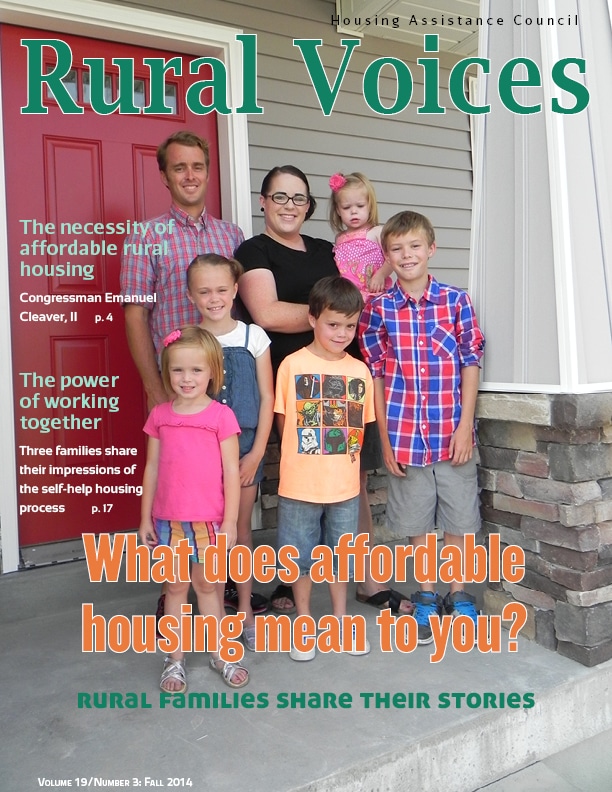
What does affordable housing mean to you? Rural families share their stories

The Fall 2014 issue of Rural Voices presents the perspectives of rural families, their challenges of living in unaffordable or substandard conditions, and how they ultimately utilized federal resources to obtain quality housing. These success stories almost always involve innovative community-based organizations that provide the vital link between housing resources and the families who need them.

What does affordable housing mean to you?The Fall 2014 issue of Rural Voices presents the perspectives of rural families, their challenges of living in unaffordable or substandard conditions, and how they ultimately utilized federal resources to obtain quality housing. These success stories almost always involve innovative community-based organizations that provide the vital link between housing resources and the families who need them.

VIEW FROM WASHINGTON

Affordable Rural Housing: It’s Not a Nicety But a Necessity
by Congressman Emanuel Cleaver, II, Missouri’s Fifth District

Congressman Emanuel Cleaver, II, shares his housing story and offers his views on housing across the country

FEATURES

The Balancing Act
by Joey Henderson, Florida Home Partnership, Inc.

A single mother’s self-help journey

“Our Home, Our Community”
by Lucero Cortez and Erika Parkinson, Catholic Charities of Yakima

Zaida Elena Lopez and Ivan Chavez

Making Almost Heaven a Reality in Rural West Virginia
by John David, Southern Appalchian Labor School (SALS)

Converting a log cabin to a modern home means this widow does not have to live in the cold

The Power of Working Together

Three families share their experiences with USDA’s Mutual Self-Help Program

“I’ve lived here my whole life.”

Leslie Robbins, Jr.

Self-Help, Sweat Equity and Success
by BC EchoHawk, National American Indian Housing Council (NAIHC)

“It made me feel good, it made me powerful and I’m looking forward to spending whatever days I have, God bless me, in that house.”

A Farmer’s Fight
byYuqi Wang, Bill Emerson National Hunger Fellow

Many Hmong farmers have recently experienced financial problems from faulty loans

Additional Content

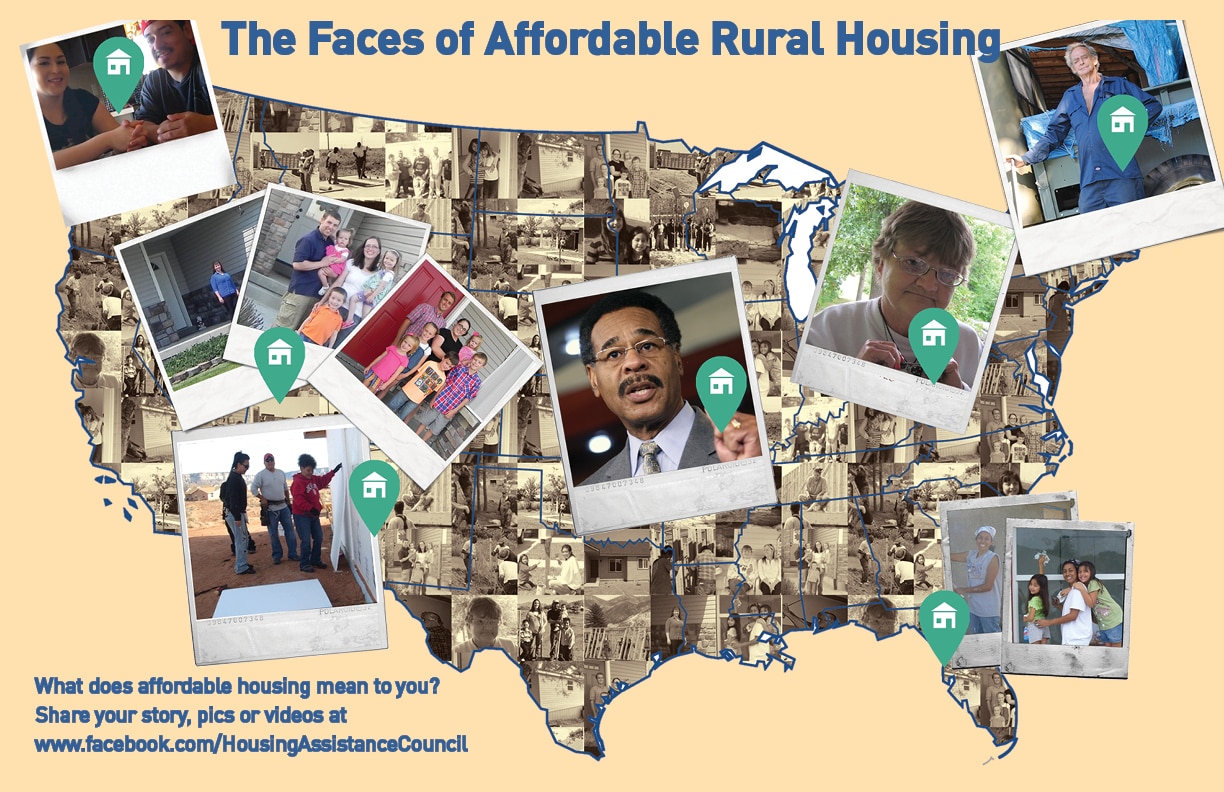
rv-fall-2014-mapThe Faces of Affordable Housing

What does Affordable Housing Mean to You?

“We wouldn’t want to live any place else”

The Davis Family (SALS, WV)

Rural Voices would like to hear what you have to say about one, or all, of these issues. Please feel free to comment on this story by sending a tweet to #RuralVoicesMag, discuss on the Rural Affordable Housing Group on LinkedIn, or on our Facebook page.

Building a Community for Veterans: Patriot Place, Tennessee

Materials Available

Power Point Presentation | Webinar Recording

The Housing Assistance Council (HAC) is pleased to invite you to participate in a webinar on single- and multi-family affordable housing for veterans. Targeted to veterans, Patriot Place is a community with a mix of affordable rental and homeownership opportunities for up to 75 households within a subdivision/neighborhood setting in Johnson County, Tennessee. The project site is accessible to services and is within 40 minutes of a nationally-ranked VA hospital in Mountain Home, Tennessee. Eastern Eight CDC, the local nonprofit developer of this community, offers a range of affordable housing options in this community including rental, rent-to-own, and self-help homeownership.

Affordability is one of the nation’s biggest housing challenges, for veterans and non-veterans alike. Households who spend over 30 percent of their income on housing costs are considered cost-burdened. Approximately 34 percent of rural veterans in their 20s, and 25 percent of veterans in their 30s have affordability problems. The goal for Patriot Place is to provide veterans with decent, safe, comfortable and affordable housing. Providing housing and needed services for our veterans can be complicated in rural areas due to vast geographies, limited resources, and less social service infrastructure.

Please join us on August 20th to learn more about the challenges faced and steps pursued in this innovative and successful model for serving rural veterans.

This webinar is supported by The Home Depot Foundation. For more information, please email Janice Clark at Janice@ruralhome.org.

Register Now! https://ruralhome.adobeconnect.com/e273e88kun9/event/event_info.html

HAC News: April 16, 2014

HAC News Formats. pdf

April 16, 2014
Vol. 43, No. 8

• House members question USDA officials about minimum rent proposal and support homeownership • April is National Financial Capability Month • USDA to hold phone or web meetings for Section 538 stakeholders • Rule proposed to implement oversight of appraisal management companies • Report makes case for homeless bills of rights • HUD releases interim report on Native American and Alaska Native housing • Entire nonmetro U.S. loses population for the first time, ERS says • State rental assistance programs study published • Health report for counties includes housing conditions for the first time • HAC reports on rural veterans’ housing • Recent blog posts cover decline of USDA housing, minimum rent proposal

April 16, 2014
Vol. 43, No. 8

HOUSE MEMBERS QUESTION USDA OFFICIALS ABOUT MINIMUM RENT PROPOSAL AND SUPPORT HOMEOWNERSHIP. At an Agriculture Appropriations Subcommittee hearing on April 4, Reps. Rosa DeLauro (D-CT) and Robert Aderholt (R-AL), the subcommittee chair, asked about the Administration’s budget’s $50 minimum rent proposal (see HAC News, 3/5/14). Housing Administrator Tony Hernandez emphasized that the request included provisions for hardship exemptions. Rep. Hal Rogers (R-KY), who is chair of the full committee, and several others criticized the budget’s low requests for Section 502 direct loans and the Section 523 self-help program. The archived webcast and written statements and testimony are available online.

APRIL IS NATIONAL FINANCIAL CAPABILITY MONTH. President Obama’s proclamation recommends consumers get free resources on managing money at www.MyMoney.gov and www.ConsumerFinance.govor call 1-888-MyMoney.

USDA TO HOLD PHONE OR WEB MEETINGS FOR SECTION 538 STAKEHOLDERS. Sessions are expected to be held in spring, July, and November. To receive notice of dates and times, register with Monica Cole, RD, 202-720-1251.

RULE PROPOSED TO IMPLEMENT OVERSIGHT OF APPRAISAL MANAGEMENT COMPANIES (AMCS). The federal agencies that oversee private lenders, along with the Consumer Financial Protection Bureau and the Federal Housing Finance Agency, request comments by June 9 on proposed regulationsfor AMCs. These are entities that serve as intermediaries for, and provide certain services to, appraisers and lenders. To be eligible to provide services for federally related transactions, AMCs and appraisers that are lender subsidiaries will have to meet federal and state standards and register in a national database. Contact Robert L. Parson, OCC, 202-649-6423.

REPORT MAKES CASE FOR HOMELESS BILLS OF RIGHTS. On April 15 the National Law Center on Homelessness & Poverty released From Wrongs to Rights: The Case for Homeless Bills of Rights Legislation.It describes the need for homeless bills of rights legislation, examines models of laws enacted and proposed in some states, and offers guidance on how to enact them.

HUD RELEASES INTERIM REPORT ON NATIVE AMERICAN AND ALASKA NATIVE HOUSING. Continuity and Change: Demographic, Socioeconomic, and Housing Conditions of American Indians and Native Alaskans,which uses secondary data sources, is part of the National Assessment of Native American, Alaska Native, and Native Hawaiian Housing Needs. The full report will include original research. The preliminary findings indicate that some socioeconomic differences between the American Indian and Alaska Native population and others have narrowed, but significant gaps persist in poverty, employment, and housing needs. Affordability is the most frequent housing problem for AIAN households, though crowding and physical inadequacy are common in some places. A separate report will cover Native Hawaiians.

ENTIRE NONMETRO U.S. LOSES POPULATION FOR THE FIRST TIME, ERS SAYS. USDA’s Economic Research Service reports that nonmetro areas in some parts of the country have experienced population loss for decades. However, 2010-13 marks the first period with an estimated population loss for nonmetro America as a whole, despite growth in some places. Some new regional patterns of growth and decline have emerged in recent years, such as growth in energy producing areas of the northern Great Plains. A Census Bureau analysisof population changes for the year ending July 1, 2013 notes this trend and others, including data for metropolitan and micropolitan places as well as nonmetro.

STATE RENTAL ASSISTANCE PROGRAMS STUDY PUBLISHED. State Funded Housing Assistance Programs,released by the Technical Assistance Collaborative, catalogs existing programs and identifies their key characteristics.

HEALTH REPORT FOR COUNTIES INCLUDES HOUSING CONDITIONS FOR THE FIRST TIME. The Robert Wood Johnson Foundation has added housing problems (cost burden, crowding, lacking plumbing or lacking kitchen) as a factor in its county health rankings. Other factors include smoking, high school graduation rates, unemployment, and many more.

HAC REPORTS ON RURAL VETERANS’ HOUSING. From Service to Shelter: Housing Veterans in Rural America, funded by the Home Depot Foundation, covers the characteristics of rural veterans and their housing, as well as issues facing them, and summarizes available housing resources. Veteran homelessness has decreased and housing conditions have improved, but rural challenges remain, such as the distance to service providers. HAC and the Home Depot Foundation hosted a symposium on serving rural veterans on April 9; materials are posted online.

RECENT BLOG POSTS COVER DECLINE OF USDA HOUSING, MINIMUM RENT PROPOSAL. “Analysis: Rural Housing Programs in Decline,” written by HAC staff for the Daily Yonder, reviews funding trends and the FY15 Administration budget request. “Obama Plan to Raise Rents on Rural Poor is the Wrong Way to Save Money,” a post on the Center on Budget and Policy Priorities blog, addresses the budget’s request to impose minimum rents on USDA tenants.

Congress Agrees: Collaborative, Comprehensive Care Needed For Rural Vets

by Eric Oberdorfer

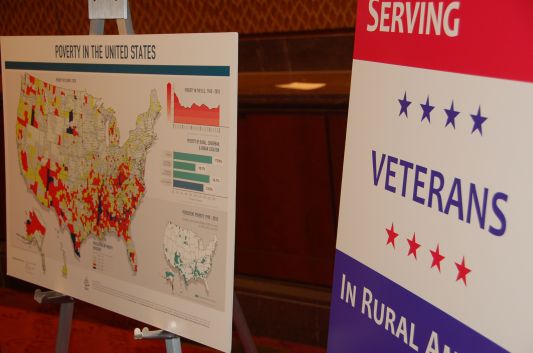
DSC_0019Rural America has a strong history of protecting our country. In fact, as highlighted in a recent report on rural veterans, veterans are more prevalent in rural America, comprising 11.4 percent of the rural population compared to 9.6 percent of the nation overall. However, providing needed services to veterans in rural America can often be more challenging due to the spread out nature of rural areas. These challenges were discussed in depth at a recent symposium held at the US Capitol.

Attended by Sen. Johnny Isakson of Georgia, Sen. Bernie Sanders of Vermont, and Rep. Tammy Duckworth of Illinois, each member of Congress noted the responsibility we share to ensure the well-being of our veterans, regardless of where they may live. It was encouraging to hear elected members of Congress discuss and acknowledge the challenges that exist in providing services to veterans in rural America.

Read the complete blog post at Rooflines.

Coming Together for Rural Veterans: HAC’s Serving Veterans in Rural America Symposium

Sponsored by The Home Depot Foundationby Eric Oberdorfer

Rural America has a strong history of protecting our country. In fact, veterans are more prevalent in rural America, comprising 11.4 percent of the rural population compared to 9.6 percent of the nation overall. However, providing needed services to veterans in rural America can often be more challenging due to the spread out nature of rural areas. Aiming to draw attention to the housing needs of rural veterans, The Home Depot Foundation and the Housing Assistance Council convened Serving Veterans in Rural America: A Symposium on April 9th, 2014. Moises Loza of HAC and Heather Pritchard of The Home Depot Foundation welcomed the attendees.

HAC was honored to have Senator Johnny Isakson of Georgia, Senator Bernie Sanders of Vermont, and Representative Tammy Duckworth of Illinois as opening speakers. Each member of Congress noted the responsibility we share to ensure the well-being of our veterans, regardless of where they may live. It was encouraging to hear elected members of Congress discuss and acknowledge the challenges that exist in providing services to veterans in rural America.

Symposium Materials

From Service to Shelter

Power Point Presentations

Photos from the Symposium

#RuralVeterans Storify

Attendees also heard from Gina Capra, Director of the Office of Rural Health at the Department of Veterans Affairs (VA); Tony Hernandez, Administrator of the USDA Rural Housing Service; Keith Kelly, Assistant Secretary of Labor for the Veterans’ Employment and Training Services at the Department of Labor (DoL); and Ann Oliva, Director of HUD’s Office of Special Needs Assistance Programs. Each agreed that to best serve our veterans, federal agencies must collaborate. HUD, VA, DoL, and USDA must look for ways to work together within their respective programs that will best meet the comprehensive needs of our veterans. This includes housing, employment, and physical and mental health services.

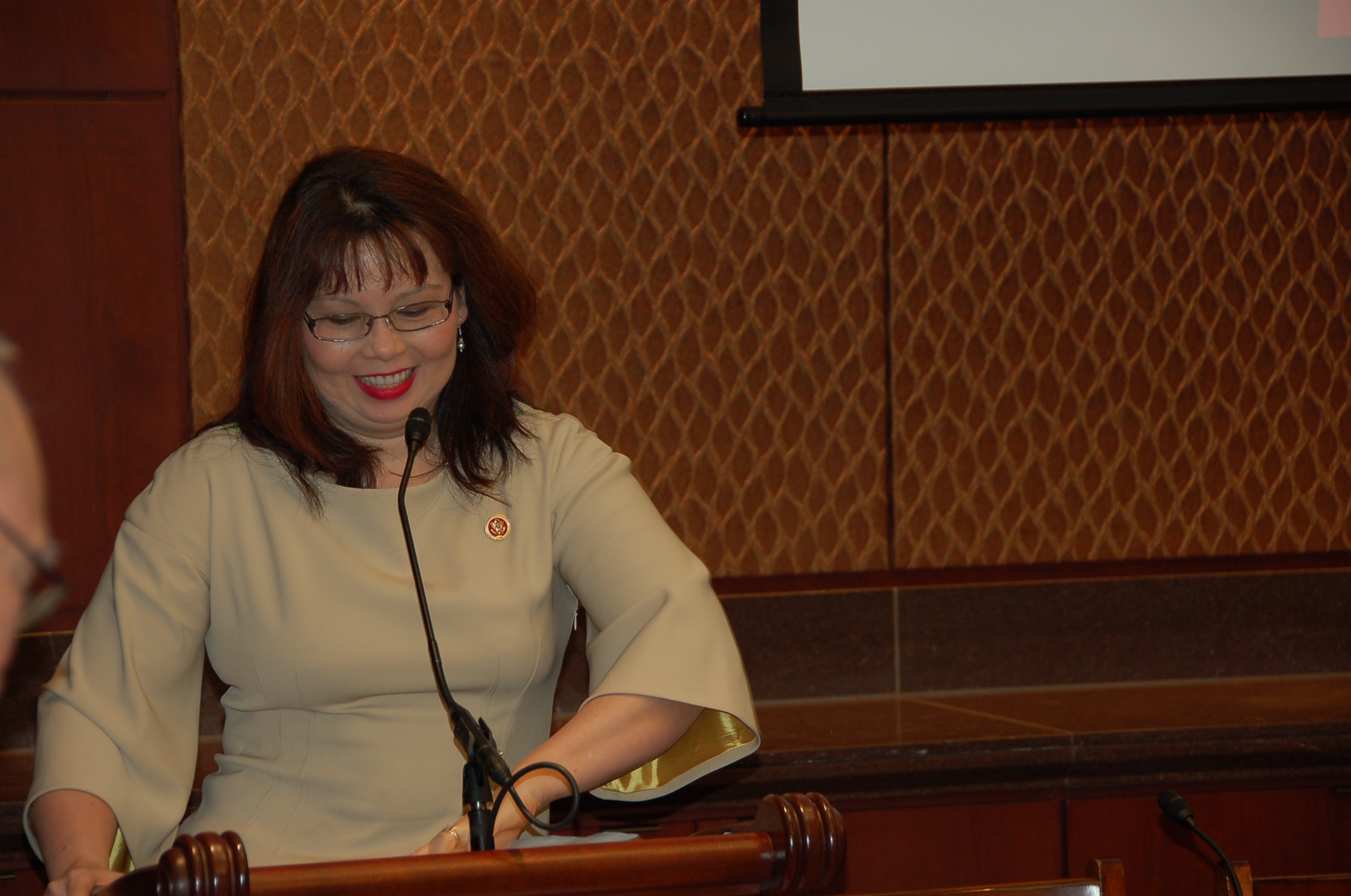
Rep. Tammy DuckworthRep. Tammy Duckworth prepares her remarksFortunately, the elected members of Congress were united on this front as well. Representative Duckworth discussed the importance of partnerships to ensure veterans in tribal lands received supports. Senator Isakson noted the potential benefits of providing vouchers to rural veterans so that they may access local health care providers if distances to VA medical facilities are too great. He also noted the unsettling rise of suicides within the veteran population and the need to ensure that mental health services are available and accessible.

Another theme that emerged from the Symposium was the obligation to acknowledge the differences that exist between rural America and urban or suburban parts of the country. Agencies agreed that there is a need to change the way outreach and resources are provided to rural areas, especially for homeless veterans. Better data on rural veterans is critical to achieve this goal, and the uniqueness of rural America must be taken into account during data collection and service provision. The panel noted how important it is to remember that issues common to all veterans, like transportation needs, health care needs, unemployment, and housing concerns, are exacerbated in rural areas. Furthermore, the lack of internet in some rural areas can significantly complicate VA or other federal application processes.

The issue of veteran homelessness was also brought up frequently throughout the symposium. Although programs like HUD-VASH, which combine HUD housing vouchers with case-management and clinical services provided by the VA, have been credited in lowering veteran homelessness by 24 percent since 2009, there is still more work to do. This is especially true in regard to female veterans with children, who are more likely to become homeless than their male counterparts. Shockingly, caring for their children can complicate efforts to seek treatment and housing services, as many supportive housing developments are unable to house families. Representative Duckworth stated that it breaks her heart to see these individuals, who gave so much to protect our country, having to choose between a home or her family.

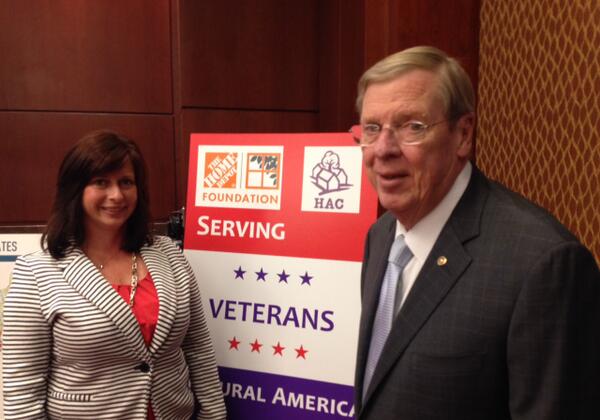
Heather Pritchard and Sen. Johnny IsaksonHeather Pritchard of The Home Depot Foundation and Sen. Johnny IsaksonThanks to the tireless work of housing providers in rural America, these issues are being addressed. The Symposium ended with a panel, moderated by Mark Williams of The American Legion, that showcased programs and initiatives that house veterans in rural America. Retha Patton of Eastern Eight CDC, Rita Markley of the Committee on Temporary Shelter (COTS), and Kenn Sassorossi of Housing Vermont shared inspiring success stories about providing needed housing to veterans within their rural communities in Tennessee and Vermont. These stories included family housing options with support services for homeless veterans. Heather Pritchard also discussed The Home Depot Foundation’s efforts in providing needed funding and assistance to organizations that house rural veterans. These programs and initiatives all highlight the importance of partnership and collaboration to successfully house veterans in need.

As Senator Sanders noted, the costs of war are greater than we know, and we must continue to meet the needs of our veterans when they return home. Although there is work to be done, it is always encouraging to know that elected leaders, government employees, and local organizations remain committed to this goal. Wednesday’s Symposium was a wonderful reminder of this, and an important reminder to thank our veterans whenever possible.

HAC News: October 24, 2012

HAC News Formats. pdf

October 24, 2012
Vol. 41, No. 21

• October 21-27 is National Childhood Lead Poisoning Prevention Week • HAC invites applications for rural veterans assistance • Section 8 OCAFs announced • Federal homelessness plan amended • Toolkit offered for Independent Foreclosure Review outreach • LIHTC can serve extremely low-income tenants, research finds • Census reports on sheltered population • HUD launches app for FMRs and Income Limits • LIHEAP assistance to older manufactured homes higher per square foot • GAO raises concerns about air exchange standards in HUD Code • National Rural Housing Conference early bird registration deadline is November 9!


October 24, 2012
Vol. 41, No. 21

OCTOBER 21-27 IS NATIONAL CHILDHOOD LEAD POISONING PREVENTION WEEK. Details and resources are available from the federal Centers for Disease Control and Prevention, leadinfo@cdc.gov.

HAC INVITES APPLICATIONS FOR RURAL VETERANS ASSISTANCE. A new HAC initiative will provide grants of up to $30,000 to support bricks-and-mortar projects that help rural low-income, elderly, and disabled veterans and active military personnel with housing needs. Send a letter of intent by 5:00 p.m. Eastern time on October 31. Application guidelines are posted on HAC’s website. Contact Janice Clark, HAC.

SECTION 8 OCAFS ANNOUNCED. HUD’s new Operating Cost Adjustment Factors apply to project-based assistance contracts with an anniversary date on or after February 11, 2013. See Federal Register, 10/16/12. Contact Stan Houle, HUD, 202-402-2572.

FEDERAL HOMELESSNESS PLAN AMENDED. In September the U.S. Interagency Council on Homelessness amended Opening Doors: Federal Strategic Plan to Prevent and End Homelessness, its plan to end homelessness among families, children, and youth by 2020. The amendment offers strategies and supports to improve educational outcomes for children and youth and steps to assist unaccompanied youth experiencing homelessness. Contact USICH, 202-708-4663.

TOOLKIT OFFERED FOR INDEPENDENT FORECLOSURE REVIEW OUTREACH. The Federal Reserve Board has made materials available to help local nonprofits reach residents whose homes were foreclosed in 2009-2010 by any of 14 mortgage servicers and who are eligible for an independent review. Call 888-952-9105.

LIHTC CAN SERVE EXTREMELY LOW-INCOME TENANTS, RESEARCH FINDS. The Furman Center and Moelis Institute at New York University examined data from urban, suburban, and rural Low-Income Housing Tax Credit properties in 16 states and found that 40% of the units are occupied by extremely low-income tenants (with incomes below 30% of area median). Because almost 70% of those ELI tenants receive some form of rental assistance, researchers concluded that “rental assistance is currently an indispensable part of the equation to serve those households.” The results are reported in “What Can We Learn about the Low Income Housing Tax Credit Program by Looking at the Tenants?”

CENSUS REPORTS ON SHELTERED POPULATION. The Emergency and Transitional Shelter Population: 2010 summarizes data on age, sex, and race/ethnicity for the 209,000 people counted in such shelters nationwide by the 2010 Census (not the entire homeless population). Data are aggregated by state and a map shows the number of people in shelters in every county. Over 60% of counties have no sheltered population.

HUD LAUNCHES APP FOR FMRS AND INCOME LIMITS. The map-based app for Android and iPhone allows users to search Fair Market Rents and Income Limits.

LIHEAP ASSISTANCE TO OLDER MANUFACTURED HOMES HIGHER PER SQUARE FOOT. A Government Accountability Office study found that the Low Income Home Energy Assistance Program provided about 33¢ per square foot of assistance to pre-1976 manufactured homes compared to about 20¢ per square foot for site-built homes. About 3% of total LIHEAP funds went to older manufactured homes. The study used data for 2005, the most recent available. Worker and Family Assistance: Home Energy Assistance for Low-Income Occupants of Manufactured Homes (GAO-12-848R) is available online or from GAO, 866-801-7077. Contact Frank Rusco, GAO, 202-512-3841.

GAO RAISES CONCERNS ABOUT AIR EXCHANGE STANDARDS IN HUD CODE. Standards for placement of air intake and exhaust vents are outdated and ventilation systems are not tested, GAO reports, in manufactured homes built after 1976 under HUD’s Manufactured Home Construction and Safety Standards. Manufactured Housing Standards: Testing and Performance Evaluation Could Better Ensure Safe Indoor Air Quality (GAO-13-52) is available online or from GAO, 866-801-7077. Contact Mathew J. Scirè, GAO, 202-512-8678.

NATIONAL RURAL HOUSING CONFERENCE EARLY BIRD REGISTRATION DEADLINE IS NOVEMBER 9! The 2012 conference, “Promises to Keep in Challenging Times,” will be December 6-7, with pre-conference activities on December 5, at the Hyatt Regency Washington on Capitol Hill in Washington, DC. Register now to take advantage of the special early bird discount! Start networking in advance – join the conference LinkedIn group. Questions? Contact Dan Stern, HAC, dan@ruralhome.org or 202-842-8600.

Tag Archive for: rural veterans

HAC News: May 27, 2015

HAC News Formats. pdf

May 27, 2015
Vol. 44, No. 11

• June is National Homeownership Month • House subcommittee considers USDA’s housing role • Section 533 Housing Preservation Grants offered • Pilot tests new area loan limit method for Section 502 direct • Rural rental properties urged to host meal programs • RD to reserve 10% of non-housing funds to aid development plans • Rents remain out of reach nationwide • More rural veterans are women • White House reports housing helps lift rural children out of poverty • Young people returning to rural areas most often cite family reasons • Rural Voices features lessons learned from housing mistakes • HAC disaster guide supplement for Oklahoma and Texas flooding available

HAC News Formats. pdf

May 27, 2015
Vol. 44, No. 11

JUNE IS NATIONAL HOMEOWNERSHIP MONTH. Watch HUD’s and USDA RD’s websites for announcements.

HOUSE SUBCOMMITTEE CONSIDERS USDA’S HOUSING ROLE. On May 19 the Housing and Insurance Subcommittee of the House Financial Services Subcommittee held a hearing entitled “The Future of Housing in America: Oversight of the Rural Housing Service.” RHS Administrator Tony Hernandez and Mathew Scirè of GAO testified. Questions from members of Congress focused on cost-effectiveness and the possibility of consolidating USDA and HUD housing programs.

SECTION 533 HOUSING PRESERVATION GRANTS OFFERED. Public agencies, nonprofits, tribes, consortia, rental property owners, and cooperative housing complexes can apply by July 6 for grants to repair or rehab owner-occupied or rental units. Contact Bonnie Edwards-Jackson, RD, 202-690–0759.

PILOT TESTS NEW AREA LOAN LIMIT METHOD FOR SECTION 502 DIRECT. RD state offices in CA, CO, DE, FL, HI, IA, MD, MN, MS, MO, MN, NV, NC, ND, OK, OR, SD, UT, WA, WV, WI, and WY may set area loan limits at 80% of FHA’s 203(b) loan limits. Updated limits (at the link, click the “Forms & Resources” tab) will be effective June 15, 2015. Contact an RD State Office.

RURAL RENTAL PROPERTIES URGED TO HOST MEAL PROGRAMS. An Unnumbered Letter dated May 5, 2015 asks local RD staff to encourage property owners and managers to reach out to local organizations that could operate Food and Nutrition Service offerings such as the Summer Food Service Program. Contact an RD office or an FNS regional office.

TENANT SERVICES CANNOT BE CHARGED TO MULTIFAMILY PROPERTIES’ OPERATING BUDGETS, RD SAYS. An Unnumbered Letter dated April 28, 2015 applies to Section 515 and 514 properties. Contact a USDA RD State Office.

RD TO RESERVE 10% OF NON-HOUSING FUNDS TO AID DEVELOPMENT PLANS. Comment by August 18 on an interim regulation for a program required by the 2014 Farm Bill. A portion of funds from specific community facilities, water and waste disposal, and business and cooperative development programs will be reserved each year for projects that help implement regional economic and community development plans. Contact Aaron Morris, RD, 202-720-1500. For FY15, eligible entities can receive priority points only for year-end pooled funds, according to a notice to be published in the Federal Register on June 1. Contact a USDA RD State Office.

RENTS REMAIN OUT OF REACH NATIONWIDE. The National Low Income Housing Coalition’s annual Out of Reach study found that nationally the housing wage – the hourly wage a person working 40 hours a week would need to afford a modest, two-bedroom rental unit – is $19.35. For a two-bedroom apartment in a nonmetro area the average housing wage is $13.48, almost $3 above the nonmetro renter wage. An interactive website includes data for states and counties.

MORE RURAL VETERANS ARE WOMEN. The percentage of rural veterans who are women has more than doubled since the First Gulf War, and they tend to be younger than the men, according to USDA’s Economic Research Service. In 2013, 55% of rural female veterans were under the age of 55 compared to 26% of rural male veterans. Racial and ethnic diversity among veterans is increasing as well. The Daily Yonder has republished a map showing the percentage of every U.S. county’s population who are veterans.

WHITE HOUSE REPORTS HOUSING HELPS LIFT RURAL CHILDREN OUT OF POVERTY. Opportunity for All: Fighting Rural Child Poverty states that programs like refundable tax credits, Social Security, SNAP, and housing assistance lifted about 9.0 million nonmetro residents out of poverty in 2013, including about 1.6 million children. In addition, aid programs provide long-term benefits by improving children’s education, health, and earnings outcomes later in life.

YOUNG PEOPLE RETURNING TO RURAL AREAS MOST OFTEN CITE FAMILY REASONS. Factors Affecting Former Residents’ Returning to Rural Communities, by USDA’s Economic Research Service, reports that some returnees said they made financial and career sacrifices to return home and other interviewees said those concerns kept them from returning. Housing costs were seldom mentioned.

RURAL VOICES FEATURES LESSONS LEARNED FROM HOUSING MISTAKES. A new issue of HAC’s quarterly magazine includes stories from rural housing professionals who share notable mistakes they or their organizations made. Sign up online for email notices when new issues are published.

HAC DISASTER GUIDE SUPPLEMENT FOR OKLAHOMA AND TEXAS FLOODING AVAILABLE.Picking Up the Pieces, HAC’s guide to housing recovery after natural disasters, and a special supplement for the recent floods, are available online. To order free print copies for people and organizations in disaster areas, contact Dan Stern, HAC, 202-842-8600.

HAC News: May 13, 2015

HAC News Formats. pdf

May 13, 2015
Vol. 44, No. 10

• House committee approves THUD spending bill • Senate passes budget agreement • HUD offers lead-paint grants • New version of USDA’s multifamily Preliminary Assessment Tool available • HUD and USDA determine new energy efficiency standards will apply • Guidance released to extend CDBG disaster grants from Hurricane Sandy • Dates set for Section 538 calls • FHFA announces extension of HARP • Worst Case Housing Needs 2015 Report to Congress released • Limits on GSE lending for multifamily mortgages eased • Federal rental assistance and Housing Choice voucher fact sheets released • Webinar recording on Native American housing available • HAC conference on “Serving Veterans in Rural America” set for May 20

HAC News Formats. pdf

May 13, 2015
Vol. 44, No. 10

HOUSE COMMITTEE APPROVES THUD SPENDING BILL. On May 13, the House Appropriations Committee passed the Transportation-HUD subcommittee’s FY16 appropriations bill without changes to HUD spending levels (see HAC News, 4/29/15). The committee rejected an amendment to provide $1.06 million for HOME without diverting money from the National Housing Trust Fund, offered by Rep. Barbara Lee (D-CA).

SENATE PASSES BUDGET AGREEMENT. On May 5, the Senate voted 51 to 48 to approve the House budget, which adds military spending while keeping cuts affecting social programs in place (see HAC News, 4/3/15). The budget is not binding and does not require presidential signature, but it does impose overall caps on federal spending.

HUD OFFERS LEAD-PAINT GRANTS. Local, county, state, and tribal governments can apply for the Lead Hazard Reduction Demonstration and Lead-Based Paint Hazard Control grant programs by June 23. Contact Eric Hornbuckle, HUD, 202-402-7599.

NEW VERSION OF USDA’S MULTIFAMILY PRELIMINARY ASSESSMENT TOOL AVAILABLE. Version 4.0 of the tool for Section 515 or 514 borrowers (see HAC News, 12/22/14) should be used when applying to transfer ownership or for the Multi-Family Housing Revitalization Demonstration Program (at the links, click the “Forms & Resources” tabs). Borrowers that used older PAT guidelines and submitted transactions after December 16, 2014 must use the new version. Contact an RD State Office.

HUD AND USDA DETERMINE NEW ENERGY EFFICIENCY STANDARDS WILL APPLY. New standards will be required for newly constructed homes with USDA Section 502 direct and guaranteed loans and for FHA-insured multifamily and single-family properties. For the HOME program, the standards will apply after publication of guidance by HUD. For more information contact Meghan Walsh, USDA, 202-205-9590.

GUIDANCE RELEASED TO EXTEND CDBG DISASTER GRANTS FROM HURRICANE SANDY. Expenditure extensions can be made for 24 months. For more information, contact Stanley Gimont, HUD, 202-708-3587.

DATES SET FOR SECTION 538 CALLS. To receive emails announcing dates for calls or web meetings in 2015 and 2016, contact Monica Cole at 202-720-1251. Topics will include program activities, perspectives on the current state of debt financing and its impact on the Section 538 program, enhancing the use of program financing with the transfer or preservation of Section 515 units, and the impact of LIHTC program changes on Section 538 program financing.

FHFA ANNOUNCES EXTENSION OF HARP. The Home Affordable Refinance Program will continue through the end of 2016. Launched in 2009 to provide relief to borrowers through lowering monthly payments, HARP was originally set to expire December 31, 2013.

WORST CASE HOUSING NEEDS 2015 REPORT TO CONGRESS RELEASED. HUD reports that although very low-income renters with worst case needs (those who do not receive government housing aid and paid more than half their income for rent, lived in severely inadequate conditions, or both) decreased slightly from 2011 to 2013, need remains high. Nonmetro areas experience less worst case need overall, but face other challenges including high utility costs.

LIMITS ON GSE LENDING FOR MULTIFAMILY MORTGAGES EASED. Fannie Mae and Freddie Mac can increase their financing of multifamily mortgages this year in order to avoid tighter multifamily credit and borrowing costs. Caps will remain at $30 billion each; however, multifamily loans that meet certain qualifications can be excluded. Qualifications are based on the percentage of units priced under a certain area median income, whether the property is in a high cost market, if the units target seniors, and if the property is mixed-income targeted affordable housing.

FEDERAL RENTAL ASSISTANCE AND HOUSING CHOICE VOUCHER FACT SHEETS RELEASED. The Center on Budget and Policy Priorities fact sheets provide state level data on the impacts of HUD rental assistance, the Housing Choice Voucher Program, Housing Choice Voucher utilization data, and sequestration cuts in Housing Choice Vouchers.

WEBINAR RECORDING ON NATIVE AMERICAN HOUSING AVAILABLE. On March 24, HUD hosted a panel discussion and webcast entitled “Native American Housing: Obstacles and Opportunities.” Speakers provided data and described best practices.

HAC CONFERENCE ON “SERVING VETERANS IN RURAL AMERICA” SET FOR MAY 20. Cosponsored by HAC and The Home Depot Foundation, this event in Washington, DC will provide information on housing, health, and employment needs and programs for rural veterans, with a special focus on successful local projects. There is no charge, but registration is requested. To register or for more information, email janice@ruralhome.org.

Access to Health and Homeless Services for Rural Veterans

Materials Posted

Power Point Presentation | Webinar Recording | Webinar Q&A Transcript

A disproportionate number of veterans come from and return to small towns and rural America. Join this webinar to learn more about ways to serve this sometimes forgotten group. Participants in the webinar will hear from two key agencies of the US Dept. of Veterans’ Affairs — the Office of Rural Health and the Center on Homelessness. Leaders of these agencies will discuss opportunities for rural nonprofits to work with the VA to provide housing and services to veterans. Rural homeless veterans face a lack of opportunities for safe shelter compared to urban or suburban veterans. Participants will also learn more about the challenges of serving rural veterans and the impact of successful VA programs on such service.

rural-veteran-fy14 Page 16

"I've lived here my whole life"

Leslie Robbins, Jr.

Rural Voices - Fall 2014This story appears in the Fall 2014 issue of Rural VoicesFor over 70 years, Leslie Robbins, Jr. proudly handled his home and affairs without outside assistance. As a veteran of the United States Army, he was prepared to serve his country in the Korean War, but was injured in a training exercise just weeks before deployment. An unexpected landmine detonation left him hospitalized for four months. Those injuries still bother him to this day.

“Up here in Maine, you go to work right out of diapers and you work all your life.”

After being released from the hospital, he made his way back to his native Western Maine and started working as a truck driver while growing his family. Leslie was no stranger to hard work. “Up here in Maine,” he said, “you go to work right out of diapers and you work all your life.” The job kept him away from his wife and children, as he traveled to 48 states and Canada, but it was good work for someone who “didn’t have much education.”

Unfortunately, when Leslie reached out to the local Veterans Affairs office (VA) for assistance with his home, he was told that his records had been destroyed in a fire and he could not qualify for any programs. Despite this setback, Leslie managed to build his own home for his family and watch his three children grow up and move out on their own. That home served him well throughout his life, but as he aged and moved into retirement, his home aged too and began to need repairs.

Leslie Robbins, Jr.Leslie Robbins, Jr. outside his home in Western Maine

With only Social Security Income to depend on, Leslie was unable to afford the necessary repairs on his home. That is until he came in contact with Western Maine Community Action (WMCA). WMCA helped Leslie secure the necessary financing through a combination of funding from the Housing Assistance Council and the U.S. Department of Energy Weatherization Assistance Program.

With repairs and renovations from WMCA, Leslie now has a new front-entry staircase, new electrical system, a repaired chimney, and his home has been weatherized to better deal with the cold winters in Maine. He says he is saving money on his energy bills and they helped “keep my buns warm in the winter.” Because of WMCA, Leslie is able to age in place, in the same place he has called home for his entire life.

Western Maine Community Action (WMCA): is a social service agency that has been providing services for over 45 years to people living in the western mountain region of Maine. The organization is dedicated to the principle that poverty should not be a permanent condition of people’s lives.

What does affordable housing mean to you? Rural families share their stories

The Fall 2014 issue of Rural Voices presents the perspectives of rural families, their challenges of living in unaffordable or substandard conditions, and how they ultimately utilized federal resources to obtain quality housing. These success stories almost always involve innovative community-based organizations that provide the vital link between housing resources and the families who need them.

What does affordable housing mean to you?The Fall 2014 issue of Rural Voices presents the perspectives of rural families, their challenges of living in unaffordable or substandard conditions, and how they ultimately utilized federal resources to obtain quality housing. These success stories almost always involve innovative community-based organizations that provide the vital link between housing resources and the families who need them.

VIEW FROM WASHINGTON

Affordable Rural Housing: It’s Not a Nicety But a Necessity
by Congressman Emanuel Cleaver, II, Missouri’s Fifth District

Congressman Emanuel Cleaver, II, shares his housing story and offers his views on housing across the country

FEATURES

The Balancing Act
by Joey Henderson, Florida Home Partnership, Inc.

A single mother’s self-help journey

“Our Home, Our Community”
by Lucero Cortez and Erika Parkinson, Catholic Charities of Yakima

Zaida Elena Lopez and Ivan Chavez

Making Almost Heaven a Reality in Rural West Virginia
by John David, Southern Appalchian Labor School (SALS)

Converting a log cabin to a modern home means this widow does not have to live in the cold

The Power of Working Together

Three families share their experiences with USDA’s Mutual Self-Help Program

“I’ve lived here my whole life.”

Leslie Robbins, Jr.

Self-Help, Sweat Equity and Success
by BC EchoHawk, National American Indian Housing Council (NAIHC)

“It made me feel good, it made me powerful and I’m looking forward to spending whatever days I have, God bless me, in that house.”

A Farmer’s Fight
byYuqi Wang, Bill Emerson National Hunger Fellow

Many Hmong farmers have recently experienced financial problems from faulty loans

Additional Content

rv-fall-2014-mapThe Faces of Affordable Housing

What does Affordable Housing Mean to You?

“We wouldn’t want to live any place else”

The Davis Family (SALS, WV)

Rural Voices would like to hear what you have to say about one, or all, of these issues. Please feel free to comment on this story by sending a tweet to #RuralVoicesMag, discuss on the Rural Affordable Housing Group on LinkedIn, or on our Facebook page.

Building a Community for Veterans: Patriot Place, Tennessee

Materials Available

Power Point Presentation | Webinar Recording

The Housing Assistance Council (HAC) is pleased to invite you to participate in a webinar on single- and multi-family affordable housing for veterans. Targeted to veterans, Patriot Place is a community with a mix of affordable rental and homeownership opportunities for up to 75 households within a subdivision/neighborhood setting in Johnson County, Tennessee. The project site is accessible to services and is within 40 minutes of a nationally-ranked VA hospital in Mountain Home, Tennessee. Eastern Eight CDC, the local nonprofit developer of this community, offers a range of affordable housing options in this community including rental, rent-to-own, and self-help homeownership.

Affordability is one of the nation’s biggest housing challenges, for veterans and non-veterans alike. Households who spend over 30 percent of their income on housing costs are considered cost-burdened. Approximately 34 percent of rural veterans in their 20s, and 25 percent of veterans in their 30s have affordability problems. The goal for Patriot Place is to provide veterans with decent, safe, comfortable and affordable housing. Providing housing and needed services for our veterans can be complicated in rural areas due to vast geographies, limited resources, and less social service infrastructure.

Please join us on August 20th to learn more about the challenges faced and steps pursued in this innovative and successful model for serving rural veterans.

This webinar is supported by The Home Depot Foundation. For more information, please email Janice Clark at Janice@ruralhome.org.

Register Now! https://ruralhome.adobeconnect.com/e273e88kun9/event/event_info.html

HAC News: April 16, 2014

HAC News Formats. pdf

April 16, 2014
Vol. 43, No. 8

• House members question USDA officials about minimum rent proposal and support homeownership • April is National Financial Capability Month • USDA to hold phone or web meetings for Section 538 stakeholders • Rule proposed to implement oversight of appraisal management companies • Report makes case for homeless bills of rights • HUD releases interim report on Native American and Alaska Native housing • Entire nonmetro U.S. loses population for the first time, ERS says • State rental assistance programs study published • Health report for counties includes housing conditions for the first time • HAC reports on rural veterans’ housing • Recent blog posts cover decline of USDA housing, minimum rent proposal

April 16, 2014
Vol. 43, No. 8

HOUSE MEMBERS QUESTION USDA OFFICIALS ABOUT MINIMUM RENT PROPOSAL AND SUPPORT HOMEOWNERSHIP. At an Agriculture Appropriations Subcommittee hearing on April 4, Reps. Rosa DeLauro (D-CT) and Robert Aderholt (R-AL), the subcommittee chair, asked about the Administration’s budget’s $50 minimum rent proposal (see HAC News, 3/5/14). Housing Administrator Tony Hernandez emphasized that the request included provisions for hardship exemptions. Rep. Hal Rogers (R-KY), who is chair of the full committee, and several others criticized the budget’s low requests for Section 502 direct loans and the Section 523 self-help program. The archived webcast and written statements and testimony are available online.

APRIL IS NATIONAL FINANCIAL CAPABILITY MONTH. President Obama’s proclamation recommends consumers get free resources on managing money at www.MyMoney.gov and www.ConsumerFinance.govor call 1-888-MyMoney.

USDA TO HOLD PHONE OR WEB MEETINGS FOR SECTION 538 STAKEHOLDERS. Sessions are expected to be held in spring, July, and November. To receive notice of dates and times, register with Monica Cole, RD, 202-720-1251.

RULE PROPOSED TO IMPLEMENT OVERSIGHT OF APPRAISAL MANAGEMENT COMPANIES (AMCS). The federal agencies that oversee private lenders, along with the Consumer Financial Protection Bureau and the Federal Housing Finance Agency, request comments by June 9 on proposed regulationsfor AMCs. These are entities that serve as intermediaries for, and provide certain services to, appraisers and lenders. To be eligible to provide services for federally related transactions, AMCs and appraisers that are lender subsidiaries will have to meet federal and state standards and register in a national database. Contact Robert L. Parson, OCC, 202-649-6423.

REPORT MAKES CASE FOR HOMELESS BILLS OF RIGHTS. On April 15 the National Law Center on Homelessness & Poverty released From Wrongs to Rights: The Case for Homeless Bills of Rights Legislation.It describes the need for homeless bills of rights legislation, examines models of laws enacted and proposed in some states, and offers guidance on how to enact them.

HUD RELEASES INTERIM REPORT ON NATIVE AMERICAN AND ALASKA NATIVE HOUSING. Continuity and Change: Demographic, Socioeconomic, and Housing Conditions of American Indians and Native Alaskans,which uses secondary data sources, is part of the National Assessment of Native American, Alaska Native, and Native Hawaiian Housing Needs. The full report will include original research. The preliminary findings indicate that some socioeconomic differences between the American Indian and Alaska Native population and others have narrowed, but significant gaps persist in poverty, employment, and housing needs. Affordability is the most frequent housing problem for AIAN households, though crowding and physical inadequacy are common in some places. A separate report will cover Native Hawaiians.

ENTIRE NONMETRO U.S. LOSES POPULATION FOR THE FIRST TIME, ERS SAYS. USDA’s Economic Research Service reports that nonmetro areas in some parts of the country have experienced population loss for decades. However, 2010-13 marks the first period with an estimated population loss for nonmetro America as a whole, despite growth in some places. Some new regional patterns of growth and decline have emerged in recent years, such as growth in energy producing areas of the northern Great Plains. A Census Bureau analysisof population changes for the year ending July 1, 2013 notes this trend and others, including data for metropolitan and micropolitan places as well as nonmetro.

STATE RENTAL ASSISTANCE PROGRAMS STUDY PUBLISHED. State Funded Housing Assistance Programs,released by the Technical Assistance Collaborative, catalogs existing programs and identifies their key characteristics.

HEALTH REPORT FOR COUNTIES INCLUDES HOUSING CONDITIONS FOR THE FIRST TIME. The Robert Wood Johnson Foundation has added housing problems (cost burden, crowding, lacking plumbing or lacking kitchen) as a factor in its county health rankings. Other factors include smoking, high school graduation rates, unemployment, and many more.

HAC REPORTS ON RURAL VETERANS’ HOUSING. From Service to Shelter: Housing Veterans in Rural America, funded by the Home Depot Foundation, covers the characteristics of rural veterans and their housing, as well as issues facing them, and summarizes available housing resources. Veteran homelessness has decreased and housing conditions have improved, but rural challenges remain, such as the distance to service providers. HAC and the Home Depot Foundation hosted a symposium on serving rural veterans on April 9; materials are posted online.

RECENT BLOG POSTS COVER DECLINE OF USDA HOUSING, MINIMUM RENT PROPOSAL. “Analysis: Rural Housing Programs in Decline,” written by HAC staff for the Daily Yonder, reviews funding trends and the FY15 Administration budget request. “Obama Plan to Raise Rents on Rural Poor is the Wrong Way to Save Money,” a post on the Center on Budget and Policy Priorities blog, addresses the budget’s request to impose minimum rents on USDA tenants.

Congress Agrees: Collaborative, Comprehensive Care Needed For Rural Vets

by Eric Oberdorfer

DSC_0019Rural America has a strong history of protecting our country. In fact, as highlighted in a recent report on rural veterans, veterans are more prevalent in rural America, comprising 11.4 percent of the rural population compared to 9.6 percent of the nation overall. However, providing needed services to veterans in rural America can often be more challenging due to the spread out nature of rural areas. These challenges were discussed in depth at a recent symposium held at the US Capitol.
Attended by Sen. Johnny Isakson of Georgia, Sen. Bernie Sanders of Vermont, and Rep. Tammy Duckworth of Illinois, each member of Congress noted the responsibility we share to ensure the well-being of our veterans, regardless of where they may live. It was encouraging to hear elected members of Congress discuss and acknowledge the challenges that exist in providing services to veterans in rural America.

Read the complete blog post at Rooflines.

Coming Together for Rural Veterans: HAC’s Serving Veterans in Rural America Symposium

Sponsored by The Home Depot Foundationby Eric Oberdorfer

Rural America has a strong history of protecting our country. In fact, veterans are more prevalent in rural America, comprising 11.4 percent of the rural population compared to 9.6 percent of the nation overall. However, providing needed services to veterans in rural America can often be more challenging due to the spread out nature of rural areas. Aiming to draw attention to the housing needs of rural veterans, The Home Depot Foundation and the Housing Assistance Council convened Serving Veterans in Rural America: A Symposium on April 9th, 2014. Moises Loza of HAC and Heather Pritchard of The Home Depot Foundation welcomed the attendees.

HAC was honored to have Senator Johnny Isakson of Georgia, Senator Bernie Sanders of Vermont, and Representative Tammy Duckworth of Illinois as opening speakers. Each member of Congress noted the responsibility we share to ensure the well-being of our veterans, regardless of where they may live. It was encouraging to hear elected members of Congress discuss and acknowledge the challenges that exist in providing services to veterans in rural America.

Symposium Materials

From Service to Shelter

Power Point Presentations

Photos from the Symposium

#RuralVeterans Storify

Attendees also heard from Gina Capra, Director of the Office of Rural Health at the Department of Veterans Affairs (VA); Tony Hernandez, Administrator of the USDA Rural Housing Service; Keith Kelly, Assistant Secretary of Labor for the Veterans’ Employment and Training Services at the Department of Labor (DoL); and Ann Oliva, Director of HUD’s Office of Special Needs Assistance Programs. Each agreed that to best serve our veterans, federal agencies must collaborate. HUD, VA, DoL, and USDA must look for ways to work together within their respective programs that will best meet the comprehensive needs of our veterans. This includes housing, employment, and physical and mental health services.

Rep. Tammy DuckworthRep. Tammy Duckworth prepares her remarksFortunately, the elected members of Congress were united on this front as well. Representative Duckworth discussed the importance of partnerships to ensure veterans in tribal lands received supports. Senator Isakson noted the potential benefits of providing vouchers to rural veterans so that they may access local health care providers if distances to VA medical facilities are too great. He also noted the unsettling rise of suicides within the veteran population and the need to ensure that mental health services are available and accessible.

Another theme that emerged from the Symposium was the obligation to acknowledge the differences that exist between rural America and urban or suburban parts of the country. Agencies agreed that there is a need to change the way outreach and resources are provided to rural areas, especially for homeless veterans. Better data on rural veterans is critical to achieve this goal, and the uniqueness of rural America must be taken into account during data collection and service provision. The panel noted how important it is to remember that issues common to all veterans, like transportation needs, health care needs, unemployment, and housing concerns, are exacerbated in rural areas. Furthermore, the lack of internet in some rural areas can significantly complicate VA or other federal application processes.

The issue of veteran homelessness was also brought up frequently throughout the symposium. Although programs like HUD-VASH, which combine HUD housing vouchers with case-management and clinical services provided by the VA, have been credited in lowering veteran homelessness by 24 percent since 2009, there is still more work to do. This is especially true in regard to female veterans with children, who are more likely to become homeless than their male counterparts. Shockingly, caring for their children can complicate efforts to seek treatment and housing services, as many supportive housing developments are unable to house families. Representative Duckworth stated that it breaks her heart to see these individuals, who gave so much to protect our country, having to choose between a home or her family.

Heather Pritchard and Sen. Johnny IsaksonHeather Pritchard of The Home Depot Foundation and Sen. Johnny IsaksonThanks to the tireless work of housing providers in rural America, these issues are being addressed. The Symposium ended with a panel, moderated by Mark Williams of The American Legion, that showcased programs and initiatives that house veterans in rural America. Retha Patton of Eastern Eight CDC, Rita Markley of the Committee on Temporary Shelter (COTS), and Kenn Sassorossi of Housing Vermont shared inspiring success stories about providing needed housing to veterans within their rural communities in Tennessee and Vermont. These stories included family housing options with support services for homeless veterans. Heather Pritchard also discussed The Home Depot Foundation’s efforts in providing needed funding and assistance to organizations that house rural veterans. These programs and initiatives all highlight the importance of partnership and collaboration to successfully house veterans in need.

As Senator Sanders noted, the costs of war are greater than we know, and we must continue to meet the needs of our veterans when they return home. Although there is work to be done, it is always encouraging to know that elected leaders, government employees, and local organizations remain committed to this goal. Wednesday’s Symposium was a wonderful reminder of this, and an important reminder to thank our veterans whenever possible.

HAC News: October 24, 2012

HAC News Formats. pdf

October 24, 2012
Vol. 41, No. 21

• October 21-27 is National Childhood Lead Poisoning Prevention Week • HAC invites applications for rural veterans assistance • Section 8 OCAFs announced • Federal homelessness plan amended • Toolkit offered for Independent Foreclosure Review outreach • LIHTC can serve extremely low-income tenants, research finds • Census reports on sheltered population • HUD launches app for FMRs and Income Limits • LIHEAP assistance to older manufactured homes higher per square foot • GAO raises concerns about air exchange standards in HUD Code • National Rural Housing Conference early bird registration deadline is November 9!


October 24, 2012
Vol. 41, No. 21

OCTOBER 21-27 IS NATIONAL CHILDHOOD LEAD POISONING PREVENTION WEEK. Details and resources are available from the federal Centers for Disease Control and Prevention, leadinfo@cdc.gov.

HAC INVITES APPLICATIONS FOR RURAL VETERANS ASSISTANCE. A new HAC initiative will provide grants of up to $30,000 to support bricks-and-mortar projects that help rural low-income, elderly, and disabled veterans and active military personnel with housing needs. Send a letter of intent by 5:00 p.m. Eastern time on October 31. Application guidelines are posted on HAC’s website. Contact Janice Clark, HAC.

SECTION 8 OCAFS ANNOUNCED. HUD’s new Operating Cost Adjustment Factors apply to project-based assistance contracts with an anniversary date on or after February 11, 2013. See Federal Register, 10/16/12. Contact Stan Houle, HUD, 202-402-2572.

FEDERAL HOMELESSNESS PLAN AMENDED. In September the U.S. Interagency Council on Homelessness amended Opening Doors: Federal Strategic Plan to Prevent and End Homelessness, its plan to end homelessness among families, children, and youth by 2020. The amendment offers strategies and supports to improve educational outcomes for children and youth and steps to assist unaccompanied youth experiencing homelessness. Contact USICH, 202-708-4663.

TOOLKIT OFFERED FOR INDEPENDENT FORECLOSURE REVIEW OUTREACH. The Federal Reserve Board has made materials available to help local nonprofits reach residents whose homes were foreclosed in 2009-2010 by any of 14 mortgage servicers and who are eligible for an independent review. Call 888-952-9105.

LIHTC CAN SERVE EXTREMELY LOW-INCOME TENANTS, RESEARCH FINDS. The Furman Center and Moelis Institute at New York University examined data from urban, suburban, and rural Low-Income Housing Tax Credit properties in 16 states and found that 40% of the units are occupied by extremely low-income tenants (with incomes below 30% of area median). Because almost 70% of those ELI tenants receive some form of rental assistance, researchers concluded that “rental assistance is currently an indispensable part of the equation to serve those households.” The results are reported in “What Can We Learn about the Low Income Housing Tax Credit Program by Looking at the Tenants?”

CENSUS REPORTS ON SHELTERED POPULATION. The Emergency and Transitional Shelter Population: 2010 summarizes data on age, sex, and race/ethnicity for the 209,000 people counted in such shelters nationwide by the 2010 Census (not the entire homeless population). Data are aggregated by state and a map shows the number of people in shelters in every county. Over 60% of counties have no sheltered population.

HUD LAUNCHES APP FOR FMRS AND INCOME LIMITS. The map-based app for Android and iPhone allows users to search Fair Market Rents and Income Limits.

LIHEAP ASSISTANCE TO OLDER MANUFACTURED HOMES HIGHER PER SQUARE FOOT. A Government Accountability Office study found that the Low Income Home Energy Assistance Program provided about 33¢ per square foot of assistance to pre-1976 manufactured homes compared to about 20¢ per square foot for site-built homes. About 3% of total LIHEAP funds went to older manufactured homes. The study used data for 2005, the most recent available. Worker and Family Assistance: Home Energy Assistance for Low-Income Occupants of Manufactured Homes (GAO-12-848R) is available online or from GAO, 866-801-7077. Contact Frank Rusco, GAO, 202-512-3841.

GAO RAISES CONCERNS ABOUT AIR EXCHANGE STANDARDS IN HUD CODE. Standards for placement of air intake and exhaust vents are outdated and ventilation systems are not tested, GAO reports, in manufactured homes built after 1976 under HUD’s Manufactured Home Construction and Safety Standards. Manufactured Housing Standards: Testing and Performance Evaluation Could Better Ensure Safe Indoor Air Quality (GAO-13-52) is available online or from GAO, 866-801-7077. Contact Mathew J. Scirè, GAO, 202-512-8678.

NATIONAL RURAL HOUSING CONFERENCE EARLY BIRD REGISTRATION DEADLINE IS NOVEMBER 9! The 2012 conference, “Promises to Keep in Challenging Times,” will be December 6-7, with pre-conference activities on December 5, at the Hyatt Regency Washington on Capitol Hill in Washington, DC. Register now to take advantage of the special early bird discount! Start networking in advance – join the conference LinkedIn group. Questions? Contact Dan Stern, HAC, dan@ruralhome.org or 202-842-8600.

GET THE HAC NEWS!

Sign-up for HAC information products

SIGN UP HERE

Housing Assistance Council   |  1828 L Street. N.W., Suite 505, Washington, D.C. 20036
(202) 842-8600 (202) 347-3441 hac@ruralhome.org |

Board Portal

HAC is an equal opportunity provider, employer, and lender. | Civil Rights | Privacy