HAC News: October 13, 2022

TOP STORIES

National Rural Housing Conference set for October 2023

Mark your calendars and save the date! HAC’s National Rural Housing Conference will be held October 24-27, 2023 in Washington, DC and online. The conference brings together stakeholders in the field of rural affordable housing from local nonprofits, federal agencies, Congress, state and local governments, and other industry leaders for two-and-a-half days of training, discussion, and networking. We are excited to see you all in DC in 2023!

USDA requests comments on new program for farmer discrimination, advocates sue USDA

  • USDA asks for suggestions on implementing its new program that will provide financial assistance to producers who have experienced discrimination in USDA’s farm lending programs. Created in Section 22007 of the Inflation Reduction Act, this effort replaced Section 1005 of the American Rescue Plan Act, which would have aided “socially disadvantaged” farmers and ranchers but was paused when white producers sued, claiming discrimination. Comments are due November 14. USDA will also hold virtual listening sessions for public input on October 20, October 26, and November 1. For more information, contact Liz Archuleta, USDA, 202-720-7095.
  • On October 12, attorneys announced Black and Native American farmers have filed a lawsuit against USDA claiming it breached a contract by changing the program after sending letters to farmers that would have implemented the original ARPA version.

Capacity building needed for rural areas to use infrastructure and resiliency resources

Two papers from the Center for American Progress report that rural places are often the most susceptible to climate disasters, but the least able to compete for funding against larger communities. Those with high levels of “social vulnerability” because of high poverty rates, older or BIPOC populations, or isolation, are at heightened risk and also more likely to be located in disaster-prone areas. Recommendations include providing more noncompetitive project funding, improving program alignment, providing technical assistance and capacity building, increasing rural competitiveness, and more.

HAC webinar to cover packaging Section 504 rehab applications

USDA Rural Development Section 504 eForm Packaging and Processing, to be offered on October 19, will provide a guided discussion on preparing Section 504 eForm loan packages. Presenters will provide live demonstrations of the eForms process with step-by-step instructions, best practices, and insight on producing complete and successful USDA 504 packages. For more information, contact HAC staff, 202-516-6271.

October is National Domestic Violence Awareness and Prevention Month

As President Biden’s proclamation notes, the Violence Against Women Reauthorization Act of 2022 became law earlier this year. It took effect October 1.

RuralSTAT

From 2019 to 2020, leisure and hospitality employment fell by an average of 12% across all U.S. counties, but increased in 332 counties, faring far better in rural places than in cities. Source: Northeast Regional Center for Rural Development.

OPPORTUNITIES

Choice Neighborhoods Implementation funds offered

Choice Neighborhoods Implementation Grants are available for local governments, PHAs, and tribal entities to implement comprehensive neighborhood revitalization plans. The application deadline is January 11. For more information, email ChoiceNeighborhoods@hud.gov.

Indian Housing Block Grant deadline extended

Tribes and tribally designated housing entities now can apply for HUD’s Indian Housing Block Grant competitive program by January 24, 2023, rather than the originally announced November 17, 2022 deadline. For more information, email IHBGCompetitiveProgram@hud.gov.

REGULATIONS AND FEDERAL AGENCIES

LIHTC income test flexibility implemented

A final rule on the average income test for Low Income Housing Tax Credit properties implements a 2018 statutory change. The revision gives property owners the option to qualify for tax credits based on the average income served by all units in a building. It generally applies to existing or new LIHTC properties for taxable years that begin after December 31, 2022. IRS will accept comments, particularly on the rule’s recordkeeping and reporting provisions, through December 12. For more information, contact Dillon Taylor, IRS, 202-317-4137.

IRS extends changes to LIHTC deadlines

IRS Notice 2022-52 announces several deadline extensions for LIHTC properties, previously implemented because of the pandemic and now continued because of ongoing economic and supply-chain issues. Details about which deadlines are extended – and which are not – are explained in a Novogradac post.

Community investment program improvements requested

The Interagency Community Investment Committee, composed of representatives from USDA, HUD, and several other federal agencies, focuses on the operations and execution of federal programs that facilitate the flow of capital and the provision of financial resources into historically underserved communities, including communities of color, rural communities, and Tribal nations. The committee invites comments by December 5 on how it can promote economic conditions and systems that reduce racial disparities and produce stronger economic outcomes for all.

FHA seeks suggestions on reducing barriers for small mortgages

The Federal Housing Administration requests public input regarding barriers to the origination of small mortgages (under $70,000) in the FHA program. FHA will consider developing policies and programs to support and expand affordable homeownership opportunities in underserved markets with lower housing prices. Comments are due December 5. For more information, contact Kevin Stevens, HUD, 202-402-4317.

H2-A farmworker program changes finalized

Final regulatory changes for the H-2A visa program, which allows foreign farmworkers to work temporarily in the U.S., have been issued by the Department of Labor. The final rule differs in some ways, including in some of its housing provisions, from the version proposed in July 2019. It does not permit a 24-month housing certification period or employer self-certification of housing, which were suggested in the proposed rule. For more information, contact Brian Pasternak, DOL, 202-693-8200.

PUBLICATIONS AND MEDIA

Nonprofit community developers’ financial health analyzed

The Financial Health of Community-Based Development Organizations: Using Internal Revenue Service Tax Data to Assess Sector Health finds that the sector has grown over time, but there are signs of financial stress and small CBDOs are in a more precarious financial position than large ones. Fact sheets are available for each state and some metro areas. The study was conducted for the National Alliance of Community Economic Development Associations by the Urban Institute.

Study considers inequities in rural broadband

The Brookings Institution Center for Technology Innovation in collaboration with IPSOS Public Affairs surveyed adults living in the rural South regarding their internet access and use. Why the Federal Government Needs to Step Up Efforts to Close the Rural Broadband Divide, the first report in a series of four, discusses how historically disadvantaged communities, particularly Black and Hispanic residents, face many systemic inequalities, including access to broadband. Brookings suggests that the Infrastructure Investment and Jobs Act funding must provide broadband access to the least connected communities first.

Virginia program uses utilities to extend rural broadband access

Virginia Taps Electric Companies to Help Expand Rural Broadband Access describes the state’s efforts to expand broadband access by leveraging large investor-owned utilities’ work to upgrade electricity transmission in hard-to-reach rural areas. Virginia allows investor-owned utilities to lease fiber capacity to local internet providers, which can then focus their resources on the “last mile” connections with customers. The issue brief, published by the Pew Charitable Trusts, notes that Hawaii, Texas, and West Virginia have authorized similar efforts.

Pandemic innovations positively impact older adults

The Harvard Joint Center for Housing Studies and the Hastings Center coauthored a report, Advancing Housing and Health Equity for Older Adults, about how the policies and practices around housing and other supports instituted during the COVID-19 pandemic could greatly benefit older adults over the long term.

Emergency Rental Assistance demographics analyzed

Equity in the Distribution of the Emergency Rental Assistance Program, a report from the U.S. General Services Administration’s Office of Evaluation Sciences, compares the demographic profile of renters eligible for ERA with the demographic profile of renters who received ERA support. OES found the program served higher proportions of women, households with extremely low incomes, and Black, American Indian/Alaska Native, Pacific Islander, or Hawaiian Native renters than were represented in the eligible population. Latinx and white renters with extremely low incomes were also overrepresented. Asians, as well as Latinx and white renters with higher incomes, were underrepresented.

HAC

HAC seeks Research Associate and Housing Specialist – Native American Communities

  • The Research Associate conducts original research, manages data, and disseminates information that informs local strategies and national policies to improve conditions for rural Americans. This position is eligible for telecommuting.
  • The Housing Specialist – Native American Communities is responsible for providing direct technical assistance, coaching, and training to tribal communities, tribal housing departments, tribal housing authorities, and nonprofit organizations serving tribal communities. Travel is required. This position is eligible for telecommuting.

Need capital for your affordable housing project?

HAC’s loan fund provides low interest rate loans to support single- and multifamily affordable housing projects for low-income rural residents throughout the U.S. and territories. Capital is available for all types of affordable and mixed-income housing projects, including preservation, new development, farmworker, senior and veteran housing. HAC loan funds can be used for pre-development, site acquisition, site development, construction/rehabilitation and permanent financing. Contact HAC’s loan fund staff at hacloanfund@ruralhome.org, 202-842-8600.

Please note: HAC is not able to offer loans to individuals or families. Borrowers must be nonprofit or for-profit organizations or government entities (including tribes).

Want to reprint a HAC News item?

Please credit the HAC News and provide a link to HAC’s website. Thank you!

 

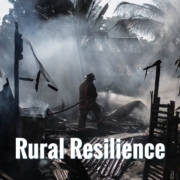
Rural Communities Need More Disaster Relief

The Center for American Progress has released two reports revealing how federal disaster relief does not reach the rural communities most vulnerable to climate risk and least able to prepare for disasters.

Some initial solutions include:

  • Invest up to 20 percent of grants in building lasting capacity, such as hiring local and long-term staff.
  • Target more noncompetitive project funding to low-capacity rural communities using metrics that measure physical and social vulnerability and capacity.
  • Increase rural competitiveness for national grants by making small and appropriately designed projects eligible.
  • Align grant eligibility criteria and application requirements among federal agencies and programs.
  • Provide agency assistance to help rural communities navigate the complex process of securing federal grants.

The Daily Yonder‘s Tim Marema interviews Susan L. Cutter, a professor and director of the USC’s Hazards Vulnerability & Resilience Institute studying the science of community resilience and vulnerability, about the unique challenges rural areas face when experiencing a disaster.

HAC News: September 29, 2022

TOP STORIES

Federal funding expected to continue

The Senate and House are likely to pass H.R. 6833, a continuing resolution to keep the federal government open when fiscal year 2023 begins on October 1, and President Biden is expected to sign the measure. It will keep most federal housing programs at FY22 levels, with an additional $2 billion for the Community Development Block Grant Disaster Recovery program. The CR ends on December 16, so further congressional action on FY23 appropriations will be required by then.

Disaster guides online for survivors of Hurricanes Fiona and Ian

The Housing Assistance Council’s thoughts are with our rural partners and communities affected by the recent hurricanes in the South and the Caribbean. HAC offers online resource guides with information for individuals and families in areas hit by Hurricane Ian and Hurricane Fiona. Other disaster resources from HAC include Rural Resilience in the Face of Disaster and a Disaster Response for Rural Communities Guide.

National Rural Housing Conference set for October 2023

Mark your calendars and save the date! HAC’s National Rural Housing Conference will be held October 24-27, 2023 in Washington, DC and online. The conference brings together stakeholders in the field of rural affordable housing from local nonprofits, federal agencies, Congress, state and local governments, and other industry leaders for two-and-a-half days of training, discussion, and networking. We are excited to see you all in DC in 2023!

Rural housing preservation bill introduced in Senate

The Strategy and Investment in Rural Housing Preservation Act, S. 4872, was introduced on September 15 by Senators Jeanne Shaheen (D-NH) and Tina Smith (D-MN). Like other measures introduced in the past several years, this bill would authorize USDA’s Multifamily Preservation and Revitalization (MPR) program, establish a preference for restructuring a property’s USDA mortgage loan when possible, and decouple Section 521 Rental Assistance so that tenants can continue to receive aid when mortgage restructuring is not possible. It would expand eligibility for Section 542 vouchers and would require USDA to improve its technology and submit a plan for preserving its rental portfolio. A companion bill, H.R. 1728, was introduced in the House by Rep. Cindy Axne (D-IA) in March 2021.

Senate subcommittee hears ideas for improving USDA housing programs

Witnesses described the successes and shortcomings of the rural housing programs at a September 20 hearing titled Examining the U.S. Department of Agriculture’s Rural Housing Service: Stakeholder Perspectives, convened by the Senate Banking Committee’s Subcommittee on Housing, Transportation, and Community Development. Recommendations covered single-family and multifamily programs, as well as staffing and technology issues. HAC, the National Housing Law Project, and the National Rural Housing Coalition submitted written testimony.

RuralSTAT

In rural areas, recipients of disaster recovery aid from FEMA’s Hazard Mitigation Grant Program received less assistance (about 5.7% less on average) than those in urban areas. Source: Hazard Reduction and Recovery Center at Texas A&M University.

OPPORTUNITIES

HUD offers Section 202 elderly housing funds

The Section 202 program makes capital advances to sponsors to finance construction, reconstruction, moderate or substantial rehabilitation, or acquisition of a structure with or without rehabilitation, to provide housing to elderly persons who can live independently with some services. This year HUD is also supporting the development of intergenerational housing for elderly caregivers raising children. Applications are due January 25. For more information, contact HUD staff.

REGULATIONS AND FEDERAL AGENCIES

New colonia determination proposed, based on HAC research

The Federal Housing Finance Agency proposes to change the way it determines what geographic areas are considered colonias for purposes of Fannie Mae’s and Freddie Mac’s Duty to Serve activities. Based on research conducted by HAC, FHFA suggests it would identify colonias by census tracts, even when they do not meet a definition of “rural.” Comments will be due 60 days after the proposal is published in the Federal Register.

HOME regulation finalized

HUD has finalized without change an interim final rule issued December 2, 2016. The rule revised how HUD determines compliance with commitment requirements and made revisions to prevent loss of allocated HOME funds when program income is expended. For more information, contact Virginia Sardone, HUD, 202-708-2684.

HUD requests input on new green retrofit program

HUD is designing a new Green and Resilient Retrofit Program that will provide loans and grants to support energy and water efficiency retrofits and climate resilience of HUD-assisted multifamily properties. The department seeks public input by October 27 to inform prioritization of work, treatment of cost-benefit analyses, and key design elements. For more information, contact Lauren Ross, HUD, 202-402-5423.

Meetings will cover aligning HUD’s manufactured housing code with energy conservation standards

HUD’s Manufactured Housing Consensus Committee will hold meetings on October 18-20 and November 15-17 to discuss rulemaking to align the HUD Code for manufactured housing with the Department of Energy’s Energy Conservation Standards for Manufactured Housing, which have a required compliance date of May 31, 2023. The meetings are open to the public. For more information, contact Teresa B. Payne, HUD, 202-708-6423. To sign up to make comments at a meeting or to submit written comments, contact Home Innovation Research Labs, 1-888-602-4663.

USDA again extends authorization for third-party appraisals

In connection with Section 502 direct loans, USDA will continue to accept appraisals obtained by self-help grantees, certified loan application packagers, agency-approved intermediaries, and leveraged or other participating lenders. The temporary authorization was due to expire September 30, 2022, but now will remain effective through September 30, 2023. The appraisal fee is an out-of-pocket expense to the applicant but may be reimbursed with loan funds at loan closing. For more information, contact a USDA RD office.

Input requested on farm labor shortages and protections

USDA’s Farm Service Agency held listening sessions September 28 and 29 on the recently announced Farm Labor Stabilization and Protection Pilot Grant Program, which aims to address labor shortages in agriculture, reduce “irregular” migration, and improve labor protections for farmworkers. FSA will also consider written comments received by October 24. For more information, contact Linda Cronin, FSA, 202-692-4928.

EVENTS

HAC webinar to cover permanent supportive housing

Permanent Supportive Housing in Rural Areas, scheduled for October 5, will provide information on challenges and opportunities. Permanent supportive housing offers long-term affordable housing with access to supportive services for vulnerable populations. The session will cover supportive housing models and strategies as well as financial resources for acquisition, rehab, and new construction.

Nonprofit finances, homelessness funding, and disaster resilience information posted

Recordings and materials from three recent HAC webinars are available online.

PUBLICATIONS AND MEDIA

Data, reports, and more available at Black Wealth Data Center

The Black Wealth Data Center site says it “intends to fuel the creation of a national standard for racial wealth equity and drive nonpartisan, evidence-based decisions with the comprehensive data necessary to unlock innovation.” The center was conceived and funded by Bloomberg Philanthropies’ Greenwood Initiative and is hosted by Prosperity Now.

Report describes ways to prevent evictions

Home for Good: Strategies to Prevent Eviction and Promote Housing Stability, a recent paper from Enterprise Community Partners, describes holistic strategies for preventing evictions and promoting housing stability. Guidance includes ensuring housing stability and intervening early to help those most vulnerable to evictions.

Inflation Reduction Act’s housing energy provisions summarized

What Does the Inflation Reduction Act Mean for Housing?, a post from the Bipartisan Policy Center, presents a detailed summary of the housing-related efforts that will be supported by the recent Inflation Reduction Act. They focus on energy efficiency and climate resilience.

U.S. territories and mainland rural areas may be losing population for the same reasons

A Washington Post article entitled People are Fleeing Puerto Rico, Guam and Every Other U.S. Territory. What Gives? explores the universal population loss in the U.S. territories over the last decade. The article finds the territories are in a situation very similar to that of many rural areas on the mainland. Policy changes and the rise of China as a dominant manufacturer have meant declining job opportunities. People leave – particularly the best and brightest – and that creates a cycle where there are fewer resources and fewer opportunities for those who remain, so some of them leave, and so on. Climate change and other factors apply also.

Increased costs impact LIHTC developments

Filling Funding Gaps: How State Agencies are Moving to Meet a Growing Threat to Affordable Housing, a report for the National Council of State Housing Agencies, says unexpected cost increases have affected almost all deals that were awarded Low-Income Housing Tax Credits from 2019 to the present. Interviewees reported cost increases of around 30%, with some even larger. Many sought other funding to close the resulting gaps, reducing the resources available for other affordable housing efforts.

Aspen Institute launches new rural development website

The Aspen Institute Community Strategies Group’s site features CSG resources including the Thrive Rural Framework, a tool for local assessment, priority setting, and strategy. It will also offer content from partners including HAC.

HAC

HAC seeks Research Associate and Housing Specialist – Native American Communities

  • The Research Associate conducts original research, manages data, and disseminates information that informs local strategies and national policies to improve conditions for rural Americans. This position is eligible for telecommuting.
  • The Housing Specialist – Native American Communities is responsible for providing direct technical assistance, coaching, and training to tribal communities, tribal housing departments, tribal housing authorities, and nonprofit organizations serving tribal communities. Travel is required. This position is eligible for telecommuting.

Need capital for your affordable housing project?

HAC’s loan fund provides low interest rate loans to support single- and multifamily affordable housing projects for low-income rural residents throughout the U.S. and territories. Capital is available for all types of affordable and mixed-income housing projects, including preservation, new development, farmworker, senior and veteran housing. HAC loan funds can be used for pre-development, site acquisition, site development, construction/rehabilitation and permanent financing. Contact HAC’s loan fund staff at hacloanfund@ruralhome.org, 202-842-8600.

Please note: HAC is not able to offer loans to individuals or families. Borrowers must be nonprofit or for-profit organizations or government entities (including tribes).

Want to reprint a HAC News item?

Please credit the HAC News and provide a link to HAC’s website. Thank you!
Hurricane Ian Disaster Guide

Hurricane Ian hit Florida’s southwest coast as a Category 4 storm with 155 mph winds on Wednesday, September 28, 2022. Over 2.5 million residents across Florida are without power and many must boil their water. Lee and Charlotte counties were hit the hardest with major flooding and wind damage. The governor has declared a state of emergency and President Biden has ordered federal aid to support recovery efforts. The storm weakened as it moved northeast over the state and is expected to move off the coast Thursday and approach the coast of Georgia and South Carolina on Friday.

HAC offers the following resources with information for nonprofits dealing with loss and damage from Hurricane Ian: Rural Resilience in the Face of Disaster site and Disaster Response for Rural Communities Guide.

If you are in need of emergency, transient housing, you can text SHELTER and your Zip Code to 43362 (4FEMA) to find where the shelter closest to you is located.

TIPS

Please keep in mind the following safety protocols for hurricanes and flooding:

  • Only call 911 if you have an immediate need for medical attention or evacuation assistance.
  • If you can’t get through to 911 on first try, keep calling.
  • DO NOT DRIVE through high water and DO NOT DRIVE AROUND BARRICADES! Just 2 feet of water can sweep your vehicle away.
  • DO NOT WALK through flood waters. Just 6 inches of moving water can knock you down. 4
  • If your home floods, STAY THERE. You are safer at home than trying to navigate flooded streets on foot.
  • If floodwaters rise around your car but the water is NOT MOVING, abandon the car and move to higher ground. Do not leave the car and enter MOVING water.
  • STAY AWAY from streams, rivers, and creeks during heavy rainfall. These areas can flood quickly and with little warning.
  • MOVE important items – especially important documents like insurance policies – to the highest possible floor. This will help protect them from flood damage.
  • DISCONNECT electrical appliances and do not touch electrical equipment if you are wet or standing in water. You could be electrocuted.

This flooding event is a reminder that all residents in this area should carry flood insurance. Contact your insurance agent for more information about purchasing flood insurance or visit the National Flood Insurance Program at www.fema.gov/national-flood-insurance-program or call 1-888-379-9531. Please keep in mind that new insurance policies take 30 days to go into effect.

If your home has experienced damage, remember to check the outside of your home before you enter. Look for loose power lines, broken or damaged gas lines, foundations cracks, missing support beams, or other damage. It may be safest to ask a building inspector of contractor to check the structure before you enter. Do not force jammed doors open, as they may be providing needed support to the rest of the home. Sniff for gas to ensure there are no natural or propane gas leaks. If you do have a propane tank system, make sure to turn off all valves and contact a propane supplier to check the system before you use it again. Check floors and ceilings to ensure they are not sagging from water damage. This can be especially hazardous. Take photographs of any damage as you may need them for insurance claims or FEMA claims later on.

RESOURCES

Apply for FEMA Assistance by registering online at www.DisasterAssistance.gov. FEMA Disaster Assistance Helpline answers questions about the help offered by FEMA, how to apply for assistance, or the information in your account.
Toll-free helpline: 1-800-621-FEMA (3362)
For hearing impaired callers only:
1-800-462-7585 (TTY)
1-800-621-3362 (Video Relay Service)
Operators are multilingual and calls are answered seven days a week from 7 a.m. to 11 p.m. ET

American Red Cross Disaster Service: For referrals and updates on Red Cross shelter services in your area, locate a local Red Cross office through: https://www.redcross.org/find-help or by calling 1-800-RED CROSS (1-800-733-2767).
The Red Cross helps disaster victims by providing safe shelter, hot meals, essential relief supplies, emotional support and health services like first aid. Trained Red Cross workers often meet one-on-one with families to develop individual plans and identify available resources to help aid recovery.

Fannie Mae Disaster Response Network:

English

Spanish


STATE EMERGENCY MANAGEMENT AGENCIES

Florida

Florida Division of Emergency Management

2555 Shumard Oak Blvd.

Tallahassee, Florida 32399-2100

Phone: (850) 815-4000

https://www.floridadisaster.org/

Georgia

Georgia Emergency Management and Homeland Security Agency

935 United Ave. SE

Atlanta, GA 30316-0055

Phone: (404) 635-7200

https://gema.georgia.gov/locations

South Carolina

South Carolina Emergency Management Division

Phone: (803) 737-8500

https://www.scemd.org/


STATE HOUSING AGENCIES

Florida

Florida Housing Finance Corporation

227 N Bronough Street, Suite 5000

Tallahassee, FL 32301-1367

Phone: (850) 488-4197

http://www.floridahousing.org

Georgia

Georgia Department of Community Affairs / Georgia Housing and Finance Authority

60 Executive Park South NE

Atlanta, GA 30329-2231

Phone: (404) 679-4940

http://www.dca.ga.gov

South Carolina

South Carolina State Housing Finance and Development Authority

300 Outlet Pointe Boulevard, Suite C

Columbia, SC 29210

Phone: (803) 896-9001

Fax: (803) 551-4876

http://www.schousing.com


DEPARTMENT OF HOUSING AND URBAN DEVELOPMENT STATE FIELD OFFICES

Florida

    Jacksonville Field Office

Charles E. Bennett Federal Building

400 W. Bay Street, Suite 1015

Jacksonville, FL 32202

Phone: (904) 232-2627

Director: Alesia Scott-Ford

https://www.hud.gov/states/florida/offices

    Miami Field Office

Brickell Plaza Federal Building

909 SE First Avenue, Room 500

Miami, FL 33131-3028

Phone: (305) 536-4456

Director: Luis M. Rolle

Georgia

Atlanta Regional Office

Five Points Plaza Building

40 Marietta Street

Atlanta, GA 30303

Phone: (404) 331-5136

Regional Administrator: José Alvarez

Phone: (678) 732-2200

https://www.hud.gov/states/georgia/offices

South Carolina

Columbia Field Office

Dept. of Housing and Urban Development Strom Thurmond Federal Building

1835 Assembly Street, 13th Floor

Columbia, SC 29201

Phone: (803) 765-5592

Director- Kristine Foye

https://www.hud.gov/states/south_carolina


USDA RURAL DEVELOPMENT STATE OFFICES

Florida

4500 NW 27th Avenue

Suite D-2

Gainesville, FL 32606
Phone: (352) 338-3400

Director: Lakeisha Hood

https://www.rd.usda.gov/fl-vi

Georgia

Stephens Federal Building

355 E. Hancock Avenue, Stop 300

Athens, GA 30601-2768

Phone: (706) 546-2162

Director: Reggie Taylor

https://www.rd.usda.gov/ga

South Carolina

Strom Thurmond Federal Building

1835 Assembly Street, Room 1007

Columbia, SC 29201

Phone: (803) 765-5163

Director: Dr. Saundra Glover

https://www.rd.usda.gov/sc


Hurricane Fiona Disaster Guide

Información en español aqui.

Hurricane Fiona hit Puerto Rico’s southwest coast on Sunday, September 18, 2022 as a Category 1 storm. As the hurricane makes its way towards the Dominican Republic, the territory is still experiencing devastating flooding, power outages, massive landslides, and heavy rain, with as much as 30 inches of rain fall in some areas. President Joe Biden has declared a state of emergency and Puerto Rico’s governor Pedro Pierluisi says the government is working closely with FEMA as they continue to assess the damage. HAC offers the following resources with information for nonprofits dealing with loss and damage from Hurricane Fiona: Rural Resilience in the Face of Disaster site and Disaster Response for Rural Communities Guide.

Puerto Rican Officials have stated that the territory has shelters available for those that have been displaced by the storm. Although the island’s National Guard is currently conducting rescue operations, Governor Pierluisi urges residents to remain in their homes and shelters as officials work to respond to those in need.

If you or your family has been affected by Hurricane Fiona, or wish to help victims of the hurricane, organizations like Con PR Metidos, Red Cross, and Americares all have resources available. If you are in need of emergency, transient housing, you can text SHELTER and your Zip Code to 43362 (4FEMA) to find where the shelter closest to you is located.

Apply for FEMA Assistance by registering online at www.DisasterAssistance.gov. FEMA Disaster Assistance Helpline answers questions about the help offered by FEMA, how to apply for assistance, or the information in your account.
Toll-free helpline: 1-800-621-FEMA (3362)
For hearing impaired callers only:
1-800-462-7585 (TTY)
1-800-621-3362 (Video Relay Service)
Operators are multilingual and calls are answered seven days a week from 7 a.m. to 11 p.m. ET

American Red Cross Disaster Service: For referrals and updates on Red Cross shelter services in your area, locate a local Red Cross office through: https://www.redcross.org/find-help or by calling 1-800-RED CROSS (1-800-733-2767).
The Red Cross helps disaster victims by providing safe shelter, hot meals, essential relief supplies, emotional support and health services like first aid. Trained Red Cross workers often meet one-on-one with families to develop individual plans and identify available resources to help aid recovery.


DEPARTMENT OF HOUSING AND URBAN DEVELOPMENT FIELD OFFICE

Puerto Rico
San Juan Field Office
235 Federico Costa Street, Suite 200, San Juan, PR 00918
Phone: +1 787-274-5846
Director: Efraín Maldonado


USDA RURAL DEVELOPMENT  FIELD OFFICE
Camuy Sub-Area Office
EDIF 654 Plaza Suite 601
654 Ave. Munoz Rivera
San Juan, PR  00918-4129
Phone: (787) 766-5095
Director: Luis R. Garcia


STATE EMERGENCY MANAGEMENT AGENCIES

Central Office
Sr. Nino Correa Filomeno
Comisionado Interino
Email: ncorrea@prema.pr.gov
Phone: 787-724-0124

San Juan Zone
Zone Director: Sr. Jaime González
Email: jgonzalez@prema.pr.gov
Phone: 787-294-0277

Vega Baja Zone
Zone Director: Sr. Víctor Sánchez Rivera
Email: vsanchez@prema.pr.gov
Phone: 787-965-7770

Arecibo Zone
Zone Director: Sr. Juan C. Santos Santos
Email: aperez@prema.pr.gov
Phone: 787-878-9454

Aguadilla Zone
Zone Director: Sr. Elvis Morales
Email: emorales@prema.pr.gov
Phone: 787-882-6871

Mayagüez Zone
Zone Director: Sr. Alberto Trabal Alicea
Email: atrabal@prema.pr.gov
Phone: 787-833-7272

Ponce Zone
Zone Director: Sr. Paul D. Fourquet
Email: pfourquet@prema.pr.gov
Phone: 787-844-1763

Guayama Zone
Zone Director: Sr. Carlos A. Reyes
Email: careyes@prema.pr.gov
Phone: 787-864-1600

Caguas Zone
Zone Director: Sr. George L. Pacheco
Email: gpacheco@prema.pr.gov
Phone: 787-656-9643

Humacao Zone
Zone Director: Sr. Orlando Díaz flores
Email: odiaz@prema.pr.gov 
Phone: 787-852-4044

Ceiba Zone
Zone Director: Sr. Francisco Bruno Orellano
Email: fbruno@prema.pr.gov
Phone: 787-863-3330


Rural Setaside Included in Major New HUD Homeless Funding Initiative – UPDATED 9/19/22

Webinar recording and slides posted

A webinar titled Funding Opportunities: Learn More About HUD’s Special NOFO to Address Rural Homelessness and New Stability Housing Voucher Program, cosponsored by HAC, the National Alliance to End Homelessness, and the National Association of Housing and Redevelopment Officials, was presented on September 15, 2022. The webinar recording and slide presentations are now available online.

Introduction

On June 22, 2022, HUD released a Notice of Funding Opportunity (NOFO) titled “Continuum of Care Supplemental to Address Unsheltered and Rural Homelessness.” A total of $322 million in recaptured Continuum of Care (CoC) funds is available, comprised of $267.5 million for an “Unsheltered Homelessness Set Aside” and $54.5 million for a “Rural Set Aside.”

Any CoC that registered for the FY 2022 CoC program competition may apply under this NOFO. Projects under the Unsheltered Homelessness Set Aside may serve any geographic area within the CoC. A CoC whose service area includes places that meet the rural definition (below) may apply for either the Unsheltered Homelessness Set Aside or the Rural Set Aside, or both.

Projects that will serve places where CoCs have not previously worked are targeted for special attention within the Rural Set Aside. When HUD scores applications, 10 points out of the total 100 available are specifically for “projects that serve individuals and families in geographic areas that have high levels of homelessness, housing distress, or poverty, and are located where CoC services have until now been entirely unavailable, such as, for example, Trust Lands and Reservations.”

This Competition

CoC applications are due to HUD on October 20, 2022. Each CoC must design its own “collaborative process” to develop its proposal, including a process for project applications. A local organizations or government entity must apply to its area CoC to be included in the CoC’s application to HUD.

This competition is separate from the FY 2022 CoC program competition, which has not yet opened. Applications and awards for this competition will not impact those for the FY 2022 competition.

Eligible Project Applicants

Nonprofit organizations, states, local governments, instrumentalities of state and local governments, Indian Tribes, TDHEs, and PHAs are eligible to apply for project funding under either set aside in this competition. For-profit entities are not eligible to apply or to be subrecipients of grant funds.

Rural Definition

Counties and county equivalents where the Rural Set Aside can be used are listed in the NOFO’s Appendix B.

The rural definition used for this competition was adopted in the HEARTH Act, which provides that a rural area is a county that meets one of three criteria:

  1. It is completely outside of OMB-designated standard metropolitan statistical areas (i.e., it is nonmetropolitan).
  2. It is in an OMB-designated metropolitan statistical area and at least 75% of its population lives in census blocks classified as non-urban.
  3. It is located in a state that has a population density of less than 30 persons per square mile (as reported in the most recent decennial census), and that has at least 1.25% of its total acreage under federal jurisdiction, provided that no metropolitan city in such state is the sole beneficiary of the grant amounts awarded under this NOFO.

Funds Available

The maximum amount that each CoC can request is listed in the NOFO’s Appendix A. These amounts are calculated differently for the two set asides. For the Unsheltered Set Aside, each CoC is eligible for its Preliminary Pro Rata Need (PPRN) for the FY 2022 CoC Program Competition or $60 million, whichever is less. For the Rural Set Aside, the maximum is set at 150% of the combined PPRNs for the FY 2022 CoC Program Competition of all of the CoC’s rural areas.

Grant Terms

Grants under this NOFO will be for three-year terms. Grants for hard costs are not renewable. HUD expects that others will be renewable under regular CoC competitions, though they caution that they cannot guarantee what will happen in the future.

Eligible Activities

The Rural Set Aside can be used to finance more activities than the Unsheltered Set Aside, as summarized in the table below.


Unsheltered Set Aside


Rural Set Aside


Eligible activities


Permanent housing

Supportive services only

HMIS

Joint transitional housing and permanent housing-rapid re-housing

Planning costs (capped at 3% of maximum award amount)

Unified Funding Agency costs (capped at 3% of maximum award amount)


Permanent housing

Supportive services only

HMIS

Joint transitional housing and permanent housing-rapid re-housing

Rent or utilities in some situations

Emergency shelter costs

Repairs to make housing habitable

Capacity building activities (capped at 20% of total funds a CoC requests)

Emergency food and clothing

Costs to use federal inventory property

Staff and overhead directly related to carrying out activities in this list


Ineligible activities


Acquisition

New construction

Rehabilitation


Planning costs

Unified Funding Agency costs


Eligible Participants/Definition of “Homeless”

Characteristics of people who will be eligible to participate in projects funded under each set aside in this NOFO – i.e., those who are considered to be “homeless” – are listed in the table below.


Unsheltered Set Aside


Rural Set Aside


Eligible participants


People who are literally homeless, “except that persons coming from transitional housing must have originally come from places not meant for human habitation, emergency shelters, safe havens, or institutions where they resided for 90 days or less and originally came from places not meant for human habitation, safe havens, or emergency shelters”

Domestic violence victims


People who are literally homeless

People who are precariously housed

Domestic violence victims

Youth or families considered homeless under other statutes, if CoC obtains HUD approval, limited to certain types of projects, and capped at 10% of award


Ineligible participants


People who are precariously housed

Youth or families considered homeless under other statutes


None


Plan for Severe Service Needs

Each CoC applying under this NOFO must develop a “Plan for Serving Individuals and Families Experiencing Homelessness with Severe Service Needs.” For both the Unsheltered and Rural Set Asides, large portions of the application and the potential scoring points are based on these plans.

The NOFO defines Severe Service Needs as

any combination of the following factors: facing significant challenges or functional impairments, including any physical, mental, developmental or behavioral health disabilities regardless of the type of disability, which require a significant level of support in order to maintain permanent housing (this factor focuses on the level of support needed and is not based on disability type); high utilization of crisis or emergency services to meet basic needs, including but not limited to emergency rooms, jails, and psychiatric facilities; currently living in an unsheltered situation or having a history of living in an unsheltered situation; experiencing a vulnerability to illness or death; having a risk of continued or repeated homelessness; and having a vulnerability to victimization, including physical assault, trafficking or sex work.

Most of the plans’ components must be provided in applications for either Unsheltered or Rural funds. The outline of plan contents is provided in the table below, along with indications of where the requirements differ for Rural Set Aside applications.


Plan Component


Required for Unsheltered Set Aside


Required for Rural Set Aside

a. Leveraging housing resources
1. Development of new units and creation of housing opportunities Y Y
2. Landlord recruitment Y Y
b. Leveraging healthcare resources Y Y
c. CoC’s current strategy to identify, shelter, and house individuals and families experiencing unsheltered homelessness
1. Current street outreach strategy Y Y
2. Current strategy to provide immediate access to low-barrier shelter and temporary housing for individuals and families experiencing unsheltered homelessness Y N
3. Current strategy to provide immediate access to low barrier permanent housing for individuals and families experiencing unsheltered homelessness Y Y
d. Updating the CoC’s strategy to identify, shelter, and house individuals experiencing unsheltered homelessness with data and performance Y N
e. Identify and prioritize households experiencing or with histories of unsheltered homelessness Y Y
f. Involving individuals with lived experience of homelessness in decision making Y Y
g. Supporting underserved communities and supporting community development Y Y

A different section of the NOFO contains a paragraph – which also appears in the FY 2021 CoC program NOFO – requiring applicants to identify steps they “will take” to ensure that traditionally marginalized populations (such as racial and ethnic minorities and persons with disabilities) will be able to meaningfully participate in “the planning process.” It is not clear whether, or how, this requirement would apply to the process of developing the severe needs plan, since this plan must be completed in order to be included in the application along with the proposal for steps applicants “will take” in developing future plans.

Application Scoring

For the Unsheltered Set Aside, HUD will select CoCs for awards based on the CoCs’ scores. All projects of the selected CoCs will be funded, up to the funding cap for those CoCs. For the Rural Set Aside, however, HUD will score the individual projects included in each application and select the highest scoring projects, up to the CoC’s maximum funding amount.

HUD will score the rural projects on a 100-point scale. Up to 50 points will correspond to HUD’s score for the CoC’s overall Rural Set Aside application. Up to 40 points will be based on the CoC’s ranking of the project (CoCs are required to rank all project applications for either set aside). Finally, another 10 points may be awarded to “projects that serve individuals and families in geographic areas that have high levels of homelessness, housing distress, or poverty, and are located where CoC services have until now been entirely unavailable, such as, for example, Trust Lands and Reservations.”

HUD may adjust its final project selections to ensure that at least one CoC in each HUD region is funded and that not more than 10 CoCs from a single state are funded.

Links for Additional Information

HUD email address for questions: SpecialCoCNOFO@hud.gov

HUD page where all information and supporting resources for this competition will be posted: https://www.hud.gov/program_offices/comm_planning/coc/specialCoCNOFO

HUD Continuum of Care program page: https://www.hud.gov/program_offices/comm_planning/coc

HUD page to locate a CoC serving a particular area: https://www.hudexchange.info/grantees/find-a-grantee/

HUD standard funding opportunity page for this NOFO: https://www.hud.gov/program_offices/spm/gmomgmt/grantsinfo/fundingopps/fy21coc_urh

Official grants.gov page for this NOFO: https://www.grants.gov/web/grants/view-opportunity.html?oppId=341301

Site where CoC applications will be entered: https://esnaps.hud.gov/


*   *   *

New HUD Rural Homelessness Initiative Announced

On June 22 HUD announced a $365 million Initiative for Unsheltered and Rural Homelessness that will be distributed through Continuums of Care (CoC) and public housing authorities (PHAs) by means of two Notices of Funding Opportunity. The application deadline for CoCs is October 20. HUD is using recaptured CoC and Housing Choice Voucher funding from prior fiscal years to support the initiative.

The initiative includes $322 million in CoC program grants to be distributed by HUD’s Community Planning and Development division:

  • $267.5 million to fund homeless outreach, permanent housing, supportive services, and other costs as part of a comprehensive community approach to solve unsheltered homelessness in 20-40 communities with high incidences of unsheltered homelessness; and
  • $54.5 million targeted to rural communities, prioritizing those with high need but a history of being unable to access CoC grants. HUD is utilizing congressionally granted authority to expand the eligible uses for these funds beyond normal restrictions to enable rural communities to apply for grants to support capacity-building, transportation, and other needs more acutely felt in rural areas.

The division of Public and Indian Housing will distribute $43 million — approximately 4,000 new incremental vouchers — which will be allocated to PHAs with a priority for those that are partners in comprehensive community approaches to solve homelessness.

HAC News: September 15, 2022

TOP STORIES

Continuing resolution needed to keep government running

Before federal fiscal year 2022 ends on September 30, Congress will need to pass a continuing resolution holding most federal funding at current levels. The Biden administration requested a number of “anomalies” – variations from FY22 funding – in a CR, including added funding for CDBG-DR and FEMA disaster relief. A CR could last until mid-December, but nothing has been decided yet.

Poverty increased for rural residents and seniors in 2021, Census Bureau reports

On September 13 the Census Bureau released analyses of national-level income, poverty, and health insurance statistics for 2021, exploring year-over-year changes and other long-term trends. Income in the United States: 2021 did not report a statistically significant change in median household incomes, though the $53,750 median income outside metro areas is considerably lower than the $73,823 income in metro areas. Poverty in the United States: 2021 did not report a statistically significant change in year-over-year official poverty rates for the nation, but did note a statistically significant increase for places outside metro areas from 14.1% in 2020 to 15.0% in 2021, representing approximately 377,000 more people in poverty. There was also a statistically significant increase in the poverty rate for people age 65 or older and, given that rural populations tend to be older than others, that likely accounts for some part of the increase in the rural poverty rate.

Webinar to focus on preparing your organization for disaster

On September 21 HAC will present Preparing Your Organization for Disaster: A Guide to Rural Resilience. As disasters become more frequent, organizations will need to make themselves ready to address the associated housing challenges in their communities. Join HAC during National Preparedness Month to hear from local organizations that have experienced natural disasters from fires to flooding. Discover the value of being prepared and learn how to make your organization disaster resilient. We will also showcase our Rural Resilience in the Face of Disaster website and offer tools to help prepare your organization for disaster.

September is National Preparedness Month

FEMA has posted disaster preparedness resources online.

September is National Recovery Month

President Biden’s proclamation of September as National Recovery Month discusses the substance use disorder epidemic, affecting more than 20 million Americans, highlighting the amplified effects in rural communities. The president also mentions the importance of secure and reliable housing in the recovery process.

September 15 – October 15 is Hispanic Heritage Month

The federal government’s website for the observance states, “We celebrate Hispanic Heritage Month to recognize the achievements and contributions of Hispanic American champions who have inspired others to achieve success.”

RuralSTAT

During 2021, 6.7% of households living outside metro areas had low food security (difficulty providing enough food for all household members) and 4.1% had very low food security (reduced food intake by some members because of limited resources), slightly higher than the national rates of 6.4% and 3.8%. Source: USDA Economic Research Service.

OPPORTUNITIES

Healthy homes funding offered

State, local, and tribal governments, nonprofits, and consortia can use HUD’s Healthy Homes Production Grant Program funds to eliminate housing-related health and safety hazards in privately owned low-income rental or owner-occupied housing, conduct public education and outreach activities, build local capacity, and more. Applications are due October 18. For more information, contact Sacsheen Scott, 202-402-4370.

REGULATIONS AND FEDERAL AGENCIES

Housing aid won’t impact immigrants’ legal status under final “public charge” rule

U.S. immigration law provides that a noncitizen can be denied legal resident status if they are deemed likely to become a “public charge.” Until 2019, longstanding policy focused these determinations on receipt of cash assistance or long-term institutionalization. The Trump administration broadened the rule in 2019 to include non-cash assistance such as federal housing aid and Medicaid. The Biden administration cancelled that rule and resumed using the previous guidance in 2021 and has now issued its own final rule, which focuses on cash supports and takes effect December 23. The only programs considered in a public charge determination will be Supplemental Security Income, Temporary Assistance for Needy Families, state, tribal, or locally funded cash assistance for income maintenance, and long-term institutional care paid for by Medicaid. Information in nine languages is posted by the Protecting Immigrant Families Coalition.

USDA multifamily budgeting information posted, service coordinators now a permitted expense

USDA Rural Development has posted a recording and slides from a training on proposed budgets for borrowers with multifamily housing loans, who must submit annual proposed budgets before their projects’ fiscal years begin. The agency also reminds borrowers that for FY2023, service coordination is a permitted budget expense for RD properties. Service coordinators help residents connect with services available in their community; RD suggests using the resources and information available from the American Association of Service Coordinators. For more information, contact the RD Servicing Specialist assigned to the specific property.

Lease-up reserve reduced for Section 538 rental housing guarantees

Effective immediately, USDA has lowered the amount of the lease-up reserve required for the Section 538 Guaranteed Rural Rental Housing Program. To cover costs while units are being leased to their initial occupants, borrowers are required to provide cash for the lease-up reserve in addition to their initial operating and maintenance contributions. The agency calculates the new calculation will save borrowers an average of around $100,000 per transaction. For more information, contact Tammy Daniels, USDA, 202-720-0021.

Comments requested on updated FEMA guide

FEMA seeks comments by September 23 on an update to its Hazard Mitigation Assistance Program and Policy Guide. The Hazard Mitigation Grant Program funds state, local, tribal, and territorial governments to develop hazard mitigation plans and rebuild in a way that reduces future disaster losses. For more information, contact Jennie Orenstein, FEMA, 202-212-4071.

EVENTS

Senate subcommittee continues review of USDA rural housing programs

The Senate Subcommittee on Housing, Transportation, and Community Development will hold a hearing September 20 titled Examining the U.S. Department of Agriculture’s Rural Housing Service: Stakeholder Perspectives. This session follows one in May that featured Xochitl Torres Small, USDA’s Under Secretary for Rural Development.

Rural rental preservation policy webinar scheduled

Enterprise Community Partners’ Southeast Rural Rental Preservation Academy will hold a National Policy Summit on October 5 looking at how government, philanthropy, housing providers, and advocates can work together to preserve affordable rental homes in rural communities. Speakers will include Farah Ahmad, USDA Deputy Under Secretary for Rural Development.

Listening session to consider Federal Home Loan Bank system

The Federal Housing Finance Agency is conducting a comprehensive review of the Federal Home Loan Bank system. The process will include two public listening sessions and a series of regional roundtable discussions to consider and evaluate the FHLBanks’ role or potential role in addressing housing finance, community and economic development, affordability, and other related issues. The kick-off event and first listening session, FHLBank System at 100: Focusing on the Future, will be held on September 29, in-person in Washington, DC, and virtually. Written comments can also be submitted through October 21.

PUBLICATIONS AND MEDIA

Child poverty dropped more than half from 1993 to 2019

Child poverty in the U.S. fell from 28% in 1993 to 11% in 2019, according to a new study using the Supplemental Poverty Measure, which accounts for government aid and adjusts for local living costs, unlike the Official Poverty Measure. Still, over 8 million children live in poverty and, although the poverty rate fell for all racial and ethnic groups, Black and Hispanic children are far more likely than white children to be poor. (Data for Native American children were not robust enough to be included.) Lessons from a Historic Decline in Child Poverty, a study by Child Trends and the New York Times, found the drop was attributable to factors including lower unemployment, increased labor force participation among single mothers, increases in state-level minimum wages, and especially the expansion of government aid. The report includes a set of recommendations to further reduce child poverty.

Data released on sheltered homelessness in 2019 and 2020

Part 2 of HUD’s Annual Homeless Assessment Report to Congress, Estimates of Homelessness in the United States, provides national-level estimates of people experiencing sheltered homelessness during 2019 and 2020. It reports demographics and patterns of shelter use, including not only emergency shelters, safe havens, and transitional housing programs, but also permanent supportive housing and rapid re-housing rent subsidies. The data shows disproportionately low rates of shelter use in rural places for all demographic categories, but those findings seem likely to reflect the lower availability of shelters there rather than lower levels of need.

HUD offers important funding for rural and unsheltered homelessness

Kansas Reflector reports on the importance for rural places of HUD’s currently open initiative to address rural homelessness. Rural areas have few homeless programs and services and, while these areas may have vacant housing, it may not be safe to live in. Continuums of Care must apply for the available funding by October 20. For more information, visit HAC’s post about this initiative.

New maps show climate change risks in U.S.

  • A Climate Mapping for Resilience and Adaptation portal compiles data from several federal agencies into a live dashboard to help communities see climate change hazards for the present and the future. The tool aims to help communities track real-time impacts and access federal resources for long-term planning.
  • Hazardous heat is mapped by First Street Foundation, joining flood and fire dangers on the Risk Factor site, which provides property-level data about current and future dangers.

University students help rural town compile housing data

An article on UGA Today titled Students Help Gather Housing Data for Rural Community describes practicum work by University of Georgia Master of Public Administration candidates helping the city of Lyons perform a property assessment. The students got real life experience collecting data and turning it into useful information. Lyons, in turn, can use the information in planning and in applying for funds to address housing need.

HAC

HAC seeks Housing Specialist – Native American Communities and Community Placemaking Manager

  • The Housing Specialist – Native American Communities is responsible for providing direct technical assistance, coaching, and training to tribal communities, tribal housing departments, tribal housing authorities, and nonprofit organizations serving tribal communities. Travel is required. This position is eligible for telecommuting.
  • The Community Placemaking Manager helps rural residents use their unique artistic and cultural resources to guide local development and shape the future design of their communities. The manager will cultivate the capacity of partner organizations and local communities, facilitate peer-to-peer learning engagements, manage day-to-day program functions and activities, communicate program success, and prepare funding applications. Travel is required. This position is eligible for telecommuting.

Need capital for your affordable housing project?

HAC’s loan fund provides low interest rate loans to support single- and multifamily affordable housing projects for low-income rural residents throughout the U.S. and territories. Capital is available for all types of affordable and mixed-income housing projects, including preservation, new development, farmworker, senior and veteran housing. HAC loan funds can be used for pre-development, site acquisition, site development, construction/rehabilitation and permanent financing. Contact HAC’s loan fund staff at hacloanfund@ruralhome.org, 202-842-8600.

Please note: HAC is not able to offer loans to individuals or families. Borrowers must be nonprofit or for-profit organizations or government entities (including tribes).

Want to reprint a HAC News item?

Please credit the HAC News and provide a link to HAC’s website. Thank you!


HAC News: September 1, 2022

TOP STORIES

HUD announces thousands of new vouchers, some with provisions to help rural applicants

  • HUD will use over $43 million to support around 4,000 new incremental vouchers for a new Stability Voucher program, which is intended to work with the special Continuum of Care funding targeted to unsheltered and rural homelessness. Stability Vouchers may assist households who are homeless, at risk of homelessness, fleeing or attempting to flee domestic violence, dating violence, sexual assault, stalking, or human trafficking, and veterans and families that include a veteran family member who meets one of these criteria. Program details are set out in HUD Notice PIH 2022-24. Stability Vouchers will be allocated to PHAs that administer Housing Choice Voucher programs, demonstrate a strategy to coordinate assistance with services available in the community, and register their interest with HUD by October 20.
  • HUD will award about 19,700 new regular Housing Choice Vouchers to PHAs, using $200 million that were included in its FY22 appropriation for this purpose. After the first year, these vouchers will roll into each PHA’s renewals. As explained in Notice PIH 2022-29, HUD will allocate as few as three vouchers per PHA to encourage rural and small PHAs to use them. HUD planned to notify PHAs of their awards by August 26 and PHAs were asked to inform HUD by September 2 if they chose to decline their awards.

Temporary Buy America waiver approved for USDA Rural Development

USDA RD has not yet determined whether it will consider housing and community facilities to be infrastructure and therefore subject to the Build America, Buy America (BABA) Act requirements adopted in the 2021 Infrastructure Investment and Jobs Act. It has, however, activated a six-month waiver so that from August 4, 2022 through February 3, 2023, recipients of Rural Development funds will not have to consider the origin of iron, steel, manufactured products, and construction materials used in infrastructure projects unless specifically instructed to do so. The currently open funding round of the ReConnect Program is not covered by the waiver, so BABA does apply to those awards. RD states that the waiver will allow it time “to implement the new requirements and shepherd its customers through a transition to BABA.” A request for a longer-term waiver for de minimis, small grants, and minor components of infrastructure projects financed by all USDA agencies is still pending.

HAC’s Shonterria Charleston appointed to USDA Equity Commission subcommittee

USDA recently announced the 12 members of its Equity Commission’s Subcommittee on Rural Community Economic Development, including Shonterria Charleston, HAC’s Director of Training and Technical Assistance. The RCED subcommittee, along with the full commission and its Subcommittee for Agriculture, will meet on September 20 and 21. The meetings are open to the public online. USDA invites public comments to equitycommission@usda.gov on issues that should be considered by the commission and its subcommittees.

RuralSTAT

A study of rural communities in 10 states found that nonfatal overdoses occurred more often in people using both methamphetamine and opioids (22%) than in those using opioids alone (14%) or methamphetamine alone (6%). Source: National Rural Opioid Initiative.

OPPORTUNITIES

HUD offers grants to modify older adults’ homes

The Older Adult Home Modification Program makes grants to experienced nonprofits, state and local governments, and PHAs for comprehensive programs that make low-cost, high-impact safety and functional home modifications to enable low-income elderly homeowners to remain in their homes. One third of the funding is set aside for communities with “substantial rural populations.” The deadline is October 13. For more information, contact Dr. Taneka Blue, HUD, 202-402-6846.

ReConnect broadband program funding available

From September 6 through November 2, USDA will accept applications for loans and grants under the fourth round of funding from the ReConnect Program. Funds can be used for the costs of construction, improvement, or acquisition of facilities and equipment to facilitate broadband deployment in rural areas. Eligible applicants include nonprofit or for-profit organizations, partnerships, cooperatives, states or local governments, Tribes, and U.S. territories or possessions. This funding round is not covered by USDA’s six-month waiver of Buy America requirements, so projects will need to comply with those mandates. For more information, contact Laurel Leverrier, USDA, 202-720-9554.

Heirs’ Property Relending Program announces lenders, seeks more

  • USDA has selected three intermediary lenders for its new Heirs’ Property Relending Program: Akiptan, Inc., the Cherokee Nation Economic Development Trust Authority, and the Shared Capital Cooperative, which has a partnership with the Federation of Southern Cooperatives. These entities will make loans to help agricultural producers and landowners resolve heirs’ land ownership and succession issues. Details about geographic coverage and contacts for the lenders are posted on USDA’s HPRP site.
  • USDA’s Farm Service Agency is accepting applications from additional CDFIs to become HPRP intermediaries. For more information, contact Raenata Walker, USDA, 202-720-4671.

REGULATIONS AND FEDERAL AGENCIES

Rules revised for Section 502 guaranteed loans

Changes to program regulations for the Section 502 Single-Family Housing Guaranteed Loan Program, effective on November 29, will update the requirements for lenders, provide guidance for processing applicants with delinquent child support payments, and align builder requirements with the credit program requirements of other federal agencies. For more information, contact Laurie Mohr, USDA, 314-679-6917.

Fair Market Rents posted

HUD’s Fair Market Rents for fiscal year 2023 are posted online and will be effective on October 1, 2022. Comments are due October 3. For more information, contact Adam Bibler, HUD, 202-402-6057.

FEMA plans to address disasters affecting Tribal lands

The 2022-2026 FEMA National Tribal Strategy is intended to help the agency “to better address its responsibilities to federally recognized tribal nations when responding to and preparing for disasters affecting tribal lands.” The strategy calls for FEMA to initiate a national study on Tribal emergency management capacity and capabilities, develop a program guide, develop Tribal-specific technical assistance resources, convene an annual meeting of national and regional Tribal liaisons, and expand training opportunities for Tribal nations.

HUD supports HIV/AIDS plan

Noting that “access to safe, stable, and affordable housing is a critical social determinant of health,” HUD Secretary Marcia Fudge committed to take several actions in support of the recently issued National HIV/AIDS Strategy Federal Implementation Plan for the United States, 2022-2025. HUD will distribute HIV prevention information to people who administer and people who receive HUD-assisted housing programs, including youth in HUD-assisted housing; partner with other agencies to address situations where homelessness or unstable housing is an identified factor for HIV/AIDS; make efforts to ensure racial and LGBTQ+ equity in access to Housing Opportunities for Persons With AIDS housing and services; and use scoring points to incentivize communities to address inequities.

Advisory committee to focus on affordable, equitable, and sustainable housing

The Federal Housing Finance Agency is establishing a Federal Advisory Committee on Affordable, Equitable, and Sustainable Housing to advise the agency as it oversees Fannie Mae, Freddie Mac, and the Federal Home Loan Bank System. FHFA will publish a notice in the future soliciting applications for committee membership from people representing diverse communities, points of view, institution asset sizes, and geographical locations. For more information, contact Erin Barry, FHFA, 202-649-3287.

PUBLICATIONS AND MEDIA

Most Native American veterans cannot take advantage of VA home loan program

National Public Radio reports how rarely Native American veterans on tribal land use the VA’s Native American Direct Loan program to finance their homes. Barriers include limited data about the program’s results, out-of-date user manuals, and the fact that only 20% of the country’s almost 600 tribes have Memorandums of Understanding with VA, which are required before the VA can legally make loans on tribal land. GAO released a report in April with recommendations on ways for the VA to increase mortgage loan program participation.

Attorneys differ regarding Supreme Court decision’s impact on fair housing

Could This Supreme Court Ruling Affect Fair Housing?, a Shelterforce article, compiles the views of several housing attorneys on the possible impact of the court’s West Virginia v. Environmental Protection Agency decision, which held that EPA could not adopt a regulation with a significant economic impact because Congress had not explicitly granted it the authority to do so. The lawyers quoted in the article, all fair housing experts, reached varying conclusions about whether the same rationale could be used to challenge regulations on affirmatively furthering fair housing or on disparate impact.

HAC

HAC offers career opportunities

  • The Housing Specialist – Native American Communities is responsible for providing direct technical assistance, coaching, and training to tribal communities, tribal housing departments, tribal housing authorities, and nonprofit organizations serving tribal communities. Travel is required. This position is eligible for telecommuting.
  • The Loan Officer, Rental Preservation, conducts rental housing lending and preservation technical assistance activities. This work includes marketing, originating, and underwriting new loan transactions. The Loan Officer also provides hands-on technical assistance to nonprofits that are seeking to acquire and preserve existing USDA-financed (Section 515) rental developments. This position is eligible for telecommuting.
  • The Community Placemaking Manager helps rural residents use their unique artistic and cultural resources to guide local development and shape the future design of their communities. The manager will cultivate the capacity of partner organizations and local communities, facilitate peer-to-peer learning engagements, manage day-to-day program functions and activities, communicate program success, and prepare funding applications. Travel is required. This position is eligible for telecommuting.
  • The Training Coordinator will support the successful management and delivery of HAC’s training activities as well as its biennial National Rural Housing Conference. The role requires strong logistical training events experience, exceptional attention to detail, and a passion for creating high-quality training events for attendees. This position is eligible for telecommuting.

Need capital for your affordable housing project?

HAC’s loan fund provides low interest rate loans to support single- and multifamily affordable housing projects for low-income rural residents throughout the U.S. and territories. Capital is available for all types of affordable and mixed-income housing projects, including preservation, new development, farmworker, senior and veteran housing. HAC loan funds can be used for pre-development, site acquisition, site development, construction/rehabilitation and permanent financing. Contact HAC’s loan fund staff at hacloanfund@ruralhome.org, 202-842-8600.

Please note: HAC is not able to offer loans to individuals or families. Borrowers must be nonprofit or for-profit organizations or government entities (including tribes).

Want to reprint a HAC News item?

Please credit the HAC News and provide a link to HAC’s website. Thank you!
 

HAC News: August 18, 2022

TOP STORIES

Inflation Reduction Act includes housing energy provisions

On August 16, President Biden signed the Inflation Reduction Act, the scaled-back version of the Build Back Better Act. BBB would have put substantial funding into existing USDA and HUD housing programs, whereas the IRA’s housing provisions focus on increasing energy efficiency and climate resilience. They include creation of a new HUD-administered program that will make loans and grants to properties assisted by HUD’s Section 202, 811, and 236 programs, and those with Section 8 project-based vouchers.

Loan payment program for Black farmers replaced

The Inflation Reduction Act replaces the loan repayment program for Black and other disadvantaged farmers that was created in the 2021 American Recovery and Reinvestment Act. Implementation of the ARPA effort had been frozen pending the resolution of several lawsuits claiming that basing repayments on race was discriminatory. The IRA’s version will provide payments to anyone who experienced past discrimination in USDA farm lending programs. It also includes grants and loans “to improve land access (including heirs’ property and fractionated land issues) for underserved farmers, ranchers, and forest landowners.” Additional funds are allocated for outreach, education, research, equity commissions, and other aid.

Assistance available for transferring Section 515 properties

USDA recently awarded funding to technical assistance providers, including HAC, to help nonprofits acquire and preserve Section 515 rental properties. HAC will assist properties located in Alabama, Florida, Georgia, Kentucky, Mississippi, North Carolina, South Carolina, and Tennessee. Current owners of 515 properties who are interested in transferring ownership to a nonprofit organization, or nonprofits who are interested in acquiring one, can reach out to Kristin Blum, HAC. To find a TA provider in another state, click the Contact tab at this link. TA is also available for transfers of Section 514/516 farmworker properties in some states; click the Contact tab at this link.

Census estimates housing units undercounted in rural and Native areas, requests input

  • Nationwide, there was no statistically significant undercount or overcount of housing units in the 2020 decennial census, the Census Bureau calculates. The bureau’s Post-Enumeration Survey report on the housing unit count does identify some statistically significant variations at the regional and state levels. It also estimates a 4.2% net undercount in the most remote rural places where internet and mail delivery are limited. It calculates a national net undercount of 7% for housing units on American Indian Reservations, though not in other types of Native lands. PES reports on the 2020 counts of population and of certain characteristics were published earlier this year.
  • The Census Bureau requests comments on improving participation in the 2030 Census. It is particularly interested in ways to reach the Black, American Indian and Alaska Native, and Hispanic or Latino populations, as well as young children aged 0-4, because these groups were undercounted in 2020 and previous years. Comments are due November 15. For more information, contact Jennifer Reichert, Census, 301-763-6712.

RuralSTAT

With 39 confirmed deaths, the July floods in eastern Kentucky were the deadliest non-tropical flash floods in the U.S. since 1977. Source: The Weather Channel.

OPPORTUNITIES

Housing Stability Evaluation Incubator offers support

The Housing Stability Evaluation Incubator will assist housing service providers to increase their capacity to generate and utilize evidence about programs that aim to address homelessness or foster housing stability. The Abdul Latif Jameel Poverty Action Lab offers funding, training, and technical support for nonprofits, government agencies, and others to design randomized evaluations of their programs. An existing data collection infrastructure is not necessary, and sample sizes can be small for some projects. J-PAL will hold a webinar for potential applicants on August 25. Letters of interest are due October 17. For more information, sign up for a conversation with J-PAL staff or contact Bridget Mercier, J-PAL.

REGULATIONS AND FEDERAL AGENCIES

Fair lending data to be required for mortgage loans in secondary market

Fannie Mae and Freddie Mac will require lenders that service loans to obtain and maintain fair lending data on borrowers’ age, race, ethnicity, gender, and preferred language. The data will transfer with servicing throughout the mortgage term. Servicers must implement this change starting on March 1, 2023.

New multifamily benchmarks proposed for Fannie Mae and Freddie Mac

The Federal Housing Finance Agency proposes to set 2023 and 2024 multifamily housing goals for Fannie Mae and Freddie Mac based on percentages of loan purchases rather than number of units. Comments are due October 17. For more information, contact Ted Wartell, FHFA, 202-649-3157.

Ahmad becomes RD Deputy Under Secretary

Farah Ahmad, formerly Chief of Staff in the Office of the Under Secretary for Rural Development, was recently promoted to Deputy Under Secretary, after Justin Maxson left USDA.

PUBLICATIONS AND MEDIA

New tool maps environmental justice and health by location

An Environmental Justice Index from the Centers for Disease Control and Prevention provides census tract level analysis ranking the cumulative impacts of environmental injustice on health. CDC suggests this tool can be used by organizations, researchers, and others to “identify and prioritize areas that may require special attention or additional action to improve health and health equity, educate and inform the public about their community, analyze the unique, local factors driving cumulative impacts on health to inform policy and decision-making, and establish meaningful goals and measure progress towards environmental justice and health equity.”

Treasury makes economic argument for racial equity

In the first of a planned series of blog posts detailing the strain that racial inequality places on the economy, Treasury Department officials outline the origins and persistence of racial inequality and its importance for U.S. economic growth. As an example of its impact, they note that up to 40% of growth in U.S. GDP per capita between 1960 and 2010 can be attributed to increases in the shares of women and Black men working in highly skilled occupations. “Our economy as a whole cannot be as productive as possible,” the authors write, “unless all individuals are given the opportunity to be as productive as possible.”

Survey finds CDBG Disaster Recovery program important to grantees

The Bipartisan Policy Center and the Council of State Community Development Agencies surveyed officials from 36 Community Development Block Grant Disaster Recovery program grantees about the program’s benefits and difficulties, as well as their priorities for reform. Almost all (94%) said CDBG-DR funding was very or somewhat important to their state or community’s recovery. A majority (69%) said that housing was the most important unmet need CDBG-DR addressed. Respondents strongly supported permanent statutory authorization of the program as well as more standardized program forms and templates.

Climate change brings higher temperatures

An analysis of current and future heat events released by First Street Foundation predicts that much of the middle of the U.S. will experience heat indices above 125 degrees by 2053. Find your home’s risk factors on First Street’s map. For a different perspective, Brown University’s Climate Opportunity Map shows local benefits that would result from investment in clean energy and climate solutions.

Annual Kids Count report focuses on mental health

The Annie E. Casey Foundation’s 2022 KIDS COUNT® Data Book presents annual data about economic well-being, education, health, and family and community at the national and state levels, and ranks states in overall child well-being. This year the report focuses on the mental health crisis in American children, linking it to poverty, housing cost burdens, and under-resourced communities. Challenges are greater for BIPOC children than for white children.

Most young adults stay close to home, even if wages are higher elsewhere

An interactive data tool created by the U.S. Census Bureau and Harvard University allows users to examine migration patterns from or to specific “commuting zones,” which are clusters of counties with strong commuting ties. An accompanying study, The Radius of Economic Opportunity: Evidence from Migration and Local Labor Markets, reports that 80% of young adults live within 100 miles of where they grew up. White young adults are more likely to leave their childhood CZ than their Black peers and to travel farther when they do leave. Those from higher-income families are also more likely to move. The researchers conclude that the individuals who benefit most from local wage growth are those who grew up nearby.

Paper examines links between housing justice and gender justice

The current housing crisis is based in underinvestment and policies that stripped wealth from women, people of color, and people with disabilities, says a report from the National Women’s Law Center, the Insight Center, and the Groundwork Collaborative. The Roots of Discriminatory Housing Policy: Moving Toward Gender Justice in Our Economy explains that before the coronavirus pandemic, women – particularly women of color – were more likely to rent their homes and to spend the majority of their income on housing. During the pandemic, Black and Latina women have been more likely than white, non-Hispanic men to be behind on rent and mortgage payments and to be at risk of eviction. The report’s recommendations for change are based on treating housing as a public good, not a commodity.

Dramatic overdose increases predicted for opioid epidemic’s fourth wave

Research from Northwestern University Feinberg School of Medicine predicts that the historic high rates of overdose deaths will continue to grow exponentially in a coming fourth wave. The study’s primary author states that the combination of synthetic opioids and stimulants will continue to increase overdoses across both rural and urban counties.

HAC

HAC seeks Housing Specialist – Native American Communities; and Loan Officer, Rental Preservation

  • The Housing Specialist – Native American Communities is responsible for providing direct technical assistance, coaching, and training to tribal communities, tribal housing departments, tribal housing authorities, and nonprofit organizations serving tribal communities. Travel is required. This position is eligible for telecommuting.
  • The Loan Officer, Rental Preservation, conducts rental housing lending and preservation technical assistance activities. This work includes marketing, originating, and underwriting new loan transactions. The Loan Officer also provides hands-on technical assistance to nonprofits that are seeking to acquire and preserve existing USDA-financed (Section 515) rental developments. This position is eligible for telecommuting.

Need capital for your affordable housing project?

HAC’s loan fund provides low interest rate loans to support single- and multifamily affordable housing projects for low-income rural residents throughout the U.S. and territories. Capital is available for all types of affordable and mixed-income housing projects, including preservation, new development, farmworker, senior and veteran housing. HAC loan funds can be used for pre-development, site acquisition, site development, construction/rehabilitation and permanent financing. Contact HAC’s loan fund staff at hacloanfund@ruralhome.org, 202-842-8600.

Please note: HAC is not able to offer loans to individuals or families. Borrowers must be nonprofit or for-profit organizations or government entities (including tribes).

Want to reprint a HAC News item?

Please credit the HAC News and provide a link to HAC’s website. Thank you!

 

HAC Submits Community Reinvestment Act Comments


The Community Reinvestment Act is essential to communities across the nation. Through CRA, financial services have been made available to many places that might otherwise be overlooked. In spring 2022 the three federal agencies that regulate banks and other lenders – the Office of the Comptroller of the Currency, the Federal Reserve Board, and the Federal Deposit Insurance Corporation – jointly issued a proposed new CRA rule. This proposal, and the many efforts which will follow, are critically important to ensure not only that current CRA-related activities and investments continue but that they expand to reach populations and communities for which access to affordable finance is still elusive.

This is especially important in rural communities across the country as many are considered high credit need areas. CRA modernization will help incentivize more lending in these areas and increase community development activities. As rural communities continue to change, the CRA must adjust as well to reflect modern lending practices. The proposed rule has the potential to further increase lending in high need rural areas, but HAC has a number of recommendations to optimize CRA’s impact.

HAC believes a final rule could further increase CRA’s impact on underserved rural communities if it:

  1. includes activities in rural communities as an additional impact factor, informed by the most precise, density-based definitions already used by policymakers and the research community;
  2. ensures uniform treatment of all CDFIs and supports the most transformative CDFI activities in underserved rural communities;
  3. modifies the definition of affordable housing to enable housing providers to respond effectively to the unique income demographics and constraints on government capacity of rural communities;
  4. clarifies how consequential the impact factors can be for a bank’s community development test performance and overall rating; and
  5. prevents banks with a substantial number of rural assessment areas from “gaming” the NPR’s performance benchmarks under the retail lending test.

To learn more about HAC’s full recommendations, read our full comment letter.

Other comments submitted to OCC are posted online and can be reviewed here.

GET THE HAC NEWS!

Sign-up for HAC information products

SIGN UP HERE

Housing Assistance Council   |  1828 L Street. N.W., Suite 505, Washington, D.C. 20036
(202) 842-8600 (202) 347-3441 hac@ruralhome.org |

Board Portal

HAC is an equal opportunity provider, employer, and lender. | Civil Rights | Privacy