HAC News: January 8, 2014

HAC News Formats. pdf

January 8, 2014
Vol. 43, No. 1

• “War on poverty” declared 50 years ago • Congress facing budget deadline • 2015 budget likely to be late • Senate committee approves NAHASDA reauthorization • Watt sworn in at FHFA • USDA proposes nondiscrimination changes • Final rule provides exemptions from appraisals for high-cost mortgages • CFPB issues final rule on mortgage disclosures • CFPB seeks help improving closings • Conducting Homeless Counts on Native American Lands: A Toolkit – Webinar


January 8, 2014
Vol. 43, No. 1

“WAR ON POVERTY” DECLARED 50 YEARS AGO. In his first State of the Union address on January 8, 1964, just seven weeks after John F. Kennedy’s assassination, President Lyndon Johnson announced: “This administration today, here and now, declares unconditional war on poverty in America. I urge this Congress and all Americans to join with me in that effort. It will not be a short or easy struggle, no single weapon or strategy will suffice, but we shall not rest until that war is won. . . . Poverty is a national problem, requiring improved national organization and support. But this attack, to be effective, must also be organized at the State and the local level. . . . For the war against poverty will not be won here in Washington. It must be won in the field, in every private home, in every public office, from the courthouse to the White House.” HAC is honored to work with the rural housers who continue to strive towards this goal.

CONGRESS FACING BUDGET DEADLINE. Congress is back in session this week after the holidays. House and Senate appropriators are working to reach agreement on and pass a final 2014 omnibus spending bill before January 15, when the current stopgap continuing resolution expires. Another short-term CR could be needed to avoid a second government shutdown while negotiations continue. Details of the omnibus package are not expected to be revealed until shortly before consideration by the full House and Senate. The overall budget cap for FY14 is $1.012 trillion. Both houses have decided, but have not made public, how that total will be divided among federal agencies. Also yet to be decided is an extension of the federal government’s borrowing authority, which expires February 7. That may be the next showdown.

2015 BUDGET LIKELY TO BE LATE. The Administration’s request for FY15 spending may not be released until a month or so after its due date in early February. The compromise budget agreement completed in December (H.J. Res. 59) set a 2015 overall budget of $1.014 trillion.

SENATE COMMITTEE APPROVES NAHASDA REAUTHORIZATION. On December 18, the Senate Committee on Indian Affairs approved S. 1352, the Native American Housing Assistance and Self-Determination Reauthorization Act of 2013. A companion bill has not yet been introduced in the House.

WATT SWORN IN AT FHFA. Former Representative Mel Watt (D-NC) was sworn in on January 6 as head of the Federal Housing Finance Agency, which oversees Fannie Mae, Freddie Mac, and the Federal Home Loan Bank system. FHFA may now move forward on some stalled initiatives. Particularly important for rural areas would be adoption of regulations implementing a provision of the Housing and Economic Recovery Act of 2008 that imposes on Fannie Mae and Freddie Mac a “duty to serve” three specific underserved markets – rural areas, affordable housing preservation, and manufactured housing. Watt could also require Fannie Mae and Freddie Mac to begin contributing funds to the National Housing Trust Fund and the Capital Magnet Fund.

USDA PROPOSES NONDISCRIMINATION CHANGES. Comments are due January 27 on a proposed regulation on nondiscrimination in USDA programs and activities. Changes would require collection of data voluntarily provided by participants (already collected by RD), mandate use of alternative dispute resolution services, and add protection against discrimination based on political beliefs and gender identity. Contact Anna Stroman, USDA, 202-205-5953.

FINAL RULE PROVIDES EXEMPTIONS FROM APPRAISALS FOR HIGH-COST MORTGAGES. A regulation issued by the agencies that oversee mortgage lenders exempts streamlined refinances and transactions of $25,000 or less from a provision requiring appraisals for higher-risk mortgages. Loans on manufactured homes will be exempt until July 18, 2015 and then will vary depending on circumstances. Contact Robert L. Parson, OCC, 202-649-6423.

CFPB ISSUES FINAL RULE ON MORTGAGE DISCLOSURES. The Consumer Financial Protection Board has established new disclosure requirements and forms for most consumer mortgage transactions, effective August 1, 2015. The rule also provides guidance on compliance and includes copies of forms in English and Spanish. Contact CFPB’s Office of Regulations, 202-435-7700.

CFPB SEEKS HELP IMPROVING CLOSINGS. Comments, including answers to specific questions, can be submitted by February 7 on key consumer “pain points” associated with mortgage closings and ways to address them through market innovations and technology. Contact Monica Jackson, CFPB, 202-435-7275. [tdborder][/tdborder]

CONDUCTING HOMELESS COUNTS ON NATIVE AMERICAN LANDS: A TOOLKIT
Webinar, February 19, 2014, 2:00 pm (EST)
Presented by HAC, this webinar highlights strategies for Native American communities to conduct homeless counts on their lands. Topics include outreach, engagement, survey planning and implementation, and funding.

HAC News: December 18, 2013

HAC News Formats. pdf

December 18, 2013
Vol. 42, No. 24

• Congress completes budget deal, with appropriations up next • New Rural Housing Service Administrator named • Senate confirms Watt for FHFA • USDA receives RA funds • Sec. 502 guarantee regulations proposed • Guidance updated on refinancing with Section 502 guaranteed loans • Deadline extended to submit homebuyer education packages to USDA • HUD releases FY14 income limits • Manufactured home standards revised • Harvard reports record levels of renter affordability problems • Report finds little improvement in farmworker conditions • Census tool maps data at local level • Rental Assistance funding explained in new HAC publication


December 18, 2013
Vol. 42, No. 24

CONGRESS COMPLETES BUDGET DEAL, WITH APPROPRIATIONS UP NEXT. On December 12 by a 332-94 vote the House approved H.J. Res. 59, a bipartisan agreement setting an overall budget framework, and the Senate passed it 64-36 on December 18. The agreement averts deep cuts under sequestration and sets top-line budget levels for fiscal 2014 and 2015. Spending levels for individual programs have yet to be established. Before the current continuing resolution expires January 15, appropriators must use the new template to craft their final 2014 bills. The Agriculture and Transportation-HUD bills could be included in an omnibus wrap-up law. Other more contentious appropriations measures, such as the Labor-HHS bill, will likely end up in a year-long continuing resolution for 2014.

NEW RURAL HOUSING SERVICE ADMINISTRATOR NAMED. Tony Hernandez started work December 16 as the new head of USDA’s Rural Housing Service. Most recently Director of the Division of Local Government for the State of Colorado, Hernandez also worked for Fannie Mae as Director of the Colorado Community Business Center, was a HUD Regional Administrator during the Clinton years, and served in the Colorado legislature. He is a graduate of Carnegie-Mellon University, the University of Denver School of Social Work, and Colorado State University.

SENATE CONFIRMS WATT FOR FHFA. Rep. Mel Watt (D-NC) was confirmed on December 10 to head the Federal Housing Finance Agency, which oversees Fannie Mae, Freddie Mac, and the Federal Home Loan Bank system.

USDA RECEIVES RA FUNDS. USDA now has funds it expects will be sufficient to continue to fund and renew any expiring RA agreements through January. The agency will waive late fees for borrowers who may have been charged for late December mortgage payments. See HAC News, 12/4/13.

SEC. 502 GUARANTEE REGULATIONS PROPOSED. Comments are due January 8 on an interim final rule intended to make the program easier to use. The rule is scheduled to take effect September 1, 2014. Contact Debra Terrell, RD, 202-720-1452.

GUIDANCE UPDATED ON REFINANCING WITH SECTION 502 GUARANTEED LOANS. USDA RD Administrative Notice 4738 provides updated instructions, including new eligibility requirements, for refinancing Section 502 direct or guaranteed loans with guaranteed loans. Contact an RD office.

DEADLINE EXTENDED TO SUBMIT HOMEBUYER EDUCATION PACKAGES TO USDA. Online counseling programs may now be sent to RD by December 31 to be considered for use by first-time homebuyers receiving Section 502 direct loans. (See HAC News, 9/25/13.) Contact Shantelle Gordon, RD, 202-205-9567.

HUD RELEASES FY14 INCOME LIMITS. The figures for each county and metropolitan area are used to determine eligibility for a number of programs.

MANUFACTURED HOME STANDARDS REVISED. HUD’s final rule amends a variety of provisions of the Federal Manufactured Home Construction and Safety Standards. It does not include provisions on energy efficiency or maximum formaldehyde emissions standards for flooring. Contact Henry S. Czauski, HUD, 202-708-6409.

HARVARD REPORTS RECORD LEVELS OF RENTER AFFORDABILITY PROBLEMS. America’s Rental Housing: Evolving Markets and Needs, released by the Joint Center for Housing Studies, states that erosion in renter incomes has pushed the number of cost-burdened households to record levels, and aid has not kept pace. Among the striking findings: from 2001 to 2011 nonmetro areas permanently lost 8.1% of their rental units, compared to losses of 5.7% in central cities and 4.7% in suburbs.

REPORT FINDS LITTLE IMPROVEMENT IN FARMWORKER CONDITIONS. The Migrant and Seasonal Agricultural Worker Protection Act of 1983 was intended to improve working and living conditions for farmworkers in the U.S. According to Unfinished Harvest: The Agricultural Worker Protection Act at 30, published by Farmworker Justice, “Overwhelmingly, farmworker advocates agree that AWPA has not resulted in a demonstrable improvement in farmworker conditions. . . . [Along with other problems,] farmworkers still typically live in over-crowded and substandard housing, rarely visited by government inspectors.” The report recommends improvements in the law and in enforcement.

CENSUS TOOL MAPS DATA AT LOCAL LEVEL. The new Census Explorer uses updated statistics from the 2008-2012 American Community Survey. It allows users to map out social, economic, and housing characteristics for a state, county, or census tract and to see how they have changed since the 1990 and 2000 censuses.

RENTAL ASSISTANCE FUNDING EXPLAINED IN NEW HAC PUBLICATION. “As Overall Program Funding for USDA Rural Development Shrinks, the Need for Rental Assistance has Grown” briefly covers the recent history of RA funding increases and makes projections for FY14.

HAC News: December 4, 2013

HAC News Formats. pdf

December 4, 2013
Vol. 42, No. 23

• Budget conference committee may develop two-year plan • USDA expects to have RA funds soon • RA shortfall later in FY14 will be bigger than last year’s • Continuum of Care funds offered • HUD opens new student design and planning competition • Difficult Development Areas announced for 2014 • VA proposes regulations for Home Improvements and Structural Alterations program • HUD finds continued decline in homelessness • Regulators adopt revised CRA questions and answers • Online mapping tool shows race and ethnicity in U.S. places • Rural seniors’ housing covered in Rural Voices magazine


December 4, 2013
Vol. 42, No. 23

BUDGET CONFERENCE COMMITTEE MAY DEVELOP TWO-YEAR PLAN. While the federal government operates under a continuing resolution through January 15, a House-Senate budget conference committee is to report out an overall budget template by December 13. Then the appropriations committees will produce agency bills, an omnibus spending bill, or a CR for the remainder of FY14. Also looming is another round of sequester cuts. Congressional Quarterly and Politico report that the conference committee is focusing on a limited plan to finish 2014 and cover all of 2015. It would include some relief from the sequester, a two-year discretionary spending template for appropriators, and possible fee-based revenue increases.

USDA EXPECTS TO HAVE RA FUNDS SOON. Some confusion occurred in November when USDA RD informed field staff that it had used up its Rental Assistance funding under the CR. In FY13, USDA used 22% of the $837 million annual RA appropriation between October 1 and January 15, so OMB released the same amount this year. In FY14, however, because FY13 September contracts were renewed after October 1 and some long-term contracts also needed to be renewed, USDA expects to need 52% of $837 million by January 15. OMB has the authority to release the full 52% during the term of the CR and is expected to approve USDA’s request to do so. When the funding becomes available, contracts that expired but were on hold awaiting funds will be renewed and paid retroactively.

RA SHORTFALL LATER IN FY14 WILL BE BIGGER THAN LAST YEAR’S. USDA faces increased demand for Section 521 Rental Assistance funds this year for three reasons, possibly four. First, contracts for about 15,000 units were held over from September and renewed using FY14 funds. Second, about 26,000 long-term RA contracts will expire this year and must be renewed for one-year terms. Contracts covering a total of 39,382 units, created over two decades ago for terms of 20 years or longer, had enough funding to last far beyond their original terms. HAC calculates that $105 million will be needed to renew the additional 26,000 units in 2014 and eventually a total of $160.4 million will be needed for all 39,382. Third, if RA funding for the rest of the fiscal year continues at the same level as FY13, it will again fall short by another approximately 15,000 units. A final possible threat will come if sequestration is not changed for 2014; USDA would have to cut some of its spending, and there are not yet any indications where those cuts might take place. More background is provided in a new Rural Research Note from HAC, “As Overall Program Funding for USDA/Rural Development Shrinks, the Need for Rental Assistance is Growing.” Additional papers and updates will be posted at http://ruralhome.org as available.

CONTINUUM OF CARE FUNDS OFFERED. Applications must be submitted through e-snaps by February 3. Con-tact a HUD field office or submit a question through the OneCPD website.

HUD OPENS NEW STUDENT DESIGN AND PLANNING COMPETITION. Teams of graduate students will develop plans for a site owned by a PHA, including architectural designs, neighborhood planning, and financial plans. Teams may begin registering now. Contact Claire Desjardins, HUD, 202-402-5945.

DIFFICULT DEVELOPMENT AREAS ANNOUNCED FOR 2014. Lists of DDAs and Qualified Census Tracts (the April 20, 2012 QCT designations remain in effect) are posted at https://www.huduser.org/datasets/qct.html. Contact Michael K. Hollar, HUD, 202-402-5878.

VA PROPOSES REGULATIONS FOR HOME IMPROVEMENTS AND STRUCTURAL ALTERATIONS PROGRAM. HISA funds necessary home improvements and alterations for disabled veterans. Comments are due January 21. Contact Shayla Mitchell, VA, 202-461-0366.

HUD FINDS CONTINUED DECLINE IN HOMELESSNESS. Point-in-Time Estimates of Homelessness, Part 1 of HUD’s 2013 Annual Homeless Assessment Report (AHAR) to Congress, reports a reduction of 3.8% since 2012 and 6.1% since 2010. Data are aggregated by state and by Continuum of Care.

REGULATORS ADOPT REVISED CRA QUESTIONS AND ANSWERS. The federal agencies that regulate lenders subject to the Community Reinvestment Act made some changes in the interpretive questions and answers that were proposed in March (see HAC News, 3/21/13).

ONLINE MAPPING TOOL SHOWS RACE AND ETHNICITY IN U.S. PLACES. Using 2010 Census data, the Racial Dot Map, provided by the Weldon Cooper Center for Public Service at the University of Virginia, provides color-coded dots for each person in each census block, showing population density and integration/segregation.

RURAL SENIORS’ HOUSING COVERED IN RURAL VOICES MAGAZINE. The fall issue of HAC’s quarterly magazine is titled “Filling the Gaps: Creating Housing Options for Seniors in Rural Communities.” One print subscription per organization is free from Dan Stern, HAC 202-842-8600.

Filling the Gaps Creating Housing Options for Seniors in Rural Communities

The Fall 2013 edition issue of Rural Voices focuses on housing for seniors in rural America. As America ages, the challenge of housing its low- and moderate-income senior population becomes an increasingly pressing issue. Rural communities face additional challenges in providing much needed services to a spread out population.

View from Washington

Q&A with Senator Kit Bond
Senator Kit Bond discusses his work with the BiPartisan Policy Center’s Housing Commission and its recommendations for housing older Americans

FEATURES

The Seniors are Coming! Oh Wait, They’re Here

by Dr. E. Hellen Berry,
The effects of an aging population are already being felt in rural America and will continue over the next two decades

Declining Funds in the Section 202 Program

by Alayna Waldrum, LeadingAge
Community action programs can play an important role in addressing both housing and food security needs in rural America.

Minor Repairs Create Major Improvements for Tribal Elder Homes

by Rick Tewa, Pueblo de Cochiti Housing Authority
Housing repair and rehabilitation can be critical for seniors who desire to remain in their home, but physical impairments and fixed budgets can often make these repairs impossible to perform without assistance

Seniors Look to Resident-Owned Manufactured Communities

by Chelsea Catto, Casa of Oregon
Across the country, innovative manufactured housing options are serving seniors who want to age in place in a strong and supportive community

Providing Successful Transportation Options for Seniors in Rural Communities

by Debbie Dauenhauer, Southern Nevada Transit Coalition
The Southern Nevada Transit Coalition’s Silver Riders Program has taken on the task of mitigating transportation challenges for seniors in rural Nevada

MAPS

thumb_aging-rural-america-mapAn Aging Rural America (jpg)
MAP – A Demographic Portrait of Seniors in Rural America

Infographics

Add your Response

Rural Voices would like to hear what you have to say about one, or all, of these issues. Please feel free to comment on this story below, at the Rural Affordable Housing Group on LinkedIn, or on our Facebook page.

HAC News: November 13, 2013

HAC News Formats. pdf

November 13, 2013
Vol. 42, No. 22

• November is Native American Heritage Month • November 16-24 is National Hunger and Homelessness Awareness Week • Fewer rural jobs, more poverty, and declining population, research shows • RD changes multifamily transfer process • HUD considers risk sharing initiative for small multifamily properties • FEMA issues final rule on assistance for housing damage • Housing counseling comment period extended • USDA used most Section 502 funds, but not Section 504 loans, in FY13 • USDA encourages local partnerships to address veteran homelessness • HUD and DOT launch site on housing and transportation costs • Sequestration’s impact on government activities, including housing, described • Research from sources including HAC covers veterans housing issues • Record share of young adults living at home • HAC reports on farmworker housing


November 13, 2013
Vol. 42, No. 22

NOVEMBER IS NATIVE AMERICAN HERITAGE MONTH. President Obama’s proclamation also designates November 29 as Native American Heritage Day. A USDA press release highlights support for Native Americans.

NOVEMBER 16-24 IS NATIONAL HUNGER AND HOMELESSNESS AWARENESS WEEK. Information, planned events, and ideas are available from the National Coalition for the Homeless.

FEWER RURAL JOBS, MORE POVERTY, AND DECLINING POPULATION, RESEARCH SHOWS. The USDA Econom-ic Research Service’s annual “Rural America at a Glance” report says rural unemployment is declining, but – with exceptions in some areas – the change is due to declining populations rather than job creation. An article in the online rural news source the Daily Yonder summarizes ERS’s findings. A separate Daily Yonder analysis of unemploy-ment data in August 2012 and August 2013 includes an interactive map with figures for every county in the U.S.

RD CHANGES MULTIFAMILY TRANSFER PROCESS. An Unnumbered Letter dated September 30, 2013 focuses on determining the financial feasibility of a transfer or preservation transaction, including reducing Rental Assistance. Contact RD State Office preservation staff.

HUD CONSIDERS RISK SHARING INITIATIVE FOR SMALL MULTIFAMILY PROPERTIES. Comments are due January 3 on a proposal for mission-driven lenders, including CDFIs, to originate, underwrite, and service loans with HUD mortgage insurance for refinancing or rehab of small properties. Lenders would assume 50% of the risk on each loan. Contact Lynn Wehrli, HUD, 202-402-5210.

FEMA ISSUES FINAL RULE ON ASSISTANCE FOR HOUSING DAMAGE. Revisions to FEMA’s repair, replacement, and housing construction assistance regulations are intended to clarify the eligibility criteria for assistance and to implement legislative changes. Contact John Carleton, FEMA, 202-212-1000.

HOUSING COUNSELING COMMENT PERIOD EXTENDED. Comments are now due December 12 on changes to HUD’s housing counseling program regulations, published September 13 (see HAC News, 9/11/13). Contact Ruth Román, HUD, 202-708-0317.

USDA USED MOST SECTION 502 FUNDS, BUT NOT SECTION 504 LOANS, IN FY13. Despite USDA’s success-ful efforts to attract borrowers near the end of the year (see HAC News, 8/1/13 and 8/28/13), HAC estimates that USDA used only 53% of its Section 504 home repair loan funds in FY13. Section 504 grant funds were fully used, and Section 502 direct and guaranteed loans were almost entirely obligated. HAC’s final USDA obligations reports for the year are posted online.

USDA ENCOURAGES LOCAL PARTNERSHIPS TO ADDRESS VETERAN HOMELESSNESS. An Unnumbered Letter dated November 8, 2013 suggests that RD field staff inform local organizations about RD housing programs.

HUD AND DOT LAUNCH SITE ON HOUSING AND TRANSPORTATION COSTS. The Location Affordability Portal is intended to provide consumers, researchers, and policymakers with data and resources on combined housing and transportation costs for all parts of the U.S. including remote rural areas.

SEQUESTRATION’S IMPACT ON GOVERNMENT ACTIVITIES, INCLUDING HOUSING, DESCRIBED. Faces of Austerity: How Budget Cuts Have Made Us Sicker, Poorer, and Less Secure, published by NDD United, compiles data, quotes, and individual stories. The Center on Budget and Policy Priorities has updated its data on use of HUD vouchers, including the number of vouchers that will be lost in each state if sequestration continues in FY14.

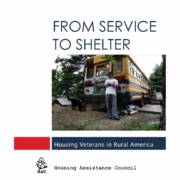
RESEARCH FROM SOURCES INCLUDING HAC COVERS VETERANS HOUSING ISSUES. “Housing Our Heroes: Veterans in Rural America,” a HAC research brief, summarizes data on demographics, housing conditions, and homelessness. USDA’s Economic Research Service provides demographic and economic data in “Rural Veterans at a Glance.” (ERS uses data for nonmetro areas, while HAC uses a definition of rural based on census tracts.) Housing Instability Among Our Nation’s Veterans, a National Low Income Housing Coalition report, examines housing issues for veterans nationwide. “Rental Assistance Helps More Than 300,000 Veterans Afford Homes, But Large Unmet Needs Remain,” from the Center on Budget and Policy Priorities, also covers the topic on a national basis.

RECORD SHARE OF YOUNG ADULTS LIVING AT HOME. More than one-third of Millennials aged 18-31 are living with their parents, according to A Rising Share of Young Adults Live in Their Parents’ Home, published by the Pew Research Center. A Forbes analysis of the report suggests that federal policies favoring homeownership led to high housing prices that young adults cannot afford.

HAC REPORTS ON FARMWORKER HOUSING. Housing Conditions for Rural Farmworkers explains character-istics of farmworker housing and obstacles to its improvement.

HAC News: October 31, 2013

HAC News Formats. pdf

October 31, 2013
Vol. 42, No. 21

• Agencies working to catch up after federal shutdown • USDA Rental Assistance contracts renewed but another shortfall coming • Senate will not vote on Watt’s FHFA nomination • Farm Bill conference committee begins work • Funds offered for CDFIs and Native American CDFIs • Comment period extended for 502 packaging rule • CDFI Fund requires audited financials from nonprofits • CFPB requests comments on lender-borrower communications •USDA changes rulemaking policy • HUD updates Public Housing Capital Fund Program regulations • Subscribe online to email lists on Section 502 guarantee program • New paper covers opinion and messaging research on affordable housing • HAC finds rural mortgage activity has increased but some problems remain • New data available


October 31, 2013
Vol. 42, No. 21

AGENCIES WORKING TO CATCH UP AFTER FEDERAL SHUTDOWN. Federal government offices are clearing the backlog of work left by the shutdown that ended October 17 with a Continuing Resolution that provides funding through January 15. USDA RD has confirmed that the CR extends the current definition of eligible rural areas. USDA RD’s and the Census Bureau’s websites are active, and Census has revised release dates for some data. USDA RD expects to be caught up with tenant certifications and multifamily mortgage processing by October 30.

USDA RENTAL ASSISTANCE CONTRACTS RENEWED BUT ANOTHER SHORTFALL COMING. USDA RD has begun renewing Section 521 Rental Assistance contracts that expired in September and October. Because funding under the current Continuing Resolution is for FY14 only, property owners whose contracts expired in September will not receive payment for that month. Also, because USDA is renewing more contracts at one time than usual, the appropriated amount will run out well before the CR ends in January, leaving another group of properties without Rental Assistance for some period of time. Watch the HAC News and http://ruralhome.org for updates.

SENATE WILL NOT VOTE ON WATT’S FHFA NOMINATION. On October 31 the Senate voted on but did not pass a motion to proceed to consider the nomination of Rep. Melvin Watt (D-NC) to head the Federal Housing Finance Agency.

FARM BILL CONFERENCE COMMITTEE BEGINS WORK. Selected members of the House and Senate met for the first time on October 30 to seek a compromise between the two versions of a new Farm Bill. The Senate bill includes an extension of housing program eligibility for “grandfathered” rural places (see HAC News, 7/17/13).

FUNDS OFFERED FOR CDFIS AND NATIVE AMERICAN CDFIS. Applicants for the CDFI Program and Native American CDFI Assistance Program must be certified or have applied for certification as CDFIs. The deadline is December 23. Contact CDFI Fund staff, cdfihelp@cdfi.treas.gov, 202-653-0421, option 1.

COMMENT PERIOD EXTENDED FOR 502 PACKAGING RULE. (See HAC News, 8/28/13.) A notice in the November 1 Federal Register will extend the deadline to November 22. Comments by HAC and by the Federation of Appalachian Housing Enterprises are posted online. Contact Brooke Baumann, USDA, 202-690-4250.

CDFI FUND REQUIRES AUDITED FINANCIALS FROM NONPROFITS. Effective immediately, an interim rule from the CDFI Fund requires nonprofit grantees to submit audited financial statements rather than financials reviewed by an accountant. Comments are due December 30. Contact Adam Martinez, CDFI Fund.

CFPB REQUESTS COMMENTS ON LENDER-BORROWER COMMUNICATIONS. Comments are due November 22 on a Consumer Financial Protection Bureau interim final rule that seeks to clarify some provisions of mortgage regulations issued in January. Contact Joseph Devlin, CFPB, 202-435-7700.

USDA CHANGES RULEMAKING POLICY. USDA has revoked a Statement of Policy published in 1971 that required USDA agencies to follow the Administrative Procedure Act’s notice-and-comment rulemaking procedures in situations where the APA does not require it. Contact Adam J. Hermann, USDA, 202-720-9425.

HUD UPDATES PUBLIC HOUSING CAPITAL FUND PROGRAM REGULATIONS. A final rule consolidates regulations and information from annual notices, with some changes. Contact Jeffrey Riddel, HUD, 202-708-1640.

SUBSCRIBE ONLINE TO EMAIL LISTS ON SECTION 502 GUARANTEE PROGRAM. A single site offers several lists, some for individual states, as well as some non-housing lists.

NEW PAPER COVERS OPINION AND MESSAGING RESEARCH ON AFFORDABLE HOUSING. Building Support for Affordable Homeownership and Rental Choices: A Summary of Research Findings on Public Opinion and Messaging on Affordable Housing, by the Center for Housing Policy, includes recommendations for effective communication with the public and policymakers. The National Housing Conference, CHP’s parent, has established an online Housing Communications Hub on the subject.

HAC FINDS RURAL MORTGAGE ACTIVITY HAS INCREASED BUT SOME PROBLEMS REMAIN. A HAC analysis of recently released HMDA data finds that the numbers of mortgage applications and approvals increased in 2012. The denial rate was higher in rural areas than nationwide, however, and more rural loans had high interest rates. Rural minorities fared even worse: about 40% of rural African American and 35% of Native American applicants were denied mortgages, twice the denial rate for all U.S. applicants.

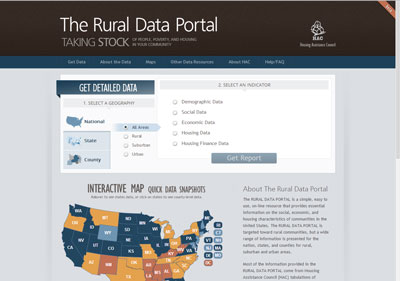
NEW DATA AVAILABLE! Access 2012 Home Mortgage Disclosure Act (HMDA) data for your community at HAC’s Rural Data Portal: www.ruraldataportal.org.

HAC News: October 9, 2013

HAC News Formats. pdf

October 9, 2013
Vol. 42, No. 20

• Federal shutdown impacting housing programs, websites, data • Home Depot Foundation offers funds for rural veterans housing • HUD proposes to designate some mortgages as QMs • NHLP invites others to sign its comments on USDA’s voucher program • Fair Market Rents published for FY14 • HUD sets process for reporting manufactured home problems • PHA administrative fee factors issued • Importance of federal spending varies widely across states • “What is the QRM? And What Does it Mean for Rural Mortgage Markets?” • Missed a HAC webinar? • Need data on housing or demographics while the Census Bureau’s website is unavailable?


October 9, 2013
Vol. 42, No. 20

FEDERAL SHUTDOWN IMPACTING HOUSING PROGRAMS, WEBSITES, DATA. Under its shutdown plan, USDA has furloughed all of its 3,336 Rural Development field staff. A total of 53 RD staff in Washington, D.C., and St. Louis, out of 1,394, are still on the job. On October 1 Under Secretary for Rural Development Doug O’Brien sent an email to RD offices explaining that “many [RD] services will be delayed or interrupted. For example, Rural Development will not be able to make any new loans or grants; the only exceptions will be for emergency purposes and to protect the Government’s interest. Automatic disbursements for previously obligated Rental Assistance (RA) funds will continue, but no RA contracts will be renewed or issued.” Over 600 properties whose RA contracts were not renewed in September did not establish alternative payment plans with USDA and expected to receive renewals in October using FY14 funds, which are not yet available. • At HUD, 337 of 8,709 employees are still working. HUD updated its shutdown contingency plan and is expected to issue another update this week. The Center on Budget and Policy Priorities has estimated the shutdown’s impact on HUD’s housing programs. • Some federal websites, including USDA’s and the Census Bureau’s, are offline, so archived information is not accessible. Others, including HUD’s, remain live but are not being updated. Several news reports note the uncertainties raised by lack of federally generated data, including one by the Daily Yonder. • The Federal Register is publishing essential items but has announced that “documents related to normal or routine activities of Federal agencies, even if funded under prior year appropriations, will not be published.” • Check HAC’s website for links to media coverage of rural housing shutdown issues and for general updates.

HOME DEPOT FOUNDATION OFFERS FUNDS FOR RURAL VETERANS HOUSING. Projects must be bricks and mortar; either new construction or rehab, with priority given to renovation and rehab projects; and must be in progress or close to starting. Awards will range from $25,000 to $40,000. Concept papers are due November 15 and must be on an approved template. Email Janice Clark at HAC for a copy of the template.

HUD PROPOSES TO DESIGNATE SOME MORTGAGES AS QMS. The Dodd-Frank Act requires HUD to define what HUD-funded loans are qualified mortgages and therefore assumed to meet requirements for consumers’ ability to repay. Comments are due October 31 on a proposed rule stating that Title I (home improvement), Section 184 (Indian housing), and Section 184A (Native Hawaiian housing) loans would be QMs. For FHA-insured mortgages, HUD proposes two categories similar but not identical to those established in the CFPB’s final QM rule. Contact Michael P. Nixon, HUD, 202-402-5216, ext. 3094.

NHLP INVITES OTHERS TO SIGN ITS COMMENTS ON USDA’S VOUCHER PROGRAM. Comments are due October 15 on proposed regulations (see HAC News, 8/14/13). Those wishing to sign the National Housing Law Project’s comments should contact Gideon Anders, ganders@nhlp.org, by October 13.

FAIR MARKET RENTS PUBLISHED FOR FY14. FMRs are used by HUD’s Housing Choice Voucher, Moderate Rehabilitation, and project-based voucher programs and others. Contact local HUD staff for each program.

HUD SETS PROCESS FOR REPORTING MANUFACTURED HOME PROBLEMS. A final rule establishes procedures that manufacturers, retailers, distributors, state agencies, and inspection agencies must follow. Contact Henry S. Czauski, HUD, 202-708-6409.

PHA ADMINISTRATIVE FEE FACTORS ISSUED. The annual factors for determining PHAs’ calendar year 2013 administrative fees for the Section 8 Housing Choice Voucher and Moderate Rehabilitation Programs are posted on HUD’s website. Contact Miguel Fontanez, HUD, 202-402-2934.

IMPORTANCE OF FEDERAL SPENDING VARIES WIDELY ACROSS STATES. The Pew Charitable Trusts compared the value of federal payments to individuals, grants, procurement, and wages to state GDPs and created a graphic depiction comparing states. The analysis includes funds affected and not affected by the government shutdown. Pew’s Fiscal Federalism Initiative has produced other fact sheets as well.

“WHAT IS THE QRM? AND WHAT DOES IT MEAN FOR RURAL MORTGAGE MARKETS?” A new Rural Policy Note published by HAC provides background and explains the qualified residential mortgage concept. Comments on a proposed rule are due October 30 (see HAC News, 9/25/13). Contact Mike Feinberg, HAC, 202-842-8600.

MISSED A HAC WEBINAR? Materials from webinars are posted on HAC’s site after the events. The most recent additions are about the Rural Data Portal and rental housing preservation for seniors.

NEED DATA ON HOUSING OR DEMOGRAPHICS WHILE THE CENSUS BUREAU’S WEBSITE IS UNAVAILABLE? Use HAC’s Rural Data Portal, www.ruraldataportal.org.

HAC News: September 25, 2013

HAC News Formats. pdf

September 25, 2013
Vol. 42, No. 19

• National Hispanic Heritage Month celebrated September 15-October 15 • Shutdown possible? • CR will extend area eligibility for USDA rural housing programs • Assisted Living Conversion funds offered • USDA RD to review online homebuyer counseling programs • Agencies propose aligning definitions of qualified mortgages • CFPB amends some mortgage regulations including rural and underserved exemption • Nonmetro poverty increased in 2012 while national rate remained the same • Low-power FM radio opportunities offered in October • HUD offers website and email list for Native American housing study • HAC report describes colonias • Between 2000 and 2010, more than one-third of U.S. counties lost population. How has your community changed?


September 25, 2013
Vol. 42, No. 19

NATIONAL HISPANIC HERITAGE MONTH CELEBRATED SEPTEMBER 15-OCTOBER 15. President Obama’s proclamation is posted online.

SHUTDOWN POSSIBLE? Congress this week continues to debate passage of a continuing resolution to begin FY 2014 on October 1. “Non-essential” federal functions could be shut down if no agreement is reached. On September 17 OMB sent a memo to federal agencies telling them to plan for a shutdown. At press time, neither USDA nor HUD has issued guidelines for shutting down. When a possible shutdown loomed in 2011, USDA Rural Development’s contingency plan said no new loans or guarantees would be made without an appropriation, and all offices would close except for the Washington, D.C. national office and the St. Louis finance office. St. Louis would be the contact for loan servicing. HAC will provide updates at www.ruralhome.org.

CR WILL EXTEND AREA ELIGIBILITY FOR USDA RURAL HOUSING PROGRAMS. H.J.Res. 59, the continuing resolution passed by the House on September 20, would extend grandfathering of currently eligible places for as long as the CR lasts. At press time the Senate had not yet voted on the CR, but the language allowing for the extension is not in dispute, so it is expected to be included in any final version.

ASSISTED LIVING CONVERSION FUNDS OFFERED. Nonprofit owners of several types of HUD-assisted properties, including Section 515 developments with Section 8, can apply by November 18 for grants to convert to assisted living facilities or service enriched housing. Contact Katina Washington, HUD, 202-708-3000.

USDA RD TO REVIEW ONLINE HOMEBUYER COUNSELING PROGRAMS. Currently one online education provider is approved by USDA for use by first-time homebuyers receiving Section 502 direct loans. (Courses can also be taken in classrooms, by phone, or by self-study.) RD invites other providers of online courses to apply by October 23 for approval. Contact Shantelle Gordon, RD, 202-205-9567.

AGENCIES PROPOSE ALIGNING DEFINITIONS OF QUALIFIED MORTGAGES. HUD and other federal agencies jointly responsible for implementing the credit risk retention requirements of the Dodd-Frank Act suggest defining “qualified residential mortgages” the same way as the Consumer Financial Protection Bureau defines “qualified mortgages.” In 2011 (see HAC News, 6/8/11) the agencies suggested a QRM definition that would have favored homebuyers with 20% downpayments. The new proposal would make other regulatory changes as well. Comments are due October 30. Contact Michael P. Nixon, HUD, 202-402-5216 or Mike Feinberg, HAC, 202-842-8600.

CFPB AMENDS SOME MORTGAGE REGULATIONS INCLUDING RURAL AND UNDERSERVED EXEMPTION. On October 1 a final rule from the Consumer Financial Protection Bureau will be published in the Federal Register making some changes to a proposed rule published in June (see HAC News, 7/3/13).

NONMETRO POVERTY INCREASED IN 2012 WHILE NATIONAL RATE REMAINED THE SAME. A HAC analysis of new Census Bureau data shows the official poverty rate in nonmetropolitan areas was 17.7%, up from 17.0% in 2011 and nearly 3 percentage points higher than the national level. Overall, 8.5 million nonmetro residents had incomes below the poverty line in 2012, a statistically significant increase of more than 400,000 persons from the 2011 level. Details are published by HAC and the Daily Yonder.

LOW-POWER FM RADIO OPPORTUNITIES OFFERED IN OCTOBER. The Federal Communications Commission offers a rare opportunity for nonprofits, tribes, and local governments to apply between October 15 and October 29 for licenses for non-commercial low-power FM radio stations. FCC will hold a webinar for potential applicants on October 3. Contact FCC staff, 202-418-2700.

HUD OFFERS WEBSITE AND EMAIL LIST FOR NATIVE AMERICAN HOUSING STUDY. A congressionally mandated study of the housing needs of Native Americans, Alaska Natives, and Native Hawaiians is underway and the final report is expected in December 2014. Survey instruments and other information are posted at https://www.huduser.org/portal/native_american_assessment/home.html, where one can also sign up for email updates.

HAC REPORT DESCRIBES COLONIAS. Housing in the Border Coloniasdetails the social, economic, and housing characteristics of the colonias region on the U.S. side of the U.S.-Mexico border. Most residents are of Mexican heritage. Poor housing conditions are common in the colonias with an old, deteriorating housing stock, combined with newer units that do not meet building codes. To order a printed copy, contact Dan Stern, HAC, 202-842-8600.

BETWEEN 2000 AND 2010, MORE THAN ONE-THIRD OF U.S. COUNTIES LOST POPULATION. HOW HAS YOUR COMMUNITY CHANGED? Find out at HAC’s Rural Data Portal, www.ruraldataportal.org.

HAC News: September 11, 2013

HAC News Formats. pdf

September 11, 2013
Vol. 42, No. 18

• Continuing Resolution anticipated for federal funding • USDA temporarily speeds processing of applications for Section 502 direct loans • New housing counseling certification requirements proposed • RCDI NOFA contact information corrected • HUD changes HECM, requests comments on financial assessments • Comments sought on increasing fees for HUD Section 184 guaranteed loans • Poor housing quality tied to children’s problems • African-American housing and wealth studied • HAC launches expanded, updated Rural Data Portal and schedules webinar • 10,000 Friends of Rural America seeks to improve attention and respect


September 11, 2013
Vol. 42, No. 18

CONTINUING RESOLUTION ANTICIPATED FOR FEDERAL FUNDING. Congress is back in session this week and is expected to pass a short-term Continuing Resolution to begin FY14 on October 1. USDA rural housing and HUD programs will be continued at 2013 spending levels for the term of the CR, and could be further extended for the balance of 2014. This CR, like previous CRs in 2013, is likely to extend USDA’s current rural definition for all com-munities currently eligible for RD housing programs.

USDA TEMPORARILY SPEEDS PROCESSING OF APPLICATIONS FOR SECTION 502 DIRECT LOANS. To help obligate funds by the end of FY13 on September 30, a letter informs RD State Directors that loans may be approved and obligated subject to receipt of appraisals. Also, 502 direct loans for purchasers of homes with existing 502 direct loans will be treated as initial loans that will pay off the existing loans. Contact an RD office.

NEW HOUSING COUNSELING CERTIFICATION REQUIREMENTS PROPOSED. Implementing provisions of the Dodd-Frank Act, HUD suggests changes including creation of a system to certify individual counselors as well as counseling agencies. The proposal will be in the September 13 Federal Register and at https://www.regulations.gov, with comments due in 60 days. Contact Ruth Román, HUD, 202-708-0317.

RCDI NOFA CONTACT INFORMATION CORRECTED. RD’s August 14 funding notice for the Rural Community Development Initiative included errors in the addresses and phone numbers for RD state offices. A Federal Register notice to be published September 13 will make corrections. The deadline remains November 12.

HUD CHANGES HECM, REQUESTS COMMENTS ON FINANCIAL ASSESSMENTS. On September 3, 2013, Mortgagee Letter 2013-27 announced changes to the Home Equity Conversion Mortgage program. HUD seeks comments by October 5, 2013 on requirements for financial assessments, which evaluate borrowers’ ability to comply with mortgage requirements. Other new requirements will take effect September 30, 2013. Contact Karin Hill, HUD, 202-708-4308.

COMMENTS SOUGHT ON INCREASING FEES FOR HUD SECTION 184 GUARANTEED LOANS. HUD has written to tribal leaders requesting their feedback on increasing borrower fees to 1.5% of the loan amount from the current 1%. The higher amount would supplement congressional appropriations which, the letter says, will not be sufficient to meet program demand. Contact HUD staff, Section184Consultation@hud.gov.

POOR HOUSING QUALITY TIED TO CHILDREN’S PROBLEMS. A research brief published by the John D. and Catherine T. MacArthur Foundation reports on a six-year study that examined how five housing characteristics – quality, stability, affordability, ownership, and receiving a subsidy – impacted education, emotional problems, and behavioral problems. Poor housing quality was the most consistent and strongest predictor of emotional and behav-ioral problems, and was also related to school performance for adolescents. “Cumulative residential instability” was also highly relevant. “Poor Housing Quality is Tied to Children’s Emotional and Behavioral Problems” concludes that housing assistance programs are important and suggests stronger local housing codes and enforcement could help as well.

AFRICAN-AMERICAN HOUSING AND WEALTH STUDIED. The State of Housing in Black America 2013, published by the National Association of Real Estate Brokers, reports that black homeownership rates began to decline before the recession began in 2007, and the recession resulted in significant loss of wealth. Recommendations include redesigning the housing finance system with a focus on borrowers, ensuring adequate credit for rental housing development, and establishing a housing and community infrastructure bank.

HAC LAUNCHES EXPANDED, UPDATED RURAL DATA PORTAL AND SCHEDULES WEBINAR. The portal, online at www.ruraldataportal.org, is an easy-to-use resource with over 350 data indicators providing essential information on the social, economic, and housing characteristics of communities in the U.S. – including not only rural places, but the nation, states, and suburban and urban areas also. Most of the information comes from HAC tabulations of the 2010 Census, the American Community Survey, and Home Mortgage Disclosure Act data. Join HAC for a webinar overview on Wednesday, September 18.

10,000 FRIENDS OF RURAL AMERICA SEEKS TO IMPROVE ATTENTION AND RESPECT. The movement, sponsored by a coalition of 25 rural nonprofits and supporters, including HAC, is designed to mobilize individuals and organizations willing to speak up for the real Rural America. To learn more and join, visit 10000friends .ruralamerica.org/stand_up/.

GET THE HAC NEWS!

Sign-up for HAC information products

SIGN UP HERE

Housing Assistance Council   |  1828 L Street. N.W., Suite 505, Washington, D.C. 20036
(202) 842-8600 (202) 347-3441 hac@ruralhome.org |

Board Portal

HAC is an equal opportunity provider, employer, and lender. | Civil Rights | Privacy