HAC News: October 20, 2016

HAC News Formats. pdf

October 20, 2016
Vol. 45, No. 20

• USDA RD showed strong performance in FY16 • HUD requests comments on utility benchmarking • Assets for Independence IDA program funds available • USDA RD offers webinar on Limited English Proficiency compliance • 2017 DDA and QCT designations announced • CFBP amends mortgage servicing rules • Some USDA Community Facilities loans to be made by intermediaries • HUD previous participation review rule changed • Long waiting lists for HUD vouchers and public housing reported by NLIHC • HAC issues disaster guide supplement for Hurricane Matthew survivors • Register now for the 2016 HAC Rural Housing Conference

HAC News Formats. pdf

October 20, 2016
Vol. 45, No. 20

USDA RD showed strong performance in FY16. Funds for most of the rural housing programs were fully obligated in fiscal year 2016, which ended September 30. Section 502 direct used not only its entire $900 million loan total, but also an additional $58.3 million that was not being used in other programs. Obligations to very low-income borrowers comprised 40% of the total, compared to 31.8% last year. (See HAC News, 8/25/16.) There were also 127 Multifamily Housing Preservation and Revitalization program loans or grants ($96.1 million) obligated, a decrease of $9.5 million (22 loans or grants) over last year. Details are in HAC’s monthly Program Obligation Report for September.

HUD requests comments on utility benchmarking. The department proposes to require owners of HUD-assisted multifamily properties to report data for utility benchmarking, which means tracking the utility consumption of a development on an on-going basis, calculating the energy and water efficiency of the development, and comparing its efficiency to similar developments. The mandate would apply to Section 202 and 811 properties, those with project-based Section 8 contracts, and those with FHA insurance. Data reporting would be required for properties with 21 units or more, while smaller properties would be encouraged to submit data. Owners would provide the figures every three years or when similar information is required. Comments are due December 5. Contact Stan Houle, HUD, 202-708-2572.

Assets for Independence IDA program funds available. Nonprofits can apply by October 31, 2016 or April 3, 2017 for grants to administer projects that provide individual development accounts and related services to low-income individuals. State, local, and tribal governments, as well as CDFIs and credit unions, are also eligible in specific situations. Participants can use savings for a first home, a business, or post-secondary education or training. Request an application package at https://idaresources.acf.hhs.gov/apply or from info@IDAresources.org.
USDA RD offers webinar on Limited English Proficiency compliance. Free webinars covering the same content will be held on October 25 at 10:00 a.m. and 4:00 p.m. Eastern time. Register at https://www.eventbrite.com/e/usda-rural-development-limited-english-proficiency-lep-compliance-tickets-28539845446. Attendee groups and those needing special accommodations should email Darren Kaihlanen at USDA.
2017 DDA and QCT designations announced. HUD’s annual designation of DDAs and QCTs for the Low-Income Housing Tax Credit will be effective January 1, 2017. Contact Michael K. Hollar, HUD, 202-402-5878.

CFBP amends mortgage servicing rules. A final rule from the Consumer Financial Protection Bureau alters parts of its regulations under the Real Estate Settlement Procedures Act and the Truth in Lending Act. CFPB has also issued an interpretive rule to clarify how some of its mortgage servicing rules interact with the Fair Debt Collection Practices Act, providing safe harbors from liability for mortgage servicers in some situations. Contact CFPB’s Office of Regulations, 202-435-7700.

Some USDA Community Facilities loans to be made by intermediaries. Twenty-six community development organizations were recently approved to re-lend long-term, low-interest financing to local entities to build, acquire, maintain, or renovate community facilities in rural places. For more information, contact a USDA RD State Office.

HUD previous participation review rule changed. Amendments to HUD’s regulations for multifamily housing programs and healthcare funding are intended to clarify and simplify the process for reviewing the previous participation of participants that have decision-making authority over their projects. Contact Danielle Garcia, HUD, 202-402-2768.

Long waiting lists for HUD vouchers and public housing reported by NLIHC. Housing Spotlight: The Long Wait for a Home explains a National Low Income Housing Coalition survey of public housing agencies showed 53% of Housing Choice Voucher waiting lists were closed to new applicants and another 4% were open only to specific populations, such as homeless individuals and families, veterans, persons with a disability, or local residents. HCV waiting lists had a median wait time of 1.5 years and public housing lists had a nine-month median wait. The survey included PHAs of all sizes in metro and nonmetro areas, though the results are not reported by size or location.

HAC issues disaster guide supplement for Hurricane Matthew survivors. The special update provides targeted information in addition to HAC’s general natural disaster guide, Picking Up the Pieces.

REGISTER NOW FOR THE 2016 HAC RURAL HOUSING CONFERENCE! The national conference will be held November 30-December 2 in Washington, DC with pre-conference activities on November 29. Information about registration, scholarships, exhibiting, and more is online.

USDA Rural Development Obligations FY 16 – September

Download complete report (Through SEPTEMBER FY 2016)

thumb usda-obs-cover

The Housing Assistance Council (HAC) presents this month’s report on Fiscal Year 2016 USDA Rural Housing program obligations.

As of the end of September, USDA obligated 132,493 loans, loan guarantees, and grants totaling about $17.76 billion. This is less than obligation levels from last year when there were 149,118 loans, loan guarantees, and grants obligated totaling about $19.89 billion.

Most of the programs were fully obligated this year.

Single Family Housing Program Highlights

The Section 502 Guaranteed loan program, the largest of the Single Family Housing programs, obligated $16.4 billion (116,684 loans) in loan guarantees. This is about $2.27 billion (17,571 loans) less than last year.

For the Section 502 Direct program, USDA obligated about $958.3 million (7,089 loans) in loan obligations in FY 2016; about $58.4 million (25 loans) higher than last year. Very low-income (VLI) loan obligations comprised 37.5 percent of the total Section 502 Direct loan dollars obligated this year. USDA obligated about $58.3 million more than the $900 million appropriated this year. The additional funds were used for low-income loans. Of these funds, $359.8 million were for VLI loans which represents about 40 percent of the $900 million appropriation amount.

The Section 504 Repair and Rehabilitation programs obligated 3,162 loans representing $17.4 million. This is 652 more loans or $2.3 million higher than last year. There were 5,010 Section 504 grants totaling about $30.7 million. This is $1.7 million (282 grants) more than obligated last year.

In the Section 523 Self-Help Housing grant program, the agency obligated 36 grants representing nearly $22.1 million and 5 national contracts totaling $6.4 million for a total of $28.5 million, 38 fewer grants and $9.9 million less than last year. Also, there have been 24 credit sale loans of Single Family properties totaling $1.9 million.

For the first time in a number of years, USDA obligated all of $5 million in appropriated funds for the Section 524 site loan program. There was also a $232,700 loan for the Section 523 site loan program as well.

Multi-Family Housing Programs

USDA obligated 119 Section 538 Guaranteed Rental Housing loans this year totaling $186.9 million. This represents 30 loans and over $73 million over last year’s totals.

For the Farm Labor Housing program, 20 loans for nearly $32.1 million and 11 grants ($15.7 million) have been obligated this year. Last year, there were 12 FLH loans and 5 grants representing about $19.3 million and $6.4 million respectively. There have also been 127 Multifamily Housing Preservation & Revitalization loans or grants ($96.1 million) obligated, a decrease of $9.5 million (22 loans or grants) over last year.

Section 521 Rental Assistance obligations reached $1.389 billion (301,792 units) in March. This is about $301.2 million more (56,793 more units) than last year.

There were 5,303 Rural Housing Voucher obligations representing $19.5 million, an increase of 834 units or $3.8 million higher than last year.

Download the combined document.

Individual Program Files

Summary Files

Summary of Rural Development Obligations
Summary Data of Rural Development Obligations Compared to Previous Year
Summary Data of Rural Development Obligations Compared to Previous Month
Summary Chart of Rural Development Obligations
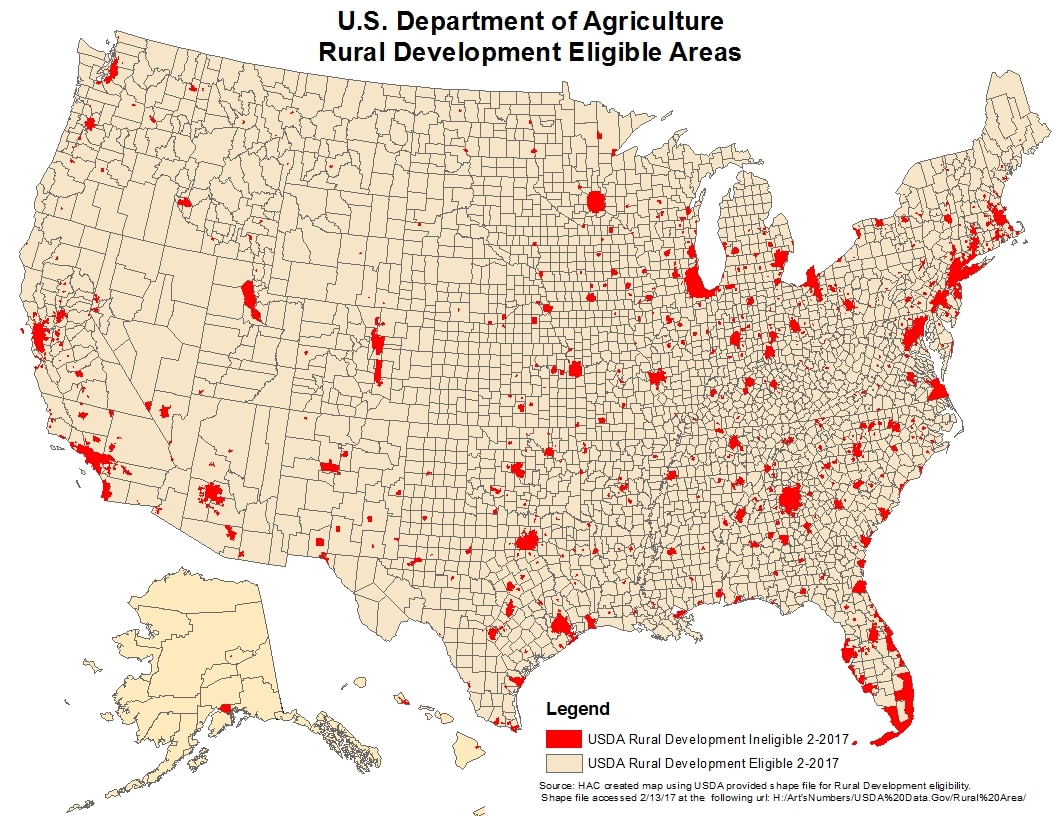
USDA Rural Development Eligible Areas

Single Family Housing Program Obligations

Section 502 Direct Homeownership Total Obligations
Section 502 Direct Homeownership Low and Very Low Obligations
Section 502 Guaranteed Homeownership Obligations
Section 504 Total Home Rehab Obligations
Section 523 Self-Help Technical Assistance Grant Obligations
Section 523 Site Loans Obligations
Section 524 Site Loans Obligations

Multi-Family Housing Program Obligations

Section 514/516 Farm Labor Housing Obligations
Section 515 Rental Housing Obligations
Section 521 Rental Assistance Obligations
Section 533 Housing Preservation Obligations
Section 538 Guaranteed Rental Obligations
Multifamily Housing Tenant Voucher Obligations
Multifamily Housing Revitalization Demonstration Program

Unallocated Program Obligations

Section 306 Water/Wastewater Grant Obligations
Section 509 Compensation for Construction Defects
Multifamily and Single-family Housing Credit Sales

* The Rural Housing Service (RHS) monthly obligation reports are produced by the Housing Assistance Council (HAC) 1025 Vermont Ave., NW, Suite 606, Washington, DC 20005. The monthly figures derive from HAC tabulations of USDA –RHS 205c, d, and f report data. For questions or comments about the obligation reports, please contact Michael Feinberg at 202-842-8600 or michael@ruralhome.org.

HAC News: October 06, 2016

HAC News Formats. pdf

October 06, 2016
Vol. 45, No. 19

• Federal government funded through December 9 • Temporary preference given to certified packaged 502 loans • USDA suggests above-code standards for single-family housing • Administration housing toolkit addresses local barriers • GAO recommends improvements for services in HUD Section 202 properties • RAD may not be reaching rural places well • Black-white wage gaps are larger today than in 1979 • Register by October 21 for the 2016 HAC Rural Housing Conference!

HAC News Formats. pdf

October 06, 2016
Vol. 45, No. 19

Federal government funded through December 9. A continuing resolution, passed along with the full Military Construction/VA appropriations bill and emergency funding for the Zika virus, provides FY16 funding levels for federal programs and an 0.5% across-the-board cut. As expected (see HAC News, 9/8/16), it allows USDA to spend a disproportionate amount of Section 521 Rental Assistance funds early in the fiscal year in order to renew contracts when they expire. Congress is now in recess until November 14, after the election.

Temporary preference given to certified packaged 502 loans. USDA is temporarily classifying Section 502 direct applications submitted through the certified loan application packaging process as its fourth funding priority because funds are insufficient to serve all program-eligible applicants. This reclassification will remain in effect until further notice. The priority does not apply to certified packaging bodies working without an intermediary. Contact Tammy Repine, USDA, 360-753-7677.

USDA suggests above-code standards for single-family housing. In an Unnumbered Letter dated October 4, 2016, RD recommends – but does not require – that Section 502 and 504 homeowners, lenders, and others use building standards that exceed building codes. It provides information about standards that could be used for wind hazard resistance and water efficiency, and also discusses “location efficiency.” That refers to a home’s nearness to jobs, schools, and essential goods and services, impacting the greenhouse gas emissions generated by transportation. Contact a USDA RD state office.

Administration housing toolkit addresses local barriers. A Housing Development Toolkit issued by the White House focuses on ways states and localities can “promote healthy, responsive, affordable, high-opportunity housing markets.” It provides examples of “modern housing strategies” such as taxing vacant land or donating it to nonprofit developers, streamlining permitting processes and timelines, eliminating off-street parking requirements, allowing accessory dwelling units, employing inclusionary zoning, and using property tax abatements.

GAO recommends improvements for services in HUD Section 202 properties. To review how Section 202 properties connect residents to services and HUD’s related monitoring efforts, the Government Accountability Office researched the presence of service coordinators, how properties without coordinators connect residents with services, and HUD’s monitoring of Section 202 properties’ efforts to connect residents with supportive services. Elderly Housing: HUD Should Do More to Oversee Efforts to Link Residents to Services(GAO-16-758) recommends that HUD improve the accuracy of relevant data, develop written guidance on assessing compliance with supportive services requirements, and develop procedures for verifying and analyzing performance data.

RAD may not be reaching rural places well. HUD’s Rental Assistance Demonstration program, which began in 2012, allows PHAs to convert public housing units to project-based Section 8 contracts in order to attract additional financing. An interim report on RAD by HUD consultant Econometrica presents early results on subjects such as PHAs’ choices whether to participate and what external capital sources they used. Small PHAs had a low participation rate. Among the reasons given for not taking part were lower area rents and a perceived lack of investor interest in small towns and rural areas. Econometrica recommended HUD offer examples of successful use of RAD in rural places. A final report will be issued in three years, after RAD has been in effect long enough for its impacts to be studied.

Black-white wage gaps are larger today than in 1979. Research by the Economic Policy Institute found that the gaps grew during the early 1980s, shrank in the late 1990s – due in part to tighter labor markets and minimum wage increases – and have grown again since 2000. As of 2015, relative to the average hourly wages of white men with the same education, experience, metro status, and region of residence, black men make 22.0% less, and black women make 34.2% less. Black-White Wage Gaps Expand with Rising Wage Inequality notes the gaps have expanded most for college graduates, so education alone is not a solution. EPI attributes the increase to discrimination and the growth in income gaps in general, and suggests policy solutions. Another study on this topic was covered in the HAC News, 8/10/16.

Register by October 21 for the 2016 HAC Rural Housing Conference! Registration fees rise after October 21. The national conference will be held November 30-December 2 in Washington, DC with pre-conference activities on November 29. Information about registration, scholarships, exhibiting, and more is now online.

HAC News: September 22, 2016

HAC News Formats. pdf

September 22, 2016
Vol. 45, No. 18

• Continuing resolution likely to run to December 9 • Census Bureau surveys yield differing conclusions about nonmetro economic growth • USDA releases database of rural multifamily loans and projected “exit” dates • Final rule addresses harassment in housing • HUD mandates program access based on gender identity • House and Senate hearings consider HUD changes • Tenant services are not allowable RD project expenses • Nonprofits and public bodies can buy some Section 502 homes • Report addresses rural affordable housing credit • Research finds disconnect between experts’ and public’s understandings of healthy housing • Guidance set for independent students’ access to Section 8 • REGISTRATION IS OPEN FOR THE 2016 HAC RURAL HOUSING CONFERENCE!

HAC News Formats. pdf

September 22, 2016
Vol. 45, No. 18

Continuing resolution likely to run to December 9. Congressional leaders are still working to resolve differences regarding the contents of a CR to keep the government operating when the fiscal year ends on September 30. The measure will also fund other items such as Zika virus control and Louisiana flood relief; a letter from OMB Director Shaun Donovan to key members of Congress requests $2.6 billion in emergency CDBG funding for Louisiana.

Census Bureau surveys yield differing conclusions about nonmetro economic growth. On September 13 the Census Bureau released Income and Poverty in the United States: 2015, showing improvements in poverty rates and median incomes from 2014 to 2015 both nationwide and in metro areas, but no statistically significant change in nonmetro areas. The data came from the Current Population Survey, which used different boundaries for metro and nonmetro areas in 2014 than in 2015, making the year-to-year comparison unreliable. On September 16, a Center on Budget and Policy Priorities analysis of data from the American Community Survey, a larger sample that used consistent boundaries, showed incomes grew 3.4% in nonmetro areas and 3.6% in metro. CBPP found poverty rates dropped by almost 1% in both, to 17.2% in nonmetro places and 14.3% in metro areas.

USDA releases database of rural multifamily loans and projected “exit” dates. HAC recently published an analysis of data on maturity dates of mortgages in USDA’s multifamily portfolio and an interactive map of the properties (see HAC News, 9/8/16). Now USDA has released the loan level data to the public in spreadsheet form.

Final rule addresses harassment in housing. HUD has set formal standards in its fair housing regulations to be used when someone complains of harassment on the basis of race, color, religion, national origin, sex, familial status, or disability. The rule specifies how HUD will evaluate complaints of quid pro quo harassment and hostile environment harassment under the Fair Housing Act, defines the terms, and clarifies direct and vicarious liability in the Fair Housing Act context. Contact Lynn Grosso, HUD, 202-402-5361.

HUD mandates program access based on gender identity. A final rule, effective on October 21, requires providers that operate single-sex projects using funds from HUD’s Office of Community Planning and Development to provide all individuals with access to programs, benefits, services, and accommodations in accordance with their gender identity without being subjected to intrusive questioning or being asked to provide documentation. Contact Norm Suchar, HUD, 202-708-4300.

House and Senate hearings consider HUD changes. On September 21 the House Financial Services Committee’s Housing Subcommittee held a session called “The Future of Housing in America: A Better Way to Increase Efficiencies for Housing Vouchers and Create Upward Economic Mobility,” and a Senate Transportation-HUD Appropriations Subcommittee hearing was entitled “Housing Vulnerable Families and Individuals: Is There a Better Way?” Both focused largely on ways to reduce administrative costs and facilitate tenant self-sufficiency. Some members pointed out that small rural PHAs may face particular challenges to consolidating or forming consortia.

Tenant services are not allowable RD project expenses. In an August 8, 2016 Unnumbered Letter USDA RD reminds stakeholders that tenant services cannot be charged against project income in the operating budgets of Section 514 and 515 properties. It encourages service provision using other funding sources. Contact an RD State Office.

Nonprofits and public bodies can buy some Section 502 homes. An Unnumbered Letter dated August 26, 2016 explains when these organizations can purchase in voluntary short sales by homeowners or RD REO sales. Community Facilities financing may be an option for properties in communities with populations up to 20,000. Contact Barry Ramsey, RD, 202-720-5378.

Report addresses rural affordable housing credit.Opportunities for Promoting Credit for Affordable Housing in Rural America” follows a May roundtable convened by the White House Rural Council and USDA’s Rural Housing Service and facilitated by the Center for American Progress. HAC was among the participants. Identified opportunities fell into categories such as addressing issues of scale, providing capital, preserving and producing affordable rental housing, providing rental assistance, promoting manufactured housing, supporting CDFIs, and distributing more information to affect outcomes.

Research finds disconnect between experts’ and public’s understandings of healthy housing. The complex set of cultural models the public uses to make sense of housing does not always match experts’ views, according to the FrameWorks Institute’s “A House, a Tent, a Box”: Mapping the Gaps Between Expert and Public Understandings of Healthy Housing. Experts in the field explain housing problems based on structural or systemic factors, FrameWorks reports, while members of the public focus on individual responsibility. The researchers suggest that a change in how the media portrays and frames the issue of housing could foster better understanding of housing issues, raise the salience of these issues in public thinking, and generate support for needed policies.

Guidance set for independent students’ access to Section 8. HUD’s revisions to guidance issued in 2006 expand the definition of “independent student” consistent with the Department of Education’s definition. Contact Rebecca L. Primeaux, HUD, 202-402-6050.

REGISTRATION IS OPEN FOR THE 2016 HAC RURAL HOUSING CONFERENCE! This year’s national conference will be held November 30-December 2 in Washington, DC with pre-conference activities on November 29. Information about registration, scholarships, exhibiting, award nominations, and more is now online.

Economic Expansion Eludes Rural America

rrn-poverty-estimates-2016 CoverWhile the nation is finally beginning to fully recover from the Great Recession that officially ended in 2009, rural America continues to lag behind economically. Released today, the U.S. Census Bureau’s annual report, Income and Poverty in the United States: 2015, reveals that both metropolitan areas and the nation as a whole experienced statistically significant decreases in poverty, and increases in median household income, reflecting overall economic improvement. Rural areas, on the other hand, stand out from an otherwise positive report with lower levels of economic gain.

USDA Rural Development Obligations FY 16 – August

Download complete report (Through August FY 2016)

thumb usda-obs-cover

The Housing Assistance Council (HAC) presents this month’s report on Fiscal Year 2016 USDA Rural Housing program obligations.

As of the end of August, USDA obligated 121,462 loans, loan guarantees, and grants totaling about $16.25 billion. This is less than obligation levels from the same time last year when there were 133,150 loans, loan guarantees, and grants obligated totaling about $17.69 billion.

Single Family Housing Program Highlights

The Section 502 Guaranteed loan program, the largest of the Single Family Housing programs, obligated $15.0 billion (107,185) in loan guarantees. This is about $1.77 billion (13,790) less than the same time last year.

For the Section 502 Direct program, there have been about $853.9 million (6,349 loans) in loan obligations so far in FY 2016; about $156.9 million (789 loans) more than the same time last year. Very low-income (VLI) loan obligations comprised 37.7 percent of the total Section 502 Direct loan dollars obligated so far this year. Last year at this time, 31.8 percent of the Section 502 Direct loan dollars obligated were for VLI loans.

The Section 504 Repair and Rehabilitation programs obligated 2,822 loans representing $15.4 million. This is 723 more loans or $3.1 million higher than this time last year. There were 4,637 Section 504 grants totaling about $28.4 million. This is $2.3 million (390 grants) more than obligated this time last year.

So far this year, USDA obligated 25 Section 523 grants totaling nearly $14.2 million and 5 national contracts totaling $6.4 for a total of $20.6 million, 14 fewer grants and $3.5 million less than this time last year. Also, there have been 22 credit sale loans of Single Family properties totaling $1.7 million.

Multi-Family Housing Programs

There have been 110 Section 538 Guaranteed Rental Housing loans obligated so far this year totaling $172.4 million. This represents 40 more loans and over $81.7 million more than this time last year.

For the Farm Labor Housing program, 16 loans for nearly $25.2 million and 9 grants ($14.4 million) have been obligated so far this year. This time last year, there were 5 FLH loans and 4 grants representing about $2.6 million and $4.9 million respectively. There have also been 102 Multifamily Housing Preservation & Revitalization loans or grants ($82.3 million) obligated, an increase of $49.3 million (51 loans or grants) over this time last year.

Section 521 Rental Assistance obligations reached $1.295 billion (282,279 units) in March. This is about $207 million more (37,838 more units) than this time last year.

There were 4,979 Rural Housing Voucher obligations representing $18.2 million, an increase of 863 units or $3.6 million higher than the same time last year.

Download the combined document.

Individual Program Files

Summary Files

Summary of Rural Development Obligations
Summary Data of Rural Development Obligations Compared to Previous Year
Summary Data of Rural Development Obligations Compared to Previous Month
Summary Chart of Rural Development Obligations
USDA Rural Development Eligible Areas

Single Family Housing Program Obligations

Section 502 Direct Homeownership Total Obligations
Section 502 Direct Homeownership Low and Very Low Obligations
Section 502 Guaranteed Homeownership Obligations
Section 504 Total Home Rehab Obligations
Section 523 Self-Help Technical Assistance Grant Obligations
Section 524 Site Loans Obligations

Multi-Family Housing Program Obligations

Section 514/516 Farm Labor Housing Obligations
Section 515 Rental Housing Obligations
Section 521 Rental Assistance Obligations
Section 533 Housing Preservation Obligations
Section 538 Guaranteed Rental Obligations
Multifamily Housing Tenant Voucher Obligations
Multifamily Housing Revitalization Demonstration Program

Unallocated Program Obligations

Section 306 Water/Wastewater Grant Obligations
Section 509 Compensation for Construction Defects
Multifamily and Single-family Housing Credit Sales

* The Rural Housing Service (RHS) monthly obligation reports are produced by the Housing Assistance Council (HAC) 1025 Vermont Ave., NW, Suite 606, Washington, DC 20005. The monthly figures derive from HAC tabulations of USDA –RHS 205c, d, and f report data. For questions or comments about the obligation reports, please contact Michael Feinberg at 202-842-8600 or michael@ruralhome.org.

HAC News: September 08, 2016

HAC News Formats. pdf

September 08, 2016
Vol. 45, No. 17

•National Hispanic Heritage Month is September 15-October 15 • Congress returns as end of fiscal year nears • USDA supports transitional housing for substance use recovery • Private Section 8 owners may now offer Family Self-Sufficiency programs • HUD proposes changes to “elevated blood lead levels” regulation • Party platforms support broadband access • Broadband’s impacts are not always positive, research finds • Data options limited for determining low- and mod-income population for CDBG, says GAO • HAC publishes update on USDA maturing mortgages • Rural Voices looks at the future of rural housing finance

HAC News Formats. pdf

September 08, 2016
Vol. 45, No. 17

National Hispanic Heritage Month is September 15-October 15. The federal government’s website for the occasion is https://www.hispanicheritagemonth.gov/.

Congress returns as end of fiscal year nears. Congress, which reconvened this week, is expected to develop a continuing resolution to fund the government for the first part of fiscal year 2017, beginning October 1. Without a CR, the government will shut down. Media reports indicate the parties disagree whether a CR should last three months or six months. The Obama Administration has requested some “anomalies,” or changes from FY16 funding levels, for the CR. No anomalies are sought for HUD, and only one for USDA rural housing: like last year (see HAC News, 9/2/15), it asks for permission to spend a disproportionate amount of Section 521 Rental Assistance funds early in the fiscal year because about 40% of RA contracts will need to be renewed in the first quarter.

USDA supports transitional housing for substance use recovery. RD will take several steps to help address the opioid epidemic by improving housing options for people in recovery. It will encourage the use of Community Facilities financing for transitional housing projects. It will sell or lease vacant USDA single- and multifamily housing properties to nonprofits for transitional housing; an Unnumbered Letter dated August 26, 2016 provides details on this process. A pilot project in MO, NH, NV, and VT will provide Rental Assistance for USDA-financed multifamily units rented to tenants participating in drug court programs. Finally, recently released data (see HAC News, 8/10/16) can be used to locate and map facilities and housing. Contact a USDA RD office.

Private Section 8 owners may now offer Family Self-Sufficiency programs. HUD will now allow owners of rental properties under Section 8 contracts to use funding from residual receipt accounts to hire service coordinators and develop their own Family Self-Sufficiency programs. Eligible landlords include owners of USDA Section 515 properties that have Section 8 vouchers. Participation is voluntary for owners and families. Service coordinators will guide participants in developing and achieving self-sufficiency goals. Contact Danielle Garcia, HUD.

HUD proposes changes to “elevated blood lead levels” regulation. Comments are due October 31 on a proposed rule that would formally adopt a revised definition of “elevated blood lead levels” in children under the age of 6. It would also establish more comprehensive testing and evaluation procedures for federally owned or assisted housing built before 1978. Contact Warren Friedman, HUD, 202-402-7698. AN 4800 (see HAC News, 5/4/16) applies HUD and EPA lead regulations to USDA-financed housing.

Party platforms support broadband access. An analysis by the Schools, Health & Libraries Broadband Coalition compares the Democratic and Republican platform positions on the issue. The coordinator of the National Rural Assembly’s Rural Broadband Policy Group writes for the Daily Yonder that neither party goes far enough to ensure rural broadband access.

Broadband’s impacts are not always positive, research finds. Economists found that from 2000 to 2011 increased broadband access in rural counties correlated with reduced proportions of entrepreneurs, though the correlation was positive in 2012. They theorize that entrepreneurs may have used broadband to find better employment opportunities elsewhere, while those who remained viewed broadband as a positive factor. They also note there is strong evidence that broadband can have other positive economic impacts. “Does Broadband Matter for Rural Entrepreneurs and Creative Class Employees?” is published in The Review of Regional Studies and summarized in the Daily Yonder.

Data options limited for determining low- and mod-income population for CDBG, says GAO. Because 70% of CDBG funds must benefit low- and moderate-income persons, HUD provides potential recipients with local income data from the American Community Survey. Nonentitlement communities that disagree with their ACS-based CDBG eligibility determinations can present alternative data. Community Development Block Grants: Sources of Data on Community Income Are Limited (GAO-16-734) reports there are few alternatives besides conducting local income surveys, which can be costly and challenging.

HAC publishes update on USDA maturing mortgages. HAC’s analysis of USDA data shows that at the end of March 2016 there were about 13,830 Section 515 properties with over 416,000 rental units. Over the next 12 years (through 2027) an average of 74 properties (1,788 units) per year will leave the program as their mortgages end. In 2028, the number of properties exiting the program will increase significantly with an average loss of 556 properties (16,364 units) per year through 2032. Beginning in 2033, the numbers increase again, peaking in 2040. “Maturing USDA Rural Rental Housing Loans: An Update” and an interactive map of properties, including estimated exit dates for each property, are online.

Rural Voices looks at the future of rural housing finance. Articles in the August issue of HAC’s quarterly magazine address demographic and financing trends, the role of the secondary market, manufactured housing finance, the need for building nonprofit capacity, and more. Sign up online to receive email notices when new issues are published.

USDA Multi-Family Fair Housing Occupancy Report FY 2015

USDA’s yearly occupancy survey shows the total number of properties in USDA’s rural rental portfolio fell by 1.39% from September 2014 to September 2015, a decrease of 186 Section 515 properties and 19 Section 514 properties. The reduction covers 2,646 apartments (0.37% of total units). The average annual income of Section 515 residents has increased to $12,377. For Section 515 tenants with RA, average income is $10,332.

USDA Multi-Family Fair Housing Occupancy Report FY 2014

USDA’s yearly occupancy survey shows the total number of properties in USDA’s rural rental portfolio fell by 1.25% from September 2013 to September 2014, a decrease of 142 Section 515 properties and an increase of 45 Section 514 properties. The reduction covers 1,645 apartments (0.37% of total units). The average annual income of Section 515 residents has increased to $12,022. For Section 515 tenants with RA, average income is $10,054.

USDA Rural Development Obligations FY 16 – July

Download complete report (Through July FY 2016)

thumb usda-obs-cover

The Housing Assistance Council (HAC) presents this month’s report on Fiscal Year 2016 USDA Rural Housing program obligations.

As of the end of July, USDA obligated 108,061 loans, loan guarantees, and grants totaling about $14.42 billion. This is less than obligation levels from the same time last year when there were 118,958 loans, loan guarantees, and grants obligated totaling about $15.8 billion.

Single Family Housing Program Highlights

The Section 502 Guaranteed loan program, the largest of the Single Family Housing programs, obligated $13.3 billion (95,400) in loan guarantees. This is about $1.73 billion (13,215) less than the same time last year.

For the Section 502 Direct program, there have been nearly $770.0 million (5,728 loans) in loan obligations so far in FY 2016; about $204.2 million (1,180 loans) more than the same time last year. Very low-income (VLI) loan obligations comprised 34.8 percent of the total Section 502 Direct loan dollars obligated so far this year. Last year at this time, 32.2 percent of the Section 502 Direct loan dollars obligated were for VLI loans.

The Section 504 Repair and Rehabilitation programs obligated 2,417 loans representing $13.1 million. This is 621 more loans or $2.6 million higher than this time last year. There were 4,217 Section 504 grants totaling about $25.8 million. This is $2.5 million (418 grants) more than obligated this time last year.

So far this year, USDA obligated 23 Section 523 grants totaling nearly $13.3 million and 5 national contracts totaling $6.4 for a total of $19.7 million, 12 fewer grants and $2.9 million less than this time last year. Also, there have been 20 credit sale loans of Single Family properties totaling $1.6 million.

Multi-Family Housing Programs

There have been 79 Section 538 Guaranteed Rental Housing loans obligated so far this year totaling $142.4 million. This represents 44 more loans and over $95.0 million more than this time last year.

For the Farm Labor Housing program, 7 loans for nearly $5.2 million and 7 grants ($12.0 million) have been obligated so far this year. This time last year, there were 5 FLH loans and 4 grants representing about $2.0 million and $4.9 million respectively. There have also been 100 Multifamily Housing Preservation & Revitalization loans or grants ($81.7 million) obligated.

Section 521 Rental Assistance obligations reached $1.162 billion (252,792 units) in March. This is about $1.4 million more (9,155 more units) than this time last year.

There were 4,718 Rural Housing Voucher obligations representing $17.2 million, an increase of 931 units or $3.9 million higher than the same time last year.

Download the combined document.

Individual Program Files

Summary Files

Summary of Rural Development Obligations
Summary Data of Rural Development Obligations Compared to Previous Year
Summary Data of Rural Development Obligations Compared to Previous Month
Summary Chart of Rural Development Obligations
USDA Rural Development Eligible Areas

Single Family Housing Program Obligations

Section 502 Direct Homeownership Total Obligations
Section 502 Direct Homeownership Low and Very Low Obligations
Section 502 Guaranteed Homeownership Obligations
Section 504 Total Home Rehab Obligations
Section 523 Self-Help Technical Assistance Grant Obligations
Section 524 Site Loans Obligations

Multi-Family Housing Program Obligations

Section 514/516 Farm Labor Housing Obligations
Section 515 Rental Housing Obligations
Section 521 Rental Assistance Obligations
Section 533 Housing Preservation Obligations
Section 538 Guaranteed Rental Obligations
Multifamily Housing Tenant Voucher Obligations
Multifamily Housing Revitalization Demonstration Program

Unallocated Program Obligations

Section 306 Water/Wastewater Grant Obligations
Section 509 Compensation for Construction Defects
Multifamily and Single-family Housing Credit Sales

* The Rural Housing Service (RHS) monthly obligation reports are produced by the Housing Assistance Council (HAC) 1025 Vermont Ave., NW, Suite 606, Washington, DC 20005. The monthly figures derive from HAC tabulations of USDA –RHS 205c, d, and f report data. For questions or comments about the obligation reports, please contact Michael Feinberg at 202-842-8600 or michael@ruralhome.org.

GET THE HAC NEWS!

Sign-up for HAC information products

SIGN UP HERE

Housing Assistance Council   |  1828 L Street. N.W., Suite 505, Washington, D.C. 20036
(202) 842-8600 (202) 347-3441 hac@ruralhome.org |

Board Portal

HAC is an equal opportunity provider, employer, and lender. | Civil Rights | Privacy