USDA Rural Development Obligations FY 21 – April

USDA Rural Development Obligations Report Cover - FY 2021

The Housing Assistance Council (HAC) presents this month’s report on Fiscal Year 2021 USDA Rural Housing program obligations.

As of the end of April, USDA obligated 83,295 loans, loan guarantees, and grants totaling about $14.3 billion. This is $2.2 billion higher than obligation levels from this time last year. At that time, there were 77,581 loans, loan guarantees, and grants obligated totaling $12.1 billion.

Federal agencies operated under a series of short-term continuing resolutions (CR) for most of the first quarter of FY 2021. A final CR was signed into law on December 27, 2020 which provides funding for the remainder of the fiscal year. Since March 20, 2020, USDA offices have been operating from remote locations due to the COVID-19 virus.

Single Family Housing Program Highlights

The Section 502 Guaranteed loan program, the largest of the Single Family Housing programs, obligated over $13.6 billion (77,364 loan guarantees) up from $11.3 billion (69,902 loan guarantees) this time last year.

For the Section 502 Direct program, loan obligations totaled $533.1 million (2,902 loans), about $24.5 million less than last year’s obligation level of $557.6 million (3,262 loans.) About 37 percent of the loan dollars went to Very Low-income (VLI) applicants. VLI loans represented over 43 percent of the total number of Section 502 Direct loans.

The Section 504 Repair and Rehabilitation programs obligated 1,119 loans representing $6.6 million. At this time last year, USDA obligated 1,509 Section 504 loans representing $9 million. The Section 504 grant program saw about $11.7 million (1,821 grants) obligated compared to $17.7 million (2,756 grants) at this time last year.

USDA’s Section 523 Self Help Housing Grant program funded 23 grants and contracts totaling $15,030,227 up from 12 grants and contracts totaling $13,069,195 a year ago.

Multi-Family Housing Programs

USDA’s Section 538 Multifamily Housing program obligated 48 loan guarantees totaling $129.0 million compared to last year’s 86 loan guarantees ($137.6 million.) No Section 515 Rural Rental Housing program have been funded so far this year, similar to last year at this time. There have been no MPR loans or grants obligated so far this year compared to 4 loans representing $143,438 at this time last year.

No Farm Labor Housing loans or grants have been funded so far this year. Last year at this time, 9 loans and 5 grants were obligated ($18.6 million and nearly $5.9 million respectively.)

USDA obligated funds for 125,050 rental assistance units under the Section 521 Rental Assistance program totaling $739.7 million. This compares to about 135,562 units ($782.6 million) obligated same time last year. There were also 4,511 Rural Housing Vouchers totaling $21.8 million compared to 4,680 vouchers representing $21.9 million this time last year.

Download the combined document.

* The Rural Housing Service (RHS) monthly obligation reports are produced by the Housing Assistance Council (HAC) 1025 Vermont Ave., NW, Suite 606, Washington, DC 20005. The monthly figures derive from HAC tabulations of USDA –RHS 205c, d, and f report data. For questions or comments about the obligation reports, please contact Michael Feinberg at 202-842-8600 or michael@ruralhome.org.

HAC News: April 29, 2021

HAC News Formats. pdf

April 29, 2021

Vol. 50, No. 9

TOP STORIES

Biden releases second piece of infrastructure proposal.
The American Families Plan, announced on April 28, would provide $1.8 trillion to finance support including education, child care, paid family leave, food assistance and tax credits. Congress is expected to make substantial changes if it approves versions of this request and the first part of the proposal, the American Jobs Plan, which includes $213 billion for housing. On April 22 a group of Senate Republicans released an outline of a $568 billion infrastructure proposal that focuses on roads, bridges, transit, water and wastewater, and broadband. It does not cover housing.

Homeowner Assistance Fund guidance issued.
The new Homeowner Assistance Fund, created by the American Rescue Plan Act, will provide aid for homeowners with financial hardships after January 21, 2020, prioritizing those with the greatest hardships. Funds may be used for mortgage payments, homeowner’s insurance, utility payments (including broadband) and other similar obligations. The Treasury Department recently released guidance for the state, tribal and territorial governments that will administer the funds. States, DC and territories will receive allocations of funds if they requested them by April 25; Treasury has not yet announced whether all eligible jurisdictions did. Tribes, tribal entities and the Department of Hawaiian Home Lands must request their funds by September 30.

Debt collectors and attorneys required to tell tenants about CDC eviction moratorium.
Effective on May 3, an interim rule from the Consumer Financial Protection Bureau requires that debt collectors – including attorneys filing or threatening to file eviction proceedings – must provide written notice to tenants of their protections under the Centers for Disease Control eviction moratorium. It also prohibits misrepresentations about tenants’ eligibility for the moratorium. Comments are due May 7. For more information, contact CFPB’s Office of Regulations, 202-435-7700. Violations of the eviction moratorium or other unlawful debt collection practices can be reported to CFPB, 855-411-2372.

First figures from 2020 Census released.
The U.S. population was 331,449,281 on April 1, 2020. All but four states and territories gained population over the last decade with Utah, Idaho, Nevada, North Dakota and Texas experiencing more than 15% population growth. Puerto Rico, West Virginia, Mississippi and Illinois lost population between 2010 and 2020. More details, including changes in congressional apportionment and an interactive map, are posted on HAC’s website. As more Census 2020 data is released, HAC will continue to analyze it and its implications for rural America.

HAC research looks at housing insecurity during pandemic.
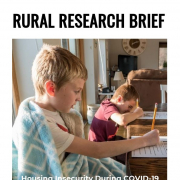
Using data from the Census Bureau’s Pulse survey, a new HAC Rural Research Brief, Housing Insecurity During the COVID-19 Crisis, describes the past year’s challenges in paying housing costs and accessing assistance. Interactive graphics show differences between states and between owners and renters.

RuralSTAT
The U.S. population on April 1, 2020, was 331,449,281. That is an increase of 22,703,743 – or 7.4% – from 2010. Source: U.S. Census Bureau.


OPPORTUNITIES

Veterans housing repair grants available.
Nonprofit organizations offering nationwide or statewide programs that primarily serve veterans or low-income individuals are eligible for the Veterans Housing Rehabilitation and Modification Pilot Program from HUD and VA. Grants may be used to modify or rehabilitate eligible veterans’ primary residences or to provide grantees’ affiliates with technical, administrative and training support related to those services. Apply by July 30. For more information, contact  Jovette Gadson, HUD, 877-787-2526.

HUD offers fair housing funds.
The Fair Housing Organization Initiative Program will make grants to help housing nonprofits build their capacity and effectiveness to conduct enforcement-related activities. The Education and Outreach Initiative Program will fund national, regional and local education campaigns including a new Disability Deinstitutionalization and Integration Campaign. The Tester Coordinator Training Initiative will fund training for testers. The Private Enforcement Initiative will support experienced organizations enforcing fair housing law. The deadline for all applications is June 14. For more information on any of these programs, contact  Kimberly Harley, HUD, 202-402-4753.

Resources offered to help claim stimulus payments and tax credits.
The IRS provides information to help people without a fixed address or bank account to claim the three Economic Impact Payments, commonly known as stimulus checks, and the Earned Income Tax Credit, which can provide a rebate for workers who worked but did not earn enough to need to pay taxes. The U.S. Interagency Council on Homelessness also offers instructions. Many people will need to file a 2020 tax return to claim the payments and/or tax credits. The deadline is May 17, but anyone who does not owe taxes can file up to three years after that date, according to USICH. The Center on Budget and Policy Priorities’ Get It Back Campaign has more details about the EITC as well as outreach materials for community organizations.

Some low-income homeowners will have new refinance option.
This summer Fannie Mae and Freddie Mac will begin offering a new mortgage product for refinances by homeowners with incomes under 80% of area median. To be eligible, a homeowner must have a mortgage backed by Fannie Mae or Freddie Mac and meet specific requirements for factors such as credit rating, debt level and payment history.

HAC job openings: Community Facilities Housing Specialist and two internships.
For details, visit HAC’s website.

  • The Community Facilities Housing Specialist identifies and engages community stakeholders and provides direct technical assistance to rural organizations that are developing facilities such as parks, community centers, public libraries and childcare centers. This includes helping them identify, utilize and apply for financial resources such as USDA Community Facilities grants and loans. This a two-year position and is eligible for telecommuting.
  • The Investor Relations Intern will assist in gathering and analyzing data on HAC’s lending and coordinate with HAC’s communication team to develop impact narratives. The Loan Portfolio Management Intern will assist in gathering and analyzing data for financial statement assessments of existing borrowers, and review and reconcile financial transactions. Both internships provide stipends, are eligible for telecommuting and will run from the end of May through August 2021.

 CORONAVIRUS

“Tribes see progress in COVID-19 fight.”
This video and story from Roll Call recount improvements in tribes’ infection and death rates resulting from vaccinations and other measures.

“Rural ambulance crews have run out of money and volunteers.”
This New York Times article explains the serious problem providing ambulance services in sparsely populated rural areas. The low volume of cases and a reduction in willing volunteers make it financially difficult to sustain these systems.

Research points out recovery gap for women.
Closing the Latina Wealth Gap: Building an Inclusive Economic Recovery after COVID, by UnidosUS, reports that Latina women face extra challenges in recovering from the recession because of pre-pandemic structural inequalities. Racial Wealth Snapshot: Women, Men and the Racial Wealth Divide, posted by the National Community Reinvestment Coalition, shows that in each racial and ethnic group women earn less than men, though the disparities differ greatly among racial and ethnic groups. Wealth is also far lower for women in each population. Women’s academic attainment, in contrast, is higher than men’s for all racial and ethnic groups.

REGULATIONS AND FEDERAL AGENCIES

HUD cancels rule on treatment of transgender people.
HUD has withdrawn a regulation proposed in July 2020 would have removed protections for transgender individuals in HUD-supported facilities, such as single-sex shelters or shelters with separate facilities based on sex. HUD also released guidance for shelter operators on providing access based on gender identity. For more information, contact Samuel F. Pearson-Moore, HUD, 202-402-5138.

Housing Trust Fund input sought.
HUD requests comments on the interim regulations that have governed the Housing Trust Fund since 2016. Responses are due June 25. For more information, contact Virginia Sardone, HUD, 202-708-2684.

USDA revises Rural Energy for America Program rule.
The Rural Business-Cooperative Service issued revisions to its REAP regulations that will take effect on July 26. It is also accepting comments until June 28. For more information, contact  Sami Zarour, USDA, 202-720-9549.

Recovery funds for Puerto Rico released.
On April 19 HUD announced it is obligating $8.2 billion in CDBG Mitigation funds for Puerto Rico and removing the previous administration’s “onerous restrictions unique to Puerto Rico” that delayed the release of monies appropriated after Hurricanes Irma and Maria hit the island in September 2017. A recent report by HUD’s Inspector General found the funding was slowed by the federal government shutdown in 2018-2019 and by requirements imposed by OMB.

PUBLICATIONS AND MEDIA

Water infrastructure study looks at pipeline performance, risk and economics.
A five-year study conducted by Virginia Tech and funded by the U.S. Bureau of Reclamation analyzes data from over 500 water utilities and federal facilities on the health of the nation’s pipeline infrastructure. Researchers calculated necessary replacements will cost $3.6 trillion over the next 25 years.

2021 Advocates’ Guide to Housing and Community Development Policy published.
The National Low Income Housing Coalition’s annual guide describes programs, challenges and opportunities related to affordable housing and community development. The 2021 edition includes a chapter devoted to the coronavirus pandemic and its impact on housing and homelessness.

Rural home sales in 10 states continue record growth.
The Creighton University Rural Main Street Index, a survey of bank CEOs in rural areas of 10 states, showed positive growth for the fifth month in a row. The home sale index for rural areas reached a record high in April, outpacing a record set in March. Nearly 40% of the rural bank CEOs surveyed said that their local economies expanded during April. For more information, see the survey findings and methodology.

HAC

Need capital for your affordable housing project?
HAC’s loan fund provides low interest rate loans to support single- and multifamily affordable housing projects for low-income rural residents throughout the U.S. and territories. Capital is available for all types of affordable and mixed-income housing projects, including preservation, new development, farmworker, senior and veteran housing. HAC loan funds can be used for pre-development, site acquisition, site development, construction/rehabilitation and permanent financing. Contact HAC’s loan fund staff at  hacloanfund@ruralhome.org, 202-842-8600.
Please note: HAC is not able to offer loans to individuals or families. Borrowers must be nonprofit or for-profit organizations or government entities (including tribes).
RURAL RESEARCH BRIEF: Housing Insecurity During COVID-19

COVID-19 has disrupted nearly every aspect of life and culture in rural America, and the economic fallout is most acutely felt through job losses. If rural unemployment rates remain high the collateral impacts to almost all sectors of the housing market could be substantial – notably the ability of unemployed households to make rent and mortgage payments. This Brief presents time series housing trends from the U.S. Census Bureau’s PULSE Survey. The Pulse Survey provides data to help understand the experiences of American households during the coronavirus pandemic.

USDA Rural Development Obligations FY 21 – March

USDA Rural Development Obligations Report Cover - FY 2021

The Housing Assistance Council (HAC) presents this month’s report on Fiscal Year 2021 USDA Rural Housing program obligations.

As of the end of February, USDA obligated 60,232 loans, loan guarantees, and grants totaling about $10,330,206,982. This is $2,134,121,531 higher than obligation levels from this time last year. At that time, there were 53,209 loans, loan guarantees, and grants obligated totaling $8,196,085,451.

Federal agencies operated under a series of short-term continuing resolutions (CR) for most of the first quarter of FY 2021. A final CR was signed into law on December 27, 2020 which provides funding for the remainder of the fiscal year. Since March 20, 2020, USDA offices have been operating from remote locations due to the COVID-19 virus.

Single Family Housing Program Highlights

The Section 502 Guaranteed loan program, the largest of the Single Family Housing programs, obligated $9,888,959,509 (56,221 loan guarantees) up from $7,721,657,308 ( 48,119 loan guarantees) this time last year.

For the Section 502 Direct program, loan obligations totaled $356,827,444 (1,965 loans), similar to last year’s obligation level of $365,962,478 (2,157 loans.) About 38 percent of the loan dollars went to Very Low-income (VLI) applicants. VLI loans represented over 44 percent of the total number of Section 502 Direct loans.

The Section 504 Repair and Rehabilitation programs obligated  750 loans representing $4,369,687. Loan volume was up from this time last year (1,015 loans representing $6,193,027.) There were also about $7,942,283 (1,245 grants) obligated in the Section 504 grant program compared to $12,003,752 (1,869 grants) last year.

USDA’s Section 523 Self Help Housing Grant program funded 6 grants and contracts totaling $3,710,175 up from last year’s 3 grants and contracts totaling $1,900,426.

Multi-Family Housing Programs

USDA’s Section 538 Multifamily Housing program obligated 35 loan guarantees totaling $68,356,333 compared to last year’s 29 loan guarantees ($60,715,592.) No Section 515 Rural Rental Housing program have been funded so far this year, similar to last year at this time. There have been 0 loans and 5 grants obligated in the MPR program totaling $0 and $251,778 this year compared to 0 loans and 3 grants representing $0 and $988,734, respectively last year.

No Farm Labor Housing loans or grants have been funded so far this year. Last year at this time, 9 loans and 5 grants were obligated ($18,630,577 and $5,853,855, respectively.)

USDA obligated funds for 38,592 rental assistance units under the Section 521 Rental Assistance program totaling $219,583,640. This compares to about 83,226 units ($477,189,635) obligated same time last year. There were also 1,939 Rural Housing Vouchers totaling $9,651,145 compared to2,340 vouchers representing $11,057,083 this time last year.

Download the combined document.

* The Rural Housing Service (RHS) monthly obligation reports are produced by the Housing Assistance Council (HAC) 1025 Vermont Ave., NW, Suite 606, Washington, DC 20005. The monthly figures derive from HAC tabulations of USDA –RHS 205c, d, and f report data. For questions or comments about the obligation reports, please contact Michael Feinberg at 202-842-8600 or michael@ruralhome.org.

HAC News: April 15, 2021

HAC News Formats. pdf

April 15, 2021

Vol. 50, No. 8

TOP STORIES

Biden budget outline calls for more HUD funding and expanded Rural StrikeForce.
The Biden Administration’s first budget request, released on April 9, outlines priorities including increases in the HOME, CDBG and Native American housing programs, along with 200,000 new HUD vouchers.  It proposes to increase funding above current levels for the Rural e-Connectivity broadband program, rural water and wastewater programs and USDA’s civil rights office but does not mention USDA’s rural housing programs. It includes $32 million to renew and expand an Obama administration StrikeForce initiative that aims to connect rural residents with federal resources. More information about the Biden proposal is posted on HAC’s website. A more detailed budget will be issued later this spring.

HUD launches process to restore fair housing rules.
One of President Biden’s early executive orders directed HUD to review two Trump administration fair housing regulations. On April 12, HUD sent replacement rules to OMB for review, the first step towards official Federal Register publication and eventual implementation. The documents themselves are not yet available online. Reinstatement of HUD’s Discriminatory Effects Standard is described as a proposed rule. Affirmatively Furthering Fair Housing; Restoring Statutory Definitions and Certifications is labeled an interim final rule.

Guidance provided for recently approved USDA Rental Assistance.
The American Rescue Plan Act appropriated $100 million in Section 521 RA for tenants at USDA-financed properties who are not already receiving rent support and are paying more than 30% of their income for rent. USDA explains that its RD staff will determine what tenants may be eligible and will contact property owners. Tenants currently paying more than 50% of their income toward rent will receive priority. Assistance will last for up to a year; further aid depends on appropriations. For more information, contact the relevant RD servicing official (on the linked page, click the Contact tab).

HAC offers flexible loans for rental preservation.
HAC has flexible loan capital available to support preservation of USDA Section 515 properties, HUD-subsidized properties and naturally occurring affordable housing in rural places. Eligible properties are existing affordable or mixed-income rental housing (with or without current income restrictions). Loans can be $50,000-$1.5 million, interest rates can be as low as 4.5%, and terms can be up to 180 months, with longer amortization periods based on project needs. Eligible borrowers include nonprofit organizations, for-profit developers, housing authorities and tribal entities. For more information, see HAC’s website or contact  Kristin Blum, 207-596-0033, or  Alison Duncan, 443-884-9960.

Congressional hearings consider race, infrastructure and housing.
On April 13 the Senate Banking, Housing and Urban Affairs Committee held a hearing titled Separate and Unequal: The Legacy of Racial Discrimination in Housing with witnesses from the NAACP Legal Defense and Educational Fund, the National Fair Housing Alliance, the Ohio State University and the American Enterprise Institute. An April 14 House Financial Services Committee hearing, Build Back Better: Investing in Equitable and Affordable Housing Infrastructure, focused on housing priorities for the upcoming infrastructure package negotiation and also touched on broader topics like the state of the job market, what constitutes infrastructure, and proposed corporate tax increases. Members on both sides of the aisle noted the specific needs of rural and tribal housing during the hearing.

RuralSTAT

According to HAC estimates, approximately 2,838 FDIC insured banks do not report mortgage activity through the Home Mortgage Disclosure Act due to exemptions for asset threshold size, metropolitan location or level of mortgage loan activity. Source: HAC tabulations of FDIC and HMDA data.

Non-HMDA Reporting Financial Institutions, Estimate of FDIC Insured Banks


OPPORTUNITIES

National Housing Trust Fund doubles last year’s funding.
Each state must use most of its portion of this year’s nearly $700 million in HTF funds to provide rental housing for low- and extremely-low income residents. HUD estimates the total will finance more than 5,400 units. The funding comes from Fannie Mae and Freddie Mac and increased this year because low interest rates during the pandemic led to high levels of mortgage financing for home purchases and refinances. For more information, contact a state administering agency.

April 20 listening session to cover tribal broadband access.
USDA will host an online listening session on April 20 to solicit comments and recommendations from tribal communities and tribal broadband industry experts on ways to help expand broadband access in tribal communities under the ReConnect Program. Register online here. For more information, contact  Tedd Buelow, USDA. Written comments on USDA’s ReConnect regulation are due April 27.

HAC job openings: Community Facilities Housing Specialist and two internships.
For details, visit HAC’s website.

  • The Community Facilities Housing Specialist identifies and engages community stakeholders and provides direct technical assistance to rural organizations that are developing facilities such as parks, community centers, public libraries and childcare centers. This includes helping them identify, utilize and apply for financial resources such as USDA Community Facilities grants and loans. This a two-year position and is eligible for telecommuting.
  • The Investor Relations Intern will assist in gathering and analyzing data on HAC’s lending and coordinate with HAC’s communication team to develop impact narratives. The Loan Portfolio Management Intern will assist in gathering and analyzing data for financial statement assessments of existing borrowers, and review and reconcile financial transactions. Both internships provide stipends, are eligible for telecommuting and will run from the end of May through August 2021.

CORONAVIRUS

CFPB proposes to delay foreclosures for pandemic-affected homeowners, asks lenders to help.
Comments are due May 10 on a proposed regulation from the Consumer Financial Protection Bureau that would delay foreclosures on homeowners who have not been able to make mortgage payments for pandemic-related reasons. Forbearance (permission to delay making payments) will end for almost 1.7 million homeowners in September and the following months, CFPB states. Its changes would require lenders and servicers to wait until after December 31, 2021 before starting most foreclosures, to offer loan modifications to borrowers and to take other steps. For more information, contact Angela Fox, CFPB, 202-435-7700. CFPB has also issued a Compliance Bulletin and Policy Guidance urging mortgage servicers to prepare early for the wave of homeowners exiting forbearance and warning them it can base enforcement actions on their assistance to borrowers. For more information, contact Allison Brown, CFPB, 202-435-7107.

HAC provides round-up of recent federal housing actions.
Federal agencies have recently announced numerous policy and regulatory changes related to the pandemic and housing, and HAC summarized many of them on its website. All of HAC’s coronavirus resource pages can be accessed here.

“Covid racial disparities loom large in rural counties.”
This article, published by Stateline and the Daily Yonder, compiles findings from several studies that demonstrate the pandemic’s impact in rural places has been especially significant for people of color.

Eviction moratorium declaration now available in several languages.
The Centers for Disease Control has posted its revised form, which can be used by tenants to state their eligibility for the eviction moratorium, in Amharic, Haitian Creole, Hindi, Russian, Somali, Spanish and Traditional Chinese as well as in English.

Research looks at rental housing counseling during coronavirus pandemic.
The Urban Institute published Housing Counseling to Support Renters in Crisis, which outlines how housing counseling agencies have altered their approach to service provision in the wake of the pandemic. The report includes perspectives from counseling agencies that serve rural, urban and suburban populations.

Answers provided to immigrants’ questions about vaccines.
The National Immigration Law Center has posted Answers to Common Questions about Immigrants’ Access to the COVID-19 Vaccines. It explains there are no restrictions on vaccination based on immigration status and addresses several other possible concerns.

REGULATIONS AND FEDERAL AGENCIES

HUD and VA pledge to work together on veteran homelessness.
HUD secretary Marcia L. Fudge and VA secretary Denis McDonough issued a joint statement on April 12 committing to work together to end veteran homelessness. This is the first step, they said, in a multi-agency effort coordinated by the U.S. Interagency Council on Homelessness.

PUBLICATIONS AND MEDIA

Reports document poverty, income inequality, racial/ethnic disparities for children and youth.
The State of America’s Children 2021, published by the Children’s Defense Fund, is based primarily on pre-pandemic data because little real-time data is available, though each chapter includes a section on the pandemic’s impact. The report includes fact sheets for each state. Pre-pandemic state-level information is also the basis for the 2020 State Index on Youth Homelessness published by the National Homelessness Law Center and True Colors United, focusing on state systems, environment and laws as they relate to preventing and ending youth homelessness.

“‘In 2021 it should be different’: Martin County waits for water.”
Residents in part of Martin County, KY have relied for years on a token station where they can purchase water to haul to their homes, reports WYMT, until recently the token station broke down and could not be repaired promptly. A WCHS article describes residents driving miles to other places to find clean water. The county’s long history of water-related challenges is recounted by the Ohio Valley ReSource and the Appalachian Citizens’ Law Center.

“Why we must first be well before we can do the work of the people.”
Starting with a description of community leaders’ tendency to ignore their own trauma, this Shelterforce article addresses the need for organizations and staffs to care for themselves in order to do their work of caring for others. The author describes alternative approaches and links to a variety of resources.

HAC

Need capital for your affordable housing project?
HAC’s loan fund provides low interest rate loans to support single- and multifamily affordable housing projects for low-income rural residents throughout the U.S. and territories. Capital is available for all types of affordable and mixed-income housing projects, including preservation, new development, farmworker, senior and veteran housing. HAC loan funds can be used for pre-development, site acquisition, site development, construction/rehabilitation and permanent financing. Contact HAC’s loan fund staff at  hacloanfund@ruralhome.org, 202-842-8600.
Please note: HAC is not able to offer loans to individuals or families. Borrowers must be nonprofit or for-profit organizations or government entities (including tribes).
HAC News: April 1, 2021

HAC News Formats. pdf

April 1, 2021

Vol. 50, No. 7


TOP STORIES

Eviction moratorium extended through June 30.

The Centers for Disease Control has extended the nationwide eviction moratorium through June 30, with some changes in wording. CDC also posted a new checklist version of the Eviction Protection Declaration for tenants to use. USDA RD announced that the moratorium applies to tenants in USDA-assisted properties. For more information, property owners and management agents can contact their RD servicing representative (on the linked page, click the Contact tab). Tenants can request information from HUD-certified housing counseling agencies.

Agencies announce eviction moratorium enforcement.

After the eviction moratorium was extended on March 29, the Federal Trade Commission and Consumer Financial Protection Bureau warned they “will not tolerate illegal practices” by landlords or property managers trying to evict tenants who cannot pay rent for reasons related to the pandemic. Their joint statement asserts that “both agencies will be monitoring and investigating eviction practices, particularly by major multistate landlords, eviction management services, and private equity firms, to ensure that they are complying with the law.” Evictions that violate the moratorium, as well as other unlawful debt collection practices, can be reported to the CFPB at www.consumerfinance.gov/complaint/ or 855-411-2372.

Infrastructure proposal includes housing, broadband and a new Rural Partnership Program.

The administration released a summary of its sweeping infrastructure proposal on March 31, including several provisions relevant to HAC News readers. HAC supports the inclusion of increased rural housing resources in the infrastructure plan, especially around USDA multifamily preservation and capacity building.

  • Acknowledging the severe shortage of affordable housing options in the United States, the White House would invest $213 billion to produce, preserve and retrofit affordable homes, including 500,000 for low- and middle-income homebuyers. The summary does not indicate how most of these funds would be administered, though it does allocate $40 billion for public housing capital needs.
  • The administration proposes a new $5 billion Rural Partnership Program “to help rural regions, including Tribal Nations, build on their unique assets and realize their vision for inclusive community and economic development” by supporting locally led planning and capacity building efforts through flexible funding mechanisms.
  • The proposal calls for building high-speed broadband infrastructure to reach everyone in the country.
  • Rural, tribal and underserved areas are mentioned throughout the proposal, including in the housing section.

HUD withdraws proposed rule on mixed-status families.

In 2019 HUD proposed to change its regulations regarding assistance to families with mixed immigration status. Instead of continuing to allow such families to live in HUD-assisted housing and prorating the amount of their assistance to cover only the eligible family members, the proposal would have prohibited aid to the entire family. The rule was never finalized, and HUD has now withdrawn it.

HAC and NEA present rural photography exhibit.

With support from the National Endowment for the Arts, HAC launched There is More Work to Be Done, a virtual exhibition celebrating the work of acclaimed photographer George “Elfie” Ballis (1925-2010), a long-time friend of HAC and rural housing, along with photos and stories from contemporary photographers who worked with community-based housing organizations in California, Kentucky and Mississippi to capture collective progress while exposing the work that must continue.

HAC celebrates SHOP’s 25th anniversary.

March 26 was the 25th anniversary of HUD’s Self-Help Homeownership Opportunity Program. Over these 25 years, HAC has received and invested over $120 million through SHOP to build 9,896 self-help homes. As the only national SHOP grantee with a specific focus on rural homes, we’re proud of the difference our SHOP investments make in rural America. To celebrate this anniversary, HAC featured a story about the impact of one of our SHOP grantees: Northwest Regional Housing Authority in Harrison, Arkansas.

April is Fair Housing Month.

HUD’s theme for the month is Fair Housing: More Than Just Words. Scheduled events include a virtual celebration on April 7.


RuralSTAT

From 2019 to 2020, the number of people experiencing unsheltered homelessness in largely rural Continuums of Care increased by 8.3%, higher than in other geographies and higher than the 7.5% increase nationwide. Source: 2020 Annual Homeless Assessment Report (AHAR) to Congress, HUD.


OPPORTUNITIES

Paycheck Protection Program extended.

The PPP Extension Act of 2021, signed into law by President Biden on March 30, sets May 31 as the new deadline for small businesses to request PPP loans.

Health hazard reduction funds available for PHAs and IHAs.

The deadline is May 25 for public housing authorities and Indian housing authorities to apply for competitive grants to evaluate and reduce housing-related hazards, including carbon monoxide and mold, in public housing. For more information, contact HUD staff.

Equipment makers encouraged to partner with rural nonprofits.   

The Association of Equipment Manufacturers has released a Workforce Solutions Toolkit designed to improve manufacturers’ approach to workforce development. It includes a section on specific challenges in rural places and recommends partnering with local nonprofits to maximize impact. For more information, contact Julie Davis, AEM.

HAC job opening: Community Facilities Housing Specialist.

The Community Facilities Housing Specialist identifies and engages community stakeholders and provides direct technical assistance to rural organizations that are developing facilities such as parks, community centers, public libraries and childcare centers. This includes helping them identify, utilize and apply for financial resources such as USDA Community Facilities grants and loans. This a two-year position and is eligible for telecommuting.


REGULATIONS AND FEDERAL AGENCIES

Input sought on new Rural Energy Pilot Program.

USDA RD requests comments by April 29 on its new Rural Energy Pilot Program, which received $10 million in USDA’s FY 2021 appropriation to help rural communities develop renewable energy. RD will hold an online listening session on April 22. For more information, contact Anthony Crooks, USDA, 202-205-9322.

House hearing examines the state of Black farmers in the U.S.

House Agriculture Committee hearing on March 25 included testimony from six farmers and farmer advocates as well as Agriculture Secretary Tom Vilsack, covering USDA’s history of discrimination and advice for the $5 billion in debt relief and other aid provided by the American Rescue Plan Act.

Mortgage data collection required for 2021.

The Consumer Financial Protection Bureau has ended several policies, put in place near the beginning of the coronavirus pandemic, that allowed banks and other lenders flexibility in complying with a variety of requirements, including the Home Mortgage Disclosure Act. HMDA data on applications and approvals for mortgage finance will be required again beginning with transactions finalized in 2021. For more information, contact Zixta Q. Martinez, CBPP, 202-435-7204.

USDA revises domestic violence guidance for rental properties.

A March 15, 2021 Unnumbered Letter revises guidance published in November, correcting errors and omissions in the earlier version.


PUBLICATIONS AND MEDIA

HUD reports homelessness increased before the pandemic.

The just-released 2020 Annual Homeless Assessment Report (AHAR) to Congress shows about 580,000 people experienced homelessness in the U.S. on one night in January 2020, with about 18% of them in HUD-defined “largely rural” Continuums of Care. Unsheltered homelessness increased, as it has every year since 2015, although the total is still lower than it was in 2007. About 20% of people experiencing unsheltered homelessness were in largely rural CoCs. HUD has posted data at the national, state and CoC levels.

Guides offer fair housing tools for limited English proficiency.

Language Access Guide prepared by the Intermountain Fair Housing Council in Idaho provides information and tools for housing providers and consumers, both with and without federal assistance. It explains what requirements apply and what remedies are available for persons with limited English proficiency. The guide is in English but links to numerous resources, some of which are available in other languages. HUD has also released a Housing Counseling Limited English Proficiency Toolkit for its counseling agencies.

“How to improve public health, the environment and racial equity all at once: upgrade low-income housing.”

An environmental health researcher argues that retrofitting and rehabilitating affordable housing saves money, improves the health of residents, and helps the environment.

 Fracking left Appalachian counties’ economies worse, research found.

Appalachia’s Natural Gas Counties: Contributing More to the U.S. Economy and Getting Less in Return reports the findings of an Ohio River Valley Institute analysis of data from the 22 counties that produce 90% of the region’s natural gas. While natural gas production increased economic output by 60%, little of the income benefited local economies. The data indicated scant job growth and a declining population in many of the counties involved.

“Census data delay scrambles plans for state redistricting.”

The delay in completing the 2020 Census and releasing the data has added cost, confusion and instability to the redistricting process and will likely come with legal challenges, this AP article explains. Each state will handle the delay in its own way – according to the National Conference of State Legislatures, only about half the states require using the census data for redistricting – but those with 2022 primaries face a time crunch.


HAC

Need capital for your affordable housing project?
HAC’s loan fund provides low interest rate loans to support single- and multifamily affordable housing projects for low-income rural residents throughout the U.S. and territories. Capital is available for all types of affordable and mixed-income housing projects, including preservation, new development, farmworker, senior and veteran housing. HAC loan funds can be used for pre-development, site acquisition, site development, construction/rehabilitation and permanent financing. Contact HAC’s loan fund staff at  hacloanfund@ruralhome.org, 202-842-8600.
Please note: HAC is not able to offer loans to individuals or families. Borrowers must be nonprofit or for-profit organizations or government entities (including tribes).
HAC News: March 18, 2021

HAC News Formats. pdf

March 18, 2021

Vol. 50, No. 6

TOP STORIES

American Rescue Plan Act offers aid for housing, socially disadvantaged farmers and more.

The American Rescue Plan Act, signed into law by President Biden on March 11, addresses numerous economic and health aspects of the coronavirus pandemic. HAC is proud that the plan provides significant and desperately needed housing aid, including $100 million for USDA’s Section 521 Rental Assistance program and $39 million for the Section 502 direct and Section 504 homeowner loan programs. HAC’s statement includes a summary of relevant parts of the statute.

Comments due March 19 on metropolitan area definition.

HAC encourages rural communities and organizations to respond by Friday, March 19 to the Office of Management and Budget’s proposal to redefine metropolitan statistical areas. HAC has posted language and information including a recording of its recent webinar on the topic. The change could substantially impact rural communities because OMB’s definition of outside metropolitan areas is often used as a proxy for rural areas.

Public charge litigation ends, rule rescinded.

The federal government has returned to using the public charge policy that was in place before the last administration changed the regulation in 2019. This means that determinations of whether an immigrant may become a public charge will not take into account the person’s receipt of federal housing aid, Medicaid (except for Medicaid for long-term institutionalization), food stamps, or medical treatment or preventive services for COVID-19, including vaccines. Court cases that supported the 2019 public charge regulation were dismissed on March 9 after the Biden administration announced it would not pursue them. A Federal Register notice deletes the 2019 rule, and the administration also withdrew a related proposal made in 2020. Several state attorneys general have now asked courts to allow them to intervene to support the 2019 rule.

House again considers bill to legalize farmworkers, revise H-2A and increase rural housing funding.

The House is expected to vote March 18 on the Farm Workforce Modernization ActH.R. 1603, which passed the House in the last Congress but was never taken up by the Senate. The measure would create a process for farmworkers and their families to obtain legal status in the U.S., tweak the H-2A visa program for temporary farmworkers, increase the number of green cards available for farmworkers and establish a mandatory system for farm employers to check their workers’ legal status. For rental housing preservation, it would authorize the MPR and preservation technical assistance programs, expand eligibility for Section 542 vouchers, permit 20-year Rental Assistance contracts, allow decoupling of Rental Assistance as a last resort, require USDA to develop a preservation plan and establish a stakeholders’ committee to advise USDA. Finally, it would authorize increased funding for the Section 514 and 516 farmworker housing programs and for Section 521 Rental Assistance.

National Farmworker Awareness Week will be March 25-31.

Student Action with Farmworkers describes National Farmworker Awareness Week as “a week of action for students and community members to honor farmworkers’ important contributions and to raise awareness about the issues they face.” SAF offers media resources and event suggestions.

RuralSTAT

The share of women among hired farmworkers remained relatively unchanged from 2006 to 2009, but then climbed from 18.6% in 2009 to 25.5% in 2018. Source: Economic Research Service, U.S. Department of Agriculture, 2020.

OPPORTUNITIES

VA offers grants to help improve safety for sheltering homeless veterans.

VA has opened two funding competitions under its Homeless Providers Grant and Per Diem (GPD) program. Nonprofits, state and local governments, and tribes can apply for new special need grants for per diem payments to cover operating costs that facilitate housing stabilization for veterans who are homeless or at risk of becoming homeless and who are chronically mentally ill, frail elderly, individuals who care for minor dependents, terminally ill or women. This can include providing supportive housing beds in private rooms with private bathrooms. Applications are due May 5. Current GPD grantees can apply by May 25 for capital grants to acquire, construct or rehabilitate property to reduce the use of congregate facilities and make more individual units available for GPD transitional housing. For more information on either program, contact Jeffery Quarles, VA, 1-877-332-0334 (toll-free).

Federal agencies set webinar on mortgage forbearance.

Forbearance Options and Resources for Helping Borrowers with Federally Backed Mortgages: Webinar and Discussion with CFPB, FHFA, HUD, USDA, and VA is scheduled for March 22. CFPB staff will review materials available to help consumers navigate the process of requesting a delay in making their mortgage payments. Panelists from the other agencies will discuss the options available to their borrowers, with an emphasis on exit options and information about recently announced forbearance extensions.

HAC job opening: Community Facilities Housing Specialist.

The Community Facilities Housing Specialist identifies and engages community stakeholders and provides direct technical assistance to rural organizations that are developing facilities such as parks, community centers, public libraries and childcare centers. This includes helping them identify, utilize and apply for financial resources such as USDA Community Facilities grants and loans. This a two-year position and is eligible for telecommuting.

CORONAVIRUS

Fannie Mae and Freddie Mac extend relief for homebuyers and rental property owners.

Some flexibilities related to new single-family mortgage loans, put in place by Fannie Mae and Freddie Mac earlier in the pandemic, have been extended until April 30. These include alternative appraisals, alternative methods for documenting income and verifying employment before loan closing and expanded use of power of attorney. Forbearance options for owners of rental property whose mortgages are owned by Fannie Mae or Freddie Mac are extended through June 30. Landlords who are experiencing financial hardship because of the pandemic can request mortgage forbearance and must agree to certain tenant protections. For more information, contact a mortgage lender or servicer.

COVID death rates higher in rural counties with high minority populations.

The death rate in “highly diverse” rural counties – those where at least 33% of the population is minority – is 60% higher than in other rural counties, whereas the urban death rate is 13% higher in highly diverse counties than in others, according to COVID-19 and Rural Communities: Protecting Rural Lives and Health, an article by McKinsey & Company. In highly diverse counties where the largest population group is American Indian or Alaska Native, the death rate is 2.1 times higher than in less diverse counties. Death rates are 1.6 times higher where the largest group is Black or African American and 1.5 times higher where the largest group is Hispanic. Socioeconomic vulnerabilities such as financial insecurity, housing insecurity, and risk of being uninsured contribute to poor health outcomes and are greater in highly diverse rural communities than in other rural communities. The report suggests a variety of actions to improve outcomes.

REGULATIONS AND FEDERAL AGENCIES

USDA reminds landlords about eviction notices and non-renewals.

In an notice to stakeholders emailed on March 12, USDA Rural Development reminds owners and managers of USDA-financed multifamily properties that the CARES Act instituted a required 30-day notice before evicting a tenant, and that provision has no expiration date. The agency also notes that a lease cannot be terminated or not renewed as an alternative to eviction. USDA is sending letters to all Section 514 and 515 tenants about the Emergency Rental Assistance Program support that is being distributed through states and localities. For more information, contact an RD state office.

White House and USDA name advisors for rural, housing, racial justice, veterans and Native issues.

Recent appointments to the White House Domestic Policy Council include Kelliann Blazek, who will serve as Special Assistant to the President for Agriculture and Rural Policy. Erika Poethig was named Special Assistant to the President for Housing and Urban Policy; Donald K. Sherman is Special Assistant to the President for Racial and Economic Justice; Terri Tanielian is Special Assistant to the President for Veterans Affairs; and Libby Washburn is Special Assistant to the President for Native Affairs. Secretary of Agriculture Tom Vilsack has also named a Senior Advisor for Racial Equity, Dewayne Goldmon, who headed the National Black Growers Council and is an Arkansas farmer.

Fudge begins work as HUD Secretary.

On March 10, after the Senate approved her nomination, Marcia Fudge was sworn in as the Secretary of Housing and Urban Development.

USDA FY21 single-family funding details announced.

For the Section 502 direct loan program and Section 504 loans and grants, an Unnumbered Letter dated March 11, 2021 provides information on program goals, basic formula criteria, setasides, administrative allocation, pooling of funds, and program contacts. Lists show funding allocations for each state and names of counties eligible for setasides.

“USDA relocations curtail ag research, farmer confidence.”

This AP article reports on the current status of the Economic Research Service and the National Institute of Food and Agriculture, USDA agencies that were moved from Washington, DC to Kansas City in 2019. Both lost a significant portion of their staff and hiring has been slower than expected. A spokesperson for the current USDA leadership said the department is now focused on restoring employee confidence and morale.

PUBLICATIONS AND MEDIA

Report calls for increase in Black homeownership.

Raising the Black homeownership rate would address significant barriers to housing access and wealth creation for the African-American community, the National Community Reinvestment Coalition says in 60% Black Homeownership: A Radical Goal for Black Wealth Development. Black homeownership nationwide peaked at 49% in 2004. Even a 60% rate would not bridge the Black-white wealth divide, however, the report’s authors write; additional bold programs are needed.

Research finds link between eviction and depression.

The Health Impacts of Eviction: Evidence from the National Longitudinal Study of Adolescent to Adult Health, a University of Pennsylvania Population Center Working Paper, reports that analyses of nationally representative, longitudinal data from 1994 to 2008 showed eviction was associated with risk of depression in young adults. The researchers concluded that “our results suggest that the recent surges in evictions in the U.S. serve as a potent threat to population health during the emerging adult period, with especially devastating consequences for low-income individuals and communities of color.”

“Soaring home prices are starting to alarm policymakers.”

Despite a much higher unemployment rate, home prices in January rose 14% and sales jumped 24% from the previous year. This article from Politico reports industry analysts do not consider the current situation to be a bubble like the lead-up to the financial crisis of 2007-08 but, as home prices further outpace average income, Americans increasingly will not be able to afford a mortgage.

Expert recommends consulting Native communities in the 2021 redistricting process.

The redistricting conducted after the census every ten years influences how likely Democrats or Republicans are to be elected. A National Conference of State Legislatures blog post reports Native policy expert Chloe Cotton says consultation with tribes is paramount in taking Native communities into account, and explains why.

HAC

Need capital for your affordable housing project?
HAC’s loan funds provide low interest rate loans to support single- and multifamily affordable housing projects for low-income rural residents throughout the U.S. and territories. Capital is available for all types of affordable and mixed-income housing projects, including preservation, farmworker, senior and veteran housing. HAC loan funds can be used for pre-development, site acquisition, site development and construction/rehabilitation. Contact HAC’s loan fund staff at  hacloanfund@ruralhome.org, 202-842-8600.
Please note: HAC is not able to offer loans to individuals or families. Borrowers must be nonprofit or for-profit organizations or government entities (including tribes).
USDA Rural Development Obligations FY 21 – February

USDA Rural Development Obligations Report Cover - FY 2021

The Housing Assistance Council (HAC) presents this month’s report on Fiscal Year 2021 USDA Rural Housing program obligations.

As of the end of February, USDA obligated 60,232 loans, loan guarantees, and grants totaling about $10.3 billion. This is approximately $2.1 billion higher than obligation levels from this time last year when 53,209 loans, loan guarantees, and grants were obligated totaling nearly $8.2 billion.

Federal agencies operated under a series of short-term continuing resolutions (CR) for most of the first quarter of FY 2021. A final CR was signed into law on December 27, 2020 which provides funding for the remainder of the fiscal year. Since March 20, 2020, USDA offices have been operating from remote locations due to the COVID-19 virus.

Single Family Housing Program Highlights

The Section 502 Guaranteed loan program, the largest of the Single Family Housing programs, obligated approximately $9.9 billion (56,221 loan guarantees) up from nearly $7.8 billion (48,119 loan guarantees) this time last year.

For the Section 502 Direct program, loan obligations totaled $356.9 million (1,965 loans), a bit lower than last year’s $366 million (2,157 loans.) About 38 percent of the loan dollars went to Very Low-income (VLI) applicants. VLI loans represented over 44 percent of the total number of Section 502 Direct loans.

The Section 504 Repair and Rehabilitation programs obligated 750 loans and 1,245 grants representing about $4.4 million and 7.9 million respectively. Loan volume was lower than this time last year (1,015 loans representing $6.2 million) while grants totaled $12.0 million (1,869 grants).

USDA’s Section 523 Self Help Housing Grant program funded 6 grants and contracts totaling $3.7 million up from last year’s 3 grants and contracts totaling $1.9 million.

Multi-Family Housing Programs

USDA’s Section 538 Multifamily Housing program obligated 35 loan guarantees totaling nearly $68.4 million compared to last year’s 29 loan guarantees ($60.7 million.) No Section 515 Rural Rental Housing program have been funded so far this year, similar to last year at this time. There were also no loans or grants obligated so far in FY 21 under the MPR program compared to 3 grants representing $988,734 at this time last year.

No Farm Labor Housing loans or grants have been funded so far this year. Last year at this time, 9 loans and 5 grants were obligated (about $18.6 million and nearly $5.9 million respectively.)

USDA obligated funds for 38,592 rental assistance units under the Section 521 Rental Assistance program totaling $219.6 million. This compares to about 83,226 units ($477.2 million) obligated same time last year. There were also 1,939 Rural Housing Vouchers totaling about $9.7 million compared to 2,340 vouchers representing just over $11 million this time last year.

Download the combined document.

* The Rural Housing Service (RHS) monthly obligation reports are produced by the Housing Assistance Council (HAC) 1025 Vermont Ave., NW, Suite 606, Washington, DC 20005. The monthly figures derive from HAC tabulations of USDA –RHS 205c, d, and f report data. For questions or comments about the obligation reports, please contact Michael Feinberg at 202-842-8600 or michael@ruralhome.org.

HAC News: March 4, 2021

HAC News Formats. pdf

March 4, 2021

Vol. 50, No. 5

TOP STORIES
House passes coronavirus relief, Senate begins considering amendments.

On February 27 the House passed the American Rescue Plan Act (H.R. 1319). Beginning on March 4, the Senate will consider changes before it votes on the measure. Then its version will go back to the House for approval. The goal is to complete the process by March 14, when the enhanced unemployment benefits authorized in the December relief bill will expire.

CDC eviction moratorium still in effect despite court ruling.

The Justice Department has appealed a ruling by a federal district court in Texas, which held that the Centers for Disease Control’s eviction moratorium is unconstitutional. As Justice’s press release explains, the decision does not apply to any other landlords or tenants beyond this specific case and the moratorium remains in effect. A National Low Income Housing Coalition fact sheet cites three other federal district court decisions that upheld the moratorium. The National Housing Law Project provides a legal analysis of the Texas ruling.

Treasury updates FAQ on Emergency Rental Assistance program.

The Biden administration has revised the Treasury Department’s guidance on its program to provide pandemic relief rental assistance to state and local governments. The new document removes or modifies onerous requirements added by the previous administration.

HAC webinar to discuss proposed change to metropolitan area definition.

On Tuesday, March 9 at 2:00 Eastern time HAC will offer a webinar titled Redefining “Nonmetro”: What Does the Proposed Metropolitan Area Definition Change Mean for Rural America? The Office of Management and Budget’s definition of outside metropolitan areas, often used as a proxy for “rural” areas, is also frequently used by federal and state agencies to distribute billions of dollars in federal resources and to make policy decisions. Comments are due March 19 on proposed modifications to the metropolitan area definition that could substantially impact rural communities.

365 days of COVID-19 in rural America.

The first case of COVID-19 outside metropolitan areas was reported on February 20, 2020. One year later, there are more than 4 million reported cases of COVID-19 and 78,500 associated deaths in communities outside metropolitan areas. All counties outside metro areas have reported COVID cases and 96% have COVID-related deaths. HAC’s most recent analysis of data on the coronavirus pandemic’s impact includes illness and death rates, geographic distribution, economic and employment impacts and housing implications.

March is Women’s History Month.

Information and federal events are posted here.

RuralSTAT

From February 20, 2020 through February 20, 2021, approximately 14.4% of total reported COVID-19 cases in the U.S. and 15.7% of deaths were in rural communities. Source: HAC tabulations of New York Times data. For more information, visit HAC’s most recent update on the pandemic’s impact in rural America.

OPPORTUNITIES

HUD offers grant funds to modify homes for seniors.

Nonprofits, state and local governments, and PHAs can apply by May 4 for the Older Adult Home Modification Program to improve living conditions for low-income homeowners age 62 or older. Half the total funds available will go to “substantially rural” places, defined generally as places with populations under 50,000. For more information, contact  Yolanda A. Brown, HUD, 202-402-7596.

Citizens’ Institute on Rural Design applications due March 12.

Up to four communities will be selected for a local Design Workshop and up to 15 communities will join CIRD’s expert-led online Design Learning Cohort program. Rural communities with populations less than 50,000 are eligible. CIRD encourages applications from nonprofits, tribal or municipal governments, regional planning organizations and other community partners. More details are available in recordings of a Facebook LIVE session and an informational webinar.

HAC job openings: Housing Specialist, Community Facilities Housing Specialist.

For details, visit HAC’s website.

  • The Housing Specialist works with local partner organizations to identify financial resources and funding opportunities to support the preservation and development of affordable housing and community and economic development strategies specifically throughout expanses of Southwest and/or Western rural America. At least four years of relevant nonprofit or tribal organization work experience is required. Bilingual proficiency in English and Spanish is preferred.
  • The Community Facilities Housing Specialist identifies and engages community stakeholders and provides direct technical assistance to rural organizations that are developing facilities such as parks, community centers, public libraries and childcare centers. This includes helping them identify, utilize and apply for financial resources such as USDA Community Facilities grants and loans. This a two-year position and is eligible for telecommuting.

CORONAVIRUS

New reports examine rental assistance programs and racial equity.

COVID-19 Emergency Rental Assistance: Analysis of a National Survey of Programs reviews the characteristics of 220 coronavirus-related state and local rental assistance programs, explores their outcomes and describes lessons learned for the future. Advancing Racial Equity in Emergency Rental Assistance Programs highlights lessons about strategies states and localities can use to make their emergency rental assistance programs more equitable. Both reports were prepared by the NYU Furman Center, the Housing Initiative at Penn and the National Low Income Housing Coalition.

11 million households significantly overdue on rents and mortgages.

Housing Insecurity and the COVID-19 Pandemic, a new report from the Consumer Financial Protection Bureau, examines households at heightened risk of losing their homes to foreclosure or eviction. African-American and Hispanic households were more than twice as likely to report being behind on their payments as white households, and over 28% of manufactured home residents could not make their housing payments in December 2020.

Approaches to vaccinating farmworkers vary widely.

Three stories published on March 1 demonstrate the uncertainties about vaccinations for these essential, high-risk laborers. In Thousands of Farmworkers Are Prioritized for the Coronavirus Vaccine, the New York Times describes how the Riverside County, Calif. health department is vaccinating Coachella Valley farmworkers at their worksites without long waits in line or issues around citizenship. California is shifting its program away from county agencies, however, the Los Angeles Times says in Vaccine Rollout for Farmworkers is Fraught with Confusion and Bad Timing. A report by Documented is titled New York Farmworkers Removed From Vaccine Eligibility Without Explanation. An earlier article by the Midwest Center for Investigative Reporting, The CDC Recommended States Prioritize Farmworkers for the COVID-19 Vaccine. A Few Large Agricultural States Have Not, describes the approaches taken in Florida and Texas.

“How are Rural Areas Doing with COVID-19 Vaccinations? A Look at 3 Regions.”

This Healthline article discusses some of the challenges with administering the COVID vaccines in rural areas, highlighting interviews in Ohio, the Navajo Nation and North Carolina.

Rural public transit struggling during the pandemic.

More than a million rural households do not own vehicles and often depend on informal arrangements, ridesharing and public transportation to get around. The coronavirus pandemic has placed a strain on public transit options as services are contracted to accommodate shrinking budgets and ridership. The Institute for Policy Studies recommends increasing the amount of federal funding for transportation and changing the way that funding is allocated to create a more equitable system.

REGULATIONS AND FEDERAL AGENCIES

Senate approves Vilsack for USDA, committee holds hearing on Chopra for CFPB.

Tom Vilsack has been sworn in as Secretary of Agriculture after the full Senate approved his nomination on February 23. The Senate has not yet voted on the nomination of Rep. Marcia Fudge (D-OH) for Secretary of HUD. On March 2 the Senate Banking Committee held a hearing with Rohit Chopra, President Biden’s nominee to direct the Consumer Financial Protection Bureau.

Census proposes revising urban definition.

The Census Bureau invites input on changing its criteria for defining urban areas to focus on housing unit density rather than population density. An area would qualify as urban if it contains at least 4,000 housing units or has a population of at least 10,000 – increasing the current population threshold of 2,500. Places that do not fit the urban definition are considered rural.  Comments are due May 20. For more information, contact  Vincent Osier, Census, 301-763-1128.

USDA requests comments on Rural eConnectivity broadband program.

A final rule for the Rural eConnectivity Program (ReConnect), which provides loans, grants and loan/grant combinations to facilitate broadband deployment in rural areas, goes into effect on April 27, the same date comments are due. For more information, contact  Laurel Leverrier, RUS, 202-720-9556.

RD clarifies priority access to rental properties after disasters.

An email from USDA RD’s multifamily housing office reminds stakeholders that tenants displaced by disasters are eligible for priority access to available units at RD rental properties. Their status may be documented by either an RD-issued Letter of Priority Engagement (for tenants from RD properties) or a registration letter issued by FEMA (for tenants from any properties). For more information, or to request a temporary waiver, property owners and management agents should contact their RD servicing representative (on the linked page, click the Contact tab). Tenants impacted by disasters can locate RD properties here and register with FEMA here or at 800-621-3362.

PUBLICATIONS AND MEDIA

“Philanthropy’s rural blind spot.”

This article in the spring 2021 issue of the Stanford Social Innovation Review examines the disparity between philanthropic giving in rural and urban areas and ways to address the gap. The authors define distressed communities as those with shortages of both human capital and economic advantage. They note that places without human capital are less likely to apply for philanthropic funding, so “if funders evaluate their grantmaking by considering only grant applications received, they are likely overestimating their equity in giving.” Many rural communities fall in this “blind spot.” Several examples show how funders can successfully modify their operations and programming to better serve these places.

“Tulare County’s homeless to be thrown off their levee sanctuary.”

This story and accompanying photographs published by Capital & Main describe law enforcement removals of encampments in Tulare County, Calif. where other affordable housing is not available. Author David Bacon is a California-based independent journalist and photographer who worked recently with HAC on a National Endowment for the Arts funded photography project. HAC will announce additional details on the photography exhibit soon.

“‘One thing after another’: Rural Texans faced the same storm – with unique hardships.”

The Texas Tribune describes how rural residents experienced a loss of water, power and heat after February’s storm, as well as issues from being isolated and having to care for livestock and crops.

HAC

Need capital for your affordable housing project?
HAC’s loan funds provide low interest rate loans to support single- and multifamily affordable housing projects for low-income rural residents throughout the U.S. and territories. Capital is available for all types of affordable and mixed-income housing projects, including preservation, farmworker, senior and veteran housing. HAC loan funds can be used for pre-development, site acquisition, site development and construction/rehabilitation. Contact HAC’s loan fund staff at  hacloanfund@ruralhome.org, 202-842-8600.
Please note: HAC is not able to offer loans to individuals or families. Borrowers must be nonprofit or for-profit organizations or government entities (including tribes).
HAC News: February 18, 2021

HAC News Formats. pdf

February 18, 2021

Vol. 50, No. 4

TOP STORIES

Federal agencies extend relief for homeowners.

On February 16 the White House announced extensions of forbearance and foreclosure protections for homeowners with federally supported mortgages, which it says will apply to 70% of mortgages on single-family homes. Federal moratoriums on foreclosure for homeowners will run through June 30; homeowners will have until June 30 to request forbearance (postponement of mortgage payments); and those who entered forbearance before June 30, 2020 will be eligible for up to six months of additional forbearance. A summary of these provisions and others previously announced is available on HAC’s website.

Coronavirus aid bill taking shape.

The House is developing legislation to enact a version of the Administration’s $1.9 trillion American Rescue Plan, with pieces being written by separate House committees. The full House is expected to vote on the measure during the week of February 22 and the Senate will take it up after that. Housing provisions approved by the Financial Services Committee include $100 million for USDA Section 521 Rental Assistance to tenants who are not already receiving RA and have lost income because of the pandemic, as well as $39 million for new Section 502 direct and 504 loans (enabling USDA to use other appropriated funds to refinance loans for current borrowers who are struggling). The largest portion of housing aid in the bill is $19.05 billion for Treasury’s Emergency Rental Assistance program, along with $5 billion for emergency HUD vouchers, $750 million for HUD’s Native American, Native Hawaiian and Indian CDBG programs, $5 billion for homelessness assistance, $9.96 billion for homeowner assistance, and $100 million for housing counseling. Because of limitations imposed by the budget reconciliation process, which Congress is using so the Senate can pass the bill with a simple majority vote, the measure does not include an extension of the eviction moratorium that is currently scheduled to expire on March 31. The Energy and Commerce piece of the relief package includes $4.5 billion for utility assistance and $500 million for water assistance. The package’s tax portion includes expansions of the Earned Income Tax Credit and Child Tax Credit.

Historic LGBTQ housing protections implemented.

HUD announced on February 11 that it is extending housing discrimination protections under the Fair Housing Act to LGBTQ tenants. HUD – which enforces fair housing law generally, not solely for HUD-assisted units – will accept and investigate complaints based on discrimination because of sexual orientation and gender identity. It instructs HUD-funded state and local agencies and nonprofits to expand their work as well. HUD is the first agency to announce its implementation of President Biden’s executive order directing agencies to review policies that discriminate based on LGBTQ identity.

Biden’s first budget proposal delayed.

February 1 was the official deadline for the Biden administration to submit to Congress its budget for fiscal year 2022, but a variety of delays have pushed back the timeline and a release date has not yet been established.

HAC weighs in on Community Reinvestment Act proposal.

On February 16 HAC submitted a response to a Federal Reserve Board regulatory notice seeking input on ways to modernize its CRA regulations. HAC’s comments are focused on making sure CRA fulfills its yet unrealized potential in rural communities currently, and in any modernization effort.

RuralSTAT

51% of rural African-American households are homeowners. The homeownership rate in rural America for all households is 71%. Source: Housing Assistance Council Tabulations of the U.S. Census Bureau’s 2014-2018 American Community Survey. To learn more about homeownership in your community visit the Rural Data Portal.

OPPORTUNITIES

AARP offers small grants for short-term projects including housing.

The AARP Community Challenge provides small grants to nonprofits and government entities for “quick-action” projects that can help communities become more livable for people of all ages. Improvements in housing, transportation, civic engagement, coronavirus recovery and other areas are eligible. Applications are due April 14. For more information, contact  communitychallenge@aarp.org.

Small business grants offered.

The Stavros Niarchos Foundation Small Business Growth & Recovery Fund offers small businesses up to $20,000 along with virtual training and mentorship. Applicants must be based in the U.S. and operational for at least a year, with under $3 million in gross revenue. The program intends to support entrepreneurs, including those owned by or serving socially and economically disadvantaged individuals, that have been greatly impacted by the coronavirus pandemic. It is managed by the National Community Reinvestment Coalition. Applications are due March 19.

Funding available to diversify nominations for historic designation.

The National Park Service’s Underrepresented Community Grant Program is intended to diversify the nominations submitted to the National Register of Historic Places to include communities that are currently underrepresented. State and tribal historic preservation offices, tribes and some local governments are eligible and can apply by March 31 for grants to fund projects such as surveys and inventories of historic properties associated with communities underrepresented in the National Register, as well as the development or amendment of nominations to the National Register. For more information, contact  agency staff.

NEW Housing Specialist job opening at HAC; Community Facilities Housing Specialist, Loan Officer and Senior Portfolio Manager still open.

For details, visit HAC’s website.

  • The Housing Specialist works with local partner organizations to identify financial resources and funding opportunities to support the preservation and development of affordable housing and community and economic development strategies specifically throughout expanses of Southwest and/or Western rural America. At least four years of relevant nonprofit or tribal organization work experience is required. Bilingual proficiency in English and Spanish is preferred.
  • Community Facilities Housing Specialist
  • Loan Officer
  • Senior Portfolio Manager

CORONAVIRUS

Moratoriums on utility shutoffs and evictions save lives, research concludes.

Duke University researchers estimate that if federal policy had restricted evictions from early March 2020 through the end of November 2020, COVID-19 infections across the country could have been reduced by 14.2% and deaths by 40.7%. Nationwide moratoriums on utility disconnections over the same time period could have reduced infection rates by 8.7% and deaths by 14.8%. These findings are reported in Housing Precarity & the COVID-19 Pandemic: Impacts of Utility Disconnection and Eviction Moratoria on Infections and Deaths Across US Counties.

“Rural residents appear to be more vulnerable to serious infection or death from coronavirus COVID-19.”

A USDA Economic Research Service analysis of data on COVID-19 infections and deaths indicates that rural residents may be more vulnerable to the virus than urban residents because of underlying health problems, older age, lack of health insurance and greater distance to intensive care facilities.

“Crises collide: the COVID-19 pandemic and the stability of the rural health safety net.”

This report from the Chartis Center for Rural Health provides an overview of the intersection between rural hospital closures, vulnerabilities and the effects of the pandemic. It also outlines recommendations for providing care to non-COVID patients while accommodating waves of COVID-19 patients.

REGULATIONS AND FEDERAL AGENCIES

Senate committee recommends Fudge for HUD.

On February 4 the Senate Banking Committee voted to advance President Biden’s nominee for Secretary of HUD, Rep. Marcia Fudge (D-OH). Her nomination, along with that of Tom Vilsack to be Secretary of Agriculture, now awaits approval by the full Senate.

Comments requested on climate risk to housing finance system.

The Federal Housing Finance Agency requests input on the current and future climate and natural disaster risk to the housing finance system, Fannie Mae and Freddie Mac, and the Federal Home Loan Banks. FHFA hopes to strengthen its ability to identify and assess such risk, as well as identify opportunities to enhance its relevant supervision and regulation. Comments are due April 19.

Congress and the department take steps towards racial justice at USDA.

Heather Dawn Thompson, an attorney and member of the Cheyenne River Sioux Tribe, has been named Director of USDA’s Office of Tribal Relations, reporting directly to the Secretary. She told an interviewer she plans to focus on coronavirus response, economic recovery, racial equity and climate change. Monica Armster Rainge was appointed Deputy Assistant Secretary for Civil Rights at USDA. Her background includes work on land retention and heirs property at the Federation of Southern Cooperatives/Land Assistance Fund. Rep. David Scott (D-GA), the new Chair of the House Agriculture Committee, has pledged to focus not only on rural/urban divisions, but also on racial justice and economic inequality. The agriculture portion of the developing coronavirus relief package includes $1 billion to support entities that work with farmers of color, as well as farm loan assistance for farmers of color. Senators have introduced at least two bills – S. 278, the Emergency Relief for Farmers of Color Act, and S. 300, the Justice for Black Farmers Act – to address discrimination, and USDA declared its support.

ERS and NIFA will stay in Kansas City, Rep. Cleaver says.

Rep. Emanuel Cleaver (D-MO), who represents the Kansas City area, assured local media that it would be too expensive to move USDA’s Economic Research Service and National Institute of Food and Agriculture back to Washington, DC. The Trump administration relocated the agencies in 2019.

Smaller lenders exempted from escrow requirement for subprime mortgages.

final rule issued by the Consumer Financial Protection Bureau implements legislation providing that lenders with under $10 billion in assets that make few mortgage loans are not required to establish escrow accounts for higher-priced mortgage loans. For information, contact Joseph Devlin, CFPB, 202-435-7700.

PUBLICATIONS AND MEDIA

Federal labor standards not effectively protecting farmworkers, report says.

An Economic Policy Institute analysis found that 70% of U.S. Department of Labor federal labor standards investigations of farms detect violations such as wage theft or inadequate housing. Farm labor contractors are the worst violators, according to EPI’s report, Federal Labor Standards Enforcement in Agriculture: Data Reveal the Biggest Violators and Raise New Questions about How to Improve and Target Efforts to Protect Farmworkers. Experts discussed the findings in an EPI webinar.

HAC

Need capital for your affordable housing project?
HAC’s loan funds provide low interest rate loans to support single- and multifamily affordable housing projects for low-income rural residents throughout the U.S. and territories. Capital is available for all types of affordable and mixed-income housing projects, including preservation, farmworker, senior and veteran housing. HAC loan funds can be used for pre-development, site acquisition, site development and construction/rehabilitation. Contact HAC’s loan fund staff at  hacloanfund@ruralhome.org, 202-842-8600.
Please note: HAC is not able to offer loans to individuals or families. Borrowers must be nonprofit or for-profit organizations or government entities (including tribes).
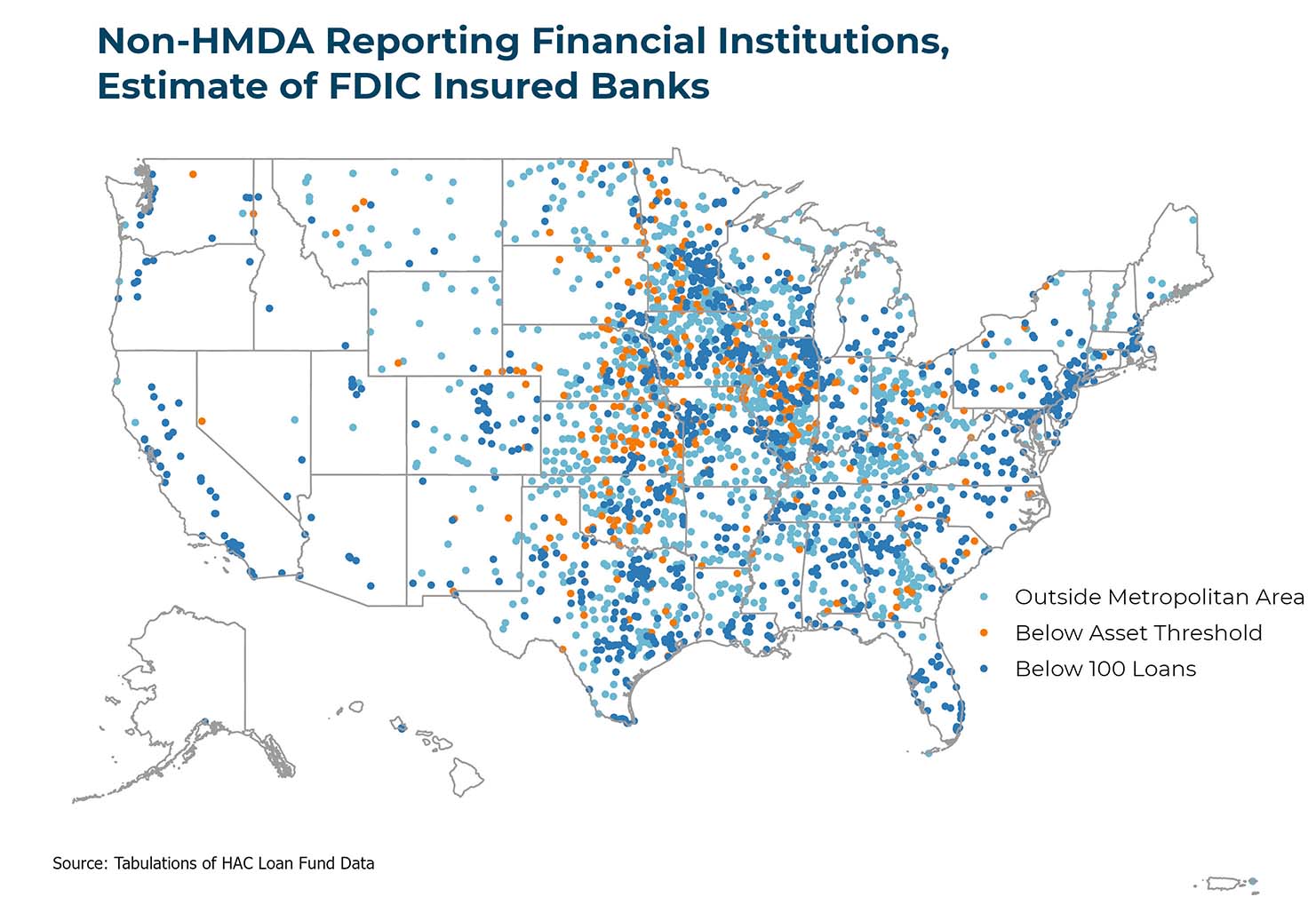
GET THE HAC NEWS!

Sign-up for HAC information products

SIGN UP HERE

Housing Assistance Council   |  1828 L Street. N.W., Suite 505, Washington, D.C. 20036
(202) 842-8600 (202) 347-3441 hac@ruralhome.org |

Board Portal

HAC is an equal opportunity provider, employer, and lender. | Civil Rights | Privacy