Affordable Rural Housing It’s Not a Nicety But a Necessity

View From Washington

Congressman Emanuel Cleaver, II, shares his housing story and offers his views on housing across the country

by The Honorable Emanuel Cleaver, II, Missouri’s Fifth District

Rural Voices - Fall 2014This story appears in the Fall 2014 issue of Rural VoicesOwning a home is part of the American dream. It’s a person’s private piece of paradise. The pride of home ownership often fosters not only a desire to take care of one’s personal property, but also an effort to protect the integrity and appearance of the surrounding neighborhood as well. Affordable housing is a key component to a vibrant, expanding, and prosperous community.

As a little boy, growing up in Waxahachie, Texas, my family and I didn’t have indoor plumbing until I was 7 years old. That’s when we moved up in the world, by moving into public housing. When a move into public housing is considered a monumental step up in the world, you can imagine the delirious euphoria that came years later, when we finally had a home of our own. My father worked three jobs, put my sisters, my mother, and I through college, and moved our family into the first home we ever owned. He still lives there today.

We all have our own personal stories, but the availability of, and access to, affordable housing for everyone, is a national concern as well. The buying and building of houses is a huge contributor to the vitality and viability of a community. Jobs are created or sustained as construction crews, real estate and other professionals, and business owners and employees are in high demand. The influx of tax dollars provides a solid foundation for public services including police, fire, and sanitation workers who help make a neighborhood safe, clean, and a quality place to live. Financial institutions make loans, restaurants sell food, and teachers begin educating our children. Affordable housing helps a community come alive. According to the United States Department of Agriculture (USDA), families and individuals living in Rural Development financed homes in the district I represent, Missouri’s Fifth District, see every dollar spent in the local economy multiply by six times.

So, I am asked all of the time, “What are elected officials doing in Washington to continue improving programs, increasing opportunities, and ensuring affordability for those in rural areas throughout our nation?” Sadly, a better question might be, “What are we doing in Washington at all?”

I say to you without hesitation – Not Enough! And some days, it seems, nothing is getting done at all. Except for arguing. The partisan back-biting, political bickering and agenda motivated maneuvering seem to go on forever. And it needs to stop. There are important issues on our plate. Issues that impact our families and our futures. Issues that need, and deserve, our serious attention right now.

Missouri’s Fifth District stretches all the way from the urban core of Kansas City east to the farms of Marshall. The distance is a whopping 90 miles, but the lifestyles seem even farther apart than that at times. My district truly represents a microcosm of this great nation, with not only urban and rural communities, but suburban ones as well. The needs of these residents vary greatly from region to region. Rural communities have different needs and different concerns than those in the other areas. And while it is my passionate belief that all residents of my district need access to affordable housing options, certainly my rural constituents have special and unique needs that need to be addressed as such.

As a Member of the House Financial Services Committee, and a Member of the Subcommittee on Housing and Insurance, I pay special attention to these issues and concerns. One important issue for rural communities, for instance, is flood insurance. Congress recently enacted the Homeowner Flood Insurance Affordability Act of 2013. This law protects people who have flood insurance from facing dramatic rate hikes. For constituents hit by premium increases they simply can’t afford, it provides relief in the form of a refund. The law also requires the Federal Emergency Management Agency (FEMA) to get the affordability study to Congress that was supposed to be finished almost a year ago.

Federally Subsidized Housing Units BubbleSource: HAC Tabulations of HUD and USDA data; National Housing Preservation Database

Folks living in rural areas are particularly well served by their local USDA offices. That agency plays a critical role in bringing the dream of home ownership within reach. For people who choose to live, work, and raise their families in this country’s strong rural communities, many have not only found that the programs focusing on housing loans have helped them buy, but have also vastly improved their quality of life. Other available options provide loans and grants for everything from hospitals, fire stations, and nursing homes, to funding for apartments for those with low-income or the elderly, schools, and housing for farm laborers.

There are issues and complexities that occur in a rural landscape unique only to those communities. The USDA, through Rural Development, has worked for more than half a century to understand those nuances and provide housing options that don’t exist outside of rural America. For instance, USDA’s loan program offers borrowers an opportunity for homeownership with no money down, and allows rural families to stay right where they are. I continue to believe moving rural housing programs under a freestanding FHA is not a move toward efficiency, as many in Washington contend, but one that sets rural communities back and leaves them stuck in the past.

Right now, in Missouri’s Fifth Congressional District, the numbers and dollar amounts for 502 Guaranteed loans active and being serviced in Jackson, Lafayette, Ray, and Saline counties, show an impressive amount of families utilizing the program. There are 1,691 loans totaling more than $170 million.

Affordable housing in rural America is not just a nicety, it’s a necessity. It must be available, accessible, and affordable for those who need it. And, make no mistake, I will continue fighting to make sure it’s just that.

Very Low-Income Housing Repair Loans and Grants (Section 504)

Through the Section 504 loan and grant program, USDA Rural Development provides assistance to very low-income homeowners who are unable to finance necessary repairs through other sources. This guide explains the requirements for using the Section 504 program and how to apply. This document is intended to assist individual applicants as well as nonprofit application packagers in preparing applications for program funds.

Download the PDF

HAC News: October 1, 2014

HAC News Formats. pdf

October 1, 2014
Vol. 43, No. 20

• Changes in rural housing eligibility definition delayed by CR • USDA RD offers multifamily preservation and revitalization assistance • Preservation Revolving Loan Fund monies available for intermediaries • Funding offered to CDFIs and Native American CDFIs • Promise Zone initiative opens second round • Changes proposed to affordable housing goals for Fannie Mae and Freddie Mac • CDFI Fund seeks comments on its capacity building initiative • HUD asks for input on Native American data • National Housing Trust Fund lawsuit dismissed • Mortgage data show drop in refinancing from 2012 to 2013 • A majority of manufactured housing borrowers have expensive loans • Webinar to cover protecting seniors and other RD tenants from displacement • REGISTER FOR CONFERENCE BEFORE OCTOBER 31!

October 1, 2014
Vol. 43, No. 20

CHANGES IN RURAL HOUSING ELIGIBILITY DEFINITION DELAYED BY CR. USDA RD says the continuing resolution that extends FY14 funding levels through December 11 also extends the provision in FY14 appropriations law that prohibited declaring any communities ineligible for the rural housing programs if they were eligible on September 30, 2013. In effect, the CR means previously eligible places cannot become ineligible yet, even if their populations now exceed 35,000.

USDA RD OFFERS MULTIFAMILY PRESERVATION AND REVITALIZATION ASSISTANCE. Pre-applications are due November 24 for the MPR program, which helps preserve properties with Section 514 or 515 loans. MPR properties cannot displace tenants because of increased rents. No additional Rental Assistance units are available. Contact Sherry Engel, RD, 715-345-7677.

PRESERVATION REVOLVING LOAN FUND MONIES AVAILABLE FOR INTERMEDIARIES. PRLF recipients establish revolving loan funds for preservation of Section 515 and 514/516 housing. RD has eliminated the $1 million cap on subsequent loans for current intermediaries. Deadline is December 22. Contact Sherry Engel, RD, 715-345-7677.

FUNDING OFFERED TO CDFIS AND NATIVE AMERICAN CDFIS. Lending funds and technical assistance funds are available for Community Development Financial Institutions, potential CDFIs, and Native American CDFIs. Deadline is November 24. Contact CDFI Fund staff, 202-653-0421.

PROMISE ZONE INITIATIVE OPENS SECOND ROUND. HUD and USDA will designate at least 8 Promise Zones across urban, rural, and tribal communities to receive technical assistance to apply for existing federal programs; the designation itself does not include funding. Apply by November 21. Contact Brooke Bohnet, HUD, 202–402–6693.

CHANGES PROPOSED TO AFFORDABLE HOUSING GOALS FOR FANNIE MAE AND FREDDIE MAC. The Federal Housing Finance Agency, which regulates the GSEs, published a proposed rule and a correction suggesting updates and changes, including establishment of a new housing subgoal for small multifamily properties affordable to low-income families. Comments are due October 28. FHFA. Contact Dr. Nayantara Hensel, FHFA, 202-649-3122

CDFI FUND SEEKS COMMENTS ON ITS CAPACITY BUILDING INITIATIVE. Suggestions for improving the initiative’s effectiveness are due October 24. Contact CDFI Fund staff, 202-653-0421.

HUD ASKS FOR INPUT ON NATIVE AMERICAN DATA. Comment by October 27 about options to the use of Census data in the funding formula for the Indian Housing Block Grant program. Contact Rodger Boyd, HUD, 202-401-7914.

NATIONAL HOUSING TRUST FUND LAWSUIT DISMISSED. On September 29 a court dismissed a suit filed by the National Low-Income Housing Coalition and others against the Federal Housing Finance Agency seeking financing for the National Housing Trust Fund (see HAC News, 7/17/13). The dismissal was based on procedural grounds, not on the merits of the case. The plaintiffs continue to urge FHFA action and are considering an appeal.

MORTGAGE DATA SHOW DROP IN REFINANCING FROM 2012 TO 2013. Newly released Home Mortgage Disclosure Act data show 2013 mortgage lending activity declined from 2012 levels. Home purchase loans actually increased, but refinancing loans dropped substantially. In rural areas and small towns, refi lending declined by 23%. The rates of denials and high cost loans continue to be higher for rural and small town borrowers. Particularly for economically depressed, high needs rural regions, such as Central Appalachia, the rural Southeast and the Lower Mississippi Delta, high cost loans represent a large percentage of all originations. HAC will post a more detailed analysis soon.

A MAJORITY OF MANUFACTURED HOUSING BORROWERS HAVE EXPENSIVE LOANS. The Consumer Financial Protection Bureau reports that manufactured home owners typically pay higher interest rates for their loans than borrowers whose homes were built onsite. Manufactured-housing Consumer Finance in the United States also states that manufactured home residents are more likely to be older, live in a rural area, or have lower net worth than residents of other types of homes.

WEBINAR TO COVER PROTECTING SENIORS AND OTHER RD TENANTS FROM DISPLACEMENT. The National Housing Law Project will offer a free webinar on October 21 at 2:00 pm Eastern time/11:00 am Pacific on “Prepayments, Maturing Mortgages, and Foreclosures: Protecting Seniors and Others from Rural Development Rental Housing Displacement.”

REGISTER FOR CONFERENCE BEFORE OCTOBER 31! Register online for the National Rural Housing Conference 2014: Re-tool, Rebuild, Renew, in Washington, DC, December 3-5 with pre-conference activities December 2. Until October 31, the rate is $350 for nonprofits and government, $400 for for-profits. Contact HAC staff, registration@ruralhome.org.

HAC News: September 17, 2014

HAC News Formats. pdf

September 17, 2014
Vol. 43, No. 19

• Sept. 15-Oct. 15 is National Hispanic Heritage Month • Congress to pass continuing resolution for early FY15 • Vilsack responds to congressional letter about 502 spending • Senate committee advances Mensah nomination • Rural poverty decreases, yet remains higher than U.S. poverty • HUD offers economic development funds for Appalachia and the Mississippi Delta • USDA posts amended maps showing future area eligibility • Regulators seek comments on proposed revisions to CRA questions and answers • HUD revises model standards for manufactured home ground anchoring • GAO report says HUD can do more on manufactured housing • Broad access to mortgage financing recommended to help reduce income inequality • Farmworker housing and health conference set for November • Webinar to cover protecting seniors and other RD tenants from displacement • Please nominate national or local rural housing leaders for HAC awards!

September 17, 2014
Vol. 43, No. 19

SEPT. 15-OCT. 15 IS NATIONAL HISPANIC HERITAGE MONTH. President Obama’s proclamation includes a call for comprehensive immigration reform.

CONGRESS TO PASS CONTINUING RESOLUTION FOR EARLY FY15. The House is expected to pass a CR on September 17 and the Senate soon after that. It will fund the federal government at FY14 levels until December 11. In a post-November-elections session Congress will have to complete work on FY 2015 appropriations or pass another CR.

VILSACK RESPONDS TO CONGRESSIONAL LETTER ABOUT 502 SPENDING. Responding to concerns about USDA’s ability to use all available Section 502 direct funds before FY14 ends September 30 (see HAC News, 8/6/14), USDA Secretary Tom Vilsack wrote to House and Senate Agriculture Appropriations Subcommittee leaders explaining steps being taken this year (see HAC News, 7/23/14) and planned for next year.

SENATE COMMITTEE ADVANCES MENSAH NOMINATION. The Senate Agriculture Committee held a hearing September 10 on the selection of Lisa Mensah as USDA Under Secretary for Rural Development (see HAC News, 5/14/14). A confirmation vote by the full Senate has not yet been scheduled.

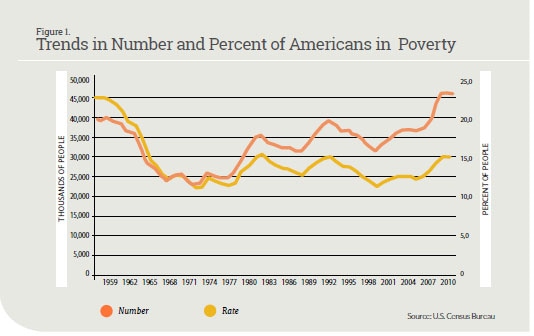
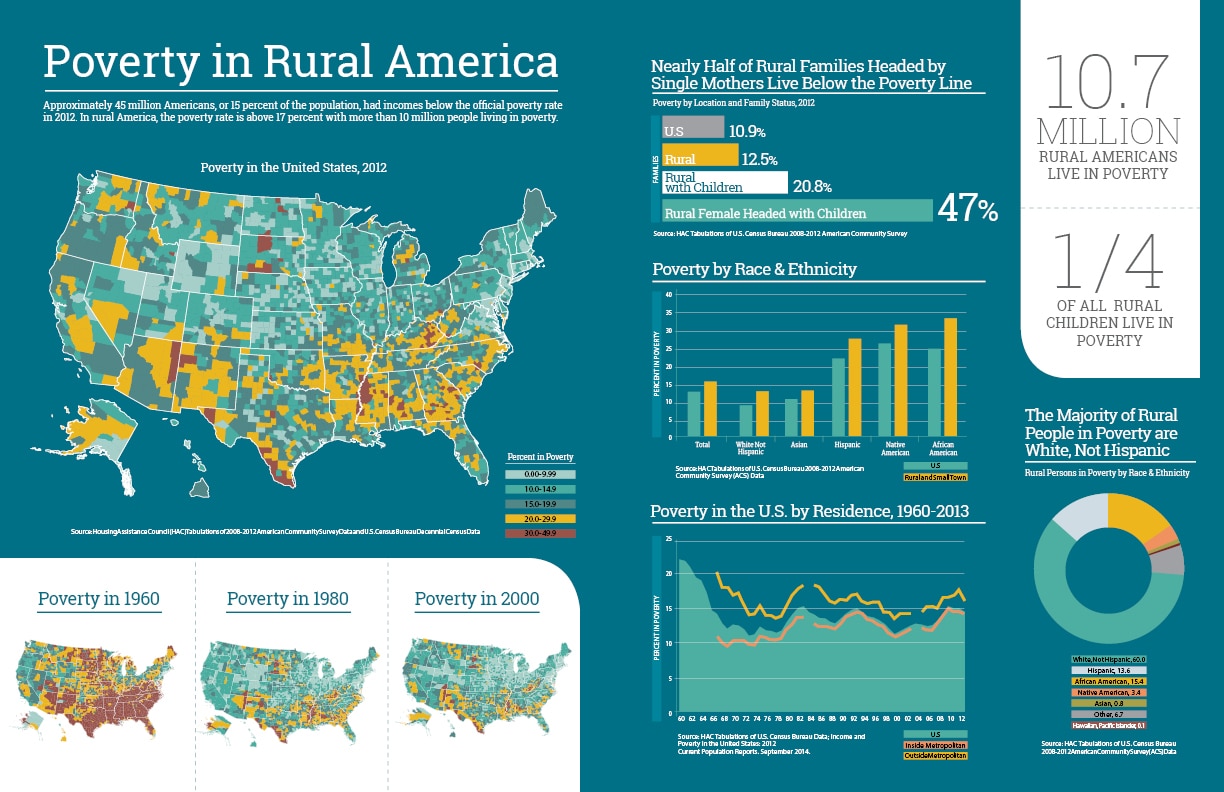
RURAL POVERTY DECREASES, YET REMAINS HIGHER THAN U.S. POVERTY. The number of rural Americans living in poverty decreased last year, according to a new Census Bureau report. Overall, the official U.S. poverty rate was 14.5% in 2013, a decline from 15% in 2012. Income and Poverty in the United States: 2013 says there was no statistically significant change in either the number of people living in poverty or real median household income. State and local data will be released September 18. A HAC Rural Research Note provides more details.

HUD OFFERS ECONOMIC DEVELOPMENT FUNDS FOR APPALACHIA AND THE MISSISSIPPI DELTA. Both programs aim to increase access to capital for business lending and economic development, and applications are due November 3. For Appalachia, the only eligible applicants are state community and economic development agencies. For Delta funds, nonprofits and tribal governments are eligible. Contact Thann Young or Monica Wallace, HUD, 877-787-2526.

USDA POSTS AMENDED MAPS SHOWING FUTURE AREA ELIGIBILITY. Maps now available on RD’s website (under the Future Eligible Areas heading) eliminate “rural in character” changes (see HAC News, 9/3/14). A disclaimer indicates slight alterations may be made before the maps take effect on October 1.

REGULATORS SEEK COMMENTS ON PROPOSED REVISIONS TO CRA QUESTIONS AND ANSWERS. The Interagency Questions and Answers Regarding Community Reinvestment, revised periodically, supplement the Community Reinvestment Act regulations issued by the Federal Reserve board, the FDIC, and the Office of the Comptroller of the Currency. Comments are due November 10. Contact Bobbie Kennedy, OCC, 202-649-5470.

HUD REVISES MODEL STANDARDS FOR MANUFACTURED HOME GROUND ANCHORING. A final rule amends the Manufactured Home Model Installation Standards, establishing a uniform test method to determine and rate ground anchor performance in different soil classifications. Contact Pamela Beck Danner, HUD, 202-708-6423.

GAO REPORT SAYS HUD CAN DO MORE ON MANUFACTURED HOUSING. Manufactured Housing: Efforts Needed to Enhance Program Effectiveness and Ensure Funding Stability (GAO-14-410) recommendations related to the HUD Code updates, FHA insurance, and fees. Contact Matthew Scirè, GAO, 202-512-8678.

BROAD ACCESS TO MORTGAGE FINANCING RECOMMENDED TO HELP REDUCE INCOME INEQUALITY. Continued government provision of affordable housing and financing is among the recommendations of Responding to Rising Inequality: Policy Interventions to Ensure Opportunity for All, a brief published by the Haas Institute for a Fair and Inclusive Society at the University of California at Berkeley.

FARMWORKER HOUSING AND HEALTH CONFERENCE SET FOR NOVEMBER. “Farmworker Housing Quality and Health: A Transdisciplinary Conference” will be held November 11 in Arlington, VA. Registration is $50 until October 1.

WEBINAR TO COVER PROTECTING SENIORS AND OTHER RD TENANTS FROM DISPLACEMENT. The National Housing Law Project will offer a free webinar on October 21 at 2:00 pm Eastern time/11:00 am Pacific on “Prepayments, Maturing Mortgages, and Foreclosures: Protecting Seniors and Others from Rural Development Rental Housing Displacement.”

PLEASE NOMINATE NATIONAL OR LOCAL RURAL HOUSING LEADERS FOR HAC AWARDS! Nominations are due September 30 for the Cochran/Collings Award for national rural housing service and the Skip Jason Community Service Award. The honors will be presented at the National Rural Housing Conference in December. Complete the online nomination form. Questions? Contact Lilla Sutton, HAC, 202-842-8600.

HAC News: September 3, 2014

HAC News Formats. pdf

September 3, 2014
Vol. 43, No. 18

• RD suspends rural in character eligibility changes • National Office agreement required for some RD prepayment incentives • New guidelines apply to extensions and deobligations of unused Section 515, 514, and 516 funds • Online homeownership education provider approved for Section 502 borrowers • RD addresses thermal standards for manufactured housing • Guidance provided for rural multifamily design/build and construction management proposals • Reminder issued about Section 515 borrowers who received litigation damages • FHFA proposes new housing goals for Fannie Mae and Freddie Mac • Changes to HMDA regulations suggested • New report covers challenges of housing seniors • Drop in homeless veterans estimated • Shortage of affordable rentals remains • CONFERENCE REGISTRATION IS OPEN!

September 3, 2014
Vol. 43, No. 18

RD SUSPENDS RURAL IN CHARACTER ELIGIBILITY CHANGES. In response to public concerns about changes in eligibility for rural housing programs based on determinations that some places are no longer “rural in character,” USDA has suspended use of this factor to alter a community’s rural status. No changes will be made until October 2015 at the earliest, and a new procedure will provide a 90-day public comment period on proposed modifications. This issue is not related to eligibility changes based on population growth (see HAC News, 2/5/14).

NATIONAL OFFICE AGREEMENT REQUIRED FOR SOME RD PREPAYMENT INCENTIVES. An Unnumbered Letter dated July 11, 2014 requires RD state offices to obtain advance approval before offering additional Rental Assistance or equity loans to Section 515 borrowers who want to prepay their loans. The UL says it is “an interim step” while regulatory changes are developed. Contact Tiffany Tietz, RD, 616-942-4111 ext. 126.

NEW GUIDELINES APPLY TO EXTENSIONS AND DEOBLIGATIONS OF UNUSED SECTION 515, 514, AND 516 FUNDS. An Unnumbered Letter dated July 30, 2014 provides timeframes and processes for USDA staff. Limited extensions may be permitted. Contact Mirna Reyes-Bible, 202-720-1753 (Section 514/516) or Melinda Price, 614-255-2403 (Section 515).

ONLINE HOMEOWNERSHIP EDUCATION PROVIDER APPROVED FOR SECTION 502 BORROWERS. An Unnumbered Letter dated August 22, 2014 announces the agency has approved Framework to provide online education, which can be used only when other formats are not available. Contact Shantelle Gordon, RD.

RD ADDRESSES THERMAL STANDARDS FOR MANUFACTURED HOUSING. The HUD Code specifies minimum thermal standards for each state, while RD applies them by county. Administrative Notice (AN) 4772 (Aug. 4, 2014) lists the standards for specified counties. Contact William Downs, RD, 202-720-1499.

GUIDANCE PROVIDED FOR RURAL MULTIFAMILY DESIGN/BUILD AND CONSTRUCTION MANAGEMENT PROPOSALS. AN 4770 (July 11, 2014) requires National Office approval to use Section 514 or 515 loans for design/build or construction management arrangements. Contact Sherry Engel, RD, 715-345-7677, or William Downs, RD, 202-720-1499.

REMINDER ISSUED ABOUT SECTION 515 BORROWERS WHO RECEIVED LITIGATION DAMAGES. An Unnumbered Letter dated June 24, 2014 instructs RD staff about servicing the accounts of borrowers who received damages payments pursuant to the May 21, 2007 agreement that settled a lawsuit against USDA regarding prepayments. Those owners cannot prepay their loans (unless USDA determines a property is no longer needed) and cannot receive incentives to discourage prepayment. Contact Tiffany Tietz, RD, 616-942-4111 ext. 126.

FHFA PROPOSES NEW HOUSING GOALS FOR FANNIE MAE AND FREDDIE MAC. Comments are due October 28 on possible changes to be in effect from 2015 through 2017, including a new subgoal for financing small multifamily rental properties (5-50 units). No rural subgoal is proposed. Contact Dr. Nayantara Hensel, FHFA, 202-649-3122.

CHANGES TO HMDA REGULATIONS SUGGESTED. Comment by October 29 on a Consumer Financial Protection Bureau proposal to implement a portion of the Dodd-Frank Act. Lenders subject to the Home Mortgage Disclosure Act would have several new reporting requirements, some existing requirements would be clarified, and some institutional and transactional coverage would be changed. Contact CFPB’s Office of Regulations, 202-435-7700.

NEW REPORT COVERS CHALLENGES OF HOUSING SENIORS. Housing America’s Older Adults – Meeting the Needs of an Aging Population, published by Harvard’s Joint Center for Housing Studies, analyzes the ability of the existing U.S. housing stock to meet growing needs for affordability, accessibility, social connectivity, and supportive services.

DROP IN HOMELESS VETERANS ESTIMATED. HUD, VA, and the U.S. Interagency Council on Homelessness (USICH) estimate that as of January 2014 veterans’ homelessness nationwide had declined by 33% since 2010.

SHORTAGE OF AFFORDABLE RENTALS REMAINS. A new Housing Spotlight report from the National Low Income Housing Coalition shows that nationwide there are only 31 affordable and available units for every 100 extremely low-income renters (with incomes at or below 30% of area median) and only 16 for every 100 deeply low-income renters (below 15% of area median). The report provides data for states and for 50 large metro areas.

CONFERENCE REGISTRATION IS OPEN! Register online for the National Rural Housing Conference 2014: Retool, Rebuild, Renew, in Washington, DC, December 3-5 with pre-conference activities December 2. Until October 31, the rate is $350 for nonprofits and government, $400 for for-profits. Contact HAC staff, registration@ruralhome.org.

State and County Data Snapshots

data-portal-quickfacts

This interactive map is hosted on HAC’s Rural Data Portal. It includes stat and county level snapshots of data on population, poverty, and housing occupancy as well as links to more detailed information.

data-portal-quickfacts-large

HAC News: August 20, 2014

HAC News Formats. pdf

August 20, 2014
Vol. 43, No. 17

• USDA RD to revise guidance on domestic violence • Section 502 direct processing improvements scheduled • RD to delay implementing new rule for Section 502 guaranteed loans • HAC recommends notice to tenants about maturing USDA mortgages, asks for dialogue • Amendments proposed to reserve account rules for properties with 515 and 538 loans • Fair Market Rents for FY15 proposed • HUD to change environmental review form • Manufactured housing label fee increased • FHFA requests comments on its strategic plan • Study documents digital divide for tribal libraries • Permanent supportive housing found to reduce chronic homelessness • Conference on farmworker housing and health set for November • Please nominate national or local rural housing leaders for HAC awards!

August 20, 2014
Vol. 43, No. 17

USDA RD TO REVISE GUIDANCE ON DOMESTIC VIOLENCE. HAC and a number of other organizations signed on to a letter from the National Housing Law Project to USDA rural housing administrator Tony Hernandez requesting changes in AN 4747, which applies the Violence Against Women Act to USDA’s multifamily programs (see HAC News, 3/5/14). In a response dated August 6, Hernandez agreed to make most of the changes.

SECTION 502 DIRECT PROCESSING IMPROVEMENTS SCHEDULED. Administrator Tony Hernandez gave HAC a summary showing that in FY15 USDA will automate underwriting for Section 502 direct loans, revise its packaging regulations, allow packagers to submit applications electronically, and establish an imaging system for documents.

RD TO DELAY IMPLEMENTING NEW RULE FOR SECTION 502 GUARANTEED LOANS. An email sent to stakeholders on August 19 says a notice will be published in the Federal Register delaying the rule’s effectiveness to December 1, 2014 rather than September 1, the date originally scheduled. Contact USDA, 202-720-1452.

HAC RECOMMENDS NOTICE TO TENANTS ABOUT MATURING USDA MORTGAGES, ASKS FOR DIALOGUE. In an August 9 letter to Tony Hernandez, HAC expressed concern about tenants who will lose Section 521 Rental Assistance when USDA mortgages end. HAC urged USDA to ask owners to notify tenants well in advance of mortgage maturities, and suggested further discussions about ways to maintain the affordability of these units.

AMENDMENTS PROPOSED TO RESERVE ACCOUNT RULES FOR PROPERTIES WITH 515 AND 538 LOANS. USDA’s countersignature would no longer be required for rental projects that have both Section 538 guaranteed loans and Section 515 direct loans; the Section 538 regulations would apply. The change would also clarify that loan guarantee fees must be paid from operating accounts, not reserve accounts. Comments are due October 14. Contact Tammy S. Daniels, USDA, 202-702-0021.

FAIR MARKET RENTS FOR FY15 PROPOSED. Comments are due September 15 on the FMRs HUD will use in FY15. Contact local HUD program staff.

HUD TO CHANGE ENVIRONMENTAL REVIEW FORM. A final rule allows HUD to develop a single form to be used by HUD employees and other responsible entities. Contact Danielle Schopp, HUD, 202-402-4442.

MANUFACTURED HOUSING LABEL FEE INCREASED. The increase, proposed in May (see HAC News, 5/14/14), is effective September 12, 2014. Manufacturers will pay $100 for each new transportable section produced. Contact Pamela B. Danner, HUD, 202-708-6423.

FHFA REQUESTS COMMENTS ON ITS STRATEGIC PLAN. The Federal Housing Finance Agency’s plan “reflects the agency’s priorities as regulator of the Federal Home Loan Bank System and as regulator and conservator of Fannie Mae and Freddie Mac” and is the first under new director Mel Watt. Comments are due September 15.

STUDY DOCUMENTS DIGITAL DIVIDE FOR TRIBAL LIBRARIES. Digital Inclusion in Native Communities: The Role of Tribal Libraries, a report by the Association of Tribal Archives, Libraries, and Museums funded by the Institute of Museum and Library Services, provides the first comprehensive data on the subject. Research found that 89% of tribal libraries offer access to the internet and 86% have public computer workstations, compared to 100% of public libraries. At least 40% of tribal libraries studied do not have a broadband internet connection. Contact Susan Feller, ATALM, 405-401-8293.

PERMANENT SUPPORTIVE HOUSING FOUND TO REDUCE CHRONIC HOMELESSNESS. An examination of data at the community level confirms findings at the individual level: over time, increased investment in permanent supportive housing is associated with decreased rates of chronic homelessness. “The Relationship between Community Investment in Permanent Supportive Housing and Chronic Homelessness” was published in Social Service Review 88.2 (2014).

CONFERENCE ON FARMWORKER HOUSING AND HEALTH SET FOR NOVEMBER. “Farmworker Housing Quality and Health: A Transdisciplinary Conference” will be held on November 11 in Arlington, VA. Registration is $50 until October 1 and $70 after that date.

Please nominate national or local rural housing leaders for HAC awards! Nominations are due September 30 for the Cochran/Collings Award for national rural housing service and the Skip Jason Community Service Award. The honors will be presented at the National Rural Housing Conference in December. Complete the online nomina-tion form. Questions? Contact Lilla Sutton, HAC, 202-842-8600.

HAC News: August 6, 2014

HAC News Formats. pdf

August 6, 2014
Vol. 43, No. 16

• Ryan plan would include USDA Rental Assistance in block grant to states • Members of Congress write to USDA about 502 spending • VA reform bill can help rural veterans • House committee passes NAHASDA reauthorization bill • Castro and Donovan sworn in, HUD PIH nominee announced • USDA vouchers available • HUD offers funds for fair housing • Changes suggested for HMDA rules • No pooling for 502 direct funds this year • Data show how well-being of U.S. children has changed over 25 years • Please nominate national or local rural housing leaders for HAC awards

August 6, 2014
Vol. 43, No. 16

RYAN PLAN WOULD INCLUDE USDA RENTAL ASSISTANCE IN BLOCK GRANT TO STATES. On July 24 Rep. Paul Ryan (R-WI), chair of the House Budget Committee, released a “discussion draft” of an anti-poverty proposal called Expanding Opportunity in America. Among other changes, it would fold several safety net programs into a new block grant to states: USDA’s Section 521 Rental Assistance; HUD’s Section 8 vouchers and project-based aid, public housing funds, and CDBG; and HHS’s weatherization, LIHEAP, Child Care and Development Fund, WIA Dislocated Workers, SNAP (Food Stamps), and TANF. The Center on Budget and Policy Priorities calculates the plan would reduce food and housing assistance overall.

MEMBERS OF CONGRESS WRITE TO USDA ABOUT 502 SPENDING. Concerned that available Section 502 direct funds may not all be spent by the end of the fiscal year on September 30, the chairs and ranking members of the House and Senate Agriculture Appropriations Subcommittees sent a letter to USDA Secretary Tom Vilsack on July 31, asking for a report in two weeks on steps to increase the program’s obligations.

VA REFORM BILL CAN HELP RURAL VETERANS. A key portion of the veterans bill approved by Congress will help rural veterans have better access to health care. Among many provisions, the legislation would allow veterans who live at least 40 miles away from a VA facility, and those who face long delays in getting VA appointments, to seek medical care outside of the VA health system. It authorizes $10 billion in emergency mandatory funding to subsidize the outside medical care. The House passed the bill (H.R. 3230) by a 420 to 5 vote on July 30. The Senate approved the bipartisan legislation 91 to 3 on July 31 and sent it to the President, who is expected to sign it.

HOUSE COMMITTEE PASSES NAHASDA REAUTHORIZATION BILL. On July 30 the House Financial Services Committee approved H.R. 4329, which would renew the Native American Housing Assistance and Self-Determination Act for five years. The Senate version, S. 1352, passed the Indian Affairs Committee in January but has not yet been considered by the full Senate. Meanwhile, NAHASDA programs continue operating because Congress has continued to appropriate funds for them.

CASTRO AND DONOVAN SWORN IN, HUD PIH NOMINEE ANNOUNCED. On July 28, Julián Castro was sworn in as Secretary of HUD and Shaun Donovan as Director of OMB. On July 31, President Obama announced he will nominate Lourdes Castro Ramirez, President and CEO of the San Antonio Housing Authority, to be HUD’s Assistant Secretary for Public and Indian Housing.

USDA VOUCHERS AVAILABLE. Section 542 vouchers can be used by tenants of Section 515 buildings whose mortgages were prepaid or foreclosed after September 30, 2005. Tenants in these properties should receive notice from USDA RD after the prepayment or foreclosure occurs, offering vouchers and providing application information. Contact Stephanie B.M. White, RD, 202-720-1615.

HUD OFFERS FUNDS FOR FAIR HOUSING. Applications are due September 2 for three Fair Housing Initiative Program components: Fair Housing Organization Initiative Grants, Education and Outreach Initiative Grants, and Private Enforcement Initiative Grants. Contact Myron P. Newry, HUD, 202-402-7095.

CHANGES SUGGESTED FOR HMDA RULES. Comments are due October 22 on a proposal to revise Home Mortgage Disclosure Act regulations. The Consumer Financial Protection Bureau suggests revising the tests determining which financial institutions and housing-related credit transactions are covered under HMDA, collecting additional data, requiring some quarterly data submissions, and more. Contact CFPB’s Office of Regulations, 202-435-7700.

NO POOLING FOR 502 DIRECT FUNDS THIS YEAR. HAC has learned that USDA does not plan to pool and redistribute funds for Section 502 direct loans in FY14, since every state has funds available.

DATA SHOW HOW WELL-BEING OF U.S. CHILDREN HAS CHANGED OVER 25 YEARS. The 25th edition of the Annie E. Casey Foundation’s annual Kids Count Data Book reports positive gains in child health and education since 1990, but a decline in the economic well-being of children and their communities. Data are presented at the national and state levels.

PLEASE NOMINATE NATIONAL OR LOCAL RURAL HOUSING LEADERS FOR HAC AWARDS! Nominations are due September 30 for the Cochran/Collings Award for national rural housing service and the Skip Jason Community Service Award. The honors will be presented at the National Rural Housing Conference in December. Complete the online nomination form. Questions? Contact Lilla Sutton

Section 542 Vouchers, FY14 NOFA (published 7/31/14)

Program Section 542 Rural Voucher Program
Agency US Department of Agriculture Rural Development
Action NOFA
Date 7/31/14
Link https://www.gpo.gov/fdsys/pkg/FR-2014-07-31/pdf/2014-17979.pdf

USDA Rural Development announces that funding is available for the Rural Development Voucher Program. The NOFA also gives the general policies and procedures for the program in FY14 (there are no regulations for this program). These vouchers are only for tenants in a property financed by a Section 515 USDA loan that has been prepaid or foreclosed upon after September 30, 2005. Tenants in these properties should receive notice from USDA RD after the prepayment or foreclosure occurs, offering vouchers and providing application information.

HAC News: July 23, 2014

HAC News Formats. pdf

July 23, 2014
Vol. 43, No. 14

• Congress starts recess on August 1 • Continuum of Care registration open • USDA issues nondiscrimination rule • HUD proposes revisions to PHA consortium rules • USDA hopes to speed processing of Section 502 direct loans • Meetings and webinars set to discuss Keepseagle funds distribution • HUD guidebook discusses housing-transportation strategies • Data show characteristics of HUD-assisted households • Rural Voices magazine asks, “Is the Housing Crisis Over?” • Some spaces remain in workshops on new HOME rule • Register now for upcoming HAC trainings • Nominate national or local rural housing leaders for HAC awards

July 23, 2014
Vol. 43, No. 15

CONGRESS STARTS RECESS ON AUGUST 1. Legislators will return to work on Monday, September 8.

CONTINUUM OF CARE REGISTRATION OPEN. Applicants for FY14 CoC funds must register by August 6.

USDA ISSUES NONDISCRIMINATION RULE. The final rule is effective immediately. USDA’s complaint office is now required to offer alternative dispute resolution services. Each USDA agency is required to collect, maintain and annually compile data (when provided voluntarily by applicants and program participants) on the race, ethnicity, and gender of program applicants and participants by county and state. Also, two new categories are protected: political beliefs and gender identity. Contact Anna Stroman, 202-205-5953.

HUD PROPOSES REVISIONS TO PHA CONSORTIUM RULES. The changes are intended to increase administrative efficiencies associated with forming a consortium and to help ensure maximum family choice in locating suitable
housing. Comments are due September 9. Contact Michael Dennis, HUD, 202-402-3882.

USDA HOPES TO SPEED PROCESSING OF SECTION 502 DIRECT LOANS. An Unnumbered Letter dated July 7, 2014 authorizes three temporary steps to speed processing of Section 502 direct loans before the fiscal year ends on September 30. (See HAC News, 6/25/14.) USDA Rural Development field staff can now approve and obligate 502 direct loans subject to receipt of an appraisal, make new loans rather doing loan assumptions, and refinance existing loans in some circumstances when there is a high risk of foreclosure. Contact a USDA Rural Development office.

MEETINGS AND WEBINARS SET TO DISCUSS KEEPSEAGLE FUNDS DISTRIBUTION. About $380 million from the settlement of the Keepseagle v. Vilsack suit, which charged that USDA farm loan programs discriminated against Native Americans, will be distributed to nonprofits that work with Native American farmers and ranchers. To provide input about this process, attend in-person meetings or webinars/conference calls to be held between July 30 and August 26, or email indianfarmclass@gmail.com. For general information contact the Claims Administrator, 1-888-233-5506.

HUD GUIDEBOOK DISCUSSES HOUSING-TRANSPORTATION STRATEGIES. Creating Connected Communities: A Guidebook for Improving Transportation Connections for Low- and Moderate-Income Households in Small and Mid-Sized Cities intends to provide localities with transportation strategies for residents of affordable housing. It targets places up to 250,000 population, but at least one case study is from a city of 8,500.

DATA SHOW CHARACTERISTICS OF HUD-ASSISTED HOUSEHOLDS. The National Housing Conference’s Center for Housing Policy has begun analyzing “Picture of Subsidized Households” figures recently released by HUD. Nationwide, 39% of households receiving assistance are families with children, 34% percent are non-senior disabled (there is overlap in these categories), and 33% are seniors age 62 and older. Forty-four percent are African-American, 17% are Hispanic, 4% Asian or Pacific Islander, and 1% are Native American. About 6.3% live in places with urban centers under 10,000 population or without urban centers.

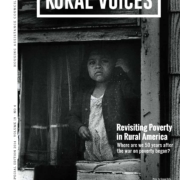
RURAL VOICES MAGAZINE ASKS, “IS THE HOUSING CRISIS OVER?” Experts write about the crisis and its impact on rural America. This issue also covers CRA, foreclosures, and housing counseling, and RHS Administrator Tony Hernandez describes his priorities.

SOME SPACES REMAIN IN WORKSHOPS ON NEW HOME RULE. HUD will offer “CHDO Workshop: Understanding the 2013 HOME Final Rule” in August and September. Registration is free for CHDO staff. HUD has some travel scholarships available, funded partly by HAC. Contact Rachael Ballard, rballard@ tdainc.org, 203-241-2410.

Register now for upcoming HAC webinars:

and place-based trainings:

Nominate national or local rural housing leaders for HAC awards.
Nominations are due September 30 for the Cochran/Collings Award for national rural housing service and the Skip Jason Community Service Award. The honors will be presented at the National Rural Housing Conference in December. Complete the online nomination form or request a paper form from Lilla Sutton, HAC, 202-842-8600.

GET THE HAC NEWS!

Sign-up for HAC information products

SIGN UP HERE

Housing Assistance Council   |  1828 L Street. N.W., Suite 505, Washington, D.C. 20036
(202) 842-8600 (202) 347-3441 hac@ruralhome.org |

Board Portal

HAC is an equal opportunity provider, employer, and lender. | Civil Rights | Privacy