Staff
Jennifer Emerling / There Is More Work To Be Done
Jennifer Emerling / There Is More Work To Be Done
In short: HAC and its partners have intentionally linked rural placemaking and design with the broader rural development conversation. And lessons abound.
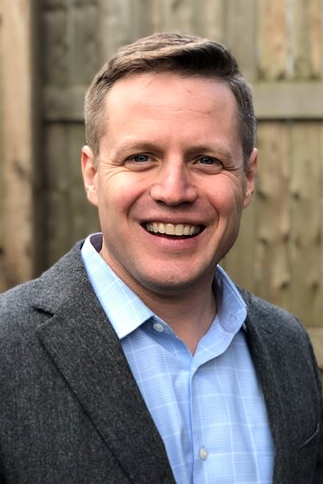
Dr. Stephen Sugg is the Special Projects Manager at the Housing Assistance Council. He draws on extensive experience in rural placemaking, partnerships, and the use of arts and culture to build community identity and resilience.
About a decade ago, HAC got a knowledge-building grant from the National Endowment for the Arts (NEA). That led to our selection as NEA’s partner for the Citizens’ Institute on Rural Design (CIRD), which aimed to improve quality of life and economic vitality in rural America through planning, design, and creative placemaking. Along the way, we also took on an NEA Visual Arts (photography) award and a USDA-backed creative placemaking award for communities in the South and Appalachia.
Rural placemaking is a community-led process—often with arts and culture as drivers of connectivity. Rural design links closely, but brings in planners, architects, and others to improve rural places with citizens.
And some of the best storytelling comes from local journalists and photographers. Like Chris Bouchard capturing CIRD’s impact in Maine, or Rory Doyle documenting CIRD’s work in Grenada, Mississippi. Or even Scott Schmidt’s “Rural Design Podcast,” where we talked about how all this links back to HAC’s core work in rural housing and community development.
Because it’s not a stretch—it’s a return to our roots. HAC’s CEO David Lipsetz noted that HAC’s founders in 1971 called for planning and citizen participation on a national scale. Rural housing intertwines with community development, and placemaking is part of that.
At the 2023 HAC Rural Housing Conference, we had rural design and placemaking right in the mix with housing practitioners. And it worked. When rural placemaking folks share ideas with rural affordable housing leaders, good things happen.
I’ll scream from the rooftop: this work is economic development. And often it’s faster, cheaper, and more catalytic than conventional approaches.
Placemaking taps local assets—especially in distressed communities—for community good. It’s nimble, bottom-up, and overhead is minimal. I think rural economic development best practices will lean heavily on placemaking within the next decade.
Also, creative people matter. Artists (broadly defined) add so much to these processes. Their civic engagement, perspective, and raw energy are irreplaceable.
Honestly, some of the most impactful partners are the unexpected ones: a swamp defender, a historic Black church restoration team, libraries, ad hoc groups—these are now part of HAC’s network.
The Seminole Arts Council in Oklahoma is a great example. Volunteer-led, the Council partnered with HAC on both CIRD and RPIC programming toward creating a community hub for art and more. Council members credit HAC’s coaching for helping them to secure funding and to overcome long-standing obstacles. And Luke Dyer, a former police officer turned town manager in Van Buren, Maine, credits CIRD and HAC for his community’s recent accolades and funding. When HAC linked leaders like Luke and the Seminole Arts Council with ideas, best practices, supportive peers, and funding sources, it catalyzed their efforts.
Also: we worked with MAGA mayors and left-leaning activists living in rural hamlets amongst many Trump signs. And in tribal nations with histories far longer than our republic. Authentic placemaking brings communities together.
Partnerships. CIRD had outstanding design partners—like Omar Hakeem, AIA, and his team at TBD Studio—who led CIRD’s design workshops alongside local and regional professionals. We’ve also worked with folks like Greenwood, Mississippi–based Delta Design Build and Auburn University’s Rural Studio. These designers, deeply committed to rural work, all say the same thing: being part of a broader network matters. And as a national convener, HAC helps build that network.
One of our secret ingredients is certainly graduate students. Year after year, they’ve been essential. We’ve given them high-profile assignments, and they always delivered.
Our partnership with the Harvard Graduate School of Design has brought us three rural-focused students, including Sam Potter, who’s leading a Rural Affinity Group there. The Stevenson Center at Illinois State University has been another cornerstone. Their fellows often come from AmeriCorps or Peace Corps backgrounds and fit right in with HAC’s community-centered approach. We’ve hired several after their placements. Sierra Mack-Erb, our most recent fellow, produced an award-winning evaluation of NEA’s investment in CIRD through a community-centered lens.
And working with Scott Schmidt has linked us to design-focused graduate students from Georgetown, Drexel, and Clemson. These students have helped HAC partners from Alaska to Maine bring energy, creativity, and real design skills to rural communities.
 HAC CEO Applauds Rural LIHTC Equity Investment Announcement