Affordable Housing for Rural Veterans

Rural Veterans and Local Nonprofits Receive Housing Support

Funded by The Home Depot Foundation

Washington, D.C., September 21, 2018 – Veterans and their families in eleven rural communities will have better lives, thanks to The Home Depot Foundation and the Housing Assistance Council. The Foundation is awarding grants totaling $306,500 to eleven local nonprofit housing associations around the country to build or preserve housing for veterans in rural America.

The funds are part of The Home Depot Foundation’s Veteran Housing Grants Program, which wascreated to support the development and repair of housing for veterans. Too many American veterans and their families face major housing challenges, aggravated by issues like unemployment, age and service-related disabilities. The Home Depot Foundation is dedicated to giving back to those who have already given so much for our country.

Read More…


homedepotfoundationlogoMade possible with the Generous Support of The Home Depot Foundation

Veterans Data Central

A Resource for Informing Strategies to Help Veterans

The Housing Assistance Council (HAC), in partnership with The Home Depot Foundation, JPMorgan Chase & Co., and the Wells Fargo Housing Foundation has created the Affordable Housing for Rural Veterans (AHRV) initiative to provide rural organizations with the technical assistance, training, information, and financial resources they need to improve their ability to serve veterans.

Veterans of the United States military services put their lives in danger to protect their country and its citizens. However, when they return home they are not always able to find housing and access to services in their communities.

Sponsored by:With Generous Support from JP Morgan Chase & Co.

In Partnership with The Home Depot Foundation, JP Morgan Chase Co, and The Wells Fargo Housing Foundation

Past Trainings

December 5, 2017: Affordable Housing Solutions for Rural Veterans: A Symposium – Recording

October 20, 2017: Veterans Aging Summit – Website

August 10, 2016: Overview on VA REO Property Preservation and Maintenance and Access Opportunities for Nonprofits – Materials: Presentation | Recording | Handbook

July 13, 2016: VA Specially Adapted Housing Grant Program – Materials: Presentation | Recording | Application

June 8, 2016: VA Housing Resources for Heroes: An In-depth Overview of the VA Home Loan Guaranty Benefit – Materials

May 18, 2016: Serving Our Aging Veterans: A Symposium – Materials

May 20, 2015: Serving Veterans in Rural America: A Symposium – Materials

May 6, 2015: Access to Health and Homeless Services for Rural Veterans – Materials

August 20, 2014: Building a Community for Veterans: Patriot Place, Tennessee – Materials

July 23, 2014: Canal Street Housing: Housing for Homeless Veterans – Materials

June 25, 2014: From Service to Shelter, Housing for Veterans in Rural America – Materials

April 22-23, 2014: Housing Seniors and Veterans in Rural America: Preservation, Development, & Services

April 9, 2014: Serving Veterans in Rural America – A Symposium – Summary and Materials

August 28-29, 2013: Housing Seniors and Veterans in Rural America: Preservation, Development and Services – Materials

Link to more Information and Resources

Link to Information about Initiative Grantees

Rural Housing Awards

Skip Jason Community Service Award
Cochran/Collings Award for Distinguished Service in Housing
Henry B. González Award

Skip Jason Community Service Award

Past Recipients of the Skip Jason Award

The Skip Jason Community Service Award acknowledges people whose efforts have improved the housing conditions of the rural poor in their communities.

The award acknowledges people who work “in the trenches” and usually go unrecognized outside their communities. The award was originally called the Community Service Award and was named for Robert “Skip” Jason, a long-time housing activist with considerable community experience, after he died in 1982 while employed as HAC’s Government Services Director.

SKIP JASON (1939-1982)

Robert Mayer (Skip) Jason, a former HAC employee and housing advocate, was committed to improving living conditions for the rural poor.

Skip was a native of Bluefield, West Virginia where he first learned about the challenges facing poor rural residents. In 1963, he became one of the first Peace Corp Volunteers to be sent to East Pakistan (now Bangladesh).

Upon his return to the United States, he worked for community action agencies in Indiana, West Virginia, Vermont, and the District of Columbia. In 1974, he helped to set up Buffalo Housing, Inc. in southern West Virginia, a nonprofit organization established to help victims of the Buffalo Creek flood disaster.

Skip first joined HAC in its Atlanta office. In 1978, he moved to HAC’s Government Services Division in Washington, D.C. As a HAC employee, he worked on the Community Development Block Grant program, which included a set-aside for small cities and rural communities. Skip was also instrumental in developing the Farmers Home Administration’s Homeownership Assistance Program which, although never funded, resulted in a Congress that was more supportive and more aware of rural housing issues.

Cochran/Collings Award for Distinguished Service in Housing

Past Recipients of the Cochran/Collings Award

The Cochran/Collings Award for Distinguished Service in Housing honors individuals who have provided outstanding and enduring service, with national impact, for the betterment of housing conditions for the rural poor.

The award is named for two men who dedicated their careers to improving housing for rural Americans.

CLAY COCHRAN (1915-1982)

Clay L. Cochran was a fierce housing advocate who has often been credited as the founder of the U.S. rural housing movement. Clay, a fiery commentator on housing and basic needs, strongly believed that the federal government must not shirk its responsibility of providing basic shelter for low-income rural people. He also believed that the people, given the power to govern themselves, had the capacity to “create a society where there is less human anguish than yesterday.”

Some of his many accomplishments were to organize the Rural Housing Alliance, Rural America, the National Rural Housing Coalition, and the International Self-Help Housing Association. He claimed that his enthusiasm for decent housing resulted from a winter during his teens when his family lost its farm and lived out the coldest months in a tent on the West Texas plains.

ART COLLINGS (1928-2010)

Arthur M. (Art) Collings, Jr. began working in rural housing in 1955. He started in New Jersey as an assistant county supervisor at the Farmers Home Administration (FmHA), quickly moving up to county supervisor and then to a variety of other positions in New Jersey and Washington, D.C.

Beginning in 1972, the year in which the newly created Housing Assistance Council began hiring staff, Art’s jobs at FmHA alternated with periods at HAC. He served as special assistant to FmHA Administrator Gordon Cavanaugh from 1977 to 1980. From 1986 until his reluctant retirement at the end of 2004, Art served as HAC’s senior housing specialist.

Gordon Cavanaugh, HAC’s first executive director, once explained that he hired Art because he was told Art was the most liberal staffer at FmHA. “He taught the rest of us everything we knew,” said Cavanaugh. “Arthur was just extraordinarily dedicated, well informed, and a good-humored gentleman.”

Art wrote dozens of publications about USDA’s rural housing programs, from manuals on how to use them to analyses of how they could be improved. He authored a number of amendments to these programs, advised people all over the country on their use, and conducted countless training sessions.

Art’s dedication to improving housing conditions for low-income rural Americans was unmatched. His feistiness and humor, added to his extensive knowledge of USDA’s rural housing programs, made him unique, sometimes frustrating to work with, and well-loved around the country.

Henry B. González Award

Past Recipients of the Henry B. González Award

The Henry B. González Award recognizes individuals who have contributed to the improvement of housing conditions for low-income rural Americans through elected office.

REP. HENRY B. GONZALEZ

The award is named for Rep. Henry B. González, who represented the 20th District of Texas in the U.S. House of Representatives from 1961 until ill health forced him to retire in 1998.

Beginning in 1981, he chaired first the House Subcommittee on Housing and Community Development and eventually the full Committee on Banking, Finance, and Urban Affairs (now the Financial Services Committee). In these powerful positions he championed numerous bills to improve housing conditions for people in both urban and rural areas. Rep. Gonzalez passed away in 2000.

Southwest Regional Office

The Southwest Regional Office primarily provides Technical Assistance and Training in the states of: Arizona, Colorado, New Mexico, Oklahoma, Texas, Utah, and Wyoming.

Southwest Office
P.O. Box 315
San Miguel, NM 88058

Tel.:(505) 883-1003

Gene Gonzales, Director
Anselmo Telles, Housing Development Specialist

Southeast Regional Office

Southeast Regional Office: Providing Technical Assistance and Training to the Organizations which Help the Poorest of the Poor

Southeast Regional Office
55 Marietta St
Suite 1350
Atlanta, GA 30303
Tel.: 404-892-4824
Fax: 404-892-1204
E-mail:southeast@ruralhome.org

The Southeast Regional Office primarily provides Technical Assistance and Training in the states of: Alabama, Arkansas, Florida, Georgia, Louisiana, Mississippi, North Carolina, South Carolina, and Tennessee.

Staff List

Shonterria Charleston, Training and Technical Assistance DirectorChristina Adeshakin, Housing Specialist
Kelly Cooney, Housing Specialist

Midwest Regional Office

Providing Technical Assistance and Training in America’s Heartland

Midwest Regional Office
Housing Assistance Council
5559 NW Barry Road
Mailbox #356
Kansas City, MO 64154
Tel.: (816) 880-0400
Fax: (816) 880-0500

Stephanie Nichols, Project Manager

The Midwest Regional Office primarily provides Technical Assistance and Training in the states of: Illinois, Indiana, Iowa, Kansas, Michigan, Minnesota, Missouri, Nebraska, North Dakota, Ohio, Oklahoma, South Dakota, and Wisconsin.

Loan Products

Rural Seed Money Loan Products

The Housing Assistance Council (HAC) operates several loan funds that provide vital seed money to rural housing developers: community-based, nonprofit organizations, housing development corporations, self help housing sponsors, farm worker organizations, cooperatives, Indian tribes, public agencies, units of local government, public utility districts, and small business and minority contractors. HAC funds help these organizations and individuals take the steps necessary to improve housing and living standards for rural, low- and very-low-income households, such as creation of subdivisions and new single- or multifamily housing units, rehabilitation of existing units, and improved water and waste water disposal systems in rural communities.

The Housing Assistance Council’s loan fund provides low-cost financing to developers of affordable housing in rural communities nationwide. Funds are currently available at 5.0% interest with a discounted 1.0% service fee; borrowers are responsible for closing costs. Current interest rate for for-profit developers is 8%. The standard loan term is three years. There is no maximum loan amount, although loans may not exceed available collateral. Loans must be recoverable from the permanent financing for the project.

Loans must be for projects, which include provisions for serving low-income people as defined by federal guidelines. Projects serving low- and very-low income persons will receive priority. At least 51% of the resulting housing units must be affordable to low- or very-low income people. The proposed projects must be located in areas that are rural in character and have populations of less than 25,000. Each of HAC’s loan products is briefly described below.

PRE-DEVELOPMENT

Loan funds are available for predevelopment expenses associated with the development of affordable housing. Eligible uses are: land options, down payments, architectural and engineering fees, site surveys, soil test borings, market studies, appraisals, environmental engineering studies, archeological clearances, and legal expenses related to site acquisition.

SITE ACQUISITION

Loan funds are available for acquisition and related costs for the development of affordable housing. Eligible uses are: land options, escrow payments, land purchase, legal expenses associated with site acquisition, and other reasonable closing costs.

SITE DEVELOPMENT

HAC loan funds may finance site development expenses associated with affordable single-family and multifamily development including self-help housing. Eligible expenses are: impact and permit fees, engineering surveys/fees, clearing and grading, wells, septic/water, sewer installation, utility hook-ups, streets, curbs, sidewalks, and legal expenses for site development.

CONSTRUCTION

Loan funds may finance unit construction costs of affordable housing developments. Eligible expenses are: construction materials and labor, construction bonds, construction inspection fees, legal costs, and title and recording fees. The maximum loan amount for construction loans is currently $750,000 and limited to single-family development. All fees incurred by HAC, including legal costs, hiring of a local construction inspector, title, and recording fees, will be charged to the borrower and, if necessary, financed by the HAC loan. The term of the loan will be determined by the needs of the project, pending underwriting review.

HAC’s SELF-HELP HOMEOWNERSHIP OPPORTUNITY PROGRAM (SHOP)

HAC provides loan funds through the HUD Self-Help Homeownership Opportunity Program (SHOP) to self-help housing providers for land acquisition and infrastructure improvement for the development of self-help units. The homebuyer family must contribute a significant amount of sweat-equity towards the construction of the dwelling. Loan funds are made available through a competitive application process and cannot exceed $15,000 per lot. SHOP loans are at 0% interest. Up to 90% of the SHOP loan may be forgiven when the borrower has satisfied the conditions of the loan agreement. The forgivable portion may become a grant for the group to establish its own revolving loan fund for future site acquisition and development of self-help housing or to provide direct subsidies to participating homebuyer families. SHOP funds are subject to HUD Environmental Review regulations.

PRESERVATION LOAN

PRLF proceeds are for short- or long-term costs of preservation, repayment and rehabilitation of USDA RHS Section 515 properties. Loans may be used for refinancing and costs incorporated into long-term financing such as options; downpayments; purchase; site development; architectural and engineering fees; construction financing; working capital and construction bonds; costs associated with USDA RHS required Capital Needs Assessments; preliminary easement and water rights purchase; legal expenses to establish utility districts; bonding; interim financing of local share costs; acquisition of existing private systems for rehabilitation; and emergency repair; and rehabilitation and repair.


If you are interested in applying for HAC loan funds, please contact HAC at (202) 842-8600, for information regarding application criteria and to request an application packet.

Applications should be submitted to HAC’s National Office at 1025 Vermont Avenue, N.W., Suite 606, Washington, D. C. 20005, Attention: Loan Fund Division. Telephone (202) 842-8600. Information about HAC and state and federal loan programs may be obtained from the same address or from the HAC Regional Offices.

HAC-Funded Projects

HAC Profile: Lee County C.D.C., Arkansas

MARIANA/RUNDO SUBDIVISION

SHOP 2001 – $80,000

Raising twelve children in their three-bedroom mobile home, Clarence and Willa May Taylor had to park another trailer in the back yard for extra space. Taylor says he thought he was doing well when he bought that place, but the past year has been “the best ever” because his family is now living in a new home.

The Taylors are retired and receive limited disability assistance. They could afford a new house because of the work of the Lee County Community Development Corporation (LCCDC), which used funding from the Housing Assistance Council (HAC) and other

sources as well as technical assistance from HAC. A loan from HAC’s Self-Help Homeownership Opportunity Program (SHOP) enabled Lee County CDC to prepare the sites in the Taylors’ small subdivision. Additional financing and “sweat equity” labor from the Taylor family brought the mortgage to an affordable level.

“This is the best thing the CDC could do for the community,” says Clarence Taylor, gesturing to the neat yards and well-kept homes around his. “This is really a wonderful place to live.”

The Taylors sold their old mobile home to a neighbor who intends to rent it to someone else. Perhaps the new tenants will be able to follow the Taylors’ path to better housing.

loanfund_6

HAC Profile: Community Action Commission of Fayette County, Ohio

Village Green Subdivision

SHOP – 1996, $300,000
RHLF – $60,000 Phases I & II
SHOP 1998, $200,000
RHLF – $155,000 Phase III

Julie Allen and her children Tess and Travis moved from a homeless shelter to an apartment to a home of their own, thanks to the Community Action Commission of Fayette County, (CACFC) and the Housing Assistance Council. In 1996, when Julie was pregnant, she left a domestic violence situation and became homeless. She moved into a homeless shelter run by the CACFC and then into supportive housing, which provided services and assistance as well as an apartment for the family.

Julie’s next step was to enroll in the CACFC’s self-help housing program. A loan from HAC helped the CACFC to buy and prepare the land for the 75-unit subdivision in

Bloomingburg, Ohio where Julie’s house was to be built. She and several of her neighbors worked together to help build each other’s houses. Their “sweat equity” replaced their down payments, helping them to afford to purchase their homes. Julie says she really values the safety and community spirit that homeownership has provided. Her children are thriving in the neighborhood, and she has an excellent job. In December 2002, she was a featured speaker before 800 people at the opening session of HAC’s National Rural Housing Conference, describing how self-help housing had changed her life.

HAC Profile: Northeast C.A.C.

SHOP ’99 – $181,818

Glenn Lawrence is proudly helping to build a house for his family in Moberly, Mo. Funding from the Housing Assistance Council (HAC) and the Rural Development arm of the U.S. Department of Agriculture are enabling the Northeast Community Action Corporation (NECAC) to develop this house and 17 others. The homes are built using the “self-help” method. Because of their labor contribution, Glenn’s family’s house will cost about $79,000 to build but will be appraised at over $100,000. The family will obtain a mortgage from USDA, with payments scaled to fit their income. Northeast Community Action oversees the development process. A loan from the Housing Assistance Council’s Self-Help Homeownership Opportunity Program covers predevelopment costs such as architectural fees and lot preparation.

Glenn’s mother, stepfather, and younger brother and sister will live in the modestly sized four-bedroom, two-bathroom house, which will be far more comfortable than the house they are now

renting. The rental “isn’t too bad,” says Glenn, but then admits the roof leaks so seriously that one room is unusable. Since he lives on his own, Glenn will not move here with them, but he is glad to use his construction skills on their behalf. A graduate of NECAC’s youth training program, he hopes to make a career in construction.

Learning about the self-help program was a side benefit of Glenn’s participation in the training program. He suggested to his mom, Patsy Hayden that she should apply, since she has always wanted her own house. Glenn is delighted to be helping her make that dream reality — just in time for her fiftieth birthday.
Technical Assistance

HAC’s Training and Technical Assistance assist rural organizations to improve housing conditions for the rural poor, with an emphasis on the poorest of the poor in the most rural places. The division focuses on developing the capacity of local leaders in nonprofit organizations to help their own communities. This is done by providing formal trainings, one-on-one technical assistance and connecting local organizations to resources which can build their capacity and strengthen their community.

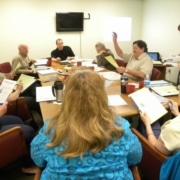
board-retreat-mwHAC leads a board governance training for Community Housing Ministries in St. Joseph, MO

Technical Assistance

HAC offers a range of capacity building technical assistance services for organizations in rural areas. Unlike many national organizations, HAC is not a membership organization and has an “open-door” policy with regard to technical assistance. If your organization is looking for guidance on a housing project, organizational development or compliance issues, fill out our TA request and HAC will get back to you as soon as possible.

“But for” HAC our organization would not have been able to develop the housing that it has over the past 28 years. HAC has lent pre-development funds to “all but” every one of our developments in New York State. -Comment from HAC’s Stakeholder Survey

Contact HAC in your Area

Midwest Regional Office

Southeast Regional Office

Southwest Regional Office

Trainings from the Housing Assistance Council

Training

To keep updated on HAC’s training and conference plans, subscribe to the HAC News or Get information on HAC trainings and conferences on TWITTER! HAC’s Twitter feed is at @RuralHome. To get started, visit https://www.twitter.com.

  • HAC sponsors periodic intensive training workshops in different parts of the country, emphasizing housing development, financing, construction, and nonprofit management.
  • HAC also regularly convenes the National Rural Housing Conference, which features a strong training component.
  • If you are having difficulty downloading the files, please contact Dan Stern at dan@ruralhome.org and request that they be sent to you via email.
  • HAC also conducts several web-based trainings and information sessions throughout the year. Go to our web-based trainings page for list of upcoming web trainings and an archive of past events.

[addthis2][/addthis2]

Upcoming Trainings

Materials from the 2012 HAC Conference
Promises to Keep in Challenging Times

Events List

Past Trainings

May 15, 2013: USDA Section 502 Direct Loan and Section 504 Loan and Elderly Grant Repair – An Overview
Presentation, Powerpoint

May 1, 2013: The Silver Tsunami: Are We Prepared for a Senior Population Boom in Rural America?
Presentation, Powerpoint

April 23-25, 2013: Sustainable Affordable Housing: Developing Healthy and Energy Efficient Homes for CHDOs in Las Cruces, NM

March 20-21, 2013: Asset Management Training in Jackson, MS

March 13, 2013: Conducting Homeless Counts on Native American Lands
Presentation, Report

September 19, 2012: Green Building Webinar
Presentation, Powerpoint

September 5-7, 2012: Building HOME and Lead Paint in Columbia, SC

August 21-23, 2012: Sustainable Affordable Housing: Developing Healthy and Energy Efficient Homes for CHDOs in Kansas City, MO

June 28, 2012: Mapping Poverty in Rural AmericaPresentation, Powerpoint, Poverty Materials

May16, 2012: Grant Writing
Presentation, Powerpoint

April 24-26, 2012: Section 502 Packaging Training for Nonprofit Developers in Milwaukee, WI.

April 24, 2012: Rural Housing: New Opportunities for Alabama in Thomasville, AL

April 18, 2012: Fundraising for NonprofitsPresentation, Powerpoint

March 21, 2012: Strategic PlanningWebinar Materials.

March 20-21, 2012: Advanced Financial Management
in Macon, GA

2011: December 5-6 Construction Management and Advanced Financial Management
in Eugene, OR

2011: December 1-2 Construction Management and Advanced Financial Management
in Chico, CA

2011: November 15-16 Construction Management and Advanced Financial Management
in Tucson, AZ

2011: November 9-10. Housing Seniors in Rural America: Aging in Place in a Shifting Landscape in Seattle, WA.
Review Materials from this event:

Jobs

Positions Available

Check back with this space for future job postings from HAC.

TO APPLY FOR A POSITION AT HAC:

No Phone Calls Please!

Follow the application instructions in the job description, or send cover letter along with salary history/requirements and resume to HAC@ruralhome.org. Be sure to reference the job title in the subject line.

Hard copy applications can be sent to Housing Assistance Council, 1025 Vermont Avenue, NW, Suite 606, Washington, DC 20005, Attn: “job title”.

All positions are located in the Washington, DC office unless otherwise noted.

HAC IS AN EQUAL OPPORTUNITY EMPLOYER

HAC is an Equal Opportunity Employer. HAC does not discriminate in hiring or employment practices on the basis of race, color, ethnicity, gender, national origin, age, religion, sexual orientation, disability, marital or familial status, ancestry, or status as a veteran. HAC is committed to maintaining a multicultural work environment. Women and minorities are strongly encouraged to apply.

Updated June 11, 2012

GET THE HAC NEWS!

Sign-up for HAC information products

SIGN UP HERE

Housing Assistance Council   |  1828 L Street. N.W., Suite 505, Washington, D.C. 20036
(202) 842-8600 (202) 347-3441 hac@ruralhome.org |

Board Portal

HAC is an equal opportunity provider, employer, and lender. | Civil Rights | Privacy