Remembering Bill Powers

On Thanksgiving Day, the affordable housing community lost a dear friend and advocate. Bill Powers was a friend of the Housing Assistance Council since its earliest days as one of our first staff members and later board member and chair.

5

A true affordable housing advocate, Bill devoted over 50 years of his life to the promotion of affordable housing and once said that the work has been “a lifetime interest.” When Gordon Cavanaugh became HAC’s first executive director in late 1971, he hired Bill, whom he had met while both men were working for the city of Philadelphia’s housing programs. Initially Bill helped start HAC’s lending programs and later he took on responsibility for government affairs.

As a housing program developer for the Rural California Housing Corporation, he was credited with raising over $1 million in a single year to support housing development in that state. Even after retiring, Bill donated his time to many organizations, served as a board member of several local housing agencies and HAC, and worked closely with the California Alliance of Retired Americans. He was also the recipient of the Congress for California Seniors Lifetime Achievement Award.

The death of Bill Powers is a loss for the affordable housing community. We will keep his memory alive by building on the work he spent his life doing: supporting rural communities’ access to safe, healthy, affordable homes. “I think HAC ought to be proud we’ve survived this long and proud of the movement we helped create,” Bill once said. “As long as there is a need for housing in rural America there will be a desperate need for organizations like HAC.” Rest in peace, Bill. Thank you for all you’ve done for us and for low-income rural Americans.

White Mountain Apache Housing Authority Serves its Veterans

The White Mountain Apache Housing Authority (WMAHA) helps the members of the White Mountain Apache Tribe to overcome their individual housing needs. Of these, almost 500 are U.S. military veterans. Working in the Fort Apache Indian Reservation located in eastern central Arizona, WMAHA serves the 16,000 enrolled members of the White Mountain Apache Tribe and strives to ensure that every tribal member has safe housing they can afford. The Housing Assistance Council (HAC) is proud to be a partner of WMAHA and their amazing work. In 2018, we awarded a $30,000 grant through The Home Depot Foundation‘s Veteran Housing Grants Program to WMAHA to help support their veterans. In celebration of Veterans Day and Native American Heritage Month, we’d like to highlight just a few of the many ways the White Mountain Apache Housing Authority serves the veterans of the White Mountain Apache Tribe.

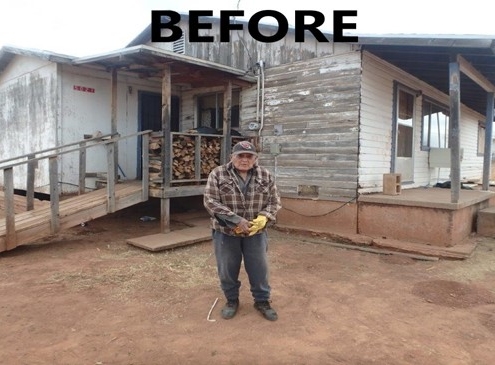
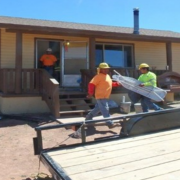
Before rehab of a veteran’s home completed by WMAHA in 2018 

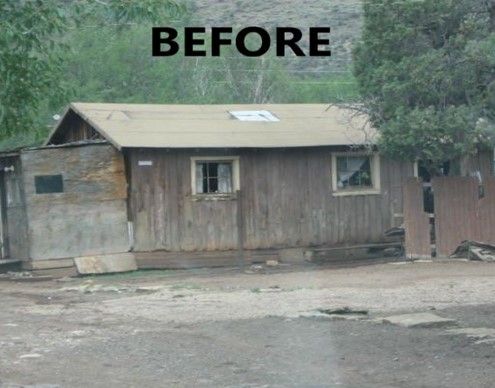
Before rehab of a veteran’s home completed by WMAHA in 2018

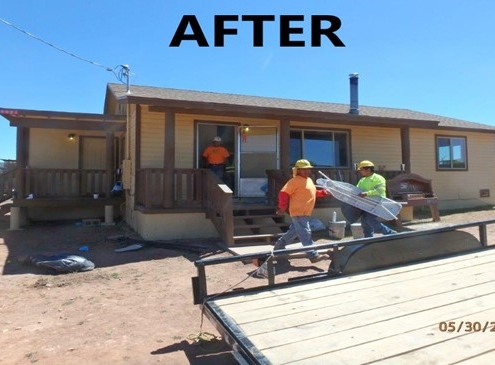
After rehab of a veteran’s home completed by WMAHA in 2018 

After rehab of a veteran’s home completed by WMAHA in 2018

Before and after of a rehab of a veteran’s home completed by WMAHA in 2018 


As many veterans know, service doesn’t end when you’re discharged. It’s a value that is carried for a lifetime. For WMAHA, service is key to the mission. The Veteran Home Rehabilitation Program serves those who have served our country. Many of the low-income Apache veterans the Housing Authority assists are in desperate need of multiple, expensive repairs to make sure their homes are safe, accessible, and livable. But without the ability to make these repairs themselves, many veterans need help.

Over the last eight years, the White Mountain Apache Housing Authority has rehabilitated (or in one case built!) 19 homes for their veterans, each of which required multiple major repairs for health, safety, and accessibility. All of this was performed at no cost to the veteran or their family. Last year WMAHA was able to set a record with 5 rehabilitations.

Making sure their veterans have safe and healthy homes is a point of pride for WMAHA and for the entire White Mountain Apache community. After all, WMAHA doesn’t work alone: each rehabilitation is made possible by scores of volunteers. As the team from WMAHA explains, “the number of volunteers who come and help with demolition and construction cleanup during the projects” is a testament to the rehabilitation program’s “impact on the community.” From the Housing Authority to everyday members, including community partners, the White Mountain Apache Tribe takes care of its veterans. By taking care of those who took care of us, WMAHA is serving both its community and the broader community of veterans nationwide.

The COVID pandemic has hit many Native communities particularly hard, and tragically, the White Mountain Apache are no exception. During the pandemic, unemployment, which usually runs 80% according to WMAHA, has far surpassed that amount, and food insecurity is “at a critical level.” Many of the low-income veterans WMAHA assists don’t have a way to pick up food from the local food bank, so the Housing Authority is starting to deliver the food boxes itself. Not content to just help house their veterans, WMAHA is committed to improving their quality of life.

Caring for veterans extends outside the home, too. For WMAHA, ensuring their veterans have access to the Veterans Affairs benefits they deserve is a critical mission. With 1.67 million acres, the Fort Apache Indian Reservation is large and rural. This creates challenges for many of the Tribe’s low-income veterans. Many of the nearest VA hospitals are hundreds of miles away, which makes even getting to routine appointments incredibly difficult. This distance makes it so challenging to receive disability ratings, see specialists, and make necessary appointments that, according to Barb Connerley, a consultant who works with WMAHA, “many of the veterans…do not know what VA benefits are available to them.”

This veteran’s home was in such disrepair the team from WMAHA decided to tear it down and start from scratch.

This veteran’s home was in such disrepair the team from WMAHA decided to tear it down and start from scratch.

This veteran’s home was in such disrepair the team from WMAHA decided to tear it down and start from scratch.

This veteran’s home was in such disrepair the team from WMAHA decided to tear it down and start from scratch.

This veteran’s home was in such disrepair the team from WMAHA decided to tear it down and start from scratch.

The White Mountain Apache Housing Authority has created a solution to help connect their veterans to the VA medical care they earned through their service. Since 2017, the White Mountain Apache Tribe Department of Transportation has operated Fort Apache Connection Transit (FACT), a 2-route bus system serving 12 stops across the Reservation. While this system doesn’t provide access to the nearest VA hospitals, the Housing Authority recently began repurposing one of their buses to transport veterans to their VA appointments. Multiple times a month, WMAHA will be providing veterans with a bus ride to their appointments and back home. They even take the time to help the veterans complete their paperwork to file for VA benefits.

For the trip, WMAHA provides their veterans with water, snacks, masks, and COVID safety information. They hope that this program can also serve as a teaching event, helping their veterans learn more about COVID safety as well as how to access their VA benefits. The program’s strength is its ingenuity—bringing together transit, healthcare, and informational services—in solving a critical problem for the Tribe’s veterans. Thanks to the White Mountain Apache Housing Authority, veterans living on reservation now have access to the critical VA healthcare they’ve earned through their service.

Many veterans return from their service to find it difficult to access the resources of their communities, including housing. Tragically, Native communities are overrepresented among persistent poverty counties, making these resources even harder to access. The Housing Assistance Council is committed to helping build community resources for housing where they’re needed most. Partners like WMAHA help us give back to our veterans and uplift Native communities. As Barb Connerley puts it, the Tribe’s veterans “have a proud tradition of military service and sacrifice.” The work of the White Mountain Apache Housing Authority pays respect to that service and sacrifice through service, care, and ingenuity of its own.

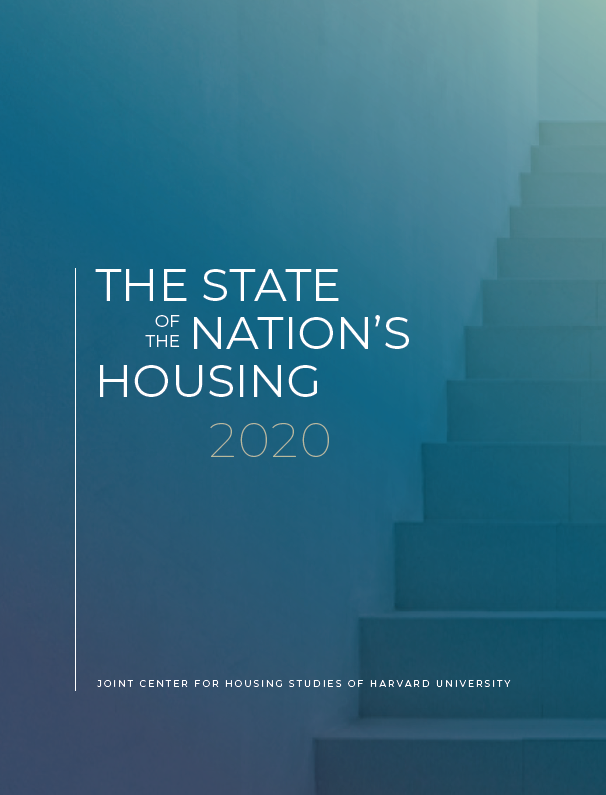
Harvard Joint Center for Housing Studies Releases State of the Nation’s Housing 2020

For most of 2020, the country has been beset by the COVID-19 pandemic, social unrest sparked by longstanding racial injustice, and the devastating impacts of climate change. Although low interest rates and continued growth in some sectors have bolstered homebuying and the broader economy, conditions have worsened for many households. Indeed, the nation’s failure to live up to its long-stated goal of a decent home in a suitable environment for all has never been clearer— particularly in the lack of affordable rental housing and unequal access to homeownership. Today’s crisis conditions call for a comprehensive re-envisioning of national housing policy.

Read the Report

Attend the release event on Nov. 19 at 4:00 pm EST

Over 1 Million Covid-19 Cases in Rural America – 24,000 Deaths

After nine months since the first COVID 19 case was reported in a rural community, there are 1.2 million rural cases, and rural deaths from the virus are now consistently above 25 percent of the daily national total.  

UPDATE: COVID-19 in Rural America – October 24, 2020

The COVID-19 pandemic is a global health crisis affecting nearly every community – including rural America. While there are still many uncertainties, the health crisis changes daily and the pandemic’s impact on rural communities continues to grow and evolve. The Housing Assistance Council (HAC) presents summary findings of COVID-19 in rural America after nine months since the first reported case outside of metropolitan areas on February 20, 2020.

Covid-19 Reported Cases Outside Metropolitan Areas, October 24, 2020

MORE THAN 1 MILLION RURAL AMERICANS HAVE BEEN INFECTED WITH COVID-19

Total Reported COVID-19 Cases February 20- October 24, 2020

The first reported case of COVID-19 outside of metropolitan areas came on February 20, 2020. As of October 24, 2020, there were more than 1.1 million reported cases of COVID-19 and approximately 24,000 associated deaths in communities outside of metropolitan areas. All but four counties outside of metropolitan areas now have reported COVID-19 cases, and over 80 percent of outside metro counties have also reported associated deaths related to the virus.


<


RURAL CASES ARE AT THEIR HIGHEST LEVELS SINCE THE PANDEMIC BEGAN

Newly Reported COVID-19 Cases February 20 – October 24, 2020

Nationally, the number of new COVID-19 cases have begun to increase again and reported rural cases have also grown to some of their highest levels since the pandemic began. Between October 11 and October 24, rural areas reported an average of 12,807 cases per day – an upward trend of about 30 percent in the past 14-day period. Similarly, rural reported COVID related deaths were up to an average of 217 per day compared to 172 deaths per day over the previous two-week period.

RURAL COVID CASES NOW OUTPACE THE OUTSIDE METROPOLITAN POPULATION AS A WHOLE

Rural Share of COVID-19 Reported Cases

Initial impacts of COVID-19 were greatest in urban communities and these areas still have the largest share of cases and deaths. Since February 20, 2020, about 14 percent of the total reported COVID-19 cases were identified in rural communities. But the rural share of COVID-19 cases continues to rise nationally. On August 24, 2020, approximately 17 percent of new COVID-19 cases and 19 percent of deaths were reported in rural communities. On October 24, 2020, 21 percent of new cases and 34 percent of new deaths were reported outside of metropolitan areas.

RURAL COVID-19 CASES ARE HIGHEST IN THE SOUTH AND INCREASING IN THE UPPER MIDWEST

Reported Rural COVID-19 Rates per 100,000

Over 99 percent of counties outside of Metropolitan areas have reported COVID-19 cases, but the virus’ impacts vary widely across the nation’s rural geography. There have been several instances of extremely high per-capita infection rates in rural areas – notably on some Native American lands and communities with meat packing and correctional facilities.  From September 24- October 24, the rural case and death rates increased most dramatically in the plains and upper Midwest, as well as in some Appalachian and southern communities.

COVID-19 Reported Case Rates Per 100,000 Outside of Metropolitan Areas - October 24, 2020

About the Data

The information in this brief derives from Housing Assistance Council tabulations of data from The New York Times, based on reports from state and local health agencies, and the U.S. Census Bureau’s 2014-2018 American Community Survey.

In these analyses, the terms “rural” and Outside Metropolitan Areas are synonymous and refer to counties and counts outside of OMB designated Metropolitan Areas. 

The Housing Assistance Council is a national nonprofit organization that helps build homes and communities across rural America. 
www.ruralhome.org

Covid-19 Cases Surpass 900,000 In Rural America – 20,000 Deaths

Coronavirus cases in rural America are as high as they have been since the pandemic began. The level of reported rural cases and deaths from the virus now consistently outpace the rural share of the national population.

UPDATE: Covid-19 in Rural America

The COVID-19 pandemic is a global health crisis affecting nearly every community – including rural America. While there are still many uncertainties, the health crisis changes daily and the pandemic’s impact on rural communities continues to grow and evolve. The Housing Assistance Council (HAC) presents summary findings of COVID-19 in rural America as of early October 2020.


MORE THAN 900,000 RURAL AMERICANS HAVE BEEN INFECTED WITH COVID-19

Total Reported COVID-19 Cases February 20- October 1, 2020

The first reported case of COVID-19 outside of metropolitan areas came on February 20, 2020. As of October 1, 2020, there were more than 900,000 reported cases of COVID-19 and approximately 20,000 associated deaths in communities outside of metropolitan areas. All but 9 counties outside of metropolitan areas now have reported COVID-19 cases, and nearly 80 percent of outside metro counties have also reported associated deaths related to the virus.


RURAL CASES ARE AT THEIR HIGHEST LEVELS SINCE THE PANDEMIC BEGAN

Rural Share of COVID-19 Reported Cases

Nationally, the number of new COVID-19 cases have begun to increase again and reported rural cases have also grown to some of their highest levels since the pandemic began. Between September 17 and October 1, rural areas reported an average of 8,543 cases per day – an upward trend of about 25 percent in the past 14-day period. Similarly, rural reported COVID related deaths were up 17 percent over the past 14 days.


RURAL COVID CASES NOW OUTPACE THE OUTSIDE METROPOLITAN POPULATION AS A WHOLE

Rural Share of COVID-19 Reported Cases

Initial impacts of COVID-19 were greatest in urban communities and these areas still have the largest share of cases and deaths. Since February 20, 2020, about 12 percent of the total reported COVID-19 cases were identified in rural communities. But the rural share of COVID-19 cases continues to rise nationally. On September 1, 2020, approximately 15 percent of new COVID-19 cases and 19 percent of deaths were reported in rural communities. On October 1, 2020, 22 percent of new cases and 23 percent of new deaths were reported outside of metropolitan areas.


RURAL COVID-19 CASES ARE HIGHEST IN THE SOUTH AND INCREASING IN THE UPPER MIDWEST

Reported Rural COVID-19 Rates per 100,000

Over 99 percent of counties outside of Metropolitan areas have reported COVID-19 cases, but the virus’ impacts vary widely across the nation’s rural geography. There have been several instances of extremely high per-capita infection rates in rural areas – notably on some Native American lands and communities with meat packing and correctional facilities. From September 1- October 1, the rural case and death rates increased most dramatically in the plains and upper Midwest, as well as in some Appalachian and southern communities.

ABOUT THE DATA

The information in this brief derives from Housing Assistance Council tabulations of data from The New York Times, based on reports from state and local health agencies, and the U.S. Census Bureau’s 2014-2018 American Community Survey.

In these analyses, the terms “rural” and Outside Metropolitan Areas are synonymous and refer to counties and counts outside of OMB designated Metropolitan Areas.

The Housing Assistance Council is a national nonprofit organization that helps build homes and communities across rural America.

Emergency Rental Relief is Overdue

On September 16, 2020 a statement from seven leading affordable housing organizations called for immediate rental assistance, paired with financial support for affordable housing providers, to supplement the protection provided by the CDC’s recent eviction moratorium. The statement was issued by the Housing Assistance Council along with Enterprise Community Partners, the Housing Partnership NetworkLeadingAge, the Local Initiatives Support Corporation, the National Housing Trust and Stewards of Affordable Housing for the Future.

For six months, Americans have sheltered, worked, and studied at home to stay safe and healthy. Tens of millions of our neighbors, however, have also lost jobs and wages due to COVID-19 and risk losing the safety of their homes, even with a recent eviction moratorium from the Centers for Disease Control (CDC). We urge Congress and the Administration to provide rental assistance, paired with financial support for affordable housing providers, to avoid widespread homelessness and the loss of affordable homes. Earlier this month, after negotiations between Congress and the White House failed, the CDC took the unprecedented step of issuing an order banning evictions for nonpayment of rent for some renters through December 31, 2020. The CDC’s eviction moratorium is a public health measure to prevent the spread of COVID-19 by enabling renters to practice social distancing and comply with stay-at-home orders.

While the CDC’s action provides important temporary protections for certain renters across the country, it represents only a partial step toward housing stability. In addition to barring evictions, any effective housing stability policy must also include rental assistance for renters and owners. Help is needed for renters because accumulating arrearages of back rent, penalties, and fees only sets them up for widespread failure on January 1, 2021. Help is needed for owners because their lenders, utility providers, and property services providers still fully expect payments to continue regardless of any eviction moratorium.

Read the full statement here.

2020 West Coast Wildfires Disaster Guide

For the past three weeks, orange skies have covered much of the West Coast due to wildfire smoke. Dry conditions, lightning, and human activity have sparked these wildfires in California, Washington, and Oregon and thousands have evacuated. Over 28,000 firefighters, including prison inmates, are actively working to contain the 42 major wildfires across the region.1

In August, a storm of lightning strikes north of Sacramento sparked a cluster of wildfires that has damaged more than 471,000 acres (largest wildfire on record) and is only 24 percent contained.2 So far, wildfires have burned over 3.1 millions acres in California in 2020.3 Half a million acres have burned in Oregon and Washington Governor Jay Inslee relayed from the fire chief that he hadn’t seen a fire explode like this one “in his 33 years of service. Climate change is making these fires more frequent, more expensive and far more dangerous.”4

Even after the fires and smoke subside, there will be long-term consequences, including effects of smoke inhalation and contaminated ground water and reservoirs. These deleterious health effects compound the problems already caused by the pandemic.5

To see current fire information and updates, check the California Fire incident information
online at https://www.fire.ca.gov/incidents.

Resources
The following guide provides information for individuals and families affected by the fires about current and potential efforts. For more information, please see HAC’s report: Picking up the Pieces: Restoring Rural Housing and Communities After a Disaster, available free online at https://Ruralhome.org/disaster-guide/.

Federal Emergency Management Agency (FEMA)
If federal assistance becomes available for residents affected by the fires, to apply you must complete a multi-purpose application online at https://www.disasterassistance.gov or over the phone on FEMA’s toll-free helpline.

Toll-free helpline:
1-800-621-FEMA (3362)
For hearing impaired callers only:
1-800-462-7585 (TTY)
1-800-621-3362 (Video Relay Service)

U.S. Department of Housing and Urban Development (HUD)
HUD offers a Disaster Recovery Toolkit and makes other related resources available:
https://www.hud.gov/info/disasterresources.

U.S. Department of Agriculture (USDA)
To determine whether USDA has specific assistance available for fire survivors who had USDA Rural Development assistance before the fires, check for information online at https://www.rd.usda.gov/page/rural-development-disaster-assistance, or call the USDA Rural Development state office in California at 530-792-5830 for rental housing or 530-792-5816 for owner-occupied housing.

American Red Cross Disaster Service
For referrals and updates on Red Cross shelter services in your area, locate a local Red Cross office through: https://www.redcross.org/get-help.html or by calling the Public Inquiry Center at 1-800-214-0441.

State Resources
California
https://www.fire.ca.gov/incidents
https://response.ca.gov/

Washington
https://www.dnr.wa.gov/Wildfires
https://www.governor.wa.gov/news-media/washington-wildfire-resources
https://gacc.nifc.gov/nwcc/

Oregon
https://connectingpointonline.com/solutions/wildfire-resources/
https://gacc.nifc.gov/nwcc/

State Housing Agencies
Each state has at least one agency that administers state and federal programs to promote decent
affordable housing for low-income individuals. Typically, these agencies and authorities administer
some aspects of state or federal programs.

California Housing Finance Agency
500 Capitol Mall, Suite 1400
Sacramento, CA 95814-4737
Phone: (916) 326-8000
877-9-CalHFA (877-922-5432)
https://www.calhfa.ca.gov/

Oregon Housing and Community Services
725 Summer Street NE, Suite B
Salem, OR 97301-1266
Phone: (503) 986-2000
https://www.ohcs.oregon.gov

Washington State Housing Finance Commission
1000 2nd Avenue, Suite 2700
Seattle, WA 98104-1002
Phone: (206) 464-7139
https://www.wshfc.org

Local Housing Authorities
Use the links below to search for your local housing authority.

California
https://www.hud.gov/states/california/renting/hawebsites
https://www.hud.gov/sites/dfiles/PIH/documents/PHA_Contact_Report_CA.pdf

Oregon
https://www.housingauthoritiesoforegon.com/
https://www.hud.gov/sites/dfiles/PIH/documents/PHA_Contact_Report_OR.pdf

Washington
https://www.awha.org/
https://www.hud.gov/sites/dfiles/PIH/documents/PHA_Contact_Report_WA.pdf

Evacuating and Returning Home
The Red Cross website provides suggestions on actions to prepare for evacuation and returning home after a fire:6

IF A FIRE OCCURS Listen to your local media for updates on the fire and be ready to leave quickly. Back your car into the garage or park it in an open space facing your direction of escape. You should also:

  • Keep your pets in one room so you can find them quickly if you have to evacuate.
  • Arrange for a temporary place to stay outside the threatened area.
  • Keep your indoor air clean – close windows and doors to prevent the smoke outside from getting in your home.
  • Use the recycle mode on the air conditioner in your home or car. If you don’t have air conditioning and it’s too hot to be inside, seek shelter somewhere else.
  • If smoke levels are high, don’t use anything that burns and adds to air pollution inside such as candles, fireplaces and gas stoves

AFTER THE FIRE Don’t go home until fire officials say it is safe. Be cautious entering a burned area – hazards could still exist. Avoid damaged or downed power lines, poles and
wires. Other things to do include:

  • Keep your animals under your direct control. Hidden embers and hot spots could burn them.
  • Wet down debris to minimize breathing dust particles.
  • Wear leather gloves and shoes with heavy soles.
  • Throw out any food that has been exposed to heat, smoke or soot.
  • Recheck for smoke or sparks throughout your home for several hours after the fire, including in your attic. Wildfire winds can blow burning embers anywhere so check for embers that could cause a fire.

If your home has experienced damage, remember to the check the outside of your home before you enter. Look for loose power lines, broken or damaged gas lines, foundations cracks, missing support beams, or other damage. It may be safest to ask a building inspector of  contractor to check the structure before you enter. Do not force jammed doors open, as they may be providing needed support to the rest of the home. Sniff for gas to ensure there are no natural or propane gas leaks. If you do have a propane tank system, make sure to turn off all valves and contact a propane supplier  to check the system before you use it again. Check floors and ceilings to ensure they are not sagging from water damage, this can be especially hazardous. Take photographs of any damage as you may need them for insurance claims or FEMA claims later on.7


1“’We have never seen this’: 10% of Oregon forced to evacuate; death toll rises from wildfires across Western states”, September 11, 2020, https://www.usatoday.com/story/news/nation/2020/09/11/wildfire-updates-oregon-evacuations-california-deaths/3467271001/

2“California Daily Wildfire Update,” September 11, 2020, https://www.fire.ca.gov/daily-wildfire-report/

3“Wildfire is largest in California history and continues to grow,” September 11, 2020, https://thehill.com/changing-america/resilience/natural-disasters/515997-wildfire-is-largest-in-california-history-and

4 “Deadly wildfires rage in California, Oregon and Washington,” September 11, 2020, https://www.cnn.com/us/live-news/west-coast-wildfires-09-10-2020/index.html

5 “A Climate Reckoning in Fire-Stricken California,” September 11, 2020, https://www.nytimes.com/2020/09/10/us/climate-change-california-wildfires.html

6“Red Cross Shelters 1,000s as California Fires Burn out of Control,” October 20, 2017, https://www.redcross.org/news/article/Red-Cross-Helps-as-Fires-Burn-Out-of-Control-in-California.

7Excerpted from the Red Cross’s Guide on “Checking Your Home: Structural Elements” available at https://www.redcross.org/find-help/disaster-recovery/home-structural-elements.
 

2020 West Coast Wildfires Disaster Guide

For the past three weeks, orange skies have covered much of the West Coast due to wildfire smoke. Dry conditions, lightning, and human activity have sparked these wildfires in California, Washington, and Oregon and thousands have evacuated. Over 28,000 firefighters, including prison inmates, are actively working to contain the 42 major wildfires across the region.1

In August, a storm of lightning strikes north of Sacramento sparked a cluster of wildfires that has damaged more than 471,000 acres (largest wildfire on record) and is only 24 percent contained.2 So far, wildfires have burned over 3.1 millions acres in California in 2020.3 Half a million acres have burned in Oregon and Washington Governor Jay Inslee relayed from the fire chief that he hadn’t seen a fire explode like this one “in his 33 years of service. Climate change is making these fires more frequent, more expensive and far more dangerous.”4

Even after the fires and smoke subside, there will be long-term consequences, including effects of smoke inhalation and contaminated ground water and reservoirs. These deleterious health effects compound the problems already caused by the pandemic.5

To see current fire information and updates, check the California Fire incident information
online at https://www.fire.ca.gov/incidents.

Resources
The following guide provides information for individuals and families affected by the fires about current and potential efforts. For more information, please see HAC’s report: Picking up the Pieces: Restoring Rural Housing and Communities After a Disaster, available free online at http://ruralhome.org/sct-information/mn-hac-research/mn-rrr/546-disaster-guide.

Federal Emergency Management Agency (FEMA)
If federal assistance becomes available for residents affected by the fires, to apply you must complete a multi-purpose application online at https://www.disasterassistance.gov or over the phone on FEMA’s toll-free helpline.

Toll-free helpline:
1-800-621-FEMA (3362)
For hearing impaired callers only:
1-800-462-7585 (TTY)
1-800-621-3362 (Video Relay Service)

U.S. Department of Housing and Urban Development (HUD)
HUD offers a Disaster Recovery Toolkit and makes other related resources available:
https://www.hud.gov/info/disasterresources.

U.S. Department of Agriculture (USDA)
To determine whether USDA has specific assistance available for fire survivors who had USDA Rural Development assistance before the fires, check for information online at https://www.rd.usda.gov/page/rural-development-disaster-assistance, or call the USDA Rural Development state office in California at 530-792-5830 for rental housing or 530-792-5816 for owner-occupied housing.

American Red Cross Disaster Service
For referrals and updates on Red Cross shelter services in your area, locate a local Red Cross office through: https://www.redcross.org/get-help.html or by calling the Public Inquiry Center at 1-800-214-0441.

State Resources
California
https://www.fire.ca.gov/incidents
https://response.ca.gov/

Washington
https://www.dnr.wa.gov/Wildfires
https://www.governor.wa.gov/news-media/washington-wildfire-resources
https://gacc.nifc.gov/nwcc/

Oregon
https://connectingpointonline.com/solutions/wildfire-resources/
https://gacc.nifc.gov/nwcc/

State Housing Agencies
Each state has at least one agency that administers state and federal programs to promote decent
affordable housing for low-income individuals. Typically, these agencies and authorities administer
some aspects of state or federal programs.

California Housing Finance Agency
500 Capitol Mall, Suite 1400
Sacramento, CA 95814-4737
Phone: (916) 326-8000
877-9-CalHFA (877-922-5432)
https://www.calhfa.ca.gov/

Oregon Housing and Community Services
725 Summer Street NE, Suite B
Salem, OR 97301-1266
Phone: (503) 986-2000
https://www.ohcs.oregon.gov

Washington State Housing Finance Commission
1000 2nd Avenue, Suite 2700
Seattle, WA 98104-1002
Phone: (206) 464-7139
https://www.wshfc.org

Local Housing Authorities
Use the links below to search for your local housing authority.

California
https://www.hud.gov/states/california/renting/hawebsites
https://www.hud.gov/sites/dfiles/PIH/documents/PHA_Contact_Report_CA.pdf

Oregon
https://www.housingauthoritiesoforegon.com/
https://www.hud.gov/sites/dfiles/PIH/documents/PHA_Contact_Report_OR.pdf

Washington
https://www.awha.org/
https://www.hud.gov/sites/dfiles/PIH/documents/PHA_Contact_Report_WA.pdf

Evacuating and Returning Home
The Red Cross website provides suggestions on actions to prepare for evacuation and returning home after a fire:6

IF A FIRE OCCURS Listen to your local media for updates on the fire and be ready to leave quickly. Back your car into the garage or park it in an open space facing your direction of escape. You should also:

  • Keep your pets in one room so you can find them quickly if you have to evacuate.
  • Arrange for a temporary place to stay outside the threatened area.
  • Keep your indoor air clean – close windows and doors to prevent the smoke outside from getting in your home.
  • Use the recycle mode on the air conditioner in your home or car. If you don’t have air conditioning and it’s too hot to be inside, seek shelter somewhere else.
  • If smoke levels are high, don’t use anything that burns and adds to air pollution inside such as candles, fireplaces and gas stoves

AFTER THE FIRE Don’t go home until fire officials say it is safe. Be cautious entering a burned area – hazards could still exist. Avoid damaged or downed power lines, poles and
wires. Other things to do include:

  • Keep your animals under your direct control. Hidden embers and hot spots could burn them.
  • Wet down debris to minimize breathing dust particles.
  • Wear leather gloves and shoes with heavy soles.
  • Throw out any food that has been exposed to heat, smoke or soot.
  • Recheck for smoke or sparks throughout your home for several hours after the fire, including in your attic. Wildfire winds can blow burning embers anywhere so check for embers that could cause a fire.

If your home has experienced damage, remember to the check the outside of your home before you enter. Look for loose power lines, broken or damaged gas lines, foundations cracks, missing support beams, or other damage. It may be safest to ask a building inspector of  contractor to check the structure before you enter. Do not force jammed doors open, as they may be providing needed support to the rest of the home. Sniff for gas to ensure there are no natural or propane gas leaks. If you do have a propane tank system, make sure to turn off all valves and contact a propane supplier  to check the system before you use it again. Check floors and ceilings to ensure they are not sagging from water damage, this can be especially hazardous. Take photographs of any damage as you may need them for insurance claims or FEMA claims later on.7


1“’We have never seen this’: 10% of Oregon forced to evacuate; death toll rises from wildfires across Western states”, September 11, 2020, https://www.usatoday.com/story/news/nation/2020/09/11/wildfire-updates-oregon-evacuations-california-deaths/3467271001/

2“California Daily Wildfire Update,” September 11, 2020, https://www.fire.ca.gov/daily-wildfire-report/

3“Wildfire is largest in California history and continues to grow,” September 11, 2020, https://thehill.com/changing-america/resilience/natural-disasters/515997-wildfire-is-largest-in-california-history-and

4 “Deadly wildfires rage in California, Oregon and Washington,” September 11, 2020, https://www.cnn.com/us/live-news/west-coast-wildfires-09-10-2020/index.html

5 “A Climate Reckoning in Fire-Stricken California,” September 11, 2020, https://www.nytimes.com/2020/09/10/us/climate-change-california-wildfires.html

6“Red Cross Shelters 1,000s as California Fires Burn out of Control,” October 20, 2017, https://www.redcross.org/news/article/Red-Cross-Helps-as-Fires-Burn-Out-of-Control-in-California.

7Excerpted from the Red Cross’s Guide on “Checking Your Home: Structural Elements” available at https://www.redcross.org/find-help/disaster-recovery/home-structural-elements.
Update: COVID-19 in Rural America – September 10, 2020

The COVID-19 pandemic is a global health crisis affecting nearly every community – including Rural America. While there are still many uncertainties, the health crisis changes daily and the pandemic’s impact on rural communities continues to grow and evolve. The Housing Assistance Council (HAC) presents summary findings of COVID-19 in rural America as of early September 2020.


TOTAL REPORTED COVID-19 CASES FEBRUARY 20- SEPTEMBER 10, 2020

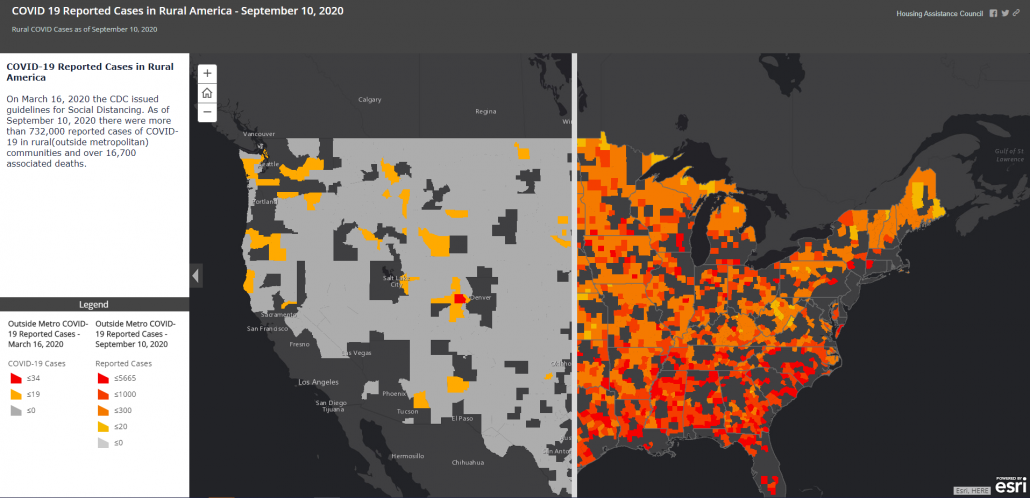
The first reported case of COVID-19 outside of metropolitan areas came on February 20, 2020. As of September 10, 2020, there were more than 732,000 reported cases of COVID-19 and over 16,700 associated deaths in communities outside of Metropolitan Areas. All but 14 counties outside of metropolitan areas now have reported COVID-19 cases, and nearly three-quarters of outside metro counties have also reported associated deaths related to the virus.


RURAL SHARE OF COVID-19 REPORTED CASES

Initial impacts of COVID-19 were greatest in urban communities and these areas still have the largest share of cases and deaths. But the rural share of COVID-19 cases continues to rise nationally. On August 10, 2020, approximately 12 percent of new COVID-19 cases and 18 percent of deaths were reported in rural communities. On September 10, 2020, 17.9 percent of new cases and 19.7 percent of new deaths were reported outside of metropolitan areas.

REPORTED RURAL COVID-19 RATES PER 100,000

Over 99 percent of counties outside of Metropolitan areas have reported COVID-19 cases, but the virus’ impacts vary widely across the nation’s rural geography. There are several instances of extremely high per-capita infection rates in rural areas – notably on some Native American lands and communities with meat packing and correctional facilities.  From August 10- September 10, the rural case and death rates increased most dramatically in the upper Midwest and in some Appalachian and southern counties.

ABOUT THE DATA

The information in this brief derives from Housing Assistance Council tabulations of data from The New York Times, based on reports from state and local health agencies, and the U.S. Census Bureau’s 2014-2018 American Community Survey.
In these analyses, the terms “rural” and Outside Metropolitan Areas are synonymous and refer to counties and counts outside of OMB designated Metropolitan Areas. 

GET THE HAC NEWS!

Sign-up for HAC information products

SIGN UP HERE

Housing Assistance Council   |  1828 L Street. N.W., Suite 505, Washington, D.C. 20036
(202) 842-8600 (202) 347-3441 hac@ruralhome.org |

Board Portal

HAC is an equal opportunity provider, employer, and lender. | Civil Rights | Privacy