Addressing Food Insecurity: Research Note

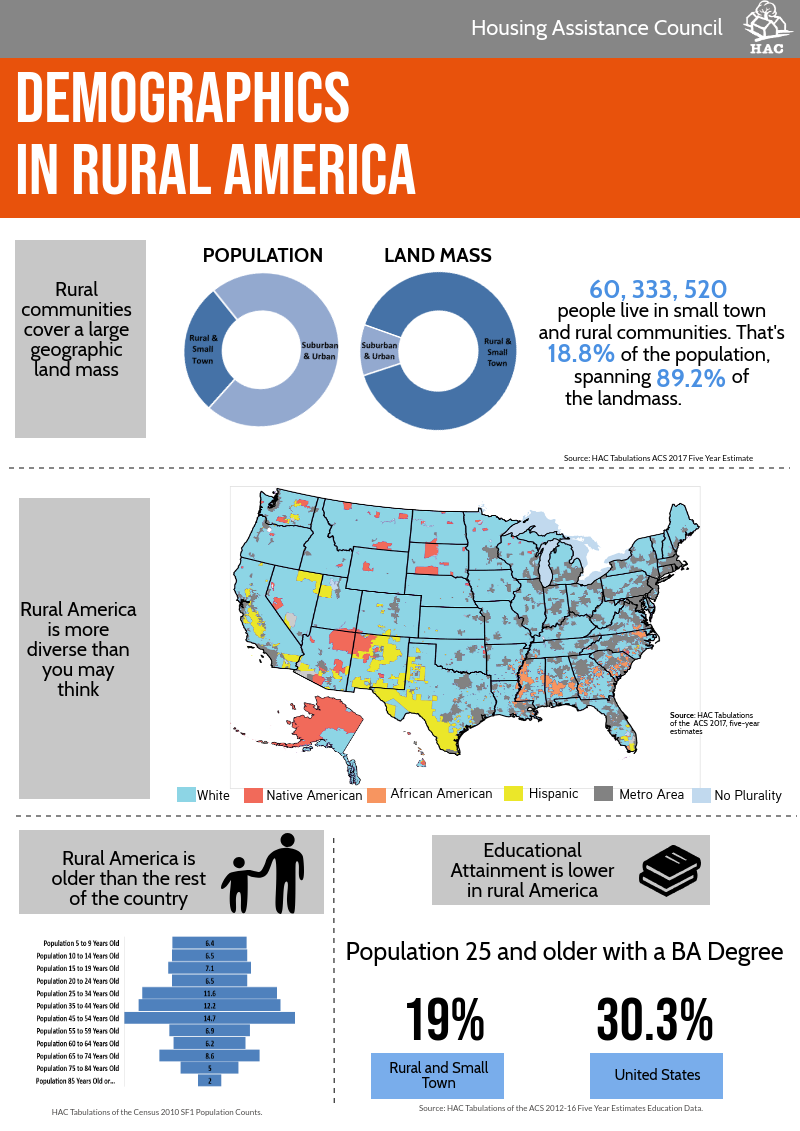
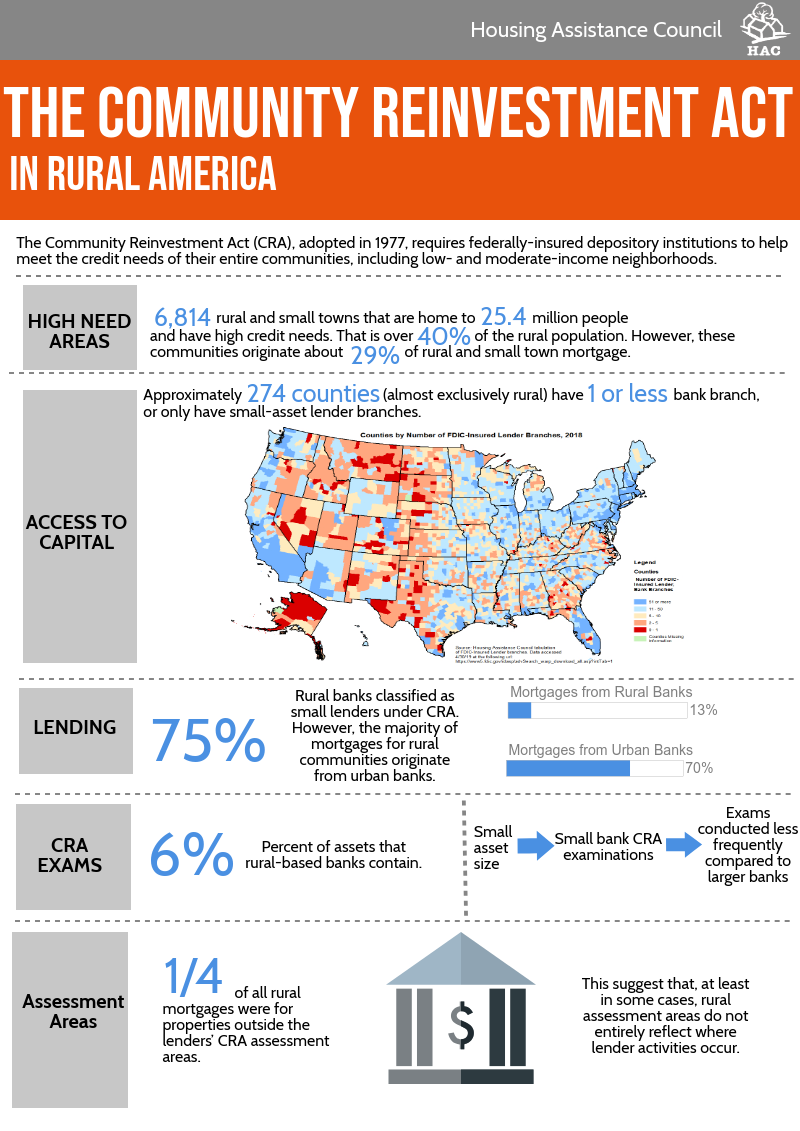
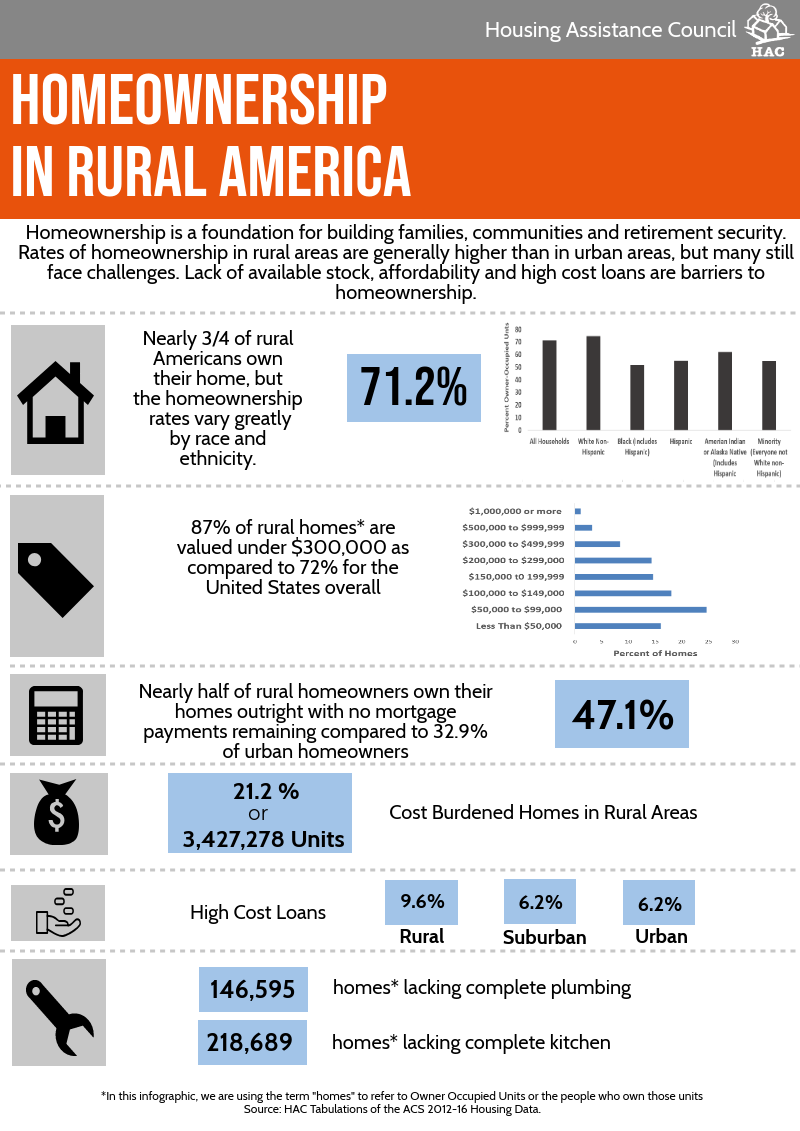
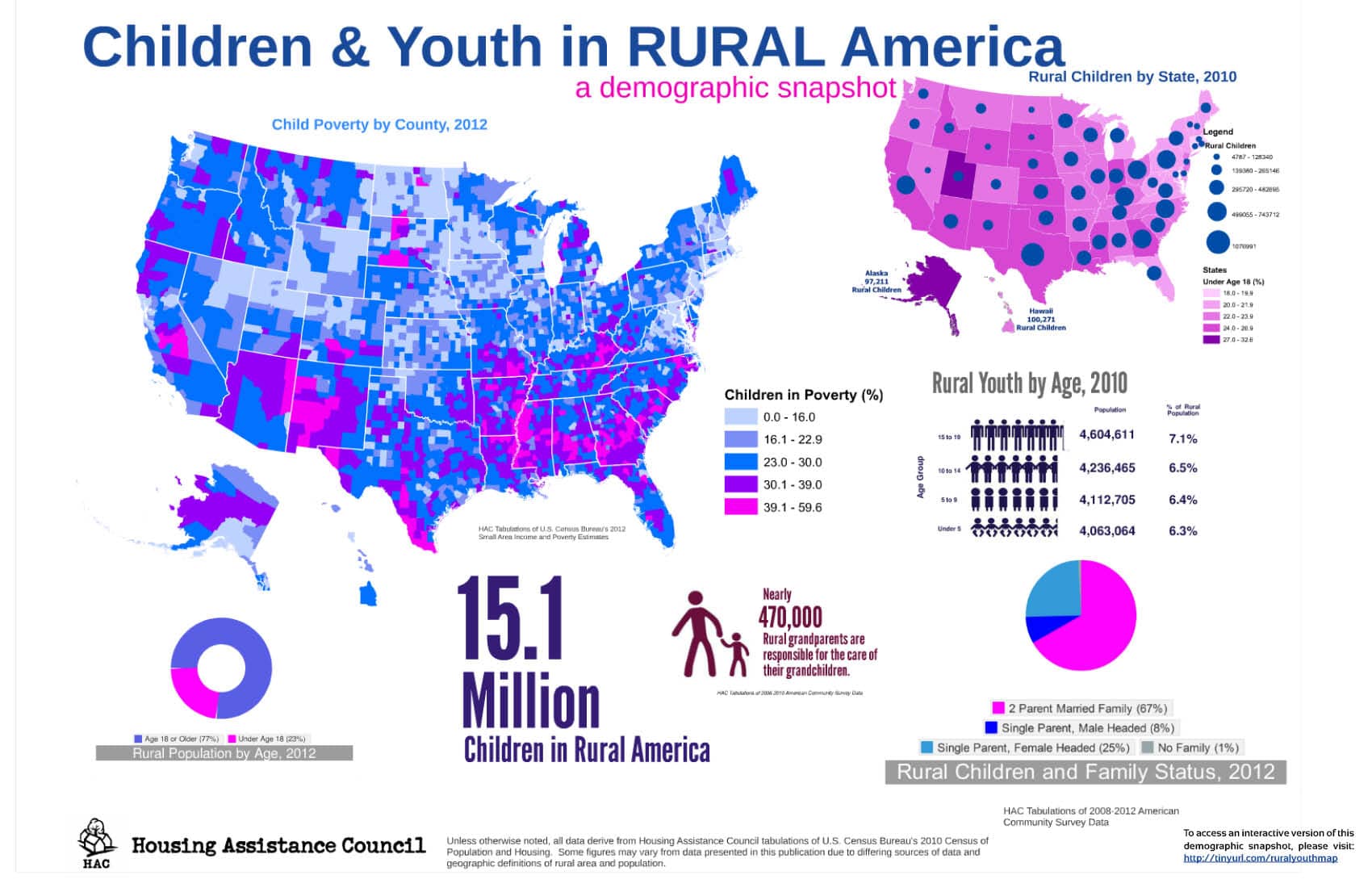
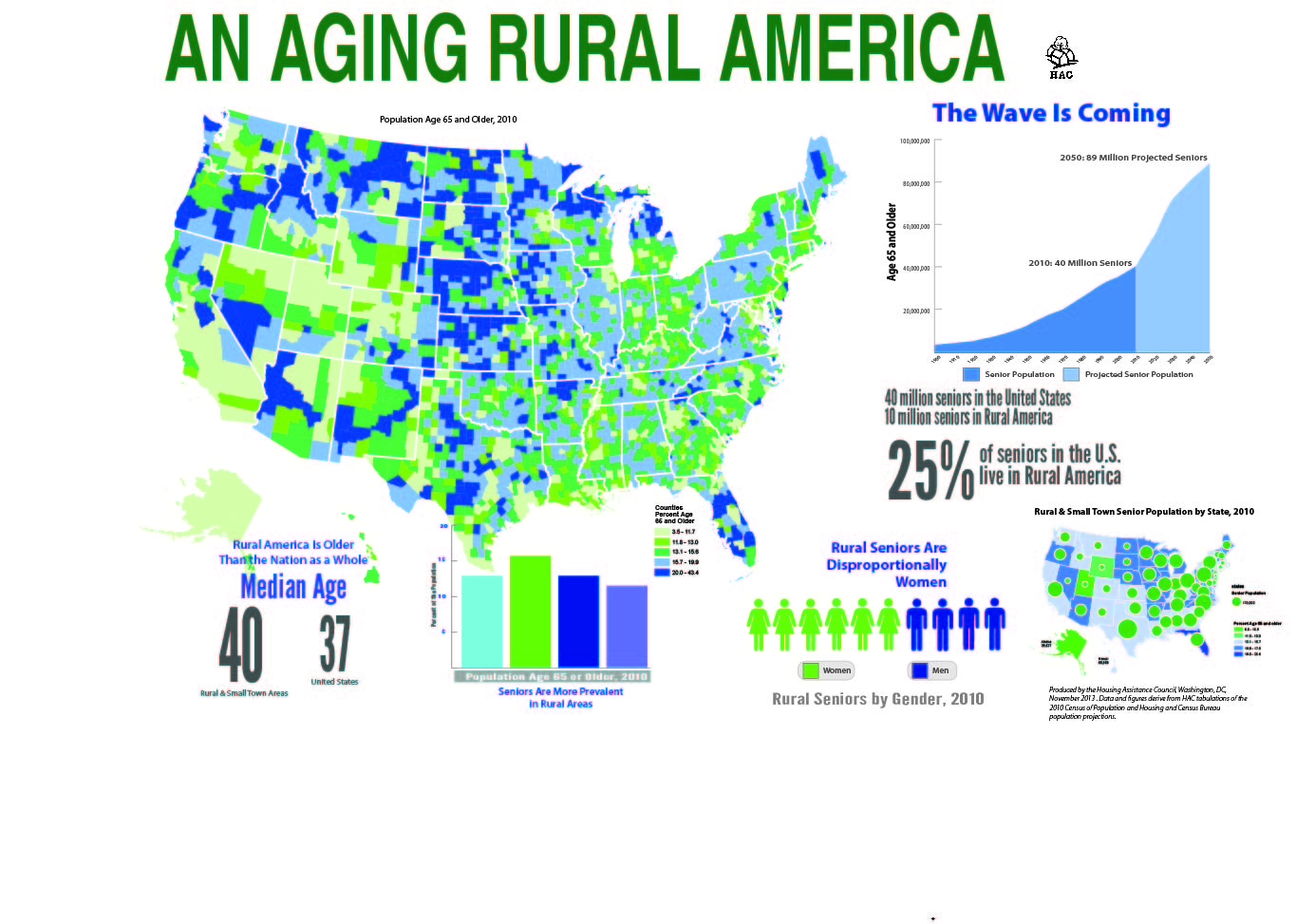
Addressing Food InsecurityFood insecurity negatively affects childhood development and rural areas have higher rates of food insecurity. The Summer Meals program only serves 1 in 7 eligible students, but an increasing number of USDA multi-family properties serve as meal sites for this program. Stronger and continued collaboration between housing facilities and child nutrition programs will reduce rural childhood hunger during the summer months.

Download PDF File

HAC News: April 5, 2019

News Formats. pdf

April 5, 2019
Vol. 48, No. 7

April is Fair Housing Month • Experts tell Congress federal support for rural housing is essential • Calabria confirmed for FHFA • Legislators question HUD budget requests • Special authorizations issued to help USDA use all Section 502 direct mortgage funds • HUD offers funds for development of new Section 202 housing for elders • Grants available for household water wells and water/wastewater systems • Revisions proposed to HUD’s Section 3 regulations • USDA properties again encouraged to host summer meals program • Bill introduced to target more federal funding to persistently poor areas • USDA seeks site manager and maintenance person of the year • RuralSTAT • Flooding creates emergency for South Dakota Indian reservations • President requests housing finance reform plan • Current and past USDA officials disagree on ERS/NIFA relocation • Nearly one-fourth of the most rural counties see increase in severely cost-burdened housing • HAC offers Section 502 packaging training for nonprofits in May • Local solutions go national at People & Places 2019 • HAC symposium on rural veterans’ housing and services scheduled for April in Arkansas • Need capital for your affordable housing project?

HAC News Formats. pdf

April 5, 2019
Vol. 48, No. 7

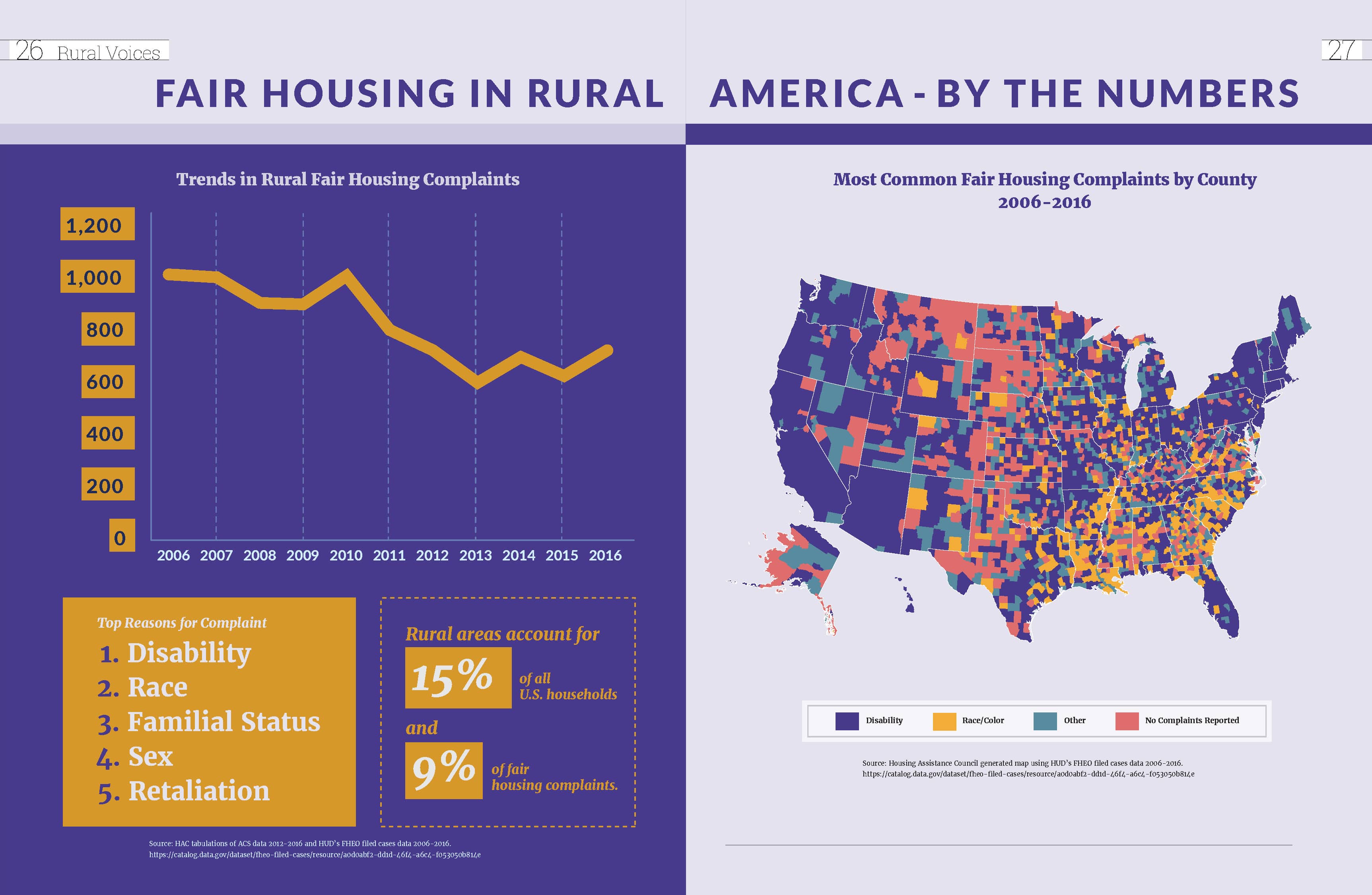
April is Fair Housing Month.
To mark the occasion, HUD launched a new campaign against sexual harassment in housing. The House Financial Services Committee convened a hearing April 2 on “The Fair Housing Act: Reviewing Efforts to Eliminate Discrimination and Promote Opportunity in Housing.” To learn more about fair housing or to file a complaint, visit HUD’s site or call 1-800-669-9777.

Experts tell Congress federal support for rural housing is essential.
On April 2, HAC CEO David Lipsetz was one of five panelists at “The Affordable Housing Crisis in Rural America: Assessing the Federal Response,” a hearing convened by the House Financial Services Committee’s Subcommittee on Housing, Community Development and Insurance. Covered topics included the need to address rental properties’ maturing mortgages, the need for local capacity building and the need for new construction of rental housing in rural areas, as well as the possibility of moving the USDA rural housing programs to HUD – an idea not supported by any of the panelists.

Calabria confirmed for FHFA.
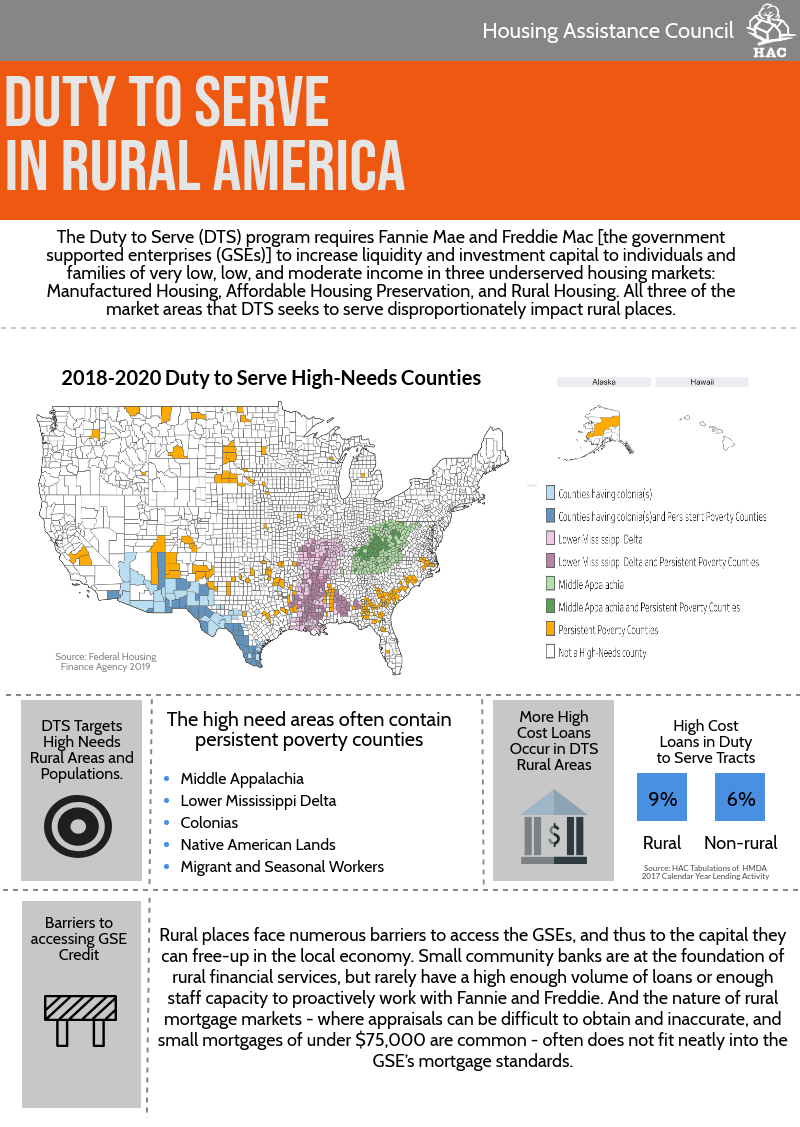
The Senate confirmed Mark Calabria on April 4 to be Director of the Federal Housing Finance Agency. As a Director at the Cato Institute, and later as a Chief Economist for Vice President Pence, Calabria voiced strong views about the existing housing finance system. At his recent confirmation hearing he assured the Senate Banking Committee that as FHFA Director he would carry out the existing law, including the Duty to Serve requirements related to manufactured housing, affordable housing preservation and rural housing.

Legislators question HUD budget requests.
HUD Secretary Ben Carson testified at April 3 hearings before both the House and Senate Agriculture Appropriations Subcommittees. Members of both parties criticized the deep funding cuts proposed in the Administration’s FY20 budget.

Special authorizations issued to help USDA use all Section 502 direct mortgage funds.
As it has done in the past, USDA is waiving some requirements for Section 502 direct applications in order to reduce processing time and help use all the funds. This year’s temporary authorizations relate to credit scores, student loan payments, and oral verification of employment. For more information, contact an RD office.

HUD offers funds for development of new Section 202 housing for elders.
For the first time since 2010, HUD has capital advances available for nonprofits and coops to develop and operate rental housing for very low-income elderly residents. Applications are due August 28. For more information, email 202CapitalAdvanceNOFA@hud.gov.

Grants available for household water wells and water/wastewater systems.
Recipients of Household Water Well System Grants can reloan the funds to individuals to construct, refurbish and service their rural household well systems. Revolving Fund Program grants can be reloaned to finance predevelopment costs or small capital projects for water/wastewater systems. For both programs, applications are due May 27 and the contact for more information is Derek Jones, RUS, 202-720-9640.

Revisions proposed to HUD’s Section 3 regulations.
Section 3 requires that employment and other economic opportunities generated by HUD assistance be directed to low- and very low-income people, especially those receiving HUD aid. Comments are due June 3 on a proposed update to the regulations and initial benchmarks for measuring compliance. Contacts for more information vary by program and are listed in the proposals.

USDA properties again encouraged to host summer meals program.
Rental properties, self-help developments with common spaces, and community facilities funded by the Rural Housing Service are invited to participate in USDA’s Summer Food Service Program. For more information, contact a USDA RD state office or Food and Nutrition Service regional office. HAC has published a new research note on USDA-financed housing developments’ summer meals participation.

Bill introduced to target more federal funding to persistently poor areas.
Sen. Cory Booker (D-NJ) and Rep. James Clyburn (D-SC) have introduced a bill to expand the 10-20-30 formula, which requires at least 10% of a federal program’s funds go to communities where the poverty rate has been at least 20% over the past 30 years. Their proposal would apply the formula to additional programs and would target some resources to census tracts with current poverty rates over 20%. Sen. Booker’s announcement quotes a statement of support from HAC’s David Lipsetz.

USDA seeks site manager and maintenance person of the year.
Nominations are due May 17 for USDA Rural Development’s Multi-Family Housing Site Manager and Maintenance Person of the Year program, recognizing those who go above and beyond to assure the success of USDA-financed rental and farmworker housing properties. For more information, contact Charlene Broussard, USDA, 337-262-6611, ext. 142.

RuralSTAT.
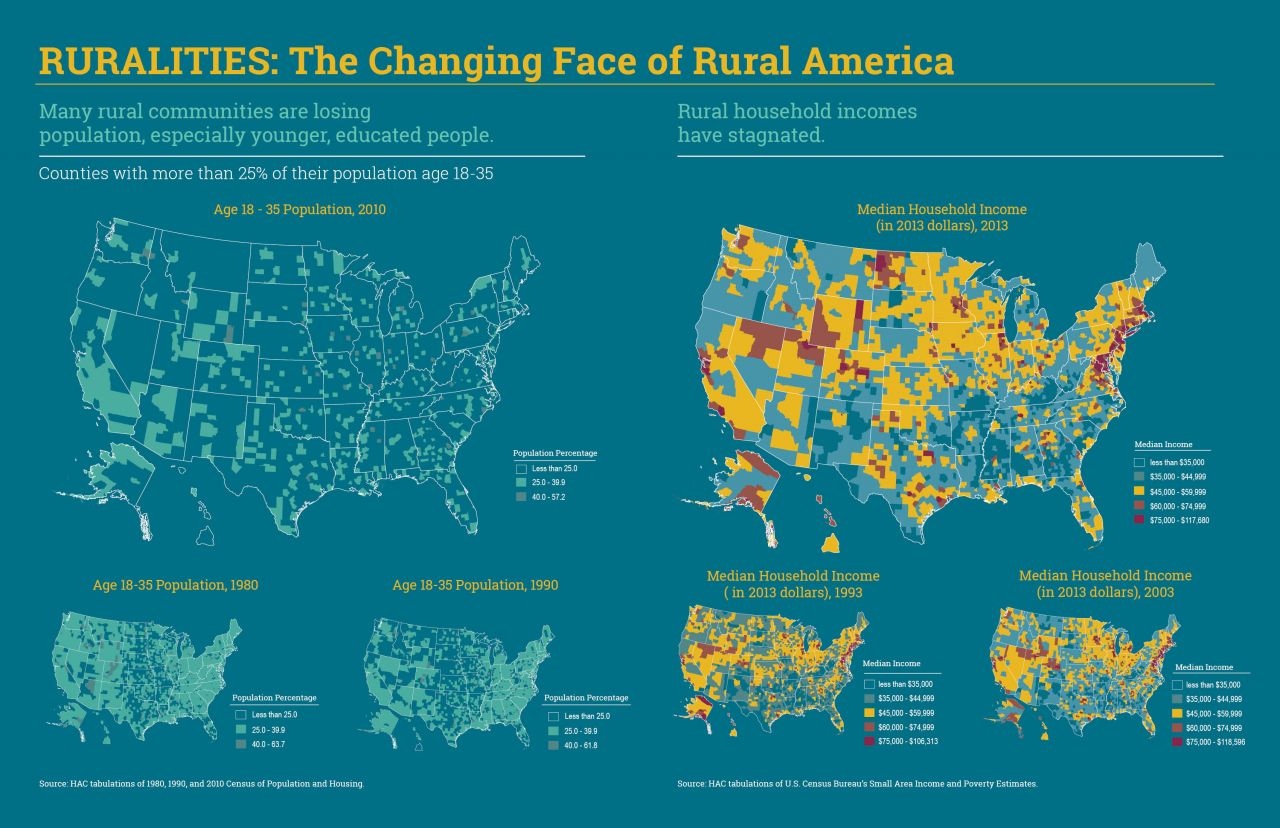
Taxpayers in counties outside metropolitan areas filed 13.5% of all tax returns in 2015 but accounted for just 8.5% of filers claiming a mortgage interest deduction. For more information on the mortgage interest deduction in rural America, see HAC’s Rural Research Note on the subject.

Income Tax Returns Claiming Mortgage Interest Deduction, 2015

Flooding creates emergency for South Dakota Indian reservations.
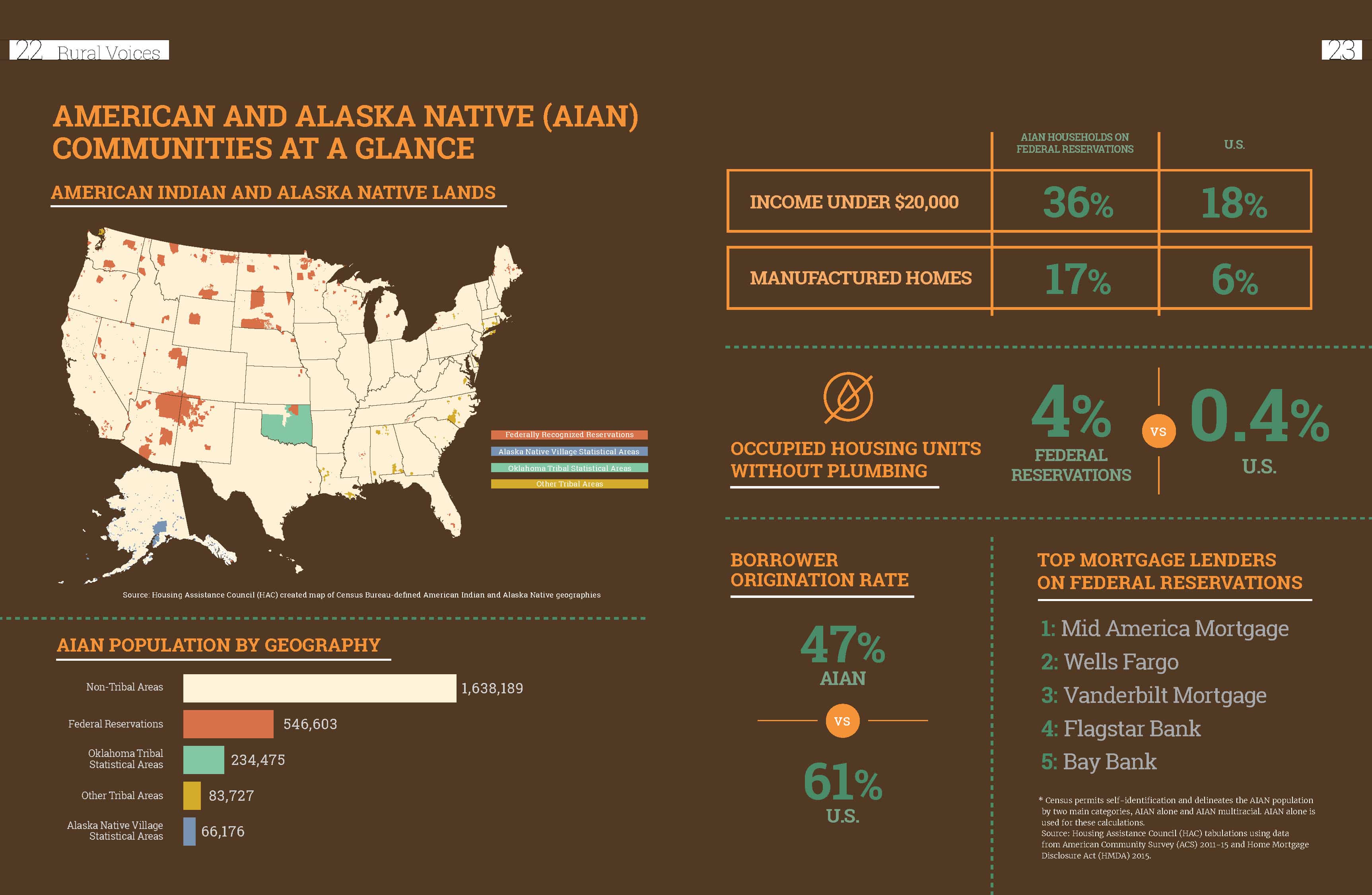
Storms and flooding in March struck not only Nebraska and Iowa, where the federal government has declared states of emergency, but also tribes in South Dakota. Tribal officials for the Cheyenne River, Pine Ridge, Rosebud and Standing Rock reservations have declared states of emergency. The Red Cross is assisting people on those reservations. Media stories report the National Guard distributed water on Pine Ridge, the Red Cross delivered supplies on Pine Ridge, dozens of Cheyenne River residents were evacuated during record-breaking floods, flooding was imminent at Standing Rock, and Pine Ridge families were trapped for days without access to food or medical care.

President requests housing finance reform plan.
A memorandum from President Trump tells the Secretary of the Treasury to develop a housing finance reform plan to end the conservatorships of Fannie Mae and Freddie Mac, facilitate competition in the housing market, increase the private sector’s participation in the mortgage market and more. It tells the HUD Secretary to develop a reform plan emphasizing FHA and Ginnie Mae, reducing taxpayer exposure and more. Both plans must be submitted “as soon as practicable.” Meanwhile, the Senate held hearings March 26 and March 27 on an outline for housing finance reform released by Senate Banking Committee Chair Sen. Mike Crapo (R-ID) in February.

Current and past USDA officials disagree on ERS/NIFA relocation.
Kristi J. Boswell, Senior Advisor to USDA Secretary Sonny Perdue, defended the proposed relocation of the Economic Research Service and National Institute of Food and Agriculture at a House Agriculture Appropriations Subcommittee hearing on March 27. Four past ERS administrators and USDA Under Secretaries testified against the idea. Subcommittee members’ support or opposition to the move and the budget’s proposed cuts in ERS funding split along party lines, though some supporters criticized the current list of possible new locations.

Nearly one-fourth of the most rural counties see increase in severely cost-burdened housing.
Articles by the Pew Trusts and Curbed cited HAC data and interviewed HAC staff to report that nearly one-fourth of the nation’s most rural counties have seen a sizeable increase this decade in the number of households spending at least half their income on housing. Many rural areas are facing increased pressure on rental market from economic revivals, bringing in new workers and pushing up rental prices. Meanwhile, federal investments in housing support and affordable housing construction have been limited in rural areas.

HAC offers Section 502 packaging training for nonprofits in May.
This three-day advanced course trains experienced participants to assist potential borrowers and work with RD staff, other nonprofits, and regional intermediaries to deliver successful Section 502 loan packages. The training will be held May 7-9 in Kansas City, MO. For more information, contact HAC staff, 404-892-4824.

Local solutions go national at People & Places 2019.
HAC is a co-host of People & Places 2019 on April 15-17 in Arlington, VA and has organized a workshop titled “Rural Arts & Design: A Proven Strategy Toward Equity, Affordable Homes and Stronger Local Economies.” Register by April 9.

HAC symposium on rural veterans’ housing and services scheduled for April in Arkansas.
HAC’s 5th Annual National Symposium on Veterans Housing Issues will be held April 18-19 at Arkansas State University in Jonesboro, sponsored by the Home Depot Foundation. This year’s theme centers on addressing the critical needs around housing, homelessness and aging solutions for rural veterans, within the context of the Delta Regional Authority’s eight-state service area. There is no fee to attend, but space is limited and advance registration is required. For more information, contact Cheryl Cobbler, HAC.

Need capital for your affordable housing project?
HAC’s loan funds provide low interest rate loans to support single- and multifamily affordable housing projects for low-income rural residents throughout the U.S. and territories. Capital is available for all types of affordable and mixed-income housing projects, including preservation, farmworker, senior and veteran housing. HAC loan funds can be used for pre-development, site acquisition, site development and construction/rehabilitation. Contact HAC’s loan fund staff at hacloanfund@ruralhome.org, 202-842-8600.
Please note: HAC is not able to offer loans to individuals or families. Borrowers must be nonprofit or for-profit organizations or government entities (including tribes).
HAC News: March 25, 2019

News Formats. pdf

March 25, 2019
Vol. 48, No. 6

Administration again proposes to eliminate many housing programs • Budget would slash ERS funding, report on proposed move not yet complete • Deadline extended for smaller PHAs to apply for Moving to Work demo • Youth Homelessness Demonstration Program will select eight rural communities • U.S. faces shortage of 7 million rental homes for extremely low-income renters • Rural student homelessness growing at almost four times the national rate • Closing digital divide could add $140 billion to U.S. economy, study says • Capitol Hill rural housing hearing rescheduled for April 2 • Local solutions go national at People & Places 2019 • HAC webinar to review Section 502 updates • HAC symposium on rural veterans’ housing and services scheduled for April in Arkansas • Need capital for your affordable housing project?

HAC News Formats. pdf

March 25, 2019
Vol. 48, No. 6

Administration again proposes to eliminate many housing programs.
The Trump Administration’s budget for fiscal year 2020, released on March 11 and 18, looks much like last year’s proposal. It would eliminate all USDA rural housing programs except Section 502 guarantees, Section 538 guarantees, Section 521 Rental Assistance, and Section 542 vouchers. It would rescind $40 million of Rental Assistance funding that is scheduled to be carried over from FY19 and institute a $50 minimum rent (with hardship exceptions) for tenants in USDA-financed properties. The budget includes no funding for HUD’s CDBG, HOME and SHOP programs and the public housing capital fund and would reduce the funding for most other HUD programs. It would eliminate the National Housing Trust Fund. Experts calculate that 140,000 HUD vouchers would be lost. Rent increases and work requirements would be imposed on tenants receiving HUD aid.

Congress is not expected to use this budget as its starting point for determining FY20 funding. The House and Senate will try to develop their own budgets to guide their appropriations bills. Legislators will also consider raising the Budget Control Act’s funding caps in order to avoid significant cuts in federal programs. Details on the Administration’s budget are on HAC’s website and a recording of HAC’s March 20 webinar on the budget proposal, which includes an explanation of the upcoming process in Congress, will be available online.

Budget would slash ERS funding, report on proposed move not yet complete.
On March 12, USDA Secretary Sonny Perdue announced USDA has narrowed the list of 136 applicants to 67 possible new locations for the Economic Research Service and the National Institute of Food and Agriculture. On the same day, USDA’s inspector general told the House Agriculture Appropriations Subcommittee her office is working on a report considering whether the department has the legal and budgetary authority to move the agencies. The subcommittee will hold another hearing March 27 focused solely on the proposed move.

The Administration’s budget proposes to cut ERS’s funding from $86.8 million in FY19 to $60.5 million in FY20. Of that reduced amount, $15.5 million would be spent to realign and move the agency. Staff levels would be cut in half, from 329 in FY19 to 160 in FY20. The Administration proposes that ERS will discontinue “all research and statistics related to the rural economy,” as well as research on several other topics. The budget also requests $9.5 million to relocate NIFA and would cut a number of NIFA’s research programs, but that agency’s staffing level would remain steady.

Deadline extended for smaller PHAs to apply for Moving to Work demo.
The deadline is now May 13 for high-performing PHAs that administer 1,000 or fewer housing choice vouchers and public housing units to apply for HUD’s Moving to Work demonstration. Larger PHAs can apply by June 12 for a separate cohort.

Youth Homelessness Demonstration Program will select eight rural communities.
YHDP applications are due May 15. The program will support up to 25 communities, at least eight of which will be rural, to develop and implement a coordinated community approach to preventing and ending homelessness for people age 24 and under. HUD’s website offers tools to help determine the rurality of targeted places. For more information, contact Caroline Crouse, HUD, 202-402-4595.

U.S. faces shortage of 7 million rental homes for extremely low-income renters.
The Gap: A Shortage of Affordable Homes 2019 reports a shortage of 7 million affordable and available rental homes for America’s extremely low-income renter households, those with incomes at or below the poverty level or 30% of their area median income. The study, from the National Low Income Housing Coalition, says there are fewer than four affordable and available homes for every 10 of the lowest-income households nationwide. State level data are posted as well.

Rural student homelessness growing at almost four times the national rate.
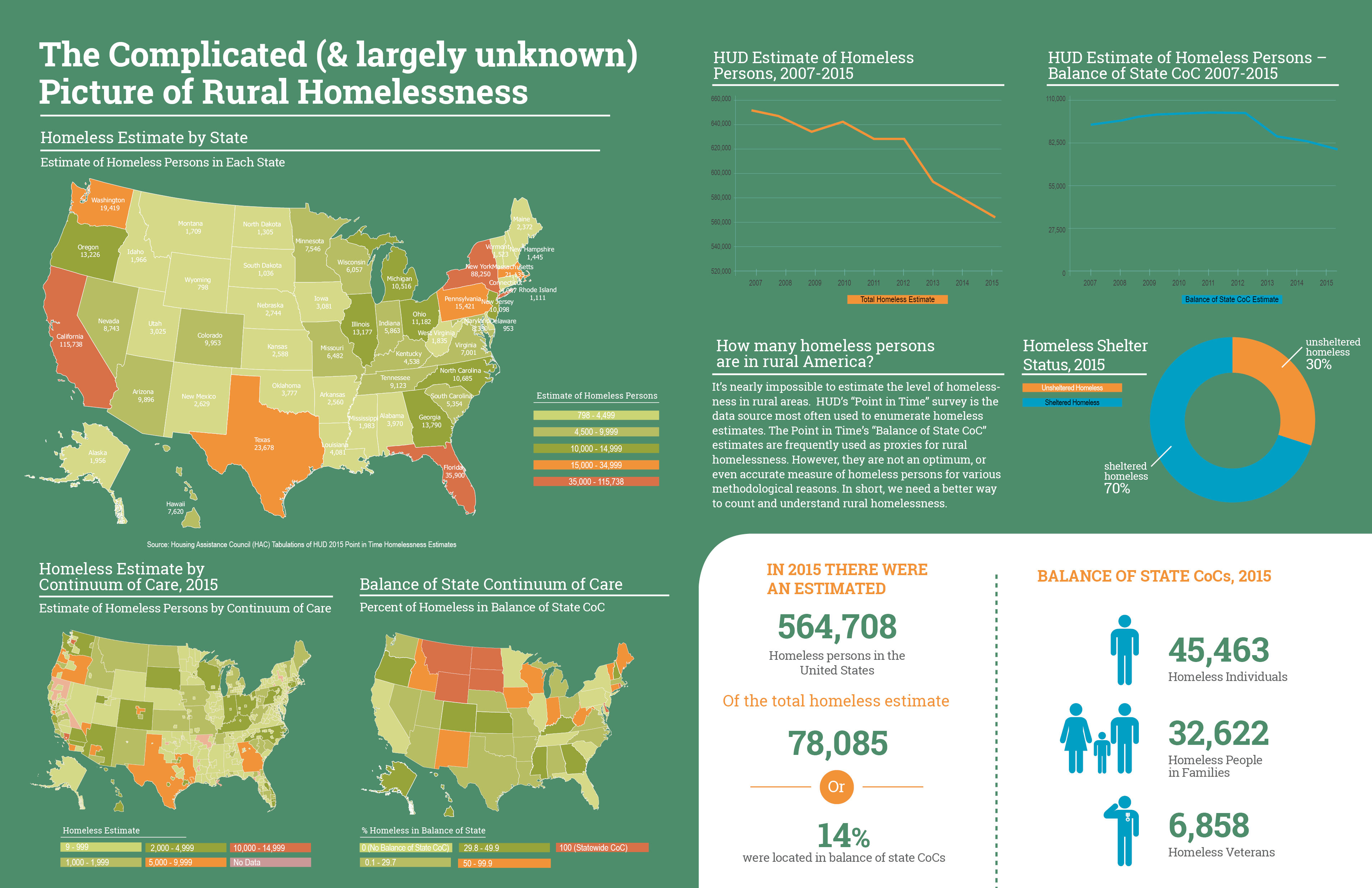
From 2014 to 2017, student homelessness increased by 3% nationwide and 11% in rural school districts. The states with the highest growth of student homelessness include Montana, Nebraska, and Minnesota. Overall, 2.1 percent of students in rural districts were homeless compared to 2.9 percent of students in non-rural districts. The Institute for Children, Poverty & Homelessness issued a report and several briefs on related subjects.

Closing digital divide could add $140 billion to U.S. economy, study says.
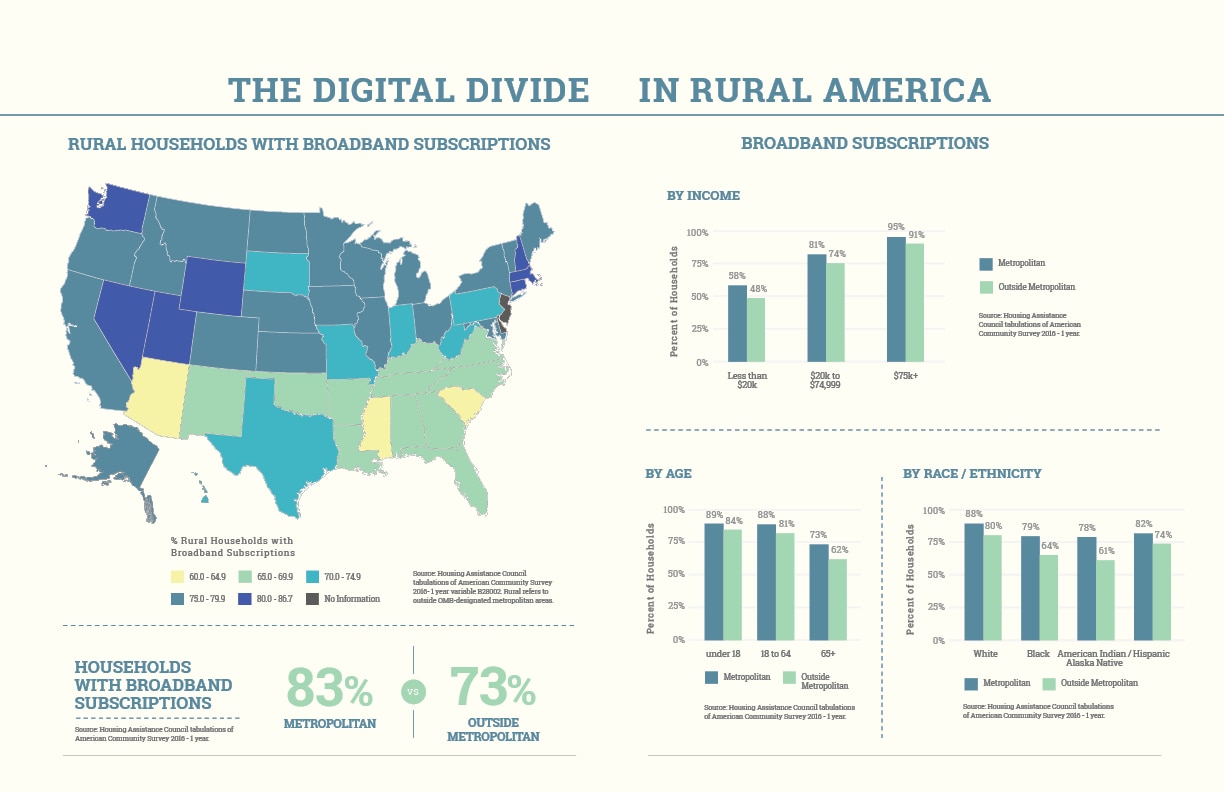
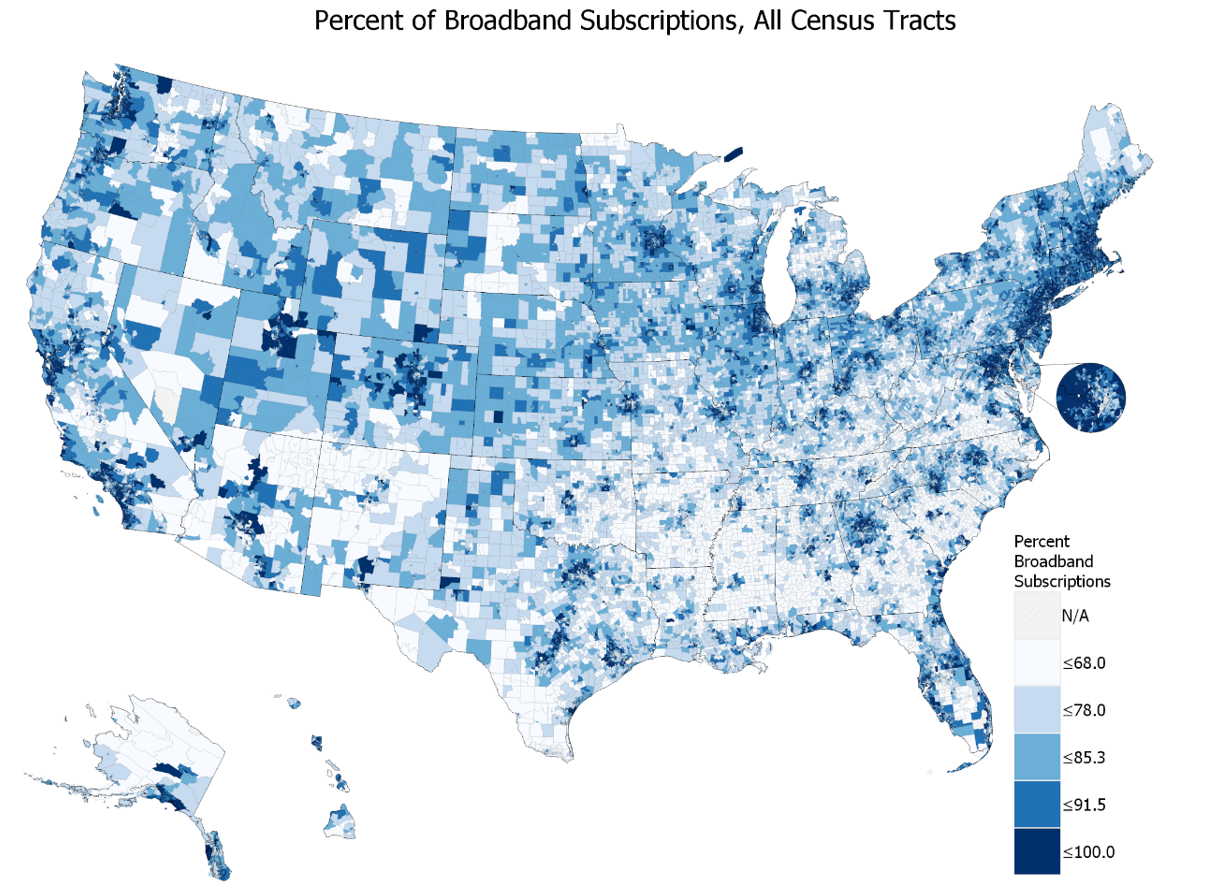
A U.S. Chamber of Commerce report, commissioned by Amazon, estimates that increased use of digital tools could add $47 billion per year to the U.S. gross domestic product. While nearly 20% of rural small businesses already generate over 80% of their revenue with online sales, the report argues that increased adoption of digital tools could add more than 360,000 jobs, increase annual revenues of rural small business by almost $85 million per year and create the greatest impact for smaller business, especially in the rural south. More information and state level data are available online.

Capitol Hill rural housing hearing rescheduled for April 2.
HAC CEO David Lipsetz will be one of the witnesses at a hearing titled “The Affordable Housing Crisis in Rural America: Assessing the Federal Response,” convened by the House Financial Services Committee’s Subcommittee on Housing, Community Development and Insurance. The hearing, postponed from February, will be broadcast live online, April 2 at 2 p.m. eastern.

Local solutions go national at People & Places 2019.
HAC is a co-host of People & Places 2019 on April 15-17 in Arlington, VA. Eighteen national nonprofits have joined forces to present this national community development event. We’re raising up local solutions that advance prosperity in low-income neighborhoods and communities of color. HAC has organized a workshop on April 15, 4:15-5:45 pm, titled “Rural Arts & Design: A Proven Strategy Toward Equity, Affordable Homes and Stronger Local Economies.” Learn what’s working to promote equitable development, strengthen the flow of capital, remediate blight, make places healthier and much more. Together, our networks will go to Congress to raise our voices on behalf low-income people and disinvested places. Register by April 9.

HAC webinar to review Section 502 updates.
“USDA Section 502 Loan Program Updates: USDA Handbook 1-3550 Updates from 2017-2019” is scheduled for March 27 at 2 pm eastern time. It will cover changes to the Section 502 direct loan program implemented during FY17 and 18, most of which relate to the determination and documentation of applicant assets, income and credit history. For more information, contact HAC staff, 404-892-4824.

HAC symposium on rural veterans’ housing and services scheduled for April in Arkansas.
HAC’s 5th Annual National Symposium on Veterans Housing Issues will be held April 18-19 at Arkansas State University in Jonesboro, sponsored by the Home Depot Foundation. This year’s theme centers on addressing the critical needs around housing, homelessness and aging solutions for rural veterans, within the context of the Delta Regional Authority’s eight-state service area. There is no fee to attend, but space is limited and advance registration is required. For more information, contact Cheryl Cobbler, HAC.

Need capital for your affordable housing project?
HAC’s loan funds provide low interest rate loans to support single- and multifamily affordable housing projects for low-income rural residents throughout the U.S. and territories. Capital is available for all types of affordable and mixed-income housing projects, including preservation, farmworker, senior and veteran housing. HAC loan funds can be used for pre-development, site acquisition, site development and construction/rehabilitation. Contact HAC’s loan fund staff at hacloanfund@ruralhome.org, 202-842-8600.
Please note: HAC is not able to offer loans to individuals or families. Borrowers must be nonprofit or for-profit organizations or government entities (including tribes).
USDA Rural Development Obligations FY 19 – February

The Housing Assistance Council (HAC) presents this month’s report on Fiscal Year 2019 USDA Rural Housing program obligations.

As of the end of February, USDA obligated 35,131 loans, loan guarantees, and grants totaling about $4.9 billion. This is about $2.0 million less than obligation levels from the same time last year when there were 49,912 loans, loan guarantees, and grants obligated totaling about $6.9 billion.


The agency has been operating under several continuing resolutions and a 35-day government shutdown since October 1, 2019.The Consolidated Appropriations Act, 2019 was signed into law on February 15, 2019 which provided funding for the rest of the fiscal yearSingle Family Housing Program Highlights

The Section 502 Guaranteed loan program, the largest of the Single Family Housing programs, obligated $4.6 billion (32,217 loan guarantees) down from $6.5 billion (45,125) at the same time last year.

For the Section 502 Direct program, there have been about $209.7 million (1,318 loans), down from $305.8 million (2,110 loans) in loan obligations this time last year. Very low-income (VLI) loan obligations as a percentage of the total Section 502 Direct loan dollars was over 40 percent.

The Section 504 Repair and Rehabilitation programs obligated 668 loans representing about $4.0 million. Loan volume was down from this time last year (1,027 loans representing $6.1 million.) There were also $5.2 million (877 grants) obligated in the Section 504 grant program compared to $9.9 million (1,605 grants) at the same time last year.

USDA’s Section 523 Self Help Housing Grant program funded 4 grants totaling $2.9 million which is up from last year at this time when funding totaled $1.5 million.

USDA has also funded 2 credit sales representing $157,785.

Multifamily Housing Program Highlights

USDA Section 538 Multifamily Housing obligated 39 loan guarantees totaling $58 million, up from 23 loan guarantees ($34.9 million.) In the Section 515 Rural Rental Housing program, there were 4 loans totaling $5.0 million obligated compared to 6 loans totaling $6.1 million this time last year. There were also no MPR loans or grants compared to 6 loans (4.8 million) and 1 grant ($15,400) this time last year.

USDA obligated funds for 97,544 rental assistance units under the Section 521 Rental Assistance program totaling $490 million. This compares to about 92,941 units ($472.6 million) obligated same time last year. There were also 2,530 Rural Housing Vouchers totaling $10.8 million compared to 2,629 vouchers representing $11.0 million this time last year.

In the Farm Labor Housing programs, 1 loan and 1 grant have been funded totaling $1.5 million and $700,000 respectively. Last year, there were no loans or grants at this time.

There were also 0 Section 533 Housing Preservation grants obligated so far this year, similar to last year.

Download the combined document.

* The Rural Housing Service (RHS) monthly obligation reports are produced by the Housing Assistance Council (HAC) 1025 Vermont Ave., NW, Suite 606, Washington, DC 20005. The monthly figures derive from HAC tabulations of USDA –RHS 205c, d, and f report data. For questions or comments about the obligation reports, please contact Michael Feinberg at 202-842-8600 or michael@ruralhome.org.

Broadband loans and guarantees program NOFA (11/15/18)

Agency USDA RD RUS
Action NOFA
Date 11/15/18
Link https://www.federalregister.gov/documents/2018/11/15/2018-24860/rural-broadband-access-loans-and-loan-guarantees-program

USDA’s Rural Utilities Service is accepting applications through Sept. 30, 2019 for the FY19 Rural Broadband Access Loans and Loan Guarantees Program. Applications will be evaluated every 90 days.

Environmental review for RD infrastructure projects (11/23/18)

Agency USDA RD
Action Final rule and proposed rule
Date 11/23/18
Link https://www.federalregister.gov/documents/2018/11/23/2018-25523/rural-development-environmental-regulation-for-rural-infrastructure-projects

USDA RD wants to improve the efficiency and effectiveness of its environmental reviews for infrastructure. This does not apply to housing programs; it is relevant for broadband, electricity, water, sewer, etc. This rule change gives the RD Administrators limited flexibility to obligate funds for infrastructure projects prior to the completion of the environmental review process where the assurance that funds will be available is important for community health, safety, or economic development. The environmental review process must be completed prior to disbursement of any RD funds.
RD is posting this simultaneously as a “direct final rule” (URL above) and a proposed rule. It will be effective January 7, 2019, unless RD receives significant adverse comments or notice of an intent to submit a significant adverse comment by December 24, 2018.

Rural housing loan servicing, change of authority (11/29/18)

Agency USDA RD RHS
Action Final rule
Date 11/29/18
Link https://www.federalregister.gov/documents/2018/11/29/2018-25443/revision-of-delegations-of-authority

To reflect changes in USDA organization, numerous functions are being moved around, including the following for RD and RHS. Management support functions for the RD agencies are now consolidated in the RD Business Center, so this rule moves authority related to environmental laws to the Business Center rather than RHS, RBS and RUS. It also moves authority to service RHS single-family loans to the RD Business Center. It gives the Assistant to the Secretary for RD the authority to transfer loan servicing for multifamily housing, community facilities, RUS and RBS to the RD Business Center in the future.

Intermediary Relending Program – change in application (12/6/18)

Agency USDA RD RBS
Action Information collection request
Date 12/6/18
Link https://www.federalregister.gov/documents/2018/12/06/2018-26435/information-collection-activity-comment-request

USDA is requesting OMB approval of an unspecified revision of its application for the IRP.

ReConnect rural broadband program NOFA (12/14/18)

Agency USDA RD RUS
Action NOFA
Date 12/14/18
Link https://www.federalregister.gov/documents/2018/12/14/2018-27038/broadband-pilot-program

RUS is offering loans, grants, and loan/grant combinations to finance provision of broadband infrastructure in underserved rural areas. The NOFA includes tentative deadlines and says they will be finalized by notices in the Federal Register and on grants.gov on Feb. 22, 2019.
A notice in the Feb. 25, 2019 Federal Register announced the final deadlines and said a notice in March would announce when USDA will begin accepting applications.

Section 538 rolling applications (12/17/18)

Agency USDA RD RHS
Action Proposed rule
Date 12/17/18
Link https://www.federalregister.gov/documents/2018/12/17/2018-27138/section-538-guaranteed-rural-rental-housing-program-notice-of-funding-availability-elimination

RD plans to stop publishing an annual NOFA for Section 538 multifamily loan guarantees and accept applications continuously. It will use the standards from the last NOFA, published in the Federal Register on December 21, 2017, and will announce any changes in the Federal Register.
Comments are due February 15, 2019.

GET THE HAC NEWS!

Sign-up for HAC information products

SIGN UP HERE

Housing Assistance Council   |  1828 L Street. N.W., Suite 505, Washington, D.C. 20036
(202) 842-8600 (202) 347-3441 hac@ruralhome.org |

Board Portal

HAC is an equal opportunity provider, employer, and lender. | Civil Rights | Privacy