HAC’s full length research reports provide detailed information and analysis on a wide array of social, economic, and housing issues that impact affordable housing needs and provision in rural America.

Conducting Homeless Counts on Native American Lands – A Toolkit

Executive Summary

Homelessness in rural areas can be difficult to address. Small spread-out populations make homeless counts difficult to accurately conduct in rural communities. However, these counts are often critical to effectively ensure that rural communities receive the support necessary to assist homeless persons in securing safe, permanent housing. This difficulty is further compounded in rural communities on American Indian, Alaska Native, and Hawaiian Home Land (AIANHH) lands. Issues surrounding tribal mistrust of the federal government, a lack of understanding of tribal sovereignty and diversity among Indian nations by outside entities, cultural competencies, and legal complexities associated with tribal lands create additional challenges to conducting an accurate count. Furthermore, situations of people in need on Native American lands often do not fit federal definitions of homelessness, which increases the difficulty in accessing funding. As a result, homelessness is often under or inaccurately counted and populations remain grossly underserved.

To address the aforementioned concerns, AIANHH communities need to be able to conduct accurate homeless counts internally. This flexible toolkit highlights steps, tools, and methods that can be used to complete an accurate homeless count on AIANHH lands. The toolkit is based upon past research as well as interviews with key stakeholders in the field. The toolkit is organized around four critical steps:

  1. Outreach and engagement on AIANHH lands
  2. Survey planning and implementation
  3. Partnering with researchers and intermediary organizations
  4. Funding the project

Two case studies are included to provide in-depth pictures of how two tribal communities, the Fond du Lac band of Lake Superior Chippewa in Minnesota and the Turtle Mountain band of Chippewa in North Dakota, approached a housing and homeless needs assessment on their reservations.
CRA in Rural America

The Housing Assistance Council’s three-part series on CRA in Rural America

The Community Reinvestment Act and Mortgage Lending in Rural Communities


Download the Report

The Community Reinvestment Act (CRA), adopted in 1977, requires federally-insured depository institutions to help meet the credit needs of their entire communities, including low- and moderate-income neighborhoods. Assessments of CRA’s scope and effectiveness are typically conducted at a market-specific level, and those markets analyzed are almost exclusively metropolitan or urban in nature. Very little is known about the implementation of CRA in the rural context.


Making CRA Work in Rural America: Finding “Outstanding” Financial Institutions

Outstanding financial institutions according to CRADownload the Report

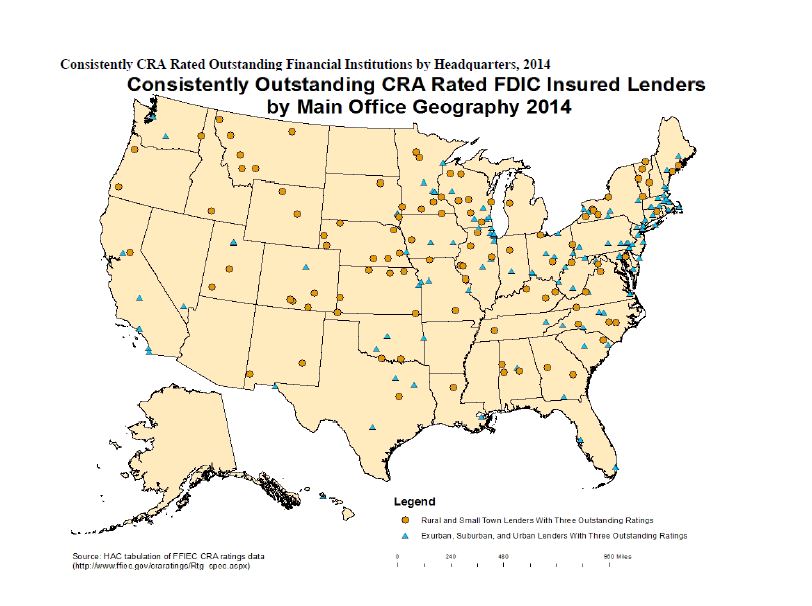
The overwhelming majority of financial intuitions earned Satisfactory CRA ratings on their most recent CRA examinations. Regulators awarded Outstanding ratings to only 9 percent of lenders. Consistently Outstanding-rated lenders are important because they serve as examples of institutions that continually exceed CRA requirements in serving all portions of their service area. While making up a majority of all FDIC-insured depository institutions, little is known about rural lenders in general and even less about how they fulfill their CRA obligations.

This report looked more closely at the lenders who consistently received Outstanding ratings on their last three examinations. The data show that this is an uncommon occurrence, only 4 percent of lenders are consistently outstanding, and these banks most often large asset, urban headquartered institutions. While the inclusion of distressed and underserved census tracts in lender service areas was associated with being consistently rated outstanding, the analysis found no association with being headquartered in rural areas. Additional research of these lenders is needed to better understand how they are able to successfully serve all communities.


Making CRA Work in Rural America: Partnerships and Opportunities for Rural Community Reinvestment

Partnerships and Opportunities for rural communitiesDownload the Report

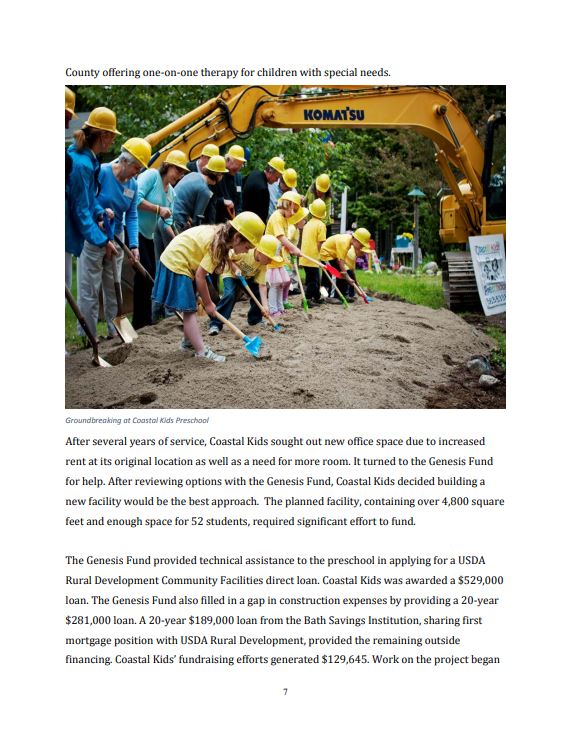
The case studies in this report explore a preschool expansion in Maine, construction of rental housing for farmworkers in Colorado, construction of low- and moderate income housing in Minnesota, and the donation of a bank branch to a local credit union in Mississippi.

The participants in the case studies identified the following key elements to the success of their projects and making the CRA work for rural areas:

  • Strong relationships between the lenders and the involved organizations,
  • Lender expertise in community lending, and
  • Understanding of alternative funding streams by all involved parties.

Taking Stock 2010

download-report-button_png

More from Taking Stock at #RuralFacts and Poverty in the United States (Map)

Purchase the Report

Press Conference

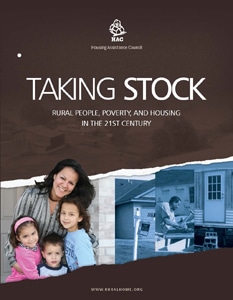
TAKING STOCK: RURAL PEOPLE, POVERTY AND HOUSING IN THE 21ST CENTURYtaking_stock2010_Cover_thb

Nearly 30 years ago the Housing Assistance Council (HAC) published Taking Stock, one of the first comprehensive assessments of rural poverty and housing conditions in the United States. Since the 1980s, HAC has prepared an updated Taking Stock every ten years following the release of decennial Census data. Now HAC presents the newest edition of Taking Stock, using data from the 2010 Census and American Community Survey (ACS) to describe the social, economic, and housing characteristics of rural Americans.

Executive Summary

Download Taking Stock (PDF):

Introductory Documents

I. SOCIAL, ECONOMIC, AND HOUSING CONDITIONS IN RURAL AMERICA

Rural People and Places: The Demographics of Rural and Small Town America

The Rural Economy

Housing In Rural America

II. HIGH POVERTY REGIONS AND POPULATIONS IN RURAL AMERICA

Overview

Border Colonias

Zavala County, Texas

Central Appalachia

Hancock County, Tennessee

Farmworkers

Kern County, California

Lower Mississippi Delta

West Feliciana Parish, Louisiana

Native American Lands

Shannon County, South Dakota

Endnotes

Appendices

Appendix A. About the Data

Appendix B. Tables

Download Complete Publication (30MB)

More on Taking Stock information on Twitter #RuralFacts


To purchase a physical copy of Taking Stock for $26, click on the Amazon link.

Press Conference: On December 6, 2012, HAC hosted a press conferenceto announce the publication ofTaking Stock, HAC’s detailed report on Rural People, Poverty, and Housing in the 21st Century. Access an archived recording of the webcast here.

All Files are in PDF format and require Adobe Acrobat Reader.

Questions? Contact Dan Stern at HAC, dan@ruralhome.org, 202-842-8600.

Publications List

Back to HAC Home Page

Rural Reentry: Housing Options and Obstacles for Ex-Offenders

Rural Reentry: Housing Options and Obstacles for Ex-Offenders
December 2011, 54 pages, ISBN: 978-1-58064-173-9

The United States incarcerates more people than any other country in the world and, in 2007, the national prison population surpassed 1.5 million individuals (PEW, 2008). The massive explosion of the nation’s prison population has largely occurred in the past 20 years, tripling from the 585,084 individuals incarcerated in 1987. As of 2009, 1 in 31 Americans is in prison, jail, or otherwise under the supervision of probation or parole (PEW, 2009). As incarceration rates continue to increase exponentially, the number of ex-offenders who return home looking to reintegrate themselves into society continues to rise as well. As 95 percent of incarcerated persons will eventually be released, the community challenges of managing the needs of ex-offenders are becoming overwhelming (CRJ, 2001).

Much of the research and policy on the reintegration of formerly incarcerated persons discusses the issue through an urban perspective where large numbers of ex-offenders are densely concentrated and there is a critical mass of formerly incarcerated persons in need that can sustain various creative, high density housing options. The dynamics of a rural environment, however, pose different challenges and opportunities for the ex-offenders and reentry housing practitioners. Growing numbers of formerly incarcerated persons are returning home to rural communities that may lack the resources or tools to adequately meet demand. Rural reentry service networks may be loosely formed, incomplete or nonexistent depending on the region. This report serves as a probe into the burgeoning, complex topic of rural reentry, attempting to better understand the rural environment, its housing providers, and the ex-offenders who call it home.

Nonprofit Capacity in the Lower Mississippi Delta Region

In high-need regions, such as the Lower Mississippi Delta (LMD), there is a lack of affordable, decent housing, and a dwindling supply of resources to address these needs. Nonprofit housing developers are a critical resource in rural communities, as these entities are often responsible for a significant amount of the affordable housing provision that occurs (Cook et al, 2009). Despite their significance in the community development sector, very little is often known about the network of nonprofit organizations that operate in rural communities or the gaps in service that may exist in these regions.

When nonprofit organizations operate in high-need areas, such as the Lower Mississippi Delta, the impact of serving low-income individuals and families can be exponentially greater than under otherwise-available resources. Obtaining accurate, detailed information about some of the housing programs that are offered in the LMD will assist overall community development efforts, as stakeholders will have increased insight into the institutional resources these organizations provide and be better able to effectively plan for housing and economic development activities.

 This guide provides an overview of nonprofit capacity in the Lower Mississippi Delta region with a focus on organizations that provide housing services. The guide highlights the programs offered by these organizations, identifies geographic service areas and gaps, and assesses capacity strengths and weaknesses within the region. Stakeholders can use this resource to assess the organizational infrastructure needs of the region, to better understand the assets in place, and to target initiatives.


Primer for Beginning Rural Housing Developers

Download the Primer

Rural organizations play an important role in combating the effects of the recession by working to provide affordable housing for an increased number of people. Due to high need, many rural organizations without prior housing development experience may now be interested in exploring the development process. This manual is intended to serve as a starting point for those groups by providing a basic overview of the housing development process and the understanding necessary to move on to more detailed and more complete guides to housing development. This guide does not cover every step of the development process; instead it highlights those parts that HAC considers especially critical to an overall comprehension of housing development. This manual should not be used as an organization’s only guide to developing affordable housing.

Housing development can mean many different things. It can mean new construction or rehabilitation of existing structures. It can involve development of single-family homes or multifamily housing, rental units or homeownership projects. Yet all types of affordable housing development share the same basic process. Whether a proposed project is simple or complex, failure to understand that process or to successfully complete the requisite development and housing counseling steps can seriously jeopardize project success.

This guide is specifically geared to development of affordable housing in rural areas, since rural housing developers face unique obstacles, such as fewer housing development professionals from which to choose, fewer commercial banks to approach for funding, and limited public water and sewer infrastructure. However, the rural development organization also enjoys certain benefits, including U.S. Department of Agriculture (USDA) Rural Housing Service (RHS) programs that provide funding only to projects in rural areas.

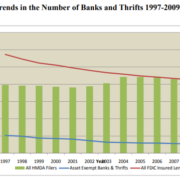
What Are We Missing? HMDA Asset-Excluded Filers

This research report addresses concerns and fills the knowledge gap of HMDA analysis by analyzing publicly available financial filings for Federal Deposit Insurance Corporation (FDIC)–insured banks and thrifts. Using these data, the research identified small lenders with assets falling below the annual HMDA threshold over a 12-year period and evaluated their financial portfolios and the populations they serve.

August 2011, 58 pages, ISBN 978-1-58064-163

What Are We Missing? HMDA Asset-Excluded Filers (PDF)

Preserving Affordable Manufactured Home Communities In Rural America

Manufactured housing is an important yet often overlooked segment of our nation’s housing stock, especially in rural communities. Despite its importance to the American housing sector, there is a dearth of information on manufactured housing, particularly for homes in community or land-lease settings. This report presents a case study highlighting the process one rural manufactured home community undertook to convert from investor to cooperative resident ownership.
March 2011, 18 pages, ISBN 978-1-58064-168-5, Rural Housing Research Note.

Rural Fair Housing Complaints and Enforcement

Rural Fair Housing Complaints and Enforcement
This report provides an analysis of over 91,000 fair housing complaints in HUD’s TEAPOTS dataset. The analysis of TEAPOTS data includes information on the number and types of fair housing violations filed with HUD and FHAP agencies in rural counties from fiscal year (FY) 1998 to FY 2008.
Print copy: $5.00
March 2011, 35 pages, ISBN 978-1-58064-165-4

Foreclosure in Rural America: An Update

Foreclosure in Rural America: An Update
The diversity of rural mortgage markets, combined with a lack of access to accurate data, create ongoing challenges to understanding and addressing the mortgage default and foreclosure problem in rural America. This report provides new information to update, What is the Housing Foreclosure Situation in Rural America?, HAC’s initial report and assessment of the foreclosure situation in rural America.
February 2011, 19 pages, ISBN 978-1-58064-166-7, Rural Housing Research Note.

GET THE HAC NEWS!

Sign-up for HAC information products

SIGN UP HERE

Housing Assistance Council   |  1828 L Street. N.W., Suite 505, Washington, D.C. 20036
(202) 842-8600 (202) 347-3441 hac@ruralhome.org |

Board Portal

HAC is an equal opportunity provider, employer, and lender. | Civil Rights | Privacy