HAC News: October 5, 2017

HAC News Formats. pdf

October 5, 2017
Vol. 46, No. 20

Tax proposal would keep LIHTC • House and Senate budget resolutions moving forward • New initiative to combat sexual harassment in housing • HUD sets expedited review for PHAs and TDHEs in hurricane-affected places • Brief examines differences between affluent and less affluent nonmetro counties • Bipartisan approach for Appalachia set forth in paper • National Housing Preservation Database updated • Health care workers cannot afford homes in many metro areas • UPCOMING HAC EVENTS • NEED CAPITAL FOR YOUR AFFORDABLE HOUSING PROJECT?

HAC News Formats. pdf

October 5, 2017
Vol. 46, No. 20

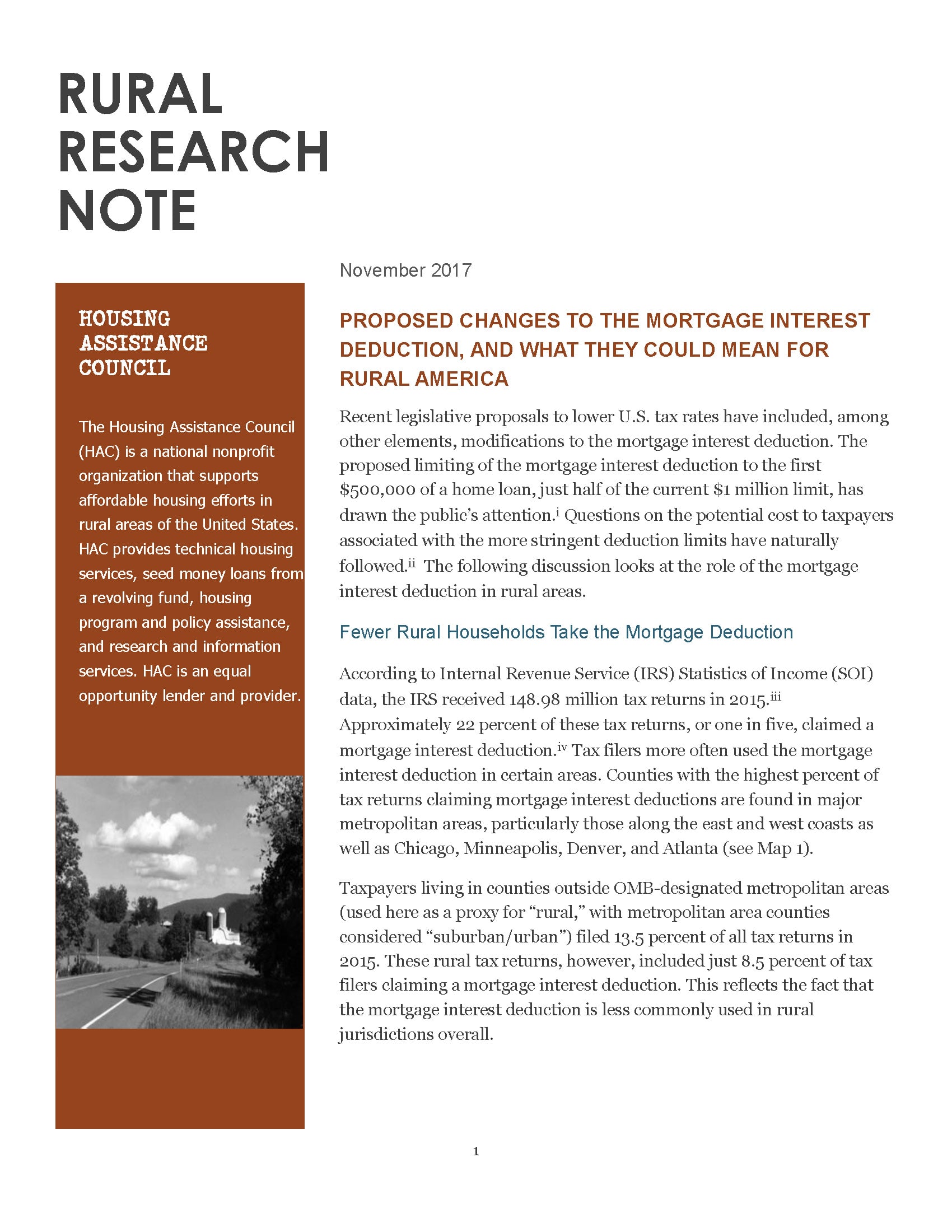
Tax proposal would keep LIHTC. The framework document released by the Administration and congressional Republicans on September 27 is not detailed, but it does specifically call for continuation of the Low Income Housing Tax Credit. It does not propose changing the mortgage interest deduction for homeowners who itemize deductions, but it would increase the standard deduction.

House and Senate budget resolutions moving forward. Both houses of Congress are working on FY18 budget resolutions; a final resolution will serve as a vehicle for tax reform legislation. On October 5, by a 219-206 vote, the full House of Representatives passed H. Con. Res. 71, which calls for cuts in domestic (non-defense) discretionary and mandatory programs. Also on October 5, the Senate Budget Committee is marking up its version of a budget resolution, which reportedly would cut domestic discretionary programs but not mandatory programs like Medicaid and Social Security. The Senate will be on recess the week of October 9 and the House will recess for the week of October 16.

New initiative to combat sexual harassment in housing. The Justice Department announced an initiative to increase its efforts to protect women from harassment by landlords and their employees. The effort will begin with pilots in Washington, DC and western Virginia.

HUD sets expedited review for PHAs and TDHEs in hurricane-affected places. Public housing agencies’ and tribes’ or tribally designated housing entities’ requests for relief from HUD regulatory and/or administrative requirements will receive expedited review and will be eligible for some flexibility. This process applies in portions of Texas, U.S. Virgin Islands, Puerto Rico, Florida, and Georgia that received federal disaster designations following Hurricanes Harvey, Irma, and Maria. For more information, contact Shelia Bethea, HUD, 202-402-8120.

Brief examines differences between affluent and less affluent nonmetro counties. A paper from the Carsey School of Public Policy at the University of New Hampshire compares residents of counties with average family incomes below the median for all U.S. counties to those living in upper-middle- and high-income counties. Low-income counties are concentrated in the South, and people who live there are less educated and less likely to be employed, reportsEmployment, Poverty, and Public Assistance in the Rural United States. African Americans are nine times more likely to live in low-income rural counties than in high-income ones. People living in middle-income rural counties were slightly more likely to vote for Donald Trump than were either those living in low-income or high-income rural counties.

Bipartisan approach for Appalachia set forth in paper. The Appalachia Initiative: A Bipartisan Approach for the 21st Century, released by the Bipartisan Policy Center, reports recommendations on improving job training, economic development, healthcare, and strengthening the infrastructure and energy sectors in the region. The suggestions were gathered by a task force co-chaired by Senators Joe Manchin (D-WV), David Perdue (R-GA), Thom Tillis (R-NC), and Mark Warner (D-VA).

National Housing Preservation Database updated. Among the changes is inclusion of properties with USDA Section 514 farmworker housing loans; Section 515 properties were previously included, along with LIHTC and HUD projects. The database, which enables users to examine the current stock of federally assisted rental housing, was created by the Public and Affordable Housing Research Corporation and the National Low Income Housing Coalition.

Health care workers cannot afford homes in many metro areas. The National Housing Conference has released its Paycheck to Paycheck 2017 report and database, covering both rental housing and homeownership. The database includes workers in 83 occupations in 203 metro areas nationwide. The report highlights five fast growing healthcare occupations: dental assistant, emergency medical technician, home health aide, licensed practical nurse, and physical therapy aide. Not a single worker in these occupations can afford to rent or purchase a home in every metro area.

UPCOMING HAC EVENTS
Section 502 Packaging Training for Nonprofit Housing Developers
October 17-19, Santa Ana Pueblo, NM
This three-day advanced course will teach participants to assist potential borrowers and deliver successful Section 502 loan packages. This course is intended for those experienced in using Section 502 and/or other affordable housing mortgage products. The registration fee is $750. For more information, contact Shonterria Charleston, HAC, 404-892-4824.

Veterans Aging Summit
October 20, Chapel Hill, NC
The event is sponsored by Purple Heart Homes, HAC, and the National League of Cities. For more information and to register contact Melanie Balousek, PHH.

Affordable Housing Resources Development Best Practices, Challenges and Opportunities
October 24, Decatur, AL
This comprehensive session will focus on rural affordable housing development. For more information, contact Shonterria Charleston, HAC, 404-892-4824. There is no registration fee, but advance registration is required.

Affordable Housing Solutions for Rural Veterans: A Symposium
December 5, Washington, DC
The symposium will showcase model programs that are providing homeownership, home repairs, service to the homeless, and rental housing options. There is no registration fee, but space is limited and advance registration is required. For more information, contact Shonterria Charleston, HAC, 404-892-4824.

NEED CAPITAL FOR YOUR AFFORDABLE HOUSING PROJECT?
HAC’s loan funds provide low interest rate loans to support single- and multifamily affordable housing projects for low-income rural residents throughout the U.S. and territories. Capital is available for all types of affordable and mixed-income housing projects, including preservation, farmworker, senior, and veteran housing. HAC loan funds can be used for pre-development, site acquisition, site development, and construction/rehabilitation. Contact HAC’s loan fund staff at hacloanfund@ruralhome.org, 202-842-8600.
Please note: HAC is not able to offer loans to individuals or families. Borrowers must be nonprofit or for-profit organizations or government entities (including tribes).
USDA Rural Development Obligations FY 17 – August

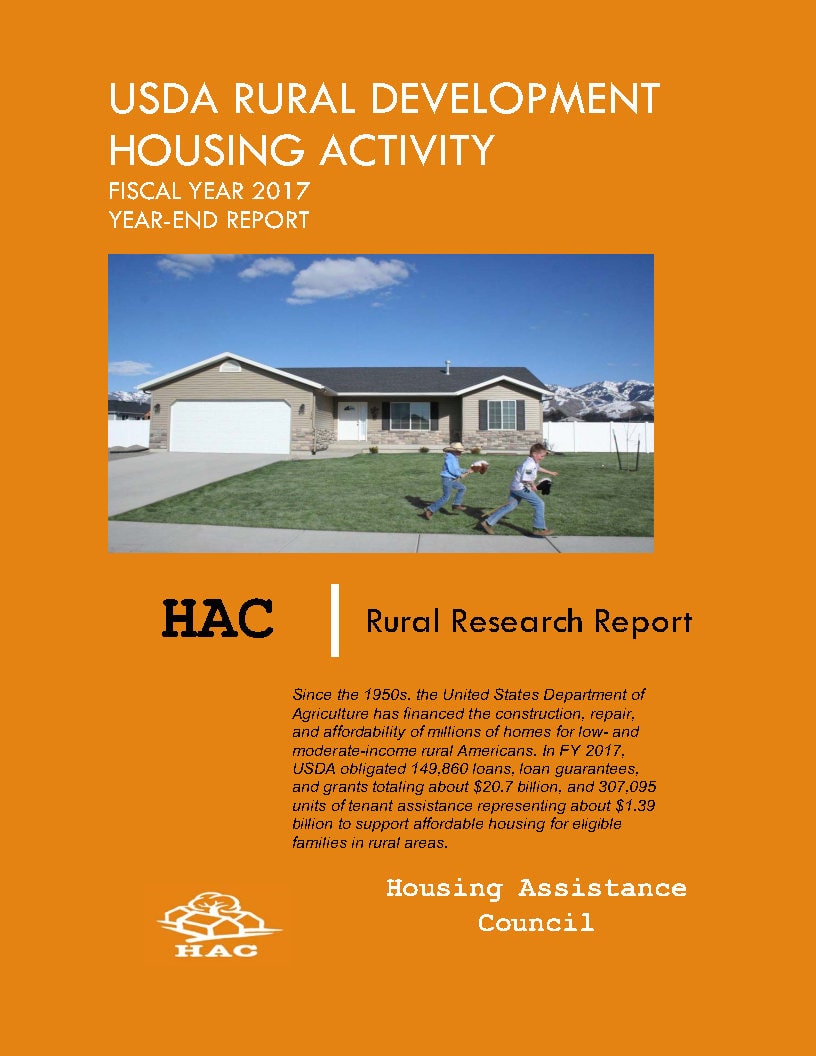
The Housing Assistance Council (HAC) presents this month’s report on Fiscal Year 2017 USDA Rural Housing program obligations.

As of the end of July, USDA obligated 137,383 loans, loan guarantees, and grants totaling about $18.8 billion. This is about $2.57 billion more than obligation levels from the same time last year when there were 121,462 loans, loan guarantees, and grants obligated totaling about $16.3 billion.

Single Family Housing Program Highlights

The Section 502 Guaranteed loan program, the largest of the Single Family Housing programs, obligated $17.6 billion (122,910 loan guarantees) up from $15.0 billion (107,185) at the same time last year.

For the Section 502 Direct program, there have been over $911.7 million (6,573 loans), up from $853.9 million (6,349 loans) in loan obligations this time last year. Very low-income (VLI) loan obligations as a percentage of the total Section 502 Direct loan dollars was 37.6 percent, similar to the VLI obligation level at the same time last year.

The Section 504 Repair and Rehabilitation programs obligated 3,115 loans representing $17.8 million. As in the other single family housing programs, loan volume was up from this time last year (2,822 loans representing $15.4 million.) There were also $27.8 million (4,577 grants) obligated in the Section 504 grant program compared to $28.4 million (4,637 grants) at the same time last year.

There were also 6 credit sales of Single Family properties totaling $443,697.

Multi-Family Housing Programs.

USDA’s Section 538 Multifamily Housing obligated 80 loan guarantees totaling $135.9 million, down from 110 loan guarantees ($172.4 million.) In the Section 515 Rural Rental Housing program, there were 20 loans totaling $20.0 million obligated compared to 18 Section 515 loans were obligated this time last year totaling $18.0. For the Farm Labor Housing programs, USDA obligated 8 loans totaling $10.8 million and 1 grant compared to 16 loans ($25.2 million) and 9 grants ($14.4 million) this time last year. There were also 30 MPR loans and 2 grants totaling $21.8 million and $53,200 respectively, compared to 99 loans ($81.5 million) and 3 grants ($801,900) this time last year.

USDA obligated funds for 246,269 rental assistance units under the Section 521 Rental Assistance program totaling $1.09 billion. This compares to about 282,279 units ($1.3 billion) obligated same time last year. There were also 5,342 Rural Housing Vouchers totaling $21.0 million compared to 4,979 vouchers representing $18.2 million this time last year.

Download the combined document.

* The Rural Housing Service (RHS) monthly obligation reports are produced by the Housing Assistance Council (HAC) 1025 Vermont Ave., NW, Suite 606, Washington, DC 20005. The monthly figures derive from HAC tabulations of USDA –RHS 205c, d, and f report data. For questions or comments about the obligation reports, please contact Michael Feinberg at 202-842-8600 or michael@ruralhome.org.

HAC News: September 21, 2017

HAC News Formats. pdf

September 21, 2017
Vol. 46, No. 19

September 15-October 15 is Hispanic Heritage Month • Federal funding deadlines extended to December 8 • USDA-RD creates Innovation Center, requests comments • Patenaude confirmed for HUD, others nominated • USDA RD lists relief available to those affected by Hurricanes Harvey and Irma • FEMA housing vouchers available for REO properties • RHS accepting preapplications for the Multifamily Preservation and Revitalization program • FY18 Fair Market Rents posted • McConnell and Rogers introduce bills to reform and move Appalachian Regional Commission • Regulators propose updates to CRA and HMDA regulations • HUD sets DDAs and QCTs for FY18 • GAO reports on USDA Rental Assistance shortfalls • U.S. Census Bureau releases 2016 income and poverty data • HAC publishes disaster guide supplement for recent hurricanes • HAC announces Section 502 Packaging Training for Nonprofit Housing Developers • Veterans Aging Summit set

HAC News Formats. pdf

September 21, 2017
Vol. 46, No. 19

September 15-October 15 is Hispanic Heritage Month.

Federal funding deadlines extended to December 8. Early in September Congress passed and the President signed a package including not only disaster funds, but also a continuing resolution and an increase in the federal debt limit through December 8. The continuing resolution extends funding for federal programs at FY17 levels with a 0.68% across-the-board cut to meet the Budget Control Act spending caps. Disaster relief totaling $15.25 billion is comprised of $7.4 billion for CDBG as well as monies for FEMA and the SBA. The measure also extended the National Flood Insurance Program to December 8. Separately, the House passed H.R. 3354, its omnibus appropriations bill for FY18. The Senate is not expected to vote on the bill in its current form. The White House issued a Statement of Administration Policy on the omnibus, saying the President would sign it if passed, but expressing “concern” about the bill’s funding for Section 502 direct loans as well as rural business programs and direct loans and grants for water and wastewater, claiming they are “duplicative” of other federal and private efforts.

USDA RD creates Innovation Center, requests comments. As part of the reorganization and realignment strategies at USDA, the RD Innovation Center will be tasked with evaluating the impacts of the business, housing, and utilities programs provided by the Department. USDA requests comments by October 7 on creation of this office and other changes elsewhere in the department. For more information, contact Donald Bice, USDA, 202-720-3291.

Patenaude confirmed for HUD, others nominated. On September 14 the Senate confirmed Pamela Patenaude to serve as HUD Deputy Secretary. President Trump has named three other HUD nominees: Brian Montgomery to be Federal Housing Commissioner, a role he held in the past; Robert Kurtz to be Assistant Secretary for Public and Indian Housing; and Suzanne Tufts to be Assistant Secretary for Administration.

USDA RD lists relief available to those affected by Hurricanes Harvey and Irma. RD disaster assistance information is available online for displaced residents, owners of USDA-financed multifamily housing, and homeowners with a USDA loan. USDA also has a department-wide disaster assistance page. For more information, contact an RD Service Center.

FEMA housing vouchers available for REO properties. The Federal Emergency Management Agency is making housing vouchers available to displaced families in Texas impacted by Hurricane Harvey. These vouchers may be used at assisted properties with vacant units on a temporary or permanent basis. For more information, contact John Carleton, FEMA, 202-870-4486, or Blair McDonald, FEMA, 972-795-5795.

RHS accepting preapplications for the Multifamily Preservation and Revitalization program. Preapplications for properties serving census tracts in persistent poverty counties or other areas with special housing needs will get extra points. Preapplications requesting multiple MPR funding tools (including debt deferral of eligible Section 514 or Section 515 loans) are due December 1. Preapplications requesting only debt deferral are due September 28 of next year, 2018.For more information, contact Dean Greenwalt, RD, 314-457-5933.

FY18 Fair Market Rents posted. Fair Market Rents for FY18 are now available online. HUD has also adopted methodology changes first proposed in May 2017 (see HAC News, 6/8/17). For more information, contact HUD USER, 800-245-2691.

McConnell and Rogers introduce bills to reform and move Appalachian Regional Commission. Sen. Mitch McConnell (R-KY) and Rep. Hal Rogers (R-KY) introduced S. 1824 and H.R. 3802 on September 18. The bills’ text is not available online as of press time, but the Washington Post reports the legislators want to move the ARC’s headquarters from Washington, DC to Appalachia and focus its work on the poorest places in the region.

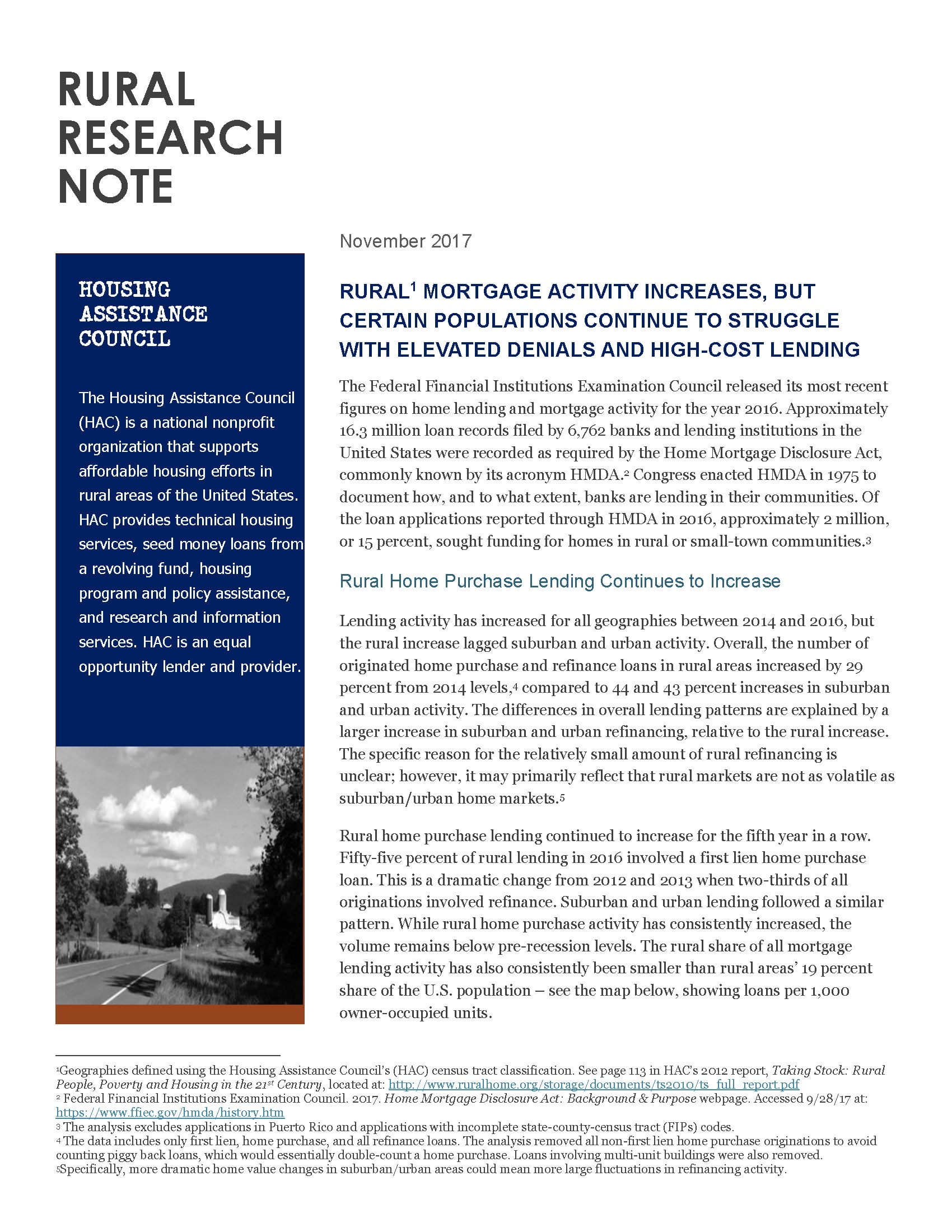
Regulators propose updates to CRA and HMDA regulations. The agencies that regulate banks and savings and loans institutions request comments by October 20 on a proposal to update the existing definitions of “home mortgage loan” and “consumer loan.” The changes would conform to CFPB revisions made in 2015 to the Home Mortgage Disclosure Act regulations. For more information, contact Emily R. Boyes, Office of the Comptroller of the Currency, 202-649-6350. The Consumer Financial Protection Board recently made some changes and technical corrections to the 2015 HMDA rule. For more information, contact Shaakira Gold-Ramirez, CFPB, 202-435-7700, or submit a question online​.

HUD sets DDAs and QCTs for FY18. HUD has released its annual designation of Difficult Development Areas and Qualified Census Tracts for purposes of the Low Income Housing Tax Credit. For more information, contact Michael K. Hollar, HUD, 202-402-5878.

GAO reports on USDA Rental Assistance shortfalls. A new Government Accountability Office report explores factors that led to funding gaps for Section 521 RA in 2013-15. Rural Housing Service: Additional Actions Would Help Ensure Reasonableness of Rental Assistance Estimatesmakes four recommendations for better estimating RA needs.

U.S. Census Bureau releases 2016 income and poverty data. While some nonmetro counties are struggling, there is an overall positive trend in the economic situation in rural areas. Poverty numbers are down for those outside metropolitan areas. While income increased in 2016, the change was not statistically significant. Further details are at the Census Bureau website.

HAC publishes disaster guide supplement for recent hurricanes. A new supplement to HAC’s disaster guide includes information for survivors of both Harvey and Irma.

HAC announces Section 502 Packaging Training for Nonprofit Housing Developers
October 17-19, Santa Ana Pueblo, New Mexico
This three-day advanced course will teach participants to assist potential borrowers and deliver successful Section 502 loan packages. This course is intended for those experienced in using Section 502 and/or other affordable housing mortgage products. The registration fee is $750.
For more information, contact Shonterria Charleston, HAC, 404-892-4824.

Veterans Aging Summit set
October 20, University of North Carolina, Chapel Hill
The event is sponsored by Purple Heart Homes, HAC, and the National League of Cities. For more information and to register contact Melanie Balousek, PHH, or visit www.phhusa.org.

HAC News: August 31, 2017

HAC News Formats. pdf

August 31, 2017
Vol. 46, No. 18

Information available for Hurricane Harvey survivors • Congress faces busy September • HUD announces RAD expansion • HUD offers ROSS and Choice Neighborhoods funds • House and Senate committee reports disagree on ACS • Disaster preparedness toolkit released for homeless service providers • Nominations sought for HUD Secretary’s Opportunity and Empowerment Award • Need capital for your affordable housing project? • HAC offers September training on single-family development and 502 packaging

HAC News Formats. pdf

August 31, 2017
Vol. 46, No. 18

Information available for Hurricane Harvey survivors. A Harvey supplement to HAC’s disaster guide is free on HAC’s website. Resources are offered by federal agencies and programs including FEMA, HUD, USDA, and the LIHTC program.

Congress faces busy September. When Congress returns to work after Labor Day, legislators will need to deal with FY18 appropriations and much more. It still seems likely that FY18 will begin on October 1 with a continuing resolution holding funding at FY17 levels. In September the House will consider a single package comprised of eight of the FY18 appropriations bills, including those for USDA and HUD. House members have proposed numerous amendments, though it is not yet known which will be considered on the House floor. None of these amendments would impact USDA housing programs, some would increase funding for some HUD programs, and others would limit or block funding for some HUD programs. Senate leaders have not announced how they will approach the remaining appropriations work.
It is not clear whether Congress will be able to agree on changes to the Budget Control Act spending caps, as it has done in the past; if it does not, across-the-board cuts in FY18 funding are possible. A recent OMB report calculates that if the current spending limits remain unchanged, the House versions of the 12 annual appropriations bills would result in a sequestration of approximately $72.4 billion in defense programs. The Senate bills would result in a sequestration of approximately $2.0 billion in defense programs and $3.8 billion for non-defense programs.
Before Hurricane Harvey hit, President Trump threatened to allow the government to shut down if appropriations bills do not include funding for a U.S.-Mexico border wall. Responding to concerns that a shutdown would stop hurricane relief efforts as well, the President stated that the two things were “separate.”
In addition to appropriations, the federal debt limit must be raised by the end of September so the U.S. does not default on its debt payments. The debt ceiling itself does not affect spending levels or the federal deficit, but provisions that impact federal programs can be attached to the debt limit legislation. Tax reform, and possibly health care changes, remain under consideration as well, and the National Flood Insurance Program expires September 30. The NFIP’s renewal may be impacted by the Hurricane Harvey flooding; one possibility is a short-term renewal to gain more time for negotiating a longer-term solution.

HUD announces RAD expansion. HUD’s FY17 appropriations law increased the number of public housing units that can be converted to Section 8 vouchers through the Rental Assistance Demonstration. On August 23 HUD published a notice implementing the change. Instead of the previous 185,000 units, 225,000 can now take part in RAD. PHAs on HUD’s waiting list must apply by October 23 to participate. The eligibility and selection criteria will not change. For more information, email rad@hud.gov. The National Low Income Housing Coalition offers suggestions for ways public housing residents can prepare, and links to additional resources.

HUD offers ROSS and Choice Neighborhoods funds. Federally recognized tribes, PHAs, and nonprofits including resident associations can apply by October 23 for Resident Opportunity and Self-Sufficiency Program-Service Coordinators funding. For more information, contact ROSS-PIH@hud.gov. PHAs, local governments, and tribal entities are eligible for Choice Neighborhood Implementation Grants and must apply by November 22. For more information, contact ChoiceNeighborhoods@hud.gov.

House and Senate committee reports disagree on ACS. The House and Senate Appropriations Committees have both passed FY18 funding bills for the Commerce Department, which includes the Census Bureau. The Bureau conducts the American Community Survey, now the only source of some data previously collected in the decennial census, including housing and income information. The House report states, “The Committee is very concerned about the burdensome nature of the ACS and directs Census to focus on its core, constitutionally mandated decennial Census activities.” In contrast, the Senate report notes the importance of ACS data, particularly for “Americans who live in small towns and rural areas, as this survey often provides the only reliable and consistent source of information about these communities.” ACS appropriations are not separated from funds for other Census Bureau work, so neither bill provides a specific amount of funding for the survey.

Disaster preparedness toolkit released for homeless service providers. HUD, HHS, and the VA have published Disaster Preparedness to Promote Community Resilience: Information and Tools for Homeless Service Providers and Disaster Professionals. The document is written for emergency managers at all levels of government, homeless service providers, and health care providers. It is intended to provide preparedness strategies to better integrate homeless service providers into emergency management systems, ensure that homeless service providers are capable of providing essential services after disasters, and prepare health care providers to be able to address the health-related needs of homeless individuals.

Nominations sought for HUD Secretary’s Opportunity and Empowerment Award. Nominations are due September 8 of communities or plans, programs, or projects that directly result in an improved quality of life for low- and moderate-income residents. The award criteria emphasize how creative housing, economic development, and private investments are used in or with a comprehensive community development plan to build social equity and empower community residents. There is no nomination fee. For more information, contact the American Planning Association, awards@planning.org.

Need capital for your affordable housing project?
HAC’s loan funds provide low interest rate loans to support single- and multifamily affordable housing projects for low-income rural residents throughout the U.S. and territories. Capital is available for all types of affordable and mixed-income housing projects, including preservation, farmworker, senior, and veteran housing. HAC loan funds can be used for pre-development, site acquisition, site development, and construction/rehabilitation. Contact HAC’s loan fund staff at hacloanfund@ruralhome.org, 202-842-8600.
Please note: HAC is not able to offer loans to individuals or families. Borrowers must be nonprofit or for-profit organizations or government entities (including tribes).
HAC offers September training on single-family development and 502 packaging

Rural Affordable Single-Family Housing Development: A Primer
September 19-20, Atlanta
This two-day training course will provide an in-depth look at the various approaches to developing single-family housing. The registration fee is $100.

Section 502 Packaging Training for Nonprofit Housing Developers
September 19-21, Atlanta
This three-day advanced course will teach participants to assist potential borrowers and deliver successful Section 502 loan packages. This course is intended for those experienced in using Section 502 and/or other affordable housing mortgage products. The registration fee is $750.

For more information, contact Shonterria Charleston, HAC, 404-892-4824.

USDA Rural Development Obligations FY 17 – July

The Housing Assistance Council (HAC) presents this month’s report on Fiscal Year 2017 USDA Rural Housing program obligations.

As of the end of July, USDA obligated 121,665 loans, loan guarantees, and grants totaling about $16.7 billion. This is about $2.29 billion more than obligation levels from the same time last year when there were 108,061 loans, loan guarantees, and grants obligated totaling about $14.42 billion.

Single Family Housing Program Highlights

The Section 502 Guaranteed loan program, the largest of the Single Family Housing programs, obligated $15.7 billion (109,516 loan guarantees) up from $13.3 billion (95,400) at the same time last year.

For the Section 502 Direct program, there have been over $771 million (5,596 loans), up from $770 million (5,728 loans) in loan obligations this time last year. Very low-income (VLI) loan obligations as a percentage of the total Section 502 Direct loan dollars was 36.8 percent, exceeding the 34.9 percent VLI obligation level at the same time last year.

The Section 504 Repair and Rehabilitation programs obligated 2,605 loans representing $14.6 million. As in the other single family housing programs, loan volume was up from this time last year (2,417 loans representing $13.1 million.) There were also $22.9 million (3,774 grants) obligated in the Section 504 grant program compared to $25.8 million (4,217 grants) at the same time last year.

There were also 5 credit sales of Single Family properties totaling $410,780.

Multi-Family Housing Programs.

USDA’s Section 538 Multifamily Housing obligated 71 loan guarantees totaling $121.6 million, down from 79 loan guarantees ($142.4 million.) In the Section 515 Rural Rental Housing program, there were 10 loans totaling $10.5 million obligated. No Section 515 loans were obligated this time last year. For the Farm Labor Housing programs, USDA obligated 7 loans totaling $10.6 million and 0 grants compared to 7 loans ($5.2 million and 6 grants ($9.6 million) this time last year. There were also 30 MPR loans and 2 grants totaling $21.4 million and $53,200 respectively, compared to 97 loans ($80.9 million) and 3 grants ($801,900) this time last year.

USDA obligated funds for 194,472 rental assistance units under the Section 521 Rental Assistance program totaling $1.09 billion. This compares to about 252,792 units ($1.16 billion) obligated same time last year. There were also 5,011 Rural Housing Vouchers totaling $19.8 million compared to 4,718 vouchers representing $17.2 million this time last year.

Download the combined document.

* The Rural Housing Service (RHS) monthly obligation reports are produced by the Housing Assistance Council (HAC) 1025 Vermont Ave., NW, Suite 606, Washington, DC 20005. The monthly figures derive from HAC tabulations of USDA –RHS 205c, d, and f report data. For questions or comments about the obligation reports, please contact Michael Feinberg at 202-842-8600 or michael@ruralhome.org.

HAC News: August 17, 2017

HAC News Formats. pdf

August 17, 2017
Vol. 46, No. 17

Worst case housing needs increased, HUD reports • List of tribes for Cobell land buy-back program reduced • HUD suspends Small Area FMR rule requirement • Funds offered for Fair Housing and Family Self-Sufficiency programs • USDA RD offers to extend conditional commitments for preservation debt deferrals • Farias and Rackleff confirmed for HUD posts • Fair housing data guide published for local advocates and planners, webinar scheduled • Rural Voices looks at creative placemaking

HAC News Formats. pdf

August 17, 2017
Vol. 46, No. 17

Worst case housing needs increased, HUD reports. In the U.S. in 2015 there were 8.3 million households with “worst case housing needs”: very low-income renter households who did not receive government housing assistance and who paid more than one-half of their income for rent, lived in severely inadequate conditions, or both. Based on 2015 American Housing Survey data, Worst Case Housing Needs: 2017 Report to Congress states that worst case needs dropped from a record high 8.48 million in 2011 to 7.72 million in 2013, then rose again in 2015. Nationwide, only 62 affordable units are available per 100 very low-income renters, and only 38 per 100 extremely low-income renters. Reasons for the increase, the report says, include “a notable shift from homeownership to renting, … a modest level of household formation and a widening gap in rental assistance relative to need.”

List of tribes for Cobell land buy-back program reduced. The Interior Department announced on July 31 that it will offer its Land Buy-Back Program for Tribal Nations to 20 tribes, rather than the 70 previously eligible. The program was established as a result of the settlement in the Cobell lawsuit, which charged the federal government with mismanagement of Native American funds. It pays Native Americans for their interests in parcels of land and returns the land to tribal ownership. Interior “may revise the schedule or add locations [tribes] as capacity and resources allow”; from an original pool of $1.9 billion, $540 million remains. Interested landowners must submit documentation by November 27 to be eligible. For more information, contact Interior’s Trust Beneficiary Call Center, 888-678-6836.

HUD suspends Small Area FMR rule requirement. A regulation finalized in November required PHAs in 24 metro areas to use SAFMRs for the Housing Choice Voucher program. SAFMRs are based on zip codes rather than entire metro areas and are intended to increase access to high opportunity places (see HAC News, 11/21/16). An August 11 letter from HUD informs PHA directors in 23 of the 24 metro areas that they will not be obligated to use SAFMRs until October 1, 2019, rather than the original October 1, 2017 implementation date. (Because of a legal settlement, the requirement remains in place in the Dallas-Plano-Irving, Texas Metro Division.) Other provisions of the November rule remain in effect, and PHAs may still choose to use SAFMRs voluntarily.

Funds offered for Fair Housing and Family Self-Sufficiency programs. Under the Fair Housing Initiative Program, fair housing organizations can request funding for three different types of activities: Fair Housing Organization, Education and Outreach, and Private Enforcement. The deadline is September 18. For more information, contact Myron Newry, HUD, 202-402-7095. Family Self-Sufficiency awards are available only for PHAs and tribes/TDHEs currently administering FSS programs. The deadline is September 15. For more information, contact Tremayne Youmans, HUD.

USDA RD offers to extend conditional commitments for preservation debt deferrals. Some owners of Section 514 and 515 properties have received RD commitments (with conditions) to defer debt on their loans, using the Multifamily Preservation and Revitalization program. An Unnumbered Letter (June 8, 2017) explains that if RD does not have sufficient MPR funds available to honor these commitments, property owners may request extensions, as well as temporary suspensions of monthly debt service payments, for up to 24 months. For more information, contact an RD state office.

Farias and Rackleff confirmed for HUD posts. On August 3, the Senate confirmed Anna Maria Farias as HUD’s Assistant Secretary for Fair Housing and Equal Opportunity and Neal Rackleff as Assistant Secretary for Community Planning and Development (see HAC News, 6/22/17 and 8/3/17). Pamela Hughes Patenaude has not yet been confirmed as HUD Deputy Secretary, although the Banking Committee recommended approval in June (see HAC News, 6/22/17).

Fair housing data guide published for local advocates and planners, webinar scheduled. Using Data to Assess Fair Housing and Improve Access to Opportunity is intended to help community organizations and local governments use data from the Census Bureau and other secondary sources. The guide provides urban examples. It will be featured in a webinar on August 24 by the guide’s publisher – the Urban Institute – and others.

Rural Voices looks at creative placemaking. Rural Placemaking: Making the Most of Creativity in Your Community is the summer issue of HAC’s quarterly magazine. Articles from around the country show how, through creative placemaking, the economic, educational, and social impact of the arts can complement affordable housing efforts.

Need capital for your affordable housing project?
HAC’s loan funds provide low interest rate loans to support single- and multifamily affordable housing projects for low-income rural residents throughout the U.S. and territories. Capital is available for all types of affordable and mixed-income housing projects, including preservation, farmworker, senior, and veteran housing. HAC loan funds can be used for pre-development, site acquisition, site development, and construction/rehabilitation. Contact HAC’s loan fund staff at hacloanfund@ruralhome.org, 202-842-8600.
Please note: HAC is not able to offer loans to individuals or families. Borrowers must be nonprofit or for-profit organizations or government entities (including tribes).
HAC offers September training on single-family development and 502 packaging

Rural Affordable Single-Family Housing Development: A Primer
September 19-20, Atlanta
This two-day training course will provide an in-depth look at the various approaches to developing single-family housing. The registration fee is $100.

Section 502 Packaging Training for Nonprofit Housing Developers
September 19-21, Atlanta
This three-day advanced course will teach participants to assist potential borrowers and deliver successful Section 502 loan packages. This course is intended for those experienced in using Section 502 and/or other affordable housing mortgage products. The registration fee is $750.

For more information, contact Shonterria Charleston, HAC, 404-892-4824.

Rural Placemaking: Making the Most of Creativity in your Community

This issue of Rural Voices examines Creative Placemaking as it is practiced in rural communities. The term “creative placemaking” is only about a decade old, but rural community organizations have long taken on community-building endeavors that have included the arts. Creative placemaking offers the explicit recognition that arts and artists, when fully engaged with local stakeholders, are often a gel or a catalyst toward sustained community betterment and economic growth.

VIEW FROM WASHINGTON

Illuminate, Connect, Energize, and Imagine: The Arts in Rural America
by Jen Hughes

The National Endowment for the Arts offers funding and technical assistance for rural creative placemaking across the United States.

FEATURES

A Tool for Economic Development in the Mississippi Delta
by Chris Masingill

The Delta Creative Placemaking Initiative encourages communities to engage more deeply with the region’s arts and culture sectors.

Housing Developers Come Together with Arts Groups and Artists
by Bob Reeder

An expert advises rural community developers to keep their placemaking work inclusive, culturally relevant, and economically equitable.

Bridging Boundaries: Contributing to Quality of Life on the Reservation
by Joseph Kunkel

A collaborative process encompassing community, culture, and the environment contributes to the success of a tribal development project.

Kentucky Communities Use Their Creative Assets
by Sandi Curd

Placemaking, at its core, is fostering what is abundant in rural Kentucky: a strong sense of place coupled with people dedicated to making their communities stronger.

Placemaking Grants Support Rural Communities

The smART Kinston City Project Foundation in Kinston, NC and the Woodlands Development Group in Elkins, WV will implement rural creative placemaking initiatives during summer and fall 2017.


Rural Voices would like to hear what you have to say about one, or all, of these issues. Please feel free to comment on this story by sending a tweet to #RuralVoicesMag, discuss on the Rural Affordable Housing Group on LinkedIn, or on our Facebook page.

HAC News: August 3, 2017

HAC News Formats. pdf

August 3, 2017
Vol. 46, No. 16

Senate committee approves FY18 HUD funding bill • HUD nominations advance • Administration infrastructure group created • Section 514/516 Farm Labor Housing preapplications due September 11 • USDA accepting applications for rural broadband funding • VA proposes changes to Homeless Providers Grant and Per Diem Program • USDA to consider new online homeownership education courses • Rural manufactured housing pilots expanding • HUD accepting manufactured housing recommendations • Final rule issued on GSEs’ inclusion of minorities and women • Senate committee hearing focuses on LIHTC • Studies consider impact of mortgage interest deduction reform

HAC News Formats. pdf

August 3, 2017
Vol. 46, No. 16

Senate committee approves FY18 HUD funding bill. On July 27, the Senate Appropriations Committee passed its Transportation-HUD funding bill, which would keep most HUD programs at or above current funding levels. Unlike the House bill, it would also fund the U.S. Interagency Council on Homelessness as well as a relatively new, not yet implemented pilot program that would make grants to nonprofits to rehabilitate and modify veterans’ homes. The Senate committee report (S. Rept. 115-138) directs HUD to publish a NOFA for the veterans’ rehab program within 90 days after the bill is enacted. (HUD has requested public input by September 11 on the design of the program; see HAC News, 7/20/17.)
In developing its appropriations bills, the Senate committee used a total domestic discretionary programs funding level that is higher than the cap set by the 2011 Budget Control Act, so final FY18 appropriations cannot be set at the Senate bill’s levels unless the BCA cap is raised in separate legislation passed by both houses of Congress and signed by the president. [tdborder][/tdborder]

HUD Program
(dollars in millions)

FY16 Approp.

FY17 Approp.

FY18 Trump Budget Proposal

FY18 House Bill (H.R. 3353)

FY18 Senate Bill (S. 1655)

CDBG

$3,000

$3,000

$0

$2,900

3,000

HOME

950

950

0

850

950

Self-Help Homeownshp. (SHOP)

10

10

0

10

10

Veterans Home Rehab

5.7

4

0

0

4

Tenant-Based Rental Assistance
VASH setaside
Tribal VASH

19,628
60
0

20,292
40
7

19,318
0
7

20,487
577a
7

21,365
40a
5

Project-Based Rental Asstnce.

10,622

10,816

10,351

11,082

11,507

Public Hsg. Capital Fund

1,900

1,942

628

1,850

1,945

Public Hsg. Operating Fund

4,500

4,400

3,900

4,400

4,500

Choice Neighbrhd. Initiative

125

137.5

0

20

50

Native Amer. Hsg. Block Grant

650

654

600

654

655

Homeless Assistance Grants

2,250

2,383

2,250

2,383

2,456

Hsg. Opps. for Persons w/ AIDS

335

356

330

356

330

202 Hsg. for Elderly

432.7

502.4

510

573

573

811 Hsg. for Disabled

150.6

146.2

121

147

147

Fair Housing

65.3

65.3

65

65.3

65.3

Healthy Homes & Lead Haz. Cntl.

110

145

130

130

160

Housing Counseling

47

55

47

50

47

a. The House bill specifies that its entire VASH appropriation is for renewals. The Senate bill would renew current VASH vouchers and provide $40 million for new ones.

HUD nominations advance. On July 27 the Senate Banking Committee recommended Senate approval of several Administration nominees, including J. Paul Compton Jr. to be HUD general counsel; Anna Farias to be assistant HUD secretary for fair housing and equal opportunity; and Neal Rackleff to be assistant HUD secretary for community planning and development. (See HAC News, 6/22/17.)

Administration infrastructure group created. Executive Order 13805, signed on July 19 by President Trump, establishes a Presidential Advisory Council on Infrastructure. The council may have up to 15 members, all appointed by the President. It must include expertise from several sectors including real estate, finance, construction, and regional and local economic development.

Section 514/516 Farm Labor Housing preapplications due September 11. Applicants can request up to $3 million in combined loan and grant funds. Additional points will be given to projects based in or serving census tracts with poverty rates greater than or equal to 20 percent over the last 30 years. For more information, contact Mirna Reyes-Bible, USDA, 202-720-1753.

USDA accepting applications for rural broadband funding. The second FY17 application window for the Rural Broadband Access Loan and Loan Guarantee Program is open until September 30. Applications will be reviewed as received. Nonprofits, for-profits, coops, tribes, and state and local governments are eligible and can use the funds for construction, improvement, and acquisition of facilities and equipment. For more information, contact Richard Anderson, RUS, 202-720-0800.

VA proposes changes to Homeless Providers Grant and Per Diem Program. Comments are due September 25 on regulatory amendments (including corrections published separately) intended to provide the program with increased flexibility to respond to the changing needs of homeless veterans; repurpose existing and future funds more efficiently; and allow recipients the ability to add, modify, or eliminate components of funded programs. For more information, contact Guy Liedke, VA, 877-332-0334.

USDA to consider new online homeownership education courses. Course providers are invited to apply for approval by August 25. Section 502 direct borrowers must successfully complete approved courses. Homeownership education providers are generally approved at the state level, and there are currently two nationally approved online education providers. For more information, contact Brooke Baumann, USDA, 202-690-4250.

Rural manufactured housing pilots expanding. USDA plans to add states to two existing pilot programs. One allows the Section 502 direct and guarantee programs to finance existing manufactured homes that are not already USDA-financed. The second reduces the required land lease term for energy-efficient homes in nonprofit communities.

HUD accepting manufactured housing recommendations. HUD invites suggestions for updates and revisions to its standards and regulations for manufactured housing, which will be submitted to the Manufactured Housing Consensus Committee for review and consideration. Submissions are due December 31. For more information, contact Pamela Beck Danner, HUD, 202-708-6423.

Final rule issued on GSEs’ inclusion of minorities and women. A Federal Housing Finance Agency regulation sets requirements for Fannie Mae, Freddie Mac, and the Federal Home Loan Banks to include minorities and women in all business and activities including management, employment, and contracting. For more information, contact Sharron P.A. Levine, FHFA, 202-649-3496.

Senate committee hearing focuses on LIHTC. The Senate Finance Committee held a hearing August 1 titled “America’s Affordable Housing Crisis: Challenges and Solutions.” Witnesses discussed ways to reform the Low-Income Housing Tax Credit in any upcoming tax overhaul legislation. Committee Chair Orrin Hatch (R-UT) is co-sponsor with Sen. Maria Cantwell (D-WA) of S. 548, the Affordable Housing Credit Improvement Act of 2017. A summary of the hearing and other information are available from the ACTION Campaign, a national coalition supporting the housing credit.

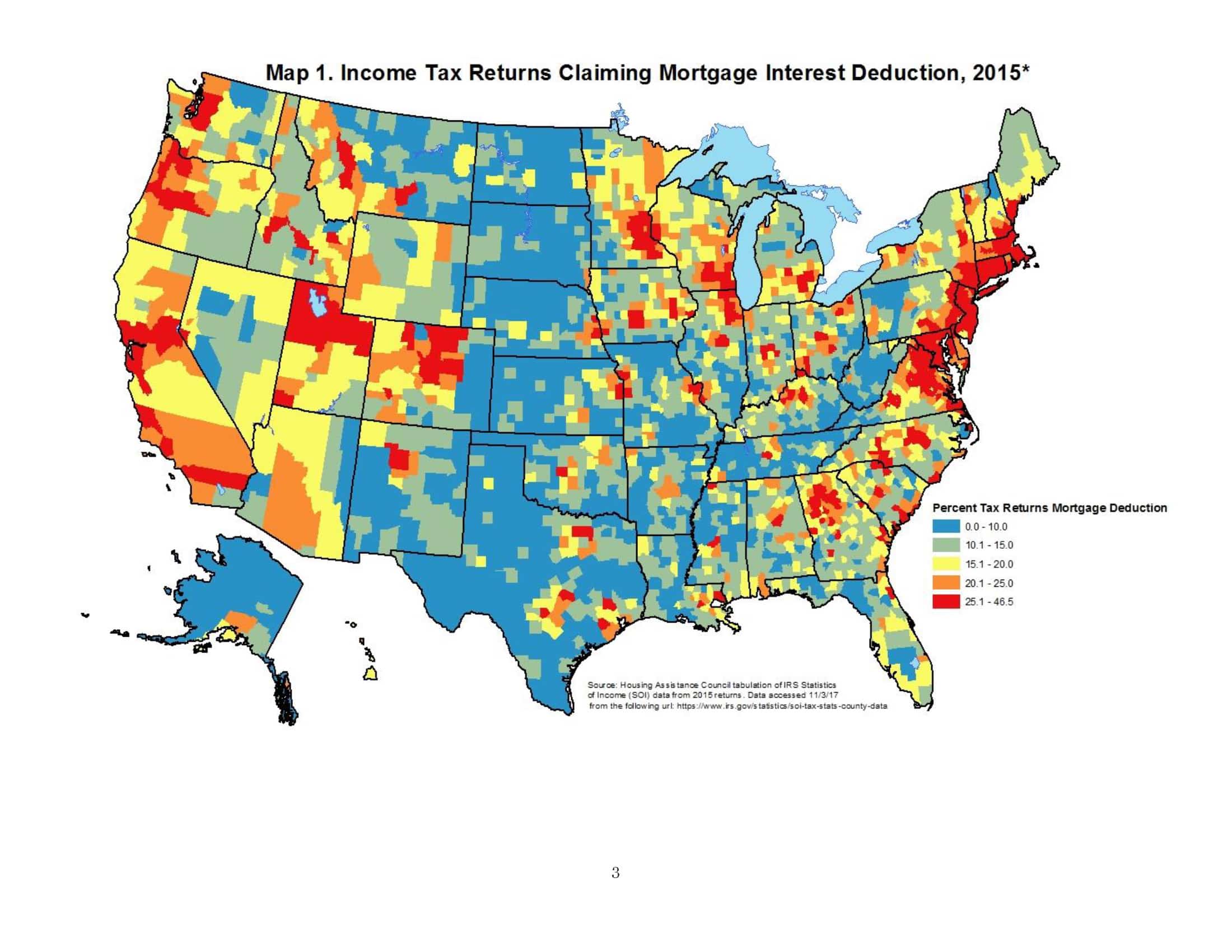
Studies consider impact of mortgage interest deduction reform. “Do People Respond to the Mortgage Interest Deduction? Quasi-Experimental Evidence from Denmark,” by the National Bureau of Economic Research, found that Denmark’s mortgage deduction has no effect on homeownership, but encourages homeowners to buy larger and more expensive houses and to increase their debt. “Reforming the Mortgage Interest Deduction: How Tax Reform Can Help End Homelessness and Housing Poverty,” by the United for Homes campaign, calculates the possible impact of modest reforms to the U.S. mortgage interest deduction, which benefits primarily higher-income homeowners. The paper concludes that reforms could provide a tax break to 25 million lower-income homeowners and generate $241 billion over 10 years that could then be reinvested to support affordable housing for those with the greatest needs through the national Housing Trust Fund and rental assistance programs.

HAC News: July 20, 2017

HAC News Formats. pdf

July 20, 2017
Vol. 46, No. 15

USDA RD leader encourages full use of 502 direct funds • USDA funding moves to Senate • House takes up HUD funding bill • House leaders proposes budget resolution • Congressional committee holds field hearing on NAHASDA • USDA requests comments on improving its regulations • Comment on new HUD veterans rehab and modification pilot • Committee reviews HUD nominations • Programs, including housing, help children succeed, report says

HAC News Formats. pdf

July 20, 2017
Vol. 46, No. 15

USDA RD leader encourages full use of 502 direct funds. With ten weeks remaining in the fiscal year, Anne Hazlett, Assistant to the Secretary for Rural Development, has asked single-family program directors in RD state offices to “establish a high priority” for spending all available Section 502 direct funds. She encouraged RD staff to reach out to partners for assistance, and promised additional guidance on tools and resources. For more information, contact state office single-family program directors.

USDA funding moves to Senate. The Senate Appropriations Committee approved an FY18 spending bill for USDA on July 20. The bill has not yet been released to the public. Funding levels for a few of the rural housing programs are available in statements released by the subcommittee, and would keep most rural housing programs at current levels, somewhat higher than the levels in the House bill. The committee included a provision requiring USDA to have an Undersecretary for Rural Development at USDA. Watch www.ruralhome.org for updates on the Senate bill’s contents.
The House Appropriations Committee completed work on its FY18 USDA bill on July 12. It adopted one housing-related change to its subcommittee’s bill, making H-2A visa holders eligible for Section 514/516 farmworker housing.

USDA Rural Dev. Prog.
(dollars in millions)

FY16 Approp.

FY17 Approp.

FY18 Trump Budget Proposal

House Bill

Senate Bill

502 Single Fam. Direct
Self-Help setaside

$900
5

$1,000
5

0
0

$900
5

$1,000d

502 Single Family Guar.

24,000

24,000

24,000

24,000

24,000d

504 VLI Repair Loans

26.3

26.3

0

24

e

504 VLI Repair Grants

28.7

28.7

a

a

e

515 Rental Hsg. Direct Lns.

28.4

35

0

28.4

35d

514 Farm Labor Hsg. Lns.

23.9

23.9

(-11)b

15

23.9d

516 Farm Labor Hsg. Grts.

8.3

8.3

0

6

8.3d

521 Rental Assistance

1,390

1,405c

1,345

1,345

1,345d

523 Self-Help TA

27.5

30

(-4)b

25

e

533 Hsg. Prsrv. Grants

3.5

5

0

a

e

538 Rental Hsg. Guar.

150

230

250

230

e

Rental Prsrv. Demo. (MPR)

22

22

(-4)b

15

e

542 Rural Hsg. Vouchers

15

19.4

16

20

19.4d

Rural Cmnty. Dev’t Init.

4

4

0

0

e

a. Would become part of Rural Economic Infrastructure Grant program.

b. Budget proposes to rescind unobligated funds from three programs: $11 million from Sec. 523 self-help, $4 million from Sec. 514/516 farm labor housing, and $4 million from MPR.

c. Includes $40 million in advance funding for FY18, so total available in FY17 is $1.365 billion and total available in FY18 would be $1.385 billion.

d. Preliminary, pending release of bill text.

e. Unknown as of press time, pending release of bill text.

House takes up HUD funding bill. On July 17 the House Appropriations Committee approved an FY18 HUD funding bill that would cut most HUD programs. HOME and CDBG would both be reduced. The bill also would eliminate the U.S. Interagency Council on Homelessness. The National Low Income Housing Coalition and the Center on Budget and Policy Priorities estimate that the House bill would eliminate at least 140,000 vouchers in FY18 because its funding levels for Housing Choice Vouchers and Project-Based Rental Assistance are inadequate. The committee did adopt an amendment to the bill expanding the Rental Assistance Demonstration to include Section 202 Rental Assistance Contracts. The Senate has not yet begun work on its HUD bill.

HUD Program
(dollars in millions)

FY16 Approp.

FY17 Approp.

FY18 Trump Budget Proposal

FY18 House Bill

CDBG

$3,000

$3,000

$0

$2,900

HOME

950

950

0

850

Self-Help Homeownshp. (SHOP)

10

10

0

10

Tenant-Based Rental Assistance
VASH setaside
Tribal VASH

19,628
60
0

20,292
40
7

19,318
0
7

20,487
577a
7

Project-Based Rental Asstnce.

10,622

10,816

10,351

11,082

Public Hsg. Capital Fund

1,900

1,942

628

1,850

Public Hsg. Operating Fund

4,500

4,400

3,900

4,400

Choice Neighbrhd. Initiative

125

137.5

0

20

Native Amer. Hsg. Block Grant

650

654

600

654

Homeless Assistance Grants

2,250

2,383

2,250

2,383

Hsg. Opps. for Persons w/ AIDS

335

356

330

356

202 Hsg. for Elderly

432.7

502.4

510

573

811 Hsg. for Disabled

150.6

146.2

121

147

Fair Housing

65.3

65.3

65

65.3

Healthy Homes & Lead Haz. Cntl.

110

145

130

130

Housing Counseling

47

55

47

50

a. The House bill specifies that its entire VASH appropriation is for renewals.

House leaders propose budget resolution. The House resolution released by the House Budget Committee on July 18, would set caps for FY18 spending at the levels the House is currently using as it develops its versions of FY18 appropriations bills. That limit is below the cap required by the Budget Control Act. In later years, funding for domestic programs – both discretionary and mandatory – would drop sharply. The budget resolution also includes significant tax cuts and may become the vehicle for tax reform legislation.

Congressional committee holds field hearing on NAHASDA. On July 21, the House Financial Services Committee’s Subcommittee on Housing and Insurance will hold a hearing in Wisconsin titled “NAHASDA: 20 Years On.” HAC will submit written testimony for the record.

USDA requests comments on improving its regulations. The department requests ideas on modifying, streamlining, expanding, or repealing regulations, guidance documents, or any other policy documents. Comments are due July 17, 2018. USDA will review comments in four batches: those submitted by September 15, 2017, then by November 14, 2017, then February 12, 2018, and finally July 17, 2018. For more information, contact Michael Poe, USDA, 202-720-5303. The Interagency Task Force on Agriculture and Rural Prosperity is also still accepting comments on legislative, regulatory, and policy changes (see HAC News, 6/22/17).

Comment on new HUD veterans rehab and modification pilot. HUD requests input by September 11 on the design of a new pilot program that will make grants to nonprofit organizations that provide nationwide or statewide programs serving primarily veterans or low-income individuals. The grants may be used to modify or rehabilitate eligible veterans’ primary residences or to provide grantees’ affiliates with technical, administrative, and training support in connection with those services. Email comments to rhed@hud.gov. For more information, contact Sylvia Y. Purvis, HUD, 877-787-2526 (toll-free) or 202-708-2290.

Committee reviews HUD nominations. On July 18 the Senate Banking Committee considered several nominations, including three for HUD positions: J. Paul Compton, Jr. as General Counsel; Anna M. Farias as Assistant Secretary for Fair Housing and Equal Opportunity; and Neal J. Rackleff as Assistant Secretary for Community Planning and Development. The Committee has not yet voted whether to recommend Senate confirmation of these nominees.

Programs, including housing, help children succeed, report says. “Economic Security Programs Help Low-Income Children Succeed Over Long Term, Many Studies Find,” from the Center on Budget and Policy Priorities, summarizes the findings of numerous researchers. Economic security programs such as housing subsidies, food assistance, and working-family tax credits not only help families afford basic needs, but also help children do better in school and increase their earning power as adults.

USDA Rural Development Obligations FY 17 – June

The Housing Assistance Council (HAC) presents this month’s report on Fiscal Year 2017 USDA Rural Housing program obligations.

USDA operated under a Continuing Resolution (CR) through April 28, 2017 based on last year’s appropriation levels. Congress passed a final appropriations bill to keep the government operating through the end of September. The final spending bill increased funding for several USDA housing programs.

As of the end of June, USDA obligated 108,554 loans, loan guarantees, and grants totaling about $14.9 billion. This is about $2.09 billion more than obligation levels from the same time last year when there were 96,193 loans, loan guarantees, and grants obligated totaling about $12.79 billion.

Single Family Housing Program Highlights

The Section 502 Guaranteed loan program, the largest of the Single Family Housing programs, obligated $14.0 billion (97,846 loan guarantees) up from $11.8 billion (85,548) at the same time last year.

For the Section 502 Direct program, there have been over $665 million (4,838 loans), down from $723.3 million (5,364 loans) in loan obligations this time last year. Very low-income (VLI) loan obligations as a percentage of the total Section 502 Direct loan dollars was 37.2 percent, exceeding the 31.5 percent VLI obligation level at the same time last year.

The Section 504 Repair and Rehabilitation programs obligated 2,306 loans representing $13 million. As in the other single family housing programs, loan volume was up from this time last year (2,165 loans representing $11.7 million.) There were also $20.6 million (3,408 grants) obligated in the Section 504 grant program compared to $23.8 million (3,879 grants) at the same time last year.

There were also 5 credit sales of Single Family properties totaling $410,780.

Multi-Family Housing Programs.

USDA’s Section 538 Multifamily Housing obligated 60 loan guarantees totaling $110.2 million, up from 76 loan guarantees ($137.2 million.) In the Section 515 Rural Rental Housing program, there were 10 loans totaling $10.5 million obligated. No Section 515 loans were obligated this time last year. For the Farm Labor Housing programs, USDA obligated 7 loans totaling $10.6 million and 0 grants compared to 7 loans ($5.2 million and 6 grants ($9.6 million) this time last year. There were also 30 MPR loans and 2 grants totaling $21.4 million and $53,200 respectively, compared to 50 loans ($45.8 million) and 3 grants ($801,900) this time last year.

USDA obligated funds for 191,740 rental assistance units under the Section 521 Rental Assistance program totaling $864.2 million. This compares to about 237,179 units ($1.1 billion) obligated same time last year. There were also 4,225 Rural Housing Vouchers totaling $16.6 million compared to 4,224 vouchers representing $15.5 million this time last year.

Download the combined document.

* The Rural Housing Service (RHS) monthly obligation reports are produced by the Housing Assistance Council (HAC) 1025 Vermont Ave., NW, Suite 606, Washington, DC 20005. The monthly figures derive from HAC tabulations of USDA –RHS 205c, d, and f report data. For questions or comments about the obligation reports, please contact Michael Feinberg at 202-842-8600 or michael@ruralhome.org.

GET THE HAC NEWS!

Sign-up for HAC information products

SIGN UP HERE

Housing Assistance Council   |  1828 L Street. N.W., Suite 505, Washington, D.C. 20036
(202) 842-8600 (202) 347-3441 hac@ruralhome.org |

Board Portal

HAC is an equal opportunity provider, employer, and lender. | Civil Rights | Privacy