Preserving Rural Rental Housing: A New Webinar Series from HAC

USDA’s Section 515 Rural Rental Housing program has been a cornerstone of affordable housing in rural communities for more than 60 years. Since the program’s inception in 1962, Section 515 loans have financed nearly 28,000 multifamily properties, providing more than 533,000 affordable apartment homes across the United States.

As the Section 515 portfolio continues to age and face new challenges, preserving these critical housing resources has never been more important.

The Housing Assistance Council (HAC) is excited to announce a new webinar series focused on some of the most pressing issues affecting the USDA rural rental housing portfolio. These sessions will provide practical information for nonprofit organizations, housing developers, community leaders, and others interested in preserving affordable rural housing.


Webinar 1: Understanding the Section 515 Portfolio and Transfer Process


  • October 14, 2026 | 1:00 - 2:00 PM EDT


Explore the current state of the Section 515 portfolio and learn about the transfer process, key requirements, and preservation opportunities.


Webinar 2: Stand-Alone Rental Assistance Explained


  • October 21, 2026 | 1:00 - 2:00 PM EDT


Learn what Stand-Alone Rental Assistance is, how it works, what is changing, and why it is an important preservation tool for rural affordable housing.


Webinar 3: Owning and Operating Section 515 Properties


  • October 28, 2026 | 1:00 - 2:00 PM EDT


Gain insights into the day-to-day realities of ownership, property management, compliance, and long-term stewardship of Section 515 housing.


Partnership With The Home Depot Foundation Continues to Expand Housing Support for Rural Veterans and Nonprofits

Contacts: AHRV Team, ahrv@ruralhome.org
(202) 842-8600

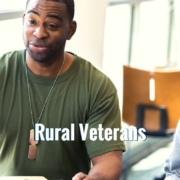
Washington, DC, May 26, 2026 – Veterans and their families in seventeen rural communities will have better lives, thanks to The Home Depot Foundation and the Housing Assistance Council (HAC). The Foundation is awarding grants totaling $453,850 to seventeen local nonprofit housing agencies around the country to preserve housing for veterans across rural America.

The grants are part of the Foundation’s mission to provide affordable and accessible housing solutions to U.S. veterans and invest $750 million in veteran causes by 2030. Many veterans and their families face major housing challenges, often exacerbated by issues related to unemployment, age, and service-related disabilities. The Foundation and HAC are dedicated to giving back to those who have answered the highest call of service to our nation.

As part of its Affordable Housing for Rural Veterans (AHRV) Initiative, HAC works with the Foundation to administer grants that bolster and support the work of rural nonprofit housing agencies to deliver critical housing support to veterans. “The value of HAC’s partnership with The Home Depot Foundation is immeasurable,” said David Lipsetz, HAC’s President and CEO. “Over time it has increasingly enabled HAC to show up for rural veterans by supporting the efforts of local nonprofits who provide safe, affordable housing and greater stability in the communities they call home.” As rural America is home to a disproportionately high number of service women and men, HAC remains deeply committed to supporting our nation’s service women and men by uplifting local nonprofits and their work to house veterans and ensure the habitability of their homes and rural communities.

The grantee organizations, described below, provide a range of programs. With the grants, veterans who own homes in California, Georgia, Maryland, Massachusetts, Minnesota, Mississippi, Nebraska, New York, South Carolina, South Dakota, Oklahoma, Oregon, Texas, Virginia, Washington, and Wisconsin, will obtain critical repair assistance. Altogether, 82 veterans and their families will benefit from these grants.

About The Home Depot Foundation 

The Home Depot FoundationThe Home Depot Foundation, a nonprofit supported by The Home Depot, works to improve the homes and lives of U.S. veterans, support communities impacted by natural disasters and train skilled tradespeople to fill the labor gap. Since 2011, the Foundation has invested more than $650 million in veteran causes and improved more than 70,000 veteran homes and facilities. The Foundation has pledged to invest $750 million in veteran causes by 2030 and $50 million in training the next generation of skilled tradespeople through the Path to Pro program. To learn more about The Home Depot Foundation visit HomeDepotFoundation.org and follow us on LinkedIn @TheHomeDepotFoundation, X @HomeDepotFound and on Facebook and Instagram @HomeDepotFoundation.

About the Housing Assistance Council

The Housing Assistance Council (HAC) is a national nonprofit that supports affordable housing efforts throughout rural America. Since 1971, HAC has provided below-market financing for affordable housing and community development, technical assistance and training, research and information, and policy formulation to enable solutions for rural communities. To learn more about the Housing Assistance Council, visit www.ruralhome.org and follow us on LinkedIn and Facebook.

About the Grantees


  • Appalachian Agency for Senior Citizens, Cedar Bluff, VA, will utilize $30,000 to provide housing rehabilitation and modifications to sixteen (16) veteran homes. For additional information on Appalachian Agency for Senior Citizens visit their website at https://aasc.org/
  • Austin Habitat for Humanity, Austin, TX, will utilize $30,000 to provide critical repairs to two (2) low-income veteranhomes. For additional information on Austin Habitat for Humanity visit their website at https://austinhabitat.org/
  • Bishop Sheen Ecumenical Housing Foundation, Fairport, NY, will utilize $30,000 to provide critical repairs to nine (9) disabled veteranhomes. For additional information on Bishop Sheen Ecumenical Housing Foundation visit their website at https://sheenhousing.org/
  • GROW South Dakota, Sisseton, SD, will utilize $30,000 to provide essential rehabilitation to three (3) veteran homes. For additional information on GROW South Dakota visit their website at https://www.growsd.org/
  • Habitat for Humanity North Central Massachusetts, Acton, MA, will utilize $11,500 to provide critical repairs to two (2) veteran homes. For additional information on Habitat for Humanity North Central Massachusetts visit their website at https://ncmhabitat.org/
  • Habitat for Humanity of Butte County, Chico, CA, will utilize $30,000 to support the construction of one (1) home for a low-income veteran. For additional information on Habitat for Humanity of Butte County visit their website at https://www.buttehabitat.org/
  • Habitat for Humanity of Columbus Nebraska, Columbus, NE, will utilize $30,000 to provide critical repairs to four (4) veteran homes. For additional information on Habitat for Humanity of Columbus Nebraska visit their website at https://www.hfhcolumbusne.org/
  • Habitat for Humanity of Wicomico County, Fruitland, MD, will utilize $30,000 to provide critical repairs to three (3) low-income veteran homes. For additional information on Habitat for Humanity of Wicomico County visit their website at https://wicomicohabitat.org/
  • Habitat for Humanity of York County, Rock Hill, SC, will utilize $12,500 to provide critical repairs to one (1) veteran home. For additional information on Habitat for Humanity of York County visit their website at https://yorkcountyhabitat.org/
  • Houston County Habitat for Humanity, Warner Robins, GA, will utilize $15,000 to provide critical repairs to two (2) veteran homes. For additional information on Houston County Habitat for Humanity visit their website at https://www.hocohabitat.org/
  • Neighborhood Housing Services Oklahoma City, Inc., Oklahoma City, OK, will utilize $30,000 to provide critical repairs to eight (8) low-income veteran homes. For additional information on Neighborhood Housing Services Oklahoma City Inc. visit their website at https://www.nhsokla.org/
  • NeighborWorks Umpqua, Roseburg, OR, will utilize $30,000 to provide critical repairs to ten (10) low-income veteran-owned homes. For additional information on NeighborWorks Umpqua visit their website at http://www.nwumpqua.org/
  • Rebuilding Together Minnesota, Minneapolis, MN, will utilize $30,000 to provide critical repairs to four (4) low-income veteran homes. For additional information on Rebuilding Together Minnesota visit their website at http://www.rtmn.org/
  • Rebuilding Together Platte Valley East, Fremont, NE, will utilize $25,850 to provide critical repairs to one (1) veteran home. For additional information on Rebuilding Together Platte Valley East visit their website at https://rebuildingtogetherpve.org/
  • Rebuilding Together Saratoga County, Ballston Spa, NY, will utilize $30,000 to provide critical repairs to four (4) low-income veteran homes. For additional information on Rebuilding Together Saratoga County visit their website at https://rtsaratoga.org/
  • Tacoma Pierce County Habitat for Humanity, Tacoma, WA, will utilize $29,000 to provide critical repairs to two (2) veteran homes. For additional information on Tacoma Pierce County Habitat for Humanity visit their website at https://www.tpc-habitat.org/
  • Wild Rivers Habitat for Humanity, Spooner, WI, will utilize $30,000 to provide critical repairs to two (2) veteran homes. For additional information on Wild Rivers Habitat for Humanity visit their website at https://wildrivershabitat.org/

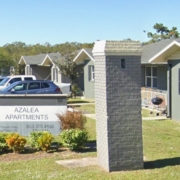
Azalea Apartments: Preserving Affordable Housing in Rural Bowling Green, Florida

In the rural town of Bowling Green, Florida, affordable rental housing is both scarce and critically important to the stability of the community. With a population of just over 2,400 people, the loss of even one affordable housing property in Bowling Green could have a lasting impact on the wellbeing of the property’s residents, and the community as a whole.

Azalea Apartments is a 40-unit housing development built in 1978. Supported by a HUD Housing Assistance Payment contract and spread across 20 small buildings, the property provides two, three, and four-bedroom apartments that are essential for families with low- and very-low incomes in Bowling Green. When Azalea’s longtime nonprofit owner decided to exit the Florida market, the property faced an uncertain future. Without a mission-driven buyer, the property risked leaving the U.S. Department of Agriculture (USDA) Section 515 program—threatening long-term affordability and housing stability for the families who call Azalea home.

Steven Brown, Executive Director of Florida Non-Profit Housing, Inc. (FNPH), says his organization was a natural fit to purchase the property. “We are a nonprofit in central Florida that has experience as a technical assistance provider to non-profits that built housing through the Rural Development 515 program, and the USDA 514/516 program for farmworkers,” Brown said. “We were committed to keeping the property affordable in perpetuity, and we were also interested in it because it was our first purchase of a USDA 515 property.”

.

How HAC Helped

By utilizing HAC’s Center for Multifamily Housing Preservation (the Center), FNPH was able to navigate the complex property transfer process and assemble the resources needed to preserve the property.

“The Center’s ability to assist non-profits and housing authorities is integral to keeping the 515 portfolio intact,” said HAC Rental Housing Development and Preservation Specialist Angela Shuckahosee. “Year after year, properties exit the portfolio as owners pay off their mortgages. Identifying capable, mission-driven non-profits and housing authorities who can become owners is the key to ensuring thousands of rural residents are not displaced and can maintain a rent payment that enables them to thrive instead of struggle.”

Early in the process, the Center provided hands-on technical assistance to FNPH, helping them evaluate the property’s finances, work through federal requirements, and plan for long-term stewardship. Recognizing that predevelopment funding is often a barrier for rural nonprofits, HAC’s loan fund also provided a 0% predevelopment loan that allowed the deal to move forward. As the transaction advanced, the Center supported FNPH through the USDA Rural Development transfer process and the assumption of the HUD Section 8 contract, ensuring rental assistance would remain in place for all 40 of Azalea’s units. When asked about their role in the transfer process, Brown made HAC and the Center’s importance clear:

“We would never been able to complete this transaction without the help of the dedicated HAC staff. Not only was their knowledge of the programs and process essential to moving the transfer to a successful conclusion, but their dedication to making the project successful in the long term was very advantageous to FNPH.”

The Result

Today, Azalea Apartments is positioned for long-term preservation as affordable housing in Bowling Green. The transfer to Florida Non-Profit Housing keeps the property in the USDA Section 515 program and preserves HUD rental assistance for every unit. As for their future plans, Brown indicated that FNPH hopes to obtain financing from USDA or another source to upgrade the apartments and offer homeownership counseling to residents who may want to move on and purchase a home.

For residents, this means stability—families can remain in their homes, and their community, without disruption. For FNPH, the project strengthens their organizational capacity and demonstrates how nonprofit ownership can protect affordability in challenging or underserved rural markets.

“We have added the preservation of existing low-income housing resources to FNLP’s mission, because we think it is vitally important for low-income families in rural areas,” Brown said. “We encourage other non-profit rural organizations to consider preserving this valuable resource in their communities.”

For the Center, Azalea Apartments reflects the power of early intervention, technical expertise, and mission-driven partnerships. As thousands of USDA Section 515 homes nationwide face similar risks, whether that means properties moving out of the 515 program, financial constraints, or other challenges present in rural America’s current housing landscape, preserving properties like Azalea helps ensure rural families continue to have safe, affordable places to live.
Expanding Service Coordination in Rural 515 Housing

How HAC and AARP Foundation Are Helping Owners Support Aging and Disabled Residents

Almost 600,000 residents across roughly 12,500 properties call the USDA 515 portfolio home. 30% of these residents, over 180,000, are over the age of 62, and 13% are disabled.  Our rural communities are aging in place, and most residents are navigating these unique challenges alone.  In 2022, USDA Rural Development (RD) began allowing service coordination as a permissible operational expenditure, but this is widely underutilized across the portfolio.  Simply put, most owners and managers of 515 properties are not employing service coordinators.

What are service coordinators?  According to the American Association of Service Coordinators, the role of the service coordinator is to link residents, people with disabilities and low-income families to supportive services and other community resources. They typically have education and experience in social work or human services and are skilled at identifying the needs of the residents within the property management setting.  For elderly and disabled residents, the service coordinator can be the difference between independent living and transitioning prematurely to a skilled facility.  Service coordinators work symbiotically with property management.  They interact with residents individually and coordinate group activities that promote wellness and fellowship.  Service coordinators do not provide direct services.  For example, they won’t clean a resident’s unit, but it is their role to find a capable agency to do so if that is an identified need.

The value of resident service coordination in federally subsidized properties is well-researched, and the positive impact on the lives of residents and performance of the properties are measurable. In 1990, HUD began allowing budget-based service coordination with dedicated grants funded in 1992.  Properties with service coordination often realize an array of benefits including a more stable resident base, less unit turn, better rent collection, and a heightened sense of community.

The AARP Foundation works in conjunction with other senior advocates and recognizes that more service coordination programs would widely benefit residents of USDA’s 515 portfolio.  As a result, in 2024, the foundation awarded Housing Assistance Council (HAC) a grant that affords free technical assistance to 515 property owners and managers.  The grant pays for HAC staff time dedicated to building service coordination programs in elderly-designated 515 properties by utilizing the normal RD budget process.  2025 marked the first year of this three-year grant.  The first cohort (2025) includes six management companies and 68 properties (2,316 units total).  Although progress was slowed by the 2025 government shutdown, owners are advancing towards the end goal of fully instilling service coordination programs at each of the 68 properties.  This includes equipping the companies with training, expertise and infrastructure to support those programs for the long-term.

The first year-long cohort began in 2025 with site visits to many of the 68 properties across several states including West Virginia, Georga, Alabama, Florida, Montana, Idaho, and Indiana.  The most valuable aspect of the site visits was conversing with property managers who conveyed the needs of the residents.  A vast majority of the property managers described encountering resident issues that require social-service intervention, such as poor unit condition, missed rent payments, or general isolation and loneliness.  Even the most well-intentioned property managers simply do not have enough time in their work week to provide the level of assistance needed for many residents.  Some lack expertise, most lack time in the day.  The site visits always ended with optimism that a service coordinator could make a positive impact for everyone-the residents and the property manager alike.

HAC’s technical assistance includes making recommendations on service coordinator program logistics at each property, navigating the budget process and providing budget narratives, and providing ongoing training for management and the initial service coordinator placement.  Year 3 of the grant is dedicated to capturing resident metrics from Cohorts I and II and creating a toolkit that will be scaled so that future interested owners and managers can build service coordination programs autonomously within their 515 properties. Ultimately, HAC will turn the partnership with AARP into a playbook and set of best practices for owners of rural affordable housing to add service coordination to more properties across the nation.

HAC is currently recruiting for Cohort II (2026) and invites interested 515 owners and managers to apply.  An informational session will be conducted in the coming weeks.  Anyone interested in attending should email Angela Shuckahosee at Angela@ruralhome.org or call 216-815-0114.

DEADLINE PASSED: HAC Seeks Proposals for its 2026 Affordable Housing for Rural Veterans (AHRV) Initiative

HAC’s Affordable Housing for Rural Veterans (AHRV) Initiative supports local nonprofit housing development organizations that meet or help meet the affordable housing needs of veterans with low incomes in rural places. Grants typically range up to $30,000 per organization and must support bricks-and-mortar projects that assist low-income, elderly and/or disabled veterans with critical home repair, accessibility modifications, support homeless veterans, help veterans become homeowners, and/or secure affordable rental housing.

HAC’s AHRV Initiative is funded through the generous support of The Home Depot Foundation. Applications are due by 4:00PM (EST) on or before Monday, January 19, 2026. For more information, contact HAC staff, ahrv@ruralhome.org. No phone calls please. Program staff will be available to answer questions during the Grant Funding Opportunity HAC 2026 AHRV RFP Overview webinar on Wednesday, January 7, 2026, at 2PM (ET).

Download the Application Package: Application (WORD) | Application Guidelines

Download Application (WORD) Application Guidelines Register For Webinar

Webinar: Request for Proposals – Overview HAC 2026 Affordable Housing for Rural Veterans

HAC hosted a webinar on January 7, 2026 providing guidance on how to apply for the AHRV program. Access the power point presentation here or view the recording below.

Applications Now Open for HAC’s Service Coordination Technical Assistance Program

We are pleased to announce open applications for the cohort of the Service Coordination Technical Assistance Program.  Thanks to a generous grant from the AARP Foundation, HAC will provide technical assistance to an initial group of 8-10 owners of USDA 515 rental properties to build a resident service coordination program.  We suggest reading the SCTAP Program Overview and Program Implementation Details prior to filling out the application.

Please reach out to Center for Rural Preservation Manager, Seth Leonard, at Seth@ruralhome.org with questions.


2026 SCTAP Program Overview 2026 SCTAP Implementation Details Apply Now

National Rural Housing Conference convenes stakeholders to “Build Rural”

Nearly 600 rural housing practitioners and policymakers came together in Washington, DC on November 4-7 for the 2025 National Rural Housing Conference. Recordings of the plenary sessions are available online, including a discussion with the CEOs of Enterprise Community Partners, Habitat for Humanity International, and NeighborWorks America. Anyone who registered for the conference can access workshop materials and other resources through the conference app or by logging into the Attendee Hub. HAC thanks our many sponsors, scholarship contributors, and partners for helping to make the event possible.


Watch the Opening Plenary Session


Learn More About Veterans In Your Community

HAC’s Veterans Data Central has been updated with the most recent information and data. Veterans Data Central is a simple, easy to use, on-line resource that provides essential information on the social, economic, and housing characteristics of veterans in the United States. This data and information can help support sound strategies and policies to help veterans. Learn more at https://veteransdata.info/.

Materials Posted: NMTCs for Affordable Homeownership Webinars

Webinar Materials

Presentation | One-Pager | Recording


Learn about the New Markets Tax Credits (NMTC) program and using NMTCs for Affordable Homeownership Projects.

Since 2008, NMTCs have been successfully used for affordable homeownership projects. To date, more than $850 million in NMTC loans have been invested toward the development of 7,436 affordable homes for-sale to low- and moderate-income homebuyers.

NMTCs generate flexible financing, including a portion that does not have to be repaid which can bring significant net benefit homeownership projects and sponsors. This equity and subsidy generated can be used to address market gaps, create additional affordability, or increase the capacity of nonprofit developers.

Housing Assistance Council will be applying to the CDFI Fund for NMTCs during the 2026 award round, which is expected to open this fall. HAC’s NMTC program will target rural affordable homeownership projects, to increase access to NMTC benefits in rural communities. We need your help to build a robust pipeline of projects.

Below is a summary about program eligibility and participation, put together by Smith NMTC Associates, LLC, NMTC experts who created the NMTC homeownership model and Housing Assistance Council’s partner in managing HAC’s new NMTC program. Feel free to contact Donna Smith directly at dasmith@smithnmtc.com or 314-974-7858 with NMTC questions.

GET THE HAC NEWS!

Sign-up for HAC information products

SIGN UP HERE

Housing Assistance Council   |  1828 L Street. N.W., Suite 505, Washington, D.C. 20036
(202) 842-8600 (202) 347-3441 hac@ruralhome.org |

Board Portal

HAC is an equal opportunity provider, employer, and lender. | Civil Rights | Privacy