HAC News: June 13, 2012

HAC News Formats. pdf

June 13, 2012
Vol. 41, No. 12

• House subcommittees act on FY13 USDA and HUD funding • The House’s USDA appropriations bill • The House’s HUD appropriations bill • HUD, USDA RD, and the CDFI Fund announce new Border Community Capital Initiative • FHFA requests comments on housing goals and preservation impact • USDA examines immigration policy’s impacts on agriculture • USDA announces June is National Homeownership Month • HAC sets webinar on “Mapping Poverty in Rural America”


June 13, 2012
Vol. 41, No. 12

HOUSE SUBCOMMITTEES ACT ON FY13 USDA AND HUD FUNDING. House appropriations subcommittees have approved both bills and the full House Appropriations Committee is expected to act on them in the next few weeks. The Senate bills (see HAC News, 5/2/12) still await consideration by the full Senate. Congress continues to move appropriations on a faster track this year than in the recent past, but final passage of most appropriations bills may not occur until a post-election lame duck session.

THE HOUSE’S USDA APPROPRIATIONS BILL would provide lower amounts than the Senate’s bill for almost all rural housing programs. It allocates slightly more to the Section 515 rural rental housing program than the Senate bill, although the House’s $31.3 million is less than half of the $64.5 million Section 515 received in FY12. The House bill also contains new language in every provision relating to housing programs and in some, but not all, provisions relating to other Rural Development programs, requiring USDA to provide detailed spending plans within 15 days of enactment. [tdborder][/tdborder]

USDA Rural Devel. Prog.
(dollars in millions)

FY11
Approp.a

FY 12
Approp.

FY13
Admin. Budget

FY13
Sen. Bill
(S. 2375)

FY13 House Subcomm. Bill

502 Single Fam. Direct
(Self-Help Setaside)
(Teacher Setaside)

$1,121
—
—

$900
—
—

$652.8
(141)
(67)

$900
(5)
0

$652.8
0
0

502 Single Family Guar.

24,000

24,000

24,000

24,000

24,000

504 VLI Repair Loans

23.4

10

28

28

10

504 VLI Repair Grants

34

29.5

28.2

b

c

515 Rental Hsg. Direct

69.5

64.5

0

28.4

31.3

514 Farm Labor Hsg.

25.7

20.8

26

26

d

516 Farm Labor Hsg.

9.8

7.1

8.9

8.9

d

521 Rental Assistance
(Preservation RA)
(New Cnstr. 515 RA)
(New Cnstr. 514/516 RA)

955.6
0
(2.03)
(3)

904.7
0
(1.5)
(2.5)

907.1
0
0
(3)

907.1
0
0
(3)

886.6f
0
(1.5)
(2.5)

523 Self-Help TA

37

30

10

30

15

533 Hsg. Prsrv. Grants

10

3.6

0

b

c

538 Rental Hsg. Guar.

30.9

130

150

150

150

Rental Prsrv. Demo. (MPR)

15

2

34.4

16.8

2

Rental Prsrv. Revlg. Lns.

1

0

0

0

0

542 Rural Hsg. Vouchers

14

11

12.6

11

10.8

Rural Cmnty. Dev’t Init.

5

3.6

8

6.1

3.5e

a. Figures shown do not include 0.2% across the board reduction.
b. Total for 504 grants and 533 grants is $33.1 million.
c. Total for 504 grants and 533 grants is $17 million.
d. Total budget authority for Section 514 loans and Section 516 grants is $13.8 million, compared to the Senate bill’s total of $17.5 million.
e. Of the $3.549 million total for RCDI, $3.302 million is directed to community facilities grants to tribal colleges.
f. HAC originally reported the House subcommittee’s level for Rental Assistance was $866.6 million, but the correct figure is $886.6 million. HAC apologizes for any confusion.

THE HOUSE’S HUD APPROPRIATIONS BILL boosts funding for HOME, Section 202, CDBG, and SHOP above the levels in FY12 and in the Senate’s bill. The Rural Innovation Fund is not funded and seems dead after being left out of HUD’s budget proposal again. The Rural Housing Stability Program is funded as part of homeless assistance grants. Veterans housing vouchers are funded at $75 million and Native American Block Grants are at $650 million, maintaining 2012 levels for both programs. The House bill does not fund Choice Neighborhoods or Sustainable Communities.

HUD Program
(dollars in millions)

FY11
Approp.a

FY12
Approp.

FY13
Admin. Budget

FY13
Sen. Bill
(S. 2322)

FY13 House Subcomm.
Bill

Cmty. Devel. Fund (incl. CDBG)
Sustainable Commun. Init.
Rural Innovation Fund

3,508
(100)
0

3,308.1
0
0

3,143
100
0

3,210 b
50
0

3,404 b
0
0

HOME

1,610

1,000

1,000

1,000

1,200

Tenant-Based Rental Asstnce.
Vets. Affairs Spptve Hsg. Vchrs

18,408
(50)

18,914.4
(75)

19,074.3
(75)

19,396.3
(75)

19,134.3
(75)

Project-Based Rental Asstnce.

9,257.4

9,339.7

8,700.4

9,875.8

8,700.4

Public Hsg. Capital Fund

2,044

1,875

2,070

1,985

1,985

Public Hsg. Operating Fund

4,626

3,961.9

4,524

4,591

4,524

Choice Neighbrhd. Initiative

0

120

150

120

Housing Trust Fund

0

0

1,000

0

0

Native Amer. Hsg. Block Grant

650

650

650

650

650

Homeless Assistance Grants

1,905

1,901.2

2,231

2,146

2,000

Rural Hsg. Stability Prog.

—

—

5

c

c

Hsg. Opps. for Persons w/ AIDS

335

332

330

330

330

202 Hsg. for Elderly

400

374.6

475

375

425

811 Hsg. for Disabled

150

165

150

150

165

Fair Housing

72

70.8

68

68

68

Healthy Homes & Ld. Haz. Cntl.

120

120

120

120

120

Self-Help Homeownshp. (SHOP)

27

13.5

0

13.5

20

Housing Counseling

0

45

55

55

45

a. Figures shown do not include 0.2% across the board reduction. b. Includes $3.1 billion in Senate and $3.34 billion in House for CDBG. c. Funded under Homeless Assistance Grants.

HUD, USDA RD, AND THE CDFI FUND ANNOUNCE NEW BORDER COMMUNITY CAPITAL INITIATIVE. Community development lenders and investors, which can include local rural nonprofits and federally recognized tribes, will be eligible for funds and technical assistance to support their lending or investing related to affordable housing, small businesses, and community facilities in the colonias along the U.S.-Mexico border. The collaboration may later be extended to other persistent poverty regions of the country. The announcement does not indicate when a NOFA may be issued. Contact Russell Quiniola or Thann Young, HUD, 1-877-787-2526.

FHFA REQUESTS COMMENTS ON HOUSING GOALS AND PRESERVATION IMPACT. The Federal Housing Finance Agency proposes continuing the existing structure of Fannie Mae and Freddie Mac housing goals (with no rural goals or subgoals) for 2012-2014, with new benchmark levels. FHFA also seeks comments on whether the regulation should address the possibility that Fannie or Freddie would receive credit under the housing goals for purchasing a multifamily mortgage that facilitates conversion of the property from affordable rents to market rate. Comments are due July 26, 2012. Contact Paul Manchester, FHFA, 202-649-3115.

USDA EXAMINES IMMIGRATION POLICY’S IMPACTS ON AGRICULTURE. As Congress considers possible changes in immigration laws, an Economic Research Service study finds that an increase in H2-A temporary workers would increase U.S. agricultural production and reduce wages. A decrease in the undocumented workforce would decrease production and raise wages. The study does not address impacts on housing.

USDA ANNOUNCES JUNE IS NATIONAL HOMEOWNERSHIP MONTH.

HAC SETS WEBINAR ON “MAPPING POVERTY IN RURAL AMERICA.” As a prelude to the 2012 edition of Taking Stock – HAC’s decennial report on social, economic, and housing conditions in rural America – HAC is releasing an updated poster map showing county-level poverty data from 2010 Census figures, as well as information on historic, regional, and persistent poverty in the United States. Register now for a webinar presentation of the poverty map and a discussion of poverty in rural America on Thursday, June 28, 2:00-2:45 pm (EDT).

Spring 2012: HOME Works for Rural Communities

The Spring 2012 issue of Rural Voices includes more than 25 brief success stories from rural organizations that have utilized the HOME program to develop housing, create jobs, and provide decent affordable homes for their communities.

Views from Washington

The HOME Investment Partnerships Program: Cornerstone of Affordable Housing Development Efforts
by Senator Partick Leahy, (D – VT)

The HOME Investment Partnerships Program (HOME)
by Mercedes Márquez

FEATURES

What is the HOME Program
A detailed overview of the HOME Program.

The New HOME Rules and What They Mean
HUD has plans to make several changes to the HOME Final Rule. What are those changes and how will they impact rural communities?

STORIES FROM YOUR COMMUNITY

This issue of Rural Voices features success stories from organizations that have successfully utilized the HOME program to develop housing, create jobs, and provide decent affordable housing for their communities.

HAC would like to thank the following organizations for sharing their stories:

Brazos Valley Affordable Housing Corporation, City of Hesperia/Hesperia Housing Authority, City of Santa Clarita, Cocopah Indian Housing and Development, Community Action, Inc., Community Development Commission of Mendocino County, Community Housing Partners, Community Support Program, Inc., Crawford-Sebastian CDC, Delta Area Economic Opportunity Corporation, Economic Security Corporation, Freedom West Community Development Corporation, Inter-Lakes Community Action Partnership, New Mexico Housing & Community Development Corporation, Northwest Housing Alternatives, Opportunities for Chenango Inc., PathStone Corporation, PRIDE of Ticonderoga, Inc., Self Help Enterprises, South County Housing Corporation, Southwest Minnesota Housing Partnership, St. Vincent de Paul Society of Lane County, Inc., Tierra Del Sol Housing Corporation, Tri-County Opportunities Council, Vermont Housing and Conservation Board, and Walker Montgomery Community Development Corporation.

Share your Story

Rural Voices is not a large enough publication in which to cover all the stories of how HOME has positively benefitted communities across the country. Do you have a great story from your own community to share on this subject? Please tell us in the comments below, share your story on Facebook, LinkedIn, or tweet #HUDHOMEWorks and help demonstrate the importance of the HOME program to communities across the country.

HOME program weblinks.

Share your HOME Success Story

HAC News: May 30, 2012

HAC News Formats. pdf

May 30, 2012
Vol. 41, No. 11

• Wall Street Journal criticizes USDA foreclosure actions • VA analyzes factors linked to homelessness among veterans • Housing and ACS funding bills have not advanced • Notice addresses liquidation value appraisals for Section 502 guaranteed • Rural prepayment clarifications issued • USDA reminds field staff about documentation for Sections 514, 515, and 516 • USDA RD field staff have access to new cost data tool • Minorities and renters undercounted in 2010 Census • Vacancy rate higher in rural America, HAC reports • HAC blogs about rental housing policy • HOME program examined in new issue of Rural Voices • HAC seeks nominations for rural housing awards


May 30, 2012
Vol. 41, No. 11

WALL STREET JOURNAL CRITICIZES USDA FORECLOSURE ACTIONS. A May 25 article headlined “USDA is a Tough Collector When Mortgages Go Bad” describes USDA’s efforts to collect funds from borrowers who obtained Section 502 guaranteed mortgages, then lost income and lost their homes to foreclosure. Links to the article, online comments, and responses from HAC, the National Rural Housing Coalition, and others are posted on HAC’s site.

VA ANALYZES FACTORS LINKED TO HOMELESSNESS AMONG VETERANS. “Homeless Incidence and Risk Factors for Becoming Homeless in Veterans” reports that the presence of mental illness and/or substance-related disorders was the strongest predictor of becoming homeless after discharge. Homeless vets were also more likely to have served in Afghanistan or Iraq. In the population studied, Afghanistan/Iraq vets and women were most likely to use HUD-VASH vouchers. The VA study did not include urban-rural or other geographic information. The Daily Yonder reports that Census data show that generally vets disproportionately live in rural and exurban communities, although those who served after 1990 are not overrepresented in rural America.

HOUSING AND ACS FUNDING BILLS HAVE NOT ADVANCED. Dates have not been determined for full Senate consideration of FY13 funding bills for USDA, HUD, or the Census Bureau’s American Community Survey (see HAC News, 5/16/12). The HAC News and HAC’s website will report updates when available.

NOTICE ADDRESSES LIQUIDATION VALUE APPRAISALS FOR SECTION 502 GUARANTEED. Administrative Notice 4646 provides direction on obtaining a liquidation appraisal report to determine USDA’s loss claim for a 502 guaranteed property that has been taken into REO by the lender. Contact a USDA RD field office.

RURAL PREPAYMENT CLARIFICATIONS ISSUED. Subjects covered by USDA in an Unnumbered Letter dated May 14, 2012 include the distinction between prepayment and partial or final payments, and handling of incentives for property owners if ownership is transferred. Contact a USDA RD field office.

USDA REMINDS FIELD STAFF ABOUT DOCUMENTATION FOR SECTIONS 514, 515, AND 516. Administrative Notice 4645 addresses weaknesses identified in a 2011 management control review. Contact a USDA RD field office.

USDA RD FIELD STAFF HAVE ACCESS TO NEW COST DATA TOOL. An Unnumbered Letter dated April 20, 2012 announces the availability for staff of data reports that can be used to compare costs in multifamily housing and for other purposes. Contact a USDA RD field office.

MINORITIES AND RENTERS UNDERCOUNTED IN 2010 CENSUS. The Census Bureau has calculated that overall the 2010 Census was accurate although, as in previous decades, certain groups were undercounted. African Americans were undercounted by 2.1% and Hispanics by 1.5%. Asians and Native Hawaiians and Other Pacific Islanders had no statistically significant error rate. American Indians and Alaska Natives living on reservations were undercounted by 4.9%, while there was no statistically significant error rate for those not living on reservations. Renters were undercounted by 1.1%.

VACANCY RATE HIGHER IN RURAL AMERICA, HAC REPORTS. A new Rural Research Note, “Housing Occupancy and Vacancy in Rural America,” reports that housing vacancy rates in rural and small town areas are approximately 7 percentage points higher than the national level. Much of the higher vacancy rate in rural areas is due to the number of homes unoccupied for seasonal, recreational, or occasional use. Nearly 60% of all vacant seasonal or recreational homes nationwide are in rural and small town areas.

HAC BLOGS ABOUT RENTAL HOUSING POLICY. In the first of a series of contributions to the National Housing Institute’s Rooflines blog, HAC wonders, “What Does an Affordable Rural Rental Housing Strategy Look Like?” and suggests both general and specific components of such a strategy.

HOME PROGRAM EXAMINED IN NEW ISSUE OF RURAL VOICES. The spring issue of HAC’s quarterly magazine includes over 25 brief success stories from rural organizations that have used the HOME program to develop housing, create jobs, and provide decent affordable housing, as well as pieces from Senator Patrick Leahy (D-VT) and former HUD official Mercedes Marquez and a summary of what proposed changes in HOME regulations could mean for rural places.

HAC SEEKS NOMINATIONS FOR RURAL HOUSING AWARDS. Nominations are due September 28 for the Cochran/Collings Award for national rural housing service and the Skip Jason Community Service Award. The honors will be presented at the National Rural Housing Conference in December. Details will be available soon at http://ruralhome.org or from Lilla Sutton, HAC, 202-842-8600, lilla@ruralhome.org.

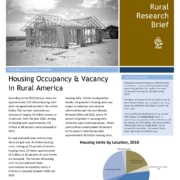
Housing Occupancy and Vacancy in Rural America

Seasonal and Recreational Homes Contribute to Higher Housing Vacancy Rates in Rural & Small Town America

According to the 2010 Census, there are just over 30 million housing units in rural and small town communities, making up 23 percent of nation’s housing stock. Of these, approximately 25 million, or 82 percent, of rural homes are occupied. Housing vacancy rates in rural and small town areas are approximately 7 percentage points higher than the national level. Much of the higher vacancy rate in rural areas is due to the number of homes unoccupied for seasonal, recreational, or occasional use. In fact, nearly 60 percent of all vacant seasonal, or recreational homes nationwide are located in rural and small town areas. Additionally, the number of housing units in rural and small town communities increased by nearly 3 million (11 percent) between 2000 and 2010.

For more information on this issue, check out HAC’s newest Rural Research Note: Housing Occupancy and Vacancy in Rural America (PDF)

HAC News: May 16, 2012

HAC News Formats. pdf

May 16, 2012
Vol. 41, No. 10

• Funding for housing and demographic data threatened • House approves new funding cuts, White House threatens veto • Section 533 HPG preapplications invited • Executive Order requires public input on review of existing regulations • New requirements set for HOME projects • Rule changes proposed for Section 8 • HUD changes ConPlan process • Guidance updated for prepayment and refinancing of Section 202 projects • CDBG colonias set-aside guidelines provided • National homeownership rate lowest in 15 years • GAO recommends further study of overlap in federal homelessness programs • Nonprofits investigate most housing discrimination complaints, NFHA reports • USDA celebrates 150th anniversary


May 16, 2012
Vol. 41, No. 10

FUNDING FOR HOUSING AND DEMOGRAPHIC DATA THREATENED. On May 9 the House of Representatives passed its FY13 Commerce, Justice, and Science appropriations bill (H.R. 5326), eliminating all funding for the Census Bureau’s American Community Survey, which is the only source of publicly available data on social, economic, and housing characteristics for all U.S. communities. The Senate may take up its bill (S. 2323) this week.

HOUSE APPROVES NEW FUNDING CUTS, WHITE HOUSE THREATENS VETO. The House has passed H.R. 5652, the Sequester Replacement Reconciliation Act, which would cancel the sequestration (across-the-board cuts in discretionary spending) approved in the 2011 Budget Control Act and implement deeper cuts in social programs but not in defense spending. The Senate is not expected to agree. The White House said President Obama will not sign any appropriations bills until the House agrees to abide by the Budget Control Act.

SECTION 533 HPG PREAPPLICATIONS INVITED. Nonprofits, state and local governments, federally recognized tribes, and consortia are eligible for Housing Preservation Grants to be used for repairs to owner-occupied or rental properties. Deadline is June 25. Obtain a preapplication form at USDA RD’s website or from an RD state office.

EXECUTIVE ORDER REQUIRES PUBLIC INPUT ON REVIEW OF EXISTING REGULATIONS. Building on Executive Order 13563 of January 11, 2011, which obligates federal agencies to conduct periodic retrospective reviews of their regulations, Executive Order 13610 of May 10, 2012 requires them, on a regular basis, to invite public suggestions about what regulations that should be reviewed and what changes should be adopted.

NEW REQUIREMENTS SET FOR HOME PROJECTS. Regulation changes proposed in December (see HAC News, 1/11/12) have not been finalized, but Notice CPD 12-007 implements similar changes, most only for projects using FY12 HOME funds. For example, a CHDO can be funded only if its staff have experience with the type of project proposed. A detailed summary of CPD 12-007 is available from the National Low Income Housing Coalition. Contact a local HUD field office.

RULE CHANGES PROPOSED FOR SECTION 8. Comments are due July 16 on changes implementing Housing and Economic Recovery Act of 2008 provisions for both tenant-based and project-based vouchers. See Federal Register, 5/16/12 or regulations.gov. Contact Danielle Bastarache, HUD, 202-401-3882.

HUD CHANGES CONPLAN PROCESS. A new process for electronic submission of Consolidated Plans, including use of required templates, is described in Notice CPD 12-009. New data and a web-based mapping tool are available to grantees and the public. Details and links are posted on HUD’s site. Contact HUD, conplan.mailbox@hud.gov.

GUIDANCE UPDATED FOR PREPAYMENT AND REFINANCING OF SECTION 202 PROJECTS. HUD Notice H 2012-8 implements the Section 202 Supportive Housing for the Elderly Act of 2010 (see HAC News, 1/5/11). Contact a HUD Multifamily Hub office.

CDBG COLONIAS SET-ASIDE GUIDELINES PROVIDED. HUD Notice CPD-12-008 requires improved document-tation by HUD offices, intended to help track the accomplishments and measure the effectiveness of the set-aside in Arizona, California, New Mexico, and Texas. Contact Steve Rhodeside, HUD, 202-402-7375.

NATIONAL HOMEOWNERSHIP RATE LOWEST IN 15 YEARS. Census Bureau tabulations show that the national rate has fallen to 65.5% from its 2005 high of 69.2%; it is 43.1% for African Americans and 46.3% for Hispanics. In nonmetro areas, homeownership is currently 73.9%; it was 73.7% in 1997 and reached 76.3% in 2005.

GAO RECOMMENDS FURTHER STUDY OF OVERLAP IN FEDERAL HOMELESSNESS PROGRAMS.Fragmentation and overlap of services occur among the 26 homelessness programs operated by eight federal agencies, the Government Accountability Office reports. Coordination by the U.S. Interagency Council on Homelessness helps, but its strategic plan lacks needed elements, says GAO. Homelessness: Fragmentation and Overlap in Programs Highlight the Need to Identify, Assess, and Reduce Inefficiencies (GAO-12-491) is available online or from GAO, 866-801-7077.

NONPROFITS INVESTIGATE MOST HOUSING DISCRIMINATION COMPLAINTS, NFHA REPORTS. A National Fair Housing Alliance review of 2011 data found nonprofit fair housing organizations investigated 65% of all complaints. Of all complaints nationwide, 44% involved disabilities and 19% involved race. More than 10% of complaints to nonprofits involved bases of discrimination not covered by federal law such as source of income, sexual orientation, or age. Fair Housing in a Changing Nation is posted at NFHA’s site.

USDA CELEBRATES 150TH ANNIVERSARY. A Presidential Proclamation recognizes that on May 15, 1862 President Abraham Lincoln signed legislation establishing USDA. (The Farmers Home Administration and the first USDA housing programs were created by the Housing Act of 1949.) USDA’s website has details about events.

HAC News: May 2, 2012

HAC News Formats. pdf, epub, mobi

May 2, 2012
Vol. 41, No. 9

• Senate committee rejects parts of Administration’s housing budget • Senate bill would add one year of eligibility for rural housing programs • Household Water Well System grants available • IDA funding offered for refugee programs • HUD issues final rule changes for State CDBG program • IRS rule addresses sale of LIHTC properties • List of Qualified Census Tracts for LIHTC updated • RD shifts from newspapers to electronic notices of changes in eligibility boundaries • Minorities account for three-quarters of rural population growth

[tdborder][/tdborder]
May 2, 2012
Vol. 41, No. 9

SENATE COMMITTEE REJECTS PARTS OF ADMINISTRATION’S HOUSING BUDGET. The Senate Appropriations Committee passed FY13 bills for HUD on April 19 and for USDA April 26. House committee action has not yet been scheduled. S. 2375 would fund most USDA housing programs at the higher of the FY12 appropriations level or the President’s FY13 budget request, although Section 515 and the MPR preservation demonstration would receive less than half their FY12 funding. The committee report chastises USDA for proposing different approaches to rental pre-servation in its FY12 and FY13 budgets and asks USDA for “an effective long-term strategy” for rental housing.

USDA Rural Devel. Program
(dollars in millions)

FY11 Approp.a

FY12 Final Approp.

FY13 Admin. Budget

FY13 Sen. Bill (S. 2375)

502 Single Fam. Direct
(Self-Help Setaside)
(Teacher Setaside)

$1,121
—
—

$900
—
—

$652.8
(141)
(67)

$900
(5)
0

502 Single Family Guar.

24,000

24,000

24,000

24,000

504 VLI Repair Loans

23.4

10

28

28

504 VLI Repair Grants

34

29.5

28.2

b

515 Rental Hsg. Direct

69.5

64.5

0

28.4

514 Farm Labor Hsg.

25.7

20.8

26

26

516 Farm Labor Hsg.

9.8

7.1

8.9

8.9

521 Rental Assistance
(Preservation RA)
(New Constr. 515 RA)
(New Constr. 514/516 RA)

955.6
0
(2.03)
(3)

904.7
0
(1.5)
(2.5)

907.1
0
0
(3)

907.1
0
0
(3)

523 Self-Help TA

37

30

10

30

533 Hsg. Prsrv. Grants

10

3.6

0

b

538 Rental Hsg. Guar.

30.9

130

150

150

Rental Prsrv. Demo. (MPR)

15

2

34.4

16.8

Rental Prsrv. Revlg. Lns.

1

0

0

0

542 Rural Hsg. Vouchers

14

11

12.6

11

Rural Cmnty. Dev’t Init.

5

3.6

8

6.1

S. 2322 would keep SHOP at its FY12 level of $13.5 million. The National Housing Trust Fund would not be funded. Assistance for tenants, both project-based and tenant-based, would fare better than under the Administration’s budget, but Section 202 elderly housing would fare worse and Section 811 for people with disabilities would see a reduction from its FY12 level. HUD tenants would not be required to pay $75 minimum monthly rent.

HUD Program
(dollars in millions)

FY11
Approp. a

FY 12 Approp.

FY13 Admin. Budget

FY13 Sen. Bill (S. 2322)

Cmty. Devel. Block Grants
(Sustainable Commun. Init.)
(Rural Innovation Fund)

3,508
(100)
0

3,308.1
0
0

3,143
(100)
0

3,210 b
(50)
0

HOME

1,610

1,000

1,000

1,000

Tenant-Based Rental Asstnce.
(Vets. Affairs Spptve Hsg. Vchrs)

18,408
(50)

18,914.4
(75)

19,074.3
(75)

19,396.3
(75)

Project-Based Rental Asstnce.

9,257.4

9,339.7

8,700.4

9,875.8

Public Hsg. Capital Fund

2,044

1,875

2,070

1,985

Public Hsg. Operating Fund

4,626

3,961.9

4,524

4,591

Choice Neighbrhd. Initiative

0

120

150

120

Housing Trust Fund

0

0

1,000

0

Native Amer. Hsg. Block Grant

650

650

650

650

Homeless Assistance Grants

1,905

1,901.2

2,231

2,146

Rural Hsg. Stability Prog.

—

c

5

c

Hsg. Opps. for Persons w/ AIDS

335

332

330

330

202 Hsg. for Elderly

400

374.6

475

375

811 Hsg. for Disabled

150

165

150

150

Fair Housing

72

70.8

68

68

Healthy Homes & Ld. Haz. Cntl.

120

120

120

120

Self-Help Homeownshp. (SHOP)

27

13.5

0

13.5

Housing Counseling

0

45

55

55

a. Figures shown do not include 0.2% across the board reduction.
b. Includes $3.1 billion for CDBG.
c. Funded under Homeless Assistance Grants; amount not specified.

SENATE BILL WOULD ADD ONE YEAR OF ELIGIBILITY FOR RURAL HOUSING PROGRAMS. The Senate USDA appropriations bill, S. 2375, includes a grandfathering provision for places that have gained population and would otherwise become ineligible for USDA housing aid. (See HAC News, 9/28/11.) The bill would keep them eligible through the end of FY13 on September 30, 2013.

HOUSEHOLD WATER WELL SYSTEM GRANTS AVAILABLE. Nonprofits can apply to the Rural Utilities Service to establish lending programs for homeowners. The deadline will be included in the notice in the Federal Register, 5/3/12 and at grants.gov. Contact Joyce M. Taylor, RD, 202-720-9589.

IDA FUNDING OFFERED FOR REFUGEE PROGRAMS. Nonprofits, government agencies, and educational institutions can apply to the Department of Health and Human Services for grants to establish and manage Individual Development Accounts for low-income refugees, to be used for purposes including homeownership. Deadline is June 18. Contact Yimeem Vu, HHS, 202-401-4825. The next deadline for the standard Assets for Independence IDA pro-gram is May 25. Contact James Gatz, HHS, 866-778-6037.

HUD ISSUES FINAL RULE CHANGES FOR STATE CDBG PROGRAM. The changes update the State CDBG program regulations and clarify program income requirements. A provision requiring entitlement jurisdictions to receive only an incidental benefit from State CDBG program expenditures is replaced by one that allows expenditures in entitlement areas if the activities significantly benefit residents of the state grant recipient and meet the nonentitlement jurisdiction’s needs, and if the entitlement jurisdiction makes a meaningful contribution to the project. See Federal Register, 4/23/12. Contact Eva C. Fontheim, HUD, 202-708-1322.

IRS RULE ADDRESSES SALE OF LIHTC PROPERTIES. A final rule to be published in the Federal Register, 5/3/12, provides guidance on contracts to sell properties at the end of their extended use periods and computation of sales prices. Contact David Selig, IRS, 202-622-3040.

LIST OF QUALIFIED CENSUS TRACTS FOR LIHTC UPDATED. The list of Difficult Development Areas published 10/27/11 remains in effect. Visit HUDUser.org. Paper copies are available for a fee to cover costs, 800-245-2691.

RD SHIFTS FROM NEWSPAPERS TO ELECTRONIC NOTICES OF CHANGES IN ELIGIBILITY BOUNDARIES. An Unnumbered Letter dated April 17, 2012 says email and web posts are more effective than local newspapers to notify stakeholders before changing the boundaries determining eligibility for rural housing programs, and lists types of entities that should be contacted. It also eliminates the use of narrative descriptions of boundaries, stating they have not proved useful. Contact an RD office.

MINORITIES ACCOUNT FOR THREE-QUARTERS OF RURAL POPULATION GROWTH. From 2000 to 2010, Hispanics became a higher proportion of the nationwide rural and small town population than African Americans, with variations among localities. A new HAC Rural Research Note on “Race and Ethnicity in Rural America” presents these facts and other current data. Contact Lance George, HAC, 202-842-8600.

HAC News: April 18, 2012

HAC News Formats. pdf

April 18, 2012
Vol. 41, No. 8

• April is Fair Housing Month • Senate subcommittee marks up FY13 THUD bill • USDA appropriations to be considered in subcommittees soon • HUD offers Public Housing Family Self-Sufficiency funding • RD tells states to centralize delivery of Section 502 guarantee program • Final HUD environmental justice strategy posted • Section 8 Annual Adjustment Factors published • Aging population will face housing cost burdens and other challenges • Report examines criminalization of homelessness • Research correlates income inequality and racial segregation • ERS suggests framework for creating rural wealth


April 18, 2012
Vol. 41, No. 8

APRIL IS FAIR HOUSING MONTH. HUD is celebrating with a “Live Free” theme. Numerous states and localities, as well as civil liberties organizations, have also recognized the occasion.

SENATE SUBCOMMITTEE MARKS UP FY13 THUD BILL. Complete details on HUD funding levels have not been released, but a Senate Appropriations Committee press release reports increases from FY12 levels for CDBG, Section 8 vouchers, public housing, homeless assistance grants. Funding for HOME, Native American housing, and HUD housing counseling would remain at FY12 levels. The full Appropriations Committee is scheduled to review the bill on April 19. The House THUD appropriations subcommittee has not yet scheduled a mark-up. Updates will be posted on HAC’s website when available.

USDA APPROPRIATIONS TO BE CONSIDERED IN SUBCOMMITTEES SOON. The Senate Agriculture Appropriations Subcommittee is expected to mark up a bill next week, and its House counterpart to do so by mid-May.

HUD OFFERS PUBLIC HOUSING FAMILY SELF-SUFFICIENCY FUNDING. Public housing agencies and tribes or Tribally Designated Housing Entities can apply by May 30 for funds to hire FSS coordinators. Details are posted on HUD’s site and at grants.gov. Contact Dina Lehmann-Kim, HUD, 202-402-2430.

RD TELLS STATES TO CENTRALIZE DELIVERY OF SECTION 502 GUARANTEE PROGRAM. A March 1 Unnumbered Letter asks state offices to submit plans by May 1 that maximize efficiency and reduce staff time spent on program delivery. The UL also reminds state offices that other centralization efforts will be forthcoming. Read the UL online or contact an RD office.

FINAL HUD ENVIRONMENTAL JUSTICE STRATEGY POSTED. The strategy is intended “to improve and expand HUD’s commitment to avoiding disproportionately high and adverse human health or environmental effects on minority and low-income populations, as well as creating geographies of opportunity.” See Federal Register, 4/16/12, or HUD’s site. Contact Sunaree Marshall, HUD, 202-402-6011.

SECTION 8 ANNUAL ADJUSTMENT FACTORS PUBLISHED. FY12 AAFs will be used to adjust contract rents on Section 8 contract anniversaries and are posted at HUDuser.org. Contact Catherine Brennan, HUD, 202-708-3000.

AGING POPULATION WILL FACE HOUSING COST BURDENS AND OTHER CHALLENGES. In Housing an Aging Population: Are We Prepared?, the Center for Housing Policy reports that older adults are more likely than younger adults to have housing affordability challenges. Many older adults lack access to affordable services that could help them age in place, and to meaningful housing choices. The study considers other trends as well, and offers policy recommendations.

REPORT EXAMINES CRIMINALIZATION OF HOMELESSNESS. In Searching out Solutions: Constructive Alternatives to the Criminalization of Homelessness, the U.S. Interagency Council on Homelessness and the Justice Department suggest that, instead of prohibiting sleeping in public spaces or panhandling, localities could offer comprehensive systems of care, collaboration between law enforcement and service providers, and alternative justice system strategies such as specialty courts and reentry programs.

RESEARCH CORRELATES INCOME INEQUALITY AND RACIAL SEGREGATION. HUD reports that a geographic information system (GIS) analysis of data on white and African-American residents shows that while income inequality exists throughout the U.S., it is more likely in the South to be associated with racial segregation. When a map of the U.S. highway system is added it can be seen that many of the areas with high income inequality and high proportions of Black population are located relatively far from regional transportation systems. Two articles in HUD’s Cityscape journal describe the research and its policy implications.

ERS SUGGESTS FRAMEWORK FOR CREATING RURAL WEALTH. USDA’s Economic Research Service notes that economic growth requires physical, financial, social, political, and other types of assets, and that creating wealth is highly context-dependent. Rural Wealth Creation: Concepts, Strategies, and Measures discusses the role of wealth creation in the rural development process, how wealth can be created in rural communities, and how its accumulation and effects can be measured.


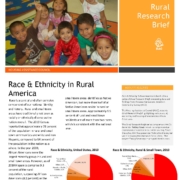
Race and Ethnicity in Rural America

Race & Ethnicity in Rural America is the third in a series of Rural Research Briefs presenting data and findings from the recently released 2010 Census and American Community Survey (ACS). HAC’s Research Note examines racial and ethnic characteristics of rural America, including trends and demographic shifts that have occurred since the 2000 census. This publication includes:

    • Figures on race and ethnicity in rural America;
    • An analysis of racial and ethnic minorities in rural and small town areas;
    • Population growth figures by race and ethicity.

Race and Ethnicity in Rural America (PDF)

HAC News: April 4, 2012

Special 40th Anniversary Edition of the HAC News

HAC News Formats. pdf, mobi, epub

HOUSING ASSISTANCE COUNCIL

NEWS

April 4, 2012
Vol. 41, No. 7

• First HAC News published 40 years ago • House approves veterans housing bill • VA offers Homeless Providers Per Diem funds • HUD proposes changes for voucher portability • Streamlining suggested for mixed-finance Section 202 and 811 developments • HUD clarifies Rental Assistance Demo, extends comment deadline • Revisions for Homeless Providers Grant and Per Diem Program possible • Rural housing leader Rose Garcia recognized at White House ceremony • Annual advocate’s guide published by NLIHC • REGISTER NOW for Housing Seniors in Rural America: Resources, Advocacy, and Practice

HOUSING ASSISTANCE COUNCIL

NEWS

April 4, 2012
Vol. 41, No. 7

FIRST HAC NEWS PUBLISHED 40 YEARS AGO. Since the first issue on April 10, 1972, the Housing Assistance Council has produced over 850 editions of the HAC News, the publication of note for those who wish to stay informed on rural housing matters. Please enjoy the “throwback” appearance of this issue as a celebration of the last 40 years. Thank you for all your efforts in building rural communities.

HOUSE APPROVES VETERANS HOUSING BILL. The Homes for Heroes Act, H.R. 3298, would create a Special Assistant for Veterans Affairs in HUD to coordinate services to homeless veterans and would require an annual report to Congress. The bill passed the House on March 27 by a 414-5 vote and was sent to the Senate. The bill’s text and status updates are at https://thomas.loc.gov.

VA OFFERS HOMELESS PROVIDERS PER DIEM FUNDS. These Per Diem Only funds are available to nonprofits, state and local governments, and tribes providing transitional housing and services, and cannot be used for buildings. Priorities include rural sites, tribal sites, and a new “Transition in Place” housing model in which support services – rather than the resident – transition out of the residence over time, and then the resident occupies the unit as permanent housing without supportive services. Apply by May 30. See Federal Register, 3/1/12 or https://www.va.gov/homeless/gpd.asp or https://www.grants.gov. Contact Chelsea Watson, VA, 877-332-0334 (toll free).

HUD PROPOSES CHANGES FOR VOUCHER PORTABILITY. Comments are due May 29 on changes intended to clarify requirements and processing of portability requests. See Federal Register, 3/28/12, or www.regulations.gov. Contact Laure Rawson, HUD, 202-708-0477.

STREAMLINING SUGGESTED FOR MIXED-FINANCE SECTION 202 AND 811 DEVELOPMENTS. Comment by May 29 on removing restrictions on the portions of projects not funded through capital advances. Additional changes are expected later in 2012. See Federal Register, 3/28/12 or https://www.regulations.gov. Contact Aretha Williams, HUD, 202-708-3000.

HUD CLARIFIES RENTAL ASSISTANCE DEMO, EXTENDS COMMENT DEADLINE. Comments are now due April 23 on the notice published March 8 (see HAC News, 3/7/12). See Federal Register, 4/4/12 and 3/8/12 or https://www.regulations.gov. Contact HUD, rad@hud.gov.

REVISIONS FOR HOMELESS PROVIDERS GRANT AND PER DIEM PROGRAM POSSIBLE. VA proposes to update the program’s current regulations and to implement and authorize new policies. Comments are due April 30. See Federal Register, 3/1/12, or https://www.regulations.gov. Contact Guy Liedke, VA, 877-332-0334 (toll-free).

RURAL HOUSING LEADER ROSE GARCIA RECOGNIZED AT WHITE HOUSE CEREMONY. Among ten Champions of Change honored on March 27 for exemplifying farmworker advocate César Chávez’s values was Ms. Garcia, executive director of Tierra del Sol Housing Corporation in New Mexico, who “has worked for over 30 years to improve the quality of life for the rural poor, minorities, farmworkers and the elderly individuals . . . along the United States–Mexico border.” Visit https://www.whitehouse.gov/champions.

ANNUAL ADVOCATE’S GUIDE PUBLISHED BY NLIHC. The 2012 Advocates’ Guide to Housing and Community Development Policy offers articles on federal programs and issues, and is free at https://www.nlihc.org or can be ordered for a fee from Shannon Faulk, National Low Income Housing Coalition, shannon@nlihc.org, 202-662-1530 x224.

REGISTER NOW for Housing Seniors in Rural America: Resources, Advocacy, and Practice,to be heldin Burlington, Vermont on June 5-6, 2012. This symposium will provide intensive training and information on housing for an aging population in rural America. Visit http://ruralhome.org or contact Janice Clark, HAC, janice@ruralhome.org.

Published by the

Housing Assistance Council
1025 Vermont Ave., N.W., Suite 606
Washington, DC 20005

www.ruralhome.org hac@ruralhome.org
202-842-8600

HAC News: March 21, 2012

HAC News Formats. pdf

March 21, 2012
Vol. 41, No. 6

Funding gridlock likely, given House Republican budget proposal • Donovan takes FY13 HUD budget to House subcommittee • Senators hear testimony on Indian housing • Senate panel holds hearing on homeless veterans • USDA offers RCDI funds • ACF funding available for IDAs • Water/waste priority possible for unserved colonias • Veterans vouchers clarifications published • Open forums offered on Section 538 • USDA draft MPR authorization bill moving forward • HUD adds to guidance on protecting tenants at foreclosure • Changes in Section 538 handbook underway • Rent still out of reach for minimum wage earners


March 21, 2012
Vol. 41, No. 6

FUNDING GRIDLOCK LIKELY, GIVEN HOUSE REPUBLICAN BUDGET PROPOSAL. The budget resolution proposed March 20 by Rep. Paul Ryan (R-Wisc.) is expected to pass the House, setting spending levels for domestic programs well below the caps in the Budget Control Act (the August 2011 deficit reduction agreement). Senate leaders plan to apply the BCA limits. The differences will complicate passage of FY13 appropriations bills.

DONOVAN TAKES FY13 HUD BUDGET TO HOUSE SUBCOMMITTEE. HUD Secretary Shaun Donovan’s written testimony prepared for the House Transportation-HUD Appropriations Subcommittee, like that offered to the Senate subcommittee earlier this month (see HAC News, 3/7/12), included a section on rural housing. At the hearing, subcommittee chair Tom Latham (R-Iowa) asked about the elimination of SHOP funding in HUD’s budget. Donovan said the department had to make hard choices to reduce spending, and self-help housing can be funded under HOME. Latham noted that the majority of SHOP borrowers are in rural places where it is more difficult to access HOME. Written testimony is posted at https://appropriations.house.gov/CalendarArchive/EventSingle.aspx?EventID=281986.

SENATORS HEAR TESTIMONY ON INDIAN HOUSING. The Senate Banking, Housing, and Urban Affairs Committee held a hearing March 8 on the “Housing Crisis in Indian Country.” Preparing for NAHASDA reauthorization in 2013 was a consistent theme. Written testimony can be viewed at https://banking.senate.gov/public/index.cfm?FuseAction=Hearings.Hearing&Hearing_ID=21e1f4ff-0f09-48c5-a7ab-cbcc3190f42e/.

SENATE PANEL HOLDS HEARING ON HOMELESS VETERANS. An archived hearing webcast and written testimony from a March 14 Senate Committee on Veterans Affairs hearing on “Ending Homelessness Among Veterans: VA’s Progress on its 5 Year Plan” are available at https://1.usa.gov/yFNLva.

USDA OFFERS RCDI FUNDS. Intermediaries may apply for Rural Community Development Initiative grants to provide capacity building assistance. This year, some RCDI funds are available separately as part of the Rural Jobs and Innovation Accelerator Challenge (https://www.rurdev.usda.gov/RuralJobsAccelerator.html). May 9 is the deadline for both competitions. See Federal Register, 3/21/12, or visit https://www.grants.gov. Contact an RD state office.

ACF FUNDING AVAILABLE FOR IDAS. The Administration for Children and Families will make Assets for Independence grants to community-based organizations to administer Individual Development Account projects. The deadline is May 25. Visit https://www.acf.hhs.gov/grants/open/foa/type/discretionary or https://www.grants.gov. To register for a March 28 HHS webinar on rural IDAs, visit https://www1.gotomeeting.com/register/896750728.

WATER/WASTE PRIORITY POSSIBLE FOR UNSERVED COLONIAS. Comments are due May 8 on a Rural Utilities Service proposed rule that would encourage use of the Section 306C Water and Waste Disposal Loans and Grants program for unserved colonias facing significant health risks. See Federal Register, 3/9/12, or https://www.regulations.gov. Contact Jacqueline M. Ponti-Lazaruk, RUS, 202-720-2670.

VETERANS VOUCHERS CLARIFICATIONS PUBLISHED. The March 23 Federal Register will include guidance on PHA administration of the HUD-Veterans Affairs Supportive Housing (HUD-VASH) program. See Federal Register, 3/23/12. Contact Michael S. Dennis, HUD, 202-708-0477 or a local HUD office.

OPEN FORUMS OFFERED ON SECTION 538. To register for calls on USDA’s rental guarantee program, contact Monica Cole, RD, 202-720–1251, monica.cole@wdc.usda.gov. See Federal Register, 3/20/12.

USDA DRAFT MPR AUTHORIZATION BILL MOVING FORWARD. USDA has sent a draft bill to authorize the Multi-Family Housing Revitalization Demonstration Program to OMB for review, reported RD staff in a March 15 call with stakeholders. They said the bill would allow use of MPR funds for preservation incentives currently authorized only through Section 515. The draft, promised by the Administration’s FY13 budget, is not available to the public.

HUD ADDS TO GUIDANCE ON PROTECTING TENANTS AT FORECLOSURE. A new notice adds to previous guidance on the responsibilities of immediate successors in interest when a rented property is foreclosed. See Federal Register, 3/15/12. Contact James Hass, HUD, 202-708-1672.

CHANGES IN SECTION 538 HANDBOOK UNDERWAY. Revisions to RD’s HB-1-3565, still in the clearance process, will add the continuous guarantee option now offered, and clarification on other topics. A summary and the revisions are posted at https://www.rurdev.usda.gov/regs/pn/pn455.html and have been incorporated into the handbook posted at https://www.rurdev.usda.gov/Handbooks.html#hbw6.

RENT STILL OUT OF REACH FOR MINIMUM WAGE EARNERS. The National Low Income Housing Coalition’s annual Out of Reach report says there are still no counties in the U.S. where a minimum wage earner can afford a two-bedroom rental at HUD’s Fair Market Rent. More than half of all American renters are paying more than 30% of their incomes for housing. Visit https://nlihc.org/oor/2012 or contact NLIHC, info@nlihc.org, 202-662-1530.

GET THE HAC NEWS!

Sign-up for HAC information products

SIGN UP HERE

Housing Assistance Council   |  1828 L Street. N.W., Suite 505, Washington, D.C. 20036
(202) 842-8600  |  (202) 347-3441  |  hac@ruralhome.org |

Board Portal

HAC is an equal opportunity provider, employer, and lender. | Civil Rights | Privacy