Andrew Winter retires from HAC board
 Oct. 27, 2026 – For more than fifty years, the Housing Assistance Council’s Board of Directors has guided our work and kept us grounded in the needs of rural communities. Our board members bring hands-on experience from the places we serve, and that expertise shapes everything from our lending to our advocacy.
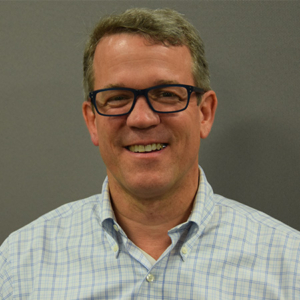
This year, we say goodbye to Andrew Winter, who is retiring from the HAC board after nine years of service. Elected in 2017, Andrew went on to chair HAC’s Loan Committee. Along the way, he became known for his deep, practical knowledge of rural housing development and a gift for making everyone at the table feel welcome.
A practitioner’s path to HAC
Andrew’s road to HAC began in 2015 when the Vermont owner of a 100-unit rental property sent letters telling fifty households that their rent would rise by hundreds of dollars at the end of the year. Their building, one of two 50-unit properties financed through USDA’s Section 515 program, was built in 1975 and had paid off its 40-year mortgage. With the mortgage gone, its rental assistance would go too.
The stakes were high. Eighty-eight of the one hundred units were subsidized, and Andrew estimates the property held about forty percent of the affordable housing in the area.
“As people in this space do, we rolled up our sleeves and leapt in feet first,” Andrew recalls. Within days, his organization, Twin Pines Housing Trust, was meeting with USDA, the property owner, municipal officials, and the local housing authority. Within six months, they were able to purchase both 50-unit buildings. After a rehab supported by additional USDA funding, the property still remains under the stewardship of Andrew’s organization.
The project introduced Andrew to the national fight to preserve Section 515 housing. It also connected him with HAC. He met then-board member Gideon Anders, a longtime champion of 515 preservation, and current HAC President & CEO David Lipsetz, who delivered a symbolic wooden key from USDA’s national office at the closing celebration. “You throw a stone into a pond and it ripples out,” Andrew says. “That was sort of one of those moments.”
When Polly Nichol, staff member at the Vermont Housing and Conservation Board, stepped down from HAC’s board, Andrew was a natural fit to follow.
A deal fanatic on the Loan Committee
“I am what I would describe as a deal fanatic,” Andrew says. “I really love the nuts and bolts of projects.” After a couple of years on the board, he joined HAC’s Loan Committee and later became its chair. He worked closely with HAC’s lending staff, including Kristin Blum and Eileen Neely before her, to strengthen its underwriting and asset management.
Looking back, Andrew joined HAC during a time of transition, as David took over from longtime leader Moises Loza and the board grew smaller. Over nine years, he watched HAC grow its loan portfolio and strengthen its financial operations, while continuing its technical assistance, research, and advocacy work. “It’s been a lot of fun as a board member to ride along,” he says.
Looking ahead, Andrew believes HAC’s role will only grow. “In a fiscally constrained environment, it is even more important that there be strong advocates for rural communities,” he says. A financially strong HAC that speaks clearly for rural America, he adds, “is going to be increasingly important.”
“There are no stupid questions”
Andrew’s advice for new board members and staff is simple. “There are no stupid questions. If you don’t know the answer, don’t be afraid to ask.” He also reminds staff not to assume everyone knows the acronyms and jargon of housing work. At his own organization, board members receive a list of the top one hundred housing terms.
Natalie Maxwell, who succeeds Andrew as Loan Committee chair, remembers how he prepared her to serve:
 “Before my very first committee meeting, he took the time to meet with me and explain the committee’s work, helping me feel prepared and confident from day one. As the committee chair, he created an environment where everyone felt comfortable contributing to discussions and asking questions, and he was always thoughtful about providing new board members with the background needed to fully participate. His expertise and knowledge will be greatly missed.”
That welcoming approach was intentional. Andrew admits he wishes he had asked more questions when he first joined HAC’s board. It took him a couple of years until he fully understood HAC’s business.
What comes next
Andrew’s retirement from HAC coincides with another milestone. After fifteen years, he is also stepping down as executive director of Twin Pines Housing Trust. “There’ll be a moment of sadness,” he says, “because I love the work and serving low-income folks and making sure that everybody has a place to call home.”
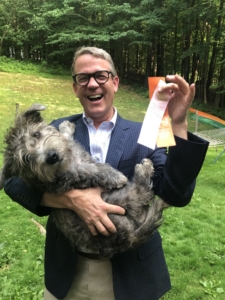 Retirement will bring more time with his family’s Glen of Imaal Terriers, a rare and ancient Irish farm breed that Andrew and his wife breed and show. Their dogs carry names with a nod to Andrew’s Massachusetts roots: Jackie O, her son John John, and Truro, named for a town on Cape Cod.
Reflecting on his years with HAC, Andrew is characteristically humble. “I feel like I have definitely taken more than I’ve given and learned more than I’ve taught.” Those who served alongside him would say otherwise. On behalf of the entire HAC board and staff, we thank Andrew for his expertise, his generosity, and the welcoming nature he brought to every meeting. He will be greatly missed.
