CityLab looks at the link between housing and the opioid crisis

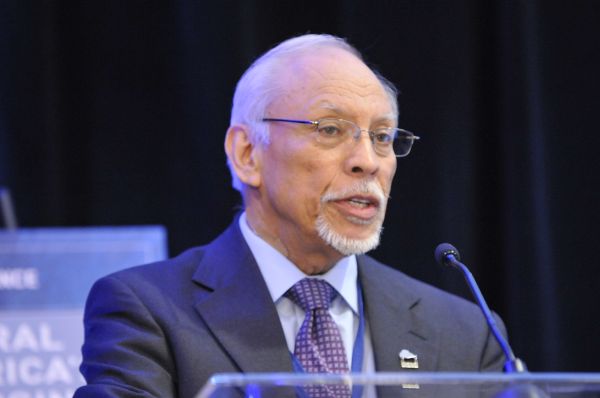
CityLab discussed the the link between the need for access to affordable housing and how it exacerbates the growing opioid crisis in rural America with Dr. Alan Morgan, Director of the National Rural Health Association. Dr. Morgan was a Keynote Speaker at the HAC 2016 Rural Housing Conference, where he stressed the importance of working together across industry silos to combat the opioid epidemic.

Community Development Marketplace (CDM) Project Intake Survey

The U.S. Department of Housing and Urban Development (HUD) has requested feedback from organizations engaged in community development and affordable housing projects in the development of a survey tool. The Community Development Marketplace (CDM) Project Intake Survey is intended to provide HUD with a database of projects which will help them target relevant information and technical assistance to organizations actively working on different types of projects. It is also intended to allow respondents to find other organizations across the country working on similar issues and solutions, by joining peer groups through the survey process. Respondents will not have to be actively applying for federal assistance at the time they respond, or be part of larger consortia using or applying for federal assistance.

On November 28, 2016, Federal Register Notice FR-5909-N-81 was published, announcing a 30-day Public Notice of Proposed Information Collection. Specifically we are asking the public to review the questions in the survey, and the list of the Peer Cohorts attached to the survey, and answer questions listed below and on the survey’s web page.

Submit any comments and/or your answers to Anna.P.Guido@hud.gov and copy CDM@hud.gov by December 28, 2016. Also feel free to submit user questions or information on any technical issues via CDM@hud.gov.

A Message for Veterans Day

HAC recognizes and honors the sacrifices of all those men and women who have served the nation in the armed forces. We can never forget their service. Many of those veterans – in fact a disproportionately large share of the veteran population – come from and still live in America’s rural areas and small towns. This was true historically, when we were a much more agrarian nation, but it continues to be true today. Thank you to all our veterans!

Learn more about HAC’s work with Veterans.

Visit Veterans Data Central.

HAC Partners with Local Organization in Rhode Island

Seven Rhode Island families hope to move into their new Colonial-style, single-family houses before the holidays thanks to NeighborWorks Blackstone River Valley. The families are selected based on income, credit, and employment criteria, including having earnings between 50-80% of the area median income for Providence County. For more than a year, they have contributed about 30 hours of work per week building the houses. They have worked together, building each other’s homes in phases. Their “sweat equity” has cut costs nearly in half by building about 65% of the homes, with licensed professionals hired to do the electrical and plumbing work requiring expertise. Through the program, the USDA offers the homeowners low-interest loans based on their incomes to make owning a home affordable. In addition, the Housing Assistance Council provided funding to the Fernwood housing development to help make building the homes a reality. Read the article here!

The Home Depot Foundation Continues to Support Veterans Housing

The Home Depot Foundation (THDF) is announcing their continued commitment to serving veterans. By 2020, THDF will invest a quarter of a billion dollars in nonprofits like the Housing Assistance Council to ensure injured and aging veterans have homes where they can live independently, homeless veterans have transitional/permanent supportive housing and veterans of all ages have the community support they need. HAC is excited to continue its important work with THDF. With the Foundation’s generous partnership, HAC has been able to provide grants, loans, information and data, training and other resources to support the creation of affordable housing for rural veterans.

#DoingMore4Vets

A Call for More Inclusive Community Planning, from Wonkblog

In a piece for The Washington Post’s Wonkblog, Emily Badger details a story of a town in California, which is instructive to organizations working to provide affordable housing across the country.

Brisbane, California, a town outside of San Francisco, has a chance to make a big change to relieve the area’s housing crisis. A local developer would like to use a former industrial land plot to build a mixed-use project, including public parkland and over 4,000 housing units. The location is also adjacent to a regional rail line that would make commuting easier for workers with jobs in San Francisco and Silicon Valley. One of the benefits of building on this currently unused space is that construction would not displace any current residents or negatively impact local traffic. However, some Brisbane officials and residents are resistant to this development for reasons that are all too familiar to affordable housing developers.

This situation reflects the realities of housing policy decisions across the country. Housing policies are generally set at the local level, which in turn provides a great deal of weight to the desires of local residents. HAC has long felt that the solutions to affordable housing start at the local level, and building local capacity should be a priority in any community development effort. In her piece, Badger argues that communities should be more inclusive in how they define “local.” Badger believes that decision making on a community level should also include commuters who spend their days in town, working, going to school, or spending money, but don’t technically live there. This would create a more inclusive community where all of the stakeholders have a say in local policy. However, she submits that local control of housing policy is a tradition that is unlikely to change in American communities.

top20-commuter-adjusted-population

How the Major Party Platforms Approach Housing

by Leslie Strauss

The major political party platforms take different approaches to federal housing assistance and related topics. The Republican and Democratic platforms adopted at the parties’ conventions in July are couched in strikingly different ways, consistent with the conventions’ tones. For example, while the Republican paper states, “We must scale back the federal role in the housing market, promote responsibility on the part of borrowers and lenders, and avoid future taxpayer bailouts,” the Democratic one asserts, “We will substantially increase funding for the National Housing Trust Fund to construct, preserve, and rehabilitate millions of affordable housing rental units . . . [to] help address the affordable housing crisis . . . [and] create millions of good-paying jobs in the process.”

Read the complete article on Rooflines

HAC Praises Bipartisan Congressional Action on Affordable Housing

The Kansas City Star recently published a Letter to the Editor submitted jointly by HAC Executive Director Moises Loza and Housing Specialist Stephanie Nichols in praise of HR 3700, the bipartisan housing legislation which recently passed through Congress. The full text of the letter as it appears on the Stars’ website appears below.


Bipartisan effort

Last week, to minimal fanfare, Congress unanimously passed HR 3700, substantive housing legislation that saves money, cuts red tape and increases opportunities for our most vulnerable to live in decent homes and safe neighborhoods.

Leveraging their leadership on a key Financial Services subcommittee, Missouri congressmen Blaine Luetkemeyer and Emanuel Cleaver eschewed partisanship and brought together a disparate coalition of industries, nonprofits and social-justice advocates to support the bill, also known as the Housing Opportunities Through Modernization Act.

Missourians ought to know that two of their congressmen did the hard work of legislating instead of grandstanding, and the low-income communities that we serve are stronger because of their actions.

Moises Loza
Executive Director
Housing AssistanceCouncil

Stephanie Nichols
Midwestern office
Program manager
Kansas City


Read more here: https://www.kansascity.com/opinion/letters-to-the-editor/article91127752.html#storylink=cpy

Income Inequality in Rural America

HAC Executive Director Moises Loza submitted the following Letter to the Editor to the Washington Post on June 27, 2016.

“The rural reaches of income inequality” (June 26) raises issues that are too often ignored. As the Housing Assistance Council works to improve housing conditions for low-income rural Americans, we are well aware of the consequences of income inequality. In places with significant income differences, the wealthy depend on service workers but those who wait tables, work in retail, clean homes, and maintain lawns cannot afford decent homes near their jobs.

There are other costs as well. For example, USDA’s Economic Research Service has identified the growth in income inequality as the major factor increasing rural child poverty from 2003 to 2014. The Robert Wood Johnson Foundation and the University of Wisconsin Population Health Institute report that counties with high levels of child poverty and income inequality are often less healthy than those with lower levels. (Their study defined income inequality as the difference between the 20th and 80th percentiles rather than between the top 1 and bottom 99.)

Even without income inequality, of course, poverty can be dangerous. The Post’s interactive online map shows that in Oglala Lakota County, SD (formerly named Shannon County), the top 1 percent makes only 5.3 times as much as the bottom 99 percent. Income inequality is hardly a problem there, but deep, persistent poverty is. Oglala Lakota County, which lies entirely within the Pine Ridge Indian Reservation, has had a poverty rate well over 50 percent for decades. As a result, 51 percent of homes in the county are physically deficient and 26 percent are overcrowded.

Serious housing problems exist in other persistent poverty counties, as well. These areas, which tend to have low proportions of the extreme income inequality highlighted in the Post’s article, are concentrated in certain parts of the country: Native American lands, Appalachia, the Lower Mississippi Delta and the Southern Black Belt, and the colonias along the U.S.-Mexico border. Income and housing issues are common among farmworkers, as well, although those are not as visible on a map. Notably, minorities are the majority in five of these six regions and populations (Appalachia being the exception).

Thanks are due to the Post for its reporting and to the Economic Policy Institute for including rural places in its income inequality research. As income inequality, job opportunities, and race drive the politics of the day, we cannot continue to overlook their presence anywhere in the country.

Moises Loza
Executive Director
Housing Assistance Council

HAC Seeks Nominations For Rural Housing Awards

On the evening of December 4, 2014, the Housing Assistance Council will present rural housing awards as part of the Rural Housing Awards Banquet at the National Rural Housing Conference. An individual or individuals providing outstanding and enduring service on the national level will be honored with the Cochran/Collings Award for Distinguished Service in Housing for the Rural Poor. A local leader or leaders in rural housing development will receive the Skip Jason Community Service Award.


Award Descriptions

NATIONAL SERVICE AWARD

The Cochran/Collings Award for Distinguished Service in Housing for the Rural Poor honors individuals who have provided outstanding and enduring service, with national impact, for the betterment of housing conditions for the rural poor, with emphasis on the poorest of the poor in the most rural areas.

The award is named after Clay Cochran and Arthur M. Collings, Jr. Dr. Cochran was a mentor and pioneer in the rural housing movement whose work in low-income rural housing dates back to the 1930s and 1940s. Mr. Collings’ dedication to improving housing conditions for low-income rural Americans was unmatched. His feistiness and humor, added to his extensive knowledge of USDA’s rural housing programs, made him unique and well-loved around the country. Dr. Cochran passed away in 1982. Art Collings passed away in March 2010.

Previous winners of this award include Clay Cochran, Obediah Baker, Thomas Carew, Peter Carey, Gordon Cavanaugh, Arthur M. Collings, Jr., Cushing Dolbeare, Eileen Fitzgerald, Elizabeth Herring, Robert Rapoza, Shirley Sherrod, William Simpson, Arnold Sternberg, and four members of Congress: Eva Clayton, Rubén Hinojosa, Stan Lundine, Bennie Thompson and Ed Pastor.

Criteria for Competition

Significant achievements and/or contributions in any or all of the following areas:

  • Leadership in national housing organizations;
  • Substantial impact on national housing legislation;
  • Improving or maintaining funding for rural housing programs that serve the poor, particularly the poorest of the poor;
  • Development of new housing programs, preservation of housing programs, or special adaptations to existing programs, which enhance service to the rural poor;
  • Improving advocacy and/or enhancing coalition building that leads to improved rural housing opportunities
  • Overall enduring service with a national impact towards improving conditions of the ill-housed rural poor, particularly the poorest of the poor.

COMMUNITY SERVICE AWARD

The Skip Jason Community Service Award recognizes people whose efforts have improved the housing conditions of the rural poor in their communities. The award acknowledges people who work “in the trenches” and usually go unrecognized outside their communities.

The award is named after Robert “Skip” Jason, a long-time housing activist with considerable community experience, who died in 1982 while employed as HAC’s Government Services Director.

Prior recipients of this award include David Arizmendi, Clanton Beamon, Lorna Bourg, Guillermo Castaneda, Emma Clifford, John P. David, Paul Douglas, Cora Esquibel, Rose Garcia, Owyne Gardner, Manuel Gauna, Alfred Gold, Arturo C. Gonzales, Patty Griffiths, Dana M. Jones, Stan Keasling, Lewis Kellom, Steve Kirk, Barbara Lamphere, Jerome Little, Sabino Lopez, Griffin Lotson, Lynn Luallen, Steve Mainster, Selvin McGahee, Rito Medina, Madeline Miller, Polly Nichol, John “Jack” Rivel, Jr., Linda Smith, Ted Smith, Lauretta Brice Stephens, Bessie Swan, Mario Villanueva, Sharon Walden, Jim Wilcox, Dwayne Yost, and John Zippert.

Criteria for Competition

Significant achievements and/or contributions in any or all of the following areas:

  • Improving the housing conditions of the rural poor in their communities and protecting and enhancing the rights of the poor in housing;
  • Community achievement in community development and/or housing;
  • Unrecognized efforts that extend outside recipient’s community;
  • Increasing the number of housing units produced or preserving existing affordable housing;
  • Producing innovative or difficult housing;
  • Advocating for affordable housing;
  • Any other specific and significant community contribution in the field of low-income rural housing.

~For information, contact Lilla Sutton, HAC, 202-842-8600, lilla@ruralhome.org.

GET THE HAC NEWS!

Sign-up for HAC information products

SIGN UP HERE

Housing Assistance Council   |  1828 L Street. N.W., Suite 505, Washington, D.C. 20036
(202) 842-8600 (202) 347-3441 hac@ruralhome.org |

Board Portal

HAC is an equal opportunity provider, employer, and lender. | Civil Rights | Privacy