Rural Veterans and Nonprofits Gain Critical Housing Support Through Partnership with The Home Depot Foundation
Contacts: AHRV Team, ahrv@ruralhome.org
(202) 842-8600
Washington, DC, May 27, 2025 – Veterans and their families in fifteen rural communities will have better lives, thanks to The Home Depot Foundation and the Housing Assistance Council (HAC). The Foundation is awarding grants totaling $450,000 to fifteen local nonprofit housing agencies around the country to preserve housing for veterans in rural America.
The grants are part of The Home Depot Foundation’s mission to provide affordable and accessible housing solutions to U.S. veterans and invest $750 million in veteran causes by 2030. Many veterans and their families face major housing challenges, often exacerbated by issues related to unemployment, age, and service-related disabilities. The Home Depot Foundation and HAC are dedicated to giving back to those who have answered the highest call of service to our nation.
As part of its Affordable Housing for Rural Veterans (AHRV) Initiative, HAC works with The Home Depot Foundation to administer grants that bolster and support the work of rural nonprofit housing agencies to deliver critical housing support to veterans. “The Home Depot Foundation’s support is crucial to HAC’s efforts to ensure rural veterans aren’t left behind. It fuels local action to combat housing insecurity and deliver the safe, affordable homes they deserve,” said David Lipsetz, HAC’s President and CEO. As rural America is home to a disproportionately high number of service women and men, HAC remains deeply committed to supporting our nation’s service women and men by uplifting local nonprofits and their work to house veterans and ensure the habitability of their homes and rural communities.
The grantee organizations – described below – provide a range of programs. With the grants, veterans who own homes in California, Florida, Illinois, Iowa, Kansas, Maryland, Maine, Michigan, New Mexico, New York, North Carolina, and South Carolina will obtain critical repair assistance. Altogether, 98 veterans and their families will benefit from these grants.
About The Home Depot Foundation
 The Home Depot Foundation, a nonprofit supported by The Home Depot (NYSE: HD), works to improve the homes and lives of U.S. veterans, support communities impacted by natural disasters and train skilled tradespeople to fill the labor gap. Since 2011, the Foundation has invested more than $550 million in veteran causes and improved more than 65,000 veteran homes and facilities. The Foundation has pledged to invest $750 million in veteran causes by 2030 and $50 million in training the next generation of skilled tradespeople through the Path to Pro program by 2028. To learn more about The Home Depot Foundation visit HomeDepotFoundation.org and follow us
on Twitter @HomeDepotFound and on Facebook and Instagram @HomeDepotFoundation.
About the Housing Assistance Council
The Housing Assistance Council (HAC) is a national nonprofit that supports affordable housing efforts throughout rural America. Since 1971, HAC has provided below-market financing for affordable housing and community development, technical assistance and training, research and information, and policy formulation to enable solutions for rural communities. To learn more about the Housing Assistance Council, visit www.ruralhome.org and follow us on LinkedIn and Facebook.
About the Grantees
- Anderson Interfaith Ministries, Anderson, SC, will utilize $30,000 to provide critical repairs for seven (7) low-income For additional information on Anderson Interfaith Ministries, visit their website at https://www.aimcharity.org/.
- Chesapeake Health Education Program, Inc., Perryville, MD, will utilize $30,000 to complete repairs on two (2) transitional housing units serving eight (8) male veterans in Perry Point, MD. For additional information on Chesapeake Health Education Program, Inc., visit their website at https://chepinc.org/.
- Embarras River Basin Agency, Inc., Greenup, IL, will utilize $30,000 to provide critical home repairs for three (3) rural, low-income veterans. For additional information on Embarras River Basin Agency, Inc., visit their website at https://erbainc.org/.
- Goodwill Industries of Northern Michigan, Traverse City, MI, will utilize $30,000 to provide critical repairs to nine (9) group homes and one (1) single-family home assisting a combined twenty-eight (28) low-income rural veterans. For additional information on Goodwill Industries of Northern Michigan, visit their website at https://www.goodwillnmi.org/.
- Habitat for Humanity Calaveras, Angels Camp, CA, will utilize $30,000 to assist four (4) women veteran households with critical repairs. For additional information on Habitat for Humanity Calaveras, visit their website at https://habitatcalaveras.org/.
- Habitat for Humanity Lake Sumter, Eustis, FL, will utilize $30,000 to provide critical home repairs for three (3) rural, low-income veterans. For additional information on Habitat for Humanity Lake Sumter, visit their website at https://habitatls.org/.
- Rebuilding Together Muscatine County, Muscatine, IA, will utilize $30,000 to assist five (5) rural low-income veterans with critical repairs and accessibility modifications. For additional information on Rebuilding Together Muscatine County, visit their website at https://rebuildingtogethermuscatine.org/.
- Rebuilding Together Sandoval County, Bernalillo, NM, will utilize $30,000 to provide two (2) veterans with critical home repairs in rural Bernalillo County. For additional information on Rebuilding Together Sandoval County, visit their website at https://www.rebuildingtogethersandoval.org/.
- Rebuilding Together Saratoga County, Ballston Spa, NY, will utilize $30,000 to provide critical repairs and accessibility modifications for four (4) low-income rural veterans. For additional information on Rebuilding Together Saratoga County, visit their website at https://www.rtsaratoga.org/.
- Rebuilding Together Southwest Illinois, Edwardsville, IL, will utilize $30,000 to assist five (5) rural low-income veterans with critical repairs and accessibility modifications. For additional information on Rebuilding Together Southwest Illinois, visit their website at https://rebuildswi.org/.
- Servants, Inc., Red Lion, PA, will utilize $30,000 to provide critical repairs and accessibility modifications for ten (10) low-income veteran homeowners. For additional information on Servants, Inc., visit their website at https://www.servants.org/.
- Thrive Allen County, Inc., Iola, KS, will utilize $30,000 to provide critical repairs and accessibility modifications for at least seven (7) low-income rural veteran homeowners. For additional information on Thrive Allen County, Inc., visit their website at https://thriveallencounty.org.
- Upper Peninsula Commission for Area Progress, Escanaba, MI, will utilize $30,000 to assist one (1) rural low-income veteran with major critical repairs and structural integrity modifications. For additional information on UPCAP Services, Inc., visit their website at https://upcap.org/.
- Western Maine Community Action, East Wilton, ME, will utilize $30,000 to provide critical home repairs on six (6) low-income veteran owner-occupied homes. For additional information on Western Maine Community Action, visit their website at https://www.wmca.org/.
- Wilmington Area Rebuilding Ministry, Inc., Wilmington, NC, will utilize $30,000 to provide critical repairs and modifications, including roof replacement and HVAC systems replacement, for five (5) low-income rural veteran homeowners. For additional information on Wilmington Area Rebuilding Ministry, Inc., visit their website at https://www.warmnc.org/.
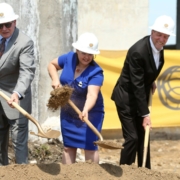
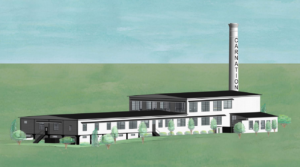 The Carnation Milk plant in Tupelo, Mississippi, has sat vacant since 1972. In about a year, that will change when 33 low-income senior households move into new affordable homes in this old factory. This May, Old Historic Carnation, LP broke ground on Carnation Village, a $16.8 million adaptive reuse project to convert the abandoned factory into 33 units of affordable senior housing. These units are sorely needed in Tupelo, a high-poverty community which needs over 1,500 additional senior affordable housing units. With a $325,000 loan from The Housing Assistance Council (HAC)—and two sixth-month extensions to that loan—the developer successfully navigated a predevelopment process mired in construction cost increases and unexpected funding gaps. Here’s how:
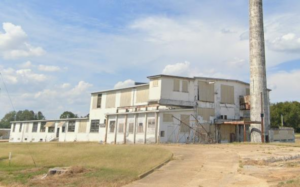 The original project scope called for 50 units: 25 from an adaptive re-use of the plant itself and another 25 in a second building to be constructed next door. When our loan closed in July 2021, the project budget totaled about $12.7 million, to be funded by Low Income Housing Tax Credits, Historic Tax Credits, and a $1.6 million investment. Our financing covered the predevelopment costs of the work required to get to construction financing closing including environmental testing, historic preservation approvals, tax credit application and reservation fees, a market study, and an appraisal.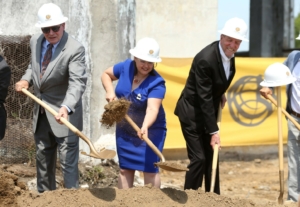

 So, MFA called the Housing Assistance Council (HAC). This wasn’t the first or second time that HAC helped MFA address challenges in its programs. In fact, HAC and MFA have a working relationship well over two decades old. Because of this extensive engagement, MFA Executive Director and CEO Izzy Hernandez knew he could rely on HAC Housing Consultant Eugene (Gene) Gonzalez to help find a solution to this challenge.