The Housing Assistance Council is an independent, non-partisan and regularly responds to Congressional committees, Member offices, federal agencies, and policy advocacy coalitions with the research and information needed to make informed policy decisions. Our research work, Rural Data Portal, and Veterans Data Central all provide valuable, educational context to frame the rural policy conversation. If you want to know how a new program or policy could impact America’s small towns and rural places, please don’t hesitate to contact us at policy@ruralhome.org.

HAC Announces New Center for Rural Multifamily Housing Preservation

Contact: Kristin Blum
kristin@ruralhome.org
(202) 842-8600

Washington, DC, March 6, 2024 – The Housing Assistance Council (HAC) is announcing the creation of the Center for Rural Multifamily Housing Preservation, a cross-disciplinary initiative to preserve rural rental housing, particularly properties financed through the U.S. Department of Agriculture’s “Section 515” program.  The Center will provide technical assistance and expertise to preserve the long-term affordability of this critical housing stock. HAC’s Kristin Blum, a recognized expert in the affordable housing industry, has been tapped to lead the initiative.

“The time to act is now,” according to HAC CEO David Lipsetz. “The cost of housing is at a historic high across the United States. Workers, seniors, young people, and families are all feeling the pinch. As the nation’s rural housing intermediary, HAC must do its part to help small towns keep great quality housing and build to meet the demands of the modern economy. The Center will do just that.”

The Center for Rural Multifamily Housing Preservation will promote what works, create solutions where needed, and advance the role of housing organizations in rural communities. It will draw on HAC’s decades of success working with communities to preserve existing affordable rental housing and build more where it is needed. “The Center will bring together HAC’s unique combination of resources – lending, research, policy and direct technical assistance – to both preserve individual properties and redefine the preservation process,” Kristin Blum points out.

Rental homes financed by USDA are an important source of affordable rental housing that can be found in 87 percent of all U.S. counties. The Department’s Section 515 program alone produced 550,000 affordable apartments in rural communities. Unfortunately, the program has not produced new units in over a decade and has lost more than 150,000 of its original units to reach its current size of less than 390,000 units, according to the recent FY2023 Multifamily Housing Occupancy Report. In many rural communities, these apartments are the only affordable rental housing available. Two thirds of those families and individuals in Section 515 properties are seniors or individuals with disabilities, and the average income of tenants is less than $16,000.

In the face of this escalating crisis, existing preservation efforts have suffered from a lack of adequate public and private funding and a disproportionate focus on unique transactions. A cohesive, broad preservation strategy is needed to effectively address this crisis before it reaches its peak in the next several years. Through the Fiscal Year 2024 appropriations bill, Congress has granted USDA the authority to pilot a new proposal to decouple Section 515 mortgages and Section 521 rental assistance – an opportunity that will require substantial stakeholder engagement and capacity-building to be successful.

“These apartments are home to families, seniors, and individuals with disabilities who could otherwise face homelessness,” Lipsetz said. “It’s time for the country – including the federal government and philanthropy – to invest some real muscle in preserving these vital homes before they are lost forever.”

“I can think of nobody better than Kristin to lead this critical initiative,” continued Lipsetz, “She has done remarkable work as a senior member of HAC’s Lending team and brings a wealth of prior experience building the capacity of the nonprofit housing sector.” With support from the USDA and Fannie Mae, the Center for Rural Multifamily Housing Preservation will bring together all of HAC’s expertise across the fields of lending, technical assistance, federal policy, and research in pursuit of transformational solutions to preserve this critical stock of affordable rural rental housing.

For more information, contact: crmhp@ruralhome.org

About the Housing Assistance Council

The Housing Assistance Council (HAC) is a national nonprofit that supports affordable housing efforts throughout rural America. Since 1971, HAC has provided below-market financing for affordable housing and community development, technical assistance and training, research and information, and policy formulation to enable solutions for rural communities.

Explore some of HAC’s past work on Section 515 preservation:

HAC’s 2024 Rural Housing Policy Priorities

HAC’s 2023 Senate Banking Committee Testimony on Section 515 Preservation

HAC’s 2022 Annual Report

HAC’s 2022 Rural Research Brief on Section 515 Preservation

HAC’s 2018 “Platform for Preservation” Report on Section 515 Preservation

###

Final FY24 Spending Bill Cuts Most Rural Housing Programs

All but three of USDA’s rural housing programs receive funding cuts in the final minibus appropriations bill released by congressional leaders on March 3. The bill is expected to pass before funding for several agencies, including USDA, runs out on March 8. Section 521 Rental Assistance, Section 542 vouchers, and Section 538 rental housing guarantees are the only rural housing programs that are not reduced.

— HAC’s analysis of FY24 appropriations for HUD is available here. —

The bill does include a new rental preservation effort supported by HAC and many others. It establishes a pilot program to decouple up to 1,000 Section 521 Rental Assistance units from Section 515 or 514 mortgages. Currently, when one of these mortgages is fully paid off, the tenants lose their Rental Assistance. The bill limits decoupling to situations where USDA determines that a maturing loan “cannot reasonably be restructured with another loan or modification.” Congress’s explanatory statement on the bill “directs the Department to have strong stakeholder engagement and to provide the [House and Senate Appropriations] Committees with monthly updates on the implementation of this policy.”

Other rental housing preservation efforts are reduced, with Section 515 falling from $70 million in FY23 to $60 million this year and Multi-Family Rental Preservation and Revitalization (MPR) cut back from $36 million to $34 million. The Rental Preservation Technical Assistance program receives $1 million, half as much as in FY23, although it was not included at all in the Administration’s budget or the House or Senate bills.

USDA’s flagship Section 502 direct mortgage program, which enables low- and very low-income families to buy their first homes, is cut from $1.25 billion in FY23 to $880 million in FY24. Even Section 502 guarantees, which serve slightly higher income households than Section 502 direct and cost the government very little, are reduced from $30 billion to $25 billion. The self-help housing program, which enables local nonprofit organizations to help families build their own homes, is also cut, from $32 million to $25 million.

This agreement on funding for FY24 – which started on October 1, 2023 – comes just one week before the President’s budget for FY25 will be released, kicking off the process of determining funding for next year.

USDA Rural Dev. Prog.

(dollars in millions)

FY23 Final Approp. FY24 Admin. Budget FY24 House Committee Bill
H.R. 4368
FY24 Senate Bill
H.R. 4366
FY24 Final
502 Single Fam. Direct $1,250 $1,500 $881 $850 $880
    Nat. Amer. SF Demo. 7.5 12 5 7.5 5
502 Single Family Guar. 30,000 30,000 30,000 30,000 25,000
504 VLI Repair Loans 28 50 25 28 25
504 VLI Repair Grants 32 40 25 32 25
515 Rental Hsg. Direct Lns. 70 200 60 60 60
514 Farm Labor Hsg. Lns. 20 50 13 25 15
516 Farm Labor Hsg. Grts. 10 18 5 10 7.5
521 Rental Assistance 1,488 1,650 1,607 1,608 1,608
523 Self-Help TA 32 40 25 32 25
533 Hsg. Prsrv. Grants 16 30 10 16 10
538 Rental Hsg. Guar. 400 400 400 400 400
Rental Prsrv. Demo. (MPR) 36 75 34 35 34
542 Rural Hsg. Vouchers 48 38 48 48 48
Rental Prsrv. TA 2 1
Rural Cmnty. Dev’t Init. 6 5 6 5
Community Facil. Loans 2,800 2,800 2,800 2,800 2,800
Community Facil. Grants 325.5* 87 317* 32 5
    Tribal Colleges CF Grts 10 ? 6 10 8
Community Facil. Guarantees 650 650 650 650 650

* These Community Facilities grant amounts include funds earmarked by members of Congress for specific projects (called “Congressionally Directed Spending” or “Community Project Funding”).

Senate Minibus Includes HUD and USDA

On November 1, 2024, the Senate passed a “minibus,“ H.R. 4366, that includes funding for USDA, Transportation-HUD, and Military Construction-VA. On September 28, the House voted against its USDA appropriations bill.

Senate and House Committees Adopt Different Figures for FY24 USDA Spending

On June 22, the Senate Appropriations Committee passed its version of USDA’s funding bill for fiscal year 2024. Senate appropriators are using the spending limits set in the Fiscal Responsibility Act —  the debt ceiling compromise — while the House is developing spending bills to fit lower caps. As a result, the Senate bill proposes higher amounts than the House for most rural housing and community facilities programs. It would keep most of them at FY23 levels.

Funding Levels

While keeping most programs at FY23 spending levels, the Senate bill would reduce funding for the flagship Section 502 direct mortgage program. It proposes $850 million rather than this year’s $1.25 billion. It would also increase the lowest possible subsidized interest rate for Section 502 direct loans to 2% from the current 1%.

Rescissions

The bill would cancel some funds appropriated in prior years but not yet spent: $3 million in the rural voucher account and $30 million intended for Section 504 grants.

Rental Preservation

The Senate bill, unlike the House’s version, adopts the administration’s proposal for decoupling Section 521 Rental Assistance from Section 515 and 514 mortgages in limited circumstances. When a USDA mortgage is paid off, an owner could continue to receive RA if the property has RA already and there is no other way to preserve the property as affordable housing. Decoupled RA could be provided for a maximum of 15,000 units in FY24.

Other Provisions

The report that accompanies the Senate bill “encourages” USDA to increase maximum grants for the Rural Community Development Initiative from $250,000 to $500,000 and “to allow an advance of 25 percent of grant funds prior to a match being supplied.”

The final section of the bill (Title VII) is separate from the main provisions relating to housing and CF programs but contains several housing-related provisions, including the Section 502 interest rate change (Sections 771 and 774) and rescissions (Sections 732 and 744). It would also extend the terms of Section 523 self-help land development loans and Section 524 site development loans to five years instead of the current two (Sections 761 and 762). It would raise the statutory cap on the number of rural housing vouchers, which has been raised for one year at a time in past appropriations bills, from 5,000 to 10,000.

House Committee Passes FY24 USDA Appropriations

The full House Appropriations Committee approved a fiscal year 2024 funding bill for USDA on June 14, 2023. The committee made some changes in the bill passed by the Agriculture Appropriations Subcommittee on May 18, but none were related to housing and community facilities. The measure retains the housing and CF program cuts adopted by the subcommittee.

New Details on Proposed Cuts

The full House committee released report language to accompany the bill, which provides some details not previously available. The report makes clear there would be a large cut to the pool of funding for standard community facilities grants that would be available through USDA’s competition: the total would plunge by 86%, from $25.3 million in FY23 to just under $3.6 million in FY24. Section 514 loans for farmworker housing would fall from $20 million in FY23 to $13 million in FY24, and Section 516 grants would drop from $10 million to $5 million. Section 504 grants and Section 533 would also decrease.

Like its subcommittee, the House Appropriations Committee states that its $1.607 billion will “fully fund the [Section 521 Rental Assistance] program,” without explaining why the amount differs from the administration’s budget request or whether “all” includes the 27,000 contracts added by the American Rescue Plan Act. (The administration’s total also includes $6 million for RA in new Section 515 units; that amount is not included in the House bill because it would not provide Section 515 funding for new units.)

Disadvantaged Farmers Program Cancellation Proposed

The full House Appropriations Committee adopted an amendment, proposed by Agriculture Subcommittee Chair Andy Harris (R-Md.), to eliminate a program for disadvantaged farmers that was created in the Inflation Reduction Act. The IRA program replaced one created in the American Rescue Plan Act. The ARPA program would have aided “socially disadvantaged” farmers and ranchers because lawsuits previously determined that USDA discriminated against them. Then white farmers and ranchers sued, claiming it was discriminatory to pay people based solely on their race/ethnicity. While those suits were pending, Congress replaced the ARPA program with a new one in IRA to provide payments to anyone, regardless of race/ethnicity, who could show they experienced past discrimination in USDA farm lending programs. It also included grants and loans to improve land access (including heirs’ property and fractionated land issues) for underserved farmers, ranchers, and forest landowners. And it funded outreach, education, research, equity commissions, and other aid.

The House bill also cancels diversity, equity, and inclusion efforts at USDA. During the markup Rep. Harris noted that it would not impact USDA’s civil rights office.

House Subcommittee Releases Rural Housing Funding Bill

On May 18, 2023, the House Agriculture Appropriations Subcommittee approved a fiscal year 2024 funding bill for USDA, proposing to fund many rural housing programs at levels lower than those requested in the administration’s budget, and in some cases lower than the amounts appropriated in FY23 or FY22.

The full House Appropriations Committee scheduled its own mark-up for May 24, then postponed it without setting a new date.

The administration’s budget documents state that its $1.65 billion request for Section 521 would renew all current Rental Assistance contracts, including 27,000 contracts added by the American Rescue Plan Act. The subcommittee’s summary says its $1.607 billion “fully funds existing rental contracts to ensure rural residents will not be displaced,” but does not specifically mention the ARPA units and does not explain the discrepancy between its figure and the budget’s. The administration’s total also includes $6 million for RA in new Section 515 units; that amount is not included in the House bill because it would not provide Section 515 funding for new units.

The House bill would also rescind unspent monies from the American Rescue Plan Act and the Inflation Reduction Act and would prohibit USDA spending on climate-change-related items including energy efficiency.

The Senate has not yet released proposed appropriations bills.

White House Budget Requests Increases in Rural Housing Funding

March 13, 2023 — The White House’s detailed budget request for fiscal year 2024 would increase funding for almost all of USDA’s rural housing and community facilities programs.

View a recording or the slides from HAC’s webinar on Rural Housing in the Fiscal Year 2024 White House Budget, which examined the budget’s contents and what to expect over the coming months.

Initiatives Requiring Legislation

The budget proposes legislative changes for Section 502 direct homeownership loans and for multifamily housing preservation.

For the Section 502 direct program, subsidy “recapture” would be eliminated. Recapture requires that, when a low- or very low-income homeowner with a Section 502 loan sells the house or moves, they must repay the subsidy amounts they have received over the life of the loan. The administration estimates that eliminating this penalty for current borrowers would cost USDA $996 million. It also proposes that Section 502 direct loans made in 2024 will not to be subject to recapture.

Like last year’s budget, the FY24 request proposes to provide HUD vouchers rather than USDA vouchers for tenants who lose Section 521 Rental Assistance when the USDA Section 515 or 514 mortgage ends for the property where they live. The HUD budget includes $20 million for these vouchers. USDA also again asks Congress to “decouple” RA from USDA mortgages so that some tenants can continue to receive RA after their properties’ mortgages end.

Funding Requests

The budget’s proposed $1.65 billion for Section 521 Rental Assistance would enable USDA to renew all of its RA contracts, including 27,000 contracts added by the American Rescue Plan Act.

The $200 million funding level for Section 515 is intended to provide enough for some new construction as well as preservation of existing properties. The Section 521 request includes $6 million to provide RA for the new Section 515 units.

The Rural Community Development Initiative, which funds capacity building for local organizations, would receive more than three times as much funding in FY24 as in FY23. The budget requests a leap from $6 million to $22.8 million, without explaining a particular reason for the increase. (RCDI is a setaside within the community facilities grants program but is not limited to recipients of CF funds.)

The budget asks Congress to authorize foreclosure authority for USDA RD’s multifamily office that would be equivalent to HUD’s.

All housing construction or rehabilitation would be required to improve energy or water efficiency, or address climate resilience.

Some HUD Programs Cut in Final FY24 Spending Bill, But Vouchers Fully Funded

Some Department of Housing and Urban Development programs will receive increased funding in FY24 under the final minibus appropriations bill released by congressional leaders on March 3. The bill is expected to pass before funding for several agencies, including HUD, runs out on March 8. Fiscal year 2024 began on October 1, 2023.

— HAC’s analysis of FY24 appropriations for USDA housing programs is available here. —

The bill raises funding levels for HUD’s tenant-based and project-based voucher programs, providing enough to renew all expiring vouchers and fund additional vouchers. The Center on Budget and Policy Priorities had estimated the House and Senate bills’ figures for tenant-based Housing Choice Vouchers would end that support for 80,000-112,000 families. Instead, according to the National Low Income Housing Coalition, the final bill will enable HUD to renew those vouchers and add 3,000 more.

Native American housing receives an increase from $1.02 million in FY23 to $1.344 million this year. Homeless assistance funding is higher as well. A few programs, like Community Development Block Grants and fair housing, receive the same funding as in FY23. Others, including HOME, SHOP, Sections 202 and 811, and healthy homes, will have lower funding this year than last. The new PRICE manufactured housing preservation program drops from $225 million in FY23 to $10 million in FY24, but it had seemed likely to get no funding at all.

This agreement on funding for FY24 – which started on October 1, 2023 – comes just one week before the President’s budget for FY25 will be released, kicking off the process of determining funding for next year.

HUD Program (dollars in millions) FY23 Final Approp. FY24 Admin. Budget FY24 House Bill
H.R. 4820
FY24 Senate Bill
H.R. 4366
FY24 Final
CDBG $3,300* $3,300 $3,300 $3,300 $3,300
HOME 1,500 1,800 500 1,500 1,250
PRICE Manuf. Hsg. Preserv. 225 0 20 0 10
Self-Help Homeownshp. (SHOP) 13.5 10 10 13.5 12
Veterans Home Rehab 1 4 1 0 0
Rural Cap’y Bldg (RCB) 6 5 7 6 6
Tenant-Based Rental Asstnce. 27,600 32,703 31,132 31,738 32,387
    VASH setaside 50 0 ** 30 15
    Tribal VASH 7.5 5 5 7.5 7.5
     Replacemts. for 521 RA 20***
Project-Based Rental Asstnce. 13,938 15,904 15,820 15,790 15,610
Public Hsg. Capital Fund 3,200 3,225 3,235 3,200 3,410
Public Hsg. Operating Fund 5,109 5,133 5,128 5,530 5,501
Choice Neighbrhd. Initiative 350 185 0 150 75
Native Amer. Hsg. 1,020 1,053 1,344 1,082 1,344
Homeless Assistance Grants 3,633 3,749 3,729 3,908 4,051
Hsg. Opps. for Persons w/ AIDS 499 505 505 505 505
202 Hsg. for Elderly 1,075 1,023 913 1,075 913
811 Hsg. for Disabled 360 356 208 360 208
Fair Housing 86 90 85 86 86.4
Healthy Homes & Lead Haz. Cntl. 410 410 345 350 345
Housing Counseling 57.5 66 57.5 57.5 57.5

* This table does not show amounts for Community Projects/Congressionally Directed Spending (popularly known as “earmarks”), which were included in the CDBG account beginning in FY22.

** The bill does not specify an amount for HUD-VASH vouchers but the National Low Income Housing Coalition reports that the broader Tenant-Based Rental Assistance funding in the bill will cover those renewals.

*** This $20 million request is explained in HAC’s summary of the USDA rural housing budget proposal.


Senate Minibus Includes HUD and USDA

On November 1, 2024, the Senate passed a “minibus,“ H.R. 4366, that includes funding for USDA, Transportation-HUD, and Military Construction-VA.

Senate Funding Bill Supports Most HUD Programs

On July 21, 2023, the Senate Appropriations Committee unanimously approved a bill to fund HUD for fiscal year 2024. Like the House bill, the Senate’s version maintains aid for tenants. It holds many other programs at their FY23 funding levels, rejecting the House’s proposed cuts to HOME, Section 202 elderly housing, Section 811 housing for people with disabilities, and the Self-Help Homeownership Opportunity Program (SHOP). It includes no funding, however, for the new Preservation and Reinvestment Initiative for Community Enhancement (PRICE) program for preservation of manufactured housing.

House FY24 Funding Bill Supports Tenants, Cuts HOME

The House Transportation-HUD Appropriations Subcommittee approved an FY24 spending bill on July 12 that would maintain funding for tenant vouchers, public housing, and Native American housing programs but would cut programs including HOME, Section 202 elderly housing, Section 811 housing for people with disabilities, and the Self-Help Homeownership Opportunity Program (SHOP).

HOME would be most drastically impacted, with its funding cut by two-thirds, from $1.5 billion in FY23 to $500 million in FY24. SHOP would fall back to the $10 million funding level it had for several years before being increased to $13.5 million in FY23. The Choice Neighborhoods Program would be eliminated and the new Preservation and Reinvestment Initiative for Community Enhancement (PRICE) program for preservation of manufactured housing would be cut from $225 million in FY23 to $20 million in FY24.

The bill would rescind $564 million appropriated in past years for the Lead Hazard Control and Healthy Homes programs but not yet spent.

The bill also proposes to block HUD’s February 9, 2023, Affirmatively Furthering Fair Housing (AFFH) proposed regulations and HUD’s ability to require specific changes to existing zoning laws under its June 10, 2021 AFFH interim final rule.

The Senate has not yet released its FY24 Transportation-HUD appropriations bill, but its version is likely to be substantially different from the House’s proposal.

HUD Budget Proposes to Shrink Small Programs, Expand Support for Others

March 13, 2023 — The administration’s budget for fiscal year 2024 requests funding increases in many HUD programs and calls for legislation expanding support to far more tenants and homebuyers. At the same time, however, the budget would cut some of HUD’s smallest programs, including two that are particularly important for rural residents: the Self-Help Homeownership Opportunity Program (SHOP) and the Rural Capacity Building (RCB) program. Details are provided in the table below.

HAC presented a webinar on “Rural Housing in the Fiscal Year 2024 White House Budget” on Wednesday, March 15. Watch the recording and view the slides here.

Two Steps Back for Rural Places and Native Americans

SHOP and RCB both saw small increases from FY22 to FY23, but the administration’s budget would roll those back for FY24. SHOP grew from $12.5 million in FY22 to $13.5 million in FY23 and would get only $10 million under the budget request. RCB received $6 million for the current year, but the budget would reduce it to its FY23 level of $5 million.

The administration requests no funding for manufactured housing grants through the Preservation and Reinvestment Initiative for Community Enhancement (PRICE), which was created in the FY23 omnibus appropriations bill.

The pool of funding that covers most of HUD’s Native American housing efforts would be increased from $1.02 billion in FY23 to $1.053 billion. But the much smaller Section 184 loan guarantee program, which has $5.5 million in FY23, would be cut to less than one-fifth of that, $905,700. At the same time, the budget asks Congress to expand Section 184, making it available to all Tribal members regardless of where they purchase a home.

Support for Renters

The budget proposes to create new, substantial assistance for tenants through mandatory spending proposals. These efforts, which would not be funded through the annual appropriations process, would need to be approved separately by Congress. That is extremely unlikely to happen in the current political climate.

Proposed mandatory spending would include:

  • $9 billion to provide vouchers for all youth aging out of foster care annually;
  • $13 billion for the estimated 450,000 extremely low-income veteran families
  • $7.5 billion for new Project-Based Rental Assistance contracts for extremely low-income households;
  • $7.5 billion to modernize public housing; and
  • $3 billion for competitive grants to states and localities for eviction reduction efforts such as emergency rental assistance and access to legal counsel.

The budget also proposes to extend assistance to tenants through some existing programs:

  • $565 million for new incremental vouchers for 50,000 additional households, specifically including those who are experiencing or at risk of homelessness or fleeing or attempting to flee domestic violence or similar violence; and
  • $300 million for capital investments in public housing.

The budget proposals for the Treasury Department would expand the Low Income Housing Tax Credit, as well as the New Markets Tax Credit.

Homeowner Aid and Removing Barriers

The administration’s budget calls for $10 billion in mandatory funding for a new First-Generation Down Payment Assistance program to help address racial and ethnic homeownership and wealth gaps. Homeowner assistance would also be supported by $100 million to states and territories through the existing HOME program. HOME’s funding would increase from $1.5 billion in FY23 to $1.8 billion in FY24.

The Community Development Block Grant program would again receive $3.3 billion, including $85 million to continue the “Yes In My Back Yard” or YIMBY program created in FY23 for removing regulatory barriers to housing production and preservation.


HUD Program(dollars in millions) FY22 Final Approp. FY23 Final Approp. FY24 Admin. Budget
CDBG $3,300* $3,300* $3,300
HOME 1,500 1,500 1,800
Self-Help Homeownshp. (SHOP) 12.5 13.5 10
Veterans Home Rehab 4 1 4
Tenant-Based Rental Asstnce. 27,370 27,600 32,703
    VASH setaside 50 50 0
    Tribal VASH 5 7.5 5
    Replacemts. for 521 RA 20**
Project-Based Rental Asstnce. 13,940 13,938 15,904
Public Hsg. Capital Fund 3,388 3,200 3,225
Public Hsg. Operating Fund 5,064 5,109 5,133
Choice Neighbrhd. Initiative 350 350 185
Native Amer. Hsg. 1,002 1,020 1,053
Homeless Assistance Grants 3,213 3,633 3,749
Hsg. Opps. for Persons w/ AIDS 450 499 505
202 Hsg. for Elderly 1,033 1,075 1,023
811 Hsg. for Disabled 352 360 356
Fair Housing 85 86 90
Healthy Homes & Lead Haz. Cntl. 415 410 410
Housing Counseling 57.5 57.5 66
Rural Capacity Bldg 5 6 5

* Substantial increases in CDBG funding for FY22 and FY23 was driven nearly entirely by the return, after a 10-year absence, of $1.5 billion for the Economic Development Initiative for the purpose of funding Community Projects/Congressionally Directed Spending (popularly known as “earmarks”). In FY23, just under $3 billion is added for earmarks. These figures are not included in the table.

** This $20 million request is explained in HAC’s summary of the USDA rural housing budget proposal.

HAC’s 2024 Rural Housing Policy Priorities

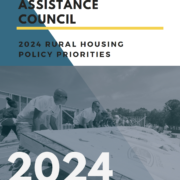
For over 50 years, the Housing Assistance Council (HAC) has been the voice for the poorest of the poor in the most rural places. Our deeply rooted work in communities across the country informs our research and drives our policy positions. Our independent and non-partisan work with members of Congress, federal agencies, affordable housing and community development organizations, and other stakeholders ensures the most vulnerable rural populations – especially those in high-needs regions like the Mississippi Delta, rural Appalachia, farmworker communities, the Southwest border colonias, and Indian Country – have improved access to safe and affordable housing opportunities.

Rural America is home to about 20 percent of the U.S. population and covers more than 90 percent of the U.S. landmass. Its small towns and rural regions are demographically and economically varied and face a wide array of local challenges and opportunities for developing their communities and housing. While each place is unique, HAC has documented several themes. Persistent poverty is a predominantly rural condition. Habitable rural housing is in severely short supply. The adequate housing that does exist is often unaffordable because rural incomes are low and run well below the national median. Rural housing lacks adequate plumbing and kitchen facilities at a rate above the national average. Overcrowding is not uncommon in some rural regions. Decades of stagnant rural house prices have denied owners the wealth and mobility so often associated with buying a home. Complicating these challenges, a lack of reliable rural data obscures rural realities.

In addressing these issues, HAC’s policy priorities include:

  1. Building the capacity of local affordable housing and community development organizations deeply rooted in rural places;
  2. Expanding access to credit and safe, affordable lending in underserved rural communities;
  3. Preserving the critical stock of USDA multifamily homes amid the growing maturing mortgage crisis;
  4. Improving the overall quality, availability and affordability of housing to buy and rent in small towns and rural places; and
  5. Preserving, increasing and tailoring resources for federal affordable housing programs serving rural populations.

We invite you to view our 2024 Policy Priorities and explore the various policy issues facing rural communities. You can also access an Executive Summary of the Policy Priorities.

HAC's Policy Priorities for 2024


HAC Comments on Duty To Serve Plan Modifications – December 2023

The Federal Housing Finance Agency (FHFA) put out a call for comments on the Enterprises’ (Fannie Mae and Freddie Mac’s) proposed 2023 Duty to Serve Plan modifications. Both Enterprises proposed cutting a variety of their loan purchase goals in rural areas, citing market conditions as the justification. HAC pushed back on these proposed cuts in our comments. Specifically, HAC made in following points in our comment:

  • HAC is generally agnostic as to which section of Freddie Mac’s Duty to Serve plan USDA Section 515 purchases fall under, but strongly supports their continued inclusion and tangible results. We support mainlining the Section 515 purchases currently included in the rural section of the plan because they focus on rural-targeting of properties.
  • HAC opposes cuts to loan purchase goals in high-needs rural regions and from small, rural financial institutions.
  • HAC opposes cuts to loan purchase goals for manufactured housing communities.
  • HAC supports Fannie Mae’s new proposed objective to better serve the manufactured housing needs of Native communities.
  • HAC support permitting the Enterprises to make investments in CDFIs – a decision which relies on approval from the FHFA.
HAC DTS Plan Modification Comments 12.06.23 FINAL

HAC Comments on OMB Guidance on Grants and Agreements – December 2023

The Office of Management and Budget (OMB) put out a call for comments on their guidance for Grants and Agreements, with a lens toward making grants processes more equitable. HAC submitted comments in support of more proactive geographic equity in the federal grants process. In addition to recognizing capacity building and access to capital as two essential equity issues in rural places, HAC’s comments focused on the recommendations below.

  • Instituting a Rural Impact Analysis for New Regulations
  • Investing in Capacity Building and Rural Intermediaries
  • Eliminating, Reducing or Modifying Cost-sharing and Matching Requirements that Disparately Impact Rural Communities
  • Streamlining and Increasing Uniformity in Applications
  • Including or Increasing Administrative and Predevelopment Costs as Eligible Activities in Rural Places
  • Recognizing the Rural Challenges in Metrics and Data Reporting
HAC Comments on OMB Guidance on Grants and Agreements 12.04.23

The New CRA Rule: A Preliminary Look at Potential Implications for Bank Investment in Rural Community Development

On October 24, 2023, the Office of the Comptroller of the Currency (OCC), the Federal Reserve Board, and the Federal Deposit Insurance Corporation (FDIC) issued a final rule overhauling the regulations that implement the Community Reinvestment Act (CRA), which encourages federally insured banks to meet the credit needs of the communities in which they do business, especially low- and moderate-income (LMI) communities. This is the most significant joint effort in over three decades to modernize the way regulators evaluate bank performance under the CRA.

HAC is committed to helping our partners understand the potential impact of this new CRA rule. The rule, however, is nearly 1,500 pages in length, is highly complex, and will take effect over a nearly three-year period. Accordingly, this and forthcoming analyses must be considered preliminary.

The Evaluation Framework

Banks receive CRA ratings of “Outstanding,” “Satisfactory,” “Needs to Improve,” or “Substantial Non-Compliance.” The final rule continues the regulators’ longstanding approach of tailoring the CRA examination tests to bank size and type.[1] The final rule raises the current asset threshold for each of the bank size categories.

  • Large Banks (over $2 billion in assets) are subject to two tests of equal weight.
    • A Retail Lending Test evaluates a bank’s origination and purchase of loans, including home mortgage loans and multifamily loans if it offers them.
    • A Community Development (CD) Test consists of a CD Financing Subtest (40 percent of the total) and a CD Services Subtest (10 percent of the total).
    • A HAC analysis in 2016 found that 2.4 percent of banks headquartered in rural or small-town census tracts that consistently received “Outstanding” or “Satisfactory” ratings were subject to the large bank exam.
  • Intermediate Banks ($600 million-$2 billion in assets) are also subject to equally weighted Retail Lending and CD Tests.
    • The Retail Lending Test evaluates a bank’s origination and purchase of loans, including home mortgage loans and multifamily loans if it offers them.
    • Intermediate Banks may opt in or out of the new rule’s CD Test and CD Financing and CD Services Subtests.
    • Intermediate Banks that opt out are subject to the current CD Test, which has three subtests:
      • CD Lending
      • CD Investment
      • CD Services
    • HAC’s 2016 analysis found that 5.4 percent of banks headquartered in rural or small-town census tracts which consistently received “Outstanding” or “Satisfactory” ratings were subject to the intermediate bank exam (then known as the intermediate small bank exam).
  • Small Banks (less than $600 million in assets) may opt into the new rule’s Retail Lending Test – or may choose to continue to be evaluated under the current small bank test. They are not subject to a CD test.
    • HAC’s 2016 analysis found that 79.4 percent of banks headquartered in rural or small town census tracts that consistently received “Outstanding” or “Satisfactory” ratings were subject to the small bank exam.
  • Limited purpose banks—with just one primary product line such as credit cards (e.g., Amex Bank, Capital One)—are subject only to the CD Financing Subtest.
  • A Strategic Plan option allows banks of all sizes to choose to seek the regulators’ approval of a CRA strategic plan tailored to the bank’s lines of business and specific credit needs identified through a formal input process by the communities the bank serves.

Historically, bank examiners would conduct both quantitative and qualitative assessments of CRA performance under both the Retail Lending and CD Test and its subtests. Banks would be measured against benchmarks for lending and CD investment volume among other metrics relative to their size, business model, and comparable institutions. Quantitative ratings would be supplemented with qualitative assessments including taking account of the bank’s “performance context”—e.g., the economic conditions in the places it served—and determining whether a bank’s lending and CD investments were especially “responsive to a community’s credit and community development needs.” This qualitative element also allowed examiners to consider the terms and flexibility of bank CRA capital offered in particular LMI communities. Rural geographies benefitted especially from a qualitative component to CRA evaluation given their relatively greater capacity-constrained CD ecosystems and limited deal flow and transaction size.[2]

The final rule maintains the combined quantitative and qualitative CRA evaluation framework, but modifies and augments it in several important ways. The remainder of this analysis focuses on the rule’s approach to the new CD Test and Subtests and the potential ramifications for affordable housing and community development in rural America.

Opportunities for Rural Community Development Under the New CD Test

CRA-motivated bank investments, loans, and services have always played a role in rural community development.[3] But it has been challenging under the current CRA framework to increase bank commitments in rural communities, for a number of reasons—some of which are unique to rural areas and some of which are shared with urban and suburban communities.

First, as noted above, the large majority of banks headquartered in rural areas and small towns—and most likely to have branch and ATM networks there—are small banks not subject to a community development test at all. Intermediate-small and large banks were evaluated under the current rule primarily on their CD investments, lending, and services within their Assessment Areas (AAs), selected by the banks themselves and defined as the geographic areas that could reasonably be served by each of a bank’s locations, including its main office, any branches, and deposit-taking ATMs. Relatively few of their AAs encompassed rural geographies. As HAC’s research highlighted, large and intermediate bank support for rural communities faced an obstacle in their uncertainty about whether they would receive CRA credit for work outside their AAs.

The final rule makes major progress on addressing this challenge. While the new CD Test requires large banks and opting-in intermediate banks to meet the CD Financing and Services needs of their facility-based AAs, it also creates a “nationwide AA” to ensure that all CD Financing and Services activities contribute to an institution’s CRA rating.[4]

Second, the final rule highlights several factors that examiners will specifically take into account when conducting the qualitative “impact and responsiveness review” of a bank’s CD Financing and Services. These include whether the investment, loan, or service benefits or serves:

  • one or more Persistent Poverty Counties (PPCs);
  • residents of Native Land Areas; or
  • one or more geographic areas with low levels of community development financing.

Each of these factors will tend to reward bank CD Financing and Services in rural areas given their 1) demonstrable overrepresentation among PPCs, and Native Land Areas; and 2) likely overrepresentation among geographic areas with low levels of community development financing given consistent findings of underinvestment from other sources, such as philanthropy.[5]

Additional impact and responsiveness review factors specifically mentioned by the rule include bank financing that:

  • supports a Community Development Financial Institution (CDFI);
  • takes the form of a grant or donation; or
  • invests in a Low Income Housing Tax Credit (LIHTC) or New Markets Tax Credit (NMTC) project.

Given the scarcity of other public and private sector community development resources in rural areas, coupled with often challenged local economies, rural communities especially need the patient, flexible capital provided by CDFIs. Similarly, they have a disproportionate demand for grant funding and investments in CD projects and organizations rather than loans. Accordingly, an evaluation framework that specifically recognizes the impact and responsiveness of these approaches has the potential to benefit rural America.

For rural places, these factors may also interact positively with the above-mentioned addition of a “nationwide AA.” For example, a bank that today might hesitate to invest in a LIHTC or NMTC project outside of its facility-based footprint may choose to do so under the final rule, leading to a more geographically varied distribution of resources over the long term.[6]

Third, CRA-motivated investment in all communities—urban, suburban, rural and small town—suffered under the prior CD Test from a lack of clarity around what loans, investments, or services were eligible for CRA credit. Other than a few long-deemed eligible activities, such as LIHTC or NMTC investments, banks and their community partners were often uncertain about the CRA impact of a new, innovative, or complex CD or affordable housing activity—often the very kinds of financial products and services needed by the most distressed rural communities.

The final rule states that the regulators will jointly “maintain a publicly available, non-exhaustive illustrative list of examples of community development activities that qualify for CRA consideration, including examples of qualifying affordable housing activities. The list will be periodically updated.” Additionally, the rule sets forth a formal process by which a bank can seek advance confirmation that a community development will be considered CRA-eligible.

Conclusion

As previously noted, the new CRA rule is a massive and complex document, representing a major shift in the implementation of this landmark statute. HAC and others will continue to analyze the rule—as well as early feedback from our partners as the transition period begins—and provide periodic updates. In the meantime, we urge our partners to consider approaching current or potential CRA-motivated funders of your work to inquire whether the aspects of the final rule described here might provide incentives for them to begin, increase, or modify favorable their CD financing and services investments in rural communities.

Footnotes

[1] The current CRA examination process is described in Making CRA Work in Rural America: Finding “Outstanding” Financial Institutions, part of HAC’s three-part series of reports “CRA in Rural America” published in 2016.

[2] When in 2019-2020, then-Comptroller of the Currency Joseph Otting put forth a CRA modernization rule shifting CRA evaluation to an entirely metrics-based approach, HAC submitted comments (as did numerous other affordable housing groups) expressing concern about the negative impact removing the qualitative element would have on banks’ incentive to invest in the most distressed rural and urban LMI communities.

[3] Indeed, CRA-motivated investments are a major driver of affordable housing and community development investment in general. For example, CohnReznick estimates that approximately $24.5 billion of capital was committed to housing tax credit investments in 2022 and that the CRA-motivated capital was the source for approximately 82 percent of that amount.

[4] Large national banks play an outsized role in CRA-motivated affordable housing and community. National banks control about 70 percent of the banking systems total assets. Over 99 percent of investments in LIHTC in 2022 from national banks were made by banks with over $10 billion in assets.

[5] The regulators note that currently there is not sufficiently comprehensive local CD financing data to implement this review factor, but expect to be able to do so in the near future, aided in significant part by the more detailed and robust bank CD data reported under the final rule itself.

[6] It should be noted that HAC joined other commenters on the proposed rule expressing concern that collapsing the prior CD Investment and Lending Subtests into a single CD Financing test might incentivize banks to make loans rather than investments in LIHTC and NMTC.

HAC’s Comments on Rental Assistance Decoupling – August 2023

The Fiscal Year 2023 President’s Budget included a request to decouple USDA Section 521 Rental Assistance from Section 515 Multifamily Loans to facilitate the rehabilitation and preservation of the multifamily portfolio. To explore the potential impacts, Congress directed USDA to conduct a series of stakeholder meetings and provide a report on how decoupling would be implemented. HAC submitted comments in support of decoupling, with a focus on the topics below.

  • Making Long Term Affordability Parameters the Top Priority
  • Considering A Pilot Concept When Implementing Decoupling
  • Clarifying the Annual Rent Increase Process for Decoupled RA Units
  • Establishing A Plan for Units Without Rental Assistance in Decoupled Properties
  • Maintaining Support for the Entire Suite of Preservation Programs, Even If Decoupling Becomes an Option
  • Establishing A Plan for Prepayments, Since the Bulk of Units Are Lost to Prepayments
  • Improving Data Transparency At RHS

Read HAC’s full comments.

HAC Decoupling Comments 2023

HAC’s Comments on Duty to Serve – July 2023

The FHFA requested comments on Fannie Mae and Freddie Mac’s Duty to Serve plans as part of their annual Duty to Serve Listening Sessions. Jonathan Harwitz, HAC’s Director of Public Policy, provided oral comments, accompanied by longer written comments, on behalf of HAC. If implemented robustly, Duty to Serve has the potential to improve the lives of people living in the most underserved communities. HAC’s comments focused on:

  • Maintaining USDA Section 515 preservation as a core goal of the rural Duty to Serve Plans;
  • Permitting targeted equity investments in CDFIs;
  • Using, and further refining, the new Colonias Census Tract definition; and
  • Meeting rural LIHTC equity investment goals.

Read HAC’s full comments.

HAC DTS Rural Listening Session Comments

HAC’s network supports improvements to USDA’s Rural Housing Service in letter to Congress

With the help of our network of organizations working across the country in rural areas, more than 100 organizations signed on to support bipartisan, cross-Committee collaboration to consider improvements to USDA’s Rural Housing Service (RHS) programs as part of the larger Farm Bill. Historically, the RHS programs have not been included in the Rural Development Title of the Farm Bill because they fall within the jurisdiction of the Banking Committee. But in recent months there has been increased cross-Committee momentum to include some bipartisan RHS modernizations in the Farm Bill, and we want to encourage that momentum to keep building. Check out the letter below to learn more. Thanks to all the organizations who signed on in support!

HAC Rural Housing Farm Bill Sign-on 2023 FINAL

GET THE HAC NEWS!

Sign-up for HAC information products

SIGN UP HERE

Housing Assistance Council   |  1828 L Street. N.W., Suite 505, Washington, D.C. 20036
(202) 842-8600 (202) 347-3441 hac@ruralhome.org |

Board Portal

HAC is an equal opportunity provider, employer, and lender. | Civil Rights | Privacy