The Housing Assistance Council is an independent, non-partisan and regularly responds to Congressional committees, Member offices, federal agencies, and policy advocacy coalitions with the research and information needed to make informed policy decisions. Our research work, Rural Data Portal, and Veterans Data Central all provide valuable, educational context to frame the rural policy conversation. If you want to know how a new program or policy could impact America’s small towns and rural places, please don’t hesitate to contact us at policy@ruralhome.org.

HAC CEO Responds to Tax Proposals

HAC CEO David Lipsetz supports proposed rural improvements in the House Ways and Means Committee’s proposed budget reconciliation bill.


Earlier this week, the House Ways and Means Committee released and marked up an expansive tax reform package, which includes several significant rural housing priorities. 

“While this tax reform effort is extensive and covers an enormous number of complex issues, we were thrilled to see some long-supported rural improvements to the Low-Income Housing Tax Credit (LIHTC) included in the proposal,” said David Lipsetz, President & CEO of the Housing Assistance Council. “We were also glad to see the focus on improving outcomes in rural communities in the renewal of the Opportunity Zones tax incentive. We look forward to working with the Senate to refine those Opportunity Zone provisions as this process moves forward.” 

For LIHTC, the House tax bill would make the following critical improvements (which had been previously introduced as part of the Affordable Housing Credit Improvement Act): 

  • Designating rural and Native communities as Difficult Development Areas, which would allow them a 30 percent basis boost for buildings placed in service after December 31, 2025 and before January 1, 2030. Rural LIHTC credit pricing is often lower and projects are working within tighter capital constraints due to low tenant incomes and other geographic factors. LIHTC developments in rural and Native areas would be more financially feasible with the introduction of this targeted basis boost. 
  • Extending the 12.5 percent allocation increase for 2026-2029. Congress has not permanently increased 9 Percent Housing Credit authority since 2000. However, Congress provided a modest temporary 12.5 percent cap increase in 2018, which subsequently expired in 2021. This bill would restore into baseline the 12.5 percent cap increase. 
  • Lowering the 50 percent private-activity bond threshold test to 25 percent for obligations made after December 31, 2025, and before January 1, 2030. In order for a multifamily Housing Bond financed development to receive the full amount of 4 Percent Housing Credits it is eligible to receive, at least 50 percent of development costs must be initially financed with tax-exempt multifamily bond authority from the state’s Private Activity Bond (PAB) volume cap. The 50 percent requirement is an arbitrary threshold and lowering that threshold to 25 percent would allow states to produce and preserve more bond-financed developments. 

Together, these LIHTC changes would help improve LIHTC’s impact in rural areas and HAC strongly supports their inclusion in this bill.  

“As this tax reform effort moves over to the Senate, we also hope to see the Neighborhood Homes Investment Act (NHIA) included in the package,” said Lipsetz. “The ‘value gap’ can often be a barrier to home repair in rural places, which have a disproportionately high rate of aging and substandard housing. NHIA would bring private investment to the table to rehabilitate owner-occupied homes through a new and innovative tax credit.” 

HAC CEO Responds to FY 2026 Budget Cuts

HAC CEO David Lipsetz warns that proposed federal housing program cuts could worsen the rural housing affordability crisis and undermine economic growth in small-town America.


The White House has released an initial “skinny” version of its Fiscal Year (FY) 2026 Discretionary Budget Request. A full version of the budget request is expected later this month. It is clear from the summary document that the Administration recognizes the unique and urgent needs of our nation’s rural communities. That said, the budget looks to wind down the federal government’s historic role in addressing those needs by dramatically reducing or eliminating most of the housing and community development programs currently in place. Once freed of these public programs, the Administration expects private sector investment and new programs at the state and local levels to drive rural prosperity.

“I am confident the Administration sees and appreciates America’s small towns and rural places. I am also confident that cutting rural housing programs in the middle of a housing shortage is going to drive rents and home prices higher,” said David Lipsetz, President & CEO of the Housing Assistance Council. “The landlords and developers we work with are already seeing prices spike on lumber, appliances and other goods. They can’t afford to lose the federal government as an investor and partner.”

“HAC was excited to see President Trump on his very first day in office direct federal agencies to find ways to reduce housing costs for American families. It is difficult to understand how eliminating the HOME program and reducing Native American housing support, dramatically cutting HUD’s tenant-based and project-based rental assistance, and eliminating USDA’s homeownership program can achieve the goal of cutting housing costs. Rural America is worthy of investment, and the investments made in housing today will return to us tenfold in the future as we spur vibrant rural economies.”

HAC is ready to work with the Administration to invest in rural communities and make good on the promises to build thriving rural economies with plenty of housing at a price rural families can afford.

Read HAC’s full analysis of the Administration’s FY 26 Budget.

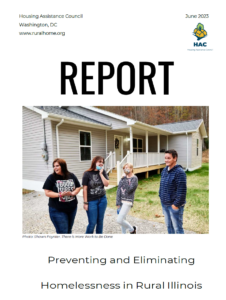
Preventing and Eliminating Rural Homelessness in Illinois

Homelessness and housing related issues manifest differently in rural environments. Highly effective urban solutions aimed at homelessness too often falter in rural America, where service provision is different and those who are homeless are often less conspicuous, but no less in need of assistance.

Recognizing the importance and unique nature of rural homelessness, the State of Illinois is committing resources to help end homelessness in rural Illinois. As part of that effort, the Housing Assistance Council (HAC) partnered with the Supportive Housing Providers Association (SHPA) and the Illinois Department of Human Services to undertake a data and information collection effort that will help inform strategies, solutions, and policies with the goal of preventing and eliminating homelessness in rural Illinois.

Download the document.

HAC CEO Responds to Executive Order Impacting Rural CDFIs

I’ve worked in enough small towns across America to know this: rural communities prosper when they have financial partners ready to invest in homeownership dreams and small business start-ups. A recent Executive Order targeting Community Development Financial Institutions has me concerned that rural America could lose access to the $6 billion in business CDFIs generate in their local economies.

For years, rural areas faced dwindling access to financial services. The number of rural headquartered banks fell by over 3,600 since 1995, an astounding 57% decline. Thankfully over that same 30-year period over 500 rural CDFIs have been created, filling gaps in the banking landscape of every State. And they do it effectively, leveraging $8 in private investment for every $1 in federal support. This has been especially helpful for local organizations with projects that are too small or specialized for the remaining banks or distant commercial lenders to finance.

HAC is one of those rural-serving CDFIs. Our work is supported by the resources the recent Executive Order is trying to undermine. We want to continue delivering real results for real people.

  • In Clearfield County, PA, where 45% of grandparents are raising grandchildren due to the opioid epidemic, HAC’s financing helped build the Village of Hope, a multigenerational affordable housing development designed for seniors and youth to live together.
  • In Pahokee, FL, our loan helped Diverse Housing Services breathe new life into Amaryllis Gardens, 44-units of workforce housing for employees of the surrounding farms.
  • In Visalia, CA, HAC’s $12 million in financing to Self-Help Enterprises has enabled over 300 low-income families to help construct their own homes as “sweat equity” downpayments.

The good news here is that the Executive Order is to be “implemented consistent with applicable law and subject to the availability of appropriations.” The CDFI Fund is not a discretionary policy—it’s embedded in federal statutes such as the Riegle Act, the Community Renewal Tax Relief Act, the Housing and Economic Recovery Act, and the Small Business Jobs Act. And funds for CDFI’s were included in this year’s appropriations and continuing resolutions.

It also helps that the CDFI Fund programs were created and supported by bipartisan consensus. Leaders across political lines and branches of government understand that rural America’s need for economic opportunity and stable housing is a shared national priority. We are encouraged by Treasury Secretary Bessent’s recent statement recognizing “the important role that the CDFI Fund and CDFIs play in expanding access to capital” and affirming that “CDFIs are a key component of President Trump’s commitment to supporting Main Street America.” For over 50 years, HAC has worked directly with rural policy-makers — Republican, Democrat, and Independent alike — to make affordable housing a reality. We hope that under the current Administration, the CDFI Fund will continue to be staffed and funded as Congress has legislated.

HAC stands ready to continue serving the millions of Americans who depend on the stability and opportunity CDFIs’ investments create. The path forward must strengthen, not undermine, our ability to serve hardworking rural families. They deserve nothing less.

HAC CEO issues statement on cuts to housing programs and professionals

In response to reports of extensive cuts in federal programs and staff that serve rural and small town interests at the Department of Housing and Urban Development (HUD) and U.S. Department of Agriculture (USDA), Housing Assistance Council CEO David Lipsetz made the following statement.

After this fall’s election, I observed that urban and rural voters had come closer together, as their shared frustration with the economy put a new Administration in the White House.  It seemed this would lead to a rebalancing of public and private investment in housing—one where small towns finally get their fair shot at prosperity. One-quarter of all rural families—5.6 million rural households—are paying more than they can afford for housing. Rural communities are experiencing unprecedented levels of homelessness, with rents outpacing household income, and a housing market that puts the American Dream of homeownership out of reach for many young working families. I expressed hope that the outcome of the election would finally bring national attention to the severe housing crisis facing rural communities.

However, this glimmer of hope is now fading. The public frustration that I thought would drive positive changes to an imperfect system is instead fueling an indiscriminate effort to dismantle the very programs and professionals we need. Recent cuts at USDA and HUD are setting small towns back.

Millions of rural Americans can rent decent apartments and buy good homes in places that banks and builders do not serve because we the people believe everyone deserves a chance. Hundreds of thousands of rural families—many elderly and disabled—live in HUD’s publicly supported housing or rely on HUD and USDA rental programs to find a place they can call home. These public programs sustain rural communities as they cycle through tough times.

When the market doesn’t generate enough good housing in small towns, mortgages from USDA and rent vouchers from HUD fill the gap. Yet, these are not simple programs to run. For these programs to ensure that good housing is built and maintained, we need experienced professionals in the administration. Plans to terminate half of HUD’s workforce and dismiss employees at USDA threaten to severely disrupt these vital investments in rural housing. A bank would never tell its shareholders it plans to fire half its underwriters and still expects to make good quality loans.

We cannot afford this kind of disruption to programs that rural communities depend on. Congress has appropriated funding for these programs, rural families need them, and they cannot operate effectively without adequate, experienced staff to administer them.

HAC has been in small towns for 54 years and plans to be here for 54 more. We stand ready to work with the President and everyone else who wants to build up rural communities. We look forward to partnering with new leaders at HUD and USDA to make sure they have the resources to address rural America’s pressing housing challenges.  But one thing is clear: the affordable housing crisis in rural America requires more capacity and attention, not less.

Resilience Related Federal Register Items – January 13, 2025

Rural communities are often on the front lines of disaster recovery, requiring clear guidance and timely access to resources.

To support these efforts, we’re sharing two important updates: HUD’s “CDBG-DR Universal Notice” and FEMA’s updated Public Assistance Program and Policy Guide. These resources provide vital information to help rural governments, nonprofits, and communities navigate the complexities of disaster recovery and build resilience.

This “CDBG-DR Universal Notice: Waivers and Alternative Requirements” describes the processes, procedures, timelines, waivers, and alternative requirements that HUD intends to implement with each allocation of CDBG-DR. When CDBG-DR funds are appropriated, HUD will publish an Allocation Announcement Notice in the Federal Register that incorporates the waivers and alternative requirements provided in the Universal Notice, as appropriate, along with any other new requirements imposed by the specific appropriation. The Universal Notice is intended to provide grantees and the public with increased transparency, consistency, and more timely access to CDBG-DR funds. The Universal Notice, which serves essentially the same function as program regulations, incorporates public feedback from a 2022 request for information and is intended to improve the program in a variety of ways.

FEMA has updated its Public Assistance Program and Policy Guide. The PA program assists governments and nonprofits.

HAC’s 2025 Rural Housing Policy Priorities

For over 50 years, the Housing Assistance Council (HAC) has been the voice for the poorest of the poor in the most rural places. Our deeply rooted work in communities across the country informs our research and drives our policy positions. Our independent and non-partisan work with members of Congress, federal agencies, affordable housing and community development organizations, and other stakeholders ensures the most vulnerable rural populations – especially those in high-needs regions like the Mississippi Delta, rural Appalachia, farmworker communities, the Southwest border colonias, and Indian Country – have improved access to safe and affordable housing opportunities.

Rural America is home to about 20 percent of the U.S. population and covers more than 90 percent of the U.S. landmass. Its small towns and rural regions are demographically and economically varied and face a wide array of local challenges and opportunities for developing their communities and housing. While each place is unique, HAC has documented several themes. Persistent poverty is a predominantly rural condition. Habitable rural housing is in severely short supply. The adequate housing that does exist is often unaffordable because rural incomes are low and run well below the national median. Rural housing lacks adequate plumbing and kitchen facilities at a rate above the national average. Overcrowding is not uncommon in some rural regions. Decades of stagnant rural house prices have denied owners the wealth and mobility so often associated with buying a home. Complicating these challenges, a lack of reliable rural data obscures rural realities.

In addressing these issues, HAC’s policy priorities include:

  1. Building the capacity of local affordable housing and community development organizations deeply rooted in rural places;
  2. Expanding access to credit and safe, affordable lending in underserved rural communities;
  3. Preserving the critical stock of USDA multifamily homes amid the growing maturing mortgage crisis;
  4. Improving the overall quality, availability and affordability of housing to buy and rent in small towns and rural places; and
  5. Preserving, increasing and tailoring resources for federal affordable housing programs serving rural populations.

We invite you to view our 2025 Policy Priorities and explore the various policy issues facing rural communities. You can also access an Executive Summary of the Policy Priorities.


HAC’s Policy Priorities for 2025


Post-Election Insights: A Hope for New Opportunity for Rural Housing

On November 5, a majority of American voters returned Donald Trump to the White House, along with a Republican majority in the Senate and—it now seems likely—the House of Representatives. Rural voters were a big part of his constituency. In fact, rural America gave President Trump more votes than urban America gave Vice President Harris.

The Housing Assistance Council is one of the only national housing organizations that focuses 100% of our work on small towns and rural places. All HAC loans, research reports, training programs and policy work are intended to help rural American communities address their affordable housing needs. So as you might guess, the election results prompted plenty of calls from friends in the housing industry asking versions of the same question, “Have rural and urban drifted further apart?” It may surprise you that my answer is an emphatic, “Nope, the gap just narrowed.”

Initial post-election analysis points to the economy as the decisive issue. Millions of suburban and urban Americans joined rural voters to send a message that the current economy is failing them. This is a familiar refrain for those of us who have spent years working in rural America. While the country is undoubtedly deeply divided on many fronts, perhaps this broader expression of economic pain provides an opportunity for progress toward an American future where working families in every geography have an opportunity not just to survive, but to get ahead.

Notably, because high housing costs are at the center of so many families’ economic struggles, for the first time in recent memory, housing took center stage throughout the campaign. This included an awareness that rural families earning rural wages can’t afford homes in their own hometowns. The day before the election I authored an op-ed in HousingWire that offered a set of bipartisan housing policy initiatives that would address the unique shape of the housing crisis in rural America.

With roots deep in rural communities, HAC has over 50 years’ experience providing elected officials data on rural conditions and nonpartisan analysis of public policies. We stand ready to share our expertise with the Trump Administration and 119th Congress to ensure that rural communities fully benefit from efforts to address the current housing crunch. The White House and Congress have the tools to reverse our current course. Homeownership and rental markets can be turned to meet the needs of ordinary Americans. Indeed, our nation’s history includes numerous examples in which the federal government boldly responded to housing crises with game-changing legislation, uniformly enacted on a bipartisan basis, from the National Housing Acts of 1934 and 1949 to the creation of the Low-Income Housing Tax Credit.

So with a broader voicing of economic discontent across rural, suburban and urban voters in this election, I expect the calls for changes to our economy and our housing markets will only grow louder. As we love to do at HAC, let me close with a couple of maps to illustrate the issue at hand. The map on the left is 1980. The one on the right is 2021. You can see the economy of the last forty years has left few places in which local wages allow local families to afford a place to live.

In fellowship,
David Lipsetz, President & CEO
Housing Assistance Council

HAC Supports Rural Provisions in Capital Magnet Fund Interim Rule

The CDFI Fund has released for comment an interim rule for the Capital Magnet Fund (CMF) program. The Capital Magnet Fund offers competitively awarded grants to CDFIs and nonprofit affordable housing organizations to finance affordable housing solutions and community revitalization efforts that benefit individuals and families with low-incomes and low-income communities nationwide. HAC has received several CMF awards, most of which have been used for the preservation of USDA’s Section 515 multifamily properties amid the maturing mortgage crisis. HAC is broadly supportive of the CMF interim rule, and submitted comments on several rural elements, including:
  • Support for the addition of a national Rural Service Area. This change will make it easier to use CMF in rural areas, and will all organizations who serve rural areas across the country to be nimble and flexible with their CMF funds.
  • Support for aligning CMF income targeting with other federal programs, with the caveat that the application competition should prioritize applications that propose deeper income targeting. Not all CMF deals include LIHTCs, especially in rural places. We encourage the CDFI Fund to consider how to continue to encourage this deeper income targeting in the CMF application scoring process, since raising the Very Low-Income threshold could result in fewer households under 50 percent AMI being served.
  • Support for the use of the Duty to Serve definition for rural areas. HAC has done extensive research on the myriad of rural definitions, and feels that the Duty to Serve definition is the most precise rural definition available.
HAC CMF Rule Comments 08.26.24

HAC Comments on Proposed New Rule for HOME Investment Partnerships Program

In late May, HUD published a proposed rule which would enable much needed revisions and updates to the requirements governing the HOME Investment Partnerships program. The proposed rule would make changes across the HOME program, from homeownership to rental, and included a specific focus on improving Community Housing Development Organization (CHDO) availability and capacity in rural areas. In response, HAC submitted comments on the proposed rule, applauding many of the proposed changes and pushing for additional rural-focused priorities. Specifically, key takeaways in HAC’s comments included:
  • The reality of the rural landscape must be taken into consideration as this new rule is finalized. Affordability is the greatest issue facing rural communities, like it is for the country at large. But rural areas are also disproportionately impacted by persistent poverty, substandard and overcrowded housing, and a lack of local capacity and access to capital.
  • Varying HOME program administration across Participating Jurisdictions (PJs) has been the most significant barrier for the small rural communities we serve. Over the last decade, we have observed that rural organizations experience significant challenges in effectively accessing HOME funds. Primarily, these difficulties arise from how PJs have adapted their programs, largely as a response to the 2013 regulation changes and subsequent funding reductions. PJs will need significant training in the impacts of this new rule to ensure it is implemented effectively.
  • Regulatory change alone cannot solve all the challenges within the HOME program. Because of the highly prescriptive nature of the HOME statute, a variety of statutory changes are also needed to fully transform the program such that it more positively impacts rural America.
  • Rural Community Housing Development Organizations will benefit from the proposed changes, but more is needed to move the needle. HAC applauds changes to Board Member requirements, organizational capacity requirement, and capacity building funds. We do, however, have concerns around the proposal to allow for statewide CHDOs, intended to improve rural program outcomes. Statewide CHDOs could inadvertently further disadvantage small, rural groups who are hoping to access the CHDO set-aside by forcing them to potentially compete with high-capacity, statewide organizations.
  • Streamlining and improved flexibility across the program is welcome. Helpful changes are proposed with respect to homebuyer housing, rental housing, Community Land Trusts, tenant-based rental assistance, tenant protections, maximum per-unit subsidy limits, and green and resilient property standards. These changes will help small, lower capacity groups to access and see success with the HOME program.
HAC HOME Rule Comments 07.29.24 FINAL

GET THE HAC NEWS!

Sign-up for HAC information products

SIGN UP HERE

Housing Assistance Council   |  1828 L Street. N.W., Suite 505, Washington, D.C. 20036
(202) 842-8600 (202) 347-3441 hac@ruralhome.org |

Board Portal

HAC is an equal opportunity provider, employer, and lender. | Civil Rights | Privacy