HAC’s CEO Testifies to Senate Banking Subcommittee on Rural Housing Reforms

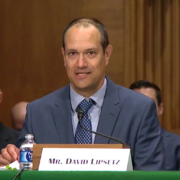
HAC was honored to be invited to testify on May 2, 2023 before the Housing, Transportation, and Community Development Subcommittee of the U.S. Senate Committee on Banking, Housing, and Urban Affairs to discuss commonsense, bipartisan reforms to the U.S. Department of Agriculture’s Rural Housing Service (RHS) programs. HAC’s President & CEO, David Lipsetz, was one of five witnesses on the hearing panel.

The hearing was held to discuss the bipartisan Rural Housing Service Reform Act of 2023, which has been introduced by Subcommittee Chairwoman Tina Smith (D-MN) and Senator Mike Rounds (R-SD). The RHS Reform Act includes a slate of provisions to improve the multifamily, single-family, and capacity building programs at RHS. Senators Smith and Rounds engaged deeply with stakeholders on the creation of the bill, including offering a call for policy recommendations in the summer of 2022. HAC’s response to that comment opportunity can be seen here. We were thrilled to see many of our recommendations included in the bill, and applaud Senators Smith and Rounds on their thoughtful engagement with stakeholders and their commitment to improving the RHS programs.

Highlights from the RHS Reform Act include:

  • Multifamily

    • Authorizing the Multifamily Preservation and Revitalization (MPR) program and Multifamily Preservation Technical Assistance Program
    • Allowing for the decoupling of a Section 515 mortgage and Section 521 Rental Assistance
    • Allowing Section 542 rural vouchers to be adjusted based on changes in tenant income
    • Streamlining the process for Section 515 nonprofit transfers and increasing the Section 515 nonprofit set aside
  • Single Family

    • Establishing the Native CDFI Section 502 relending program
    • Increasing the threshold for the mortgage requirement on a Section 504 home rehab loan from $7,500 to $15,000
    • Extending the loan term for a Section 502 loan up to 40 years
  • Capacity Building

    • Authorizing the Rural Community Development Initiative (RCDI) and waiving the matching funds requirement for groups working in areas of persistent poverty
    • Requiring RHS to publish more data on their housing programs
    • Authorizing funding for much needed technology upgrades at RHS

HAC News: April 27, 2023

TOP STORIES

House narrowly passes debt ceiling bill

By a 217-215 vote on April 26, the House passed the Limit, Save, Grow Act (H.R. 2811), which would raise the debt ceiling, cut federal spending, and rescind or repeal previously authorized spending. The bill is unlikely to pass the Senate, however, and the White House has said President Biden would veto it. USDA issued a press release quantifying possible impacts of the bill’s proposed cuts, including loss of rental assistance for up to 63,000 households and reduced support from the Rural Partners Network.

Senate committee considers rural housing

HAC CEO David Lipsetz is scheduled to testify on May 2 at a Rural Housing Legislation hearing before the Senate Banking Committee’s Housing, Transportation, and Community Development Subcommittee. The event will focus on a bill intended to improve several USDA rural housing programs, expected to be introduced by Senators Tina Smith (D-Minn.) and Mike Rounds (R-S.D.). Testimony at Building Consensus to Address Housing Challenges, a hearing before the full Senate Banking Committee on April 26, also recognized the distinct housing issues facing rural America.

HAC invites poster session proposals for national conference

Researchers and policymakers at all levels can apply by June 2 to share their research and innovative ideas through a series of poster sessions at the 2023 National Rural Housing Conference, October 24-27 in Washington, DC. The research must be related to rural America and can be on housing or another field such as public health, community development, race and ethnicity, or creative placemaking. Posters will be reviewed and judged by a distinguished panel of rural experts. For more information, contact Manda LaPorte and Natasha Moodie, HAC.

RuralSTAT

Nationally, shipments of new manufactured homes have eclipsed 100,000 for the past two years. In 2022 113,000 new manufactured homes were shipped. Source: Housing Assistance Council tabulations of HUD and the U.S. Census Bureau’s Manufactured Home Survey.

OPPORTUNITIES

Youth homelessness funding offered with rural priority

State, local, and Tribal governments, TDHEs, and nonprofits may apply by June 27 for the Youth Homelessness Demonstration Program, which supports communities in developing and implementing coordinated community approaches to preventing and ending homelessness among youth aged 24 and under. HUD will support projects in up to 25 communities, with a priority for up to eight with substantial rural populations. For more information, contact Caroline Crouse, HUD, 612-843-6451.

USDA opens Housing Preservation Grants competition

The Section 533 Housing Preservation Grants program funds state and local governments, Tribes, and nonprofits for repair or rehabilitation of housing owned or rented by low- and very low-income rural residents. Part of this year’s funding is set aside for repairs to units damaged in presidentially declared disasters in calendar year 2022. Applications are due June 5. For more information, contact a USDA RD State Office.

REGULATIONS AND FEDERAL AGENCIES

HUD requests input on disability-based discrimination

HUD is considering changes to its regulations for Section 504 of the Rehabilitation Act of 1973, which prohibits discrimination on the basis of disability in programs and activities receiving federal financial assistance. HUD wants to update its federal accessibility standard and clarify recipients’ obligations, including accounting for advances in accessible design, information and communication technology, and assistive technologies. Comments are due July 24. For more information, contact Amy Gioletti, HUD, 405-609-8561.

Fair housing, fair lending, and equitable finance rule proposed by FHFA

A proposed Federal Housing Finance Agency regulation would cover Equitable Housing Finance Plans for Fannie Mae and Freddie Mac as well as fair housing and fair lending for those entities and the Federal Home Loan Banks. Comments are due June 26. For more information, contact James Wylie, FHFA, 202-649-3209.

EPA releases framework for Greenhouse Gas Reduction Fund

EPA’s implementation framework divides the new $27 billion GGRF, created by the Inflation Reduction Act, into three competitions. The $14 billion National Clean Investment Fund will fund two or three national nonprofits to partner with private capital providers to deliver financing at scale to businesses, communities, community lenders, and others. The $6 billion Clean Communities Investment Accelerator competition will fund two to seven hub nonprofits to build the capacity of lenders such as CDFIs and housing finance agencies to finance clean technology projects. The $7 billion Solar for All competition will make grants to states, Tribal governments, municipalities, and nonprofits to prepare low-income and disadvantaged communities for residential and community solar. The agency will hold public listening sessions on this framework during the week of May 1. Comments can also be emailed to ggrf@epa.gov by May 12. EPA expects to issue Notices of Funding Opportunity as early as June.

USDA updates lender submission process for Section 538 guarantees

Changes for lenders submitting requests for rental housing guarantees under the Section 538 program will take effect on April 28, when USDA’s notice is published in the Federal Register. They include revisions to the priority criteria and the fee structure. For more information, contact Jonathan Bell, USDA, MFHprocessing1@usda.gov, 254-742-9764.

New comment deadline set for extending HUD’s Buy America waiver for Tribes

Comments are now due May 8 on HUD’s proposal to extend its waiver of Buy America requirements for Tribes and Tribal entities. For more information, contact Faith Rogers, HUD, 202-402-7082.

HUD announces rural-targeted funding awards

Following an earlier round of awards announced in February, the second set of communities receiving resources to address unsheltered and rural homelessness will get $171.2 million in grants for 115 new projects in 29 Continuums of Care, and approximately 3,300 Stability Vouchers will go to 139 PHAs that partnered with CoCs. Separately, HUD’s Older Adults Home Modification Program will provide $14.5 million to modify over 1,900 housing units, 1,100 of which are in “substantially rural” places, so that low-income elderly residents can remain in their homes.

HAC comments on Affirmatively Furthering Fair Housing

HAC submitted comments this month on a proposed HUD regulation that is intended to ensure that HUD and entities receiving funding from HUD will “Affirmatively Further Fair Housing.” In addition to supporting many aspects of HUD’s proposal and supporting suggestions made by other organizations, HAC wrote its own comment letter to address some specifically rural issues. HAC suggested that community engagement must be offered in many different ways, analyses must be conducted in smaller geographic areas, and data on USDA-supported housing must be specifically included.

EVENTS

Online placemaking conference set for May 23

USDA and the University of Kentucky will host an online conference May 23 on expanding access to placemaking resources for people in rural America. Rural leaders and placemaking experts will discuss ways to help advance placemaking strategies to create successful, thriving communities, as well as the importance of preserving and sustaining rural culture. Register here.

PUBLICATIONS AND MEDIA

Farm Bill may be opportunity to address rural rental preservation

Advocates Eye Farm Bill to Avert Drop in Affordable Rural Housing, a CQ Roll Call article, covers the anticipated loss of Section 515 rental units. HAC’s Director of Public Policy, Jonathan Harwitz, is quoted explaining legislative changes that could assist with preservation and could be adopted in the Farm Bill.

Report covers links between reentry and housing

The Council of State Governments Justice Center published Building Connections to Housing During Reentry, a report on a national survey of state Departments of Corrections highlighting connections between reentry after incarceration and housing.

HBO reports on farmworkers

A recent 25-minute segment on Last Week Tonight with John Oliver covers the working and living conditions of farmworkers in the U.S.

Rural placemaking article features CIRD

A Daily Yonder piece, Rural Renewal: Placemaking in Small Towns Through Good Design, describes the role of design and creative placemaking in building rural communities. It features the Citizens’ Institute on Rural Design (CIRD), a leadership initiative of the National Endowment for the Arts in partnership with HAC, and quotes Shonterria Charleston, HAC’s Director of Training and Technical Assistance.

Feedback sought on substance use recovery mapping tool

The Fletcher Group, Inc., NORC at the University of Chicago, and East Tennessee State University seek participants for virtual focus groups to provide feedback on the Recovery Ecosystem Index Mapping Tool. The system maps county-level factors that are in place to support individuals in recovery from substance use disorder.

Diversifying child population described

The Changing Child Population of the United States: First Data from the 2020 Census, published by the Annie E. Casey Foundation, reports that the U.S. child population is decreasing in size, increasing in diversity, and changing substantially. The nation’s child population fell from 74.2 million in 2010 to 73.1 million in 2020. Children of color, who represented just 26% of all kids in 1980, were a majority – 53% – in 2020. Data is presented at the state and city levels.

HAC

HAC is hiring a Chief Financial Officer

The Chief Financial Officer is a newly created position responsible for overseeing the accounting, finance, capital markets, and administrative functions of HAC, while also providing overall leadership and strategy to the organization. This executive must have a background in accounting or finance, managing staff, and serving as a senior leader at a sophisticated and multidimensional organization, such as another CDFI, community lending institution, or housing-related nonprofit. The CFO is expected to work in HAC’s downtown Washington, DC office with a portion of their week eligible for remote work.

National Rural Housing Conference set for October

Mark your calendars and save the date! HAC’s National Rural Housing Conference will be held October 24-27 in Washington, DC and online.

Need capital for your affordable housing project?

HAC’s loan fund provides low interest rate loans to support single- and multifamily affordable housing projects for low-income rural residents throughout the U.S. and territories. Capital is available for all types of affordable and mixed-income housing projects, including preservation, new development, farmworker, senior and veteran housing. HAC loan funds can be used for pre-development, site acquisition, site development, construction/rehabilitation and permanent financing. Contact HAC’s loan fund staff at hacloanfund@ruralhome.org, 202-842-8600.

Please note: HAC is not able to offer loans to individuals or families. Borrowers must be nonprofit or for-profit organizations or government entities (including tribes).

Want to reprint a HAC News item?

Please credit the HAC News and provide a link to HAC’s website. Thank you!
HAC’s Comments on Affirmatively Furthering Fair Housing

In February 2023, the U.S. Department of Housing and Urban Development (HUD) requested public comments on a proposed regulation that is intended to ensure that HUD and entities receiving funding from HUD will “Affirmatively Further Fair Housing” (AFFH). This rule would implement the Fair Housing Act’s requirement for HUD and its awardees to proactively take meaningful actions to overcome patterns of segregation, promote fair housing choice, eliminate disparities in housing-related opportunities, and foster inclusive communities that are free from discrimination. The 2023 proposed rule is based on a 2015 rule that was never fully implemented.

HAC supports many aspects of HUD’s proposal. HAC also supports suggestions for improvements made in comment letters prepared by the National Community Reinvestment Coalition and National Housing Law Project, and HAC — along with many other organizations — signed those letters. In addition, to emphasize some points that are particularly relevant to AFFH efforts in rural America, HAC submitted its own comment letter.

In its letter, HAC makes three primary points regarding state and local governments’ development of AFFH Equity Plans:

  • Community engagement must be offered in many different ways.
  • Analyses must be conducted in smaller geographic areas.
  • Data on USDA-supported housing must be specifically included.

Read HAC’s full comments here.

HUD AFFH 2023 Comment Letter

HAC News: April 13, 2023

TOP STORIES

Deadline approaching for rural community design support

Rural communities are invited to apply to the Citizens’ Institute on Rural Design (CIRD) by April 21 for design support and technical assistance to host an on-site Local Design Workshop or participate in the Design Learning Cohort. Reach out to CIRD staff at HAC via cird@ruralhome.org with questions or for assistance with the application – even last minute. HAC carries out CIRD in partnership with the National Endowment for the Arts. Additional background is available here.

Help HAC plan its future

HAC is currently developing its strategic plan for the next three to five years and seeks involvement from the HAC community! Please help by filling out HAC’s Strategy Survey before April 21. The survey should take no more than five to seven minutes, and asks about our strengths, challenges, and commitment to rural communities. For more information, contact strategicplanning@ruralhome.org.

Colonias definition based on HAC’s research will be used for Duty to Serve

The Federal Housing Finance Administration announced on April 12 it is adopting a new way to determine what geographic areas are considered colonias for purposes of Fannie Mae’s and Freddie Mac’s Duty to Serve activities, based on HAC research. FHFA made no changes from its original proposal, which HAC largely supported.

April is Fair Housing Month

HUD offers events and resources to celebrate the month and the 55th anniversary of the Fair Housing Act.

RuralSTAT

The U.S. Department of Labor certified around 370,000 temporary jobs for H-2A temporary farmworker visas in FY22, more than seven times the number certified in 2005 and double the number in 2016. Source: USDA Economic Research Service.

OPPORTUNITIES

Recovery community services applications due May 30

The Recovery Community Services Program will make grants of up to $300,000 to state, territorial, local, or Tribal governments, Tribal organizations or health programs, or other public or private nonprofit entities. The provision of recovery housing is an allowable activity. For more information, contact Timothy Jean, Substance Abuse and Mental Health Services Administration, 240-276-1034.

Choice Neighborhood Planning Grants available

PHAs, local governments, Tribal entities, and nonprofits with distressed HUD-assisted housing are eligible for Choice Neighborhoods Planning Grants to assist communities with severely distressed public or HUD-assisted housing in developing a comprehensive neighborhood transformation plan and beginning to build the momentum for implementation. Apply by June 6. For more information, contact HUD, ChoiceNeighborhoods@hud.gov.

EPA offers grants to prepare for wildfire smoke

The Environmental Protection Agency’s new Wildfire Smoke Preparedness in Community Buildings Program will make grants to states, Tribes, nonprofits, and some educational entities for the assessment, prevention, control, and/or abatement of wildfire smoke hazards in community buildings and related activities, particularly those that serve disadvantaged communities or vulnerable populations. The deadline is May 9. For more information, contact EPA, IEDGrantsAdminTeam@epa.gov.

REGULATIONS AND FEDERAL AGENCIES

Extension of HUD’s Buy America waiver for Tribes proposed

HUD waived application of Buy America requirements for Tribes and Tribal entities through May 14, 2023, and now hopes to extend that waiver for another year to obtain more specific Tribal feedback and information. Comments are due April 24. For more information, contact Faith Rogers, HUD, 202-402-7082.

HUD gives more time for fair housing feedback

The deadline for comments on HUD’s proposed Affirmatively Furthering Fair Housing rule has been extended to April 24. For more information, contact Tiffany Johnson, HUD, 202-402-2881.

OMB extends comment period on race and ethnicity

Comments are now due April 27, rather than April 12, on proposals for updating OMB’s race and ethnicity statistical standards. For more information, contact Bob Sivinski, 202-395-1205.

Section 502 guarantee program sets forbearance deadline

Although the national emergency declaration for the coronavirus pandemic is scheduled to end on May 11, servicers of USDA guaranteed homeownership loans have until May 31 to approve borrower requests for initial COVID-19 forbearances. For more information, contact USDA, sfhglpServicing@usda.gov, 202-720-1452.

Equitable Housing Finance Plans for Fannie Mae and Freddie Mac revised

The Government-Sponsored Enterprises have prepared annual updates to their Equitable Housing Finance Plans, as well as performance reports on their 2022 progress.

CFPB requests input on “abusive” practices

The 2010 statute that created the CFPB banned “abusive” conduct towards consumers by providers of goods and services, including housing financing, in addition to the “unfair” and “deceptive” practices previously prohibited. CFPB is now accepting comments through July 3 on a policy statement that summarizes how abusive activities have been defined and identified. For more information, contact Bradley Lipton, CFPB, 202-435-7700.

Habibi leaves USDA Rural Housing Service

Jamal Habibi, who has served as Chief of Staff for USDA’s Rural Housing Service since February 2021, has been promoted to Chief of Staff for Trade and Foreign Affairs at USDA.

FEMA’s National Risk Index updated

New data and information have been used to update the National Risk Index, which offers an interactive map and related material for 18 natural hazards. Scores for counties and census tracts indicate their risks from natural hazards, expected annual loss, social vulnerability, and community resilience.

EVENTS

Few spaces remain for workforce housing training

HAC will offer The Future of Rural Workforce Housing: Exploring New Models and Approaches on May 1-3 in Gatlinburg, TN. Participants will explore new and innovative models for creating affordable housing for the rural workforce, with a focus on community-driven solutions. Space is limited to staff of nonprofit, Tribal, and local governmental agencies in rural communities working on affordable housing activities, and the event is nearly full. Register soon! For more information, contact HAC staff, registration@ruralhome.org.

HAC offers webinars on construction

Overcoming Cost Barriers: Innovative Approaches to Construction with Smart Building Techniques, Volunteers, and Sweat Equity is a series of five webinars:

PUBLICATIONS AND MEDIA

Legislative efforts to preserve rural rental housing described

Advocates Eye Farm Bill to Avert Drop in Affordable Rural Housing, an article published by Roll Call, describes efforts in Congress to decouple Section 515 mortgages and Section 521 Rental Assistance. Bills to institute decoupling have been introduced in the last few Congresses but have not yet been adopted. HAC’s Public Policy Director Jonathan Harwitz is one of the experts quoted in the article.

Online disaster guide supports survivors of Midwestern and Southern tornadoes

To assist our rural partners and communities affected by the recent tornadoes in the Midwestern and Southern U.S., HAC offers an online resource guide with information for individuals and families in the disaster area. Other disaster resources from HAC include Rural Resilience in the Face of Disaster and a Disaster Response for Rural Communities Guide.

Reports seek to reveal inequality and its history

Columbia Journalism School commissioned research teams to develop overviews of social science research on inequality in housing, economics, education, criminal justice, and healthcare. Housing Inequality in 20th-century America: A Report is one of five resulting Uncovering Inequality papers.

HAC

HAC is hiring a Chief Financial Officer

The Chief Financial Officer is a newly created position responsible for overseeing the accounting, finance, capital markets, and administrative functions of HAC, while also providing overall leadership and strategy to the organization. This executive must have a background in accounting or finance, managing staff, and serving as a senior leader at a sophisticated and multidimensional organization, such as another CDFI, community lending institution, or housing-related nonprofit. The CFO is expected to work in HAC’s downtown Washington, DC office with a portion of their week eligible for remote work.

National Rural Housing Conference set for October

Mark your calendars and save the date! HAC’s National Rural Housing Conference will be held October 24-27 in Washington, DC and online.

Need capital for your affordable housing project?

HAC’s loan fund provides low interest rate loans to support single- and multifamily affordable housing projects for low-income rural residents throughout the U.S. and territories. Capital is available for all types of affordable and mixed-income housing projects, including preservation, new development, farmworker, senior and veteran housing. HAC loan funds can be used for pre-development, site acquisition, site development, construction/rehabilitation and permanent financing. Contact HAC’s loan fund staff at hacloanfund@ruralhome.org, 202-842-8600.

Please note: HAC is not able to offer loans to individuals or families. Borrowers must be nonprofit or for-profit organizations or government entities (including tribes).

Want to reprint a HAC News item?

Please credit the HAC News and provide a link to HAC’s website. Thank you!
USDA makes home repair grants available for disaster impact in rural Kentucky

U.S. Department of Agriculture Rural Development announced the availability of grants to help people repair their homes that were damaged by historic flooding and other destructive weather in 2022.

The homes must be located in Presidentially declared disaster areas. People living in 26 Kentucky counties are eligible for the funding.

The grants are being made available through supplemental disaster funding under the Rural Disaster Home Repair Grant Program. Through this program, people may apply to receive grants of up to $40,675 directly from USDA to repair their homes.

For more information on how to apply, contact Rural Development Kentucky’s Single-Family Housing team at 859-224-7322 or visit https://www.rd.usda.gov/contact-page/kentucky-contacts.

HAC’s Comments on HUD’s 2023 Learning Agenda

HAC submitted comments to the Department of Housing and Urban Development’s (HUD) Request for Information on their Fiscal Year 2023 Learning Agenda. There is a lack of rural research on a variety of housing topics, and HUD can play a role in investing in high-quality research and data to better define rural needs.

HAC’s comments suggested these areas and topics as ripe for HUD research investment:

  • Farmworker housing conditions
  • Manufactured housing issues
  • The fate of housing units leaving the federally subsidized housing stock
  • The impact of rural Area Median Incomes on HUD program access
  • Rural data in the American Housing Survey

Read HAC’s full comments here.

HUD Learning Agenda 2023 Comment Letter

Notice of Funding Opportunity: Wildfire Smoke Preparedness in Community Buildings Grant Program

EPA is seeking applications from eligible entities for a new federal grant program to support enhancing wildfire smoke preparedness in community buildings. The Wildfire Smoke Preparedness in Community Buildings grant program will provide grants and cooperative agreements to states, federally recognized tribes, public preschools, local educational agencies, and non-profit organizations for the assessment, prevention, control or abatement of wildfire smoke hazards in community buildings and related activities.

The deadline to apply is May 9, 2023.

EPA will host an information session for potential applicants. During the webinar, EPA will provide an overview of the funding opportunity and the application process.

When: April 10, 3 – 4 p.m. ET

Learn more about the Wildfire Smoke Preparedness in Community Buildings grant program.

March 31- April 1 Midwest and Southern Tornadoes 2023 Disaster Guide

The National Weather Service confirmed more than 60 tornadoes hit the South and Midwest on Friday and Saturday, March 31 – April 1. The most affected states were Alabama, Arkansas, Illinois, Indiana, Mississippi, and Tennessee. Most of these governors have announced emergency or disaster declarations for their state. As of Monday morning, there are at least 32 deaths and many more people injured from the tornadoes. Hundreds of homes and businesses were destroyed and have to be rebuilt.

HAC offers the following resources with information for nonprofits dealing with loss and damage from tornadoes: Rural Resilience in the Face of Disaster site and Disaster Response for Rural Communities Guide.

If you are in need of emergency, transient housing, you can text SHELTER and your Zip Code to 43362 (4FEMA) to find where the shelter closest to you is located.

TIPS

Disaster Assistance Improvement Program (DAIP)
Individuals and business owners who sustained losses in the designated area can begin applying for assistance by registering online at http://www.DisasterAssistance.gov or by calling 1-800-621- 3362 or 1-800- 462-7585 TTY. The toll-free telephone numbers will operate from 7:00 a.m. to 10:00 p.m. seven days a week until further notice.

Check Your Home: Structural Elements

If your home has experienced damage, remember to the check the outside of your home before you enter. Look for loose power lines, broken or damaged gas lines, foundations cracks, missing support beams, or other damage. It may be safest to ask a building inspector of contractor to check the structure before you enter. Do not force jammed doors open, as they may be providing needed support to the rest of the home. Sniff for gas to ensure there are no natural or propane gas leaks. If you do have a propane tank system, make sure to turn off all valves and contact a propane supplier to check the system before you use it again. Check floors and ceilings to ensure they are not sagging from water damage; this can be especially hazardous. Take photographs of any damage as you may need them for insurance claims or FEMA claims later.

Federal Emergency Management Agency (FEMA)

To apply to disaster assistance funding, you must complete a multi-purpose application over the phone on FEMA’s toll-free national tele registration or online.
Toll-free helpline:
1-800-621-FEMA (3362)
For hearing impaired callers only:
1-800-462-7585 (TTY)
1-800-621-3362 (Video Relay Service)
For more information on federal aid programs visit FEMA’s website. Aid may include rental payments, home repair, unemployment payments, loans, and other assistance.

American Red Cross Disaster Service

For referrals and updates on Red Cross shelter services in your area, locate a local Red Cross office through: https://www.redcross.org/get-help.html or by calling the Public Inquiry Center at 1-800-214-0441. If an emergency has forced you to evacuate your home, the Red Cross has a list of Open Shelters on its website.

State and Local Housing Agencies

Each state has at least one agency that administers state and federal programs to promote decent affordable housing for low-income individuals. Typically, these agencies and authorities administer some aspects of state or federal programs. Below is a list of relevant organizations in states impacted by the tornadoes.

Alabama
Alabama Housing Finance Authority
7460 Halcyon Pointe Drive, Suite 200
Montgomery, AL 36117
(334) 244-9200
http://www.ahfa.com/

Arkansas
Arkansas Development Finance Authority
P.O. Box 8023
Little Rock, AR 72203-8023
(501) 682-5900
http://www.arkansas.gov/adfa

 Illinois
Illinois Housing Development Authority
111 E Wacker Drive, Suite 1000
Chicago, IL 60601
(312) 836-5200
http://www.ihda.org

Indiana
Indiana Housing and Community Development Authority
30 South Meridian Street
Suite 900
Indianapolis IN – 46204
(800) 872-0371 (Inside Indiana Only)
(317) 232-7777
https://www.in.gov/ihcda/home/

Mississippi
Mississippi Home Corporation
735 Riverside Drive
Jackson, MS 39202-1166
Phone: (601) 718-4642
Fax: (601) 718-4643
http://www.mshomecorp.com

Tennessee
Tennessee Housing Development Agency
502 Deaderick Street, Third Floor
Nashville, TN 37243
Phone: (615) 815-2200
Fax: (615) 564-2700
https://www.thda.org

Federal Emergency Management Agency Regional Offices

REGION IV
(serves Alabama, Florida, Georgia, Kentucky, Mississippi, North Carolina, South Carolina, Tennessee)
(770) 220-5200
www.fema.gov/region-iv-al-fl-ga-ky-ms-nc-sc-tn

REGION V
(serves Illinois, Indiana, Michigan, Minnesota, Ohio, and Wisconsin)
(312) 408-4427
https://www.fema.gov/about/organization/region-5

REGION VI
(serves Arkansas, Louisiana, New Mexico, Oklahoma, and Texas)
(940) 898-5399
https://www.fema.gov/about/organization/region-6

Department of Housing and Urban Development State Field Offices

Alabama
417 20th Street North,Suite 700
Birmingham, AL 35203
(205) 731 2617
Director Kenneth E. Free
https://www.hud.gov/states/alabama/offices

Arkansas
425 West Capitol Avenue, Suite 1000
Little Rock, AR 72201-3488
(501) 918-5700
Director: Wanda C. Merritt
https://www.hud.gov/states/arkansas/offices

Illinois
Ralph Metcalfe Federal Building
77 West Jackson Boulevard
Chicago, IL 60604-3507
(312) 353-6236
Director: Kimberly Danna
https://www.hud.gov/states/illinois/offices

 Indiana
Minton Capehart Federal Building
575 North Pennsylvania Street, Suite 655
Indianapolis, IN 46204
(317) 226-6303
Director: Kimberly Wize
https://www.hud.gov/states/indiana/offices

Mississippi
Dr. A. H. McCoy Federal Building
100 West Capitol Street
Room 910
Jackson, MS 39269-1096
(601) 965-4757
Director: Adrenace Williams
https://www.hud.gov/states/mississippi/offices

Tennessee
200 Jefferson Suite 300
Memphis, TN 38103
(901) 544-3367
Acting Director: Kenneth E. Free
https://www.hud.gov/states/tennessee/offices

Rural Development State Offices

Alabama
Nivory Gordon, Jr., State Director
4121 Carmichael Road, Suite 601
Montgomery, AL 36106-3683
(334) 279-3400
www.rd.usda.gov/al

Arkansas
Jill Floyd, State Director
Federal Building
700 West Capitol Avenue, Room 3416
Little Rock, AR 72201-3225
(501) 301-3216
https://www.rd.usda.gov/ar

Illinois
Betsy Dirksen Londrigan, State Director
2118 West Park Court, Suite A
Champaign, IL 61821
(217) 403-6200
https://www.rd.usda.gov/il

Indiana
Terry Goodin, State Director
5975 Lakeside Boulevard
Indianapolis, Indiana 46278
(317) 290-3100
https://www.rd.usda.gov/in

Mississippi
Trina George, State Director
Federal Building, Suite 831
100 West Capitol Street
Jackson, MS 39269
(601) 965-4316
www.rd.usda.gov/ms
 
Tennessee
Arlisa Armstrong, State Director
441 Donelson Pike, Suite 310
Nashville, TN  37214
(615) 783-1300
www.rd.usda.gov/tn

State Emergency Management Agencies

Alabama
Alabama Emergency Management Agency
5898 County Road 41
Clanton, Alabama 35046-2160
Phone: (205) 280-2476
Fax: (205) 280-2442
https://ema.alabama.gov/

Arkansas
Building 9501
Camp Joseph T. Robinson
North Little Rock, AR 72199
(501) 683-6700
https://www.dps.arkansas.gov/emergency-management/adem/

Illinois
Illinois Emergency Management Agency
2200 South Dirksen Parkway
Springfield, Illinois 62703
(217) 782-2700
24-hour Response (217) 782-7860
https://www2.illinois.gov/iema/Pages/default.aspx

Indiana
Indiana Dept. of Homeland Security
Indiana Government Center-South, Room E208
302 W. Washington St.
Indianapolis, IN 46204-2739
(317) 232-2222
https://www.in.gov/dhs/emergency-management-and-preparedness/

Mississippi
P.O. Box 5644 Pearl, Mississippi
(601) 933-MEMA
24 hour emergency line: 1-800-222-MEMA(6362)
https://www.msema.org/

Tennessee
Tennessee Emergency Management Agency
3041 Sidco Dr.
Nashville, TN 37204
(615) 741-0001
https://www.tn.gov/tema.html

HAC News: March 30, 2023

TOP STORIES

USDA and HUD predict impact of proposed funding cuts

House Appropriations Committee Ranking Member Rosa DeLauro (D-Conn.) asked heads of federal agencies about the impact of cutting FY24 discretionary spending back to FY22 levels. USDA Secretary Tom Vilsack responded that between 40,000 and 63,000 of the 288,000 tenant households currently receiving USDA Rental Assistance would lose that aid. The resulting loss of rental income could cause property owners to defer maintenance and fall behind on loan payments, Vilsack noted. HUD Secretary Marcia Fudge’s reply predicted mass evictions, increased homelessness, exacerbated dire housing conditions in Indian Country, and more.

HUD sets schedule for applying Buy America requirements

HUD has established an implementation schedule for applying the new Buy America preference for U.S.-made construction components. As of February 22, 2023, the requirements apply to iron and steel products used in infrastructure projects funded with new Choice Neighborhood, Lead Hazard Reduction, and Healthy Homes Production Grants. For most products in most other programs, the requirements will take effect in 2024. HUD has not yet provided further guidance on what activities under these programs will be considered to be infrastructure projects. This schedule does not apply to Tribes and Tribal entities because the requirements are waived temporarily for them under a separate notice, although the Tribal waiver will expire after May 14, 2023.

USDA explains timing for eligible areas review

USDA RD has posted details about the eligible areas review process, adding to the information previously available. (The new notice came from the Section 502 guarantee office but applies to all housing programs.) The new details include copies of all notices issued by State Offices between March 8 and 10 indicating where RD is reviewing population changes to determine whether area eligibility changes are required. The public now has 90 days to submit comments. Before final decisions are made, the public will have 30 days to review comments received from the 90-day notice, a description of any proposed boundary revisions, and a revised eligibility map. RD tentatively plans to make new boundaries effective on October 2, 2023, at the beginning of fiscal year 2024. For more information or to submit comments, contact the relevant State Office. Sign up here to receive email notices from your state (and other USDA RD notices).

HAC invites workshop proposals for October 2023 National Rural Housing Conference

HAC requests workshop proposals for its 2023 conference, to be held October 24-27 (with workshops on October 25 and 26) in Washington, DC. Workshops should seek to align themselves with the conference theme – Build Rural – or one of the following threads: Housing Affordability, Development, Preservation, Community Facilities, Rural Prosperity, Placemaking, Capacity Building, Housing Justice, or other adjacent threads. Proposals are due June 2. For more information, contact Kelly Cooney or Diane Hunter, HAC.

RuralSTAT

While racial/ethnic diversity has generally increased over the past 10 years among tenants of rental housing financed with USDA loans, the proportion of American Indian and Alaska Native (AIAN) tenants has not changed. In 2012, 68% of tenants were white, non-Hispanic; 18.5% were Black, non-Hispanic; 10.7% were Hispanic; and 1.7% were AIAN. In 2022, 64.4% were white, 20.4% were Black, 12% were Hispanic, and 1.7% were AIAN. Source: USDA Multi-Family Housing Annual Fair Housing Occupancy Reports, 2012 and 2022.

OPPORTUNITIES

USDA offers disaster repair grants for homeowners

USDA is now accepting applications for Single Family Housing Rural Disaster Home Repair Grants, newly funded in the final FY23 omnibus appropriations bill. Grants of up to $40,675 are available for low- and very low-income homeowners in rural places that experienced presidentially declared disasters in calendar year 2022. Very low-income homeowners may also be eligible for Section 504 loans and grants. For more information, contact a USDA RD office.

Fair housing education and outreach funds offered

HUD has opened a supplemental Fair Housing Initiatives Program Education and Outreach Initiative. Eligible applicants are Qualified Fair Housing Enforcement Organizations, Fair Housing Enforcement Organizations, public and private nonprofits, state and local governments, and agencies that participate in the Fair Housing Assistance Program. The deadline is May 11. For more information, contact Stephanie W. Thomas, HUD, 202-402-6938.

Community Connect broadband grants available

Nonprofits, for-profits, and state, local, and Tribal governments may apply by June 20 for Community Connect grants to construct rural broadband networks. For more information, contact Randall Millhiser, USDA RD, 202-578-6926.

Advisory Committee on Minority Farmers nominations open

The committee’s 15 members will include historically underserved farmers and ranchers, as well as representatives of minority serving institutions of higher education and community-based nonprofits, and people with civil rights and equity expertise. Nominations are due April 24. For more information, contact R. Jeanese Cabrera, USDA, 202-720-6350.

REGULATIONS AND FEDERAL AGENCIES

HUD seeks input on NSPIRE scoring and ranking

The most recent step in HUD’s implementation of National Standards for the Physical Inspection of Real Estate (NSPIRE) is a notice requesting comments on proposed NSPIRE physical inspection scoring and ranking methodology. HUD previously published a proposed regulation for NSPIRE and proposed standards. NSPIRE applies to public housing and multifamily housing programs, including Housing Choice Vouchers, Section 8 Project-Based and other assisted housing, the Section 202 and 811 programs, and HUD-insured multifamily housing. Comments are due April 27. For more information, contact Tara J. Radosevich, HUD, NSPIRERegulations@hud.gov.

New temporary authorization to help address RD backlogs

Effective immediately, additional staff in USDA RD State Offices may receive temporary authority to make some decisions regarding Section 502 direct and Section 504 applications. The change is intended to help reduce application backlogs. For more information, contact a State Office.

Cost burden increased among USDA tenants, annual occupancy report shows

Characteristics of tenants in Section 515 and 514 properties remained largely the same from October 2021 to October 2022, USDA’s annual data report indicates. There were 3,154 fewer units in 2022 than in 2021, with a decrease of 158 Section 515 properties and 7 Section 514 FLH properties. In 2022, average annual income for all tenants was $15,502, while the average income for those receiving Section 521 Rental Assistance was $12,989. The number of cost-burdened households, which fell dramatically from 41,121 in 2020 to 3,227 in 2021 because the American Rescue Plan Act provided additional RA, rose to 4,975 in 2022. Past occupancy data reports are available on HAC’s website.

HUD suggests changes related to floodplains

A proposed regulation is intended to improve the resilience of HUD-assisted or financed projects to the effects of climate change and natural disasters and provide for greater flexibility in the use of HUD assistance in floodways under certain circumstances. Comments are due May 23. For more information, contact Lauren Hayes Knutson, HUD, 202-402-4270.

Some USDA loan limits revised

Limits for USDA Section 502 direct loans have been revised for some places in Florida, New Jersey, and Virginia. For more information, contact an RD office.

HUD returns to 2013 disparate impact rule

HUD is reversing a change it made in 2020 to its fair housing discriminatory effects regulation and is reinstating a 2013 rule governing fair housing violation claims based on policies or actions with “disparate impacts” on categories of people protected by the Fair Housing Act. HAC supported this step when it was proposed. It requires no changes in practice because the 2013 rule remained in effect while the 2020 version was challenged in court.

EVENTS

Register now for upcoming HAC trainings

HAC Spring Training will be held April 11-13 in San Diego, with three different segments: “Housing and Services for Rural Veterans: A Symposium,” “Leading an Organization in Changing Times,” and “Creating Sustainable and Affordable Housing: A Workshop on Green Building Principles.”

Overcoming Cost Barriers: Innovative Approaches to Construction with Smart Building Techniques, Volunteers, and Sweat Equity is a series of five webinars:

Webinar to review federal funding for rural development

Seizing the Moment: Rural Development Hubs and the Historic Opportunity for Federal Resources, a new Rural Opportunity and Development (ROAD) Session, will be held on April 12. The webinar is hosted by Aspen Institute’s Community Strategies Group in collaboration with HAC, the Rural Community Assistance Partnership, Rural LISC, the International Economic Development Council, and the Federal Reserve Board.

Equity and resiliency connections to be covered

Rural Affordable Housing: Equity and Resiliency, a webinar offered on April 11 by the Technical Assistance Collaborative, will examine steps to center equity and mitigate effects of future disasters for vulnerable populations through thoughtful building and rebuilding.

PUBLICATIONS AND MEDIA

Disaster guide online for survivors of southern tornadoes

HAC’s thoughts are with our rural partners and communities affected by the recent tornadoes in Mississippi and Alabama. HAC offers an online resource guide with information for individuals and families in the disaster area. Other disaster resources from HAC include Rural Resilience in the Face of Disaster and a Disaster Response for Rural Communities Guide.

Blog considers how states and localities can support rural justice

Identifying Policies That Advance Racial & Economic Justice in Rural Places, a ChangeLab Solutions blog post, highlights several policies that “hold high potential to address multiple dimensions of oppression for BIPOC rural communities – for example, funding for Native arts programs; Native tourism alliances; targeted and local hiring; agricultural workers’ rights; funding and support for small water systems; broadband expansion; and reparations.”

HAC

National Rural Housing Conference set for October

Mark your calendars and save the date! HAC’s National Rural Housing Conference will be held October 24-27 in Washington, DC and online.

Need capital for your affordable housing project?

HAC’s loan fund provides low interest rate loans to support single- and multifamily affordable housing projects for low-income rural residents throughout the U.S. and territories. Capital is available for all types of affordable and mixed-income housing projects, including preservation, new development, farmworker, senior and veteran housing. HAC loan funds can be used for pre-development, site acquisition, site development, construction/rehabilitation and permanent financing. Contact HAC’s loan fund staff at hacloanfund@ruralhome.org, 202-842-8600.

Please note: HAC is not able to offer loans to individuals or families. Borrowers must be nonprofit or for-profit organizations or government entities (including tribes).

Want to reprint a HAC News item?

Please credit the HAC News and provide a link to HAC’s website. Thank you!
Southern Tornadoes 2023 Disaster Guide

On March 24th, a supercell storm caused a major tornado that wreaked havoc on Mississippi and Alabama. A state of emergency has been declared with federal funds deployed to the affected area. As of Monday morning, 25 people have been killed, dozens injured, and 36,000 people are without power. Much of the devastation is concentrated in Rolling Fork, MS, a poor rural town with a population of about 2000. The storm was particularly destructive because of the wide nature of the tornado that occurred at night, which made it difficult to see forming. Severe weather continues on Monday.

HAC offers the following resources with information for nonprofits dealing with loss and damage from tornadoes: Rural Resilience in the Face of Disaster site and Disaster Response for Rural Communities Guide.

If you are in need of emergency, transient housing, you can text SHELTER and your Zip Code to 43362 (4FEMA) to find where the shelter closest to you is located.

TIPS

Disaster Assistance Improvement Program (DAIP)
Individuals and business owners who sustained losses in the designated area can begin applying for assistance by registering online at http://www.DisasterAssistance.gov or by calling 1-800-621- 3362 or 1-800- 462-7585 TTY. The toll-free telephone numbers will operate from 7:00 a.m. to 10:00 p.m. seven days a week until further notice.

Check Your Home: Structural Elements

If your home has experienced damage, remember to the check the outside of your home before you enter. Look for loose power lines, broken or damaged gas lines, foundations cracks, missing support beams, or other damage. It may be safest to ask a building inspector of contractor to check the structure before you enter. Do not force jammed doors open, as they may be providing needed support to the rest of the home. Sniff for gas to ensure there are no natural or propane gas leaks. If you do have a propane tank system, make sure to turn off all valves and contact a propane supplier to check the system before you use it again. Check floors and ceilings to ensure they are not sagging from water damage; this can be especially hazardous. Take photographs of any damage as you may need them for insurance claims or FEMA claims later.


RESOURCES

Apply for FEMA Assistance by registering online at www.DisasterAssistance.gov. FEMA Disaster Assistance Helpline answers questions about the help offered by FEMA, how to apply for assistance, or the information in your account.
Toll-free helpline: 1-800-621-FEMA (3362)
For hearing impaired callers only:
1-800-462-7585 (TTY)
1-800-621-3362 (Video Relay Service)
Operators are multilingual and calls are answered seven days a week from 7 a.m. to 11 p.m. ET

American Red Cross Disaster Service: For referrals and updates on Red Cross shelter services in your area, locate a local Red Cross office through: https://www.redcross.org/find-help or by calling 1-800-RED CROSS (1-800-733-2767).
The Red Cross helps disaster victims by providing safe shelter, hot meals, essential relief supplies, emotional support and health services like first aid. Trained Red Cross workers often meet one-on-one with families to develop individual plans and identify available resources to help aid recovery.


FEDERAL EMERGENCY MANAGEMENT AGENCY REGIONAL OFFICE REGION IV
(serves Alabama, Florida, Georgia, Kentucky, Mississippi, North Carolina, South Carolina, Tennessee)
Federal Emergency Management Agency
3003 Chamblee Tucker Road
Atlanta, GA 30341
Main Number: 770-220-5200
Fax Number: 770-220-5230
www.fema.gov/region-iv-al-fl-ga-ky-ms-nc-sc-tn


STATE EMERGENCY MANAGEMENT AGENCIES

Alabama
Alabama Emergency Management Agency
5898 County Road 41
Clanton, Alabama 35046-2160
Phone: (205) 280-2476
Fax: (205) 280-2442
https://www.ema.alabama.gov

Mississippi
P.O. Box 5644 Pearl, Mississippi
(601) 933-MEMA
24 hour emergency line: 1-800-222-MEMA(6362)
https://www.msema.org/


STATE HOUSING AGENCIES

Alabama
Alabama Housing Finance Authority
7460 Halcyon Pointe Drive, Suite 200
Montgomery, AL 36117
Phone: (334) 244-9200
http://www.ahfa.com/

Mississippi
Mississippi Home Corporation
735 Riverside Drive
Jackson, MS 39202-1166
Phone: (601) 718-4642
Fax: (601) 718-4643
http://www.mshomecorp.com


DEPARTMENT OF HOUSING AND URBAN DEVELOPMENT STATE FIELD OFFICES

Alabama
417 20th Street North
Suite 700
Birmingham, AL 35203
(205) 731-2617
Director Kenneth E. Free
www.hud.gov/states/alabama

Mississippi
Dr. A. H. McCoy Federal Building
100 West Capitol Street
Room 910
Jackson, MS 39269-1096
(601) 965-4757
Director: Adrenace Williams
https://www.hud.gov/states/mississippi/offices


USDA RURAL DEVELOPMENT STATE OFFICES

Alabama
4121 Carmichael Road, Suite 601
Montgomery, AL 36106-3683
Phone: (334) 279-3400
Fax: (855) 304-8456
Nivory Gordon, Jr., State Director
www.rd.usda.gov/al

Mississippi
Federal Building, Suite 831
100 West Capitol Street
Jackson, MS 39269
Phone: (601) 965-4316
Fax: (601) 965-4088
Trina George, State Director
www.rd.usda.gov/ms

GET THE HAC NEWS!

Sign-up for HAC information products

SIGN UP HERE

Housing Assistance Council   |  1828 L Street. N.W., Suite 505, Washington, D.C. 20036
(202) 842-8600 (202) 347-3441 hac@ruralhome.org |

Board Portal

HAC is an equal opportunity provider, employer, and lender. | Civil Rights | Privacy