Tag Archive for: disaster relief

Ohio River Valley and Mississippi Valley Floods Rural Response Guide

Rural Response Guide

Ohio River Valley and Mississippi Valley Floods

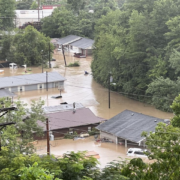
Heavy rainfall led to extreme flooding throughout the states along the Ohio River Valley and the Mississippi Valley beginning on Wednesday, April 2, 2025. Flash flood emergency and tornado warnings were issued through the following Saturday in Arkansas, Mississippi, Tennessee, and Kentucky. In response to the storms, the governors of Arkansas and Kentucky declared a state of emergency. President Trump approved the governor of Kentucky’s request for an emergency disaster declaration which allowed for Federal Emergency Management Agency (FEMA) assistance to be made available in Kentucky. The Housing Assistance Council (HAC) offers the following resources with information for communities and organizations dealing with loss and damage from the recent flooding: Rural Resilience in the Face of Disaster site and Disaster Response for Rural Communities Guide.

In response to the flooding, the National Weather Service issued Flash Flood Emergencies in multiple states. The American Red Cross of Utah’s disaster team deployed to the affected states to provide recovery and rescue efforts.

If you or your family have been affected by the recent flooding, or wish to help victims, organizations like The American Red Cross, All Hands and Hearts, and The Salvation Army have resources available. If you are in need of emergency, transient housing, you can text SHELTER and your Zip Code to 43362 (4FEMA) to find where the shelter closest to you is located.

Apply for FEMA Assistance by registering online at www.DisasterAssistance.gov. FEMA Disaster Assistance Helpline answers questions about the help offered by FEMA, how to apply for assistance, or the information in your account.

Toll-free helpline: 1-800-621-FEMA (3362) For hearing impaired callers only: 1-800-462-7585 (TTY) 1-800-621-3362 (Video Relay Service) Operators are multilingual and calls are answered seven days a week from 7 a.m. to 11 p.m. ET

American Red Cross Disaster Service: For referrals and updates on Red Cross shelter services in your area, locate a local Red Cross office through: https://www.redcross.org/find-help or by calling 1-800-RED CROSS (1-800-733-2767) The Red Cross helps disaster victims by providing safe shelter, hot meals, essential relief supplies, emotional support and health services like first aid. Trained Red Cross workers often meet one-on-one with families to develop individual plans and identify available resources to help aid recovery.

EMERGENCY MANAGEMENT AGENCIES

Arkansas

Arkansas Division of Emergency Management

Phone: (501) 683-6700

https://dps.arkansas.gov/emergency-management/adem/

Kentucky

Kentucky Emergency Management

Phone: (800) 255-2587

https://kyem.ky.gov/Pages/contact.aspx

Mississippi

Mississippi Emergency Management Agency

Phone: (601) 993-6362

https://www.msema.org/

Ohio

Ohio Emergency Management Agency

Phone: (614) 889-7150

https://ema.ohio.gov/help-center/contact-us

Tennessee

TN Emergency Management Agency

Phone: (615) 741-0001

https://www.tn.gov/tema.html

Texas

Texas Department of Emergency Management

Phone: (512) 424-2208

https://www.tdem.texas.gov/about/contact

DEPARTMENT OF HOUSING AND URBAN DEVELOPMENT STATE FIELD OFFICES

Arkansas

Little Rock Field Office

600 West Capitol Ave

Richard Arnold Sheppard US Courthouse

Room A400

Little Rock, AR 72201

Phone: (501) 918-5700

Field Office Director: Reginald D. Marable, Sr.

https://www.hud.gov/states/arkansas

Kentucky

Louisville Field Office

601 W Broadway, Room 110

Louisville, KY 40202

Phone: (502) 582-5251

Field Office Director: Charles E. President Jr.

https://www.hud.gov/states/kentucky

Mississippi

Jackson Field Office

100 W. Capitol Street, Suite 910

Jackson, MS 39269

Phone: (601) 965-4757

Field Office Director: Adrenace Williams

https://www.hud.gov/states/mississippi

Ohio

Cleveland Field Office

1001 Lakeside Ave, Suite 350

Cleveland, OH 44114

Phone: (216) 357-7900

Field Office Director: Kevin Laviano

https://www.hud.gov/states/ohio

Tennessee

Knoxville Field Office

US Department of Housing and Urban Development
John J. Duncan Federal Building
710 Locust Street, Suite 300
Knoxville, TN 37902-2526

Phone: (865) 545-4370

Field Office Director: Walter N. Perry

https://www.hud.gov/states/tennessee

Texas

Houston Field Office

1331 Lamar Street, Suite 550
Houston, TX 77010

Phone: (713) 718-3199

Field Office Director: Eric R. Cobb

Fort Worth Regional Office

307 W 7th Street, Suite 1000

Fort Worth, TX 76102

Phone: (817) 978-5965

San Antonio Field Office

615 E Houston Street

San Antonio, TX 78205

Phone: (210) 475-6800

https://www.hud.gov/states/texas

USDA RURAL DEVELOPMENT STATE OFFICES

Arkansas

700 West Capitol, Room 3416
Little Rock, AR 72201-3225

Phone: (501) 301-3216

https://www.rd.usda.gov/ar

Kentucky

771 Corporate Drive, Suite 200

Lexington, KY 40503

Phone: (859) 224-7300

https://www.rd.usda.gov/ky

Mississippi

100 W. Capitol Street, Suite 831

Jackson, MS 39269

Phone: (601) 965-4316

https://www.rd.usda.gov/ms


Ohio

200 North High Street, Room 507

Columbus, OH 43215

Phone: (614) 255-2400

https://www.rd.usda.gov/oh


Tennessee

441 Donelson Pike, Suite 310
Nashville, TN 37214

Phone: (615) 783-1300

https://www.rd.usda.gov/tn

Texas

101 South Main Street, Suite 102

Temple, Texas 76501

Phone: (254) 742-9700
https://www.rd.usda.gov/tx

Central Appalachia Floods Rural Response Guide

Central Appalachia Floods

In Eastern Kentucky rainfall began on Friday, February 14, 2025, which led to devastating flooding throughout the area over the weekend. The severe storms and flooding also impacted Southwest Virginia, Tennessee, and West Virginia. Thousands have been left without power after the storms. HAC offers the following resources with information for communities and organizations dealing with loss and damage from the recent flooding: Rural Resilience in the Face of Disaster site and Disaster Response for Rural Communities Guide 

In response to the flooding, President Trump approved an emergency declaration for the state of Kentucky. The action authorizes the Federal Emergency Management Agency (FEMA) and the Department of Homeland Security to coordinate disaster relief efforts. In addition to these resources, the Kentucky National Guard has assisted with the evacuation of residents. 

Resources for Individuals

If you or your family have been affected by the recent flooding, or wish to help victims, organizations like The American Red Cross, Appalachian Regional Healthcare (ARH) Foundation Relief Fund, and The United Way of Southern West Virginia have resources available. If you are in need of emergency, transient housing, you can text SHELTER and your Zip Code to 43362 (4FEMA) to find where the shelter closest to you is located. 

Apply for FEMA Assistance by registering online at www.DisasterAssistance.gov. FEMA Disaster Assistance Helpline answers questions about the help offered by FEMA, how to apply for assistance, or the information in your account. 

Toll-free helpline: 1-800-621-FEMA (3362) For hearing impaired callers only: 1-800-462-7585 (TTY) 1-800-621-3362 (Video Relay Service) Operators are multilingual and calls are answered seven days a week from 7 a.m. to 11 p.m. ET 

American Red Cross Disaster Service: For referrals and updates on Red Cross shelter services in your area, locate a local Red Cross office through: https://www.redcross.org/find-help or by calling 1-800-RED CROSS (1-800-733-2767) The Red Cross helps disaster victims by providing safe shelter, hot meals, essential relief supplies, emotional support and health services like first aid. Trained Red Cross workers often meet one-on-one with families to develop individual plans and identify available resources to help aid recovery. 

EMERGENCY MANAGEMENT AGENCIES

Kentucky  

Kentucky Emergency Management  

Phone: (800) 255-2587 

https://kyem.ky.gov/Pages/contact.aspx 


Tennessee 

TN Emergency Management Agency  

Phone: (615) 741-0001 

https://www.tn.gov/tema.html  


Virginia 

Virginia Department of Emergency Management  

Phone: (804) 267-7600 

https://www.virginia.gov/agencies/department-of-emergency-management/ 


West Virginia  

West Virginia Emergency Management Division  

Phone: (304) 558-5380  

https://emd.wv.gov/Preparedness/Pages/Emergency-Information-.aspx 

DEPARTMENT OF HOUSING AND URBAN DEVELOPMENT STATE FIELD OFFICES

Kentucky 

Louisville Field Office 

601 W Broadway, Room 110 

Louisville, KY 40202 

Phone: (502) 582-5251 


Field Office Director: Charles E. President Jr.  

https://www.hud.gov/ky#LocalOffice 


Tennessee 

Knoxville Field Office 

US Department of Housing and Urban Development
John J. Duncan Federal Building
710 Locust Street, Suite 300
Knoxville, TN 37902-2526 

Phone: (865) 545-4370 


Field Office Director: Walter N. Perry 

https://www.hud.gov/states/tennessee#LocalOffice 


Virginia 

Richmond Field Office 

600 East Broad Street, 3rd Floor
Richmond, VA 23219-4920 

Phone: (800) 842-2610 


Field Office Director: Carrie S. Schmidt 

https://www.hud.gov/va#LocalOffice 


West Virginia 

Charleston Field Office 

414 Summers St 

Charleston, WV 25301 

Phone: (304) 347-7000 


Field Office Director: Julie Alston 

https://www.hud.gov/wv#LocalOffice 

USDA RURAL DEVELOPMENT STATE OFFICES

Kentucky 

771 Corporate Drive, Suite 200 

Lexington, KY 40503 

Phone: (859) 224-7300 

https://www.rd.usda.gov/ky 

Tennessee 

441 Donelson Pike, Suite 310
Nashville, TN 37214 

Phone: (615) 783-1300 

https://www.rd.usda.gov/tn 

Virginia 

1606 Santa Rosa Road, Suite 238
Richmond, VA  23229 

Phone: (804) 287-1500  

https://www.rd.usda.gov/va 

West Virginia 

1550 Earl Core Road, Suite 101 

Morgantown, WV 26505 

Phone: (800) 295-8228 

https://www.rd.usda.gov/wv 

HUD Extends Foreclosure Moratoriums in Areas Devastated by Hurricanes Helene and Milton


WASHINGTON – Today, the U.S. Department of Housing and Urban Development’s (HUD) Federal Housing Administration (FHA) announced it is extending through April 11, 2025, its foreclosure moratoriums for FHA-insured Single Family Title II forward and Home Equity Conversion Mortgages in Presidentially Declared Major Disaster Areas (PDMDAs) declared as a result of this past summer’s Hurricanes Helene and Milton. This extension provides borrowers affected by these catastrophic events with additional time to access federal, state, or local housing resources; to consult with a HUD-approved housing counselor; and/or to rebuild their homes.

“When disaster strikes, we know that families and communities need not only resources, but time to recover,” said HUD Agency Head Adrianne Todman. “Today, by extending our foreclosure moratorium, we continue the Biden-Harris Administration’s efforts to help those affected by the catastrophic Hurricanes Helene and Milton to repair and rebuild their homes, communities, and lives.”

When Hurricanes Helene and Milton occurred, FHA implemented automatic 90-day foreclosure moratoriums that required mortgage servicers to halt the initiation or completion of all foreclosure actions in PDMDAs on the date that each disaster was declared. FHA is extending the foreclosure moratoriums for all Hurricanes Helene and Milton PDMDAs, regardless of their declaration date, through April 11, 2025. FHA is also extending the deadline dates for servicers to perform certain legal actions related to foreclosure for an additional 180 days following the end of the foreclosure moratoriums.

“Because the consecutive Hurricanes Helene and Milton caused a great deal of damage and disruption, FHA believes it is appropriate to extend our foreclosure moratoriums by 120 days,” said Federal Housing Commissioner Julia Gordon. “This extension will provide more time for homeowners to review a range of options with their mortgage servicer if they are unable to resume regular mortgage payments due to the impact of the disaster.”

Borrowers with FHA-insured mortgages located in Hurricanes Helen and Milton PDMDAs should contact their mortgage or loan servicer immediately for assistance. Multiple options are available for those who cannot resume their regular mortgage payments yet. Borrowers can also obtain additional assistance in the following ways:

  • Visit the FHA Disaster Relief site or call the FHA Resource Center at 1-800-304-9320 to learn more about disaster relief options.
  • Contact a HUD-approved housing counseling agency. These agencies have counselors available to assist those impacted by natural disasters in determining assistance needs and identifying available resources. Homeowners can find a HUD-approved housing counseling agency online or use HUD’s telephone look-up tool by calling (800) 569-4287. The telephone look-up tool includes access to information in more than 250 different languages. Borrowers do not have to have an FHA-insured mortgage to meet with a HUD-approved housing counseling agency. There is never a fee for foreclosure prevention counseling.
  • For borrowers whose homes are destroyed or damaged to an extent that requires reconstruction or complete replacement, contact an FHA-approved lender about FHA’s Section 203(h) program. This program provides 100 percent financing for eligible homeowners to rebuild their home or purchase a new one.
  • For borrowers seeking to purchase and/or repair a home that has been damaged, contact an FHA-approved lender about FHA’s Section 203(k) loan program. This program allows individuals to finance the purchase or refinance of a house, as well as the costs of repair or renovation, through a single mortgage.

Hurricane Helene Disaster Guide

Hurricane Helene made an impact in northwestern Florida on Thursday night, September 26, 2024 as a Category 4 storm. The hurricane made its way through Florida’s Gulf Coast to Tennessee. There are reports of destruction, power outages, and flooding that reaches over 600 miles. HAC offers the following resources with information for communities and organizations dealing with loss and damage from Hurricane Helene: Rural Resilience in the Face of Disaster site and Disaster Response for Rural Communities Guide.

At President Biden’s direction this past weekend, the FEMA Administrator has begun to survey the damages with local and state officials in Florida, Georgia, North Carolina, and Tennessee. The President approved Major Disaster declarations for the states of Florida and North Carolina which allows survivors to immediately access funds and resources for their recovery. Emergency declarations were also stated for Florida, North Carolina, South Carolina, Tennessee, Georgia, Virginia, and Alabama. These emergency declarations allow FEMA to provide direct Federal support and other protective measures to affected states.

On Sunday, September 29, 2024, more than 3,300 rescue personnel were deployed across the Federal workforce. These resources are deployed to support relief efforts across the effected states and to address unmet needs. Though Hurricane Helene is no longer active, many are still without power and are in the process of seeking safety.

If you or your family has been affected by Hurricane Helene, or wish to help victims of the hurricane, organizations like All Hands and Hearts, The American Red Cross, and Americares all have resources available. If you are in need of emergency, transient housing, you can text SHELTER and your Zip Code to 43362 (4FEMA) to find where the shelter closest to you is located

Apply for FEMA Assistance by registering online at www.DisasterAssistance.gov. FEMA Disaster Assistance Helpline answers questions about the help offered by FEMA, how to apply for assistance, or the information in your account.

Toll-free helpline: 1-800-621-FEMA (3362) For hearing impaired callers only: 1-800-462-7585 (TTY) 1-800-621-3362 (Video Relay Service) Operators are multilingual and calls are answered seven days a week from 7 a.m. to 11 p.m. ET

American Red Cross Disaster Service: For referrals and updates on Red Cross shelter services in your area, locate a local Red Cross office through: https://www.redcross.org/find-help or by calling 1-800-RED CROSS (1-800-733-2767) The Red Cross helps disaster victims by providing safe shelter, hot meals, essential relief supplies, emotional support and health services like first aid. Trained Red Cross workers often meet one-on-one with families to develop individual plans and identify available resources to help aid recovery.

Watch “Preparing your Organization for Disaster: A Guide to Rural Resilience” Webinar

EMERGENCY MANAGEMENT AGENCIES

Alabama

Alabama Emergency Management Agency

Phone: 205-280-2200

https://ema.alabama.gov/contacts/

Georgia

Georgia Emergency Management and Homeland Security Agency

935 United Ave. SE

Atlanta, GA 30316-0055

Phone: 404-635-7200

https://gema.georgia.gov/locations

Florida

Florida Division of Emergency Management

2555 Shumard Oak Blvd.

Tallahassee, Florida 32399-2100

Phone: 850-815-4000

https://www.floridadisaster.org/

North Carolina

North Carolina Emergency Management

Phone: 919-825-2500

https://www.ncdps.gov/our-organization/emergency-management

Tennessee

TN Emergency Management Agency

Phone: 615-741-0001

https://www.tn.gov/tema.html

South Carolina

South Carolina Emergency Management Division

Phone: 803-737-8500

https://www.scemd.org/

Virginia

Virginia Department of Emergency Management

Phone: 804-267-7600

https://www.virginia.gov/agencies/department-of-emergency-management/

DEPARTMENT OF HOUSING AND URBAN DEVELOPMENT STATE FIELD OFFICES

Alabama

Birmingham Field Office

417 20th Street North, Suite 700
Birmingham, AL 35203

Phone: (205) 731-2630

Field Office Director: Kenneth E. Free

https://www.hud.gov/states/alabama/offices

Georgia

Atlanta Regional Office

Martin Luther King Jr. Federal Building (MLK FOB)
77 Forsyth Street SW
Atlanta, GA 30303

Phone: (404) 331-5136

Georgia Field Office Director: Shea Johnson

https://www.hud.gov/states/georgia/offices

Florida

Miami Field Office
Brickell Plaza Federal Building
909 SE First Avenue, Room 500
Miami, FL 33131-3028

Phone: (305) 536-4456

Acting Field Office Director: Tiffany Cobb

Jacksonville Field Office

Charles East Bennett Federal Building

400 West Bay Street, Suite 1015

Jacksonville, FL 32202

Phone: (904) 232-2627

Field Office Director: Alesia Scott-Ford

https://www.hud.gov/states/florida/offices

North Carolina

Greensboro Field Office

Asheville Building
1500 Pinecroft Road, Suite 401
Greensboro, NC 27407-3838

Phone: (336) 547-4000

Field Office Director: Lorenzo Claxton

https://www.hud.gov/states/north_carolina/offices


Tennessee

Knoxville Field Office

US Department of Housing and Urban Development
John J. Duncan Federal Building
710 Locust Street, Suite 300
Knoxville, TN 37902-2526

Phone: (865) 545-4370

Field Office Director: Walter N. Perry

https://www.hud.gov/states/tennessee/offices


South Carolina

Columbia Field Office
Strom Thurmond Federal Building
1835 Assembly Street, 13th Floor
Columbia, SC 29201-2480

Phone: (803) 765-5592

Field Office Director: Kristine G. Foye

https://www.hud.gov/states/south_carolina/offices

Virginia

Richmond Field Office

600 East Broad Street, 3rd Floor
Richmond, VA 23219-4920

Phone: (800) 842-2610

Field Office Director: Carrie S. Schmidt

https://www.hud.gov/states/virginia/offices

USDA RURAL DEVELOPMENT STATE OFFICES

Alabama

4121 Carmichael Road, Suite 601
Montgomery, AL 36106

Phone: 334-279-3400

https://www.rd.usda.gov/al

Georgia

355 East Hancock Avenue, Room 300

Athens, Ga 30601

Phone: 404- 635-7200

https://www.rd.usda.gov/ga/georgia-contacts

Florida

4500 NW 27th Avenue

Suite D-2

Gainesville, FL 32606

Phone: 352-338-3400

https://www.rd.usda.gov/fl-vi

North Carolina

4405 Bland Road, Suite 260

Raleigh, NC 27609

Phone: 919-873-2000

https://www.rd.usda.gov/nc

Tennessee

441 Donelson Pike, Suite 310
Nashville, TN 37214
Phone: 615-783-1300

https://www.rd.usda.gov/tn/tennessee-contacts

South Carolina

Strom Thurmond Federal Building

1835 Assembly Street, Room 1007

Columbia, SC 29201

Phone: 803-765-5163

https://www.rd.usda.gov/sc

Virginia

1606 Santa Rosa Road, Suite 238
Richmond, VA  23229
Phone: 804-287-1500

https://www.rd.usda.gov/va/virginia-contacts

DEPARTMENT OF HOUSING AND URBAN DEVELOPMENT STATE FIELD OFFICES

Alabama

Birmingham Field Office

417 20th Street North, Suite 700
Birmingham, AL 35203

Phone: (205) 731-2630

Field Office Director: Kenneth E. Free

https://www.hud.gov/states/alabama/offices

Georgia

Atlanta Regional Office

Martin Luther King Jr. Federal Building (MLK FOB)
77 Forsyth Street SW
Atlanta, GA 30303

Phone: (404) 331-5136

Georgia Field Office Director: Shea Johnson

https://www.hud.gov/states/georgia/offices

Florida

Miami Field Office
Brickell Plaza Federal Building
909 SE First Avenue, Room 500
Miami, FL 33131-3028

Phone: (305) 536-4456

Acting Field Office Director: Tiffany Cobb

Jacksonville Field Office

Charles East Bennett Federal Building

400 West Bay Street, Suite 1015

Jacksonville, FL 32202

Phone: (904) 232-2627

Field Office Director: Alesia Scott-Ford

https://www.hud.gov/states/florida/offices

North Carolina

Greensboro Field Office

Asheville Building
1500 Pinecroft Road, Suite 401
Greensboro, NC 27407-3838

Phone: (336) 547-4000

Field Office Director: Lorenzo Claxton

https://www.hud.gov/states/north_carolina/offices


Tennessee

Knoxville Field Office

US Department of Housing and Urban Development
John J. Duncan Federal Building
710 Locust Street, Suite 300
Knoxville, TN 37902-2526

Phone: (865) 545-4370

Field Office Director: Walter N. Perry

https://www.hud.gov/states/tennessee/offices


South Carolina

Columbia Field Office
Strom Thurmond Federal Building
1835 Assembly Street, 13th Floor
Columbia, SC 29201-2480

Phone: (803) 765-5592

Field Office Director: Kristine G. Foye

https://www.hud.gov/states/south_carolina/offices

Virginia

Richmond Field Office

600 East Broad Street, 3rd Floor
Richmond, VA 23219-4920

Phone: (800) 842-2610

Field Office Director: Carrie S. Schmidt

https://www.hud.gov/states/virginia/offices

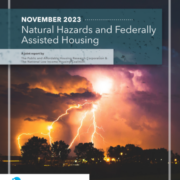
Report Released on Natural Hazards and Federally Assisted Housing

The National Low Income Housing Coalition (NLIHC) and the Public and Affordable Housing Research Corporation (PAHRC) released today a joint report, Natural Hazards and Federally Assisted Housing, that analyzes the risks that natural hazards pose to federally assisted housing and its residents. Federally assisted housing and its residents must be protected against climate change and the growing threat of natural hazards through better planning and stronger investments in resilience.

Resilience and Recovery: Insights from the July 2022 Eastern Kentucky Flood

A new report from the Cleveland Federal Reserve Bank focuses on the 13 counties declared federal disaster areas and examines the flood’s impact on the region’s housing.

Key findings

  • Cost of flood insurance can be prohibitive. The average cost of homeowners insurance and a flood insurance policy could account for around 7 percent of the median household income in the counties impacted by the 2022 eastern Kentucky flood. These policies can be expensive, particularly for low-income households, leading them to go without. Evidence of these difficult decisions can be found in the fact that only 5 percent of damaged homes had flood insurance, and households earning $30,000 or less per year accounted for 60 percent of damaged homes.
  • Floods exacerbate affordable housing shortages. Nearly 9,000 housing units were affected by the flood, with 74 percent of the damage occurring in just four counties (Breathitt, Knott, Letcher, and Perry), comprising 22 percent of their occupied housing units. Research finds that low-income households and renters are more likely to suffer permanent displacement because they often have fewer relocation options and lower-quality housing is more likely to be demolished instead of being rebuilt. These points are particularly relevant in these 13 flood-impacted counties where, in 2021, 37 percent of households, including 55 percent of renters, made less than $25,000 per year.
  • Floods increase population out-migration, which, in turn, impacts the local labor force. In the four hardest hit counties (Breathitt, Knott, Letcher, and Perry), an analysis of United States Postal Service (USPS) Vacancy Data shows that residential vacancies increased by 19 percent from the third to the fourth quarter in 2022. This is in addition to an average population decline of 600 people per year going back to 1984. Fewer residents mean fewer people available to fill jobs.
  • The pre-existing weakness of local labor markets will likely impact housing recovery, particularly due to a lack of available workforce in skilled trades. Prior to the July 2022 flood, the region experienced unemployment rates consistently higher than the national rate. In the region, the construction sector, key to the housing recovery, has declined by 24 percent (1,759 jobs) from its 2001 peak to 2022. Only coal mining and financial activities employment saw greater declines. This shortage of skilled trades workers, such as carpenters, electricians, and plumbers, has led to a backlog of people waiting to get their homes repaired or replaced.

For more information and to read the report, visit Resilience and Recovery: Insights from the July 2022 Eastern Kentucky Flood.

HUD Rolls Out 29 Waivers to Accelerate Hurricane Idalia Recovery Efforts in Florida

The U.S. Department of Housing and Urban Development (HUD)  announced today a package of 29 regulatory and administrative waivers aimed at helping communities in Florida accelerate their recovery from Hurricane Idalia.

The regulatory and administrative relief announced covers the following HUD programs: Community Development Block Grant (CDBG), HOME Investment Partnerships (HOME), Housing Trust Fund (HTF), Housing Opportunities for Persons with AIDS (HOPWA), Emergency Solutions Grant (ESG), Continuum of Care (CoC), and Youth Homelessness Demonstration Program (YHDP).

To expedite the use of these funds, HUD’s state and local partners can now access a waiver through a new simplified notification process. Through this waiver package, HUD is providing flexibility by:

  • Allowing new housing construction with CDBG funding in declared disaster areas.
  • Suspending the CDBG public services cap to provide additional support services related to the effects of the disaster on individuals and families.
  • Waiving the HOME matching contribution requirements and CHDO set aside to expeditiously provide housing to displaced persons and repair properties damaged by the disaster.
  • Providing flexibility in HOME tenant-based rental assistance requirements to reduce the burden for those seeking assistance.
  • Extending term limits for certain types of assistance, including CDBG emergency grant payments and ESG rental assistance.

This waiver follows HUD flexibilities announced on September 6 following the natural disaster declaration. Below are examples of what CPD funding can be used for in the wake of a disaster:

  • housing rehabilitation
  • housing reconstruction,
  • homebuyer programs replacing disaster damaged residences,
  • acquisition and relocation programs to help people move out of floodplains,
  • infrastructure improvements,
  • demolition of buildings,
  • reconstruction or replacement of public facilities,
  • small business grants and loans,
  • and assistance to people experiencing or at risk of homelessness after a disaster.


Corrected Notice: Section 504 Home Repair Loans and Grants in Presidentially Declared Disaster Areas Pilot Program

The notice regarding the Single Family Housing Section 504 Home Repair Loans and Grants in Presidentially Declared Disaster Areas Pilot Program, which was published in the Federal Register on Tuesday, July 18, 2023, and shared via a GovDelivery message on the same day, has been corrected. The corrected notice was published in the Federal Register today (September 6, 2023) and expands the pilot to any presidentially declared disaster areas that occurred on or after July 18, 2022 (i.e., is not limited to the pilot states outlined in the original notice), until the conclusion of the pilot on July 18, 2025.


Hurricane Idalia Disaster Guide

Hurricane Idalia hit Florida’s Big Bend coast as a Category 3 storm on Wednesday, August 31, 2023, downgraded to a tropical storm when reaching the Carolinas, and went out to the Atlantic Ocean. Currently, over 210,000 households and businesses are without power. Many areas are experiencing flooding, downed trees, and major destruction to homes and buildings. At this time, only one death is confirmed as caused by a fallen tree.

HAC offers the following resources with information for nonprofits and communities dealing with loss and damage from Hurricane Idalia: Rural Resilience in the Face of Disaster site and Disaster Response for Rural Communities Guide.

If you are in need of emergency, transient housing, you can text SHELTER and your Zip Code to 43362 (4FEMA) to find where the shelter closest to you is located.

TIPS

Please keep in mind the following safety protocols for hurricanes and flooding:

  • Only call 911 if you have an immediate need for medical attention or evacuation assistance.
  • If you can’t get through to 911 on first try, keep calling.
  • DO NOT DRIVE through high water and DO NOT DRIVE AROUND BARRICADES! Just 2 feet of water can sweep your vehicle away.
  • DO NOT WALK through flood waters. Just 6 inches of moving water can knock you down.
  • If your home floods, STAY THERE. You are safer at home than trying to navigate flooded streets on foot.
  • If floodwaters rise around your car but the water is NOT MOVING, abandon the car and move to higher ground. Do not leave the car and enter MOVING water.
  • STAY AWAY from streams, rivers, and creeks during heavy rainfall. These areas can flood quickly and with little warning.
  • MOVE important items – especially important documents like insurance policies – to the highest possible floor. This will help protect them from flood damage.
  • DISCONNECT electrical appliances and do not touch electrical equipment if you are wet or standing in water. You could be electrocuted.

This flooding event is a reminder that all residents in this area should carry flood insurance. Contact your insurance agent for more information about purchasing flood insurance or visit the National Flood Insurance Program at www.fema.gov/national-flood-insurance-program or call 1-888-379-9531. Please keep in mind that new insurance policies take 30 days to go into effect.

If your home has experienced damage, remember to check the outside of your home before you enter. Look for loose power lines, broken or damaged gas lines, foundation cracks, missing support beams, or other damage. It may be safest to ask a building inspector or contractor to check the structure before you enter. Do not force jammed doors open, as they may be providing needed support to the rest of the home. Sniff for gas to ensure there are no natural or propane gas leaks. If you do have a propane tank system, make sure to turn off all valves and contact a propane supplier to check the system before you use it again. Check floors and ceilings to ensure they are not sagging from water damage. This can be especially hazardous. Take photographs of any damage as you may need them for insurance claims or FEMA claims later on.

RESOURCES

Apply for FEMA Assistance by registering online at www.DisasterAssistance.gov. FEMA Disaster Assistance Helpline answers questions about the help offered by FEMA, how to apply for assistance, or the information in your account.
Toll-free helpline: 1-800-621-FEMA (3362)
For hearing impaired callers only:
1-800-462-7585 (TTY)
1-800-621-3362 (Video Relay Service)
Operators are multilingual and calls are answered seven days a week from 7 a.m. to 11 p.m. ET

American Red Cross Disaster Service: For referrals and updates on Red Cross shelter services in your area, locate a local Red Cross office through: https://www.redcross.org/find-help or by calling 1-800-RED CROSS (1-800-733-2767).
The Red Cross helps disaster victims by providing safe shelter, hot meals, essential relief supplies, emotional support and health services like first aid. Trained Red Cross workers often meet one-on-one with families to develop individual plans and identify available resources to help aid recovery.

STATE EMERGENCY MANAGEMENT AGENCIES

Florida

Florida Division of Emergency Management

2555 Shumard Oak Blvd.

Tallahassee, Florida 32399-2100

Phone: (850) 815-4000

https://www.floridadisaster.org/


Georgia

Georgia Emergency Management and Homeland Security Agency

935 United Ave. SE

Atlanta, GA 30316-0055

Phone: (404) 635-7200

https://gema.georgia.gov/locations


North Carolina

North Carolina Emergency Management

Phone: 919-825-2500

https://www.ncdps.gov/our-organization/emergency-management


South Carolina

South Carolina Emergency Management Division

Phone: (803) 737-8500

https://www.scemd.org/


STATE HOUSING AGENCIES

Florida

Florida Housing Finance Corporation

227 N Bronough Street, Suite 5000

Tallahassee, FL 32301-1367

Phone: (850) 488-4197

http://www.floridahousing.org


Georgia

Georgia Department of Community Affairs / Georgia Housing and Finance Authority

60 Executive Park South NE

Atlanta, GA 30329-2231

Phone: (404) 679-4940

http://www.dca.ga.gov


North Carolina

North Carolina Housing Finance Agency

3508 Bush Street

Raleigh, NC 27609-7509

Phone: (919) 877-5700

https://www.nchfa.com/


South Carolina

South Carolina State Housing Finance and Development Authority

300 Outlet Pointe Boulevard, Suite C

Columbia, SC 29210

Phone: (803) 896-9001

Fax: (803) 551-4876

http://www.schousing.com


DEPARTMENT OF HOUSING AND URBAN DEVELOPMENT STATE FIELD OFFICES

Florida

Jacksonville Field Office

Charles E. Bennett Federal Building

400 W. Bay Street, Suite 1015

Jacksonville, FL 32202

Phone: (904) 232-2627

Director: Alesia Scott-Ford

https://www.hud.gov/states/florida/offices


Miami Field Office

Brickell Plaza Federal Building

909 SE First Avenue, Room 500

Miami, FL 33131-3028

Phone: (305) 536-4456
Director: Luis M. Rolle


Georgia

Atlanta Regional Office

Five Points Plaza Building

40 Marietta Street

Atlanta, GA 30303

Phone: (404) 331-5136

Regional Administrator: José Alvarez, Regional Administrator

Phone: (678) 732-2200

https://www.hud.gov/states/georgia/offices


North Carolina

Greensboro Field Office

Asheville Building

1500 Pinecroft Road, Suite 401

Greensboro, NC 27407

Phone: (336) 547-4000

Director- Lorenzo Claxton

https://www.hud.gov/states/north_carolina


South Carolina

Columbia Field Office

Dept. of Housing and Urban Development Strom Thurmond Federal Building

1835 Assembly Street, 13th Floor

Columbia, SC 29201

Phone: (803) 765-5592

Director- Kristine Foye

https://www.hud.gov/states/south_carolina


USDA RURAL DEVELOPMENT STATE OFFICES

Florida

4500 NW 27th Avenue

Suite D-2

Gainesville, FL 32606
Phone: (352) 338-3400

Director: Lakeisha Hood

https://www.rd.usda.gov/fl-vi


Georgia

Stephens Federal Building

355 E. Hancock Avenue, Stop 300

Athens, GA 30601-2768

Phone: (706) 546-2162

Director: Reggie Taylor

https://www.rd.usda.gov/ga


North Carolina

4405 Bland Road, Suite 260

Raleigh, NC 27609

Phone: (919) 873-2000

Director: Reginal Speight

https://www.rd.usda.gov/nc


South Carolina

Strom Thurmond Federal Building

1835 Assembly Street, Room 1007

Columbia, SC 29201

Phone: (803) 765-5163

Director: Dr. Saundra Glover

https://www.rd.usda.gov/sc


August 2023 Maui Fire Rural Response Guide

Dry grasses and strong winds contributed to one of the country’s deadliest wildfires breaking out in Lāhainā, Hawaii on August 8th. Almost 2000 people are without electricity and over 10,000 are without phone and internet. The administration issued a major disaster declaration on August 10th to release more than $8.5 million in aid to the affected families. As of August 22nd, 115 people have been confirmed dead and over 800 are missing. Response teams are on the ground and the disaster area is still being searched.

RESOURCES

HAC offers the following resources with information for organizations and communities dealing with loss and damage resulting from wildfires: Rural Resilience in the Face of Disaster site and Disaster Response for Rural Communities Guide.

County of Maui, Hawaii Wildfire Resources

Disaster Assistance Improvement Program (DAIP)

Individuals and business owners who sustained losses in the designated area can begin applying for assistance by registering online at http://www.DisasterAssistance.gov or by calling 1-800-621- 3362 or 1-800- 462-7585 TTY. The toll-free telephone numbers will operate from 7:00 a.m. to 10:00 p.m. seven days a week until further notice.

Federal Emergency Management Agency (FEMA)

If federal assistance becomes available for residents affected by the fires, to apply you must complete a multi-purpose application online at https://www.disasterassistance.gov.

Toll-free helpline: 1-800-621-FEMA (3362)

For hearing impaired callers only:  1-800-462-7585 (TTY)

1-800-621-3362 (Video Relay Service)

For information and resources specific to Hawaii, visit https://www.fema.gov/locations/hawaii.

If you are in need of emergency, transient housing, you can text SHELTER and your Zip Code to 43362 (4FEMA) to find where the shelter closest to you is located.

American Red Cross Disaster Service

For referrals and updates on Red Cross shelter services in your area, locate a local Red Cross office through: https://www.redcross.org/find-help or by calling 1-800-RED CROSS (1-800-733-2767).

The Red Cross helps disaster victims by providing safe shelter, hot meals, essential relief supplies, emotional support and health services like first aid. Trained Red Cross workers often meet one-on-one with families to develop individual plans and identify available resources to help aid recovery.

Hawaii Emergency Management Agency

200 S High St

Kalana O Maui Bldg, 1st Fl

Wailuku, HI 96793

Phone: (808) 270-7285

Fax: (808) 270-7275

https://dod.hawaii.gov/hiema/

U.S. Department of Housing and Urban Development (HUD)

HUD offers a Disaster Recovery Toolkit and makes other related resources available: https://www.hud.gov/info/disasterresources.

HUD State Office

Honolulu Field Office

1003 Bishop Street

Suite 2100

Honolulu, HI 96813-6463

(808) 457-4662

Fax: (808) 457-4694

Field Office Director: Ryan T. Okahara

USDA-Rural Development

To determine whether USDA has specific assistance available for fire survivors who had USDA Rural Development assistance before the fires, check for information online at https://www.rd.usda.gov/programs-services/services/rural-development-disaster-assistance.

Hawaii and Western Pacific USDA RD State Office

Phone: (808) 933-8380

  • State Director’s Office: (808) 291-2058
  • Business Programs: (808) 933-8323
  • Community Programs: (808) 933-8308
  • Housing Programs: (808) 933-8300

State Housing Agency

Each state has at least one agency that administers state and federal programs to promote decent affordable housing for low-income individuals. Typically, these agencies and authorities administer some aspects of state or federal programs.

Maui County Housing Division

Section 8 Rental Assistance Program

Phone: 808-270-7751

Fax: 808-270-7829

https://www.mauicounty.gov/251/Housing-Division

TIPS

Evacuating and Returning Home

The Red Cross website provides suggestions on actions to prepare for evacuation and returning home after a fire.

IF A FIRE OCCURS Listen to your local media for updates on the fire and be ready to leave quickly. Back your car into the garage or park it in an open space facing your direction of escape. You should also:

  • Keep your pets in one room so you can find them quickly if you have to evacuate.
  • Arrange for a temporary place to stay outside the threatened area.
  • Keep your indoor air clean – close windows and doors to prevent the smoke outside from getting in your home.
  • Use the recycle mode on the air conditioner in your home or car. If you don’t have air conditioning and it’s too hot to be inside, seek shelter somewhere else.
  • If smoke levels are high, don’t use anything that burns and adds to air pollution inside such as candles, fireplaces and gas stoves.

AFTER THE FIRE Don’t go home until fire officials say it is safe. Be cautious entering a burned area – hazards could still exist. Avoid damaged or downed power lines, poles and wires. Other things to do include:

  • Keep your animals under your direct control. Hidden embers and hot spots could burn them.
  • Wet down debris to minimize breathing dust particles.
  • Wear leather gloves and shoes with heavy soles.
  • Throw out any food that has been exposed to heat, smoke or soot.
  • Recheck for smoke or sparks throughout your home for several hours after the fire, including in your attic. Wildfire winds can blow burning embers anywhere so check for embers that could cause a fire.

If your home has experienced damage, remember to check the outside of your home before you enter. Look for loose power lines, broken or damaged gas lines, foundations cracks, missing support beams, or other damage. It may be safest to ask a building inspector of contractor to check the structure before you enter. Do not force jammed doors open, as they may be providing needed support to the rest of the home. Sniff for gas to ensure there are no natural or propane gas leaks. If you do have a propane tank system, make sure to turn off all valves and contact a propane supplier to check the system before you use it again. Check floors and ceilings to ensure they are not sagging from water damage; this can be especially hazardous. Take photographs of any damage as you may need them for insurance claims or FEMA claims later on.

GET THE HAC NEWS!

Sign-up for HAC information products

SIGN UP HERE

Housing Assistance Council   |  1828 L Street. N.W., Suite 505, Washington, D.C. 20036
(202) 842-8600 (202) 347-3441 hac@ruralhome.org |

Board Portal

HAC is an equal opportunity provider, employer, and lender. | Civil Rights | Privacy