Tag Archive for: capacity building

Rural Veterans and Nonprofits Gain Critical Housing Support Through Partnership with The Home Depot Foundation

Contacts: AHRV Team, ahrv@ruralhome.org
(202) 842-8600

Washington, DC, May 27, 2025 – Veterans and their families in fifteen rural communities will have better lives, thanks to The Home Depot Foundation and the Housing Assistance Council (HAC). The Foundation is awarding grants totaling $450,000 to fifteen local nonprofit housing agencies around the country to preserve housing for veterans in rural America.

The grants are part of The Home Depot Foundation’s mission to provide affordable and accessible housing solutions to U.S. veterans and invest $750 million in veteran causes by 2030. Many veterans and their families face major housing challenges, often exacerbated by issues related to unemployment, age, and service-related disabilities. The Home Depot Foundation and HAC are dedicated to giving back to those who have answered the highest call of service to our nation.

As part of its Affordable Housing for Rural Veterans (AHRV) Initiative, HAC works with The Home Depot Foundation to administer grants that bolster and support the work of rural nonprofit housing agencies to deliver critical housing support to veterans. “The Home Depot Foundation’s support is crucial to HAC’s efforts to ensure rural veterans aren’t left behind. It fuels local action to combat housing insecurity and deliver the safe, affordable homes they deserve,” said David Lipsetz, HAC’s President and CEO. As rural America is home to a disproportionately high number of service women and men, HAC remains deeply committed to supporting our nation’s service women and men by uplifting local nonprofits and their work to house veterans and ensure the habitability of their homes and rural communities.

The grantee organizations – described below – provide a range of programs. With the grants, veterans who own homes in California, Florida, Illinois, Iowa, Kansas, Maryland, Maine, Michigan, New Mexico, New York, North Carolina, and South Carolina will obtain critical repair assistance. Altogether, 98 veterans and their families will benefit from these grants.

About The Home Depot Foundation 

The Home Depot FoundationThe Home Depot Foundation, a nonprofit supported by The Home Depot (NYSE: HD), works to improve the homes and lives of U.S. veterans, support communities impacted by natural disasters and train skilled tradespeople to fill the labor gap. Since 2011, the Foundation has invested more than $550 million in veteran causes and improved more than 65,000 veteran homes and facilities. The Foundation has pledged to invest $750 million in veteran causes by 2030 and $50 million in training the next generation of skilled tradespeople through the Path to Pro program by 2028. To learn more about The Home Depot Foundation visit HomeDepotFoundation.org and follow us

on Twitter @HomeDepotFound and on Facebook and Instagram @HomeDepotFoundation.

About the Housing Assistance Council

The Housing Assistance Council (HAC) is a national nonprofit that supports affordable housing efforts throughout rural America. Since 1971, HAC has provided below-market financing for affordable housing and community development, technical assistance and training, research and information, and policy formulation to enable solutions for rural communities. To learn more about the Housing Assistance Council, visit www.ruralhome.org and follow us on LinkedIn and Facebook.

About the Grantees


  • Anderson Interfaith Ministries, Anderson, SC, will utilize $30,000 to provide critical repairs for seven (7) low-income For additional information on Anderson Interfaith Ministries, visit their website at https://www.aimcharity.org/.
  • Chesapeake Health Education Program, Inc., Perryville, MD, will utilize $30,000 to complete repairs on two (2) transitional housing units serving eight (8) male veterans in Perry Point, MD. For additional information on Chesapeake Health Education Program, Inc., visit their website at https://chepinc.org/.
  • Embarras River Basin Agency, Inc., Greenup, IL, will utilize $30,000 to provide critical home repairs for three (3) rural, low-income veterans. For additional information on Embarras River Basin Agency, Inc., visit their website at https://erbainc.org/.
  • Goodwill Industries of Northern Michigan, Traverse City, MI, will utilize $30,000 to provide critical repairs to nine (9) group homes and one (1) single-family home assisting a combined twenty-eight (28) low-income rural veterans. For additional information on Goodwill Industries of Northern Michigan, visit their website at https://www.goodwillnmi.org/.
  • Habitat for Humanity Calaveras, Angels Camp, CA, will utilize $30,000 to assist four (4) women veteran households with critical repairs. For additional information on Habitat for Humanity Calaveras, visit their website at https://habitatcalaveras.org/.
  • Habitat for Humanity Lake Sumter, Eustis, FL, will utilize $30,000 to provide critical home repairs for three (3) rural, low-income veterans. For additional information on Habitat for Humanity Lake Sumter, visit their website at https://habitatls.org/.
  • Rebuilding Together Muscatine County, Muscatine, IA, will utilize $30,000 to assist five (5) rural low-income veterans with critical repairs and accessibility modifications. For additional information on Rebuilding Together Muscatine County, visit their website at https://rebuildingtogethermuscatine.org/.
  • Rebuilding Together Sandoval County, Bernalillo, NM, will utilize $30,000 to provide two (2) veterans with critical home repairs in rural Bernalillo County. For additional information on Rebuilding Together Sandoval County, visit their website at https://www.rebuildingtogethersandoval.org/.
  • Rebuilding Together Saratoga County, Ballston Spa, NY, will utilize $30,000 to provide critical repairs and accessibility modifications for four (4) low-income rural veterans. For additional information on Rebuilding Together Saratoga County, visit their website at https://www.rtsaratoga.org/.
  • Rebuilding Together Southwest Illinois, Edwardsville, IL, will utilize $30,000 to assist five (5) rural low-income veterans with critical repairs and accessibility modifications. For additional information on Rebuilding Together Southwest Illinois, visit their website at https://rebuildswi.org/.
  • Servants, Inc., Red Lion, PA, will utilize $30,000 to provide critical repairs and accessibility modifications for ten (10) low-income veteran homeowners. For additional information on Servants, Inc., visit their website at https://www.servants.org/.
  • Thrive Allen County, Inc., Iola, KS, will utilize $30,000 to provide critical repairs and accessibility modifications for at least seven (7) low-income rural veteran homeowners. For additional information on Thrive Allen County, Inc., visit their website at https://thriveallencounty.org.
  • Upper Peninsula Commission for Area Progress, Escanaba, MI, will utilize $30,000 to assist one (1) rural low-income veteran with major critical repairs and structural integrity modifications. For additional information on UPCAP Services, Inc., visit their website at https://upcap.org/.
  • Western Maine Community Action, East Wilton, ME, will utilize $30,000 to provide critical home repairs on six (6) low-income veteran owner-occupied homes. For additional information on Western Maine Community Action, visit their website at https://www.wmca.org/.
  • Wilmington Area Rebuilding Ministry, Inc., Wilmington, NC, will utilize $30,000 to provide critical repairs and modifications, including roof replacement and HVAC systems replacement, for five (5) low-income rural veteran homeowners. For additional information on Wilmington Area Rebuilding Ministry, Inc., visit their website at https://www.warmnc.org/.

Your Support Fuels Rural Ingenuity

See how HAC partners with local organizations like WMCDC to overcome challenges and deliver affordable housing.

Helping rural communities is what we live for at the Housing Assistance Council (HAC.) Our team loves to make loans to local organizations building affordable housing. We get excited about posting data and publishing research on rural conditions. We are relentless advocates for public- and private-sector programs that bring good-quality homes to rural families. We are inspired by the thousands of local housing providers that come to trainings and call for one-on-one technical assistance. Walker Montgomery CDC Site Visit

One of our favorite examples of the last year comes from a local partner in New Waverly, Texas (pop. 914,) Launched nearly 25 years ago, Walker Montgomery Community Development Corporation (WMCDC) builds affordable housing in several Gulf Coast counties. Like most rural groups we know, they rely on local ingenuity to get things done. For instance, WMCDC helped address a construction workforce shortage in Southeast Texas by recruiting 40 participants a year into the Gulf Coast Trades Center’s YouthBuild program. These youth learn valuable professional skills while completing an average of 2 new homes per year.

Yet, it’s hard work building affordable housing through a YouthBuild program. There will be times when you need a partner to keep you going. So, when WMCDC hit more challenges with their labor supply and getting families ready to own a home, they asked HAC for help. The first thing we did is listen to WMCDC leaders discuss the challenges. Then together we explored options and planned how they could maintain production. With contacts around Walker and Montgomery counties, the CDC engaged a general contractor to fill in for the YouthBuild crews and HAC provided training in homebuyer recruitment to keep the pipeline of families ready and strong.

Through projects big and small, HAC brings to local partners the capacity they need to keep going. With your support, we can continue to help WMCDC and hundreds of other rural housing groups. Please join in this work that we love by making HAC a part of your year-end giving. Together, we will help rural communities build good homes and prosper.

We wish you—and everyone in #rural America—a safe, healthy, and affordable place to call home. Happy Holidays from HAC!


Donate to HAC

Enhance Your Organization’s Impact with HAC’s Upcoming Capacity Building Opportunities

We are thrilled to present the following exciting opportunities for your organization to expand its impact in rural communities through specialized training and technical assistance. Whether you are looking to enhance your capabilities or dive into homeowner rehabilitation, the Housing Assistance Council (HAC) has a program for you!


We are thrilled to present two exciting opportunities for your organization to expand its impact in rural communities through specialized training and technical assistance. Whether you are looking to enhance your capabilities or dive into homeowner rehabilitation, the Housing Assistance Council (HAC) has a program for you!

OneRural Capacity Building Program – Apply Now

Kickstart your organization’s growth with HAC’s OneRural Capacity Building Program. This initiative is specifically designed for nonprofit organizations and Tribally Designated Housing Entities (TDHEs) eager to advance their mission.

Why Participate?

  • Tailored Assistance: Benefit from customized technical support.
  • Exclusive Resources: Access a wealth of training materials and informational guides.
  • Scholarship Opportunities: Enjoy reimbursable scholarships for HAC-sponsored training events.

Act quickly! Applications are reviewed on a rolling basis to ensure timely support for your projects. Apply Now!


Empowering Organizations for Successful Homeowner Rehabilitation – Join Our Learning Cohort

Strengthen your team with our targeted learning series, aimed at nonprofits undertaking homeowner rehabilitation efforts. Supported by HUD’s Rural Capacity Building Program, this cohort will guide you through every step of the rehabilitation process.

Program Features:

  • End-to-End Training: From strategic marketing to project completion.
  • Skill Building: Enhance technical capabilities and strategic approaches tailored to rural, low-income homeowners.
  • Focus Areas: Improve health and safety, increase energy efficiency, and preserve existing housing stock.

Ready to make a greater impact? This is your chance to transform your community one home at a time. Apply now for the cohort!


Let’s Build Stronger Communities Together

Don’t miss these opportunities to elevate your organization’s influence and capacity. For more information and to submit your applications, click the links above.

HAC Applauds New Farm Bill Framework

The Housing Assistance Council (HAC) celebrates the inclusion of key priorities for rural community development in the Rural Prosperity and Food Security Act, released by Senate Agriculture Committee Chairwoman Debbie Stabenow earlier this week. Strong rural communities are a vital part of building a stronger, better future for the whole country. This bill recognizes that reality. Including robust new resources for rural community development in the Farm Bill would be a historic victory for small towns and rural places nationwide.

The framework released by Chairwoman Stabenow creates, for the first time, baseline funding for Rural Development, with $50 million per year for the Rural Partnership Program, a new capacity building program that HAC has long been supportive of. This sustained investment in rural communities would help them build the capacity to access complex federal funding streams and overcome their greatest challenges, from housing to childcare to broadband.

HAC also continues to be glad to see the bipartisan interest in Senator Tina Smith’s and Senator Mike Rounds’ Rural Housing Service Reform Act. This bill makes tested, commonsense reforms to USDA housing programs so that they can better serve rural America. Modernizing the Rural Housing Service is an important step in solving the growing crisis in rural multifamily preservation. While not under the jurisdiction of the Agriculture Committee, we hope that this bill can move through the Banking Committee and join with the Farm Bill as a floor amendment.

“Rural Development is an often-overlooked title within the Farm Bill,” notes HAC Director of Public Policy Jonathan Harwitz. “Chairwoman Stabenow’s new framework changes that narrative for Rural Development. Improving those programs and providing baseline funding would give rural communities nationwide the tools they need to build a better, stronger future. We look forward to hopefully seeing the Farm Bill move forward this year and thank Chairwoman Stabenow for her leadership.”

Old Historic Carnation, LP: A HAC Success Story

HAC’s patience and flexibility help convert a vacant Carnation milk plant into homes for seniors in Tupelo, MS

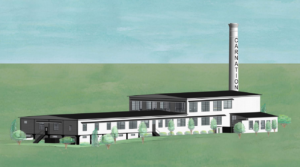
Rendering of carnation plant developmentThe Carnation Milk plant in Tupelo, Mississippi, has sat vacant since 1972. In about a year, that will change when 33 low-income senior households move into new affordable homes in this old factory. This May, Old Historic Carnation, LP broke ground on Carnation Village, a $16.8 million adaptive reuse project to convert the abandoned factory into 33 units of affordable senior housing. These units are sorely needed in Tupelo, a high-poverty community which needs over 1,500 additional senior affordable housing units. With a $325,000 loan from The Housing Assistance Council (HAC)—and two sixth-month extensions to that loan—the developer successfully navigated a predevelopment process mired in construction cost increases and unexpected funding gaps. Here’s how:
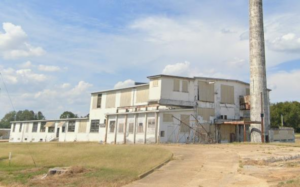
Photo of vacant Carnation plantThe original project scope called for 50 units: 25 from an adaptive re-use of the plant itself and another 25 in a second building to be constructed next door. When our loan closed in July 2021, the project budget totaled about $12.7 million, to be funded by Low Income Housing Tax Credits, Historic Tax Credits, and a $1.6 million investment. Our financing covered the predevelopment costs of the work required to get to construction financing closing including environmental testing, historic preservation approvals, tax credit application and reservation fees, a market study, and an appraisal.


In the fall of 2021, increases in construction costs left Old Historic Carnation with a $3.8 million funding gap. By the time they applied for and received more tax credits from the Mississippi Housing Corporation (MHC), added a $1 million mortgage, received approval from the National Park Service, and updated the construction bids, costs had increased by a further $4.5 million. In the space of less than a year, the construction cost for the project nearly doubled.

Because HAC can be a patient lender, we extended our loan by six months to give the developer time to solve the problem. Old Historic Carnation applied for and received another tax credit increase from the state, reduced costs with value engineering measures, and increased the deferred developer fee by almost $2 million.

Construction costs increased again in the summer of 2022, causing the investor to back out of the project. The developer went back to the drawing board once again and reduced the project’s scope to 33 units, all affordable to households making less than 80% of the area median income (AMI). Plus, 26 would also be affordable to households under 60% AMI. With an additional loan extension from HAC, Old Historic Carnation secured approval of the new scope by MHC, obtained the necessary building permits, and have now begun demolition.

HAC Loan Office Alison Duncan (center) breaks ground for Carnation Village.

HAC Loan Office Alison Duncan (center) breaks ground for Carnation Village. Photo by Adam Robison, the Daily Journal.

On March 21st, Old Historic Carnation, LP closed on construction financing and repaid our predevelopment loan in full. And on May 31st, the project broke ground. Old Historic Carnation’s persistence and creativity made this project a success. But it was HAC’s flexibility that supported them as they went through the process of raising additional funds three times to make the project work. The Carnation Village project showcases how the ingenuity of a local housing developer, solid working relationships with private, state and federal funders, and flexible and patient HAC financing all add up to bring difficult and important projects to fruition. Fifty-one years ago, Carnation Milk closed its factory in Tupelo, Mississippi. Soon, thirty-three low-income, senior households will be able to call it home.

HAC is proud to be a critical part of this project and we look forward to watching it develop.

HAC receives $6,325,000 from HUD to invest in rural communities and rural housing

Contact: Dan Stern, dan@ruralhome.org
(202) 516-6882

Washington, DC, May 15, 2023 – The Housing Assistance Council (HAC) has been awarded a total of $6,325,000 funding from the U.S. Department of Housing and Urban Development (HUD) to invest in the capacity of rural communities and help rural families achieve homeownership. HAC was awarded $4,000,000 from the Self-Help Homeownership Opportunity Program (SHOP) and $2,325,000 in Rural Capacity Building (RCB) funding. The funds represent a portion of HUD’s $22 million investment into rural communities through the SHOP and RCB programs.

The funding was announced in conjunction with an event in Russellville, AR at which HUD Deputy Secretary Adrianne Todman toured several homes that are being built using funds from HAC’s SHOP program with local partner Universal Housing Development Corporation.

HUD’s official press release announcing the award included the following statement from Secretary Marcia L. Fudge “Today, we are investing in homeownership and expanding access to affordable housing to rural communities. The SHOP program provides a unique pathway for first-time homeowners and underserved groups to buy a home. At HUD, we care about rural America and these capacity building grants are further evidence of our commitment.”

SHOP funding will allow rural homebuyers to invest their sweat equity and hard work towards the construction of their own homes in rural communities. HAC will use its RCB funding to assist a group of eligible rural organizations to undertake affordable housing and community development activities in disadvantaged and other target communities around the country.

“HAC’s decades long partnership with HUD has provided affordable homes for people and increased capacity for organizations in rural communities across the United States,” said David Lipsetz, President & CEO of the Housing Assistance Council. “These awards will improve the lives of countless rural people and highlight HUD’s commitment to rural America!”

About the SHOP Program

The Self-Help Homeownership Opportunity Program (SHOP) awards grant funds to eligible national and regional nonprofit organizations and consortia. Funds must be used for eligible expenses to develop decent, safe, and sanitary non-luxury housing for low-income persons and families who otherwise would not become homeowners. Examples are for purchasing home sites and developing or improving the infrastructure needed to set the stage for sweat equity and volunteer-based homeownership programs for low-income persons and families. Homebuyers must be willing to contribute significant amounts of their own sweat equity toward the construction or rehabilitation of their homes.

About the RCB Program

The Rural Capacity Building (RCB) program enhances the capacity and ability of rural housing development organizations, Community Development Corporations (CDCs), Community Housing Development Organizations (CHDOs), local governments, and Indian tribes to carry out affordable housing and community development activities in rural areas for the benefit of low- and moderate-income families and persons. The Rural Capacity Building program achieves this by funding national organizations with expertise in rural housing and rural community development who work directly to build the capacity of eligible beneficiaries.

About the Housing Assistance Council

The Housing Assistance Council (HAC) is a national nonprofit that supports affordable housing efforts throughout rural America. Since 1971, HAC has provided below-market financing for affordable housing and community development, technical assistance and training, research and information, and policy formulation to enable solutions for rural communities.

###

Rural Recap – Promoting Prosperity

Rural communities need—and deserve—a coherent, national policy strategy that promotes prosperity. For such a strategy to move the needle, it must end the housing affordability crisis and build the capacity of rural communities to make the most of every opportunity.

Our homes are part of the foundation of thriving families and communities—they are pathways to realizing America’s full potential. With decent, healthy, and affordable homes, kids can succeed at school, seniors can age in place, and families can build wealth. Economics, health, education, and many more components of prosperous communities are all intimately tied to our homes.

The capital needed for a housing market to function is a lot like water: it flows down the path of least resistance, and it pools. For over 50 years—whether intentionally or not—public policy has channeled capital’s flow into sprawling metropolitan regions and allowed it to pool in suburbs and downtown commercial centers. This has deepened inequality and stifled opportunity in the communities that have been left out.

Building rural prosperity will happen one nail and one funding application at a time. Turning those into a national renaissance for rural America will take strategy. If we want investment to flow to a broader set of places and especially to the people and places which need it most, then we need public policy specifically designed to drive resources in their direction. To make the most of that capital, we must also build the capacity of those communities.

HAC builds the capacity of small towns and rural places to create thriving, prosperous communities. If you share our mission, please advocate on behalf of public funds for capacity building programs. We also hope you will consider making a gift to HAC to help us do more in rural America.

Get the Rural Recap in Your Inbox Donate to HAC

Building on Two Decades of Partnership: HAC & the New Mexico Mortgage Finance Authority

In the summer of 2022, the New Mexico Mortgage Finance Authority (MFA) faced a difficult challenge. Several state legislators and farmworker groups asked the organization to help meet the housing needs of migrant and seasonal farmworkers. Since farms employ farmworkers with the shifting seasons, many farmworkers only stay in a community for a few months before needing to move elsewhere in search of work. Affordable housing development is complex in the best of cases. Underwriting a project that would have a near complete turnover of residents every four or five months seemed almost impossible.

So, MFA called the Housing Assistance Council (HAC). This wasn’t the first or second time that HAC helped MFA address challenges in its programs. In fact, HAC and MFA have a working relationship well over two decades old. Because of this extensive engagement, MFA Executive Director and CEO Izzy Hernandez knew he could rely on HAC Housing Consultant Eugene (Gene) Gonzalez to help find a solution to this challenge.

Gene connected MFA with groups across the southwest working on similar projects housing migrant farmworkers. With HAC’s help and advice from peers, MFA was able to identify a developer and line up alternate financing options for a project that meets this critical housing need. The development is in its initial phase, but for Hernandez, this is just the latest example of HAC’s reliable, ongoing partnership.

HAC began working with MFA in the early 2000s. A few years earlier, MFA was selected to administer all of New Mexico’s housing programs. Many of the on-the-ground housing organizations who needed MFA funding the most were struggling to obtain designation as community housing development organizations (CHDOs). CHDO designation is a prerequisite to accessing the federal and state programs MFA administered. So, HAC helped eight organizations identify their capacity needs, provided technical assistance to meet those needs, and guided them through the process to obtain CHDO designation.  As a result, each of the eight organizations was able to access MFA funds, which allowed MFA to turn those program dollars into homes in communities that desperately needed them.

While the specifics of HAC and MFA’s collaboration has evolved over time to meet the unique needs of each project, the core challenge HAC helps MFA address remains the same. Like all state housing authorities, MFA relies on the success of its client housing organizations. If they do not succeed, MFA cannot make the most of federal and state programs and cannot meet, as Hernandez puts it, “the extraordinary need for affordable housing.” HAC has long helped and continues to help build the capacity of MFA clients. This not only helps to build more affordable homes in rural New Mexico; according to Hernandez, HAC’s work helps MFA “reach communities we couldn’t reach before.”

When HAC began working with Tierra Del Sol Housing Corporation, one of MFA’s clients, the organization was rehabbing nearly 100 homes per year and building only about nine units per year. HAC provided training and technical assistance to help Tierra Del Sol with land acquisition, green building, energy efficiency, and more. With HAC’s help, the nonprofit expanded its self-help program, began building entire neighborhoods of farmworker housing, and grew to become the largest housing rehabber in the state of New Mexico. In addition, TDS accomplished all this development while focusing work in colonias, communities near the U.S.-Mexico border characterized by high poverty rates and substandard living conditions. Looking back on this incredible success, Hernandez is quick to say that “HAC has played a big role in that.”

Nowadays, MFA frequently refers struggling clients to HAC. Once referred, HAC often includes these organizations in our capacity building and technical assistance cohorts, where they receive one-on-one technical guidance and capacity building assistance. According to Hernandez, whenever HAC receives a new round of funding for technical assistance, he receives a call from Gene asking which groups in New Mexico need help. “We have some groups that were on the bubble of surviving or not,” says Hernandez, “but we have never had one group go out of business. HAC kept them in the game.”

The three hundred plus housing organizations in New Mexico all play an important role in meeting the state’s housing needs. In 2021, they collectively assisted more than 25,000 families in finding quality affordable housing. HAC capacity building assistance helps to ensure that these groups can build homes, effectively implement housing assistance programs, and remain in compliance.

Click here to learn more about HAC’s training and technical assistance. 

AYUDA Proves Impact of Holistic Rural Housing Support

Almost every local housing nonprofit begins with a vision: meeting the housing needs of their community. Unfortunately, the path from recognizing that need to meeting it can be difficult. Labor shortages, increasing construction costs, and the complexity of financial transactions and government programs can all make it challenging for housing non-profits to succeed. 

That’s why the Housing Assistance Council (HAC) works with housing organizations across rural America to help them overcome both financial and technical challenges. HAC’s goal, as Director of Training and Technical Assistance Shonterria Charleston puts it, is to “create a pipeline for capacity building that allows our partners to get many of their needs met by one organization.”  

For thirty years, Adults and Youth United Development Association (AYUDA) has worked to improve housing conditions and increase access to public services in the colonias in and around San Elizario, Texas. According to AYUDA’s Housing and Community Services Director Miguel Chacon, the group was established to advocate for running water and septic tanks in colonias but has grown to providing home repair, rental assistance, vaccine outreach, food distribution, and more.  

As AYUDA has grown, it’s turned to HAC for support. For twelve years, HAC Housing Specialist Anselmo Telles and Housing Development Consultant Eugene Gonzales have provided technical assistance to help AYUDA navigate the hurdles of managing new and expanded housing programs. “I didn’t know anything about housing back then,” remembers Miguel. But, with HAC’s help, AYUDA has developed deeply impactful housing programs. Between 2016 and 2021, AYUDA built or rehabbed over 200 homes. Despite this track record, AYUDA ran into a problem in early 2021.  

“We were having trouble with our cash flow,” Miguel explains. AYUDA’s home repair and construction programs are financed by the Texas Department of Housing and Community Affairs (TDHCA). Still reeling from the COVID pandemic, the Department was taking months to reimburse AYUDA for the costs of rehab and construction. This put AYUDA in a difficult position. They could stop work while waiting for payments from TDHCA or they could keep their projects moving forward while struggling to pay their contractors on time.  

“As I do the organizational assessment, I look to see if they need money for construction, staffing, or anything like that,” Eugene explains. It was during an organizational assessment of AYUDA that he saw that cash flow was the largest bottleneck in AYUDA’s construction process. So, Eugene reached out to Kristin Blum, HAC’s Senior Loan Officer, to see if our Loan Fund could help. Kristin notes that we wanted to be creative and find a solution that worked for AYUDA. As HAC’s Director of Lending Eileen Neely points out, HAC doesn’t try to fit organizations into boxes. Instead, we focus on understanding each group’s unique needs and tailoring financing to help them achieve their goals.  

After meeting with both AYUDA and HAC’s technical assistance team, the Loan Fund came up with a creative financing option. The plan was to establish a $367,000 revolving line of credit. When AYUDA would complete a new home or rehab project, it could draw on this line of credit to bridge the funding gap until TDHCA issued grant reimbursements.  

In July 2021, the loan was approved, and AYUDA began to draw on its new line of credit just two months later. According to Miguel, this capital ensured that AYUDA was able to keep building and keep moving forward. Pointing to the 25 homes AYUDA has built or rehabbed in the last year, Miguel explains that “we were able to accomplish that because of the line of credit.” 

The upshot of HAC’s holistic approach to capacity building is, according to Eugene, “that groups get the money they need, and then TA comes in to make sure they’re on track.” Ultimately, this means groups can build more affordable homes. Miguel shared that when AYUDA was weighing whether to halt construction at the beginning of the pandemic, his clients urged AYUDA to find a way to keep going. With HAC’s help, AYUDA kept building throughout 2020 and 2021. “That gave our community hope,” says Miguel.  

The collaboration between HAC’s lending and technical assistance made both more effective. Our Loan Fund would have never known about AYUDA’s challenges without Eugene. As Kristin notes, collaboration is what made this loan possible in the first place. Plus, as Eugene explains, the on-going technical assistance relationship gave the Loan Fund a sense of confidence that this financing solution would work.  

By pairing technical assistance and lending, HAC also helped AYUDA expand its capacity as an affordable housing non-profit. Miguel says that AYUDA never had a line of credit before. Now, his staff have experience as borrowers, with more knowledge about how to navigate the financing process and manage tasks like fulfilling reporting requirements. The financial stability afforded by this line of credit and the support of technical assistance make it easier for the organization to expand the programs it offers. In fact, the State of Texas has tapped AYUDA to manage American Rescue Plan rental assistance across a four-county service area. His organization’s growing capacity gives Miguel the confidence to say that there’s nothing they can’t learn. 

The story of HAC’s work with AYUDA isn’t an isolated example—it’s how HAC operates. HAC regularly includes borrowers in our technical assistance rounds and makes loans to current TA recipients. As Shonterria notes, “the Loan Fund is our first stop when we work with a group that needs capital.” The years-long relationships built by HAC housing specialists make it easier to craft lending products to fit each group’s needs. “The more we know about a potential borrower and their mission, the better we are at what we do,” explains Eileen.  

HAC is committed to building the capacity of our local partners, expanding their ability to meet their neighbors’ housing needs. No organization faces only technical challenges or financial hurdles—every organization grapples with both, at one point or another. By working with groups holistically, we help them overcome whatever challenges come their way.  

Click here to learn more about HAC’s lending products, and click here to learn more about HAC’s training and technical assistance.  

HAC News: December 14, 2018

HAC News Formats. pdf

December 14, 2018
Vol. 47, No. 25

2018 HAC Rural Housing Conference educates, inspires, and advances the rural housing community. • Federal Reserve Board of Governors chairman Jerome Powell addresses HAC conference • HAC awards recognize national, local and federal leadership for rural housing • USDA and HUD spending now expiring December 21 • Congress passes Farm Bill • Increased staff specialization planned for USDA Rural Development • Mark Calabria named to lead Federal Housing Finance Agency • Kathy Kraninger becomes head of Consumer Financial Protection Bureau • Perdue announces RD initiative for broadband and e-connectivity • Executive Order encourages development in Opportunity Zones • HAC’s Rural Voices magazine covers capacity building • Census Bureau releases new data for counties, towns, Native lands and more • Study examines trust lands and manufactured homes in Indian Country

HAC News Formats. pdf

December 14, 2018
Vol. 47, No. 25

2018 HAC Rural Housing Conference educates, inspires, and advances the rural housing community.
Over 600 registrants from 48 states heard from Federal Reserve Chairman Jerome Powell (see item below), Sen. Catherine Cortez Masto (D-NV), HUD Secretary Ben Carson, Rusty Smith from Rural Studio , HAC CEO David Lipsetz, former HAC Executive Director Moises Loza and former Deputy Director Joe Belden, as well as USDA and HUD staff and dozens of other experts. Materials from conference sessions are available through the conference app . Check out photos, comments and daily wrap-up videos on HAC’s social media: Twitter , Facebook , and YouTube . Watch HAC’s website and the HAC News for announcements as additional items, including videos of plenary sessions, become available.

Federal Reserve Board of Governors chairman Jerome Powell addresses HAC conference.
Speaking at the HAC Rural Housing Conference on December 6, Chairman Powell discussed the strength of the economy while acknowledging that not everyone has enjoyed the benefits of the strong economy equally. He stressed the importance of the Community Reinvestment Act and praised HAC’s research on the subject as beneficial to the Fed’s plans around potential CRA reform. His remarks garnered press coverage from the New York Times and Reuters.

HAC awards recognize national, local and federal leadership for rural housing.
At the 2018 HAC Rural Housing Conference, the Cochran/Collings Award for Distinguished Service in Housing for the Rural Poor went to Starry Krueger, President of the Rural Development Leadership Network. Four local leaders received the Skip Jason Community Service Award: Salvador Estrada (Tierra del Sol, NM), Cassie Hicks (University of Southern Mississippi Institute for Disability Studies, MS), Dennis Lalor (South County Housing, CA) (posthumous) and Joe Myer (NCALL Research, DE). Rep. Maxine Waters (D-CA) received the Henry B. González Award for an elected official.

USDA and HUD spending now expiring December 21.
The deadline for negotiations on FY19 appropriations was extended to December 21 because congressional activity was slowed by the death of former President George H.W. Bush on November 30. Various end results, including a government shutdown, are still possible.

Congress passes Farm Bill.
House and Senate conferees reached an agreement on a new five-year Farm Bill, dropping provisions that would have imposed stricter work requirements on food stamp recipients. The Senate passed it on December 11 and the House on December 12. President Trump is expected to sign it into law. The bill requires USDA to have an Under Secretary for Rural Development and requires the appointee be confirmed by the Senate. The Under Secretary position had been eliminated in a 2017 reorganization, replaced by an Assistant to the Secretary for Rural Development. Anne Hazlett has served in that role since June 2017. The bill also maintains local eligibility for USDA rural housing programs after the 2020 Census, so long as a place’s population does not exceed 35,000 and it remains “rural in character.” The bill authorizes a new Rural Innovation Stronger Economy (RISE) grant program, a concept HAC supported, to create rural job accelerators and related programming. HAC and others suggested additional improvements to the bill’s Rural Development title, but in general the 2018 RD title is much like the 2014 version.

Increased staff specialization planned for USDA Rural Development.
At the 2018 HAC Rural Housing Conference, RD officials explained some staffing changes, which are also described in letters from Secretary of Agriculture Sonny Perdue to members of the House and Senate Agriculture Appropriations Subcommittees. An October 10 letter says that applications for the Section 538 rental guarantee program and Section 515 rental loan program will no longer be processed or underwritten in each state office. Twenty-five staff, who will remain in their current state office locations, will work exclusively on either 538 or 515. According to a November 30 letter, instead of handling the Section 502 guaranteed program in each of the 47 state offices, the agency will create a single unit, so the program will be delivered by 275 employees rather than 300. In addition, appraisers, architects, engineers, and others will be “realigned” into the RD Business Center. The November letter says that affected staff will remain in their current locations and implies that unneeded staff will be reassigned rather than laid off. The November letter enumerates other changes being made in the RUS, RBS, and Community Facilities staffs, and additional changes are described in the HAC News, 11/30/18.

Mark Calabria named to lead Federal Housing Finance Agency.
President Trump will nominate Calabria, currently chief economist for Vice President Mike Pence, to serve a five-year term as director of FHFA, which regulates Fannie Mae, Freddie Mac, and the Federal Home Loan Bank system. The term of Melvin Watt, the current director, ends in January. FHFA director nominees must be confirmed by the Senate.

Kathy Kraninger becomes head of Consumer Financial Protection Bureau.
Kraninger, most recently an associate director at the Office of Management and Budget, was confirmed by the Senate on December 6 and sworn in on December 10. She takes over from Mick Mulvaney, head of OMB, who has been CFPB’s acting director.

Perdue announces RD initiative for broadband and e-connectivity.
On December 13 Secretary of Agriculture Sonny Perdue announced a new ReConnect Program to provide broadband infrastructure in rural areas with populations under 20,000. State and local governments, tribes, nonprofits, for-profits, limited liability companies, and coops are eligible for funding. Applications for grants are due April 29, for loan and grant combinations May 29, and for low-interest loans June 28. For more information, contact Chad Parker, RUS, 202-720-9555.

Executive Order encourages development in Opportunity Zones.
On December 12, President Trump signed an order creating a White House Opportunity and Revitalization Council, to be comprised of 13 federal agencies and chaired by HUD Secretary Ben Carson. The council is charged with targeting existing federal programs to “urban and economically distressed areas,” including Opportunity Zones, and to engage with all levels of government on revitalizing low-income communities. A list and map of all Opportunity Zones are available on the CDFI Fund’s website. A supportive statement issued by Anne Hazlett, USDA Assistant to the Secretary for Rural Development, says “USDA Rural Development programs will award priority points on applications from private sector intermediaries for projects built in opportunity zone census tracts as well as in other select programs for projects that directly benefit communities located in Opportunity Zones.”

HAC’s Rural Voices magazine covers capacity building.
The conference issue of Rural Voicesdescribes what it means to build the capacity of rural housing organizations, why it is important, who does it, how it is done and how it is financed.

Census Bureau releases new data for counties, towns, Native lands and more.
The newest American Community Survey data has been released on the Census Bureau’s American Fact Finder website. This five-year data provides estimates of demographic characteristics, income, housing, education and other subjects for states, counties, and smaller areas such as zip codes, census tracts, and American Indian Areas/Alaska Native Areas/Hawaiian Home Lands. For the first time, broadband-related data is included.

Study examines trust lands and manufactured homes in Indian Country.
The Center for Indian Country Development at the Federal Reserve Bank of Minneapolis has released new research, reported in a blog post titled “Race, Location, and Manufactured-Home Loans on American Indian Reservations.” They examine the statistically higher rate of loan applications at the intersection of manufactured housing, American Indian identity, and reservation trust land. Much of this research was shared at the 2018 HAC Rural Housing Conference session “Homeownership in Indian Country – Creating the Opportunity for Choice.”

Happy holidays from HAC!
The board and staff of the Housing Assistance Council wish peace, prosperity and affordable housing to all! HAC’s offices will be closed from December 24 to January 1.

Need capital for your affordable housing project?
HAC’s loan funds provide low interest rate loans to support single- and multifamily affordable housing projects for low-income rural residents throughout the U.S. and territories. Capital is available for all types of affordable and mixed-income housing projects, including preservation, farmworker, senior and veteran housing. HAC loan funds can be used for pre-development, site acquisition, site development and construction/rehabilitation. Contact HAC’s loan fund staff at hacloanfund@ruralhome.org, 202-842-8600.
Please note: HAC is not able to offer loans to individuals or families. Borrowers must be nonprofit or for-profit organizations or government entities (including tribes).

GET THE HAC NEWS!

Sign-up for HAC information products

SIGN UP HERE

Housing Assistance Council   |  1828 L Street. N.W., Suite 505, Washington, D.C. 20036
(202) 842-8600 (202) 347-3441 hac@ruralhome.org |

Board Portal

HAC is an equal opportunity provider, employer, and lender. | Civil Rights | Privacy