Nichol speaks out on housing.

nichol-4-brightPolly Nichol, Director of Housing Programs at the Vermont Housing & Conservation Board and President of the Board of Directors of the Housing Assistance Council, was a featured panelist at a June 25 forum of the Bipartisan Policy Center’s Housing Commission in Bar Harbour, Maine. Her testimony is available here. Hosted by former Senator George Mitchell, the forum is part of the blue-ribbon Commission’s effort to develop long-term strategies for the nation’s housing.

Read Polly’s complete testimony.

"True" Homeownership in Rural America

dailyyonderlogo“True” Homeownership in Rural America


The United States is largely a nation of homeowners. 

Owning a home has traditionally been a foundation of the “American Dream,” conveying prosperity, financial security, and upward mobility — or so it was thought until 2008. Today, the housing crisis and flagging economy have taken some of the luster from homeownership, and has called into question elements of our nation’s housing systems and policies.

Read the full blog post

Why Keep Rural Housing Programs at USDA?

Why Keep Rural Housing Programs at USDA?

By Leslie Strauss
July 17, 2012

Rural housing professionals complain about USDA’s Rural Development/Rural Housing Service all the time. We also tout the advantages of using HUD programs, such as HOME, in rural areas. But we hate the idea of moving USDA’s housing programs to HUD. That is not the cure for rural housing’s problems.

Read the full blog post

Farm Labor Housing NOFA Call Set for July 26

Update July 18 – The Farm Labor Housing NOFA was published in the Federal Register today. Applications are due September 17, 2012.

July 16, 2012 – USDA Rural Development’s Office of Multi-Family Housing will go over the FLH NOFA and the Technical Assistance program RFP in a conference call industry forum on July 26, 2:00-3:00 pm Eastern Time. USDA’s notice about this industry forum says: “Our goal is to help you understand the requirements and selection criteria for the NOFA and RFP. This meeting is for informational purposes only.”

To RSVP, email Tonya Boykin at USDA.

To access the audio conference:

Dial In Number: 800-981-3173 (toll free)
Conference ID: 8818
PIN: Not Required
Password: Not Required

Housing Seniors, One Person at a Time

Housing Seniors, One Person at a Time

By Janice Clark
June 21, 2012

“How many people in the room consider their home a safe and affordable place to live?” I asked, and not one person raised a hand.

I was at the B. S. Ricks Memorial Library, in Yazoo City, Miss., conducting a focus group meeting with senior residents. Yazoo City (population 11,403) is strikingly rural, with dirt roads and a small commercial area. Working with Linda Smith, executive director of theEsther Stewart Buford (ESB) Foundation, we arranged to meet with 15 area seniors in December 2011. Among the seniors were two local aldermen and the former city mayor. The conversation focused on the condition of their homes and the services they would like to see in their community.

Read the full blog post

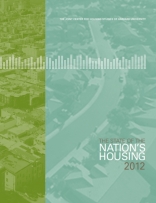
State of the Nation's Housing 2012

THE STATE OF THE NATION’S HOUSING

State of the Nation's Housing 2012 Report

The Joint Center for Housing Studies of Harvard University released its annual State of the Nation’s Housing report for 2012 on June 14th. This year’s report presents signs of a recovery in the nation’s housing markets. However, the Joint Center cautions that this progress is measured and not evenly experienced across all markets and populations.  Additionally, the study notes that housing affordability problems are at an all-time high, and that housing assistance for low-income families has not kept pace with the demand for affordable housing. The State of the Nation’s Housing report can be accessed from the Joint Center for Housing Studies website at, https://www.jchs.harvard.edu/research/publications/state-nation%E2%80%99s-housing-2012 

The Housing Assistance Council (HAC) is a proud sponsor of the State of Nation’s Housing report.

Defining “Rural” for USDA’s Housing Programs

Defining “Rural” for USDA’s Housing Programs

By Leslie Strauss
June 8, 2012

This part is simple: a property must be in a rural place to be eligible for USDA rural housing funding. Beyond that simple statement, things get complicated. What places are rural, and why does it matter?

Congress used three characteristics to define rural for USDA’s housing programs: population size, rural character, and a serious shortage of mortgage credit. In various circumstances, the maximum population size can be 10,000 or 20,000 or 25,000. As a practical matter, it’s far easier to enter a property address at USDA’s property eligibility Web site than to try to figure out whether it fits the definition. And note that everything in this paragraph applies only to USDA’s housing programs; the rural eligibility definitions for community facilities, utilities, and business programs are different.

Read the full blog post

HAC Responds to Wall Street Journal Article on USDA Foreclosures

Update: HAC’s letter to the editor was published in the Wall Street Journal on June 4 and is available here.

On Friday, May 25, 2012, the Wall Street Journal published an article headlined “USDA is a Tough Collector When Mortgages Go Bad.” It describes USDA’s efforts to collect from borrowers under the Section 502 guarantee program who lost income in the recession and then lost their homes to foreclosure.

The article is available in PDF here. (On the Journal’s site, the full text is accessible only to subscribers.)

Comments posted online on the Journal’s site as of mid-afternoon Friday are available in PDF here. A comment from Robert Rapoza, Executive Secretary of the National Rural Housing Coalition, appears near the end.

HAC responded with the following letter to the editor.

wsj.ltrs@wsj.com
The Editor
The Wall Street Journal
1211 Avenue of the Americas
New York, NY, 10036

To the Editor:

“USDA is a Tough Collector When Mortgages Go Bad” (May 24) describes serious problems, but fails to recognize the positive achievements of USDA’s rural housing programs. The debt collection practices described in the article should be corrected, but this does not mean – as some of the online commenters suggest – that USDA should be taken out of the mortgage business.

To qualify for USDA’s direct mortgage program, families must have low incomes; to qualify for the guarantee program, they must have low or moderate incomes. Yet USDA’s delinquency and foreclosure rates are comparable to those of other lenders and guarantors.

It is not surprising that some of USDA’s borrowers have been affected by the recession. It may be more surprising that a far greater proportion are successful homeowners, despite their income levels. The article reports that 12 percent of USDA’s guaranteed loans and 17 percent of its direct loans are delinquent or in foreclosure. In other words, 88 percent of the guaranteed loans and 83 percent of the direct loans are in good standing.

Those rates represent more than half a million homeowners with USDA guarantees and more than 230,000 with USDA direct loans, in addition to the one million or so who have already paid off their USDA mortgages. All those borrowers turned to USDA because they could not receive standard loans from the private market, and succeeded as homeowners despite their low incomes.

While we find ways to improve USDA’s treatment of its borrowers facing defaults and foreclosures, we should also celebrate its successes and embrace its future.

Moises Loza
Executive Director
Housing Assistance Council
Washington, DC

Posted: May 26, 2012
Updated: June 7, 2012
What Does an Affordable Rural Rental Housing Strategy Look Like?

What Does an Affordable Rural Rental Housing Strategy Look Like?

By Leslie Strauss
May 22, 2012

Affordable housing advocates were happy recently to see the Senate Appropriations Committee tell the U.S. Department of Agriculture to get its act together on rental housing. USDA’s FY12 budget proposed to eliminate funding for the department’s flagship Section 515 rental housing loan program and focus its efforts on the Multi-Family Housing Revitalization Program known as MPR. Then the FY13 budget took the opposite approach, proposing to focus on Section 515 and eliminate funding for MPR. In S.Rpt. 112-163 the frustrated Senate committee “directs the Secretary, conclusively, to determine and articulate an effective long-term strategy to address rural rental housing needs.”

Read the full blog post…

House Votes to Eliminate American Community Survey

HOUSE VOTES TO ELIMINATE AMERICAN COMMUNITY SURVEY

On May 9th, the House of Representatives voted, 232-190, to eliminate all funding for the Census Bureau’s American Community Survey in the 2013 Commerce, Justice, and Science appropriations bill (H.R. 5326).

The American Community Survey (ACS) replaced traditional Census “long-form” data collection starting with the 2010 Census. The ACS is the only source of publicly available data on social, economic, and housing characteristics for all communities in the United States. This annual survey is essential to understanding housing conditions in rural communities, as well as developing appropriate policies and local solutions to address housing inadequacies.

It is expected that the Senate will take up their version of this bill (S. 2323) the week of May 14. It does not include the ACS elimination, so a House-Senate conference will later decide on the fate of the ACS.

More details are available from

For more information on this issue, contact Lance George at the Housing Assistance Council, lance@ruralhome.org, (202) 842-8600.


Posted: May 11, 2012
Links updated May 14, 2012

GET THE HAC NEWS!

Sign-up for HAC information products

SIGN UP HERE

Housing Assistance Council   |  1828 L Street. N.W., Suite 505, Washington, D.C. 20036
(202) 842-8600 (202) 347-3441 hac@ruralhome.org |

Board Portal

HAC is an equal opportunity provider, employer, and lender. | Civil Rights | Privacy