Analysis: Rural America’s Lower Census Response May Be Due to Covid-19

This article first appeared in The Daily Yonder

By Lance George, HAC Director of Research and Information

The pandemic caused the Census Bureau to cancel its plans to hand-deliver announcements to households that are hard to reach by U.S. mail. That probably explains some of rural America’s low response rates to the Census so far.

As noted in numerous press reports and the Daily Yonder, a little less than half of U.S. households have completed their 2020 Census forms, but response rates are markedly lower in rural communities.

Low response rates in rural America are likely due to a combination of factors, some of which have been well documented (mistrust of government, lack of awareness, poor internet connectivity, indifference, etc.). But response rates for remote rural communities may be “artificially” low by the simple fact that many rural households have not received their census forms and have had no opportunity to participate.

For 2020, the U.S Census Bureau incorporated a “Type of Enumeration Area,” or TEA, for the process of delivering invitations to complete the decennial census questionnaire.  Approximately 95 percent of U.S. households were classified as “Self-Response.” Those households will receive the invitation to participate via standard mail delivery. Most of the Self Response households received Census invitations from mid-March through early April.

But approximately 5 percent of U.S. households were classified as “Update-Leave.” For those households, mail delivery information was less certain. In these communities, the census forms were to be hand delivered to improve response rates. Update/Leave communities were scheduled to have their census forms hand delivered March 15 – April 17. However, the Census Bureau suspended all field operations, including Update/Leave areas, due to the Covid-19 pandemic.

While Update/Leave areas contain roughly 5 million households, they are largely located in remote rural places and make up a substantial portion of some communities and regions. A Census Bureau map shows their planned contact strategy and Update/Leave areas in different parts of the country.

Steven Romalewski at City University of New York (CUNY) is mapping Update/Leave areas (shown in yellow in the map at the top of the story) along with response rates on his HTC 2020 website.

According to the Census Bureau’s latest guidance, delivery of notices to Update/Leave areas will now take place June 13-July 9. But the Census Bureau also encourages households to respond online now—even without an invitation. All respondents have to do is provide an address.

Yes, rural communities need to do a better job of participating in the Census. But some of our nation’s most rural areas – those often with the greatest needs – haven’t had a chance to be counted yet. Like many elements of our society, getting a good result requires a little more work and patience in rural communities. In this instance we need to be vigilant and work harder. While well touted, the importance of participating in Census 2020 cannot be overstated.

Lance George is the director of research and information at the Housing Assistance Council (HAC). HAC is a national nonprofit that helps build homes and communities across rural America.
Don’t leave rural America behind in coronavirus recovery

This piece originally appeared in The Hill 

By David Lipsetz, HAC CEO

Coronavirus is spreading fast in small-town America. As COVID-19 began to ravage densely populated metro areas, some hoped the distance inherent to rural communities would act as a shield against the same fate. Now that the pandemic has reached nearly every county and most rural places across the nation, we see how wrong that hope was. Even the New York Times has started running headlines that read, “This Is Going to Kill Small-Town America.”

The shortage of hospitals, doctors and health care workers and nearly no access to testing, has led to significant underreporting of rural cases. That may explain why some governors have hesitated on quarantines and Congress passed three emergency spending bills without a clear focus on rural programs and needs. For instance, as the stay-at-home orders started to pile up, the U.S. Department of Agriculture’s Rural Housing Service programs, which serve more than half a million rural Americans, received no supplemental funding in the CARES Act.

The maps showing coronavirus hotspots are chilling. We knew going into this pandemic that the place a person is born is a powerful predictor of how we live and die. We also knew that federal programs, policy and spending contribute heavily to which communities thrive while others wane. Suburbs do not spring naturally from the earth, complete with Amazon deliveries, organic supermarkets and broadband for home-office quarantine. Nor do rural places decline into poverty unless the infrastructure is in disrepair; the family farms, shops and markets are squeezed out; and the internet is too slow to Zoom into work.

Much has been written about rural America’s decline in the last decade. Rural communities were by-and-large left behind in the recovery following the Great Recession. Rural incomes stagnated, community banks closed and access to capital dried up, young people were forced to leave for proverbial greener pastures, and rural capacity and services dwindled. Some may think of poverty as an urban issue, but 86 percent of persistent poverty counties – those with poverty rates of 20 percent or higher over the past 30 years – are rural.

My organization works to improve housing in rural places. The demand for quality affordable places to live has never been more apparent. Nor has it ever been easier to see how housing is inextricably connected to health outcomes. Rural families struggle with the same housing issues that plague the nation. Unfortunately, rural homes are also older and in need of more repair and rural incomes are lower and less stable. Public programs, philanthropy and private markets have all failed to keep up with the need. USDA rural housing programs have suffered from funding cuts and bipartisan neglect for decades; foundations grant less than 8 percent of their funds in rural places; and rural America has suffered disproportionately from private industry closures of health clinics, manufacturing facilities, newspapers and bank branches.

While the pandemic is laying bare the inequality built into the geography of America, we don’t have to live like this going forward. Among the things that could help, Congress can address the critical and immediate needs of rural residents in the next round of coronavirus stimulus funding, including the need for increased rural housing assistance and funding to preserve rural rental properties. Public and philanthropic investments can help establish local housing and community development organizations in small towns like those we see operating in other areas of the country in this time of need. Healthcare providers, banks and other industries can maintain a presence in small towns.

Vulnerable and underserved populations are feeling the impacts of coronavirus deeply, and unless proactive and deliberate steps are taken to bolster rural communities, they are at risk of seeing a repeat of the lasting damage done by the Great Recession.

David Lipsetz is the CEO of the Housing Assistance Council. He has previously worked at both HUD and USDA, and the Housing Assistance Council is a grantee in several HUD and USDA programs.

Coronavirus impact survey from the Federal Reserve System

The Federal Reserve System is circulatng the following message and survey in an attempt to better understand the impact of Coronavirus in vulnerable communities. Please submit your responses to  make sure that underserved rural communities have their voices represented.  The survey will close at 11:59 Eastern time on Friday April 10.

The spread of the coronavirus (COVID-19) and the many efforts to slow it are affecting communities throughout the United States. At the Federal Reserve, we are committed to supporting people and businesses with every tool we have. But, to do so effectively requires a deep understanding of conditions on the ground.

We need your help. The Federal Reserve System is conducting a survey to understand better the range of challenges facing under resourced and low-income communities. It will also help us understand how this crisis is affecting organizations, like yours, that are supporting community needs.

Please take this survey today. The survey should take about 10 minutes to complete. If you have received the invitation to complete the survey from another Federal Reserve entity, please only take the survey once.

Start Survey
The survey will close at 11:59 p.m. EST / 8:59 p.m. PST on Friday, April 10, 2020

Thank you very much for your time and participation,

Resources Related to Coronavirus and the Arts in Rural America

As a key partner in the Citizens’ Institute on Rural Design, HAC knows the pandemic threatens community arts in rural America. Updates and resources are posted here.

Check out all of HAC’s coronavirus resource pages here.

HAC’s page on governance, planning and CARES Act information for rural nonprofits is here.


WANT TO SUGGEST AN ADDITION FOR THIS PAGE? Please email Leslie Strauss at HAC.

Third Coronavirus Relief Bill Stops Evictions, Funds HUD But Not USDA Housing

Several HUD programs receive funding boosts under the latest coronavirus relief package. USDA tenants and homeowners – along with those assisted by other federal programs – are protected from eviction, although no additional funds are provided for USDA’s rural housing programs.

Check out HAC’s coronavirus resource pages here.

The Coronavirus Aid, Relief, and Economic Security (CARES) Act, H.R. 748, passed the Senate on March 25 and the House on March 27. President Trump is expected to sign it. A fourth relief/stimulus measure is likely in the future, and could include additional housing provisions, but it is not clear when such a bill might be considered. The House and Senate will both go out of session after voting on the CARES Act.

Tenant Protections

The CARES Act establishes a 120-day moratorium on beginning proceedings to evict tenants for nonpayment of rent or other charges. (Tenants could still be evicted for other reasons.) Landlords also may not charge fees or penalties for nonpayment of rent during this time period. The 120-day period will start when President Trump signs the bill.

Protected tenants are those living in rental properties that receive any type of federal assistance, including USDA’s Section 515, Section 514/516 and Section 538 programs. (The bill uses different language for provisions referring to rental properties of one to four units and those with five or more units, but the protections are the same for tenants in properties of any size.)

The bill’s moratorium applies only to new evictions. It does not stop evictions that are already in process when the bill takes effect.

Many states and localities have imposed more stringent eviction moratoria. It is not clear whether those measures would supersede the CARES Act’s provisions. If a state or locality has a less stringent moratorium, the CARES Act would apply.

Rental Property Owner Protections

Owners of rental properties with five or more units and federally backed mortgages can request forbearance if they were current on mortgage payments as of February 1. An owner must contact the company or agency to which they make mortgage payments and say they are experiencing financial hardship. The mortgage company or agency must provide forbearance for 30 days. The property owner can request two additional 30-day forbearance periods.

Homeowner Protections

The CARES Act imposes a moratorium on foreclosures for homeowners with mortgages backed by any federal programs. This seems to apply to foreclosures that have already begun as well as new ones. It takes effect on March 18 and lasts for 60 days.

The bill does not provide automatic protection for homeowners who have difficulty meeting their mortgage payments, but it gives them the right to request forbearance from their mortgage lender, with an explanation that they are experiencing financial hardship because of the coronavirus crisis. The lender is required to grant forbearance for up to 180 days, with an extension of another 180 days if needed. The homeowner will still need to make the payments eventually.

These provisions apply to homeowners with mortgages made or guaranteed by USDA under Section 502, as well as to those with mortgages insured or guaranteed by HUD’s Section 184 program for Native Americans and Alaska Natives and 184A program for Native Hawaiians, FHA (including home equity conversion mortgages, often called “reverse” mortgages), or VA. And it applies to mortgages purchased by Fannie Mae or Freddie Mac. Most home mortgages in the U.S. are backed by Fannie Mae or Freddie Mac, but a mortgage issued by a community-based bank in a rural area may not be. Information about how to determine whether your mortgage is backed by a federal agency is provided here by the National Consumer Law Center.

Any homebuyer with coronavirus-related mortgage concerns should immediately contact the bank or agency where they send mortgage payments to discuss a forbearance agreement.

Letter from HAC CEO David Lipsetz

Dear Friends,

As a global community, we face an unprecedented challenge in the coming weeks and months as the COVID-19 pandemic moves through our cities, towns, and rural places. In the high-needs rural regions where HAC has worked for nearly 50 years, this challenge will be acutely felt. Rural communities are resilient, but face unique challenges with access to health care, services, broadband, and other basic social safety nets. Both on the ground and in Washington D.C., we are working with policymakers, partners, and funders to determine the best ways to continue to support the rural places and people we serve.

Like many of our friends and partners, HAC staff will be working remotely in the coming weeks to protect the health of our team and to do our part to help slow the spread of the virus in our communities. We are also limiting non-essential travel, events, in-person meetings. But rest assured, HAC staff are working hard and are ready to help in any way we can.

We also recognize that our local partners will likely face additional pressure to respond to the needs of the rural communities you serve. As always, we will be as responsive and flexible as possible and work hand-in-hand with you as this situation progresses.

We encourage you to check back regularly, as this page will be updated to include relevant resources as they become available.

Please reach out to any HAC staff member if you have questions.

Be well,

David Lipsetz, CEO

Respond to the 2020 Census

The 2020 Census is happening now and HAC encourages everyone living in the United States to respond. The Census is supposed to count every resident. The numbers are used to determine how billions of dollars of assistance are distributed, as well as how representation in Congress is divided. If you don’t respond, or if the Census misses you, your community gets fewer resources.

The 2020 Census does not ask about citizenship or documentation. It is illegal for the Census Bureau to share any of your information with any other government agencies, including law enforcement or immigration.

You can complete your questionnaire online, by phone, or by mail. Click here for information from the U.S. Census Bureau about the Census and how to respond.

You can complete the census online or by phone in 13 different languages: English, Spanish, Chinese, Vietnamese, Korean, Russian, Arabic, Tagalog, Polish, French, Haitian Creole, Portuguese, and Japanese.

The Census Bureau also offers webpages and guides in 59 non-English languages, including American Sign Language, as well as guides in Braille and large print. Click here to learn more.

Rental Affordability Crisis Continues

Almost 40 percent of rural renters in the U.S. were cost burdened in 2018, according to a new report from Harvard University’s Joint Center for Housing Studies. That means each of these 750,000 households paid more than 30 percent of their income for rent and utilities.

The report, America’s Rental Housing 2020, provides data on rental housing costs, households, housing stock and housing challenges.

Nationwide, the number of cost-burdened renters fell from 2014 to 2017 but rose again in 2018. Among geographic and income categories, the only decline in cost-burden rates from 2011 to 2018 was a 0.9 percent drop for nonmetro renters with incomes of $30,000-44,999. Housing affordability continues, however, to be a problem for more rural renters than any other housing concern.

Harvard’s analysis shows that, despite slowing demand and the continued strength of new construction, U.S. rental markets remain extremely tight. Vacancy rates are at decades-long lows, pushing up rents far faster than incomes. Both the number and share of cost-burdened renters are again on the rise, especially among middle-income households. These conditions reflect fundamental market changes since the recession, including an influx of higher-income households, constraints on new supply and substantial losses of low-cost rentals. With only limited federal support, state and local agencies are doing what they can to expand the affordable housing supply. What is needed, however, the researchers conclude, is a comprehensive response from all levels of government to address the scale of the nation’s rental affordability crisis.

The report notes that, in rural America, rental housing issues include not only cost burden but also a limited supply of rentals, substandard housing conditions and (citing HAC’s research) the loss of affordable rentals supported by USDA’s Section 515 program. In most U.S. regions the proportion of physically inadequate units is higher in nonmetro places than in metropolitan areas, as shown in tables accompanying the report. That difference is especially dramatic in the South, where 12.3 percent of nonmetro rental units are inadequate, compared to 7.9 percent in metro regions. Nationwide, while 11.7 percent of all rental units are in nonmetro places, a disproportionately high 14.8 percent of inadequate units are there.

Native American and Hispanic renters in rural areas are more likely than others to live in substandard housing, JCHS reports. For example, 14 percent of Native American renters in rural areas live in overcrowded rental units.

JCHS defined rural areas as nonmetropolitan places. The data would differ, at least slightly, if a different definition of rural was used.

Interactive data and graphics and the written report are available online.

Posted 2/6/2020

Feeling grateful this holiday season

And looking forward to an even better 2020

A Message from HAC CEO David Lipsetz

Happy Holidays from your friends at HAC

2019 has been an incredible year for HAC, the communities that we serve, and rural America. That is in no small part due to the support and partnership of people like you. Thank you for joining us in this work.

The public spotlight on affordable housing and rural conditions continues to grow. Press coverage of an “affordability crisis” appears regularly in mainstream media. Congress is holding hearings and polls show that the general public considers it to be an important issue. And for the first time in memory, candidates for president are issuing detailed housing and rural development policy statements. HAC is translating the increased attention into action by partnering with national organizations and local practitioners to address the issues facing rural communities, while finding new ways to work together with local governments, community banks, community health providers, small business and more to better represent the broader needs of rural development.

Among the exciting events of 2019 was our launch of the Citizens’ Institute on Rural Design (CIRD) a leadership initiative of the National Endowment for the Arts in which HAC helps rural communities engage in design thinking, creative placemaking, and leverage arts and culture to drive economic revitalization. We ran our first “CIRD Learning Cohort Summit” in the fall with 34 community leaders from 23 small towns based in 18 different states. We gathered in Thomas, West Virginia (pop. 660) to allow rural practitioners to focus on rural-specific issues with their rural peers in a rural setting. In the process, CIRD is expanding HAC’s capacity in community development and elevating our role in arts and creative placemaking.

2019 was a busy year for our Loan Fund. We opened wide for new business and made $9 million in new loans to support the development of decent, safe, affordable homes throughout rural America. We also built a pipeline of new activity that should bring over $16 million in additional capital investments over the next few years.

We also spent the year focusing our Training and Technical Assistance activities on its transformative work with small and emerging rural housing organizations to build capacity to serve their communities. One of my favorite examples has been our working with Magnolia CDC in Opelousas, LA to become a Community Housing Development Organization (CHDO). A CHDO designation will help Magnolia access funding opportunities like the Community Development Block Grant and serve more of their community.

As always, HAC’s Research and Information division is on the cutting edge when it comes to issues impacting rural America. We worked along the southern border to establish Colonias Investment Areas that help target opportunities for mortgage finance and community development. We analyzed the extent to which limited broadband access, food insecurity and natural disasters impacted rural prosperity. And in 2019, we influenced the debate on Community Reinvestment Act reform by analyzing how an expanded CRA could stem the tide of rural bank closures and expand access to mortgage credit in the nation’s most persistently poor places.

Looking ahead, 2020 will no doubt be another exciting year for HAC. We will see you at our biennial National Rural Housing Conference, send you the decennial update of our flagship publication Taking Stockand partner with you for vibrant, resilient and prosperous rural places. Thanks again for a great 2019. We wouldn’t be here without you.

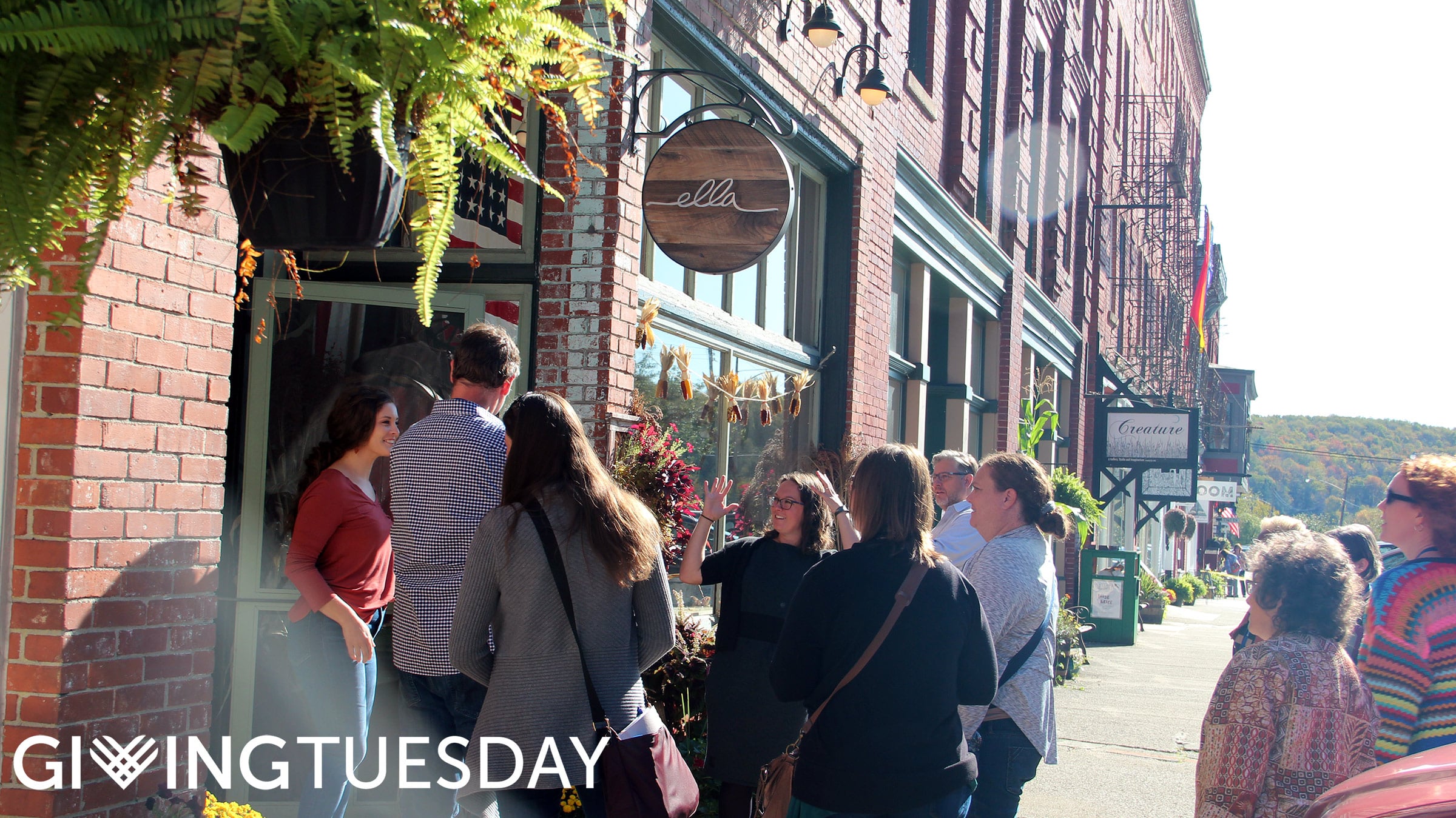
Help Rural America Thrive on Giving Tuesday

Good things are happening in rural America. Be a part of it.

Too often, the prevailing narrative about rural America is that it is failing compared to its urban and suburban counterparts. While rural America is certainly facing its share of struggles, there are so many bright spots and amazing things taking place in small towns and communities across the country. We know because we see it every day.

In October, HAC kicked off the Citizens Institute on Rural DesignTM (CIRD) with the CIRD Learning Cohort Summit in the towns of Thomas, Davis, and Elkins in rural West Virginia. The Citizen’s Institute on Rural Design™ is a National Endowment for the Arts leadership initiative in partnership with the Housing Assistance Council, along with buildingcommunityWORKSHOP. Participants representing 23 rural communities from across the country convened to learn the fundamentals of rural design and how it can help solve some of their community’s most challenging problems.

Giving Tuesday 2019

Over the next year, these 23 communities will receive access to the resources they need to convert their own good ideas into reality. Here a few examples of the challenges these communities will be tackling:

  • One of the pressing issues still facing the residents of Iola, Kansas is the lack of quality, affordable housing. Thrive Allen County and the City of Iola will use the design challenge to develop an affordable housing master plan for a neighborhood on the north side of town.
  • The town of Entiat, Washington is exploring how it can reinvent itself as a destination for recreation, agritourism, small business development, and residential development.
  • The Mt. Zion Baptist Church Preservation Society in Athens, Ohio plans to rehabilitate the Mt. Zion Baptist Church into a multi-use space devoted to the contributions of African Americans in Southeast Ohio – honoring its founding in 1905 by a community of free-born and formerly enslaved people of color.

2020 holds many possibilities for HAC and the communities we partner with, like Iola, Entiat, and Athens. This #GivingTuesday, your donation to HAC will have more impact as every dollar raised will meet HAC’s match for the CIRD program. And every donation made to HAC on Facebook on #GivingTuesday will be matched by Facebook. You can be a part of changing the story in rural America.

Donate Button

GET THE HAC NEWS!

Sign-up for HAC information products

SIGN UP HERE

Housing Assistance Council   |  1828 L Street. N.W., Suite 505, Washington, D.C. 20036
(202) 842-8600  |  (202) 347-3441  |  hac@ruralhome.org |

Board Portal

HAC is an equal opportunity provider, employer, and lender. | Civil Rights | Privacy