Last week, the US Department of Housing and Urban Development announced it has awarded the Housing Assistance Council almost $1.3 million under its Self-Help Homeownership Opportunity Program (SHOP). Under the self-help model, homebuyers contribute hundreds of hours of labor as “sweat equity” instead of a down payment, making their new home more affordable.
HAC will lend this $1.3 million to organizations around the country building affordable self-help homes in rural communities. In fact, our lending will help finance the land purchase and infrastructure improvements necessary to build at least 69 self-help homes for low-income families.
If the borrowers meet their production goals, up to 90% of the loan can be forgiven. This forgiveness frees up more funding for the organization to make the homes even more affordable, establish a revolving loan fund, or fund future self-help housing development. We are thankful for the opportunity to continue investing in the organizations making more affordable housing for rural America.
December 30, 2020 – The newest federal coronavirus relief bill includes a provision extending for one month the nationwide moratorium on eviction of tenants for nonpayment of rent. The moratorium, issued by the Centers for Disease Control in September 2020, protects tenants who provide certifications to their landlords, including tenants in assisted housing. It now applies through January 31, 2021 rather than the original termination date of December 31, 2020.
USDA has issued a reminder about the moratorium’s applicability to tenants in USDA-financed rental housing. The text of the reminder is incorporated in a December 29 update of USDA’s summary of coronavirus relief actions and is also reproduced below.
For more information, contact a USDA Rural Development Service Center.
Extention of CDC Temporary Halt in Residential Evictions
The Consolidated Appropriations Act, 2021 enacted on Dec. 27, 2020, contains provisions extending new relief to those affected by the ongoing COVID-19 pandemic.
Section 502 of the Act contains an extension of the Temporary Halt in Residential Evictions originally issued by the Centers for Disease Control and Prevention on September 4, 2020. Residential evictions for nonpayment of rent are now halted through January 31, 2021.
As a reminder, this halt applies to all tenants in Rural Development MFH properties who certify that they meet the CDC criteria, such as:
The CDC guidance contains a sample certification form for tenants. It is our understanding that all adult members of the household must certify eligibility.
Following is a summary of what we know as of December 29, 2020 regarding the second round of the Paycheck Protection Program (PPP2) approved in the coronavirus relief bill signed into law on December 27, 2020. The Small Business Administration (SBA) and Treasury Department will likely provide additional information and guidance in the new year.
Eligible small businesses may include:
Previous PPP recipients may apply for another loan of up to $2 million, if they:
PPP2 will permit first-time borrowers that are:
Compare gross receipts (before expenses are subtracted) for any quarter in 2020 to the same quarter in 2019 to determine if revenues decreased by at least 25% (note: there are instructions for business operating by 2/15/2020 that did not exist in early 2019).
Like the original PPP under the CARES Act, there is no credit check required, there is no personal guarantee, and normal SBA collateral requirements are waived.
The President signed the legislation on December 27, 2020 and the SBA Administrator has ten days to issue regulations. At this time, we expect these loans to be available in early January.
Other resources approved in the bill include:
A brief eviction moratorium, $25 billion in rent aid, Paycheck Protection Program loans, supplemental unemployment benefits and checks to individuals are among the many provisions included in the relief bill signed into law by President Trump on December 27, 2020 after months of negotiations among congressional leaders and the White House. The Coronavirus Response and Relief Supplemental Appropriations Act was rolled together with provisions to fund the government for the rest of fiscal year 2021 and several other measures.
The following list summarizes some of the bill’s key provisions relevant for affordable rural housing providers. HAC will provide more details as they become available.

With the holiday season upon us, we would like to take a moment to reflect on 2020. We have mourned the loss of family and friends to COVID-19, celebrated the focus on racial justice and longed for a more civil society. Our organization, the Housing Assistance Council (HAC), has strived to respond to the challenges. We know every American needs a safe, stable and affordable home like never before.
HAC’s focus is on the small towns and rural regions that are least equipped to respond to the current crisis. That is why we are working overtime with our allies and local partners to respond to the overwhelming demand for housing and community development. We are inspired by our partners’ daily acts of courage in the offices and on the construction sites that produce homes for people in need. And to our sponsors and supporters, we are grateful that you have joined us in this work.
Like many of you, HAC has pivoted to meet this moment. HAC’s biennial National Rural Housing Conference is one of the most powerful tools we have for training and sustaining rural housing allies. While COVID may have forced us to push the conference back to 2021, last week we hosted our first ever virtual symposium—Recovery Through Resiliency. It was a resounding success. Over 600 rural housing developers, government officials, community members, and housing advocates registered to attend. Hundreds of different people joined in every one of the panels that highlighted our work and the work of our industry. Attendees explored how the communities we all serve can move forward together from this trying moment. All in all, this symposium was an excellent chance for HAC to come together with our partners and the rural development community.
2020 was also a very busy year for our Loan Fund. With $11 million lent this year, our Loan Fund has increased lending by 22%. This included an increase in loans made to BIPOC-led housing developers. Across rural America, our financing is supporting safe, healthy, and affordable housing. The Loan Fund has also raised more than $4 million in lending capital, expanding our lending capacity for years to come.
Our work to build capacity in rural communities has also ramped up. Since March, HAC staff has moved our operations on-line to deliver hundreds of hours of training to rural housing organizations. We helped rural organizations navigate CARES Act programs like the Paycheck Protection Program and supported strategies to weather the current crisis. We also helped dozens of local organizations develop their own tailored business continuity plans to respond to natural and man-made disasters. Rural resiliency became our mantra so that even after this crisis passes, our partners will be prepared for the next.
Through the Citizens Institute on Rural Design (CIRD) we’ve helped rural communities use creative placemaking to come together while the pandemic keeps so many of us apart. This summer CIRD hosted its first hybrid virtual and socially distant in-person workshop to restore the Mt. Zion Baptist Church, a historic Black church in Athens, Ohio. Working with community members, CIRD designers developed a plan to breathe life back into the historic building and, by extension, the entire community.
Our Research and Information division has long been a prominent voice on the issues affecting rural America, and 2020 was no exception. In addition to analyzing the impacts of the pandemic on rural places, R&I delved into rural population change, the impacts of aging rural populations, how tax policy affects Section 515 preservation, and much more. In fact, this summer’s issue of Rural Voices focused on rural aging, exploring housing’s place in broader strategies to care for seniors as well as solutions to the challenged faced by aging rural populations. Our latest issue of Rural Voices engages with rural design, showcasing the power the arts have in uplifting rural communities.
There is a lot to look forward to in 2021. Next year, we celebrate HAC’s 50th anniversary. It’ll be a time for us to reflect on how far we’ve come in the last half century. More importantly, it will be an opportunity to highlight what must be done in the next 50 to eliminate rural poverty and housing needs. With a new administration, HAC is working to establish a seat at the table for rural issues from day one. Our flagship publication Taking Stock will analyze what the latest Census tells us about rural America. And, the full HAC conference will resume next December for us all to come together as an industry and as rural communities.
Our many partners and supporters deserve so much of the credit for our success. As we continue to grow in 2021, we hope you’ll consider making a gift to HAC and help us make rural communities even stronger, more vibrant, and more resilient. Thank you for all your help this year.
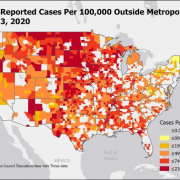
COVID 19 reported cases and deaths continue to grow at an accelerated pace. There are now more than 2.2 million rural cases, and there were nearly 900,000 new reported COVID-19 cases in rural areas over the last 30 days.
UPDATE: COVID-19 in Rural America – DECEMBER 3, 2020
The COVID-19 pandemic is a global health crisis affecting nearly every community – including rural America. While there are still many uncertainties, the health crisis changes daily and the pandemic’s impact on rural communities continues to grow and evolve. The Housing Assistance Council (HAC) presents summary findings of COVID-19 in rural America as of early December.
The first reported case of COVID-19 outside of metropolitan areas came on February 20, 2020. As of December 3, 2020, there were more than 2.2 million reported cases of COVID-19 and approximately 38,000 associated deaths in communities outside of metropolitan areas. Between November 3 and December 3, communities outside of metropolitan areas reported 859,000 new cases of COVID-19 – a 63 percent increase over the month period. All but two U.S. counties outside of metropolitan areas now have reported COVID-19 cases, and 93 percent of outside metro counties have also reported associated deaths related to the virus.
Nationally, the number of new COVID-19 cases continues to increase and reported rural cases also continue to grow to their highest levels since the pandemic began. Between November 20 and December 3, rural areas reported an average of 29,552 cases per day. Similarly, rural reported COVID related deaths were up to an average of 434 per day compared to 331 deaths per day over the previous two-week period.
Initial impacts of COVID-19 were greatest in urban and suburban communities and these areas still have the largest share of cases and deaths. Since February 20, 2020, approximately 16 percent of the total reported COVID-19 cases were identified in rural communities. But the rural share of COVID-19 cases continues to be larger than the outside metro proportion of the population. On December 3, 2020, 17 percent of new cases and 25 percent of new deaths were reported outside of metropolitan areas.
Only two U.S. counties have not reported COVID-19 cases, but the virus’ impacts vary widely across the nation’s rural geography. Rural America simultaneously has the highest and lowest rates of reported COVID-19 cases. There have been several instances of extremely high per-capita infection rates in rural areas – notably on some Native American lands and communities with meat packing and correctional facilities. In the past weeks, the rural case and death rates increased most dramatically in the plains and upper Midwest, Southeastern, and Western states.
The information in this brief derives from Housing Assistance Council tabulations of data from The New York Times, based on reports from state and local health agencies, and the U.S. Census Bureau’s 2014-2018 American Community Survey.
In these analyses, the terms “rural” and Outside Metropolitan Areas are synonymous and refer to counties and counts outside of OMB designated Metropolitan Areas.
The Housing Assistance Council is a national nonprofit organization that helps build homes and communities across rural America.
On Thanksgiving Day, the affordable housing community lost a dear friend and advocate. Bill Powers was a friend of the Housing Assistance Council since its earliest days as one of our first staff members and later board member and chair.

A true affordable housing advocate, Bill devoted over 50 years of his life to the promotion of affordable housing and once said that the work has been “a lifetime interest.” When Gordon Cavanaugh became HAC’s first executive director in late 1971, he hired Bill, whom he had met while both men were working for the city of Philadelphia’s housing programs. Initially Bill helped start HAC’s lending programs and later he took on responsibility for government affairs.
As a housing program developer for the Rural California Housing Corporation, he was credited with raising over $1 million in a single year to support housing development in that state. Even after retiring, Bill donated his time to many organizations, served as a board member of several local housing agencies and HAC, and worked closely with the California Alliance of Retired Americans. He was also the recipient of the Congress for California Seniors Lifetime Achievement Award.
The death of Bill Powers is a loss for the affordable housing community. We will keep his memory alive by building on the work he spent his life doing: supporting rural communities’ access to safe, healthy, affordable homes. “I think HAC ought to be proud we’ve survived this long and proud of the movement we helped create,” Bill once said. “As long as there is a need for housing in rural America there will be a desperate need for organizations like HAC.” Rest in peace, Bill. Thank you for all you’ve done for us and for low-income rural Americans.
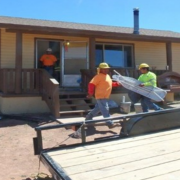
The White Mountain Apache Housing Authority (WMAHA) helps the members of the White Mountain Apache Tribe to overcome their individual housing needs. Of these, almost 500 are U.S. military veterans. Working in the Fort Apache Indian Reservation located in eastern central Arizona, WMAHA serves the 16,000 enrolled members of the White Mountain Apache Tribe and strives to ensure that every tribal member has safe housing they can afford. The Housing Assistance Council (HAC) is proud to be a partner of WMAHA and their amazing work. In 2018, we awarded a $30,000 grant through The Home Depot Foundation‘s Veteran Housing Grants Program to WMAHA to help support their veterans. In celebration of Veterans Day and Native American Heritage Month, we’d like to highlight just a few of the many ways the White Mountain Apache Housing Authority serves the veterans of the White Mountain Apache Tribe.
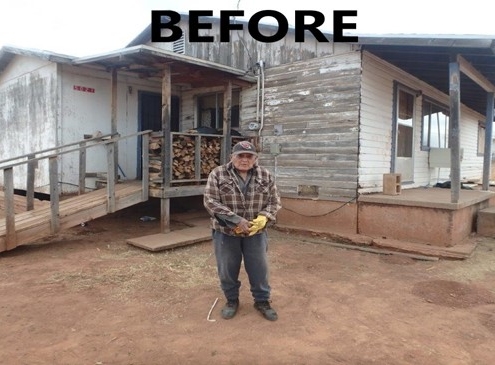 Before rehab of a veteran’s home completed by WMAHA in 2018 |
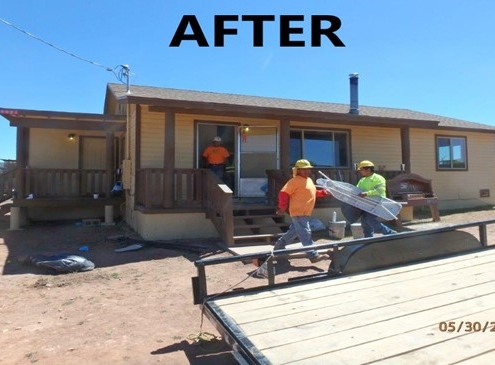 After rehab of a veteran’s home completed by WMAHA in 2018 |
| Before and after of a rehab of a veteran’s home completed by WMAHA in 2018
|
|
As many veterans know, service doesn’t end when you’re discharged. It’s a value that is carried for a lifetime. For WMAHA, service is key to the mission. The Veteran Home Rehabilitation Program serves those who have served our country. Many of the low-income Apache veterans the Housing Authority assists are in desperate need of multiple, expensive repairs to make sure their homes are safe, accessible, and livable. But without the ability to make these repairs themselves, many veterans need help.
Over the last eight years, the White Mountain Apache Housing Authority has rehabilitated (or in one case built!) 19 homes for their veterans, each of which required multiple major repairs for health, safety, and accessibility. All of this was performed at no cost to the veteran or their family. Last year WMAHA was able to set a record with 5 rehabilitations.
Making sure their veterans have safe and healthy homes is a point of pride for WMAHA and for the entire White Mountain Apache community. After all, WMAHA doesn’t work alone: each rehabilitation is made possible by scores of volunteers. As the team from WMAHA explains, “the number of volunteers who come and help with demolition and construction cleanup during the projects” is a testament to the rehabilitation program’s “impact on the community.” From the Housing Authority to everyday members, including community partners, the White Mountain Apache Tribe takes care of its veterans. By taking care of those who took care of us, WMAHA is serving both its community and the broader community of veterans nationwide.
The COVID pandemic has hit many Native communities particularly hard, and tragically, the White Mountain Apache are no exception. During the pandemic, unemployment, which usually runs 80% according to WMAHA, has far surpassed that amount, and food insecurity is “at a critical level.” Many of the low-income veterans WMAHA assists don’t have a way to pick up food from the local food bank, so the Housing Authority is starting to deliver the food boxes itself. Not content to just help house their veterans, WMAHA is committed to improving their quality of life.
Caring for veterans extends outside the home, too. For WMAHA, ensuring their veterans have access to the Veterans Affairs benefits they deserve is a critical mission. With 1.67 million acres, the Fort Apache Indian Reservation is large and rural. This creates challenges for many of the Tribe’s low-income veterans. Many of the nearest VA hospitals are hundreds of miles away, which makes even getting to routine appointments incredibly difficult. This distance makes it so challenging to receive disability ratings, see specialists, and make necessary appointments that, according to Barb Connerley, a consultant who works with WMAHA, “many of the veterans…do not know what VA benefits are available to them.”
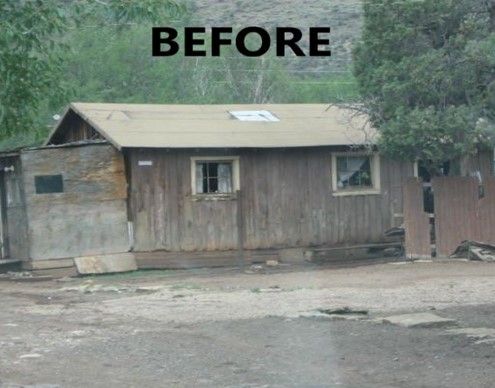 This veteran’s home was in such disrepair the team from WMAHA decided to tear it down and start from scratch. |
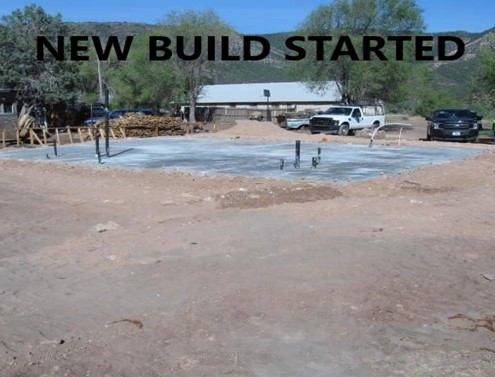 This veteran’s home was in such disrepair the team from WMAHA decided to tear it down and start from scratch. |
| This veteran’s home was in such disrepair the team from WMAHA decided to tear it down and start from scratch. | |
The White Mountain Apache Housing Authority has created a solution to help connect their veterans to the VA medical care they earned through their service. Since 2017, the White Mountain Apache Tribe Department of Transportation has operated Fort Apache Connection Transit (FACT), a 2-route bus system serving 12 stops across the Reservation. While this system doesn’t provide access to the nearest VA hospitals, the Housing Authority recently began repurposing one of their buses to transport veterans to their VA appointments. Multiple times a month, WMAHA will be providing veterans with a bus ride to their appointments and back home. They even take the time to help the veterans complete their paperwork to file for VA benefits.
For the trip, WMAHA provides their veterans with water, snacks, masks, and COVID safety information. They hope that this program can also serve as a teaching event, helping their veterans learn more about COVID safety as well as how to access their VA benefits. The program’s strength is its ingenuity—bringing together transit, healthcare, and informational services—in solving a critical problem for the Tribe’s veterans. Thanks to the White Mountain Apache Housing Authority, veterans living on reservation now have access to the critical VA healthcare they’ve earned through their service.
Many veterans return from their service to find it difficult to access the resources of their communities, including housing. Tragically, Native communities are overrepresented among persistent poverty counties, making these resources even harder to access. The Housing Assistance Council is committed to helping build community resources for housing where they’re needed most. Partners like WMAHA help us give back to our veterans and uplift Native communities. As Barb Connerley puts it, the Tribe’s veterans “have a proud tradition of military service and sacrifice.” The work of the White Mountain Apache Housing Authority pays respect to that service and sacrifice through service, care, and ingenuity of its own.
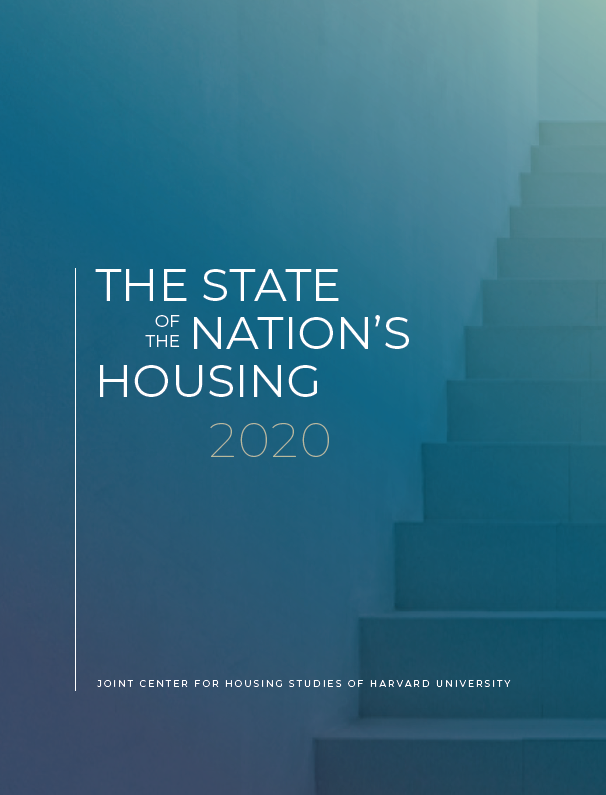
For most of 2020, the country has been beset by the COVID-19 pandemic, social unrest sparked by longstanding racial injustice, and the devastating impacts of climate change. Although low interest rates and continued growth in some sectors have bolstered homebuying and the broader economy, conditions have worsened for many households. Indeed, the nation’s failure to live up to its long-stated goal of a decent home in a suitable environment for all has never been clearer— particularly in the lack of affordable rental housing and unequal access to homeownership. Today’s crisis conditions call for a comprehensive re-envisioning of national housing policy.