Rural Research Briefs are a series of data and findings from the recently released decennial Census and American Community Survey (ACS), highlighting various social, economic, and housing characteristics of rural Americans.

RURAL RESEARCH BRIEF: It’s Cold Out There! Home Heating (and the lack of) in Rural America

Home heating is a basic necessity with profound implications for health, finances, safety, and quality of life. Home heating dynamics and conditions, however, are not uniform across the country. Some rural communities and households face home heating challenges due to geography, infrastructure, and economic conditions. Rural homes are located over large geographics areas, have lower housing density, and may lack access to centralized energy infrastructure. These factors, combined with generally lower incomes and an older housing stock, make rural home heating costs and adequacy a concern and policy issue.
Download the Report

RURAL RESEARCH BRIEF: Natural Disasters and Resiliency in Central Appalachia

Frequent natural disasters are increasingly threatening rural communities, upsetting essential functions and infrastructure, affecting rural health, and compromising communities’ safety and livelihoods. Severe weather events, particularly flooding and hurricanes, have especially affected Central Appalachia in recent years. The historic 2022 Kentucky floods, Hurricane Helene, and ongoing flooding in 2025 demonstrate the region’s vulnerability to increasingly erratic and intense weather patterns. Today, resiliency is a vital and relevant topic in rural research as regions like Central Appalachia grapple with increasingly severe natural disasters. This report leverages secondary data from journal articles, reports, and analyses from relevant sources investigating the region’s resiliency, recovery efforts, the effects of natural disasters on the region, and their intersection with ongoing challenges.

Download the Research Brief

Central Appalachia Rural Research Brief

RURAL RESEARCH BRIEF: Homelessness Continues to Increase in the U.S. and in Rural America

The U.S. Department of Housing and Urban Development’s 2024 Annual Homeless Assessment Report (AHAR) shows that homelessness has reached an all-time high nationwide, with rural areas experiencing significant increases. This brief from the Housing Assistance Council analyzes the data and finds that more than 126,000 people experienced homelessness in rural Continuums of Care (CoCs), with a disproportionate rise in unsheltered families and chronically homeless individuals. The brief explores contributing factors such as the end of pandemic-era protections, economic pressures, and natural disasters. Despite these challenges, a notable decline in veteran homelessness highlights the impact of sustained, targeted interventions.

Download the Research Brief

Creating A Better Understanding of Farmworker Communities and Their Housing Conditions

Farmworker Dynamics Have Shifted Over the Last Few Decades

U.S. agriculture, a multibillion-dollar industry, has been made possible by cheap farmworker labor. As one of the most impoverished groups in the nation, farmworkers earn low wages and experience working conditions that hinder their ability to access affordable housing. This situation is further exacerbated by many legal, cultural, and geographic circumstances that often keep this population in the shadows of American society and contribute to their economic marginalization.

The Housing Assistance Council (HAC) has undertaken a review of U.S. farmworkers and their housing to provide a deeper understanding of these individuals, their historical impact, and their quality of life within this country.

Download the Report

HAC FW Rural Research Brief_Final_4.30.24

Taking Stock of Rural America

5 DECADES OF TAKING STOCK IN RURAL AMERICA

RURAL PEOPLE, RURAL PLACES, RURAL HOUSING

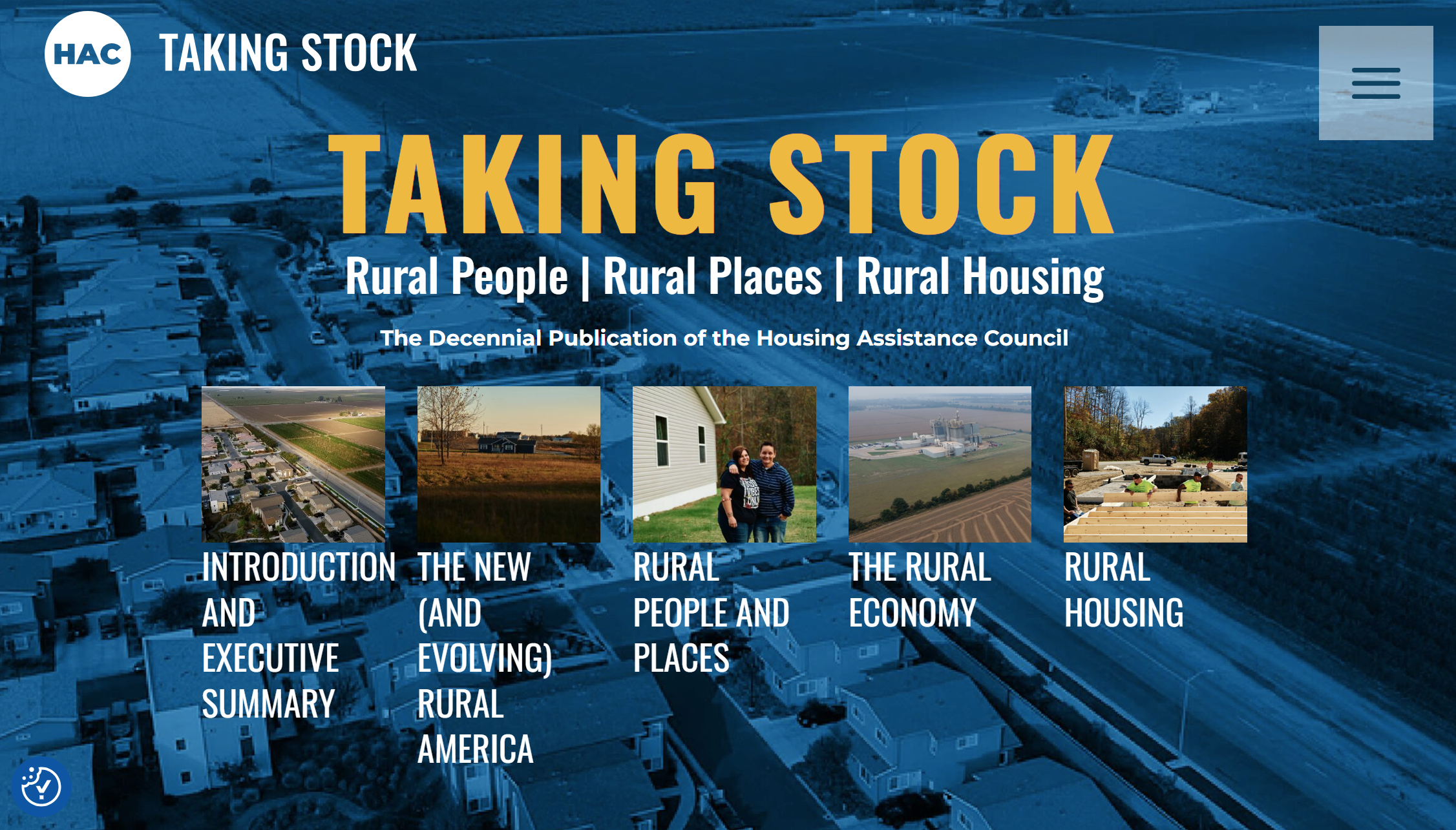
First published in 1984, Taking Stock is a decennial research publication of the Housing Assistance Council. The 2023 edition of Taking Stock continues this legacy of presenting social, economic, and housing trends for rural places and rural people.


In the early 1980s, the Housing Assistance Council (HAC) published its initial Taking Stock report. This seminal work was one of the first comprehensive assessments of rural housing and rural poverty conditions in the United States. The first Taking Stock also exposed the plight and housing need of the nation’s high poverty rural areas. HAC’s decennial Taking Stock analysis continued in 1990, 2000, and 2010 and has increasingly expanded to cover a broader scope of social, economic, and housing trends in rural areas. The 2023 edition of Taking Stock continues its legacy of presenting a composite picture of trends and issues important to rural people, places, and housing.

The Persistence of Poverty in Rural America

Persistently poor counties are classified as having poverty rates of 20 percent or more for three consecutive decades. Using this metric, the Housing Assistance Council estimates there were 377 persistently poor counties in 2020 using data from the Census Bureau’s recently released 2016-2020 American Community Survey, the 2006-2010 American Community Survey and the 2000 Decennial Census of Population and Housing.

Download Research Brief (PDF)

An Update on Maturing Mortgages in USDA’s Section 515 Rural Rental Housing Program

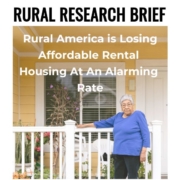
Rural America is Losing Affordable Rental Housing at an Alarming Rate

USDA’s Section 515 Rural Rental Housing properties are an important resource for many rural households and communities. But the availability of these homes is declining. In 2016, USDA presented estimates of the date when properties would leave their portfolio and potentially lose affordability and some renter protections. HAC examined changes in USDA’s Section 515 portfolio during the past five-year period. The analysis identified 921 Section 515 properties that left the portfolio between 2016 and July 2021 – nearly three times the original USDA projection for maturing mortgages during the five-year period. The ramifications of this accelerated loss of affordable rural rental housing are important as the number of properties expected to leave USDA’s portfolio will grow exponentially in the coming decades.

Download Research Brief (PDF)

Appendix 1: List of properties that have left the program.


COVID-19 in Rural America: Updated July 31, 2021

The Housing Assistance Council (HAC) presents summary findings of COVID-19 and its larger impacts 528 days after the first identified case in rural America.

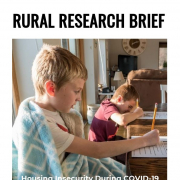
RURAL RESEARCH BRIEF: Housing Insecurity During COVID-19

COVID-19 has disrupted nearly every aspect of life and culture in rural America, and the economic fallout is most acutely felt through job losses. If rural unemployment rates remain high the collateral impacts to almost all sectors of the housing market could be substantial – notably the ability of unemployed households to make rent and mortgage payments. This Brief presents time series housing trends from the U.S. Census Bureau’s PULSE Survey. The Pulse Survey provides data to help understand the experiences of American households during the coronavirus pandemic.

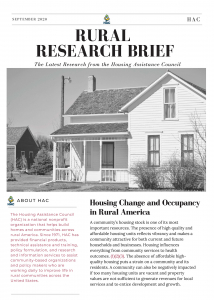
Housing Change and Occupancy in Rural America

Housing Change and Occupancy in Rural America

A community’s housing stock is one of its most important resources. The presence of high quality and affordable housing units reflects vibrancy and makes a community attractive for both current and future households and businesses. Housing influences everything from community services to health outcomes. The absence of affordable high-quality housing puts a strain on a community and its residents. A community can also be negatively impacted if too many housing units are vacant and property values are not sufficient to generate revenues for local services and to entice development and growth.

GET THE HAC NEWS!

Sign-up for HAC information products

SIGN UP HERE

Housing Assistance Council   |  1828 L Street. N.W., Suite 505, Washington, D.C. 20036
(202) 842-8600 (202) 347-3441 hac@ruralhome.org |

Board Portal

HAC is an equal opportunity provider, employer, and lender. | Civil Rights | Privacy