HAC News: October 9, 2013

HAC News Formats. pdf

October 9, 2013
Vol. 42, No. 20

• Federal shutdown impacting housing programs, websites, data • Home Depot Foundation offers funds for rural veterans housing • HUD proposes to designate some mortgages as QMs • NHLP invites others to sign its comments on USDA’s voucher program • Fair Market Rents published for FY14 • HUD sets process for reporting manufactured home problems • PHA administrative fee factors issued • Importance of federal spending varies widely across states • “What is the QRM? And What Does it Mean for Rural Mortgage Markets?” • Missed a HAC webinar? • Need data on housing or demographics while the Census Bureau’s website is unavailable?


October 9, 2013
Vol. 42, No. 20

FEDERAL SHUTDOWN IMPACTING HOUSING PROGRAMS, WEBSITES, DATA. Under its shutdown plan, USDA has furloughed all of its 3,336 Rural Development field staff. A total of 53 RD staff in Washington, D.C., and St. Louis, out of 1,394, are still on the job. On October 1 Under Secretary for Rural Development Doug O’Brien sent an email to RD offices explaining that “many [RD] services will be delayed or interrupted. For example, Rural Development will not be able to make any new loans or grants; the only exceptions will be for emergency purposes and to protect the Government’s interest. Automatic disbursements for previously obligated Rental Assistance (RA) funds will continue, but no RA contracts will be renewed or issued.” Over 600 properties whose RA contracts were not renewed in September did not establish alternative payment plans with USDA and expected to receive renewals in October using FY14 funds, which are not yet available. • At HUD, 337 of 8,709 employees are still working. HUD updated its shutdown contingency plan and is expected to issue another update this week. The Center on Budget and Policy Priorities has estimated the shutdown’s impact on HUD’s housing programs. • Some federal websites, including USDA’s and the Census Bureau’s, are offline, so archived information is not accessible. Others, including HUD’s, remain live but are not being updated. Several news reports note the uncertainties raised by lack of federally generated data, including one by the Daily Yonder. • The Federal Register is publishing essential items but has announced that “documents related to normal or routine activities of Federal agencies, even if funded under prior year appropriations, will not be published.” • Check HAC’s website for links to media coverage of rural housing shutdown issues and for general updates.

HOME DEPOT FOUNDATION OFFERS FUNDS FOR RURAL VETERANS HOUSING. Projects must be bricks and mortar; either new construction or rehab, with priority given to renovation and rehab projects; and must be in progress or close to starting. Awards will range from $25,000 to $40,000. Concept papers are due November 15 and must be on an approved template. Email Janice Clark at HAC for a copy of the template.

HUD PROPOSES TO DESIGNATE SOME MORTGAGES AS QMS. The Dodd-Frank Act requires HUD to define what HUD-funded loans are qualified mortgages and therefore assumed to meet requirements for consumers’ ability to repay. Comments are due October 31 on a proposed rule stating that Title I (home improvement), Section 184 (Indian housing), and Section 184A (Native Hawaiian housing) loans would be QMs. For FHA-insured mortgages, HUD proposes two categories similar but not identical to those established in the CFPB’s final QM rule. Contact Michael P. Nixon, HUD, 202-402-5216, ext. 3094.

NHLP INVITES OTHERS TO SIGN ITS COMMENTS ON USDA’S VOUCHER PROGRAM. Comments are due October 15 on proposed regulations (see HAC News, 8/14/13). Those wishing to sign the National Housing Law Project’s comments should contact Gideon Anders, ganders@nhlp.org, by October 13.

FAIR MARKET RENTS PUBLISHED FOR FY14. FMRs are used by HUD’s Housing Choice Voucher, Moderate Rehabilitation, and project-based voucher programs and others. Contact local HUD staff for each program.

HUD SETS PROCESS FOR REPORTING MANUFACTURED HOME PROBLEMS. A final rule establishes procedures that manufacturers, retailers, distributors, state agencies, and inspection agencies must follow. Contact Henry S. Czauski, HUD, 202-708-6409.

PHA ADMINISTRATIVE FEE FACTORS ISSUED. The annual factors for determining PHAs’ calendar year 2013 administrative fees for the Section 8 Housing Choice Voucher and Moderate Rehabilitation Programs are posted on HUD’s website. Contact Miguel Fontanez, HUD, 202-402-2934.

IMPORTANCE OF FEDERAL SPENDING VARIES WIDELY ACROSS STATES. The Pew Charitable Trusts compared the value of federal payments to individuals, grants, procurement, and wages to state GDPs and created a graphic depiction comparing states. The analysis includes funds affected and not affected by the government shutdown. Pew’s Fiscal Federalism Initiative has produced other fact sheets as well.

“WHAT IS THE QRM? AND WHAT DOES IT MEAN FOR RURAL MORTGAGE MARKETS?” A new Rural Policy Note published by HAC provides background and explains the qualified residential mortgage concept. Comments on a proposed rule are due October 30 (see HAC News, 9/25/13). Contact Mike Feinberg, HAC, 202-842-8600.

MISSED A HAC WEBINAR? Materials from webinars are posted on HAC’s site after the events. The most recent additions are about the Rural Data Portal and rental housing preservation for seniors.

NEED DATA ON HOUSING OR DEMOGRAPHICS WHILE THE CENSUS BUREAU’S WEBSITE IS UNAVAILABLE? Use HAC’s Rural Data Portal, www.ruraldataportal.org.

HAC News: September 25, 2013

HAC News Formats. pdf

September 25, 2013
Vol. 42, No. 19

• National Hispanic Heritage Month celebrated September 15-October 15 • Shutdown possible? • CR will extend area eligibility for USDA rural housing programs • Assisted Living Conversion funds offered • USDA RD to review online homebuyer counseling programs • Agencies propose aligning definitions of qualified mortgages • CFPB amends some mortgage regulations including rural and underserved exemption • Nonmetro poverty increased in 2012 while national rate remained the same • Low-power FM radio opportunities offered in October • HUD offers website and email list for Native American housing study • HAC report describes colonias • Between 2000 and 2010, more than one-third of U.S. counties lost population. How has your community changed?


September 25, 2013
Vol. 42, No. 19

NATIONAL HISPANIC HERITAGE MONTH CELEBRATED SEPTEMBER 15-OCTOBER 15. President Obama’s proclamation is posted online.

SHUTDOWN POSSIBLE? Congress this week continues to debate passage of a continuing resolution to begin FY 2014 on October 1. “Non-essential” federal functions could be shut down if no agreement is reached. On September 17 OMB sent a memo to federal agencies telling them to plan for a shutdown. At press time, neither USDA nor HUD has issued guidelines for shutting down. When a possible shutdown loomed in 2011, USDA Rural Development’s contingency plan said no new loans or guarantees would be made without an appropriation, and all offices would close except for the Washington, D.C. national office and the St. Louis finance office. St. Louis would be the contact for loan servicing. HAC will provide updates at www.ruralhome.org.

CR WILL EXTEND AREA ELIGIBILITY FOR USDA RURAL HOUSING PROGRAMS. H.J.Res. 59, the continuing resolution passed by the House on September 20, would extend grandfathering of currently eligible places for as long as the CR lasts. At press time the Senate had not yet voted on the CR, but the language allowing for the extension is not in dispute, so it is expected to be included in any final version.

ASSISTED LIVING CONVERSION FUNDS OFFERED. Nonprofit owners of several types of HUD-assisted properties, including Section 515 developments with Section 8, can apply by November 18 for grants to convert to assisted living facilities or service enriched housing. Contact Katina Washington, HUD, 202-708-3000.

USDA RD TO REVIEW ONLINE HOMEBUYER COUNSELING PROGRAMS. Currently one online education provider is approved by USDA for use by first-time homebuyers receiving Section 502 direct loans. (Courses can also be taken in classrooms, by phone, or by self-study.) RD invites other providers of online courses to apply by October 23 for approval. Contact Shantelle Gordon, RD, 202-205-9567.

AGENCIES PROPOSE ALIGNING DEFINITIONS OF QUALIFIED MORTGAGES. HUD and other federal agencies jointly responsible for implementing the credit risk retention requirements of the Dodd-Frank Act suggest defining “qualified residential mortgages” the same way as the Consumer Financial Protection Bureau defines “qualified mortgages.” In 2011 (see HAC News, 6/8/11) the agencies suggested a QRM definition that would have favored homebuyers with 20% downpayments. The new proposal would make other regulatory changes as well. Comments are due October 30. Contact Michael P. Nixon, HUD, 202-402-5216 or Mike Feinberg, HAC, 202-842-8600.

CFPB AMENDS SOME MORTGAGE REGULATIONS INCLUDING RURAL AND UNDERSERVED EXEMPTION. On October 1 a final rule from the Consumer Financial Protection Bureau will be published in the Federal Register making some changes to a proposed rule published in June (see HAC News, 7/3/13).

NONMETRO POVERTY INCREASED IN 2012 WHILE NATIONAL RATE REMAINED THE SAME. A HAC analysis of new Census Bureau data shows the official poverty rate in nonmetropolitan areas was 17.7%, up from 17.0% in 2011 and nearly 3 percentage points higher than the national level. Overall, 8.5 million nonmetro residents had incomes below the poverty line in 2012, a statistically significant increase of more than 400,000 persons from the 2011 level. Details are published by HAC and the Daily Yonder.

LOW-POWER FM RADIO OPPORTUNITIES OFFERED IN OCTOBER. The Federal Communications Commission offers a rare opportunity for nonprofits, tribes, and local governments to apply between October 15 and October 29 for licenses for non-commercial low-power FM radio stations. FCC will hold a webinar for potential applicants on October 3. Contact FCC staff, 202-418-2700.

HUD OFFERS WEBSITE AND EMAIL LIST FOR NATIVE AMERICAN HOUSING STUDY. A congressionally mandated study of the housing needs of Native Americans, Alaska Natives, and Native Hawaiians is underway and the final report is expected in December 2014. Survey instruments and other information are posted at https://www.huduser.org/portal/native_american_assessment/home.html, where one can also sign up for email updates.

HAC REPORT DESCRIBES COLONIAS. Housing in the Border Coloniasdetails the social, economic, and housing characteristics of the colonias region on the U.S. side of the U.S.-Mexico border. Most residents are of Mexican heritage. Poor housing conditions are common in the colonias with an old, deteriorating housing stock, combined with newer units that do not meet building codes. To order a printed copy, contact Dan Stern, HAC, 202-842-8600.

BETWEEN 2000 AND 2010, MORE THAN ONE-THIRD OF U.S. COUNTIES LOST POPULATION. HOW HAS YOUR COMMUNITY CHANGED? Find out at HAC’s Rural Data Portal, www.ruraldataportal.org.

HAC News: September 11, 2013

HAC News Formats. pdf

September 11, 2013
Vol. 42, No. 18

• Continuing Resolution anticipated for federal funding • USDA temporarily speeds processing of applications for Section 502 direct loans • New housing counseling certification requirements proposed • RCDI NOFA contact information corrected • HUD changes HECM, requests comments on financial assessments • Comments sought on increasing fees for HUD Section 184 guaranteed loans • Poor housing quality tied to children’s problems • African-American housing and wealth studied • HAC launches expanded, updated Rural Data Portal and schedules webinar • 10,000 Friends of Rural America seeks to improve attention and respect


September 11, 2013
Vol. 42, No. 18

CONTINUING RESOLUTION ANTICIPATED FOR FEDERAL FUNDING. Congress is back in session this week and is expected to pass a short-term Continuing Resolution to begin FY14 on October 1. USDA rural housing and HUD programs will be continued at 2013 spending levels for the term of the CR, and could be further extended for the balance of 2014. This CR, like previous CRs in 2013, is likely to extend USDA’s current rural definition for all com-munities currently eligible for RD housing programs.

USDA TEMPORARILY SPEEDS PROCESSING OF APPLICATIONS FOR SECTION 502 DIRECT LOANS. To help obligate funds by the end of FY13 on September 30, a letter informs RD State Directors that loans may be approved and obligated subject to receipt of appraisals. Also, 502 direct loans for purchasers of homes with existing 502 direct loans will be treated as initial loans that will pay off the existing loans. Contact an RD office.

NEW HOUSING COUNSELING CERTIFICATION REQUIREMENTS PROPOSED. Implementing provisions of the Dodd-Frank Act, HUD suggests changes including creation of a system to certify individual counselors as well as counseling agencies. The proposal will be in the September 13 Federal Register and at https://www.regulations.gov, with comments due in 60 days. Contact Ruth Román, HUD, 202-708-0317.

RCDI NOFA CONTACT INFORMATION CORRECTED. RD’s August 14 funding notice for the Rural Community Development Initiative included errors in the addresses and phone numbers for RD state offices. A Federal Register notice to be published September 13 will make corrections. The deadline remains November 12.

HUD CHANGES HECM, REQUESTS COMMENTS ON FINANCIAL ASSESSMENTS. On September 3, 2013, Mortgagee Letter 2013-27 announced changes to the Home Equity Conversion Mortgage program. HUD seeks comments by October 5, 2013 on requirements for financial assessments, which evaluate borrowers’ ability to comply with mortgage requirements. Other new requirements will take effect September 30, 2013. Contact Karin Hill, HUD, 202-708-4308.

COMMENTS SOUGHT ON INCREASING FEES FOR HUD SECTION 184 GUARANTEED LOANS. HUD has written to tribal leaders requesting their feedback on increasing borrower fees to 1.5% of the loan amount from the current 1%. The higher amount would supplement congressional appropriations which, the letter says, will not be sufficient to meet program demand. Contact HUD staff, Section184Consultation@hud.gov.

POOR HOUSING QUALITY TIED TO CHILDREN’S PROBLEMS. A research brief published by the John D. and Catherine T. MacArthur Foundation reports on a six-year study that examined how five housing characteristics – quality, stability, affordability, ownership, and receiving a subsidy – impacted education, emotional problems, and behavioral problems. Poor housing quality was the most consistent and strongest predictor of emotional and behav-ioral problems, and was also related to school performance for adolescents. “Cumulative residential instability” was also highly relevant. “Poor Housing Quality is Tied to Children’s Emotional and Behavioral Problems” concludes that housing assistance programs are important and suggests stronger local housing codes and enforcement could help as well.

AFRICAN-AMERICAN HOUSING AND WEALTH STUDIED. The State of Housing in Black America 2013, published by the National Association of Real Estate Brokers, reports that black homeownership rates began to decline before the recession began in 2007, and the recession resulted in significant loss of wealth. Recommendations include redesigning the housing finance system with a focus on borrowers, ensuring adequate credit for rental housing development, and establishing a housing and community infrastructure bank.

HAC LAUNCHES EXPANDED, UPDATED RURAL DATA PORTAL AND SCHEDULES WEBINAR. The portal, online at www.ruraldataportal.org, is an easy-to-use resource with over 350 data indicators providing essential information on the social, economic, and housing characteristics of communities in the U.S. – including not only rural places, but the nation, states, and suburban and urban areas also. Most of the information comes from HAC tabulations of the 2010 Census, the American Community Survey, and Home Mortgage Disclosure Act data. Join HAC for a webinar overview on Wednesday, September 18.

10,000 FRIENDS OF RURAL AMERICA SEEKS TO IMPROVE ATTENTION AND RESPECT. The movement, sponsored by a coalition of 25 rural nonprofits and supporters, including HAC, is designed to mobilize individuals and organizations willing to speak up for the real Rural America. To learn more and join, visit 10000friends .ruralamerica.org/stand_up/.

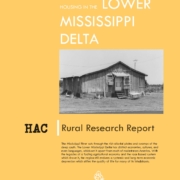
Housing in the Lower Mississippi Delta

The Mississippi River cuts through the rich alluvial plains and swamps of the deep south. The Lower Mississippi Delta has distinct economies, cultures, and even languages, which set it apart from much of mainstream America. With the legacies of a fading agricultural economy and the race based system which drove it, the region still endures a systemic and long-term economic depression which stifles the quality of life for many of its inhabitants.

Updated September 2013

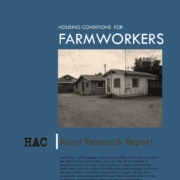
Housing Conditions for Rural Farmworkers

More than 1 million people work harvesting fields, farms, and orchards in the United States. Farmworkers, who are often ethnic minorities or immigrants, earn low wages and experience working conditions that hinder their ability to access affordable and quality housing. Farmworker housing conditions are further exacerbated by legal, cultural, and geographic circumstances that often keep this population outside of the mainstream and contribute to their economic marginalization.

Updated September 2013

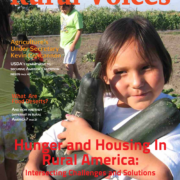
Hunger and Housing in Rural America: Intersecting Challenges and Solutions

The Summer 2013 special edition issue of Rural Voices focuses on Hunger and Housing in Rural America. With housing affordability an increasing challenge, and hunger a more pronounced issue, how are rural communities combatting these issues?

View from Washington

Supporting Rural America’s Housing and Nutrition Needs
by Under Secretary Kevin Concannon, USDA Food, Nutrition and Consumer Services
The USDA offers programs that support rural communities to address their housing and food security needs.

FEATURES

Rural Hunger and Housing: Challenges and Opportunities
by Lorette Picciano, Rural Coalition/Coalición Rural
Rural America faces challenges and opportunities in housing and food security.

Building Homes and Feeding the Hungry in Rural Pennsylvania
by Kate Thompson, Fayette County Community Action Agency
Community action programs can play an important role in addressing both housing and food security needs in rural America.

Farmworker Housing: Implications for Food Security and Food Safety
by Sara A. Quandt and Thomas A. Arcury, Wake Forest School of Medicine
Although they help feed America, farmworkers often face substandard conditions and food insecurity at their own tables.

Growing Food and Housing Security in South Dakota’s Native American Reservations
by Lauren Haas Finkelstein, Running Strong for American Indian Youth
South Dakota’s Native American community is fighting hunger and substandard housing to protect their children and future leaders.

Food Justice in the Rural Southeast
by John Zippert, Federation of Southern Cooperatives/Land Assistance Fund
Southern farmers are forming cooperatives and coalitions to secure food and housing justice while overcoming a history of discriminatory land and farm policies.

Developing Leadership to Address Health & Hunger
Interview with Starry Krueger, Rural Development Leadership Network
Rural Voices recently interviewed Starry Krueger of the Rural Development Leadership Network, about a new leadership development program in Mississippi.

MAPS & VIGNETTES

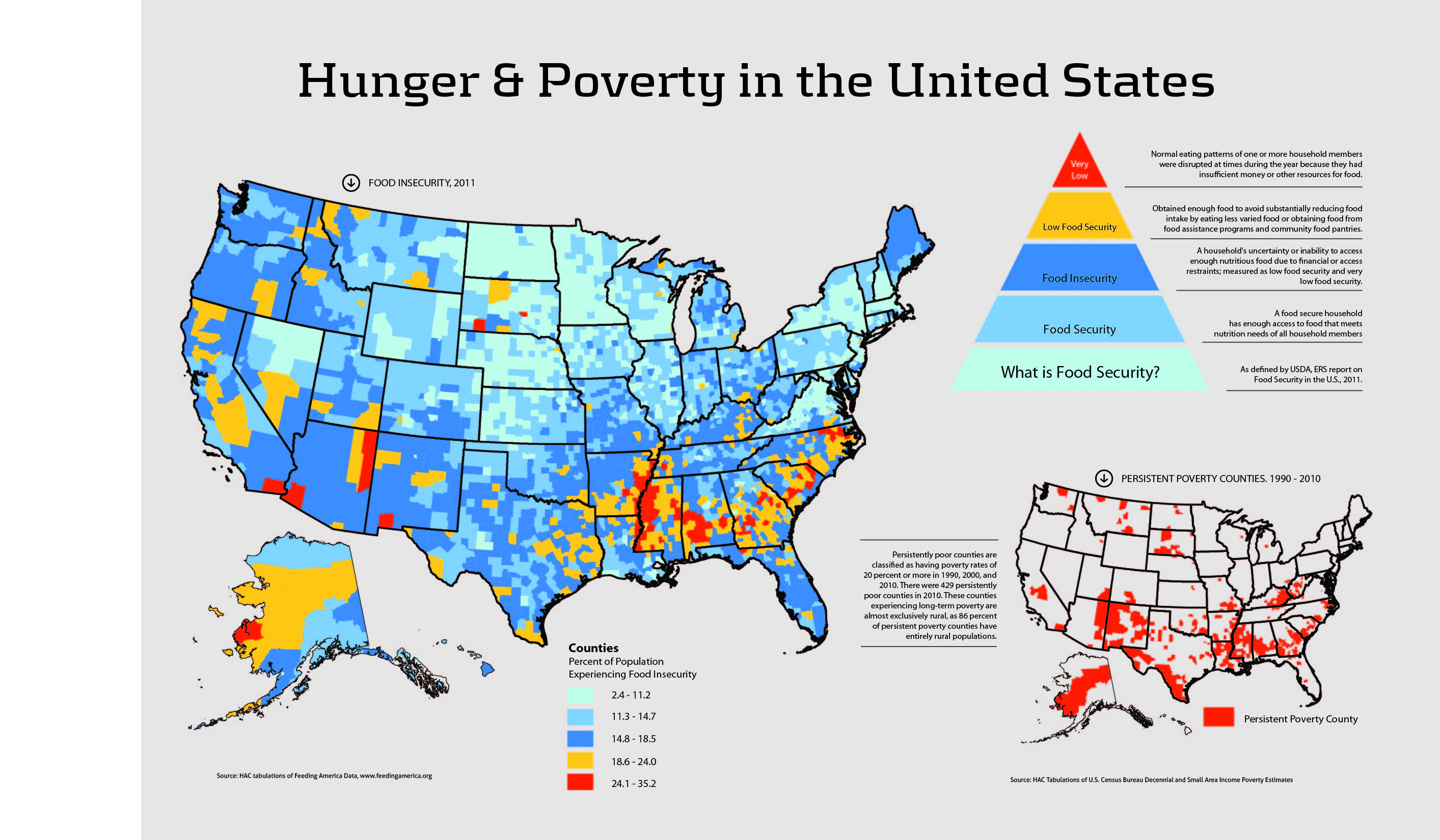
Hunger & Poverty in Rural America (jpg)
MAP – Many rural communities struggle to access enough nutritious food for their families.

Addressing Child Hunger in Rural New Mexico
Share Our Strength

What are Rural Food Deserts?
Map

Infographics

Add your Response

Rural Voices would like to hear what you have to say about one, or all, of these issues. Please feel free to comment on this story at the Rural Affordable Housing Group on LinkedIn, or on our Facebook page.

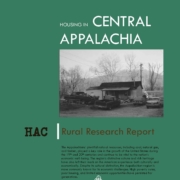
Housing in Central Appalachia


This Rural Research Report details the housing, economic and social characteristics of Central Appalachia.

The Appalachians’ plentiful natural resources, including coal, natural gas, and timber, played a key role in the growth of the United States during the 19th and 20th centuries and continue to be vital to the nation’s economic well-being. The region’s distinctive culture and rich heritage have also left their mark on the American experience both culturally and economically. Despite its cultural distinction, the Appalachian region is more commonly known for its economic challenges. High poverty rates, poor housing, and limited economic opportunities have persisted for generations.

Updated September 2013

The New and Improved Rural Data Portal Beta

New and Improved!

the HOUSING ASSISTANCE COUNCIL has updated its

RURAL DATA PORTAL Beta


HAC’s RURAL DATA PORTAL is a simple, easy to use, on-line resource that provides essential information on the social, economic, and housing characteristics of communities in the United States.

The RURAL DATA PORTAL provides over 350 data indictors for your community. Most of the information provided in the RURAL DATA PORTAL comes from HAC tabulations of the 2010 Census of Population and Housing, the American Community Survey (ACS) and Home Mortgage Disclosure Act Data.


We invite you to visit:
www.ruraldataportal.org
and start “Taking Stock” of your community!

View the recording of HAC’s webinar training on the RURAL DATA PORTAL.

Sign-up to become a Beta Tester for the RURAL DATA PORTAL and receive useful tips, guides, and insights, while helping provide valuable feedback.

HAC News: August 28, 2013

HAC News Formats. pdf

August 28, 2013
Vol. 42, No. 17

• USDA maps potentially ineligible places • NAHASDA expires September 30 unless renewed • Krysta Harden becomes USDA Deputy Secretary • Section 504 loan funds remain • Farm Labor Housing preservation eligible for Section 538 guaranteed loans • Continuum of Care registration in e-snaps is open • Section 502 packaging regs proposed • USDA addresses compliance with lead-based paint rules • RD staff receive guidance on prepayment incentives and more • FHFA seeks ways to reduce Fannie and Freddie’s multifamily presence • HUD reports “dramatic increases” in worst case housing needs from 2009 to 2011 • Census Bureau tool provides basic data for congressional districts • Website demonstrates and explains income inequality • IRS compiles documents needed throughout life cycle of 501(c)(3) nonprofit • HAC News e-mail subscribers get more and faster news


August 28, 2013
Vol. 42, No. 17

USDA MAPS POTENTIALLY INELIGIBLE PLACES. Application of 2010 Census data to area eligibility determinations for the rural housing programs was delayed until October 1 by the FY13 USDA appropriations bill (see HAC News, 3/21/13). Congress, which returns to work September 9, could extend the date again. In the meantime, USDA has posted “future eligible areas” maps and has sent notices to stakeholders; a reminder from the Section 502 guaranteed program office, containing links to additional information released earlier this year, is posted on HAC’s site.

NAHASDA EXPIRES SEPTEMBER 30 UNLESS RENEWED. S. 1352 has been introduced in the Senate to reauthorize and amend the Native American Housing Assistance and Self-Determination Act, which in 1996 combined numerous housing programs into the Indian Housing Block Grant. A webcast and testimony from a Senate Committee on Indian Affairs hearing in July are available online. No bill has been introduced in the House yet.

KRYSTA HARDEN BECOMES USDA DEPUTY SECRETARY. Confirmed for this position by the Senate on August 1, Harden has served in other roles at USDA since 2009.

SECTION 504 LOAN FUNDS REMAIN. USDA still has considerable funding available in every state for Section 504 home repair loans (see HAC News, 8/1/13). Funds not obligated by September 30 will be lost. To learn more or to apply, contact a local RD office. Please do not request information from HAC.

FARM LABOR HOUSING PRESERVATION ELIGIBLE FOR SECTION 538 GUARANTEED LOANS. The NOFA issued in May (see HAC News,5/22/13) referred to new construction and to Section 515 preservation. A notice to be published in the Federal Register on August 29 adds Section 514/516 Farm Labor Housing. Applications are considered on a rolling basis. Contact a USDA RD state office or Tammy Daniels, RD, 202-720-0021.

CONTINUUM OF CARE REGISTRATION IN E-SNAPS IS OPEN. CoCs must register by September 23 in order to apply later for HUD homeless program funds. Questions can be submitted online.

SECTION 502 PACKAGING REGS PROPOSED. Comments are due October 22 on USDA RD’s proposal to create a program, based on the pilot operating for the last few years, allowing nonprofit agency staff to prepare applications for Section 502 direct loans. Contact Brooke Baumann, USDA, 202-690-4250.

USDA ADDRESSES COMPLIANCE WITH LEAD-BASED PAINT RULES. Administrative Notice 4721 (AN) provides updated guidance for RD staff on compliance with HUD and EPA regulations on lead-based paint. Contact a USDA RD state office.

RD STAFF RECEIVE GUIDANCE ON PREPAYMENT INCENTIVES AND MORE. An Unnumbered Letter dated June 12, 2013 provides information on prepayment incentives and transfers. The letter says issues related to prepayment versus final payment, application of payments, and loans that have reached their natural maturity date will be addressed in a separate document. Contact a USDA RD state office.

FHFA SEEKS WAYS TO REDUCE FANNIE AND FREDDIE’S MULTIFAMILY PRESENCE. The Federal Housing Finance Agency requests comments by October 8 on ways to reduce Fannie Mae and Freddie Mac’s presence in the multifamily housing finance market and support the use of private capital. FHFA lists possibilities and asks questions.

HUD REPORTS “DRAMATIC INCREASES” IN WORST CASE HOUSING NEEDS FROM 2009 TO 2011. Households with worst case needs are renters with very low incomes, no housing assistance, and severe rent burdens and/or severely inadequate housing. In its latest biennial report on the subject, HUD says increases cut across demographic groups, household types, and regions and are due to substantial increases in rental housing demand and weakening incomes that increase competition for already-scarce affordable units. There are now approximately two very low-income households with worst case needs for every very low-income household with rental assistance.

CENSUS BUREAU TOOL PROVIDES BASIC DATA FOR CONGRESSIONAL DISTRICTS. My Congressional District uses American Community Survey data for quick access to demographics and housing numbers as well as others.

WEBSITE DEMONSTRATES AND EXPLAINS INCOME INEQUALITY. The Economic Policy Institute’s https://inequality.is uses graphics to show U.S. income differences currently and historically and explores solutions.

IRS COMPILES DOCUMENTS NEEDED THROUGHOUT LIFE CYCLE OF 501(C)(3) NONPROFIT. Explanations and links cover requirements from the IRS and other entities for tax-exempt nonprofits (called “public charities” by the IRS) from creation through annual filings through significant events including termination.

HAC NEWS E-MAIL SUBSCRIBERS GET MORE AND FASTER NEWS. Get the newsletter days before paper copies arrive, and updates when important news occurs between issues. Other e-mail options include publication notices, information about special initiatives, and USDA RD data.

Housing in the Border Colonias

Updated September 2013The border region between the United States and Mexico is dotted with thousands of rural communities characterized by extreme poverty and severely substandard living conditions. These communities, commonly called colonias, are overwhelmingly inhabited by individuals and families of Mexican heritage. Poor housing conditions are common in the colonias with an old, deteriorating housing stock, combined with newer units that do not meet building codes.

GET THE HAC NEWS!

Sign-up for HAC information products

SIGN UP HERE

Housing Assistance Council   |  1828 L Street. N.W., Suite 505, Washington, D.C. 20036
(202) 842-8600  |  (202) 347-3441  |  hac@ruralhome.org |

Board Portal

HAC is an equal opportunity provider, employer, and lender. | Civil Rights | Privacy