HAC Submits Comments on Proposed Duty to Serve Modifications

The Federal Housing Finance Agency (FHFA) requested comments on Fannie Mae and Freddie Mac’s (the Enterprises) proposed modifications to their Duty to Serve 2022 Underserved Markets Plans. If implemented robustly, Duty to Serve has the potential to improve the lives of people living in the most underserved communities. HAC’s comments highlighted two proposed modifications:

Key Takeaways

  1. USDA Section 515 preservation is critical to the Duty to Serve mission. Freddie Mac’s proposal to remove the Section 515 purchases from their Plan should be rejected.
  2. Equity investments in CDFIs are the single most impactful action that the FHFA could currently take to improve Duty to Serve outcomes. Fannie Mae’s proposal to add equity investments in Native CDFIs to their plan is a step in the direction of better serving Indian Country. For more suggestions on how the Enterprises could better serve Indian Country, see HAC’s comments from the July 2022 Native American Housing Listening Session.

Read HAC’s full comments.

HAC Duty to Serve Plan Modification Comments

HAC also signed on to a letter from the Underserved Mortgage Markets Coalition with a longer set of comments on the proposed modifications.

All the comments received by the FHFA can be viewed here.


HAC Submits Comments on the Greenhouse Gas Reduction Fund

HAC submitted comments in response to the October 21, 2022 Notice of Proposed Rulemaking on the Greenhouse Gas Reduction Fund (GHGRF) published by the Environmental Protection Agency (EPA). GHGRF is a new program created by the Inflation Reduction Act and will be administered by EPA. This first-of-its-kind program will provide $27 billion in competitive grants to mobilize financing and leverage private capital for clean energy and climate projects that reduce greenhouse gas emissions, with an emphasis on projects that benefit low-income and disadvantaged communities. A wide range of activities, including those related to housing, could qualify for GHGRF.

GHGRF funds are divided into three pools. There are $7 billion for competitive grants to enable low-income and disadvantaged communities to deploy or benefit from zero-emission technologies, including distributed technologies on residential rooftops. Nearly $12 billion will be used for competitive grants to eligible entities to provide financial and technical assistance to projects that reduce or avoid greenhouse gas emissions. Another $8 billion is for competitive grants to eligible entities to provide financial and technical assistance to projects that reduce or avoid greenhouse gas emissions in low-income and disadvantaged communities.

HAC’s comments focused on four main points.

Key Takeaways

  1. Leverage the extensive existing network of CDFIs to ensure rapid and widespread investment.
  2. Address the unique needs of rural and persistent poverty communities.
  3. Recognize the key role of housing assistance in meeting GHGRF’s goals.
  4. Include fairness principles in all elements of the GHGRF program design.

To learn more about HAC’s full recommendations, read our full comment letter.

GGRFCommentHACFinal


HAC News: November 22, 2022

TOP STORIES

Congressional lame duck session must address spending, possibly tax measures

Remaining business for the outgoing Congress includes providing funds to keep the federal government open beyond the December 16 expiration of the current continuing resolution. Legislators may also decide to extend expiring tax measures before the end of December, and could use that bill to expand the Low Income Housing Tax Credit.

HAC testifies on persistent poverty before House subcommittee

Lance George, HAC’s Director of Research and Information, was one of several witnesses at a November 15 hearing on Persistent Poverty in America: Addressing Chronic Disinvestment in Colonias, the Southern Black Belt, and the U.S. Territories before the House Subcommittee on Housing, Community Development and Insurance. His testimony described persistent poverty’s impacts in these largely rural places.

Senators mention housing needs during Farm Bill hearing

Farm Bill 2023: Rural Development and Energy Programs, a Senate Agriculture Committee hearing on November 15, featured testimony from USDA Under Secretary for Rural Development Xochitl Torres Small and others. Although rural housing is generally under the jurisdiction of the Senate Banking Committee rather than the Ag Committee, Senators Tina Smith (D-Minn.), who serves on both panels, and Sherrod Brown (D-Ohio), who chairs the Banking Committee, mentioned rural housing needs during the hearing.

RuralSTAT

In 2021, people 65 years and older made up more than 20% of the population outside metro areas for the first time in U.S. census history, up from 16% in 2010. Source: USDA Economic Research Service, Rural America at a Glance: 2022 Edition.

OPPORTUNITIES

Healthy Homes and Weatherization Cooperation Demonstration funds available

Nonprofits and state, local, or tribal governments that have active DOE Weatherization Assistance Program grants or HUD Healthy Homes Production grants are eligible for Healthy Homes and Weatherization Cooperation Demonstration grants. Awards may be used for housing interventions in lower-income households that are served by both programs to determine whether coordination between the programs is cost-effective and leads to better outcomes in improving the safety and quality of homes. The deadline is January 5. For more information, contact Brenda M. Reyes, HUD.

Project for Public Spaces Community Placemaking Grant applications due

The Project for Public Spaces Fall 2022 Community Placemaking Grant closes November 28. Two selected applicants will receive $75,000 grant awards for physical and programmatic improvements to outdoor public spaces and technical assistance for community placemaking. Nonprofits or local governments with projects in specific counties in 14 states are eligible.

REGULATIONS AND FEDERAL AGENCIES

Community investment programs comment deadline extended

Housing, community facilities, and broadband programs are included along with programs to strengthen community lenders, small businesses, and more, in a request for comment from the new Interagency Community Investment Committee, which hopes to improve the operations and delivery of federal community investment programs through stronger federal collaboration. The comment deadline is now December 19, rather than December 5 as originally announced. For more information, contact Viraj Parikh, Treasury Department, 202-923-5161.

USDA releases new but incomplete guidance on Violence Against Women Act

A new Guide for Administering and Complying with the Violence Against Women Reauthorization Act of 2013 (Attachment 6-K), issued September 30, provides explanations, examples, and forms to help USDA staff and multifamily property owners and managers comply with VAWA. It does not, however, include information about the VAWA Reauthorization Act of 2022, which took effect on October 1. Explanations of the expansions adopted in 2022 are available from the National Housing Law Project, which will also offer a webinar on November 29, The Violence Against Women Act 2022 Reauthorization: Overview and Updates.

FHA to accept private flood insurance

Effective on December 21, homeowners with mortgages insured by the Federal Housing Administration will have the option to purchase private flood insurance rather than federally backed insurance. Like USDA, VA, and Fannie Mae and Freddie Mac, FHA requires property owners (including owners of manufactured homes) who live in flood hazard areas to carry flood insurance. For more information, contact Elisa Saunders, HUD, 202-708-2121, or an FHA lender.

EVENTS

HAC offers USDA 502 packaging training in South Carolina

The three-day USDA Section 502 Direct Certified Loan Application Packaging Training, designed for those experienced in using Section 502, will provide participants with a strong understanding of 502 direct underwriting and packaging standards, which will ensure that submitted loan dockets are complete and accessible for processing. The course will be held in Charleston, SC, on December 6-8. Registration is $750. For more information, contact HAC staff, registration@ruralhome.org, 202-516-6271.

PUBLICATIONS AND MEDIA

90% of U.S. counties experienced climate disasters in last 10 years

Maps and data for the 50 states show county-by-county climate impacts in an Atlas of Disaster compiled by Rebuild by Design, APTIM, and iParametrics. Recognizing that disasters are experienced unequally based on underlying vulnerabilities such as race/ethnicity and income, the maps depict which areas have been hit the hardest by recent climate events, where recovery funds are focused, where people with high social vulnerabilities live, and which areas have the least energy reliability. The report’s recommendations focus on addressing inequities.

News reports describe homelessness for rural youth and elderly

Young and Homeless in Rural America, a New York Times article and podcast, describes the plight of homeless youth in rural Ohio, where the lack of support systems leaves schools and churches to fill gaps. The impact of rising housing costs on elders is covered in More Older Americans Become Homeless as Inflation Rises and Housing Costs Spike, a National Public Radio piece focusing on Montana, where a survey found 44% of older adults struggled with housing and only 10% considered housing affordable.

HAC

HAC seeks Portfolio Manager, Self-Help Housing; Research Associate; and Housing Specialist – Native American Communities

  • The Portfolio Manager, Self-Help Housing is responsible for the overall asset management, monitoring and reporting for an assigned portfolio of primarily self-help housing loans made to entities engaged in affordable housing activities in rural communities throughout the United States. This position is eligible for telecommuting.
  • The Research Associate conducts original research, manages data, and disseminates information that informs local strategies and national policies to improve conditions for rural Americans. This position is eligible for telecommuting.
  • The Housing Specialist – Native American Communities is responsible for providing direct technical assistance, coaching, and training to tribal communities, tribal housing departments, tribal housing authorities, and nonprofit organizations serving tribal communities. Travel is required. This position is eligible for telecommuting.

National Rural Housing Conference set for October 2023

Mark your calendars and save the date! HAC’s National Rural Housing Conference will be held October 24-27, 2023 in Washington, DC and online.

Need capital for your affordable housing project?

HAC’s loan fund provides low interest rate loans to support single- and multifamily affordable housing projects for low-income rural residents throughout the U.S. and territories. Capital is available for all types of affordable and mixed-income housing projects, including preservation, new development, farmworker, senior and veteran housing. HAC loan funds can be used for pre-development, site acquisition, site development, construction/rehabilitation and permanent financing. Contact HAC’s loan fund staff at hacloanfund@ruralhome.org, 202-842-8600.

Please note: HAC is not able to offer loans to individuals or families. Borrowers must be nonprofit or for-profit organizations or government entities (including tribes).

Want to reprint a HAC News item?

Please credit the HAC News and provide a link to HAC’s website. Thank you!
 

HAC’s Research Director Testifies on Persistent Poverty on Capitol Hill

On Tuesday, November 15, 2022 at 10:00 am EST the Subcommittee on Housing, Community Development and Insurance convened a hybrid hearing entitled, “Persistent Poverty in America: Addressing Chronic Disinvestment in Colonias, the Southern Black Belt, and the U.S. Territories.” Lance George, HAC’s Director of Research and Information, provided testimony during the hearing.

Watch the Hearing

For more information on Persistent Poverty, read The Persistence of Poverty in Rural America.

HAC News: November 10, 2022

TOP STORIES

USDA indicates Buy America requirements apply to multifamily housing, HUD requests comments on three waivers

Federal agencies including USDA and HUD have been developing plans to implement the Build America, Buy America (BABA) Act that was adopted as part of the Infrastructure Investment and Jobs Act of 2021. BABA mandates that iron, steel, manufactured products, and construction materials used in federally funded “public infrastructure” projects – whether funded through the 2021 Act or not – be American made. Owner-occupied housing seems likely to be exempted because in implementation guidance the Office of Management and Budget stated that a project “consisting solely of the purchase, construction, or improvement of a private home for personal use . . . would not constitute an infrastructure project.” In comments to both USDA and HUD, HAC has argued that no housing or Community Facilities projects should be considered “public infrastructure.”

  • USDA has posted a document stating that BABA will apply to all Community Facilities financing and to specific housing programs: Section 515 loans, Section 538 loan guarantees, the MPR rental preservation program, and Section 523/524 site loans and self-help housing land development loans. This information was provided in a waiver, approved by OMB on September 13, that exempts all USDA-funded projects with total costs under $250,000, as well as minor components of larger projects, from BABA requirements. USDA RD has not yet provided full implementation details for funding recipients or information about a process to request project-specific waivers on other grounds.
  • HUD requests comments by November 15 on two proposed waivers of BABA’s requirements. One would apply when the total cost of a project or the HUD funding provided is less than $250,000 and for minor components of larger projects. The second would apply in “exigent circumstances” such as recovery from natural disasters. Both proposed waivers refer to “infrastructure projects” and do not indicate whether HUD considers housing projects to be infrastructure. For more information, contact Joseph Carlile, HUD, 202-402-7082.
  • A third HUD proposal would phase in BABA requirements, making them active initially only for the purchase of iron or steel products in infrastructure projects funded by CDBG formula grants obligated by HUD on or after November 15. Comments are due November 17. For more information, contact Joseph Carlile, HUD, 202-402-7082.

November is National Native American Heritage Month

President Biden issued a proclamation and USDA Rural Development announced it is renewing its commitment to strengthen its partnerships with Tribes and Tribal communities.

November is National Veterans and Military Families Month

President Biden’s proclamation states, “During National Veterans and Military Families Month, we pay homage to the unrelenting bravery and dedication of all who wear the uniform and to the unwavering love and support of all who serve alongside them.”

RuralSTAT

Approximately 4 million veterans live in rural America, comprising 8.5% of the adult rural population. Nationwide, veterans make up roughly 7% of the adult population. Source: HAC tabulations of the U.S. Census Bureau’s 2016-2020 American Community Survey.

OPPORTUNITIES

VA offers funds to aid veterans experiencing homelessness

  • Supportive Services for Veteran Families Grants are available to community-based nonprofit agencies and consumer collaboratives to coordinate or provide services to very low-income veteran families who are homeless or at risk of becoming homeless. Apply by February 10, 2023. For more information, contact John Kuhn, VA.
  • Per Diem Only grants under the Homeless Providers Grant and Per Diem program will fund nonprofits, PHAs, tribes and tribal housing entities, and state and local governments to provide transitional supportive housing beds or service centers. Apply by February 6, 2023. For more information, contact Chelsea Watson, VA.
  • Transition in Place grants, also through the Homeless Providers Grant and Per Diem program, support provision of permanent housing by nonprofits, PHAs, tribes and tribal housing entities, and state and local governments. Apply by January 30, 2023. For more information, contact Chelsea Watson, VA.

HUD multifamily housing eligible for COVID-19 Supplemental Payment funding

HUD has announced the final opportunity for owners of properties participating in HUD’s Section 202 elderly housing, Section 811 housing for persons with disabilities, and Section 8 project-based rental assistance programs to request reimbursements of expenses associated with protecting residents and staff from COVID-19 between March 27, 2020, and January 31, 2023. Apply by February 21, 2023. Contacts for more information vary by program and are explained in HUD’s notice.

HOPE VI Main Street Program open to communities under 50,000

The HOPE VI program makes grants to local governments for affordable housing connected to Main Street revitalization that is already in progress. To be eligible, a community must have a population below 50,000 and 100 or fewer physical public housing units within its jurisdiction. The deadline is January 31, 2023. For more information, contact Susan A. Wilson, HUD, 202-402-4500.

Some USDA RD programs will have community planning setasides

USDA Rural Development’s Strategic Economic and Community Development program is intended for projects that support multi-jurisdictional and multi-sectoral strategic community investment plans. Funds will be set aside for SECD under upcoming funding notices for Community Facility Loans, Grants, and Guaranteed Loans; Water and Waste Disposal Loans, Grants, and Guaranteed Loans; Rural Business Development Grants; and Community Connect Grants. Applicants may request the setaside funds when applying under one of these programs. For more information, contact an RD State Office.

EVENTS

Congressional hearing to examine persistent poverty

On November 15, Persistent Poverty in America: Addressing Chronic Disinvestment in Colonias, the U.S. Territories, and the Southern Blackbelt will be the focus of a hearing before the House Financial Services Committee’s housing subcommittee. HAC’s Director of Research and Information, Lance George, will be one of the witnesses.

HAC offers USDA 502 packaging training in South Carolina

The three-day USDA Section 502 Direct Certified Loan Application Packaging Training, designed for those experienced in using Section 502, will provide participants with a strong understanding of 502 direct underwriting and packaging standards. The course will be held in Charleston, SC, on December 6-8. Registration is $750. For more information, contact HAC staff, registration@ruralhome.org, 202-516-6271.

REGULATIONS AND FEDERAL AGENCIES

Comments sought on Duty to Serve plans

Public comments are due December 5 on Fannie Mae’s and Freddie Mac’s proposed modifications to their plans for serving underserved markets. Both suggest increasing some goals and decreasing others. Freddie Mac proposes to eliminate its objective of purchasing loans to preserve Section 515 properties, stating that the need is being met by Section 538 guaranteed loans.

Rural Partners Network expands

Communities in Alaska, Nevada, North Carolina, Puerto Rico, West Virginia, and Wisconsin have been added to the RPN, described on its website as “an all-of-government program that helps rural communities find resources and funding to create jobs, build infrastructure, and support long-term economic stability on their own terms.”

USDA RD continues using 2010 census data

In February, RD anticipated that by October 1 it would be able to use updated figures for some of its income calculations, but the necessary data is not yet available from the Census Bureau. Therefore, the agency will continue to rely on 2010 census and American Community Survey data for its population, poverty, income, and state nonmetro median household income calculations. For more information, contact an RD State Office.

PUBLICATIONS AND MEDIA

Veteran homelessness declines

Preliminary results of the 2022 Point-in-Time Count show an 11% decline in veteran homelessness since early 2020, the last time a full count was conducted. This is the biggest drop in veteran homelessness in more than five years and a 55.3% reduction in veterans experiencing homelessness since 2010. A full report on the 2022 PIT count will be released later this year.

Recovery Ecosystem Index maps county resources

East Tennessee State University’s Center for Rural Health Research, the National Opinion Research Center at the University of Chicago, and the Fletcher Group created the Recovery Ecosystem Index and associated geospatial map to demonstrate each county’s ability to support recovery from substance use disorders (SUD). The index scores counties on SUD treatment, continuum of SUD support, and infrastructure and social factors. Indicators include access to recovery residences and severe housing cost burden.

Eviction filings increasing with limited federal rental assistance available

NBC News reports on the many Americans who are unable to keep pace with rising rents and decades-high inflation. Rural Clay County in Minnesota, for example, had three times as many eviction filings in September as before the pandemic and about half of the county’s 60,000 residents spend more than 30% of their income on rent.

Chronic waiting for broadband connection reduces digital dignity for rural residents

A study published in the Journal of Computer-Mediated Communication describes the impact of inadequate internet connections on rural residents’ lives, revealing “the unequal power dynamics of digital inequality and waiting.”

HAC

HAC seeks Research Associate and Housing Specialist – Native American Communities

  • The Research Associate conducts original research, manages data, and disseminates information that informs local strategies and national policies to improve conditions for rural Americans. This position is eligible for telecommuting.
  • The Housing Specialist – Native American Communities is responsible for providing direct technical assistance, coaching, and training to tribal communities, tribal housing departments, tribal housing authorities, and nonprofit organizations serving tribal communities. Travel is required. This position is eligible for telecommuting.

National Rural Housing Conference set for October 2023

Mark your calendars and save the date! HAC’s National Rural Housing Conference will be held October 24-27, 2023 in Washington, DC and online.

Need capital for your affordable housing project?

HAC’s loan fund provides low interest rate loans to support single- and multifamily affordable housing projects for low-income rural residents throughout the U.S. and territories. Capital is available for all types of affordable and mixed-income housing projects, including preservation, new development, farmworker, senior and veteran housing. HAC loan funds can be used for pre-development, site acquisition, site development, construction/rehabilitation and permanent financing. Contact HAC’s loan fund staff at hacloanfund@ruralhome.org, 202-842-8600.

Please note: HAC is not able to offer loans to individuals or families. Borrowers must be nonprofit or for-profit organizations or government entities (including tribes).

Want to reprint a HAC News item?

Please credit the HAC News and provide a link to HAC’s website. Thank you!

 

HAC News: October 27, 2022

TOP STORIES

New HUD effort addresses homelessness in disaster areas

HUD’s new Rapid Unsheltered Survivor Housing (RUSH) program will provide funding to address homelessness in places hit by disasters. To fill gaps in other programs, RUSH funding will help people experiencing homelessness and those at risk of homelessness. Eligible activities include emergency shelter, rapid re-housing, and outreach assistance, including assistance to meet urgent needs. On October 24, HUD announced it will distribute the first of two 2022 RUSH allocations to the state of Florida and seven localities impacted by Hurricane Ian.

Five barriers to affordable rural housing in the Black Belt

The Montgomery Advertiser reports on a discussion of affordable housing held by experts, including HAC President and CEO David Lipsetz, in rural Alabama. They identified several hurdles, including heirs’ property complications, a lack of infrastructure, and a shrinking construction workforce.

RuralSTAT

In the states of Arizona, California, New Mexico, and Texas, adult residents of counties on the U.S.-Mexico border were more likely than their non-border counterparts to report delaying healthcare because of cost (16.0% versus 14.0%), and disparities were particularly pronounced among those living in counties outside metropolitan areas: 24.1% in border counties compared to 16.1% in non-border counties. Source: National Rural Health Association.

OPPORTUNITIES

Supportive Services for Veteran Families grants offered

Nonprofits and consumer coops can apply by February 10 for SSVF grants to coordinate or provide supportive services to very low-income veteran families who are homeless or at risk of becoming homeless. For more information, contact John Kuhn, VA.

Funds available to help manufactured housing residents with water and wastewater

USDA’s Water and Waste Disposal Technical Assistance and Training Grants program will fund nonprofits to provide technical assistance and training to help improve water treatment and waste disposal systems for rural people living in manufactured homes. Applications are due November 13. For more information, contact Lorrie A. Davis, USDA, 202-568-9046.

Microgrants support marginalized LGBTQ+ older people

SAGE, which provides “advocacy and services for LGBTQ+ elders,” is offering support for ongoing projects involving services and programming for marginalized LGBTQ+ older people (ages 50 and older), including those in rural places. Community groups, coalitions, or organizations with annual operating budgets of $50,000 or less are eligible. Awardees will receive unrestricted funds of up to $5,000, training and resources, and networking opportunities. Applications are due November 18. For more information, email equityinnovation@sageusa.org.

Pro bono staff capacity offered for reducing homelessness

The Harvard Kennedy School Government Performance Lab’s Homelessness Prevention and Rehousing Accelerator offers free hands-on technical assistance for initiatives aimed at reducing homelessness. The GPL will provide dedicated staff capacity for at least 12 months, as well as training and information. State or local jurisdictions, or nonprofits that are Continuum of Care collaborative applicants with a government partner, are eligible. An informational webinar will be held November 2 and applications are due November 18. For more information, email govlab@hks.harvard.edu.

REGULATIONS AND FEDERAL AGENCIES

FY23 Difficult Development Areas and Qualified Census Tracts listed

HUD’s annual lists of designations for use in the Low Income Housing Tax Credit program have been posted online. For more information, contact Michael K. Hollar, HUD, 202-402-5878.

HAC makes recommendations for H-2A farmworker pilot

The USDA Farm Service Agency’s Farm Labor Stabilization and Protection Pilot Grant Program should incentivize accessible, affordable, and decent housing for farmworkers, HAC stated in recent comments. Responding to a request for input on the initiative, HAC also supported regular wellness checks, a survey to collect data on farmworker housing conditions, use of appropriate language and communications methods, and training in workers’ rights.

PUBLICATIONS AND MEDIA

New programs incentivize home energy upgrades

Home Energy Upgrade Incentives: Programs in the Inflation Reduction Act and Other Recent Federal Laws, a policy brief from the American Council for an Energy-Efficient Economy, summarizes programs that will or could provide significant resources for energy efficiency retrofits for existing single-family and multifamily homes.

HUD offers resilience resources for communities and PHAs

  • HUD’s Community Resilience Toolkit is designed to help communities enhance their resilience to climate-related natural hazards and risks. It offers resources to help identify climate-related natural hazard risks; enhance the resilience of housing, infrastructure, and residents to those hazards; and implement resilience actions using HUD funds and other innovative financing options.
  • An updated Public Housing Agency Disaster Readiness, Response, and Recovery Guidebook recommends actions and funding sources for PHAs.

Flaws identified in FEMA housing inspections process

Disaster Assistance: Actions Needed to Strengthen FEMA’s Housing Inspections Process reports on a GAO review of the housing inspections FEMA conducted for some applicants to its Individuals and Households Program after major disasters in 2018-2021. One change reduced award amounts, while allowing applicants to assess their own damages (now discontinued) resulted in underestimates of damages. GAO made several recommendations, including that FEMA assess the accuracy of its damage level approach and take steps to ensure that its policies on the use of self-assessments are supported by evidence.

Housing program changes needed for people with disabilities

“Disabled people are housing instable and housing insecure, and federal programs are not meeting their needs,” states a fact sheet from the Urban Institute and the Kelsey. People with Disabilities Living in the US Face Urgent Barriers to Housing: Federal Programs Are Not Meeting the Housing Needs of Disabled People reports that 84% of disabled people with low incomes in the U.S., nearly 18 million people, were eligible for housing assistance in 2021 but did not receive it. The authors include several recommendations to reduce barriers to affordable housing for people with disabilities.

Research considers digitalization and housing

Harvard’s Joint Center for Housing Studies released Digitalization and Housing: Framing Paper for “Bringing Digitalization Home: How Can Technology Address Housing Challenges?” This is the first in a series of papers exploring how digitalization – “the strategic use of technologies that collect, create, process, organize, analyze, use, and monetize data” – can be used to address housing affordability, segregation, discrimination, displacement, resiliency, and other current housing-related challenges.

HAC

HAC seeks Research Associate and Housing Specialist – Native American Communities

  • The Research Associate conducts original research, manages data, and disseminates information that informs local strategies and national policies to improve conditions for rural Americans. This position is eligible for telecommuting.
  • The Housing Specialist – Native American Communities is responsible for providing direct technical assistance, coaching, and training to tribal communities, tribal housing departments, tribal housing authorities, and nonprofit organizations serving tribal communities. Travel is required. This position is eligible for telecommuting.

National Rural Housing Conference set for October 2023

Mark your calendars and save the date! HAC’s National Rural Housing Conference will be held October 24-27, 2023 in Washington, DC and online.

Need capital for your affordable housing project?

HAC’s loan fund provides low interest rate loans to support single- and multifamily affordable housing projects for low-income rural residents throughout the U.S. and territories. Capital is available for all types of affordable and mixed-income housing projects, including preservation, new development, farmworker, senior and veteran housing. HAC loan funds can be used for pre-development, site acquisition, site development, construction/rehabilitation and permanent financing. Contact HAC’s loan fund staff at hacloanfund@ruralhome.org, 202-842-8600.

Please note: HAC is not able to offer loans to individuals or families. Borrowers must be nonprofit or for-profit organizations or government entities (including tribes).

Want to reprint a HAC News item?

Please credit the HAC News and provide a link to HAC’s website. Thank you!

 

HAC Advises Housing Protections and Education for H-2A Farmworkers

HAC responded on October 24, 2022, to a request for information from the U.S. Department of Agriculture’s Farm Service Agency (FSA), which is developing a Farm Labor Stabilization and Protection Pilot Program.  FSA says this “grant program will use up to $65 million in American Rescue Plan Act funding to provide support for agricultural employers in implementing robust labor standards to promote a safe, healthy work environment for both U.S. workers and workers hired from Northern Central American countries under the seasonal H-2A visa program.”

HAC’s comments noted that currently, the H-2A program requires employers to provide free housing to visa holders that complies with a set of guidelines. While the law requires these living quarters to be inspected before occupancy, Department of Labor (DOL) data shows that neither federal nor state governments have allocated sufficient resources to conduct these inspections. In 38 states, there is no regulation of farmworker housing or dedicated agency to perform the required inspections. States that do have housing inspection systems in place are often under resourced.

Key takeaways:

  • Affordable, Decent Housing

    The pilot program should incentivize accessible, affordable, and decent housing for farmworkers

  • Wellness Checks

    This pilot program should fund farmworker organizations and partner organizations who are on the ground and familiar with farmworker communities to perform regular wellness checks

  • Survey of Conditions

    The pilot program should fund a detailed, comprehensive survey on farmworker housing conditions

  • Appropriate Communication

    Services and information should be provided in appropriate languages and using appropriate communication techniques

  • Training in Rights

    Trainings and informational resources should be made available that cover workers’ rights (including housing) and how to report exploitative practices

HAC News: October 13, 2022

TOP STORIES

National Rural Housing Conference set for October 2023

Mark your calendars and save the date! HAC’s National Rural Housing Conference will be held October 24-27, 2023 in Washington, DC and online. The conference brings together stakeholders in the field of rural affordable housing from local nonprofits, federal agencies, Congress, state and local governments, and other industry leaders for two-and-a-half days of training, discussion, and networking. We are excited to see you all in DC in 2023!

USDA requests comments on new program for farmer discrimination, advocates sue USDA

  • USDA asks for suggestions on implementing its new program that will provide financial assistance to producers who have experienced discrimination in USDA’s farm lending programs. Created in Section 22007 of the Inflation Reduction Act, this effort replaced Section 1005 of the American Rescue Plan Act, which would have aided “socially disadvantaged” farmers and ranchers but was paused when white producers sued, claiming discrimination. Comments are due November 14. USDA will also hold virtual listening sessions for public input on October 20, October 26, and November 1. For more information, contact Liz Archuleta, USDA, 202-720-7095.
  • On October 12, attorneys announced Black and Native American farmers have filed a lawsuit against USDA claiming it breached a contract by changing the program after sending letters to farmers that would have implemented the original ARPA version.

Capacity building needed for rural areas to use infrastructure and resiliency resources

Two papers from the Center for American Progress report that rural places are often the most susceptible to climate disasters, but the least able to compete for funding against larger communities. Those with high levels of “social vulnerability” because of high poverty rates, older or BIPOC populations, or isolation, are at heightened risk and also more likely to be located in disaster-prone areas. Recommendations include providing more noncompetitive project funding, improving program alignment, providing technical assistance and capacity building, increasing rural competitiveness, and more.

HAC webinar to cover packaging Section 504 rehab applications

USDA Rural Development Section 504 eForm Packaging and Processing, to be offered on October 19, will provide a guided discussion on preparing Section 504 eForm loan packages. Presenters will provide live demonstrations of the eForms process with step-by-step instructions, best practices, and insight on producing complete and successful USDA 504 packages. For more information, contact HAC staff, 202-516-6271.

October is National Domestic Violence Awareness and Prevention Month

As President Biden’s proclamation notes, the Violence Against Women Reauthorization Act of 2022 became law earlier this year. It took effect October 1.

RuralSTAT

From 2019 to 2020, leisure and hospitality employment fell by an average of 12% across all U.S. counties, but increased in 332 counties, faring far better in rural places than in cities. Source: Northeast Regional Center for Rural Development.

OPPORTUNITIES

Choice Neighborhoods Implementation funds offered

Choice Neighborhoods Implementation Grants are available for local governments, PHAs, and tribal entities to implement comprehensive neighborhood revitalization plans. The application deadline is January 11. For more information, email ChoiceNeighborhoods@hud.gov.

Indian Housing Block Grant deadline extended

Tribes and tribally designated housing entities now can apply for HUD’s Indian Housing Block Grant competitive program by January 24, 2023, rather than the originally announced November 17, 2022 deadline. For more information, email IHBGCompetitiveProgram@hud.gov.

REGULATIONS AND FEDERAL AGENCIES

LIHTC income test flexibility implemented

A final rule on the average income test for Low Income Housing Tax Credit properties implements a 2018 statutory change. The revision gives property owners the option to qualify for tax credits based on the average income served by all units in a building. It generally applies to existing or new LIHTC properties for taxable years that begin after December 31, 2022. IRS will accept comments, particularly on the rule’s recordkeeping and reporting provisions, through December 12. For more information, contact Dillon Taylor, IRS, 202-317-4137.

IRS extends changes to LIHTC deadlines

IRS Notice 2022-52 announces several deadline extensions for LIHTC properties, previously implemented because of the pandemic and now continued because of ongoing economic and supply-chain issues. Details about which deadlines are extended – and which are not – are explained in a Novogradac post.

Community investment program improvements requested

The Interagency Community Investment Committee, composed of representatives from USDA, HUD, and several other federal agencies, focuses on the operations and execution of federal programs that facilitate the flow of capital and the provision of financial resources into historically underserved communities, including communities of color, rural communities, and Tribal nations. The committee invites comments by December 5 on how it can promote economic conditions and systems that reduce racial disparities and produce stronger economic outcomes for all.

FHA seeks suggestions on reducing barriers for small mortgages

The Federal Housing Administration requests public input regarding barriers to the origination of small mortgages (under $70,000) in the FHA program. FHA will consider developing policies and programs to support and expand affordable homeownership opportunities in underserved markets with lower housing prices. Comments are due December 5. For more information, contact Kevin Stevens, HUD, 202-402-4317.

H2-A farmworker program changes finalized

Final regulatory changes for the H-2A visa program, which allows foreign farmworkers to work temporarily in the U.S., have been issued by the Department of Labor. The final rule differs in some ways, including in some of its housing provisions, from the version proposed in July 2019. It does not permit a 24-month housing certification period or employer self-certification of housing, which were suggested in the proposed rule. For more information, contact Brian Pasternak, DOL, 202-693-8200.

PUBLICATIONS AND MEDIA

Nonprofit community developers’ financial health analyzed

The Financial Health of Community-Based Development Organizations: Using Internal Revenue Service Tax Data to Assess Sector Health finds that the sector has grown over time, but there are signs of financial stress and small CBDOs are in a more precarious financial position than large ones. Fact sheets are available for each state and some metro areas. The study was conducted for the National Alliance of Community Economic Development Associations by the Urban Institute.

Study considers inequities in rural broadband

The Brookings Institution Center for Technology Innovation in collaboration with IPSOS Public Affairs surveyed adults living in the rural South regarding their internet access and use. Why the Federal Government Needs to Step Up Efforts to Close the Rural Broadband Divide, the first report in a series of four, discusses how historically disadvantaged communities, particularly Black and Hispanic residents, face many systemic inequalities, including access to broadband. Brookings suggests that the Infrastructure Investment and Jobs Act funding must provide broadband access to the least connected communities first.

Virginia program uses utilities to extend rural broadband access

Virginia Taps Electric Companies to Help Expand Rural Broadband Access describes the state’s efforts to expand broadband access by leveraging large investor-owned utilities’ work to upgrade electricity transmission in hard-to-reach rural areas. Virginia allows investor-owned utilities to lease fiber capacity to local internet providers, which can then focus their resources on the “last mile” connections with customers. The issue brief, published by the Pew Charitable Trusts, notes that Hawaii, Texas, and West Virginia have authorized similar efforts.

Pandemic innovations positively impact older adults

The Harvard Joint Center for Housing Studies and the Hastings Center coauthored a report, Advancing Housing and Health Equity for Older Adults, about how the policies and practices around housing and other supports instituted during the COVID-19 pandemic could greatly benefit older adults over the long term.

Emergency Rental Assistance demographics analyzed

Equity in the Distribution of the Emergency Rental Assistance Program, a report from the U.S. General Services Administration’s Office of Evaluation Sciences, compares the demographic profile of renters eligible for ERA with the demographic profile of renters who received ERA support. OES found the program served higher proportions of women, households with extremely low incomes, and Black, American Indian/Alaska Native, Pacific Islander, or Hawaiian Native renters than were represented in the eligible population. Latinx and white renters with extremely low incomes were also overrepresented. Asians, as well as Latinx and white renters with higher incomes, were underrepresented.

HAC

HAC seeks Research Associate and Housing Specialist – Native American Communities

  • The Research Associate conducts original research, manages data, and disseminates information that informs local strategies and national policies to improve conditions for rural Americans. This position is eligible for telecommuting.
  • The Housing Specialist – Native American Communities is responsible for providing direct technical assistance, coaching, and training to tribal communities, tribal housing departments, tribal housing authorities, and nonprofit organizations serving tribal communities. Travel is required. This position is eligible for telecommuting.

Need capital for your affordable housing project?

HAC’s loan fund provides low interest rate loans to support single- and multifamily affordable housing projects for low-income rural residents throughout the U.S. and territories. Capital is available for all types of affordable and mixed-income housing projects, including preservation, new development, farmworker, senior and veteran housing. HAC loan funds can be used for pre-development, site acquisition, site development, construction/rehabilitation and permanent financing. Contact HAC’s loan fund staff at hacloanfund@ruralhome.org, 202-842-8600.

Please note: HAC is not able to offer loans to individuals or families. Borrowers must be nonprofit or for-profit organizations or government entities (including tribes).

Want to reprint a HAC News item?

Please credit the HAC News and provide a link to HAC’s website. Thank you!
 

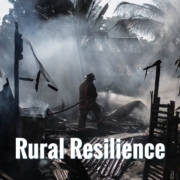
Rural Communities Need More Disaster Relief

The Center for American Progress has released two reports revealing how federal disaster relief does not reach the rural communities most vulnerable to climate risk and least able to prepare for disasters.

Some initial solutions include:

  • Invest up to 20 percent of grants in building lasting capacity, such as hiring local and long-term staff.
  • Target more noncompetitive project funding to low-capacity rural communities using metrics that measure physical and social vulnerability and capacity.
  • Increase rural competitiveness for national grants by making small and appropriately designed projects eligible.
  • Align grant eligibility criteria and application requirements among federal agencies and programs.
  • Provide agency assistance to help rural communities navigate the complex process of securing federal grants.

The Daily Yonder‘s Tim Marema interviews Susan L. Cutter, a professor and director of the USC’s Hazards Vulnerability & Resilience Institute studying the science of community resilience and vulnerability, about the unique challenges rural areas face when experiencing a disaster.

HAC News: September 29, 2022

TOP STORIES

Federal funding expected to continue

The Senate and House are likely to pass H.R. 6833, a continuing resolution to keep the federal government open when fiscal year 2023 begins on October 1, and President Biden is expected to sign the measure. It will keep most federal housing programs at FY22 levels, with an additional $2 billion for the Community Development Block Grant Disaster Recovery program. The CR ends on December 16, so further congressional action on FY23 appropriations will be required by then.

Disaster guides online for survivors of Hurricanes Fiona and Ian

The Housing Assistance Council’s thoughts are with our rural partners and communities affected by the recent hurricanes in the South and the Caribbean. HAC offers online resource guides with information for individuals and families in areas hit by Hurricane Ian and Hurricane Fiona. Other disaster resources from HAC include Rural Resilience in the Face of Disaster and a Disaster Response for Rural Communities Guide.

National Rural Housing Conference set for October 2023

Mark your calendars and save the date! HAC’s National Rural Housing Conference will be held October 24-27, 2023 in Washington, DC and online. The conference brings together stakeholders in the field of rural affordable housing from local nonprofits, federal agencies, Congress, state and local governments, and other industry leaders for two-and-a-half days of training, discussion, and networking. We are excited to see you all in DC in 2023!

Rural housing preservation bill introduced in Senate

The Strategy and Investment in Rural Housing Preservation Act, S. 4872, was introduced on September 15 by Senators Jeanne Shaheen (D-NH) and Tina Smith (D-MN). Like other measures introduced in the past several years, this bill would authorize USDA’s Multifamily Preservation and Revitalization (MPR) program, establish a preference for restructuring a property’s USDA mortgage loan when possible, and decouple Section 521 Rental Assistance so that tenants can continue to receive aid when mortgage restructuring is not possible. It would expand eligibility for Section 542 vouchers and would require USDA to improve its technology and submit a plan for preserving its rental portfolio. A companion bill, H.R. 1728, was introduced in the House by Rep. Cindy Axne (D-IA) in March 2021.

Senate subcommittee hears ideas for improving USDA housing programs

Witnesses described the successes and shortcomings of the rural housing programs at a September 20 hearing titled Examining the U.S. Department of Agriculture’s Rural Housing Service: Stakeholder Perspectives, convened by the Senate Banking Committee’s Subcommittee on Housing, Transportation, and Community Development. Recommendations covered single-family and multifamily programs, as well as staffing and technology issues. HAC, the National Housing Law Project, and the National Rural Housing Coalition submitted written testimony.

RuralSTAT

In rural areas, recipients of disaster recovery aid from FEMA’s Hazard Mitigation Grant Program received less assistance (about 5.7% less on average) than those in urban areas. Source: Hazard Reduction and Recovery Center at Texas A&M University.

OPPORTUNITIES

HUD offers Section 202 elderly housing funds

The Section 202 program makes capital advances to sponsors to finance construction, reconstruction, moderate or substantial rehabilitation, or acquisition of a structure with or without rehabilitation, to provide housing to elderly persons who can live independently with some services. This year HUD is also supporting the development of intergenerational housing for elderly caregivers raising children. Applications are due January 25. For more information, contact HUD staff.

REGULATIONS AND FEDERAL AGENCIES

New colonia determination proposed, based on HAC research

The Federal Housing Finance Agency proposes to change the way it determines what geographic areas are considered colonias for purposes of Fannie Mae’s and Freddie Mac’s Duty to Serve activities. Based on research conducted by HAC, FHFA suggests it would identify colonias by census tracts, even when they do not meet a definition of “rural.” Comments will be due 60 days after the proposal is published in the Federal Register.

HOME regulation finalized

HUD has finalized without change an interim final rule issued December 2, 2016. The rule revised how HUD determines compliance with commitment requirements and made revisions to prevent loss of allocated HOME funds when program income is expended. For more information, contact Virginia Sardone, HUD, 202-708-2684.

HUD requests input on new green retrofit program

HUD is designing a new Green and Resilient Retrofit Program that will provide loans and grants to support energy and water efficiency retrofits and climate resilience of HUD-assisted multifamily properties. The department seeks public input by October 27 to inform prioritization of work, treatment of cost-benefit analyses, and key design elements. For more information, contact Lauren Ross, HUD, 202-402-5423.

Meetings will cover aligning HUD’s manufactured housing code with energy conservation standards

HUD’s Manufactured Housing Consensus Committee will hold meetings on October 18-20 and November 15-17 to discuss rulemaking to align the HUD Code for manufactured housing with the Department of Energy’s Energy Conservation Standards for Manufactured Housing, which have a required compliance date of May 31, 2023. The meetings are open to the public. For more information, contact Teresa B. Payne, HUD, 202-708-6423. To sign up to make comments at a meeting or to submit written comments, contact Home Innovation Research Labs, 1-888-602-4663.

USDA again extends authorization for third-party appraisals

In connection with Section 502 direct loans, USDA will continue to accept appraisals obtained by self-help grantees, certified loan application packagers, agency-approved intermediaries, and leveraged or other participating lenders. The temporary authorization was due to expire September 30, 2022, but now will remain effective through September 30, 2023. The appraisal fee is an out-of-pocket expense to the applicant but may be reimbursed with loan funds at loan closing. For more information, contact a USDA RD office.

Input requested on farm labor shortages and protections

USDA’s Farm Service Agency held listening sessions September 28 and 29 on the recently announced Farm Labor Stabilization and Protection Pilot Grant Program, which aims to address labor shortages in agriculture, reduce “irregular” migration, and improve labor protections for farmworkers. FSA will also consider written comments received by October 24. For more information, contact Linda Cronin, FSA, 202-692-4928.

EVENTS

HAC webinar to cover permanent supportive housing

Permanent Supportive Housing in Rural Areas, scheduled for October 5, will provide information on challenges and opportunities. Permanent supportive housing offers long-term affordable housing with access to supportive services for vulnerable populations. The session will cover supportive housing models and strategies as well as financial resources for acquisition, rehab, and new construction.

Nonprofit finances, homelessness funding, and disaster resilience information posted

Recordings and materials from three recent HAC webinars are available online.

PUBLICATIONS AND MEDIA

Data, reports, and more available at Black Wealth Data Center

The Black Wealth Data Center site says it “intends to fuel the creation of a national standard for racial wealth equity and drive nonpartisan, evidence-based decisions with the comprehensive data necessary to unlock innovation.” The center was conceived and funded by Bloomberg Philanthropies’ Greenwood Initiative and is hosted by Prosperity Now.

Report describes ways to prevent evictions

Home for Good: Strategies to Prevent Eviction and Promote Housing Stability, a recent paper from Enterprise Community Partners, describes holistic strategies for preventing evictions and promoting housing stability. Guidance includes ensuring housing stability and intervening early to help those most vulnerable to evictions.

Inflation Reduction Act’s housing energy provisions summarized

What Does the Inflation Reduction Act Mean for Housing?, a post from the Bipartisan Policy Center, presents a detailed summary of the housing-related efforts that will be supported by the recent Inflation Reduction Act. They focus on energy efficiency and climate resilience.

U.S. territories and mainland rural areas may be losing population for the same reasons

A Washington Post article entitled People are Fleeing Puerto Rico, Guam and Every Other U.S. Territory. What Gives? explores the universal population loss in the U.S. territories over the last decade. The article finds the territories are in a situation very similar to that of many rural areas on the mainland. Policy changes and the rise of China as a dominant manufacturer have meant declining job opportunities. People leave – particularly the best and brightest – and that creates a cycle where there are fewer resources and fewer opportunities for those who remain, so some of them leave, and so on. Climate change and other factors apply also.

Increased costs impact LIHTC developments

Filling Funding Gaps: How State Agencies are Moving to Meet a Growing Threat to Affordable Housing, a report for the National Council of State Housing Agencies, says unexpected cost increases have affected almost all deals that were awarded Low-Income Housing Tax Credits from 2019 to the present. Interviewees reported cost increases of around 30%, with some even larger. Many sought other funding to close the resulting gaps, reducing the resources available for other affordable housing efforts.

Aspen Institute launches new rural development website

The Aspen Institute Community Strategies Group’s site features CSG resources including the Thrive Rural Framework, a tool for local assessment, priority setting, and strategy. It will also offer content from partners including HAC.

HAC

HAC seeks Research Associate and Housing Specialist – Native American Communities

  • The Research Associate conducts original research, manages data, and disseminates information that informs local strategies and national policies to improve conditions for rural Americans. This position is eligible for telecommuting.
  • The Housing Specialist – Native American Communities is responsible for providing direct technical assistance, coaching, and training to tribal communities, tribal housing departments, tribal housing authorities, and nonprofit organizations serving tribal communities. Travel is required. This position is eligible for telecommuting.

Need capital for your affordable housing project?

HAC’s loan fund provides low interest rate loans to support single- and multifamily affordable housing projects for low-income rural residents throughout the U.S. and territories. Capital is available for all types of affordable and mixed-income housing projects, including preservation, new development, farmworker, senior and veteran housing. HAC loan funds can be used for pre-development, site acquisition, site development, construction/rehabilitation and permanent financing. Contact HAC’s loan fund staff at hacloanfund@ruralhome.org, 202-842-8600.

Please note: HAC is not able to offer loans to individuals or families. Borrowers must be nonprofit or for-profit organizations or government entities (including tribes).

Want to reprint a HAC News item?

Please credit the HAC News and provide a link to HAC’s website. Thank you!
GET THE HAC NEWS!

Sign-up for HAC information products

SIGN UP HERE

Housing Assistance Council   |  1828 L Street. N.W., Suite 505, Washington, D.C. 20036
(202) 842-8600 (202) 347-3441 hac@ruralhome.org |

Board Portal

HAC is an equal opportunity provider, employer, and lender. | Civil Rights | Privacy