News
Jennifer Emerling / There Is More Work To Be Done
Jennifer Emerling / There Is More Work To Be Done
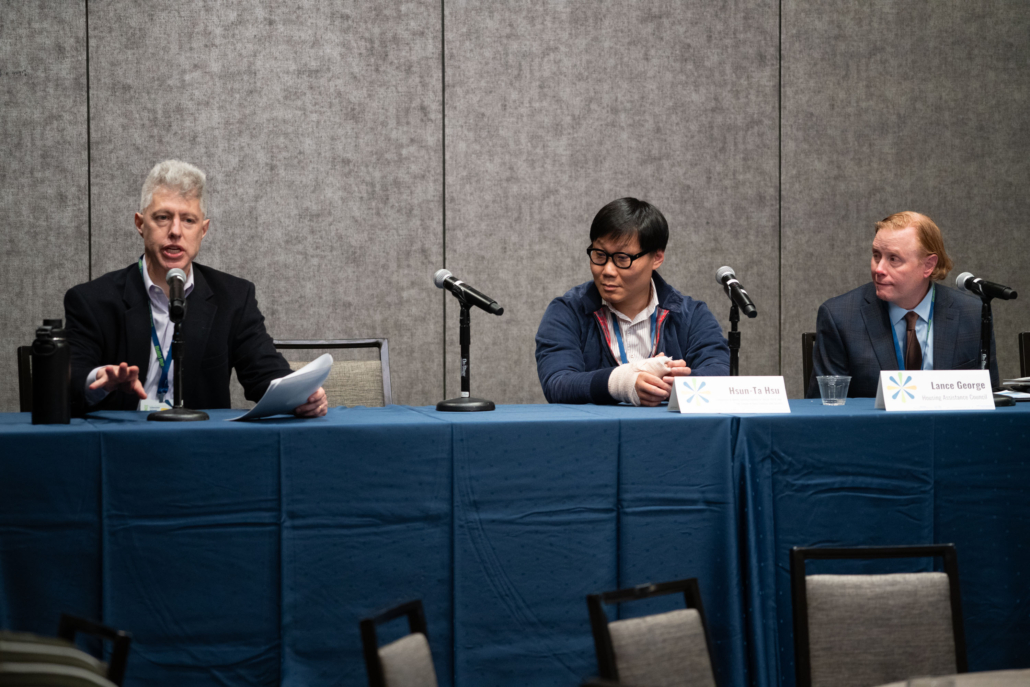
On November 4th the Housing Assistance Council (HAC) hosted the second Summit on Rural Homelessness in Washington, D.C. at the National Rural Housing Conference. As national levels of Americans experiencing homelessness reaches an all-time high, rural homelessness often goes overlooked or go unseen. In 2023, the Housing Assistance Council worked with partners at the National Alliance to End Homelessness and many other key stakeholders[1] to host the first Summit on Rural Homelessness to create a full day of programming addressing challenges and opportunities with a uniquely rural lens. The 2025 Summit on Rural Homelessness included speakers who are field leaders that are actively transforming how communities, regions, states, and our nation address rural homelessness. The Summitt offered a series of presentations, panels, and discussions uniquely focused on Rural Homelessness. Attendees learned about practical on-the-ground approaches to addressing rural homelessness across the nation, explored innovations in data and technology, dove into approaches to support Special Needs Populations, and consider the impact of our shared narrative around rural homelessness.
Key Takeaway One: An increase in federal resources via the CARES Act and ARPA allowed Local, regional, and state Continuums of Care to drive innovation and impact between 2020-2025.
Unprecedented investment by the CARES Act and America Rescue Plan Act opened doors for Rural Continuums of Care to make meaningful progress in building effective programmatic infrastructure to address rural homelessness.
Key Takeaway Two: Use of data, technology, and artificial intelligence is increasingly shaping how resources are deployed to address rural homelessness.
Attendees learned about opportunities to utilize data to inform programming and policy, through the Housing Assistance Council’s Rural Data Portal. Looking locally, Dr. Huan-Ta Hsu from the University of North Carolina, Chapel Hill, shared reflections from his work in Missouri to apply machine learning to lower barriers for access to services.
Key Takeaway Three: Rural Homelessness, and the diversity of needs among individuals who experience homelessness in a rural context, require an adaptive set of policies and approaches to meet a wide spectrum of needs.
Key Takeaway Four: In a time where federal funding, policy, and leadership on rural homelessness is increasingly uncertain, local and state leadership will shape policy and programmatic impacts on the ground in rural America.
Unfortunately, developments since the Summit have threatened the progress shared by panelists and participants. Even as the CARES and American Rescue Plan Act funds for addressing rural homelessness have largely come to an end, on November 13, 2025, the U.S. Department of Housing and Urban Development (HUD) substantially revised the fiscal (FY) 2025 Notice of Funding Opportunity (NOFO) for the Continuum of Care (CoC) Program Competition – the largest federal program providing housing and services to people experiencing homelessness.
This NOFO dramatically altered HUD’s funding commitments, including placing a 30 percent cap on permanent housing investments for people experiencing homelessness (nationwide 88 percent of CoC funding currently flows to permanent housing). Estimates suggest 170,000 people people across the country may lose their supportive housing as a result. Continuums of Care that encompass rural communities are at heightened risk, because they lack either the number or scale of alternative funding sources from the public, private or philanthropic sector. HAC is working with a number of the Summit co-sponsors, including the Corporation for Supportive Housing and the National Alliance to End Homelessness to advocate with HUD and Congress to reverse these sudden, harmful changes to the NOFA. On December 8, HUD withdrew the NOFO and indicated it intends “to make appropriate revisions.”
[1] Summit co-sponsors included: the Corporation for Supportive Housing, Enterprise Community Partners, Local Initiatives Support Corporation (LISC), the National Coalition for Homeless Veterans, the National American Indian Housing Council, the National Council of State Housing Agencies, the National Association of Housing and Redevelopment Officials, and Neighborworks.
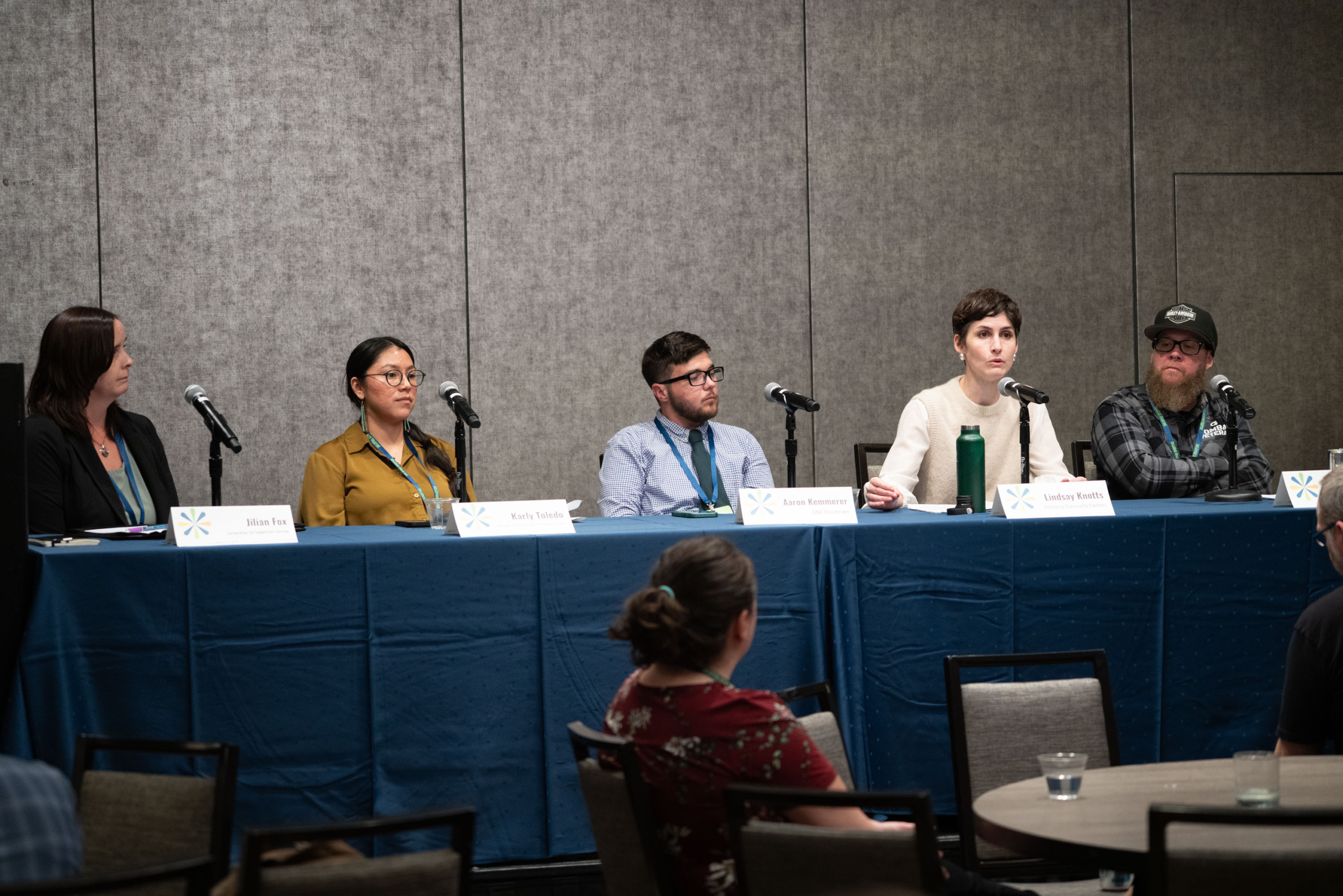
First day of HAC 2025 rural housing conference, Washington, DC, 11/4/25. Photo: Jay Mallin

 HAC Comments on Rural Housing Supply