Tag Archive for: rural policy

HAC’s 2026 Rural Housing Policy Priorities

For over 50 years, the Housing Assistance Council (HAC) has been the voice for the poorest of the poor in the most rural places. Our deeply rooted work in communities across the country informs our research and drives our policy positions. Our independent and non-partisan work with members of Congress, federal agencies, affordable housing and community development organizations, and other stakeholders ensures the most vulnerable rural populations – especially those in high-needs regions like the Mississippi Delta, rural Appalachia, farmworker communities, the Southwest border colonias, and Indian Country – have improved access to safe and affordable housing opportunities.

Rural America is home to about 20 percent of the U.S. population and covers more than 90 percent of the U.S. landmass. Its small towns and rural regions are demographically and economically varied and face a wide array of local challenges and opportunities for developing their communities and housing. While each place is unique, HAC has documented several themes. Persistent poverty is a predominantly rural condition. Habitable rural housing is in severely short supply. The adequate housing that does exist is often unaffordable because rural incomes are low and run well below the national median. Rural housing lacks adequate plumbing and kitchen facilities at a rate above the national average. Overcrowding is not uncommon in some rural regions. Decades of stagnant rural house prices have denied owners the wealth and mobility so often associated with buying a home. Complicating these challenges, a lack of reliable rural data obscures rural realities.

In addressing these issues, HAC’s policy priorities include:

  1. Building the capacity of local affordable housing and community development organizations deeply rooted in rural places;
  2. Expanding access to credit and safe, affordable lending in rural communities;

We invite you to view our 2026 Policy Priorities and explore the various policy issues facing rural communities. You can also access an Executive Summary of the Policy Priorities.


HAC’s Policy Priorities for 2026


HAC’s 2025 Rural Housing Policy Priorities

For over 50 years, the Housing Assistance Council (HAC) has been the voice for the poorest of the poor in the most rural places. Our deeply rooted work in communities across the country informs our research and drives our policy positions. Our independent and non-partisan work with members of Congress, federal agencies, affordable housing and community development organizations, and other stakeholders ensures the most vulnerable rural populations – especially those in high-needs regions like the Mississippi Delta, rural Appalachia, farmworker communities, the Southwest border colonias, and Indian Country – have improved access to safe and affordable housing opportunities.

Rural America is home to about 20 percent of the U.S. population and covers more than 90 percent of the U.S. landmass. Its small towns and rural regions are demographically and economically varied and face a wide array of local challenges and opportunities for developing their communities and housing. While each place is unique, HAC has documented several themes. Persistent poverty is a predominantly rural condition. Habitable rural housing is in severely short supply. The adequate housing that does exist is often unaffordable because rural incomes are low and run well below the national median. Rural housing lacks adequate plumbing and kitchen facilities at a rate above the national average. Overcrowding is not uncommon in some rural regions. Decades of stagnant rural house prices have denied owners the wealth and mobility so often associated with buying a home. Complicating these challenges, a lack of reliable rural data obscures rural realities.

In addressing these issues, HAC’s policy priorities include:

  1. Building the capacity of local affordable housing and community development organizations deeply rooted in rural places;
  2. Expanding access to credit and safe, affordable lending in underserved rural communities;
  3. Preserving the critical stock of USDA multifamily homes amid the growing maturing mortgage crisis;
  4. Improving the overall quality, availability and affordability of housing to buy and rent in small towns and rural places; and
  5. Preserving, increasing and tailoring resources for federal affordable housing programs serving rural populations.

We invite you to view our 2025 Policy Priorities and explore the various policy issues facing rural communities. You can also access an Executive Summary of the Policy Priorities.


HAC’s Policy Priorities for 2025


Post-Election Insights: A Hope for New Opportunity for Rural Housing

On November 5, a majority of American voters returned Donald Trump to the White House, along with a Republican majority in the Senate and—it now seems likely—the House of Representatives. Rural voters were a big part of his constituency. In fact, rural America gave President Trump more votes than urban America gave Vice President Harris.

The Housing Assistance Council is one of the only national housing organizations that focuses 100% of our work on small towns and rural places. All HAC loans, research reports, training programs and policy work are intended to help rural American communities address their affordable housing needs. So as you might guess, the election results prompted plenty of calls from friends in the housing industry asking versions of the same question, “Have rural and urban drifted further apart?” It may surprise you that my answer is an emphatic, “Nope, the gap just narrowed.”

Initial post-election analysis points to the economy as the decisive issue. Millions of suburban and urban Americans joined rural voters to send a message that the current economy is failing them. This is a familiar refrain for those of us who have spent years working in rural America. While the country is undoubtedly deeply divided on many fronts, perhaps this broader expression of economic pain provides an opportunity for progress toward an American future where working families in every geography have an opportunity not just to survive, but to get ahead.

Notably, because high housing costs are at the center of so many families’ economic struggles, for the first time in recent memory, housing took center stage throughout the campaign. This included an awareness that rural families earning rural wages can’t afford homes in their own hometowns. The day before the election I authored an op-ed in HousingWire that offered a set of bipartisan housing policy initiatives that would address the unique shape of the housing crisis in rural America.

With roots deep in rural communities, HAC has over 50 years’ experience providing elected officials data on rural conditions and nonpartisan analysis of public policies. We stand ready to share our expertise with the Trump Administration and 119th Congress to ensure that rural communities fully benefit from efforts to address the current housing crunch. The White House and Congress have the tools to reverse our current course. Homeownership and rental markets can be turned to meet the needs of ordinary Americans. Indeed, our nation’s history includes numerous examples in which the federal government boldly responded to housing crises with game-changing legislation, uniformly enacted on a bipartisan basis, from the National Housing Acts of 1934 and 1949 to the creation of the Low-Income Housing Tax Credit.

So with a broader voicing of economic discontent across rural, suburban and urban voters in this election, I expect the calls for changes to our economy and our housing markets will only grow louder. As we love to do at HAC, let me close with a couple of maps to illustrate the issue at hand. The map on the left is 1980. The one on the right is 2021. You can see the economy of the last forty years has left few places in which local wages allow local families to afford a place to live.

In fellowship,
David Lipsetz, President & CEO
Housing Assistance Council

Rural Recap – Promoting Prosperity

Rural communities need—and deserve—a coherent, national policy strategy that promotes prosperity. For such a strategy to move the needle, it must end the housing affordability crisis and build the capacity of rural communities to make the most of every opportunity.

Our homes are part of the foundation of thriving families and communities—they are pathways to realizing America’s full potential. With decent, healthy, and affordable homes, kids can succeed at school, seniors can age in place, and families can build wealth. Economics, health, education, and many more components of prosperous communities are all intimately tied to our homes.

The capital needed for a housing market to function is a lot like water: it flows down the path of least resistance, and it pools. For over 50 years—whether intentionally or not—public policy has channeled capital’s flow into sprawling metropolitan regions and allowed it to pool in suburbs and downtown commercial centers. This has deepened inequality and stifled opportunity in the communities that have been left out.

Building rural prosperity will happen one nail and one funding application at a time. Turning those into a national renaissance for rural America will take strategy. If we want investment to flow to a broader set of places and especially to the people and places which need it most, then we need public policy specifically designed to drive resources in their direction. To make the most of that capital, we must also build the capacity of those communities.

HAC builds the capacity of small towns and rural places to create thriving, prosperous communities. If you share our mission, please advocate on behalf of public funds for capacity building programs. We also hope you will consider making a gift to HAC to help us do more in rural America.

Get the Rural Recap in Your Inbox Donate to HAC

HAC News: June 25, 2015

HAC News Formats. pdf

June 25, 2015
Vol. 44, No. 13

• House subcommittee keeps most USDA spending at FY15 levels • Senate committee advances HUD bill with large cut in HOME • Supreme Court approves use of disparate impact for fair housing claims • Indian Country needs capital, witnesses tell Senate panel • Funds for housing and health research offered • Reminder: USDA has email lists for single-family housing loan programs • RD alters multifamily reserve account countersignature requirements • HUD Rental Assistance Demonstration changed • Federal homelessness plan revised • Homeownership down, renters’ cost burden rates increasing, Harvard reports • Partnership opportunities expand for housing and health providers

HAC News Formats. pdf

June 25, 2015
Vol. 44, No. 13

HOUSE SUBCOMMITTEE KEEPS MOST USDA SPENDING AT FY15 LEVELS. Approved by the House Agriculture Appropriations Subcommittee on June 18, the FY16 agriculture appropriations bill holds funding for Section 523 self-help at $27.5 million and increases Rental Assistance funds slightly to $1.167 billion, the amount the Administration said will be needed to keep up with inflation. It does not include minimum rent for tenants and does not provide vouchers for tenants in maturing mortgage properties. Details are on HAC’s website. The full House Appropriations Committee postponed a June 25 markup, and the Senate has not yet released an agriculture funding bill. [tdborder][/tdborder]

USDA Rural Dev. Prog.
(dollars in millions)

FY13
Approp.a

FY14
Approp.

FY15
Approp.

FY16 Budget Proposal

FY16 House Subcmte. Bill

502 Single Fam. Direct
Self-Help setaside

$900
5

$900
5

$900
5

$900
0

$900
5

502 Single Family Guar.

24,000

24,000

24,000

24,000

24,000

504 VLI Repair Loans

28

26.3

26.3

26.3

26.3

504 VLI Repair Grants

29.5

28.7

28.7

26

28.7

515 Rental Hsg. Direct Lns.

31.3

28.4

28.4

42.3

28.4

514 Farm Labor Hsg. Lns.

20.8

23.9

23.6

23.9

23.9

516 Farm Labor Hsg. Grts.

7.1

8.3

8.3

8.3

8.3

521 Rental Assistance

907.1

1,110

1,089

1,172

1,167

523 Self-Help TA

30

25

27.5

10

27.5

533 Hsg. Prsrv. Grants

3.6

3.5

3.5

0

3.5

538 Rental Hsg. Guar.

150

150

150

200

150

Rental Prsrv. Demo. (MPR)

17.8

20

17

19

17

542 Rural Hsg. Vouchers

10

12.6

7

15

7

Rural Cmnty. Dev’t Init.

6.1

6

4

4

4

a. Figures shown do not include 5% sequester or 2.5% across the board cut.

SENATE COMMITTEE ADVANCES HUD BILL WITH LARGE CUT IN HOME. On June 25 the Senate Appropriations Committee approved a HUD funding bill for FY16 (not yet available online). The measure cuts the HOME program by 93%, from $900 million in FY15 to $66 million. An amendment to restore HOME funding was offered by Sen. Christopher Coons (D-DE) but was defeated. The bill does not make changes to the National Housing Trust Fund.

HUD Program
(dollars in millions)

FY13
Approp.a

FY14
Approp.

FY15
Approp.

FY16
Budget
Proposal

FY16
House Bill
(H.R. 2577)

FY16 Sen. Approps. Cmte. Bill

Cmty. Devel. Fund
CDBG

3,308
2,948

3,100
3,030

3,066
3,000

2,880
2,800

3,060
3,000

2,900
2,900

HOME
SHOP setaside

1,000
b

1,000
b

900
b

1,060
10

767
b

66
b

Self-Help Homeownshp. (SHOP)

13.5

10

10

b

10

10

Tenant-Based Rental Assistance
VASH setaside

18,939.4
75

19,177.2
75

19,304
75

21,123
c

19,919

19,934
75

Project-Based Rental Asstnce.

9,339.7

9,516.6

9,330

10,360

10,254

10,426

Public Hsg. Capital Fund

1,886

1,875

1,875

1,970

1,681

1,743

Public Hsg. Operating Fund

4,262

4,400

4,440

4,600

4,440

4,500

Choice Neighbrhd. Initiative

120

90

80

250

20

65

Native Amer. Hsg. Block Grant

650

650

650

660

650

650

Homeless Assistance Grantsd

2,033

2,105

2,135

2,480

2,185

2,235

Hsg. Opps. for Persons w/ AIDS

334

330

330

332

332

330

202 Hsg. for Elderly

377

385.3

436

455

416.5

420

811 Hsg. for Disabled

165

126

135

177

152

137

Fair Housing

70.8

66

65.3

71

65.3

69.5

Healthy Homes & Lead Haz. Cntl.

120

110

110

120

75

110

Housing Counseling

45

45

47

60

47

47

Local Housing Policy Grants

300

a. Figures shown do not include 5% sequester. b. In FY13, FY14, and FY15 SHOP was funded under the Self-Help & Assisted Homeownership Opportunity Program account. Recent Obama budgets have proposed making the program a setaside in HOME. Congress has rejected that proposal. c. VASH vouchers for homeless veterans would be part of a new $177.5 million account of incremental rental vouchers for families, veterans, and tribal families experiencing homelessness and for victims of domestic violence. d. Includes the Rural Housing Stability Program, which is not yet operational.

SUPREME COURT APPROVES USE OF DISPARATE IMPACT FOR FAIR HOUSING CLAIMS. On June 25 the court ruled in Texas Department of Housing and Community Affairs v. Inclusive Communities Project, Inc. that a Fair Housing Act claim may be based on a disproportionately adverse impact on minorities even where there is no discriminatory intent.

INDIAN COUNTRY NEEDS CAPITAL, WITNESSES TELL SENATE PANEL. “Accessing Capital in Indian Country,” an oversight hearing by the Senate Indian Affairs Committee, focused on business financing, but touched on housing as well. Witnesses spoke favorably of HUD’s Section 184 program, CRA, and the Native American CDFI program. One recommended allocating Low Income Housing Tax Credits directly to tribes.

FUNDS FOR HOUSING AND HEALTH RESEARCH OFFERED. Nonprofits, for-profits, tribes, PHAs, state and local govern-ments, and others can submit preapplications by July 16 for Healthy Homes Technical Studies grants. Contact Dr. Peter Ashley, HUD, 202-402-7595.

REMINDER: USDA HAS EMAIL LISTS FOR SINGLE-FAMILY HOUSING LOAN PROGRAMS. Sign up for a list that distributes information about Section 502 direct, 504, and 523, or for others covering the Section 502 guarantee program, at https://www.rdlist.sc.egov.usda.gov/listserv/mainservlet.

RD ALTERS MULTIFAMILY RESERVE ACCOUNT COUNTERSIGNATURE REQUIREMENTS. A final rule provides that when a property has both a Section 515 or 514 loan and also a Section 538 loan, USDA’s countersignature will not be required to draw funds from the reserve account. (See HAC News, 8/20/14.) The rule also requires guarantee fees to be paid from operating accounts, not reserve accounts. Contact Tammy S. Daniels, RD, 202-720-0021.

HUD RENTAL ASSISTANCE DEMONSTRATION CHANGED. A notice in the June 26 Federal Register will expand and amend RAD, which allows some public housing to convert to long-term, project-based Section 8 rental assistance. Comments will be due in 30 days. Contact rad@hud.gov.

FEDERAL HOMELESSNESS PLAN REVISED. The U.S. Interagency Council on Homelessness updated its “Opening Doors” strategy and added an operational definition of ending homelessness: “An end to homelessness does not mean that no one will ever experience a housing crisis again. . . . [It] means that every community will have a systematic response in place that ensures homelessness is prevented whenever possible or is otherwise a rare, brief, and non-recurring experience.” USICH also says chronic homelessness can be ended in 2017 (rather than the original 2015 goal) if Congress funds new permanent supportive housing.

HOMEOWNERSHIP DOWN, RENTERS’ COST BURDEN RATES INCREASING, HARVARD REPORTS. In its annual State of the Nation’s Housing study, the Joint Center on Housing Studies says that in 2013, almost half of all renters had housing cost burdens, including more than a quarter who were paying more than 50% of income for housing). The report notes that cuts in federal funds and increases in subsidy costs add to the problem, and that expiring affordability requirements will be a serious issue over the next decade.

PARTNERSHIP OPPORTUNITIES EXPAND FOR HOUSING AND HEALTH PROVIDERS. Affordable Housing’s Place in Medicaid Reform: Opportunities Created by the Affordable Care Act and Medicaid Reform examines how changes in health care law create the potential for affordable housing providers to collaborate with health care providers and others. The report, published by the National Housing Conference, includes examples of programs already underway.

HAC News: June 10, 2015

HAC News Formats. pdf

June 10, 2015
Vol. 44, No. 12

• House passes THUD spending bill • Lead hazard funding offered • RD seeks 502 packaging intermediary applications, delays rule’s effective date • New comments invited on Emergency Solutions Grants • HUD considers small area FMRs • Meetings set on Section 538 guarantees • People with disabilities receiving SSI cannot afford housing • Materials available on Affirmatively Furthering Fair Housing rule • CFPB consumer advisory warns about reverse mortgage advertising • Americans believe housing crisis ongoing, many still aspire to homeownership • HAC to present Practitioner’s Guide to Meeting Energy Star 3.0 Part B • HAC offers Section 502 Packaging Training for Nonprofit Housing Developers

HAC News Formats. pdf

June 10, 2015
Vol. 44, No. 12

HOUSE PASSES THUD SPENDING BILL. On June 9, the House passed the FY16 Transportation-HUD spending bill(H.R. 2577) with only one change in HUD funding levels (see HAC News, 4/29/15): $2.5 million was added for Section 202 elderly housing, offset by reduced funding for HUD’s Policy Development and Research office. The bill directs National Housing Trust Fund funding to the HOME program. Amendments adopted by the House prohibit funding the private enforcement initiative under HUD’s Fair Housing Initiative Program, and enforcing HUD’s affirmatively furthering fair housing rule (see HAC News, 7/17/13) and disparate impact rule (see HAC News, 2/20/13). Last week, the House passed an amendment to the Commerce, Justice, Science spending bill barring the Department of Justice from enforcing the disparate impact rule. A Supreme Court decision on a disparate impact case is expected later this month. The Senate has not begun action on its THUD bill.

LEAD HAZARD FUNDING OFFERED. Governments of states, counties, cities, townships, and tribes can apply by June 23 for HUD’s FY15 Lead Hazard Reduction Demonstration Grant Program and the Lead-Based Paint Hazard Control Grant Program. Contact Eric Hornbuckle, HUD, 202-402-7599.

RD SEEKS 502 PACKAGING INTERMEDIARY APPLICATIONS, DELAYS RULE’S EFFECTIVE DATE. July 9 is the deadline for experienced nonprofits and state HFAs to apply to be intermediaries for the Section 502 direct packaging process. Pilot program intermediaries must reapply. (The April application invitation reported in the HAC News, 4/15/15, was for the pilot program.) A separate notice defers effectiveness of the final packaging rule to October 1, 2015 rather than July 28. Contact Brooke Baumann, RD, 202-690-4250.

NEW COMMENTS INVITED ON EMERGENCY SOLUTIONS GRANTS. HUD requests comments by August 3 on the ESG interim rule published December 5, 2011 (see HAC News, 12/14/11). Contact Norm Suchar, HUD, 202-708-4300.

HUD CONSIDERS SMALL AREA FMRS. HUD requests comments by July 2 on the use of small area FMRs for the Housing Choice Voucher program in some metro areas. Small areas FMRs vary by ZIP code and support a greater range of payment standards than can be achieved under existing regulations. Contact Marie L. Lihn, HUD, 202-402-5866.

MEETINGS SET ON SECTION 538 GUARANTEES. USDA will discuss the rental guarantee program with stakeholders. To register for email notices when calls or web meetings are scheduled, contact Monica Cole, 202-720-1251.

PEOPLE WITH DISABILITIES RECEIVING SSI CANNOT AFFORD HOUSING. Priced Out in 2014, released by the Technical Assistance Collaborative and the Consortium for Citizens with Disabilities Housing Task Force, reports that the national average rent for a one-bedroom apartment at Fair Market Rent is greater than the entire Supplemental Security Income payment of a person with a disability. Data are provided for states, metro areas, and the total nonmetro part of each state.

MATERIALS AVAILABLE ON AFFIRMATIVELY FURTHERING FAIR HOUSING RULE. Anticipating a final AFFH regulation soon, the National Fair Housing Alliance has compiled links to information about the proposed rule. NFHA and The Opportunity Agenda also offer suggestions for talking about AFFH and fair housing with a range of audiences.

CFPB CONSUMER ADVISORY WARNS ABOUT REVERSE MORTGAGE ADVERTISING. Ads targeting senior homeowners can be misleading, the Consumer Financial Protection Bureau says. The agency’s website provides facts and a guide.

AMERICANS BELIEVE HOUSING CRISIS ONGOING, MANY STILL ASPIRE TO HOMEOWNERSHIP. The 2015 How Housing Matters survey for the John D. and Catherine T. MacArthur Foundation also found 80% believe housing affordability is a problem, a majority (55%) believe the federal government is more involved in housing-related issues today than in the past two decades, and most (53%) say that addressing housing affordability is not its responsibility (39% say it is.)

HAC TO PRESENT PRACTITIONER’S GUIDE TO MEETING ENERGY STAR 3.0 PART B. The HVAC Raters Checklist and Water Management System Builder Checklist will be covered in this free webinar on June 24 at 2:00 eastern time. Follow the discussion online at #ruralgreen.

HAC OFFERS SECTION 502 PACKAGING TRAINING FOR NONPROFIT HOUSING DEVELOPERS. This advanced course will be held July 7-9 in Denver. Learn how to assist potential borrowers and work in partnership with RD staff, as well as other nonprofit organizations and regional intermediaries to deliver successful Section 502 direct loan packages. Following the course, participants are encouraged to take the online certification exam. The registration fee is $400. Follow the discussion online at #rural502.

CONTACT Shonterria Charleston, HAC, 404-892-4824.

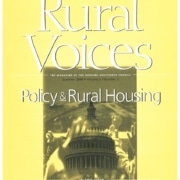
Rural Voices: Policy & Rural Housing


The Summer 2000 issue of Rural Voices examines some aspects of government policies on the federal, state, and local levels, and their impact on housing conditions for low-income rural residents.

Read more

GET THE HAC NEWS!

Sign-up for HAC information products

SIGN UP HERE

Housing Assistance Council   |  1828 L Street. N.W., Suite 505, Washington, D.C. 20036
(202) 842-8600 (202) 347-3441 hac@ruralhome.org |

Board Portal

HAC is an equal opportunity provider, employer, and lender. | Civil Rights | Privacy