Tag Archive for: Affordable Housing

USDA Multi-Family Fair Housing Occupancy Report FY 2017

USDA’s yearly occupancy survey shows the total number of properties in USDA’s rural rental portfolio fell by 1.94% from September 2016 to September 2017, a decrease of 278 properties consisting of 246 Section 515 properties and 32 Section 514 properties. This represents a loss of 5,035 apartment units or 1.17 percent. The average annual income of Section 515 residents has increased to $12,776. For Section 515 tenants with RA, average income is $10,658.

USDA Multi-Family Fair Housing Occupancy Report FY 2016

USDA’s yearly occupancy survey shows the total number of properties in USDA’s rural rental portfolio fell by 1.86% from September 2015 to September 2016, a decrease of 217 properties consisting of 253 Section 515 properties and 18 Section 514 properties. This represents a loss of 4,220 apartment units or 0.97 percent. The average annual income of Section 515 residents has increased to $12,588. For Section 515 tenants with RA, average income is $10,504.

Housing as Infrastructure

by Stephen Sugg,Housing Assistance Council (HAC)

We know that decent and affordable housing does great (and cost-effective) things like prevent lead poisoning, improve health outcomes, and boost student achievement in school. Rural affordable housing is an economic driver. And a lack of rural affordable housing is thwarting economic growth and job creation. Thus, HAC and our rural partners in 50 states are among the growing number of voices viewing housing as infrastructure. One rural small business developer said it best, calling intertwined issues of workforce recruitment and housing stock availability the “two biggest challenges that rural areas tend to be worried about”.

Those working in the metro DC area and other relatively affluent enclaves are accustomed to construction cranes hovering, young professionals sipping lattes that are the price of a burger and fries in a rural diner, and paying outrageous rents.

It is different in rural America. Available housing is often dilapidated, not energy-efficient, and though comparatively cheap, still unaffordable for the working poor, or most vulnerable. Grandma might have a $800 heating bill for her Jimmy Carter era manufactured home. Rural incomes are 25% less on average than non-rural, and this statistic is worse for rural areas mired in persistent poverty. But bottom line focused rural leaders know that affordable housing creates jobs—short and long term, while offering “immediate fiscal benefits” for states and localities.

Rural businesses too often struggle, with lumber catching dust at the lumber yard; building supplies hardly moving at the hardware store. Immediate economic impact would come from investment that is guaranteed to stay local, help local people, and that is “shovel ready” (and then some). It might even help stem the onslaught of rural hospital closures.

I’d challenge folks from the Trump Administration, starting with HUD Secretary Ben Carson, to join a bipartisan group of Congressional leaders and my colleagues and me on a journey—perhaps over the next Congressional recess. Start in Appalachia, say rural eastern Kentucky, and ask the folks there if federal infrastructure investment in housing would be wise. Imagine out-of-work miners constructing “self-help” homes, their sweat equity again paying a dividend, along with de facto job training.

Then go north, to Pine Ridge in South Dakota, where 18 people crowding into a house is still too common, a place that Nicholas Kristof called “Poverty’s Poster Child”. Ask them about the immediate impact of improved housing conditions.

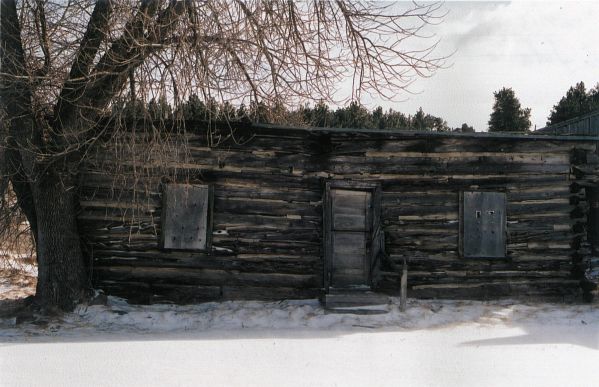
Traditional log home - between Oglala and Pine Ridge villageTraditional log home – between Oglala and Pine Ridge village

Next fly south, to the Colonias on the U.S.-Mexico border, where housing is in short supply, and modern sewage systems are too rare. In the Colonias, even modest investment does much good, as creative nonprofits are doing cutting-edge work. Going westward (or any direction, really), one could visit the homes of farmworkers, and see the substandard housing conditions of those responsible for making sure that we eat.

For those wanting some recreation with their fact finding mission, they would need not go to counties mired in persistent poverty—85% of which are rural. Rural resort towns (e.g., “tourist areas”) are filled with housing need. Those in the service industry are often part of rural America’s hidden homelessness epidemic. And make no mistake: investment in affordable rural housing plays a critical role in addressing rural America’s opioid crisis. Citylab called the opioid epidemic an “infrastructure issue”, citing the need for rural transitional housing.

In rural America, where costs are lower for construction and land, infrastructure spending targeted toward housing—preservation or new—can boost the outlook for Main Street while providing an anchor for our most vulnerable families to achieve stability, and a shot at the middle class.

Last year, over 7 million households in rural America experienced at least one major housing problem. We can do better, and political will is all that it takes.

This post is part of a series from members of the Campaign for Housing and Community Development Funding tying housing to infrastructure. Read the first post in the series from the National Housing Conference.

USDA Multi-Family Fair Housing Occupancy Report FY 2015

USDA’s yearly occupancy survey shows the total number of properties in USDA’s rural rental portfolio fell by 1.39% from September 2014 to September 2015, a decrease of 186 Section 515 properties and 19 Section 514 properties. The reduction covers 2,646 apartments (0.37% of total units). The average annual income of Section 515 residents has increased to $12,377. For Section 515 tenants with RA, average income is $10,332.

USDA Multi-Family Fair Housing Occupancy Report FY 2014

USDA’s yearly occupancy survey shows the total number of properties in USDA’s rural rental portfolio fell by 1.25% from September 2013 to September 2014, a decrease of 142 Section 515 properties and an increase of 45 Section 514 properties. The reduction covers 1,645 apartments (0.37% of total units). The average annual income of Section 515 residents has increased to $12,022. For Section 515 tenants with RA, average income is $10,054.

A Call for More Inclusive Community Planning, from Wonkblog

In a piece for The Washington Post’s Wonkblog, Emily Badger details a story of a town in California, which is instructive to organizations working to provide affordable housing across the country.

Brisbane, California, a town outside of San Francisco, has a chance to make a big change to relieve the area’s housing crisis. A local developer would like to use a former industrial land plot to build a mixed-use project, including public parkland and over 4,000 housing units. The location is also adjacent to a regional rail line that would make commuting easier for workers with jobs in San Francisco and Silicon Valley. One of the benefits of building on this currently unused space is that construction would not displace any current residents or negatively impact local traffic. However, some Brisbane officials and residents are resistant to this development for reasons that are all too familiar to affordable housing developers.

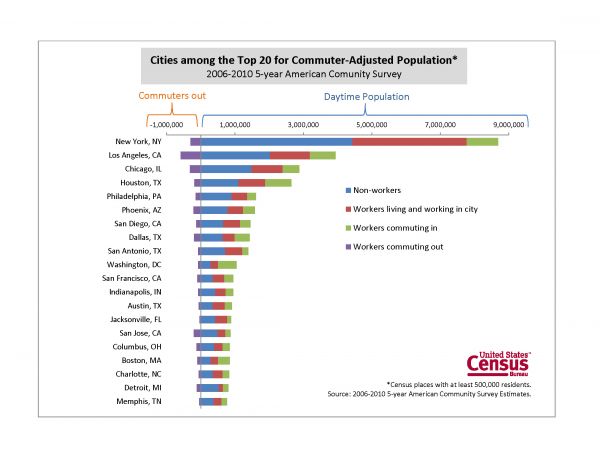
This situation reflects the realities of housing policy decisions across the country. Housing policies are generally set at the local level, which in turn provides a great deal of weight to the desires of local residents. HAC has long felt that the solutions to affordable housing start at the local level, and building local capacity should be a priority in any community development effort. In her piece, Badger argues that communities should be more inclusive in how they define “local.” Badger believes that decision making on a community level should also include commuters who spend their days in town, working, going to school, or spending money, but don’t technically live there. This would create a more inclusive community where all of the stakeholders have a say in local policy. However, she submits that local control of housing policy is a tradition that is unlikely to change in American communities.

top20-commuter-adjusted-population

How the Major Party Platforms Approach Housing

by Leslie Strauss

The major political party platforms take different approaches to federal housing assistance and related topics. The Republican and Democratic platforms adopted at the parties’ conventions in July are couched in strikingly different ways, consistent with the conventions’ tones. For example, while the Republican paper states, “We must scale back the federal role in the housing market, promote responsibility on the part of borrowers and lenders, and avoid future taxpayer bailouts,” the Democratic one asserts, “We will substantially increase funding for the National Housing Trust Fund to construct, preserve, and rehabilitate millions of affordable housing rental units . . . [to] help address the affordable housing crisis . . . [and] create millions of good-paying jobs in the process.”

Read the complete article on Rooflines

HAC News: July 27, 2016

HAC News Formats. pdf

July 27, 2016
Vol. 45, No. 14

• Senate passes housing act unanimously • Major party platforms approach affordable housing differently • HUD requests input on CoC distribution formula • Data and factsheets available on federal rental assistance in U.S. and each state • Early research results show housing counseling’s benefits • CRA questions and answers revised by regulators • HUD creates AFFH listserve • Brief summarizes impact of homelessness on children’s health and education • SAVE THE DATES FOR THE HAC RURAL HOUSING CONFERENCE 2016!

HAC News Formats. pdf

July 27, 2016
Vol. 45, No. 14

Senate passes housing act unanimously. On July 14 the Senate approved H.R. 3700, the Housing Opportunity Through Modernization Act, passed by the House in February (see HAC News, 2/3/16). When signed by President Obama, the bill will become law. It imposes a fee on each Section 502 guarantee, with the proceeds to be used to enhance RD’s single-family IT and automated underwriting. It also authorizes USDA to delegate Section 502 underwriting to approved lenders. Most of its provisions (summarized here by the National Low Income Housing Coalition) deal with HUD programs.

Major party platforms approach affordable housing differently. Adopted at the parties’ conventions this month, both the Republican platform and the Democratic platform support homeownership, an end to homelessness among veterans, and expansion of broadband service in rural areas. Both recognize tribal sovereignty. In other ways, the two documents are very different.

The Republican platform emphasizes the need to avoid another housing crisis. “We must scale back the federal role in the housing market, promote responsibility on the part of borrowers and lenders, and avoid future taxpayer bailouts. Reforms should provide clear and prudent underwriting standards and guidelines on predatory lending and acceptable lending practices. . . . We call for a comprehensive review of federal regulations, especially those dealing with the environment, that make it harder and more costly for Americans to rent, buy, or sell homes.” It criticizes Fannie Mae, Freddie Mac, the Dodd-Frank Act, and the Consumer Financial Protection Bureau, as well as “lending quotas to specific groups” and the Affirmatively Furthering Fair Housing regulation.

The Democratic platform cites the CFPB, as well as fair housing law and regulations, as factors contributing to the strong housing market it hopes to foster. It also supports existing federal housing programs that address both homeownership and affordable rental housing, committing to expand them and increase their funding. It specifically mentions additional monies for the National Housing Trust Fund.

To solve veteran homelessness, the Republican platform pledges better health care, including mental health care, and discusses the importance of employment. The Democratic platform calls for “robust [federal] funding” to end homelessness, mentioning families and veterans specifically.
Rural housing is not mentioned separately in either platform, but the rural economy is in both. The Republican platform strongly supports agriculture. The Democratic platform backs “a stronger rural and agricultural economy.” It also calls for “stronger agricultural worker protections including regulation of work hours, elimination of child labor, ensuring adequate housing for migrant workers, and sanitary facilities in the field.”

Native Americans are covered in both platforms. The Republican document promises to reduce federal regulations relating to Indian Country, while the Democratic commits to “strengthen the operation of tribal housing programs, and reauthorize the Indian Housing Block Grant Program. We will increase affordable and safe housing and fight to significantly reduce homelessness on and off Indian reservations, especially among Native youth and veterans.”

Both documents also address poverty. The Republican platform describes current safety net programs as “the false compassion of the status quo,” and proposes to replace them with “the dynamic compassion of work requirements in a growing economy.” It calls for “removal of structural impediments which progressives throw in the path of poor people: Over-regulation of start-up enterprises, excessive licensing requirements, [and] needless restrictions on formation of schools and day-care centers serving neighborhood families.” It urges “greater state and local responsibility for, and control over, public assistance programs.”

The Democratic platform “reaffirm[s] our commitment to eliminate poverty.” It pledges to focus on persistent poverty communities by, for example, using “the 10-20-30 model, which directs 10 percent of program funds to communities where at least 20 percent of the population has been living below the poverty line for 30 years or more.” It supports existing programs such as the Earned Income Tax Credit and the New Markets Tax Credit. It also acknowledges the “racial wealth gap” and says federal policy must help eliminate it.

HUD requests input on CoC distribution formula. Comments are due September 23 on proposed changes to the formula used to distribute Continuum of Care homeless assistance funds, and on ways to target funding to urban and rural areas most in need. Contact Norm Suchar, HUD, 202-708-4300.

Data and factsheets available on federal rental assistance in U.S. and each state. The Center on Budget and Policy Priorities offers national and state factsheets, as well as data in Excel, and includes both HUD and USDA programs. Topics include who uses and who needs rental assistance, the metro/nonmetro distribution of assisted housing by state and program, and the impacts of sequestration on HUD’s Housing Choice Voucher program.

Early research results show housing counseling’s benefits. The First-Time Homebuyer Education and Counseling Demonstration: Early Insights reports that early findings from a large HUD study are encouraging and suggest homebuyer education and counseling may lead to favorable results for first-time homebuyers in terms of mortgage literacy and preparedness, homebuyer outcomes, and loan performance. Over 5,800 prospective buyers in 28 metro areas were randomly assigned to receive remote counseling (online and telephone-based), in-person counseling (in groups and individually), or neither. HUD found that 65% of those who were offered remote education and counseling initiated services, compared to 25% of those who were offered in-person services. Participants then performed better on a mortgage literacy quiz and had higher credit scores.

CRA questions and answers revised by regulators. The federal agencies that regulate banks and savings and loans publish Q&As to help explain their Community Reinvestment Act regulations. The most recent Q&A revisions were issued July 25. Agency contacts are listed in the document.

HUD creates AFFH listserve. The new list will provide information and updates on topics directly related to Affirmatively Furthering Fair Housing, including HUD’s 2115 AFFH rule. To subscribe to this or any of HUD’s other mailing lists, visit the HUD Exchange. Additional AFFH information from HUD is also online.

Brief summarizes impact of homelessness on children’s health and education. A factsheet by the U.S. Interagency Council on Homelessness describes the short- and long-term impacts of family homelessness, along with solutions.

SAVE THE DATES FOR THE HAC RURAL HOUSING CONFERENCE 2016! This year’s national conference will be held November 29-December 2 in Washington, DC. The HAC News will announce when registration opens.
HAC Praises Bipartisan Congressional Action on Affordable Housing

The Kansas City Star recently published a Letter to the Editor submitted jointly by HAC Executive Director Moises Loza and Housing Specialist Stephanie Nichols in praise of HR 3700, the bipartisan housing legislation which recently passed through Congress. The full text of the letter as it appears on the Stars’ website appears below.


Bipartisan effort

Last week, to minimal fanfare, Congress unanimously passed HR 3700, substantive housing legislation that saves money, cuts red tape and increases opportunities for our most vulnerable to live in decent homes and safe neighborhoods.

Leveraging their leadership on a key Financial Services subcommittee, Missouri congressmen Blaine Luetkemeyer and Emanuel Cleaver eschewed partisanship and brought together a disparate coalition of industries, nonprofits and social-justice advocates to support the bill, also known as the Housing Opportunities Through Modernization Act.

Missourians ought to know that two of their congressmen did the hard work of legislating instead of grandstanding, and the low-income communities that we serve are stronger because of their actions.

Moises Loza
Executive Director
Housing AssistanceCouncil

Stephanie Nichols
Midwestern office
Program manager
Kansas City


Read more here: https://www.kansascity.com/opinion/letters-to-the-editor/article91127752.html#storylink=cpy

MATERIALS POSTED: Practitioner’s Guide to Meeting Energy Star 3.0 – HVAC Part A.

MATERIALS POSTED: Heating, Ventilation and Air Conditioning (HVAC) System Contractors Checklist

Power Point Presentation | Webinar Recording | Additional Resources

Follow the discussion online #ruralgreen.

Please join us for Practitioner’s Guide to Meeting Energy Star 3.0 – HVAC Part A on 5/20/2015 2:00 PM Eastern Time.

MATERIALS POSTED: Heating, Ventilation and Air Conditioning (HVAC) System Contractors Checklist

Power Point Presentation | Webinar Recording | Additional Resources

Follow the discussion online #ruralgreen.

Please join us for Practitioner’s Guide to Meeting Energy Star 3.0 – HVAC Part A on 5/20/2015 2:00 PM Eastern Time.

All homes permitted after January 1, 2012 seeking ENERGY STAR Version 3.0 rating must meet ENERGY STAR Version 3.0 standards. Verification partners, including HERS raters and Field Inspectors, must complete ENERGY STAR Version 3 Rater Training through an Accredited Training Provider in order to service and/or inspect homes that seek ENERGY STAR Version 3.0 rating. There are two paths to certify a home to earn the ENERGY STAR. The Prescriptive Path is based on a predefined package of improvements, while the Performance Path is based on a customized package of upgrades. The National Program Requirements define the core energy efficiency specifications for both the Prescriptive and Performance Paths.

Both the Performance and Prescriptive Paths require completion of four inspection checklists:

  • Heating and Cooling Contractor Checklist,
  • Heating, Ventilation and Air Conditioning (HVAC) System Quality Installation Rater Checklist,
  • HVAC System Quality Installation Contractor Checklist, and
  • Water Management System Builder Checklist

A quality installs HVAC system promotes improved comfort, indoor air quality, and durability in certified homes. This webinar provides an overview of the HVAC Contractor checklist and its requirements as prescribed the Energy Star and ICCE 2009. Topics covered will include:

  • ACCA Manuals J, S, and D
  • HVAC System Contractor Checklist

[youtube]FWtBg_nuLLI[/youtube]

Additional Resources
  1. Thermal Enclosure System Rater Checklist Guidebook (.pdf)
  2. ACCA Manuals J, S, and D
  3. www.resnet.us/energystar
  4. www.energystar.gov
  5. www.epa.gov/watersense
  6. www.usgbc.org
  7. greenhomeguide.com/program/leed-for-homes
  8. youtu.be/czlCDo00Scs

Funded by: U.S. Department of Housing and Urban Development and U.S. Department of Agriculture – Rural Development

GET THE HAC NEWS!

Sign-up for HAC information products

SIGN UP HERE

Housing Assistance Council   |  1828 L Street. N.W., Suite 505, Washington, D.C. 20036
(202) 842-8600 (202) 347-3441 hac@ruralhome.org |

Board Portal

HAC is an equal opportunity provider, employer, and lender. | Civil Rights | Privacy