Takeaways from the 2025 Summit on Rural Homelessness

On November 4th the Housing Assistance Council (HAC) hosted the second Summit on Rural Homelessness in Washington, D.C. at the National Rural Housing Conference. As national levels of Americans experiencing homelessness reaches an all-time high, rural homelessness often goes overlooked or go unseen. In 2023, the Housing Assistance Council worked with partners at the National Alliance to End Homelessness and many other key stakeholders[1] to host the first Summit on Rural Homelessness to create a full day of programming addressing challenges and opportunities with a uniquely rural lens. The 2025 Summit on Rural Homelessness included speakers who are field leaders that are actively transforming how communities, regions, states, and our nation address rural homelessness. The Summitt offered a series of presentations, panels, and discussions uniquely focused on Rural Homelessness. Attendees learned about practical on-the-ground approaches to addressing rural homelessness across the nation, explored innovations in data and technology, dove into approaches to support Special Needs Populations, and consider the impact of our shared narrative around rural homelessness.

Key Takeaway One: An increase in federal resources via the CARES Act and ARPA allowed Local, regional, and state Continuums of Care to drive innovation and impact between 2020-2025.

Unprecedented investment by the CARES Act and America Rescue Plan Act opened doors for Rural Continuums of Care to make meaningful progress in building effective programmatic infrastructure to address rural homelessness.

Key Takeaway Two: Use of data, technology, and artificial intelligence is increasingly shaping how resources are deployed to address rural homelessness.

Attendees learned about opportunities to utilize data to inform programming and policy, through the Housing Assistance Council’s Rural Data Portal. Looking locally, Dr. Huan-Ta Hsu from the University of North Carolina, Chapel Hill, shared reflections from his work in   Missouri to apply machine learning to lower barriers for access to services.

Key Takeaway Three: Rural Homelessness, and the diversity of needs among individuals who experience homelessness in a rural context, require an adaptive set of policies and approaches to meet a wide spectrum of needs.

Key Takeaway Four: In a time where federal funding, policy, and leadership on rural homelessness is increasingly uncertain, local and state leadership will shape policy and programmatic impacts on the ground in rural America.

Unfortunately, developments since the Summit have threatened the progress shared by panelists and participants.  Even as the CARES and American Rescue Plan Act funds for addressing rural homelessness have largely come to an end, on November 13, 2025, the U.S. Department of Housing and Urban Development (HUD) substantially revised the fiscal (FY) 2025 Notice of Funding Opportunity (NOFO) for the Continuum of Care (CoC) Program Competition – the largest federal program providing housing and services to people experiencing homelessness.

This NOFO dramatically altered HUD’s funding commitments, including placing a 30 percent cap on permanent housing investments for people experiencing homelessness (nationwide 88 percent of CoC funding currently flows to permanent housing).   Estimates suggest 170,000 people people  across the country may lose their supportive housing as a result.  Continuums of Care that encompass rural communities are at heightened risk, because they lack either the number or scale of alternative funding sources from the public, private or philanthropic sector.  HAC is working with a number of the Summit co-sponsors, including the Corporation for Supportive Housing and the National Alliance to End Homelessness  to advocate with HUD and Congress to reverse these sudden, harmful changes to the NOFA.  On December 8, HUD withdrew the NOFO and indicated it intends “to make appropriate revisions.”


[1] Summit co-sponsors included: the Corporation for Supportive Housing, Enterprise Community Partners, Local Initiatives Support Corporation (LISC), the National Coalition for Homeless Veterans, the National American Indian Housing Council, the National Council of State Housing Agencies, the National Association of Housing and Redevelopment Officials, and Neighborworks.
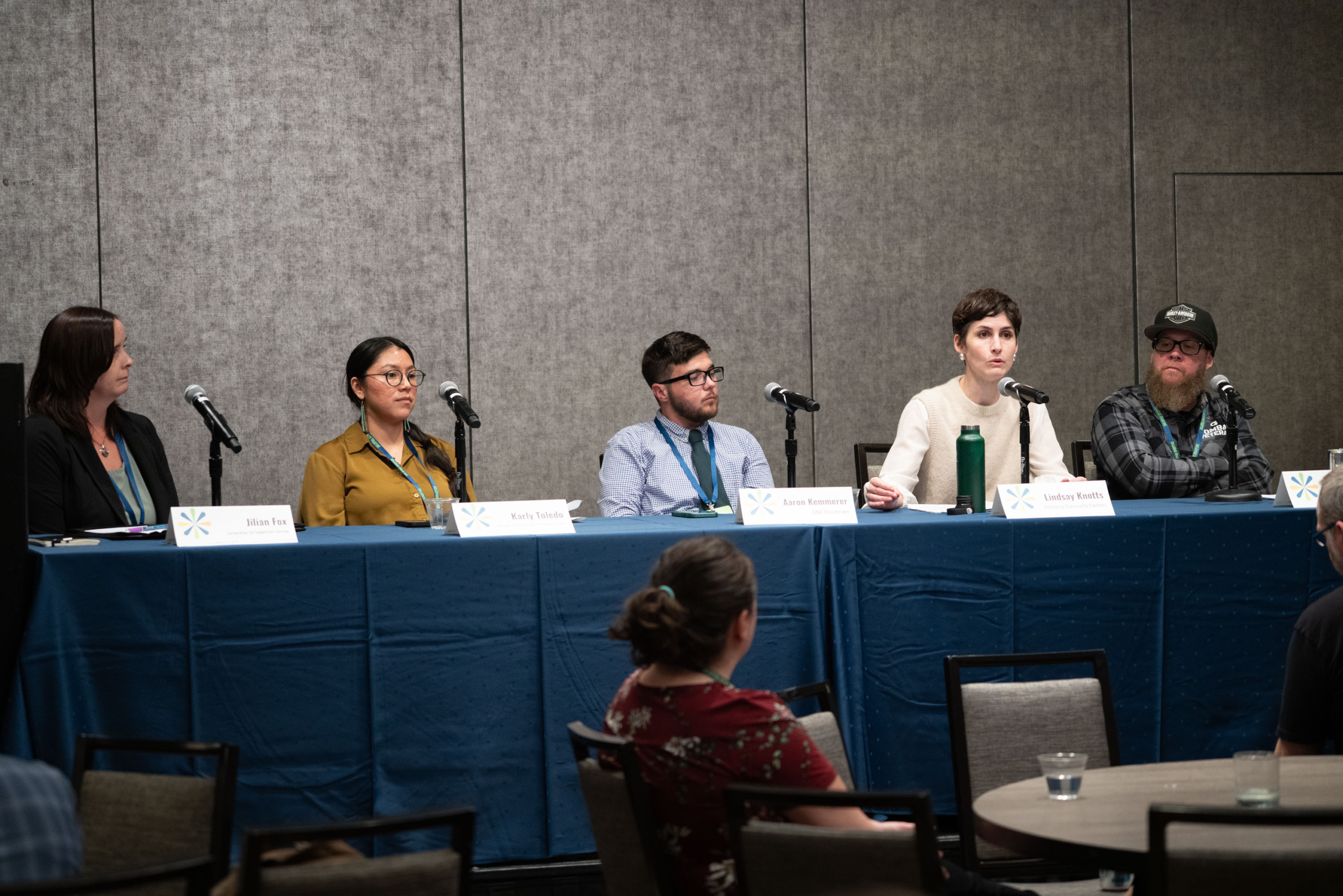
First day of HAC 2025 rural housing conference, Washington, DC, 11/4/25. Photo: Jay Mallin

National Rural Housing Conference convenes stakeholders to “Build Rural”

Nearly 600 rural housing practitioners and policymakers came together in Washington, DC on November 4-7 for the 2025 National Rural Housing Conference. Recordings of the plenary sessions are available online, including a discussion with the CEOs of Enterprise Community Partners, Habitat for Humanity International, and NeighborWorks America. Anyone who registered for the conference can access workshop materials and other resources through the conference app or by logging into the Attendee Hub. HAC thanks our many sponsors, scholarship contributors, and partners for helping to make the event possible.


Watch the Opening Plenary Session


HAC Seeks Nominations for 2025 Rural Housing Awards

As part of the 2025 National Rural Housing Conference (NRHC), the Housing Assistance Council (HAC) will once again present its prestigious Rural Housing Service Awards. These awards recognize individuals whose exceptional leadership, commitment, and lasting contributions have significantly advanced affordable housing and community development in rural America.

We invite you to help us celebrate these achievements by submitting a nomination through the survey linked below. This is a meaningful opportunity to highlight those whose work has had a transformative impact on the lives of rural residents and the communities they call home.

The deadline for submissions is August 29, 2025.

For questions or additional information, please contact Shonterria Charleston.


Submit Nomination Mail Mail Contact Shonterria

Call for Workshop Proposals for the 2025 National Rural Housing Conference

The Housing Assistance Council (HAC) invites you to submit a proposal for workshops at the 2025 National Rural Housing Conference (NRHC). We encourage proposals with interactive content or those that facilitate lively discussion.

About HAC

Since 1971 HAC has been helping local organizations build affordable homes in rural America. With a mission “to improve housing conditions for the rural poor”, HAC places an emphasis on the poorest of the poor in the most rural places. 

HAC assists in the development and preservation of affordable housing, community facilities, and placemaking. Our efforts emphasize local solutions, empowerment of people in poverty, and self-help strategies. HAC offers services to public, nonprofit, and private organizations throughout the rural United States, including the areas with persistent challenges in housing and community development, such as Central Appalachia, the Border Colonias, the Mississippi Delta and rural Southeast, Native American Lands, farmworker communities, and communities with large Veteran populations. 

Important Dates and Information
Proposals Due: June 15, 2025
Notification By: July 30, 2025
Workshop dates: Wednesday, November 5th and Thursday, November 6th
Location Washington, DC

Submit a Workshop Proposal

Questions? Contact Kelly Cooney and Aquila Ledbetter.

About the Conference

The 2025 National Rural Housing Conference will be held November 4 – 7, 2025 at The Capital Hilton in Washington, DC.

The biennial NRHC is a space for collaboration, where leaders, advocates, industry experts, and practitioners come together to share successes, best practices, and bold strategies at the intersection of housing and community development. Through workshops, plenary sessions, the exchange of data, and policy discussions, we amplify the narrative of rural America, highlighting both its challenges and its triumphs.

Rural communities don’t thrive by accident — they are built with intention, vision, and action. Build Rural is more than just the theme for the 2025 NRHC; it is an ongoing call to invest in the future of rural America. By continuing to focus on housing, infrastructure, and community-driven solutions, we ensure that rural communities are healthy and sustainable for decades to come.

At its core, Build Rural is about turning ideas into impact. The National Rural Housing Conference challenges us to address the urgent need for housing affordability and preservation, invest in critical infrastructure and essential facilities, and empower residents to shape the places they call home. It pushes us to expand capacity, foster strategic partnerships, and advance resident led placemaking—because a strong rural America is built by and for the people who live there.

Workshops should seek to align themselves with the conference theme or one of the following threads: Housing Affordability, Development, Preservation, Community Facilities, Rural Prosperity, Placemaking, Capacity Building, or other adjacent threads.

About the Workshops

Workshops are intended to facilitate the active exchange of approaches and ideas. HAC recognizes learning landscapes have changed in recent years and aims to have workshops that engage participants in meaningful and beneficial ways.

Focused Workshops are 45 minutes. They should seek to provide exposure to new ideas, techniques, or approaches or provide concentrated engagement for participants. Focused workshops should allow at least 10 minutes for Q&A.

Standard Workshops are 90 minutes. A standard workshop could provide the time required to address a more complex or nuanced issue; allow additional presenters to provide a variety of examples or viewpoints; provide for discussion, case study, an activity, etc. Standard workshops should include 15 minutes for Q&A.

The NRHC is paperless. All workshop materials and information will be available via the conference app and website.

In addition to workshops that expand participants’ knowledge of traditional affordable housing and community development practices, HAC encourages workshops that address:

  • Placemaking, art, and design
  • Health and community connections
  • Nonprofit financial management
  • Housing rehab and/or preservation
  • Innovative homebuilding and construction methods
  • Other emerging topics

Selection Criteria

HAC will evaluate proposals using the following criteria. The order below does not reflect importance.

  • Interest and relevance to conference participants
  • Experience and organization of the presentation team
  • Potential to contribute to a balanced conference program
  • Presentation engagement and approach

Submission of a workshop proposal does not guarantee acceptance.

Submission Guidelines

HAC invites interested parties to submit workshop proposals here.

Proposals should include the following information:

TOPIC

  • Workshop title
  • Topic(s)
  • Impact Statement

PRESENTER(S)

  • Workshop Coordinator
  • Workshop Presenters, proposed and confirmed
  • Experience

FORMAT

  • Preference for a 45-minute or 90-minute workshop session
  • Workshop outline
  • Required resources

Self-Help Housing Trainings from HAC’s Conference

Self-Help Housing

There are many potential homeowners who fall short financially but are able to contribute time and labor toward the construction or rehabilitation of their homes.

The self-help housing model helps bridge the gap in housing affordability by having participant families work together to build their homes. Instead of requiring a down payment, the prospective homeowners contribute their own labor to the project. When these families work together, they learn valuable construction skills and build a sense of community with their neighbors.

These five workshops, first recorded at HAC’s Virtual National Rural Housing Conference, provide an overview of the self-help housing process, how it works, and information on how local organizations can incorporate it into their efforts.

This session provides an overview of USDA’s Mutual Self-Help Housing program. It covers funding possibilities, regulation requirements, and the grant application process, as well as eligible grant uses, program development, staffing needs, and feasibility.

USDA-supported self-help housing rehab activities (acquisition/rehab and owner-occupied rehab) can be viable additions to affordable housing work. This session is designed for organizations currently active in the program as well, as those considering it. Workshop leaders share the latest instructions and guidance governing rehab activities and show before-and-after pictures of self-help projects. The discussion focuses on challenges, successes, and best practices in delivering the program. The audience was able to ask questions about the impacts of COVID. One of the presenters shares the key to the self-help method with a quote.

“Helping people help themselves benefits the participants and the community while making better use of scarce resources.”

In this session, experts present information on recent improvements to SHARES for group coordinators. Workshop leaders also provide an overview of how to use e-Forms for submitting Section 502 and 504 applications. A nonprofit marketing specialist provides strategies for how to use social media, email marketing, and design to share about your work with self-help programs. Self-help grantees are encouraged to share their updates on https://www.selfhelphousingspotlight.org/.

Learn what’s new in Section 502 loan packaging and how to avoid common errors and omissions that cause delays in processing 502 loan applications. This session will help packagers improve the quality and completeness of applications to get faster loan closings for families.

5 challenges in 502 Packaging

  1. Significant Delinquencies, how credit worthiness impacts application processing and what can be done to streamline this step.
  2. How to account for full-time student income and student loan debt.
  3. COVID’s impact on calculating income and how to account for variations.
  4. What forms of verification are acceptable and what can a packager use to verify application details?
  5. What has COVID’s impact been on budgets and materials and how to best incorporate them into the loan process?

The coronavirus pandemic’s cost overages, material delays, and numerous other challenges have intensified the need for leveraged funds in self-help housing programs. Learn how leveraged funds can not only increase affordability and resources for applicants, but also build an organization’s capacity and control. Leveraging can also better position an organization for program diversification to address community needs.

HAC Celebrates Rural Housing at the 2021 National Rural Housing Conference

As part of the 2021 National Rural Housing Conference, the Housing Assistance Council (HAC) recognized individuals and/or organizations that have, through their continued work and or newly established initiatives, made a positive and lasting impact to affordable housing in rural America.
The Covid pandemic was a paradigm shift that tested the strength, and temerity of communities across the country and one that centered housing, not just as a critical human need, but as a human right. Acknowledging the difficulty of the past year and the many associated inequities revealed, HAC seeks to honor those that leaned into the challenges to create positive impacts in rural America. In doing so, HAC has invited nominations for both individuals and/or organizations who have made outstanding and enduring contribution to affordable housing in rural America. Having faced a number of impediments from a common enemy, and all working towards the betterment of society, HAC seeks to recognize positive contributions from the smallest grassroots and on-the-ground housers and practitioners, to the highest elected offices in the US.
Out of long list of nominees, the Housing Assistance Council is proud to announce the following selectees for a 2021 Rural Housing Service Award:
This award is in recognition of your distinguished service in housing for the rural poor, steadfast commitment to rural communities, and outstanding contributions to those in greatest need in the most rural of places. Please join us in recognizing these esteemed friends of rural America!

Watch the Awards

Past Recipients of Rural Housing Awards


Need Help Logging in to the 2021 Conference?

How to access the 2021 Virtual Rural Housing Conference

Get the Conference App here. If you’re already registered, you will use the Conference App to access the conference sessions. NOTE: The App is the portal to all conference plenary sessions and workshops. You can install it on your phone, though you’ll probably want it on your computer for better viewing.

Need more guidance?

The National Rural Housing Conference participant support team is here to help. Reach out via telephone at (202) 516-6271 or email at NRHCsupport@ruralhome.org.

Trying to decide whether to register?

View conference details here.


Registration for Virtual National Rural Housing Conference Coming Soon

A Message from HAC’s President & CEO

We’ve had a remarkable year here at the Housing Assistance Council and look forward to finishing the year in that same fashion with HAC’s National Rural Housing Conference, scheduled to take place virtually on November 30 – December 3, 2021. This year’s virtual format will allow us all to reconnect and gather safely, regardless of location. With an exciting and full schedule of workshops and new virtual gathering spaces, the Conference will offer attendees a premier opportunity to learn from experts and connect with the entire affordable housing industry.

We will host more than 30 workshops and stakeholder convenings—covering topics including best practices for rural housing and community development, resource development, organizational management, and creative placemaking. This conference offers an excellent opportunity to connect with federal agencies, national housing organizations, and on-the-ground practitioners from across rural America. For many, this conference represents the year’s only opportunity to connect directly with federal policymakers, program experts, friends around the affordable housing industry and others who share their interests in a thriving rural America.

Registration opens soon. Be on the lookout for our announcement so you can reserve your place as we gather for HAC’s 2021 National Rural Housing Conference. We look forward to connecting with you this December!

Warm Regards,

David Lipsetz
President & CEO

Fed Chair talks strong economy and rural poverty at HAC Conference

Federal Reserve Board of Governors chairman Jerome Powell addressed the HAC Rural Housing Conference on December 6, 2018. Chairman Powell discussed the strength of the economy while acknowledging that not everyone has enjoyed the benefits of the strong economy equally.

conf-2018-powell“While the economy is strong overall, we recognize that some communities have yet to feel the full benefits of the ongoing expansion,” Powell said.

During his speech, Chairman Powell praised the work of the community development functions in each of the 12 Federal Reserve banks and what their work means for local communities. He stressed the importance of the Community Reinvestment Act (CRA) and praised HAC’s research on the subject as beneficial to the Fed’s plans around potential CRA reform.

He closed his remarks by acknowledging the work of community development organizations like HAC’s partners in improving rural communities across the country. He stressed that their work is critical to expand the benefits of the strong economy into more rural areas.

Press Coverage:

Fed Chair talks strong economy and rural poverty at HAC Conference

Federal Reserve Board of Governors chairman Jerome Powell addressed the HAC Rural Housing Conference on December 6, 2018. Chairman Powell discussed the strength of the economy while acknowledging that not everyone has enjoyed the benefits of the strong economy equally.

conf-2018-powell

“While the economy is strong overall, we recognize that some communities have yet to feel the full benefits of the ongoing expansion,” Powell said.

During his speech, Chairman Powell praised the work of the community development functions in each of the 12 Federal Reserve banks and what their work means for local communities. He stressed the importance of the Community Reinvestment Act (CRA) and praised HAC’s research on the subject as beneficial to the Fed’s plans around potential CRA reform.

He closed his remarks by acknowledging the work of community development organizations like HAC’s partners in improving rural communities across the country. He stressed that their work is critical to expand the benefits of the strong economy into more rural areas.

Press Coverage:

GET THE HAC NEWS!

Sign-up for HAC information products

SIGN UP HERE

Housing Assistance Council   |  1828 L Street. N.W., Suite 505, Washington, D.C. 20036
(202) 842-8600 (202) 347-3441 hac@ruralhome.org |

Board Portal

HAC is an equal opportunity provider, employer, and lender. | Civil Rights | Privacy