USDA Rural Development Notifies Rural Rental Housing Borrowers Regarding Section 521 Rental Assistance Shortfall

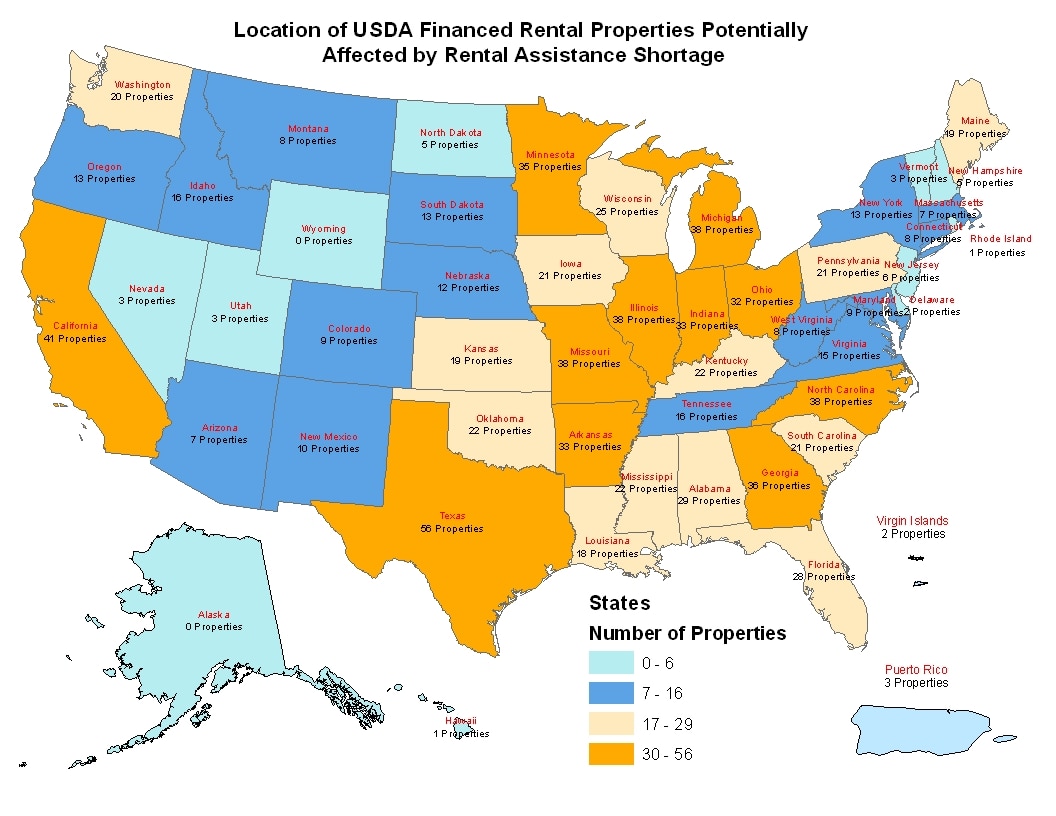
514-16-affected-properties-mapIn March 2013, Congress passed a final appropriations bill for the current fiscal year. While the final language included full spending bills for USDA, it was also subject to a 5% sequester and a 2.5% across the board cut. This resulted in a reduction of approximately $65 million to the Section 521 Rental Assistance program. USDA recently notified approximately 900 of its Section 515 Rural Rental Housing and Section 514 Farm Labor Housing borrowers whose rental assistance contracts would normally be renewed about the time funds will be exhausted. This short fall is ultimately expected to impact nearly 15,000 units in approximately 600 rental projects. USDA has committed to working closely with these borrowers to maintain the financial stability of the property. HAC urges affected borrowers to begin working with USDA at the earliest possible date to address the gap in Rental Assistance. USDA’s notice and a list of affected projects are below:

Letter from USDA RD

List of Affected Properties (Excel)

Help USDA Use Section 504 funds

With only 11 weeks remaining in FY13, USDA still has over $14 million available for Section 504 loans – more than half of the program’s appropriation. Loan funds not obligated by September 30 will be lost. Your help in getting out the word and working with RD to process loan applications is critical. All states will have access to loan funds after RD pools and redistributes the amounts not yet used in some states.

We know there is far more need than funds available for this program, which helps very low-income homeowners repair their homes. It would send the wrong message to have these sorely needed funds go unused. Please contact your local RD office and work with them to help eligible very low-income homeowners get their homes repaired!

When a Housing Advocate's Work Hits Home

When a Housing Advocate’s Work Hits Home

By Leslie Strauss

It’s been a very long time since I saw the movie “Dr. Zhivago,” but I can remember clearly the noisy crowd the doctor finds in his family mansion when he comes home from war. The family is being forced to share their home with a dozen other families, each occupying one room.

I would hate to live that way. But on a policy level it makes some sense, well, without the overcrowding. If we divided the available space in U.S. homes by the number of people, wouldn’t there be an appropriate number of square feet per person?

Sure, forcing people to share their space would make everyone a little uncomfortable, but wouldn’t that be better than having some people live without electricity or pay more than half their income for housing every month? Just temporarily, until we find a way to provide decent, affordable, separate living spaces for everyone.

Read more…

HAC Receives Bank of America Funding

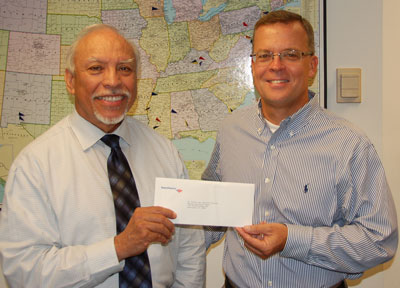
Moises-and-Steve-Cropped_webStephen B. Fitzgerald, Senior Vice President of the Bank of America Charitable Foundation, presents a check to Moises Loza for support of HAC’s work in affordable rural housing. A key and very generous supporter of HAC for a number of years, Bank of America is also a major investor in HAC’s Rural Housing Loan Fund.

Center for American Progress Report Includes HAC Research

Making the Mortgage Market Work for America’s Families

A new report from the Center for American Progress and the National Council of La Raza analyzes the current state of mortgage finance and makes some recommendations for improving the current system. HAC research is referenced in the rural portions of the report.

A Resource for Programs Serving Rural Veterans

HAC would like to share the following announcement from USDA Rural Development about its community facilities. For more information, consult the link below for RD State Offices:

https://www.rurdev.usda.gov/recd_map.html

A RESOURCE FOR PROGRAMS SERVING RURAL VETERANS

USDA Rural Development’s Community Facilities (CF) Program provides financing through direct and guaranteed loans and grants to units of local government, nonprofit organizations and Federally-recognized Indian Tribes for the development of essential community facilities is rural areas. These loans and grants may be used to support the construction, purchase, development or renovation of essential community facilities for public use in rural communities with populations of 20,000 or less.

These facilities include schools, libraries, adult and child care centers, homeless shelters, hospitals, medical clinics, assisted living facilities, fire and rescue stations, police stations, community centers, public buildings and transportation. All facilities funded with CF funding must be open to the entire community and cannot be limited to a particular group, such as veterans. So, as long as the services, which are described below, are provided to meet rural needs, including veterans, the funding can be made available.

Specifically, CF can provide funding for critical facilities and services to support homeless veterans (and others). For example, CF funding can be used to support local and regional food system projects, such as the construction of a food bank. This funding can also be used to renovate, purchase and install equipment to maintain a kitchen to prepare food and food services and to purchase vehicles for food delivery. Additionally, funding can be used to purchase a commercial van to deliver food to disabled veterans or to pick up veterans and other rural citizens and deliver them to a center where food is provided to them. The funding can also be used to construct a wheelchair ramp access for existing food banks which provide service to veterans and other rural citizens. CF funding can be used to develop or improve a rural community health center to improve access to critical health care services for veterans (and others).

For more information, consult RD State Offices.
Battling Metropollyanna

rflns_metropollyannaBattling Metropollyanna

Can’t find affordable housing where you live? Just move to wherever the housing is. Rural Americans have long been told to “move to town” to improve their housing situations.

The late Clay Cochran, one of the founders of the modern rural housing movement, called this Metropollyanna: the belief that eventually everyone will move to the city and live happily ever after.

It is not uncommon to hear politicians, pundits, and policymakers question the value of social services and public spending in rural parts of the United States where populations are small and resources are limited. This idea came up a couple of months ago in a LinkedIn discussionabout a Rooflines post titled “What Does the Push for Transit Oriented Development Mean for Rural Areas?” One commenter responded: “It means people will have to live in more population-concentrated, urban-proximate areas.”

Needless to say, rural housing supporters disagree.

Read the complete Blog post at Rooflines

Are We Prepared for a Senior Population Boom in Rural America – Webinar Training

To have an event posted on our calendar*, please e-mail Dan Stern. Or send event description or brochure to:

Housing Assistance Council
Attn: Dan Stern
1025 Vermont Avenue, NW
Suite 606
Washington, DC 20005

Or fax to (202) 347-3441
Attn: Dan Stern

[addthis2][/addthis2]

*Calendar Posting Guidelines:

HAC’s calendar posts announcements about periodic conferences, training sessions, audioconferences, and the like. Topics must be relevant to professionals in the rural housing and community development arena. HAC reserves the right to accept or decline any request to post an item. We do not include sessions provided by entities (for-profit or nonprofit) that offer numerous regularly scheduled training events; links to such entities are provided below.

Community Connections
IPED

HUD Calendar
NeighborWorks
Novogradac and Compan

Back to Trainings

The Silver Tsunami: Are We Prepared for a Senior Population Boom in Rural America

Start: May 1, 2013
Time: 2:00 – 3:00 pm EDT
Materials: Power Point Presenation, Recording
Registration: https://cc.readytalk.com/r/ry97n2uvhl6c

The Housing Assistance Council (HAC) is pleased to invite you to participate in a webinar on demographic change and its impact to the rural population and rural housing. The senior population will experience significant increases in the coming years, as the Baby Boom generation turns 65. The Census Bureau projects the senior population will grow from 13 percent of U.S. residents to 20 percent by 2050. An added 30 million individuals will become seniors over the next 20 years. Currently there are more than 18 million rural baby boomers, comprising nearly 28 percent of the rural population. With increasing life expectancies, one of the more dramatic growth trends will likely be substantial growth of the oldest population (age 85 and over). Is there enough safe and affordable housing for this expanding population?
Using data from U.S. Census and the American Community Survey, HAC will provide insights on changes and trends in aging and the potential impact of these changes on people, communities, and housing markets in rural areas of the United States.
This webinar is supported by The Atlantic Philanthropies. For more information, please email Janice Clark at Janice@ruralhome.org.

Rural Housing Budget Disappointing, But Not Surprising

Rural Housing Budget Disappointing, But Not Surprising

by Leslie Strauss, HAC

budget-screen-shotUnfortunately, but not unexpectedly, the Obama administration’s rural housing budget continues trends that were evident in the last several budget requests.

The guiding principle seems to be, as it is for “safety net” programs generally, reducing spending rather than meeting needs.

The USDA’s flagship rural housing efforts have long been direct loan programs: Section 502 for homebuyers and Section 515 for those who provide rental housing. Like past Obama administration budgets, the FY14 request emphasizes USDA’s loan guarantees rather than direct lending. The guarantee programs—Section 502 guaranteed for homebuyers and Section 538 for rental housing—are “budget neutral” because participants pay fees that cover the programs’ costs. They carry higher interest rates, however, and therefore serve residents with somewhat higher income levels than those using the direct loan programs.

Read more…

The Color of Elsewhere: Identity and Wealth in Rural America

Stefani Cox, former HAC Research Associate, posted an article about rural planning and development in the Berkely Planning Journal.

Most of us have heard of the growing racial wealth gap and the statistics that show how white America continues to diverge from households of color when it comes to building assets, particularly in the form of quality homeownership. While we may tend to think about this disparity in the context of urban and suburban environments, it is crucial to also relate the issue to the households that live on the other 90% of the U.S. landmass, known as rural and small town America.

Read the full post…

GET THE HAC NEWS!

Sign-up for HAC information products

SIGN UP HERE

Housing Assistance Council   |  1828 L Street. N.W., Suite 505, Washington, D.C. 20036
(202) 842-8600 (202) 347-3441 hac@ruralhome.org |

Board Portal

HAC is an equal opportunity provider, employer, and lender. | Civil Rights | Privacy