Pre-applications for USDA Farmworker Housing Funds Due August 27

USDA’s Rural Housing Service is now accepting pre-applications for Section 514 Farm Labor Housing loans and Section 516 grants. The funds can be used to construct new housing and related facilities, or to purchase and substantially rehabilitate property that will become housing for farm laborers. Pre-applications are due to USDA Rural Development State Offices on August 27, 2018.

HAC Accepting Nominees for Rural Housing Awards

HAC is now accepting nominations for its 2018 Cochran/Collings National Service and Skip Jason Community Service Leadership Awards. Nominations are due Friday July 13, 2018. The awards will be presented at the 2018 Rural Housing Conference (RHC) in December. Complete the online nomination form.

Questions? Contact HAC’s Lilla Sutton at (202) 842-8600 or lilla@ruralhome.org.

New Webinar Series on Financing Farm Labor Housing with USDA Section 514/516 Funding

HAC will be hosting a three-part series of webinars focused on financing farm labor housing using Section 514/516 funding. Register now for all three!

Happy Holidays from the Housing Assistance Concil

Happy Holidays from your friends at HAC

The Housing Assistance Council would like to thank you for your dedication to building rural communities. We would also like to salute you for your continuous support of HAC and the work we do to provide quality affordable housing to the rural poor, especially the poorest of the poor in the most rural places.

As you celebrate the holiday season, we hope you will take a moment and make a donation to HAC. Your tax-deductible donation helps support HAC’s work in rural communities across the country.

Wishing you the brightest and happiest of holidays, and a joyous new year.

2017 Southern California Wildfires Disaster Guide

December 22, 2017

HAC’s 2017 Southern California Wildfires Disaster Guide provides resources for emergency preparedness and disaster recovery.

2017 Southern California Wildfires Disaster Guide Supplement

HAC Joins Summit on Addressing the Needs of Aging Veterans

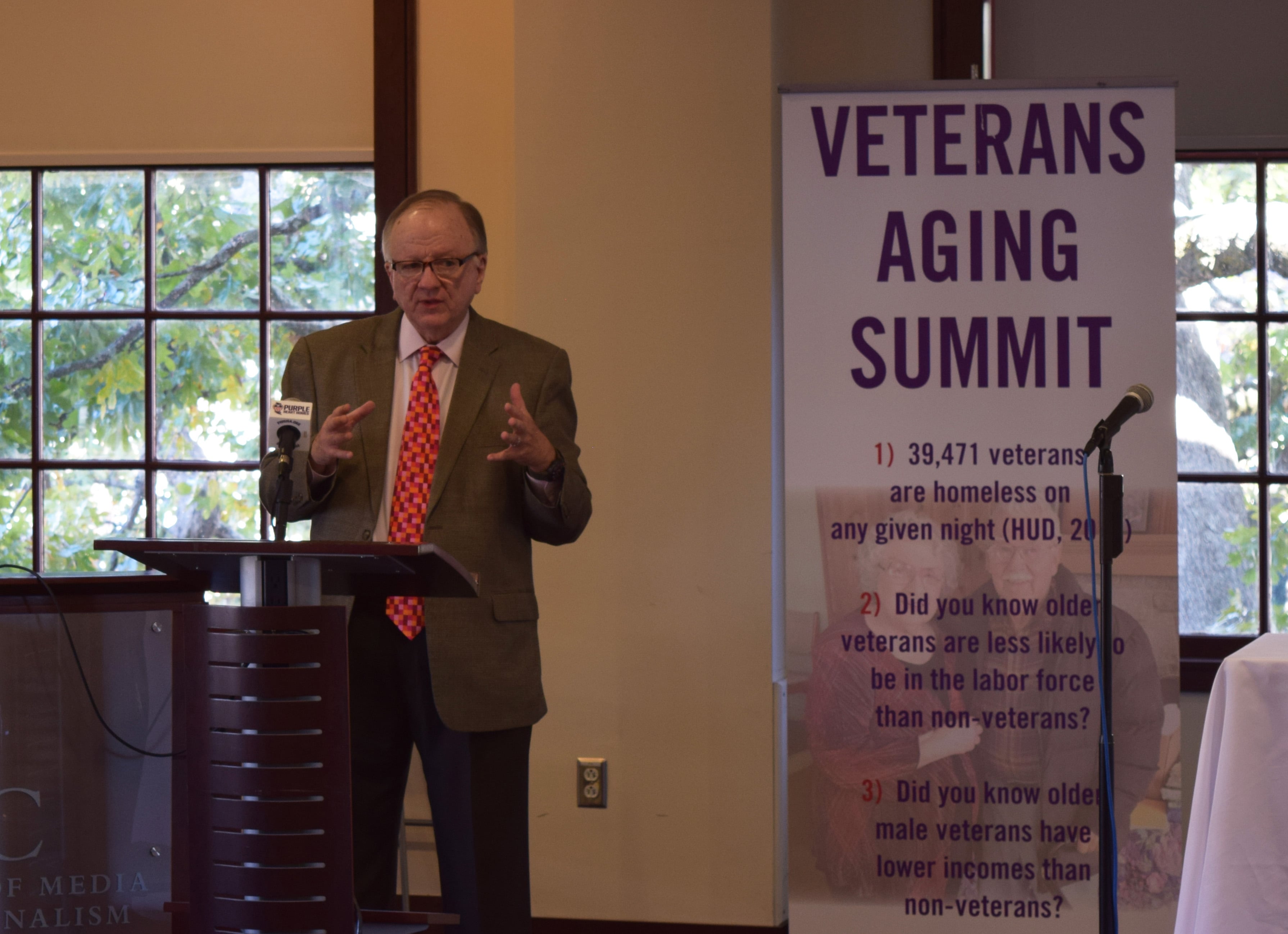
On Friday, October 20, 2017, the Housing Assistance Council joined The Home Depot Foundation and the National League of Cities to support Purple Heart Homes in their 1st Annual Veterans Aging Summit. Held at the University of North Carolina, the summit convened nonprofit practitioners, Veterans’ service organizations, researchers, educators, public policy makers, community leaders, government representatives, and other interested stakeholders to collaborate on identifying and meeting the needs of aging Veterans and their caregivers.

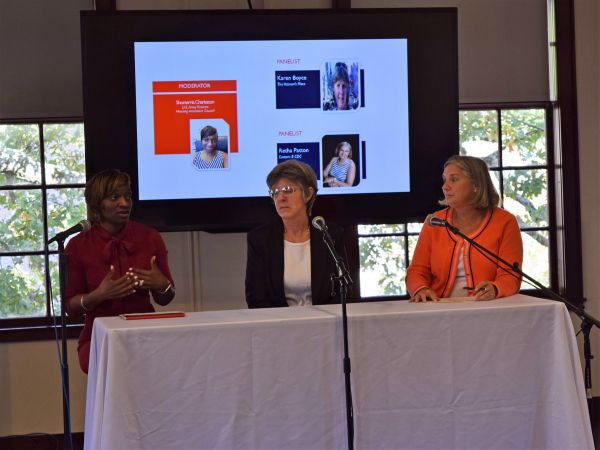
HAC's Shonterria Charleston, Karen Boyce (The Veteran's Place) and Retha Patton (Eastern Eight CDC) discuss housing rural veteransHAC’s Shonterria Charleston, Karen Boyce (The Veteran’s Place) and Retha Patton (Eastern Eight CDC) discuss housing rural veterans.

HAC coordinated the Aging Veterans and Housing Panel, which featured two of its Home Depot Foundation-funded grantee organizations, The Veteran’s Place (Karen Boyce) and Eastern Eight Community Development Corporation (Retha Patton). Moderated by HAC’s Shonterria Charleston, the panel focused on housing (single and multifamily) and service provisions to aging veterans and provided context to rural challenges, best practices and opportunities for successful projects.

Funding support provided by The Home Depot Foundation

HAC's Joe Belden speaking at the Aging Veterans SummitHAC’s Joe Belden speaking at the Aging Veterans Summit.

Rural Organizations Gather in Thomas, WV to Learn Placemaking Strategies

Nineteen rural-focused housing and community development-focused practitioners including AmeriCorps volunteers, rural housing developers, West Virginia University faculty, and regional grant makers were among those trekking to Thomas and Davis, West Virginia on October 3 and 4 for a “Creative Placemaking” Peer Exchange sponsored by HAC and bcWORKSHOP. Creative placemaking leverages locally-rooted arts to build community and local economies.
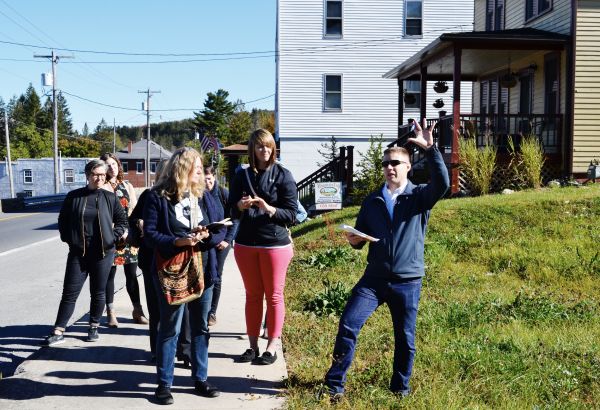
HAC's Stephen Sugg discusses Creative Placemaking with peer exchange attendeesHAC’s Stephen Sugg (right) discussed the pros and cons of infill housing in rural communities with participants.

Woodlands Development Corporation—a long-time HAC partner and a national leader in linking arts and stronger rural communities—hosted the exchange. Local artists/businesspersons, elected officials, and civic leaders were among those sharing their experiences. The communities of Thomas and Davis, West Virginia have become nationally known for a strong arts scene anchored by local galleries and The Purple Fiddle, a a music venue known for showcasing homegrown talent along with high-profile artists. Woodlands helps to ensure that all income levels are part of the communities’ recent growth and uptick in housing prices.

Participants tour a thriving business during a Creative Placemaking peer exchangeLocal artists shared their story of how financing and business coaching from Woodlands Community Builders helped to create a vibrant visual and performance art scene that anchors Thomas’ economy.

The peer exchange was the culmination of a National Endowment for the Arts (NEA) grant that supported HAC and bcWORKSHOP taking on two local pilot Creative Placemaking programs while disseminating lessons learned to HAC’s national network. The buildingcommunityWORKSHOP is a Texas based nonprofit community design center seeking to improve the livability and viability of communities through the practice of thoughtful design and making.

WHAT is CREATIVE PLACEMAKING:

The National Endowment for the Arts calls Creative Placemaking is an evolving field of practice that intentionally leverages the power of the arts, culture and creativity to serve a community’s interest while driving a broader agenda for change, growth and transformation in a way that also builds character and quality of place.

FEMA Requesting Unoccupied Homes for Harvey Victims

The Department of Homeland Security’s Federal Emergency Management Agency (FEMA) is making housing vouchers available to displaced families in Texas impacted by Hurricane Harvey. If your nonprofit or for-profit has vacant REO or inventory properties that might be available on a temporary or permanent basis, and have questions about the FEMA voucher program, please contact either of the FEMA representatives below:

Section 502 Loan Servicers May Offer Relief to Borrowers Affected by Harvey

This announcement outlines relief measures loan holders and loan servicers should implement to assist USDA Rural Development Section 502 Single Family Housing Guaranteed Loan Program (SFHGLP) borrowers affected by Hurricane Harvey. Homeowners impacted by the hurricane may be eligible for temporary relief and the determination of eligibility may require a property inspection. Due to the magnitude and aftermath of the hurricane, loan servicers must inspect properties that secure SFHGLP loans to ascertain the extent of damage and the occupancy status, particularly if contact has not yet been made with the borrower.

Loan servicers seeking to assist SFHGLP borrowers may pursue any of the relief options referenced in the following USDA guidance. Complete details outlining “Assistance in Natural Disasters” is located in Chapter 18, Section 4, 7 CFR 3555.307 of the SFHGLP Handbook. An electronic version of the Handbook can be found at: https://www.rd.usda.gov/files/hb-1-3555.pdf.

  1. FORBEARANCE: USDA Rural Development encourages SFHGLP loan servicers to extend forbearance alternatives to borrowers in distress as a result of Hurricane Harvey. Careful and precise communication with borrowers should help determine whether their difficulties are directly or indirectly related to Hurricane Harvey, or whether they stem from other sources which must be addressed.
  2. FORECLOSURE SUSPENSION: Although the loan servicer is ultimately responsible for determining when to initiate foreclosure, USDA Rural Development requires that holders establish a 90-day suspension from the date the President declared the disaster on foreclosure actions involving properties or the borrower’s place of employment affected by Hurricane Harvey. The properties should also be in Presidentially declared disaster areas designated through the Federal Emergency Management Agency (FEMA) as eligible for individual assistance. The foreclosure suspension applies to the initiation of new foreclosure actions and to foreclosure actions already in process.
  3. DOCUMENTATION: Holders and loan servicers should fully document their decisions when loss mitigation servicing actions are provided.

For questions, please contact the USDA Rural Development Customer Service Center by calling (866) 550-5887 or the National Office at (202) 720-1452. Homeowners with 502 guarantee loans should contact their bank.

HUD Releases Worst Case Housing Report

HUD released the its Worst Case Housing Needs 2017 Report to Congress. The report provides national data and analysis of the critical problems facing very low-income renting families. Households with worst case needs are defined as very low-income renters who do not receive government housing assistance and who paid more than one-half of their income for rent, lived in severely inadequate conditions, or both.

GET THE HAC NEWS!

Sign-up for HAC information products

SIGN UP HERE

Housing Assistance Council   |  1828 L Street. N.W., Suite 505, Washington, D.C. 20036
(202) 842-8600 (202) 347-3441 hac@ruralhome.org |

Board Portal

HAC is an equal opportunity provider, employer, and lender. | Civil Rights | Privacy