HAC News: April 28, 2022

Vol. 51, No. 9

TOP STORIES

Rural Partners Network launched.

A new “whole-of-government” effort led by USDA, the Rural Partners Network is intended to help rural communities access government resources and funding to create jobs, build infrastructure, and support long-term economic stability. USDA staffer Lee Jones has been named RPN’s executive director. Field staff will be placed in rural communities, starting with selected places in Georgia, Kentucky, Mississippi, and New Mexico, as well as certain tribes in Arizona. Additional efforts in Nevada, North Carolina, Puerto Rico, West Virginia, Wisconsin, and tribal communities in Alaska are planned to launch by the end of August and USDA hopes to expand eventually into all states, as well as more tribes and territories. For more information, contact RPN staff.

CFPB reports on rural banking access.

The Consumer Financial Protection Bureau, which recently announced a new initiative on rural financial issues, has published Data Spotlight: Challenges in Rural Banking Access. CFPB found that rural Americans rely on physical bank branches and smaller banks, though many lack access to physical branches; rural Americans are less likely to have a credit history and more likely to use non-bank credit, resulting in rural consumers paying more for credit; and medical debt affects rural access to credit, housing, and employment.

HAC lists its appropriations priorities.

As the FY 2023 appropriations process gets underway, HAC is supporting a variety of rural and tribal housing funding priorities for capacity building, rural rental preservation, and rural and tribal homeownership.

RuralSTAT

Small family farms operated 48% of U.S. farmland in 2020, down from 52% in 2011. They accounted for only 20% of production by value in 2020, while large-scale family farms (those with $1 million or more in gross cash farm income) yielded 46% of the total value of production. Source: USDA Economic Research Service.

OPPORTUNITIES

New round of farmworker housing funding announced.

On May 16 USDA will open its third application round for off-farm new construction funding from the Section 514/516 loan and grant programs. USDA will hold a webinar on May 11 to discuss the application process and the program. Preapplications will be due July 15. For more information, contact Abby Boggs, USDA, 615-490-1371.

HAC offers rental preservation financing.

USDA recently issued a Notice of Solicitation of Applications regarding its “no cost debt deferral” through the Multifamily Preservation and Revitalization program for Section 515 and 514 properties that have an obligation date after 10/1/1991. USDA will defer loan payments for 20 years to free up property funds for rehabilitation and improvements. Lower debt service payments will allow properties to leverage new financing or accumulate additional reserves for larger improvements. HAC has flexible, low-cost financing available for properties seeking debt deferrals through this program. Please reach out to Kristin Blum or Alison Duncan if you need financing for your Section 515 or 514 property or have questions on preservation of these properties.

Webinars to cover subdivision development for affordable housing.

Subdivision development is a complex undertaking that requires both a vision of what is possible and an eye for detail throughout the entire process. HAC offers a three-part webinar series, covering the process from start to finish, the financial risks and rewards for rural housing organizations, and more. The webinars are free and recordings will be posted online. Session 1: An Overview was held April 27. Session 2:  From Project Inception Through Land Acquisition is scheduled for May 11. Session 3:  From Land Acquisition to Completion will be on May 25.

Rural placemaking conference announced.

USDA and the University of Kentucky will hold a Placemaking in Small & Rural Communities Online Conference on May 23-24. Presenters will address rural placemaking strategies and provide placemaking resources, including a new interactive digital toolkit.

“Rural Talks” hybrid sessions planned.

Rural LISC will present webinars, with limited in-person attendance available in Washington, DC, on three rural community development topics: Broadband and Infrastructure on May 10-11, Housing on July 13-15, and Workforce and Small Business on December 7-9.

REGULATIONS AND FEDERAL AGENCIES

New USDA appointees have rural housing experience.

Tom Carew, formerly with Fahe and Frontier Housing, has been appointed USDA Rural Development State Director in Kentucky. Michele Weaver, whose background includes work with the Rural Community Assistance Corporation, was named RD State Director in Utah. HAC has posted a list of all USDA RD State Directors appointed by President Biden to date. These positions do not require Senate confirmation.

VA mortgage program for Native Americans needs improvements, study says.

The Department of Veterans Affairs’ Native American Direct Loan program has made relatively few loans, reports the Government Accountability Office in Native American Veterans: Improvements to VA Management Could Help Increase Mortgage Loan Program Participation. In addition to steps VA has already taken to strengthen the program, GAO recommends better data collection and performance measurement, planning, and working with other VA offices, federal agencies, and local organizations with applicable experience.

Duty to Serve plans accepted.

After twice requesting revisions, the Federal Housing Finance Agency has accepted the plans submitted by Fannie Mae and Freddie Mac for meeting their 2022-2024 Duty to Serve obligations. FHFA will review actions taken under the plans to ensure they address the needs of the three DTS underserved markets (manufactured housing, affordable housing preservation, and rural housing).

HUD to review barriers for people involved with criminal justice system.

As part of a broader federal effort to expand opportunities for formerly incarcerated persons, HUD Secretary Marcia Fudge has directed program offices to identify and propose changes to regulations, guidance documents, and other policies that may pose barriers to housing for persons with criminal histories. HUD also established a web page with information on preventing homelessness among people leaving prisons and jails.

Guidance addresses fair housing in rental properties’ marketing and applications.

HUD’s Office of Fair Housing and Equal Opportunity released new guidance on how some marketing, rental application processing, and waitlist management practices can perpetuate segregation or otherwise discriminate, violating fair housing requirements for HUD-subsidized multifamily housing. The guidance is intended to help property owners understand and implement more inclusive practices.

Equity Commission to meet.

USDA’s Equity Commission and its Subcommittee for Agriculture will meet on May 10 and 11. The meetings are open to the public online. For more information, contact Cecilia Hernandez, USDA, 202-913-5907.

Income limits revised.

The annual limits, which determine eligibility for several HUD programs, are effective April 18.

USDA explains which guaranteed loans can use oneRD provisions.

USDA Rural Development has confirmed its regulations for the oneRD Guarantee Loan Program are final as published in December. OneRD provides a standard set of requirements, processes and forms for lenders using the Community Facilities, Water and Waste Disposal, Business and Industry, and Rural Energy for America loan guarantee programs. Some provisions can be used for applications pending review, conditional commitments, and loans made under OneRD since October 1, 2020. For more information, contact Lauren Cusick, USDA, 202-720-1414.

Review notes flaws in USDA decision to move agencies.

A new Government Accountability Office report, Evidence-Based Policy Making: USDA’s Decision to Relocate Research Agencies to Kansas City Was Not Fully Consistent with an Evidence-Based Approach, considers USDA’s 2019 decision to move most Economic Research Service and National Institute of Food and Agriculture jobs from Washington, DC to Kansas City. GAO concludes that “USDA overlooked key evidence, e.g., it didn’t factor in potential costs related to the attrition of staff or the disruption of agencies’ activities due to the relocation. As a result, USDA cannot be sure it made the best choice to meet its objectives.” USDA confirmed last year that it will not disrupt the agencies again by moving them back to Washington, DC.

PUBLICATIONS AND MEDIA

U.S. needs 7 million more homes for lowest-income renters.

The National Low Income Housing Coalition’s annual publication, The Gap: A Shortage of Affordable Homes, reports there are shortages in every state. Nationwide, only 36 affordable and available rental homes exist for every 100 extremely low-income renter households (those with incomes below poverty or below 30% of their area median income, whichever is greater). The report concludes that both short- and long-term policy interventions are needed to address the immediate housing impacts of the pandemic and the underlying shortage of affordable housing.

Survey shows risky home financing used by millions.

Briefs from the Pew Charitable Trusts review existing research and report the results of a Pew survey to explore U.S. homebuyers’ use of nonstandard financing such as land contracts, seller-financed mortgages, lease-purchase agreements, and personal property loans. Usage varies by race/ethnicity: 34% of Hispanic borrowers have used alternative financing at some point, as have 23% of non-Hispanic Black borrowers and 19% of non-Hispanic white borrowers. Pew’s analysis notes some of the factors that lead residents of high-poverty rural areas to use alternative financing, including low incomes, the difficulty of mortgaging trust land, the lack of standard mortgage options for low purchase prices, and manufactured homes’ legal status in some places as personal property.

HAC

Need capital for your affordable housing project?

HAC’s loan fund provides low interest rate loans to support single- and multifamily affordable housing projects for low-income rural residents throughout the U.S. and territories. Capital is available for all types of affordable and mixed-income housing projects, including preservation, new development, farmworker, senior and veteran housing. HAC loan funds can be used for pre-development, site acquisition, site development, construction/rehabilitation and permanent financing. Contact HAC’s loan fund staff at hacloanfund@ruralhome.org, 202-842-8600.

Please note: HAC is not able to offer loans to individuals or families. Borrowers must be nonprofit or for-profit organizations or government entities (including tribes).
HAC News: April 14, 2022

Vol. 51, No. 8

TOP STORIES

Nominations open for Rural Community Economic Development Subcommittee, other advisory bodies.

  • USDA Equity Commission: The commission requests nominations by May 6 for its new Rural Community Economic Development Subcommittee, which will be charged with providing recommendations to the department on issues and concerns related to rural development, persistent poverty, and underserved communities. For more information, contact Cecilia Hernandez, USDA, 202-913-5907.
  • Treasury Department: The Treasury Advisory Committee on Racial Equity will provide information, advice and recommendations relating to the advancement of racial equity. Nominations are due April 25. For more information, contact Janis Bowdler, Treasury, 202-622-3002.
  • Government Accountability Office: Nominations are due May 20 for GAO’s first standing Tribal Advisory Council, which will advise GAO on issues affecting tribes and Indigenous peoples relevant to the agency’s work evaluating federal programs serving tribes and related topics. For more information, contact Paige Gilbreath, GAO, 214-777-5724.

Majority of persistently poor counties are rural and have had high poverty for many decades.

The Persistence of Poverty in Rural America, a new Rural Research Brief from HAC, estimates that in 2020 there were 377 U.S. counties and county equivalents where poverty rates remained at 20% or more for three consecutive decades. For the first time, HAC also calculated persistent poverty status for Puerto Rico; including that territory, there are a total of 455 Persistent Poverty Counties. Approximately 78% of Persistent Poverty Counties in 2020 have been in this status consistently since 1980.

RuralSTAT

All 78 of Puerto Rico’s municipios (county equivalents) were classified as having persistent poverty status in 2020. Source: HAC tabulations of the U.S. Census Bureau’s 2016-2020 American Community Survey, the 2006-2010 American Community Survey, and the 2000 Decennial Census of Population and Housing.


OPPORTUNITIES

HAC offers rental preservation financing.

USDA recently issued a Notice of Solicitation of Applications regarding its “no cost debt deferral” through the Multifamily Preservation and Revitalization program for Section 515 and 514 properties that have an obligation date after 10/1/1991. USDA will defer loan payments for 20 years to free up property funds for rehabilitation and improvements. Lower debt service payments will allow properties to leverage new financing or accumulate additional reserves for larger improvements. HAC has flexible, low-cost financing available for properties seeking debt deferrals through this program. Please reach out to Kristin Blum or Alison Duncan if you need financing for your Section 515 or 514 property or have questions on preservation of these properties.

REGULATIONS AND FEDERAL AGENCIES

Departments issue equity action plans.

On April 13 the White House announced that more than 90 federal agencies were releasing equity action plans. The plans generally acknowledge the particular barriers faced by rural places and tribal entities. USDA’s plan asserts the department’s intentions to “establish a place-based model to deliver federal rural development resources” and to prioritize RD projects that assist in recovering from the pandemic, ensure equitable access, and reduce climate impacts and increase resilience. One section of the plan specifically addresses tribal access to USDA programs. HUD’s plan focuses on four topics: widening the entities it funds, fair housing, homeownership, and homelessness. The U.S. Interagency Council on Homelessness developed its own plan as well. The Treasury Department’s document summarizes actions taken and plans for the future in its various pandemic relief programs, which include Emergency Rental Assistance, the Homeowner Assistance Fund, and the Child Tax Credit. The Department of Commerce expects to work towards closing the digital divide, particularly for rural and tribal communities.

Rural infrastructure information released.

The White House released a Bipartisan Infrastructure Law Rural Playbook and launched a tour for administration officials, including Cabinet secretaries, “to engage rural communities throughout the country.” The playbook describes efforts funded by the law – which focused on traditional infrastructure and did not include housing – and provides links to government sites for more information. An accompanying USDA factsheet emphasizes broadband and climate resilience.

Some foreclosures suspended while homeowners seek aid.

Companies that service mortgages owned by Fannie Mae and Freddie Mac will be required to suspend foreclosure activities for up to 60 days if the servicer has been notified that a borrower has applied for assistance under the Homeowner Assistance Fund, which is run through state, local, and tribal governments. Fannie Mae and Freddie Mac offer online lookup tools to determine whether one of them owns the mortgage on a property. For more information, contact the bank or company where mortgage payments are made. For information on USDA direct Section 502 loans, which are not owned by Fannie Mae or Freddie Mac, contact USDA’s Customer Servicing Center, 1-800-414-1226.

Treasury to reallocate more Emergency Rental Assistance funds.

The Treasury Department has issued its reallocation guidance for the second Emergency Rental Assistance program (ERA2), along with updated ERA1 guidelines and data on aid distributed through the end of February. Because Treasury expects relatively few ERA2 funds will be available for reallocation, it encourages state, local, and tribal governments to use other sources, including their State and Local Fiscal Recovery Funds, to assist more renters.

PUBLICATIONS AND MEDIA

Rural housing voucher use fell, homeowner repair grants not fully used in FY21.

HAC’s Fiscal Year 2021 USDA Rural Development Housing Activity Report shows that in FY21 USDA obligated about $1.0 billion for 5,355 Section 502 direct loans, with just over 36% of the obligated funds going to very low-income borrowers. The Section 502 guaranteed loan program covered 137,970 mortgages. Section 504 repair loans for homeowners were underutilized, as is usually the case, but Section 504 grants, fully used in most years, left more than $5 million unobligated in FY21. Multifamily housing financing included 96 Section 538 loan guarantees totaling nearly $230.0 million, 47 Section 515 direct rental housing loans totaling $38.3 million to repair or rehabilitate 1,343 units, and two loans and one grant from the Section 514/516 farm labor housing program. Section 521 Rental Assistance funded 284,194 units totaling $1.5 billion. For the first time, the number of Section 542 housing vouchers fell, dropping from 7,489 in FY20 to 7,261 in FY21.

Tribal housing aid finder launched online.

The Tribal Housing Assistance Resource Hub, created by the National American Indian Housing Council, is intended to enable American Indian, Alaska Native, and Native Hawaiian homeowners, individuals, and families, to find mortgage, utilities, and rental assistance services. It covers two federal programs administered by state and tribal governments – the Homeowner Assistance Fund and the Emergency Rental Assistance Program – as well as services offered by tribal housing programs, such as home loan assistance, homebuyer education, elder and veteran housing, and others.

Redlining Toolkit addresses fair and equitable access to credit.

A new publication from the National Fair Housing Alliance is intended to help understand the public data relating to redlining risk in order to take action and promote racial equity. It includes information about the history and legal framework for redlining, provides tools to identify specific lenders with high redlining risk, and offers guidance for taking action when a lender shows high redlining risk in a community of color.

Report looks at lessons learned for designing rent aid.

Emergency Rental Assistance (ERA) During the Pandemic: Implications for the Design of Permanent ERA Programs, released by the National Low Income Housing Coalition and the Housing Initiative at Penn, discusses the findings from a survey of 100 administrators of the Emergency Rental Assistance program during the pandemic. Lessons in the report include the need for permanent emergency rental assistance programs and flexibility in requirements for applications.

Water contaminants mapped at county level.

A Drinking Water Dashboard compiled by Columbia University offers an interactive map and links to datasets showing contaminant exposure estimates in community water systems across the U.S. It accompanies a study titled Sociodemographic Inequalities in Uranium and Other Metals in Community Water Systems Across the USA, 2006-11: A Cross-Sectional Study.

Child Tax Credit payments used for essentials, including housing.

The Annie E. Casey Foundation’s Kids Count Data Center analyzed data from the Census Bureau’s Household Pulse Survey and found that from July through December 2021 the most common reported uses of monthly Child Tax Credit payments were for basic needs, including food (65%), utilities and telecommunications (40%), rent and mortgage (39%) and clothing (34%). The Pulse Survey does not break down data by geography below the state level, but previous analyses found that families living outside metro areas were more likely than those in metro areas to benefit from the tax credit.

Rural leaders talk policy for 2071.

A new post on HAC’s Vision 2071 site reports on eight experts’ visions for how federal housing policy could solve the toughest challenges facing rural America. In Policy 2071: How Do We Help Rural America Thrive?, they put forward approaches that incorporate strategy, funding, and flexibility that deepen local capacity, lift up the natural advantages found in rural places, and result in a coordinated set of federal policies designed purposefully for small towns and rural regions.

HAC

Need capital for your affordable housing project?

HAC’s loan fund provides low interest rate loans to support single- and multifamily affordable housing projects for low-income rural residents throughout the U.S. and territories. Capital is available for all types of affordable and mixed-income housing projects, including preservation, new development, farmworker, senior and veteran housing. HAC loan funds can be used for pre-development, site acquisition, site development, construction/rehabilitation and permanent financing. Contact HAC’s loan fund staff at hacloanfund@ruralhome.org, 202-842-8600.

Please note: HAC is not able to offer loans to individuals or families. Borrowers must be nonprofit or for-profit organizations or government entities (including tribes).
HAC News: March 31, 2022

Vol. 51, No. 7

TOP STORIES

Budget proposes to increase nationwide housing production and rural rental preservation.

The Biden Administration’s budget for fiscal year 2023 proposes to boost housing production in almost every USDA rural housing program and many HUD programs.

  • USDA direct lending for both homeownership and rental housing would increase, as would guaranteed loans for rental housing, home repair loans and grants, and rental preservation resources. Preservation funding through the Section 515 program would jump from $50 million in FY22 to $200 million under the budget, and the Multifamily Preservation and Revitalization program would almost double from $34 million to $75 million.
  • USDA proposes a multi-pronged approach to support tenants in rental properties where USDA mortgages are ending. It would decouple Section 521 Rental Assistance from Section 515 and 514 mortgages, so that some tenants could continue to receive RA after mortgage maturity. Tenants in other properties leaving USDA’s programs would receive Tenant Protection Vouchers from HUD, while those who currently have USDA Section 542 vouchers would be eligible to renew them.
  • A new Housing Supply Fund would be created at HUD to provide $25 billion in mandatory grants to states, localities, tribes, and partners for housing production, with another $10 million for removal of state and local barriers to production. Also contributing to housing supply increases would be $10 billion in the Treasury Department’s budget for additional Low Income Housing Tax Credits and a new $5 billion for CDFIs to finance production and preservation of housing, with an emphasis on underserved areas and small properties.
  • HOME, CDBG, homeless assistance, Section 202 for seniors, Section 811 for persons with disabilities, and housing vouchers would also receive increases. Native American housing would see a slight drop from $1.002 billion to $1 billion, but tribes would be eligible for the new Housing Supply Fund.
  • USDA, HUD, and Treasury all emphasize the importance of energy efficiency and climate resiliency.
  • More details are posted on HAC’s website for USDA and HUD programs, as well as materials and a recording from HAC’s budget webinar held on March 30.

April is Fair Housing Month.

Fair housing information is available on HUD’s website.

HAC receives gift from MacKenzie Scott.

HAC is pleased to announce a $7,000,000 gift from MacKenzie Scott, the largest private gift in HAC’s 50-year history. HAC will leverage this funding to establish and grow local organizations that build affordable housing in the nation’s poorest and most rural places. This gift ensures that more people and more communities will enjoy the benefits of American prosperity.

RuralSTAT

USDA’s Section 502 direct loan program provided over 5,350 mortgages to low- and very low-income homebuyers in fiscal year 2021, and the increased funding proposed for FY23 would support around 7,800 mortgages. Source: 2023 USDA Budget Explanatory Notes – Rural Housing Service.

OPPORTUNITIES

Rural places prioritized for Youth Homelessness Demonstration Program funding.

Nonprofits, tribes or tribally designated housing entities, and state or local governments collaborating with Continuums of Care can apply by June 28 for the Youth Homelessness Demonstration Program, designed to address systemic responses to youth homelessness and significantly reduce the number of youth experiencing homelessness. HUD will select up to 25 communities, with a priority for communities with substantial rural populations in up to eight locations. For more information, contact Caroline Crouse, HUD, 612-843-6451.

Farm labor housing repair deadlines corrected.

Preapplications are due May 9 rather than April 2 for funding to repair USDA off-farm Section 514/516 farmworker housing. Funds can be used either for substantial rehabilitation or for limited improvements, repairs, or modifications such as accessibility compliance and health and safety issues. USDA will hold a workshop for potential applicants on April 13. For more information, contact Jonathan Bell, USDA, 254-742-9764.

HUD seeks nominations for tribal advisory committee.

HUD requests nominations by May 31 of elected or appointed tribal leaders to represent federally recognized tribal governments and Alaska Native Corporations on an Intergovernmental Tribal Advisory Committee. The committee will supplement, not replace, existing tribal consultation processes. For more information, contact Heidi J. Frechette, HUD, 202-401-7914.

Webinar to cover broadband for affordable rural housing.

Affordable Housing & Affordable Broadband: A Conversation with Rural LISC and CTC Energy & Technology, scheduled for April 13, will address the steps affordable housing owners, operators, lenders, and other stakeholders in rural places can take to ensure competitive, accessible broadband at their properties. This is the first in a planned series of rural housing webinars from Rural LISC.

REGULATIONS AND FEDERAL AGENCIES

Appraisal equity plan released.

The Interagency Task Force on Property Appraisal and Valuation Equity, charged with identifying ways to address racial and ethnic bias in home valuations, released its action plan on March 23. The 13 participating federal agencies, including USDA and HUD, have committed to make the appraisal industry more accountable, empower consumers, prevent algorithmic bias in home valuation, cultivate an appraiser profession that is well-trained and looks like the communities it serves, and use data and expertise to inform policy, practice, and research on appraisal bias.

Treasury publishes updates to Emergency Rental Assistance guidance, spending data, and reallocation processes.

Recently updated guidance tells the state and local entities distributing ERA funds that federal privacy laws do not permit asking applicants to provide Social Security Numbers. Reallocation of unspent ERA2 funds is covered in another guidance document and information about ERA1 reallocation is updated. Finally, Treasury reports that state and local ERA grantees have made over 4.7 million payments to households and spent or obligated approximately $30 billion of the program’s total $46 billion. Treasury expects the vast majority of the remaining funds to be deployed to households or paid to grantees by the middle of 2022.

FEMA to cover some coronavirus costs through July 1.

FEMA will continue to cover the full cost of some coronavirus-related expenditures, including the costs of non-congregate shelters, through July 1, 2022.

Comments requested on updating Davis-Bacon Act regulations.

The Department of Labor is undertaking its first comprehensive review in almost 40 years of the regulations that implement the Davis-Bacon Act and related laws, requiring employers on federally funded or assisted construction projects to pay locally prevailing wages to construction workers. Comments are due May 17. For more information, contact Amy DeBisschop, DOL, 202-693-0406.

PUBLICATIONS AND MEDIA

Alternative measurement of housing affordability identifies high cost burden rate for renters.

Cost burden is usually calculated by determining whether a household spends more than 30% of income on housing, but researchers at Harvard’s Joint Center for Housing Studies calculated housing cost burdens for renters based on residual income – the amount available for other needs after paying housing expenses. “The Rent Eats First”: Rental Housing Unaffordability in the United States, published in Housing Policy Debate, reports that in their sample nearly all households with incomes under $30,000 did not have enough residual income. They found that a combined policy that addresses both housing and transportation affordability would have the largest impact on reducing residual-income cost burdens.

Updated overviews of housing programs published.

Rural hospital closures disproportionately affecting minority populations.

A study by the University of North Carolina Rural Research Program found that hospital closures between 2010 and 2020 were more likely to occur in rural counties that had higher share of Black and Hispanic residents, were more urbanized, and were more likely to be located in the southern U.S. compared to previous decades. These counties were also more likely to have higher income inequality than the median rural county.

HAC

Need capital for your affordable housing project?

HAC’s loan fund provides low interest rate loans to support single- and multifamily affordable housing projects for low-income rural residents throughout the U.S. and territories. Capital is available for all types of affordable and mixed-income housing projects, including preservation, new development, farmworker, senior and veteran housing. HAC loan funds can be used for pre-development, site acquisition, site development, construction/rehabilitation and permanent financing. Contact HAC’s loan fund staff at hacloanfund@ruralhome.org, 202-842-8600.

Please note: HAC is not able to offer loans to individuals or families. Borrowers must be nonprofit or for-profit organizations or government entities (including tribes).
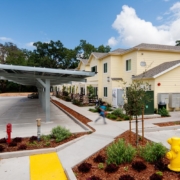
Solar panels covering parking spaces at Calistoga Family Apartmentshttps://flic.kr/p/CpXy7x The U.S. Department of Agriculture

Housing Assistance Council Receives Gift from Mackenzie Scott

Contact: Jennifer McAllister
(202) 842-8600
jennifer@ruralhome.org

Washington, DC, March 23, 2022 – The Housing Assistance Council (HAC) is pleased to announce a $7,000,000 gift from MacKenzie Scott, the largest private gift in HAC’s 50-year history. HAC will leverage this funding to establish and grow local organizations that build affordable housing in the nation’s poorest and most rural places. This gift ensures that more people and more communities will enjoy the benefits of American prosperity.

“HAC and our local partners work in small towns and rural communities to develop good quality housing that folks can afford,” said HAC CEO David Lipsetz. “Ms. Scott’s trust in our organization and encouragement to do more will help plenty of communities in need.”

“This gift helps HAC remain true to its mission,” said Maria Luisa Mercado, HAC’s Board Chair. “We will continue to be the voice for the poorest of the poor in the most rural places.”

About the Housing Assistance Council

The Housing Assistance Council (HAC) is a national nonprofit that supports affordable housing efforts throughout rural America. Since 1971, HAC has provided: below-market financing for affordable housing and community development; technical assistance and training for community-based organizations; research on life in rural places; and information for federal policy-makers on the impact of their work on rural places. To learn more, visit www.ruralhome.org.

###

HAC News: March 17, 2022

Vol. 51, No. 6

TOP STORIES

Final appropriations set for FY22.

An omnibus appropriations act establishes federal funding levels for fiscal year 2022, which ends on September 30, 2022.

  • Several USDA rural housing programs receive modest funding increases rather than the significant boosts for rental housing that were included in House and/or Senate versions. The bill expands eligibility for Section 542 vouchers, allows rental property owners to request 20-year Rental Assistance contracts, and continues to require that at least 10% of most USDA Rural Development programs, including most housing programs, be set aside for persistent poverty counties where the poverty rate has been at least 20% for 30 years. For more details, see HAC’s site.
  • Many HUD programs will receive more funding in fiscal year 2022 than in 2021, although the final figures generally fall below the highest increases proposed by the Biden administration, the House, or the Senate. The SHOP program was increased from $10 million in FY21 to $12.5 million – the first increase in the program since FY15. The spending agreement also encourages HUD to consider increasing SHOP’s current $15,000 per-unit cap. The measure includes funds for 25,000 new rental vouchers. For more details, see HAC’s site.

Census continues trends of undercounting some populations.

While there was not a statistically significant overcount or undercount for the total U.S. population, the Census Bureau recently announced that an analysis of the 2020 decennial census estimated national undercounts for renters and Black or African American, American Indian or Alaska Native, some other race, and Hispanic or Latino populations. A second study identified undercounts of young children under age 5 and working age men. Additional estimates of coverage will be released later this year, including estimates on housing units as well as for race and Hispanic origin.

RuralSTAT

There are approximately 15 million ‘Baby Boomers’ in rural America making them one of the largest age groups in many rural communities. But rural America is not a monolith and there are important dynamics in all rural age strata. For more information on Age and Aging in Rural America visit HAC’s website. Source: HAC tabulations of the Census Bureau’s 2014-2018 American Community Survey.

OPPORTUNITIES

USDA offers loan deferrals for rental preservation.

Owners or purchasers of rental properties with USDA Section 515 or 514 loans can apply by May 16 for 20-year payment deferrals, with the cash flow to be used for revitalization and preservation of the properties. This notice does not offer other forms of preservation assistance and no additional Section 521 Rental Assistance is available. Preregister here for an April 5 USDA workshop on this opportunity. For more information, contact Fallan Faulkner, USDA, 615-812-0050.

USDA-financed farmworker housing eligible for repair funding.

Section 514 loans and Section 516 grants are available for repair of off-farm labor housing with current Section 514/516 funding. Funds can be used either for substantial rehabilitation or for limited improvements, repairs, or modifications such as accessibility compliance and health and safety issues. USDA will hold a workshop for potential applicants on April 13. Pre-applications are due April 25. For more information, contact Jonathan Bell, USDA, 254-742-9764.

HAC schedules webinar on healthy homes innovations.

Building Smart and Building Healthy, to be held March 23, is the third in a series designed to share innovative solutions for affordable housing developers dealing with escalating prices and implementing additional regulations. This session will explore innovations in building/repairing healthy homes and their impact on inhabitants and their communities. For more information, contact HAC staff.

Placemaking resources to be launched.

Under a new cooperative agreement with USDA, the University of Kentucky will offer a digital toolkit to connect local leaders with technical assistance providers, funding organizations, planning guides, and other placemaking resources. USDA’s announcement describes placemaking as a collaborative planning and technical assistance process that helps rural community leaders develop plans to create quality places where people will want to live, work, visit, learn and explore. A virtual workshop is planned for May 23 and 24. For more information, sign up to receive updates from USDA. The Citizens’ Institute on Rural Design, a leadership initiative of the National Endowment for the Arts in partnership with HAC, offers additional rural placemaking and rural design resources.

FY23 budget to be released this month.

The Biden administration is expected to publish its funding request for fiscal year 2023 before the end of March. HAC will post an analysis of the budget and will hold a webinar, to be scheduled when the budget is released.

REGULATIONS AND FEDERAL AGENCIES

Violence Against Women Act expanded.

The FY22 omnibus appropriations bill includes provisions reauthorizing and expanding the Violence Against Women Act. The law, which – among numerous other provisions – protects tenants in federally subsidized rentals, previously applied to rental properties with direct or guaranteed financing from USDA, Low Income Housing Tax Credit developments, and most HUD-financed rentals. The new provisions make it applicable also to USDA’s Section 542 voucher program, the Housing Trust Fund, and housing programs for homeless veterans.

CFPB initiative to consider rural financial issues.

The Consumer Financial Protection Bureau has launched a new initiative on financial issues facing rural America, focusing initially on rural banking deserts, discriminatory and predatory agricultural credit, and manufactured housing. Rural residents are invited to share their stories on these and other issues through a link in CFPB’s blog post.

PUBLICATIONS AND MEDIA

Racial wealth gap solutions examined.

A recent series of articles published by Shelterforce attempts to “widen the lens on the racial wealth gap and what needs to be done about it.” The series, titled The Racial Wealth Gap – Moving to Systemic Solutions, argues that homeownership, business ownership, and higher education are all important, but “we must go beyond simply promoting more of each.” Articles include Wealth Building Won’t Work While Wealth Extraction Continues, Increased Homeownership Won’t Close the Racial Wealth Gap, Blaming Redlining Is Too Easy, Credit Where Credit Is Due: Expanding Access to Capital for BIPOC Developers, and more.

Both policy and technology can help address appraisal bias.

Reducing Bias in Home Appraisals: The Roles for Policy and Technology, a blog post from the Terner Center for Housing Innovation at UC Berkeley, explores appraisal bias’s impact on wealth creation in communities of color and how certain changes could reduce bias. The authors conclude that long-term change requires a combination of private sector technology innovations and policy changes related to identification of comparable properties, standardized approaches, and division of the appraisal process among individuals.

Local investments yield big changes.

Residents of Albion, a small Nebraska town, have come together to raise funds for a child care center, agriculture and education center, nursing home improvements, and more. Raising such funds is a significant challenge for many rural communities, but it has become easier over time in Albion because the town has many visible successes. An article in the Flatwater Free Press titled Albion, Investing in Itself, Shows How Small Towns Can Thrive notes that the area’s shortage of affordable housing remains on the list of issues to be addressed.

Newsletter for tenants focuses on Emergency Rental Assistance.

A new issue of Tenant Talk, subtitled Emergency Rental Assistance at All Angles, centers on the Emergency Rental Assistance program’s impact for tenants navigating the economic challenges of the pandemic. This National Low Income Housing Coalition newsletter is free online or by mail.

HAC

Need capital for your affordable housing project?

HAC’s loan fund provides low interest rate loans to support single- and multifamily affordable housing projects for low-income rural residents throughout the U.S. and territories. Capital is available for all types of affordable and mixed-income housing projects, including preservation, new development, farmworker, senior and veteran housing. HAC loan funds can be used for pre-development, site acquisition, site development, construction/rehabilitation and permanent financing. Contact HAC’s loan fund staff at hacloanfund@ruralhome.org, 202-842-8600.

Please note: HAC is not able to offer loans to individuals or families. Borrowers must be nonprofit or for-profit organizations or government entities (including tribes).

Some Rural Housing Programs Increase in Omnibus Funding Bill

Information on FY22 HUD funding

UPDATE March 11, 2022 – Both the House and Senate have passed the omnibus bill and President Biden will sign it into law, avoiding a government shutdown and funding federal programs through fiscal year 2022, which ends on September 30, 2022.

March 9, 2022 – Several USDA rural housing programs will receive modest funding increases in the omnibus appropriations bill for fiscal year 2022. The bill’s text, released overnight, does not include the significant boosts for rental housing that were included in House and/or Senate versions, instead compromising on smaller raises.

The bill expands eligibility for Section 542 vouchers, which have previously been available only to tenants living in Section 515 properties where the mortgage has been prepaid since September 30, 2005. This language is revised to apply to tenants in properties where Section 515 loans are “prepaid or otherwise paid off after September 30, 2005″ (emphasis added), potentially extending eligibility to tenants of every property that has left the portfolio since that date. USDA could set some limits on this expansion, as it has for tenants in properties with prepaid mortgages, who can obtain vouchers only if they live in the property on the date the prepayment occurs.

Other provisions in the final bill are retained from past appropriations measures. These include language allowing rental property owners to request 20-year Rental Assistance contracts, subject to appropriations. The bill also retains provisions calling for incentives to nonprofits to preserve rental housing, reuse of recaptured Section 521 Rental Assistance (RA), and use of recaptured RA from farmworker housing in other farmworker housing when possible.

The bill continues the 10-20-30 requirement that at least 10 percent of most USDA Rural Development programs, including most housing programs, be set aside for persistent poverty counties (counties where the poverty rate has been at least 20 percent for 30 years).

The omnibus establishes one new program related to rural housing and community development: an Institute for Rural Partnerships, which “shall dedicate resources to researching the causes and conditions of challenges facing rural areas, and develop community partnerships to address such challenges.” The institute will be housed at the University of Vermont and three land-grant universities to be selected by USDA. Each institution will receive a $10 million grant.

The continuing resolution that currently funds the federal government ends at midnight on March 11. The House is expected to pass the omnibus bill on March 9. Another continuing resolution, lasting just a few days, may be needed to give the Senate enough time to act.

USDA Rural Dev. Prog.

(dollars in millions)

FY20 Final Approp. FY21 Final Approp. Amer. Rescue Plan Act FY22 Admin. Budget FY22 House Bill FY22 Senate Bill FY22 Final
502 Single Fam. Direct $1,000 $1,000 $656.6a $1,500 $1,500 $1,250 $1,250
502 Single Family Guar. 24,000 24,000 30,000 30,000 30,000 30,000
504 VLI Repair Loans 28 28 18.3a 28 28 28 28
504 VLI Repair Grants 30 30 30 40 30 32
515 Rental Hsg. Direct Lns. 40 40 40 40 92 50
514 Farm Labor Hsg. Lns. 28 28 28 28 28 28
516 Farm Labor Hsg. Grts. 10 10 10 15 10 10
521 Rental Assistance 1,375 1,410 100 1,450 1,450 1,450 1,450
523 Self-Help TA 31 31 32 32 32 32
533 Hsg. Prsrv. Grants 15 15 15 25 15 16
538 Rental Hsg. Guar. 230 230 230 230 250 250
Rental Prsrv. Demo. (MPR) 28 28 32 60 32 34
542 Rural Hsg. Vouchers 32 40 45 45 45 45
Rental Prsrv. TA 1 2 0 2 2 2
Rural Cmnty. Dev’t Init. 4 6 6 6 6 6

a. The American Rescue Plan Act of 2021 provides $39 million in budget authority to refinance Section 502 direct loans and Section 504 loans for homeowners impacted by the coronavirus pandemic. USDA expects this funding to generate $656.6 million in Section 502 direct loans and $18.3 million in Section 504 loans.


August 5, 2021 – The Senate Appropriations Committee passed its FY22 USDA funding bill on August 4. While the House bill proposes a substantial increase in funding for the Multifamily Preservation and Revitalization program, the Senate bill would increase Section 515 funding rather than MPR. The Senate bill suggests increases in some other programs, but most of its figures are lower than the House’s.

The Senate bill would retain a provision in FY21 appropriations law, dropped by the administration’s budget and the House, that allows rental property owners to request 20-year terms for Rental Assistance contracts, subject to annual appropriations. The Senate and House would both keep provisions calling for incentives to nonprofits to preserve rental housing, reuse of recaptured Rental Assistance (RA), and use of recaptured RA from farmworker housing in other farmworker housing when possible, although those were left out of the administration’s budget request.

July 27, 2021 – The House passed H.R. 4502, a “minibus” package of seven appropriations bills, including USDA’s (see table below) and HUD’s.

July 1, 2021 – The full House Appropriations Committee approved its FY22 USDA funding bill on June 30, including increases in some rural housing programs as described below. The bill will be considered later this summer by the full House. The Senate has not yet released a proposal.

The House committee also released its report on the bill, providing additional information and directives from the committee, including a paragraph about farmworker housing.

Farm Labor Housing.—The Committee encourages USDA to explore opportunities to leverage its resources including its Food and Nutrition Programs, Community Facilities Programs, Housing Preservation Grants, and other programs, and to create partnerships with the Department of Labor’s Farmworker Housing outreach and technical assistance program, Health Resources and Services Administration’s Health Center Program, and the Administration for Children and Families Migrant and Seasonal Head Start Program, to coordinate and align resources to address the housing, nutrition and healthcare needs of this vulnerable population of essential workers who play a critical role in America’s food security. The Committee further encourages USDA to explore including service coordinators as an allowable expenditure for farm labor housing projects.

June 24, 2021 – As congressional action begins for fiscal year 2022 federal funding, the House Appropriations Committee has released a bill proposing increases in several of USDA’s rural housing programs.

Like the administration’s budget, the House bill would raise funding for Section 502 direct and guaranteed mortgage loans, Rental Assistance, and self-help housing. While the budget would increase the Multifamily Preservation and Revitalization (MPR) program to $32 million from $28 million in FY21, the House bill would provide a far larger boost, to $65 million. The House would also grow the Section 504 grant program for elderly low-income homeowners and the Section 533 Housing Preservation Grants program.

The House bill retains several provisions that are in current appropriations law but were dropped in the administration’s budget. These call for incentives to nonprofits to preserve rental housing, reuse of recaptured Rental Assistance (RA), and use of recaptured RA from farmworker housing in other farmworker housing when possible. Like the budget, however, it eliminates a provision from the FY20 and FY21 appropriations laws that allowed property owners to request RA contracts with 20-year terms.

The House Agriculture Appropriations Subcommittee will review the draft bill at a mark-up on June 25, 2021. The full House Appropriations Committee will consider it on June 30. The Senate has not yet begun its appropriations process.


USDA Rural Dev. Prog.

(dollars in millions)

FY20 Final Approp. FY21 Final Approp. Amer. Rescue Plan Act FY22 Admin. Budget FY22 House Bill
502 Single Fam. Direct $1,000 $1,000 $656.6a $1,500 $1,500
502 Single Family Guar. 24,000 24,000 30,000 30,000
504 VLI Repair Loans 28 28 18.3a 28 28
504 VLI Repair Grants 30 30 30 c
515 Rental Hsg. Direct Lns. 40 40 40 40
514 Farm Labor Hsg. Lns. 28 28 28 b
516 Farm Labor Hsg. Grts. 10 10 10 b
521 Rental Assistance 1,375 1,410 100 1,450 1,450
523 Self-Help TA 31 31 32 32
533 Hsg. Prsrv. Grants 15 15 15 c
538 Rental Hsg. Guar. 230 230 230 230
Rental Prsrv. Demo. (MPR) 28 28 32 60
542 Rural Hsg. Vouchers 32 40 45 45
Rental Prsrv. TA 1 2 0 2
Rural Cmnty. Dev’t Init. 4 6 6 6

a. The American Rescue Plan Act of 2021 provides $39 million in budget authority to refinance Section 502 direct loans and Section 504 loans for homeowners impacted by the coronavirus pandemic. USDA expects this funding to generate $656.6 million in Section 502 direct loans and $18.3 million in Section 504 loans.

b. The House bill provides a total of $17.8 million in budget authority for the Section 514 and 516 farm labor housing programs. When the Appropriations Committee prepares a report on the bill, that document will state the program amounts.

c. The House bill provides a total of $65 million for Section 504 grants and Section 533 grants. When the Appropriations Committee prepares a report on the bill, that document will show how the total is to be divided between the two programs.


HUD Programs Slated for Funding Increases

Information on FY22 USDA funding

UPDATE March 11, 2022 – Both the House and Senate have passed the omnibus bill and President Biden will sign it into law, avoiding a government shutdown and funding federal programs through fiscal year 2022, which ends on September 30, 2022.

March 9, 2022 – Many HUD programs will receive more funding in fiscal year 2022 than in 2021 under the provisions of the omnibus appropriations bill released overnight. Generally, however, the final figures fall below the highest increases proposed by the Biden administration, the House, or the Senate.

The SHOP program was increased from $10 million in FY21 to $12.5 million – the first increase in the program since FY15. The spending agreement also encourages HUD to consider increasing the per-unit cap for the combined cost of land acquisition and infrastructure improvements under the SHOP program, which is currently $15,000 per unit.

The bill includes funds for 25,000 new rental vouchers, a step towards the 300,000 new vouchers that would have been provided by the Build Back Better Act.

The substantial increase in CDBG funding was driven nearly entirely by the return, after a 10-year absence, of $1.5 billion for the Economic Development Initiative for the purpose of funding Community Projects/Congressionally Directed Spending (popularly known as “earmarks”).

The continuing resolution that currently funds the federal government ends at midnight on March 11. The House is expected to pass the omnibus bill on March 9. Another continuing resolution, lasting just a few days, may be needed to give the Senate enough time to act.


HUD Program

(dollars in millions)

FY20 Final Approp. FY21 Final Approp. FY22 Admin. Budget FY22 House Bill FY22 Senate Bill FY22 Final
CDBG $3,425 $3,475 $3,770 $4,688 $4,190 $4,841
HOME 1,350 1,350 1,850 1,850 1,450 1,500
Self-Help Homeownshp. (SHOP) 10 10 10 15 15 12.5
Veterans Home Rehab 4 4 4 4 4
Tenant-Based Rental Asstnce. 23,874 25,778 30,442 29,216 27,719 27,370
    VASH setaside 40 40 20 50 50
    Tribal VASH 1 5 5 5 5 5
Project-Based Rental Asstnce. 12,570 13,465 14,060 14,010 13,970 13,940
Public Hsg. Capital Fund 2,870 2,942 3,678 3,718 3,794 3,388
Public Hsg. Operating Fund 4,549 4,864 4,917 4,922 5,044 5,064
Choice Neighbrhd. Initiative 175 200 250 400 200 350
Native Amer. Hsg. 825 825 1,000 950 1,000 1,002
Homeless Assistance Grants 2,777 3,000 3,500 3,420 3,260 3,213
Hsg. Opps. for Persons w/ AIDS 410 430 450 600 450 450
202 Hsg. for Elderly 793 855 928 1,033 956 1,033
811 Hsg. for Disabled 202 227 272 352 227 352
Fair Housing 70.3 72.6 85 85 85 85
Healthy Homes & Lead Haz. Cntl. 290 360 400 460 400 415
Housing Counseling 53 57.5 85.9 100 57.5 57.5

October 20, 2021 – The Senate Appropriations Committee has released nine proposed appropriations bills, including the Transportation-HUD bill, for the fiscal year that began on October 1. The committee would increase many programs above their FY21 funding levels, though generally it would not raise them to the figures proposed in the House bill. The Self-Help Homeownership Opportunity Program (SHOP) is an exception, set in both the House and Senate bills at $15 million rather than the $10 million it received in FY21. Native American housing would also receive more under the Senate bill than from the House. Details are provided in the table below.

Federal programs are currently funded through a continuing resolution that keeps them at FY21 levels. It will expire on December 3, 2021.


July 29, 2021 – The full House passed H.R. 4502, a “minibus” containing several FY22 appropriations bills, including the bills for both HUD and USDA.


July 16, 2021 – The House Appropriations Committee has approved the Transportation-HUD funding bill. It is expected to be considered by the full House as part of a “minibus” package of several FY22 appropriations bills, which will also include the Agriculture bill.


July, 2021 – On July 16, 2021 the House Appropriations Committee will consider a fiscal year 2022 funding bill for the Departments of Transportation and Housing and Urban Development. The bill was approved on July 12 by the T-HUD Appropriations Subcommittee.

The House bill would set funding levels for many HUD programs at or above the amounts requested in the President’s budget and would provide substantial increases above FY21 levels for almost all programs. Details are provided in the table below.


HAC News: March 3, 2022

Vol. 51, No. 5

TOP STORIES

Federal funding deadline now March 11.

Assistance for Ukraine has complicated Congress’s efforts to adopt an omnibus measure to fund the federal government for fiscal year 2022 before the current continuing resolution expires on March 11. Contents of an omnibus bill have not yet been released. Last year the House and Senate considered differing proposals for USDA and HUD programs. The FY23 funding process will begin soon as well, with the Biden administration’s budget proposal expected to be released sometime in March.

New public charge regulation proposed.

A noncitizen can be denied legal resident status in the U.S. if they are deemed likely to become a “public charge.” (Some categories of immigrants, such as refugees, are exempt from the regulation.) In 2021 the Biden administration cancelled a Trump administration public charge rule, and it is now proposing its own, which would narrow the types of government assistance that could be used to indicate someone may be likely to become a public charge. Comments are due April 25. For more information, contact Andrew Parker, USCIS, 240-721-3000.

Rural rental housing loss projections updated.

New HAC projections show that Section 515 rural rental properties will leave USDA’s Section 515 portfolio because of maturing mortgages slightly more slowly than previously predicted, though mortgage maturation is only one of the reasons these properties can be lost as affordable housing. A HAC Rural Research Brief, Rural America is Losing Affordable Rental Housing at an Alarming Rate, reports that from 2016 through mid-2021 far more properties left the program for reasons unrelated to mortgage maturity.

HAC names Jonathan Harwitz Director of Policy.

As HAC’s new Director of Policy, Jonathan Harwitz will spearhead and expand HAC’s place as the national source for independent, non-partisan policy solutions for rural housing and community development. He was most recently the Director of Housing Community Development and Insurance Policy for the House Financial Services Committee. He has also held policy-related positions at the Low Income Investment Fund, a large national CDFI; HUD; and the Corporation for Supportive Housing.

March is Women’s History Month.


RuralSTAT

From April 2016 to July 2021, only 199 Section 515 properties exited USDA’s portfolio because of mortgage maturity and 723 others left the program before their final mortgage payments were due. Source: HAC tabulations of USDA data.

REGULATIONS AND FEDERAL AGENCIES

Housing programs to receive record amount from Fannie Mae and Freddie Mac.

This year the Housing Trust Fund and Capital Magnet Fund will receive a record high total of $1.138 billion for affordable housing initiatives from Fannie Mae and Freddie Mac, the Federal Housing Finance Agency announced recently.

USDA sets rule on rental housing management and Rental Assistance use.

USDA has adopted a final rule with some changes from the proposed rule published in September 2020 regarding management of rental housing assets and agency flexibility in the use of Section 521 Rental Assistance. For more information, contact Jennifer Larson, USDA, 202-720-1615.

FEMA adopts new hazard mitigation grant program.

States, territories, tribes, and local governments will be eligible for grants under the new Building Resilient Infrastructure and Communities Policy. This new hazard mitigation program supersedes the Pre-Disaster Mitigation grant program and will be funded by a 6% setaside of estimated disaster expenses for major disasters each year. FEMA will announce the availability of funding. For more information, contact Ryan Janda, FEMA, 202-646-2659.

Multifamily housing included in carbon reduction challenge.

The Department of Energy, HUD, and private businesses and organizations nationwide have launched the Better Climate Challenge to reduce greenhouse gas emissions. Partners commit to a 50% portfolio-wide reduction in carbon emissions over 10 years. Multifamily housing is one of several building sectors participating; in that sector, any organization with a portfolio of at least two multifamily buildings and 250 units can join the challenge. Request more information on the Department of Energy’s website.

Fees reduced for USDA rental housing guaranteed loans.

USDA is dropping its fees for Section 538 guaranteed loans. The greatest fee reductions will be provided for energy-efficient substantial rehabilitation, preservation of existing USDA-financed rental housing, and workforce housing. For more information, contact Tammy Daniels, USDA, 202-720-0021.

More USDA Rural Development State Directors appointed.

The most recent announcement names State Directors for Alaska, Hawaii, Indiana, Massachusetts/Connecticut/Rhode Island, Minnesota, Mississippi, New Jersey, and Oklahoma. HAC has posted a list of all USDA RD State Directors appointed by President Biden to date. These positions do not require Senate confirmation.

PUBLICATIONS AND MEDIA

Over 4,000 bank branches closed during pandemic.

A new report from the National Community Reinvestment Coalition shows that in the 20 months beginning with March 2020, banks closed about twice as many branches as they had in the 20 months prior. The Great Consolidation of Banks and Acceleration of Branch Closures Across the Country: Branch Closure Rate Doubled During the Pandemic includes data on shutdowns in metropolitan areas and in the parts of states outside metro areas.

Almost two-thirds of 2021 Emergency Rental Assistance recipients had extremely low incomes.

Treasury Department data on use of Emergency Rental Assistance funds by states, localities, and tribes shows that spending slowed from November to December. Demographic data for 2021 indicates that nearly two-thirds of the more than 3.2 million participating households had extremely low incomes (below 30% of area median income). The National Low Income Housing Coalition’s analysis of the data is available online.

Tribal housing assistance finder launched.

The Tribal Housing Assistance Resource Hub, provided by the National American Indian Housing Council in partnership with Wells Fargo, lists mortgage, utilities, and rental assistance services offered by state and tribal programs through the federal Homeowner Assistance Fund and the Emergency Rental Assistance Program. It also shows housing services available from tribal housing programs, such as home loan assistance, homebuyer education, elder and veteran housing, and other services.

State funding and modular homes bring more affordable housing to Colorado.

The Colorado Sun reports that Kit Carson in the state’s Eastern Plains, with a population of 250, has 135 homes, 34 of which are vacant and likely uninhabitable due to asbestos. Kit Carson Rural Development incorporated bank loans and grants from the Colorado Department of Local Affairs and partnered with Fading West Development to build five homes for residents with lower incomes.

Social cohesion and health outcomes better for rural seniors “aging in place.”

Research from the University of Minnesota Rural Health Research Center finds that rural seniors who have the opportunity to “age in place,” described as remaining in their current homes, have increased social cohesion, connection to community, and better health outcomes for both the residents and the overall community. In a policy brief, researchers report that providing the resources and infrastructure necessary to allow seniors to keep their homes and age in place helps the residents and their communities.

Rural development stakeholders see housing among key issues.

A nationwide survey conducted by the Regional Rural Development Centers identified issues associated with physical infrastructure/public services (including housing) and economic development as the most pressing priorities for rural development in the next five years. Investing in Rural Recovery: Findings from a Rapid Assessment of Stakeholder Priorities for Rural Development suggests that “the greatest potential for impact by investment in these areas is likely that which builds capacity on the issues of broadband internet, housing, energy, rural innovation and entrepreneurship, and tourism and recreation. Also notable are potential investments in issues related to economic development but focused on diversity, such as entrepreneurship promotion among socially disadvantaged groups and promoting equitable and inclusive economic growth.”

HAC

Need capital for your affordable housing project?

HAC’s loan fund provides low interest rate loans to support single- and multifamily affordable housing projects for low-income rural residents throughout the U.S. and territories. Capital is available for all types of affordable and mixed-income housing projects, including preservation, new development, farmworker, senior and veteran housing. HAC loan funds can be used for pre-development, site acquisition, site development, construction/rehabilitation and permanent financing. Contact HAC’s loan fund staff at hacloanfund@ruralhome.org, 202-842-8600.

Please note: HAC is not able to offer loans to individuals or families. Borrowers must be nonprofit or for-profit organizations or government entities (including tribes).
HAC News: February 17, 2022

Vol. 51, No. 4

TOP STORY

House passes funding extension, Senate action pending.

On February 8 the House adopted another continuing resolution to extend federal funding at fiscal year 2021 levels through March 11. The Senate is expected to approve the measure before the current CR expires at midnight on February 18. Congress hopes to use the added time to negotiate final appropriations for FY22, which began on October 1, 2021.

RuralSTAT

From 2020 to 2021, the number of sheltered people experiencing homelessness declined by 8% nationwide and by 6.5% in rural places. Source: HUD, 2021 Annual Homeless Assessment Report, Part I.

OPPORTUNITIES

Financial and technical assistance offered for CDFIs and Native CDFIs.

The CDFI Fund’s CDFI Program will make financial assistance and technical assistance awards to Community Development Financial Institutions. The Native Initiatives Program will make financial assistance or technical assistance awards to Native CDFIs. The deadline for all applications is April 12. For more information, contact the CDFI Fund Helpdesk, 202-653-0421, option 1.

Small grants available for community projects focused on age 50+.

The AARP Community Challenge provides small grants to nonprofits and government entities to fund quick-action projects that can help communities become more livable for people of all ages. This year, applications will be accepted for projects to improve housing, public spaces, transportation, and civic engagement; support diversity, equity, and inclusion; build engagement for programs under new federal laws; and pursue innovative ideas that support people age 50 or older. The deadline is March 22. For more information, contact AARP.

Community Innovations for Racial Equity to support health partnerships.

  • The Community Innovations for Racial Equity Initiative of the Build Healthy Places Network invites applications by March 18 from community development corporations that are led by Black, Indigenous, or People of Color and are motivated to engage healthcare partners to advance racial equity. Selected organizations will receive funding, in-kind technical support, and facilitated connections to a national network of peer support. For more information, contact Colleen Flynn, BHPN.
  • BHPN is also surveying BIPOC-led community development corporations about how they are engaging with the health sector to better support partnerships that advance racial equity. It hopes to identify needs relative to challenges and impacts emerging from the COVID-19 pandemic among these partnerships. The survey results will inform tools and capacity building resources for the field. The survey closes February 28.

Call on rural prosperity set for February 22.

HUD’s Rural Gateway will hold a Peer-to-Peer Web Conference Call on February 22 based on Investing in Rural Prosperity, a book recently published by the Federal Reserve Bank of St. Louis. Topics will include investing in climate resilience, supporting local entrepreneurship and small businesses, and advancing racial equity through rural development investments. For more information, call 1-877-RURAL-26 (1-877-787-2526).

Deadline for ReConnect broadband applications extended.

USDA will now accept applications through March 9 for the Rural eConnectivity (ReConnect) broadband deployment program. The agency may also increase the amount of funds available. For more information, contact Laurel Leverrier, USDA, 202-720-9554.

Corrections issued for RISE job accelerator program.

USDA has made corrections in its funding availability notice for the Rural Innovation Stronger Economy grant program. Applications are due April 19. For more information, contact Will Dodson, USDA, 202-720-1400.

Broadband assistance available, comments requested.

The 2021 infrastructure law created the Affordable Connectivity Program to help make broadband services and devices available to low-income households. ACP is based on the short-term Emergency Broadband Benefit Program and will replace EBB on March 1. For more information on transitioning from EBB to ACP, visit the FCC’s site or contact ACPinfo@fcc.gov. The Federal Communications Commission requests public comment by March 16 on the final rule it has adopted for the ACP and on proposals for increasing public participation as well as providing an enhanced benefit for consumers in high-cost areas. For more information on the regulations, contact Eric Wu, FCC, 202-418-7400.

Website helps claim Child Tax Credit and Earned Income Tax Credit.

Low-income families may be eligible to receive funds through the Child Tax Credit and Earned Income Tax Credit by filing a 2021 income tax return even if they would not otherwise have to file. Information and assistance on both credits is available at ChildTaxCredit.gov.

REGULATIONS AND FEDERAL AGENCIES

Rules for rural single-family housing programs revised.

  • A final regulation for the Section 502 direct loan program and the Section 504 loan and grant programs adopts most of the changes proposed on November 25, 2019, with some modifications based on public comments. The changes include the use of loan refinancing to help borrowers who have difficulty keeping their accounts current (for example, after a payment moratorium). USDA will also have more flexibility in the future to revise the loan and grant caps for Section 504. For more information, contact Andrea Birmingham, USDA, 202-720-1489.
  • Another final rule mandates use of the Guaranteed Underwriting System and the Lender Loan Closing System by approved lenders using the Section 502 guarantee program, effective May 9. For more information, contact Ticia Weare, USDA, 702-407-1400 x 6001.

USDA launches equity commission.

The members of USDA’s new Equity Commission and its Agriculture Subcommittee were announced on February 10. The body will provide recommendations on policies, programs, and actions to address equity issues within the Department and its programs. Its first virtual meeting, scheduled for February 28, will be open to the public. USDA’s press release states, “There are future plans to launch an additional Subcommittee focused on rural community and economic development.” For more information, email EquityCommission@usda.gov.

Civil rights office scrutinized.

USDA’s Inspector General reported recently that in 2017-2019 the department’s civil rights office continued to experience problems identified in past reviews. In 2019, the office averaged 799 days to process program complaints although its goal is to do so within 180 days. Complaints that may raise Fair Housing Act violations are referred to HUD but, in the three years covered by the study, HUD took an average of over 600 days to process complaints from USDA. At a February 15 House subcommittee hearing about the report, the IG said increased staffing and improved technology could help resolve the problems.

Wiggins nominated to head Delta Regional Authority.

Corey Wiggins has been nominated to serve as Federal Co-Chair of the Delta Regional Authority. The Delta Grassroots Caucus reports that Wiggins, currently the Executive Director of the Mississippi State Conference of the NAACP, is the first African American presidentially named to the DRA. The Senate has not yet begun to consider his nomination.

Housing regulator requests input on strategic plan.

The Federal Housing Finance Agency, which oversees Fannie Mae, Freddie Mac, and the Federal Home Loan Bank System, invites public comments by March 11 on its strategic plan for fiscal years 2022-2026.

Fannie Mae expands protections for rented sites in manufactured housing communities.

Fannie Mae has expanded its previous policy of encouraging Tenant Site Lease Protections for residents of manufactured housing communities. These protections are now required on all site leases, both owner-occupied and tenant-occupied, in communities with loans backed by Fannie Mae.

OneRD guaranteed loan platform regulation corrected.

USDA has issued a correction addressing omissions and errors in the December 10, 2021 final rule for the oneRD Guaranteed Loan Platform being used by several loan guarantee programs. For more information, contact Lauren Cusick, USDA, 202-720-1414.

PUBLICATIONS AND MEDIA

Annual report shows drop in sheltered homelessness, but data is incomplete.

HUD has released its Annual Homeless Assessment Report, presenting data collected in January 2021. The number of sheltered people experiencing homelessness declined by 8% nationwide from 2020 to 2021. The report suggests there may have been fewer shelter beds available because of pandemic guidelines, some people may have stayed out of shelters because of fears of illness, and policies like eviction moratoriums may have helped some people avoid homelessness. The report does not conclude whether overall or unsheltered homelessness numbers rose or fell because the pandemic prevented many communities from counting unsheltered people experiencing homelessness in 2021. Among the sheltered population, “largely rural” places accounted for 16.3% of total people experiencing homelessness, 16.6% of individuals, 15.9% of families, 20.7% of unaccompanied youth, and 17.6% of veterans.

FEMA program underserves rural counties, study finds.

Researchers from Texas A&M University examined how well the Hazard Mitigation Grant Program served urban and rural counties from 1989 to 2018. Their article, Naturally Resilient to Natural Hazards? Urban-Rural Disparities in Hazard Mitigation Grant Program Assistance, published in Housing Policy Debate, identifies “vast inequities in the distribution and duration of HMGP assistance” and concludes that “the current structure of the HMGP leaves rural counties in the dust.”

New index shows where rural capacity is limited.

Headwaters Economics has created a Rural Capacity Index based on 10 variables intended to function as proxies for community capacity. The variables incorporate metrics related to local government staffing, community education and engagement, and socioeconomic trends. An interactive map presents results at the county, county subdivision, and community levels. Headwaters suggests the index can be used by communities to advocate for resources and by federal and state agencies to target investments.

Experts say better capacity building and more funding needed for Indian Country housing.

A recent article on HAC’s website, Self-Determination in Tribal Housing: Reflections on NAHASDA’s Impact, reports the views of four experts on housing in Indian Country regarding the Native American Housing Assistance and Self-Determination Act. One of HAC’s 2022 Rural Housing Policy Priorities is the reauthorization of NAHASDA with targeted improvements to build on its 25 years of achievements.

Disaster planning ensures community resilience and vitality.

The Conversation reports that vulnerable residents, who live in lower quality affordable housing located in less desirable locations, are most affected by disasters and least able to recover from them, slowing down recovery for the community as a whole. Disasters Can Wipe Out Affordable Housing for Years Unless Communities Plan Ahead – The Loss Hurts the Entire Local Economy points out that in some rural areas, replacement values are not enough to rebuild equivalent housing, so homes go unbuilt. Community land trusts, relaxed rental rules, and monitoring recovery funds offer relief.

Total value of U.S. homes hits record high in 2021.

Redfin reports that from 2020 to 2021, the total value of U.S. homes increased 18.6%, approximately $6 trillion, for a record high of $38.6 trillion in December 2021. The total value of rural homes increased by 19.5%, resulting in a total of $4.2 trillion. Benefits of increasing home values were seen in rural places and metropolitan areas. The wealth increase for homeowners widened the gap between renters and homeowners across the U.S., however.

3G shutdowns problematic in rural places.

Rural America May Experience Service Blackouts as Providers Sunset 3G Service, a Daily Yonder article, looks at the impact of mobile carriers shutting down older 3G service to make room for newer technology. Some advocates for survivors of domestic violence expressed concerns whether there has been sufficient coverage about the potential loss of service for those with older phones, especially “people in rural areas, those living on reservations, people who are low-income, and people of color.”

HAC

NEW! HAC seeks Policy Director, Community Development Specialist, Loan Processor Associate, and Housing Specialist.

  • The Director of Policy is a newly created position based in HAC’s Washington DC headquarters, reporting directly to the CEO and serving on HAC’s Executive Leadership Team. This individual will be expected to maintain HAC’s position as the leading authority on current rural housing and community development policy; grow HAC’s role as a non-partisan, evidence-driven authority trusted by policymakers and practitioners; and represent HAC in a wide range of forums, demonstrating issue mastery and thought leadership when communicating with Congress, federal agencies, the affordable housing and community development industry, the media, and the general public. Some travel is required.
  • The Community Development Specialist works with nonprofits and local governments on all facets of developing community resources such as parks, community centers, public libraries, childcare centers, health care facilities, or other public spaces. Requirements include four years of relevant work experience. This position is eligible for telecommuting.
  • The Loan Processor Associate is an entry-level position and will assist in managing HAC’s portfolio of loans made to entities engaged in affordable housing activities throughout the rural U.S.
  • The Housing Specialist is primarily based in either the Southwest or Western states and works with local partner organizations to support the preservation and development of affordable housing and community and economic development strategies.

Need capital for your affordable housing project?

HAC’s loan fund provides low interest rate loans to support single- and multifamily affordable housing projects for low-income rural residents throughout the U.S. and territories. Capital is available for all types of affordable and mixed-income housing projects, including preservation, new development, farmworker, senior and veteran housing. HAC loan funds can be used for pre-development, site acquisition, site development, construction/rehabilitation and permanent financing. Contact HAC’s loan fund staff at hacloanfund@ruralhome.org, 202-842-8600.

Please note: HAC is not able to offer loans to individuals or families. Borrowers must be nonprofit or for-profit organizations or government entities (including tribes).
Self-Determination in Tribal Housing: Reflections on NAHASDA’s Impact

Twenty-five years ago, the Native American Housing Assistance and Self-Determination Act (NAHASDA) overhauled federal housing policy for tribal lands. One of its primary goals was to respect the sovereignty of tribes by giving them more power to determine how their federal housing funding is spent. Reauthorizing NAHASDA and making targeted improvements to build upon its first twenty-five years of achievements is one of HAC’s 2022 Rural Housing Policy Priorities.

We asked four experts on housing in Indian Country to reflect on NAHASDA and its impact.


Tony Walters

Tony Walters

Tony Walters, Executive Director, National American Indian Housing Council

Washington, DC

Tony Walters explains that NAHASDA “definitely has been a success.” By expanding the capacity of tribal housing authorities to meet the needs of their communities, the act has improved the quality and quantity of tribal housing.

Under NAHASDA, tribal housing authorities receive dedicated, reliable funding. As Walters points out, this steady stream of funds has “put tribes into a position where they can build homes quickly.” It has also increased their capacity, making other federal housing programs (like the Low-Income Housing Tax Credit) more accessible. While tribes undoubtedly need increased resources to offset thirty years of flat funding, NAHASDA has put many tribal housing authorities closer to their goal of being “one stop shops” for all the housing needs of Tribe members. Simply put, there’d be fewer homes without NAHASDA, Walters explains.

Additionally, self-determination has given tribes more ability to tailor housing development to their specific needs. Unlike the former system of federally built homes, the current system allows tribes the flexibility to include important “cultural elements” like community centers and to decide the specific number and location of new homes.

“Housing is the foundation of any community,” Walters notes. While NAHASDA has helped strengthen the foundations of many communities, Walters cautions that increased funding, capacity, and cooperation between government programs are needed to prevent tribal housing projects from “falling through the cracks.” The solution, as Walters sees it, is to expand on the work of NAHASDA by strengthening capacity building and increasing resources.


Twila Martin-KeKahbah

Twila Martin-KeKahbah

Twila Martin-Kekahbah, Turtle Mountain Band of Chippewa Indians and HAC board member

Belcourt, ND

Twila Martin-Kekahbah opposed NAHASDA when it was proposed, and still believes that the law has failed to live up to its intentions. While the homes built under the law are successes, they’re nowhere near what is needed.

As she explains, the law recognizes the importance of tribal sovereignty, but it doesn’t provide the level of financial support or assistance necessary to help tribes build their capacity. In other words, NAHASDA’s model of self-determination doesn’t work if tribes don’t have the funding or capacity to act on it. Martin-Kekahbah noted that under NAHASDA, federal experts withdrew from areas where they’d been running housing programs, leaving tribal housing authorities unprepared for the responsibilities before them.

While the intentions of the act were noble, she is left asking a challenging question: “Why would housing be so bad right now if NAHASDA was so great?”


Rebecca Patnaude-Olander

Rebecca Patnaude-Olander

Rebecca Patnaude-Olander, Executive Director, Turtle Mountain Housing Authority

Belcourt, ND

Rebecca Patnaude-Olander explained that NAHASDA’s self-determination only allows her housing authority to “be self-determining within guidelines” established by the statute. The Turtle Mountain Housing Authority spends 90% of its budget on operations and upkeep of existing units, with very little left over for new development. While the choice of how to spend federal funds is useful, with so little funding, it’s a “moot point.”

Patnaude-Olander also noted concerns over the structure of funding under NAHASDA. Funding is tied to the homes in a housing authority’s portfolio, which in the case of the Turtle Mountain Housing Authority is “basically the housing stock built under the Housing Act of 1937.” When homes leave the portfolio for any reason—including when they are paid off by tribal families under previous home ownership programs or when it’s no longer feasible to continue to rehab an older unit—funding is affected and may decrease. This makes it even harder to maintain existing units, let alone develop new ones. Additionally, she noted that the law creates a “Catch 22”: many units are vacant because they are too expensive to repair, but vacant units may be subject to losing their federal funding, leaving even fewer resources to address tribal housing needs.

Still, Patnaude-Olander doesn’t have an entirely negative view of NAHASDA. As she explains, without NAHASDA, her community wouldn’t have the ability to maintain its current housing. Plus, the law’s built-in consultation mechanisms give tribes “a seat at the table” for new federal regulations. Still, the model is far from true self-determination. After all, NAHASDA’s housing programs, like all programs, “need the necessary funding allocated to effectively run them.”


Dave Castillo

Dave Castillo

Dave Castillo, CEO, Native Community Capital and HAC board member

Tempe, AZ

Dave Castillo began his career the year after NAHASDA was signed into law. As he explains it, his colleagues held the expectation that this law would open a new era in tribal housing. “NAHASDA created opportunity,” he explains, but it required tribes to seize it.

The opportunity created by NAHASDA hasn’t yet been fully actualized, in Castillo’s view. With a “severe lack of precedent” developing new properties, instead of just maintaining them, and without the necessary capacity building, many tribal housing authorities were unable to take full advantage of the opportunities before them.

Additionally, NAHASDA hasn’t completely succeeded at bringing more funding to tribal housing. Under the law’s “regressive” funding formula, housing authorities lose funding when homes leave their portfolio. Also, since there is an expectation that tribes will leverage their NAHASDA allocation with other grants or private investment—which has been difficult if not impossible to attract—many innovative tribal housing initiatives have stalled. To make matters worse, the legislation’s goal of stimulating mortgage lending on tribal trust lands has been undercut by a loophole which gives banks credit for loans made to tribal members living off-reservation.

While Castillo has seen little “recognition of [NAHASDA’s] shortcomings,” (reauthorization of the law has failed every year since 2013) the law still contains valuable opportunities. For example, it requires federal agencies to negotiate new housing rules with tribes, a process known as “negotiated rulemaking.” In the end, Castillo takes a nuanced view on NAHASDA’s legacy. It provides an incredible opportunity, yet “we are failing” to meet Indian Country’s housing needs, even with NAHASDA.

GET THE HAC NEWS!

Sign-up for HAC information products

SIGN UP HERE

Housing Assistance Council   |  1828 L Street. N.W., Suite 505, Washington, D.C. 20036
(202) 842-8600 (202) 347-3441 hac@ruralhome.org |

Board Portal

HAC is an equal opportunity provider, employer, and lender. | Civil Rights | Privacy