HAC Joins Summit on Addressing the Needs of Aging Veterans

On Friday, October 20, 2017, the Housing Assistance Council joined The Home Depot Foundation and the National League of Cities to support Purple Heart Homes in their 1st Annual Veterans Aging Summit. Held at the University of North Carolina, the summit convened nonprofit practitioners, Veterans’ service organizations, researchers, educators, public policy makers, community leaders, government representatives, and other interested stakeholders to collaborate on identifying and meeting the needs of aging Veterans and their caregivers.

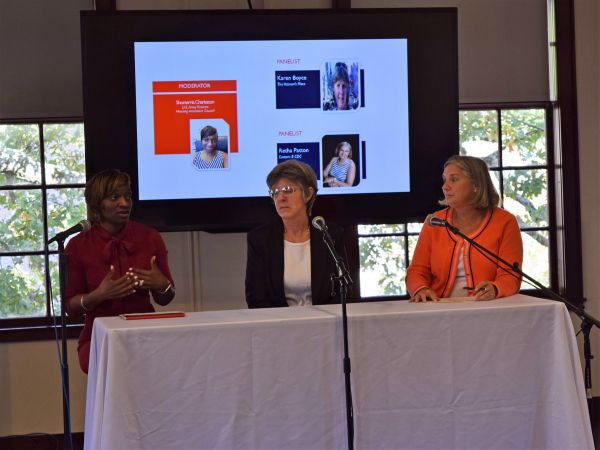
HAC's Shonterria Charleston, Karen Boyce (The Veteran's Place) and Retha Patton (Eastern Eight CDC) discuss housing rural veteransHAC’s Shonterria Charleston, Karen Boyce (The Veteran’s Place) and Retha Patton (Eastern Eight CDC) discuss housing rural veterans.

HAC coordinated the Aging Veterans and Housing Panel, which featured two of its Home Depot Foundation-funded grantee organizations, The Veteran’s Place (Karen Boyce) and Eastern Eight Community Development Corporation (Retha Patton). Moderated by HAC’s Shonterria Charleston, the panel focused on housing (single and multifamily) and service provisions to aging veterans and provided context to rural challenges, best practices and opportunities for successful projects.

Funding support provided by The Home Depot Foundation

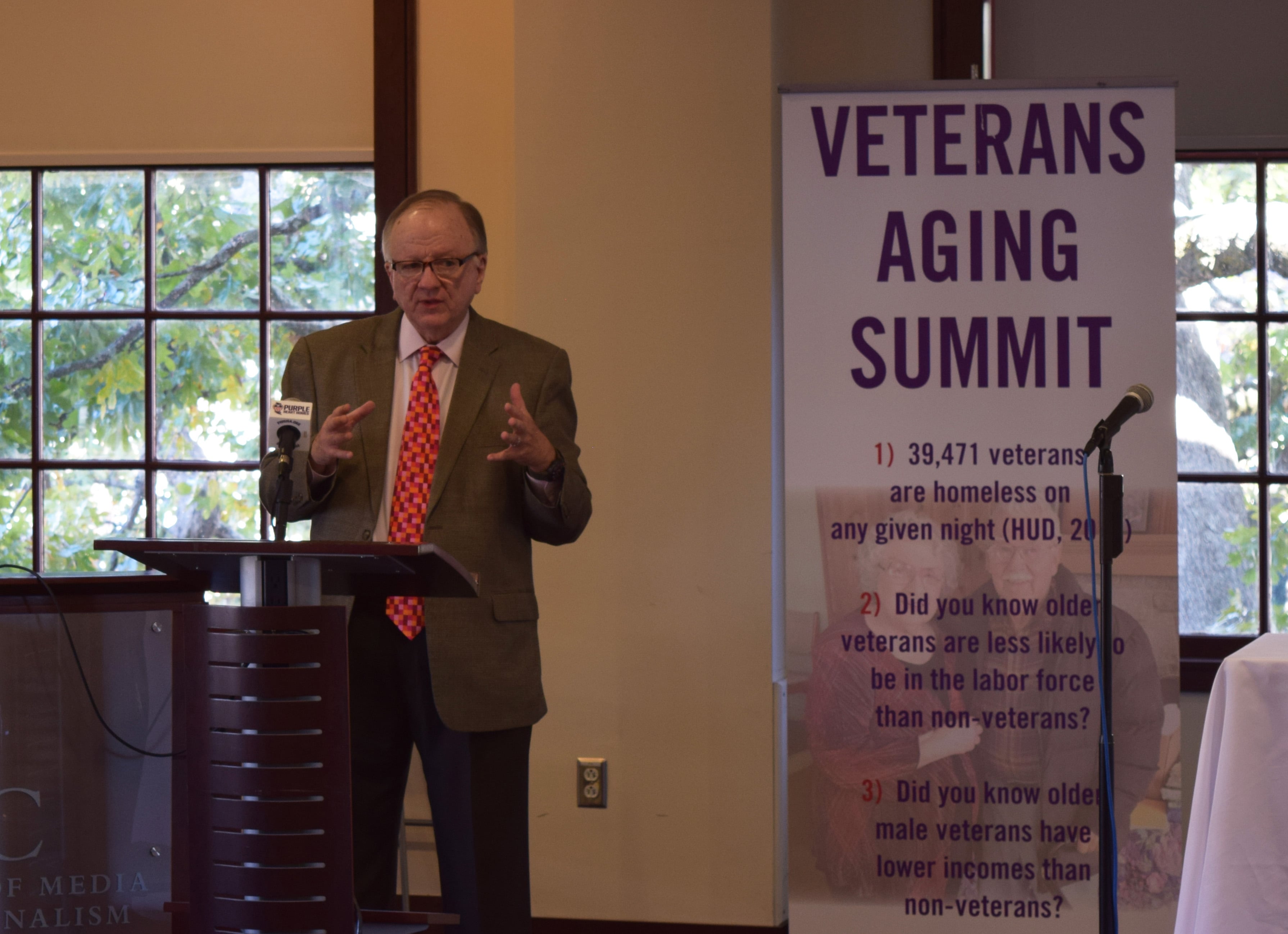
HAC's Joe Belden speaking at the Aging Veterans SummitHAC’s Joe Belden speaking at the Aging Veterans Summit.

HUD Releases Worst Case Housing Report

HUD released the its Worst Case Housing Needs 2017 Report to Congress. The report provides national data and analysis of the critical problems facing very low-income renting families. Households with worst case needs are defined as very low-income renters who do not receive government housing assistance and who paid more than one-half of their income for rent, lived in severely inadequate conditions, or both.

Webinar: What Will Rural Housing Funding be in 2018?

Materials Posted

Power Point Presentation | Webinar Recording

The Trump Administration’s budget for fiscal year 2018 will be released on May 23. Join rural housing experts to learn what the budget proposes for USDA and HUD affordable housing programs. Speakers will also explain the next steps in the budget process.

USDA Wants to Reorganize Rural Housing, Business, and Utilities Functions

USDA has proposed to “realign” its Rural Development mission area so the Rural Housing Service, Rural Business-Cooperative Service, and Rural Utilities Service administrators report directly to the Secretary of Agriculture.

This suggestion is offered in a report to Congress released on May 11, 2017. As the document’s title – Report on the Proposed 2017 Reorganization of the Department of Agriculture to Establish an Under Secretary for Trade and Foreign Agricultural Affairs – indicates, it focuses on changing USDA’s trade functions; it also emphasizes changes related to farm production. In a brief paragraph, the report says USDA:

intends to realign the Rural Development agencies to report directly to the Secretary. . . . This reorganization recognizes and promotes the importance of rural development by placing it under the direct oversight of the Secretary. Placing rural development under the direct supervision of the Secretary will ensure the Secretary is also able to leverage USDA’s expertise with rural communities and new Administrative initiatives to focus on infrastructure investments in rural America.

The idea raises numerous questions that have not yet been answered. Will this change lower RD’s profile in the department because it will not have a representative at the Under Secretary level? What priority will RD receive among all the other things the Secretary’s staff must address? Will it become easier to cut RD or its programs if they can be viewed as projects in the Secretary’s office and therefore optional? How does this fit with the Administration’s budget proposals to reduce RD funding?

A budget table in the report shows Rural Development under a Deputy Secretary. The department currently has one Deputy Secretary, and presumably the budget refers to the current position, not a new one. The relationship between RD and the Deputy is not reflected in the revised organizational chart, however. It shows RD connected directly to the Secretary of Agriculture, while all the Under Secretaries connect to the Deputy Secretary, and administrative offices connect to both the Deputy Secretary and the Secretary.

The budget table seems to indicate the amount of resources – staff years and funding – allocated to RD would not change under the new organizational scheme. It shows 4,487 staff years and $3,078 million for RD in the current setup, and 4,847 staff years and $3,078 million under the new arrangement. Since the funding level does not change, the switch from 4,487 to 4,847 staff years appears to be a typo.

The proposal’s focus is on creation of a new Under Secretary for Trade and Foreign Agricultural Affairs (TFAA) and a new Under Secretary for Farm Production and Conservation (FPC). A report in Politico Pro (subscription required) points out that by law USDA is limited to seven Under Secretaries. The reorganization would eliminate the current Under Secretary of Farm and Foreign Agricultural Services (FFAS), reassigning the FFAS agencies to the two new positions. But it must eliminate another Under Secretary to remain at the limit of seven.

The 2014 Farm Bill required creation of the new TFAA Under Secretary. The RD Under Secretary position was also required by a statute – although the 1994 law that reorganized USDA says “the Secretary is authorized to establish” such an Under Secretary and “If the Secretary establishes the position . . . ,” language that could be read as discretionary rather than mandatory.
Rural Placemaking Participants Selected

The Housing Assistance Council (HAC) and bcWORKSHOP [bc] are pleased to announce the selection of two organizations for the Rural Placemaking Program, supported by a Knowledge Building Grant from the National Endowment for the Arts (NEA). The smART Kinston City Project Foundation in Kinston, North Carolina and Woodlands Development Group in Elkins, West Virginia will be implementing rural creative placemaking initiatives during summer 2017 as a part of this program.

Over the next six months, smART Kinston and Woodlands Development Group will work in partnership with residents and artists to develop a creative, arts-based initiative in their communities. With the support of [bc] and HAC, both organizations will kickoff their creative placemaking pilot projects in June.

The project is funded in part by an award from the National Endowment for the Arts (NEA). To find out more about how the National Endowment for the Arts grants impact individuals and communities visit www.arts.gov.

For more information on the recipient groups and creative placemaking, visit https://www.bcworkshop.org.

Rural Placemaking Funding Available

HAC, in collaboration with bcWORKSHOP, is excited to announce a call for participants for Rural Placemaking, a new creative placemaking initiative that will take place in two rural communities (with populations less than 50,000) in the United States. Creative placemaking is a way of working between community developers, housing organizations, artists and local stakeholders to strengthen communities.

Apply Online

Two partnerships between a housing or community development organization and an artist/art organization will be selected to implement a temporary initiative from May to August 2017. Applications are due Friday, March 10, 2017.

Moises Loza Announces His Retirement from HAC

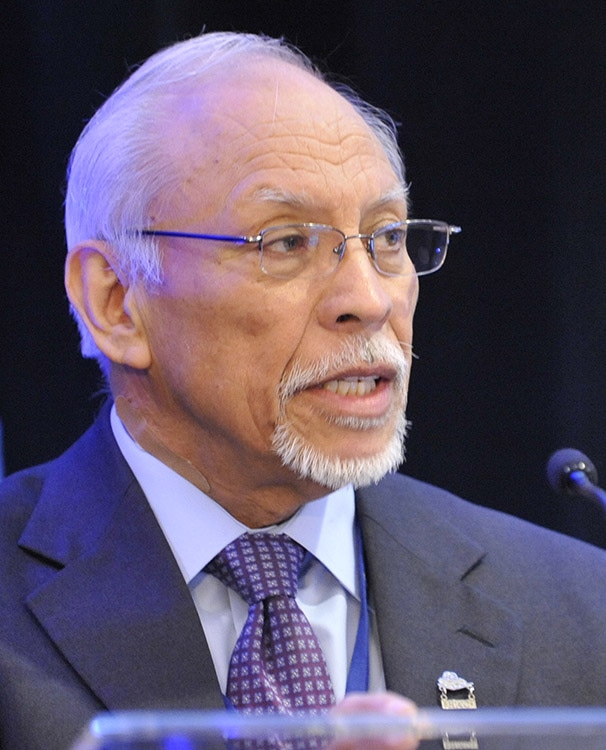
Moises addresses the audience at a HAC ConferenceIt has been my honor and privilege to guide the Housing Assistance Council’s efforts to improve the lives of low-income rural Americans. After almost three decades as HAC’s Executive Director, I am now retiring.
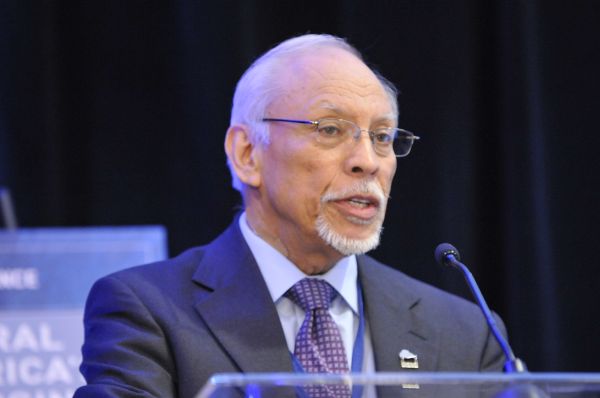
HAC has overcome many challenges over its 45-year history, and will face more challenges in the future. This is a good time for fresh leadership with new approaches. HAC will face the future as the strong organization it has always been, with a board and staff devoted to its mission.

Change can be difficult, but it is often a positive force. I am confident that this change is the right thing for HAC, as well as for me and my family. I am also confident that HAC’s board of directors will choose a new executive director wisely. I will remain at HAC until my successor is selected, and I am committed to making the transition a smooth one.

I wish to express sincere thanks for years of hard work and support to HAC’s board, staff, funders, and especially the organizations working on the ground in rural America. HAC’s partners in the field are the ones who truly build rural communities.

-Moises Loza

Read the statement from HAC’s Board Chairman Andrew Bias on Moises’ retirement

Statement from the HAC Board of Directors on the Retirement of Moises Loza

I write with both sadness and optimism to announce that Moises Loza has decided to retire as Executive Director of the Housing Assistance Council. Moises worked at HAC from 1973 to 1978, and from 1981 to the present. Since becoming HAC’s Executive Director in March 1989, Moises has served as one of the nation’s strongest voices on behalf of affordable housing in rural America. His skilled leadership has enabled HAC to better the lives of many thousands of rural residents. As he departs for his well-earned retirement, he leaves the organization strong and ready for the future.

HAC’s board of directors has established a search committee. More information on the search for a successor will be distributed in the coming weeks. Moises has committed to remain at HAC during this process and to ensure a smooth transition.

On behalf of the entire board, I thank Moises for his dedication, strength, intelligence, and hard work throughout his tenure at HAC. He will be greatly missed.

Andrew Bias
Board Chairman, Housing Assistance Council

20141203 HAC Conference 2553

Housing is infrastructure

by Kaitlyn Snyder & Rebekah King, National Housing Conference

Housing provides infrastructure our neighborhoods and cities need to thrive; it provides a home to the workers who are keeping local businesses running. Having affordable housing near jobs helps connect people to economic activity, just in a slightly different way than roads, bridges and airports do. At the National Housing Conference, we’re concerned that our country’s affordable housing infrastructure is not meeting our nation’s needs, and we hope to see affordable housing included in any major infrastructure legislation.

Read the complete blog post on NHC’s Open House Blog

This post is part of a series from members of the Campaign for Housing and Community Development Funding tying housing to infrastructure.

Skip Jason Awardee Earl Pfieffer Honored by County Commissioners

The Hillsborough County Commissioners recognizes Earl Pfieffer, Executive Director of Florida Home Partnership, Inc. for receiving the Housing Assistance Council’s Skip Jason Award on Thursday, Jan 26 at 1:30 pm as part of its quarterly awards ceremony recognizing individual county residents for their achievements. The award, named for Robert M. “Skip” Jason, recognizes individuals whose efforts have improved the housing conditions of the rural poor in their communities.

Earl accepted the award the HAC 2016 Rural Housing Conference in Washington, D.C. During his acceptance speech, Earl took a moment to recognize every member of his organization that attended the event, stressing “I didn’t do this alone.” Watch Earl accept his award during the 2016 Rural Housing Awards banquet.

The ceremony takes place at the Hillsborough County Center, 601 E. Kennedy Blvd., Tampa, FL 33602.

GET THE HAC NEWS!

Sign-up for HAC information products

SIGN UP HERE

Housing Assistance Council   |  1828 L Street. N.W., Suite 505, Washington, D.C. 20036
(202) 842-8600 (202) 347-3441 hac@ruralhome.org |

Board Portal

HAC is an equal opportunity provider, employer, and lender. | Civil Rights | Privacy