Repurposing Foreclosed Properties in Rural America

A consortium of nonprofits works at the local level to reverse the devastating effects of the foreclosure crisis

by Noel Poyo and Chrisopher W. Sanchez

NALCAB, the National Association for Latino Community Asset Builders, represents and serves a geographically and ethnically diverse group of more than 100 non-profit community development and asset-building organizations that are anchor institutions in our nation’s Latino communities. NALCAB members are experts in implementing responsible, market-based strategies for developing neighborhood assets, investing in small businesses and building family wealth.

More than 35 percent of NALCAB’s members serve rural communities. The dramatic dispersion of Latinos outside of traditional urban centers into small towns has been among the most striking population shifts in the U.S. over the past 50 years. This demographic trend has brought much needed labor and entrepreneurial vigor to many rural communities, just as it has presented new social and economic challenges. Among the strongest impulses of the NALCAB founders was to provide access to capital and culturally relevant asset building services for Latinos living and working in rural and colonia communities.

NALCAB members immediately observed the market-depressing effects of foreclosures in small towns

The foreclosure crisis that sparked the Great Recession was particularly brutal in many rural counties. Adam Wodka’s 2009 study (Landscapes of Foreclosure: The Foreclosure Crisis in Rural America) estimated that 15 of the 20 counties with the highest rates of foreclosure were rural or mixed rural. While the sheer number of foreclosures was certainly higher and more concentrated in urban areas, NALCAB members immediately observed the market-depressing effects of foreclosures in small towns. Once impacted, however, rural communities were at a disadvantage when competing with large cities for resources. NALCAB connected urban and rural-serving non-profit organizations in a consortium strategy that leveraged substantial federal funding to address the impacts of foreclosure. The strategic assembly of select NALCAB member organizations into a national collaborative effort enabled the consortium to tackle important economic issues to reverse the devastating effects brought forth by the foreclosure crisis.
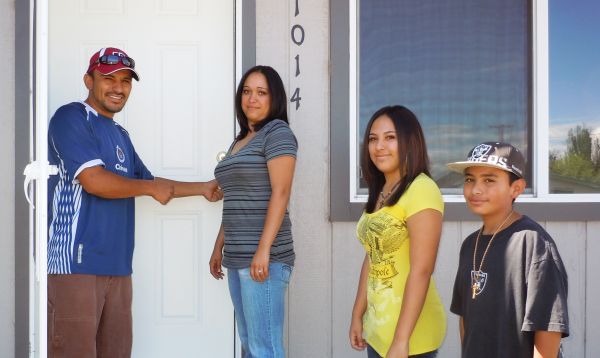
The Bolanos Family Opening The Door To Their New Home

In February 2010, a consortium of 13 nonprofits organized by NALCAB received $137 million from the U.S. Department of Housing and Urban Development (HUD) to stabilize communities impacted by home foreclosures and abandonment in 8 states and the District of Columbia. This HUD Neighborhood Stabilization Program 2 (NSP2) grant is the single largest federal award ever targeted to predominantly Latino communities.

The consortium included markets in California, Arizona, Colorado, New Mexico, Texas, Illinois, Pennsylvania and Maryland and our nation’s capital, Washington D.C. Many of the consortium partners were already doing housing development in rural communities. They had an existing housing delivery infrastructure, but they lacked resources to stabilize these rural communities. It was understood that a balanced approach of urban and rural strategy was essential. While a strategy targeting only rural communities may not have been competitive, mixing urban and rural target areas made it possible for rural communities to access funding. Combining urban and rural strategy into our NSP2 application made us a stronger applicant and paved the way for the NSP2 award of $137 Million.

The CPLC/NALCAB NSP2 Consortium has now deployed the entire grant, and has used the proceeds from the sales of rehabilitated properties, to surpass $200 million in direct investment. In other words, the consortium partners not only deployed the entire NSP2 award, but it was done in an economically prudent manner that allowed the consortium to generate over $70 Million in program income to date. This amount of program income will continue to increase as existing housing inventory is rehabilitated and sold. The following impacts have been accomplished to date:

  • 968 affordable single family units created
  • 986 affordable rental units created
  • 42 blighted properties demolished
  • 54 properties land banked for future development
  • 1,614 jobs created or retained

Erica-Cantu-Daughter-web

The following CPLC/NALCAB NSP2 Consortium Partners made a conscious decision to carve out funding to serve rural and colonia communities in their respective markets. Chicanos Por La Causa, Inc. (CPLC) of Arizona; Community Resources and Housing Development Corporation (CRHDC) of Colorado; Community Housing Improvement Systems and Planning Association, Inc. (CHISPA) of Salinas, California; and Tierra Del Sol Housing Development Corporation (TDS) of Southern New Mexico and West Texas were committed to serving the needs of their most vulnerable rural neighbors. The following are short summaries of the rural neighborhood investment strategies that the CPLC/NALCAB NSP2 Consortium implemented:

Chicanos Por La Causa, Inc. (CPLC) Arizona

CPLC invested over $3.2 million of its NSP2 funds in the rural markets of Rio Rico & Nogales, AZ. Both communities are located in Santa Cruz County, adjacent to the border with Mexico. CPLC has produced over 50 housing opportunities for rural families. Most of the activity has been focused on acquisition and rehabilitation; however, they also acquired a five acre tract of land that they will land bank. The tract of land is in close proximity to an existing CPLC multi-family apartment complex. The newly acquired land will allow CPLC to construct much needed affordable rentals in Santa Cruz County. The NSP2 award has allowed CPLC to expand and complement efforts that it had already begun in the area. CPLC’s NSP2 program has created an undeniable economic boost to the real estate market in Santa Cruz County.

Community Resources and Housing Development Corporation (CRHDC) Colorado

CRHDC had a broader program design that covered many rural markets. It acquired and rehabilitated 15 homes in rural Colorado; Alamosa, Del Norte, Walsenberg, and Monte Vista. These efforts led to increased home values, helped boost homebuyer confidence, recharged the local construction industry and revitalized homes that had become an eyesore in these neighborhoods.

CRHDC also produced 14 new units of site built and modular housing in Monte Vista and San Luis. Local residents welcomed this new development and it enhanced the appearance and vitality of these communities.

CRHDC engaged in multi-family housing; it acquired a 48 unit property in Sterling, CO with their NSP2 funds. It successfully leveraged additional funds from the State Division of Housing to cover the rehabilitation costs, plus it received a low cost loan from the State, to complete the project.

Additionally, CRHDC acquired land in Fort Morgan, CO, which will be the future site of a 50 unit farmworker housing community, to be named Sol Naciente.

Community Housing Improvement Systems and Planning Association, Inc. (CHISPA) California

CHISPA demonstrated how a highly targeted approach could renew a specific neighborhood. CHISPA has made a significant impact in Greenfield, CA, a rural community in Southern Monterey County. CHISPA used NSP 2 funds to acquire four homes in a single cul-de-sac, which is located adjacent to an existing CHISPA rental property. The homes were rehabilitated and either sold or rented. CHISPA’s total real estate portfolio was an anchor for this neighborhood. CHISPA also acquired a single family home and a duplex in Greenfield that are being rented to households with incomes at or below 50 percent of area median income.

CHISPA continues its revitalization efforts in Greenfield. CHISPA is now building three brand new homes using HUD NSP funding. The homes will be sold in order to generate additional program income and create more new homes in the City of Greenfield. The city leaders have been vested partners and have expressed particular excitement that new construction has started again in Greenfield.

Tierra Del Sol Housing Corporation (TDS) Southern New Mexico & West Texas

TDS launched its NSP2 program by acquiring four U.S. Department of Agriculture (USDA) foreclosures in Horizon City, TX. These units were in rough shape. Because of the isolation of this rural community, vacant properties were prime targets for theft and vandalism. TDS stepped in and ultimately acquired 16 homes in this rural market, revitalizing the homes and filling them with responsible and proud homeowners. The investment in this market definitely improved market conditions and helped put contractors and small business owners back in business.

In each case, these organizations were able to deploy funds rapidly and effectively because they had an existing track record of development in their target markets and well established relationships with local government and other partners. Furthermore, these organizations had already earned the trust of the community because of their past commitment to these rural communities. The NSP2 funds simply allowed them to complement their existing programs and services and allowed organizations of shared vision and mission to improve Latino communities – both urban and rural.

Noel Poyo is the Executive Director and Christopher W. Sanchez is the Program Director at the National Association for Latino Community Asset Builders – NALCAB. For more information please call the NALCAB Office at (210) 227-1010 or go to their websites: https://www.nalcab.org or https://www.nsp2nationalconsortium.org.

Housing Counseling Services Offer More than Just Counseling

While housing counselors are instrumental in helping people avoid foreclosure, they also provide invaluable resources to help families improve their lives

When someone is facing foreclosure, there is usually a credit card collector calling constantly, a family member struggling with an illness, or a heavy stress over where the next meal might be coming from. The problem that the client comes to us about is often caused by another bigger issue that they may be dealing with. This is why a housing counselor does so much more than just housing counseling.

While we have always provided assistance with housing issues through our Legal Hotline for Michigan Seniors, Elder Law of Michigan has been a HUD-approved housing counseling agency since 2011. We decided to expand our programs to become a housing counseling agency so that we could do a better job of helping clients deal with the issues that may be preventing them from owning or renting a home or apartment.

The goal of the housing counseling program is to help clients achieve their goals. In regards to helping with homeownership, these goals could be to downsize to a smaller, more accessible home; own a home for the first time; or become a home owner again after going through challenges that resulted in a foreclosure of a previous home.

A housing counselor works with the client to figure out the alternatives and then allows the client to make an educated decision on how to proceed. This process is customized to each client but includes budget discussions, information on what resources are available, credit repair counseling, education on fair housing rights, and assistance with finding other housing if that is necessary. Housing counselors provide these services in an understanding, non-judgmental way.

We recognize that there are additional challenges faced by our rural clients: limited access to services and fewer housing alternatives.

These services are invaluable to someone struggling with the constant phone calls from the creditor, the overwhelming amount of incorrect information on the internet, and the fear of what to do if the family loses their home.

As a nonprofit that serves clients in suburban cities and rural counties, we recognize that there are additional challenges faced by our rural clients: limited access to services and fewer housing alternatives.

Many rural residents are perfectly fine with the fact that there aren’t many businesses nearby. In fact, that may be one of the reasons why they choose to live in the rural area. With the tight economy, nonprofits have to strategically locate where they can serve the most clients in a cost-effective manner. A large, mostly rural county in our service area has only one housing counseling agency actually located in the county. For residents on the other side of the county, that means almost an hour of travel each way to get assistance with their housing problems.

Another barrier is access to high-speed internet. Out of efficiency, many of the programs that help with foreclosure issues use a website or an online portal. While this works for those who are computer savvy and have a reliable computer with a good internet connection, several of our clients could only access these services with our help.

Making our services available by telephone means that we can try to provide as much assistance as possible without having the client drive a long distance to meet with us. There are still some issues using this method because there is not a nearby place to make copies or fax documents.

For those clients who commute into the larger cities for work, these issues can be addressed with the services available there. However, for our older, retired clients, that is not always so easy. We also discovered that some clients were not able to contact us because our office hours were the same hours that they worked. We had to make evening appointments available.
There are fewer housing options for some rural clients. In an ideal situation, our housing counselors would be able to work with the client and resolve the mortgage issue, allowing the client and their family to remain in the home. However, that is not always the case. In some cases, we have to work with the client to find alternate, affordable housing. Purchasing another home to live in is not an option at that moment due to credit issues. For many clients in this situation, we help them find an apartment that they can afford. For rural clients, rentals are not very plentiful, so relocating to another community is a reality that they must face on top of dealing with the foreclosure.

Because it is hard enough dealing with the housing issue, rural clients should definitely seek out a housing counseling agency to help. Recently, we had a client from a rural county who lost his job and was faced with foreclosure. Our housing counselor worked with him to go over his budget and determined that if he could get caught up, he would be able to afford to make future payments. They worked together by phone and through the mail to get all of his paperwork together. The client came to our office and worked with the counselor to complete an application for assistance through the Hardest Hit Fund program. After waiting several weeks, the client received notice that he was going to receive assistance and could save his home. Now, several months later, he just emailed us to say how thankful he is for the help.

Unfortunately, this is not always the outcome for our clients. Another client, a widow from a very small town in another rural county, contacted one of our other programs because she needed help buying food. After speaking with her, our benefits counselor realized that the client was also facing foreclosure. She gladly agreed to be helped by our housing counseling program. She was the victim of a fraudulent refinance scheme that took her money but never worked with her mortgage lender. Because she was not going to be able to afford the home any longer, our housing counselor worked with the client to find another place to live. After five months, the client was able to move into a subsidized housing complex in a nearby city and even recovered some of her money thanks to the legal help she received from the legal hotline.

After five months, the client was able to move into a subsidized housing complex in a nearby city and even recovered some of her money thanks to the legal help she received from the legal hotline.

Even for clients who are not able to stay in their home, the dream of homeownership is still possible. Housing counseling programs will work with the client who wants to own a home again in the future. Participating in a structured program to help with saving money and possibly rebuild credit is a good way to return to homeownership faster.

Housing counseling programs also can provide information on fair housing laws and discrimination. Whether you are looking to buy a home, take out a mortgage, or rent an apartment, you should know your rights.

Our housing counseling program, along with our other programs, does so much more than just answer questions and give referrals. Like many other housing counseling agencies, we seek to address the problems that led to the housing issue. It is this assistance that our clients find the most helpful. To find a housing counseling agency in your area, visit www.hud.gov or call 800-569-4287.

Keith L. Morris, J.D., M.P.A. is the President of Elder Law of Michigan, a private nonprofit that assists clients with legal counseling, pension counseling, benefits counseling, and housing counseling. Its new Housing Rights Center of Michigan assists clients of all ages and incomes in counties surrounding Lansing, Michigan.

Making a Difference in Rural America

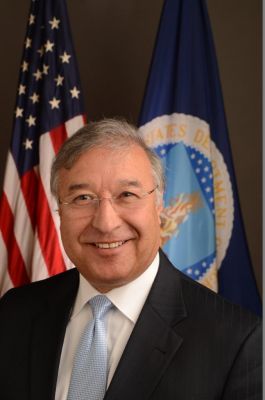
Administrator Tony HernandezUSDA Rural Housing Services Administrator Tony HernandezNewly appointed Rural Housing Service administrator shares his thoughts and priorities for USDA’s housing initiatives.

I am honored and pleased to be the new administrator at the U.S. Department of Agriculture’s (USDA) Rural Housing Service (RHS). For more than 60 years, USDA has helped millions of rural residents become part of the American Dream of homeownership. I look forward to the opportunity to continue and expand this agency’s historic accomplishments.

I have now been on the job for some time and have been impressed by the vital work that we do to provide housing and community facilities in Rural America. In my 26 years in community development, I have strongly believed that housing is a conduit to family, neighborhood and community. I see RHS as a community development agency. The multiple roles we play—catalyst, partner, advocate, regulator and investor—improve people’s lives and create better communities.

With its wide open spaces filled with lush, natural beauty, combined with its small-town charms, rural America is a great place to live and raise a family. And, although rural America is changing due to the rise of new technologies like the Internet and the advent of globalism, one thing still holds true: homeownership remains one of the single-most important factors that help our rural communities thrive and prosper economically.

The resources in our community development toolkit include homeownership programs for rural families. USDA has two primary Single-Family Housing Programs that are a major provider of homeownership opportunities in rural communities. The direct homeownership loan program helps very low- to low-income families. It is designed to open the door to homeownership to those who do not qualify for mortgage credit from conventional lenders. These loans are available to families and individuals with reasonable credit history and dependable income. This is not a government handout. Direct loans are repaid and subsidized to lower the monthly loan payment at a relatively small cost to the government.

My major priority is to focus on enhancing customer service through improved business processes.

For moderate-income families, we offer a guaranteed homeownership loan program and partner with participating private-sector lenders to provide home loans in rural areas at reasonable rates and terms.

For many Americans, especially those in rural areas, a home is the largest asset they will buy in their lifetime. Homeownership provides multiple, long-term benefits. It leads to greater economic security for families, who often can use the equity in their homes to build their credit, finance their children’s educations, improve the value of their property, or finance other necessities such as health care. Homeownership also helps families to plant long-term roots in their community.

Many rural residents who buy homes through USDA programs are first-time homebuyers. We also help current homeowners improve their homes through USDA rehabilitation loans or grants. Very low-income homeowners who are age 62 or older can qualify for grants to make health and safety improvements – such as accessibility accommodations – in addition to repairs. We are proud that USDA helps families start on the path of economic stability and a more secure future through homeownership.

The benefits of our housing programs extend beyond the homeowners themselves. USDA home loans also create economic opportunities for home builders, providers of durable goods such as lumber or appliances, and Realtors. USDA home loans often represent the majority of the business volume for many Realtors. Finally, local governments also benefit from increased revenue through property taxes. In fact, in many jurisdictions, property taxes from homeowners are the largest source of revenue. This is particularly true in rural communities where there are relatively fewer businesses compared to homeowners.

Homeownership is essential to the fabric of life in rural America, for our families, and for the communities in which they live.

Creating viable communities also means providing opportunities for families and seniors to have good rental housing as well as good housing for farm workers. In partnership with multi-family property owners and their property managers the USDA Multi-Family Housing programs assist in creating rental homes that support and encourage families to be part of their communities. USDA also provides rental assistance to help very low-income families and senior citizens find safe, decent housing at an affordable cost. USDA provides these rental assistance subsidies to these families to offset the difference between market rents and a monthly amount they can afford.

I would be remiss if I failed to note that USDA offers several other forms of assistance to rural communities to complement our strong housing programs. In addition to housing, successful communities need community facilities that help them to be and remain a viable community. Our RHS Community Facilities program helps communities finance the development of essential services and buildings such as hospitals, child care centers, libraries, mental health clinics, first responder vehicles and equipment, and other community assets that help make communities strong and self-sufficient.

Our successes are our families. Here are some numbers:

  • In Fiscal Year (FY) 2008, USDA guaranteed loans created approximately 63,000 homebuyers. By FY 2013 (which ended September 30, 2013), annual loan volume had climbed by more than 100,000 loans – an increase of more than 158%.
    From the start of FY 2009 through the end of FY 2013, the program financed more than 700,000 homeowners. Rural Development financed about 3.6 times the number of loans the agency had financed during the previous five years.
  • Loans are only part of the story. The full story is about the people. My major priority is to focus on enhancing customer service through improved business processes. With the reduction of staff that RHS has experienced over the last few years doing more with less requires the team to implement new business processes to better serve our customers, improve the predictability of the process, and enhance productivity of our great staff. Many of the RHS processes have not had dedicated budget dollars to automate. This year’s technology budget has created the opportunity for RHS to implement automation solutions that will improve the quality, standardize processes, improve staff productivity, and provide better customer service.

And to better serve the people, one of my first priorities is to help improve processes and service at our Customer Center in St. Louis. Our success there will enhance customer service, reduce financial and regulatory risks, improve staff productivity, improve staff morale, and create employee development opportunities.

We recently assembled a Single-Family Housing Rapid Improvement Team of experienced staff from St. Louis and Washington, D.C. The team also included lenders, a representative from the Department of Housing and Urban Development, a USDA Rural Development State Director, and a USDA Rural Development Program Director.

Johnston Family Rural Development Home - USDAJohnston Family, USDA Rural Development Home – Creative Commons photo

I have implemented various business improvement techniques to identify other business processes for improvement. The following are some of the areas of focus:

For our Single Family Housing loan guarantee program, we are working to improve our processes for loan loss mitigation to help borrowers who are in danger of default. We are improving our front-end image processing for loan documents. And we are implementing an automated process for loan closing. We are also working towards implementing delegated loan underwriting to reduce workloads for both lenders and RD staff. In addition, we’re working on a single close, construction to permanent loan to streamline processes and reduce costs.

For the Single Family Housing Direct loan program, we are working to improve our processes for acquired properties (Real Estate Owned) to better manage these properties. We are streamlining our loan origination system and implementing a program to work with loan packagers for outreach and loan application submission.

In our Multi-Family programs, we are working on an electronic loan application, we are streamlining the processes for transfers of properties when an owner wishes to sell. To streamline property inspections, we are investing in hand-held devices. We are also working on an electronic loan/grant application for our Community Facilities program.

One of the critical success factors to better customer service is implementing program processes that are understandable, easy to go through, predictable, transparent, and done in partnership with our customers and stakeholders. As part of RHS’s business process improvement, I welcome the wisdom and input of all our great partners on how we can better serve the needs of rural America. Please do not hesitate to contact RHS with your ideas.

As the Administrator of USDA’s Rural Housing Service, I can assure you that I and everyone on our team are committed to improving the lives of rural Americans and creating ladders of opportunity. Using all of our community development tools and through our strategic partnerships we make a huge difference in the lives of millions of rural Americans every day.

I look forward to working with all our stakeholder groups to make a difference through partnership, collaboration, investment, and advocacy for rural America.

Tony Hernandez is Administrator of USDA’s Rural Housing Service.

GET THE HAC NEWS!

Sign-up for HAC information products

SIGN UP HERE

Housing Assistance Council   |  1828 L Street. N.W., Suite 505, Washington, D.C. 20036
(202) 842-8600 (202) 347-3441 hac@ruralhome.org |

Board Portal

HAC is an equal opportunity provider, employer, and lender. | Civil Rights | Privacy